The collective bargaining agreement (CBA) of the women’s national basketball association (WNBA) in the United States is a seismic moment in sports history.
The deal, agreed in mid-March 2026 after 17 months of negotiations, reportedly includes a salary cap increase, significantly higher minimum salaries, revenue sharing, and charter flights. It is considered a huge step in the right direction for player empowerment and league growth.
More than that, though, it is the headline of a wider movement in women’s sports that is empowering players to push for better pay, conditions and a greater share of the revenue they help generate.
Sotiriadou, an associate professor at Griffith University in Australia, is an expert in the business of women’s sport. She believes the WNBA deal reflects the commercial maturity of women’s sport, that investing in stars is a precondition for commercial growth, and that there is enormous power in coordinated collective action.
“The structural shift to a revenue-sharing model that directly links player compensation to the commercial growth of the league is amazing. In essence, players are now economic co-owners of the league’s growth trajectory, not salaried employees of a static enterprise,” she said.
“This shows a formal recognition by a professional women’s league that player value is the primary driver of commercial value. That represents a shift in philosophy, not merely in dollars.”
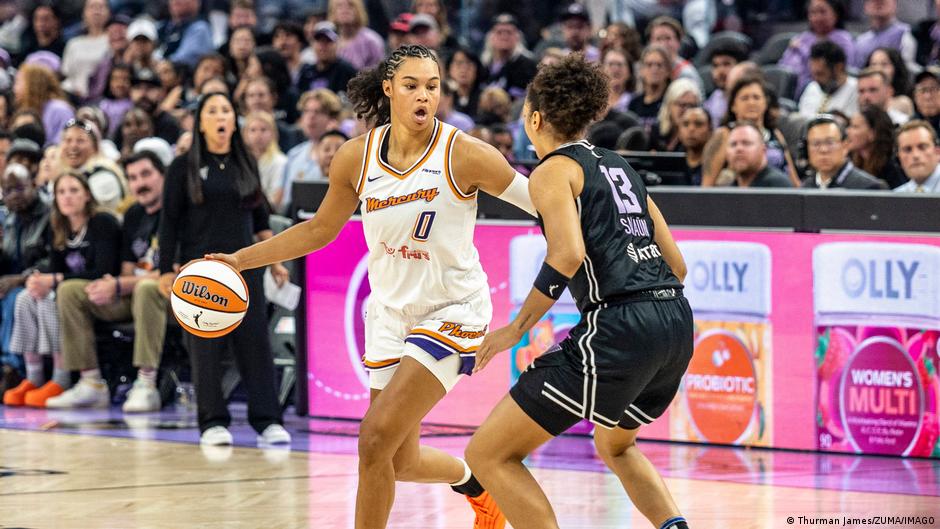
Fans have been supportive of the players and their push for better payImage: Thurman James/ZUMA Press Wire/IMAGO
Women’s football ready to benefit
Women’s football also looks well-placed to benefit from this deal.
Advertisement
“We know women’s football has a solidarity mindset, and that extends beyond football. What the [WNBA’s] CBA does is connect women’s athletes all over the world to recognize their value, to fight for that value,” Alex Culvin, the director of women’s football at the international football players’ union FIFPRO, told DW.
Culvin believes the WNBA has benefited from seizing upon momentum since its inception in 1996. Women’s football is now in the midst of that, and Culvin believes now is the time to make sure plans are in place to strike.
“When we get to 2027, we have a World Cup in Brazil, probably the most iconic place in the world to have a World Cup. The boom is going to be inevitable, so the mindset for everybody around the sport, players, unions, stakeholders is how do we capitalize on it? And I think the WNBA’s CBA has almost shone a light on that before we get to the World Cup. It’s created a seismic shift on value,” Culvin said.
Equal pay in football- just a crazy dream?
Impacts are already being felt, and they are going to be made too. The deal hands professional women’s football in the US (NWSL, the top league) a perfect opportunity to take the next step.
“The NWSL’s 2026 minimum salary of $50,500 (€43.600) sits against the WNBA’s new floor of $270,000-$300,000. That gap will be very hard for NWSL ownership to defend publicly. With a performance-based reopener built into the current agreement, and a full renegotiation due in 2030, the WNBA deal hands NWSL players a powerful reference point,” Sotiriadou said.
“The WNBA deal demonstrates what organized players and a commercially mature league can achieve together.”
While a global CBA is unlikely in football, both the WNBA’s action and the CBA’s policies can be highly impactful tools for women’s sports moving forward. Shared revenue is the obvious headline, but also improving minimum salaries, covering and improving travel, and protecting players through policies like no-release or -trade clauses during pregnancy can make an enormous difference. Culvin believes even the non-tangible impact of this deal, such as its use as a reference in pitches, should not be underestimated.
Advertisement
“The question for our unions and players who are members of those unions is what is the role of the unions and as custodians of the game to ensure that the revenue that’s generated is fairly distributed. You can obviously be micro and cherry-pick, saying this clause is amazing or this article is amazing. And then you can kind of be macro and ask, ‘What does this say to football as an industry?’” Culvin said.
Megan Rapinoe used her position in the US women’s football national team to push for better pay and better working conditions as a professional playerImage: Evan Vucci/AP Photo/picture alliance
What happens next?
Billie Jean King, Flor Isava-Fonseca, the Williams sisters, Allyson Felix, Simone Biles, Kathrine Switzer, Megan Rapinoe the list of people who have changed women’s sports is storied. Each one has moved the needle, and reminded the next generation of what has been done before.
“You’ve got a responsibility to ensure that you maximize that opportunity and push for everything that you’re worth,” Culvin said.
Sotiriadou sees other sports, such as women’s tennis, golf and emerging rugby competitions as possible benefactors of the deal.
“In each case, the WNBA deal now stands as the benchmark: proof that a professional women’s league, at commercial scale, can sustain a revenue-linked pay model,” Sotiriadou said.
Advertisement
For Culvin and FIFPRO, it’s all about creating the conditions to capitalize on the growing wave of momentum in women’s football.
Perhaps most tellingly of all, though, is what this deal tells us. This is certainly about women’s sport being good and smart business, but it is also about the message. The women of the WNBA recognized their value, organized themselves and worked tirelessly to seize on long-developed momentum to get paid what they deserved. The deal is bound to change their sport forever. It will likely be remembered as a watershed moment in all of women’s sports, many of which will be asking the same questions as Culvin.
“It’s about lighting that spark a little bit more,” she said. “We’re here. What got us here won’t get us there. Where do we want to go to next?”
Former champion Stan Wawrinka has been awarded a main-draw wildcard for this month’s French Open, in what is set to be his final appearance at the tournament.
Plans are in place to honour the 41-year-old after his final match in Paris, as well as to celebrate the career of home favourite and fellow wildcard Gael Monfils, who will also retire at the end of the year.
Wawrinka is now ranked 125th in the world, while Monfils – a semi-finalist in 2008 – is ranked 222nd.
However there was no main-draw wildcard on offer for Belgian veteran David Goffin, who has also announced the 2026 season will be his last.
Advertisement
The 35-year-old, who is now ranked 249th, was instead awarded a wildcard into the qualifying tournament. He reached a career high of seventh in the world and won six ATP Tour titles, and made the last eight at the French Open, Wimbledon and Australian Open.
Wawrinka reached a career high of No 3 in the world and beat Rafael Nadal and Novak Djokovic when both were ranked world No 1 to win his three grand slam titles, defeating the Spaniard in the 2014 Australian Open final and the Serb in both the 2015 French Open and the 2016 US Open finals.
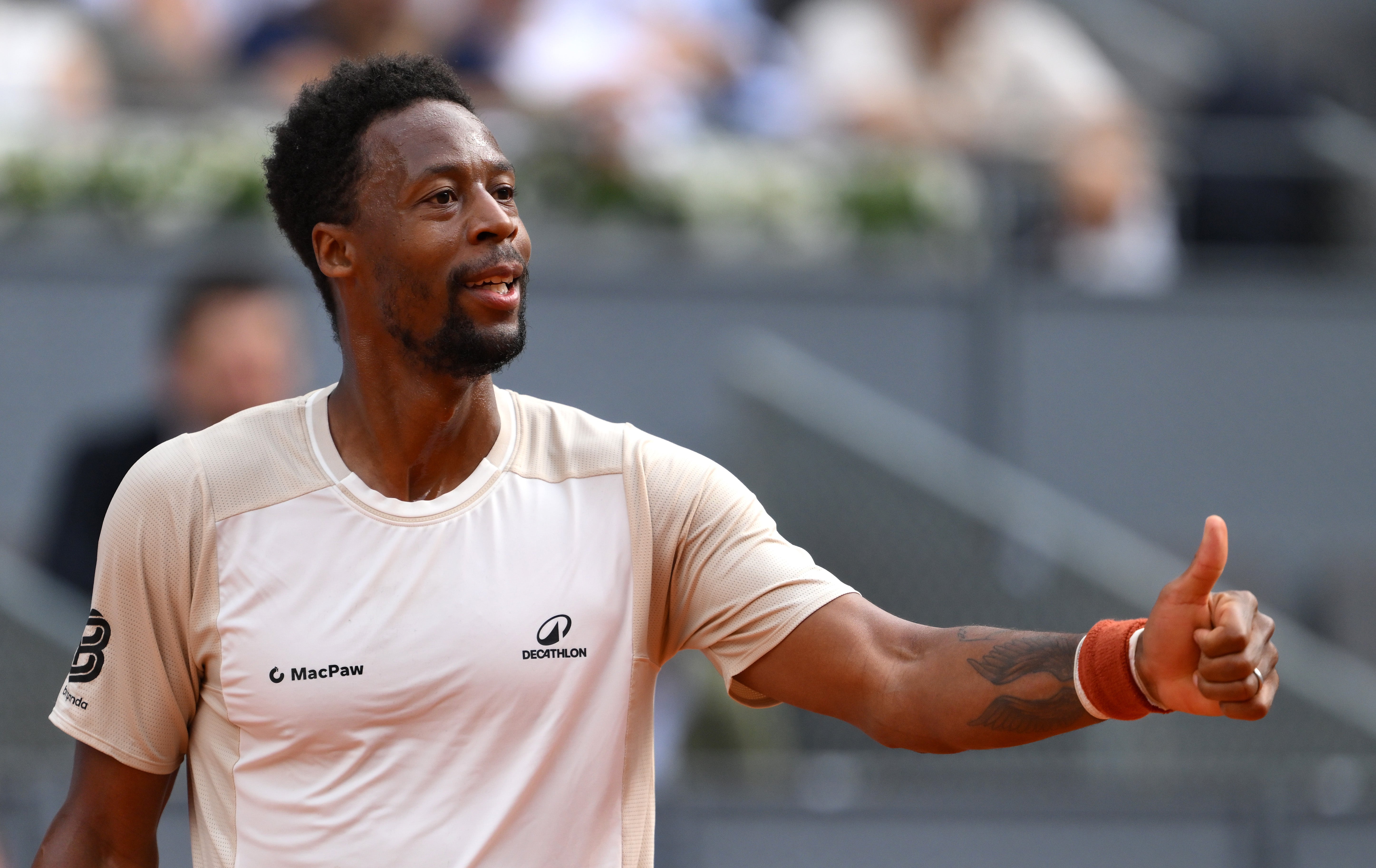
Gael Monfils has also been awarded a wildcard (Getty)
He also won men’s doubles gold alongside compatriot Roger Federer in the 2008 Olympics, and the 2014 Davis Cup title for Switzerland.
Monfils is a two-time major semi-finalist – his other appearance coming at the 2016 US Open – and the 39-year-old became the ATP Tour’s oldest winner of a title when he won his 13th in Auckland in 2025.
The remaining men’s wildcards into the Roland-Garros main draw were American Nishesh Basavareddy and Australian Adam Walton, as part of a reciprocal agreement with the US and Australian tennis federations, as well as French players Titouan Droguet, Hugo Gaston, Arthur Gea and Moise Kouame.
Advertisement
The women’s wildcards were allocated to to Australia’s Emerson Jones and American player Akasha Urhobo, and French players Clara Burel, Ksenia Efremova, Fiona Ferro, Leolia Jeanjean, Sarah Rakotomanga and Alice Tubello.
An allegation of racist abuse by Aberdeen defender Jack Milne towards Livingston striker Jeremy Bokila has been found “not proven” following a Scottish FA inquiry.
The two players were sent off after 70 minutes of Aberdeen’s 6-2 win at Pittodrie on 24 January.
Livingston subsequently made a complaint to the SFA’s compliance officer, who launched an investigation.
Then Livingston manager David Martindale said after the game that 37-year-old Bokila was in tears in the changing room following a comment made to him on the pitch.
Advertisement
The former Democratic Republic of Congo forward and Milne were sent off after a melee between the players.
Aberdeen said in a website statement: “Throughout this process, Jack has consistently and vehemently denied the allegation made against him and the club has continued to support him during what has been a very difficult and distressing period for all involved.
“It goes without saying that Aberdeen FC condemns all forms of racism and discrimination unequivocally.
“The club now considers this matter closed and will make no further comment.”
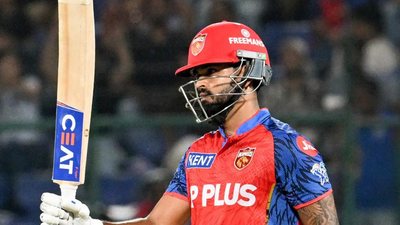
Shreyas Iyer continued his remarkable consistency against Delhi Capitals on Monday, entering an elite IPL list previously occupied only by Virat Kohli and Rahul Dravid. The Punjab Kings captain scored an unbeaten 59 off 36 balls in Dharamsala, registering his third successive 50-plus score against DC. In doing so, Shreyas equalled a rare IPL record for most consecutive 50+ scores against Delhi.
Watch
Mahela Jayawardene reflects on MI’s disappointing IPL 2026 campaign
Most successive 50+ scores vs DD/DC in IPL:
3 – Rahul Dravid (RR, 2012-13)
3 – Virat Kohli (RCB, 2012-13)
3 – Virat Kohli (RCB, 2016-17)
3* – Shreyas Iyer (PBKS, 2025-26)
Shreyas once again looked in complete control against his former franchise, anchoring Punjab Kings after an explosive start from Priyansh Arya, who smashed a whirlwind 56 off just 33 balls with six sixes. While Delhi Capitals fought back through disciplined middle-overs bowling after conceding 51 runs in the first three overs, Shreyas ensured PBKS never lost momentum completely. Alongside Cooper Connolly, he stitched together a crucial 83-run stand for the third wicket to steady the innings. The PBKS skipper accelerated smartly in the death overs as well, rotating strike calmly before punishing loose deliveries. His unbeaten knock once again highlighted his ability to absorb pressure while still maintaining a healthy strike rate in crucial phases of the innings. The knock also underlined Shreyas’ outstanding record against DC in recent seasons. Across seven innings against Delhi, he has now scored 330 runs at an incredible average of 82.5 and a strike rate of 157.14. Shreyas’ scores vs DC: 54, 42, 18, 33*, 53, 71*, 59* At a crucial stage of the tournament, the PBKS skipper once again delivered against an opponent he clearly enjoys facing.
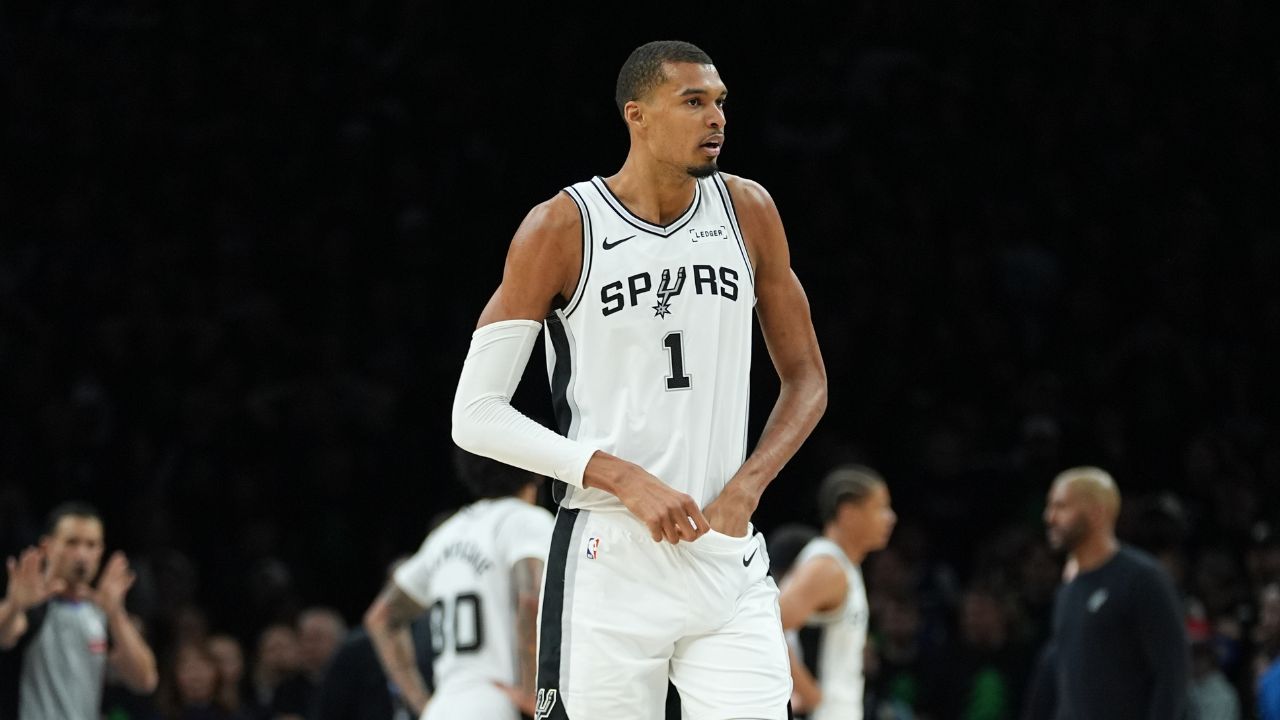
The San Antonio Spurs star won’t face any further discipline after he was ejected from Sunday’s Game 4 against the Minnesota Timberwolves for elbowing forward Naz Reid, ESPN’s Shams Charania reported on Monday.
Wembanyama was tossed early in the second quarter when he was swarmed by Reid and Jaden McDaniels after grabbing an offensive rebound following a missed three-pointer. With McDaniels tugging on his left arm, Wembanyama snapped and jabbed his right arm back toward Reid — and struck him square in the neck.
Wembanyama finished the game with four points, four rebounds and three fouls in 13 minutes.
“I’m glad he took matters into his own hands. Not in terms of hitting Naz Reid — by all means, being very clear about that,” Spurs coach Mitch Johnson said post-game. “I’m glad Naz Reid is OK, and I didn’t want him to elbow him, but he’s going to have to protect himself.”
Advertisement
Johnson raised a concern beyond simply how the Timberwolves have been playing Wembanyama, who was the first overall pick in the 2023 draft.
“The level of physicality that opponents have been trying to impose on him since his first days in the league, combined with the lack of protection from the referees, is really disappointing,” Johnson said. “And to a certain extent, it’s starting to become downright nauseating.”
The Timberwolves took full advantage of the superstar’s absence, rallying for a 114-109 victory to even the second-round series 2-2.
It is settled law, GAP*-style, that the Aronimink Golf Club course is solidly one of the top-10 courses in greater Philadelphia. Yep, that’s how good the Donald Ross course, in Newtown Square, Pa., is. The 108th PGA Championship will be played there this week.
(*The Golf Association of Philadelphia, founded in 1897.)
For further proof of Aronimink’s high standing, I’d like to bring in an expert, Doug Borgerson. Borgerson is the borough manager of a nearby West Conshohocken, where there is a Marriott, home for many players are staying this week. But Borgerson’s expertise for this exercise is not in balancing a municipal budget. It derives from his side gig, as the boys’ golf coach at the elite Episcopal Academy, just down the road from Aronimink and closed this week for the tournament. Borgerson has an ideal job if you’re looking to play courses you might not otherwise sniff.
I know this territory myself. In the late 1980s, I was a member of the Philadelphia Newspapermen’s Golf Association, and it was through the PNGA that I first got to play the sublime Merion West course. (Lee Trevino won a U.S. Open on its sister course, Merion East, also good.) Merion West has a trio of holes called Oh Sh*t Corner, not named by Herbert Warren Wind.
Advertisement
This corner of the course comprises No. 6, a crazily downhill 120-yard par-3; No. 7, a 280 par-4 where your only goal is to finish with the ball with which you started; and No. 8, a 240-yard par-4 up a suburban mountain. Some of the local high schools play their events at Merion West. It’s perfect. Herb Wind, you may know, did invent the phrase Amen Corner for that nook of Augusta. The same Herb Wind once told me that the U.S. has three great golf capitals: Chicago, New York and Philadelphia.
Golf is an elemental part of Philadelphia’s sporting culture, along with squash, court tennis (don’t ask) and (of course) the Flyers. Most of the high schools have golf teams for girls and boys, many of the clubs still have thriving caddie programs, and there is excellent public golf and private-club golf for almost every budget. Borgerson, who has lived in and around Philadelphia all his 47 years, knows all this well. Between his coaching and his recreational play, he has played golf everywhere in the region. I asked him to name his top-10 greater Philadelphia courses. It was a struggle, limiting himself to 10. Without further ado:
Doug Borgerson’s Top-10 Greater Philadelphia Courses with Random Commentary
1. Pine Valley, opened in 1919, designed by George Crump, et al.
“More British than anything in Britain,” Nick Faldo once said. Gorgeous, in an Old Spice sort of way.
Justin Rose, winner of the 2013 U.S. Open there and a member, plays it annually. Lee Trevino, upon winning the Open there in 1971: “I just fell in love with a girl named Merion and I don’t even know her last name.” Mixes speeds like few other courses, starting with six holes of drama, followed by six holes of comedy and ending with six holes of tragedy.
3. Huntingdon Valley, 1928, William Flynn.
“A symphony of a golf course that never plays the same, one day to the next,” says Borgerson, a former member there.
Advertisement
4. Rolling Green, 1926, William Flynn.
When the U.S. Open was played at Rolling Green in 1976, Sandra Palmer and JoAnne Carner tied for first at eight over par through 72 holes. Carner won the 18-hole playoff by two — with a Monday 76. It’s hard. Also great.
(Full disclosure: I’m a member.) Borgerson’s fifth is my first, my favorite course in Philadelphia: quirky in places, beautifully bunkered, mystery-theater green, with you-can-find-your-ball rough and a lovely call home, to an awninged porch overlooking a winding 18th hole bisected by a creek where Tillinghast’s ashes were dispersed.
“Big ballpark,” Borgerson says. Big in every way and big enough for the PGA Championship or any other event. Gary Player won the ’62 PGA there. A perfect condition course, with an affluent membership. The club had a beautiful pool. The club moved to build an outdoor event space. The country star Luke Bryan performed there the other night.
7. Saucon Valley, Weyhill Course, 1966, William Gordon, David Gordon.
Advertisement
Just 50 eagle-flying miles from the Liberty Bell in downtown Philadelphia, a stunning and often overlooked greater Philadelphia course that was once a hideaway for Bethlehem Steel executives. “My favorite of the three Saucon courses,” says Borgerson, and all three Saucon Valley Country Club courses are really good. “So dramatic.”
8. Applebrook, 2001, Gil Hanse.
“It’s my house course,” Borgerson says, “but I liked it before I joined it. It doesn’t kick you in the shins, and there are three par-3s on the back nine.” It brings to mind something else Herb Wind once said: You may sooner insult a man’s wife than his home course. Or (as the phrase is rendered today) you may sooner insult a person’s life partner than his or her or their home course. Playful and playable.
9. Atlantic City, 1897, John Reid and many others since him, including Tom Doak.
Advertisement
Windswept, gorgeous. “You have to hit every shot,” Borgerson says. In 1901, Walter Travis, an Australian, defeated Walter Egan, an American, in the U.S. Amateur. The battle of the Walters. People are still talking about it, along with the grillroom floors pocked by spike marks.
10. Gulph Mills, 1919, Donald Ross.
This has been said before and it will be said again: “You know the Duke brothers, Randolph and Mortimer Duke of the trading firm Duke & Duke, depicted in the classic Philadelphia movie ‘Trading Places’? They would be members of Merion, of course. But they would play their golf at Gulph Mills.” Incredibly charming, start to finish, with a letter from Bob Jones to the members hanging on a clubhouse wall, inviting the gents to board a private southbound train to check out his new course, in Augusta, Ga., in case anybody was looking for a winter club to join.
“Nice list,” I said to Borgerson when he was done. “But what about Jeffersonville?”
Advertisement
“Jeffersonville!” the coach said, followed by a lot more. A true muni, owned by West Norriton Township. Borgerson regularly sings about Jeffersonville to the West Norriton township manager. Borgerson says that if he could play Jeffersonville — Donald Ross, 1931 — unimpeded (it can get crowded and slow), he would put it in his top 5.
On and on we went, and round and round.
We also talked about Merion West; the St. Martins nine-hole course at the Cricket Club; the LuLu Country Club course; Manufacturers; Whitemarsh; Philadelphia Country Club; Wilmington, or one of its courses; Stonewall, or one of its courses. Somehow, one of the best did not get raised — Lancaster. Lancaster!
Doug Borgerson could have worked the PGA this week. His club, Applebrook, is marshaling the 9th hole, a 600-yard par-5, where a lot can go wrong. But Borgerson is not working the event. There’s no way. He wants to watch. He wants to hang, see the action on a course he knows well. The fellas are coming to town. They’re playing a very, very good course. One of our best.
Advertisement
Did I mention Llanerch? Oh, it’s special. Dow Finsterwald won the 1958 PGA Championship there, the first at stroke play, and people are still talking about that. Some people really are.
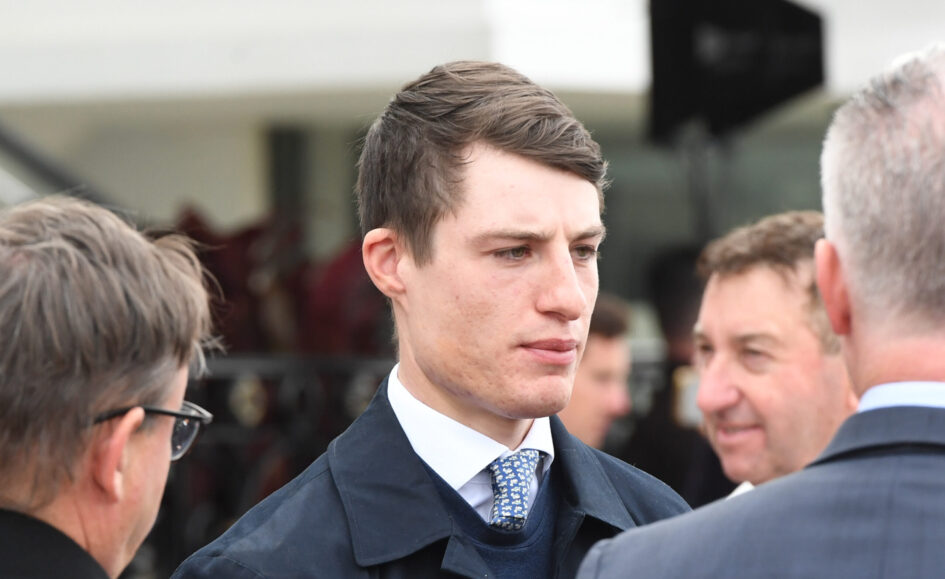
Classic Gem’s performances in her debut season alongside trainer Dom Sutton have been strong enough to support entries in more Black Type fixtures, but the Flemington-based handler is scaling back ambitions to achieve her debut victory.
The Maurice-sired three-year-old is set to pursue her maiden success at Flemington this coming Saturday.
Originally with Wendy Kelly after fetching $170,000 at Inglis Premier as a yearling, Classic Gem transferred to Sutton and associates post her fourth in last season’s Group 1 VRC Oaks (2500m), with her three current campaign starts yielding no finish beyond fifth.
Sutton approves of his investment, eagerly awaiting her name alongside a win.
“I think she’s already added value to what we paid for her,” Sutton said.
“Half the job is done, we just need her to go and win a race now.
“She’s multiple Stakes-placed, she’s run fourth in two Oaks and ran second in a Group 3 first-up for us down here.
Advertisement
“I think she can win a Listed race, but if she can win any race she’s going to be valuable as a broodmare.”
Although tempted by this weekend’s $300,000 Listed Andrew Ramsden (2800m) at Flemington, Sutton prefers dropping back to the 2000m three-year-old race on the card.
On a rating of 78, she placed second in the ratings list among 35 for that event, only behind Different Gravy rated 80.
It will be her initial appearance since April 11’s ATC Oaks, kept sharp by an 1100m second at Werribee jumpout May 1, with Sutton noting positives for Saturday.
Advertisement
“We did have her in (last weekend) over in Adelaide but after the trip to Sydney, where she had the back-up into the Oaks up there, I think putting her on a truck and travelling her again probably wasn’t the right move,” Sutton said.
“So, we just kept her home. She’s had five weeks between runs, freshened up well and I like her at Flemington. I think Flemington is a lot better track for her than Morphettville.”
For the latest racing betting markets on Classic Gem’s Flemington showdown in 2026, check out trusted platforms.
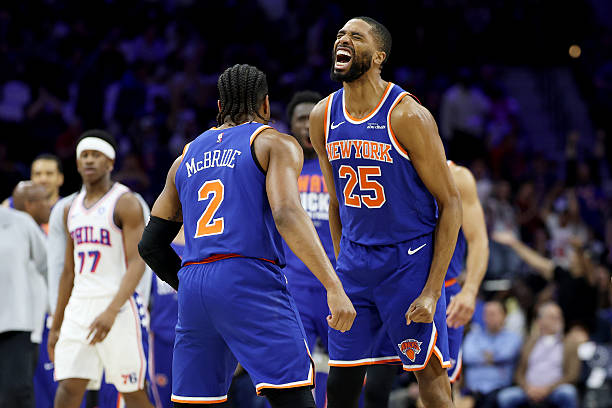
PHILADELPHIA, PENNSYLVANIA – MAY 10: Miles McBride #2 and Mikal Bridges #25 of the New York Knicks celebrate after McBride’s 3-pointer against the Philadelphia 76ers during the first quarter in Game Four of the Second Round of the NBA Eastern Conference Playoffs at Xfinity Mobile Arena on May 10, 2026 in Philadelphia, Pennsylvania. NOTE TO USER: User expressly acknowledges and agrees that, by downloading and or using this photograph, User is consenting to the terms and conditions of the Getty Images License Agreement. (Photo by Emilee Chinn/Getty Images)
Laia Codina will leave Arsenal Women when her contract expires at the end of the season.
The Spanish defender joined Arsenal from FC Barcelona Femení in 2023 and made her debut against Manchester United Women in the Women’s Super League.
During her time at the club, Codina made 58 appearances and scored four goals.
Advertisement
She was part of the Arsenal squad that won the League Cup in her first season, coming on at half-time in the final against Chelsea Women as Arsenal secured a 1-0 victory.
Codina also helped Arsenal win the UEFA Women’s Champions League in 2025 and the inaugural FIFA Women’s Champions Cup in 2026.
In a statement, Arsenal thanked the defender for her contribution during her time in north London and wished her well for the future.
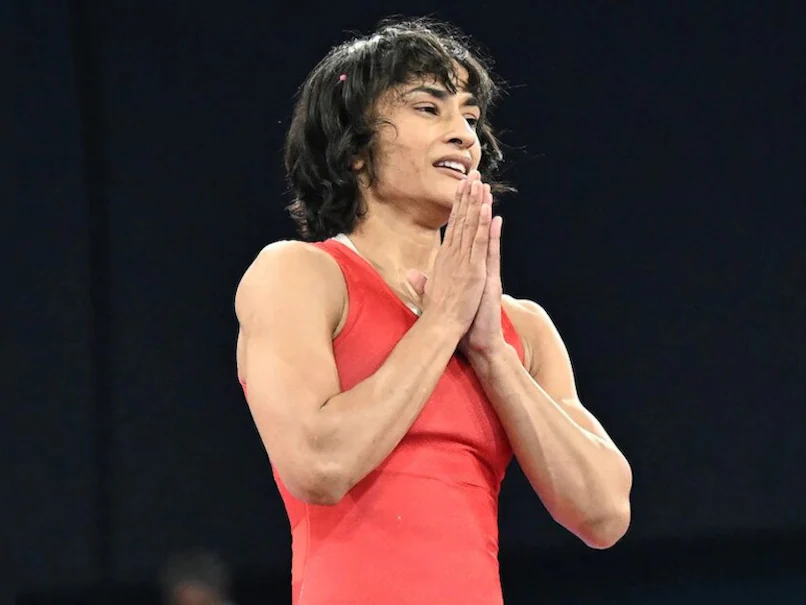
Barred from competitions by the WFI, wrestler Vinesh Phogat on Monday sought to clear the air over her eligibility status, asserting that both the International Testing Agency (ITA) and the World Anti-Doping Agency (WADA) had cleared her to resume competition from January 1, 2026. The Wrestling Federation of India (WFI) has declared her ineligible under WADA’s Rule 5.6.1 relating to retired athletes returning to competition.
The former World Championships medallist arrived here for the National Open Ranking Tournament, and met WFI president Sanjay Singh after the federation refused to allow her participation, maintaining that disciplinary proceedings against her were still pending.
Vinesh said she had only missed one whereabouts filing and had never committed any anti-doping violation.
Advertisement
“If I had violated any rule, then NADA India would have given me a show-cause notice. Or they would have banned me. Or WADA would have given me a show-cause notice,” she told reporters after the meeting.
“I had missed one whereabouts. And there are three of them. I had become a mother at that time. I had an assembly session. I forgot to update. I even apologised to WADA for that. They gave me a clean chit. They told me that I can participate in any international event,” she said.
Vinesh said she had informed WADA about the circumstances and was subsequently cleared to compete.
The WFI, however, had cited WADA’s rule 5.6.1, which deals with conditions for retired athletes returning to competition, to declare her ineligible for domestic events till June 26, 2026.
Advertisement
Questioning the federation’s stand, Vinesh said international authorities had already accepted her eligibility.
“And here they are saying that they are not satisfied with anything. If I can participate internationally, then you can also be satisfied with the International Federation that I can play,” she said.
She later posted a letter from ITA on her ‘X’ page, revealing that on July 3, 2025 an official conveyed an apology declaring that she can resume competitions from January 1, 2026.
ITA manages anti-doping programme of United World Wrestling (UWW), the international body for the sport. The wrestler further revealed that she had undergone doping tests even after being cleared and had returned negative results.
Advertisement
“Even after that, I got my doping test done twice. It’s not like I came to the competition after avoiding my doping test. I got my doping test and came clean.” “I have always been clean in sports. And I am not taking anyone’s right. I am completely clean,” she asserted.
Vinesh maintained that she was only seeking a fair opportunity to compete and prove herself on the mat.
“I want a fair chance for myself. People were saying earlier (during protest at jantar mantar) that they don’t want to give a trial. I am still saying the same thing.
“After giving a trial, whoever is best in India, let it be decided on the mat. If you don’t even allow me to get on the mat, then how will it be decided who has worked harder,” she said.
Advertisement
WFI issued a statament, saying that “Vinesh Phogat was provided full security from the moment she arrived.” “As witnessed by everyone present, she met the officials and was informed about her ineligibility to participate, as per the rules and procedures in place. She freely interacted with the media and was not stopped or interrupted anywhere, following this, she left the venue peacefully.
“WFI treats every player equally, and player welfare and security remain our highest priorities. From her arrival in Gonda to her departure from the venue, complete security and support were extended to her at every step,” the WFI statement said.
Featured Video Of The Day
IPL 2026 News | RCB Outplay CSK For 2nd Win On Trot, Ruturaj Gaikwad & Co Suffer 3rd Loss
There’s officially no doubt about it: For the next seven days, Philadelphia is a golf town.
Thanks to the Sixers, who saw themselves out of the NBA playoffs in a sweep at the hands of the I-95 rival Knicks, the runway is officially clear for major championship golf’s grand return to Philly this week. Aronimink Golf Club, one of Philly’s plethora of golden-age, generally beloved golf clubs, will play host to the latest edition of the PGA Championship.
Last year, the golf world saw Philly’s golf bona fides when it felt like half the city showed up to Philadelphia Cricket Club for the Truist Championship, which was rescheduled to Philly to make space for the PGA at Quail Hollow. Now, the big show itself is in town, and catching the golf world at a time when the intrigue is at an all-time high. So before you watch this weekend (on CBS or ESPN), and before the spin of the big week sinks its teeth into you, let’s run through the biggest stories worth paying attention to.
8 biggest PGA Championship storylines
8. What the hell is happening with LIV?
The golf world has lapsed into a state of prolonged confusion about the broader machinations of LIV in the wake of the Saudi retreat. But the questions are only getting louder. Case in point: My colleague Alan Bastable’s interview with LIV CEO Scott O’Neil from LIV Virginia, in which the head of the embattled league admitted they were still owned almost entirely by the Saudis, and did not comment on whether that meant the Saudis retained decision-making control over potential future investors in the league.
Advertisement
The questions will surely continue for the weekend in Philly, where — much like the U.S. Open at LACC just a few short years ago — the action has already been set against the backdrop of broader LIV confusion.
7. What’s happening with LIV’s star players?
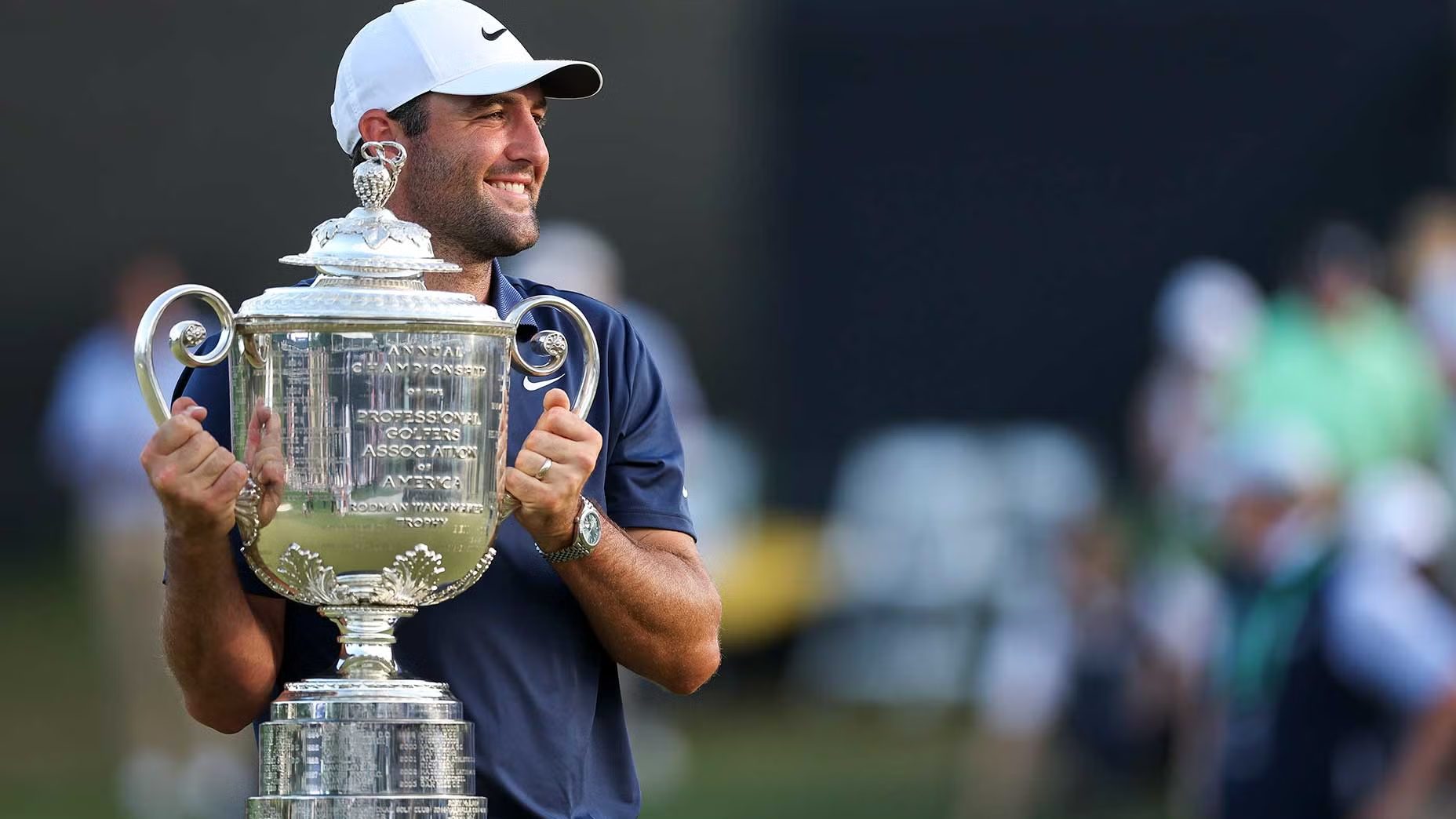
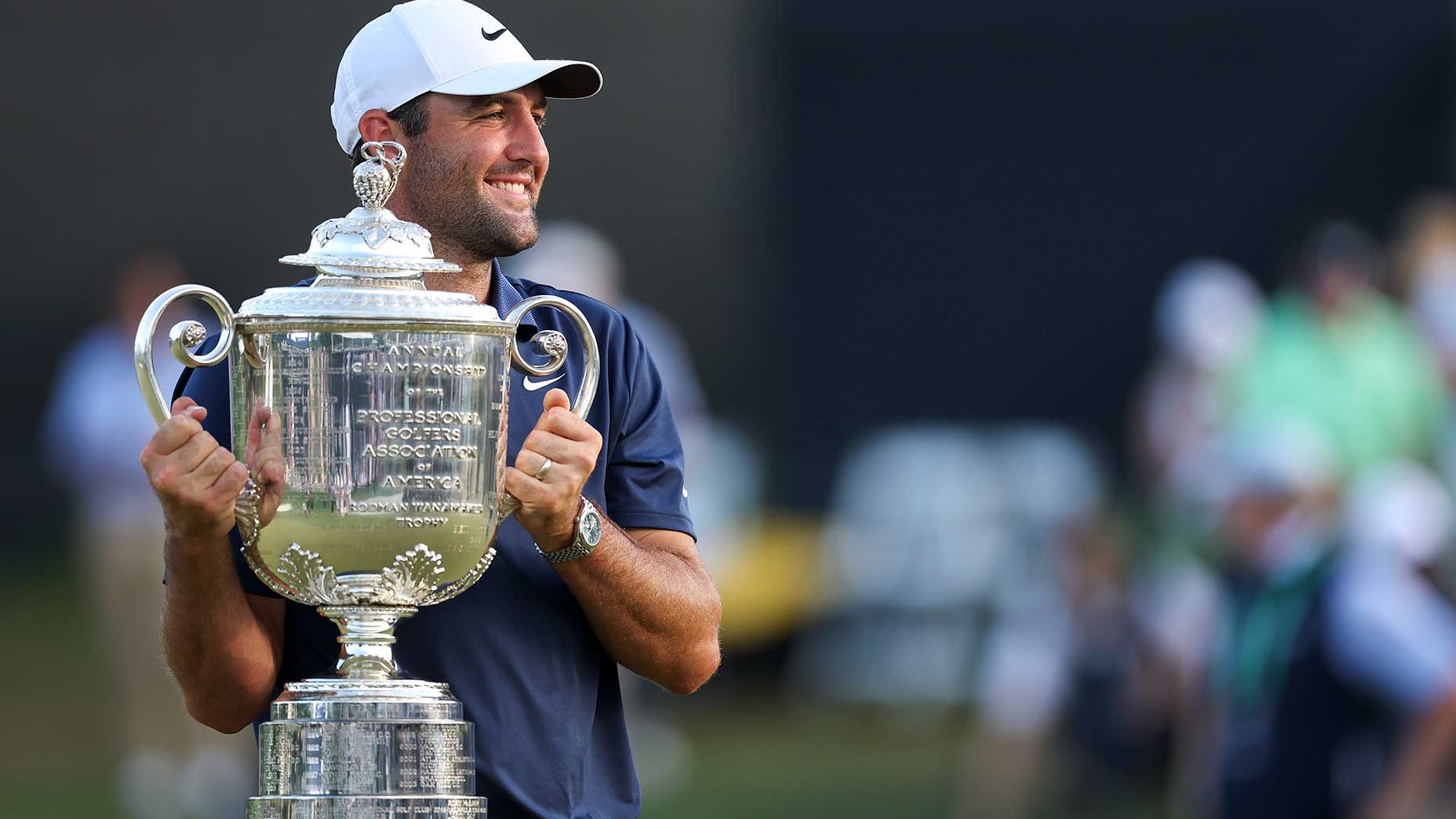
The funny thing about major weeks in the LIV era is that they serve as some of the few times that everybody in the golf world mingles. This week, Jon Rahm and Bryson DeChambeau will be in the same place as Rory McIlroy, Scottie Scheffler and Jordan Spieth. Presumably, they’ll find some things to talk about regarding the current state of affairs.
Of course, the stakes for Aronimink aren’t exactly Yalta, so we probably shouldn’t be expecting any tectonic movements in the golf world to emerge from PGA week, but rest assured, people will be talking.
6. What’s happening with *the rest* of LIV’s players?
Nobody will be losing sleep about the long-term competitive prospects of players like Talor Gooch, who surrendered his major championship future at arguably his career’s highest watermark for a LIV contract, and now has his very own team (OKGC, nee Brooks Koepka’s Smash GC). But perhaps we oughta be thinking about him!
Advertisement
Gooch is one of a handful of players from the LIV midfield who could be disproportionately impacted by the radical change likely coming to the league in the next 12 months. Unlike Rahm and DeChambeau, who will have sponsors and major-championship invites and competitive futures no matter what happens to LIV, players like Gooch sacrificed their status for the chance at life-changing money. Fortunately, they got their paydays. Unfortunately, their futures are now in greater question than ever before.
Ironically, Gooch (whose martyrdom around some of the major championship drama of the early LIV days earned him some flak) won’t be in the field this week at the PGA after receiving a special exemption in 2024. It’s a fitting glimpse into the state of the LIV midfield, and it raises the stakes on those who did make it into the field at Aronimink to show well. The tournament could have future employment potential at stake.
5. The year of Rory?
Last year, I remember being struck by the vision of Rory McIlroy, who arrived at the PGA Championship. After his thrilling win at Augusta National, I figured McIlroy would be floating on air — and carrying the kind of calm of someone without anything left to prove. It led me to predict that he’d win a bunch more majors, perhaps as soon as 2025.
Then he showed up at Quail Hollow looking cantankerous, abrasive and generally peeved. He never quite moved on from that worldview for the rest of the ’25 major season.
Advertisement
It wasn’t until he arrived at Augusta National for the first time as champion that the switch flipped. McIlroy arrived in 2026 at the Masters with all of the quiet, self-assured confidence I assumed I’d see from him in Quail Hollow. Then he won his second green jacket, and talked about resetting after feeling as if the grand slam was his career’s final “destination.” He said he’s found new hunger and enthusiasm in competing in the majors in this stage of his life — and if that’s true, this week could provide confirmation of a new kind of Rory.
4. Where art thou, Scottie?
Far be it from me to suggest that Scottie Scheffler is not playing great golf. He’s still the No. 1 player in the world. He’s still the biggest threat to win every tournament he plays in. He’s still pretty good at playing a really, really hard sport — as he often reminds us with a chuckle.
But Scottie Scheffler has not been the same untouchable force in 2026 that he was in most of 2022, 2023, 2024 and 2025.
A couple of thoughts on that: 1. It’s not inherently a bad thing that this is true — Scheffler would have to be the greatest golfer in history to survive half a decade without a single lull in his game, and even then it might be unrealistic to think. 2. It’s not as if Scheffler’s “fall off” has been pronounced: DataGolf’s world rankings still have him as the best player in the world by three-quarters of a shot. 3. It’s still early in the season — early enough that a victory would quickly remove these conversations in their entirety.
Advertisement
In other words, Aronimink is Scottie’s chance to make us all shut up.
3. Forever Young
Hard to picture a player who better fits the profile of a winner this week than Cam Young, a burly northeasterner playing a burly northeast golf course. Young has been playing the best golf of his life in 2026, grabbing wins at the Players Championship and Doral en route to a career-best OWGR rank of World No. 3.
He profiles as the kind of ball-striker to win at least one major championship in his career, and his recent success in normal golf tournaments and major championships suggests his game is peaking in time for this week. This is a storyline worth monitoring.
2. New leadership
If you’ve only been paying attention to golf’s myriad other existential shakeups, it’s possible you’ve missed the leadership challenges happening at the PGA of America, where new CEO Terry Clark will preside over his first major championship since taking over for the brief tenure of Derek Sprague.
Advertisement
Clark has his plate full already at the PGA of A, including addressing matters of the golf ball rollback, the PGA Championship’s role in the greater golf hierarchy, the development of a true championship identity and the path to avoiding the persistent rake-steps that have dominated the governing body’s last several years ($800 Ryder Cup tickets and World No. 1 player arrests among them). We’ll get our first glimpse at his governing philosophy during a presser this week, and we’ll be paying close attention to what comes next.
1. Philly, baby!
Philadelphia is one of pro golf’s most overlooked cities, and there’s no really good reason for it. There might be no metro area in the United States with a better combination of great golf courses and rabid golf fans. The city will play a major role in the fun this week, and hopefully make a good case for golf in a regular major-championship rotation.
Thomas earned a pair of wins on the mound for Dartmouth against Bridgewater-Raynham and Barnstable, allowing a combined 5 earned runs on 12 hits with 10 strikeouts. She also went 1-for-5 at the plate against Barnstable with 4 RBIs.
Advertisement
Previous winners were GNB Voc-Tech’s Leah Perez and Khloe Pereira, New Bedford’s Brylee DeDeus and Old Colony’s Abby Norton.
Advertisement
The winner of the Preseason Softball Player of the Year poll was Old Colony’s Madison Canton with more than 10,000 votes (50%).
Each week during the regular season, we will highlight the top performances.
Editor’s note: Voting will end at 8 p.m. on Sunday, May 17.
Advertisement
Ashlyn Bogdan, Apponequet
Bogdan hit her first career home run against Old Rochester. She also went a combined 4-for-7 with 2 doubles, 2 runs scored and an RBI against New Bedford and Fairhaven.
Advertisement
Abby Burnap, Apponequet
In a pair of games against Fairhaven and Old Rochester, Burnap went a combined 6-for-8 with 3 doubles, 4 runs scored and 5 RBIs.
Marissa Kelly, Apponequet
In three games, Kelly went a combined 6-for-12 with a pair of home runs, 6 RBIs and 5 runs scored.
Advertisement
Kate Suneson, Apponequet
Suneson went a combined 3-for-4 with 2 walks, 2 RBIs and 4 runs scored against New Bedford and Old Rochester.
Reese Taylor, Apponequet
In a win over New Bedford, Taylor threw a no-hitter, striking out 9 with no walks over 7 innings. She also pitched the Lakers to a win over Old Rochester, allowing no earned runs on 1 walk and 1 hit with 11 strikeouts, and a win over Fairhaven, allowing 2 earned runs on 2 walks and 5 hits with 8 strikeouts.
Advertisement
Alaina Chasse, Bishop Stang
Chasse pitched 5 innings, allowing 3 hits and no walks with 10 strikeouts in a win over Barnstable.
Advertisement
Olivia Megna, Bishop Stang
Against Dartmouth, Megna, a freshman, was 2-for-2 with a walk and her first home run.
Kasey Pomfret, Dartmouth
Pomfret picked up a pair of wins on the mound over Bishop Stang and Hingham as she allowed a combined 3 runs on 8 hits with 3 walks and 7 strikeouts.
Emma Silva, Dartmouth
In a pair of games against Bishop Stang and Hingham, Silva had a combined 5 hits.
In a loss to Case, Furtado went 2-for-3 with a solo home run in the first inning and had a diving catch in center field.
Brianna Pierce, Fairhaven
Pierce threw a no-hitter with 9 strikeouts and 1 walk over 5 innings against Durfee. She also went 2-for-2 at the plate with a pair of doubles. In a pair of losses to Apponequet and Case, Pierce had a combined 21 strikeouts. She also had a home run at the plate against Apponequet.
Advertisement
Stella Zangao, Fairhaven
In a win over Durfee, Zangao went 3-for-3 with a pair of doubles and 4 RBIs.
Janiah Cooper, GNB Voc-Tech
Cooper had a combined 4 hits in a pair of games against Old Rochester and New Bedford.
Advertisement
Akiira’Ley Vazquez, GNB Voc-Tech
In three games, Vazquez had a combined 25 strikeouts, including 11 against Old Rochester. She also had a pair of home runs and 4 RBIs against the Bulldogs.
Advertisement
Belle Almeida, New Bedford
In a 2-1 win over GNB Voc-Tech, Almeida had a single and scored a run.
Maura McEvoy, New Bedford
McEvoy picked up a win over GNB Voc-Tech, allowing 1 unearned run on 5 hits and 2 walks with 9 strikeouts. She also had the go-ahead RBI with a double in the sixth inning. She also pitched a 6-hitter against Apponequet with 2 strikeouts, 2 walks and 4 runs (2 earned).
Madison Caton, Old Colony
In three games, Caton had a combined 5 hits, 11 runs scored and 10 RBIs.
Advertisement
Advertisement
Sharon Delancey, Old Colony
In three games, Delancey had a combined 20 strikeouts on the mound. She also went 3-for-3 at the plate with a double, triple, RBI and run scored against South Shore Voc-Tech.
Leah Robitaille, Old Colony
Robitaille went a combined 11-for-15 with 4 doubles, a triple, 5 runs scored and 11 RBIs.






;)







































You must be logged in to post a comment Login