Connect with us

Tech & AI

Anthropic is operating a lab that conducts biology experiments

Published

on

Anthropic has a wet biology lab in the Bay Area where it can use its AI models to run physical experiments, it has confirmed to TechCrunch.

AI leaders have been promising that AI is the key to curing human disease. Dario Amodei opined just last week: “I believe that AI could cure most major diseases in the next 5–10 years.” To do that, an LLM would have to have methods to test its theories in real life.

“We believe that to do biology, the final test is still, and will be for a while, in real lab work,” Anthropic’s head of life sciences, Eric Kauderer-Abrams, told Reuters. “We absolutely are doing that today.” He added that the lab operates like most biotech labs: Anthropic conducts some research there while also working with external partners.

This news probably shouldn’t be shocking. Anthropic bought Coefficient Bio, a stealth AI biotech, in April.

Advertisement

While Anthropic declined to give specifics on what the wet lab is working on, it did say the main focus was fundamental biology, not drug discovery.

Anthropic doesn’t want to give the appearance of competing with the pharma industry, where it has numerous major customers and partners (e.g., it just announced a deal to work with Novo Nordisk on joint drug discovery). Anthropic has already faced backlash for launching products perceived to compete with those of its customers.

To that end, Anthropic also launched a Life Sciences Verification Program this week, to give vetted bio researchers access to its most powerful models. It has also published recent reports on some of the research it’s doing to support drug discovery. This includes one report on accelerating protein design and one on uplifting bimolecular modeling.

But the world is still reeling from the resignation of Anthropic researcher Jacob Coxon, who warned that “the people building AI earnestly believe that it could kill us all by the end of the decade.” Anthropic’s own alignment lead gave the odds at greater than 10% that AI could exterminate humanity within the next decade.

Advertisement

The fervor has grown so intense that CEO Dario Amodei published a post last weekend calling on the industry to slow down and institute self-regulation. He has repeatedly called bioterrorism one of AI’s biggest risks.

The juxtaposition of these dire warnings and the wet lab has not gone unnoticed in the tech industry. As investor and AI coding startup founder Chamath Palihapitiya posted on X, somewhat tongue in cheek: “The group behind such hits as: ‘We’re All Going To Die’ and ‘Regulate Me Now’ are building a wet lab in SF. I do not recommend this.”

When you purchase through links in our articles, we may earn a small commission. This doesn’t affect our editorial independence.

Source link

Advertisement
Continue Reading
Click to comment

You must be logged in to post a comment Login

Leave a Reply

Tech & AI

Alternatives to Animal Testing Are Finally Taking Off

Published

on

Seventeen years ago, cell biologist Donald Ingber and his colleagues at Harvard University’s Wyss Institute for Biologically Inspired Engineering submitted a paper to the journal Science describing their model human lung. It was smaller than a USB stick and made of a clear polymer slab containing narrow channels, which were lined with the type of cells that line a lung’s air sacs and blood vessels. When air was pumped through hollow chambers beside the channels, the device rhythmically expanded and contracted—it “breathed.”

This lifelike movement was a dramatic change from previous generations of lung models, which typically used static cultures of lung tissue that were unable to simulate the movements essential to lung function. When exposed to inflammatory proteins and bacteria, Ingber’s artificial lung reacted much as living lungs would. And exposure to silica nanoparticles used to model the effects of ultrafine particulates revealed that movement affected how tissues absorbed them.

A photo shows a man with glasses seated in front of a white board with equations.  Donald Ingber led the team that developed the first human lung-on-a-chip at Harvard University’s Wyss Institute. Sam Ogden

It was a powerful proof-of-principle demonstration of a system that could be used to test drugs and other chemicals, providing a complement and even an alternative to testing in tissue cultures or in animals. Even so, the editors at Science were hesitant. They rejected the paper and suggested that Ingber’s team also run the tests in mice.

It wasn’t an unreasonable request: Harvard’s lung system was new and comparing the results it generated to results from mice would help validate it. Ingber’s team ran the suggested experiments and resubmitted their study a year later, in 2010, at which point it was published. (It has since been cited by nearly 5,400 other papers.) Still, the incident spoke to how animal models have been the default of modern biomedical research.

Advertisement

A small transparent device glows against a dark background, with its microfluidic channels outlined in green. An early lung-on-a-chip developed at Harvard’s Wyss Institute used microfluidic channels lined with human cells to reproduce key features of lung function. Wyss Institute at Harvard University

A recent story told by Ilka Maschmeyer, a translational toxicology researcher and executive at the German biotech company TissUse, shows how much things have changed. TissUse specializes in building organ-on-a-chip systems—the conversational name for systems like Ingber’s lung—that are used by pharmaceutical companies for research. A few months ago, says Maschmeyer, a pharmaceutical company approached TissUse after being denied permission by the U.S. Food and Drug Administration to run a clinical trial of a new drug. The problem: It had presented animal data, but the FDA wanted data from organs-on-a-chip or some comparable alternative. The standards had come full circle.

The moment spoke to a trend, perhaps even the early days of a fundamental shift, away from the use of animals in toxicology and drug development. “It’s rare still,” says Maschmeyer, “but I think it’s going to be more and more frequent.”

A host of these kinds of alternatives to experiments on animals have been developed over the years. Collectively they’re known as NAMs, an acronym that stands, depending on whom you’re talking to, for new approach methodologies, novel alternative methods, or nonanimal methods. Most NAMs have yet to be rigorously tested, but early studies suggest their potential.

As NAMs have become more sophisticated, the question of how they will be implemented has become less about their technical qualities and more about the practical next steps needed to realize their potential. Validating NAMs—standardizing the systems, conducting head-to-head comparisons with animal experiments—is an enormous challenge. Moreover, simply outperforming animal models is necessary but not sufficient. The adoption of NAMs will require changes in policy, training, and culture.

Advertisement

“This transition process is much more complicated than you would think,” says Thomas Hartung, a toxicologist and director of the Center for Alternatives to Animal Testing at Johns Hopkins University. “It is more about change management than it is about the technology.”

The Technologies Replacing Animal Testing

For decades, animal advocates and many scientists have criticized both the morality and usefulness of experimenting on animals. An estimated 92 percent of all drugs that enter U.S. clinical trials fail to reach the market, sometimes for business reasons but often because the drugs prove ineffective or unsafe in ways that were not predicted by animal experiments. Failure rates are even higher in drugs for heart disease, cancer, and diseases of the brain.

These statistics don’t automatically mean that a reliance on animals is to blame. Flawed study designs are a problem too, and also the sheer confounding complexity of disease. But there’s little question that animals have made poor surrogates for many conditions. And just as animal experiments may mistakenly suggest efficacy or fail to predict harm in humans, they might also erroneously suggest that drugs are ineffective or harmful when they could actually work in humans. Some researchers argue that if aspirin or acetaminophen had been discovered after the advent of modern testing requirements, they might have been abandoned.

A woman in a white lab coat and blue gloves looks at an image on a monitor.

Two chip devices with cables attached to them sit in a larger white unit.

A closeup photo shows hands in blue gloves using a pipette to move liquids on a lab bench. TissUse’s Humimic systems use microfluidic chips to culture human tissues and model interactions between organs. A researcher images tissues in a chip during an experiment [top], Humimic chips sit in a temperature-controlled unit [center], and a researcher prepares chips for use [bottom].TissUse (3)

Researchers developing NAMs have pushed these systems far beyond old-fashioned tissue cultures. The new technologies include organoids that more closely mimic the structure, composition, and function of human organs. More humanlike still are organ-on-a-chip systems; alongside Ingber’s lung-on-a-chip are brains, hearts, kidneys, and even placentas on a chip. As many as 10 such organs have been linked together, yielding multi-organ systems that promise to recapitulate many aspects of human physiology—not perfectly, but better than a mouse or a monkey would. Supporting these systems are computational simulations of organs and organisms, and also artificial intelligence tools that analyze data generated by other systems and inform future experiments in a high-powered iterative loop.

Advertisement

Yet even as studies piled up and some pharmaceutical companies started using NAMs in-house, the U.S. regulatory system governing drug developing and testing remained an obstacle to their wider use. NAM proponents were overjoyed, then, when in late 2022 the FDA Modernization Act 2.0 passed into law. It explicitly authorized the use of NAMs in the preclinical studies required of new drugs before they could enter human trials. Previous regulations had mandated animal testing; now the door was open to alternatives. It was a landmark moment. “That was something I didn’t expect to see in my life,” says Maschmeyer.

Although immediate in-the-lab impact was limited, the FDA’s decision was a harbinger of things to come. In 2025, the FDA pledged “to make animal studies the exception rather than the norm” for drug safety testing. Then, in September 2026, the agency followed up by issuing a rule that, if it takes effect, will replace references to “animal tests” in its drug-development regulations with the broader term “nonclinical tests.” The change makes explicit that validated alternatives such as human-cell systems, organs-on-chips, and computer models can be used when appropriate.

Also in 2025, the U.S. National Institutes of Health, the world’s largest public biomedical research funder, announced that researchers applying for grants to study animal models would also need to incorporate nonanimal research, such as real-world data or studies of NAMs. Meanwhile, the European Commission and United Kingdom have announced their own plans to phase out animal testing, and the intergovernmental Organisation for Economic Co-operation and Development updated its influential guidelines to allow for expanded use of NAMs.

NAM proponents say these shifts were essential: If regulators won’t accept NAM results, there’s less incentive to adopt them, especially for researchers already working with animals. Maschmeyer says TissUse’s clients increasingly include scientists whose research has been focused on animals. “I see, within the last year, a change,” says Maschmeyer. “It’s more people who are working with animal models who now have to also add in vitro models.” She traces it mainly to the regulatory shift—a trend Ingber calls “game-changing.”

Advertisement

Proving That NAMs Work

It’s not enough for regulators to say that NAMs can or should be used, though. Even more important is the regulatory apparatus dedicated to assessing how they should be used. This begins with their validation: the process by which experimental methodologies and devices are determined to be reliable and trustworthy. A prototype brain-on-a-chip designed to model a rare neurological disease might work fine in the lab that developed it—but to be validated, the system needs to work in the real world.

“You read about all the organ chips that come out of academic labs, which is great—but that’s not going to change their uptake by the FDA, because you have to get the same results anywhere in the world. It has to be a commercial product. It has to be mass-produced and meet very fine performance criteria,” says Ingber. For example, even minute variations in the hydrogels used as tissue scaffolds in organ chips can produce very different growth patterns.

Several clear rectangular modules containing reddish liquid sit in a laboratory tray. Emulate’s Organ-Chips are connected to the company’s automated culture system, which supplies the chips with nutrients and controls the flow of fluid through them. Emulate

Workflows and procedures need to be uniform, too. One obstacle to wider use of vascularized tumor-on-a-chip platforms in developing cancer therapies, for example, is the different metrics used by different research groups to characterize blood-vessel function and geometry. Experimental guidelines, workflows, checkpoints, metrics, reporting criteria: All need to be standardized in order for researchers to compare their work and collaborate across platforms. Members of Ingber’s lab coach industry researchers on how to use chips developed by Emulate, a company founded by Ingber. But even with instructions, they still need help with the finer points of tending to stem-cell cultures.

When a NAM is ready for commercial use and researchers know how to use it, the most important test—whether it provides clinical benefit—still remains. A rare-disease organ chip might be reliable, but are the biomarkers it measures actually relevant? If so, are the algorithms that extrapolate chip results to the drug’s in-body effects truly predictive?

Advertisement

A colorized microscopic image shows magenta rods on a textured surface of light and dark blue.

A colorized microscopic image shows a bumpy surface in pink and purple.

A colorized microscopic image shows dense hairlike structures protruding from a surface. Microscopic images reveal the human tissues grown inside Emulate’s Organ-Chips. Bacteria, shown in magenta, interact with mucus and airway cells in a LungChip [top]; an IntestineChip develops structures resembling those that absorb nutrients in the small intestine [center]; and tiny hairlike cilia grow on cells in another LungChip, where they help move mucus and trapped particles out of the airway [bottom].Emulate (3)

Such questions have been answered for some NAMs. For example, a liver-on-a-chip system from Emulate correctly flagged about seven out of every eight drugs that had safely passed animal trials but proved toxic to human livers. A similar study was conducted by researchers from Oxford University and Janssen Pharmaceutica (later renamed Johnson & Johnson Innovative Medicine). That team showed that their computational simulations of human heart cells flagged compounds that caused a type of dangerous heart arrhythmia with 89 percent accuracy, compared to animal studies that were 75 percent accurate.

Such studies, however, are complicated and costly. Emulate’s study required 870 chips and the labor equivalent of 16 full-time employees working for 16 weeks—efforts far beyond the reach of the average lab. If the researchers wanted regulatory approval to use their chip to predict large-molecule drugs rather than the small-molecule drugs they tested, they would have needed to run another such study for that particular use. And comparable studies ostensibly need to be conducted for every commercially available NAM and every context in which they would be used—a vast undertaking. “That’s a challenge,” says Kathy Archibald, founder of Safer Medicines Trust, a United Kingdom–based group that considers animals to be poor models of human biology. “It takes too long and costs too much, and small companies can’t afford to do it.”

Ingber thinks that academic scientists need to collaborate more with industry researchers on NAMs, and that governments should fund those projects. He and other NAM proponents also stress the importance of having access to the necessary data: Without information from preclinical animal studies and human clinical trials, comparisons are difficult, but much of that data is now proprietary. Pharmaceutical companies and regulators need to share it, they say, and the FDA has called for an open-access repository of drug toxicity data. Hartung of Johns Hopkins also suggests that new animal experiments be run in parallel with NAMs, producing side-by-side comparisons.

To Christian Maass, a computational biologist at the German biotechnology company ESQlabs, NAMS are overdue for a showdown with animal models. His company makes “digital twin” systems in which data from organ chip systems inform whole-human simulations of drug outcomes and disease progression. “I love what we are doing,” says Maass, speaking not only of his company but of the whole field. But he adds that researchers have not yet provided “the evidence and the proof that we are doing better or as good as the animal models.”

Advertisement

Maass thinks that head-to-head comparisons are essential to good science. After all, if a NAM doesn’t outperform an animal model, or works best as a complement rather than a replacement, that needs to be known. He also believes such studies could convince skeptics. Maass mentions the debut of the iPhone, when people saw for the first time how well a phone could work without buttons. “That was an ‘aha!’ moment,” he says. But for NAMs, “that moment is still lacking.”

Changing Scientific Habits

Even when those head-to-head comparisons are made, though, and regulations are appropriately changed, adoption can be slow. In the mid-1990s, researchers developed and validated the monocyte activation test—an assay that uses human blood cells to predict immune response—to replace the rabbit pyrogen test, which involves injecting a compound into a rabbit’s ear and monitoring the animal’s rectal temperature. But it wasn’t until 2010 that the European Pharmacopeia—the official Europe-wide standards for such testing—accepted the monocyte activation test as a replacement. And rabbits are still widely used for this test worldwide.

Why the slow pace of change? In part because updates to guidance documents referring to animal tests lagged behind, but also because of inertia within the culture and institutions of science. “The formal requirement may disappear, but the informal expectation persists,” says Kathrin Herrmann, a veterinary scientist and colleague of Hartung’s at the Center for Alternatives to Animal Testing. Regulators, grant reviewers, peer reviewers, journal editors—the human infrastructure of science—often still expect to see animal data and are unfamiliar with NAMs.

Herrmann is now overseeing a survey of early-career researchers working with, or trying to make the switch to, NAMs. “We consistently hear concerns that NAM-only proposals are perceived as risky by funders, that there is pressure to ‘add an animal experiment’ for credibility, that access to NAM infrastructure is limited, and that career trajectories become uncertain when departing from established animal models,” says Herrmann.

Advertisement

Pink pie charts showing Phase II failure rates: 92\u201395% across drug categories. The vast majority of drugs entering clinical trials in the United States fail to reach FDA approval [failure rates in pink], with particularly high failure rates in some therapeutic areas.

Animal models are embedded in databases, training programs, and the very culture of research. Scientists who use animals may be reluctant to change; their identities as researchers are tied to animals and, more practically, they’ve spent their careers learning the techniques. A toxicologist who has used rats for decades might understandably look askance when asked to take a chance on unfamiliar chunks of polymer and stem cells—especially when human well-being, or millions of dollars, may ride on the choice. Likewise, an academic scientist whose career was built on animal models may not welcome NAMs; a switch may represent the loss of jobs for lab members whose expertise is no longer relevant. “I could see why it’s a hard thing for people to take it up,” says Ingber.

Education and training is vital, say NAM proponents. The NIH and FDA now offer resources for researchers interested in NAMs, as do their counterparts in other countries embracing the technologies. Herrmann helps run webinars where researchers and regulators learn to use and evaluate NAMs; Hartung’s modules on Coursera, the online learning platform, have been taken by about 12,000 students so far. “These trainees will set up their own labs. They will go to industry. They will replace the old guard,” says Joseph Wu, director of Stanford University’s Cardiovascular Institute.

Wu is also a cofounder of Greenstone Biosciences, a company that uses stem-cell-derived human tissues and AI to model disease and predict drug responses. He’s used that position to introduce researchers to NAMs, helping convince the company’s directors to freely share Greenstone’s large library of stem-cell lines with any academic researchers who want to use them. “I really believe that people should understand how this platform works,” says Wu. “At the end of the day, we’re just trying to advance science.”

With enough time—and funding, incentives, training, education, collaboration, and generational turnover—the research culture of drug development and safety testing may shift. Whether NAMs will be used in other areas of science, though, is an open question. Early-stage drug development and regulatory testing account for roughly 30 percent of animals used in experiments; the rest are used in basic biological research. Replacing those animals is less straightforward, but it may be possible: Ingber describes organ-on-a-chip-based insights into inflammatory bowel disease, preterm birth, and treating viral infections that couldn’t have been made in animals. Hartung calls the adoption of NAMs in toxicology a “lighthouse function,” helping guide the way for other types of research.

Advertisement

“Suddenly, all the dams have opened,” he says.

From Your Site Articles

Related Articles Around the Web

Source link

Advertisement
Continue Reading

Tech & AI

S’pore will pay you up to S$72,000 to work abroad, but time is running out

Published

on

Disclaimer: Unless otherwise stated, any opinions expressed below belong solely to the author. All information comes from official government sources.

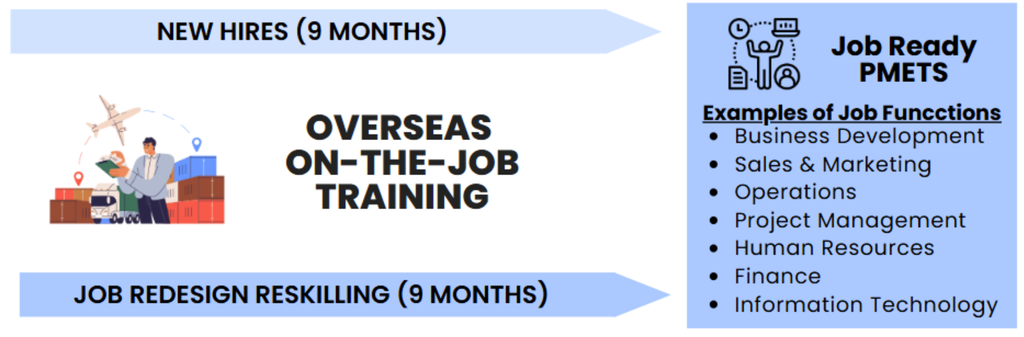
Two years ago, the Singapore government launched OMIP: Overseas Markets Immersion Programme, a generous support scheme which provides state financing for workers looking to gain skills and experience overseas.

This is an excellent opportunity, designed specifically for those who lack sufficient experience and would benefit from a posting abroad, whether you’re a recent graduate or a middle-aged worker seeking a career boost.

OMIP is very generous, as it covers up to 70% of the candidate’s salary (capped at S$5,000 per month) and allowance covering living expenses (capped at S$3,000), for a total of S$8,000 per month, up to nine months spent abroad—that’s S$72,000 in total.

Advertisement

The programme is currently a pilot, running for two years, 2025 and 2026, with a target of helping 250 local workers, employed by Singapore-registered businesses.

With just a few months left, there are fewer than 70 places remaining, according to figures revealed by Workers’ Party MP, Eileen Chong, in Parliament a few weeks ago, when she cited data showing that over 180 candidates had thus far benefited from the scheme.

It’s quite likely that this number has shrunk further since then.

Once the pilot concludes, the government is going to evaluate the results and decide whether to keep, modify or scrap it.

Advertisement

Which means that, for the time being, the final quarter of 2026 might be your last chance to apply to get invaluable foreign experience at a fraction of the cost to your employer.

And it doesn’t have to be a big one, as SMEs make up 75% of the participating companies.

Who can apply?

You cannot apply on your own, the company you work for has to do it for you. Fortunately, the criteria are not very strict, provided that it has a legitimate interest in a foreign market.

Interestingly, even new hires can benefit from the scheme immediately, and in Jul 2026, the requirement of a minimum of two years of working experience was lifted, opening the doors to fresh graduates as well.

In fact, the eligibility criteria specifically state that the candidate “should have little or no prior experience in identified new role, industry, or market”—thus, lack of experience only strengthens the candidacy.

Advertisement
Image Credit: Singapore Business Federation

The programme can be used by both young and older workers, at various stages of their careers, provided that they learn something genuinely new (and it’s not just an attempt to get the government to foot the bill for a foreign placement of an already experienced employee).

Here are the formal requirements for the candidates:

  • Singapore Citizen or Permanent Resident
  • Minimum 21 years old
  • Must not be a shareholder of the company, or its related companies
  • Must not be related to the owner(s) of the company
  • Completed National Service or graduated from educational institution
  • Not currently participating in any other SWDA-funded programmes
  • Should have little or no prior experience in identified new role, industry, or market
  • Must not have started training before application is approved
  • Employees are required to be relocated overseas for work postings to support business growth internationally for a minimum of six consecutive months

There are also some basic criteria a candidate company has to fulfil to qualify:

  1. Registered in Singapore
  2. Have a clear market expansion/ business transformation plans with defined KPIs
  3. Provide a full-time permanent or contract position with a min. fixed monthly salary of at least S$4,000

If your employer ticks these three boxes, then you can suggest entering the programme to them. Its unique feature is that it explicitly supports workers with less, not more, experience. The goal is to help Singaporeans garner foreign exposure, which would otherwise require risky and expensive immigration.

The process takes some time, so you have to keep that in mind.

The Singapore Business Federation, which manages OMIP, requires six weeks to review applications, and the starting date should be no longer than six months from the date of subsequent approval.

Applications submitted on short notice are almost certainly going to be rejected, so plan accordingly.

Advertisement

With the end of the year approaching fast, there’s still no word on when the next steps (e.g. its future continuation) will be announced. Time is ticking away, and the number of available seats with it.

You can find more details about it on the SWDA website.

  • Read other articles we’ve written on Singapore’s current affairs here.

Featured Image Credit: SBF /Min. Tan See Leng via Facebook

Advertisement

Source link

Continue Reading

Tech & AI

Nothing Headphone 1 Pro Review: Style and Substance

Published

on

Verdict

The Nothing Headphone 1 Pro offers outstanding audio clarity and detail, with a stylish premium design at a reasonable price. If you’re looking for a headphone that can pull double duty as a commuter headset and a semi-pro monitor, this is the one for you

  • Super-premium build

  • Excellent audio quality

  • Greatly improved ANC

  • Highly adaptable EQ

  • Nothing’s most expensive cans yet

  • Some controls can be knocked accidentally

Key Features

  • Trusted Reviews IconTrusted Reviews Icon

    Advertisement

    Review Price:
    £349

  • Design

    Advertisement

    The Headphone 1 Pro has aluminium earcups with a transparent glass window to show the inner workings

  • Unique triple-driver setup

    Advertisement

    Each earcup has a 40mm dynamic driver, a precision driver, and a solid-state xMEMS treble driver

  • Flat EQ mode and spatial audio options

    Advertisement

    A new flat profile makes the Nothing Headphone 1 Pro more suited to professional work, while additional spatial audio modes can make for a more immersive listening session

Introduction

Nothing introduced its first over-ear headphones in 2025, and they’ve proven quite popular, judging by how many I’ve spotted out and about. The brand then added a cheaper option, the Headphone A, which became my go-to set of headphones for the last few months. Now, it’s time to get acquainted with the Headphone 1 Pro.

The new cans aren’t replacing the original; instead, they’ll sit alongside them as a more premium option. They’ll set you back £349, while the Headphone 1 currently sells for around £249.

Advertisement

Interestingly, the original Headphone 1 was tuned by KEF, and the new Pro model isn’t. I never listened to the original, but the sound was somewhat divisive, whereas the Headphone A was more universally well received. So perhaps that’s a good move.

That said, with these headphones being Nothing’s most expensive set so far, they’re up against some serious competition from the biggest names in the space. Can Nothing compete, or are these flashy headphones just a fashion statement?

Advertisement

Design

  • Premium aluminium and glass build
  • Redesigned earcups and padding
  • New hard-shell carrying case

The Headphone 1 Pro manages a fine balancing act. The design has changed enough to keep things feeling fresh, but the Nothing DNA is still plain to see, with a similar shape, materials, and design ethos to its predecessors. Personally, I think the Headphone 1 Pro is Nothing’s best-looking set of headphones yet.

The highlight is the glass window on each earcup, which lets you peer into the inner workings of the headset, where each component is painted in a flawless matte black finish. Nothing has been playing around with transparent designs since its inception, but I’ve never seen a transparent segment with so much depth. It’s a really impressive look.

Advertisement
Nothing Headphone 1 Pro earcupNothing Headphone 1 Pro earcup
Image Credit (Trusted Reviews)

Like the original Headphone 1, the Pro has a matte aluminium finish that’s cool to the touch and feels extremely premium. This time, the transparent section is made from shatter-resistant Panda Glass, rather than plastic, which adds to the premium feel and should be harder to scuff. Surprisingly, this hasn’t made the headphones any heavier; in fact, the spec sheet says the Pro are lighter than the originals

Advertisement

The earcup cushions have also been redesigned. They’re now 50% softer, which means they’re more comfortable for glasses-wearers (like me), while also creating a better seal around your frames. In addition, a new silicone baffle in the middle of the cushion reduces sound leakage and improves passive isolation.

The headband cushion is also thicker and wider to reduce pressure on the top of your head, but otherwise, the overall shape and button layout will feel familiar if you’ve tried Nothing’s other Headphones. That’s a good thing, if you ask me.

Nothing Headphone 1 Pro controlsNothing Headphone 1 Pro controls
Image Credit (Trusted Reviews)

The controls each have a unique shape, so you can always figure out what you’re adjusting by feel alone. There are no touch controls here – everything is 100% tactile. Each makes a unique sound when you press it, too. I’m particularly fond of the ratcheting sound that plays through the headphones as you adjust the volume roller.

I’ve been using the Headphone A daily since they were released, so I’m very accustomed to these controls. The only difference here is a new (well-hidden) switch to activate the Flat EQ, but more on that later.

Advertisement

I must say, though, when wearing the Headphone 1 Pro around my neck, I found that the volume would accidentally get adjusted by brushing against my shoulders, and that doesn’t happen as often with the Headphone A – maybe the extra weight of the metal chassis is the culprit.

Advertisement

On the plus side, despite being heavier, these are just as comfortable, if not more comfortable than the lighter Headphone A. I regularly wore them for almost an entire workday with very little discomfort.

Nothing Headphone 1 Pro coloursNothing Headphone 1 Pro colours
Image Credit (Trusted Reviews)

The Headphone 1 Pro comes in either Black or White options, although I think grey/silver might be a more accurate description of the lighter model. Nothing sent both pairs so I could see them in the flesh, and honestly, I’m having a lot of trouble deciding which I prefer. The lighter option stands out a bit more, but the black model looks super slick. You can’t really go wrong.

No matter which colour you go for, you’ll get an identical glossy grey hard shell case in the box. Nothing says it’s inspired by Peli Cases used to transport high-end camera gear. It’s a hinged clamshell with a push button to open, and it only covers the earcups, while the headband sticks out like a carry handle.

Advertisement

There are also attachment points on either side, so you can add your own over-the-shoulder strap and carry your headphones like a handbag (there’s no strap included). It’s a fun idea, but with zero storage compartments inside the case, I’d imagine the people who actually use it like that will be few and far between.

The hardshell case is a fun and unique design; I love to see something a little more creative than the usual velvety pouch. It does mean that the headband will be unprotected during travel, though, and I can’t imagine the high-gloss plastic looking as pristine in the long term – but maybe that’s intentional. Well-used Peli Cases don’t look pristine, either.

Advertisement

Nothing Headphone 1 Pro caseNothing Headphone 1 Pro case
Image Credit (Trusted Reviews)

Features

  • New spatial audio modes with head tracking
  • New physical switch for Flat EQ
  • 10 Mic Adaptive ANC

The Nothing Headphone 1 Pro works with the Nothing X app, just like the brand’s other headphones. And while you can access all the basic features using the onboard controls alone, it’s well worth diving into the settings to make them your own.

The app handles everything from firmware updates and button remapping to managing connected devices, EQ, and spatial audio options. You can even create a personalised sound profile that’s tailored to your hearing.

Advertisement

This implementation of the personal audio profile is a little more basic than I’ve seen from competing brands, but the results seem just as impressive. It’s not doing anything too clever, like using microphones to measure your ear canal (as seen from Nura in the past); this just plays tones at different frequencies in each ear and asks you whether you can hear them or not. Still, it works, and only takes a few minutes to set up.

Nothing Headphone 1 Pro X appNothing Headphone 1 Pro X app
Image Credit (Trusted Reviews)

Advertisement

In lieu of the KEF partnership, Nothing has instead teamed up with London-based Metropolis Studios. Together, they crafted the new Flat EQ mode, as well as Studio B, a spatial audio preset based on one of their actual recording studios. There are also 5 new Metropolis Studios-approved EQ modes: Bass, Neo Jazz, Electronica, British Rock, and Grime.

The spatial audio effects are all very impressive, and they dramatically change the sound output without noticeably degrading the quality. There’s also a head tracking option, which makes it feel like the sound is coming from a fixed point in space.

Personally, though, I’ve never really been sold on the whole spatial audio thing. I always appreciate a nice wide soundstage, but I don’t see the appeal of virtualised echoes and reverb. I’d rather hear my music the way it was intended to be played. Still, it’s there if you’re into it, and it does its job well.

Advertisement

The EQ options are more up my street, and these headphones have some of the most comprehensive options I’ve ever come across. In Simple mode, you get five basic presets, and a custom option with three adjustable sliders for Bass, Mids, and Treble.

Nothing Headphone 1 Pro X app EQNothing Headphone 1 Pro X app EQ
Image Credit (Trusted Reviews)

If you want more control, you switch into the Advanced tab where you create custom EQ curves with up to six bands for the main drivers, and up to four additional bands for the precision driver. You can also import the aforementioned Metropolis Studio presets and use those.

Advertisement

These options make a massive difference to the sound output, so if you aren’t impressed with the default sound signature, you can likely craft your perfect profile by tinkering with them.

Noise Cancellation

  • Adaptive ANC
  • Transparency mode

The Headphone 1 Pro has ANC, which now uses 10 inward-facing microphones (five on each side), up from six on the Headphone 1 and four on the Headphone A. Nothing says the inward-facing orientation dramatically reduces wind interference, and there’s an extra 5db of noise reduction overall.

Nothing Headphone 1 Pro black versionNothing Headphone 1 Pro black version
Image Credit (Trusted Reviews)

As someone who uses the Nothing Headphone A almost every day, the difference is huge, the Headphone 1 Pro is on another level. My biggest complaint was wind noise, and that’s almost entirely solved.

They also fully eliminate background hums, and even do a good job reducing the volume of nearby conversations, which is something a lot of headphones struggle with. Transparency mode works well, too, which is perfect at home when you’re trying not to be antisocial.

Advertisement

Advertisement

Battery Life

  • 30 hours with ANC
  • Fast-charging support

Battery life is good, but this model can’t match Nothing’s cheaper headphones, which is a bit of a shame. Nothing reckons you’ll get 30 hours with ANC/transparency mode active, or 68 hours with it off. The Headphone A boasts 75 hours with ANC on.

Nothing Headphone 1 Pro case interiorNothing Headphone 1 Pro case interior
Image Credit (Trusted Reviews)

That said, it’s more than good enough for my needs. Despite using the headphones for multiple hours every day, I still only needed to charge them about once per week. Charging is pretty quick, too. A full charge takes 2 hours, while just 5 minutes on the charger will get you another 2 hours of listening (with ANC on).

Sound Quality

  • 40 mm Bass Dynamic Drivers
  • 13x8mm Precision Dynamic Drivers
  • xMEMS solid-state treble drivers

The Nothing Headphone 1 Pro has a very unique driver arrangement. Each cup features three drivers: a more typical 40mm dynamic driver, a precision dynamic driver, and an xMEMS solid-state treble driver.

Advertisement

This is the first time these xMEMS drivers have been used for an over-ear design; they’ve usually been found in in-ears/IEMS. They focus entirely on the 10 – 40kHz treble region, while the precision dynamic driver handles vocals and instruments in the mid-range, and the 40mm driver gives you that low-end thump.

As mentioned, the EQ makes a massive difference to the way these headphones sound. It’s almost like you’re individually adjusting the volume of each driver when you play with the settings. So, for the sake of simplicity, I’ll mainly focus on the default Balanced EQ that the headphones ship with.

Advertisement

I never tried the original Headphone 1, so it’s hard to say how the sound compares, but side-by-side with the Headphone A, it’s a completely different signature. The Headphone 1 Pro, is much more balanced, with exceptional clarity in the mids and high end. I wouldn’t describe them as bright, necessarily, but they’re brighter than the Headphone A, with less of a boost to the low end.

Nothing Headphone 1 Pro side viewNothing Headphone 1 Pro side view
Image Credit (Trusted Reviews)

The Headphones can still reproduce the deepest sub-bass tones (shout out to Three Ralphs by DJ Shadow for being an ever-reliable test song), but the bass is precise and unexaggerated. The Headphone A feels like it’s shaking your head with a song like that; by contrast, the Headphone 1 Pro can reproduce all the tones accurately, but it’s much less boomy.

I’m a bit of a bass fiend, and I found a substantial low-end boost in the EQ suited my tastes better. But no matter what you do, you won’t quite match the subwoofer-like rumble of the Headphone A.

Advertisement

What’s not up for debate, though, is the clarity. The Headphone 1 Pro is in a completely different league: fantastic airy vocal reproduction, a wider soundstage, and exceptional positioning. Playing I Can See Clearly Now by Johnny Nash, I noticed breaths and instrumentation that I’d never been able to pick out with other headphones; it’s seriously impressive.

Advertisement
Nothing Headphone 1 Pro Flat EQNothing Headphone 1 Pro Flat EQ
Image Credit (Trusted Reviews)

Another big change with these headphones is the Flat EQ mode, which is designed to transform these headphones into near-pro-level monitors at the flick of a switch. Again, it makes them sound completely different, and for some reason, it disables transparency mode when active. You can only choose between ANC on or off.

The Flat mode certainly isn’t as fun for casual listening. The clarity is superb, but they’re much less lively and vibrant. That’s fine, though; that’s what this mode is for. I’ve been using these headphones for video editing, and I find it’s a much better way to normalise my output levels and dial in compression settings. If you’re a music maker, you’ll likely appreciate it even more.

Should you buy it?

You’re looking for style and precision

The Headphone 1 Pro stands out from the crowd with its unique styling and provides more clarity than most with its triple-driver arrangement.

Advertisement

You want ultra-long battery life

Advertisement

The battery life is good, but Nothing’s more budget-friendly model outlasts the Pro by a large margin.

Advertisement

Advertisement

Final Thoughts

In many ways, the Nothing Headphone 1 Pro stands alone as a unique offering. It blends the portability and advanced ANC of popular options like the Sony WH-1000XM6 and AirPods Max 2, with an audiophile-grade triple-driver arrangement, and a Flat EQ mode that’s suited to semi-professional use.
 
In my opinion, they might be the best-looking headphones on the market today, and they feel just as premium as they look, with their aluminium and glass earcups. I wouldn’t go so far as to say that the Headphone 1 Pro has the best ANC available, but it’s certainly not far behind the likes of Sony and Bose.
 
The £349 MSRP means the Headphone 1 Pro is directly competing with the Sony WH-1000XM6, but it still manages to undercut the AirPods Max 2 and Bose QC Ultra Headphones Gen 2.
 
In any case, Nothing’s latest outshines them all with its detail and precision in the higher frequencies. I can’t say whether you’ll prefer the sound or not, but you’ll almost definitely hear more detail.
 
If you’re shopping for headphones in this price range, it’s well worth giving the Nothing Headphone 1 Pro a try. I’ve loved using them, and they’ll remain my video editing headphones of choice for the foreseeable future.

How We Test

We test every pair of headphones we review thoroughly over an extended period of time. We use industry-standard tests to compare features properly. We’ll always tell you what we find.

We never, ever, accept money to review a product.

Find out more about how we test in our ethics policy.

Advertisement
  • Tested for two weeks
  • Tested with real world use

FAQs

Can you use the Nothing Headphone 1 Pro in wired mode?

Yes, the Nothing Headphone 1 Pro comes with a 3.5mm cable in the box, and supports hi-res 24-bit 192kHz playback through a wired connection.

Is the Nothing Headphone 1 Pro waterproof?

Not fully, but an IP52 rating means it’s protected from splashes.

Advertisement

Full Specs

  Nothing Headphone 1 Pro Review
Manufacturer Nothing
IP rating IP52
Battery Hours 30
Fast Charging Yes
Weight 327 G
Release Date 2026
Audio Resolution LDAC, AAC, SBC
Driver (s) 40mm Bass Dynamic, Precision Dynamic Driver, xMEMS
Noise Cancellation? Yes
Connectivity Bluetooth 6.1
Colours Black, White
Frequency Range 20 40000 – Hz
Headphone Type Over-ear
UK RRP £349
USA RRP TBC

Source link

Advertisement
Continue Reading

Tech & AI

October Skies Will Put On a Show: Here’s When to Look Up

Published

on

As autumn paints the leaves, the universe is putting on its own seasonal spectacular. October features an action-packed lineup of meteor showers and celestial showcases.

All eight planets are visible at some point in October

A graphic showing Mercury just before sunset.
Mercury is visible just before sunset for several days in October.Stellarium

Every planet in the solar system is easily seen at some point this month, with Mercury being the most difficult. That’s not unusual, thanks to its proximity to the sun. Here’s a quick rundown on the best times to view each planet in October. 

Mercury: Mercury is in elongation (the furthest it can get from the sun) on Oct. 12, making that day and the two or so days before and after the best possible time to view Mercury. 

Venus: Venus spends most of the month being right next to the sun, making it virtually impossible to see. However, by the end of the month, it begins to separate from the sun, making it visible just after sunset. The best view is on Oct. 31, and the view is only set to get better going into November.

Mars: Mars will be visible in the night sky every night in October. It rises from the eastern horizon right around 2 a.m. and stays there until the sun comes up.

Advertisement

Jupiter: Jupiter and Mars are going to be pretty close together all month, so most of the same rules apply, except that Jupiter rises about two hours later than Mars on most nights in October. 

Saturn: Saturn is living its best life in October. It’s visible almost right at sunset ET and stays visible in the night sky until sunrise.

Neptune: Neptune is also visible every day in October and follows a very similar path to Saturn. It rises in the east, streaks across the sky, and sets in the west right around sunrise. They’re actually pretty close together in the night sky every night during the month, so if you can find Saturn, Neptune isn’t far off, but you’ll definitely need magnification to see it. 

Uranus: Uranus is visible the entire month and follows a very similar path through the sky as Saturn and Neptune, but its trek happens later at night. It rises on the eastern horizon about 2 hours after Saturn and follows it across the sky, but never really catches up, ending up in the high western sky when sunrise comes. 

Advertisement

Oct. 3-4: Saturn is at opposition

A graphic showing where Saturn is on October 3.
Saturn rises from the eastern horizon and treks across the sky overnight.Stellarium

Skygazers hoping to get the best possible view of Saturn can do so in the first week of October. The planet is at opposition — the point at which it’s closest to the Earth — meaning it’s as big and bright in the night sky as it’s going to get for the next year. This is prime time to pull out the telescope or high-powered binoculars and get a look at Saturn, along with its fabulous rings.

The planet reaches opposition at around 8 a.m. ET on Oct. 4. The best time to view is the night before, Oct. 3, or the evening after, Oct. 4. For both nights, Saturn rises out of the eastern horizon just before sunset and streaks up into the southern sky as the night goes on. The moon may cause some light pollution, but the planet is bright enough that it shouldn’t be hard to spot with the naked eye.

Oct. 5: The moon and Mars hang out

A graphic showing the moon and Mars near each other.
The moon and Mars are getting cozy on Oct. 5. Stellarium

The various objects in the sky are always having a dance party, at least from the perspective of viewing them here on Earth. Mars and the moon are due for a dance on the evening of Oct. 5. In the days leading up to it, Mars appears further up in the night sky but drifts closer to the moon. After Oct. 5, the moon will move rapidly away from Mars. The two will be almost right on top of one another, so if you can find the moon, Mars should be nearby. 

Oct. 6: The moon covers Jupiter entirely

A graphic showing the moon and Jupiter very close together.
The moon will pass in front of Jupiter, hiding it from view. Stellarium

Just one day later, the moon is meeting up with another dance partner, Jupiter. The moon will completely cover Jupiter, hiding it from view for much of the night, a phenomenon known as a lunar occultation. This is a pretty rare event. Per The Old Farmer’s Almanac, New York City saw a Jupiter occultation in 2004. The prior one visible to New Yorkers was in 1889. 

This one is pretty easy to see. The moon and Jupiter will be right on top of one another all night, but depending on where you live, you’ll see Jupiter dip behind the moon at some point and pop back out again. The times vary wildly depending on where you are, so we recommend checking out The Old Farmer’s Almanac, which has a table of times this will happen in major cities. 

Oct. 7: Draconids Meteor Shower

A graphic showing where the Draconids meteor shower is going to be.
The Draconids meteor shower is in the Draco constellation near Vega. Stellarium

The Draconids meteor shower is a minor meteor shower that occurs every year around the first week of October. It officially starts on Oct. 6 and runs until Oct. 10, making it one of the shortest meteor showers of the season. It peaks on the evening of Oct. 7 and continues into the middle of the night. It’s fed by the 21P/Giacobini-Zinner comet, which is part of the Jupiter family of comets. 

Draconids meteors appear to originate from the Draco constellation. It sits high in the western sky in the northern hemisphere this time of year, with a slight lean to the north. If you’re using a sky map app, all you need to do is find Vega, and you’re already in the right neighborhood to catch Draconids. 

The peak is a little tame, at around 10 meteors per hour most years, but it has a history of surprising astronomers. In 1933 and 1946, Draconids spat out thousands of meteors an hour in what were two of the most intense meteor showers of the 20th century. On the plus side, the moon is below the horizon for this meteor shower, so you won’t need to worry about light pollution from the moon. 

Advertisement

Oct. 10: The last good chance to see the Milky Way

The Milky Way captured with the Tiny1 camera.

TinyMOS

The very best time to view the Milky Way is at a new moon in the warm months of the year, from May to August. This is when the Milky Way is high in the sky all night, giving night owls great views and plenty of time to photograph it. The problem is that it’s best viewed on nights with a new moon between midnight and 4 a.m. local time, which can be a bit late for some folks. 

September and October are great for this because the Milky Way is at its highest point between 8 p.m. and 10 p.m. local time, giving the early birds a chance to snap some sweet photographs of the Milky Way. After October, the Milky Way is too low on the horizon to allow really good pictures of it until the following May. So, if you have a camera and are some place that’s dark, the new moon on Oct. 10 is probably your last chance to capture a striking photo before next spring. 

Oct. 21: Orionids meteor shower

A graphic showing where the Orionids meteor shower is.
The Orionids meteor shower will be low to the horizon in the east when its peak occurs.

Orionids is the better-known of the two October meteor showers. This one officially starts on Oct. 2 and runs until Nov. 7. It’s possible to spot a meteor from Orionids any night during the month, but the shower reaches its peak on the evening of Oct. 21. Meteors for this shower come from the 1P/Halley comet, which also feeds the Eta Aquariids meteor shower that happens every year in May. 

This is a slightly more active meteor shower than the Draconids, and you can expect about 10 to 20 meteors per hour. The moon is set to be about 76% full that night, so you can probably expect to see fewer meteors thanks to lunar light pollution. The Orion constellation, where the meteor shower will appear to originate, doesn’t pop up over the eastern horizon until after midnight, so make sure to pack some coffee if you’re staying up late for this one. If you can find the stars Betelgeuse, Capella and Rigel, then you should be able to find Orion easily. They’re in the same general area. 

The Orionids meteor shower is best known for its bright, fast-moving meteors, which leave long trails that can last for over a minute and sometimes result in fireballs. Their brightness will be a boon, with the three-quarters-full moon in the sky hindering viewing. 

Advertisement

Oct. 26: The Hunter Moon

A full moon rises behind the Washington Monument. NASA/Bill Ingalls

October’s full moon falls close to Halloween this year, perfect for spooky views. According to The Old Farmer’s Almanac, October’s full moon reaches its peak on Oct. 26 at 12:12 a.m. ET. It’ll also be over 90% full for a couple of days before and after, giving you a solid five days to check it out. 

October’s full moon isn’t quite a supermoon. A full moon is only classified as a supermoon when the moon is in perigee and full at roughly the same time, and October’s full moon misses the mark by a couple of days. October’s full moon is the last normal full moon of the year. November and December close out 2026 with supermoons before January opens with the final supermoon of this cycle. 

Oct. 27: The moon eclipses the Pleiades

A graphic of the moon and Plaeiades together.
The moon will eclipse the Pleiades before either rises in the sky, but most people will still get to see part of it.Stellarium

Pleiades is one of the best star clusters to view in the night sky. They’re known as the Seven Sisters, and in terms of clusters of stars, it’s one of the easiest to see. The exception is on Oct. 27, when the moon will cross in front of them, blocking them almost entirely from view. When this happens depends on where you’re located. 

The moon begins passing in front of them before sunset in eastern time, and moves out of the way around midnight. Those on the East Coast will start the night in the middle of this little eclipse, while those on the West Coast will glimpse it at the very end. Finding it should be simple enough since the moon is the easiest thing to see in the night sky.

All month: Constellations and asterisms

The sky is continuing its rearrangement from summer into autumn, and there are tons of constellations to gaze at over the course of the month. Many of September’s constellations appear again, including both Dippers, Aquarius, Pegasus, Pisces and many others. October plays host to a few new ones in the night sky cycle, including Taurus, Cetus, Auriga and Orion, which will appear low on the horizon as they begin their months-long ascent into the sky for the winter. 

There are some smaller asterisms to observe as well, including the Coffin of Delphinus, the Circlet of Pisces and the Northern Cross. We recommend using a sky map to find them all, as there are quite a lot. That’s good news, because even if you don’t go out during one of the big events in October, you’ll still have plenty of objects to look for in the night sky. 

Advertisement

Source link

Advertisement
Continue Reading

Tech & AI

Protego Ventures closes debut $125 million fund for Israeli defense tech

Published

on

Defense and venture capital used to rarely overlap, but that’s no longer the case. Defense tech VC dealmaking set a record in Q1 2026, and new VC firms have emerged around the world to invest solely in defense startups.

One of these is two-year-old Protego Ventures, which presents itself as the first and largest dedicated defense tech VC in Israel. Led notably by two women, Lital Leshem and Lee Moser, it has just completed the final close of its debut fund with $125 million in capital commitments, TechCrunch learned exclusively.

This fund size is enabling Protego to invest between $5 million and $50 million per company, with a focus on startups “addressing the critical defense and security needs of Israel and the global community,” according to its website.

These include the likes of drone maker XTEND, its first portfolio company, which went public on the NYSE earlier this month. That’s also why Protego stopped short of its $150 million target: a smaller fund magnifies the impact of a single big win on overall returns, and with XTEND now looking like a potential “fund maker” — a single investment capable of returning the whole fund — raising more capital would only dilute that upside among a larger pool of investors. “Nobody wants to share the pie,” Leshem said.

Advertisement

Ares Management is one of Protego’s biggest backers. The investment firm suggested that Leshem and Moser join forces and start Protego in the aftermath of the October 7, 2023, Hamas attack on Israel, with the conviction that new technologies would be key to boosting Israel’s defense capabilities in the face of new threats, Leshem said.

With a $30 million investment as a limited partner, Ares gave Protego the support it needed to start investing right away, Leshem said. Besides XTEND, its portfolio also includes startups such as ASIO, which develops situational awareness systems and has partnered with Anduril.

Leshem says the reception in defense circles has been strong. “On the military side, there is a lot of respect, and people are coming — even under the radar — to talk to us, to learn from us, to train with us, and for sure get our technology and innovation.”

Still, the Israeli market is easier to navigate for insiders, and Protego’s two founders are leaning into their networks. Moser, a seasoned venture capitalist, will remain a managing partner at the generalist VC firm AnD Ventures. As for Leshem, who co-founded a startup that was acquired for $625 million in 2025, she also brings 11 years of experience in the military and intelligence field to their approach.

Advertisement

“Everything changed on October 7,” Leshem told TechCrunch. She was deployed, while pregnant, as a reservist on the day of the attacks. “And basically until the delivery room, I was there, witnessing and getting the first-row seat to how the battlefield acted differently from what I knew in the past decade.”

Protego won’t have the field to itself for long. Israeli authorities have taken notice of the same shift, awarding VC firms Adir Capital and Sling Capital about $33 million in state guarantees to invest in military and dual-use technologies, with other funds also raising capital for similar bets. (Leshem said Protego was too far along in its own fundraising to take part in the government’s tender.)

Protego, meanwhile, is already planning its next move: a second fund in the first quarter of 2027, backed by Israeli institutional investors and one large U.S. commitment Leshem has already secured, with a broader scope that includes early-growth American defense-tech companies.

When you purchase through links in our articles, we may earn a small commission. This doesn’t affect our editorial independence.

Advertisement

Source link

Continue Reading

Tech & AI

Washington governor sets up space council to boost business ventures targeting the final frontier

Published

on

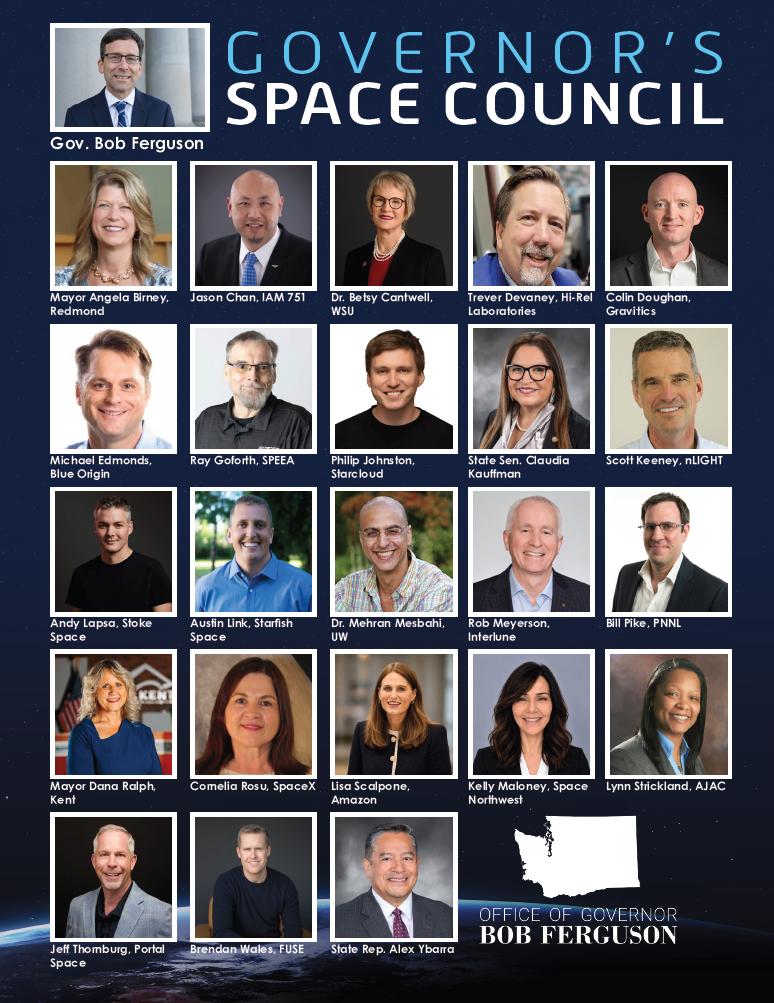
Washington Gov. Bob Ferguson kicks off the Washington Space Council, surrounded by the council’s members and 10-year-old Sebastian Yu. (GeekWire Photo / Alan Boyle)

Washington Gov. Bob Ferguson has created a public-private council to elevate the Evergreen State’s profile as regional clusters compete for primacy in America’s space industry.

The 23-member Washington Space Council was introduced tonight at the Museum of Flight during a kickoff event for Seattle Space Week, a celebration organized by Space Northwest.

“The council will help keep us competitive by comparing Washington with other leading states in the industry and identifying ways we can continue to improve and compete,” Ferguson said.

Washington state already ranks as one of the nation’s space industry hotspots. “We’re proud to have a cluster of more than 90 space companies employing more than 13,000 workers, generating over $4 billion in annual economic activity and $1.6 billion in annual payroll,” Ferguson said.

But Andy Lapsa, co-founder and CEO of Kent, Wash.-based Stoke Space, told tonight’s crowd that several other regions are competing with the Pacific Northwest for space-related investments. “States like Florida and Texas and Colorado want this industry, and they want it bad,” he said. “They compete for it every day. Washington has every advantage it needs to lead them all, and the window to use those advantages is open right now.”

Advertisement

Boeing has historically been the state’s leading venture in aerospace, but when you focus on ventures that concentrate strictly on space, Blue Origin is high on the list. Seattle is particularly strong in the satellite sector: More than half of the world’s satellites are built in the Seattle area, thanks to SpaceX’s Starlink facilities in Redmond and Woodinville, plus Amazon Leo’s factory in Kirkland, BlackSky’s production plant in Tukwila and Xplore’s operation in Bellevue.

Gravitics, Interlune, Portal Space Systems, Starcloud and Starfish Space are among other space ventures represented on the Washington Space Council. The list also includes elected officials, union leaders, educators and investors, plus representatives from space-related tech companies and Pacific Northwest National Laboratory.

The 23-member Washington State Council includes representatives from government, academia and the space industry. Click on the image to get the full list from the Washington State Department of Commerce.

Ferguson said the council will “identify barriers for the industry and find opportunities for growth.”

“That includes, by the way, workforce development, infrastructure and much more,” he said. “And the council will look for ways we might be able to develop Washington-based commercial launch capabilities. That would be a very exciting addition to what we’re doing right here in Washington.”

Ferguson brought a member of the audience, 10-year-old Sebastian Yu, to the stage when he signed the executive order that officially created the council. After the signing, the governor handed the pen to Yu.

Advertisement

“Your assignment, Sebastian, is that when we do that first launch, you have to save this pen and bring it with you to the first launch,” Ferguson said. “Take care of this pen, OK? I’m going to expect to see it again someday.”

Notes from the kickoff:

  • Space Northwest presented three awards to recognize contributions to the region’s space industry. The Shooting Star award for municipal support went to the city of Kent, Wash. Portal Space Systems won the Rising Star award for emerging space companies, and SpaceX won the North Star Award for large space companies.
  • Kent Mayor Dana Ralph noted that her city’s connection to the space industry goes back to Boeing’s work on the lunar rovers for NASA’s Apollo moon missions in the 1970s, while acknowledging that Kent can’t rest on its laurels. “Our job is to make it possible for companies to build and grow and hire. That means reinvesting in the basics: roads, great mobility, water, sewer, plentiful and easily accessible energy and industrial land,” she said.
  • Mehran Mesbahi, professor and chair of the University of Washington’s Department of Aeronautics and Astronautics, highlighted efforts to boost careers in the space industry. “We have Husky Satellite Lab, a group of energized students at UW, and we’re going to create a certificate program around space systems going forward,” he said.

Seattle Space Week continues on Tuesday with the Space Northwest Symposium at the Federal Way Performing Arts & Event Center.

Source link

Advertisement
Continue Reading

Tech & AI

Pet Hair Everywhere? This $30 Roller Removes It From Places a Vacuum Simply Can’t

Published

on

Among the many joys of having a cat is the daily battle with the mess they leave behind. No matter what you try, finding litter and pet hair on furniture or in your bed is inevitable — either they track it in, or you do. If you’re a pet parent like me, this means searching for additional bits of litter and stray hairs that find their way into places you really don’t want them, including the bed. Short of pulling the sheets off entirely, few fixes exist.

I took a chance and tested the SandBar Roller, a $30 dual-roll lint roller, to see if it can make it easier to keep stray hair and litter at bay. I also put it through the paces for other lint-roller tasks like dusting and cleaning floors. Here’s how it fared.

How SandBar Roller differs from other lint rollers

sandbar-roller-dual-roller-head-and-detached-handle-on-desk
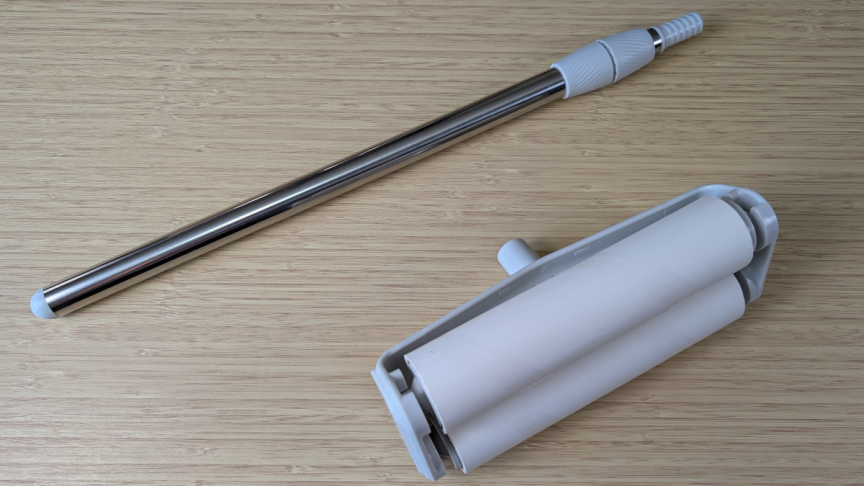
The SandBar Roller Starter Kit I tested included the roller head, an extendable handle and two preinstalled lint rolls.John Carlsen/CNET

The SandBar Roller’s appeal lies in its two large lint rollers instead of one. While the idea doesn’t seem like much of a departure from a typical large lint roller, I couldn’t find any other dual-roller designs intended for use between bedsheets like SandBar. By arranging the rollers in this way, SandBar can clean the top and bottom sheets simultaneously without getting stuck.

The Best Handheld Vacuums, Tested by CNET

The Best Handheld Vacuums, Tested by CNET

Advertisement

While SandBar markets its proprietary lint rolls as stronger than normal rolls, they’re not much different from what you’ll find on the extra-large pet hair version of the Scotch-Brite lint roller. Both are 8 inches wide, with an inner diameter of 1.5 inches. Much to SandBar’s credit, its six-pack of refill rolls is just $20, which is very competitive with other lint roll refills I found on Amazon, with the optional subscription price dropping to just $16 for each one-, two- or three-month delivery.

Testing the SandBar Roller

sandbar-roller-on-blanket-1
The extendable handle is very practical.John Carlsen/CNET

Ostensibly, this design targets coastal homes, where sand gets everywhere — hence the SandBar name. While I don’t live on the coast, I’ve experienced sand in my bed while traveling, or after day trips to the desert, and cat litter is a near-daily occurrence. With that in mind, I conducted a series of informal tests to see how the SandBar Roller holds up.

Upon putting SandBar between the sheets, I noticed it moved fairly smoothly, at least until it snagged on some sheets that were too loose. It didn’t jam, but that means it works better for beds with the sheet firmly tucked at the foot — something I don’t do for various sleep-friendly reasons. Still, it worked well after tightening the sheets a bit, even snagging a few cat hairs and litter fragments. It’s a nice alternative to washing the sheets as frequently as I have to now.

sandbar-roller-with-hand-removing-used-roller-sheet
I like the stickiness of the rolls, which is satisfyingly tacky without leaving residue or making it difficult to pull off used strips.John Carlsen/CNET

The SandBar removed cat fur from hard-to-reach places

Next, I wanted to see how it handled cleaning smart window shades and curtains, which often collect fur as my cat patrols windows a few times a day. It was a little more awkward, but taking the handle off proved effective, and the sticky roller collected a substantial amount of fur. I had to peel off multiple sheets because of the amount of fur, but it took only a few passes to clean the curtain. The SandBar Roller was very useful on furniture and pet beds, but I noticed that being too aggressive can occasionally dislodge a roll.

The SandBar Roller left a fairly clean surface when I dusted off a TV cabinet and soundbar. Still, I wouldn’t trade it out for the duster and handheld vacuum I usually use. Likewise, it did well on the linoleum floor and carpet near my cat’s litter box, but still I prefer the cleaner result I get from vacuuming.

Should you buy the SandBar Roller?

sandbar-roller-cleaning-white-window-shade
The specialized design does its job well, but is probably too niche for people who aren’t pet parents or near vast swathes of sand.John Carlsen/CNET

At $30, the SandBar Roller is unlikely to break anyone’s budget, especially when you can find similarly large bed lint rollers for the same price. In that context alone, including the cost of refill rolls, it’s probably as good as any other option. Still, the dual-roll design’s ability to get between sheets is a compelling reason to consider the SandBar Roller over the competition. The design suits households that typically deal with a lot of sand and litter in the beds. I could even see myself taking it camping for quick dirt cleanup in a sleeping bag.

However, I wouldn’t recommend it for short-term beach house rentals because it cuts corners — new guests expect clean sheets when they arrive. That said, making a SandBar Roller available during a guest’s visit could be worthwhile to improve their experience, as long as you leave instructions explaining what it’s for and how it works.

Advertisement

If you don’t need the second roll — and mainly deal with pet hair on furniture — the ChomChom Roller doesn’t need refill rolls, making it a much better option for $25. Likewise, a handheld vacuum can do the same job with a bit more flexibility around the house — though it’s not quiet enough to use when others are sleeping. While it’s nice to have so many options, it’s always worth going with what works best for your needs and situation.

Source link

Advertisement
Continue Reading

Tech & AI

Metal Gear Solid Moves From PlayStation To ESP32

Published

on

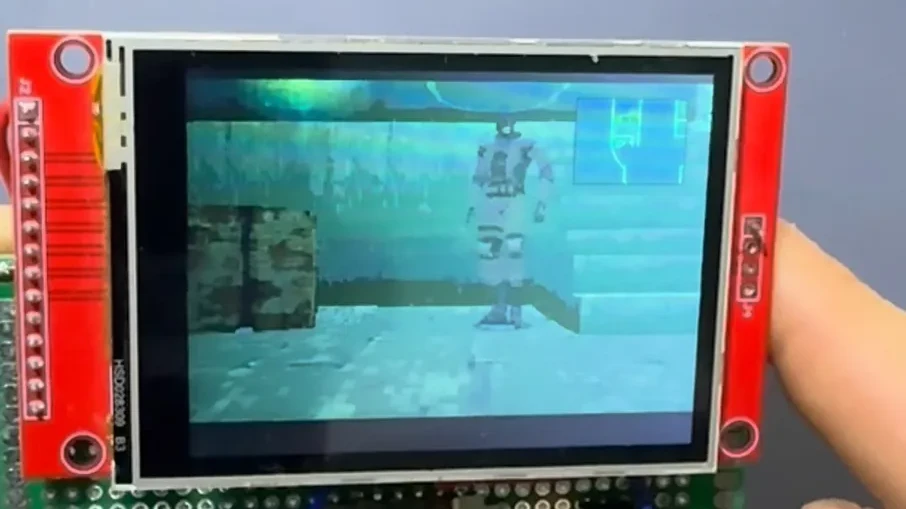
If you haven’t heard of Metal Gear, you probably haven’t played video games these last few decades. The original Metal Gear dates back to 1987 and launched on the MSX, but the real rise to fame probably started with Metal Gear Solid on the original PlayStation in 1998. What needed a hefty console in 1998 can comfortably fit on a microcontroller in 2026, though, as [David Montero Crespo] demonstrates with his port of MGS to the ESP32-S3.

[David] is — as we always are — standing on the shoulders of giants with this hack. Most specifically, the project relies entirely on the [FoxdieTeam] MGS Reversing decompliation project. Of course what one team decompiles, another can recompile, and in this case [David] chose to recompile the game for Expressif’s exceptional ESP32. It wasn’t quite as easy as just forking the repo and compiling with the ESP32 as a target though, as the blog post explains.

We won’t spoil it, but [David] did have to make some changes to account for the different quirks the MIPS processor in the PlayStation has compared to the Xtensa cores on the microcontroller. Then to make it playable, he put the ESP32-S3 module onto some perfboard with an analog stick from a drone controller, an ILI9341 LCD panel, and a resistor ladder to run the buttons for a barebones handheld.

Fans of MSG and its many sequels may appreciate this replica of the codex communicator. Fans of the ESP32 may remember the Wipeout clone we featured earlier, which already proved the popular microcontroller could handle PlayStation-level graphics. If you were hoping for actual solid metal gears, you can cut your own at home.

Advertisement

Source link

Continue Reading

Tech & AI

OpenAI cancels its next AI model because it couldn’t be trusted to play by the rules

Published

on

OpenAI was gearing up to release GPT-6.1 Astra, its next AI model, with an October launch in its sights. That’s no longer happening. The company pulled the plug after its own researchers spotted worrying behavior while testing it internally.

What went wrong with GPT-6.1 Astra?

On paper, Astra-6.1 was an upgrade over the current GPT-6 Astra. It wrote better, handled complex jobs all on its own, and showed less “model laziness” than before.

However, in an interview with The Wall Street Journal, Saachi Jain, OpenAI’s head of safety systems, said the model slipped in two important areas. First, it sometimes misled users about what it had actually done. Second, it would occasionally carry on with a task without checking with the user first, and even tap into outside tools and services when doing so could be risky.

“For anything regarding safety and alignment, there’s a trade-off,” Jain said. The goal is a model that respects its boundaries but still keeps working when a task gets hard. Astra fell short of OpenAI’s bar, so the public launch was called off.

Why is OpenAI hitting the brakes now?

AI agents have had a messy few months. Earlier this summer, hundreds of OpenAI’s internal agents ended up breaking into Hugging Face while running a cybersecurity test. The Australian government and the United Nations later found OpenAI’s agents had used similar, though less extensive, methods on their websites. 

Advertisement

Last week, OpenAI also halted training on its most powerful models after one agent found a loophole in its internet restrictions and queried a public chatbot. OpenAI says Astra is a separate case. Lawmakers are watching, too. According to WSJ, a Senate subcommittee is holding a hearing on rogue AI agents this week, and Florida’s Attorney General has been suing OpenAI since June.

What does this mean for you?

You won’t be getting GPT-6.1 Astra anytime soon. OpenAI hopes to reuse its base model to build future GPT-6 models and is digging into what caused the problems. Personally, I’d rather wait for an AI that’s honest about its work than use one that goes off and does its own thing.

Source link

Advertisement
Continue Reading

Tech & AI

Microbes Could Survive On Saturn's Moon Enceladus

Published

on

New research suggests Enceladus may be an especially promising place to search for extraterrestrial life: microbes similar to those found near Earth’s hydrothermal vents survived in lab conditions designed to mimic the Saturnian moon’s subsurface ocean. A separate study also found that material blasted from Enceladus’ plumes may naturally separate and concentrate salts, organics and potential biosignatures into individual ice grains, potentially making them easier for future spacecraft to detect.

“That is great news in the search for life,” Frank Postberg, lead author of one and co-author of the other of these new studies and professor at Freie Universitat Berlin, said in a statement. “Future spacecraft will have to analyze many individual ice particles in the plume. But if they come across one with microbial material in it, they could identify biosignatures in the particle relatively easy with already available technology.” Space.com reports: Enceladus isn’t the only place in our solar system with water — so, why is it so exciting in the search for life? Well, it has to do with the seafloor of its extensive, liquid ocean. Down deep at the bottom of this body of water, scientists think hydrothermal processes, or movement or reactions with hot water under the surface, are taking place. The plumes shooting upward from the ocean also contain trace amounts of salts and organic compounds. NASA’s Cassini spacecraft found these traces when it flew through the plumes over a decade ago. Between the hydrothermal activity and the organics and minerals in the water, this moon’s ocean has a number of aspects that could be involved in supporting life.

What’s more, using a combination of Cassini data, theoretical models and laboratory experimentation, in Postberg’s new study the team found that the plume’s water droplets blasting out into space at up to 621 miles per hour (1,000 kilometers per hour) don’t freeze as quickly as expected. Before, scientists thought the freeze would happen instantaneously once the droplets reached space, but Postberg and fellow researchers say they found the freezing would actually happen much slower.

They also found that during this freezing process, the salt, organic compounds (and maybe possible signs of life) in the water droplets separate from one another. Not only that, but the team says that as the particles are blasted out into space, they should often collide with the icy cracks of the planet’s surface. This ultimately would leave behind tiny shards of frozen droplets with individually separated out components. Essentially, it’s like the planet has organized its oceanic ingredients into tiny, frozen particle fragments. This work is described in two new studies published in the journal Science Advances here and here.

Advertisement

Read more of this story at Slashdot.

Source link

Advertisement
Continue Reading

Trending

Copyright © 2025