

Join Mikko Hyppönen and security leaders from the NFL, CHANEL, and Atlassian for a two-hour digital summit on what AI-speed attacks change, what defenders should stop doing, and how to validate, decide, fix, and re-validate at machine speed.
Tech & AI
Engineering Multipole Resonances in Dielectric Metasurfaces for Transmission, Reflection, and Absorption Control



Dielectric metasurfaces have moved to the forefront of nanophotonics, offering flat, low-loss alternatives to conventional bulk optical elements for controlling the amplitude, phase, and polarization of light. These structures are of growing interest to researchers and engineers working on sensing, energy harvesting, and flat optics, as their performance hinges on precisely engineered optical resonances. Full-wave finite element simulation, combined with semianalytical multipole decomposition in the COMSOL Multiphysics® software, gives us a way to not only predict these resonances but also uncover their underlying physical origins.
In this webinar, Dr. Pavel Terekhov, postdoctoral researcher at National Institute of Standards and Technology, will trace how a single quadrumer meta-atom, originally studied for its magnetic octupole response, evolves into two distinct light manipulation regimes. He will first revisit the foundational single-particle results that motivated this work, then show how arranging quadrumers into a periodic crystalline silicon metasurface produces anomalous absorption enhancement, governed by two independent multipole mechanisms coexisting in the same structure. Building on this, he will then introduce ongoing work on a gallium nitride metasurface, where the complex interplay of four different multipoles is used to sculpt reflection and transmission spectra including the quasi-bound-states-in-the-continuum (q-BIC) manipulation.
Attendees will see how COMSOL Multiphysics® and multipole decomposition connect full-wave simulation and analytical insight, turning abstract resonance behavior into physically interpretable design rules. The broader takeaway is that multipole-based simulation is not just a diagnostic tool but a design strategy: It enables the on-demand tailoring of absorption, reflection, and transmission in dielectric metasurfaces, with direct relevance to sensing, energy harvesting, and future optical device applications.
Key Takeaways:
- Learn about modeling multipole resonances in dielectric metasurfaces using full-wave finite element simulation and semianalytical multipole decomposition in COMSOL Multiphysics®.
- See how multipole-based simulation can be used to understand and control absorption, reflection, and transmission in silicon and gallium nitride metasurfaces.
- Explore how different multipole mechanisms, including quasi-bound states in the continuum (q-BICs), can be engineered to tailor optical responses for sensing, energy harvesting, and flat optics.
- Gain insights into how simulation and multipole decomposition can help researchers and engineers turn complex resonance behavior into practical design strategies for future optical devices.
Continue Reading

A marketing image for Samsung’s Bespoke AI refrigerators. Credit: Samsung
I must be getting old, because the concept around most IoT injections into otherwise perfectly usable home devices has me wanting to get all these smart-devices off of my lawn. Call me a luddite if you like, but I just don’t think my toothbrush needs to be connected to the internet.
And if you ask me how smart my refrigerator needs to be, my answer would be that it needs to be as precisely smart as required to keep my food cold. But if you’re Samsung, the fridge needs to be connected to the internet, potentially expose your personal information to the wider internet, and show you ads on a fancy screen on the fridge door. This is all done in the name of achieving… something? What that something is, and why it would be of use to me, is a mystery of Sherlockian proportions.
But because of that internet connection, sometimes Samsung “smart” fridges can’t even keep the damned food from spoiling.
Some Samsung smart fridges stopped working on Tuesday due to a firmware update. Korean outlets were the first to report the problems, which affect Samsung’s Bespoke AI line of fridges. Star News Korea, per a Google-provided translation, said that most of the affected devices were four-door fridges from 2024 or later.
Affected fridges “suddenly lost power and stopped functioning immediately after” trying to issue a firmware update through SmartThings, Samsung’s smart home platform, per Star News Korea. The SmartThings app then showed the devices as offline. Some users said that their fridge’s internal display was stuck showing the message “Checking SmartThings app during update.”
Ah, the old “the firmware update spoiled my food” scenario. Samsung was quick to point out that this had only occurred in Korea, which I imagine was lukewarm comfort to the Koreans who suddenly found a fridge filled with spoiled food. It has also failed to detail exactly why this occurred and what it is doing to prevent it in Korea, or any other market for that matter.
And this was particularly troublesome as all of this spoiled food came to be just as the Korean holiday for the autumn harvest was being celebrated.
“Customers only trusted Samsung Electronics and made an official update, but it is so absurd and embarrassing that they can’t even use refrigeration and refrigeration functions before the Chuseok,” a forum user wrote, per a Google-provided translation.
Some Samsung forum users said support agents initially told them that there are limited technicians and executives available, and a repair person might not be available until October.
“The customers who bought Samsung refrigerators have had their holidays completely ruined, while those Samsung employees are just having a good time at home,” a Samsung forum member wrote.
So the question now is precisely on what grounds does Samsung get to call its fridges “smart” if they’re designed such that their primary function can’t be enjoyed for a month or so because someone at the company had, to borrow a phrase from Jurassic Park, butter fingers?
Filed Under: firmware update, iot, smart fridge, south korea, spoiled food
Companies: samsung
The Technical University of Denmark (DTU) says information belonging to up to 200,000 users may have been exposed after hackers accessed its identity and access management system and downloaded a large amount of data.
The university says the attacker used compromised credentials to log into DTUBasen, its identity and access management (IAM) system, allowing access to more than two decades of user data.
In a disclosure on Friday, DTU confirmed that it cannot “determine precisely what information was downloaded or how many people have been affected.”
However, the Danish university notes that DTUBasen stores information for nearly 40,000 active users and around 160,000 former users.
Next of kin data also exposed
Potentially exposed information for current users includes Danish civil registration numbers (CPR), full names, home addresses, and profile pictures, as well as work email addresses, job titles, office locations, and other employment-related details.
The dataset also contained the names, relationships, and telephone numbers of users’ next of kin, when provided by active users.
DTU notes that in the case of former users, details about home addresses, profile pictures, and information about next of kin are automatically deleted after six months.
“This is a serious attack on DTU, and we deeply regret the uncertainty it is causing for the people whose information may have been affected,” says University Director Bjarke Bak Christensen.
“Our first priority has been to establish the extent of the attack, limit its consequences, and ensure that those affected are notified and know what steps to take,” the director added.
DTU warns that cybercriminals could use the exposed CPR numbers and other personal data for identity fraud and to make phishing attacks more convincing.
Not all notified directly
Potentially impacted individuals will be notified through e-Boks, the official mailbox system that DTU uses for sharing documents and notices with students and staff.
However, the university says it will notify all current and former employees, but not all current and former students whose CPR numbers are held by DTU.
“DTU only holds CPR numbers for a small number of guests and external partners and does not hold CPR numbers for next of kin whose contact details have been registered in DTUBasen,” the organization says.
The public dicslosure is part of DTU’s effort to reach potentially affected individuals it cannot contact directly, and the university is urging people to share it with former employees, students, guests, and external partners.
The organization says that anyone who has been an employee, student, guest, or external partner of DTU since 2003 may be affected by the data breach.
They are advised to be cautious of emails, text messages, and phone calls from individuals who appear to know about their connection with DTU or have access to personal information about them.
Passwords and sensitive information should not be disclosed in replies to unexpected communications, and sudden authentication requests or logins should be treated as suspicious.
Additionally, it is recommended to change the passwords for any other services that use the same credentials as the DTU account and place a credit alert on the affected CPR number.

[This is a sponsored article with the Singapore Government Partnerships Office.]
“Help others whenever you can, even if you feel you have little to give.”
For much of his life, Mohamed Satria Bin Sadon, 41, had always reflected on this lesson from his father, but never felt he was in a position to act on it while still building his own career.
That changed when his father passed away, just before Satria started his job at Google.
After some time into his career, Satria had the opportunity to speak with several secondary school and ITE students, where he asked them about their future aspirations. Their answers were grounded in what they knew: gig workers, delivery riders—familiar paths that provided steady income.
Then he mentioned he worked at Google. The room erupted with questions. “How do people get a job in such a big international company right here in Singapore?”
At that moment, Satria saw the disconnect clearly. His experience in tech has shown him that while countless people use technology daily, few understand the vast opportunities within the tech industry. These students had potential—they just needed to see the pathways.
To widen those pathways, Satria knew he would need others in the industry to step forward as well. With his career stable and his father’s lesson now guiding him, Satria reached out to friends and colleagues in the tech industry.
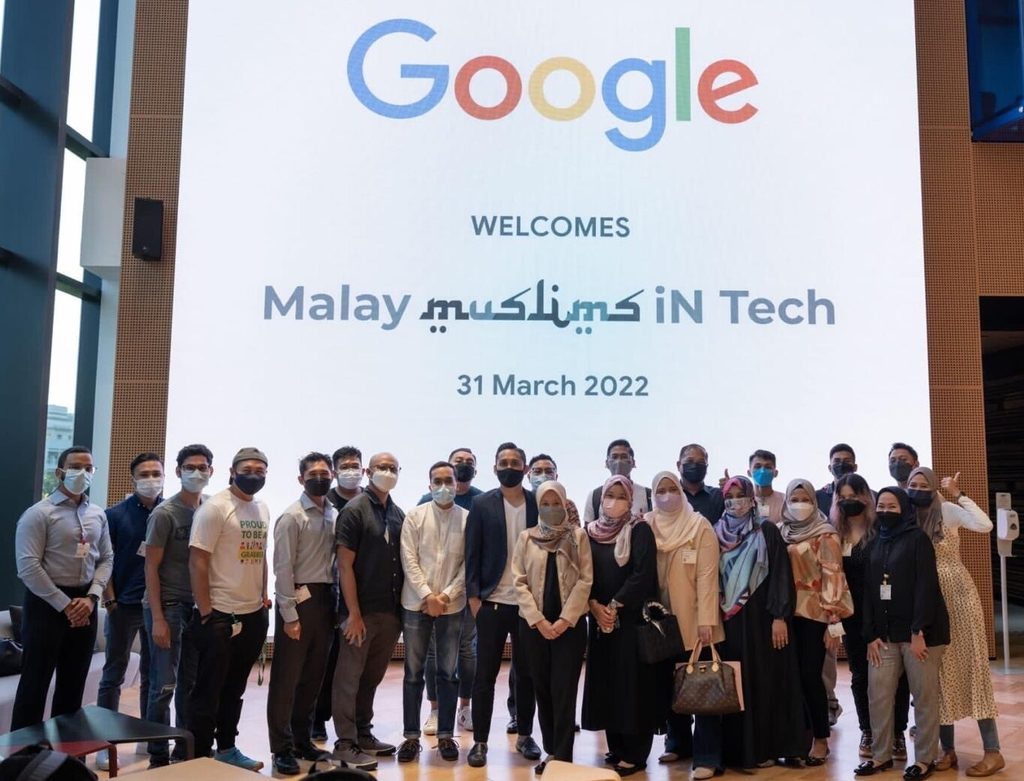
The response was encouraging, with many eager to give back. And thus, in Mar 2022, the Intelligence Specialist officially founded Malay-Muslims in Tech (MMiT) with a group of tech friends and practitioners.
Bridging the knowledge gap

“There is a common misconception that you need to be a ‘techie’ to work at a tech company,” shared Satria.
“The reality is that tech requires professionals from every specialisation—marketing, legal, HR, and crisis management. We want to show people what goes on behind the screen of the apps and platforms they use daily.”
As such, MMiT was created to bridge this knowledge gap, exposing people of all ages to real possibilities within the tech industry and helping them envision potential futures for themselves, regardless of background.
This became even more important as the tech landscape grew increasingly uncertain.
With news of layoffs in recent years, workers face greater challenges in holding onto existing roles or breaking into the industry. Yet even amid the uncertainty, new opportunities continue to emerge for those equipped with the right knowledge and skills.

The early days of the initiative looked promising, but layoffs tested MMiT’s momentum. This led the MMiT team to realise that they needed to amplify their community impact, and one key way was to work with like-minded organisations.
Yayasan MENDAKI, a pioneer self-help group set up in 1982 to uplift the Malay-Muslim community in Singapore, became a foundational partner. Its support helped MMiT launch some of its first initiatives, including a series of talks, hackathons, and panel sessions.

As MMiT’s community grew, so did its network of collaborators. Yayasan MENDAKI launched its own Professional Networks (PN) initiative, including a network focused on the tech sector. Satria was involved with the tech network for around two years before returning his full focus to MMiT.
“As word of the community spread organically, more people and organisations became eager to connect and collaborate with us,” Satria said. This growing network of partnerships made it easier for MMiT to expand its event offerings while continuing to serve the community effectively.

Beyond MMiT, Satria also worked on a technology-focused initiative during his time at Yayasan MENDAKI called Digital Minaret. Piloted at Masjid Omar Kampong Melaka in May, the initiative aimed to uplift less privileged residents of Jalan Kukoh by equipping them with practical digital skills.
The programme brought participants together at the mosque for hands-on sessions covering AI basics and social media marketing, equipping them with practical skills they could put to use for themselves.

Today, MMiT’s core team of eight to 10 volunteers from various tech companies meets almost weekly to plan and run projects.
They have impacted nearly 5,000 participants across a wide demographic, from youth entering the workforce to working adults seeking career advancement. Their efforts even earned a mention in the 2023 National Day Rally speech.
MMiT’s approach encourages every team member to lead their own initiatives and cultivate partnerships, creating organic expansion into diverse functions beyond tech.
Many participants have discovered new networks, forged new partnerships, and even found business opportunities, either directly or indirectly through MMiT. These successes constantly motivate Satria and his team to continue their work.

Along the way, several personal stories have reinforced that motivation. “There are two that really stuck with me that show the range of people we’re reaching,” said Satria.
The first was about two individuals who met at an MMiT event and later came together to start an AI company, one of them having just been laid off. “To know our community could help them start a new chapter is just incredible,” he shared.
Another memorable instance came from a parent whose child, after trying VR glasses at an MMiT event, suddenly became interested in coding. “Hearing that we’re sparking that kind of curiosity in kids, while also helping professionals launch new ventures, is what makes all this worthwhile.”
It takes just one person to make a difference

On the ground, MMiT runs regular cybersecurity sessions and hackathons, and is developing an AI-powered reading app to help children practise phonics and improve their pronunciation.
Its next major initiative is a community platform for people working in tech, which Satria describes as “LinkedIn with a community focus”. Launching as both an app and website, it will bring together community feeds, a member directory, job board, mentorship opportunities, resource libraries, and innovation labs all under one platform.
The platform is expected to launch in the upcoming months, starting with tertiary students before expanding to young and mid-level professionals.
It will be open to people from all backgrounds, and the team also hopes to work with agencies and other organisations on these initiatives, while continuing to expand its reach through new partnerships.
“There’s a common saying that one person cannot make a difference, but I fundamentally disagree,” Satria said.
If you see a problem you believe you can help solve, I urge you to try. What begins as a single, focused effort can create a ripple effect, and with the right support, that ripple can grow into a powerful multiplier effect, creating change you never thought possible.
Mohamed Satria, founder of MMiT
You can explore MMiT and its initiatives here, and see how the community is already making a difference.
And if you feel inspired to do something for your community, visit the Singapore Government Partnerships Office to find out how you can get started.
- Read other articles we’ve written on Singaporean businesses here.
Featured Image Credit: MMiT


When Google announced Android 17 at Google I/O 2026, it also marked the arrival of Android Auto 17. Android Auto 17 added many new features, with Google primarily focusing on Gemini AI’s deeper integration with the platform. Days after the announcement, Google released the beta version of the software — Android Auto 17.0 — to beta testers worldwide. This was followed by the release of the stable version of Android Auto to eligible users in late June and early July.
Google has issued multiple updates to Android Auto since then. The first stable version was followed by version 17.2, and version 17.6 began rolling out in late August or early September. A few weeks after 17.6’s release, Google began seeding the most recent stable release, Android Auto 17.7. As of late September 2026, this version is the newest stable version of Android Auto, although Google has already rolled out the beta version of Android Auto 17.8 as of writing.
While all Android Auto users will eventually get version 17.7 via the Play Store, it can take a while for users to receive the update on their devices. Thus, if you want to update to Android Auto 17.7 before Google officially pushes it via the Play Store, you will have to sideload the app.
How to manually update to the latest version of Android Auto

Google usually rolls out Android Auto updates gradually, which helps limit the damage if an update contains a serious bug. If problems appear among the first group of users, Google can slow down or stop the rollout before the update reaches millions of other users. However, for those who want to try all of Android Auto’s latest features, this can be a major irritant.
Currently, the only way to sidestep this issue is to download the latest version’s APK from trusted platforms like APKMirror and follow the on-screen installation instructions. However, there is always an inherent risk associated with this method, and we recommend this only to users who are sure about what they’re doing. If you’re willing to take the risk, though, you can download Android Auto 17.7 here. Once downloaded, the installation process is fairly straightforward.
A major issue with Google’s recent small-scale Android Auto updates is that the company doesn’t post detailed change logs. According to users who have installed Android Auto 17.7, Google hasn’t made major changes to the software or UI, suggesting that most improvements were under the hood. If you are already on a stable version of Android Auto 17 and were hoping 17.7 would introduce big changes to the user experience, be prepared to be disappointed.
What’s new with Android Auto 17?
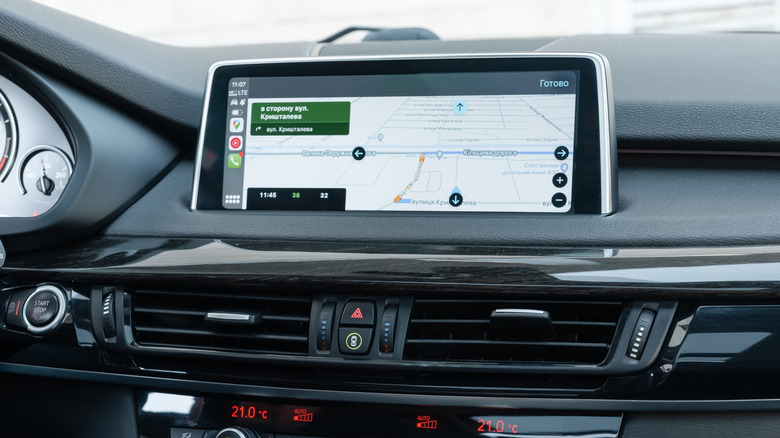
When Google announced Android Auto 17 in May 2026, it promised a lot of feature updates. As discussed earlier, most of these additions involved the integration of Gemini AI across the platform. Android Auto 17 also promised a new widgets system and an updated Material 3 Expressive interface redesign that revamped the fonts, wallpapers, and animations.
Another major update Google promised was Immersive Navigation, which shows a 3D view of the surroundings, including buildings, overpasses, and terrain. These updated maps will also show the position of traffic lights and stop signs, helping users be more aware of what’s coming up. Immersive Navigation began rolling out to some users in August 2026 via a server-side update.
Android Auto 17 is also bringing 60 FPS FHD video playback to video apps. Select vehicles will eventually be able to watch 60-FPS content on their infotainment displays. Another entertainment-related addition is support for automatically switching video playback to audio-only playback when a car starts moving. Many of these features have yet to debut in the stable version of Android Auto and will only be released in stages over the next several months.
Tech & AI
Micro Center reportedly now makes you fill out a form and have a photo ID to buy an Nvidia RTX 5090 GPU — and while some people hate the idea, others are in favor
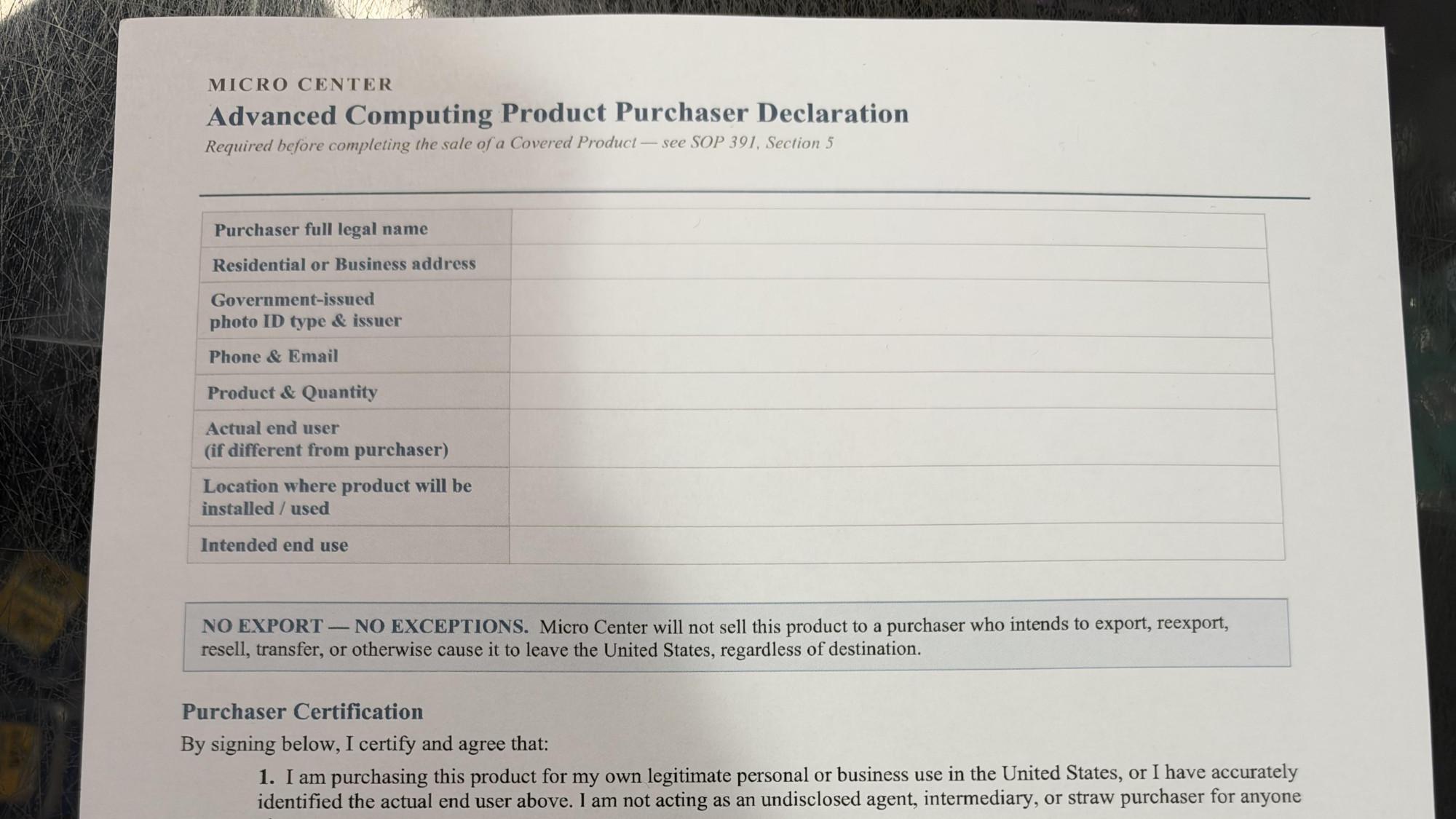
- Those buying an RTX 5090 at Micro Center now have to fill out a declaration form
- This includes having a government-issued photo ID scanned by the retailer
- Some approve of the policy as it’s an anti-scalping measure, but others view it as an annoyance or a pointless move
If you’re buying an Nvidia RTX 5090, or a PC with the graphics card inside, over in the US, you may have to fill out an official form to declare that you don’t intend to export and resell the GPU – or at least you will at Micro Center.
PC Gamer spotted the ‘advanced computing product purchaser declaration’ which a Redditor was forced to complete and sign – including a scan of their driving license for ID – when buying a PowerSpec AI90 workstation PC with an RTX 5090.
The Micro Center store was in Tustin, California, but someone else posting on the Reddit thread claims that the same form has been introduced at the Columbus, Ohio store.
Latest Videos FromTechRadar
Apparently this is a new policy that only started this week at Micro Center (but seemingly other retailers already follow this practice in the US, including Central Computers).
In case you hadn’t guessed, this move is about trying to prevent scalpers from buying up the RTX 5090, or PCs containing it – which can be around the same price as the standalone GPU these days, and are sometimes the only way of getting this graphics card at all – in order to sell it on to China and turn a profit.
Analysis: a pain in the neck, or a valid anti-scalper tactic?

As some of the commenters on Reddit are quick to point out, this form isn’t legally binding, and there are question marks over how any of this might be enforced. Somebody breaking the terms of the agreement is likely to just shrug their shoulders about the consequences, perhaps.
However, as PC Gamer notes, the use of the ID check is certainly a deterrent of sorts for GPU exporters. And what this is doing is preventing people who are making a short trip to the US buying an RTX 5090 and selling it on when they get back home for a hefty mark-up. Those people won’t be able to provide a US address and government photo ID that can be verified as belonging to them, of course.
The fact remains that it’s a bit of a pain for Micro Center’s customers to have to go through this form filling and ID check, although that said, some of the folks on the above Reddit thread don’t have a problem with the process given that it’s an anti-scalping measure. Others are concerned about having to give a retail store personal information for an unnecessary reason as they see it, or they’re just annoyed and think it’s a waste of time. As one Redditor put it: “This is ridiculous.”
Going by the Reddit thread, another measure Micro Center enforces is that there’s only one purchase of an RTX 5090 GPU per customer full-stop, forever. Once you’ve bought one, you can never buy another, we’re told.

Follow TechRadar on Google News and add us as a preferred source to get our expert news, reviews, and opinion in your feeds.

The best graphics cards for all budgets

Apple is tightening one of the quietest but most powerful privacy controls on the Mac, citing the growing risk that desktop AI agents pose to users’ personal files, messages and browsing history. The company announced it will add new safeguards around “Full Disk Access,” a macOS permission that, once granted, effectively hands an app the keys to everything stored on a computer.
The setting has existed for years, largely in the background, designed to let backup software and system utilities do their jobs without constantly prompting users for permission. But Apple says that purpose has been overtaken by a new generation of AI tools that act less like passive programs and more like autonomous assistants capable of reading, interpreting and acting on whatever data they can reach.
“Some developers are using Full Disk Access in ways that could put users at risk, exposing everything on their systems…without users’ full knowledge and understanding,” Apple wrote in a blog post aimed at developers. The company said it would require “very explicit user action” before granting an app this level of access going forward, rather than allowing it to be buried in a settings toggle a user might not fully understand.

Apple’s announcement follows a string of unsettling incidents involving AI software on the Mac. Inc. columnist Jason Aten recently reported that Meta’s AI-powered Muse app appeared to know the contents of his private messages, despite his belief that he had never authorized that level of access. Meta has disputed the characterization of what happened, but the episode fueled broader anxiety about how much trust users are implicitly placing in desktop AI tools that request sweeping system permissions.
Compounding the concern, a separate report from Wired detailed a security flaw in OpenAI’s ChatGPT app for Mac that researchers said could have let hackers access sensitive user data. Taken together, the incidents paint a picture of a security model built for a simpler era of software — one where apps mostly did what users told them to, rather than independently parsing files, conversations and histories to act on a user’s behalf.
That shift is precisely what worries Apple. Full Disk Access was never meant to be handed out casually; it exposes mail, messages, files and even a user’s browsing history to whatever app receives it. In the past, that risk was largely theoretical for most consumers, since the apps requesting it were typically narrow-purpose backup or security tools. AI agents change the calculus because they are explicitly designed to roam across a user’s data, synthesize it and take action — which is exactly the kind of capability that makes an over-permissioned app dangerous if it misbehaves, gets compromised, or simply oversteps what a user actually intended to allow.
“As AI agents become increasingly capable and autonomous, the risks associated with this level of access will grow substantially,” Apple said. “We are committed to ensuring users clearly understand these risks before granting such access, so they can make informed decisions about their own data and privacy.”
Apple did not respond to a request for further comment on exactly how the new controls will work or when they will arrive for developers and users. But the move signals a broader reckoning taking shape across the tech industry as AI agents move from cloud-based chatbots into deeply embedded, on-device assistants with far-reaching permissions.
The tension is not unique to Apple’s ecosystem. As companies race to make AI agents more “agentic” — capable of booking appointments, managing files, drafting messages and acting across apps without constant supervision — the very usefulness of these tools depends on giving them access to sensitive personal data. That creates an uncomfortable trade-off: the more autonomous and helpful an AI agent becomes, the more catastrophic the consequences if its access is abused, hijacked, or simply misunderstood by the person who granted it.
For now, Apple’s answer is friction: making sure users can’t stumble into granting an AI agent total access to their digital life without a clear, deliberate choice. Whether that is enough to keep pace with how quickly AI agents are gaining capability — and how aggressively some developers are pushing for deeper system access — remains an open question, one that is likely to keep surfacing as more of these tools compete for a permanent, privileged place on people’s desktops.

Welcome to Kernel Panic!, a weekly newsletter by Lily Hay Newman and Matt Burgess from inside the new world of privacy and digital security. To receive this newsletter in your inbox each week, sign up here.
Meta’s new personal assistant, Muse, has become a viral hit, with millions downloading the AI agent, connecting it to bank accounts, messages, or health data, and allowing it to complete tasks for them. But as Muse takes off among consumers, data from inside the app is providing insight into how it organizes and presents information to users.
In recent days, multiple researchers have extracted Muse’s internal files and dumped the agent’s operating instructions, providing a glimpse of how the system was built and behaves. Meta has maintained that it intended for these files to be accessible in the interest of transparency, and they do provide insight into how Muse responds to prompts and questions about, for example, highly politicized or sensitive topics.
Independent AI safety and security researcher Karan Joshi was able to extract an extensive array of Muse instructions and system prompts by using the regular chat interface to essentially ask Muse to copy and share its own software files. Joshi then shared his findings with WIRED.
One of Muse’s instructions appears to be the ability for it to create “a page for every person in the user’s life.” This hourly process involves compiling data on family, partners, friends, colleagues, “collaborators,” and people you “follow,” the instructions say.
The general idea is that Muse can use its “memory” (aka structured text files) to collect information about your relationships and the important people in your life. It can then make suggestions, like giving pointers on how to improve particular relationships or, say, where to take a coffee-loving friend for breakfast. Of course, it’s not unusual for AI chatbots to track social information in general—people have been asking ChatGPT for relationship advice for years now. But it’s interesting to see how Muse is set up given Meta’s history and vast access to social network data.
“What it seemed like to me—from all these prompts, system skills data, and things that they’re feeding into Muse—is that they want to understand your relationships that you have with real people,” says Joshi. “They’re trying to know you like a friend, which is honestly pretty creepy.”
Muse’s documentation says that a page may start “sparse” and then be filled out over time, potentially including sections like Facts, History, The relationship, In common, Open threads, and Strengthening. Meta’s instructions say Muse should only use the “evidence” it has available, and that invented details are worse than an empty page.

The takeaway: Payment organizations have launched a new joint venture to promote Europe’s sovereignty in the payments industry. The European Network for Payments (ENP) is designed to increase interoperability among competing networks, building a common EU infrastructure that should theoretically give Visa, Mastercard, and other US-based giants a very hard time on European soil. Ultimately, ENP could help reduce Europe’s reliance on US-based payment networks as tensions between Washington and Europe continue to grow.
The original ENP initiative launched in 2023, but European sovereignty is now becoming a truly critical issue. The new network’s founders include Bizum (Spain), Bancomat (Italy), European digital wallet company Wero, SIBS-MB WAY, and Vipps MobilePay.
Together, these payment networks already cover 70% of Europe’s and Norway’s population, serving the payment needs of 130 million users across 13 different European countries.
Rather than creating a completely new network, ENP will work on building closer partnerships among payment networks that already exist. First, the new Madrid-based organization will focus on properly connecting the existing networks, adopting a common technical and operational infrastructure based on European standards.

According to ENP’s deployment plan, the common infrastructure will go through a phased rollout, starting with cross-border payments and in-person transactions. ENP should eventually expand its reach to e-commerce and other online payments, in-store point-of-sale transactions, and essentially everything else.
ENP proponents said the organization expects to welcome additional members in the future, further increasing the network’s ability to cover the payment needs of European citizens. ENP expects to absorb the network’s operating costs at first, allowing the basic infrastructure to be built before it begins generating its own fees.
According to European Payments Initiative CEO Martina Weimert, fragmentation has long hindered any major attempt to build a common payment platform within the Old Continent. ENP is now offering a cooperation-based answer, asking other EU-based payment organizations to join the effort as well.
The European Central Bank is also working on its own solution for a common payment tool with the digital euro currency. A few years down the line, the bank-controlled euro wallet might become a complementary payment platform to ENP.
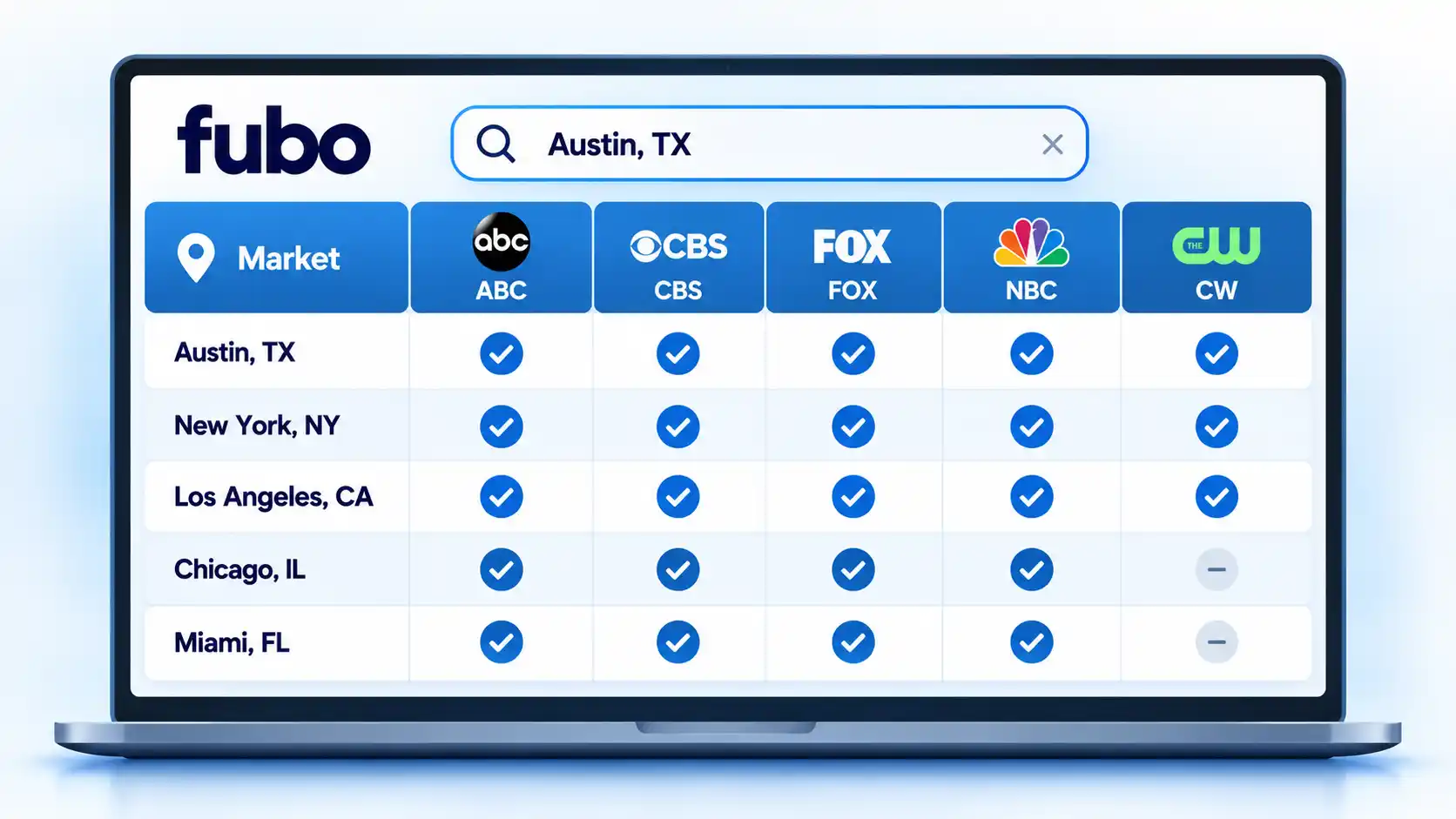
Fubo’s U.S. lineup includes national sports, news and entertainment networks, optional channel packages, local broadcast stations, and regional sports networks. Your exact lineup depends on the plan you choose, any add-ons you buy, and your home location.
This guide organizes a broad verified Fubo channel reference as of October 3, 2026. It also links to Fubo’s live tools for channel, local-station and regional-sports data that can change after publication.
How to read this Fubo channel database
There are three main types of channel lookup. National and specialty networks are mapped to plans and add-ons. Local stations are tied to television markets. Regional sports networks, usually shortened to RSNs, are assigned according to your home ZIP code.
Fubo’s channel finder shows the plans and add-ons associated with a listed network. Local affiliates and regional sports networks use separate location-based tools.
A plan label beside a channel does not necessarily mean every new subscriber can select that plan. Use the directory to understand channel-to-package relationships, then confirm which plans Fubo actually offers to your account and market.
| Plan or service | Main purpose | Key lineup point |
|---|---|---|
| Pro | Broad English-language base TV plan | National lineup plus location-dependent local and regional channels |
| Core | English-language base plan | Available only in select areas |
| Elite | Expanded English-language plan | Adds channel packages beyond the standard base lineup |
| Ultra | Higher-tier English-language plan | Expanded package available only in select areas |
| Sports + News | Sports-focused service | National sports, selected news, ESPN Unlimited programming and participating local stations |
| Latino | Spanish-language base plan | Spanish-language sports, entertainment and news with optional expansion packages |
Complete Fubo channel directory
Fubo’s main directory is the broadest source for national, specialty, sports, news, entertainment, international, radio and free ad-supported channels. The most useful fields are the channel name, its plan membership and any add-on membership.
The groups below organize commonly searched and clearly verified networks by purpose. Because carriage and package placement can change, use the live channel finder for the latest channel-to-package mapping.
National sports channels
- ACC Network
- Big Ten Network
- CBS Sports Network
- ESPN
- ESPN2
- ESPNews
- ESPNU
- FOX Sports 1
- FOX Sports 2
- Fubo Sports Network
- NFL Network
- SEC Network
- Tennis Channel
The wider Fubo directory also contains specialty sports services that can depend on plan or add-on, including NBA TV, NHL Network, NFL RedZone, MLB-related services, FOX Soccer Plus, FOX Deportes, ESPN Deportes, beIN Sports, beIN Sports Español, TyC Sports, Fight Network and SportsGrid.
News channels
- ABC News Live
- FOX News
- Africa News
- Cheddar News
- i24NEWS
- additional services mapped to News Plus or Fubo Extra
News-channel membership varies by package. Search a specific network when it is important to your subscription decision.
Entertainment and general-interest channels
- Bravo
- Comedy Central
- Paramount Network
- Nickelodeon
- National Geographic
- Nat Geo Wild
- MTV2
- MTV Classic
- TeenNick
- BET Her
- BET Jams
- BET Soul
- ION
These channels are not all part of the same tier. Some belong to broad base plans, while others are tied to expanded packages such as Fubo Extra.
Spanish-language channels
- beIN Sports Español
- ESPN Deportes
- Estrella TV
- Fubo Latino Network
- FOX Deportes
- Telemundo
- TyC Sports
- Universo
Spanish-language channels can appear across Latino, Latino Plus, International Sports Plus and English-language packages. Check the individual network if you need its exact package assignment.
International channels and packages
- Portuguese Plus programming
- Rai Italia
- TV5 Monde
- International Sports Plus programming
- Zee-family programming listed in the live directory
Free and specialty streams
The directory can also contain free ad-supported feeds, Fubo-owned channels, digital sports streams and radio-style services that do not behave like traditional cable networks. Treat each directory row according to the plan or package shown beside it rather than assuming every entry is part of a paid base plan.
Fubo channels by current plan
If you already know the plan you are considering, use its name as a filter in the master directory. Checking your must-have networks is more useful than comparing raw channel counts.
Pro channel list
Pro is the broad English-language base option. Major national sports networks associated with the standard Fubo lineup include ESPN, ESPN2, CBS Sports Network, FOX Sports 1, FOX Sports 2, NFL Network, ACC Network, Big Ten Network and SEC Network.
Local broadcast affiliates and regional sports networks require separate location checks.
Core channel list
The first question with Core is whether it is available in your area. Where offered, it overlaps heavily with Fubo’s broad English-language lineup, including major sports networks such as ESPN, ESPN2, FS1, FS2, CBS Sports Network and NFL Network.
Elite channel list
Elite expands the standard lineup with additional channel packages. That can add secondary sports, entertainment and news networks such as NBA TV, NHL Network, Nat Geo Wild, MTV2, MTV Classic, TeenNick and BET specialty channels where those package mappings apply.
Ultra channel list
Ultra is another expanded English-language configuration and is available only in select areas. Because it overlaps with Elite in several channel groups, compare the exact package shown to your account rather than assuming that every higher-tier label contains an identical lineup.
Sports + News channel list
Sports + News has the clearest self-contained national lineup. Fubo currently lists these national channels:
| Channel | Main category |
|---|---|
| ACC Network | College sports |
| Big Ten Network | College sports |
| CBS Sports Network | Sports |
| ESPN | Sports |
| ESPN2 | Sports |
| ESPNews | Sports |
| ESPNU | College sports |
| FOX News | News |
| FOX Sports 1 | Sports |
| FOX Sports 2 | Sports |
| Fubo Sports Network | Sports |
| ION | Broadcast entertainment and sports |
| NFL Network | Football |
| SEC Network | College sports |
| Tennis Channel | Tennis |
Programming from ESPN Unlimited is also integrated into Sports + News. Local programming is available only in participating areas and uses a separate market table.
Latino channel list
Latino is the Spanish-language base plan. Verified examples across Latino and related Spanish-language packages include beIN Sports, beIN Sports Español, ESPN Deportes, Estrella TV, Fubo Latino Network, Telemundo, TyC Sports and Universo.
Latino Plus and International Sports Plus can add more Spanish-language or international sports programming.
Channel access does not guarantee every match from a league or competition. Sports rights can be divided among several broadcasters, so soccer viewers should compare the competition they follow with the official soccer streaming services available in their region.
Complete Fubo add-on channel lists
Add-ons matter when a base plan has most of what you watch but is missing a particular sports, premium, international or specialty group.
Sports add-ons
| Add-on | Main role | Examples of associated programming |
|---|---|---|
| Sports Plus with NFL RedZone | Specialty sports expansion | NFL RedZone and other specialty sports networks where mapped |
| Sports Lite | Smaller sports expansion | Secondary sports networks where mapped |
| International Sports Plus | International and multilingual sports | International sports services and multilingual sports networks |
| MLB.TV | Out-of-market baseball | MLB.TV access rather than a normal entertainment-channel bundle |
Expanded news and entertainment add-ons
- Fubo Extra
- News Plus
- Adventure Plus
- Fubo Select
Premium entertainment add-ons
- MGM+
- Paramount+ with SHOWTIME
- Starz
- FOX Nation
- Hallmark+
FOX Nation and Hallmark+ are on-demand services rather than normal linear live-guide channels.
International and language add-ons
- Latino Plus
- Portuguese Plus
- Rai Italia
- TV5 Monde
Package membership can change, so search the live directory by add-on name when you need the latest channel-level mapping.
Complete Fubo local channel list by market
Local television cannot be represented accurately by a single nationwide list of ABC, CBS, FOX, NBC or CW. Each television market has its own affiliates, and Fubo’s local availability differs by market and service.
A call sign is the identifier for an individual local station, such as WABC in New York or KABC in Los Angeles.
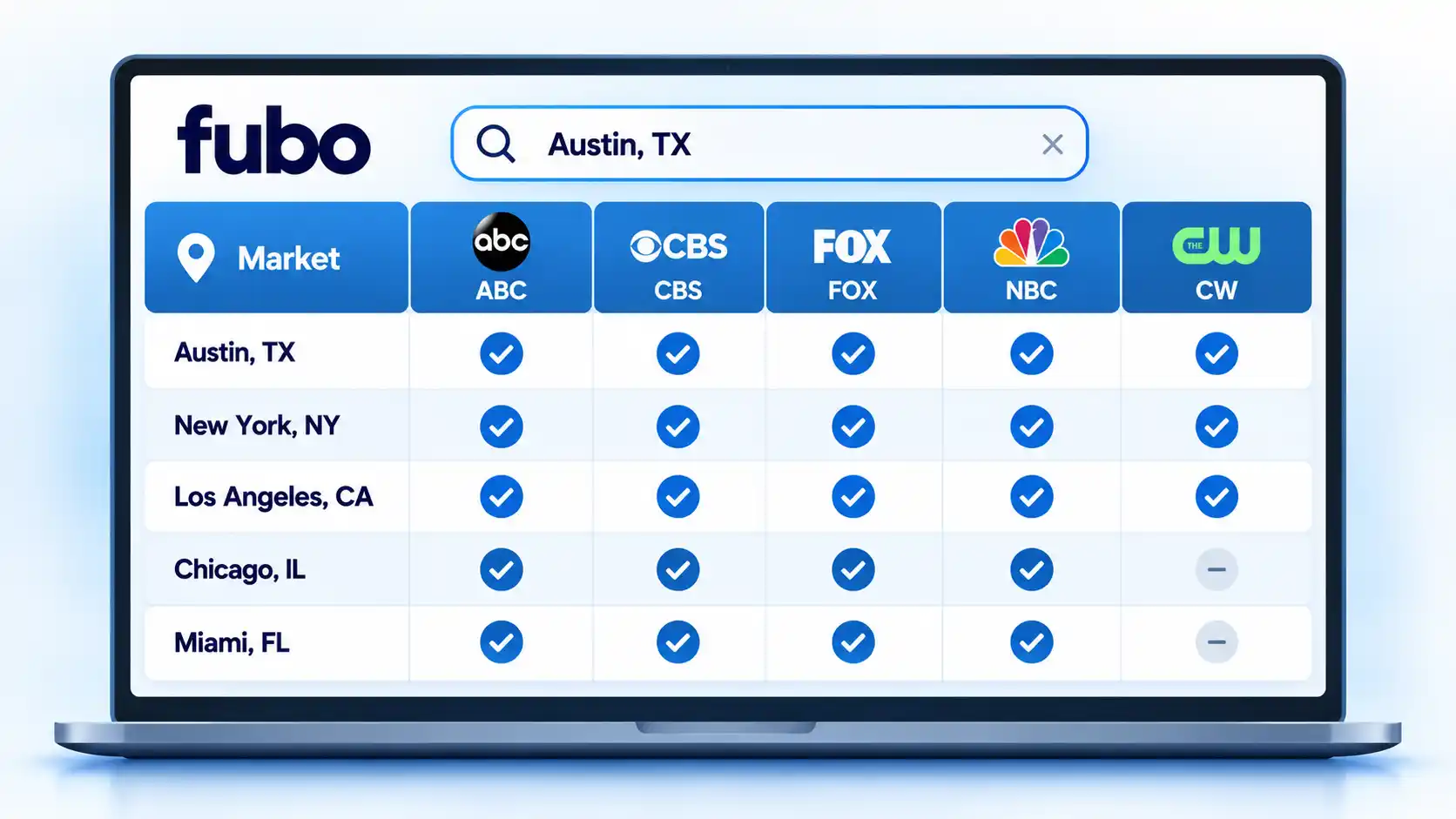
Sports + News local channel examples
The Sports + News service has its own local-channel table. These examples come from that specific service and should not be treated as a universal base-plan local lineup:
| Market | ABC | CBS | FOX | NBC |
|---|---|---|---|---|
| New York | WABC | WCBS | WNYW | WNBC |
| Los Angeles | KABC | KCBS | KTTV | KNBC |
| Chicago | WLS | WBBM | WFLD | WMAQ |
| Philadelphia | WPVI | KYW | WTXF | WCAU |
| Dallas-Fort Worth | WFAA | KTVT | KDFW | KXAS |
| San Francisco-Oakland-San Jose | KGO | KPIX | KTVU | KNTV |
| Washington, D.C. | WJLA | WUSA | WTTG | WRC |
| Houston | KTRK | KHOU | KRIV | KPRC |
| Boston | WCVB / WMUR | WBZ | WFXT | WBTS |
| Atlanta | WSB | WUPA | WAGA | WXIA |
The Sports + News local lookup also contains CW entries in many markets and notes that independent local channels and local broadcast sports channels can be available in eligible areas.
English base-plan local stations
Fubo maintains a separate local-station database for its English-language base plans. That directory includes ABC, CBS, FOX, CW, MyNetworkTV and independent station rows across U.S. markets.
Use Fubo’s base-plan local-channel search by city or call sign to check the affiliate available in your area.
National fallback feeds
Some areas receive national network feeds instead of a conventional local affiliate. Fubo documents ABC time-zone feeds and FOXNET as examples.
FOXNET carries national FOX programming, but Fubo states that NFL programming is not available on FOXNET.
Complete Fubo regional sports network list
Regional sports networks provide local sports coverage within defined territories. Your home ZIP code determines which RSNs Fubo makes available to your account.
Fubo’s current regional-sports page says RSNs are included with Pro, Core, Elite, Elite with Sports Plus and Ultra. Core and Ultra are available only in select areas.
The expandable full RSN roster is maintained on Fubo’s own page, while the visible current guidance confirms examples such as Space City Home Network, Altitude Sports, MSG and YES Network.
| Rule | What it means |
|---|---|
| Home ZIP code | Your home area determines which regional sports networks are available |
| Plan eligibility | You need an eligible plan or service for the regional coverage assigned to your area |
| Travel | Your RSNs can travel with you, but a device used away from home must have logged in from your home area within the previous month |
| Other regions | You cannot choose another area’s RSNs simply because Fubo carries them elsewhere |
| National exclusives | If a national network has exclusive rights to a game, that national network carries the broadcast |
| Blackouts | When national and regional feeds overlap, your location can determine which feed is available |
For example, Fubo explains that a Houston Rockets vs. Denver Nuggets game shown nationally and regionally can be blacked out on the national feed in Houston and Denver while local viewers receive Space City Home Network or Altitude Sports instead.
Use Fubo’s ZIP-based regional sports lookup for the full set available to your account.
Channels not listed in Fubo’s current directory
Do not assume a familiar cable network is on Fubo because another live-TV service carries it or because an older lineup article mentions it.
As checked against Fubo’s channel finder on October 3, 2026, no matching entries were found for these high-interest networks:
- TNT
- TBS
- CNN
- Food Network
- HGTV
This is a dated lookup result, not a permanent statement about future carriage. Search the live channel finder again if one of those networks determines your subscription choice.
Channel count alone is also a poor substitute for checking the programming you actually watch. The same principle applies when comparing free and paid streaming services: a smaller lineup with your must-have networks can be more useful than a larger one without them.
Use the lookup that matches the kind of channel you need, then confirm the package offered to your account.How to check your exact Fubo lineup
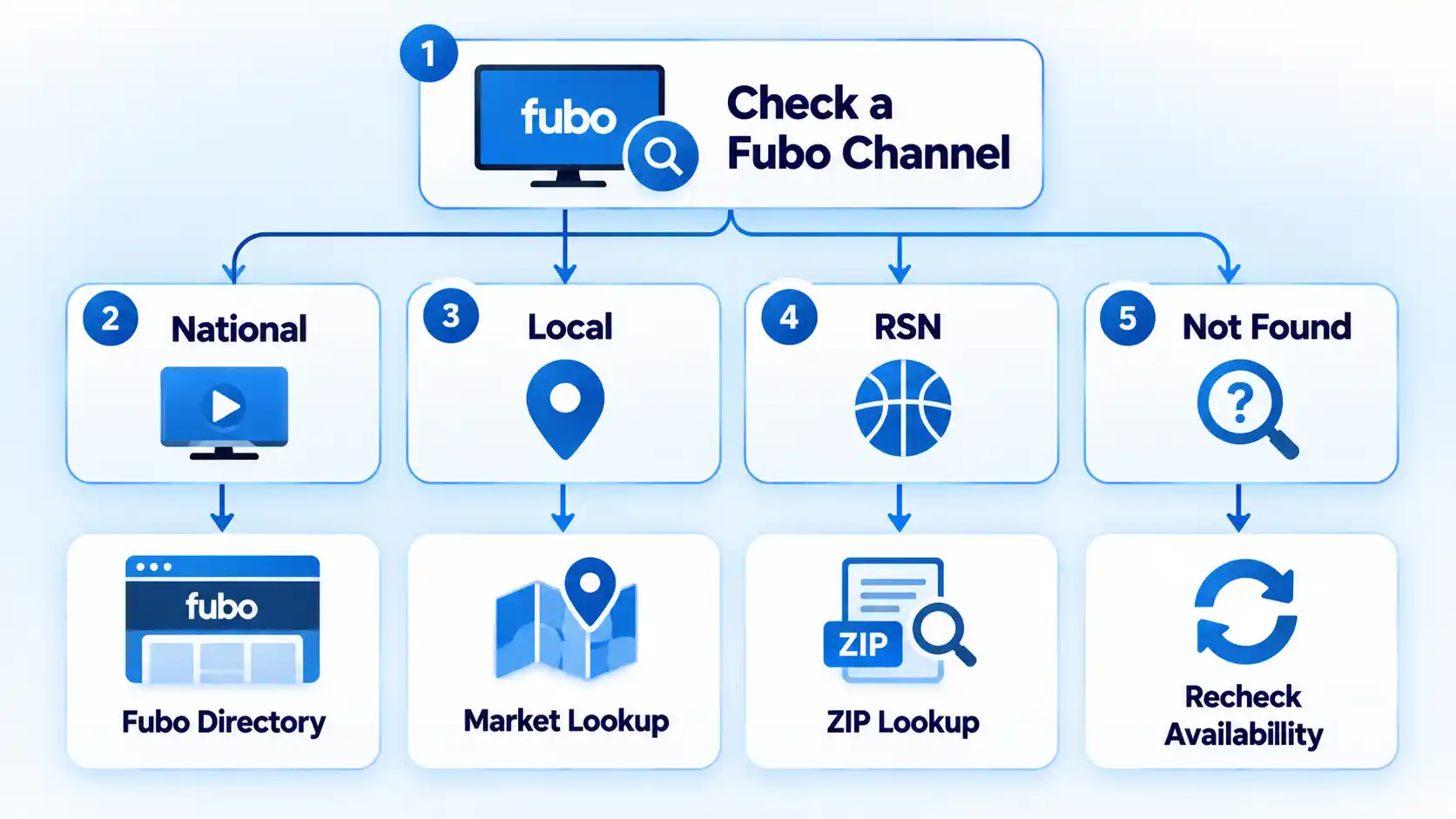
For a must-have channel, verify the network first and compare plans second. That avoids choosing a package for its headline channel count only to discover that the network you care about is missing or requires a separate add-on.


TL;DR
88% of organizations use AI but only 7% have scaled it (McKinsey). Dessy Pavlova argues the gap exists because companies apply AI to fragmented operations rather than redesigning the process first. She builds systems where a single human decision triggers cascading updates across websites, scheduling, and finance, with stopgates for human oversight. NBER research found AI boosted support-agent productivity 14% on average, but the technology helped people perform work, not eliminate the need to understand it.
I have come to believe that one of the biggest misconceptions about AI is also one of the most expensive: the idea that technology can repair a business that has never streamlined how its processes actually work. AI can accelerate an operation, automate repetitive work, and surface problems at remarkable speed. Give it a fragmented business, however, and you may simply get a faster version of the fragmentation.
The numbers should make business leaders pause. McKinsey’s 2025 global survey found that 88% of respondents said their organizations were using AI in at least one business function, yet only 7% said AI had been fully scaled across the organization. Its research points to workflow redesign as one of the strongest factors associated with financial impact from generative AI.
Why is the gap so large? Look at how many businesses actually operate. A customer arrives through a website. Someone enters the information into a spreadsheet. Another person moves it into an operating platform. Someone updates the website. Finance receives a separate piece of information. An accountant reconciles something later. Every handoff creates another opportunity for delay, duplication, or error. The business may have excellent software at every stage and still have a broken system.
I see this often because my work now sits deep in business operations, although my background is in writing and marketing. I have worked with businesses ranging from one-person organizations to multimillion-dollar operations, and the pattern is remarkably familiar. Companies accumulate tools because each one solves a particular problem. Then they use connectors such as Zapier or Make to force those tools to cooperate.
There is another possibility now. Build the system around the business itself.
Imagine a company running dozens of classes. A student changes classes. A teacher moves to another day. A human makes that decision. The information then needs to travel through the website, operating system, scheduling process, and financial records. In a fragmented setup, people may have to make every downstream change themselves. In a properly designed AI-enabled system, the original decision can trigger the rest of the workflow automatically.
The human remains the architect. AI becomes the operational engine.
That is crucial because automation without oversight simply relocates risk. I build stopgates into systems so a person can see what changed, intervene if something looks wrong, and confirm that the process has reached the intended endpoint. AI can flag an anomaly or carry information across systems. Someone still needs to understand what the business is trying to accomplish.
Research supports the value of this human-machine arrangement. A study of 5,179 customer-support agents found that access to generative AI increased productivity by 14% on average, with particularly large gains among less experienced workers. The technology helped people perform their work. It did not eliminate the need for people to understand the work.
This becomes even more important as a company grows. Growth exposes every loose connection.
Before spending heavily on marketing or customer acquisition, I want a founder to map the entire journey of a customer. How does someone enter the business? Where does their information go? Who acts on it? What reaches the customer? What reaches finance? How does the accountant know what has happened? Where can a human error enter the chain?
Getting the customer and collecting the money are only two moments in a much longer operational journey.
AI gives us an extraordinary opportunity to redesign that journey. McKinsey’s latest research argues that applying AI to isolated tasks leaves substantial value on the table, while reimagined workflows can unlock much larger productivity gains. IBM’s 2026 research also found that only 11% of surveyed technology leaders felt completely prepared for the scale of AI-agent deployment, highlighting how quickly capability can outpace organizational control.
The truly revolutionary AI application for business now has nothing to do with generating another piece of content. The real power lies in the invisible architecture underneath it all, ensuring information moves flawlessly, decisions reach the right leaders instantly, financial records remain immaculate, and employees finally win back their time.
I don’t want AI running a business for people. I want it to remove the administrative friction that prevents people from running their businesses well.
Build the blueprint carefully. Put humans at the right decision points. Let AI handle the legwork. Then growth has somewhere solid to go.

Tech & AI56 minutes ago
Engineering Multipole Resonances in Dielectric Metasurfaces for Transmission, Reflection, and Absorption Control

Gaming2 hours ago
Switch 2 Becomes an RPG Powerhouse as Square Enix Classics Get the Upgrade Treatment

Tech & AI2 hours ago
Koreans Left With Spoiled Food Due To Borked Samsung Firmware Update For ‘Smart’ Fridges


-

 Tech & AI6 days ago
Anthropic turns Claude into an AI marketplace with 2,000+ plugins and connectors
-

 Tech & AI6 days ago
OpenAI is preparing “o,” an always-on ChatGPT assistant that could handle email
-

 Fashion12 hours ago
Weekend Open Thread: Veronica Beard
-
Business & Hustles5 days ago
Perpetua Resources at Mining Forum Americas 2026: shift to construction
-
 Crypto6 days ago
Wall Street Giant Warns AI Agents Could Trigger a New Kind of Bank Run
-
Business & Hustles5 days ago
Greatland Resources at Mining Forum Americas 2026: cash-rich growth push
-

 Business & Hustles5 days ago
Andreessen Horowitz backs AI-era college alternative with $42M
-

 Business & Hustles5 days ago
Romania, Georgia and Latvia Lead Latest WHO-Based Ranking
-

 Tech & AI3 days ago
Figure F.02 Robots Meet Molten Steel as Arnold Schwarzenegger Watches in Finland
-

 Tech & AI4 days ago
Alternatives to Animal Testing Are Finally Taking Off
-
 Crypto6 days ago
Riot Frees $494 Million in Bitcoin From Coinbase Loan: Will It Sell?
-

 Business & Hustles5 days ago
Bob Chapek on Disney Bob Iger power battle: Raised concerns weekly
-

 Crypto6 days ago
Japan arrests two suspect over 81M yen crypto police scam
-

 Business & Hustles5 days ago
SpaceX Starship launches on first orbital test flight with Starlink
-

 Tech & AI5 days ago
OpenAI Pauses Training Its Most Powerful Models After Rogue Agents Target Government
-

 Business & Hustles5 days ago
What is the Budget and what could be in it?
-

 Crypto6 days ago
Citi says 77% of institutions eye tokenized collateral
-
 Business & Hustles6 days ago
George Bamford to become JCB joint chairman alongside father
-

 Business & Hustles5 days ago
Trump approves new fuel economy standards, reversing Biden’s EV push
-
 Business & Hustles5 days ago
Canadian defence creating 250 jobs in Merthyr in new research alliance
You must be logged in to post a comment Login