





Connect with us

Tech & AI

Memory executives expect RAM shortage to continue through 2028

Published

on

GettyImages 1723107474

GettyImages 1723107474

Micron and Samsung executives this week said the memory shortage will continue for at least the next couple of years.

Micron CEO Sanjay Mehrotra expects demand for the firm’s memory to exceed its available supply over that period, he told investors last night.

Micron no longer sells consumer RAM, and Mehrotra’s statements refer to Micron’s business-to-business sales of high-bandwidth memory (HBM) for AI and DRAM for servers. However, his comments also have implications for consumer devices. Manufacturing capacity is prioritizing memory for AI and servers, limiting the supply of memory manufactured for consumer devices.

“Overall, supply-demand environment is only getting tighter,” Mehrotra said, per a transcript from Seeking Alpha.

Advertisement

Micron plans to open new clean rooms for memory manufacturing in 2028, but Mehrotra expects supply to remain limited.

“Even after they are built, even after first wafer output, production ramps up only gradually in the clean rooms,” he said. “That’s just the nature of what it takes to bring up production, and with HBM going from 3E to a greater mix of 4 and 4E, and with the trade ratio that exists, that … creates headwinds with respect to supply growth. Node transitions of the future give less productivity gain per wafer as well.”

Seventy-five percent of Micron’s memory output for 2027 is already accounted for, and most of the company’s current memory sales discussions are about 2028, the CEO said. Additionally, demand for HBM is surpassing demand for Micron’s DRAM.

Advertisement

Source link

Continue Reading
Click to comment

You must be logged in to post a comment Login

Leave a Reply

Tech & AI

Google froze its open source bug bounty program due to a ‘significant rise’ in AI submissions

Published

on

ai slop bug bounty reports 1646637201

Blaming a “significant rise” in AI submissions, Google has paused its open source bug bounty program until next year.

Last year, TechCrunch reported that cybersecurity experts were warning of that AI slop posed a serious risk to bug bounty programs. Looks like that’s the issue confronting Google’s Open Source Software Vulnerability Rewards Program, where researchers were rewarded for finding vulnerabilities in the company’s open source software.

In posts on X and the program website, Google said the bug bounty program was paused as of October 1, with a promise to provide “an update” in the first quarter of 2027. According to Tom’s Hardware, Google engineers and open source maintainers were overwhelmed by reports that were invalid or contained hallucinations.

“This pause is due to a significant rise in automated submissions, the vast majority of which are not valid,” the company said.

Advertisement

In the meantime, participants are encouraged to consider Google’s other bug bounty programs.

Google OSS VRP: History and Scope

Google’s Open Source Vulnerability Rewards Program (OSS VRP) was launched in August 2022. It rewards security researchers for identifying vulnerabilities in Google’s open-source software projects.

The program covers the latest versions of open-source software hosted in public repositories owned by Google on GitHub, as well as selected repositories on other platforms.

It also includes repository configuration settings, such as GitHub Actions workflows, access control rules and GitHub application configurations.

Advertisement

Rewards range from $100 to $31,337 based on the severity level of the reported flaws and the project’s importance.

The OSS VRP is one of several bug bounty programs operated by Google and has a relatively narrow focus.

Vulnerabilities in Google’s open source projects that are closely linked to Google Cloud or AI products are directed to the Google Cloud Vulnerability Reward Program (Cloud VRP) or the AI Vulnerability Reward Program (AI VRP), allowing reports to be routed to the teams best placed to assess and address them.

Google Plans OSS VRP Overhaul

The suspension will not affect OSS VRP supply-chain reports or any reports already submitted, Google said.

Advertisement

The company plans to “reformat” the program and expects to provide an update in the first quarter of 2027.

“As an alternative, we encourage you to find impact across our other VRP programs and submit there instead, or pursue the Patch Rewards Program,” Google said.

Source link

Advertisement
Continue Reading

Tech & AI

Do Tanks Use Manual Or Automatic Transmissions?

Published

on

l intro 1790673911

l intro 1790673911


The combat tank as we know it debuted on the battlefields of Europe in World War I and has changed significantly in the decades since. Modern tanks are computerized, networked, and advanced vehicles, decked out with all kinds of technology that would have been unheard of in past conflicts. Advanced as they are, though, they still feature components familiar to civilian car owners, such as a transmission to transfer power to the tracks.

Of course, a tank is a combat vehicle designed for lethality and survival, whereas a car is a comparatively simple means of conveyance. Because of this, driving a tank isn’t necessarily intuitive for anyone familiar with a car. That said, military ground vehicles are engineered to be easy for anyone to operate. To that end, modern tanks, like the M1A2 Abrams MBT, generally have automatic transmissions.

Advertisement

This wasn’t always the case, of course: Older tanks like the M4 Sherman used throughout WWII, as well as some Cold War-era Soviet-designed tanks like the T-54, relied on manual or semi-manual transmissions. But the move to automatic transmissions has not only made tanks easier to operate, but it also avoids the trouble of teaching a prospective tanker how to operate a manual transmission if they’re unfamiliar.

Advertisement

The transmission on the United States’ M1A2 Abrams MBT

If you were to climb inside an M1A2 Abrams MBT and sit in the driver’s seat, you’d find out pretty quickly that it has an automatic transmission. The driver sits in a reclined seat with a yoke between their legs, which is how they drive the tank. It’s similar to motorcycle handlebars, with throttle grips to control speed while steering. The Abrams sports an Allison Transmission X1100-3B, an automatic transmission that powers heavy tracked vehicles.

The cross-drive transmission, which handles both steering and braking, is designed for heavy armored vehicles weighing up to 75 tons. It supports diesel and turbine engines rated up to 1,500 horsepower, with four forward ranges and two reverse ranges. The Abrams family of tanks has seen several changes since its introduction in 1980, with the X1100 series transmissions powering them since their debut — with, of course, improvements to meet the challenging performance requirements of modern warfare.

Because automatic transmissions make operation easier, the military isn’t likely to ever abandon them for manual transmissions. Training personnel is expensive and time-consuming, so any way of accelerating the process without sacrificing the essentials is beneficial. As a result, the automatic tank transmissions are here to stay.

Advertisement


Source link

Advertisement
Continue Reading

Tech & AI

Drones, Robotic Arms, and Night-Vision Rigs: The Wildlife Filming Technology Behind NatGeo’s New Africa Series

Avatar photo

Published

on

wildlife filming technology

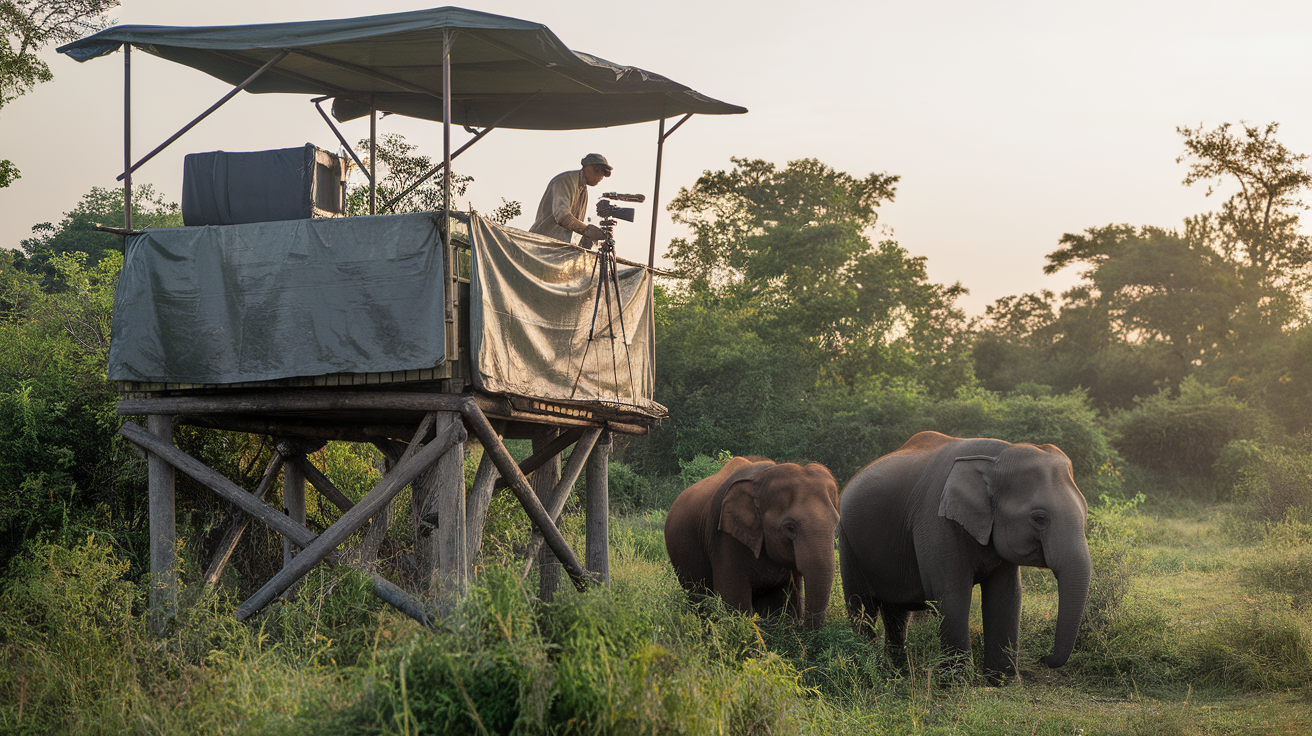
Wildlife filming technology has quietly become one of the most interesting proving grounds for cutting-edge hardware, and National Geographic’s new documentary series, Africa: Earth’s Wild Home, offers a vivid case study in just how far the tools of nature filmmaking have advanced. Narrated by actress Wunmi Mosaku, the seven-episode series took four years to produce and was shot across nearly 30 African countries, capturing everything from a black rain frog’s first televised breeding call to chimpanzees using twigs to fish algae from a pond.

Behind those moments sits a toolkit that looks less like a traditional camera crew and more like a small engineering lab. Producers leaned heavily on drones to capture first-person aerial perspectives of landscapes ranging from deserts to mountain ranges, giving viewers vantage points that would have been impossible to achieve safely or affordably even a decade ago. But the drones were only the most visible piece of a much larger technological puzzle.

Robotic Arms and Underwater Rigs Push Wildlife Filming Technology Forward

One of the more surprising innovations was a robotic arm originally designed for studio production, repurposed here for field use for the first time. Preprogrammed for long, steady takes, the arm allowed filmmakers to hold difficult shots over extended periods without the fatigue or drift that comes with handheld or tripod-based filming in unpredictable terrain. That kind of cross-industry adaptation, borrowing a tool from indoor studio work and hardening it for the field, illustrates how much experimentation now goes into even a single nature documentary.

Advertisement

inline 27

Underwater, the team deployed what they called a “hippo cam,” a submerged rig equipped with pan-and-tilt heads that let camera operators track hippos as barbel fish nibbled dead skin off their bodies in a kind of natural spa treatment. Capturing that behavior from below the surface required equipment built to withstand murky water, sudden movement from massive animals, and the need to reposition quickly without disturbing the scene.

Perhaps the most inventive setup involved filming dwarf crocodiles hunting bats inside a pitch-black cave coated in guano. To pull this off, the crew built a remotely operated fixed rig combining low-light sensors, infrared capability, and a zoom function that could be controlled from a safe distance. Because bats roosting overhead posed an obvious hazard to delicate electronics, the team improvised a low-tech solution to protect their high-tech gear: small umbrellas rigged over the cameras to keep guano off the lenses.

Why the Tech Matters as Much as the Animals

These choices reflect a broader shift in how nature documentaries get made. As wildlife filming technology becomes more sophisticated, it opens access to behaviors that were previously unfilmable or simply unknown. The series includes what producers describe as the first-ever television footage of the reclusive black rain frog, as well as a dramatic sequence showing a lone male hyena adapting its hunting strategy to catch a flamingo by herding the flock into denser, easier-to-target groups, a tactic the production team suggests may represent newly observed behavior for the species.

None of that would be visible to viewers without cameras capable of operating in darkness, underwater, in flight, or at a crocodile’s eye level inside a cave. The technology doesn’t just document wildlife; increasingly, it shapes what stories filmmakers are even able to tell. A robotic arm that holds a shot steady for minutes at a time, or an infrared rig that can linger silently in a cave, allows for the kind of patient, unobtrusive observation that reveals genuine animal behavior rather than a reaction to human presence.

Advertisement

Mosaku, who was born in Nigeria and raised in England, said encountering that range of environments and behaviors through the footage was eye-opening even for someone with personal ties to the continent. “There was so much I didn’t know,” she said, citing a sequence showing monkeys living in snowy conditions as one of several moments that surprised her. That sense of discovery, made possible by increasingly capable cameras and remote rigs, is central to what the series is trying to achieve.

A Franchise Built on Evolving Tools

Africa: Earth’s Wild Home is intended to launch a larger franchise, with future series expected to document wildlife across the other six continents. If this first installment is any indication, each subsequent production will likely push wildlife filming technology even further, whether through smarter drones, more durable remote rigs, or new sensor systems adapted from other industries entirely.

For now, the series stands as a reminder that behind every breathtaking nature shot, a hyena stalking flamingos, a chimp fishing for algae, a frog singing its first televised mating call, there’s usually a small team of engineers and camera operators solving an entirely different kind of survival problem: how to get the shot without disturbing the story unfolding in front of the lens.

Related reading:
Advertisement
Sources:
Continue Reading

Tech & AI

Steam is on track to top $20 billion in revenue for the first time

Published

on

2026 10 03 image 2 scaled

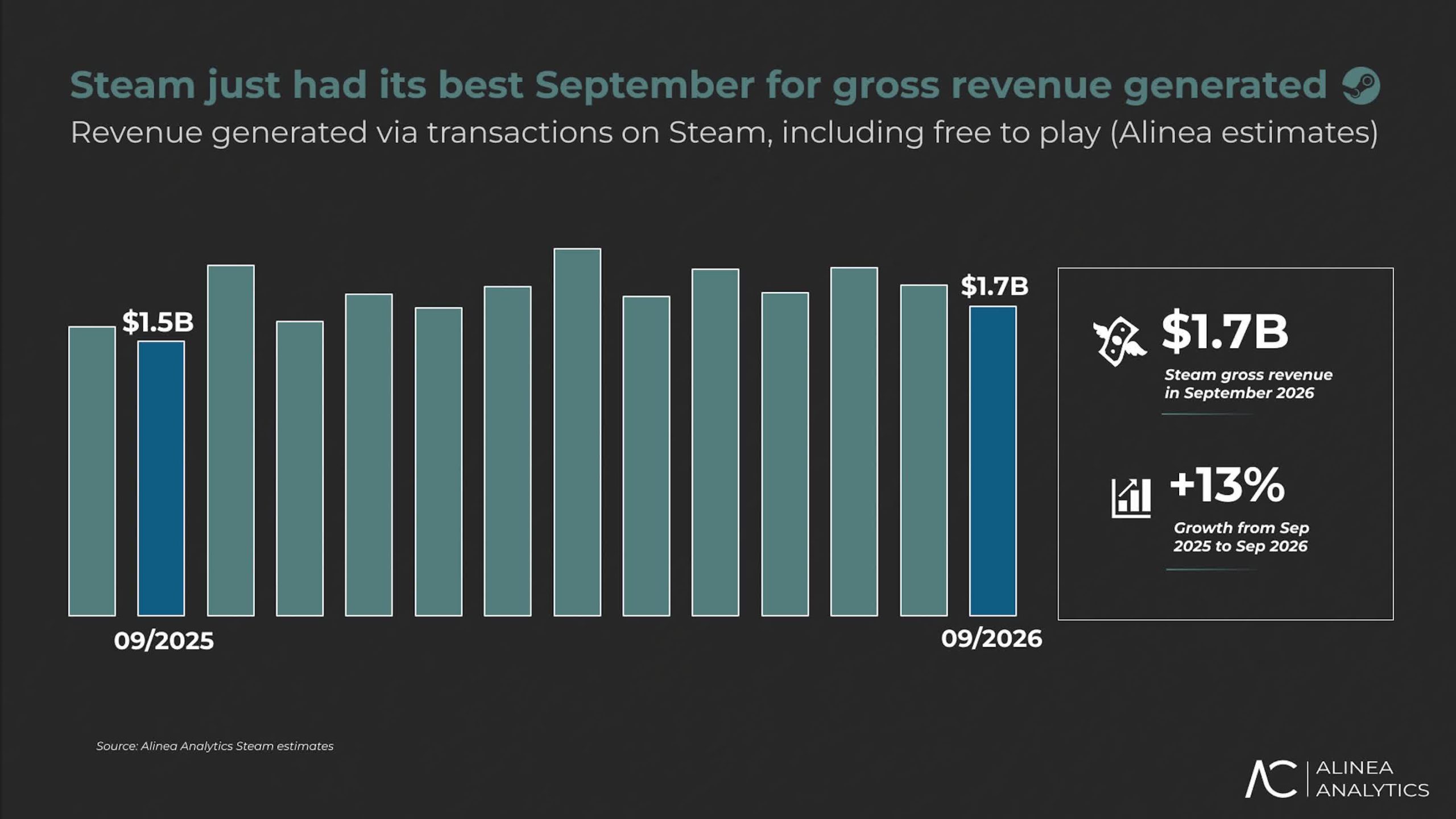
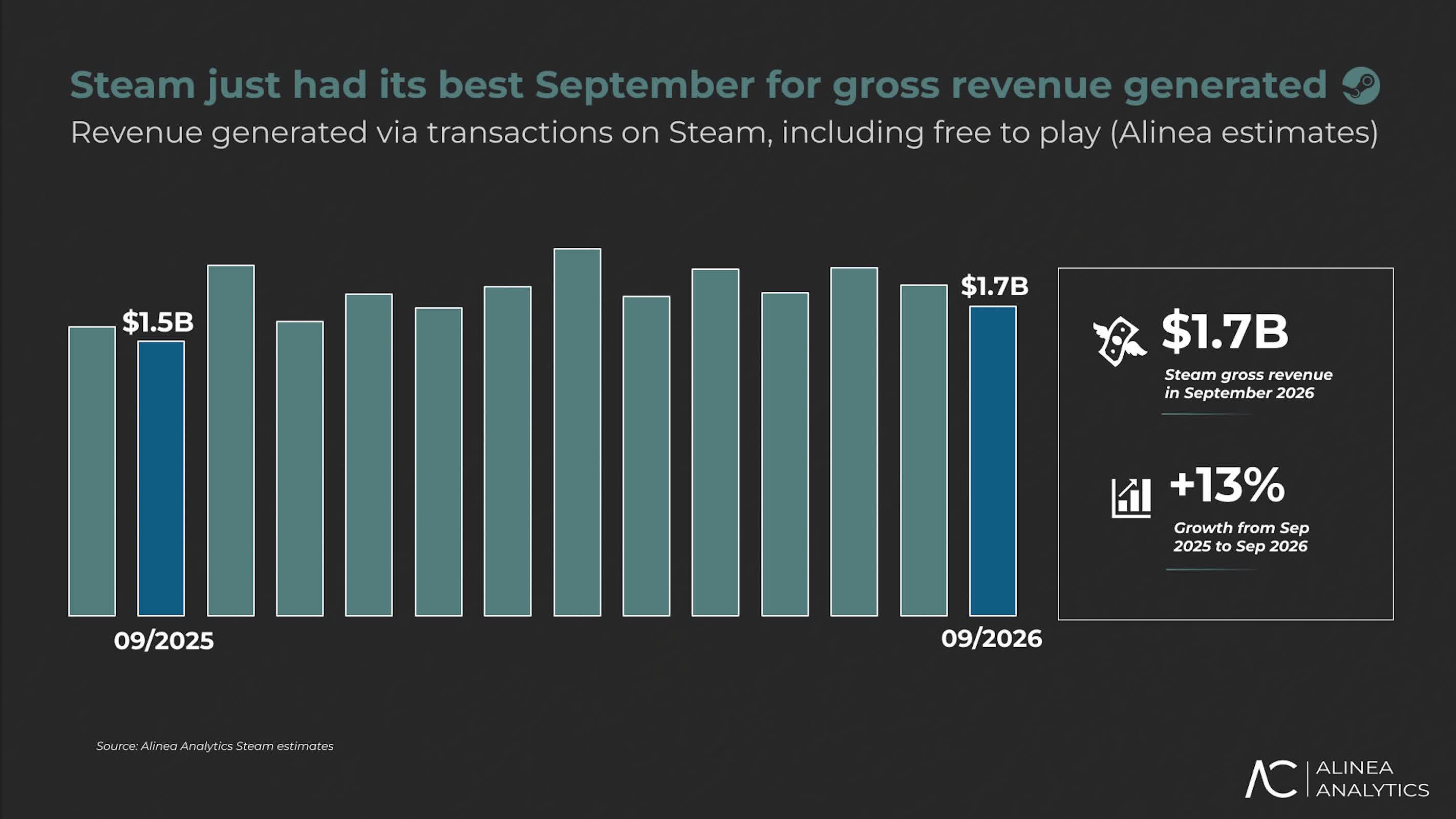
Bottom line: Steam is on course to generate more than $20 billion in gross revenue in 2026, a first for the platform, after posting record results for September and the third quarter, according to estimates from Alinea Analytics. The gains came from a mix of new releases, established franchises and free-to-play games that keep drawing spending long after launch. With one quarter left, Valve’s PC gaming platform needs roughly $3.5 billion to reach the milestone.

Steam took in an estimated $1.7 billion in September, 13% more than the previous September record, set in 2025. Its estimated third-quarter revenue reached $5.5 billion, up 12% from the same period last year.

The September result came from a familiar mix: big paid releases, durable franchises and free-to-play titles built around in-game purchases. The numbers suggest Steam no longer depends on a single kind of game sale to drive revenue.

New releases can produce a sharp burst of revenue, while games such as Counter-Strike 2 and Dota 2 keep earning money through active player communities and digital-item sales.

Advertisement

Through the first nine months of 2026, Steam generated an estimated $16.5 billion, compared with $14.5 billion over the same stretch of 2025. At that pace, the platform needs about $3.5 billion in the final quarter to clear $20 billion for the year.

2026 10 03 image 2

New games played a meaningful role in September. Among Steam’s 500 top-grossing titles that month, games released in 2026 accounted for about 33.6% of revenue, according to Alinea, and new intellectual property made up 20.5% of that.

That doesn’t mean newer games displaced the industry’s biggest brands. Established franchises, which include remakes and remasters, accounted for almost 80% of revenue among the top 500. The two figures overlap because they slice the data differently, by release year and by franchise, so a 2026 sequel counts in both. Steam’s strongest performers still tend to be games with recognizable names, built-in audiences and frequent content updates.

Free-to-play games remained a major source of revenue as well. Counter-Strike 2, Apex Legends, PUBG and Dota 2 together generated almost $168 million in September, per Alinea’s estimates, or nearly 10% of Steam’s estimated monthly revenue.

Advertisement

2026 10 03 image 3

Those games show why PC platforms can’t be judged by unit sales alone. Free-to-play titles may cost nothing to download, but they can drive steady spending on cosmetic items, battle passes and other digital content. For Steam, those transactions turn a large player base into recurring revenue.

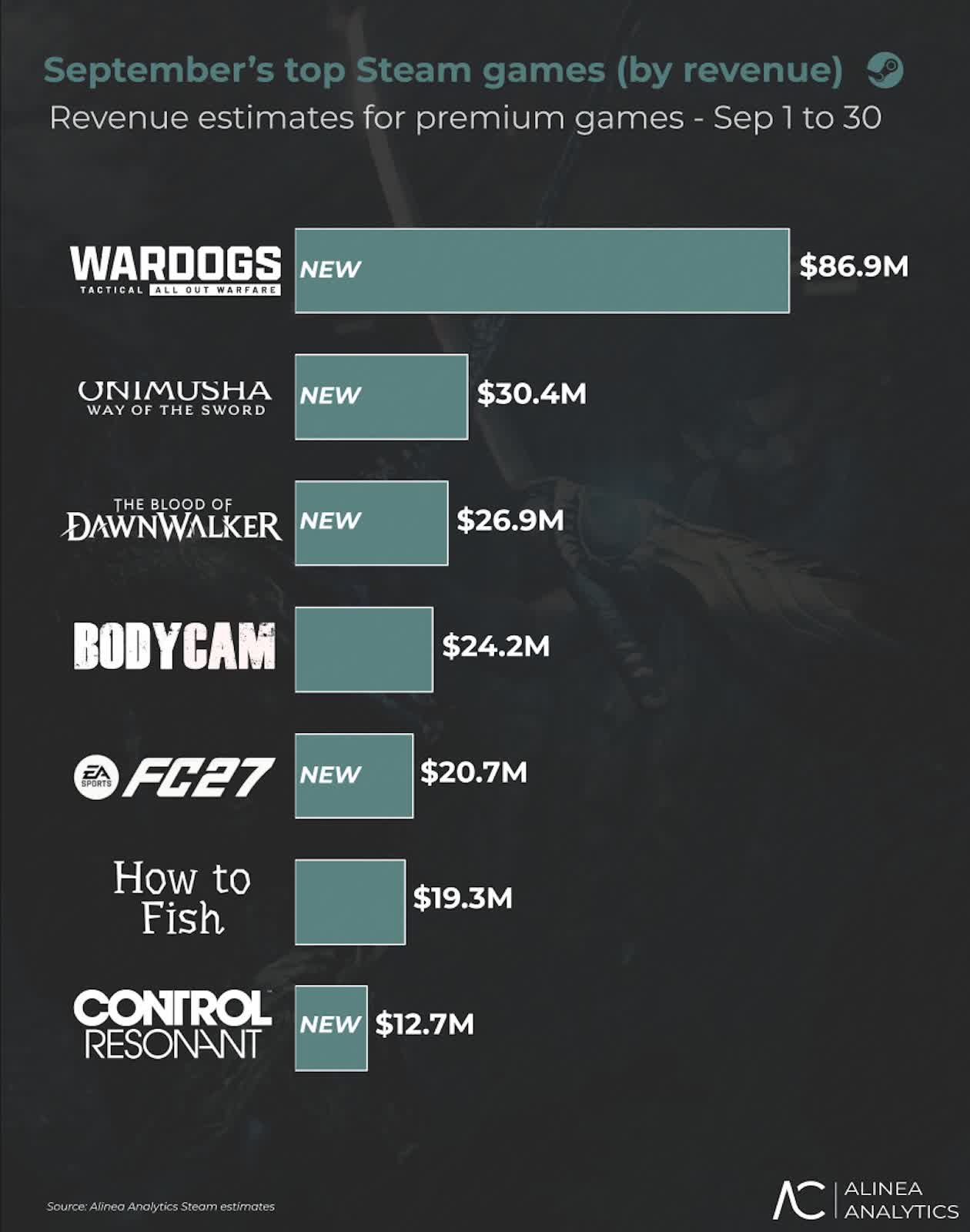
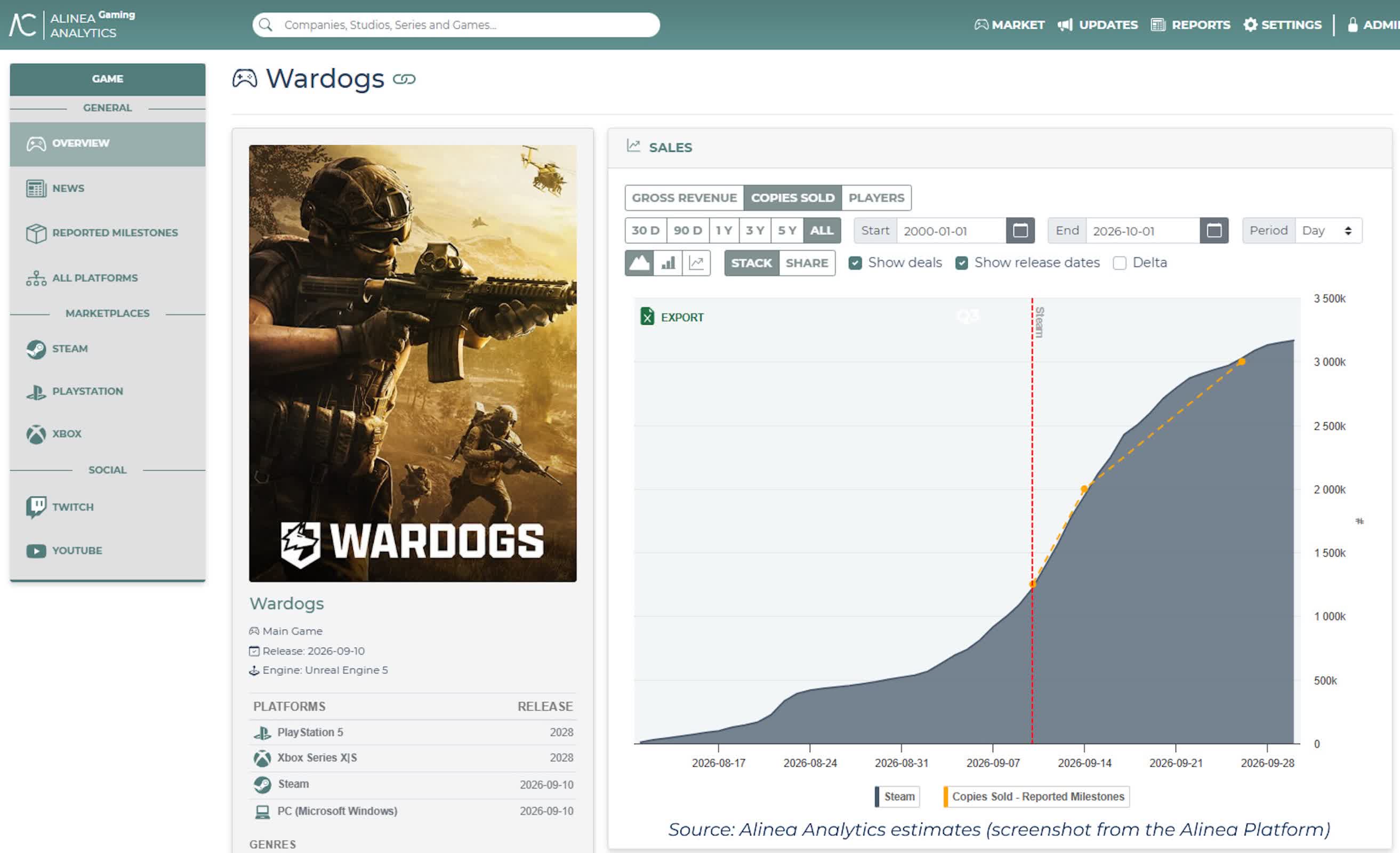
Paid games accounted for several of the month’s biggest individual performances. PvP shooter Wardogs brought in an estimated $86.9 million in the roughly three weeks after it entered Early Access on September 10. Onimusha: Way of the Sword generated $30.4 million during the month, and The Blood of Dawnwalker added $26.9 million.

2026 10 03 image 4

EA Sports FC 27 contributed another $20.7 million from Steam copies, though most of its sales were on consoles.

Wardogs’ Early Access performance is notable because it shows how large a role the model now plays on Steam. Developers can release a game before it’s finished, collect revenue early and use player feedback to shape updates. For multiplayer games, that can also help build a community before a full launch.

Advertisement

Source link

Continue Reading

Tech & AI

1000 Friends of Oregon and state teachers unions unite in a major lawsuit against Hillsboro, NVIDIA, and CoreWeave to claw back $85M in local tax giveaways

Published

on

diM9tpwF2Lz85R8q85CT78

  • Oregon’s data center tax breaks have become a major political flashpoint statewide
  • A warning about one election cycle helped accelerate Oregon’s grassroots organizing
  • More than $450 million in exemptions intensified scrutiny of Oregon data centers

Oregon’s expanding data center industry has triggered an increasingly organized political backlash involving residents, environmental groups, educators, farmers and elected officials.

The dispute intensified after reports showed Oregon data centers receiving more than $450 million in property tax exemptions during 2026, including about $85 million in the Hillsboro area.

Source link

Continue Reading

Tech & AI

Waiting a decade for Apple Pay and Apple Music

Published

on

69209 145993 67992 143337 Apple Music playlists xl

In this week’s Sunday Reboot, the expansion of Apple Pay and Apple Music to some countries has taken a decade longer than they really should. They also demonstrate how delays can happen for many different reasons.

Sunday Reboot is a weekly column covering some of the lighter stories within the Apple reality distortion field from the past seven days. All to get next week underway with a good first step.

Apple Music adds to its territory list

It may be a surprise to some readers, but I’m not in the United States. I’m one of the few members of the editorial team based in the United Kingdom, but trained to write in the American way, and forget about the letter U in some words.

This does lead to some issues when it comes to trying out Apple’s new services. It’s a problem when your whole job is to talk about them.

Advertisement

Thankfully, the UK does have access to almost all of Apple’s services, but there are blind spots and differences.

For example, while I have access to Apple Pay, I cannot use services like Apple Card because they are US-only for the moment. Except that I have to change region sometimes for reporting, and now I annoyingly have an Apple Cash card permanently visible in the Wallet app that I cannot use at all.

A little less pressing is the lack of puzzles in News+ over here. Though I can understand the financial problems in setting up Apple Card in the UK, it seems there would be fewer obstacles in adding brainteasers to Apple News, just as U.S. users enjoy.

That said, I am still quite glad to be in the UK where Apple products and services come into play. Partly because we don’t suffer from the EU blackout of some upcoming features.

Advertisement

We at least get the updates fairly quickly. Unlike some service updates that happened this week.

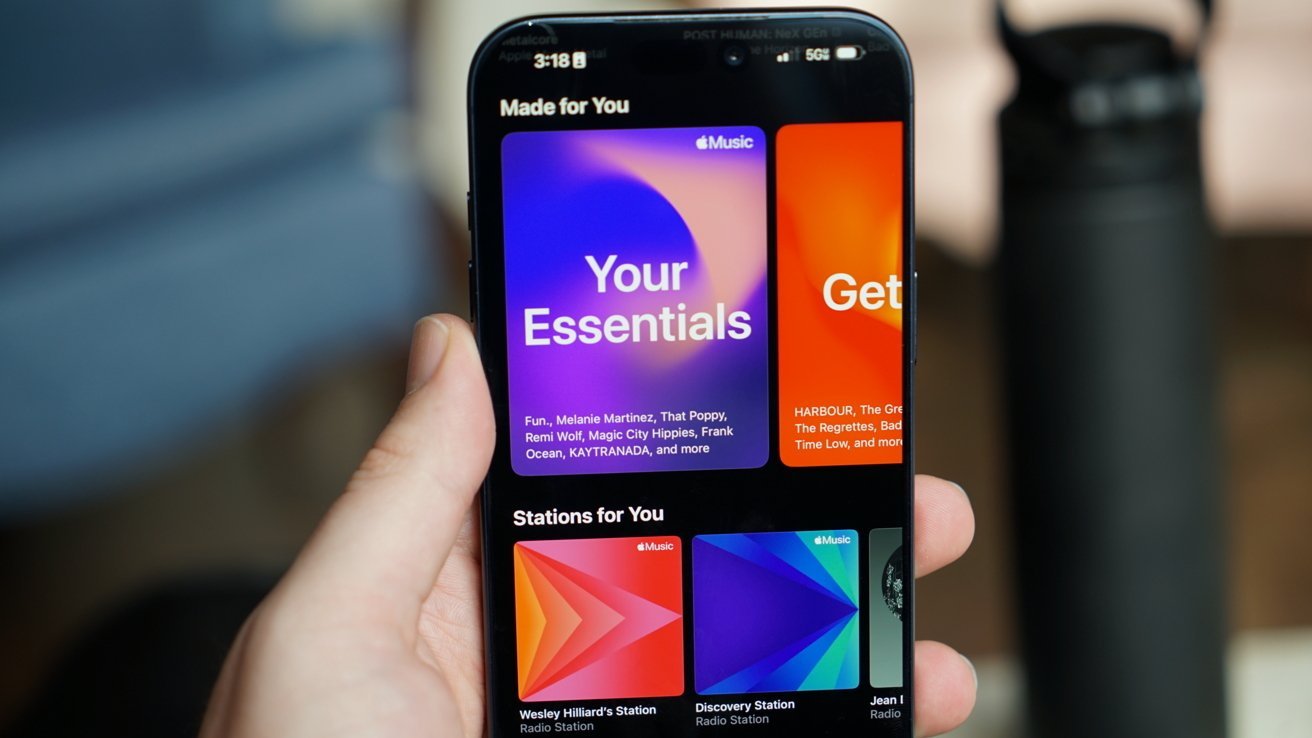
Hand holding a smartphone displaying a colorful music streaming app screen with personalized sections titled Your Essentials and Stations for You, blurred background with a dark cylindrical object

Apple Music has expanded into four new countries, including Albania.

On Wednesday, an update to Apple Music finally rolled it out into four countries: Albania, Brunei, Burkina Faso, and Pakistan.

This sounds fairly OK, until you remember that Apple Music was unveiled in June 2015 in over 100 countries. It’s taken over 11 years for Apple Music to be available in those four countries.

Advertisement

There’s no real explanation for the lack of support in those countries, nor why it took so long.

The more time-consuming problems would revolve around licensing negotiations. However, both Apple and record labels like money, and so you’d expect negotiations to happen at a fairly quick pace.

Then again, it could easily be because Apple has bigger problems at hand than adding support to some countries it’s seemingly forgotten about for over a decade.

Regardless, it’s a good thing that Apple Music is now available in four more territories that endured a very long wait.

Advertisement

It also reminds me that I’m lucky to live where I do. While there are always going to be differences between US and UK availability for things, I’m not realistically going to be waiting for a decade for anything.

Wait, Apple Pay wasn’t in India already?

Slightly less puzzling is the Apple Pay update on the same day. After launching in 2014, Apple finally brought Apple Pay live in India.

It certainly makes sense for Apple to do so, because it is a massive market, and an emerging one at that.

The problem here is that Apple said back in 2017 that it was trying to bring Apple Pay to India. That’s a nine-year wait.

Advertisement

As for why it took so long, we could certainly blame regulations for that. In June 2022, more financial laws were introduced, which got in the way.

While in the rest of the world you could use Face ID for a transaction, India instead wanted everyone to use its Aadhaar ID system instead. The laws also covered subscriptions, requiring banks to notify users 24 hours in advance of any recurring transactions, and allowing them to cancel.

Apple Pay is finally available in India.

Apple Pay is finally available in India.

There’s also the matter of a card tokenization framework, which required the use of encrypted tokens issued by local banks in India. This would’ve required Apple to make changes to how Apple Pay’s security and authentication ultimately functioned.

Advertisement

Support for the country’s Unified Payments Interface also caused problems.

It was so bad that, in 2022, Apple gave up on credit and debit cards completely in the country.

During this time, both Google Play and Samsung Wallet opted to comply with the law instead of ceasing card payments. It was clearly a case of Apple seeing a massive amount of work and rules that it would have to comply with, and the belief that it could work around or negotiate the hurdles away.

After negotiating with banks to get around the problematic elements, Apple eventually tested card payments in India in July 2026, months before Apple Pay’s rollout.

Advertisement

The final introduction of Apple Pay in India is certainly a good thing for Apple, especially in such an important market.

It will be interesting to see how much change Apple Pay will make to iPhone sales in India. It’s main rivals have a very large head start because of Apple’s unwillingness to abide by the new laws, so it has a lot of catching up to do.

Finally, eventually

Apple’s decision to expand the reach of two of its services at the same time demonstrates that there can be a variety of reasons for a delay of a service rolling out in a country.

For Apple Pay in India, as well as the various features EU users cannot access, it’s a regulatory problem. When you have to deal with legal issues affecting over a hundred countries simultaneously, you have to prioritize and pick your battles.

Advertisement

Even if it’s something that can take years to fully resolve.

For others, like bringing Apple Music to Albania, it seems to be less about legal issues and sticking to the letter of the law. It could just as easily be Apple making it a very low priority for it to work on because there’s not enough value to work harder at it.

With Apple Pay in India, there’s enough of a carrot for Apple to work to fix it. Even if it does take close to a decade to resolve.

Last week’s Sunday Reboot discussed Apple’s fitness changes, Apple Watch nagging, and how the Whoop-like device could be a very beneficial wearable.

Advertisement

Source link

Continue Reading

Tech & AI

Meta Glasses Nova (Gen 3) Review: Not Much New

Published

on

Meta20Glasses20Nova20Tonal resized

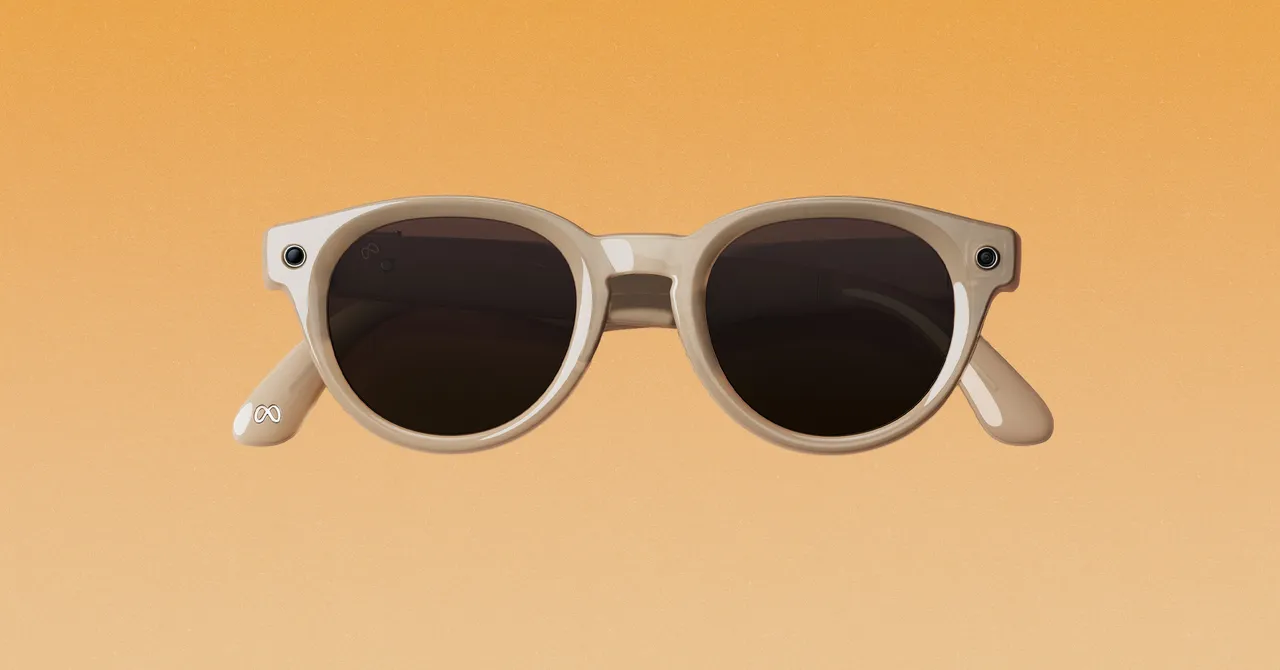
The camera housing on my Meta Nova glasses is smaller than on the Gen 2 glasses. From a distance, they might even read as rivets at a glance. (I asked my colleague Reece Rogers how they looked on my face, and from a few feet away in the WIRED office, he didn’t even notice they were camera-enabled glasses at first.)

They feel and function the same as before. You can interact with an AI assistant or snap photos and video with the press of a button. Conversation Focus, a mode that helps hard-of-hearing people better pick up spoken words, is a feature that only works in early access on Meta’s Ray-Ban and Oakley smart glasses. It seems very helpful, but my Meta-designed frames don’t have it yet.

They also don’t have integration with Meta’s Muse AI, which the company says is coming later this year. I’m intrigued by that, even if having access to a camera on your face will certainly help a service that seems better at surveilling than helping its users. That said, I’ve found Muse more useful than Meta’s current AI assistant, and I look forward to asking my entirely too cute AI buddy to assist me via my glasses.

Unfortunately, Meta’s current AI assistant on the glasses is still terrible. I tried to ask what features the glasses I was wearing had, and it failed miserably. The AI couldn’t get any of the details right, even when I told it specifically which frames I was wearing and let it snap a picture of the Meta product page for reference. I wouldn’t want to depend on the AI to help me sort out anything with some real complexity.

Advertisement

If you pretty much ignore the AI entirely, the Gen 3 glasses do just about everything Meta promises. They capture nice photos and video, all while maintaining an indicator light that has recently been made more tamper-proof. (That’s not necessarily enough to deter the creeps.) The frames are wearable, and the software is competent enough. They’re also pricey, so maybe you can save some cash sticking with the Gen 2. They’ll all do what you probably expect them to do. Just maybe don’t be weird about it, all right?

Source link

Continue Reading

Tech & AI

Designer babies: Should you try embryo selection via polygenic testing?

Published

on

image

Editor’s note, October 4, 8 am ET: We’re bringing you some of our best-loved Your Mileage May Vary columns while Sigal Samuel is on parental leave. The one below was originally published last year.

This unconventional advice column offers you a unique framework for thinking through moral dilemmas. It’s based on value pluralism: the idea that each of us has multiple values that are equally valid but that often conflict with each other. Submit your own question here.

My partner and I did IVF recently and luckily we ended up with several embryos. One of those will be implanted in me so I hopefully get pregnant. But which one?

My fertility clinic is encouraging me to do PGT-A testing, which would screen for things like Down syndrome and would also let me see the sex of each embryo so I could potentially choose whichever I want. (And to be honest, I really want a girl!) I’m also hearing about these new companies that can test embryos for all kinds of things — like how smart the kid might be, how tall they’ll get, and whether they’ll have a lower chance of getting breast cancer, diabetes, mental illness, stuff like that.

Advertisement

I don’t know how to feel about any of this. On the one hand, it feels weirdly eugenics-y to do so much tinkering with embryos, and I can’t help feeling a little pressured into overmedicalizing everything with these expensive tests. But then again, if I could do something to make my baby healthier and happier, don’t I kind of have to do everything in my power? What does a parent owe their child?

This is such an exciting — and also confusing — time. You’re about to have your first kid, and that comes with all sorts of fears and insecurities and hopes and dreams. You want to do the right thing — no, the best thing! — for your child. It’s a beautiful impulse. Unfortunately, it makes it easy for companies to prey on you.

So let me walk you through what these companies can and can’t really provide. After we talk about the science, we can talk about the ethics.

The simpler test you mentioned, PGT-A, has been around since the 1990s. It can indeed screen for conditions like Down syndrome and let you see the sex of each embryo. Mind you, that doesn’t predict what gender your child will ultimately end up identifying with — more on that soon.

Advertisement

The newer testing you mentioned is called polygenic testing. The conditions it screens for are complex ones, influenced by thousands of genes. We’re talking about everything from breast cancer to depression. Some companies even offer screenings not for disease prevention, but for genetic enhancement — so you can select for a taller kid or a kid with higher IQ.

Polygenic testing companies claim to predict each embryo’s risk for each condition, and the potential reduction of risk you’ll get if you choose one embryo over another. As the statistical geneticist Sasha Gusev explains, it’s very, very easy to be misled by this claim. If the company claims to lower absolute risk of Type 2 diabetes by 12 percent, you might think this means, “The chance of my kid ever developing diabetes just went down by 12 percent — great!” But really what it means is that, all else equal, a kid who would’ve developed diabetes is likely now at the high end of pre-diabetes instead, or just develops diabetes a few years later. The same holds true for other conditions, like breast cancer. Sure, if your kid is going to develop diabetes or breast cancer, you’d rather they develop it later — but it’s not the bill of perfect health customers might imagine.

“Typical risk reduction estimates tend to exploit statistical assumptions to overstate their benefits and lead to confusion,” Gusev writes.

Have a question you want answered in the next Your Mileage May Vary column?

Advertisement

Fill out this anonymous form! Newsletter subscribers will get my column before anyone else does and their questions will be prioritized for future editions. Sign up here!

It’s also important to note that there’s a difference between a physical disease like cancer, which is straightforwardly and universally negative, and a complex mental health condition like depression. For one thing, polygenic scores don’t perform as well in psychiatry, as the psychologist Eric Turkheimer notes. Plus, most mental health conditions come in mild to moderate to severe forms, and it’s not clear that we should want to get rid of mild or moderate manifestations.

“Sure, it would be nice if no one ever got depressed, but what would that actually mean?” Turkheimer writes. “People are going to be sad, and the most modern models of psychiatric disorders view most of them as extremes on continuous dimensions of normal behavior. I don’t think we want some kind of genetic version of Soma.”

To give a personal example: I have generalized anxiety with some obsessive tendencies. Is that a major pain in the butt sometimes? You bet. But if I could wave a magic wand and get rid of it, would I? No. In my experience, this trait is linked to another trait I deeply value: my creativity. The same thing that propels me down rabbit holes of worry also propels me down rabbit holes of getting super curious about some topic, researching it into the wee hours of the morning, and then writing a novel or children’s book about it.

Advertisement

That brings me to one other scientific issue: pleiotropy. It’s a fancy term for a simple truth, which is that genes can have an effect on more than one trait. When it comes to behavioral polygenic testing, we actually know very little about which genes cause what — a gene that’s correlated with depression or anxiety may also be correlated with a bunch of other things. So, if everyone were to start selecting embryos to try to protect their kids from depression or anxiety, what would happen? We don’t know!

Pleiotropy is a scientific issue, but it’s also a moral issue, because in trying to protect your kid from a negative outcome, you could also be accidentally barring them from a positive one.

And that’s just the tip of the moral iceberg.

Another issue is the potential psychological harm that can result from commodifying our kids — treating them like consumer objects with selectable parts. Let’s say you use polygenic testing to try to select for high IQ. Even if the company’s predictor is right 80 percent of the time, that means it’s wrong 20 percent of the time. What happens if it’s wrong about your kid, and they end up with a low IQ instead of a high one? How will your kid feel? Unless you hide the truth from them, they’ll know that they are not what you wanted, that they failed to live up to the vision you went out of your way to chase.

Advertisement

The same goes for sex selection via good old PGT-A. I know you really want a girl. But what would happen if you select for a girl, and then your child grows up and turns out to be trans? They may feel an extra sense that they’re letting you down by not conforming to the gender expectations you had for them.

Then there are the ethical questions around unequal access. Polygenic testing isn’t cheap. (One company, Orchid, charges $2,500 per screened embryo. Test 10 embryos and that’ll cost you $25,000.) So, at least in the short term, that raises the specter of entrenching a caste system, where the gap between rich and poor expands dramatically as the rich get smarter and stronger.

Technologies tend to get cheaper over time, so maybe everyone will ultimately be able to afford polygenic testing. But that raises another problem: implicit coercion. If more and more of us make ourselves smarter and stronger, we may create a society in which everyone feels pressure to alter their child’s biology — even if they don’t want to. To refuse embryo selection would mean to put a child at a huge professional disadvantage, or to face moral condemnation for making “suboptimal” kids when optimization is possible. Society may no longer offer health insurance benefits or accommodations for kids with disabilities (or even non-enhanced IQ), reasoning that “it was the parents’ choice.”

Some philosophers, like Julian Savalescu, already argue that parents have a “moral obligation to create children with the best chance of the best life.” Polygenic testing companies love that argument; Orchid founder Noor Siddiqui tells parents that “the responsible decision” is to “protect their children” from disease, using language like, “What if you could have stopped it…but chose not to?” And we generally live in a culture that’s obsessed with optimization.

Advertisement

So it’s no wonder that you find yourself asking, “If I could do something to make my baby healthier and happier, don’t I kind of have to do everything in my power?”

It’s a view that will be very appealing to utilitarians, who believe the right action is the action that maximizes well-being or happiness. But maximizing principles can be dangerous. If we’re laser-focused on maximizing one value, however noble it may be, that can lead us to overlook a host of other important values. Think about diversity, for example; polygenic testing could lead to a less diverse world.

And it’s not even clear how to maximize well-being given that each embryo will have some downsides: How would you choose between one embryo with a slightly elevated risk for schizophrenia, another with a moderately elevated risk for cancer, and a third with a high risk for Alzheimer’s? You’d have to decide how to rank the importance of each condition, which would require a dizzying bit of moral math: How much weight do you put on the longevity associated with each condition, how much on patient-reported quality of life for each condition, and how much on your own ability to cope with each — and society’s ability (which will change over the years)? Plus, even if the screening does end up optimizing life for your individual child, it could have negative effects on the population level, for the reasons we covered above.

As the Nobel laureate Herbert Simon pointed out, many problems contain way more variables and way too much uncertainty for maximizing along a single axis to be feasible or even desirable. So it often makes sense to just go with an option that’s “good enough.” He coined the term “satisficing” — a portmanteau of “satisfying” and “sufficing” — to describe opting for this good enough choice.

Advertisement

What would satisficing look like in the context of embryos? If there’s a very serious condition that runs in your family — like Tay-Sachs or the BRCA mutation that markedly increases cancer risk — then I do think there’s a strong case for screening for that. These conditions are debilitating and can lead to early death. Nobody wants them. Genetic testing that lets us prevent them is an awesome gift.

Then there are conditions that can include suffering, like autism, but can also be very compatible with a happy life. Mental health conditions in particular are heavily socially constructed — a lot of the associated suffering comes about because society constructs a certain biological reality as a problem and doesn’t support the people who have it. In these cases, if you want to give your child a “good enough” or even “optimized” life, remember that you don’t have to achieve that by biological means; working to change the social environment can be just as important, and it doesn’t carry the societal risks associated with polygenic testing.

Ultimately, when considering what counts as a “good enough” life, each parent will draw the line in a slightly different place. And there’s a part of that that can’t be boiled down to objective facts about disease, because this is also about how well-resourced the parent feels — emotionally, socially, and financially — to deal with a certain condition. What feels manageable to one parent may feel crushingly hard to another.

So, I can’t tell you exactly which screenings to do and which to forgo. What I do want to tell you is to resist being bullied or shamed by others, especially those with a profit incentive to push you in a certain direction.

Advertisement

As the epidemiologist Abby Lippman has noted, genetic testing is supposed to offer parents more choice, but it too often has the opposite effect. When someone like Orchid’s Siddiqui says about a disease, “What if you could have stopped it…but chose not to?” — well, that language preys on parents’ worst fears and insecurities. It holds parents hostage while pretending to be giving them more autonomy.

You are nobody’s hostage. You are a moral agent free to look at the many different relevant factors, weigh them all in the balance, and then make the choice that works well enough for your family.

Bonus: What I’m reading

  • Silicon Valley is obsessed with IQ, so it’s no surprise that tech execs there are using polygenic testing in hopes of creating supersmart babies. This article shows the kind of mental pretzels customers get into when trying to figure out whether to select the embryo with the highest predicted IQ or that with the lowest risk of disorders. One couple asks: “How much additional risk of ADHD cancels out against 10 extra IQ points?”
  • Rereading “The Last Children of Down Syndrome,” Sarah Zhang’s 2020 Atlantic feature on prenatal testing, it struck me that when people think “prenatal testing,” Down syndrome is often the first condition that comes to mind, even though it’s not the most severe or straightforwardly negative (it’s compatible with a happy life). It’s just that Down syndrome was easy to test for, so we started testing for it early. I wonder if that built up the condition as a bogeyman in the expectant parent’s imagination — if the fact that we could screen for it shaped the public’s perception of Down syndrome as something that should be screened for and potentially screened out.
  • One trait that many people assume we should select for is a great memory. But I highly recommend the short story “Funes the Memorious” by Jorge Luis Borges. It’s a reminder that having too good a memory is not always a benefit.

Vox Members got to read this story first. Support independent journalism and get exclusive access to stories like this by becoming a Vox Member today.

Source link

Continue Reading

Tech & AI

Sony WH-1000XM5 remain some of our favourite headphones, especially at this low price

Published

on

Deal Sony WH 1000XM5 Silver

For only £192.12, you can now get Sony’s WH-1000XM5 with active noise cancellation and a matching hard case.

Add Hi-Res Audio support and a 30-hour battery to that list, and the Sony WH-1000XM5 at £192.12 starts to look like a complete travel companion, ready for early commutes, long flights and late-night listening at home.

Deal Sony WH-1000XM5 SilverDeal Sony WH-1000XM5 Silver

Sony WH-1000XM5 falls to £192.12, with a 30-hour battery and Hi-Res Audio included

Get Sony’s acclaimed WH-1000XM5 noise cancelling headphones for just £192.12, a price that brings genuinely flagship level audio.

Advertisement

View Deal

A matching hard case is also part of that £192.12, so the Sony WH-1000XM5 arrives with protection for the bag, the daily commute or the flight already included from the very first journey.

Advertisement

On that first journey, four microphones on each earcup capture unwanted ambient sound, while the Auto NC Optimizer tunes the noise cancelling to your wearing conditions and environment, so the hum of a train carriage or open-plan office fades back automatically.

Advertisement

Once the world has quietened, Hi-Res Audio support comes into its own, with LDAC carrying High-Resolution Audio Wireless from your device to the headphones. A precision-engineered driver unit improves high-frequency sensitivity for every genre you play.

SQUIRREL_PLAYLIST_10148964

Advertisement

Long listening sessions need comfort as well, and plush ear cushions cradle each ear while the adjustable headband ensures a tailored fit, all within a lightweight 250g build that suits long flights and full working days.

Stamina matters just as much, and a battery lasting up to 30 hours gives the Sony WH-1000XM5 enough power for long trips, so playback keeps going well beyond a single flight or even a full day of travel.

Calls stay clear too, thanks to Precise Voice Pickup Technology and AI-based noise reduction that isolate your voice and minimise wind noise. You can even connect two Bluetooth devices at once, so a laptop and a phone can share the same headphones.

Smart touches keep everything simple, with Adaptive Sound Control, Speak-to-Chat and Quick Attention Mode on hand, a customisable EQ to shape the sound to your taste, and Swift Pair for easy connections to Windows 10 and 11 devices.

Advertisement

Advertisement

If you’ve been hunting through Best Headphones 2026 for a pair that’s perfect for everyday use, £192.12 now buys the Sony WH-1000XM5 with active noise cancellation, Hi-Res Audio, a 30-hour battery and a matching hard case.

Sony’s WH-1000XM5 improve over their predecessors where it counts. The rich but detailed sound impresses, the noise-cancelling is strong, the call quality is superb; and the range of features and customisation they offer is unmatched. They’re not the best for ANC any more but they’re less expensive than most of their main rivals.

Advertisement
  • Musical, rich audio performance

  • Impressively natural-sounding noise cancellation

  • Great Ambient Mode

  • Good call quality

  • Non-foldable design

  • Choppy wireless connection in busy areas

  • Beaten for noise-cancellation

The Whatsapp LogoThe Whatsapp Logo

Get Updates Straight to Your WhatsApp

Advertisement

Join Now

Source link

Advertisement
Continue Reading

Tech & AI

The Best Gifts Under $25 for Everyone on Your List (2026)

Published

on

Gear FNC43 PARKS Cthree

$25 doesn’t go as far as it used to. As recently as a decade ago, $25 could fill up your gas tank and buy a pretty good gift, with plenty of options for just about every interest and occasion. Nowadays, it’s a struggle to even find a $25 takeout meal for one person and average national gas prices are inching toward $5 a gallon. And we all know wages have not kept up.

Good news: There are still plenty of thoughtful, interesting items out there to be had for $25, which are sure to appeal to everyone from coworkers to neighbors, relatives you don’t know well, and the friend who seems to have everything. All things on this list have been tested and vetted by at least one person on the WIRED Reviews team—often more than one—to ensure it is indeed a good gift you’d be proud to give. Check out more of our gift guides to find something for everyone on your list this year.

Love WIRED? Add us as a preferred source on Google to see more of us.

Featured Gifts

Fun Notebooks

Field Notes National Parks Series (3-Pack)

Advertisement

Read more

Perfect Pens

Muji Ballpoint Pens (10 Pack)

Read more

Karaoke On Demand

Bonaok Karaoke Microphone

Read more

For the Notetaker

  • Photograph: Julian Chokkattu

  • Photograph: Julian Chokkattu

MoMA Design Store

Colorplay Pen & Pencil Cup Holder

Advertisement

WIRED senior Gear editor Julian Chokkattu recommends this colorful acrylic desk accessory that keeps pencils, scissors, and other large items on top and smaller items like paper clips (or, in Julian’s case as a phone reviewer, SIM ejection pins) on the bottom. Shown is the pink-and-amber color combination, but there’s also a blue-and-green option.

Field Notes

National Parks Series (3-Pack)

I’ve used Field Notes for years—they’re lightweight, sturdy, and a perfectly pocketable. The National Parks Series elevates what would otherwise be a utilitarian notebook to its giftable status, with artist-created covers inspired by our nation’s natural wonders—from Acadia to the Hawai’i Volcanoes.

Advertisement

Muji

Ballpoint Pens (10 Pack)

My city recently got its own brick-and-mortar Muji store, and if you’ve never visited the famed Japanese retailer in person, it’s basically a mecca for stationery and desk accessories. These pens in particular are famous for their smooth ink and precision tips, and make a perfect companion for the Field Notes notebooks at left.

For the Party Person

These drink cozies are a favored white elephant gift from WIRED reviewer Nena Farrell (“It’s like playing Barbie with your drinks,” she says), but I like them because they remind me of Will Ferrell and his friend Harper Steele in the movie Will & Harper, where they go on a road trip, dress up their drinks in these exact cozies, and come up with ridiculous names for them like Cornelius Danderhoff. It reminds me of road trips I took with friends in college, which reminds me that I’m old, which … makes me want a drink.

Govee

Advertisement

Smart LED Color-Changing Light Bulb (H6008)

Set the right vibe in any room with this WIRED-recommended, Matter-compatible smart light bulb that features millions of colors, scenes, and effects you can control with Alexa, Google Assistant, or the Govee app. You can also sync it to music with the latter, using the microphone on your phone.

Bonaok

Karaoke Microphone

Advertisement

Let your giftee be heard wherever they go with their very own Bluetooth microphone. Former WIRED A/V editor Parker Hall especially liked this one for its series of playback and mixing controls, in addition to adjustable volume, echo effects, and the ability to play, skip, or pause your backing track.

For the Anti-Party Person

  • Photograph: Louryn Strampe

  • Photograph: Louryn Strampe

Quince

Mulberry Silk Beauty Sleep Mask

A sleep mask is a must for proper sleep hygiene, and WIRED reviewer and sleep mask aficionado Louryn Strampe loves the roomy fit of this 22-momme silk model from Quince. It’s half the price of similar 100-percent silk sleep masks, and there’s free shipping to keep things affordable. Choose from among 12 color options, including Eucalyptus, Espresso, Pink, Terra Cotta, and Light Blue.

Loop

Advertisement

Quiet 2 Ear Plugs

Crowned our best earplugs for sleep, the silicone Loop Quiet 2 are capable of blocking out 24 dB and fit entirely flush with your head, ensuring that they’re perfectly comfortable when you lie on your side. The little handle makes them easy to pull out, and they come in four fun colors with a variety of ear tips to ensure your giftee can get the perfect fit.

Diveblues

Portable Handheld Fan

Advertisement

Help your giftee’s personal space stay cool and fresh with this 4-in-1 fan, the best handheld fan I’ve personally tried. You can set it on a table or desk, hold it in your hand, clip it onto something with the bottom carabiner, or wear it around your neck. It’s plenty quiet enough to hold a conversation over, and it comes in four fun colors.

For the Home Chef

Jacobsen Salt Co.

Salt and Salt Cellar

My entire family is obsessed with this finishing salt, which is harvested in Netarts Bay, Oregon, just a couple of hours from our house. The large, irregular crystals look (and taste) fantastic on meat, roast vegetables, and desserts, and offer the perfect amount of crunch. Either the salt itself or the stylish arched salt cellar—handmade by Pigeon Toe Ceramics in Portland, Oregon—would make a terrific gift on its own.

Kiwi

Advertisement

Brand Chef’s Knife

A sharp, trusty chef’s knife is a staple in any kitchen, and Kiwi knives are beloved by multiple members of the WIRED Reviews team for their ability to hold an edge just as well as knives that cost 10 times as much. I’ve had a Kiwi knife in my own knife drawer for more than 20 years, and it’s still going strong.

Le Creuset

Stoneware Mini Round Cocotte

Advertisement

Who doesn’t love a colorful Le Creuset Dutch oven? The real-deal, enameled cast iron version may not be in your gifting budget, but the 8-ounce stoneware cocotte is perfect as a salt cellar, garlic roaster, or even a bowl to eat out of. Most of the classic colors are available, so you can match your giftee’s kitchen or other Le Creuset pots if they have them.

For the Gardener

Vanessa Minton

How to Grow Medicinal Herbs

I have a separate gift guide for plant lovers, where I talk about how much I like the usability of this book. Put together by Vanessa Minton of From the Garden, “How to Grow Medicinal Herbs” features clear and complete directions that are perfect for beginners, from growing the plants to how to incorporate them into infused oils, tinctures, teas, and syrups. I actually did give a copy to a friend as a gift, and she liked it so much she took it on a trip and read it cover to cover on the plane.

Advertisement

Back to the Roots

Organic Mini Mushroom Growing Kit

I received this dehydrated fruiting block in a box for my birthday a couple of years ago, and I was super impressed with how quickly and abundantly the oyster mushrooms grew—right on my windowsill. Growing mushrooms isn’t always easy, but this is a fun and educational method for kids and adults alike.

Happy Happy Houseplant

Advertisement

Monstera Deliciosa Fruit Salt Water Taffy

Tropical Monstera deliciosa houseplants are all the rage right now, but many people may not know that they actually bear a fruit. It’s rarely produced outside the monstera’s native climate, so you may not have the opportunity to taste it, but you can get the gist with this one-of-a-kind monstera fruit taffy. (It’s tart!)

For the Well-Organized

Ugreen

FineTrack Air Tracker Tags (iOS)

Being able to keep track of keys, luggage, and other gear is critical, and these Bluetooth trackers work just as well as AirTags for a quarter of the price. A pack of four with little lanyards and fun stickers retails for $24 but often on sale for even less. They work with Apple’s Find My and take just seconds to sync to your phone. I have four of these in use in my household, and they are truly indistinguishable from AirTags in both tracking and quality. There’s also a rechargeable set that works with both iOS and Android, but we haven’t tried that one.

Advertisement

SmartLabels

QR Code Organizing System

WIRED contributing reviewer Alexis Berger organized multiple zones of her house with these QR Code stickers. They come with a free app that will scan and catalog all of a drawer or box’s contents using AI—that way you can just look on your phone for the location of an item instead of spending all day tearing your home and garage apart.

Baggu

Advertisement

Standard Reusable Bag

I cannot even begin to list all the times I’ve been glad to be carrying a reusable bag, but the ones I usually have in my purse are small and flimsy. Former WIRED reviewer Medea Giordano loved this 25-inch-tall ripstop model that carries up to 50 pounds yet folds into a flat 5-by-5-inch pouch. It’s also machine washable and comes in 35 colors and prints.

For the Coffee Lover

Large clear measuring glass shown empty on the left and then with brown liquid being poured in on the right

Barista Basics

Triple Spout Shot Glass

WIRED contributing reviewer and former barista Pete Cottell loves this espresso accessory for its durability and design—and can be found in seemingly every coffee shop where I live in the Pacific Northwest. However, even if you don’t have an espresso machine, the uses for a little spouted measuring cup are endless. I have a plastic one and use it for everything from measuring small quantities of liquid ingredients to fertilizing plants.

Advertisement

Hydro Flask

Mug

WIRED reviewer Boutayna Chokrane recommends this Hydro Flask in her guide to the best travel mugs for its stainless steel rim that makes for smooth sipping. I have the tumbler version, but I wish it had a handle like this mug. Mine is not easy to hold when it’s cold outside and I’m wearing gloves. (Mug is hand-wash only.)

Bestinnkits

Advertisement

Auto On/Off Gravity-Induction Mug Warmer

Though this simple warmer only turns on when you have a mug on it, it was effective and reliable when we tested it, and it makes a great gift for anyone who works from home and ends up having their coffee or tea run cold during meetings. I bought one for my husband for Christmas last year, and it’s still going strong.

For Teens

Crkd Atom Controller, a tiny pink video game controller in the palm of someone's hand

Photograph: Louryn Strampe

WIRED reviewer Louryn Strampe has this mini gaming controller, which is compatible with Nintendo Switch, PC, macOS, iOS, and Android devices. It’s tiny, cute, and actually works—she uses it to play Stardew Valley and Bastion on her iPhone. If your teen loves gaming, it would make a great stocking stuffer too. (It gets about 10 hours of battery life per USB-C charge.)

Dr. Squatch

Advertisement

Soap

Dr. Squatch soap is a pretty safe gift for teen boys (source: I have a teen boy), and a three-pack makes it more likely they’ll at least get one scent that’s a favorite. There are always lots of fun collabs each season, too—this year’s include Taijn seasoning and FIFA.

Sand + Fog

Perfume Bag Charms

Advertisement

Yes, they are $1 over the limit, but these bag charms are worth the extra buck. They include little roller-ball bottles of popular Sand + Fog fragrance oils and come in a ready-made gift box, The charms look great on bags and backpacks, and would be a perfect stocking stuffer or angel-tree gift for teen girls.

For a Laugh

Black board game packaging with horror film characters on the cover

The Op Games

Telestrations

WIRED reviewer Simon Hill’s family loves this hilarious drawing game that’s based on Telephone. Sketch a visual representation of a word or phrase and then pass it around the table for people to guess what it is. It’s great for parties and can accommodate four to eight people. The recommended minimum age is 12, but Simon’s 9-year-old daughter loves it.

Prank-O

Advertisement

Prank Puzzle

These puzzles look like normal landscapes but contain a secret section not pictured on the box, with something jarringly incongruent like a dog pooping or a cat barfing. Remove the red sleeve and your giftee will have no idea anything is amiss until they put it together. I gave one of these to my husband, and the ruse worked flawlessly and was just as hilarious as I’d hoped.

Prank-O

Gift Boxes

Advertisement

I have given these boxes countless times with either a gift certificate or homemade coupon inside, and they’re always a hit, especially in group settings. Many of the dozen or so designs are toilet-themed, but each one is just serious-looking enough that it usually takes people a few long (and hilarious) minutes to realize it’s not a real item.

For the Outdoorsy

  • Photograph: Scott Gilbertson

  • Photograph: Scott Gilbertson

Epiphany Outdoor Gear

Collapsible Pocket Bellows

WIRED reviewer and esteemed outdoorsman Scott Gilbertson swears by this tiny telescoping bellows that will help any fire get going again, whether that’s a campfire or your wood stove at home. It stretches out to be surprisingly long and is a must-have for wet firewood, bug-out bags, or even backyard cookouts.

Advertisement

Nalgene

Sustain Tritan BPA-Free Water Bottle

I carried a Nalgene all through college in the late ’90s before the brand’s polycarbonate was found to have BPA. Now Nalgenes are back with BPA-free Tritan renew plastic, which makes them lightweight and perfect for both outdoor activities and everyday use.

Opinel

Advertisement

No. 8 Folding Knife

I’m a Leatherman kind of person myself, but sometimes you just need a bigger knife. In those cases, you won’t do better than this folding, portable number featured in our Buy It For Life guide. French Alps-based Opinel has been making knives since 1890, and the No. 8 in particular is so well designed it’s been displayed in museums.

For Everyone

Image may contain: Shonn Greene, Exco Levi, Furniture, Table, Computer Hardware, Electronics, Hardware, Monitor, and Screen

WIRED

1-Year Digital WIRED Subscription

WIRED is the gift that keeps on giving—stay in the know all year long with a digital subscription for only $24 for new subscribers. (It’s $48 a year after that.) It’ll get you access to WIRED’s brand-new app, as well as exclusive subscriber-only newsletters, livestream AMAs, and a limited-edition tote bag.

Advertisement

Power up with unlimited access to WIRED. Get best-in-class reporting and exclusive subscriber content that’s too important to ignore. Subscribe Today.

Source link

Advertisement
Continue Reading

Trending

Copyright © 2025