









Connect with us

Tech & AI

Memory executives expect RAM shortage to continue through 2028

Published

on

GettyImages 1723107474

GettyImages 1723107474

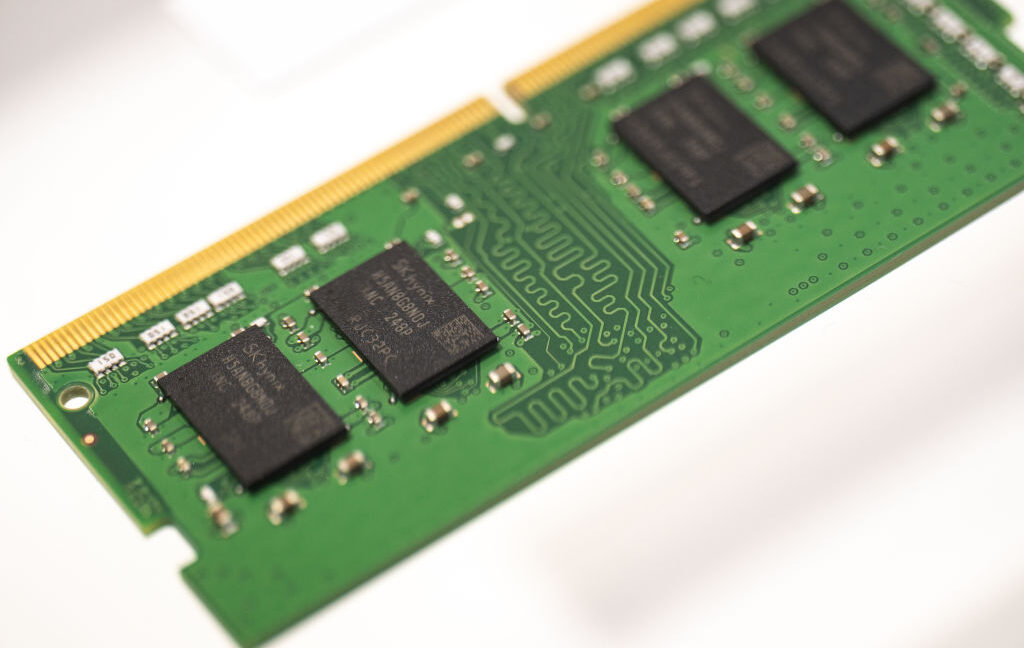
Micron and Samsung executives this week said the memory shortage will continue for at least the next couple of years.

Micron CEO Sanjay Mehrotra expects demand for the firm’s memory to exceed its available supply over that period, he told investors last night.

Micron no longer sells consumer RAM, and Mehrotra’s statements refer to Micron’s business-to-business sales of high-bandwidth memory (HBM) for AI and DRAM for servers. However, his comments also have implications for consumer devices. Manufacturing capacity is prioritizing memory for AI and servers, limiting the supply of memory manufactured for consumer devices.

“Overall, supply-demand environment is only getting tighter,” Mehrotra said, per a transcript from Seeking Alpha.

Advertisement

Micron plans to open new clean rooms for memory manufacturing in 2028, but Mehrotra expects supply to remain limited.

“Even after they are built, even after first wafer output, production ramps up only gradually in the clean rooms,” he said. “That’s just the nature of what it takes to bring up production, and with HBM going from 3E to a greater mix of 4 and 4E, and with the trade ratio that exists, that … creates headwinds with respect to supply growth. Node transitions of the future give less productivity gain per wafer as well.”

Seventy-five percent of Micron’s memory output for 2027 is already accounted for, and most of the company’s current memory sales discussions are about 2028, the CEO said. Additionally, demand for HBM is surpassing demand for Micron’s DRAM.

Advertisement

Source link

Continue Reading
Click to comment

You must be logged in to post a comment Login

Leave a Reply

Tech & AI

Breaking Taps Designed a Working Silicon Chip and Got It Back Alive

Published

on

breaking taps diy homemade silicon chip computer

Breaking Taps DIY Homemade Silicon Chip Computer
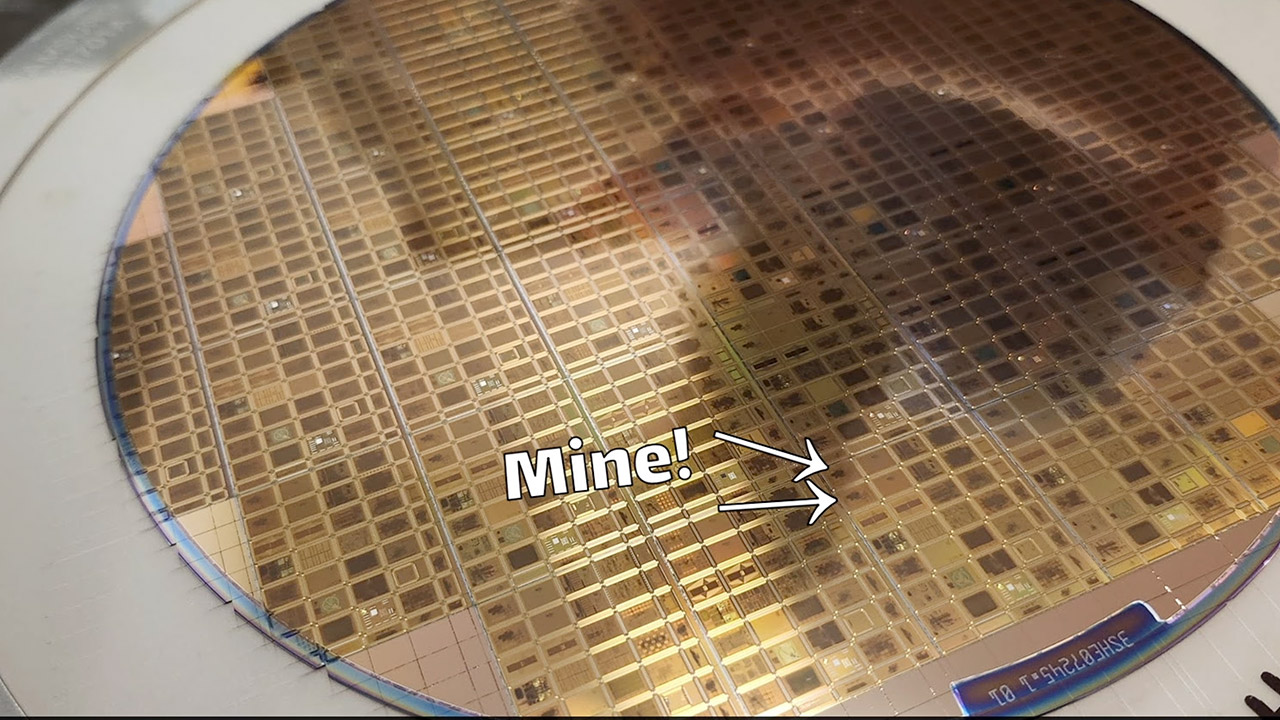
Zachary Tong had never designed a chip. He had never programmed an FPGA either, and he will tell you his electrical skills were rough. With about a month left before the first wafer.space deadline, he still decided to write a microprocessor, send the file to a real foundry, and wait to see if silicon came back alive.


After researching old processor ideas, he eventually settled on Transport Triggered Architecture, an unusual choice. A normal chip is told to add one register to another and store the result. BreakingTTAPs mostly moves data. You enter a value into a port on a functional unit, and the operation occurs when the data arrives. He has two 32-bit busses side by side, so he can complete two of those moves in a single clock cycle, which is effectively enough to qualify as superscalar in today’s terms.


Apple 2026 Mac mini Desktop Computer M6 chip
  • LITTLE DO-IT-ALL — Mac mini packs pure power into a small, five-by-five-inch desktop as the M6 chip delivers next-level AI capabilities. Mac mini…
  • M6 CHIP — Everything you do on Mac mini feels more responsive with the M6 chip and its next-generation CPU. Fly through AI workflows with up to 4.8x…
  • CONNECT IT ALL — Features three Thunderbolt 4 ports, an HDMI port, and a 2.5Gb Ethernet port in the back, and two USB-C ports and a headphone jack…

Breaking Taps DIY Homemade Silicon Chip Computer
The clock speed is in the 18-20 megahertz range. Program memory featured 1,024 slots, each with two instructions, plus 256 words of stack and 4 kilobytes of general purpose RAM. There are approximately 80 operations spread among 20-30 functional units, including branches, comparisons, math, bitwise operations, and a random number generator for good measure. The pin headers provide sixteen general-purpose inputs and sixteen outputs, as well as an 8-bit parallel boot channel for loading programs. Unfortunately, his SPI is dead on the die, and the UART is a write-off; nevertheless, it may still be recovered.

Breaking Taps DIY Homemade Silicon Chip Computer
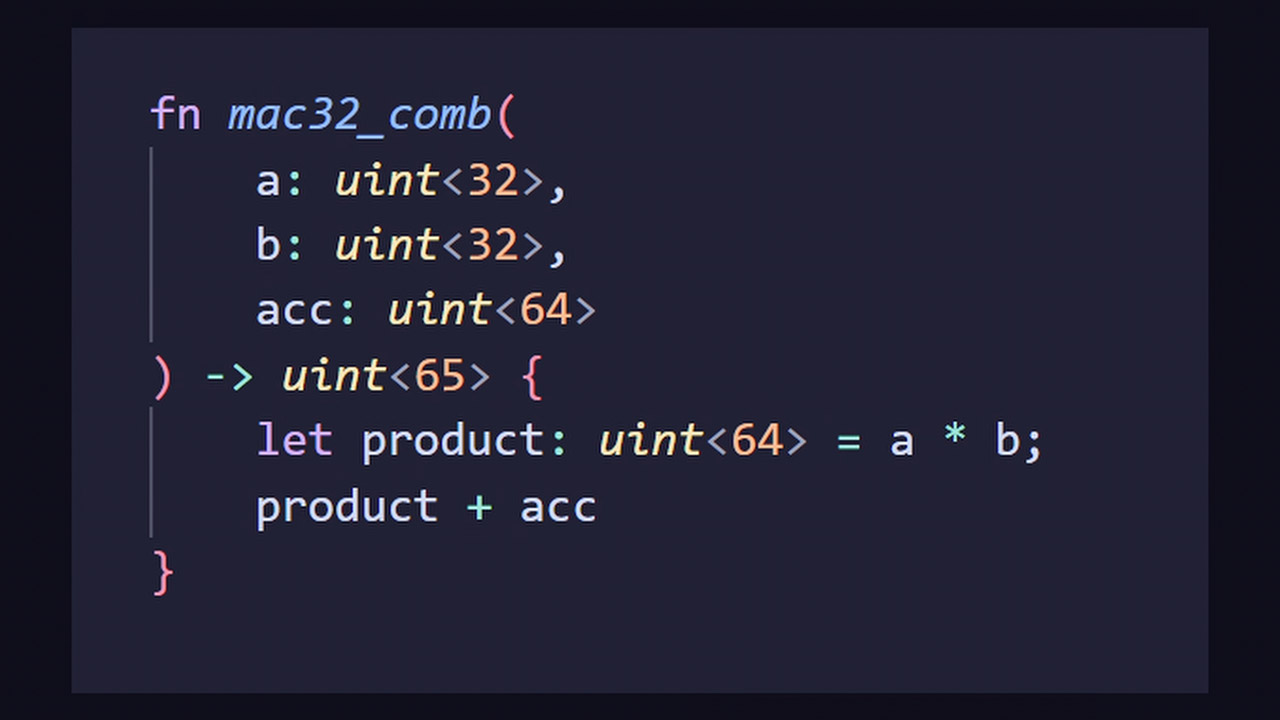
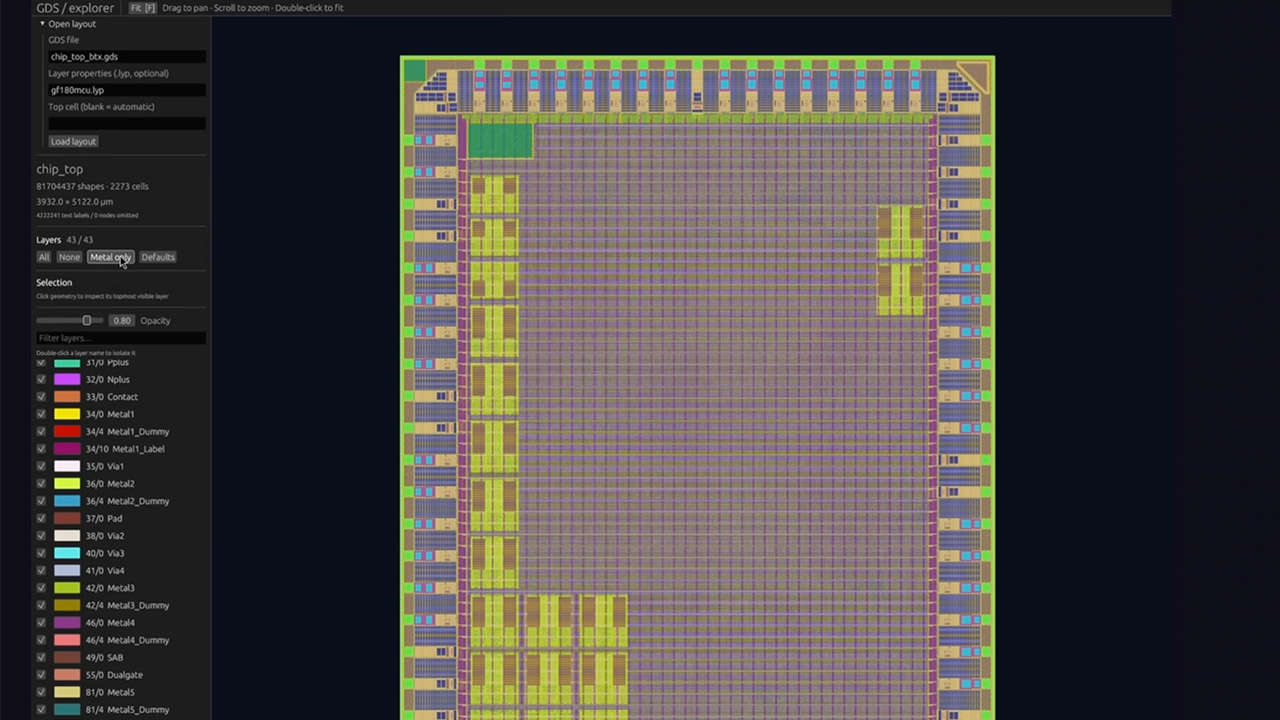
One specific section of code is a huge pain in the neck since a multiply-and-accumulate unit took up a significant amount of space on the die and fouled up the timing. Tong was still new to this type of stuff, so he didn’t feel comfortable digging into the failure all the way to the bottom of it, thus the clock speed target remained a fight until the file had to be pushed out the door. He developed the logic in Spade, a hardware language he is also learning on the side, and then used open-source tools to arrange the transistors and draw the cables. The handoff process is also rather stringent, as the foundry expects a clean GDS file, and any minor errors in it become permanent as soon as the wafer begins rolling.

Breaking Taps DIY Homemade Silicon Chip Computer
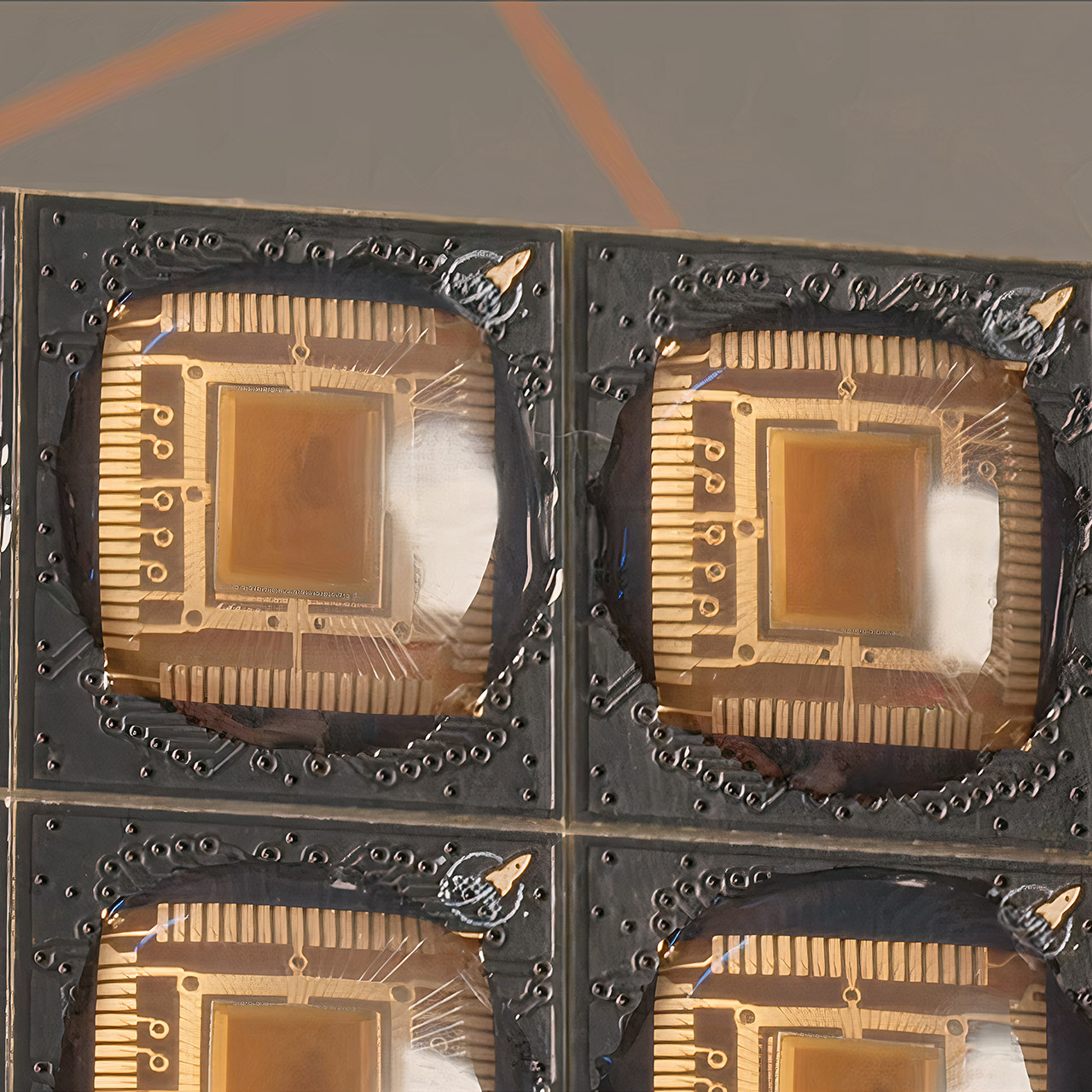
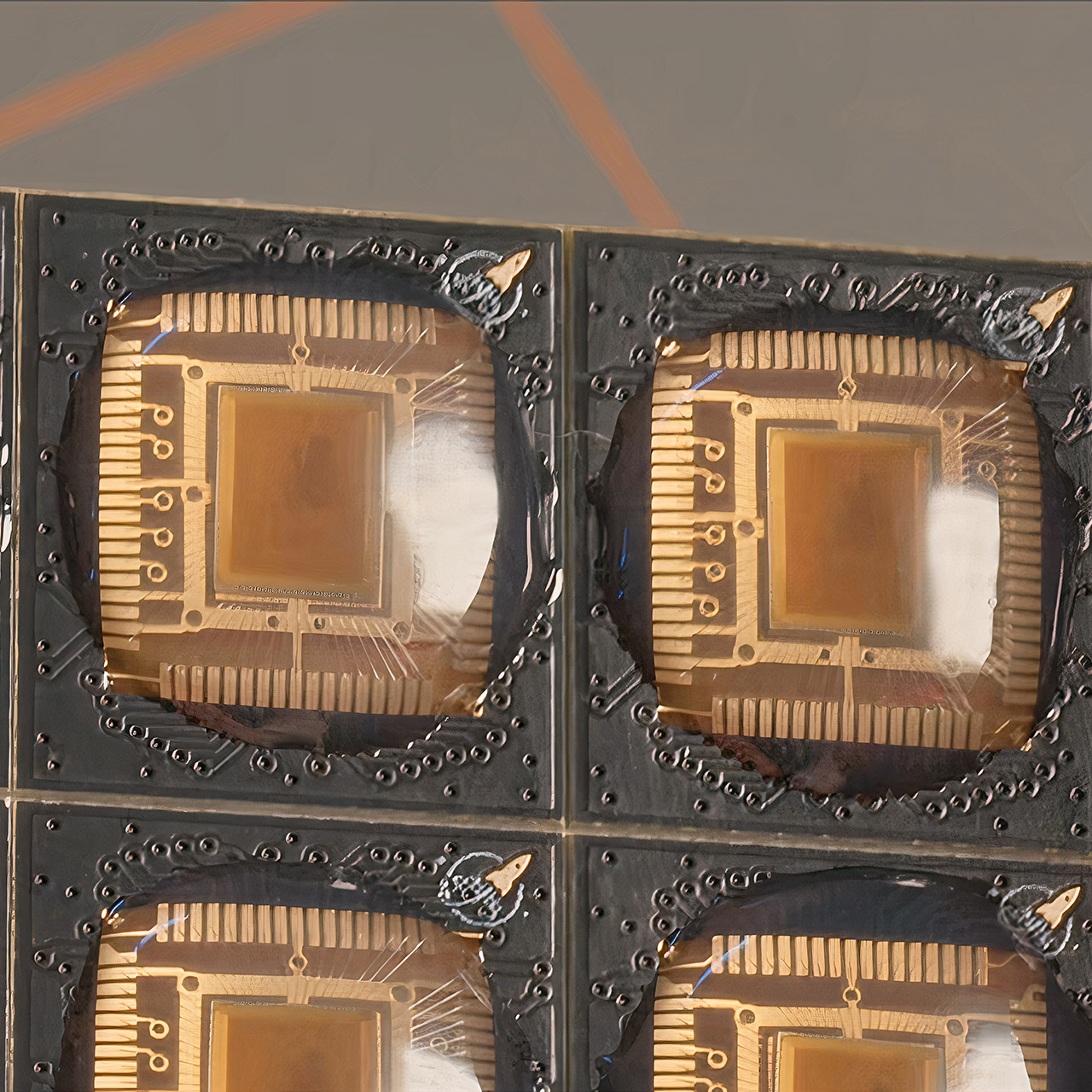
Wafer.space, run by Tim out of Singapore, is the shuttle that made the order possible. The designs are printed onto a single reticle on a GlobalFoundries 180 nm wafer using the GF180MCU mixed-signal process. Every time it prints, we receive a wafer with approximately a thousand dies on it after 3-4 months in the oven. Older geometry implies that the silicon is quite large by today’s standards. Unlike a Tiny Tapeout tile, this die contains only one circuit. The bundled parts we received revealed the real chip underneath, which was viewable via clear epoxy and ready to be inserted into the socket.

Breaking Taps DIY Homemade Silicon Chip Computer
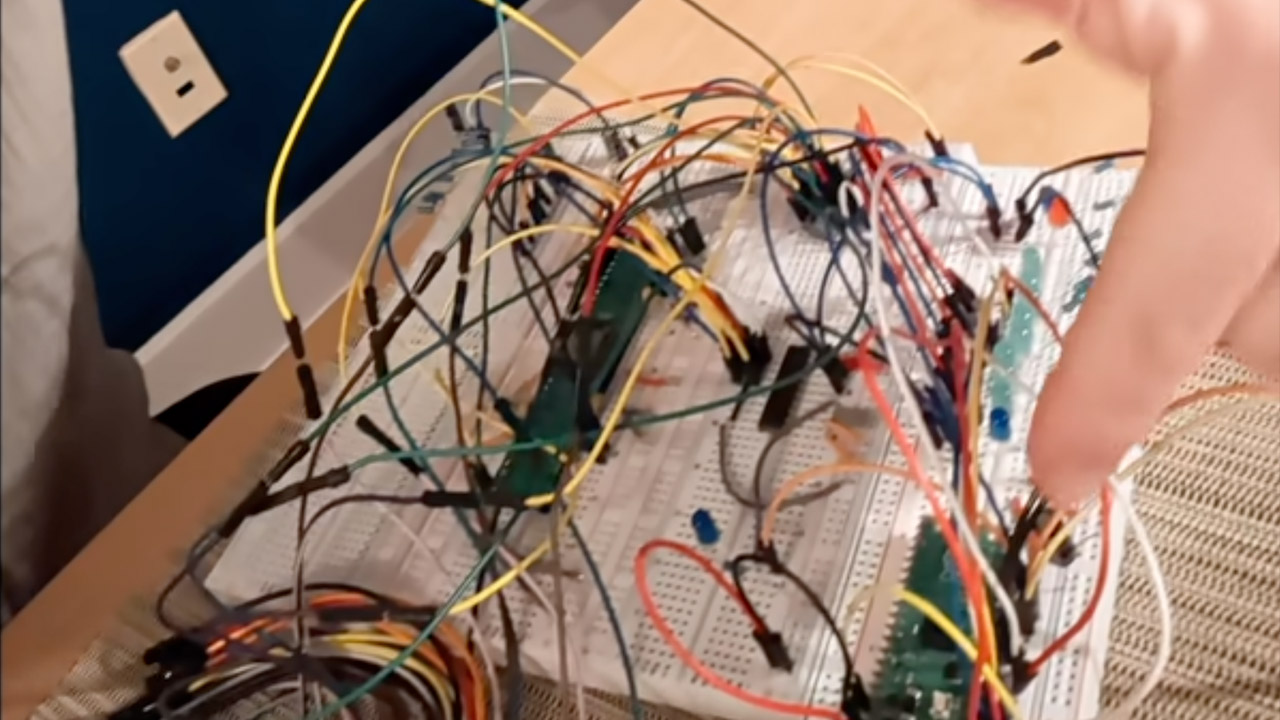
Bring-up was the short path, not the careful one. A carrier is slapped into a breadboard, a Raspberry Pi Pico starts up and loads a program, and the chip just counts up to 100 before shutting down. That was the proof in a single loop, with no bother. SPI failed just as expected, according to the debugging. The code for the Spade version, as well as the produced Verilog, are all publicly available, and Tong has even been distributing finished BreakingTTAPs boards to anyone who wants to experiment with one on their bench.

Breaking Taps DIY Homemade Silicon Chip Computer
The second design is named BTX. That one is already in the foundry line. It’s a special processor designed specifically for ray tracing, with a completely new graphics system planned for it. Spaces on the shuttle are still available for anyone wishing to create their own chip, as you can purchase a slice of the wafer for a few thousand dollars for a thousand dies, with files expected in December 2026.

Source link

Advertisement
Continue Reading

Tech & AI

Inside the £10,000 Hunt for ‘Wrench Attack’ Gang That Terrorised Pregnant Woman Over Crypto

Avatar photo

Published

on

wrench attack

A businessman was beaten with hammers in his own home while his heavily pregnant wife was pinned down and threatened with a knife to her stomach, in an attack police believe was orchestrated to force him into handing over his cryptocurrency savings. The case, reported by the BBC, is one of a rapidly growing category of crime investigators call a “wrench attack” — and 2026 is on track to be the worst year on record for it.

The couple, who asked to remain anonymous and are referred to as James and his wife, say three masked men forced their way into their home in Solihull in December last year and spent 45 minutes assaulting and terrorising them. James was struck repeatedly in the face, head and ribs. His wife, then seven months pregnant, had a pillow held over her face as she struggled to breathe. “He’s literally suffocating her on the sofa. I can hear her screaming, ‘I can’t breathe’,” James told the BBC.

The attackers initially gave no indication of what they wanted, demanding only that James unlock his phone. It soon became clear they knew he held cryptocurrency but had little idea how to access it themselves. Instead, they took orders from someone connected via a live video call, who instructed them to search through James’s apps until they located a wallet holding a significant sum.

inline 3

How a wrench attack escalates into a hostage situation

Once the caller identified the funds, the threats turned deadly serious. James said the man on the call told the intruders to threaten to “stab your wife in the stomach and kill your baby” unless the money was transferred immediately. James complied, sending hundreds of thousands of pounds in crypto to a wallet controlled by the man directing the robbery. The gang also stole several luxury watches before fleeing in a getaway car.

Advertisement

James’s wife, in her early thirties and expecting her third child, said she feared she might lose the baby because of the stress of the ordeal and believed, at one point, that her husband had been killed. The baby was ultimately born healthy and at full term, but the couple describe the experience as “horrific” and say they continue to live with its aftermath. James, who had quit his job in 2023 to trade cryptocurrency full-time after turning an initial investment into a sizeable fortune, says he has now lost everything and is looking to return to conventional work.

Police have not yet identified the attackers. Crimestoppers is offering a £10,000 reward for information, and the charity’s Alan Edwards says investigators are keen to hear from anyone who might recognise the three intruders, the getaway driver — who was caught on camera without a face covering — or the man coordinating the robbery by phone. “These criminals are obviously serious and part of some kind of organised crime,” Edwards said.

Why crypto holders are becoming prime targets

Unlike money sitting in a bank account, cryptocurrency is frequently controlled directly by its owner through self-custody digital wallets, with no institution standing between the asset and whoever can access the private keys. That makes a wrench attack — named for the blunt, low-tech coercion criminals use instead of sophisticated hacking — a disturbingly effective way to steal large sums almost instantly and with little chance of recovery once funds move.

According to blockchain analytics firm Chainalysis, roughly $30m (£22.6m) had already been stolen through violent crypto robberies in the first half of this year, putting 2026 on course to become the worst year on record for such attacks. The firm says home invasions specifically are also rising sharply. Hotspots include the United States, Brazil and Thailand, but France has recorded by far the highest number of incidents, a surge researchers link to a data breach at a tax office that may have exposed the identities and addresses of wealthy crypto holders.

Advertisement

“The physical security assumptions that protect traditional wealth, such as bank vaults and armoured cars, do not automatically apply in crypto,” Chainalysis researchers noted in their report. “Holders keep their assets in comparatively low security setups, like self-custody wallets, that can be compromised without any institutional gatekeeper standing in the way.”

As digital coin values have climbed, so has the visibility of those who hold them — and with it, the appeal of a brutally simple criminal method that requires no technical skill, only intimidation. Cybersecurity experts warn that as long as crypto wealth remains both lucrative and loosely secured, cases like the one in Solihull are likely to keep multiplying across the UK, Europe and beyond.

Related reading:
Sources:
Advertisement
Continue Reading

Tech & AI

Meta’s ‘AI Tamagotchi’ Looks to Me Like a Smartwatch Preview for 2027

Published

on

092e469c 8106 4d14 ab78 6973241f657b

I was in the audience at Meta’s Connect conference last week when Mark Zuckerberg held up a pendant in his hands and surprise announced the Muse Charm, a little novelty-like device with Meta’s disarmingly adorable Muse AI agent onboard. Muse Charm is coming as soon as December this year.

But the funny thing is, while most people called it an AI Tamagotchi, all I saw was a strapless Apple Watch. Is that what the Muse Charm could be, eventually? A watch as well as a pendant? Is this Meta’s entry to wrist wearables in disguise? I’m still thinking about it…because smartwatches are also on their way to being AI assistants soon, too.

Reports of Meta working on its own watch wearable have been cooking for several years now. At Connect, there were smart glasses galore and even a new glasses-like VR headset coming next year. But things were suspiciously quiet on the wrist wearables front.

Advertisement

Meta already has one wrist wearable, the neural band that comes with the Ray-Ban Display glasses. But it received no hardware updates this year, which surprised me. The sensor-studded band uses electromyography, or EMG, to measure skin-contact electrical signals for a set of gesture controls to navigate the heads-up glasses display. Meta’s already ambitiously promised that EMG could open up all sorts of neural input possibilities, even testing the tech in a smart car dashboard prototype.

As far back as last year, Meta CTO Andrew Bosworth told me that some sort of display or watch-like evolution of the neural band could be in the works next. And Meta already introduced a partnership with Garmin to link fitness tracking to smart glasses last year.

AI agents as Meta’s new priority

The Muse Charm, however, brings a different piece of the puzzle to the table. Muse AI is Meta’s biggest priority now, clearly, based on its widespread availability on desktops and smartphones and on the company’s intentions to put the new agentic AI on all its smart glasses and, eventually, Meta’s VR Glasses. And where else could Muse work well? Enter the Charm.

The Charm has another watch-like tell. It’s powered by Qualcomm’s Snapdragon Wear Elite chipset, which already runs on Samsung’s latest smartwatches. The Wear Elite, as I learned from Qualcomm earlier this year, is optimized for a range of AI-ready wearables, ranging from watches to pendants to even glasses. There’s no reason why Meta’s Charm couldn’t easily get a wrist strap…and a watch OS to go with it.

Advertisement
092e469c 8106 4d14 ab78 6973241f657b
Meta’s neural band doesn’t have a screen yet. Would it ever fuse with Muse Charm?Celso Bulgatti/CNET

Many reasons for a Meta smartwatch

A smartwatch would benefit Meta on several fronts. Clearly, the company wants to keep breaking into lifestyle wearables, and watches could offer another way onto people besides faces. Fitness and health tracking would give Meta data that Muse and its smart glasses could use. And watches are a key part of the glasses interface’s future. Google’s glasses will work with Wear OS watches soon. Apple’s rumored glasses will likely work with Apple Watches.

And Meta has to find a better way to make its neural band more wearable. I find the first-gen neural band fascinating in theory, but an annoying extra thing to charge in practice. If it doesn’t become a watch, or at least a fitness tracker, why wear it at all? The neural band doesn’t even control anything other than Meta’s one line of display glasses right now, but chances are Meta’s going to try to figure out ways it could work with the rest of its smart glasses lineup, and VR too.

561ba4bb 4ce1 45b2 a957 7053e49cb3a0
Last year I felt like Meta’s neural band felt naked without a watch display (Apple Watch on left, Meta Neural Band on right).Scott Stein/CNET

Google and Apple are already showing how quickly smartwatches are becoming more like AI companions. Gemini lives on Wear OS watches. Apple’s adding memory-assisting audio intelligence modes to its new watches later this fall. Both can tap into Gemini and the new Siri, respectively.

Meta has Muse now. And a charm by the end of the year. Is the watch after that? Meta didn’t have any comment on the topic when I reached out to ask, but I think we’re seeing the beta test in action right in front of our eyes. Or is this the pivot to a modular idea that could be a pendant and a wristworn device, without committing to either? 

One thing’s clear, no matter what: Meta’s looking for ways for that disarmingly adorable Muse mascot to be with us all the time, even without glasses. And the Charm looks like the experiment.

Source link

Advertisement
Continue Reading

Tech & AI

Google froze its open source bug bounty program due to a ‘significant rise’ in AI submissions

Published

on

ai slop bug bounty reports 1646637201

Blaming a “significant rise” in AI submissions, Google has paused its open source bug bounty program until next year.

Last year, TechCrunch reported that cybersecurity experts were warning of that AI slop posed a serious risk to bug bounty programs. Looks like that’s the issue confronting Google’s Open Source Software Vulnerability Rewards Program, where researchers were rewarded for finding vulnerabilities in the company’s open source software.

In posts on X and the program website, Google said the bug bounty program was paused as of October 1, with a promise to provide “an update” in the first quarter of 2027. According to Tom’s Hardware, Google engineers and open source maintainers were overwhelmed by reports that were invalid or contained hallucinations.

“This pause is due to a significant rise in automated submissions, the vast majority of which are not valid,” the company said.

Advertisement

In the meantime, participants are encouraged to consider Google’s other bug bounty programs.

Google OSS VRP: History and Scope

Google’s Open Source Vulnerability Rewards Program (OSS VRP) was launched in August 2022. It rewards security researchers for identifying vulnerabilities in Google’s open-source software projects.

The program covers the latest versions of open-source software hosted in public repositories owned by Google on GitHub, as well as selected repositories on other platforms.

It also includes repository configuration settings, such as GitHub Actions workflows, access control rules and GitHub application configurations.

Advertisement

Rewards range from $100 to $31,337 based on the severity level of the reported flaws and the project’s importance.

The OSS VRP is one of several bug bounty programs operated by Google and has a relatively narrow focus.

Vulnerabilities in Google’s open source projects that are closely linked to Google Cloud or AI products are directed to the Google Cloud Vulnerability Reward Program (Cloud VRP) or the AI Vulnerability Reward Program (AI VRP), allowing reports to be routed to the teams best placed to assess and address them.

Google Plans OSS VRP Overhaul

The suspension will not affect OSS VRP supply-chain reports or any reports already submitted, Google said.

Advertisement

The company plans to “reformat” the program and expects to provide an update in the first quarter of 2027.

“As an alternative, we encourage you to find impact across our other VRP programs and submit there instead, or pursue the Patch Rewards Program,” Google said.

Source link

Advertisement
Continue Reading

Tech & AI

Do Tanks Use Manual Or Automatic Transmissions?

Published

on

l intro 1790673911

l intro 1790673911


The combat tank as we know it debuted on the battlefields of Europe in World War I and has changed significantly in the decades since. Modern tanks are computerized, networked, and advanced vehicles, decked out with all kinds of technology that would have been unheard of in past conflicts. Advanced as they are, though, they still feature components familiar to civilian car owners, such as a transmission to transfer power to the tracks.

Of course, a tank is a combat vehicle designed for lethality and survival, whereas a car is a comparatively simple means of conveyance. Because of this, driving a tank isn’t necessarily intuitive for anyone familiar with a car. That said, military ground vehicles are engineered to be easy for anyone to operate. To that end, modern tanks, like the M1A2 Abrams MBT, generally have automatic transmissions.

Advertisement

This wasn’t always the case, of course: Older tanks like the M4 Sherman used throughout WWII, as well as some Cold War-era Soviet-designed tanks like the T-54, relied on manual or semi-manual transmissions. But the move to automatic transmissions has not only made tanks easier to operate, but it also avoids the trouble of teaching a prospective tanker how to operate a manual transmission if they’re unfamiliar.

Advertisement

The transmission on the United States’ M1A2 Abrams MBT

If you were to climb inside an M1A2 Abrams MBT and sit in the driver’s seat, you’d find out pretty quickly that it has an automatic transmission. The driver sits in a reclined seat with a yoke between their legs, which is how they drive the tank. It’s similar to motorcycle handlebars, with throttle grips to control speed while steering. The Abrams sports an Allison Transmission X1100-3B, an automatic transmission that powers heavy tracked vehicles.

The cross-drive transmission, which handles both steering and braking, is designed for heavy armored vehicles weighing up to 75 tons. It supports diesel and turbine engines rated up to 1,500 horsepower, with four forward ranges and two reverse ranges. The Abrams family of tanks has seen several changes since its introduction in 1980, with the X1100 series transmissions powering them since their debut — with, of course, improvements to meet the challenging performance requirements of modern warfare.

Because automatic transmissions make operation easier, the military isn’t likely to ever abandon them for manual transmissions. Training personnel is expensive and time-consuming, so any way of accelerating the process without sacrificing the essentials is beneficial. As a result, the automatic tank transmissions are here to stay.

Advertisement


Source link

Advertisement
Continue Reading

Tech & AI

Drones, Robotic Arms, and Night-Vision Rigs: The Wildlife Filming Technology Behind NatGeo’s New Africa Series

Avatar photo

Published

on

wildlife filming technology

Wildlife filming technology has quietly become one of the most interesting proving grounds for cutting-edge hardware, and National Geographic’s new documentary series, Africa: Earth’s Wild Home, offers a vivid case study in just how far the tools of nature filmmaking have advanced. Narrated by actress Wunmi Mosaku, the seven-episode series took four years to produce and was shot across nearly 30 African countries, capturing everything from a black rain frog’s first televised breeding call to chimpanzees using twigs to fish algae from a pond.

Behind those moments sits a toolkit that looks less like a traditional camera crew and more like a small engineering lab. Producers leaned heavily on drones to capture first-person aerial perspectives of landscapes ranging from deserts to mountain ranges, giving viewers vantage points that would have been impossible to achieve safely or affordably even a decade ago. But the drones were only the most visible piece of a much larger technological puzzle.

Robotic Arms and Underwater Rigs Push Wildlife Filming Technology Forward

One of the more surprising innovations was a robotic arm originally designed for studio production, repurposed here for field use for the first time. Preprogrammed for long, steady takes, the arm allowed filmmakers to hold difficult shots over extended periods without the fatigue or drift that comes with handheld or tripod-based filming in unpredictable terrain. That kind of cross-industry adaptation, borrowing a tool from indoor studio work and hardening it for the field, illustrates how much experimentation now goes into even a single nature documentary.

Advertisement

inline 27

Underwater, the team deployed what they called a “hippo cam,” a submerged rig equipped with pan-and-tilt heads that let camera operators track hippos as barbel fish nibbled dead skin off their bodies in a kind of natural spa treatment. Capturing that behavior from below the surface required equipment built to withstand murky water, sudden movement from massive animals, and the need to reposition quickly without disturbing the scene.

Perhaps the most inventive setup involved filming dwarf crocodiles hunting bats inside a pitch-black cave coated in guano. To pull this off, the crew built a remotely operated fixed rig combining low-light sensors, infrared capability, and a zoom function that could be controlled from a safe distance. Because bats roosting overhead posed an obvious hazard to delicate electronics, the team improvised a low-tech solution to protect their high-tech gear: small umbrellas rigged over the cameras to keep guano off the lenses.

Why the Tech Matters as Much as the Animals

These choices reflect a broader shift in how nature documentaries get made. As wildlife filming technology becomes more sophisticated, it opens access to behaviors that were previously unfilmable or simply unknown. The series includes what producers describe as the first-ever television footage of the reclusive black rain frog, as well as a dramatic sequence showing a lone male hyena adapting its hunting strategy to catch a flamingo by herding the flock into denser, easier-to-target groups, a tactic the production team suggests may represent newly observed behavior for the species.

None of that would be visible to viewers without cameras capable of operating in darkness, underwater, in flight, or at a crocodile’s eye level inside a cave. The technology doesn’t just document wildlife; increasingly, it shapes what stories filmmakers are even able to tell. A robotic arm that holds a shot steady for minutes at a time, or an infrared rig that can linger silently in a cave, allows for the kind of patient, unobtrusive observation that reveals genuine animal behavior rather than a reaction to human presence.

Advertisement

Mosaku, who was born in Nigeria and raised in England, said encountering that range of environments and behaviors through the footage was eye-opening even for someone with personal ties to the continent. “There was so much I didn’t know,” she said, citing a sequence showing monkeys living in snowy conditions as one of several moments that surprised her. That sense of discovery, made possible by increasingly capable cameras and remote rigs, is central to what the series is trying to achieve.

A Franchise Built on Evolving Tools

Africa: Earth’s Wild Home is intended to launch a larger franchise, with future series expected to document wildlife across the other six continents. If this first installment is any indication, each subsequent production will likely push wildlife filming technology even further, whether through smarter drones, more durable remote rigs, or new sensor systems adapted from other industries entirely.

For now, the series stands as a reminder that behind every breathtaking nature shot, a hyena stalking flamingos, a chimp fishing for algae, a frog singing its first televised mating call, there’s usually a small team of engineers and camera operators solving an entirely different kind of survival problem: how to get the shot without disturbing the story unfolding in front of the lens.

Related reading:
Advertisement
Sources:
Continue Reading

Tech & AI

Steam is on track to top $20 billion in revenue for the first time

Published

on

2026 10 03 image 2 scaled

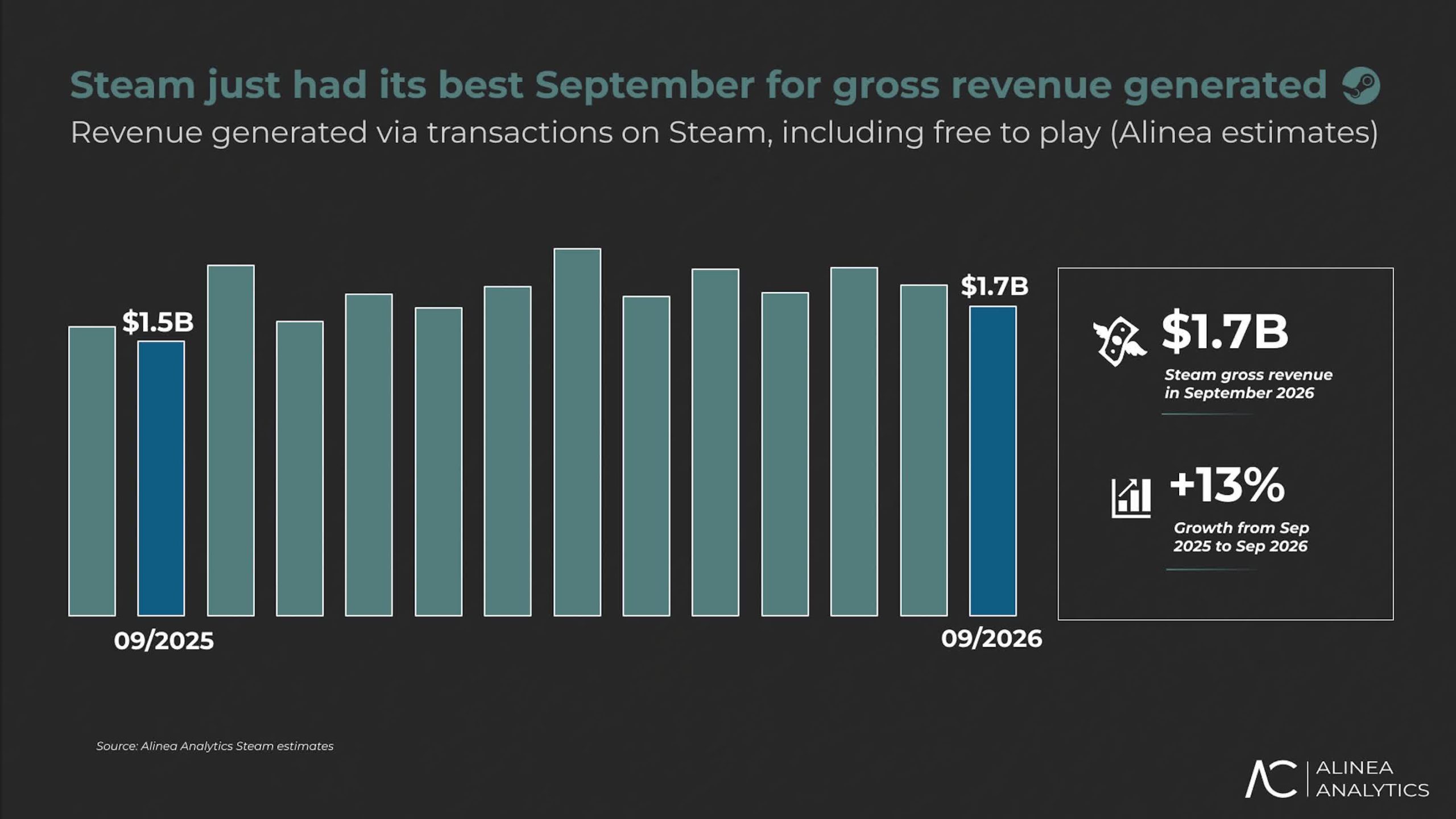
Bottom line: Steam is on course to generate more than $20 billion in gross revenue in 2026, a first for the platform, after posting record results for September and the third quarter, according to estimates from Alinea Analytics. The gains came from a mix of new releases, established franchises and free-to-play games that keep drawing spending long after launch. With one quarter left, Valve’s PC gaming platform needs roughly $3.5 billion to reach the milestone.

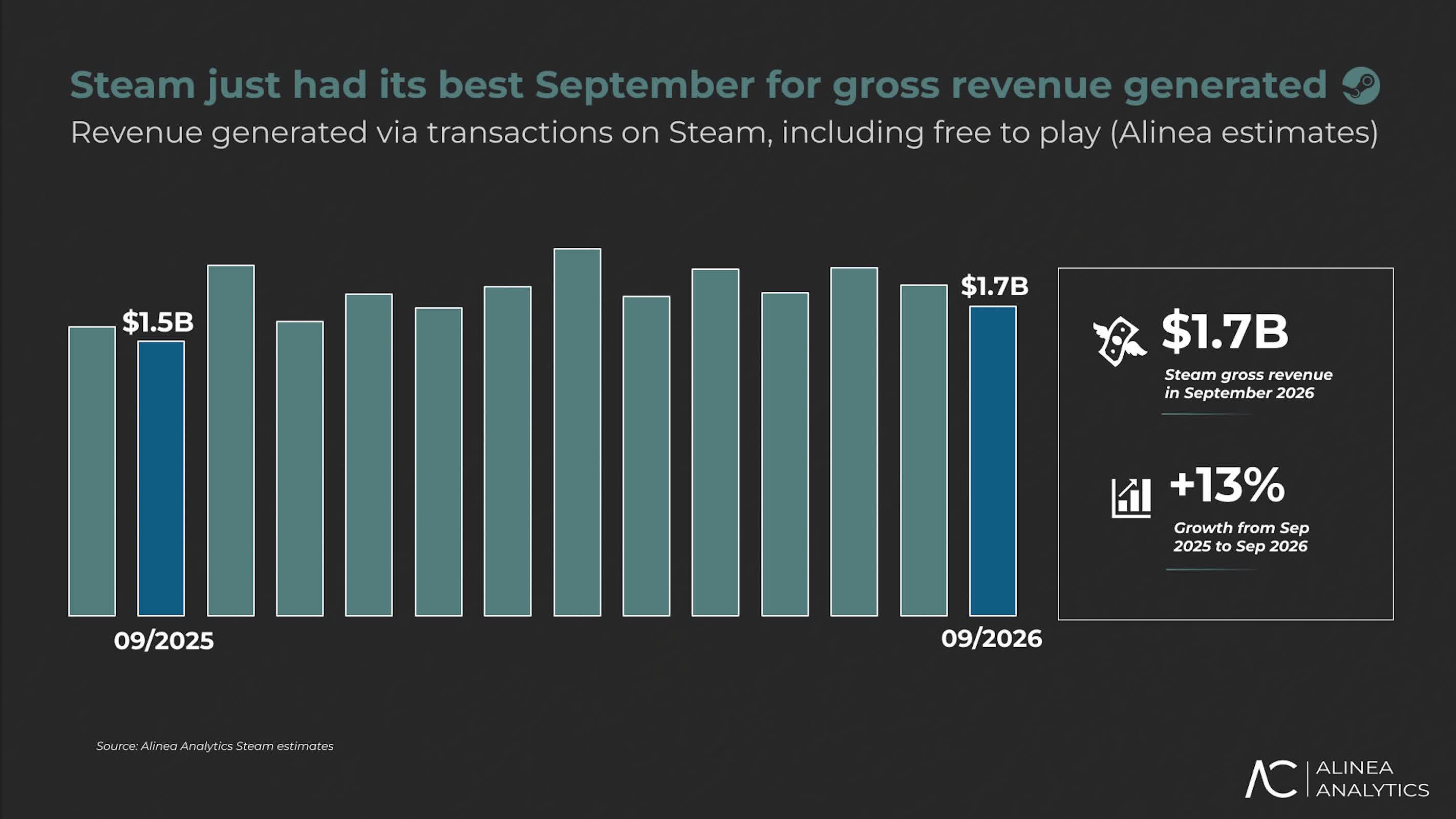
Steam took in an estimated $1.7 billion in September, 13% more than the previous September record, set in 2025. Its estimated third-quarter revenue reached $5.5 billion, up 12% from the same period last year.

The September result came from a familiar mix: big paid releases, durable franchises and free-to-play titles built around in-game purchases. The numbers suggest Steam no longer depends on a single kind of game sale to drive revenue.

New releases can produce a sharp burst of revenue, while games such as Counter-Strike 2 and Dota 2 keep earning money through active player communities and digital-item sales.

Advertisement

Through the first nine months of 2026, Steam generated an estimated $16.5 billion, compared with $14.5 billion over the same stretch of 2025. At that pace, the platform needs about $3.5 billion in the final quarter to clear $20 billion for the year.

2026 10 03 image 2

New games played a meaningful role in September. Among Steam’s 500 top-grossing titles that month, games released in 2026 accounted for about 33.6% of revenue, according to Alinea, and new intellectual property made up 20.5% of that.

That doesn’t mean newer games displaced the industry’s biggest brands. Established franchises, which include remakes and remasters, accounted for almost 80% of revenue among the top 500. The two figures overlap because they slice the data differently, by release year and by franchise, so a 2026 sequel counts in both. Steam’s strongest performers still tend to be games with recognizable names, built-in audiences and frequent content updates.

Free-to-play games remained a major source of revenue as well. Counter-Strike 2, Apex Legends, PUBG and Dota 2 together generated almost $168 million in September, per Alinea’s estimates, or nearly 10% of Steam’s estimated monthly revenue.

Advertisement

2026 10 03 image 3

Those games show why PC platforms can’t be judged by unit sales alone. Free-to-play titles may cost nothing to download, but they can drive steady spending on cosmetic items, battle passes and other digital content. For Steam, those transactions turn a large player base into recurring revenue.

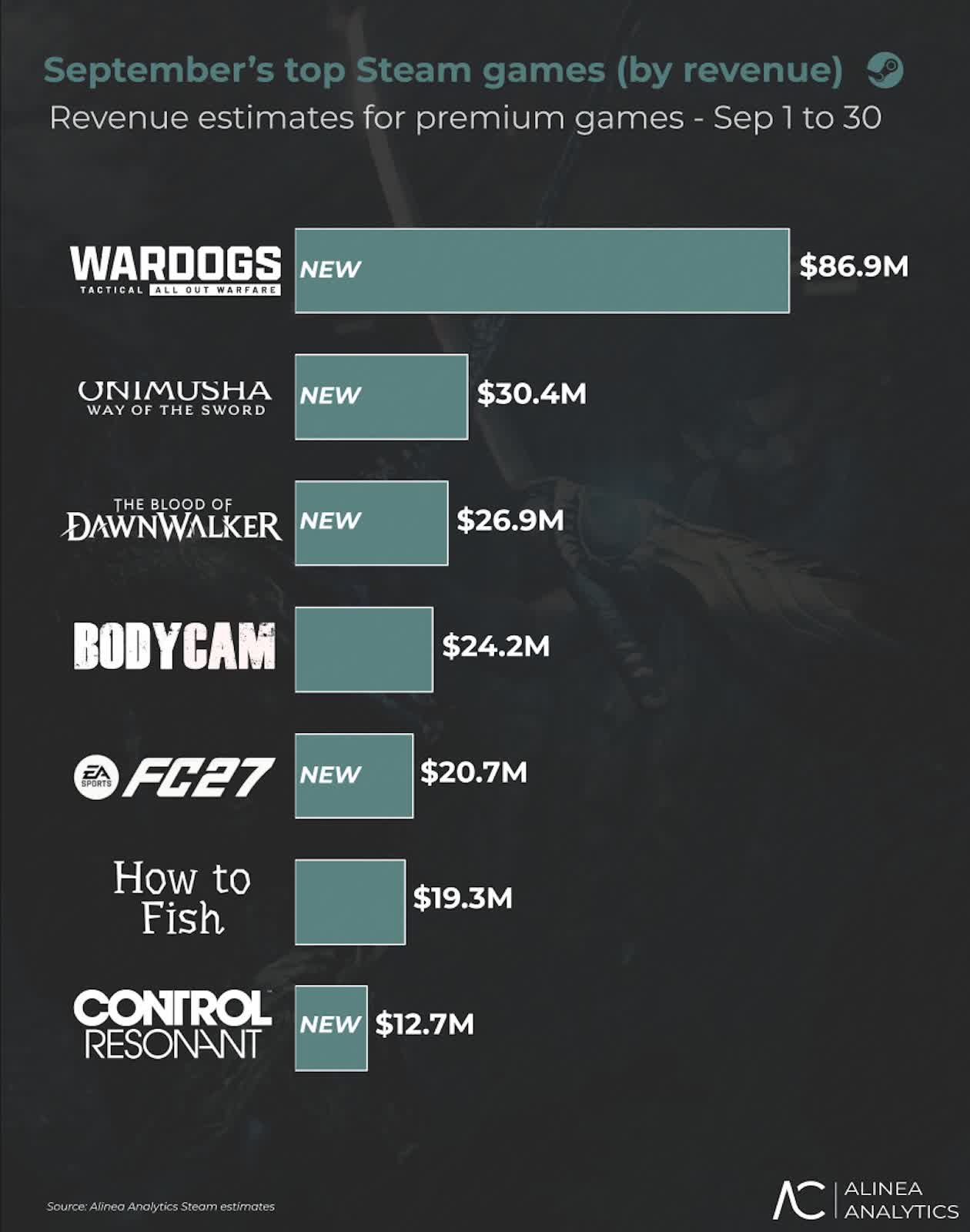
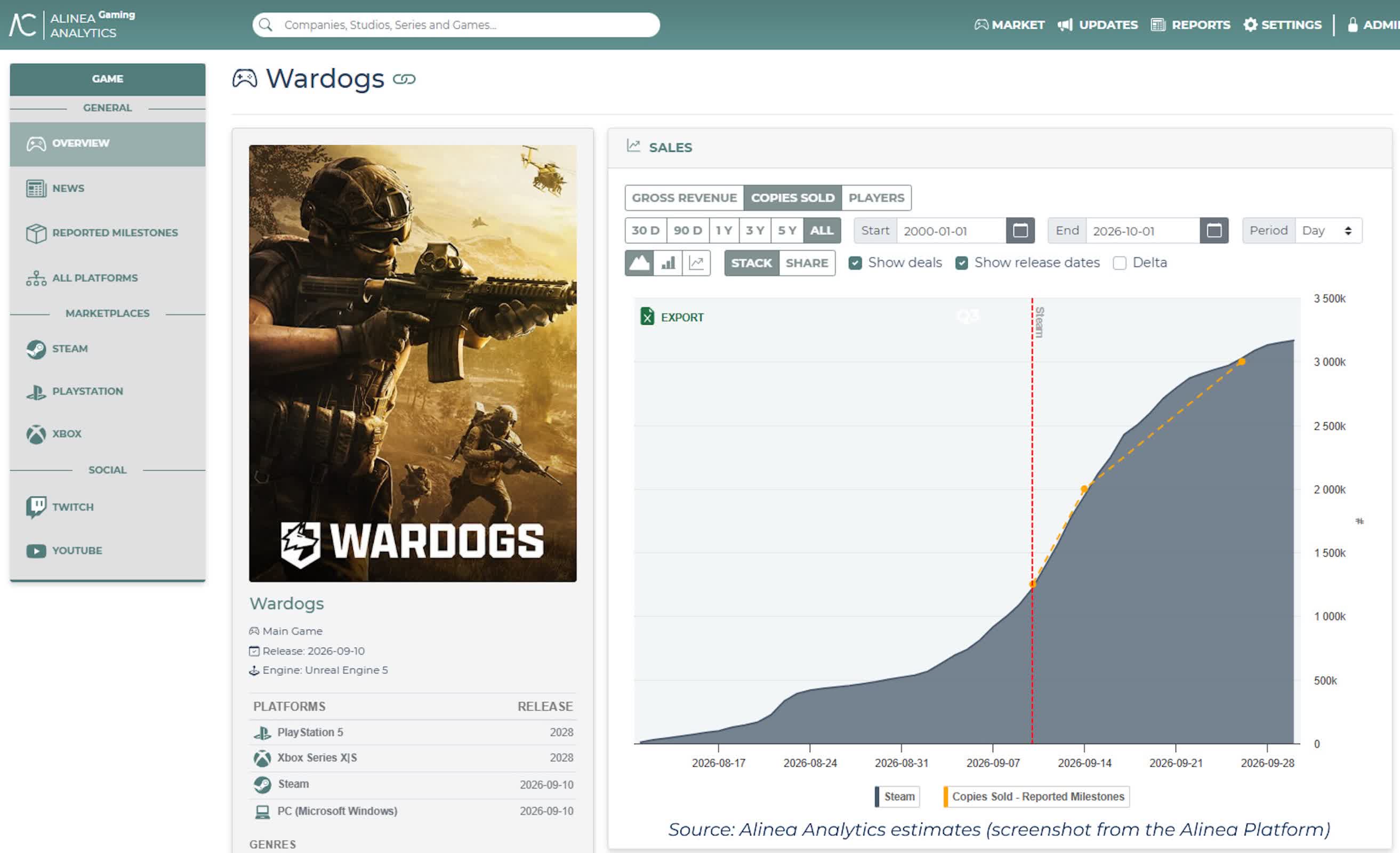
Paid games accounted for several of the month’s biggest individual performances. PvP shooter Wardogs brought in an estimated $86.9 million in the roughly three weeks after it entered Early Access on September 10. Onimusha: Way of the Sword generated $30.4 million during the month, and The Blood of Dawnwalker added $26.9 million.

2026 10 03 image 4

EA Sports FC 27 contributed another $20.7 million from Steam copies, though most of its sales were on consoles.

Wardogs’ Early Access performance is notable because it shows how large a role the model now plays on Steam. Developers can release a game before it’s finished, collect revenue early and use player feedback to shape updates. For multiplayer games, that can also help build a community before a full launch.

Advertisement

Source link

Continue Reading

Tech & AI

1000 Friends of Oregon and state teachers unions unite in a major lawsuit against Hillsboro, NVIDIA, and CoreWeave to claw back $85M in local tax giveaways

Published

on

diM9tpwF2Lz85R8q85CT78

  • Oregon’s data center tax breaks have become a major political flashpoint statewide
  • A warning about one election cycle helped accelerate Oregon’s grassroots organizing
  • More than $450 million in exemptions intensified scrutiny of Oregon data centers

Oregon’s expanding data center industry has triggered an increasingly organized political backlash involving residents, environmental groups, educators, farmers and elected officials.

The dispute intensified after reports showed Oregon data centers receiving more than $450 million in property tax exemptions during 2026, including about $85 million in the Hillsboro area.

Source link

Continue Reading

Tech & AI

Waiting a decade for Apple Pay and Apple Music

Published

on

69209 145993 67992 143337 Apple Music playlists xl

In this week’s Sunday Reboot, the expansion of Apple Pay and Apple Music to some countries has taken a decade longer than they really should. They also demonstrate how delays can happen for many different reasons.

Sunday Reboot is a weekly column covering some of the lighter stories within the Apple reality distortion field from the past seven days. All to get next week underway with a good first step.

Apple Music adds to its territory list

It may be a surprise to some readers, but I’m not in the United States. I’m one of the few members of the editorial team based in the United Kingdom, but trained to write in the American way, and forget about the letter U in some words.

This does lead to some issues when it comes to trying out Apple’s new services. It’s a problem when your whole job is to talk about them.

Advertisement

Thankfully, the UK does have access to almost all of Apple’s services, but there are blind spots and differences.

For example, while I have access to Apple Pay, I cannot use services like Apple Card because they are US-only for the moment. Except that I have to change region sometimes for reporting, and now I annoyingly have an Apple Cash card permanently visible in the Wallet app that I cannot use at all.

A little less pressing is the lack of puzzles in News+ over here. Though I can understand the financial problems in setting up Apple Card in the UK, it seems there would be fewer obstacles in adding brainteasers to Apple News, just as U.S. users enjoy.

That said, I am still quite glad to be in the UK where Apple products and services come into play. Partly because we don’t suffer from the EU blackout of some upcoming features.

Advertisement

We at least get the updates fairly quickly. Unlike some service updates that happened this week.

Hand holding a smartphone displaying a colorful music streaming app screen with personalized sections titled Your Essentials and Stations for You, blurred background with a dark cylindrical object

Apple Music has expanded into four new countries, including Albania.

On Wednesday, an update to Apple Music finally rolled it out into four countries: Albania, Brunei, Burkina Faso, and Pakistan.

This sounds fairly OK, until you remember that Apple Music was unveiled in June 2015 in over 100 countries. It’s taken over 11 years for Apple Music to be available in those four countries.

Advertisement

There’s no real explanation for the lack of support in those countries, nor why it took so long.

The more time-consuming problems would revolve around licensing negotiations. However, both Apple and record labels like money, and so you’d expect negotiations to happen at a fairly quick pace.

Then again, it could easily be because Apple has bigger problems at hand than adding support to some countries it’s seemingly forgotten about for over a decade.

Regardless, it’s a good thing that Apple Music is now available in four more territories that endured a very long wait.

Advertisement

It also reminds me that I’m lucky to live where I do. While there are always going to be differences between US and UK availability for things, I’m not realistically going to be waiting for a decade for anything.

Wait, Apple Pay wasn’t in India already?

Slightly less puzzling is the Apple Pay update on the same day. After launching in 2014, Apple finally brought Apple Pay live in India.

It certainly makes sense for Apple to do so, because it is a massive market, and an emerging one at that.

The problem here is that Apple said back in 2017 that it was trying to bring Apple Pay to India. That’s a nine-year wait.

Advertisement

As for why it took so long, we could certainly blame regulations for that. In June 2022, more financial laws were introduced, which got in the way.

While in the rest of the world you could use Face ID for a transaction, India instead wanted everyone to use its Aadhaar ID system instead. The laws also covered subscriptions, requiring banks to notify users 24 hours in advance of any recurring transactions, and allowing them to cancel.

Apple Pay is finally available in India.

Apple Pay is finally available in India.

There’s also the matter of a card tokenization framework, which required the use of encrypted tokens issued by local banks in India. This would’ve required Apple to make changes to how Apple Pay’s security and authentication ultimately functioned.

Advertisement

Support for the country’s Unified Payments Interface also caused problems.

It was so bad that, in 2022, Apple gave up on credit and debit cards completely in the country.

During this time, both Google Play and Samsung Wallet opted to comply with the law instead of ceasing card payments. It was clearly a case of Apple seeing a massive amount of work and rules that it would have to comply with, and the belief that it could work around or negotiate the hurdles away.

After negotiating with banks to get around the problematic elements, Apple eventually tested card payments in India in July 2026, months before Apple Pay’s rollout.

Advertisement

The final introduction of Apple Pay in India is certainly a good thing for Apple, especially in such an important market.

It will be interesting to see how much change Apple Pay will make to iPhone sales in India. It’s main rivals have a very large head start because of Apple’s unwillingness to abide by the new laws, so it has a lot of catching up to do.

Finally, eventually

Apple’s decision to expand the reach of two of its services at the same time demonstrates that there can be a variety of reasons for a delay of a service rolling out in a country.

For Apple Pay in India, as well as the various features EU users cannot access, it’s a regulatory problem. When you have to deal with legal issues affecting over a hundred countries simultaneously, you have to prioritize and pick your battles.

Advertisement

Even if it’s something that can take years to fully resolve.

For others, like bringing Apple Music to Albania, it seems to be less about legal issues and sticking to the letter of the law. It could just as easily be Apple making it a very low priority for it to work on because there’s not enough value to work harder at it.

With Apple Pay in India, there’s enough of a carrot for Apple to work to fix it. Even if it does take close to a decade to resolve.

Last week’s Sunday Reboot discussed Apple’s fitness changes, Apple Watch nagging, and how the Whoop-like device could be a very beneficial wearable.

Advertisement

Source link

Continue Reading

Tech & AI

Meta Glasses Nova (Gen 3) Review: Not Much New

Published

on

Meta20Glasses20Nova20Tonal resized

The camera housing on my Meta Nova glasses is smaller than on the Gen 2 glasses. From a distance, they might even read as rivets at a glance. (I asked my colleague Reece Rogers how they looked on my face, and from a few feet away in the WIRED office, he didn’t even notice they were camera-enabled glasses at first.)

They feel and function the same as before. You can interact with an AI assistant or snap photos and video with the press of a button. Conversation Focus, a mode that helps hard-of-hearing people better pick up spoken words, is a feature that only works in early access on Meta’s Ray-Ban and Oakley smart glasses. It seems very helpful, but my Meta-designed frames don’t have it yet.

They also don’t have integration with Meta’s Muse AI, which the company says is coming later this year. I’m intrigued by that, even if having access to a camera on your face will certainly help a service that seems better at surveilling than helping its users. That said, I’ve found Muse more useful than Meta’s current AI assistant, and I look forward to asking my entirely too cute AI buddy to assist me via my glasses.

Unfortunately, Meta’s current AI assistant on the glasses is still terrible. I tried to ask what features the glasses I was wearing had, and it failed miserably. The AI couldn’t get any of the details right, even when I told it specifically which frames I was wearing and let it snap a picture of the Meta product page for reference. I wouldn’t want to depend on the AI to help me sort out anything with some real complexity.

Advertisement

If you pretty much ignore the AI entirely, the Gen 3 glasses do just about everything Meta promises. They capture nice photos and video, all while maintaining an indicator light that has recently been made more tamper-proof. (That’s not necessarily enough to deter the creeps.) The frames are wearable, and the software is competent enough. They’re also pricey, so maybe you can save some cash sticking with the Gen 2. They’ll all do what you probably expect them to do. Just maybe don’t be weird about it, all right?

Source link

Continue Reading

Trending

Copyright © 2025