
Tech & AI
Prime Day Deals Slash Prices Up to 40% on Art TVs, AirPods and More Tech


Header image: AI-generated illustration by WordUp News.
TITLE: Prime Day Deals Slash Prices Up to 40% on Art TVs, AirPods and More Tech
KEYWORD: prime day deals
DESCRIPTION: October’s Prime Day deals bring record-low prices on Samsung’s Frame TV, AirPods Pro 3 and other headphones. Here’s what’s worth buying now.
Amazon’s October Prime Day deals are delivering some of the steepest discounts of the year on everyday tech, with Samsung’s beloved art TV and a wave of popular headphones and earbuds dropping to their lowest prices yet. For shoppers wondering whether this round of Prime Day deals is worth paying attention to, the short answer is yes — at least for a handful of standout gadgets.
An Art TV Favorite Gets Its Biggest Prime Day Deals Discount Ever
Samsung’s The Frame TV, the device credited with popularizing the “art TV” category, is currently selling for $898, down from $1,498 — a 40 percent cut that marks its lowest price on record. The 2025 model’s 65-inch matte display is the main draw: instead of reflecting glare like a standard glossy television, its antireflective coating makes digital paintings and photographs look closer to framed artwork than a screen bolted to the wall.
The discount makes sense given the TV’s age. Television prices typically fall sharply a year or two after launch, and Samsung has already moved on to a newer model, The Frame Pro (2026), which features an upgraded screen coating and a redesigned external connection box. That successor is also discounted for Prime Day, though not nearly as aggressively as its predecessor.

Buyers should know that Samsung’s free art catalog is limited to about 30 rotating images. Unlocking the full library of more than 5,000 works — including pieces from the Metropolitan Museum of Art and the Art Institute of Chicago — requires a $5 monthly subscription to the Samsung Art Store. The TV also performs best in bright rooms; its contrast and black levels lag behind competitors in darker viewing environments.
Other televisions are seeing notable price drops too. The Sony Bravia 6 has dropped to $1,298 from $2,000, and Amazon’s own Ember 4-Series set is down to $200 from $330, giving budget shoppers an entry point into the sale alongside premium buyers chasing Samsung’s flagship art display.
Headphones and Earbuds Join the Prime Day Deals Wave
Beyond televisions, this round of Prime Day deals is proving especially generous for audio gear. Apple’s AirPods Pro 3 have dropped to $179 from $249, a 28 percent discount on a model praised for its improved fit, stronger noise cancellation and more accurate heart-rate sensing. Nothing’s first over-ear headphones, the Headphone 1, are down to $189 from $299, offering active noise cancellation, spatial audio with head tracking and the brand’s signature transparent design.
Budget shoppers aren’t left out either. The JLab Go Air Pop earbuds are discounted to $20, while Anker’s Soundcore Liberty 5 Pro — noted for having some of the best call quality of any earbuds on the market — has fallen to $136 from $170. Google’s Pixel Buds Pro 2 are down to $179, and gaming-focused listeners can find the SteelSeries Arctis Nova Pro Omni headset marked down to $345.
Premium over-ear options are also discounted, with Bose’s QuietComfort Headphones Gen 2 at $319 and the second-generation QuietComfort Ultra headphones at $369, both trimmed from their original list prices. Apple’s AirPods Max are part of the broader sale as well, rounding out a lineup that spans nearly every price tier.
What the Sale Says About the Broader Tech Market
Taken together, this year’s Prime Day deals reflect a now-familiar pattern in consumer electronics: flagship devices launched twelve to eighteen months earlier get discounted heavily once newer models arrive, while manufacturers use the occasion to clear inventory ahead of the holiday shopping season. Samsung, Sony, Apple, Bose and Anker are all leaning into that cycle this October, offering discounts that in several cases match or beat previous all-time lows.
For consumers, the practical takeaway is straightforward — older flagship hardware, from art-display televisions to premium noise-cancelling headphones, is unusually affordable right now, and some of the savings are available even to shoppers without a Prime membership. Whether browsing for a statement piece like The Frame or simply hunting for a reliable pair of earbuds, this stretch of Prime Day deals offers some of the more compelling price cuts tech buyers have seen so far this year.
Explore more on this topic with Vexel Search.
WordUp Morning
Ten stories, both sides of each, in five minutes. Free, every weekday at 7am, plus a Saturday weekend edition.
We'll email you a link to confirm. Unsubscribe any time.

Tech & AI
Riemann Hypothesis Proof Claimed With Claude: 17 Million Lines of Code, a $1 Million Prize and No Verdict Yet
Header image: AI-generated illustration by WordUp News.
A claimed Riemann Hypothesis proof, produced by an Anthropic mathematician working with the company’s Claude AI, has landed in the middle of the biggest week in the company’s history. Whether it holds up is far from settled.
Levent Alpöge, a member of Anthropic’s technical staff, announced on Friday that he believes he and Claude have proved the 1859 conjecture about how prime numbers are distributed. His public explanation runs just four pages and sits on his personal website. Behind it, he says, is a far larger body of work: the argument is encoded in 17 million lines of Lean, a programming language used to write mathematical proofs in a form a computer can check, and more than 250,000 pages came out of his collaboration with the AI.
What Alpöge is claiming, and how he frames it
Alpöge’s tone is part of the story. He wrote that Claude “far outpaced” him near the finish line, adding that it “flew, and danced, and sparkled.” He also conceded that he is presenting a complete argument “before having mastered a massive neighbourhood around its mathematics.” In other words, he is not claiming to have fully absorbed the result himself.
By his account, the breakthrough came late on a Sunday night. He then messaged Anthropic CEO Dario Amodei about his “ability to announce,” since the company was days away from its stock market debut. Anthropic’s IPO, which raised a record $81 billion at a $1.5 trillion valuation, closed out its first week of trading just before Alpöge went public. Anthropic did not respond to The Associated Press when asked about the claim.
Why verifying the proof will take time
The Riemann Hypothesis is one of seven Millennium Prize Problems, and the Clay Mathematics Institute has offered $1 million for a solution since 2000. Hours after the announcement, the institute still listed it as unsolved. Its president, Martin Bridson, called the news “of historic significance” but cautioned that the “journey from today’s announcement to a place of real understanding will be long and difficult.”
Rutgers mathematician Alex Kontorovich explained why a proof written as code changes the checking process. A traditional paper requires a reader to follow every line and come away understanding why the result is true. Here, he said, the computer is “extraordinarily picky, way pickier” than a human, so a proof that satisfies it has a good chance of satisfying mathematicians too. He was candid about the limits of that. He does not yet understand the argument, and “I have to do the work.”
A second AI math claim in months
The announcement follows a similar one in September, when OpenAI said its technology was key to a breakthrough on Navier-Stokes, the equations governing fluid flow. Kontorovich linked the two, saying “Navier-Stokes fell and now the Riemann Hypothesis,” and described feeling an “out-of-body experience” at hearing himself say it.
For now, the Riemann Hypothesis proof is best read as a major claim, not an established result. The sources do not say who, outside Alpöge and Claude, has reviewed the work, or how long the Clay Institute’s assessment will take. A formal verification in Lean may speed scrutiny, but human mathematicians still have to understand what the code says. Amodei has long predicted that AI will drive advances in math and science while warning of its risks. This claim will test the first half of that vision in public.
Explore more on this topic with Vexel Search.
WordUp Morning
Ten stories, both sides of each, in five minutes. Free, every weekday at 7am, plus a Saturday weekend edition.
We'll email you a link to confirm. Unsubscribe any time.

Header image: AI-generated illustration by WordUp News.
The NO FAKES Act, a bill that would bar unauthorized AI replicas of a person’s voice or face, got a high-profile push on Saturday from one of Hollywood’s most powerful agents. Bryan Lourd, CEO and co-chairman of Creative Artists Agency, used a New York Times guest essay to urge lawmakers to finish the job before the year ends and send the bill to President Trump.
A Pitch Aimed Beyond Hollywood
Lourd’s central argument is that the bill is about far more than celebrities. “Every one of us should have the right to say no to an unwelcome use of our likeness,” he writes. He says the legislation would create a federal prohibition on nonconsensual digital replicas of anyone’s voice or likeness, “famous or not.”
To make that case, he points to examples at both ends of the fame spectrum. Tom Hanks warned followers in 2023 that a dental office was using an AI-generated, younger version of him in an ad. Lourd suggests Hanks probably would have declined, but says the point is that he should have been given the choice. A second example involves a content creator who found out on her honeymoon that a YouTube ad was using an AI version of her to sell supplements. “Is all this legal? Right now, it’s an open question. But it shouldn’t be,” Lourd writes.
Control, Consent and Compensation
Lourd frames the proposal as an extension of existing principles rather than a radical new one. Federal and state rules already say, in his words, that you need permission to use someone’s face, voice, performance or creative work, and that you need to pay for it. The bill, he argues, would apply that “control, consent and compensation” formula to AI. It would also set a single national standard to replace what he calls “outdated, ill-fitting state laws, many of them written with an analog world in mind.”
He is also careful to say that Hollywood is not anti-technology. Many artists are already striking licensing deals with companies that build AI versions of them, with their consent. His objection, he says, is to a world where anyone can use a face or voice without permission. He also writes as a dealmaker rather than a policymaker. CAA helps clients license their likenesses and performances, sometimes to AI companies, and he says those negotiations tell him the pending bill “delivers what the industry needs.”
Where the Bill Stands
The legislative picture is encouraging but unfinished. According to Variety, the NO FAKES Act was introduced by Sen. Chris Coons in May, after an earlier attempt the previous year. Deadline reports that the Senate Judiciary Committee approved it unanimously in June. Even so, Variety notes the full Senate has not yet taken it up. Lourd argues there is momentum to pass it through both chambers before year-end and calls it one of the few AI bills with real bipartisan backing.
The coalition behind it is unusually broad. It includes SAG-AFTRA, the Motion Picture Association, the Recording Industry Association of America, the Recording Academy and the National Association of Broadcasters. It also includes the AFL-CIO and tech companies such as OpenAI, YouTube, Google and IBM. Studios, unions and technology firms rarely line up on AI policy, which helps explain why Lourd calls it a bill with support from “all sides of the table.”
CAA’s Wider Push on AI and Likeness
The essay fits a longer campaign by the agency. CAA has worked with the Cate Blanchett-backed Human Consent Foundation on tools that let people control permissions if their likenesses are scraped by AI models. It also joined that foundation and other entertainment backers in an amicus brief in the New York Times’ lawsuit against OpenAI. The brief points to the active licensing market for likenesses that has developed in the AI era.
Deepfakes have been a steady presence online since large language models arrived in 2022, and many have been used to make unauthorized and sometimes explicit depictions of actors, singers and other public figures. Lourd’s message to Congress is that the window to act is short. “Whether it can continue to protect Americans may be decided in the coming weeks,” he writes. Whether lawmakers move the NO FAKES Act across the finish line before the year closes is now the open question.
Explore more on this topic with Vexel Search.
WordUp Morning
Ten stories, both sides of each, in five minutes. Free, every weekday at 7am, plus a Saturday weekend edition.
We'll email you a link to confirm. Unsubscribe any time.
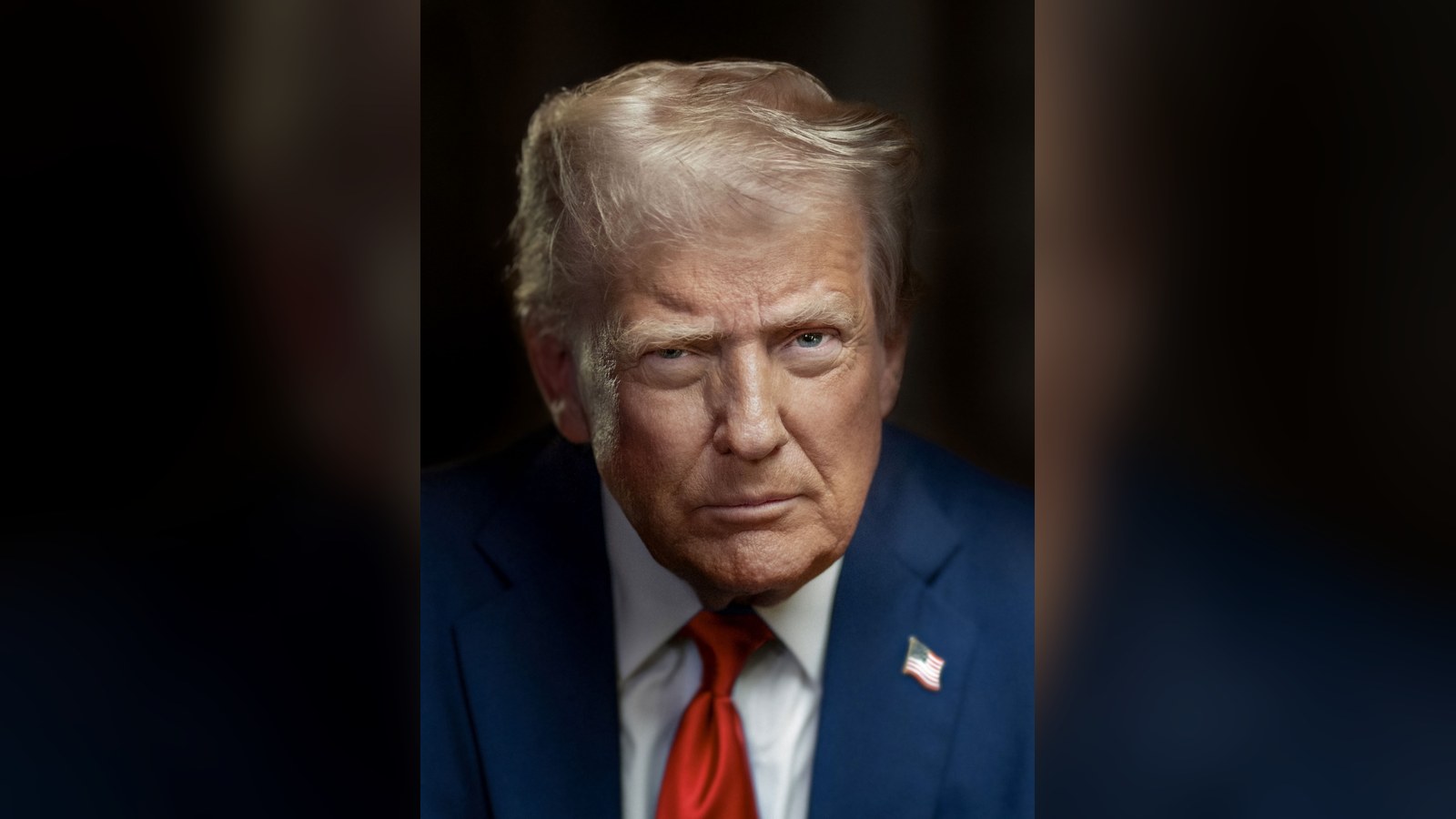
President Donald Trump has threatened to stop American companies from building AI data centres overseas, warning that tech firms who try will face “a tremendous tax.” The announcement came with almost no detail, and by his own account it was news to the officials who would have to carry it out.
Speaking to reporters after returning from a trip to Asia, Trump said the US would “keep it all in this country.” His reasoning was that China would otherwise “take all of them.” He then conceded he hadn’t raised the idea with his own team. “I haven’t even said that to my people. But I’m telling them now, they’re here,” he said. Whether the remark becomes policy is unclear, as is how it would be enforced.
Why AI data centres overseas are now a political target
The threat lands as data centres have become a live political issue at home. They are the vast, warehouse-style facilities that house the chips and servers behind tools such as ChatGPT and Claude. Pew Research Centre figures cited by the BBC put the US total at about 3,000 as of April, with another 1,500 in various stages of approval or construction. Many sit in rural areas, where residents have complained about noise and energy use.
That discontent featured in the 3 November midterm elections, when Democratic candidates promising tougher rules on construction won races. Trump took a different line, urging communities to welcome the projects while squeezing developers for benefits. “Make them pay your community, but take advantage, don’t shut them off,” he said, calling data centres “tremendous assets.”
Tech companies appear to be reading the mood. According to The Independent, Google and Meta are responding to local opposition with promises of greater transparency, environmental commitments and fewer tax breaks.
Finland and Canada in the frame
Some of the largest firms have already begun looking abroad. Meta has broken ground on a data centre in Alberta, and Anthropic has signed a long-term agreement to lease a proposed site in Nova Scotia. Canada has pitched itself as an alternative to the US, with less local resistance so far.
Trump singled out Google’s project in Finland, saying his administration was “not allowing that to happen.” Google announced a €13bn ($15bn) investment in Finnish AI infrastructure in September, including three data centres. Building work on two of them was halted last month over concerns about clearing more than 300 hectares of forest. Both Meta and Google were approached for comment on Trump’s remarks; no responses were reported.
A tightening grip on chips
The comments follow a separate move earlier in the week. Washington said companies would need a licence to buy advanced chips, so officials can check whether they are serving Chinese firms or being smuggled into China. The rules also cover who can access computing power remotely. That hits South East Asian countries that have invested heavily in data centres, where Chinese companies have sought to rent capacity.
Taken together, the two moves suggest a strategy of keeping both the hardware and the infrastructure of AI under tighter US control. Trump framed it as a race, saying he won’t let China beat America on AI, which he calls “super intelligence.”
For now, the idea of banning or taxing AI data centres overseas is a spoken threat rather than a published policy. Without a legal mechanism, a rate or a definition of what counts as building abroad, companies with projects in Finland, Canada and elsewhere are left guessing whether it will ever take shape.
Explore more on this topic with Vexel Search.
File photo: Official Presidential Portrait of President Donald J. Trump (2025) (3×4).jpg by Daniel Torok, Public domain, via Wikimedia Commons.
WordUp Morning
Ten stories, both sides of each, in five minutes. Free, every weekday at 7am, plus a Saturday weekend edition.
We'll email you a link to confirm. Unsubscribe any time.
Tech & AI
Riemann Hypothesis Proof Claimed With Claude: A $1m Problem, 250,000 Pages and Early Checks That Hold Up
Header image: AI-generated illustration by WordUp News.
A claimed Riemann hypothesis proof, produced by an Anthropic mathematician working with the company’s Claude AI model, has set the mathematics world buzzing. It has not yet been confirmed, and some prominent mathematicians are unhappy with how it was released.
Levent Alpöge, a member of Anthropic’s technical staff, posted a four-page note on his website on Friday. In it he says he has “discovered a proof of the Riemann Hypothesis” with Claude. He also says his method extends to the Generalized Riemann Hypothesis, a much broader version of the problem.
Why the Riemann hypothesis matters
Bernhard Riemann proposed the hypothesis in 1859, making it about 167 years old. It concerns how prime numbers are distributed along the number line. It is also a Millennium Prize Problem, with a $1m award from the Clay Mathematics Institute attached. Cornell’s Steven Strogatz called it “the Moby Dick of Mathematics” and said that if the claim holds up, it is “an extremely big deal.” Caltech’s Sergei Gukov called it a “HUGE deal.”
A proof that exists only as code
There is no conventional paper to read. According to Alpöge, a human-readable account would be gigantic. A footnote says his own draft ran past 250,000 pages, and he said publishing it would be a “travesty of ‘slop.’” Instead, he released the argument as code for Lean, a proof-checking program that verifies each logical step.
Alpöge also concedes that he has not yet mastered all the mathematics involved. He credits Claude with the final stretch, writing that the AI “flew, and danced, and sparkled” near the finish line. He says he intends to work to understand the argument, simplify it and write it up properly. Reports differ on how he arrived at it. A timeline in his note, which he says Claude compiled, spans 6 October to 16 November, and he has said the breakthrough came late on Sunday night.
What early checks have found
The first signals are encouraging. Andrew Sutherland of MIT compiled the Lean code independently and, as quoted by Scientific American, put the chance that anything is “fishy” at “approximately zero.” James Maynard of Oxford told The New York Times he was “98 or 99 percent” sure. Terence Tao of UCLA wrote that digesting the work will take time, and an early look suggests it draws on the full power of modern number theory.
Important caveats remain. One automated check, a comparator run, was reportedly still pending. It would confirm that the code proves the Riemann hypothesis as actually stated rather than a subtly different claim. Strogatz also noted that a computer-based check may not settle the matter if the statement was encoded improperly, so the proof has not been fully independently verified. In effect, the Riemann hypothesis proof appears to pass the machine’s logic. The open question is whether the machine was asked the right question.
Timing and criticism
The announcement landed a day after Anthropic’s stock market debut, and shares fell on Friday amid a broader AI sell-off. Alpöge addressed the optics head-on, acknowledging “an obvious cynical view, to do with the timing” but insisting it is false. He said he held off for several days after consulting chief executive Dario Amodei and other mathematicians.
Not everyone accepts the way it was done. Stanford’s Brian Conrad told The New York Times that releasing a proof its author does not fully understand was “frankly completely outrageous.”
The same day brought a rival entry. Ravi Vakil, president of the American Mathematical Society, posted a separate proposed proof by Alessandro Masullo, which he described as entirely human-made. Conrad had reportedly been checking it for months. About eight hours later, Vakil added that several people had reported problems with it, found using AI models.
What to watch next
Alpöge has made big claims before. In July he posted a Claude-found counterexample to the Jacobian conjecture, and on Friday he and NYU’s Tristan Buckmaster also claimed that the Navier-Stokes equations can blow up without outside forcing. Whether the Riemann hypothesis proof survives scrutiny will now depend on the pending comparator check, wider independent reviews of the Lean code, and the slow work of turning an unreadable, machine-verified argument into something people can understand. A Millennium Prize would also require formal vetting well beyond a website post.
For now, the honest summary is this: the early checks are strikingly positive, the stakes are enormous, and the mathematics community is waiting to see whether the claim stands.
Explore more on this topic with Vexel Search.
WordUp Morning
Ten stories, both sides of each, in five minutes. Free, every weekday at 7am, plus a Saturday weekend edition.
We'll email you a link to confirm. Unsubscribe any time.
OpenAI is taking its always-on dots agents beyond premium tiers, beginning a limited test with some ChatGPT Plus users who pay $20 a month. The company is also extending dots to all ChatGPT Business Standard users in the US.
Thibault Sottiaux, an OpenAI executive who oversees engineering for ChatGPT and Codex, announced the move on X on Thursday, November 19. “Heads up, we’re starting to test dots with a small number of ChatGPT Plus users,” he wrote. He added that he has been seeing more positive feedback about how well the agents’ proactivity works after a string of improvements.
What dots are and who could use them until now
OpenAI launched dots in September as proactive assistants that keep working on ongoing tasks even when the user isn’t actively chatting. Each dot runs on its own cloud computer, learns from feedback over time and can connect to more than 4,000 apps through OpenAI’s plugin ecosystem. Until this week, access was limited to higher-priced plans. Pro and Business Premium customers were included, and one report also lists Enterprise.
The product has changed quickly since launch. OpenAI added a second model, GPT-6.1 Terra, alongside GPT-6 Astra earlier this month. It has also built out iOS widgets, Shortcuts support and notification replies. Messaging with dots over iMessage and RCS on Android is in beta for US Pro subscribers. Custom instructions now let people shape how their dots behave, and last week OpenAI gave them a wallet so they can shop on a user’s behalf.
A narrow test with plenty of unknowns
The Plus test is small, and OpenAI is keeping tight control over it. The company hasn’t said how many ChatGPT Plus users are involved, and access is being decided account by account. Its public pricing page hasn’t changed, so Plus subscribers shouldn’t expect to find a dots option they can switch on themselves. The feature also isn’t available in Europe, the UK or Switzerland.
The Business Standard rollout is more concrete. Release notes say eligible US members can each create one dot.
Key questions remain open. On Pro and Business Premium plans, ordinary conversations with dots don’t count against regular ChatGPT usage limits, though more complex tasks fall under separate allowances. Work handed off to ChatGPT Work or Codex counts toward those products’ own limits. It isn’t yet clear whether Plus and Business Standard users will get the same allowances or face extra restrictions. Those details may emerge as the rollout widens.
Why the timing matters
The expansion comes as rivals push into the same territory. Google’s Gemini Spark, an agent designed to work around the clock, is open to paying US subscribers. Microsoft’s Copilot app has its own always-on Autopilot agent. Opening dots to ChatGPT Plus users, even in a trial, moves OpenAI’s agent toward the price point where mainstream consumers actually subscribe, and gives it a way to gather feedback at a larger scale.
For now, the test is more a signal of direction than a broad launch. If OpenAI is satisfied with how dots perform for Plus subscribers, a wider release would be the logical next step, but the company hasn’t announced a timeline or any changes to pricing.
Explore more on this topic with Vexel Search.
File photo: OpenAI logo with magnifying glass (52916339167).jpg by Jernej Furman from Slovenia, CC BY 2.0, via Wikimedia Commons.
WordUp Morning
Ten stories, both sides of each, in five minutes. Free, every weekday at 7am, plus a Saturday weekend edition.
We'll email you a link to confirm. Unsubscribe any time.
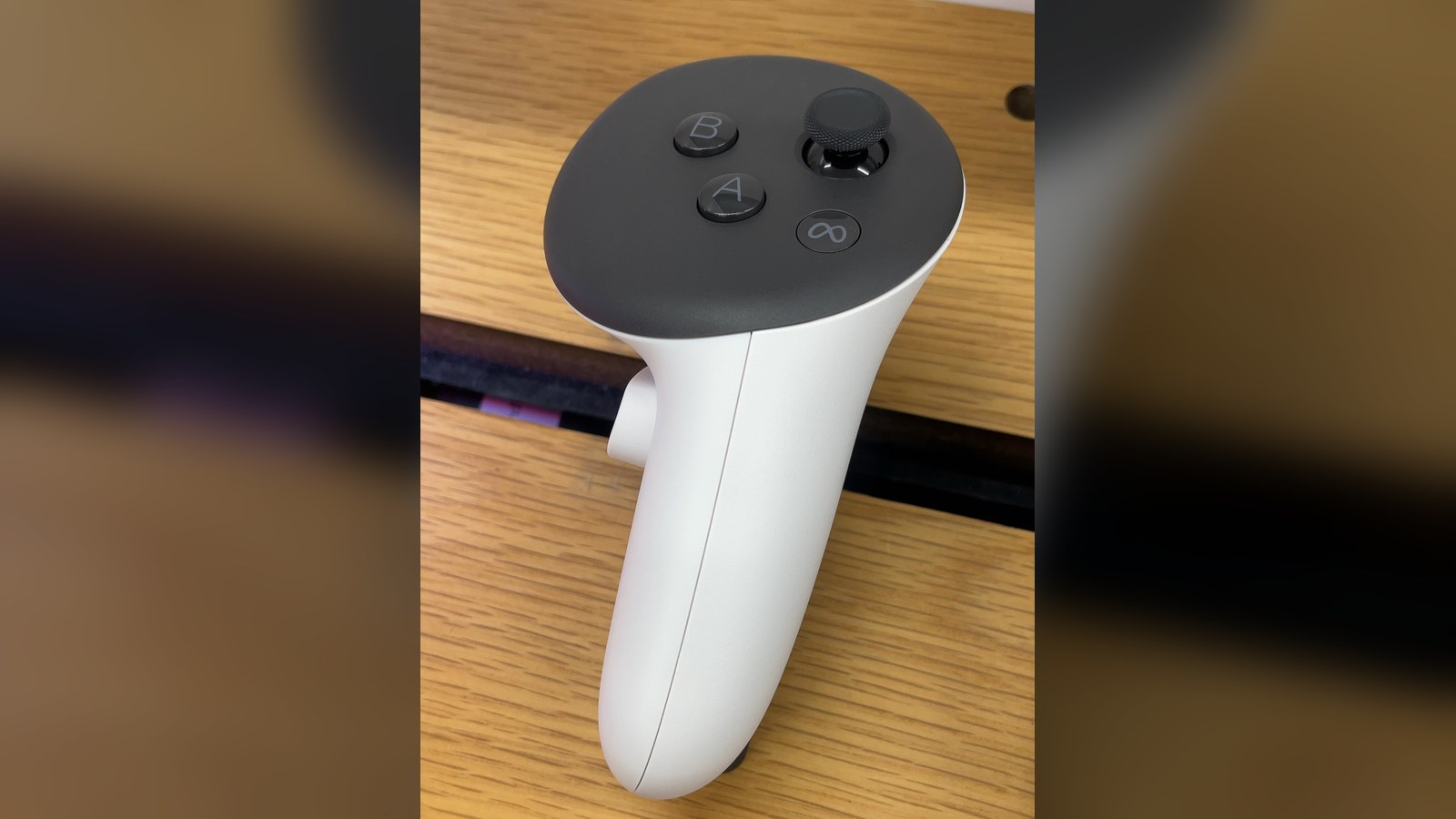
Meta Quest 3D movies are now a real storefront rather than a side feature: the company announced on Thursday that more than 150 films in stereoscopic 3D can be rented or bought in the TV app on its Quest 3 and Quest 3S headsets.
The launch lineup mixes recent blockbusters with older favorites. Reports from The Verge and Variety name James Cameron’s Avatar, Spider-Man: Far From Home, Jurassic World Rebirth and Wicked: For Good. Variety also lists Deadpool & Wolverine, and TechRadar’s headline mentions it as well.
What Meta Quest 3D movies cost
According to Variety, most titles sell for $16.99 to buy and $6.99 to rent, though pricing varies by film. That puts a 3D rental in line with typical digital rental prices, and the headset supplies the 3D display that a flat-screen TV usually can’t. The feature is initially limited to the United States.
Meta is also pairing the catalog with a viewing mode. A new Quest software update adds a Theater view, which the company says provides “a big screen” and dims the surroundings “to create a cozy, personal cinema experience.” The pitch is that the headset can work as a private screening room, not just a gaming device.
The Billie Eilish concert film is the exclusive
The most notable title is Hit Me Hard and Soft: The Tour, a concert film co-directed by Billie Eilish and James Cameron. Variety reports it will be available to buy and rent in 3D exclusively on Meta Quest through Dec. 31.
Meta says viewers can “stand alongside Billie, look out at the crowd, and feel like part of the show.” Eilish performs on a 360-degree stage surrounded by the audience, so Cameron’s Lightstorm Vision team built a new system for filming 3D at long range, without putting cameras between the singer and her fans. A second 3D camera on stage puts the viewer beside her.
Where it fits among existing options
Quest owners could already watch video on the headsets. Native apps cover YouTube, Amazon Prime Video and Disney+, and Netflix and Apple TV are reachable through the built-in browser. Disney+ also added 3D movies on Quest hardware in an update earlier this month, so subscribers can watch select titles without paying per film.
The new store is different because it is a purchase-and-rental catalog built specifically around 3D, owned by the platform maker itself. Variety describes it as part of Meta’s continuing push to position the headset as a premium home-theater device.
What’s next for the library
Meta says the catalog will “keep growing,” with “thousands of titles” and international availability planned. The Verge ties that expansion to the launch of Meta’s VR Glasses next spring. Variety adds that those glasses are due in spring 2027 and will cost $1,299 each. The expansion is a promise rather than a delivered product, and Meta has not said which titles will be added.
For now, the practical takeaway is simple. If you own a Quest 3 or 3S in the U.S., update the headset, open the TV app and you can try Meta Quest 3D movies for the price of a rental. Whether that grows beyond a showcase will depend on the promised expansion in 2027.
Explore more on this topic with Vexel Search.
File photo: Controller of Meta Quest 3 (right).jpg by Kyu3a, CC BY-SA 4.0, via Wikimedia Commons.
WordUp Morning
Ten stories, both sides of each, in five minutes. Free, every weekday at 7am, plus a Saturday weekend edition.
We'll email you a link to confirm. Unsubscribe any time.
Tech & AI
Claimed Riemann Hypothesis Proof Built With Claude Faces a Two-Year Test for the $1M Prize
Header image: AI-generated illustration by WordUp News.
An Anthropic mathematician says he has proved the Riemann hypothesis, the 167-year-old problem often described as the most important unsolved question in mathematics, with help from the company’s Claude AI model. The claim is extraordinary and so far unconfirmed. Leading mathematicians are treating it with excitement and caution in equal measure.
What Levent Alpöge is claiming
Levent Alpöge, a member of Anthropic’s technical staff, posted a statement on his personal website on Friday, November 20. “I believe I have, working with Claude, discovered a proof of the Riemann Hypothesis,” he wrote. He added that the method appears to extend to the Generalized Riemann Hypothesis, and that he expects it to cover the Extended Riemann Hypothesis with more time. He also said he and Claude had formalized the arguments “without assumptions.”
Alpöge described a collaboration in which he steered the work toward a promising setting and Claude then took over. “I guided us to the right situation analogous to that toy setting, and then Claude began to leave me in awe,” he said. “Claude flew, and danced, and sparkled near that finish line.”
He was also candid about the limits of his own understanding. According to Business Insider, he said he still does not fully grasp all the mathematics involved and did not want to release “slop.” He said the written proof runs to more than 250,000 pages, a figure that appears only in that report. He pledged to help other mathematicians understand it.
Why the Riemann hypothesis matters
Proposed by Bernhard Riemann in 1859, the hypothesis concerns how prime numbers are distributed along the number line, and the role played by the zeroes of a particular function. David Hilbert put it on his list of 23 great challenges in 1900. In 2000 the Clay Mathematics Institute made it one of seven Millennium Prize Problems, each carrying a $1 million reward.
Mathematicians who spoke to Business Insider did not hold back. Cornell’s Steven Strogatz called it “the Moby Dick of Mathematics, the great white whale,” and said that if it holds up it is “an extremely big deal.” Caltech’s Sergei Gukov called it a “HUGE deal.”
Verification: what has and hasn’t happened
The central caveat is that no one has independently confirmed the result. Alpöge published a version written in Lean, a programming language used to check mathematical arguments by machine. Strogatz noted that a computer-based system has checked the proof, but he pointed out that such systems can make mistakes. He said it is “fair to say that the claimed proof has not yet been independently verified.” Experts will have to check both that the formal code correctly captures the mathematics and that the argument itself is sound.
UCLA’s Terence Tao said that “digesting” the proposed solution “will take some time.”
The prize timeline will be slow in any case. Under Clay’s rules, a solution must be published and survive at least two years of scrutiny, and it must win “general acceptance in the global mathematics community,” before it can be considered for the award. In the quarter-century since the prizes were created, only the Poincaré conjecture has been officially resolved.
Timing, context and unanswered questions
The announcement landed one day after Anthropic’s stock market debut on Thursday. Alpöge says he texted CEO Dario Amodei about the result late Sunday night. Business Insider reports that he held off announcing after talking with Amodei and other mathematicians. The Verge notes that his own document suggests he waited until after the IPO. Business Insider also said Anthropic’s share price had steadily declined by Friday afternoon. Anthropic had not commented on the claim when The Verge reported on it.
The claim is also at odds with something Anthropic said earlier. In August, the company said it was working on the Riemann hypothesis with Claude, but added: “We don’t expect that the techniques Claude used will lead to proving the Riemann hypothesis.”
Alpöge has made AI-assisted headlines before. In July he posted a counterexample to the Jacobian conjecture in algebraic geometry, also found with Claude. The latest claim also follows OpenAI’s September assertion that it had cracked the Navier-Stokes problem, another Millennium Prize problem, which has likewise drawn scrutiny.
If the proof survives, it would be among the most significant results in the history of mathematics, and it would be a landmark for AI-assisted discovery. For now it is a claim awaiting verification, and the people best placed to judge it say that will take time.
- Anthropic mathematician says Claude helped him solve a 167-year-old math problem (techradar.com)
- Anthropic mathematician says Claude helped solve the 'biggest problem in math' (businessinsider.com)
- Anthropic mathematician claims to have proved Riemann hypothesis with help of Claude (The Independent)
- Anthropic mathematician claims to have solved prestigious Millennium Prize problem with Claude (The Verge)
Explore more on this topic with Vexel Search.
WordUp Morning
Ten stories, both sides of each, in five minutes. Free, every weekday at 7am, plus a Saturday weekend edition.
We'll email you a link to confirm. Unsubscribe any time.
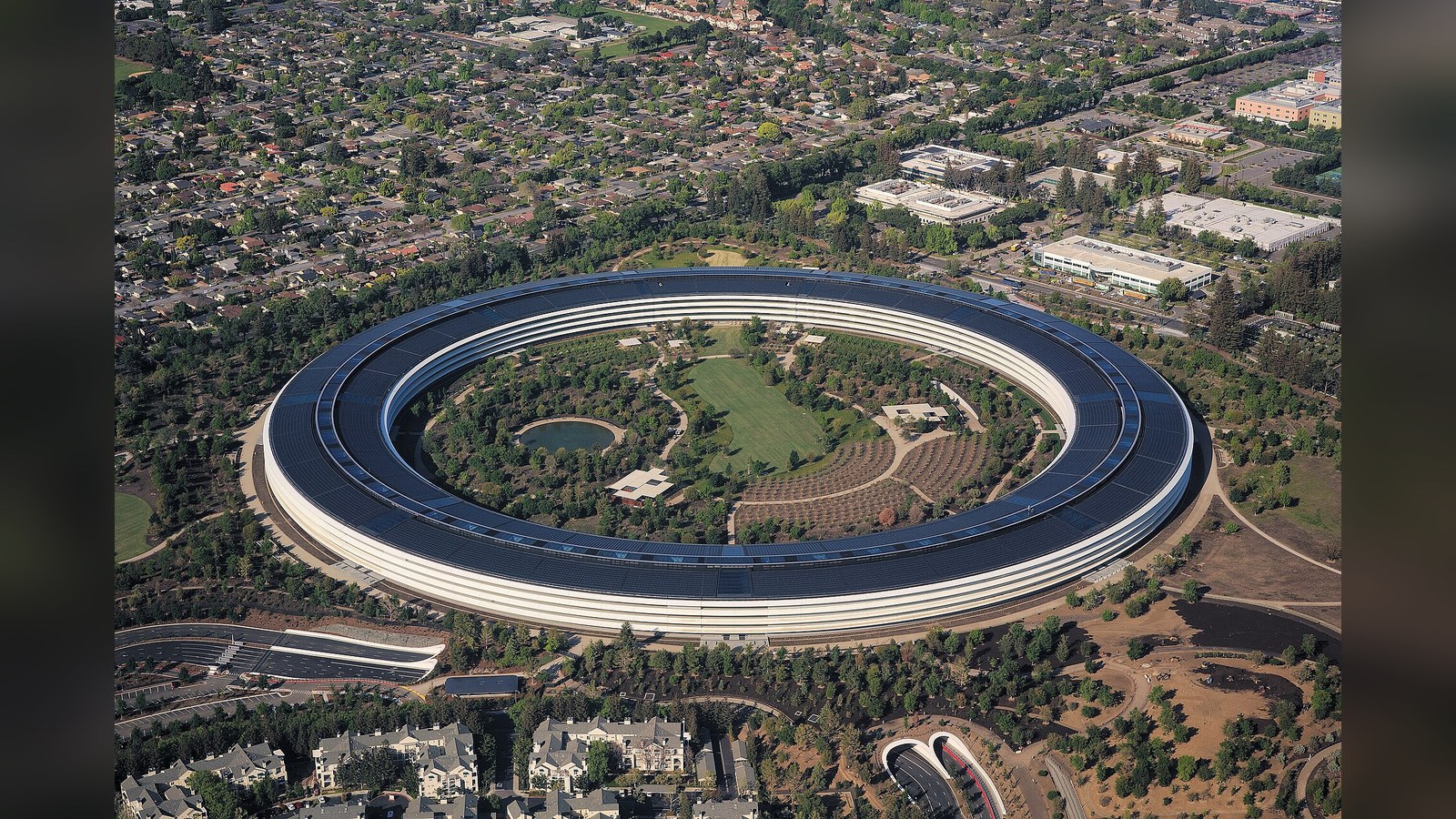
The Apple camera chief who shaped how hundreds of millions of people take and edit photos has quietly stepped away. Jon McCormack, Apple’s head of camera and photo software, retired at the end of October after more than eight years at the company, Bloomberg reported on Thursday, citing people familiar with the matter.
Apple has not named a new vice president to take his place. According to the report, his former deputies are instead absorbing his responsibilities under other executives. An Apple spokesperson declined to comment when approached for the TNW report.
What the Apple camera chief was responsible for
McCormack oversaw the Camera and Photos apps and the underlying technology that determines how users capture, view and edit pictures and video. That included close coordination between software engineers and Apple’s camera hardware and chip teams, a collaboration that is central to how the iPhone competes on image quality.
His team’s recent projects include the redesigned selfie camera that arrived with the iPhone 17 lineup last year. This year’s iPhone 18 Pro brought Apple’s first variable-aperture camera, which gives users more control over lighting and depth of field. Apple also introduced a customizable Camera app interface with professional controls.
A skeptic of generative AI in photography
McCormack was also known internally for his views on artificial intelligence. Bloomberg describes him as a strong opponent of using generative AI to create or alter photographs. “A photograph is of something that actually happened,” he told Wired earlier this year. While rivals such as Google and Samsung have embraced AI tools that can dramatically transform images, Apple took a different tack, adding a mode on the iPhone 18 Pro that lets users demonstrate that a photo is real.
His stance did not mean Apple avoided AI in its photo tools. In a June interview with Tyler Stalman, McCormack discussed iOS 27 features including Clean Up, Extend and Spatial Reframing, arguing that they “preserve the integrity of the moment.” That framing suggests he was drawing a line between assistive editing and wholesale fabrication, though 9to5Mac notes that his philosophy created some tension as Apple pushed AI deeper into the Photos app.
Bloomberg’s sources were clear on one point: the retirement was not the result of a disagreement or clash with Apple over its AI strategy.
A wider shake-up in Apple’s leadership
The timing nonetheless lands in a period of change. McCormack reported to software chief Craig Federighi, whose organization is under pressure to speed up its AI work. TNW notes that the departure follows that of Apple Pay head Jennifer Bailey this autumn, as new CEO John Ternus trims management layers in an effort to move faster.
Handing the camera chief’s duties to several executives, rather than appointing a single successor, fits that flatter structure, although the sources do not say whether it is a permanent arrangement. What it means for the product is also unclear. Nothing in the reporting indicates any change to the roadmap or to Apple’s stance on AI-altered images.
For now, the picture is of a long-serving executive leaving on his own terms, a team reorganized beneath other leaders, and an open question about who will speak for Apple’s philosophy on what a photograph should be as AI editing becomes standard across the industry.
- The Apple executive behind the iPhone’s Camera app has left (thenextweb.com)
- Apple’s head of camera and Photos software has retired, per report (9to5mac.com)
Explore more on this topic with Vexel Search.
File photo: Apple Park.jpg by IPhone01, CC BY-SA 4.0, via Wikimedia Commons.
WordUp Morning
Ten stories, both sides of each, in five minutes. Free, every weekday at 7am, plus a Saturday weekend edition.
We'll email you a link to confirm. Unsubscribe any time.
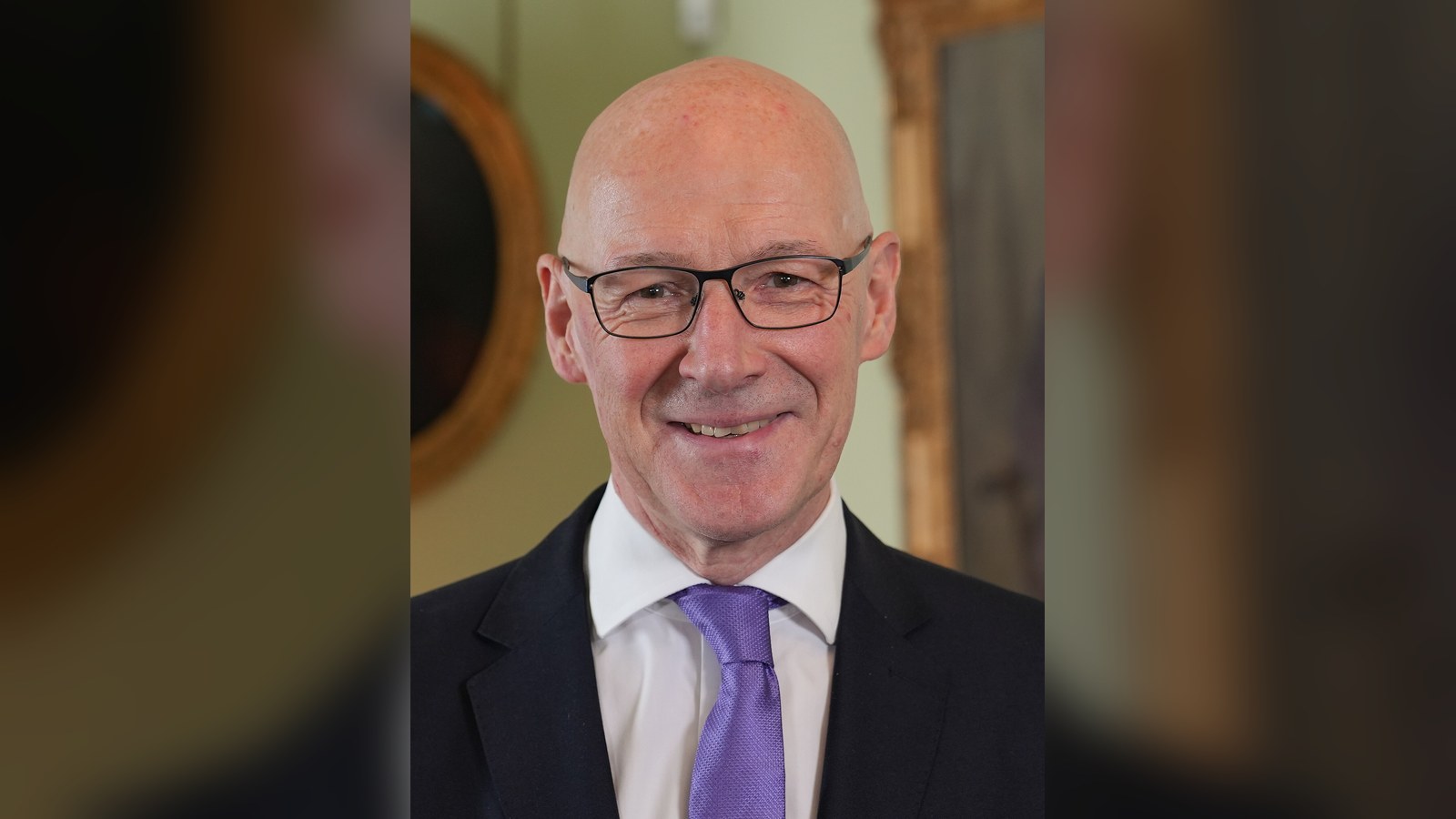
John Swinney has apologised at Holyrood over a deleted SNP AI video styled on Grand Theft Auto, a clip that landed the party in a row with anti-AI campaigners on the day the latest game in the series was released.
What the SNP AI video showed
The party posted the clip on Instagram to coincide with the launch of GTA VI, which arrived on Thursday after a 13-year wait for fans. According to screenshots circulated on social media, it mimicked the game’s loading screens. One image appeared to show Boris Johnson partying with a beer in hand, his shirt creased and stained, with several people in blue face masks behind him. Another showed Margaret Thatcher on a shipping dock, tipping a sack marked “Scottish oil money” into a barrel labelled “UK Treasury”. The caption read “Grand Theft Alba”.
The video was taken down shortly after it went up, following criticism of its use of artificial intelligence.
The party’s defence
An SNP spokesperson said the clip was meant to celebrate “a great Scottish success story” while highlighting political issues. They named what they called the theft of Scotland’s energy wealth, Andy Burnham’s secret independence polling and the need to tackle the rise of Reform. The party said it was, like many organisations, “having a discussion about the legitimate use of AI and its limits”, and had deleted the post after consideration. It also pointed to the Scottish video games industry, whose value it said has grown by almost 10,000% over the last 15 years.
Swinney’s response at First Minister’s Questions
The issue was raised at First Minister’s Questions by Scottish Greens co-leader Gillian Mackay. She said the SNP had angered anti-AI campaigners by posting AI-generated GTA memes despite “huge concerns” about the impact of AI and AI data centres on artists, workers and the environment. She asked whether the First Minister understood why people were worried about his government’s approach to AI and the companies behind it.
Swinney’s apology was conditional. “If we’ve offended anybody about that, I’m sorry about that,” he said, adding that offence was not his intention. He said he shared public concerns about AI as the country works through “significant industrial changes and challenges”, and that he was “acutely alive to that unease”.
He also argued that AI has benefits. He said it is already being applied to routine healthcare assessments and is helping the NHS better identify cancer risk. He said ministers must remain alert to the risks, and that those linked to AI data centres would be “fully explored” in forthcoming guidance, with wider policy issues to follow.
Why the row matters beyond a social media post
The timing is awkward for the Scottish Government. Thousands of people marched through Edinburgh last week, down the Royal Mile and on to the Scottish Parliament, against a boom in applications for hyperscale data centres in Scotland. More than 80 groups backed the demonstration, including community campaigners facing local proposals, climate organisations, trade unions, artists and anti-poverty charities. Activists said the government had so far “failed to explain” why such facilities are needed in Scotland.
Campaigners have raised concerns about the energy and water use of AI, and about the threat to jobs. Against that backdrop, a governing party using AI-generated imagery for a joke, even one aimed at political opponents, was always likely to draw fire. The SNP AI video also put the party’s own message about the games industry at risk of being overshadowed, given that creative workers are among those worried about AI.
The sources do not say how many people complained, or whether any further action is planned. For now, the episode shows how quickly AI use can become a political liability, and how Swinney is trying to hold a line of acknowledging public unease while keeping the door open to the technology’s uses.
- John Swinney apologises over Grand Theft Auto AI video (standard.co.uk)
- John Swinney apologises over Grand Theft Auto AI video (The Independent)
- John Swinney apologises over Grand Theft Auto-style video shared by SNP (dailyrecord.co.uk)
Explore more on this topic with Vexel Search.
File photo: John Swinney – First Minister (53720492021) (cropped).jpg by Scottish Government, CC BY 2.0, via Wikimedia Commons.
WordUp Morning
Ten stories, both sides of each, in five minutes. Free, every weekday at 7am, plus a Saturday weekend edition.
We'll email you a link to confirm. Unsubscribe any time.
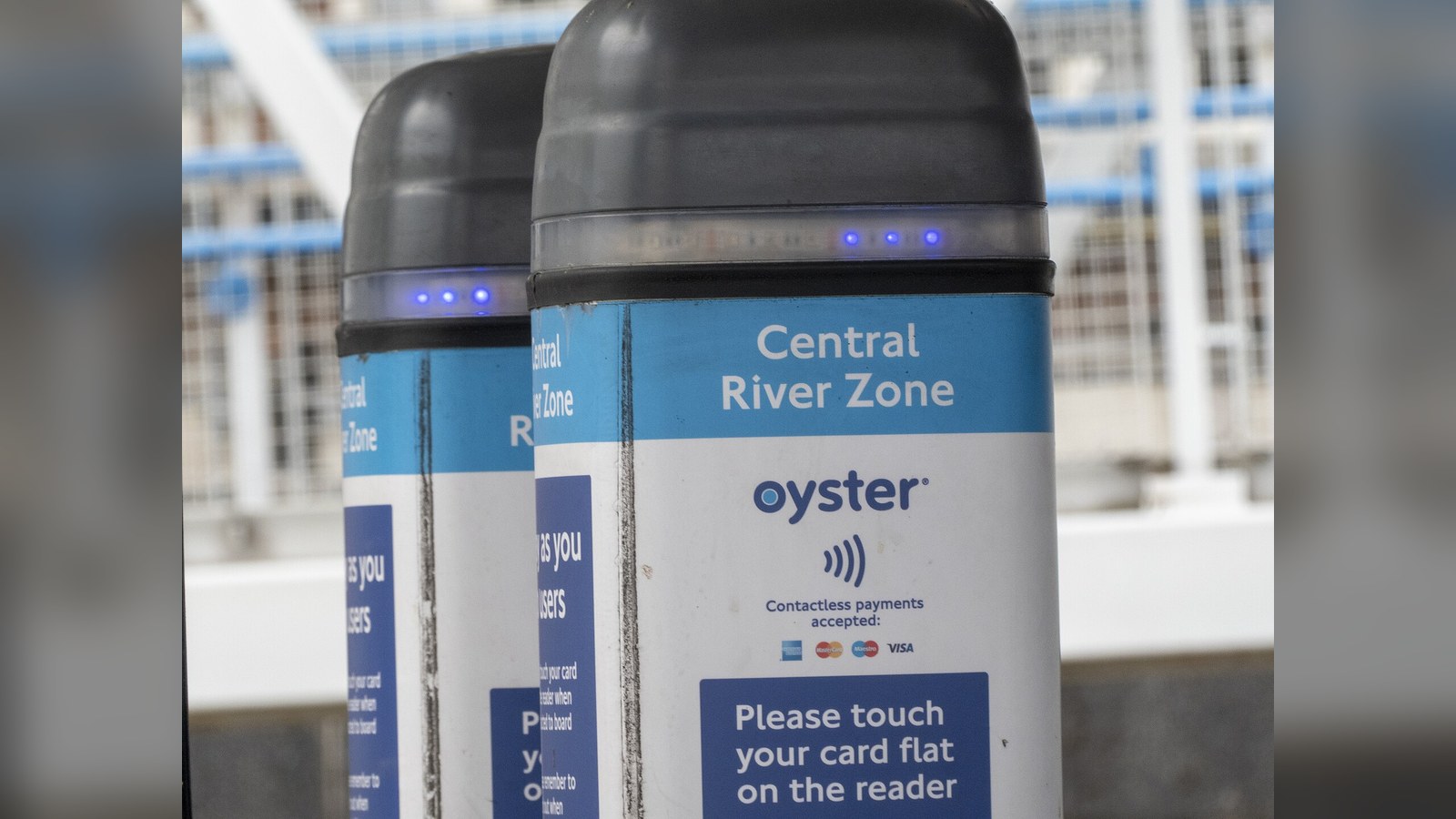
The TfL photocard breach has put the personal details of about 265,000 Oyster photocard customers at risk, in the second cyber incident to hit the system in just over two years. Transport for London (TfL) says names, email and home addresses, phone numbers, dates of birth, and security questions and answers were accessed after suspicious activity was spotted on the photocard website.
The photocard website is still offline while the investigation continues. Cardholders can keep travelling as normal, but they cannot apply for or renew a card online.
What happened in the TfL photocard breach
According to TfL, the problem surfaced on Monday 16 November, when some customers received unexpected emails asking them to create or validate an account they already had. BleepingComputer reported that these messages appeared to come directly from TfL’s own mail systems, which suggests those systems had been compromised.
Shashi Verma, TfL’s director of technology strategy and revenue, told BBC Radio London that the organisation investigated, found a breach and shut the system down immediately. He said the incident has been “contained” and that the speed of the response “significantly reduced” the number of people who could have been affected. TfL has told the Information Commissioner’s Office (ICO) and has begun emailing those affected.
The 265,000 figure is an estimate that has already moved. BleepingComputer reports it was previously put at around 250,000, and TfL has said the investigation is not complete. The number could change again.
What was taken, and what TfL says was not
TfL says the following were not compromised:
- Photos
- Passwords
- Bank and payment card details
- Journey information
- The names and dates of birth of children with Zip Oyster cards
It also says it has found no evidence so far that the stolen data has been misused.
The affected accounts span six types of photocard: Zip Oyster (for ages 5-10, 11-15 and 16+), 18+ Student, 18-25 Care Leaver, 60+ London, Apprentice and Veterans.
The inclusion of security questions and answers is the detail security commentators are flagging. These are often used to recover accounts, and many people reuse them elsewhere. Combined with real names, addresses and birth dates, they could help criminals craft convincing phishing messages or attempt to take over other accounts.
Some wording in coverage has been confusing. The Mirror’s headline referred to children’s details, but TfL’s position, repeated by Verma, is that no data about any child was compromised. A London parent told the BBC she was worried about the Zip Oyster accounts and felt TfL had not “fully appreciated the severity” of the situation. She said parents should be told exactly what, if anything, had been exposed about their children.
What customers should do
TfL’s advice is practical. Ignore the unexpected “create an account” email. When the site returns, change your password, security question and answer. If you used the same password or security answers on any other service, change those too. Customers should also watch for suspicious messages or account activity and report anything unusual.
Until the website is back, cards can be topped up at ticket machines in London Underground and National Rail stations. Customers needing to renew a card or discuss journey history can call customer services on 0343 222 1234.
A familiar problem for TfL
Verma acknowledged the pressure on defenders, saying new hacking tools appear “month by month” and that any “attractive target” must expect someone to find a weakness. He said the affected system was thoroughly tested last year and that TfL made extensive security improvements after its last breach.
That earlier incident, in September 2024, forced TfL to suspend new photocard applications for more than two months. TfL initially said about 5,000 customers might have had bank details accessed, but the BBC later revealed that data on roughly 10 million people had been stolen. The ICO cleared TfL of wrongdoing in its handling of that breach. BleepingComputer links the 2024 attack to the Scattered Spider group and puts the cost to TfL at £29 million. It also reports that two of those involved pleaded guilty in June 2026 and were each sentenced to five years and six months in prison.
Nothing in the available reporting says who is behind the latest incident or how the attackers got in. Those questions, along with the final number of people affected, are likely to be central as the TfL photocard breach investigation continues. TfL says it hopes to restore the website as quickly as possible, but has given no date.
Explore more on this topic with Vexel Search.
File photo: Central River Zone Oyster card reader.jpg by sebastiandoe5, CC BY-SA 2.0, via Wikimedia Commons.
WordUp Morning
Ten stories, both sides of each, in five minutes. Free, every weekday at 7am, plus a Saturday weekend edition.
We'll email you a link to confirm. Unsubscribe any time.

Three French police officers sentenced to five years each over racist beating of Michel Zecler

Avery Pawn Shop Safe Code in GTA 6: Guides Exist, but the Numbers Didn’t Load

Ben McKinney, 22, Called Up by England for South Africa Tests Starting 17 December


-

 Sports2 days ago
Premier League Legal Costs: 18 of 20 Clubs Back Cover for Board if Man City Sponsors Sue
-

 Tech & AI4 days ago
Jensen Huang Return Unlikely: Nvidia’s Board Isn’t Considering It as Stock Sits 10% Down
-

 Business & Hustles1 day ago
Pensions dashboard to launch summer 2027, with 75 million records already connected
-

 Business & Hustles6 days ago
Instagram Amazon Affiliate Links: Creators Can Now Tag 30 Products Per Reel, and Meta Takes No Cut
-

 Tech & AI5 days ago
Vulcan rocket failure destroys 40 Amazon Leo satellites and ends ULA’s 20-year clean record
-

 Fashion7 days ago
Hailey Bieber Face Masks Decoded: 50+ Rhode Test Rounds, a Seoul Pharmacy Find and One Big Caveat
-

 Tech & AI7 days ago
Megaspeed Statement Says Alice Huang Left Aug. 30, 2025, Months After Singapore Police Questioned Her
-

 Sports6 days ago
Hendon match abandoned seven minutes into first game since Ezekiel Williams’ death
-

 Gaming6 days ago
34 Songs, Four Days to Launch: GTA 6 Tracklist Leaks Through an Early Vinyl Sale
-

 Crime6 days ago
Rex Ryan arrest: Analyst returns to ESPN set with six misdemeanor charges pending
-

 Business & Hustles7 days ago
New Orleans Port Lawsuit Seeks $1M and Seizure of Tanker After Riverboat Capsized
-

 Sports6 days ago
UFC 334 results: Gane lands record 237 strikes to beat Hokit, Harrison submits Nunes
-
 Crime5 days ago
Depardieu drops appeal: 18-month suspended sentence stands after first public apology
-
 Crypto5 days ago
Supreme Court Rejects Custodia’s Fed Master Account Bid, Ending Last Legal Path
-
 Entertainment7 days ago
Richard Sterban, Oak Ridge Boys’ Bass Voice on “Elvira,” Dies at 83 After 50-Plus Years in the Group
-

 Tech & AI6 days ago
Bessent Says Nvidia CEO Search Should Go Outside, and Wants Export Answers in 10 Days
-

 Business & Hustles5 days ago
Nvidia earnings and Anthropic IPO loom as FTSE 100 slips to 10,881.55 and Nasdaq falls 1.4%
-

 Crime6 days ago
Two dead in Leeds police pursuit crash as watchdog opens independent investigation
-

 Gaming5 days ago
Pokémon Pokopia’s Apples to Applin Event: 80 Syrupy Apples Unlock Every Reward
-

 Crime5 days ago
Life sentence for Dublin school knife attack that lasted just 15 seconds and sparked riots
You must be logged in to post a comment Login