Tech & AI
Software Bug Halts F1 Grid as Hard-Coded Rule Shuts Down Half the Field’s Cars

A software bug brought a Formula 1 grand prix to a standstill this weekend, stranding more than half the field on a sodden racetrack and forcing officials to abort the race start entirely while engineers scrambled to patch every car on the grid in real time.
The chaos unfolded at the Sepang International Circuit in Malaysia, which stepped in to host the “Bahrain Grand Prix” after the ongoing war with Iran made racing in the Gulf kingdom impossible. If the relocation itself was unusual, what happened next was unprecedented even by motorsport’s eccentric standards: a piece of shared racing software, developed jointly by the FIA, the ten teams, and their engine manufacturers, misread a slow, rain-soaked formation lap as an attempt to cheat — and shut the cars’ hybrid power systems down for 60 seconds apiece.
How a software bug turned a formation lap into chaos
Heavy rain had already delayed the start by half an hour. Race organizers opted for two formation laps behind the safety car, reasoning that a slower pace would let drivers assess the standing water while their intermediate tires helped clear it from the track. It was a sensible plan on paper, but it collided with a hard-coded anti-cheating rule buried in the cars’ control software.
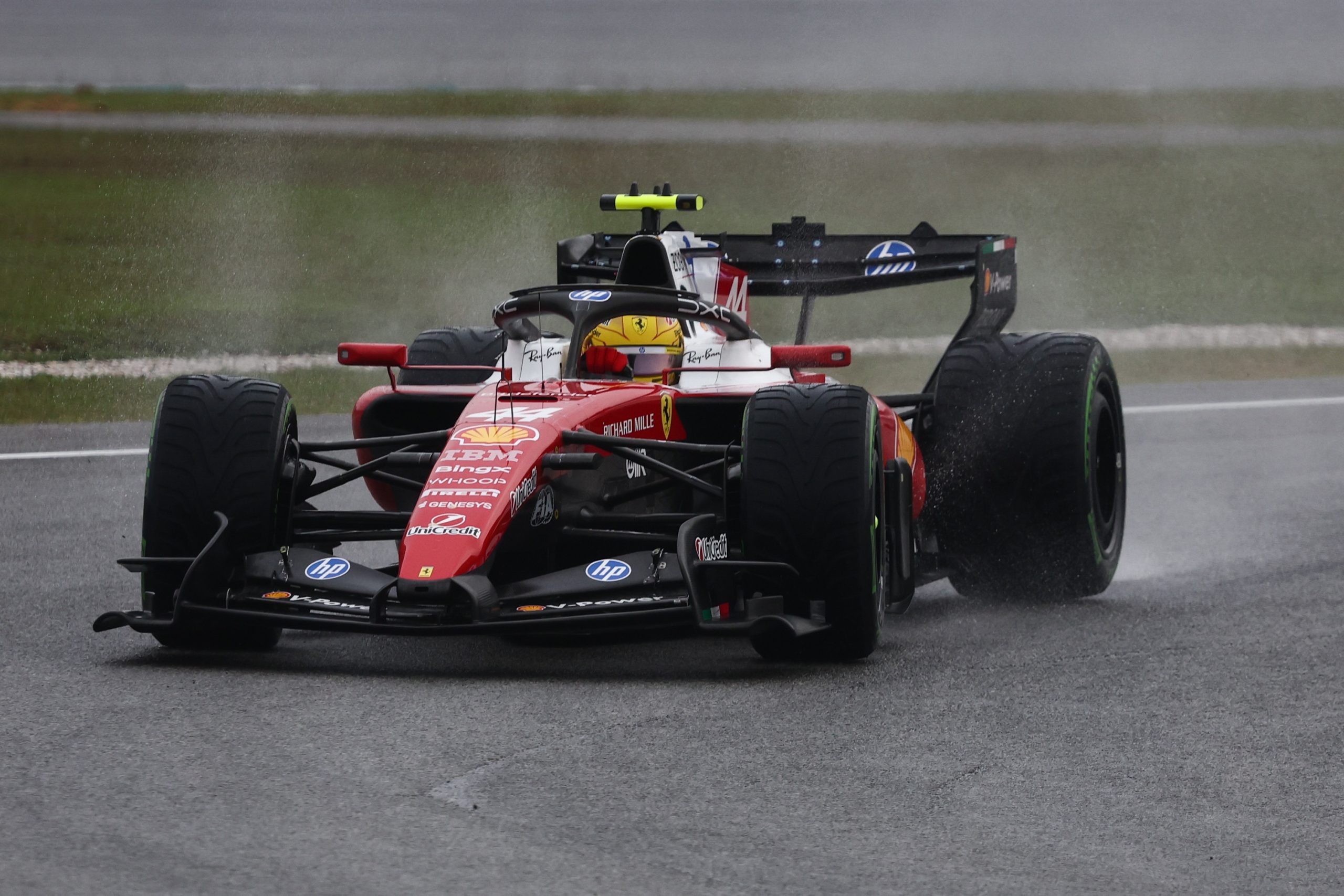

That rule is designed to prevent teams from gaining an unfair advantage by manipulating hybrid power deployment at low speeds. But with power deliberately reduced in sections of the track for safety in the wet, and cars crawling even slower than usual behind the safety car, several vehicles’ systems concluded the rule was being broken. The result was an automatic 60-second shutdown of their electric motors — triggered not by any driver error, but by the software itself misinterpreting conditions nobody had planned for.
What followed looked less like a grand prix and more like a pileup in slow motion. Cars that had just rebooted crawled back up to speed only to find the car ahead stalling out next, producing a rolling wave of confusion up and down the field. Red Bull’s Max Verstappen described finding himself “five-wide on the straight because we couldn’t understand what was going on,” before coming across a cluster of cars still crawling a lap later. Race control had no real choice but to call the whole start off.
A rushed fix and a second attempt
FIA single-seater boss Nikolas Tombazis later explained that the software bug had simply never surfaced before because this year’s season had produced almost no wet-weather running to test it against. “It wasn’t maybe adequately checked,” he said, noting that the wet-weather power settings were common code used across every team’s car — meaning a flaw in one place could, and did, affect nearly the entire grid at once.
Once the problem was identified, the FIA says it took roughly 20 minutes to write and distribute an updated version of the software to every team, plus additional time for engineers to install it and confirm the fix had taken on each car. Verstappen couldn’t resist a dig at the process, joking that his team’s update landed faster thanks to Red Bull’s data partnership with Oracle.
By the time the field lined up for a second attempt roughly an hour after the first aborted start, conditions on track had shifted dramatically. The rain had eased, standing water had drained away, and the brief but costly delay caused by the software bug left drivers facing a tricky strategic gamble: stick with intermediate tires built for a wet track, or risk a slick tire on a surface that was drying faster than anyone had anticipated. Just nine drivers, including pole-sitter Verstappen and championship leader Kimi Antonelli, opted to stay on intermediates. Others, including Lewis Hamilton, chose slicks — a decision that the restarted formation lap quickly exposed as premature, since the track was still wetter than the dry tires could handle.
What the episode reveals about racing’s reliance on software
The incident is a pointed reminder of how deeply modern Formula 1 depends on software that most fans never think about — code that governs not just engine mapping and tire sensors but split-second judgments about legality and safety. A single untested edge case, triggered only by an unusual combination of extreme weather and unusually slow driving, was enough to disable half the field simultaneously and delay a world championship race by roughly an hour.
It’s also a case study in how quickly such problems can, in principle, be fixed once identified. Pushing a software update to ten different teams’ cars and verifying it across an entire grid in around 20 minutes is no small logistical feat, even if the underlying software bug should never have made it into a race weekend in the first place. Tombazis’s explanation — that this year’s unusually dry season left the wet-weather code effectively unvalidated — points to a broader challenge facing any complex, rarely-used system: the conditions that matter most are often the ones tested least.
For a sport that prides itself on split-second precision, the sight of cars idling behind a safety car because of a coding oversight was a rare and faintly absurd failure. But it also underscored a reality increasingly familiar across industries far beyond racing: as more critical decisions get delegated to automated systems, a single unanticipated scenario is sometimes all it takes to bring everything to a halt.
Explore more on this topic with Vexel Search.
You must be logged in to post a comment Login