
Business & Hustles
TG Jones Sale Launched 18 Months After Takeover, With Up to 150 Shops Set to Close


The TG Jones sale marks another twist in the turbulent life of what was once WH Smith’s high street arm. Private equity owner Modella Capital has put the retailer on the market only a year and a half after buying it, according to reports first published by Sky News.
Modella has reportedly appointed advisers at Teneo to run the process. It is understood the firm was not actively looking to sell but decided to move after unsolicited approaches from interested parties. The auction is expected to run over the weeks before Christmas, but any deal is unlikely to complete before the first quarter of 2027.
What is being sold
The business now has 346 trading sites and around 3,500 employees. That is far smaller than the network Modella took on. It bought the roughly 480-store chain in 2025, and a court-approved restructuring plan has since shut more than 100 shops. Dozens more closures are expected, taking the total to around 150.
Accounts of the purchase price differ. Some reports put the deal at about £42 million, while City AM cites an initial £10 million. The sources do not explain the gap, so the true cost of the acquisition remains unclear.
A contested turnaround
Modella’s managing director Joe Price says the business was loss-making with an uncertain future when it was acquired, and that “hard decisions” were needed. He says the turnaround is “starting to deliver” with improved trading. TG Jones chief executive Alex Willson says performance is improving month by month, and that the focus remains on customers during the critical Christmas period.
The path has not been smooth. Landlords resisted the proposals to cut the rent TG Jones pays. The owner also drew criticism for rebranding every store with new signage and charging royalties for the new name. One person close to Modella described the company as now “viable but smaller”.
Poundland looms in the background
Inevitably, the TG Jones sale invites comparison with Poundland, another high street name searching for new owners. Modella was among the potential suitors but is understood to have pulled out. Last week Poundland filed a fresh notice of intention to appoint administrators, buying more time to find a rescue deal. According to City AM, its owner Gordon Brothers has rejected bids that would have kept the chain going, because it wants a £30 million loan repaid in full.
Sources close to Modella stress that TG Jones is in a different position, and no similar loan is understood to feature in its auction. They are said to be mindful of the timing, however.
Modella’s track record
Modella has built a reputation for buying distressed retailers. Claire’s Accessories and The Original Factory Shop both collapsed this year after it acquired them, while Hobbycraft survived its own restructuring. That history will shape how buyers, staff, suppliers and landlords view the TG Jones sale.
For now, the sale leaves the future of thousands of workers and hundreds of shops uncertain. The brand was founded as a newsagent by Henry Walton Smith in 1792, and its high street successor is entering the busiest trading weeks of the year without knowing who will own it next.
- TG Jones stores to shut as former WH Smith chain put up for sale (The Independent)
- Former WH Smith high street business TG Jones put up for sale (standard.co.uk)
- TG Jones: Former WH Smith chain put up for sale by Modella Capital (business-live.co.uk)
Explore more on this topic with Vexel Search.
File photo: TG Jones, Bank Street, Newquay, Cornwall – May 2026.jpg by Mutney, CC BY 4.0, via Wikimedia Commons.
WordUp Morning
Ten stories, both sides of each, in five minutes. Free, every weekday at 7am, plus a Saturday weekend edition.
We'll email you a link to confirm. Unsubscribe any time.

Business & Hustles
BAE Systems Job Cuts: Up to 1,070 Roles at Risk as Unite Warns of “No Manufacturing Industry Left”

The BAE Systems job cuts announced this week could remove up to 1,070 roles from Britain’s largest defence manufacturer, and they have already become a political flashpoint over how quickly the Government turns its defence spending promises into orders.
The company says the reductions will fall on its UK head office and its air sector. BAE employs around 50,000 people in Britain, including about 18,500 in air and around 1,000 at head office. The proposed cuts would therefore equal roughly 2% of the UK workforce, or about 5% of the staff in the two areas affected.
Who is affected by the BAE Systems job cuts?
BAE has said it intends to exclude shopfloor manufacturing staff, people who maintain aircraft at RAF bases, and its early careers trainees. That means the cuts are aimed at office-based and support functions rather than the production lines for aircraft such as the Eurofighter Typhoon and the F-35 Lightning II, both of which BAE helps to build.
The company stressed that it is seeking to achieve the reductions through a voluntary process. In a statement, a spokesperson described the move as “the next stage” of an ongoing drive to improve agility and competitiveness, and said BAE wants to “maximise the value of every pound” its customers spend on defence. The firm acknowledged the news “may be unsettling” and promised to work closely with trade unions and employee representatives.
Unite blames delays in defence decisions
Unite general secretary Sharon Graham was quick to link the announcement to Government decision-making. “We won’t have a manufacturing industry left if the Government doesn’t start making critical decisions,” she said, arguing that delays in defence spending have been pushing firms in the sector towards choices that cost British jobs.
She also pointed to the timing, noting that the announcement came the day after the Government backed a major boost in apprenticeships. She called it evidence of “a lack of joined-up thinking”. Her demands were specific: immediate contracts for British-built Typhoons and for Collaborative Combat Aircraft, plus the award of the Skynet 6 satellite communications contract to Airbus, which she said would protect thousands of skilled jobs in Portsmouth and Stevenage.
Airbus responded only that it remains “fully committed” to the Skynet competition and is complying with all Ministry of Defence requirements and timelines. Unite argues the pressures are not confined to BAE.
Ministers point to contracts already signed
The Ministry of Defence did not dispute that the news will worry staff, saying its thoughts were with those potentially affected. But it defended its record, saying the Government is delivering “the biggest boost in defence spending since the Cold War” and has already agreed £4 billion of investments since July.
It singled out two BAE-related deals. One is a £708 million contract extension for BAE to lead development work on the Global Combat Air Programme. The other is the £8 billion deal to supply Turkey with 20 Typhoon jets, which the department says sustains 6,000 jobs at two BAE sites.
The announcement comes a month after the Chancellor and the Defence Secretary visited BAE in Glasgow to unveil new rules intended to bring more defence work to the UK. Under them, overseas firms winning significant British defence contracts must reinvest in the country by creating UK jobs and apprenticeships, opening factories and backing domestic suppliers. The timing sharpens the awkwardness for ministers, who have promoted a domestic industrial dividend from higher defence budgets while the biggest domestic player trims its workforce.
Opposition seizes on the cuts
Shadow defence secretary James Cartlidge said the cuts showed the real-world impact of what he called Labour’s “complete failure to fund defence”. He accused the Government of causing the industry to “recede” at a time when ministers have warned the UK could be at war with Russia by 2030, and argued that defence firms are boosting the economies of NATO allies while jobs are lost at home.
For now, the BAE Systems job cuts are a proposal, and the use of a voluntary process means the final number of departures may differ from the 1,070 ceiling. What remains unclear from the sources is how quickly the process will move, and whether the Typhoon, combat aircraft and Skynet decisions Unite is demanding will arrive in time to change the company’s plans.
Explore more on this topic with Vexel Search.
File photo: BAE Systems Depot – panoramio.jpg by Idawriter, CC BY-SA 3.0, via Wikimedia Commons.
WordUp Morning
Ten stories, both sides of each, in five minutes. Free, every weekday at 7am, plus a Saturday weekend edition.
We'll email you a link to confirm. Unsubscribe any time.

Header image: AI-generated illustration by WordUp News.
The Government has committed to writing protections for face-to-face banking into law, accepting the central recommendation of a Treasury-commissioned review into the decline of in-person services. The shift would give ministers and regulators new tools to stop customers who depend on counter services from being left behind as high street branches continue to disappear.
What the review recommends
The review, led by Richard Lloyd, calls for legislation “as soon as possible” to create an “access to banking services obligation” on designated banks. It would extend the remit and powers of the Financial Conduct Authority (FCA) so the regulator can ensure reasonable provision of essential in-person banking services. The review also says the Treasury should set out its policy on access to banking for consumers and small businesses, which would feed into a wider regulatory framework.
The plan does not oblige any bank to keep a particular branch open. Banks could meet their duties in different ways, including through their own branches or through banking hubs, where several banks share one space. The review drew on more than 18,000 public responses, as well as evidence from businesses, charities, consumer groups and the industry.
Why the Government says it matters
The review says around 15,000 branches have closed since the 1980s, as mobile banking has grown in popularity. Evidence submitted to it suggests more than three million people regularly rely on in-person banking, rising above four million when occasional users are counted. It says older people, disabled people, those on low incomes, people going through difficult life events and those who struggle with digital services are among the most dependent on it.
Other figures show a split picture. In the FCA’s Financial Lives Survey 2024, 17% of UK adults said they found it difficult to reach a bank, building society or credit union using their normal transport. Yet 75% of day-to-day account holders had used a mobile banking app in the 12 months to 2024.
Many details are still to come
Economic Secretary to the Treasury Lucy Rigby stressed that the policy is not a rejection of digital banking. “This isn’t about trying to turn back the clock on digital banking and it’s not about telling banks where they have to have branches,” she told the Press Association. She said the aim was to make sure people and businesses who genuinely need in-person services are not left behind.
Ministers say they will “take the time to get this framework right” alongside the FCA, industry and consumer groups. A central question is what counts as “reasonable access” for different types of essential service, and that has yet to be settled. The sources give no timetable for introducing the legislation. Ms Rigby said the framework must be flexible enough to adapt as customer needs and technology change.
Reaction so far has been positive. Helen Undy, chief executive of the Money and Mental Health Policy Institute, said protecting access in law was “very welcome” for people with mental health problems who depend on these services. John Howells, chief executive of the cash access network Link, said his organisation was ready to help implement the recommendations. The test will come in the detail: how “essential” and “reasonable” are defined, and how firmly the FCA is empowered to enforce them.
Explore more on this topic with Vexel Search.
WordUp Morning
Ten stories, both sides of each, in five minutes. Free, every weekday at 7am, plus a Saturday weekend edition.
We'll email you a link to confirm. Unsubscribe any time.
Business & Hustles
Nvidia earnings and Anthropic IPO loom as FTSE 100 slips to 10,881.55 and Nasdaq falls 1.4%

Investors headed into a pivotal week for artificial intelligence with their nerves frayed. Nvidia earnings are due Tuesday, and Anthropic is expected to make its market debut on Thursday. Stocks in London closed lower on Monday as a sell-off in US technology shares continued.
The FTSE 100 ended down 21.01 points, or 0.2%, at 10,881.55. The mid-cap FTSE 250 fell 0.4% to 24,700.06, and the AIM all-share lost 0.6% to 752.34. Elsewhere in Europe, the CAC 40 in Paris slipped 0.2% and Frankfurt’s DAX 40 dropped 0.6%. Around the London close, Wall Street was lower across the board. The Dow was down 0.5%, the S&P 500 had lost 1.0% and the tech-heavy Nasdaq Composite was off 1.4%.
Chip stocks take another hit
“The tech stock rout does not look to be over, and could be broadening as we start a new week,” said Kathleen Brooks, research director at XTB.
Semiconductor shares were under particular pressure. The US Commerce Department moved to close a loophole that has let Chinese companies lease Nvidia computing power from locations in other countries. That followed weekend reports that implicated Nvidia more deeply in a chip-smuggling saga, which reportedly gave Chinese firms access to its most advanced chips. Nvidia fell 1.9%, Broadcom 3.1%, Advanced Micro Devices 3.8% and Intel 5.9%. In London, Polar Capital Technology Trust and Scottish Mortgage Investment Trust, both FTSE 100 members with heavy tech exposure, lost 2.0% and 1.7% respectively.
Leadership turmoil raises the stakes
The backdrop is unusual for a company of Nvidia’s size. Jensen Huang quit as chief executive last week after admitting to an affair with a client, who is also suspected of being a Chinese spy. Chief financial officer Colette Kress, now interim chief executive, will lead the results call as usual.
Analysts at Bank of America said the developments have opened “a can of worms”, spanning geopolitics and market dynamics. They suggested Mr Huang’s exit could heighten US-China tensions and eventually prompt moves toward tighter export controls on chips and rare earths. That makes this week’s Nvidia earnings about more than quarterly numbers, because investors will be listening for signs of how the company plans to handle the fallout.
Anthropic’s debut as a test for AI appetite
Anthropic’s expected listing on Thursday is the second big test of the week. Brooks argued that a successful offering matters both for the company and for the wider AI sector. Nvidia has been a major financier of Anthropic and other AI labs, she noted, and that funding is likely to face more scrutiny now that Mr Huang has gone.
Other sources of money will remain available. But strong investor interest in Anthropic would suggest, in her words, that the stock market is “another option” for the more mature AI labs. A weak reception, coming straight after Nvidia earnings and amid a tech sell-off, would send the opposite signal.
Currencies, bonds and the UK data ahead
Sterling bought 1.3189 dollars late on Monday, down from 1.3219 on Friday, and 1.1981 euros, little changed from 1.1983. US Treasury yields stayed elevated, with the 10-year at 5.14% and the 30-year at 5.48%.
Attention in London turns to UK jobs and inflation figures due on Tuesday and Wednesday. Goldman Sachs expects the three-month unemployment rate to ease to 4.6% in September from 4.7%, and private sector regular pay growth to tick up to 3.1%. The bank forecasts headline CPI inflation rising to 3.7% in October from 3.5%, with core inflation at 2.9% from 2.8%. It points to higher road fuel prices, an increase in the Ofgem price cap and higher tobacco duties.
Bank of England chief economist Huw Pill told the Financial Times that the Monetary Policy Committee has “further to go” on interest rate rises. He said he expects evidence next year that “motivates further rate rises”, and called market pricing for Bank Rate near 5% “not outrageous”.
In the eurozone, Eurostat data showed industrial production rose 0.2% in September after a 0.5% fall in August. Output was still 1.5% lower than a year earlier.
Explore more on this topic with Vexel Search.
File photo: NVIDIA Headquarters.jpg by Coolcaesar, CC BY-SA 4.0, via Wikimedia Commons.
WordUp Morning
Ten stories, both sides of each, in five minutes. Free, every weekday at 7am, plus a Saturday weekend edition.
We'll email you a link to confirm. Unsubscribe any time.
Business & Hustles
Instagram Amazon Affiliate Links: Creators Can Now Tag 30 Products Per Reel, and Meta Takes No Cut

Instagram has started letting eligible US creators attach Amazon affiliate links directly to Reels and feed posts, a move Meta announced Monday as the holiday shopping rush gets underway. Creators can tag up to 30 products in a single Reel or 20 in a feed post, and Meta says it will take no commission and charge no fees.
How the new Amazon affiliate links work
Creators connect their Instagram and Amazon Influencer accounts through the Monetization section of the Professional Dashboard, according to TechCrunch. After that, Instagram automatically applies affiliate attribution whenever they tag an Amazon product, even if they paste in a regular product link rather than a special affiliate URL. Before the update, creators had to supply the affiliate URL themselves.
Viewers see a product tile on the content. In an example Meta shared with WIRED, tapping a tagged lip tint opens a page inside Instagram showing the price. Tapping through from there sends the shopper to the Amazon app or website to buy. Amazon still pays the commissions, and Instagram shows creators the estimated commission rate for each item before they publish.
Product tagging itself isn’t new. Engadget notes that Reels previously could only tag items that already existed in Meta’s own commerce catalog. Linking an Amazon account removes that hurdle.
Who is eligible
The rollout is limited. Creators must be in the United States, be 18 or older, hold a professional Instagram account, and belong to Amazon’s influencer program. WIRED also reports a threshold of more than 1,000 followers, a requirement the other outlets did not mention. Meta hasn’t said whether the feature will reach other countries.
Why Meta is doing this
The pitch to creators is clicks. Meta told TechCrunch that product links placed directly on Reels and posts draw about twice as many clicks as links in a bio. That is a challenge for “link in bio” services such as Linktree, which grew up because Instagram long restricted where clickable links could appear. Instagram expanded profiles to five links in 2023, and Engadget points out that certain paid Meta One plans now allow clickable links in captions and Reels, along with expanded link pages.
Competition is the backdrop. Instagram is vying with TikTok and YouTube for creators, and TNW notes it is reportedly offering some YouTubers up to $500,000 to post long videos. WIRED cites an analytics firm estimate that TikTok Shop moved roughly $19 billion in goods globally last year, putting it at about the size of eBay. Unlike TikTok, Instagram isn’t taking a cut, though WIRED adds the qualifier “at least for now.”
Meta still benefits, Engadget suggests. Even without a commission, links show the company what its users want to buy. Amazon, meanwhile, gets more shoppers into its own app, which TNW says the company wants to anchor around its Alexa for Shopping agent.
Will your feed fill up with product pitches?
Meta says no. Spokesperson Megan Buckley told WIRED the company doesn’t “expect a sudden influx of shopping content from this launch,” and that recommendations will keep following people’s interests. The update, she said, simply makes creators’ product recommendations easier to shop.
That claim will be tested soon. The feature was first shown in March, when Meta said Amazon links would arrive “this spring,” so it landed later than promised and just ahead of Black Friday. Facebook creators in the US have been able to earn from Amazon, eBay and Temu links since then. If Amazon affiliate links catch on, feeds could look more like a shopping mall, and users already tired of ads may not welcome that. For creators who rely on commissions, a link sitting on the video itself may prove more useful than one buried in a bio.
- Instagram creators can now tag 30 Amazon products in a single Reel (thenextweb.com)
- Instagram now lets creators add Amazon affiliate links in reels and feed posts (TechCrunch)
- Instagram Is Bringing Amazon Affiliate Links Directly to Reels and Posts (Wired)
- Instagram will let creators add Amazon affiliate links directly to their posts and Reels (engadget.com)
Explore more on this topic with Vexel Search.
File photo: Instagram logo in rangoli by VinetVas17, CC BY-SA 4.0, via Wikimedia Commons.
WordUp Morning
Ten stories, both sides of each, in five minutes. Free, every weekday at 7am, plus a Saturday weekend edition.
We'll email you a link to confirm. Unsubscribe any time.
Business & Hustles
New Orleans Port Lawsuit Seeks $1M and Seizure of Tanker After Riverboat Capsized

The New Orleans port lawsuit filed hours after a tanker slammed into a docked paddlewheel cruise ship seeks more than $1 million in damages and asks a federal court to let the vessel be seized and sold. It is an unusually fast legal response to a crash that officials say could easily have been far deadlier.
The Board of Commissioners of the Port of New Orleans filed the complaint Friday in the U.S. District Court for the Eastern District of Louisiana. It names the tanker Atlantic Asphalt, its owner Nave Shipping SA, and its management company Thome Ship Management Pte Ltd. The port says the collision with the American Heritage, which was tied up at its Thalia Street Terminal, did more than $1 million in physical damage to the facility.
What the port is asking for
According to the filings described by the sources, the port wants to be repaid for cleanup, inspections and repairs. It is also seeking compensation for potential business interruption and lost revenue. The complaint accuses the ship and the companies behind it of negligence, gross negligence, fault or carelessness. It alleges they failed to use all available means to avoid the risk of hitting the riverboat. These are allegations only, and no court has made any finding of fault.
The most striking request is for the tanker itself. The port asked that the ship be seized and sold to satisfy its claims. Chief U.S. District Judge Wendy Vitter granted the port’s emergency request on Friday, finding that the circumstances justified the vessel’s prompt arrest, and a warrant was issued. Reports differ on how far that has gone. One account said the warrant gives federal officials control of the ship for now and that the tanker has been towed from the scene. Another said it was not immediately clear whether the warrant had been carried out. No sale has been ordered.
A crash that could have been far worse
The collision happened around 12:30 p.m. Friday near the Crescent City Connection bridge. The tanker appeared to lose steering before it struck the American Heritage, which rolled onto its side and partially sank. The riverboat was finishing an eight-day cruise through Louisiana and Mississippi.
Reported numbers vary slightly. The port authority said about 129 passengers were aboard in addition to crew, while another report put the total of passengers and crew at 197. All of them survived, as did the tanker’s crew. Thirty-two people went to hospital with non-critical injuries, including two police officers thrown into the river when the boat rolled. Eight were still hospitalized Saturday.
Officials called it a “miracle on the Mississippi.” The city’s mayor spoke of divine intervention. Harbor Police Chief Melanie Montroll credited one decision in particular: crew had passengers put on life vests while they waited to get off, shortly before the vessel rolled. One passenger said the tanker blasted its horn several times as it drifted toward the cruise ship. He estimated he spent about 15 minutes in the 66-degree water before being pulled out.
Investigation and the road ahead
The cause is unresolved. Coast Guard Capt. Melanie Burnham said only that “there seems to be some type of a loss of steering.” The National Transportation Safety Board has recovered the tanker’s data recorder, which preserves information such as speed and audio. It expects to publish a preliminary report in about 30 days. A final report could take 18 to 24 months, so the legal dispute is likely to move alongside an investigation that will take much longer to conclude.
Cleanup is also far from over. Burnham said it could take weeks to remove the American Heritage, which is still lying on its side against the terminal. The first job is safely removing roughly 16,000 gallons of fuel on board. River traffic has been restricted but should soon be able to move both upstream and downstream.
Who is behind the tanker
The 520-foot Atlantic Asphalt carries asphalt and bitumen and sails under the Marshall Islands flag. Nave Shipping is registered in Monrovia, Liberia, according to the International Maritime Organization. MarineTraffic lists it as a subsidiary of the state-owned China State Shipbuilding Corporation. That company did not respond to requests for comment. In a statement, Thome’s OSM Thome said the tanker’s crew were safe and accounted for and that it was fully cooperating with authorities.
The ship’s arrest means the New Orleans port lawsuit could give the port leverage over a foreign-owned vessel before the facts are settled. Whether the allegations hold up will depend largely on what the investigators find in the steering systems and the recorded data.
Explore more on this topic with Vexel Search.
File photo: Port of New Orleans – Head of Napoleon Ave, New Orleans 11 June 2026 – 1.jpg by Infrogmation, CC BY-SA 4.0, via Wikimedia Commons.
WordUp Morning
Ten stories, both sides of each, in five minutes. Free, every weekday at 7am, plus a Saturday weekend edition.
We'll email you a link to confirm. Unsubscribe any time.
Business & Hustles
Stelco Worker Recall Returns 175 Hamilton Steelworkers on December 1 With Back Pay

A Stelco worker recall announced Friday ends a weeks-long standoff in Hamilton, Ontario, with the steelmaker promising to bring back all 175 laid-off employees on December 1 and pay them retroactively for the time they were out of work. The reversal came hours after Canada’s industry minister threatened to go to court to force the company’s US owner to sell it.
Industry Minister Melanie Joly had said she would seek a court order compelling Cleveland-Cliffs to sell Stelco unless management contacted her by the end of the day. Stelco’s statement followed shortly afterward. It said agreements with enough customers had been reached to restart its finishing operations, and that workers would receive back pay for the standard wages they would have earned while laid off.
How the dispute began
Cleveland-Cliffs, which bought Stelco in 2024, announced in late September that up to 500 workers would be laid off at plants in Hamilton and Nanticoke, Ontario. It pointed to weak demand and difficult conditions for cold-rolled and coated steel, the products used in everything from cars to appliances. The company blamed US tariffs on Canadian steel, which make it more expensive in the American market, and competition from cheaper foreign steel.
Ottawa rejected that reasoning. The government said the layoffs broke binding commitments Cleveland-Cliffs made when it acquired Stelco, including a pledge to keep the same number of unionised Canadian employees through 2029. The government and the union also said CEO Lourenco Goncalves broke a promise to advocate for policies benefiting the steel industries of both countries by publicly backing Trump’s steel tariffs, including Canada’s own. That support drew scrutiny because Goncalves also cited the tariffs as a cause of Stelco’s troubles.
Reaction from the union and Ottawa
Ron Wells, president of United Steelworkers Local 1005, welcomed the Stelco worker recall and credited pressure from workers, the union and the government. At a news conference he called the layoffs “illegal” and “immoral” and said they should never have happened.
Joly framed the outcome as a signal to investors, saying Canada is “a country of the rule of law and that the law applies to everyone, notwithstanding the size of your wallet.” She added: “This fight was absolutely worth it.”
Unanswered questions
Much remains unclear. Cleveland-Cliffs said its customers had committed to supporting Hamilton operations “despite the lack of response from the federal government to address the shortfalls in their tariff response program.” It gave no details on the customer agreements and did not explain what had changed to make a restart viable. It also did not respond to a request for comment on the matter.
The reporting available also does not say what the Stelco worker recall means for the remainder of the originally announced layoffs, which covered up to 500 jobs across Hamilton and Nanticoke, or whether Ottawa will still pursue legal action. For the 175 workers in Hamilton, though, a return date and back pay are now on the table.
- Canada’s Stelco to recall 175 workers after government pressure (aljazeera.com)
Explore more on this topic with Vexel Search.
File photo: StelcoTowerJacksonSquare.jpg by Draconichiaro, CC BY-SA 4.0, via Wikimedia Commons.
WordUp Morning
Ten stories, both sides of each, in five minutes. Free, every weekday at 7am, plus a Saturday weekend edition.
We'll email you a link to confirm. Unsubscribe any time.
Business & Hustles
Interest rate rises ahead: Bank of England’s Pill signals a December hike and more in 2027

Further interest rate rises are probably coming, according to the Bank of England’s chief economist, who has signalled that borrowers should expect a hike in December and more in early 2027. Huw Pill said this month’s move from 3.75% to 4% was a “significant step” but that “we have further to go”.
Speaking to the Financial Times, Pill said he expected to see “evidence that motivates further rises”. He indicated he was poised to back another quarter-point increase when the Monetary Policy Committee next decides on 17 December. He also said the Bank would do “what is necessary to get inflation back to 2% through time”.
Why the Bank is worried about inflation
The driver is energy. Higher oil and gas prices linked to the Iran war are pushing up costs, and inflation is forecast to climb to around 5% next spring. The Independent reports that it currently stands at 3.5%. Pill described an end to the conflict and a fall in energy prices as a “very low probability”.
His bigger concern is what happens next. If workers in the public and private sectors push for substantial pay rises, and firms pass higher costs on to customers, inflation could stay elevated for longer. Pill said he worried about the impact being “magnified by second-round effects”, although the Bank has not yet seen clear evidence of this. “The absence of evidence” is not “evidence of absence”, he argued, and he expects signs to emerge next year, “in one direction or another”.
He also offered a frank assessment of the Bank’s own timing: “In my view, we waited too long.”
Markets, mortgages and the squeeze on households
Financial markets expect the bank rate to approach 5% in 2027. Pill called that “not outrageous” and suggested the Bank’s “ability to be modest” in the size of its rises had diminished. He declined to say whether he backed everything the markets have priced in.
For homeowners, the implications are stark. An estimated 2.3 million households will need to refinance their mortgages next year. The Guardian also points to home sales hitting a 16-year low in October amid rising mortgage costs.
Other pressures are building. The energy price cap is expected to rise to almost £2,000 for a typical home, and council tax bills are forecast to rise by an average of almost 5%. Households may cut back spending as a result. Some analysts worry that higher borrowing costs will further hurt manufacturing and construction, with construction having contracted for much of the year.
A debate over economic strength
Pill is among the policymakers who think the economy has strengthened over the past year, giving workers more bargaining power. Third-quarter growth of 0.7% produced an annual rate beaten in the G7 only by the US. City analysts read the increasingly hawkish tone from Pill and other MPC members as making a December hike almost inevitable.
There is, however, no consensus on how far the Bank should go. The National Institute of Economic and Social Research says rates may need to reach 5% to guard against second-round effects. It expects just one more rise from the Bank, which it thinks would not be enough, leaving inflation above the 2% target until late 2030.
The message from the Bank’s chief economist is that the cost of borrowing is heading higher. The debate now is over how high and how fast, and over how much strain households and struggling sectors can bear along the way.
Explore more on this topic with Vexel Search.
File photo: Bank of England – London.jpg by MrsEllacott, CC BY-SA 4.0, via Wikimedia Commons.
WordUp Morning
Ten stories, both sides of each, in five minutes. Free, every weekday at 7am, plus a Saturday weekend edition.
We'll email you a link to confirm. Unsubscribe any time.
Business & Hustles
FTSE 100 gains 2.2% on the week as US tech sell-off deepens before record Anthropic IPO

Header image: AI-generated illustration by WordUp News.
The FTSE 100 ended a choppy week on a firm note, closing 39.47 points higher, or 0.4%, at 10,902.56, even as a fresh sell-off in US technology shares rattled Wall Street. That left the blue-chip index up 2.2% on the week, a solid result given the turbulence elsewhere.
London’s wider market was less buoyant. The FTSE 250 finished 111.43 points lower, down 0.5%, at 24,805.41, though it still gained 1.2% over the five days. The AIM all-share edged up 0.93 of a point to 757.19.
Why the FTSE 100 resisted the tech rout
The pain on Friday was concentrated in American chipmakers and AI-linked names, which carry far less weight in London’s blue-chip index than on Wall Street. Around the London close, the Nasdaq Composite was down 1.4%, the S&P 500 was 0.8% lower and the Dow Jones was off 0.2%.
Nvidia dropped a further 3.4% as investors kept weighing the impact of chief executive Jensen Huang’s departure. Broadcom fell 6.1%, Intel lost 5.0% and Micron slid 4.6%. Advanced Micro Devices surrendered 10% of its recent gains; its chief executive, Lisa Su, has been linked with the top job at Nvidia.
The effects reached London through technology-focused investment trusts. Polar Capital Technology Trust fell 3.4% and Scottish Mortgage Investment Trust lost 1.6%. Microsoft, by contrast, recovered early losses to trade 0.1% higher while it worked to restore Outlook and other Microsoft 365 services after a global outage that lasted more than half a day. The company ruled out malicious activity and blamed elevated load on its infrastructure.
Anthropic’s record IPO raises the stakes
Trade Nation analyst David Morrison called Nvidia the “cornerstone” of the AI trade. He noted that it designs the chips inside data centres and also helps finance the operators and AI labs that depend on them. Nvidia had already lost more than a fifth of its value in four weeks before Huang’s exit, he said, suggesting investors doubt the returns on AI spending. That risk, he argued, may not be fully priced in.
The timing is awkward for Anthropic, whose flotation could price as soon as next Wednesday, with trading a day later, though no date is confirmed. A filing this week says it plans to sell 825 million shares at $70 to $78. At the top of that range the sale would raise $64.4bn. Adding a $26bn non-voting placement with Google, Nvidia, AMD, Broadcom, Micron, Microsoft and TSMC takes the total to $90.4bn, or close to $100bn if the over-allotment option is fully used. That would surpass SpaceX’s $85.7bn listing in July and become the largest in history. Bloomberg reports demand at roughly six times the shares on offer.
Inflation data keeps pressure on
US producer prices rose 0.3% month on month in October, below the 0.4% forecast and far slower than September’s 1.4% jump. Yet the annual rate climbed to 6.5%, the highest since November 2022, though slightly below the 6.6% economists expected. Core producer prices, excluding food and energy, rose 0.3% on the month and 5.0% on the year, in line with forecasts.
Barclays analyst Pooja Sriram said the figures show firming pipeline pressures for core goods, even as lower energy prices softened the headline number. She forecast October core PCE inflation, the Federal Reserve’s preferred gauge, at 0.3% on the month and 3.2% on the year. The pound was quoted at $1.3219 late on Friday, down from $1.3233.
For now, the FTSE 100’s mix of sectors has kept it steady while the AI trade wobbles. Next week’s Anthropic pricing may show whether investors still have an appetite for that trade.
- FTSE 100 holds firm despite renewed US tech falls (The Independent)
- FTSE 100 holds firm despite renewed US tech falls (standard.co.uk)
Explore more on this topic with Vexel Search.
WordUp Morning
Ten stories, both sides of each, in five minutes. Free, every weekday at 7am, plus a Saturday weekend edition.
We'll email you a link to confirm. Unsubscribe any time.
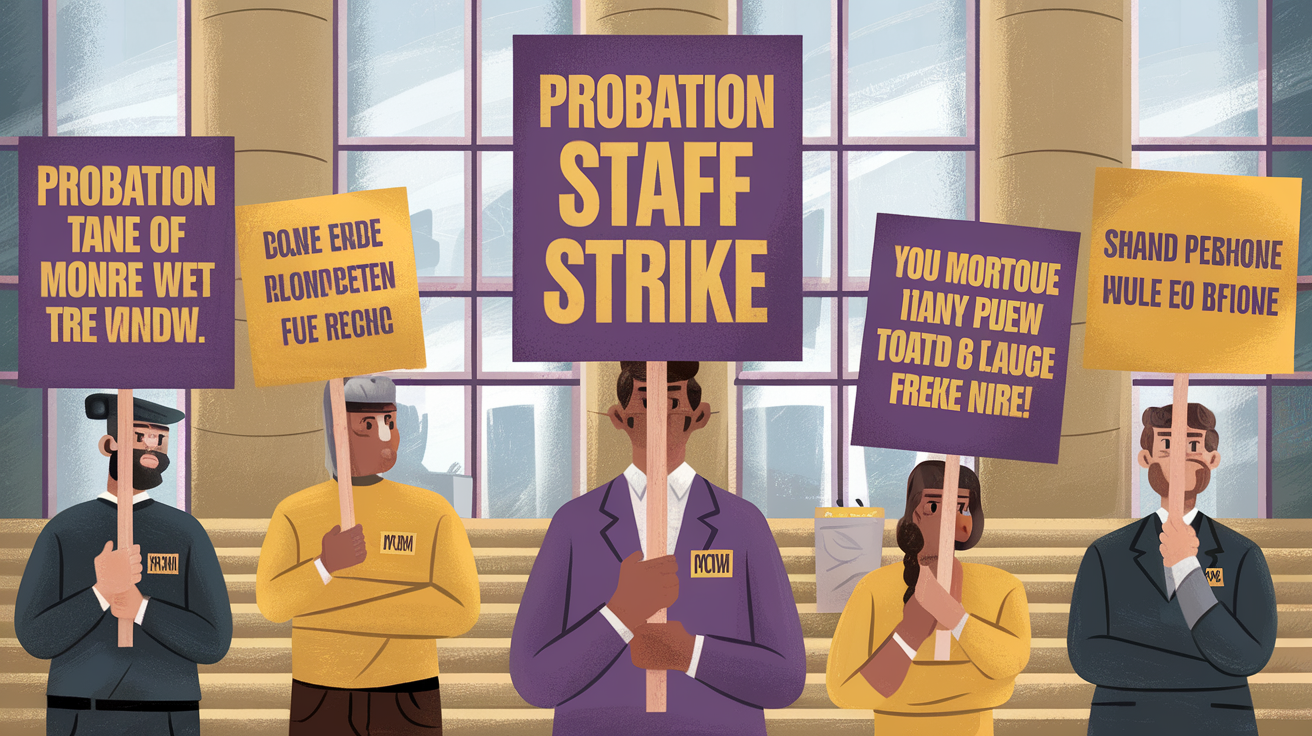
Header image: AI-generated illustration by WordUp News.
A probation staff strike moved closer on Friday after members of the Napo union voted decisively for industrial action over pay and workloads. Dates for any walkouts have not yet been set, but the union says preparations are under way.
Napo ran two separate ballots. On pay, 85 per cent of those voting backed action short of a strike and 74 per cent supported full strike action. On workloads, 87 per cent voted for action short of a strike and 75 per cent for strikes. The figures show support for strikes at roughly three in four among those who voted. The sources do not give a precise turnout figure, though the union described it as high.
What is driving the probation staff strike?
The immediate trigger is a pay offer of 5 per cent, which Napo calls “inadequate”. The union also says employers have not agreed solutions that would begin to ease workloads.
Behind that sits a longer grievance. Napo says probation salaries have “stagnated” since 2010. It says reception staff are paid barely above the minimum wage, which it describes as the lowest pay in the civil service. General secretary Ian Lawrence said the result “vindicates the campaign” for a rise that would make up lost ground against other staff employed within HMPPS, the Prison and Probation Service.
Workloads and the early release scheme
Pay is only half of the dispute. Napo describes workloads as being in a “chronic state”, with members working thousands of hours of unpaid overtime just to keep up. Lawrence said the vote reflects “serious anger” over the issue, and that pressure was already acute before the latest version of the government’s early prisoner release scheme. That scheme is intended to ease overcrowding in jails, but the union says it has added to staffing pressures.
Lawrence also argued that members have “tried desperately” to deliver what both the previous government and the current one have demanded. In his account, they have done so with inadequate staffing and too few community resources to offer rehabilitation as an alternative to reoffending. That framing casts the dispute as being about the capacity of the system to supervise offenders safely and effectively, as well as about wages.
What happens next
The ballot results give Napo a mandate for both walkouts and lower-level action, such as work-to-rule style measures, though the sources do not spell out what the latter would involve. The union has said it will schedule strike dates later, which leaves room for talks with employers before any disruption. Neither source reports a response from the government or HMPPS to the vote.
Headlines on the story also refer to family courts staff, but the detailed reporting available focuses on probation workers. It does not explain how family courts members are affected, so the scale of any disruption there is unclear.
For now, the vote is a clear signal of discontent in a workforce that sits at the heart of the justice system. Whether a probation staff strike goes ahead will depend on whether employers improve on the 5 per cent offer and agree measures to bring workloads under control.
Explore more on this topic with Vexel Search.
WordUp Morning
Ten stories, both sides of each, in five minutes. Free, every weekday at 7am, plus a Saturday weekend edition.
We'll email you a link to confirm. Unsubscribe any time.
Business & Hustles
UK economy growth hits 0.7% as AI boom lifts services, but energy costs threaten the run

Header image: AI-generated illustration by WordUp News.
UK economy growth accelerated to 0.7% in the three months to September, the strongest quarterly performance since the opening months of 2024, according to the Office for National Statistics (ONS). The figure beats the 0.5% recorded between April and June. It also arrives at a time when many forecasters expected the economy to be struggling under the weight of surging energy prices.
The headline number is a welcome surprise for the government, but the details matter. The expansion leaned heavily on one part of the economy, and economists are already warning that the momentum may not last through the winter.
What is driving the UK economy growth?
The ONS said the quarter’s strength came “almost entirely” from the services sector, which makes up the largest share of the economy. Services output rose 0.9% in the quarter, helped by activity in everything from hospitality to professional and financial services and healthcare.
The standout was computer programming and consultancy, which jumped 4.4%. Computer programming posted its fastest growth in three years and has been the biggest single contributor to growth in 2026 so far. ONS chief economist Grant Fitzner said there is continuing evidence that businesses linked to artificial intelligence are boosting the sector. The ONS also found that many of the firms reporting the largest turnover increases work in AI and cloud computing.
Sarah Coles of investment platform AJ Bell noted that much of the lift has come from less visible back-office work, with administrative and support services also growing strongly as AI use spreads. Manufacturing helped too, particularly output of computers and electronic goods. Not every sector shared in the gains, however. Construction extended its slump, with output down 0.7% in the quarter.
September itself offered a pleasant surprise. The economy grew 0.2% in the month, when some economists had predicted no growth at all.
Government claims credit, with caveats
Prime Minister Andy Burnham called the figures “welcome news” and said the economy was growing “despite a year where events around the world have pushed up costs here at home.” Chancellor John Healey described “remarkable resilience” and said the UK is growing at its fastest pace in almost a decade outside the pandemic. That is a different yardstick from the ONS comparison with early 2024, and it appears to refer to a longer-run measure.
Pressed on how much ministers can claim when an AI investment wave is the main driver, Healey said government can always “help or hinder” business confidence and investment. The latest numbers also put the UK on course to be the second fastest growing major G7 economy, according to the BBC.
The energy shadow over the outlook
The strong quarter came despite a punishing backdrop. Conflict in the Middle East, including Iran’s blockade of the Strait of Hormuz, and attacks on refineries in the Russia-Ukraine war have pushed up fuel costs. Inflation has risen to 3.5% this year, with petrol above £1.70 a litre and diesel nearing £2, according to HuffPost UK. Wholesale gas prices are reported to be 180% higher than a year ago. Last week the Bank of England raised interest rates by a quarter of a point to 4% to tackle price pressures.
Fitzner said growth might have been even stronger without the war in the Middle East. He also cautioned that households may not feel any better off, and that prices could soon rise faster than wages.
Others were more pointed about what comes next. Jake Finney, senior economist at PwC, said growth is likely to slow “unless energy markets stabilise,” with a sharp rise in energy bills forecast for January expected to hit spending and confidence. Matt Swannell of the EY Item Club said cooling pay growth and rising inflation would squeeze consumers and add pressure to consumer-facing services. Scott Gardner of JP Morgan Personal Investing pointed to nervousness ahead of the autumn Budget and Middle East uncertainty as likely drags on activity.
There is also a question over how durable the tech engine is. The BBC noted that investors have recently worried about slower AI development in the US and the long-term business models of AI firms, though companies have kept investing.
On the ground, the picture is mixed. Richard Benc, founder of mechanical watch maker Studio Underdog, which exports about 80% of its output, said sales have been more resilient than he forecast, especially from US customers, even as some UK buyers take longer to commit.
For now, the latest UK economy growth figures show an economy outperforming expectations, but one leaning on a narrow set of sectors while households brace for higher bills. Whether the third-quarter surge proves a turning point or a high-water mark may depend on energy markets and the Budget.
- UK economy grows at fastest rate for more than two years (BBC)
- UK economy grows at fastest quarterly rate in more than two years (standard.co.uk)
- How the UK economy grew at its fastest rate in two years (The Independent)
- Boost For Andy Burnham As UK Economy Grows At Fastest Rate For More Than 2 Years (huffingtonpost.co.uk)
Explore more on this topic with Vexel Search.
WordUp Morning
Ten stories, both sides of each, in five minutes. Free, every weekday at 7am, plus a Saturday weekend edition.
We'll email you a link to confirm. Unsubscribe any time.

Ivan Toney trial stays set for 12 June 2028, three days into Euro 2028

Firaxis layoffs hit 60 staff, a third of the studio, as head Heather Hazen exits

Peter Storey dies aged 81: Arsenal’s 501-game Double winner to be honoured against Dortmund


-

 Crime5 days ago
Eleanor Donaldson placed on sex offender register for five years, with three-year supervision order
-

 Tech & AI4 days ago
Nvidia CEO Search Reaches Arm: Board Reportedly Approached Rene Haas One Day After Jensen Huang Resigned
-

 Tech & AI7 days ago
Nvidia investigation: Wachtell hired to probe CEO Jensen Huang’s alleged spy link after $500bn share rout
-

 Crypto5 days ago
Binance Hack Seizure: DOJ Targets $1.2B of $6.3B Stolen as FaceStealer Scam Is Disrupted
-

 Crypto5 days ago
Sygnum’s ETH Alpha Fund Targets 8–10% in ETH, Versus 2–3% From Staking
-

 Crypto7 days ago
Tokenized Saudi SME Credit Now Open to Institutions as ZIG Finance Launches zEMS Vault
-

 Fashion6 days ago
Victoria Beckham Beauty Lands in the Middle East Nov. 20, Eyeing a Top-Five Market Spot
-

 Fashion5 days ago
Ode Parfums Bets €30 Million on Affordable Luxury, With Online Launch in January
-

 Entertainment6 days ago
Ariana Grande Red Carpet Debut With Ricky Álvarez Arrives a Decade After Their Split
-
 Crypto6 days ago
Gemini KAST Deal Sells Shuttered U.K. and EU Units for Under $10 Million
-

 Sports7 days ago
Bob Boone Dead at 78: Seven Gold Gloves and the Catch That Anchored Phillies’ First Title
-

 Tech & AI6 days ago
Nvidia CEO resignation drops chip giant below $4 trillion for first time since July 2025
-

 Crime6 days ago
Tim Westwood trial: 17 charges denied by ex-DJ ahead of seven-week hearing from 27 January
-

 Crypto7 days ago
Deutsche Bank’s Crypto Custody Service Is Live: 5 Assets, Europe First, Asia Slated for 2027
-

 Sports7 days ago
DeChambeau options shrink after LIV collapse, with a DP World Tour deadline looming next week
-

 Crime7 days ago
US soldier arrested near Gloucester on suspicion of helping Russian intelligence, as police search two sites
-
Tech & AI5 days ago
Senate Testimony Demanded From Huang and Lutnick on Dec. 3 as Nvidia Scandal Widens
-

 Sports7 days ago
Noskova Beats Gauff 6-3, 6-3 to Become First Into WTA Finals Semi-Finals
-

 Crypto6 days ago
New Crypto Crime Task Force Aims to Freeze Illicit USDT Before It Moves, Weeks After T3 Collapsed
-

 Fashion4 days ago
Florence Pugh’s Third Westwood Moment: Mourning Dress Meets Vivienne Westwood Pumps at East of Eden FYC Event
You must be logged in to post a comment Login