Connect with us

Tech & AI

The History of the Bloomberg Terminal

Published

on

Financial markets have always relied on timely information, and the drive for timeliness has always adapted to the latest technology. From clipper ships transiting the oceans to telegraph wires connecting cities to fiber-optic cables conducting trades in microseconds, traders have embraced any advantage to get the most up-to-date information. Indeed, the history of finance is really a story about how fast you can move information and who controls the interface.

It’s only natural that people also figured out a way to profit by supplying that market intel. In 1841, for example, the Mercantile Exchange (predecessor to Dun & Bradstreet) began selling proprietary business information to its U.S. clients. The following decade, Paul Julius Reuter began selling news services and stock price information. To supplement the company’s telegraph dispatches, he sent pigeons between Aachen, Germany, and Brussels; each bird carried a cylinder containing slips of paper with that day’s stock prices. In 1867, an inventor named Edward Calahan introduced the first telegraphic ticker-tape machine, which spooled out stock price information in near real time; Thomas Edison improved upon the design with his patented version in 1871.

The Dow Jones Industrial Average debuted in 1896 as an index of 12 key businesses listed on U.S. stock exchanges. It included gas, oil, coal, and electric companies, as well as enterprises dealing in leather, rubber, and tobacco. Messengers delivered quotes from the trading floor to brokerage offices, while stock tickers kept investors informed of prices. By the time New York City held its first official ticker-tape parade, in 1919, telegraphy in Western Europe and the United States had become the chief means for quick transmission of vital stock information.

Advertisement

In 1960, the first paperless financial service debuted, when Quotron introduced its electronic screens for displaying market quotes. Over the next two decades, other companies rolled out similar innovations for distributing financial news and data.

So when Michael Bloomberg decided to enter this well-established industry in 1981, the big question was: How would his new company stand out?

The Birth of the Bloomberg Terminal

Bloomberg had cofounded Innovative Market Systems (IMS) after being fired from the investment bank Salomon Brothers. Landing on his feet with his US $10 million equity payout and joined by former Salomon colleagues Thomas Secunda, Duncan MacMillan, and Charles Zegar, Bloomberg pursued his belief that Wall Street would pay a premium for specialized financial data. He’d earned an electrical engineering degree from Johns Hopkins University and an MBA from Harvard, and he’d built computerized financial systems for Salomon. IMS focused on developing a computer terminal that not only provided up-to-date information but could also do instant quantitative analysis based on historical data.

Color photo of a white man in a business suit posing in front of a computer with office workers in the background. Michael Bloomberg believed Wall Street would pay a premium for access to specialized financial data. Karjean Levine/Getty Images

At the time, most financial data still circulated through telephone calls, printed price sheets, and specialist publications, and analysis involved a fair amount of gut instinct guided by human expertise. Companies such as Reuters and Dow Jones provided subscription-based services for access to business news. But traders still had to assemble information from multiple sources and perform their own calculations and analysis.

Advertisement

IMS proposed an integrated system with a single interface. Its Market Master terminal consisted of a monochrome CRT monitor, a custom keyboard, and a communications/controller unit that connected to the company’s private network. At launch, it provided only U.S. government bond prices and bond-calculation tools, but the dream was much bigger: a dedicated terminal that would sit on a trader’s desk and run different market scenarios, produce yield curves, and support investment calculations.

IMS initially had just one client, Merrill Lynch, which invested $30 million (about $110 million today) in exchange for a 30 percent stake in the company and exclusive rights to the terminals for five years; Merrill waived that right in 1984. The first 22 Market Master terminals were delivered to Merrill in 1982, in the middle of a global recession. The timing was fortuitous. Worldwide, stock markets were transitioning to electronic trading, and the U.S. Federal Reserve was allowing more freely floating interest rates. Bond prices were more volatile, and investors were eager to figure out how to value them accurately. Bloomberg’s specialized financial terminals provided the data and the analytical tools to process and comprehend those sweeping changes.

Five years after its launch, IMS rebranded as Bloomberg LP and expanded its clientele, and the Market Master became known as the Bloomberg Terminal.

How Did the Bloomberg Terminal Work?

The Bloomberg Terminal’s keyboard was designed with traders and analysts in mind. The function keys were color-coded and given labels specifying their usage, so that users didn’t have to remember. The original keyboard, affectionately referred to as “the Chiclet,” was hand assembled. A cable ran from the keyboard to the Bloomberg Controller, which had a dedicated phone line to connect to a local hub. The internet wasn’t commercially available yet, so the company basically built its own closed network, with centralized computers that maintained large databases and performed most of the calculations. Commands entered on the keyboard sent a request to the hub, which processed the information and sent back the result.

Advertisement

Color photo of a computer keyboard with mostly black keys and some red, yellow, and green keys and with the logo Bloomberg. The Chiclet keyboard for the Bloomberg Terminal was introduced around 1983. Although it looks like a generic keyboard, its function keys were finance-specific hot keys.National Museum of American History/Smithsonian Institution

Hot keys let traders easily call up data on government securities, corporate debt, and currency markets, among other things. A series of keystrokes would pull up other historical and real-time data, run an analysis, or place a trade. Learning how to use the terminal and digest the vast amount of information, which was presented mostly in tabular form, became a rite of passage for users.

In 1990, Bloomberg added a trackball to the keyboard, which helped the user navigate the multiple windows and menus typically displayed on screen. Two years later, the keyboard gained a built-in speaker, to support multimedia information; this design also included telephone, headphone, and microphone jacks. One of the most popular features was Instant Bloomberg, which allowed users to chat directly with fellow Bloomberg Terminal users over the proprietary network. By 1996, Bloomberg had keyboards that supported 23 different languages. In the early 2000s, the company began incorporating biometric authentication for terminal login, via a fingerprint reader on the keyboard.

As the company’s business model evolved, the Bloomberg Terminal added services well beyond its initial offerings. In 1990, for example, worried that Dow Jones would stop providing access to its news stories, Bloomberg set up its own news service. It recruited Wall Street Journal reporter Matthew Winkler to oversee a dozen reporters; their stories on market and securities movements used graphs and calculations that served as advertisements for the terminal’s capabilities. These days, the Bloomberg news empire includes Bloomberg Businessweek, Bloomberg Radio, and Bloomberg Television.

Bloomberg’s subscription-based financial model included the leasing of a Bloomberg Terminal with its specialized keyboard and other hardware, access to a dedicated private network, and a suite of services. In 1999, a subscription to a single Bloomberg Terminal cost $1,600 per month with a minimum two-year contract and a discount on each additional terminal. Today the annual price is upwards of $32,000 (trending a little below inflation). In 1995, the company launched a suite of “Open Bloomberg” software products that ran on the customer’s own PC; five years later, it stopped leasing dedicated terminals. Current customers also have access to mobile applications that allow terminal functions to run on phones and tablets. Today, “Bloomberg Terminal” has come to refer to the integrated data, analytics, news, communications, and trading environment.

Advertisement

The Legacy of the Bloomberg Terminal

Although the shift away from dedicated terminals was a logical response to the rise of the internet and publicly available market data, it altered the material culture of financial work. For nearly two decades, Bloomberg Terminals commanded an aura of power and financial prowess. They were emblems of market mastery, with a brand that was distinct from other office computers. With Open Bloomberg, users were no longer tied to a single desk or a fixed set of monitors.

And so, cast-off Bloomberg Terminals found their way into museum collections. They’re a physical embodiment of the ethereal nature of financial markets, and a manifestation of mathematical calculations, network infrastructure, and business culture.

Color photo of a gray computer keyboard with different color keys and the logo Bloomberg. The Bloomberg keyboard used by “Bond King” Bill Gross has his login and password taped on the front.National Museum of American History/Smithsonian Institution

The Smithsonian Institution’s National Museum of American History has a number of Bloomberg keyboards in its collection, but my favorite is object number 2014.0012.02, which was used by “Bond King” Bill Gross during the 1990s and 2000s at Pacific Investment Management. Gross had cofounded PIMCO in 1971 and built it into a $2 trillion bond investment firm. I especially love that Gross taped his login and password directly on his keyboard, which makes the object more relatable. I may never know what it’s like to manage billions in assets from a Bloomberg Terminal, but I absolutely understand the trial of remembering my passwords.

Part of a continuing series looking at historical artifacts that embrace the boundless potential of technology.

Advertisement

An abridged version of this article appears in the October 2026 print issue as “The Keyboard That Moved Markets.”

From Your Site Articles

Related Articles Around the Web

Source link

Advertisement
Continue Reading
Click to comment

You must be logged in to post a comment Login

Leave a Reply

Tech & AI

Ryan Roslansky Is Leaving After Nearly 18 Years At LinkedIn and Microsoft

Published

on

Ryan Roslansky is leaving Microsoft and LinkedIn after nearly 18 years, triggering another leadership shuffle across Office and Teams. “Roslansky, who until recently was the CEO of LinkedIn, was promoted to the head of Office last year and then took control of Microsoft Teams earlier this year,” notes The Verge. From the report: “Ryan leaves the organization in a strong position,” says Microsoft CEO Satya Nadella in an internal memo. “Over the past year, Ryan’s team has done critical work bringing together the product, engineering, and design foundations that have made this next phase possible.”

Roslansky is leaving a week after Microsoft announced its new Copilot, which the company is positioning as “the OS for work.” He’s also leaving around a month after calling fully AI-generated documents “a doom loop” for workers. “If we’re not careful, we’ll end up with a very expensive way to avoid writing and reading in an ocean of sameness, genericness,” said Roslansky in his LinkedIn post.

Microsoft is now moving the teams behind Office and Microsoft Teams over to Charles Lamanna, as part of the Copilot, Agents, and Platform (CAP) organization. […] Microsoft’s chief design officer, Jon Friedman, is also moving to report to Copilot chief Jacob Andreou. Microsoft appointed Dan Shapero as its LinkedIn CEO earlier this year, and he will continue in this role and report directly to Nadella.

Read more of this story at Slashdot.

Advertisement

Source link

Continue Reading

Tech & AI

Cops Can Bypass iPhone's Automatic Reboot To Get Into Locked Phones

Published

on

An anonymous reader quotes a report from 404 Media: A company that makes phone hacking devices claims to have developed a solution that freezes iPhones in a state that lets cops more easily access sensitive data inside them, according to a video obtained by 404 Media. […] The new technology to get around inactivity reboot was developed by Magnet Forensics, the company behind GrayKey, a popular tool sold to law enforcement agencies that allows them to unlock and access data stored in iPhones and Android smartphones. Magnet has developed a new device called GrayKey Preserve and a feature for its regular GrayKey devices called Evidence Preservation Mode, according to the video.

“This is an absolute game changer for iOS forensics and a function that I wish we had years ago,” a Magnet employee says in the leaked video, specifically mentioning that the solution is targeted at the iPhone’s inactivity reboot feature and the data it makes unavailable. GrayKey Preserve and Evidence Preservation Mode are also designed to combat another iPhone feature that automatically deletes certain data — such as cached locations, and recently deleted photos and iMessages — after a certain number of days. “We’re gonna be able to preserve that data for an infinite amount of time.”

[…] 404 Media shared a transcript of the video with Jiska Classen, a researcher at the Hasso Plattner Institute who studies iPhone security. While Classen said that it’s impossible to know for sure how Magnet’s new feature works based on the video, she posited some theories and agreed that it is “quite a game changer” or “at least puts things back to where they were before inactivity reboot.” She thinks Magnet has found a way to manipulate the iPhone’s clock, effectively “slowing down time” or even “stopping the clock from ticking, even after a reboot.” Most likely, according to her, the GrayKey may disable the iPhone tasks that set data to expire. The “inactivity reboot” feature mentioned above was added to iOS in November 2024 and automatically restarts iPhones that have not been unlocked for 72 hours, making them harder for police to access using forensic tools.

Read more of this story at Slashdot.

Advertisement

Source link

Continue Reading

Tech & AI

Boston Dynamics Builds Atlas Hands That Can Hold a Drill and a Mini Fridge

Published

on

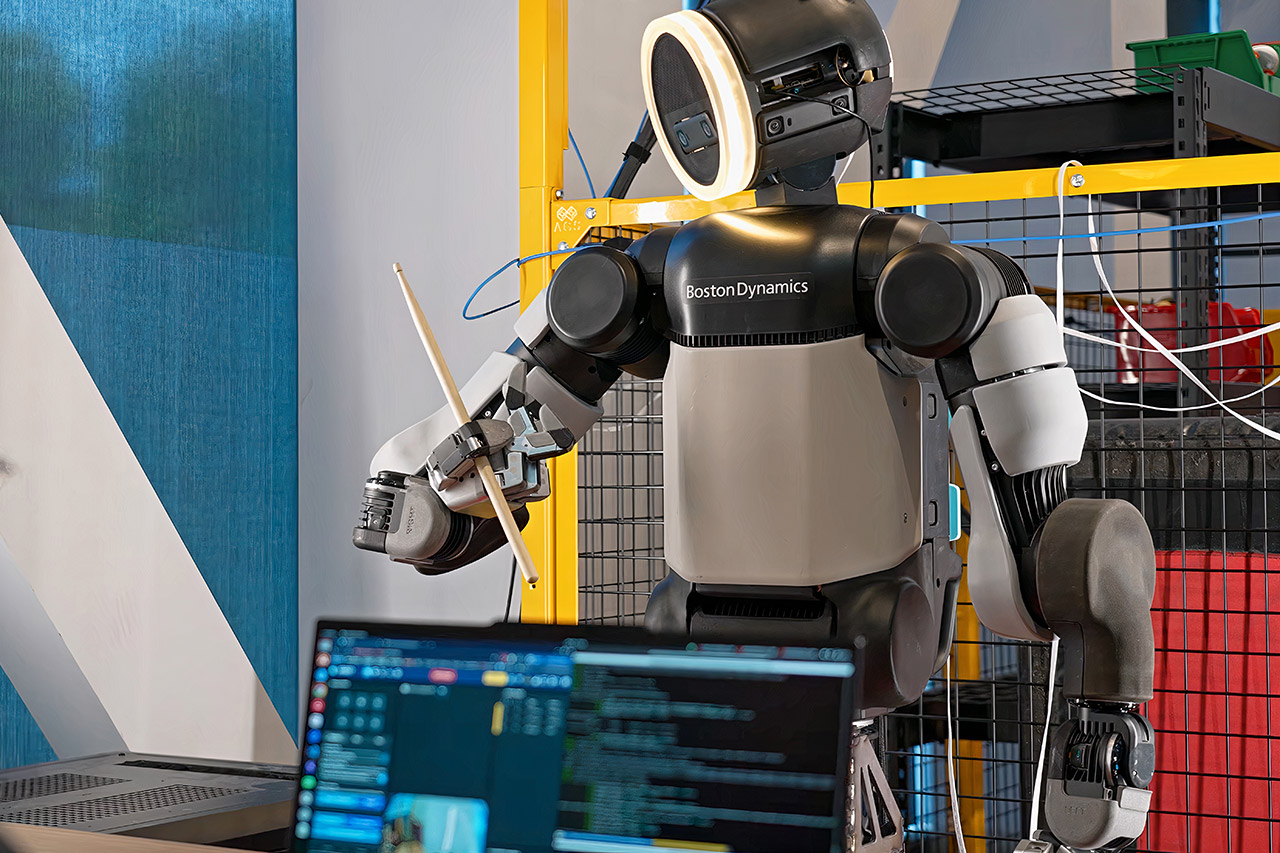
Boston Dynamics New Hands Atlas Humanoid Robot
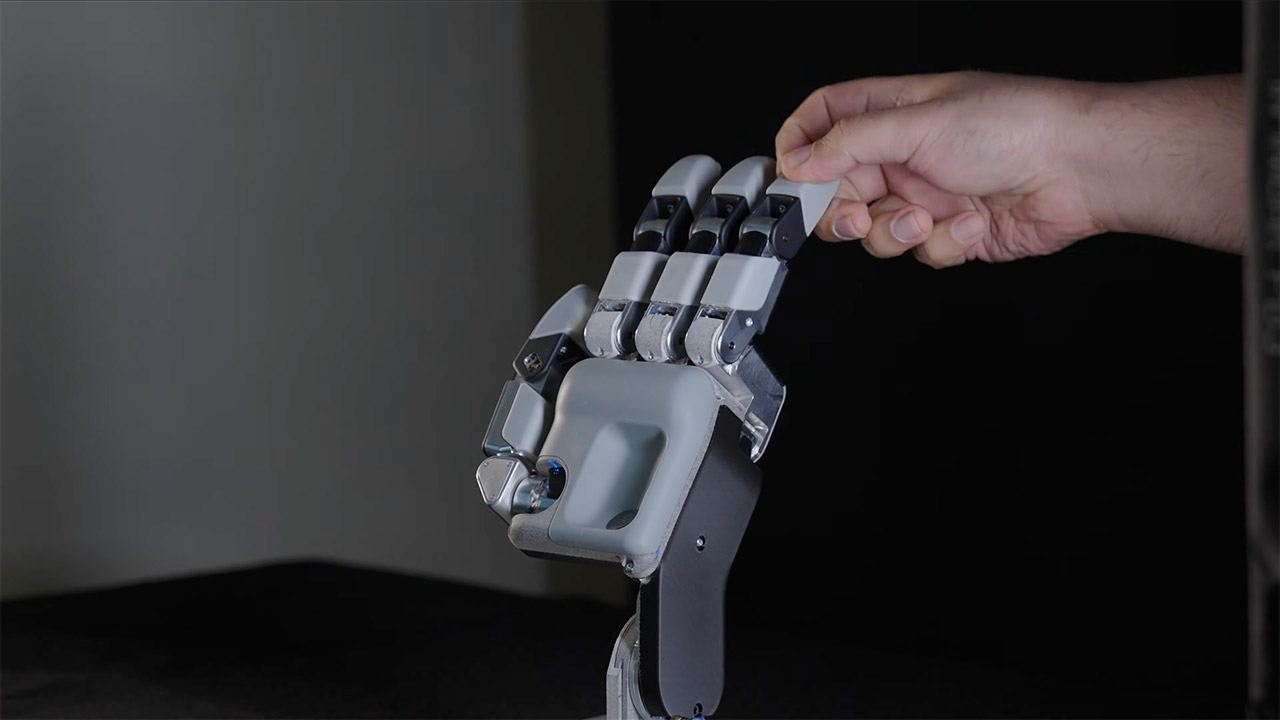
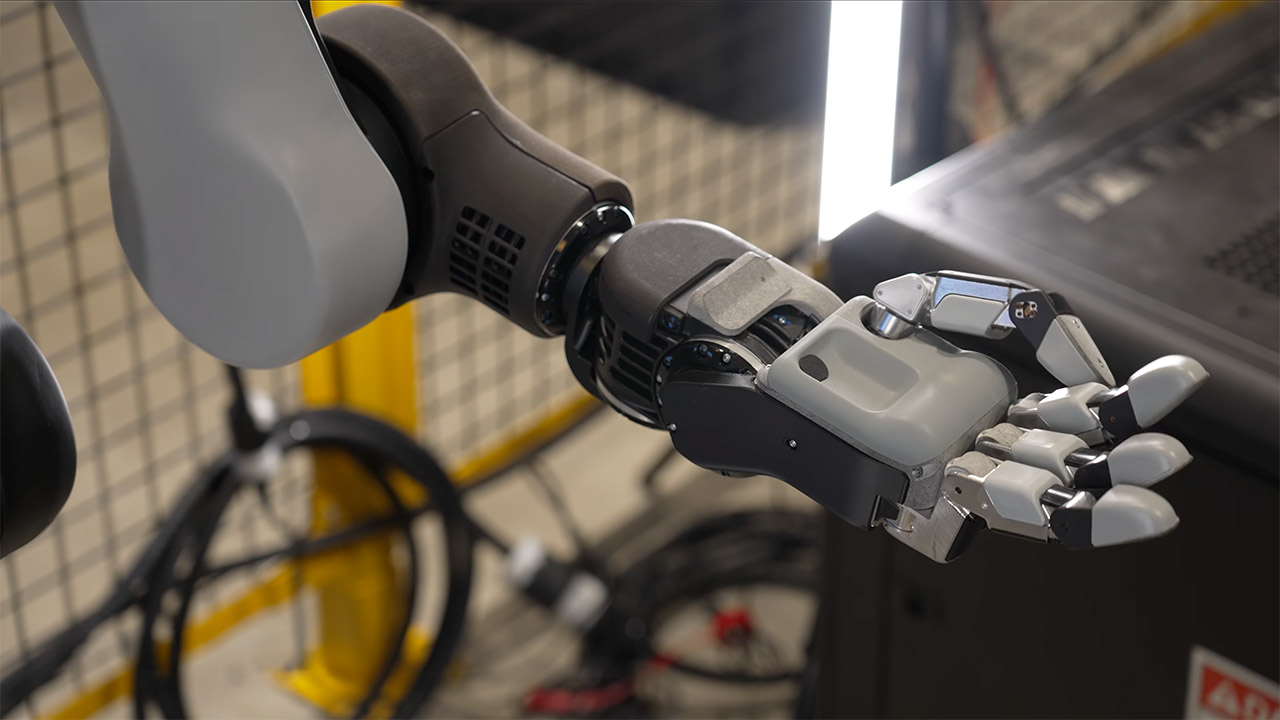
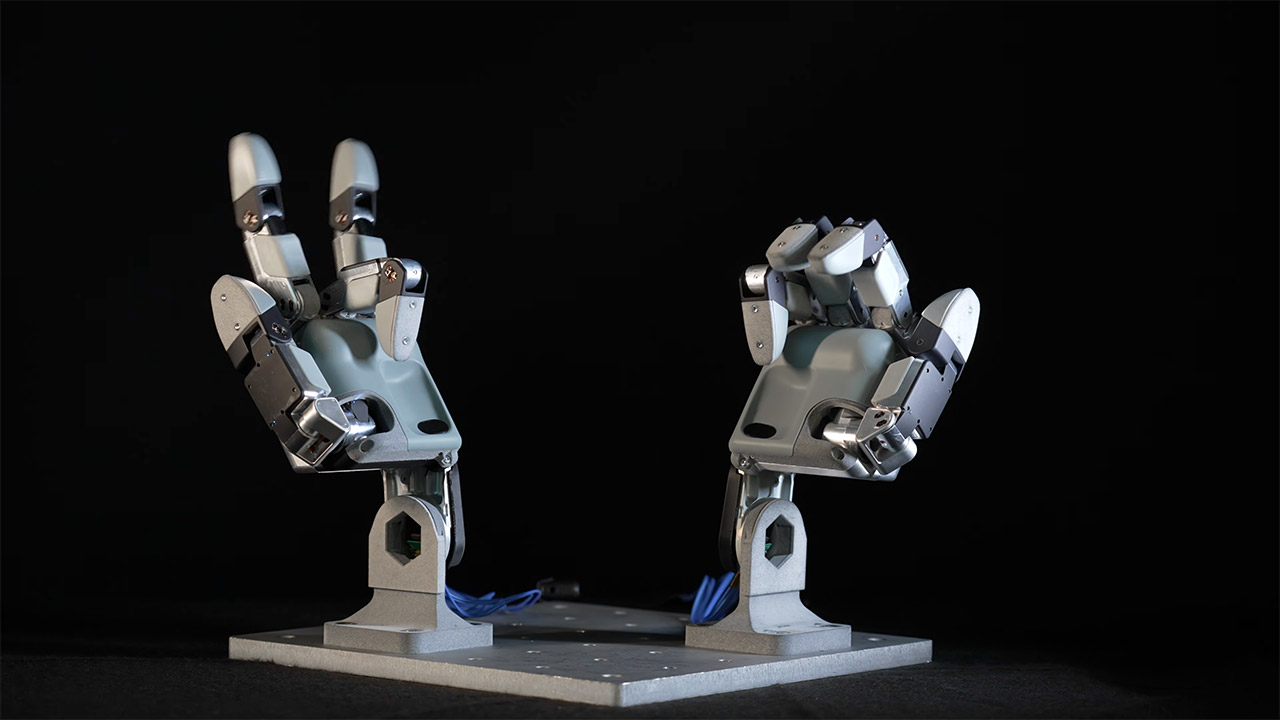
Boston Dynamics spent this morning showing Atlas a new pair of hands, and the first thing that stands out is a missing digit. There is no pinky. Four fingers sit on a palm a little larger than an average human hand, and the assembly is a little stronger than the gripper it replaces. Engineers reached that count with a blunt test: they taped a pinky to a ring finger and spent a day trying to work. The missing finger never blocked the jobs they cared about. Chief technology officer Zack Jackowski put the lesson in plain shop language. The best part is no part.


Older Atlas grippers, called GR2, had only seven degrees of freedom and were primarily meant to close around an object. The transition to newer models, such as the GR3, takes a significant leap to 13. Add in a thumb with four joints that can meet any other finger, as well as three joints on each of the other fingers that allow them to spread out and aim with precision. Every joint is powered by the same type of motor, which is snugly tucked inside the finger, eliminating the possibility of frayed external wires as the hand moved. This allows the hand to read the force of touch directly through the motors. The thick touch sensors on the fingertips and palm can detect even the smallest of touches that the motors may not be sensitive to.

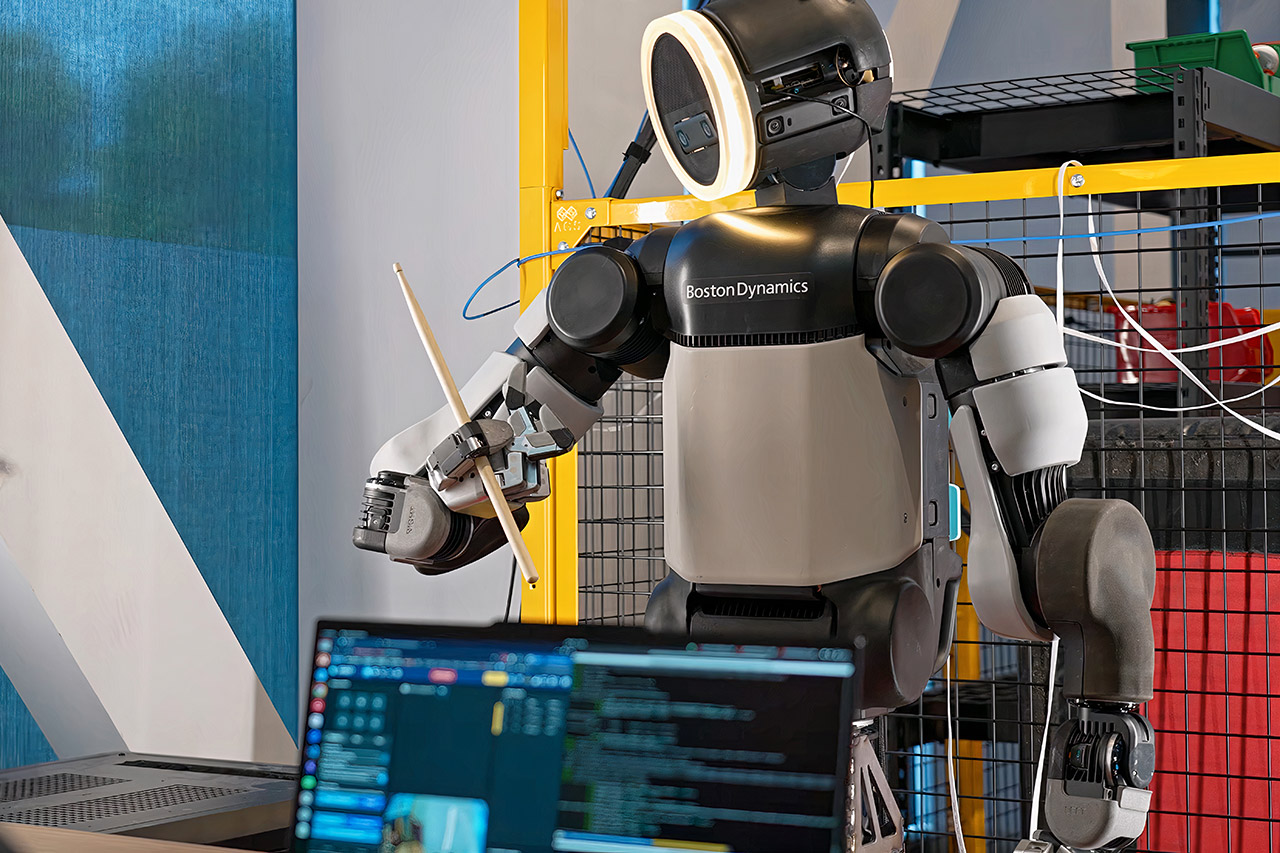
Boston Dynamics New Hands Atlas Humanoid Robot
Clips from the latest video demonstrate how beneficial all of those extra joints are. A thumb can slide along another finger’s length or width when gripping a small object. Gripping with the thumb and any of the digits is also an option, and a 3-point grasp can be used to hold a tool steady while yet allowing you to move it about. Atlas has already demonstrated excellent performance by pressing triggers on drills, torque drivers, grinders, nail guns, and welding torches. If a grasp begins to slip, the fingers can recover without dropping the object being held. Atlas has a payload rating of over 100 pounds, and we’ve seen Boston Dynamics use the robot to walk with a loaded small fridge on its back, so these hands better be up to the task.

Boston Dynamics New Hands Atlas Humanoid Robot
Alberto Rodriguez, who leads Boston’s robot behavior team, insists that hand design is all about giving up one thing to acquire another. Of course, this implies that strength, durability, affordability, repairability, and sensing are all competing for the same limited amount of space. Many other businesses are attempting to produce something that closely resembles a human hand, including tendons flowing through soft fingers. Those hands can look quite convincing in a movie, but they’re also fragile, prone to straining or cracking, and expensive to construct in large quantities. Atlas is willing to give up the cosmetic appearance in order to achieve something that functions.

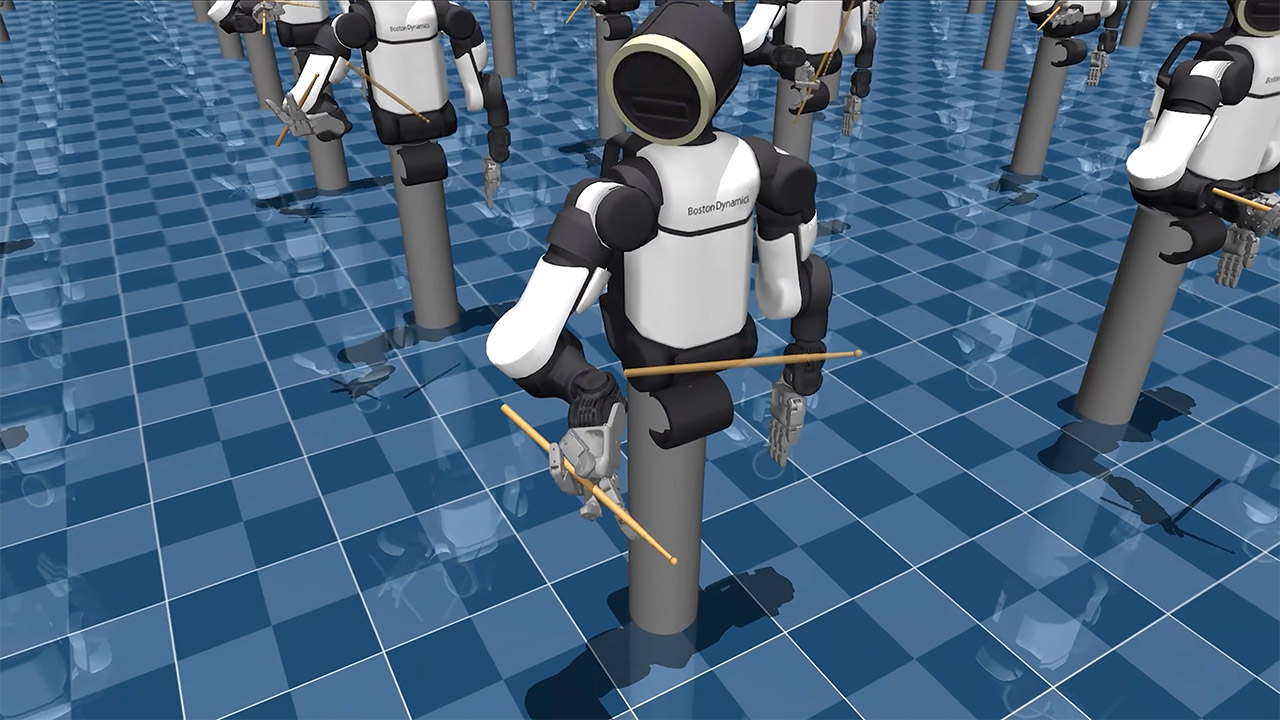
Boston Dynamics New Hands Atlas Humanoid Robot
Rodriguez claims that the hand design is not horrible, but it does mean that the fingers can travel farther than a human hand would ever allow. Even so, he believes that by practicing in simulation, we can discover new ways to use those extra motions, and that because the hand is near enough in size to a human hand, we can still learn a lot from watching a human perform a task, even if it’s just the general outline of what has to happen.

Boston Dynamics New Hands Atlas Humanoid Robot
The other part of the issue is getting the simulation correct. The motors are simple enough that we can replicate them fairly realistically, and training sessions can alter a variety of factors like as torque, friction, item form, and how something would drop on your palm. That way, when we come to the actual thing, we can be confident that the hand will continue to perform as planned. On the other hand, the motors’ quick readings provide the majority of the feedback we require, with the pads detecting even the tiniest touches. Swapping out a failing motor is as straightforward as swapping out an entire unit, so we can keep the hand going even if one of its components fails.

Source link

Advertisement
Continue Reading

Tech & AI

EXCLUSIVE: How Mike Flanagan’s Carrie revitalizes Stephen King’s classic story for Prime Video

Published

on

After adapting Stephen King stories like Gerald’s Game, Doctor Sleep, and The Life of Chuck, horror filmmaker Mike Flanagan has taken on the author’s breakout novel in Prime Video’s Carrie series. Many people are already familiar with the story: a shy teenager with telekinetic powers faces vicious bullying from her peers until she unleashes psychic vengeance on Prom Night.

While Carrie has been adapted into multiple feature films, most notably by Brian De Palma in the ’70s, Flanagan expands the original novel into an eight-episode Prime Video miniseries set in the present day. At this point, one may wonder why another Carrie adaptation is needed. But with its layered story, realistic characters, and timely depiction of school bullying, Flanagan’s Carrie delivers one of the best Stephen King adaptations ever.

Carrie expands King’s story and characters

Fans already know Carrie White as a girl brought up by her abusive, fanatical mother. However, Flanagan’s series builds upon that as we follow Carrie from childhood to adolescence with a new story. In the show, Carrie, played by Summer H. Howell, had never left her house and was homeschooled by her paranoid, conspiracy-based parents. On her first day of public school, she enters a whole new world, having never used a smartphone or even a computer. Because Carrie has grown up scared of the outside world, her journey to high school becomes even more terrifying for her and the audience.

The series doesn’t just change Carrie. This eight-episode story spends much of its time exploring the lives and struggles of Carrie’s mother, her classmates, and the adults who knew her in the town of Chamberlain. Even villains like Margaret White (Samantha Sloyan) and Chris Hargensen (Alison Thornton) evoke more sympathy because of their nuanced characters and troubled backgrounds. We then see how the two of them became abusive, mean-spirited people, showing how bullying can begin not at school, but at home.

Overall, the town of Chamberlain feels more like a character that changes throughout the series. The scope and depth of the story only heighten Chamberlain’s tragedy when Carrie destroys the town and kills many of its residents.

Advertisement

Flanagan delivers a fresh, faithful interpretation of Carrie

From Oculus to The Haunting of Hill House to The Fall of the House of Usher, Mike Flanagan has often told his horror stories in a nonlinear perspective, playing with audiences’ perception of time and reality. While this makes for unconventional retellings of classic stories, it fits perfectly with Carrie. King’s novel actually presents its narrative through in-universe books, news stories, and investigative reports about Carrie and her rampage on Prom Night, featuring testimonies from students, teachers, and locals who knew her.

As a result, Flanagan’s series tells the story much like a true-crime docuseries, with Kate Siegel’s character interviewing Prom Night survivors and exploring psychic phenomena throughout human history. It actually feels like we’re learning things about the story that weren’t covered before in previous adaptations. Since general audiences have seen multiple Carrie films told the same way, Flanagan’s series stands out with a more distinctive approach.

The series explores adolescence, bullying, and violence in the digital age

By setting King’s narrative in the present day, Flanagan’s Carrie expands on the source material by tackling issues affecting modern American youth. The show addresses problems like cyberbullying on social media, with Carrie becoming the center of a vicious meme account attacking everyone at her school. Sparking debates about misinformation and freedom of speech, this new storyline unleashes a firestorm of controversy that nearly destroys Chamberlain even before Prom Night.

Carrie also acts as a parable for mass shootings in schools, which have become more common in the decades since King published his novel. This can make Carrie’s psychic rampage at her school hit much closer to home with audiences. However, that makes King’s story as relevant today as it was 50 years ago.

Carrie ultimately shows how schools have become much more dangerous in modern America. At the same time, the show conveys how adults have failed the younger generation by mishandling parenting and education, making Chamberlain’s destruction seem even more inevitable.

Overall, Flanagan’s adaptation of Carrie makes some drastic changes to King’s original narrative. This can throw off fans of the latter, but the series justifies its existence by delivering a unique reimagining that tackles issues affecting modern schools. Though the story leaves the door open for another season, it preserves the horror and tragedy that made King’s story a groundbreaking classic.

Advertisement

Mike Flanagan’s Carrie premieres on Prime Video on October 7.

Source link

Advertisement
Continue Reading

Tech & AI

Electricity Theft Is Rampant, but Delhi Found a Fix

Published

on

It’s disheartening how much power gets generated and then promptly lost as it travels through grid networks. This leaking of electricity happens when it vanishes as heat as well as when it is pilfered by thieves and nonpaying customers.

More than half of the countries that track these metrics lost at least 10 percent of their electricity in 2023, according to the World Bank. Losses topped 20 percent for 24 of those nations. Two countries lost more than half of what they generated.

With numbers this high, cutting down on losses makes sense. Electricity demand is rising beyond what many grid operators can supply; reducing waste would help meet some of that demand without having to build new power plants. Plus, when the power comes from fossil fuels, any loss means emitting even more greenhouse gases into the atmosphere. And electric losses hit the bottom lines of power providers, which ultimately pass those costs on to everyone else.

The trouble is, reducing electricity losses is a hard and expensive process that takes a long time. Typically, the less maintained the grid infrastructure, the more electricity that’s lost. And the more fragile the region’s law enforcement and government, the more prevalent the power theft. Natural disasters and war make things worse.

Advertisement

Fixing a power grid requires a systemic approach across many sectors. There’s no one technology that will solve the problem. At the outset, the obstacles to success may feel insurmountable. Equipment across entire grid networks must be updated. Multiple arms of government must agree to reforms and coordinate to ensure power providers are set up to succeed. Regulations must be written or revised, investments made, cultures changed.

The city of Delhi did all those things. Over the past 25 years, it cut its electricity losses from about 50 to 5 percent. How the city pulled off that impressive feat is the focus of “The Epic Comeback of Delhi’s Power Grid” by Mini Shaji Thomas, an electrical engineer at the university Jamia Millia Islamia who has lived in Delhi since the 1990s. She gives us a view from the inside—as a resident and a power systems expert.

Delhi is a shining example, but some other regions have significantly lowered electricity losses over the last quarter century too. The country of Georgia went from losses of over 16 percent in 2002 to about 8 percent in 2023. In Singapore, losses dropped from 6.6 percent to a nearly nonexistent 0.2 percent over the same time period.

Global Electricity Theft Crisis

But there are many parts of the world where electricity losses remain a problem or have gotten worse. In Jamaica, where power theft is rampant, losses have hovered between 21 and 28 percent for years. Argentina’s losses nearly doubled between 2015 and 2023, going from an all-time low of about 12 percent to an all-time high of nearly 24 percent. The main problem: Transmission and distribution companies lacked the capital to maintain and upgrade their networks, which left equipment operating under stress. A delay in the installation of smart meters has allowed thieves to more easily siphon power and tamper with meters.

Advertisement

Thomas says she hopes her account of Delhi’s grid comeback will serve as a blueprint for others. It’s possible to replicate the sweeping changes Delhi made, she says. But it “requires a concerted effort from all stakeholders, customers, the utility, the government, and their employees.”

From Your Site Articles

Related Articles Around the Web

Source link

Advertisement
Continue Reading

Tech & AI

The Rise of the AI Tamagotchi: Why Big Tech Wants You to Fall for a Digital Pet Before Selling You Hardware

Published

on

Silicon Valley has a new obsession, and it looks suspiciously like the pixelated pets that dominated schoolyards in the late 1990s. OpenAI and Meta, two of the most powerful players in the artificial intelligence race, are both betting that the road to mainstream AI hardware runs through cuteness — cartoonish, blob-like companions designed to live on your screen before they ever live in your pocket.

The strategy marks a notable shift in how tech giants are approaching one of the industry’s most stubborn problems: nobody seems to actually want dedicated AI gadgets. Despite years of hype, devices like the Humane AI Pin and the wearable Friend pendant have become cautionary tales rather than success stories, generating more backlash and ridicule than genuine consumer enthusiasm. The “hardware is hard” mantra has never felt more true.

Yet OpenAI and Meta appear undeterred, and they seem to be converging on the same workaround: soften the market with adorable, personality-driven software agents first, then follow up with physical devices once people are already attached.

Advertisement

At OpenAI’s DevDay event, CEO Sam Altman unveiled Dots, a new AI agent platform populated by customizable, googly-eyed colored blobs. The characters have an unmistakably toy-like charm, and when pressed by reporters on whether Dots might eventually be baked into a piece of hardware, Altman didn’t deny it. He called the idea “a very reasonable thing to assume we may do someday,” while keeping specifics close to the chest. OpenAI is already reportedly collaborating with legendary former Apple designer Jony Ive on a hardware project, though public filings suggest that device won’t ship until at least February 2027.

Meta is moving faster and being far more explicit about the connection between its software mascot and upcoming hardware. The company’s Muse AI agent — a cuddly, expressive character — is set to be paired with a small wearable called the Muse Charm, which CEO Mark Zuckerberg has likened to a keychain accessory. Onstage, Zuckerberg described it as carrying “a lot of technology” into a small package, positioning it as the fastest way to interact with Muse for anyone not wearing smart glasses. Unlike OpenAI’s more cautious timeline, Meta is reportedly aiming to get the Charm into shoppers’ hands before this year’s holiday season.

The underlying logic is straightforward. Rather than asking consumers to spend hundreds of dollars on an unfamiliar gadget with an unproven use case — the mistake that doomed earlier entrants — both companies want to first build emotional familiarity with an AI persona that lives for free (or nearly free) on a phone or computer. If people come to rely on, and even feel affection for, their digital companion, the argument goes, they’ll be primed to pay for a physical extension of that relationship. It’s a strategy that leans as much on psychology and emotional attachment as it does on raw technical capability.

It also represents an implicit acknowledgment that earlier AI hardware failed not because the underlying technology was necessarily broken, but because the products were introduced without first proving to skeptical consumers that the AI itself was worth carrying around. Friend, the companion-style pendant that drew widespread mockery for its ad campaign, tried something similar by leading with personality — but without the backing of a tech giant’s ecosystem, trust, or marketing muscle, it struggled to break through.

Advertisement

Whether OpenAI and Meta can succeed where smaller startups failed remains an open question. Public sentiment around AI has grown increasingly fraught, with concerns over data privacy, job displacement, and the sheer ubiquity of AI-generated content souring some consumers on the technology altogether. Strapping a smiling cartoon face onto that anxiety may or may not be enough to change hearts and minds — or wallets.

Still, the parallel bets from two of the industry’s biggest spenders suggest a shared conviction: that the next wave of AI adoption won’t be won purely on specs or capability, but on whether people can be coaxed into caring about a digital creature enough to want it — literally — by their side.

Sources:
Continue Reading

Tech & AI

Photon held a funeral for mobile apps. Now it has $4.5M to help replace them with agents

Published

on

The AI startup Photon is so sure that agents will eventually come to replace mobile apps that it held a funeral for the latter — yes, a real funeral in a church, with speeches and everything. Photon, which helps developers build agents that work over iMessage and WhatsApp, now has $4.5 million in seed funding to develop its products. The raise comes after the company signed up over 40,000 developers grew its revenue 10x in just four months, it says.

Image Credits:Photon

Photon co-founder and CEO Daniel Tian said the “app funeral,” held in San Francisco on September 17, was also a developer day for the startup, featuring panels from Vercel, Stripe, and OpenAI. It also included an actual coffin for app icons.

The move to host an app funeral was obviously somewhat tongue-in-cheek, but Tian believes the app era is coming to an end. “Honestly, it’s going to take a while, but I think, directionally, it’s inevitable,” he said of the shift from apps to agents.

Image Credits:Photon

The thesis behind the startup, as you may have guessed, is that users no longer want to install new apps. Instead, they want access to agents that work through the messaging apps they already use, like iMessage and WhatsApp.

Meta’s Muse, whose app has soared to No. 1 on the app stores, is putting that theory to the test. But even if Muse comes to dominate the consumer AI space, Tian sees a market for serving developers who want their applications to work over messaging services. That’s why Photon is offering a package of tools, including a unified API, an extensible channel framework, a command-line interface (CLI), and an observability suite. Combined, they allow developers to build and operate an agent experience that works over iMessage, WhatsApp, Telegram, SMS or RCS, email, voice, and more.

The idea for Photon emerged from the time co-founders Tian and Ryan Zhu, the CTO, spent building consumer apps as students, often at hackathons. Every time they finished a new app, they hit the same bottleneck: getting people to discover it. By building an agent that worked within iMessage, they realized they could reach people through an app those people already use every day: Apple’s Messages.

Advertisement
Image Credits:Photon

Tian, for instance, had built a bot that would text his friends back as him over iMessage. When he and Zhu made the technology open source on GitHub, thousands of developers adopted it. So they went all in. Tian dropped out of UPenn’s M&T program, and Zhu left high school, later becoming a visiting student at MIT’s Media Lab.

Today, the open-source version of Photon still accounts for 98% of its use.

This April, the founders decided to create a managed platform and sell access to it via subscription tiers. This hosted version of the product offers 99.95% uptime, which is much higher than what you’d get if you were just running the open-source version on your local Mac for a hobby project. It’s also SOC 2 Type II and HIPAA-compliant, which opens the door to healthcare agent use cases.

Image Credits:Photon

To date, the startup’s platform has attracted over 40,000 developer sign-ups and now includes paying clients. (Any usage beyond 10 users requires moving out of the free tier to one of the three paid tiers, we’re told.) The company isn’t sharing revenue figures but said that, in addition to the 10x revenue growth, it’s seeing less than 3% churn, and its messaging volume has grown by 5x in the last month alone.

Customers using Photon include Corgi Insurance; social introductions app Boardy; Gen Z dating platform Ditto; business banking platform Rho; finance AI assistant Fliptexts; AI email client Slashy; and others building agents for fintech, consumer AI, and other vertical use cases.

Photon’s technology integration partners also include companies such as like Vercel (Eve and ChatSDK) and Nous Research, whose Hermes agent uses Photon as its default iMessage layer. Photon is also the layer under Tencent’s QClaw and NanoClaw. Plus, Photon has seen framework and infra integrations across LangChain, Mastra, Convex, Render, Railway, and Telnyx, among others.

Advertisement
Image Credits:Photon

Vercel is also one of Photon’s new backers. The startup’s seed round was co-led by Gradient and A* with participation from Vercel, HongShan, Z Fellows, Llama Ventures, Karman, and other angel investors.

Across both the hosted and open-source versions, the technology reaches millions of end users, Tian estimated.

While today, Photon focuses on agents connecting with humans, Tian believes there’s potential to grow into an expanding market that involves connecting agents to other agents.

“I think, in the future, agents will be able to find you the agent that can do the right things — so it’s going to be the A-to-A communication layer,” Tian said. For instance, if a person was chatting with their AI assistant making travel plans, the agent could pull in other agents when needed, like a flight-booking agent or hotel-booking agent. “It’s been pretty powerful to observe the whole A-to-A-to-P [agent-to-agent-to-person] space,” he added.

When you purchase through links in our articles, we may earn a small commission. This doesn’t affect our editorial independence.

Advertisement

Source link

Continue Reading

Tech & AI

Starcloud’s AI computing payload will get a ride to lunar orbit on Firefly’s space vehicle

Published

on

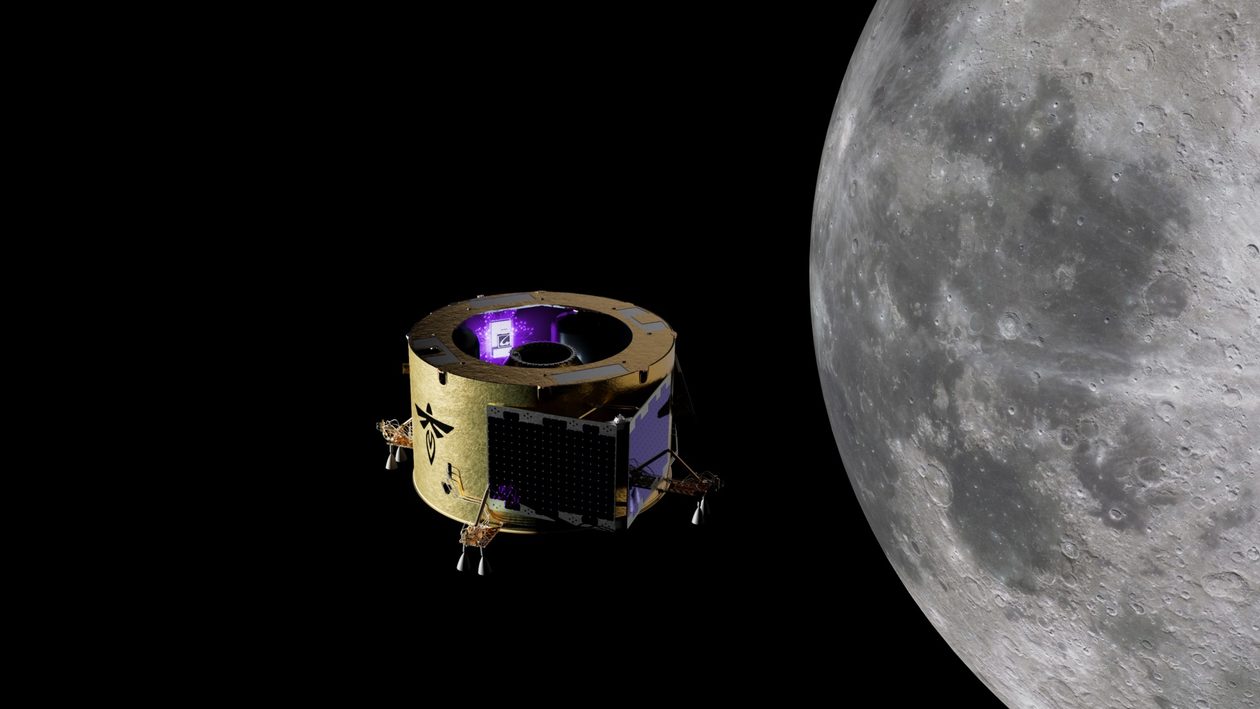
An artist’s conception shows Firefly’s Elytra spacecraft in lunar orbit, with Starcloud’s SC-1L data-processing payload highlighted in purple. (Firefly Aerospace Illustration)

Redmond, Wash.-based Starcloud has signed up to send its artificial intelligence data-processing hardware into lunar orbit on a Firefly Aerospace spacecraft.

Starcloud’s payload, known as SC-1L, will fly on Firefly’s Elytra orbital vehicle during a NASA-supported mission that’s scheduled for launch no earlier than 2028. The mission will demonstrate technologies that Starcloud plans to use on AI data centers in Earth orbit — and around the moon as well.

“Space is the future of data centers, and the moon is the next frontier for that vision,” Ezra Feilden, Starcloud’s co-founder and chief technology officer, said today in a news release.

Starcloud made its mark in Earth orbit last year with Starcloud-1, a satellite equipped with an Nvidia H100 chip. Starcloud-1 successfully trained a large language model called NanoGPT, marking a first for orbital computing. “We successfully validated our ability to run and train AI models on enterprise-grade GPUs in low Earth orbit, and now we’re taking this proven technology to lunar orbit,” Feilden said.

Starcloud’s SC-1L payload will be integrated aboard the Elytra vehicle for a mission aimed at delivering Firefly’s Blue Ghost lander to a lunar region known as the Gruithuisen Domes. After the lander separates from Elytra and descends to the surface, the orbiting vehicle will serve as a data relay for Blue Ghost.

Advertisement

The data-processing demonstration begins when the Blue Ghost mission ends. SC-1L will ingest data from Elytra’s onboard Solux vision system, execute high-performance AI computing in orbit and transmit the processed data back to Earth.

The Solux system is designed to serve as an autonomous navigation and tracking tool in space environments where global positioning systems are otherwise unavailable. Firefly expects the Elytra orbiter to operate in lunar orbit for at least five years.

“We’re proud to collaborate with innovative customers like Starcloud and collectively take another step toward establishing the infrastructure that will power a permanent human and robotic presence at the moon,” said Ray Allensworth, Firefly’s vice president of spacecraft.

Elytra will also use high-resolution telescopes and Firefly’s Ocula moon imaging service for surface mapping, mineral detection and reconnaissance. Firefly recently announced a collaboration with Nvidia to process the data for Ocula using Nvidia’s Jetson module.

Advertisement

In August, Starcloud reported raising $250 million in funding to support the creation of a constellation of AI data-center satellites in low Earth orbit, powered by Nvidia’s Space-1 Vera Rubin Module. Starcloud has filed an application with the Federal Communications Commission to operate as many as 88,000 satellites as orbital data centers.

Source link

Continue Reading

Tech & AI

5pc of job postings in Ireland now mention data centres, finds Indeed

Published

on

Indeed’s report found that Ireland is emerging as Europe’s leading market for data centre related hiring.

A new report published by hiring platform Indeed has found that Ireland is among the countries in Europe with the most job postings referencing data centres. 

Almost 5pc of job postings in Ireland are related to data centres in some way, representing a figure that is roughly double the figures from 2019 to 2025 and is the highest among the 10 European countries analysed as part of the research. 

What the report shows is that job expectations and requirements are changing, as AI reshapes “ where and for whom tech-adjacent jobs are being created”. 

Advertisement

“Data centre hiring is one of the few areas where we are seeing growth in tech-adjacent hiring at a time when wider tech postings remain under pressure,” said  Pawel Adrjan, the senior director of economic research for EMEA and APAC at Indeed.

He added, “Ireland stands out particularly strongly, with nearly 5pc of job postings now mentioning a data centre, roughly twice the share we have seen in recent years. Ireland’s data centre labour market is already more developed than in most of the other European markets we analysed.” 

Data centre-related searches accounted for 0.05pc of all searches on Indeed in Ireland in August 2026, which is equivalent to one in every 2,000 searches and according to Indeed, the relatively modest recent growth in Irish searches compared with some other European markets is reflective of  Ireland’s already high level of interest 

“Jobseeker interest is particularly strong with data centre related searches accounting for a higher share of searches in Ireland than elsewhere in Europe, although it remains a specialist area with fewer searches than for other, larger occupations like retail or driving. The key question now is whether this momentum can be sustained as Europe’s data centre build-out gathers pace.”

Advertisement

Global research indicated that between 50pc and 60pc of data centre postings in each country analysed came from just five occupations, IT infrastructure, operations and support, software development, management, installation and maintenance and lastly, project management.

The AI race

According to Indeed, Europe is attempting to keep pace with international competition in the race to build the data centres needed to power generative AI and roughly €176bn is likely to be invested into related infrastructure. 

The report said, “The growth in Ireland follows the easing of constraints on new data centre grid connections around Dublin and the introduction of a new Government plan to direct new data centre development towards regions with spare renewable and grid capacity.”

While Indeed found that data centre hiring has ‘surged’, it also made the argument that wider hiring in the technology sector is stagnating. 

Advertisement

It said, “Data centre job postings are above their pre-pandemic level in all 10 European markets analysed while postings for other tech roles remain below their pre-pandemic levels. The recent increase has been most notable in Spain, Italy and Ireland.”

A valuable skill

Perhaps indicating the specialist nature of roles in this field, Indeed’s research indicated that data centre jobs often offer higher compensation, with the report noting that European employers advertise higher pay for data centre roles than for the same occupations elsewhere.

“Of the 29 country-occupation pairs analysed, 28 showed a pay premium for data centre work. The largest premiums are generally seen among workers directly tied to data centre sites, including installation and maintenance roles.”

Posted wages for data centre roles in management and project management fields were also found to be high, with the largest figures observed in Italy and the UK. Software development roles tied to data centres offered the smallest pay ranging from around 1pc more than non-data related roles in Germany to roughly 23pc in Italy.  

Advertisement

The report said, “Given that salary transparency in job ads remains low in many European countries and posted wage data are sparse in some places, these figures are best read for direction rather than magnitude. And the direction is clear, demand for data centre workers is driving up wages.”

Indeed found that Europe’s data centre endeavours, while smaller and at an earlier stage than US counterparts, is visible in the wider labour market, particularly in the metrics used to track it, such as job postings, pay and jobseeker engagement. 

Moreover, “It is also one of the very few sources of growing tech-adjacent hiring on a continent where tech postings remain deeply depressed and where the broader labour market continues to soften.”

Ultimately, Indeed’s research states that it remains to be seen whether strong investment over the course of the next few years can create a jobs boom that is both durable and can meaningfully lift the economy, rather than offering “a temporary and limited reprieve for a continent struggling to find new dynamism”. 

Advertisement

Don’t miss out on the knowledge you need to succeed. Sign up for the Daily Brief, Silicon Republic’s digest of need-to-know sci-tech news.

Source link

Advertisement
Continue Reading

Tech & AI

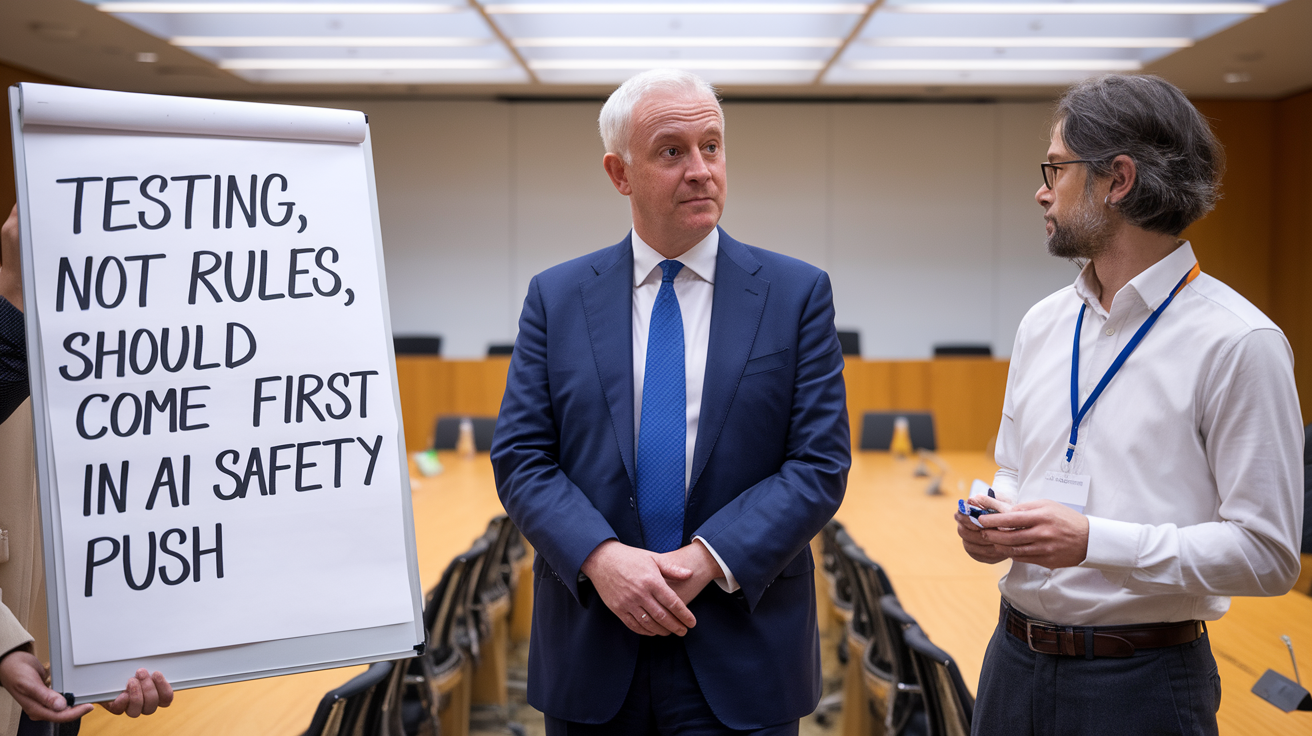
Bank of England Chief Says Testing, Not Rules, Should Come First in AI Safety Push

Published

on

The governor of the Bank of England has waded into the global debate over how to keep artificial intelligence in check, arguing that slapping regulations on the fast-moving technology now would be premature — and that rigorous testing to expose weaknesses should come first.

Andrew Bailey made the case in his first-ever Substack post, a notable choice of platform for one of Britain’s most senior financial officials. He described the risks posed by AI as “real and increasingly significant,” but stopped short of calling for the technology to be slowed or restricted. “The benefits are immense,” he wrote, insisting that development should continue even as safeguards are built around it.

His central argument is one of sequencing. Rather than reaching for formal rules, Bailey wants systems in place that can probe AI models for vulnerabilities, establish clear boundaries for how they operate, and allow for intervention when something goes wrong. Only once that groundwork is laid, he suggested, should a more formal regulatory framework be considered. “Regulation is not, in my view, the right place to start,” he wrote.

Bailey pointed to Britain’s AI Security Institute as an example of the “important work” already underway to stress-test systems, but he was candid about the limits of that effort so far. “The pace of progress must accelerate,” he said, while cautioning that regulators and developers alike “should proceed with a degree of humility.”

Advertisement

He also offered a reframing of what many might consider bad news: when AI models fail tests or behave unpredictably, that shouldn’t be read as proof the safety process is broken. “That is not evidence that testing has failed,” Bailey wrote, “rather it is evidence of why testing is necessary.”

The governor reserved particular concern for so-called frontier AI — the most advanced, self-learning systems capable of improving themselves with minimal human input. Without effective mechanisms to step in, he warned, such systems risk becoming “a closed loop in which the model progressively governs itself,” a scenario that would leave human oversight struggling to keep pace with machine autonomy.

Bailey’s intervention lands amid a noticeably louder chorus of concern from within the AI industry itself. In recent weeks, executives at leading AI developers including OpenAI and Anthropic have called for a more deliberate pace of development and pushed for internationally coordinated risk assessments. OpenAI recently pulled back the planned release of one of its newest models, citing safety concerns — a rare instance of a major lab voluntarily hitting pause on its own technology.

That caution, however, is far from universal. President Donald Trump has openly rejected calls to slow down, framing AI development as a race the United States cannot afford to lose to China. “Whoever wins AI, wins,” he has said. Even so, after meeting this week with executives from OpenAI, Anthropic, Nvidia, SpaceX, Meta and Google, Trump announced that the companies had signed what he called a “morally binding” agreement intended to offer a measure of protection against AI’s risks. Under that arrangement, each company remains responsible for policing the safety of its own technology — a self-regulatory approach that critics say lacks teeth compared with binding government rules.

Advertisement

That tension — between voluntary industry commitments and formal government oversight, between racing ahead and pausing to check for danger — sits at the heart of Bailey’s argument. His preference for testing over top-down rules puts him closer to the industry’s own preferred approach than to advocates of immediate, binding AI law. Yet by acknowledging the risks as “real and increasingly significant” and calling for faster progress on safeguards, he is also signalling that the current pace of precaution may not be enough.

Whether testing regimes like the UK’s AI Security Institute can move quickly enough to keep up with the technology they are meant to police remains an open question — one that Bailey himself seems to concede requires humility, urgency, and, eventually, a formal set of rules to match.

Sources:
Continue Reading

Trending

Copyright © 2025