
Tech & AI
These High-Tech Batteries Are Built To Break Down In Your Digestive System

Typically, swallowing a battery is an emergency, and one that can quickly turn fatal if left untreated. Between their caustic chemicals, damaging electrical current, and choking hazard, your average button battery (or even a AAA) can wreak havoc on the body, if ingested. A swallowed button battery can burn through a child’s throat in as little as two hours, which is one reason those loose batteries sitting in a drawer could be a disaster waiting to happen.
However, there are also cutting-edge capsules designed to be swallowed. They can give doctors a thorough look at the gastrointestinal (GI) tract, control exactly when a drug is released, and transmit data to medical professionals from inside the body. However, they require power to work. Until now, these capsules have typically relied on wireless power from an external source or a tiny coin battery. The problem is that wireless power offers limited range, and even though coin batteries are coated for protection, they still pose a risk.
Fortunately, researchers at MIT have developed small batteries that swap out dangerous substances for magnesium and molybdenum trioxide, which the body can safely tolerate in small amounts. The paper-like battery produces 1.84 volts and uses an ionic liquid gel as its electrolyte. The entire battery is bioresorbable, meaning it can be fully broken down and absorbed by the body. It works for about three days before breaking down within weeks. So far, it’s been tested on animals rather than humans. And this isn’t the only progress being made with regard to powering medical devices, as there are new high-tech batteries that could theoretically last for thousands of years.
MIT’s bioresorbable batteries could help in certain treatment scenarios
One area where this new battery has been tested is treating a symptom that plagues many people with serious diseases. Those diagnosed with cancer, HIV, dementia, or other serious conditions report a loss of appetite, which may also be a side effect of their medication. This can lead to rapid, unhealthy weight loss, along with low levels of essential nutrients. In severe cases, it can contribute to cachexia, a loss of body mass that can occur in patients with cancer or other chronic diseases.
Fortunately, MIT’s tests proved promising. The researchers used their bioresorbable battery to power a device that delivers a mild electrical current to the stomach lining, triggering production of ghrelin, the hunger hormone. The battery powered the device for up to three days, and in animal tests, just 20 minutes of stimulation boosted ghrelin levels by about 50%. It’s an interesting contrast to another MIT project, since this vibrating capsule could assist in the ways we treat obesity.
Another potential use for the bioresorbable battery is tracking medication. MIT researchers have been building radio frequency identification (RFID) tags into capsules, so medical professionals can confirm whether patients are taking their medication. As project leader Giovanni Traverso told Physics World, “Medication non-adherence remains a major cause of preventable morbidity and cost.” The earlier version of this system relied on battery-free tags powered by harvested energy, which limited their range. With the new battery, the tag transmitted continuously from the GI tract at a range of up to nearly 5 feet (1.5 meters) in animal tests.

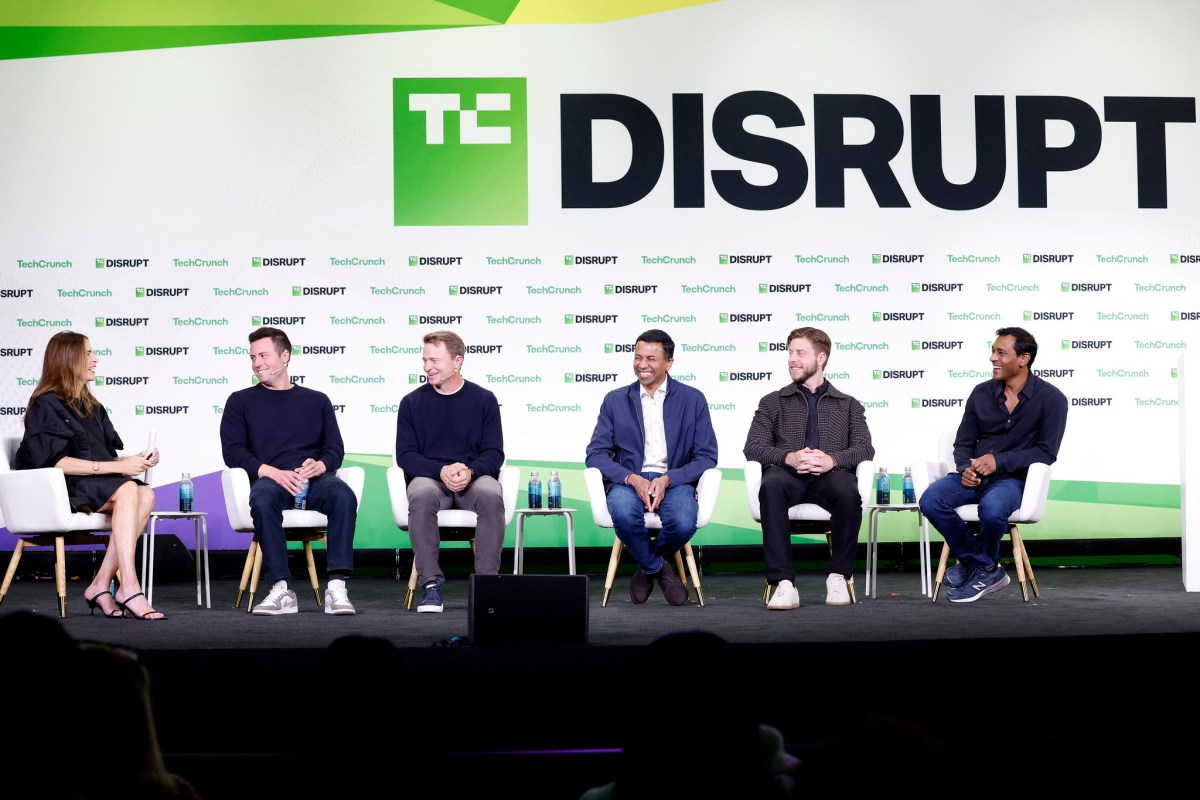
For decades, the unwritten rule of venture capital was that a firm doesn’t back two companies that compete head-on. But speaking at TechCrunch Disrupt earlier this week, the partners of Benchmark readily acknowledged that the AI boom is straining that rule.
It’s been on the verge of snapping for some time. The towering AI labs OpenAI and Anthropic share dozens of the same investors at this point. Then, at the end of September, Factory, a startup that builds an AI agent to write software, said it was firing board observer and adviser Chris Degnan for “unethical conduct involving Cognition,” its direct rival and the maker of the Devin coding agent. Factory’s CEO alleged Degnan had discussed a job at Cognition while privy to Factory’s board-level discussions. Degnan said he had already resigned and denied sharing anything confidential. Soon after, he announced he was joining Cognition as chief revenue officer. Powerhouse investor Vinod Khosla sided with Degnan on X, blasting Factory’s CEO and calling the company “a struggling second tier competitor.” Khosla Ventures backs both companies.
Even Benchmark, a firm whose reputation rests on 10-to-15-year partnerships with founders at the earliest stage, said the old rule can no longer be counted on. Asked at Disrupt whether the pact against backing rivals still holds as portfolio companies expand into each other’s territory, its partners described the conflicts as a matter of necessity, not preference.
“The harsh reality of this world is every company is evolving very quickly,” said Eric Vishria. Companies pivot and change, he said, and “you are going to get conflicts, and that’s just the reality of the current dynamic.”
Vishria said Benchmark stays committed to each founder and keeps what it learns confidential, and he downplayed how much a VC could pass along anyway: “We are not product or technology experts.” Seemingly referring to the Factory-Cognition dispute, he said Benchmark has been fortunate not to land in “that type of insane direct conflict.” Exclusivity, he said, remains “really important” at the very early stage Benchmark favors. “But things are evolving. There’s no doubt about that.”
Chetan Puttagunta said AI is accelerating the problem. As the cost of building software “effectively goes to zero,” he said, founders are “incredibly ambitious.” Because they now see a “surface area” and want to claim all of it, he continued, “[i]t’s probably going to happen more, where you start to run into each other.”
He drew a line between a direct competitor at the outset, which he called “an easy answer,” and a portfolio company that expands into another’s turf over time. “That happens,” he said.
Peter Fenton called the issue “kryptonite” and the firm’s toughest problem. He described a spectrum of how investors relate to their companies. At one end is the co-founder, who would never work on a competing company. At the other is the public-market stock picker, who can own several rivals because he is merely allocating capital, not shaping any of them. Benchmark sits nearer the co-founder end, Fenton said, and treats transparency as a golden rule. “There shouldn’t be the surprise after the fact.” If a conflict does emerge, a founder should never feel shortchanged, he added.
Benchmark isn’t declaring the pact dead. At the same time, when a firm that built its name on loyalty says conflicts are coming, founders might rightly wonder who else will be this candid.
When you purchase through links in our articles, we may earn a small commission. This doesn’t affect our editorial independence.
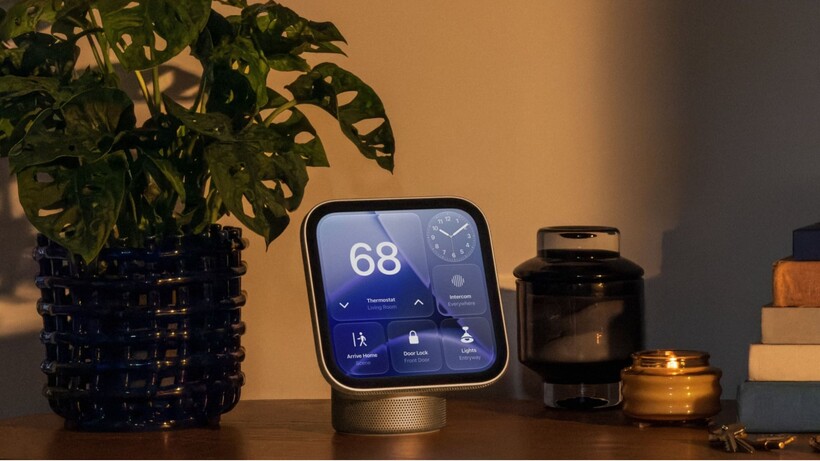
Apple has rounded off its bumper month of launches by announcing its first ever smart display, the HomeView.
The HomeView promises to bring “entertainment, connection, and smart home management together in one place”, and can play music, make FaceTime calls and enable hands-free automations too. But the question remains: what apps can the smart display actually run?
Although we’re yet to get our hands on the HomeView, we’ve assessed the specs to see which apps the smart display will support.
For more on Apple’s recent smart home launch, visit our HomeView vs HomePod and HomeView vs Echo Show comparison guides.
We’d also recommend checking out our round-up of the best smart speakers too, in case you’re not sold on Apple’s model.
What apps does Apple HomeView have?
Apple has confirmed that the HomeView will come with the following 15 apps built-in:
- Alarms
- Calendar
- FaceTime
- Find My
- Home
- Intercom
- Messages
- Music
- Podcasts
- Reminders
- Safari
- Settings
- Timers
- Weather
- World Clock
In addition to the above, the HomeView will support the following apps from a paired iPhone:
- Audiobooks
- Classical Music
- News
- TV
Apple also states that some supported third-party audio and video apps will also be supported from a paired iPhone, however the brand is yet to state which ones exactly.

Does Apple HomeView have an App Store?
It appears that the HomeView doesn’t offer access to the App Store, which means users won’t be able to download additional third-party apps. In addition, Apple is yet to publicly confirm whether the HomeView will ever eventually feature the App Store.
Our Home Technology Editor Dave Ludlow laments the HomeView’s lack of App Store as the inclusion would “elevate the HomeView above the Echo” and allow households to utilise the smart home products they already own, rather than require them to splurge on Apple-approved devices instead.
How do third-party apps work on HomeView?
If there isn’t an App Store, then how do the third-party apps actually work on HomeView? Apple has stated that CarPlay-supported audio and video apps will also work on HomeView, without developers needing to make any modifications on their app. That’s because both the HomeView and CarPlay surprisingly share the same framework.
This means HomeView will work a lot like Apple CarPlay does, and will be able to play audio and video from supported apps. Although Apple hasn’t confirmed this, we also assume this means you’ll be able to use HomeView to see Live Activities widgets too.
Finally, Apple has also stated that some third-party apps will require a paired and compatible iPhone nearby to run.

Can you watch YouTube, Netflix or Disney+ on HomeView?
Other than Apple TV, Apple is yet to confirm the third-party video apps that will work with HomeView. As there aren’t native YouTube, Netflix or Disney Plus apps on CarPlay, then it could be assumed they might not work on HomeView – however of course as HomeView is a fundamentally different product compared to CarPlay, hopefully that won’t be the case.
If there aren’t native apps then we also assume users will be able to access YouTube, Netflix and Disney+ via the Safari app, which does come installed on the HomeView.
Does Spotify work on Apple HomeView?
At the time of writing, Apple hasn’t confirmed whether there will be a native Spotify app for HomeView. However, considering there is a native Spotify app for CarPlay, we can assume it’ll make its way to HomeView.
Even if there isn’t a native app, the HomeView has Bluetooth which means you should be able to stream audio on Spotify with a nearby paired iPhone. In fact, we’d assume this would be the case with most audio apps like Audible, Tidal and the like.
Do you need an iPhone to use HomeView’s apps?
If you’re sporting one of the best Android phones, it doesn’t seem like the HomeView will really work for your household. Firstly, you need an iPhone running at least iOS 27.2 to initially set up your HomeView.
You’ll also need an Apple Intelligence-enabled iPhone (that’s an iPhone 15 Pro or later) in order to unlock Siri AI. Doing so will allow the HomeView to surface information from Messages and Calendar, access Apple Music Playlists and sync conversation history across devices too. However, we should disclaim that you don’t need an Apple Intelligence-enabled iPhone to control the HomeView with just your voice.
Which apps are missing?
Remember, Apple is yet to confirm the exact third-party audio and video apps that’ll be supported by HomeView. However, there are still quite a few notable Apple apps that won’t come built-into the HomeView at launch.
These apps include the Notes, Mail and Photos – though you can select a shared album to turn your HomeView into a digital photo frame. With this in mind, it seems as if the HomeView shouldn’t be viewed as a tablet replacement, but rather its own dedicated smart display and family organiser.
Tech & AI
Review: Herbie Mann’s Hold On, I’m Comin’ Revives Its Vintage Quad Mix on Rhino Quadio Blu-ray

On Hold On, I’m Comin’, we hear iconic jazz flutist Herbie Mann performing at arguably the height of his mainstream popularity, with performances recorded at the 1972 New York Jazz Festival at Yankee Stadium and the prestigious Montreux Jazz Festival in Switzerland.
Backed by a crack band playing his distinctive brand of funky, soul-infused jazz, Herbie Mann generally favors a safe, toe-tapping, booty-shaking sound that works just as well at a party as it does in your listening room. But there’s some genuine fire beneath the accessible grooves, reflecting Mann’s late 1960s and early 1970s work, when he managed to strike a balance between commercial appeal and artistic integrity. Just listen to the audience erupt when he launches into one of his signature tunes, “Memphis Underground.”
While Hold On, I’m Comin’ captures a stripped-down, raw live band, the collective sound is remarkably full and feels right at home in this quadraphonic presentation. I was initially unsure how this new quad release would sound, but happily, it delivers just enough discrete-channel detail to create a fun, immersive listening experience without sacrificing the atmosphere and energy of the original concert venues.



In fact, Hold On, I’m Comin’ sounds especially good considering a fascinating detail I discovered on Rhino’s website: the recordings were “transferred from a commercial reel” at 192 kHz/24-bit resolution for the quadraphonic and high-resolution stereo mixes, rather than from the original master tapes, which may no longer exist. That isn’t necessarily a bad thing, and it’s actually pretty cool that Rhino went this route. Quad enthusiasts have been making similar transfers for decades, often sharing them digitally through underground collector circles. The album was also released on quadraphonic 8-track and vinyl back in the day, so these mixes have a history that extends well beyond this new Blu-ray edition.
There’s also a pleasing amount of high-frequency detail, allowing you to hear the breathy textures of the flutes and saxophones. At one point, I actually checked the credits because I wondered whether some flute parts had been overdubbed. As it turns out, saxophonist and flutist David Newman was doubling Mann’s lines in places, giving the performance a rich, full-bodied sound that’s particularly impressive in a live setting. The crisp cymbals have a surprising warmth to them, and listen closely to the loose kick drum head as it flexes and resonates. It’s a wonderful little detail that adds to the realism of the recording.

One of the standout musicians on these recordings is guitarist Sonny Sharrock, whom many of my soul-jazz collecting friends cite as a compelling reason to explore Herbie Mann’s catalog. Sharrock is in fine form here, with a vintage hollow-body electric jazz guitar tone reminiscent of Barney Kessel, but his more progressive, adventurous playing gives Mann’s brand of “flute jazz,” if you will, a funky, unexpected kick. It’s an intriguing combination that helps push the music beyond its more commercially accessible tendencies.

If you like live recordings, quadrophonic sound and are curious about Herbie Mann’s music from this period, Rhino’s Quadio release of Hold On, I’m Comin’ is a good choice. The price for this album is also certainly very reasonable, available at Amazon for just $22.49.

Our Ratings
★★★★★★★★★★ Music
★★★★★★★★★★ Sound
★★★★★★★★★★ Packaging
Where to Buy:
Mark Smotroff is a deep music enthusiast / collector who has also worked in entertainment oriented marketing communications for decades supporting the likes of DTS, Sega and many others. He reviews vinyl for Analog Planet and has written for Audiophile Review, Sound+Vision, Mix, EQ, etc. You can learn more about him at LinkedIn.
Related Reading:

Fans of TV4’s international edition of The Challenge, which features Swedish celebrities competing in physical and mental contests, will have to wait for another season. An AI agent reportedly deleted edited episodes of the show, and a TV4 backup system failure wiped out hundreds of hours of work.
The Swedish series was due to return on Nov. 22, but has been delayed indefinitely, TV4 said in a statement.
“We have to recut it from scratch. All the raw material is still there, and all that,” program director Mia Lindqvist said on the network’s website.
According to translated articles, the network denies an Aftonbladet report that an AI agent deleted the episodes. However, while TV4’s Lindqvist told the newspaper that an AI agent didn’t act independently, she did not deny that AI was involved in the mishap. Still, she blamed the failed backup system.
“The big problem is that (production company) Mastiff’s backup didn’t work,” she said.
A representative for TV4 didn’t immediately respond to a request for comment.
The program features stars of other Swedish reality programs, such as the country’s version of The Bachelor and Farmen, a reality show about (wait for it…) contestants on a farm. The Challenge: Sweden first aired in 2023.
AI is increasingly a part of editing and production workflows across movies and television, with entertainment giants, including Netflix, leaning on the technology to produce content more quickly and at lower cost.
If an AI agent were somehow responsible, that would seem to have negated any of AI’s time-saving benefits for The Challenge: Sweden and its production team, who now have to spend time rebuilding the episode edits that were lost.

When you’re in a public space like an airport or the subway, it’s not advisable to connect to the available public Wi-Fi because doing so could carry security risks. And if you do, there are certain things you shouldn’t do on your device when connected to any public Wi-Fi. But instead of depending on public Wi-Fi, you can use your phone as a mobile hotspot. Doing so provides a quick and easy way to get internet access on all your devices, either through tethering or by creating a wireless access point that multiple devices can connect to.
Your phone’s mobile hotspot can also come in handy if you’re in an area with no wireless access point whatsoever or when your regular Wi-Fi is down. However, while using your phone as a mobile hotspot offers flexibility and convenience, it isn’t perfect. It comes with several drawbacks you need to keep in mind before making it a habit.
As someone who uses their phone as a mobile hotspot from time to time, most commonly to provide internet access to my car’s infotainment system and also to get my household devices online when Wi-Fi is out, I’ve experienced several issues firsthand that I can share from my own experience.
Your phone batteries drain faster
One of the biggest drawbacks you’ll run into every time you use your phone as a mobile hotspot is increased battery consumption. Typically, anything that makes your phone work harder than usual, such as gaming, does cause the battery to drain faster than usual, and the same applies here.
When you enable the mobile hotspot feature, your phone has to do two things. First, it has to maintain a cellular data connection and, second, broadcast a Wi-Fi signal so that other devices can connect to it. That adds an extra load on your device, resulting in more battery drain than simply using it to browse the internet. You might also experience your phone getting hot when the hotspot is turned on, an indication of just how hard it is working to keep your devices connected to the internet.
As a result of the faster battery drain, you’ll need to charge your phone more frequently than you normally do. And don’t forget batteries are consumable parts that degrade over time. So using your device as a mobile hotspot will also negatively impact your phone’s overall battery health and longevity because you have to recharge it frequently.
Your mobile data consumption increases
Another challenge with using your iPhone or Android phone as a mobile hotspot is that it’ll increase the amount of data you use. If your cellular subscription has a certain specified limit each month, you might quickly run through your quota before the month ends if you’re not careful. The reason for that is pretty simple: Sharing your connection with other devices means they’ll be accessing the internet using the same data bundle you normally rely on to browse the web, stream videos, and other online activities.
With multiple devices accessing internet data from the same plan doing all kinds of things from streaming videos, playing games online, or browsing the web, they’ll eat into your monthly allocation faster than you typically do, which can result in overages. Of course, if you pay for a cellular plan with unlimited high-speed data, that shouldn’t be a problem.
However, some unlimited plans usually have a catch. They’ll offer a specific amount of high-speed data, which once exhausted will throttle your internet speeds, forcing you to purchase more data within the month to continue enjoying fast internet access. For example, US Mobile’s Unlimited Flex plan gives you 10 GB of high-speed data, which once exhausted, allows you to continue accessing the internet but at a slower 1 Mbps speed.
Your internet connection may be unstable or slow
The other drawback of using your phone’s mobile hotspot is that the internet connection can be inconsistent. Unlike using Wi-Fi, which generally offers a more stable connection, your phone relies on a cellular network, which doesn’t provide a consistent experience. Even if your ISP plan promised Gigabit speeds, the actual internet speeds that you’ll enjoy when connected to a cellular network depend on factors such as coverage, signal strength, and network congestion.
If you live in an area where the cellular coverage isn’t great (which is pretty common in some rural areas), or your house is located a distance from the tower so it doesn’t get the best reception, your mobile hotspot can’t deliver the best speeds. Instead, that speed will fluctuate depending on where you are and how many people are connected to the same cellular tower at that point.
To make matters worse, the multiple devices connected to your mobile hotspot mean they have to compete for the same bandwidth, which in turn leads to a sluggish experience for everyone. This doesn’t only apply to mobile hotspots alone; connecting many devices to regular Wi-Fi can also slow down your internet connection.

The Metric Is Not the Mission is a ten-part examination of how Big Tech moved from building and expanding the open internet to increasingly shaping it around its own metrics, incentives and assumptions. Across the series, the argument follows the evolution of the platform economy—from the optimism of the early internet to the growing tensions around power, prediction, geopolitics, accountability and the future of digital life.
The series will be published in two parts each week over five weeks, with each installment building on the one before it. At the end of the series, the complete essay will be brought together in a single PDF edition, providing the full argument in one place.

Part VIII — The Long Decline of Certainty
In Part VII, the universal ambitions of the internet met the realities of geopolitics. Part VIII turns to another form of reckoning: the growing gap between Big Tech’s extraordinary technological capability and the declining certainty that capability alone is enough.
The history of technology is often written as a succession of inventions. We remember the steam engine, the telegraph, electricity, the automobile, the personal computer and the internet as though each represented a discrete breakthrough that propelled humanity from one age into another. Yet technologies rarely transform societies on their own. What changes history are the systems of belief that emerge around them.
The railway altered far more than transportation; it changed how people understood time itself. Electricity did not simply illuminate cities; it transformed architecture, labor, domestic life and the rhythms of human activity. The internet was never merely a communications network; it also carried with it an entire philosophy about openness, participation, decentralization and the distribution of knowledge.
The platform era represented a further evolution of that philosophy. It proposed that complexity itself could be managed through increasingly intelligent systems. Human relationships could be organized more efficiently. Information could be filtered more effectively. Communities could be cultivated at planetary scale. Public conversation could be optimized through algorithms that learned continuously from billions of interactions.
For a time, the proposition seemed not only plausible but self-evidently true. Then something curious happened. The technology continued improving while confidence in the underlying philosophy began to erode. This is a pattern that historians encounter with surprising regularity. Empires often reach the height of their administrative sophistication shortly before their political legitimacy begins to weaken. Financial systems become increasingly efficient in the years preceding systemic crises. Institutions acquire extraordinary technical competence while gradually losing public confidence. Institutional decline rarely begins with the collapse of capability. More often, it begins with the discovery that capability is not the same thing as legitimacy.
By almost every measurable indicator, today’s largest technology companies remain astonishingly capable. Their engineering talent is unrivaled; their computational infrastructure stretches across continents; and, their investments in artificial intelligence, quantum computing, and biotechnology are redefining the frontier of scientific research. Their products continue to mediate the daily lives of billions of people. Judged solely by conventional measures of corporate performance, they have never appeared stronger. And yet something important has changed.
For much of the platform era, the central political question was whether governments would regulate Big Tech. That question produced years of commissions, hearings, white papers, consultations, investigations, and legislative proposals. Some of these produced important rules. The GDPR changed how personal data is treated. Competition authorities have imposed significant constraints. The Digital Services Act, Digital Markets Act and other legislation have begun altering the legal environment in which the largest platforms operate.
But legislation has its limits. Big Tech has spent decades learning how to operate inside political systems. It has the resources to lobby governments, influence legislative drafting, challenge rules in court, negotiate implementation, and shape the technical details that determine whether an ambitious principle has a meaningful effect in practice. Even the strictest legislation can be weakened by exemptions, delayed through litigation, narrowed during implementation, or transformed into a compliance exercise that leaves the underlying structure of power largely intact. This does not mean regulation is futile. It means that regulation is not self-executing.
A law can establish a boundary. It cannot, by itself, guarantee that the institutions subject to that boundary will surrender power willingly. Large corporations do not usually change because they have experienced a moral awakening. They change when the cost of maintaining existing behavior becomes greater than the cost of changing it.
The question is therefore no longer simply whether legislators can produce sufficiently ambitious rules. The more consequential question may be who has the power to enforce a different understanding of corporate responsibility when governments are slow, politically divided, or vulnerable to corporate influence. Increasingly, the answer may lie elsewhere: it may lie with users and it may lie with courts.
Konstantinos Komaitis, PhD, is a veteran of developing and analysing Internet policy to ensure an open and global Internet.

Slashdot reader alternative_right shares a story that has drawn international attention for being potentially the first documented instance of a robot being used directly in a sexual assault. According to the Associated Press, German police have opened a sexual harassment investigation after a robot allegedly touched a 16-year-old girl’s buttocks and made thrusting motions while two young men reportedly filmed and streamed the incident. Investigators seized the robot and the suspects’ phones and are trying to determine whether the movements were preprogrammed or controlled in real time. From the report: Cologne police spokesman Christoph Bermel said the two male teenagers have not been charged but are considered suspects, and investigators were examining whether the robot’s movements were preprogrammed or controlled in real time.
Police were unfamiliar with this type of incident, he said. “We have not been aware of this phenomenon so far,” Bermel told The Associated Press, saying it was “new territory for us.” […] The robot, said to be 120 centimeters (about 3 ft 11 inches) tall, was dressed in a white tank top, black sweatpants and wearing a gold chain and sunglasses. It also had what appears to be a fake mustache. Videos circulated on the internet show two young men escorting the robot toward a group of women, bumping into one and hugging others, on a lively nighttime street.


Read more of this story at Slashdot.


The “Power to the Players Act” bill would direct the FTC to write rules ensuring that buying a video game translates into ownership and not a revocable license. Games that depend on online servers would also have to offer an offline mode before those servers are switched off. Rep. Ritchie…
Read Entire Article
Source link
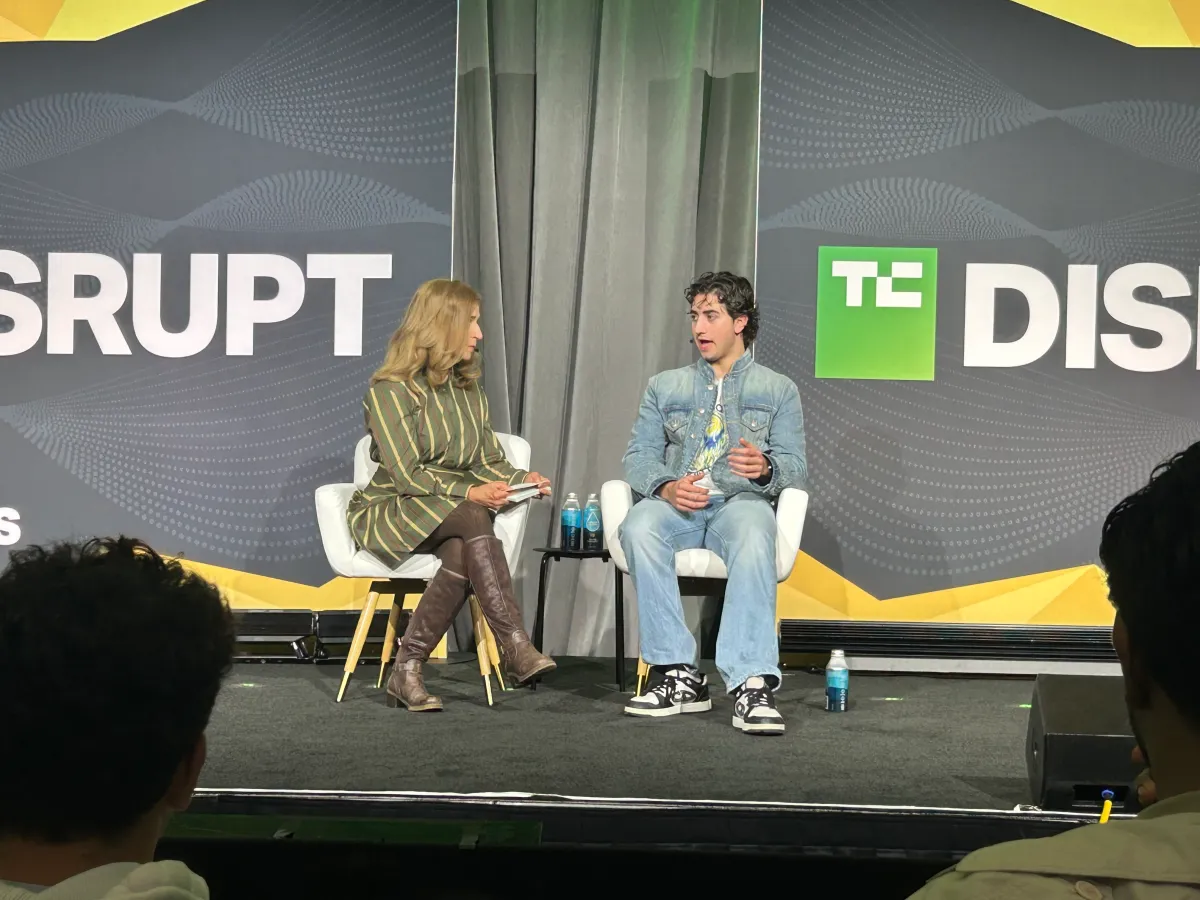
Zach Yadegari has enjoyed an immense amount of success for someone who only recently graduated from high school. Founder of the AI-fueled calorie tracking app Cal AI, Yadegari is only 19 but his company has rocketed to viral fame over the past two years. At TechCrunch Disrupt on Thursday, Yadegari shared details of that surprising rise to prominence.
Cal AI, which was founded in 2024, exploded onto the internet thanks largely to Yadegari’s strategy of deploying a small army of influencers to promote the brand. The company generated over $30 million in revenue in two years and was acquired by MyFitnessPal for an undisclosed amount of money in March.
Discussing his social strategy onstage, Yadegari noted that an early sign of success came when an influencer’s post about them led to approximately a thousand new users over the course of two days.
“From there, we figured out, okay, this can actually work for us, and so we started recruiting influencers as fast as we could — paying as many people as possible to start posting for us,” he said. “What we saw was that it was a clear formula. It was pretty linear, but it was extremely fast. I guess linear in the sense that every post they did would get a certain number of viewers that would convert.”
The Forbes 30 Under 30 alumnus told the audience that part of his company’s strategy was to negotiate rates with influencers, promising them certain payouts for a certain scale of reach. A lot of influencers are “broke college kids” who “just want cash,” Yadegari added. “You just ask them, okay, we’ll pay you this, but we need to get us at least this amount of use and keep posting until you get there.”
Another important component of success was finding the right influencers whose reach can be quantified. “The biggest thing for us was finding influencers that had very tight communities,” the founder said.
Yadegari, whose father was in the audience, also credited his family with giving him the freedom to go after his ambitions. Does he also credit higher education for his success? Not so much.
“I think the only real reason to go to college is if you want to have a fun social time as a kid and be with other people,” he said, to audience laughter.
Earlier this month, Yadegari also launched Persona, a new AI agent startup that has already raised $10 million.
Yadegari said the “overarching mission” with Persona is to “make computing seamless with human life.” The company’s personal AI assistant will “live anyplace with internet connection,” he said, including “iMessage, app, email, phone call.” He added that part of what distinguishes the company’s plans for this AI assistant is to build a “hardware ecosystem around” the app.
When you purchase through links in our articles, we may earn a small commission. This doesn’t affect our editorial independence.
If there’s one thing Porsche is known for, it’s consistency. Whether the car is an original 1965 911 or a brand-new equivalent off the showroom floor, there’s a specific design language that has always just screamed, “Porsche.” It makes sense — much like how Subaru has used its boxer engine since time immemorial, having that single identifiable “thing” helps with brand recognition and lends the car a certain character. That said, it has certainly not stayed the same over the years — a 1960s Porsche looks very different to a 2020s model, only sharing that fastback silhouette.
It’s more accurate, then, to describe Porsche’s lineage as evolutionary, building upon a single concept over many generations. Well, as of October 15, 2026, the brand has evolved once more. The Mission S, as it’s called, represents not just another facelift or, indeed, even the next flagship supercar that it is. This likely is the prelude to the next generational leap in Porsche’s design architecture, an aesthetic that combines stark futurism with retro-inspired vibes in a way only the German marque can truly pull off.
That said, let’s not overblow it. We’ve seen the leaks and know what to expect, after all. Even so, the new halo car is truly a sight to behold, building upon Porsche’s storied motorsports heritage coupled with the svelte proportions of a lightweight monster. Obviously there’s no word on powertrain or anything else; it’s just a concept car, after all. There’s no given that it’s even powered. But as a design study, it’s incredibly intriguing and potentially a teaser into Porsche’s future.
What the photographs tell us
The Porsche Mission S Concept is, put simply, what would happen if you put a modern 911 in a blender with a classic 911 GT1, the 935/76, and the 917K. It’s like a “Greatest Hits” album of Porsche’s finest racing cars; the company has certainly done more specialized vintage-inspired concept cars, like the modern 935. But it’s never truly combined all of the different elements of these disparate machines into one single vehicle.
To begin with, you have the upright-facing headlights crowning an LED bar, revealing the image of that 935 with its pronounced front brow. It also shares the gaping mouth of 911 race cars seen right up to the present day, flanked with pronounced aerodynamic elements like canards and a sharp front splitter. Those canards continued down the side, reminiscent of the 919 endurance Hypercar. Those lines terminate at the rear, where the car is buttressed by the rear wing in an identical style to the 911 GT1 from the late-1990s. Lastly, you have the roof line that ends with the iconic fan cowling, a nod to the 917 and its air-cooled flat-12 engine.
The overall profile is, of course, very 911. It has the twin headlight tunnels on either side of a deep-cut hood, a fastback profile without a pronounced wing, and smooth, elegant lines throughout. The aerodynamic elements at the rear are incorporated into the silhouette, so sideways-on and it looks like it doesn’t even have a rear wing at all. Moreover, the width of the car’s fenders evoke yet one more famous Porsche racer, the air-cooled 911 GT2. Overall, it’s a fantastic silhouette despite its many ingredients or, perhaps, because of them.
Is this the future of Porsche?
It’s hard to say for now whether or not this truly represents the next chapter of Porsche, but it seems that the company at least desires the Mission S to be a sound proof-of-concept for its coming era. The marque stated its clear intentions to use the car as the pillar for its reimagined design identity, recommitting itself to providing a small, driver-focused experience to customers of means. Porsche had several statements regarding the Mission S, namely that it’s mid-engined, has a purist interior design, and the exterior is a harbinger for the next generation.
A few factors became apparent with this latest photoshoot, which echoes the original Porsche 550 Spyder photoshoot from 1953 in front of the same Manhattan skyline. The artistic language of the car, the photography itself, and the corporate statements all point to a renewed interest in heritage and preservation, something which Porsche is particularly good at, considering how famous the Porsche Museum in Stuttgart is.
So if this is a sign of things to come, then we absolutely welcome the future of Porsche with open arms. Combining retro design elements is certainly nothing new, and let’s face it, Porsche’s entire sports car image is practically built upon its iterative 911 design. But taking inspiration from racing machines that rarely, if ever, saw road use is certainly an interesting decision, one which will hopefully continue well into the company’s future. Frankly, even by today’s supercar standards, this thing is absolutely gorgeous, and certainly among Porsche’s coolest concept cars. More of this, please and thank you.

Even Benchmark thinks AI is eroding the venture pact against backing rivals
Bitcoin rebounds to $82k but set for second week in red
These High-Tech Batteries Are Built To Break Down In Your Digestive System


-

 Fashion6 days ago
Weekend Open Thread: Quince – Corporette.com
-

 Business & Hustles6 days ago
PwC: Supply-Chain Diversification, AI and Energy Transition Open New Growth Paths for Thailand
-

 Crypto4 days ago
XRP Ledger Defends Emergency Patch Amid Criticism
-

 Crypto4 days ago
Rep. Omar Says She Will ‘Not Be Silenced’ After Federal Agents Raid Her Home
-
 Crypto6 days ago
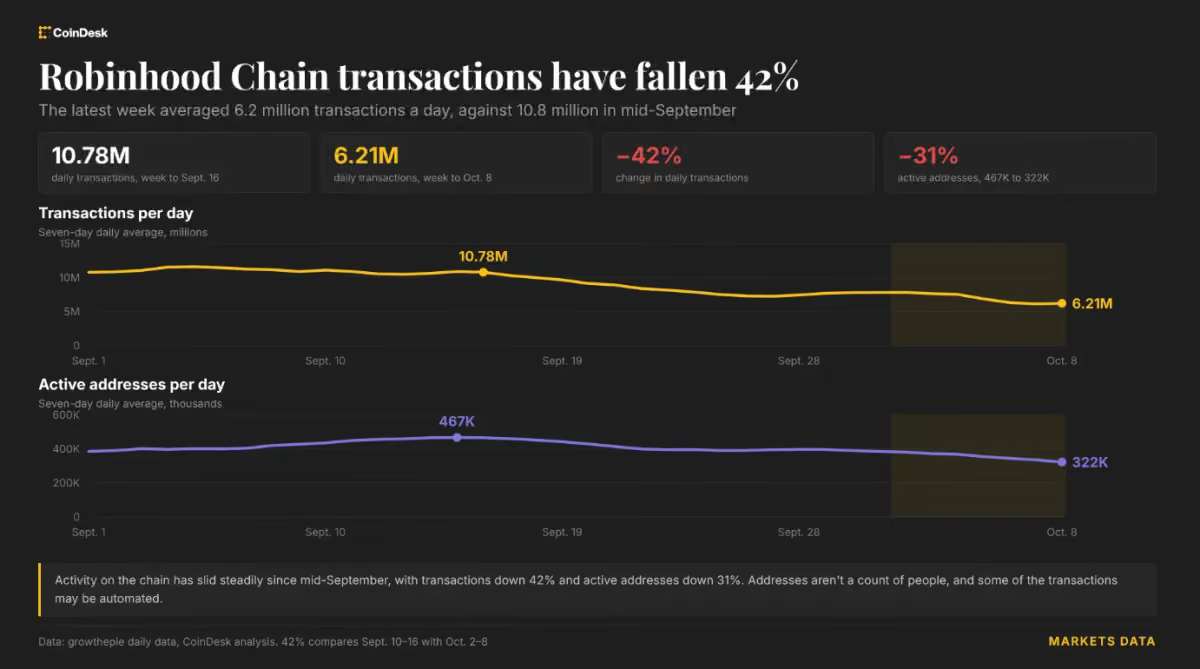
Robinhood Chain slowdown spreads from fees to trading as transactions fall 40%
-

 Sports6 days ago
College Football Week 6 Bets: Three Picks for Saturday’s Biggest Games
-

 Sports5 days ago
Duke receives encouraging update regarding top prospect from class of 2028
-

 Crypto3 days ago
KuCoin unveils 5.0 upgrade with AI tools and unified trading account – CoinJournal
-

 Crypto5 days ago
Saylor Signals Next Bitcoin Buying Plan After September STRC Buybacks
-

 Sports7 days ago
Morocco and Senegal await AFCON final verdict after arbitration hearing – Sports
-

 Crypto7 days ago
Mashinsky Accepts Lifetime Industry Ban and Up to $35 Million in Conditional Payments | The Defiant
-

 Sports6 days ago
Saudi oil crisis affects Neom project, 2034 World Cup plans
-

 Sports3 days ago
Work on Trump’s D.C. muni enrages judge: ‘You did your absolute worst’ | News
-

 Crypto5 days ago
October 11 Crash: What Wiped Out 1.65M Traders
-
 Crypto5 days ago
Justin Sun says Tron post-quantum plan on testnet
-
 Sports4 days ago
Tax evasion to Portugal fallout: Controversies that rocked Ronaldo’s career | Football News
-
Crypto3 days ago
ZEC and NEAR Plummet Hard, BTC Recovers From Rollercoaster Ride: Market Watch
-

 Crypto4 days ago
Ledger halts CryptoBilis after $86M wallet drain
-
 Sports5 days ago
Meet Pakistan’s Adam Gilchrist: Karachi teen bears Australian legend’s name but idolises Kumar Sangakkara | Cricket News
-

 Sports6 days ago
Glasgow’s power game leaves Connacht chasing shadows
You must be logged in to post a comment Login