In this week’s Sunday Reboot, the expansion of Apple Pay and Apple Music to some countries has taken a decade longer than they really should. They also demonstrate how delays can happen for many different reasons.
Sunday Reboot is a weekly column covering some of the lighter stories within the Apple reality distortion field from the past seven days. All to get next week underway with a good first step.
Apple Music adds to its territory list
It may be a surprise to some readers, but I’m not in the United States. I’m one of the few members of the editorial team based in the United Kingdom, but trained to write in the American way, and forget about the letter U in some words.
This does lead to some issues when it comes to trying out Apple’s new services. It’s a problem when your whole job is to talk about them.
Advertisement
Thankfully, the UK does have access to almost all of Apple’s services, but there are blind spots and differences.
For example, while I have access to Apple Pay, I cannot use services like Apple Card because they are US-only for the moment. Except that I have to change region sometimes for reporting, and now I annoyingly have an Apple Cash card permanently visible in the Wallet app that I cannot use at all.
A little less pressing is the lack of puzzles in News+ over here. Though I can understand the financial problems in setting up Apple Card in the UK, it seems there would be fewer obstacles in adding brainteasers to Apple News, just as U.S. users enjoy.
That said, I am still quite glad to be in the UK where Apple products and services come into play. Partly because we don’t suffer from the EU blackout of some upcoming features.
Advertisement
We at least get the updates fairly quickly. Unlike some service updates that happened this week.
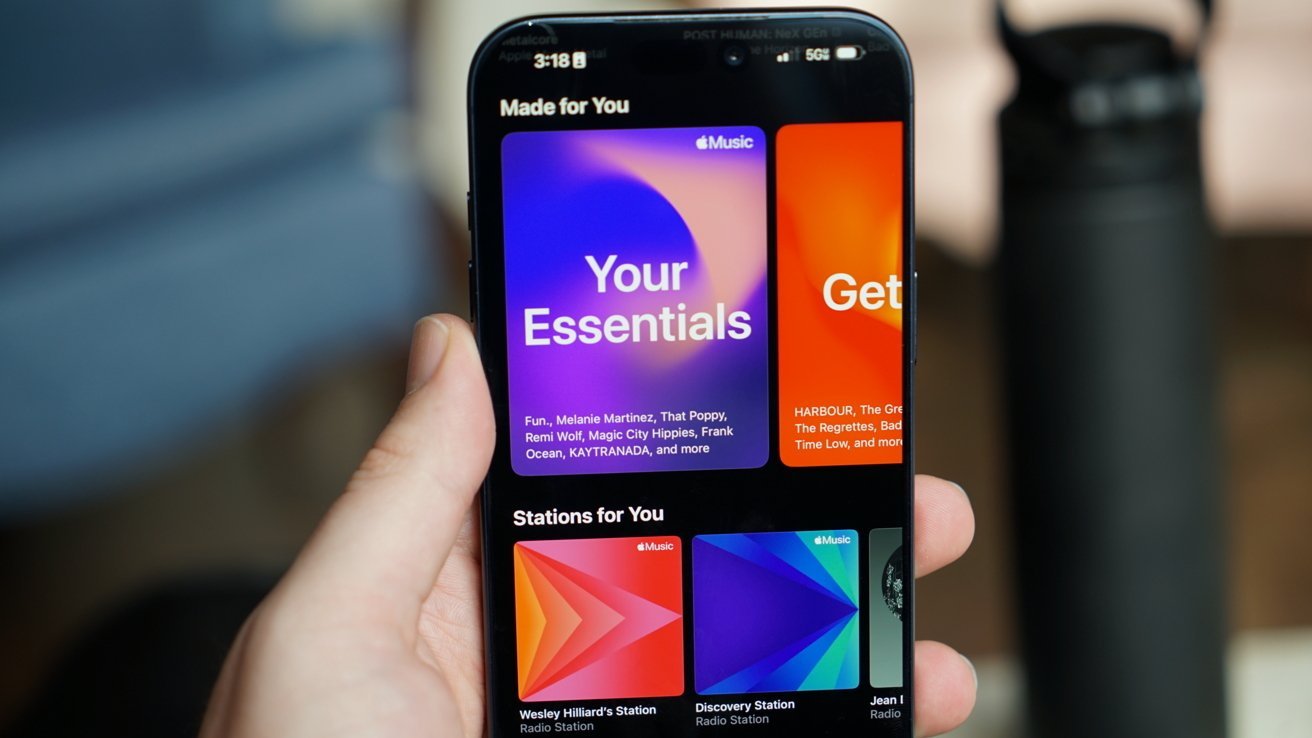
Apple Music has expanded into four new countries, including Albania.
On Wednesday, an update to Apple Music finally rolled it out into four countries: Albania, Brunei, Burkina Faso, and Pakistan.
This sounds fairly OK, until you remember that Apple Music was unveiled in June 2015 in over 100 countries. It’s taken over 11 years for Apple Music to be available in those four countries.
Advertisement
There’s no real explanation for the lack of support in those countries, nor why it took so long.
The more time-consuming problems would revolve around licensing negotiations. However, both Apple and record labels like money, and so you’d expect negotiations to happen at a fairly quick pace.
Then again, it could easily be because Apple has bigger problems at hand than adding support to some countries it’s seemingly forgotten about for over a decade.
Regardless, it’s a good thing that Apple Music is now available in four more territories that endured a very long wait.
Advertisement
It also reminds me that I’m lucky to live where I do. While there are always going to be differences between US and UK availability for things, I’m not realistically going to be waiting for a decade for anything.
Wait, Apple Pay wasn’t in India already?
Slightly less puzzling is the Apple Pay update on the same day. After launching in 2014, Apple finally brought Apple Pay live in India.
It certainly makes sense for Apple to do so, because it is a massive market, and an emerging one at that.
The problem here is that Apple said back in 2017 that it was trying to bring Apple Pay to India. That’s a nine-year wait.
Advertisement
As for why it took so long, we could certainly blame regulations for that. In June 2022, more financial laws were introduced, which got in the way.
While in the rest of the world you could use Face ID for a transaction, India instead wanted everyone to use its Aadhaar ID system instead. The laws also covered subscriptions, requiring banks to notify users 24 hours in advance of any recurring transactions, and allowing them to cancel.
Apple Pay is finally available in India.
There’s also the matter of a card tokenization framework, which required the use of encrypted tokens issued by local banks in India. This would’ve required Apple to make changes to how Apple Pay’s security and authentication ultimately functioned.
Advertisement
Support for the country’s Unified Payments Interface also caused problems.
It was so bad that, in 2022, Apple gave up on credit and debit cards completely in the country.
During this time, both Google Play and Samsung Wallet opted to comply with the law instead of ceasing card payments. It was clearly a case of Apple seeing a massive amount of work and rules that it would have to comply with, and the belief that it could work around or negotiate the hurdles away.
After negotiating with banks to get around the problematic elements, Apple eventually tested card payments in India in July 2026, months before Apple Pay’s rollout.
Advertisement
The final introduction of Apple Pay in India is certainly a good thing for Apple, especially in such an important market.
It will be interesting to see how much change Apple Pay will make to iPhone sales in India. It’s main rivals have a very large head start because of Apple’s unwillingness to abide by the new laws, so it has a lot of catching up to do.
Finally, eventually
Apple’s decision to expand the reach of two of its services at the same time demonstrates that there can be a variety of reasons for a delay of a service rolling out in a country.
For Apple Pay in India, as well as the various features EU users cannot access, it’s a regulatory problem. When you have to deal with legal issues affecting over a hundred countries simultaneously, you have to prioritize and pick your battles.
Advertisement
Even if it’s something that can take years to fully resolve.
For others, like bringing Apple Music to Albania, it seems to be less about legal issues and sticking to the letter of the law. It could just as easily be Apple making it a very low priority for it to work on because there’s not enough value to work harder at it.
With Apple Pay in India, there’s enough of a carrot for Apple to work to fix it. Even if it does take close to a decade to resolve.
Last week’s Sunday Reboot discussed Apple’s fitness changes, Apple Watch nagging, and how the Whoop-like device could be a very beneficial wearable.
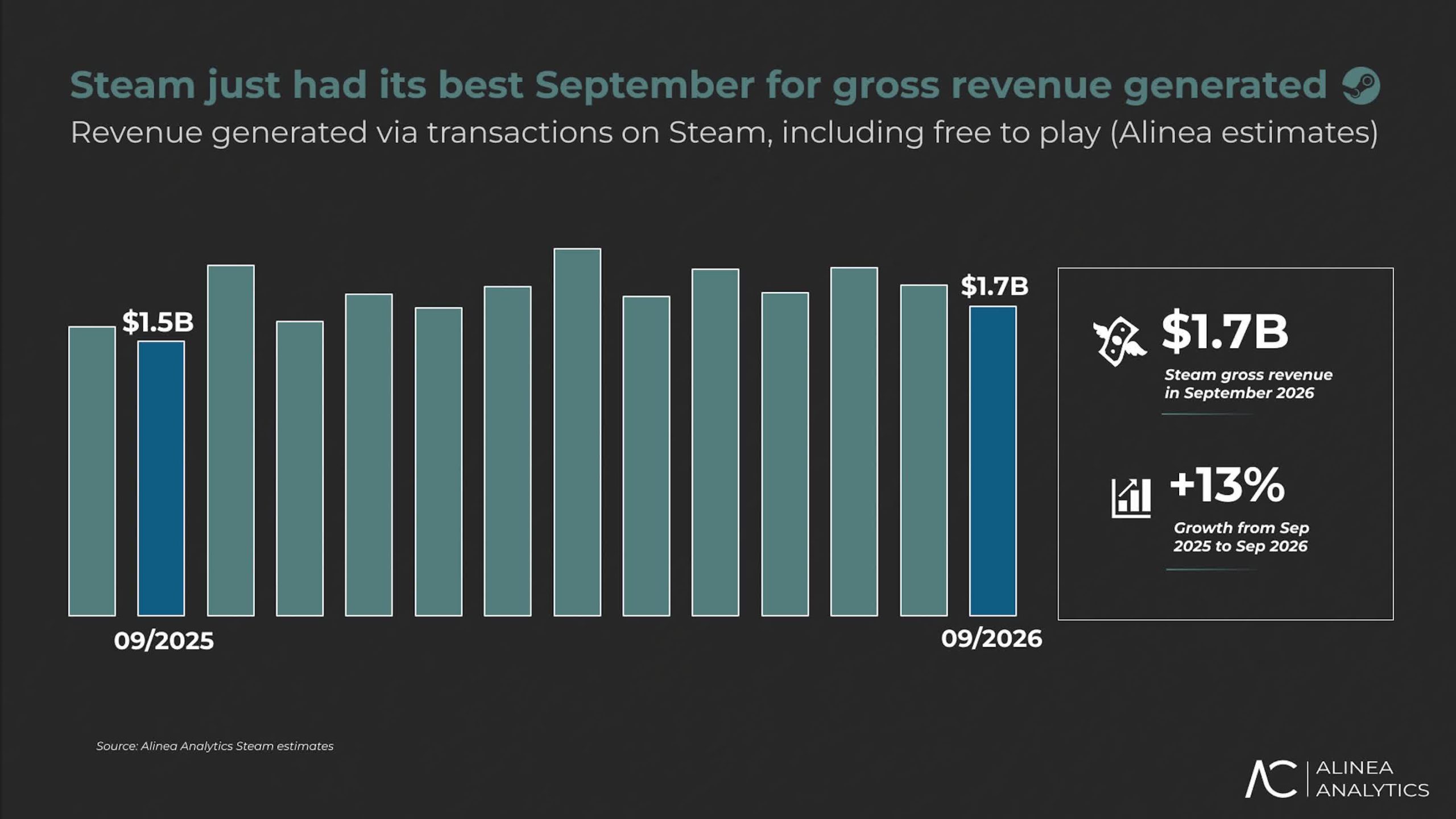
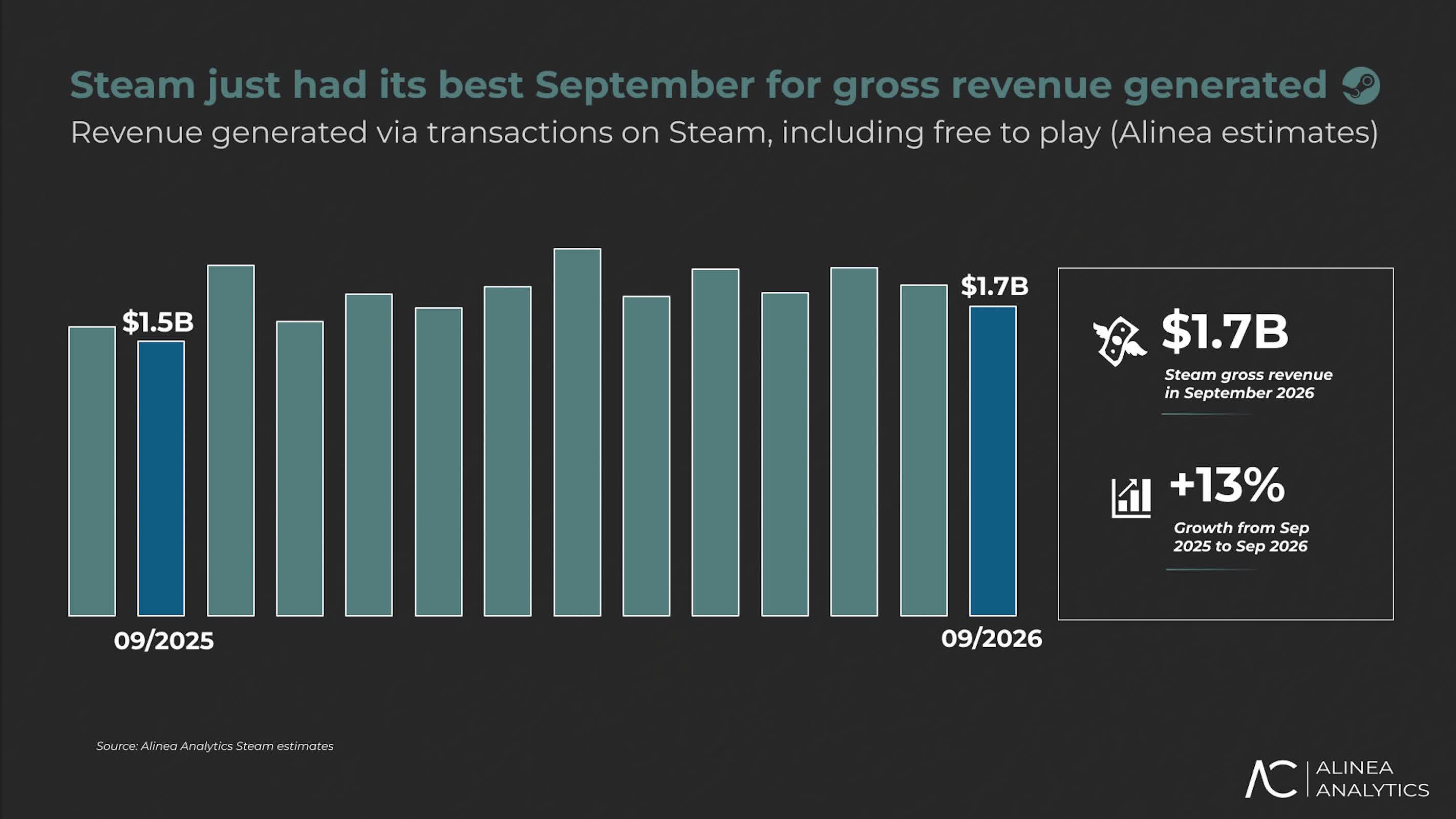
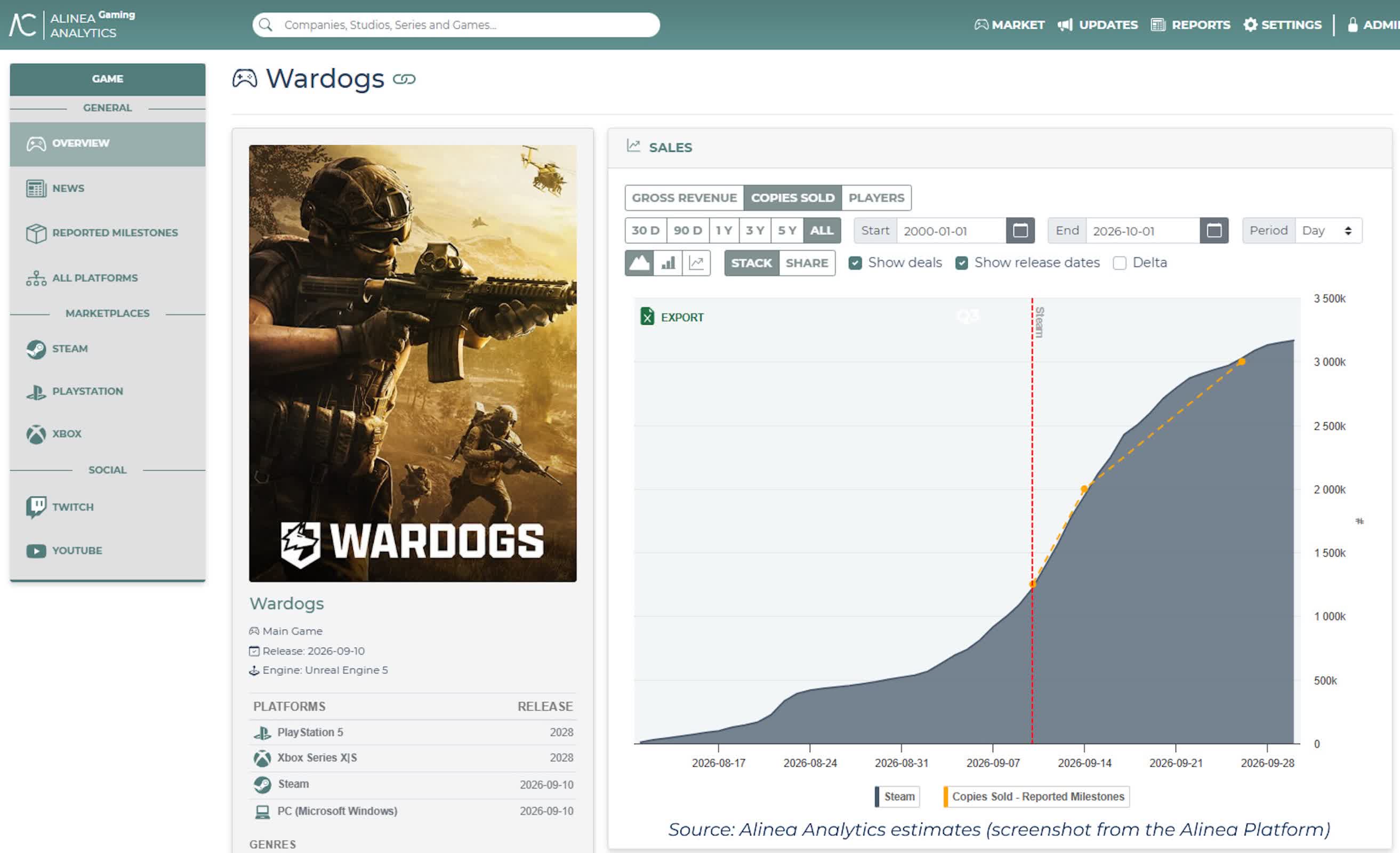
Bottom line: Steam is on course to generate more than $20 billion in gross revenue in 2026, a first for the platform, after posting record results for September and the third quarter, according to estimates from Alinea Analytics. The gains came from a mix of new releases, established franchises and free-to-play games that keep drawing spending long after launch. With one quarter left, Valve’s PC gaming platform needs roughly $3.5 billion to reach the milestone.
Steam took in an estimated $1.7 billion in September, 13% more than the previous September record, set in 2025. Its estimated third-quarter revenue reached $5.5 billion, up 12% from the same period last year.
The September result came from a familiar mix: big paid releases, durable franchises and free-to-play titles built around in-game purchases. The numbers suggest Steam no longer depends on a single kind of game sale to drive revenue.
New releases can produce a sharp burst of revenue, while games such as Counter-Strike 2 and Dota 2 keep earning money through active player communities and digital-item sales.
Advertisement
Through the first nine months of 2026, Steam generated an estimated $16.5 billion, compared with $14.5 billion over the same stretch of 2025. At that pace, the platform needs about $3.5 billion in the final quarter to clear $20 billion for the year.
New games played a meaningful role in September. Among Steam’s 500 top-grossing titles that month, games released in 2026 accounted for about 33.6% of revenue, according to Alinea, and new intellectual property made up 20.5% of that.
That doesn’t mean newer games displaced the industry’s biggest brands. Established franchises, which include remakes and remasters, accounted for almost 80% of revenue among the top 500. The two figures overlap because they slice the data differently, by release year and by franchise, so a 2026 sequel counts in both. Steam’s strongest performers still tend to be games with recognizable names, built-in audiences and frequent content updates.
Free-to-play games remained a major source of revenue as well. Counter-Strike 2, Apex Legends, PUBG and Dota 2 together generated almost $168 million in September, per Alinea’s estimates, or nearly 10% of Steam’s estimated monthly revenue.
Advertisement
Those games show why PC platforms can’t be judged by unit sales alone. Free-to-play titles may cost nothing to download, but they can drive steady spending on cosmetic items, battle passes and other digital content. For Steam, those transactions turn a large player base into recurring revenue.
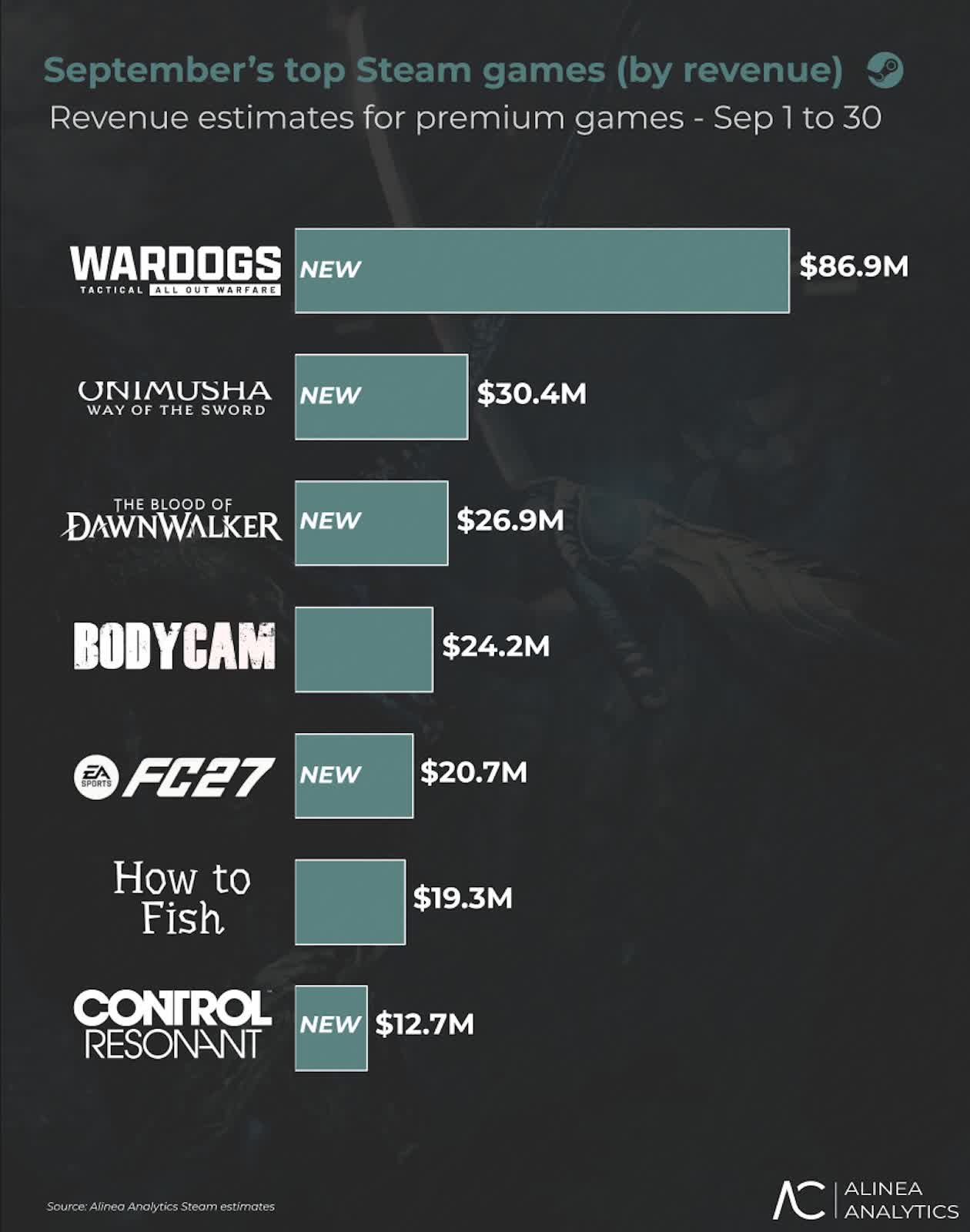
Paid games accounted for several of the month’s biggest individual performances. PvP shooter Wardogs brought in an estimated $86.9 million in the roughly three weeks after it entered Early Access on September 10. Onimusha: Way of the Sword generated $30.4 million during the month, and The Blood of Dawnwalker added $26.9 million.
EA Sports FC 27 contributed another $20.7 million from Steam copies, though most of its sales were on consoles.
Wardogs’ Early Access performance is notable because it shows how large a role the model now plays on Steam. Developers can release a game before it’s finished, collect revenue early and use player feedback to shape updates. For multiplayer games, that can also help build a community before a full launch.
1000 Friends of Oregon and state teachers unions unite in a major lawsuit against Hillsboro, NVIDIA, and CoreWeave to claw back $85M in local tax giveaways
Oregon’s data center tax breaks have become a major political flashpoint statewide
A warning about one election cycle helped accelerate Oregon’s grassroots organizing
More than $450 million in exemptions intensified scrutiny of Oregon data centers
Oregon’s expanding data center industry has triggered an increasingly organized political backlash involving residents, environmental groups, educators, farmers and elected officials.
The dispute intensified after reports showed Oregon data centers receiving more than $450 million in property tax exemptions during 2026, including about $85 million in the Hillsboro area.
The resistance is a grassroots coalition led by the nonprofit 1000 Friends of Oregon, which has already helped unseat a Hillsboro-area senator and pushed Governor Tina Kotek to reverse course.
Latest Videos FromTechRadar
Advertisement
A warning turns into political action
Sam Diaz, executive director of 1000 Friends of Oregon, said his concerns deepened after seeing how facilities affected communities and resources around Prineville.
In 2022, a rancher told him water allocations had been reduced because large server buildings had arrived nearby.
A later warning from a Virginia land-use executive gave Diaz another reason to accelerate organizing before data centers became harder to regulate politically.
“They said, ‘Once this takes hold in your state, you really got to get ahead of it, and you probably have one election cycle before you really start seeing politicians do the bidding of data centers,’” Diaz recalled.
Sign up to the TechRadar Pro newsletter to get all the top news, opinion, features and guidance your business needs to succeed!
Trouble escalated when Senator Janeen Sollman proposed opening 1,700 acres of farmland to industry and doubling a tax break that data centers already had.
Advertisement
Intense pushback forced her to drop the plan to double that tax break within days of the 2026 session starting, yet the backlash had already begun.
Sollman later lost her seat to Myrna Muñoz, though she blamed a separate bill on strike benefits rather than data centers for her primary defeat.
Criticism intensified again after Hillsboro was found to have approved incentives for 17 data centers shortly before a statewide moratorium took effect.
Advertisement
Tax incentives bring an unlikely coalition together
The incentive decisions helped bring previously separate groups into a common campaign involving education funding, environmental concerns, farmland and tax policy.
In June, 1000 Friends and 11 other plaintiffs sued Hillsboro and companies connected with the facilities, questioning whether the city had legal authority to approve the agreements.
“The first question of, ‘Does the city have the authority to do what it did?,’ and then the second question is, ‘Even if they did, do these applications even meet the Enterprise Zone Act requirements?’” Diaz said.
Advertisement
The coalition argues that reduced property-tax collections can affect public services, including education funding through Oregon’s State School Fund.
The Oregon Education Association, representing 41,000 teachers, joined the lawsuit over what it described as financial consequences for statewide schools.
These concerns have also become part of the coalition’s agenda for the 2027 legislative session, where members want changes to subsidies, land-use rules and public spending on economic development.
The lawsuit also brings major technology companies into the dispute because their facilities are connected to the tax incentives being challenged by the plaintiffs.
Advertisement
It names major technology companies including CoreWeave, Adobe and NVIDIA among firms tied to the disputed Enterprise Zone tax arrangements.
None of these companies has issued an official statement on the lawsuit or allegations concerning their involvement.
The camera housing on my Meta Nova glasses is smaller than on the Gen 2 glasses. From a distance, they might even read as rivets at a glance. (I asked my colleague Reece Rogers how they looked on my face, and from a few feet away in the WIRED office, he didn’t even notice they were camera-enabled glasses at first.)
They feel and function the same as before. You can interact with an AI assistant or snap photos and video with the press of a button. Conversation Focus, a mode that helps hard-of-hearing people better pick up spoken words, is a feature that only works in early access on Meta’s Ray-Ban and Oakley smart glasses. It seems very helpful, but my Meta-designed frames don’t have it yet.
They also don’t have integration with Meta’s Muse AI, which the company says is coming later this year. I’m intrigued by that, even if having access to a camera on your face will certainly help a service that seems better at surveilling than helping its users. That said, I’ve found Muse more useful than Meta’s current AI assistant, and I look forward to asking my entirely too cute AI buddy to assist me via my glasses.
Unfortunately, Meta’s current AI assistant on the glasses is still terrible. I tried to ask what features the glasses I was wearing had, and it failed miserably. The AI couldn’t get any of the details right, even when I told it specifically which frames I was wearing and let it snap a picture of the Meta product page for reference. I wouldn’t want to depend on the AI to help me sort out anything with some real complexity.
Advertisement
If you pretty much ignore the AI entirely, the Gen 3 glasses do just about everything Meta promises. They capture nice photos and video, all while maintaining an indicator light that has recently been made more tamper-proof. (That’s not necessarily enough to deter the creeps.) The frames are wearable, and the software is competent enough. They’re also pricey, so maybe you can save some cash sticking with the Gen 2. They’ll all do what you probably expect them to do. Just maybe don’t be weird about it, all right?
Editor’s note, October 4, 8 am ET: We’re bringing you some of our best-loved Your Mileage May Vary columns while Sigal Samuel is on parental leave. The one below was originally published last year.
This unconventional advice column offers you a unique framework for thinking through moral dilemmas. It’s based on value pluralism: the idea that each of us has multiple values that are equally valid but that often conflict with each other. Submit your own question here.
My partner and I did IVF recently and luckily we ended up with several embryos. One of those will be implanted in me so I hopefully get pregnant. But which one?
My fertility clinic is encouraging me to do PGT-A testing, which would screen for things like Down syndrome and would also let me see the sex of each embryo so I could potentially choose whichever I want. (And to be honest, I really want a girl!) I’m also hearing about these new companies that can test embryos for all kinds of things — like how smart the kid might be, how tall they’ll get, and whether they’ll have a lower chance of getting breast cancer, diabetes, mental illness, stuff like that.
Advertisement
I don’t know how to feel about any of this. On the one hand, it feels weirdly eugenics-y to do so much tinkering with embryos, and I can’t help feeling a little pressured into overmedicalizing everything with these expensive tests. But then again, if I could do something to make my baby healthier and happier, don’t I kind of have to do everything in my power? What does a parent owe their child?
This is such an exciting — and also confusing — time. You’re about to have your first kid, and that comes with all sorts of fears and insecurities and hopes and dreams. You want to do the right thing — no, the best thing! — for your child. It’s a beautiful impulse. Unfortunately, it makes it easy for companies to prey on you.
So let me walk you through what these companies can and can’t really provide. After we talk about the science, we can talk about the ethics.
The simpler test you mentioned, PGT-A, has been around since the 1990s. It can indeed screen for conditions like Down syndrome and let you see the sex of each embryo. Mind you, that doesn’t predict what gender your child will ultimately end up identifying with — more on that soon.
Advertisement
The newer testing you mentioned is called polygenic testing. The conditions it screens for are complex ones, influenced by thousands of genes. We’re talking about everything from breast cancer to depression. Some companies even offer screenings not for disease prevention, but for genetic enhancement — so you can select for a taller kid or a kid with higher IQ.
Polygenic testing companies claim to predict each embryo’s risk for each condition, and the potential reduction of risk you’ll get if you choose one embryo over another. As the statistical geneticist Sasha Gusev explains, it’s very, very easy to be misled by this claim. If the company claims to lower absolute risk of Type 2 diabetes by 12 percent, you might think this means, “The chance of my kid ever developing diabetes just went down by 12 percent — great!” But really what it means is that, all else equal, a kid who would’ve developed diabetes is likely now at the high end of pre-diabetes instead, or just develops diabetes a few years later. The same holds true for other conditions, like breast cancer. Sure, if your kid is going to develop diabetes or breast cancer, you’d rather they develop it later — but it’s not the bill of perfect health customers might imagine.
“Typical risk reduction estimates tend to exploit statistical assumptions to overstate their benefits and lead to confusion,” Gusev writes.
Have a question you want answered in the next Your Mileage May Vary column?
Advertisement
Fill out this anonymous form! Newsletter subscribers will get my column before anyone else does and their questions will be prioritized for future editions. Sign up here!
It’s also important to note that there’s a difference between a physical disease like cancer, which is straightforwardly and universally negative, and a complex mental health condition like depression. For one thing, polygenic scores don’t perform as well in psychiatry, as the psychologist Eric Turkheimer notes. Plus, most mental health conditions come in mild to moderate to severe forms, and it’s not clear that we should want to get rid of mild or moderate manifestations.
“Sure, it would be nice if no one ever got depressed, but what would that actually mean?” Turkheimer writes. “People are going to be sad, and the most modern models of psychiatric disorders view most of them as extremes on continuous dimensions of normal behavior. I don’t think we want some kind of genetic version of Soma.”
To give a personal example: I have generalized anxiety with some obsessive tendencies. Is that a major pain in the butt sometimes? You bet. But if I could wave a magic wand and get rid of it, would I? No. In my experience, this trait is linked to another trait I deeply value: my creativity. The same thing that propels me down rabbit holes of worry also propels me down rabbit holes of getting super curious about some topic, researching it into the wee hours of the morning, and then writing a novel or children’s book about it.
Advertisement
That brings me to one other scientific issue: pleiotropy. It’s a fancy term for a simple truth, which is that genes can have an effect on more than one trait. When it comes to behavioral polygenic testing, we actually know very little about which genes cause what — a gene that’s correlated with depression or anxiety may also be correlated with a bunch of other things. So, if everyone were to start selecting embryos to try to protect their kids from depression or anxiety, what would happen? We don’t know!
Pleiotropy is a scientific issue, but it’s also a moral issue, because in trying to protect your kid from a negative outcome, you could also be accidentally barring them from a positive one.
And that’s just the tip of the moral iceberg.
Another issue is the potential psychological harm that can result from commodifying our kids — treating them like consumer objects with selectable parts. Let’s say you use polygenic testing to try to select for high IQ. Even if the company’s predictor is right 80 percent of the time, that means it’s wrong 20 percent of the time. What happens if it’s wrong about your kid, and they end up with a low IQ instead of a high one? How will your kid feel? Unless you hide the truth from them, they’ll know that they are not what you wanted, that they failed to live up to the vision you went out of your way to chase.
Advertisement
The same goes for sex selection via good old PGT-A. I know you really want a girl. But what would happen if you select for a girl, and then your child grows up and turns out to be trans? They may feel an extra sense that they’re letting you down by not conforming to the gender expectations you had for them.
Then there are the ethical questions around unequal access. Polygenic testing isn’t cheap. (One company, Orchid, charges $2,500 per screened embryo. Test 10 embryos and that’ll cost you $25,000.) So, at least in the short term, that raises the specter of entrenching a caste system, where the gap between rich and poor expands dramatically as the rich get smarter and stronger.
Technologies tend to get cheaper over time, so maybe everyone will ultimately be able to afford polygenic testing. But that raises another problem: implicit coercion. If more and more of us make ourselves smarter and stronger, we may create a society in which everyone feels pressure to alter their child’s biology — even if they don’t want to. To refuse embryo selection would mean to put a child at a huge professional disadvantage, or to face moral condemnation for making “suboptimal” kids when optimization is possible. Society may no longer offer health insurance benefits or accommodations for kids with disabilities (or even non-enhanced IQ), reasoning that “it was the parents’ choice.”
So it’s no wonder that you find yourself asking, “If I could do something to make my baby healthier and happier, don’t I kind of have to do everything in my power?”
It’s a view that will be very appealing to utilitarians, who believe the right action is the action that maximizes well-being or happiness. But maximizing principles can be dangerous. If we’re laser-focused on maximizing one value, however noble it may be, that can lead us to overlook a host of other important values. Think about diversity, for example; polygenic testing could lead to a less diverse world.
And it’s not even clear how to maximize well-being given that each embryo will have some downsides: How would you choose between one embryo with a slightly elevated risk for schizophrenia, another with a moderately elevated risk for cancer, and a third with a high risk for Alzheimer’s? You’d have to decide how to rank the importance of each condition, which would require a dizzying bit of moral math: How much weight do you put on the longevity associated with each condition, how much on patient-reported quality of life for each condition, and how much on your own ability to cope with each — and society’s ability (which will change over the years)? Plus, even if the screening does end up optimizing life for your individual child, it could have negative effects on the population level, for the reasons we covered above.
As the Nobel laureate Herbert Simon pointed out, many problems contain way more variables and way too much uncertainty for maximizing along a single axis to be feasible or even desirable. So it often makes sense to just go with an option that’s “good enough.” He coined the term “satisficing” — a portmanteau of “satisfying” and “sufficing” — to describe opting for this good enough choice.
Advertisement
What would satisficing look like in the context of embryos? If there’s a very serious condition that runs in your family — like Tay-Sachs or the BRCA mutation that markedly increases cancer risk — then I do think there’s a strong case for screening for that. These conditions are debilitating and can lead to early death. Nobody wants them. Genetic testing that lets us prevent them is an awesome gift.
Then there are conditions that can include suffering, like autism, but can also be very compatible with a happy life. Mental health conditions in particular are heavily socially constructed — a lot of the associated suffering comes about because society constructs a certain biological reality as a problem and doesn’t support the people who have it. In these cases, if you want to give your child a “good enough” or even “optimized” life, remember that you don’t have to achieve that by biological means; working to change the social environment can be just as important, and it doesn’t carry the societal risks associated with polygenic testing.
Ultimately, when considering what counts as a “good enough” life, each parent will draw the line in a slightly different place. And there’s a part of that that can’t be boiled down to objective facts about disease, because this is also about how well-resourced the parent feels — emotionally, socially, and financially — to deal with a certain condition. What feels manageable to one parent may feel crushingly hard to another.
So, I can’t tell you exactly which screenings to do and which to forgo. What I do want to tell you is to resist being bullied or shamed by others, especially those with a profit incentive to push you in a certain direction.
Advertisement
As the epidemiologist Abby Lippman has noted, genetic testing is supposed to offer parents more choice, but it too often has the opposite effect. When someone like Orchid’s Siddiqui says about a disease, “What if you could have stopped it…but chose not to?” — well, that language preys on parents’ worst fears and insecurities. It holds parents hostage while pretending to be giving them more autonomy.
You are nobody’s hostage. You are a moral agent free to look at the many different relevant factors, weigh them all in the balance, and then make the choice that works well enough for your family.
Bonus: What I’m reading
Silicon Valley is obsessed with IQ, so it’s no surprise that tech execs there are using polygenic testing in hopes of creating supersmart babies. This article shows the kind of mental pretzels customers get into when trying to figure out whether to select the embryo with the highest predicted IQ or that with the lowest risk of disorders. One couple asks: “How much additional risk of ADHD cancels out against 10 extra IQ points?”
Rereading “The Last Children of Down Syndrome,” Sarah Zhang’s 2020 Atlantic feature on prenatal testing, it struck me that when people think “prenatal testing,” Down syndrome is often the first condition that comes to mind, even though it’s not the most severe or straightforwardly negative (it’s compatible with a happy life). It’s just that Down syndrome was easy to test for, so we started testing for it early. I wonder if that built up the condition as a bogeyman in the expectant parent’s imagination — if the fact that we could screen for it shaped the public’s perception of Down syndrome as something that should be screened for and potentially screened out.
One trait that many people assume we should select for is a great memory. But I highly recommend the short story “Funes the Memorious” by Jorge Luis Borges. It’s a reminder that having too good a memory is not always a benefit.
Vox Members got to read this story first. Support independent journalism and get exclusive access to stories like this by becoming a Vox Member today.
A matching hard case is also part of that £192.12, so the Sony WH-1000XM5 arrives with protection for the bag, the daily commute or the flight already included from the very first journey.
Advertisement
On that first journey, four microphones on each earcup capture unwanted ambient sound, while the Auto NC Optimizer tunes the noise cancelling to your wearing conditions and environment, so the hum of a train carriage or open-plan office fades back automatically.
Advertisement
Once the world has quietened, Hi-Res Audio support comes into its own, with LDAC carrying High-Resolution Audio Wireless from your device to the headphones. A precision-engineered driver unit improves high-frequency sensitivity for every genre you play.
SQUIRREL_PLAYLIST_10148964
Advertisement
Long listening sessions need comfort as well, and plush ear cushions cradle each ear while the adjustable headband ensures a tailored fit, all within a lightweight 250g build that suits long flights and full working days.
Stamina matters just as much, and a battery lasting up to 30 hours gives the Sony WH-1000XM5 enough power for long trips, so playback keeps going well beyond a single flight or even a full day of travel.
Calls stay clear too, thanks to Precise Voice Pickup Technology and AI-based noise reduction that isolate your voice and minimise wind noise. You can even connect two Bluetooth devices at once, so a laptop and a phone can share the same headphones.
Smart touches keep everything simple, with Adaptive Sound Control, Speak-to-Chat and Quick Attention Mode on hand, a customisable EQ to shape the sound to your taste, and Swift Pair for easy connections to Windows 10 and 11 devices.
Advertisement
Advertisement
If you’ve been hunting through Best Headphones 2026 for a pair that’s perfect for everyday use, £192.12 now buys the Sony WH-1000XM5 with active noise cancellation, Hi-Res Audio, a 30-hour battery and a matching hard case.
Sony’s WH-1000XM5 improve over their predecessors where it counts. The rich but detailed sound impresses, the noise-cancelling is strong, the call quality is superb; and the range of features and customisation they offer is unmatched. They’re not the best for ANC any more but they’re less expensive than most of their main rivals.
$25 doesn’t go as far as it used to. As recently as a decade ago, $25 could fill up your gas tank and buy a pretty good gift, with plenty of options for just about every interest and occasion. Nowadays, it’s a struggle to even find a $25 takeout meal for one person and average national gas prices are inching toward $5 a gallon. And we all know wages have not kept up.
Good news: There are still plenty of thoughtful, interesting items out there to be had for $25, which are sure to appeal to everyone from coworkers to neighbors, relatives you don’t know well, and the friend who seems to have everything. All things on this list have been tested and vetted by at least one person on the WIRED Reviews team—often more than one—to ensure it is indeed a good gift you’d be proud to give. Check out more of our gift guides to find something for everyone on your list this year.
WIRED senior Gear editor Julian Chokkattu recommends this colorful acrylic desk accessory that keeps pencils, scissors, and other large items on top and smaller items like paper clips (or, in Julian’s case as a phone reviewer, SIM ejection pins) on the bottom. Shown is the pink-and-amber color combination, but there’s also a blue-and-green option.
Field Notes
National Parks Series (3-Pack)
I’ve used Field Notes for years—they’re lightweight, sturdy, and a perfectly pocketable. The National Parks Series elevates what would otherwise be a utilitarian notebook to its giftable status, with artist-created covers inspired by our nation’s natural wonders—from Acadia to the Hawai’i Volcanoes.
Advertisement
Muji
Ballpoint Pens (10 Pack)
My city recently got its own brick-and-mortar Muji store, and if you’ve never visited the famed Japanese retailer in person, it’s basically a mecca for stationery and desk accessories. These pens in particular are famous for their smooth ink and precision tips, and make a perfect companion for the Field Notes notebooks at left.
For the Party Person
These drink cozies are a favored white elephant gift from WIRED reviewer Nena Farrell (“It’s like playing Barbie with your drinks,” she says), but I like them because they remind me of Will Ferrell and his friend Harper Steele in the movie Will & Harper, where they go on a road trip, dress up their drinks in these exact cozies, and come up with ridiculous names for them like Cornelius Danderhoff. It reminds me of road trips I took with friends in college, which reminds me that I’m old, which … makes me want a drink.
Govee
Advertisement
Smart LED Color-Changing Light Bulb (H6008)
Set the right vibe in any room with this WIRED-recommended, Matter-compatible smart light bulb that features millions of colors, scenes, and effects you can control with Alexa, Google Assistant, or the Govee app. You can also sync it to music with the latter, using the microphone on your phone.
Bonaok
Karaoke Microphone
Advertisement
Let your giftee be heard wherever they go with their very own Bluetooth microphone. Former WIRED A/V editor Parker Hall especially liked this one for its series of playback and mixing controls, in addition to adjustable volume, echo effects, and the ability to play, skip, or pause your backing track.
For the Anti-Party Person
Photograph: Louryn Strampe
Photograph: Louryn Strampe
Quince
Mulberry Silk Beauty Sleep Mask
A sleep mask is a must for proper sleep hygiene, and WIRED reviewer and sleep mask aficionado Louryn Strampe loves the roomy fit of this 22-momme silk model from Quince. It’s half the price of similar 100-percent silk sleep masks, and there’s free shipping to keep things affordable. Choose from among 12 color options, including Eucalyptus, Espresso, Pink, Terra Cotta, and Light Blue.
Loop
Advertisement
Quiet 2 Ear Plugs
Crowned our best earplugs for sleep, the silicone Loop Quiet 2 are capable of blocking out 24 dB and fit entirely flush with your head, ensuring that they’re perfectly comfortable when you lie on your side. The little handle makes them easy to pull out, and they come in four fun colors with a variety of ear tips to ensure your giftee can get the perfect fit.
Diveblues
Portable Handheld Fan
Advertisement
Help your giftee’s personal space stay cool and fresh with this 4-in-1 fan, the best handheld fan I’ve personally tried. You can set it on a table or desk, hold it in your hand, clip it onto something with the bottom carabiner, or wear it around your neck. It’s plenty quiet enough to hold a conversation over, and it comes in four fun colors.
For the Home Chef
Jacobsen Salt Co.
Salt and Salt Cellar
My entire family is obsessed with this finishing salt, which is harvested in Netarts Bay, Oregon, just a couple of hours from our house. The large, irregular crystals look (and taste) fantastic on meat, roast vegetables, and desserts, and offer the perfect amount of crunch. Either the salt itself or the stylish arched salt cellar—handmade by Pigeon Toe Ceramics in Portland, Oregon—would make a terrific gift on its own.
Kiwi
Advertisement
Brand Chef’s Knife
A sharp, trusty chef’s knife is a staple in any kitchen, and Kiwi knives are beloved by multiple members of the WIRED Reviews team for their ability to hold an edge just as well as knives that cost 10 times as much. I’ve had a Kiwi knife in my own knife drawer for more than 20 years, and it’s still going strong.
Le Creuset
Stoneware Mini Round Cocotte
Advertisement
Who doesn’t love a colorful Le Creuset Dutch oven? The real-deal, enameled cast iron version may not be in your gifting budget, but the 8-ounce stoneware cocotte is perfect as a salt cellar, garlic roaster, or even a bowl to eat out of. Most of the classic colors are available, so you can match your giftee’s kitchen or other Le Creuset pots if they have them.
For the Gardener
Vanessa Minton
How to Grow Medicinal Herbs
I have a separate gift guide for plant lovers, where I talk about how much I like the usability of this book. Put together by Vanessa Minton of From the Garden, “How to Grow Medicinal Herbs” features clear and complete directions that are perfect for beginners, from growing the plants to how to incorporate them into infused oils, tinctures, teas, and syrups. I actually did give a copy to a friend as a gift, and she liked it so much she took it on a trip and read it cover to cover on the plane.
Advertisement
Back to the Roots
Organic Mini Mushroom Growing Kit
I received this dehydrated fruiting block in a box for my birthday a couple of years ago, and I was super impressed with how quickly and abundantly the oyster mushrooms grew—right on my windowsill. Growing mushrooms isn’t always easy, but this is a fun and educational method for kids and adults alike.
Happy Happy Houseplant
Advertisement
Monstera Deliciosa Fruit Salt Water Taffy
Tropical Monstera deliciosa houseplants are all the rage right now, but many people may not know that they actually bear a fruit. It’s rarely produced outside the monstera’s native climate, so you may not have the opportunity to taste it, but you can get the gist with this one-of-a-kind monstera fruit taffy. (It’s tart!)
For the Well-Organized
Ugreen
FineTrack Air Tracker Tags (iOS)
Being able to keep track of keys, luggage, and other gear is critical, and these Bluetooth trackers work just as well as AirTags for a quarter of the price. A pack of four with little lanyards and fun stickers retails for $24 but often on sale for even less. They work with Apple’s Find My and take just seconds to sync to your phone. I have four of these in use in my household, and they are truly indistinguishable from AirTags in both tracking and quality. There’s also a rechargeable set that works with both iOS and Android, but we haven’t tried that one.
Advertisement
SmartLabels
QR Code Organizing System
WIRED contributing reviewer Alexis Berger organized multiple zones of her house with these QR Code stickers. They come with a free app that will scan and catalog all of a drawer or box’s contents using AI—that way you can just look on your phone for the location of an item instead of spending all day tearing your home and garage apart.
Baggu
Advertisement
Standard Reusable Bag
I cannot even begin to list all the times I’ve been glad to be carrying a reusable bag, but the ones I usually have in my purse are small and flimsy. Former WIRED reviewer Medea Giordano loved this 25-inch-tall ripstop model that carries up to 50 pounds yet folds into a flat 5-by-5-inch pouch. It’s also machine washable and comes in 35 colors and prints.
For the Coffee Lover
Barista Basics
Triple Spout Shot Glass
WIRED contributing reviewer and former barista Pete Cottell loves this espresso accessory for its durability and design—and can be found in seemingly every coffee shop where I live in the Pacific Northwest. However, even if you don’t have an espresso machine, the uses for a little spouted measuring cup are endless. I have a plastic one and use it for everything from measuring small quantities of liquid ingredients to fertilizing plants.
Advertisement
Hydro Flask
Mug
WIRED reviewer Boutayna Chokrane recommends this Hydro Flask in her guide to the best travel mugs for its stainless steel rim that makes for smooth sipping. I have the tumbler version, but I wish it had a handle like this mug. Mine is not easy to hold when it’s cold outside and I’m wearing gloves. (Mug is hand-wash only.)
Bestinnkits
Advertisement
Auto On/Off Gravity-Induction Mug Warmer
Though this simple warmer only turns on when you have a mug on it, it was effective and reliable when we tested it, and it makes a great gift for anyone who works from home and ends up having their coffee or tea run cold during meetings. I bought one for my husband for Christmas last year, and it’s still going strong.
For Teens
Photograph: Louryn Strampe
WIRED reviewer Louryn Strampe has this mini gaming controller, which is compatible with Nintendo Switch, PC, macOS, iOS, and Android devices. It’s tiny, cute, and actually works—she uses it to play Stardew Valley and Bastion on her iPhone. If your teen loves gaming, it would make a great stocking stuffer too. (It gets about 10 hours of battery life per USB-C charge.)
Dr. Squatch
Advertisement
Soap
Dr. Squatch soap is a pretty safe gift for teen boys (source: I have a teen boy), and a three-pack makes it more likely they’ll at least get one scent that’s a favorite. There are always lots of fun collabs each season, too—this year’s include Taijn seasoning and FIFA.
Sand + Fog
Perfume Bag Charms
Advertisement
Yes, they are $1 over the limit, but these bag charms are worth the extra buck. They include little roller-ball bottles of popular Sand + Fog fragrance oils and come in a ready-made gift box, The charms look great on bags and backpacks, and would be a perfect stocking stuffer or angel-tree gift for teen girls.
For a Laugh
The Op Games
Telestrations
WIRED reviewer Simon Hill’s family loves this hilarious drawing game that’s based on Telephone. Sketch a visual representation of a word or phrase and then pass it around the table for people to guess what it is. It’s great for parties and can accommodate four to eight people. The recommended minimum age is 12, but Simon’s 9-year-old daughter loves it.
Prank-O
Advertisement
Prank Puzzle
These puzzles look like normal landscapes but contain a secret section not pictured on the box, with something jarringly incongruent like a dog pooping or a cat barfing. Remove the red sleeve and your giftee will have no idea anything is amiss until they put it together. I gave one of these to my husband, and the ruse worked flawlessly and was just as hilarious as I’d hoped.
Prank-O
Gift Boxes
Advertisement
I have given these boxes countless times with either a gift certificate or homemade coupon inside, and they’re always a hit, especially in group settings. Many of the dozen or so designs are toilet-themed, but each one is just serious-looking enough that it usually takes people a few long (and hilarious) minutes to realize it’s not a real item.
For the Outdoorsy
Photograph: Scott Gilbertson
Photograph: Scott Gilbertson
Epiphany Outdoor Gear
Collapsible Pocket Bellows
WIRED reviewer and esteemed outdoorsman Scott Gilbertson swears by this tiny telescoping bellows that will help any fire get going again, whether that’s a campfire or your wood stove at home. It stretches out to be surprisingly long and is a must-have for wet firewood, bug-out bags, or even backyard cookouts.
Advertisement
Nalgene
Sustain Tritan BPA-Free Water Bottle
I carried a Nalgene all through college in the late ’90s before the brand’s polycarbonate was found to have BPA. Now Nalgenes are back with BPA-free Tritan renew plastic, which makes them lightweight and perfect for both outdoor activities and everyday use.
Opinel
Advertisement
No. 8 Folding Knife
I’m a Leatherman kind of person myself, but sometimes you just need a bigger knife. In those cases, you won’t do better than this folding, portable number featured in our Buy It For Life guide. French Alps-based Opinel has been making knives since 1890, and the No. 8 in particular is so well designed it’s been displayed in museums.
For Everyone
WIRED
1-Year Digital WIRED Subscription
WIRED is the gift that keeps on giving—stay in the know all year long with a digital subscription for only $24 for new subscribers. (It’s $48 a year after that.) It’ll get you access to WIRED’s brand-new app, as well as exclusive subscriber-only newsletters, livestream AMAs, and a limited-edition tote bag.
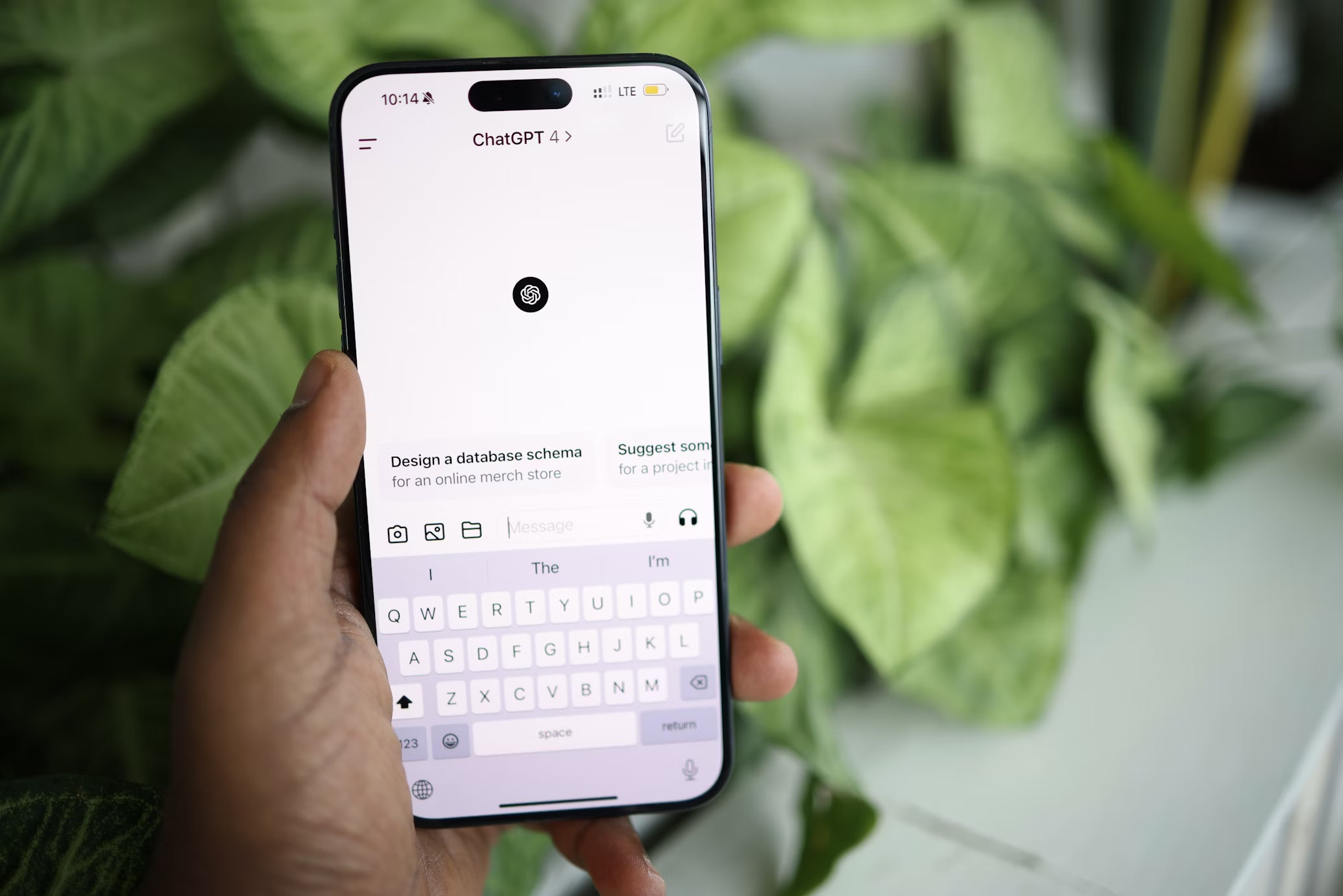
Many users use ChatGPT and Claude to examine papers, including essays, reports, contracts, and resumes. They can provide really helpful insights, but when it comes to iterating together, they’re not so powerful. Feedback comes back as a large chat response, and you are then left to apply changes yourself or accept a completely rewritten version from the chatbot.
There’s a new tool called Revise that aims to improve this workflow by integrating AI chat directly into a full word processor that’s compatible with Word .docx files, not just the basic text box a lot of AI writing apps give you. In Revise, the huge language model may read, modify, and comment on any section of your work using the same interface as you. Revise allows you to import big documents (up to a hundred pages), and the model may sift through them and read only the portions it wants rather than importing the entire thing at once. You can request changes and discuss portions of the document in comment threads.
You Stay in Control
Revise lets you keep full control over your document. Its track changes support means everything the AI agent does is visualized for you as a suggested change and can be individually accepted or rejected.
The amount of editing the agent does on your work is totally up to you and your prompts, and if you prefer, you can simply have the agent mark up your document with comments so that you may amend it yourself. Regardless of the strategy you select, having the AI agent interact with you on the same page in the same interface allows for far faster iteration and more friendly editing than going back and forth with a chatbot.
Advertisement
Works With Your Files, and It’s Free to Try
Getting your documents in and out is easy too. Revise supports importing Word files with full headers, tables, pictures, and footnotes, as well as PDFs. It imports PDFs with the use of multimodal LLMs that look at the pages and extract the text. That means, instead of a picture of text that you can’t modify, scanned documents and image-based PDFs display as real, editable text. When you’re ready, Revise may export to Word or PDF so it fits right into your current procedure.
Revise is more accessible and flexible than Google Docs and Microsoft Word, neither of which lets you change which AI model you’re talking to, and both of which require a monthly subscription to even try their AI chat feature. Revise, on the other hand, has a permanent free tier with a daily limit, plus free usage via MCP through its plugins in the ChatGPT and Claude directories.
If you already use AI to review your documents, Revise is worth a try. You can import a document, ask for feedback, and decide change by change what actually makes it into your work.
Apple put active noise cancellation on the $149 AirPods 5 with Wireless Charging Case last month, and the price gap with the year-old AirPods Pro 3, priced at $179 (was $249) for early Prime Day, suddenly looked harder to defend. Shoppers who only wanted a little quiet on a train now have a cheaper open-ear option. People who sit with both pairs still reach for the Pro 3 when the room gets loud.
Foam-tipped silicone ear tips in five sizes, including an extra small size, seal the canal before you even begin listening, and nothing surpasses that physical seal, which the new open-ear AirPods 5 simply cannot match, no matter how many microphones are crammed onto the stem. Apple claims that the Pro 3 offers up to three times the quiet time of the regular model and twice that of last year’s Pro 2. That means sounds like the cabin hum, the air conditioning in the office, and that obnoxious voice from two seats over fade into the background. The Transparency setting still allows speech to be heard cleanly and crisply, without the hollow echo that earlier tips had.
WORLD’S BEST IN-EAR ACTIVE NOISE CANCELLATION — Removes up to 2x more unwanted noise than AirPods Pro 2* so you can stay fully immersed in the…
BREAKTHROUGH AUDIO PERFORMANCE — Experience breathtaking, three-dimensional audio with AirPods Pro 3. A new acoustic architecture delivers…
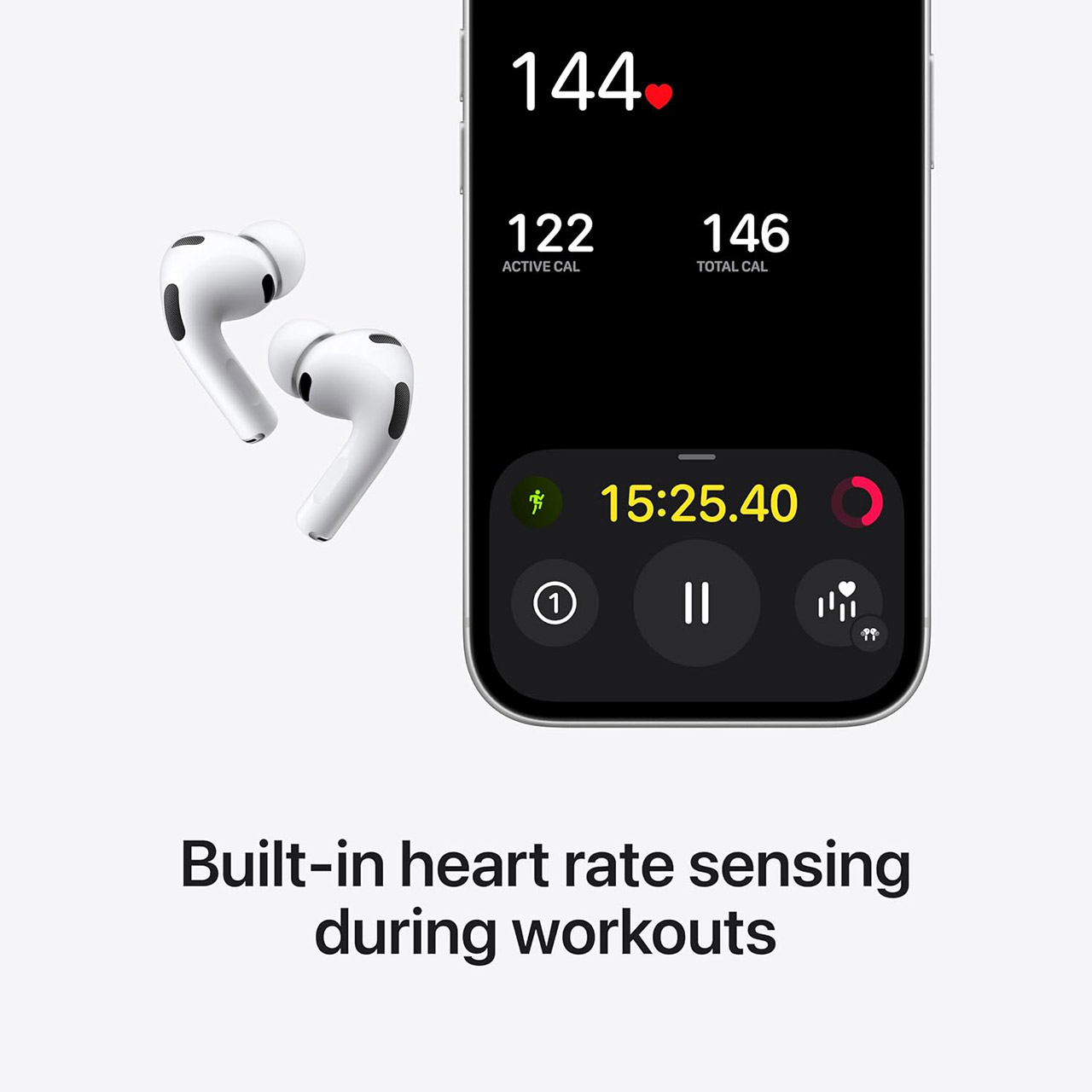
HEART RATE SENSING — Built-in heart rate sensing lets you track your heart rate and calories burned for up to 50 different workout types.* With…
With noise cancellation enabled on, a single charge will last up to eight hours, compared to four for the basic AirPods 5 and five for the wireless case AirPods. A full day of mixed listening typically gives you with some charge left over, and the case itself will extend the total to around 24 hours. Five minutes on the charger can recharge you for about an hour.
Advertisement
The hearing aid functions were missing from the previous AirPods, but they’re back in the Pro 3, and they’re incredibly important. Each Pro 3 bud contains a custom sensor that uses invisible light to pulse 256 times per second to read your heart rate during more than 50 different workout types in the Fitness app, all without the need for an Apple Watch on your wrist, and Hearing Protection kicks in to reduce sudden loud noise. Plus, when needed, Live Translation can be accessed by squeezing both stems, in supported languages. None of this is available with the less expensive bud.
Both lines, of course, share the H2 chip, Adaptive Audio, customized Spatial Audio with head tracking, and voice separation during calls. The Pro 3 case also has some great details, such as magnetic charging from the MagSafe case, a Find My speaker, a second generation ultra wideband chip that aids in accurate location tracking on a compatible iPhone, and a strap loop. The buds and casing are both water and dust resistant, with an IP57 rating. Of course, you can still regulate the volume with a swipe on the stem.
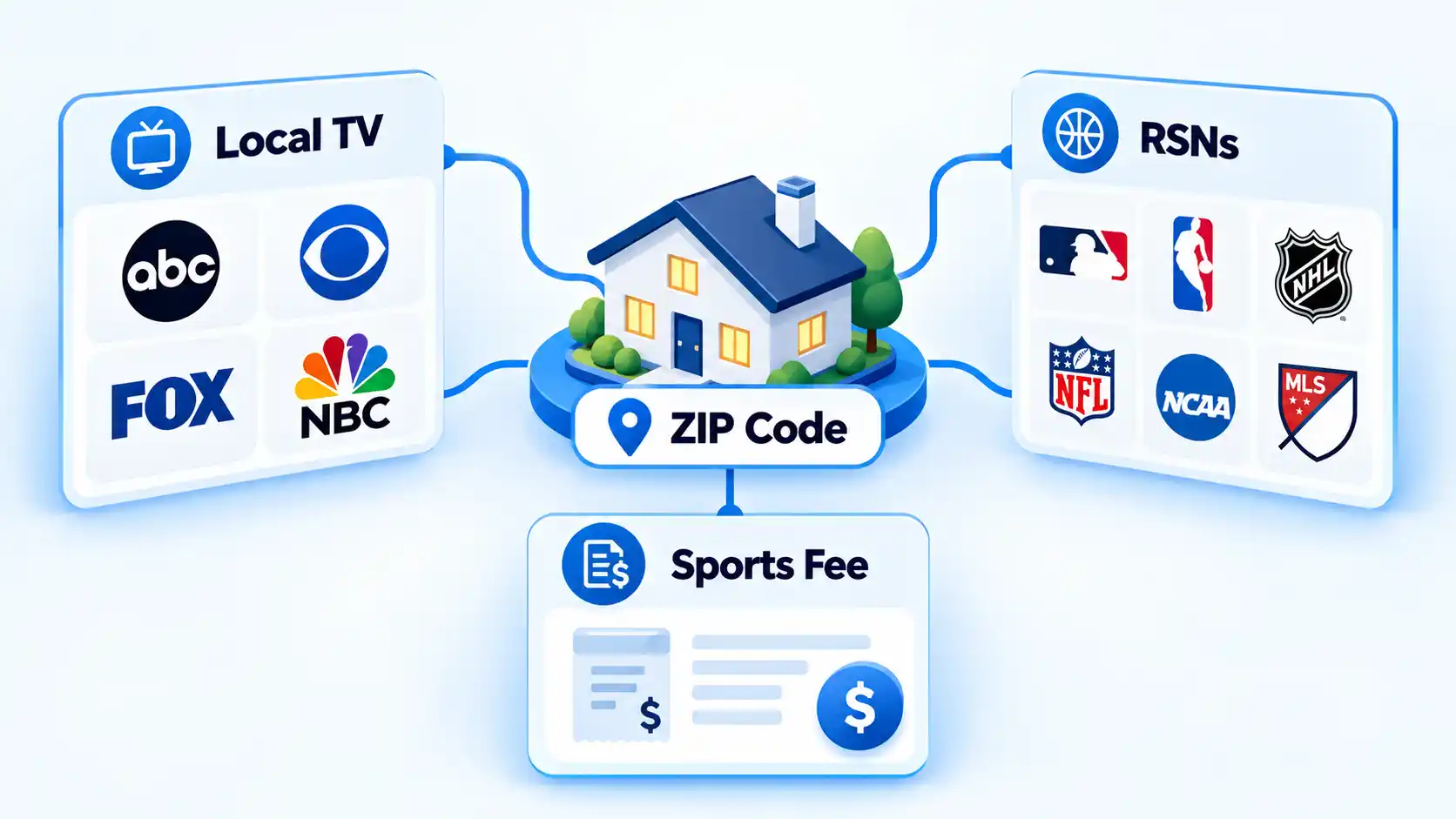
Fubo does not have one fixed nationwide channel bundle or one price that applies to every viewer. Your base plan sets the starting price, while your location, regional sports coverage, and optional add-ons can change both the channels you receive and the amount you pay.
Quick Take
Start with the regular monthly plan price, then check your ZIP code, must-have channels, regional sports coverage, and optional extras. Fubo’s channel totals, trial terms, promotional prices, and some sports costs can vary, so the checkout total and your location-specific lineup matter more than a headline channel count.
Promotional pricing can reduce the first payment, but the regular monthly rate is more useful for estimating long-term cost. Before subscribing, identify the channels or teams you consider essential and verify them against the plans Fubo offers for your area.
Fubo plans and prices at a glance
Think of the base plan as the starting layer of your subscription. It determines the broad mix of sports, news, entertainment, and Spanish-language programming before optional services or location-specific charges are added.
Advertisement
Fubo’s regular monthly plan prices currently include the following widely advertised options. The same page can show temporary first-month discounts, and Fubo states that prices are subject to change.
Current broadly advertised Fubo plans and regular monthly prices
Plan
Regular monthly price
Broad focus
Regional sports
Distinctive point
Sports + News
$64.99
National sports, broadcast programming, and news
Eligible local regional sports can be added through My Local Sports in select markets
Lower-cost sports-focused route with ESPN Unlimited included
Pro
$88.99
Broad live TV with sports, news, and entertainment
Regional sports coverage and an additional fee can apply by area
Main full-size general TV package
Elite
$98.99
Expanded live-TV lineup
Regional sports coverage and an additional fee can apply by area
Broader channel selection than Pro, with 4K programming included where supported
Elite with Sports Plus
$108.99
Expanded lineup plus the Sports Plus package
Regional sports coverage and an additional fee can apply by area
Includes Sports Plus with NFL RedZone
Latino
$19.99
Spanish-language sports and entertainment
Coverage differs from the main English-language plan family
Lower-cost Spanish-language option
Do not assume the promotional price, free-trial length, or displayed channel total will be identical for every visitor. Fubo’s live signup pages can show different offers and lineup totals, so use the plan details presented for your account and location.
What channels you get with each Fubo plan
A plan name alone does not tell you the exact lineup at your address. National networks can appear across several tiers, while local broadcast stations and regional sports networks depend more heavily on location.
Fubo carries national sports networks including ESPN, FOX Sports, NFL Network, and CBS Sports Network. Local broadcast and regional sports availability can differ by market, which is why two subscribers on the same named plan can receive different local or regional programming.
Advertisement
A regional sports network, often shortened to RSN, focuses on teams within a particular geographic territory. If a local NBA, NHL, or MLB team matters to you, the RSN serving your ZIP code can be more important than the plan’s overall channel count.
Instead of relying on a long static directory, search for the networks you cannot do without. Fubo lets you compare plans and search for a specific channel. If the channel is absent from both selected plans, the tool can indicate that another plan or add-on is required, or that the channel is unavailable.
Channel totals also change across Fubo’s live landing-page variants. Treat those totals as a snapshot for the offer and location being shown rather than a permanent nationwide specification.
Once the subscription itself is sorted, the way you watch it on a television is a separate choice. A Smart TV app, Google Cast setup, or streaming stick can each deliver streaming video, with different hardware and control trade-offs.
Advertisement
Sports + News and My Local Sports explained
If most of your viewing revolves around sports rather than a large general-entertainment bundle, Sports + News is the lighter Fubo option to examine. Fubo also refers to the service as Fubo Sports in its corporate materials.
Local-team coverage is separate. Fubo launched My Local Sports on September 29, 2026, allowing Sports + News subscribers in select markets to add an eligible regional sports network together with sports-focused FAST channels. FAST means free ad-supported streaming television: linear-style streaming channels funded by advertising rather than a separate subscription fee.
There is no single nationwide My Local Sports price because RSN add-on pricing varies by market. Availability also depends on which regional network serves your area.
Advertisement
If local teams determine your subscription choice, understanding how Fubo regional sports availability works can help you separate national sports coverage from market-specific team access.
Fubo add-ons and premium channels
Add-ons let you pay for extra programming without moving every viewer to a larger general-purpose package. Some expand sports coverage, while others add premium movies, international channels, or a specific league service.
As of October 3, 2026, representative Channel Store prices include:
Advertisement
MLB.TV: $29.99 per month.
Paramount+ with SHOWTIME: $10.99 per month.
FOX Nation: $8.99 per month.
NBA TV: $8.99 per month.
STARZ: $11.99 per month.
MGM+: $7.99 per month.
Hallmark+: $8.99 per month.
Paramount+ with SHOWTIME, STARZ, and MGM+ bundle: $20.99 per month.
Fubo also sells sports and international packages whose contents and prices can change. Before paying for one, search for the exact channel or event you want rather than assuming the package name includes it.
MLB.TV shows why access rules can matter as much as price. Fubo offers it for $29.99 per month for out-of-market MLB games, but blackout and other restrictions apply. A viewer trying to follow a local team should therefore check regional coverage separately rather than assuming MLB.TV replaces the local sports network.
The fees that can change your monthly bill
The advertised base-plan price is not always the final recurring charge. A useful estimate starts with the base plan, then adds any applicable regional sports fee, subscription add-ons, and taxes.
The largest location-dependent surcharge to check is the Regional Sports Fee. If your plan includes qualifying regional sports coverage, the fee can be as high as $16.99 per month. New customers can see the applicable amount during signup.
The fee is tied to receiving regional sports programming rather than being an optional switch. Fubo states that if your plan includes regional sports programming, the fee is applied automatically and cannot be removed while you keep that qualifying plan. Moving to a base plan without regional sports programming is the way to avoid that fee.
Advertisement
For example, a subscriber starting with the $88.99 Pro rate can owe more than $88.99 when a Regional Sports Fee applies. Subscription add-ons and taxes can raise the total further, so the recurring amount shown at checkout is the number to use for budgeting.
There is also a Roku billing exception: Fubo states that if you signed up through a Roku device, the Regional Sports Fee is $16 per month regardless of area.
If the checkout total is higher than the advertised plan price, tracing unexpected Fubo charges starts with regional sports fees, selected subscription add-ons, an expired promotional rate, and taxes.
How to check your exact Fubo lineup
Do this before paying if one local station, sports network, or team determines whether Fubo works for you. The goal is to verify the channel against the plans and location Fubo is actually offering you.
Advertisement
Open Fubo’s current plan page. Visit Fubo’s live plan page instead of relying on an old screenshot or cached price list.
Confirm your area. Enter or verify your ZIP code when prompted. Fubo uses location information to determine applicable local and regional programming.
Open the full plan list. Select View all plans and add-ons so you can see the options Fubo makes available in your area.
Search your must-have channel. Type the network name into the channel search. If it is missing from both selected plans, check whether Fubo identifies another plan, an add-on, or no available option.
Check the recurring signup price. Review any Regional Sports Fee, subscription add-ons, promotional terms, and taxes shown before you subscribe. Use the recurring amount for your budget rather than the first promotional payment alone.
Which Fubo plan fits different viewing needs
Sports + News
Choose this if: you mainly want national sports and news and do not need the broader entertainment lineup in Pro.
Avoid this if: your must-have entertainment channels fall outside its lighter lineup or your local team requires regional coverage that My Local Sports does not offer in your market.
Main trade-off: a lower base cost in exchange for a narrower general-TV package.
Pro
Choose this if: you want a broad mix of live sports, news, local television, and entertainment without paying for Elite’s expanded lineup.
Avoid this if: a must-have channel appears only in a higher tier or add-on, or the final price after regional sports charges exceeds your budget.
Advertisement
Main trade-off: broader general-TV coverage at a higher monthly price than Sports + News.
Elite
Choose this if: you have confirmed that its additional channels or supported 4K programming fill a real gap in Pro.
Avoid this if: the extra programming does not add anything you regularly watch.
Main trade-off: an expanded lineup for $10 more per month than Pro before applicable fees.
Advertisement
Elite with Sports Plus
Choose this if: you already need Elite and have confirmed that Sports Plus channels such as NFL RedZone matter to you.
Avoid this if: the bundled sports networks do not add programming you would otherwise pay to watch.
Main trade-off: Sports Plus is bundled into a higher recurring base price.
Latino
Choose this if: your viewing is primarily Spanish-language sports and entertainment and its lineup covers your essential channels.
Advertisement
Avoid this if: you need the broader English-language channel selection offered by the main full-size plans.
Main trade-off: a much lower base price paired with a more specialized lineup.
Make the decision from the channels or teams you cannot replace, not from the largest advertised channel total. Once you find the smallest suitable plan, compare its recurring checkout price with any required sports fee and the extras you would actually buy.
If Fubo’s mix still does not fit your needs, a Fubo vs YouTube TV comparison is most useful when it compares your must-have channels, local sports access, and total monthly cost rather than raw lineup size.
Amgen’s Conor Hughes explores Ireland’s biotechnology industry and how an early STEM education can be the gateway to a future career.
A process development associate in inspection at Amgen, Conor Hughes’ first foray into the STEM space actually began in childhood.
He told SiliconRepublic.com: “The biotech industry made sense to me, given how well established it is in Ireland. However, my interest in science started much earlier, when I was a child. My grandparents used to bring me to the Young Scientist Exhibition every year and from the ages of six to 12, I never missed an exhibition at Trinity’s Science Gallery.
“So from an early age, I had an interest in science and discovery. As I progressed with my undergraduate and master’s studies in chemical engineering at UCD, the industry’s economic significance became more apparent. It was also clear that biotech provided numerous opportunities for growth.”
Advertisement
As part of his master’s programme, Hughes completed a 12-month internship at Amgen and eager to continue in this space, he explained a graduate programme “felt like a natural next step”.
He said: “I already had a good sense of the culture and could hit the ground running, while still having plenty to learn.”
Can you describe a typical day in your role?
Usually, my day starts with an assessment of our inspection performance at a cross-functional meeting. We look back at the previous 24 hours, see how the process development unit has performed and then look ahead to the next day. I am part of the commercial support team and a key part of my role is focused on problem-solving to ensure we get the most from our inspection machines. Working with colleagues across different functions to find solutions is also important.
There is a technical side to the job too, our inspection machines can process up to 400 vials and 300 syringes per minute and I develop vision tools that use image processing to identify any potential defects.
Advertisement
My favourite part of the job is the variety. I can spend part of the day in meetings discussing a problem or a new piece of technology, then head onto the manufacturing floor and implement the solution. It is very rewarding to develop an idea all the way from discussion stage through to physically putting it into practice.
Did your responsibilities and workload change as the programme progressed?
The programme has a natural progression. From the outset, it gave me exposure to different departments. Graduates are expected to attend meetings, ask questions and work with experienced colleagues, so I really value being part of team conversations.
As your experience grows, people start coming to you more often, which is recognition of your development. As my knowledge of processes has increased, I have become an established point of contact for colleagues, including senior staff members.
A recent example was working as inspection lead for the introduction of a new product on-site. As I’ve progressed, I’ve had more interaction not just across functions in Ireland but across the wider Amgen network. For example, I’m working with colleagues at other Amgen sites, including California and Puerto Rico, on developments in visual inspection and deep learning.
Advertisement
What skills have you developed since being part of the company’s programme?
My communication and problem-solving skills have developed significantly. In a fast-moving biotech environment, it’s not enough to have an idea or a solution in your head. You need to be able to explain it clearly so other people can understand it, challenge it and help you to move it forward. Troubleshooting is also a big part of my role and taking part in the programme has improved my ability to break down a problem and to arrive at a workable solution. I’ve also built up my technical skills on the job in inspection, vision engineering and image processing.
In addition to the programme itself, there’s a strong focus on continuous professional development at Amgen. For example, there is a weekly technology-sharing forum where people from different departments teach others about developments in their function. It gives you exposure to technical areas that are beyond your own day-to-day role.
What have been the most challenging parts of working life since taking up this programme?
Managing varied projects is one of the programme’s more challenging aspects. On one hand, it gives participants a real breadth of experience, but at the same time, switching your focus from one project to another can take some adjustment. Shift work and early start times make for a steep learning curve, but they also provide an opportunity to build close bonds with the colleagues who are working shifts and to take on more responsibilities.
Would you recommend the graduate programme at Amgen to others?
Absolutely. There is a huge variety of roles and the ability to move between departments and broaden your experience provides a major advantage during the early stages of your career. Amgen’s workplace culture means that it’s easy to speak to a colleague to find out what they do and to learn about their department.
Advertisement
Cross-functional learning is a big part of the culture here. Recently, the graduates took part in training at NIBRT, where we gained practical experience about filling lines and carried out activities linked to commercial manufacturing. Although my role is focused on inspection, the course was valuable because it gave me a better understanding of other parts of the process.
Amgen also has great social activities, including sports, fundraising and volunteering. The mix of technical learning, career development and community is a big part of what makes the experience so rewarding.
What advice would you like to give to future graduates who are just starting out?
Just go for it. The more responsibility you are willing to take on, the more experience you will get. Talk to managers and other graduates about what their day-to-day work entails. Follow the ‘ask and you shall receive’ approach, if there’s something you want to learn or get involved in, people will do their best to support you.
I also recommend getting involved in extracurricular activities. Amgen offers everything from tag rugby and five-a-side football to golf and beach clean-ups. It’s another great way to meet people and hear from experienced colleagues. Also, don’t be afraid to create something yourself. The main thing is to stay curious, get involved and enjoy the experience.
Advertisement
Don’t miss out on the knowledge you need to succeed. Sign up for the Daily Brief, Silicon Republic’s digest of need-to-know sci-tech news.















-Reviewer-Photo-SOURCE-Nena-Farrell.png "The Best Gifts Under $25 for Everyone on Your List (2026) 63")


-in%2520hand-SOURCE-Kat%2520Merck.jpg "The Best Gifts Under $25 for Everyone on Your List (2026) 69")
%2520offwhite%2520background%2520SOURCE%2520Amazon.jpg "The Best Gifts Under $25 for Everyone on Your List (2026) 70")


.jpg "The Best Gifts Under $25 for Everyone on Your List (2026) 76")










































You must be logged in to post a comment Login