
Tech & AI
Whatever AI Safety Is, It’s Not This


Here’s a fun history lesson for you. Don’t worry, we’ll make it quick! In 1966, nearly 51,000 people died on US highways. The overwhelming evidence suggested that many lives could have been saved with modern seat belts, which by then had been around for several years. The automotive industry responded by rallying together, and, in a triumph of self-regulation, voluntarily put the safety feature in every new vehicle that rolled off the line.
Kidding! Of course they didn’t do that. In the fall of 1966, Congress established the Department of Transportation and then passed the National Traffic and Motor Vehicle Safety Act as well as the Highway Safety Act, giving the federal government sweeping new authority to set safety standards. By 1968, seat belts were required in every new car. Despite a massive increase in highway traffic in the last 60 years, far fewer fatalities happen on the road today.
I was thinking about this while watching various AI CEOs huddle around US president Donald Trump on Tuesday, congratulating themselves and each other on having signed an AI safety accord. My colleague Maddy Varner wrote about the specific stipulations here, but the short version is that it’s largely up to the AI labs to keep themselves in check.
Or, as Trump put it even more succinctly in the Oval Office on Wednesday: “They’re gonna police, and they’re gonna police each other, and they’re gonna self-police, they’re gonna police themselves. It’s going to work out very well.”
So this is the current state of AI safety regulation. On one side are the AI executives, employees, and tech luminaries, who are all saying that there need to be clear, thoughtful, tactical rules introduced to avoid potential disaster. (Bill Gates, for instance, has been on a media blitz playing Cassandra about an AI apocalypse.) On the other side is Trump’s magical thinking that if you say something enough times, it must be true.
That’s not to say any of this is simple or easy. The question of how to properly “pace the frontier,” as some of those same executives like to say, remains open. Even if all of the major AI labs were to agree to a slowdown, there’s no good way to keep them to their word, and China would likely continue on its own path regardless. The US economy is increasingly propped up on the AI industry, which itself has become an ouroboros of financing deals and circular investments; any meaningful crackdown risks major instability that reaches well beyond Silicon Valley.
The automotive industry is also admittedly an imperfect analogy for all kinds of reasons. There’s no seat belt equivalent for AI, no straightforward solution that can demonstrably reduce risk overnight. (It also took decades for the majority of states to pass laws mandating that people actually wear them.) The potential harms are less certain and less quantifiable. AI doomers will tell you the technology could result in human extinction in a decade; skeptics argue that’s sci-fi marketing malarkey.

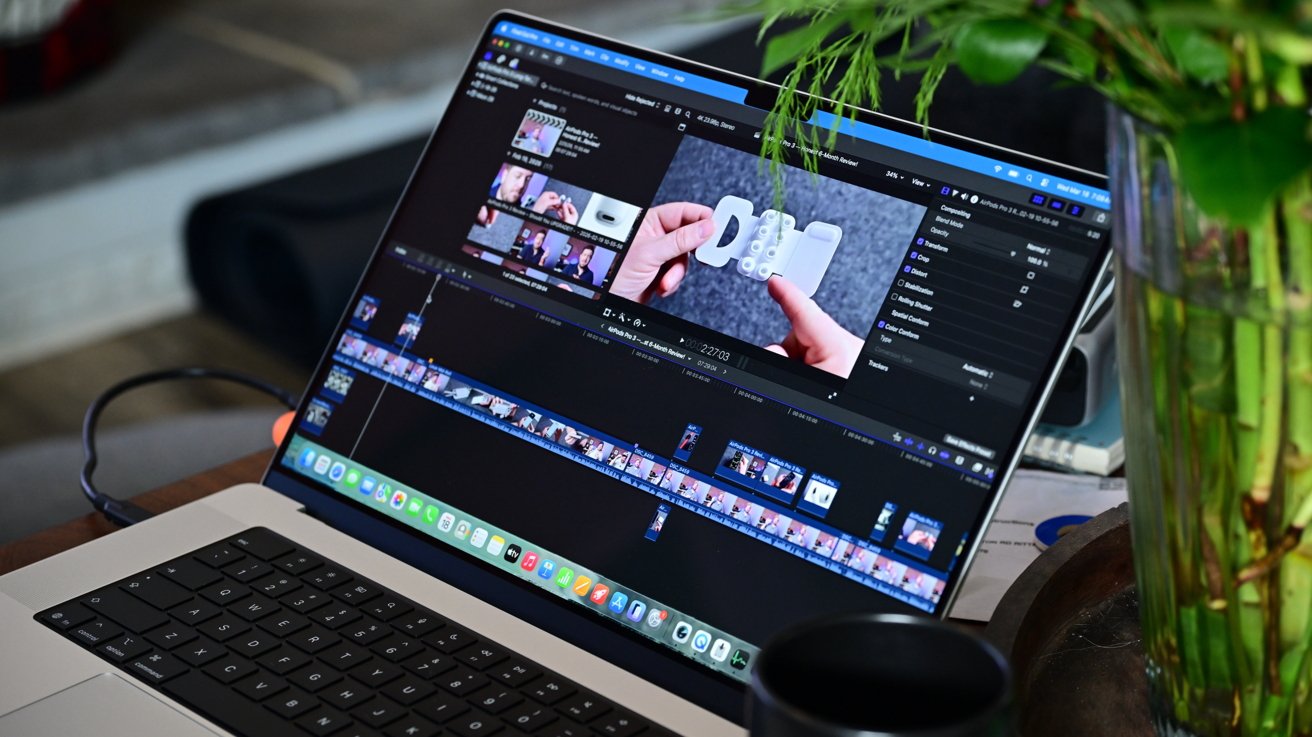
A YouTuber has accidentally revealed at least some of what is coming in the Final Cut Pro 13 update, including improved Pixelmator Pro round-tripping and a new Natural Motion Blur tool.
Final Cut Pro 12.4 was released on September 29 with the ability to add Cinematic mode effects captured with iPhone 18 Pro. Apple’s next update could arrive sometime in October, given a recent accidental YouTube posting.
Reddit user Sweaty_Succotash_375 pointed out that YouTuber The Final Cut Bro accidentally posted then made a video private that touted “Final Cut 13 is here!” User umChiled shared a chapter list, which shows what features can be expected in the new update.
Here are the features called out in the chapter markers:
- More language support for transcriptions
- Pixelmator image roundtrip editing
- Natural Motion Blur
- Pinch to zoom and viewer controls
- Disconnect clips
- Keyframe easing
Several of these features appear to be long-awaited updates for Final Cut Pro. It’s a big update going to version 13, so Apple included several big changes.
It is already possible to send a frame to Pixelmator Pro, but only as a still image for editing. The new roundtrip improvement isn’t an export, but a frame editing tool that reinserts what you’ve edited.
Natural Motion Blur and Keyframe Easing both appear to be big features. Several animation tools have been added, which could mean vastly improved controls over objects in scenes.
Apple hasn’t announced Final Cut Pro 13, but new Macs, like a touchscreen MacBook Pro with OLED, are expected before the end of 2026. Expect the new Final Cut Pro update to be revealed at the same time.

Can Schools Trust AI Add-Ons?
Edtech vendors are swiftly integrating AI features into new and existing instructional materials, often claiming that the features are educationally effective. EdReports, an independent nonprofit that reviews K-12 curriculum, recently went looking for the evidence behind those claims. What it found raises hard questions for any district leader weighing an edtech purchase this fall.
What Happens When the Teacher Doesn’t Have a Say?
Some AI tools let a teacher review content before students see it, while others put that content directly in front of students in real time. Courtney Allison, the chief academic officer of EdReports, spent 15 years with the New York City Department of Education, including time as a middle school math teacher. She explains why the old line between core and supplemental materials is starting to disappear, and weighs in on AI tutors giving every student a different lesson. She also tackles whether it is fair to ask vendors for proof when generative AI has only been widely available for a few years.
A Former Chancellor in the Buyer’s Seat
Someone has to decide which AI products deserve a place in classrooms, and that responsibility often falls on districts. Dr. Lewis Ferebee joined EdReports as CEO this summer after becoming the longest serving chancellor in the history of DC Public Schools. He brings a district leader’s perspective to the question of who should be checking these products and who should pay for that work. He also shares the questions he would ask a vendor sitting across the table.
Stories Mentioned in This Episode
AI in K-12 Instructional Materials: What We’re Seeing by EdReports
This Week with EdSurge is a weekly podcast from EdSurge. Subscribe to the EdSurge newsletters for more news and analysis on education and technology.
Tech & AI
SpaceX’s rideshare launch kicks off milestone mission for Starfish Space’s first Otter space vehicle
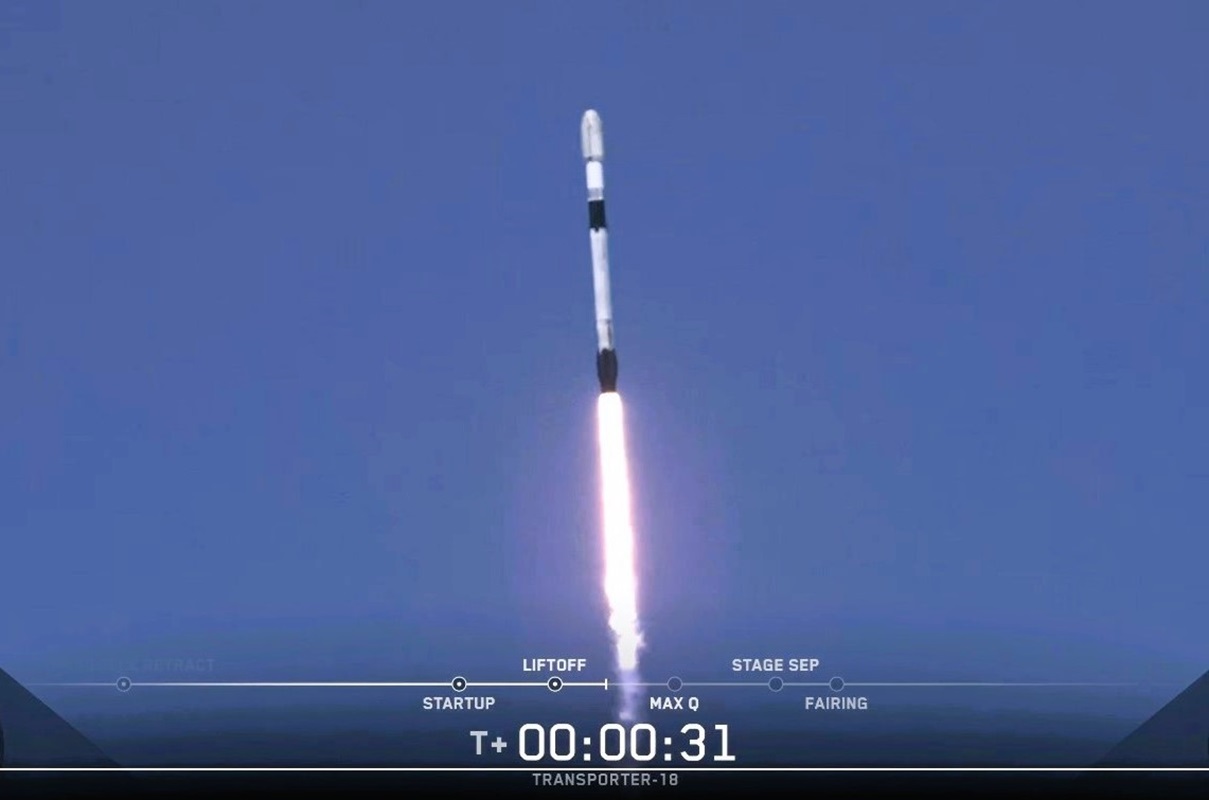
Starfish Space’s first full-scale Otter satellite servicing vehicle went into orbit today, marking a major milestone for the Tukwila, Wash.-based startup.
The Otter spacecraft was among 130 payloads launched from Vandenberg Space Force Base in California aboard a SpaceX Falcon 9 rocket. Otter is roughly the size of a kitchen oven, with solar arrays that were folded up for launch.
Other payloads on the satellite rideshare mission, known as Transporter-18, included Cowboy Space’s first power-beaming satellite, a prototype for Google’s AI data-center constellation, and a NASA-funded probe that will track the energy released by galaxies and supernovas.
Today’s liftoff through surface-level fog — and the return of the Falcon 9’s first-stage booster to a nearby landing pad — proceeded like clockwork. A little more than an hour after launch, Otter separated from the rocket’s upper stage and powered up for orbital operations.
Once Otter is fully commissioned, it will rendezvous with and inspect a series of inoperable satellites for a $15 million NASA mission known as Small Spacecraft Propulsion and Inspection Capability, or SSPICY for short. The capabilities demonstrated by SSPICY could be used during future missions to check the health of active satellites, or dispose of defunct satellites.
SSPICY may not be the only mission that Otter takes on during its operating lifetime.
“Success in the mission is to actually go and provide this commercial inspection service on a number of these different spacecraft, and that will be a huge win in and of itself,” Starfish co-founder Trevor Bennett told GeekWire last week. “But we’re also bringing Otter along to provide servicing well beyond that, so we could go and inspect more spacecraft, or potentially do some additional docking past the initial mission.”
This inaugural Otter mission follows up on two orbital flight tests involving smaller-scale Otter Pup prototypes. The first test fell short of linking up with its target satellite but was able to demonstrate Starfish’s satellite-tracking system. The second Otter Pup went into orbit last year and is currently closing in on its target.
Starfish Space is already preparing for future Otter missions — including a satellite disposal job for the Pentagon’s Space Development Agency, two commercial satellite servicing missions in geostationary Earth orbit, and two servicing missions for the U.S. Space Force.
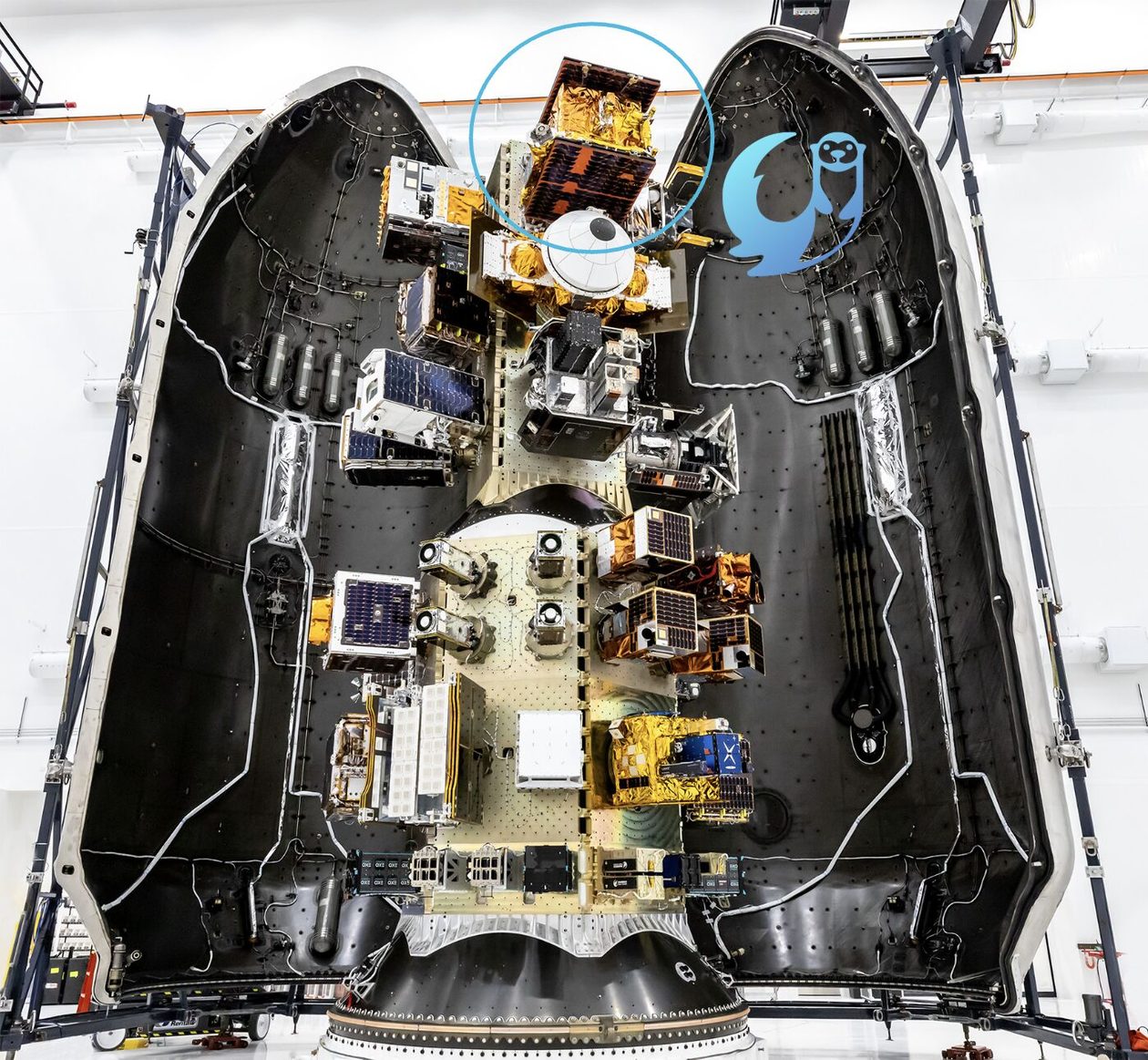
More about Transporter-18’s payloads:
- Cowboy Space’s Reason-1 satellite is designed to collect solar energy in space and transmit it to a ground receiver with a kilowatt-class laser, advancing technologies central to the company’s planned orbital data centers. Cowboy Space, formerly known as Aetherflux, is headquartered in California but is setting up a 291,035-square-foot manufacturing facility in Kent, Wash.
- Google’s Project Suncatcher M1 prototype, built by Planet Labs, will test the tensor processing units that Google plans to use for its orbital AI data-center constellation. The prototype is “designed to gather in-orbit data on how our TPUs handle the physical stress of spaceflight and the radiation and thermal extremes of space,” Google said in a blog post.
- Star Catcher’s Protostar satellite will be involved in an experiment to beam power from the main spacecraft to a smaller deployable satellite equipped with off-the-shelf solar panels. The Protostar mission is meant to blaze a trail for the orbital power grid that Star Catcher hopes to create.
- The SPRITE CubeSat is part of a $4 million mission funded by NASA and led by the University of Colorado that will study how stars and galaxies shaped the evolution of the early universe. The satellite is equipped with a far-ultraviolet imaging spectrograph. SPRITE stands for Supernova Remnants and Proxies for Reionization Testbed Experiment.

The U.S. 4K Blu-ray player market has become fairly easy to understand. Panasonic still sells excellent conventional players, Magnetar will happily sell you something substantially more ambitious, and almost everyone else has either left the building or is standing suspiciously close to the exit.
Japan apparently did not get that memo.
Panasonic’s new DMR-4X10¹⁰ is not merely an Ultra HD Blu-ray player. It combines a 10TB internal hard drive, 11 television tuners, automatic multi-channel recording, Ultra HD Blu-ray playback and recording, cloud storage support, remote viewing and extensive program management inside one component.
In other words, Japan gets a 10TB home video command center, while America gets another notification asking whether we are still watching.
Related Reading:

This Is Not Just a 4K Blu-ray Player
Calling the DMR-4X10¹⁰ a disc player misses most of the point.
Panasonic has equipped its flagship new DIGA recorder with 10TB of internal storage and 11 tuners covering Japan’s terrestrial digital, BS/CS satellite and BS/110-degree CS 4K broadcasts. Eight tuners are dedicated to automatic recording, two can switch between automatic and conventional recording duties, and one is reserved for conventional recording.
With the appropriate recording settings, Panasonic says the DMR-4X10¹⁰ can automatically retain as many as eight HD channels for approximately 28 days, while an additional allocation can capture either one 4K channel for approximately 13 days or two additional HD channels for roughly the same period.
Older recordings can then be automatically deleted as space is required.

10TB Is Only the Beginning
The internal hard drive can store approximately 390 hours of native 4K broadcast material at 33Mbps, according to Panasonic. Longer-duration compression modes stretch that dramatically further, although image quality naturally becomes part of the trade-off.
Users can also archive compatible recordings to recordable Blu-ray media. The DMR-4X10¹⁰ supports BD-RE discs up to 100GB and BD-R media up to 128GB, along with recordable DVD formats.
That combination of enormous local storage and removable physical media already distinguishes the DIGA from virtually anything available to U.S. home theater buyers.
Panasonic then added the cloud.
Cloud Recording Without Surrendering Everything to Streaming
Panasonic describes one of the DMR-4X10¹⁰’s major new features as Cloud Recording, although the terminology requires some explanation.
The machine records television programming locally first. Selected recordings can then be copied to Microsoft OneDrive or Google Drive, allowing users to free space on the internal hard drive, protect important recordings from a hardware failure and access stored programs remotely.
Panasonic says as much as 10TB of recorded programming can be stored in the cloud, subject, obviously, to whatever storage plan the user has purchased from Microsoft or Google.
Cloud-based recordings can also be viewed from a smartphone through Panasonic’s DIGA Anywhere app. Panasonic specifically cautions that cloud services can change, suffer outages or disappear entirely, so the feature should not be confused with guaranteed permanent archival storage.
Physical media just quietly cleared its throat.
The DMR-4X10¹⁰ also introduces playlist editing, allowing users to assemble favorite portions of recordings without deleting the original program, along with custom program tags for sorting material by performers, music or other criteria.
That sounds almost quaint until you remember how often a show disappears from a streaming service because somebody in a conference room changed a licensing agreement.
And Yes, It Still Plays 4K Blu-ray Discs
For all of the recording technology packed inside, the DMR-4X10¹⁰ remains a serious disc machine.
It supports Ultra HD Blu-ray, Blu-ray, Blu-ray 3D, DVD-Video and CD playback, along with BD-R/RE and multiple recordable DVD formats. Panasonic also includes its 4K Real Chroma Processor, HDR brightness adjustment and 4K direct chroma upconversion.
High-resolution audio file playback includes WAV up to 32-bit/384kHz, AIFF up to 32-bit/384kHz, FLAC up to 24-bit/192kHz, ALAC up to 32-bit/192kHz and DSD up to 11.2MHz.
Connectivity includes two HDMI outputs, three USB ports, Ethernet and built-in Wi-Fi. There are no analog, optical or coaxial audio outputs, which tells you fairly clearly how Panasonic expects the DMR-4X10¹⁰ to be used.
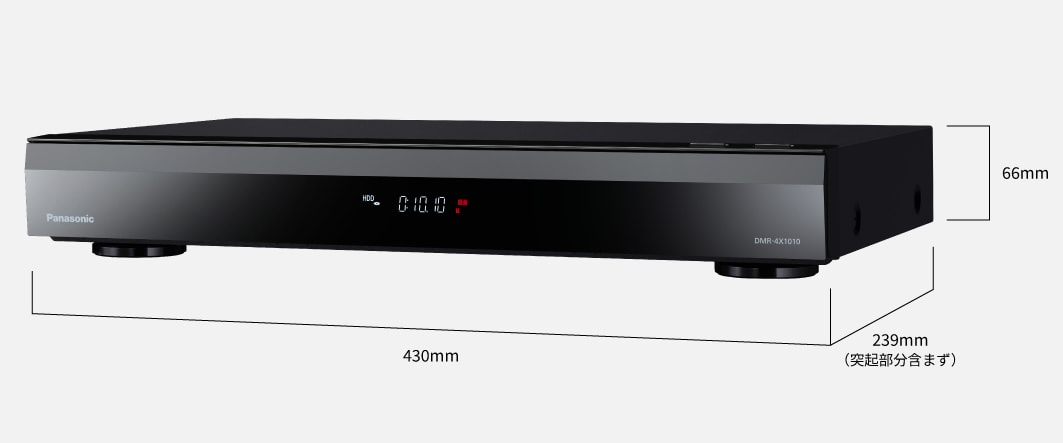
Panasonic DMR-4X10¹⁰ Specifications
- Product Type: 4K Blu-ray recorder/DVR
- Internal Storage: 10TB HDD
- Tuners: 11 total
- Automatic Recording: Up to 8 HD channels for approximately 28 days
- Additional Automatic Recording: Up to 1 4K channel or 2 HD channels for approximately 13 days
- 4K Native Recording Capacity: Approximately 390 hours at 33Mbps
- Cloud Services: Microsoft OneDrive, Google Drive
- Maximum Supported Cloud Recording Storage: 10TB
- Disc Playback: Ultra HD Blu-ray, Blu-ray, Blu-ray 3D, DVD-Video, CD
- Recordable Blu-ray: BD-RE up to 100GB; BD-R up to 128GB
- Video Processing: 4K Real Chroma Processor, HDR brightness adjustment, 4K direct chroma upconversion
- Hi-Res Audio: WAV, FLAC, AIFF, ALAC, DSD
- HDMI Outputs: 2
- USB: 3; 1x USB 2.0, 2x USB 3.0
- Networking: Ethernet, built-in Wi-Fi
- Power Consumption: Approximately 54 watts
- Dimensions: 430 x 66 x 239 mm (16.9 x 2.6 x 9.4 inches)
- Weight: Approximately 4 kg (8.8 pounds)
- Power: AC 100V, 50/60Hz
- Japan Price: ¥434,500 including tax through Panasonic’s online channel
- Availability: Japan, late October 2026
- U.S. Availability: Not announced
The Bottom Line
The Panasonic DMR-4X10¹⁰ is unique because it combines an 11-tuner DVR, 10TB of local storage, recordable Blu-ray support, Ultra HD Blu-ray playback, cloud archiving, and remote viewing in one component. Very few manufacturers are still treating physical media, broadcast television, and local storage as parts of the same home entertainment system.
What is it missing? For North American buyers, the obvious answer is compatibility. The DMR-4X10¹⁰ is built around Japanese broadcast standards, uses B-CAS, runs on 100V power, and has no U.S. version announced.
That makes this a product Japanese home theater and physical media enthusiasts get to enjoy while the rest of us admire it from afar. Panasonic has built exactly the kind of all-in-one video machine many enthusiasts still want.
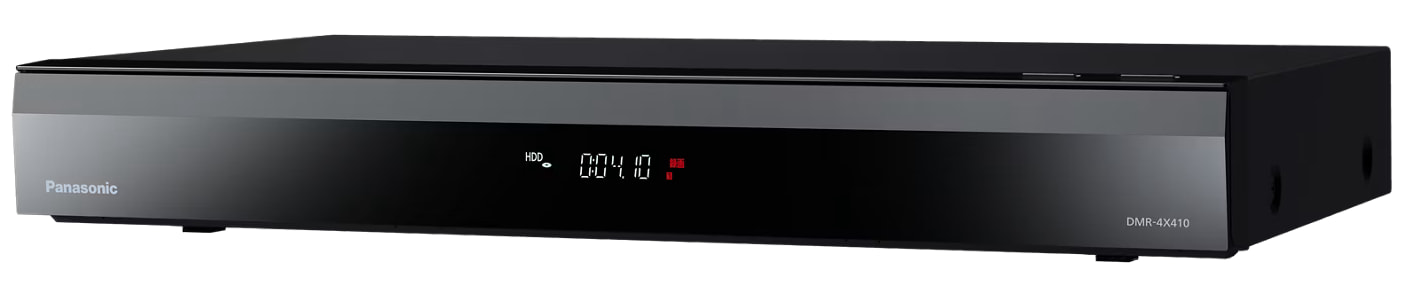
Price & Availability
Panasonic announced the DMR-4X10¹⁰ in Japan on September 14, 2026, with availability scheduled for late October 2026 at ¥434,500.
A less expensive DMR-4X410 version (¥209,000) reduces internal storage to 4TB while retaining 4K tuner capability and many of the same new cloud and organizational features.
There has been no announcement regarding U.S. or European availability.
Related Reading:
Lyft has agreed to pay $272.5 million to settle a lawsuit accusing the ride-hailing company of violating California law by misclassifying drivers as independent contractors, instead of employees.
The company said in a regulatory filing that it believes the settlement will allow it to avoid the “costs and distraction of protracted litigation and enable management to maintain its focus on executing its business objectives.”
Lyft could not be reached for comment.
The settlement stems from a lawsuit filed by the California Labor Commissioner’s Office in August 2020 that accused Lyft of treating drivers as independent contractors rather than as employees, as required under state law at the time.
The lawsuit alleged that drivers were denied minimum wage and overtime as well as other benefits and protections provided to employees, including paid sick leave and timely wage payments.
“This settlement is about the workers who came forward and spoke up. Their voices made this outcome possible,” California Labor Commissioner Lilia García-Brower said in a statement, adding that the LCO will forgo its share of the settlement and direct those funds to drivers who filed wage claims.
The settlement, which still must be approved by a judge, covers alleged violations from April 6, 2016 to December 15, 2020 — a period California was grappling with whether workers in the booming gig economy were independent contractors or an employees.
Today, drivers for app-based transportation services like Lyft and Uber are classified as contractors after voters passed ballot measure Proposition 22 in 2020. The ballot measure provided a carve-out from Assembly Bill 5, a state law passed in 2019 that required companies like DoorDash, Lyft, and Uber to classify gig workers as employees, entitling them to minimum wage, workers’ compensation, and other benefits.
Even after AB 5 took effect, Lyft, Uber, and other companies that relied on gig workers continued to classify their drivers as contractors. That eventually led to legal action from the LCO, California Attorney General and the City Attorneys of Los Angeles, San Diego and San Francisco, as well as private actions filed under California’s Private Attorneys General Act. The cases were coordinated in San Francisco Superior Court in September 2021.
The settlement closes this legal chapter, at least for Lyft. Uber still faces an LCO lawsuit that makes similar allegations.
When you purchase through links in our articles, we may earn a small commission. This doesn’t affect our editorial independence.

Ryan Roslansky is leaving Microsoft and LinkedIn after nearly 18 years, triggering another leadership shuffle across Office and Teams. “Roslansky, who until recently was the CEO of LinkedIn, was promoted to the head of Office last year and then took control of Microsoft Teams earlier this year,” notes The Verge. From the report: “Ryan leaves the organization in a strong position,” says Microsoft CEO Satya Nadella in an internal memo. “Over the past year, Ryan’s team has done critical work bringing together the product, engineering, and design foundations that have made this next phase possible.”
Roslansky is leaving a week after Microsoft announced its new Copilot, which the company is positioning as “the OS for work.” He’s also leaving around a month after calling fully AI-generated documents “a doom loop” for workers. “If we’re not careful, we’ll end up with a very expensive way to avoid writing and reading in an ocean of sameness, genericness,” said Roslansky in his LinkedIn post.
Microsoft is now moving the teams behind Office and Microsoft Teams over to Charles Lamanna, as part of the Copilot, Agents, and Platform (CAP) organization. […] Microsoft’s chief design officer, Jon Friedman, is also moving to report to Copilot chief Jacob Andreou. Microsoft appointed Dan Shapero as its LinkedIn CEO earlier this year, and he will continue in this role and report directly to Nadella.


Read more of this story at Slashdot.
Financial markets have always relied on timely information, and the drive for timeliness has always adapted to the latest technology. From clipper ships transiting the oceans to telegraph wires connecting cities to fiber-optic cables conducting trades in microseconds, traders have embraced any advantage to get the most up-to-date information. Indeed, the history of finance is really a story about how fast you can move information and who controls the interface.
It’s only natural that people also figured out a way to profit by supplying that market intel. In 1841, for example, the Mercantile Exchange (predecessor to Dun & Bradstreet) began selling proprietary business information to its U.S. clients. The following decade, Paul Julius Reuter began selling news services and stock price information. To supplement the company’s telegraph dispatches, he sent pigeons between Aachen, Germany, and Brussels; each bird carried a cylinder containing slips of paper with that day’s stock prices. In 1867, an inventor named Edward Calahan introduced the first telegraphic ticker-tape machine, which spooled out stock price information in near real time; Thomas Edison improved upon the design with his patented version in 1871.
The Dow Jones Industrial Average debuted in 1896 as an index of 12 key businesses listed on U.S. stock exchanges. It included gas, oil, coal, and electric companies, as well as enterprises dealing in leather, rubber, and tobacco. Messengers delivered quotes from the trading floor to brokerage offices, while stock tickers kept investors informed of prices. By the time New York City held its first official ticker-tape parade, in 1919, telegraphy in Western Europe and the United States had become the chief means for quick transmission of vital stock information.
In 1960, the first paperless financial service debuted, when Quotron introduced its electronic screens for displaying market quotes. Over the next two decades, other companies rolled out similar innovations for distributing financial news and data.
So when Michael Bloomberg decided to enter this well-established industry in 1981, the big question was: How would his new company stand out?
The Birth of the Bloomberg Terminal
Bloomberg had cofounded Innovative Market Systems (IMS) after being fired from the investment bank Salomon Brothers. Landing on his feet with his US $10 million equity payout and joined by former Salomon colleagues Thomas Secunda, Duncan MacMillan, and Charles Zegar, Bloomberg pursued his belief that Wall Street would pay a premium for specialized financial data. He’d earned an electrical engineering degree from Johns Hopkins University and an MBA from Harvard, and he’d built computerized financial systems for Salomon. IMS focused on developing a computer terminal that not only provided up-to-date information but could also do instant quantitative analysis based on historical data.
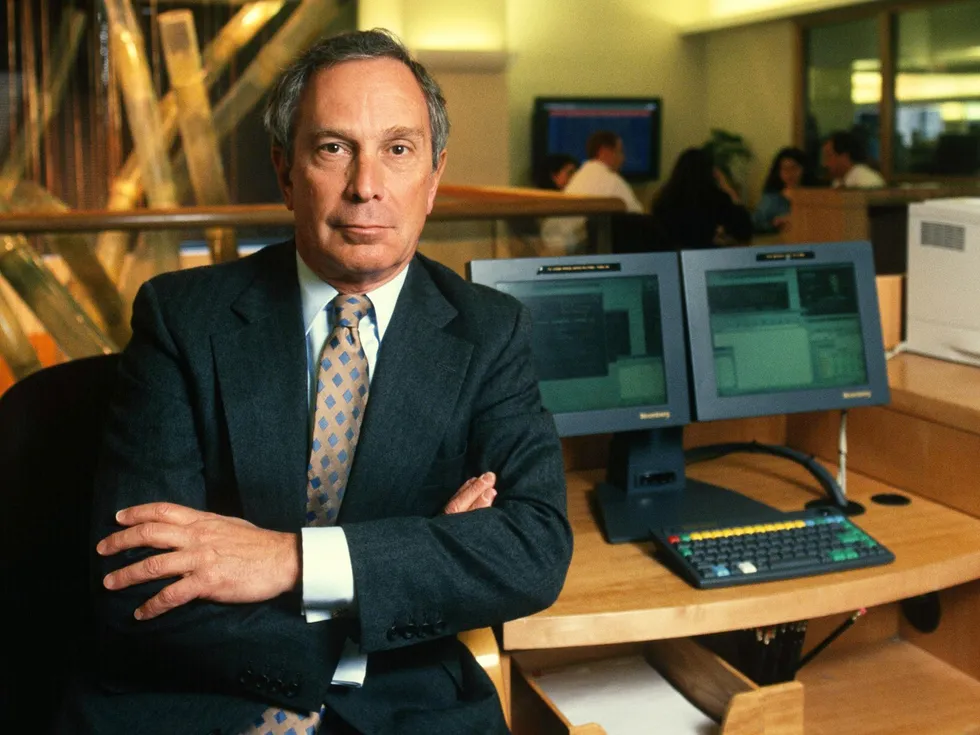
 Michael Bloomberg believed Wall Street would pay a premium for access to specialized financial data. Karjean Levine/Getty Images
At the time, most financial data still circulated through telephone calls, printed price sheets, and specialist publications, and analysis involved a fair amount of gut instinct guided by human expertise. Companies such as Reuters and Dow Jones provided subscription-based services for access to business news. But traders still had to assemble information from multiple sources and perform their own calculations and analysis.
IMS proposed an integrated system with a single interface. Its Market Master terminal consisted of a monochrome CRT monitor, a custom keyboard, and a communications/controller unit that connected to the company’s private network. At launch, it provided only U.S. government bond prices and bond-calculation tools, but the dream was much bigger: a dedicated terminal that would sit on a trader’s desk and run different market scenarios, produce yield curves, and support investment calculations.
IMS initially had just one client, Merrill Lynch, which invested $30 million (about $110 million today) in exchange for a 30 percent stake in the company and exclusive rights to the terminals for five years; Merrill waived that right in 1984. The first 22 Market Master terminals were delivered to Merrill in 1982, in the middle of a global recession. The timing was fortuitous. Worldwide, stock markets were transitioning to electronic trading, and the U.S. Federal Reserve was allowing more freely floating interest rates. Bond prices were more volatile, and investors were eager to figure out how to value them accurately. Bloomberg’s specialized financial terminals provided the data and the analytical tools to process and comprehend those sweeping changes.
Five years after its launch, IMS rebranded as Bloomberg LP and expanded its clientele, and the Market Master became known as the Bloomberg Terminal.
How Did the Bloomberg Terminal Work?
The Bloomberg Terminal’s keyboard was designed with traders and analysts in mind. The function keys were color-coded and given labels specifying their usage, so that users didn’t have to remember. The original keyboard, affectionately referred to as “the Chiclet,” was hand assembled. A cable ran from the keyboard to the Bloomberg Controller, which had a dedicated phone line to connect to a local hub. The internet wasn’t commercially available yet, so the company basically built its own closed network, with centralized computers that maintained large databases and performed most of the calculations. Commands entered on the keyboard sent a request to the hub, which processed the information and sent back the result.
 The Chiclet keyboard for the Bloomberg Terminal was introduced around 1983. Although it looks like a generic keyboard, its function keys were finance-specific hot keys.National Museum of American History/Smithsonian Institution
Hot keys let traders easily call up data on government securities, corporate debt, and currency markets, among other things. A series of keystrokes would pull up other historical and real-time data, run an analysis, or place a trade. Learning how to use the terminal and digest the vast amount of information, which was presented mostly in tabular form, became a rite of passage for users.
In 1990, Bloomberg added a trackball to the keyboard, which helped the user navigate the multiple windows and menus typically displayed on screen. Two years later, the keyboard gained a built-in speaker, to support multimedia information; this design also included telephone, headphone, and microphone jacks. One of the most popular features was Instant Bloomberg, which allowed users to chat directly with fellow Bloomberg Terminal users over the proprietary network. By 1996, Bloomberg had keyboards that supported 23 different languages. In the early 2000s, the company began incorporating biometric authentication for terminal login, via a fingerprint reader on the keyboard.
As the company’s business model evolved, the Bloomberg Terminal added services well beyond its initial offerings. In 1990, for example, worried that Dow Jones would stop providing access to its news stories, Bloomberg set up its own news service. It recruited Wall Street Journal reporter Matthew Winkler to oversee a dozen reporters; their stories on market and securities movements used graphs and calculations that served as advertisements for the terminal’s capabilities. These days, the Bloomberg news empire includes Bloomberg Businessweek, Bloomberg Radio, and Bloomberg Television.
Bloomberg’s subscription-based financial model included the leasing of a Bloomberg Terminal with its specialized keyboard and other hardware, access to a dedicated private network, and a suite of services. In 1999, a subscription to a single Bloomberg Terminal cost $1,600 per month with a minimum two-year contract and a discount on each additional terminal. Today the annual price is upwards of $32,000 (trending a little below inflation). In 1995, the company launched a suite of “Open Bloomberg” software products that ran on the customer’s own PC; five years later, it stopped leasing dedicated terminals. Current customers also have access to mobile applications that allow terminal functions to run on phones and tablets. Today, “Bloomberg Terminal” has come to refer to the integrated data, analytics, news, communications, and trading environment.
The Legacy of the Bloomberg Terminal
Although the shift away from dedicated terminals was a logical response to the rise of the internet and publicly available market data, it altered the material culture of financial work. For nearly two decades, Bloomberg Terminals commanded an aura of power and financial prowess. They were emblems of market mastery, with a brand that was distinct from other office computers. With Open Bloomberg, users were no longer tied to a single desk or a fixed set of monitors.
And so, cast-off Bloomberg Terminals found their way into museum collections. They’re a physical embodiment of the ethereal nature of financial markets, and a manifestation of mathematical calculations, network infrastructure, and business culture.
 The Bloomberg keyboard used by “Bond King” Bill Gross has his login and password taped on the front.National Museum of American History/Smithsonian Institution
The Smithsonian Institution’s National Museum of American History has a number of Bloomberg keyboards in its collection, but my favorite is object number 2014.0012.02, which was used by “Bond King” Bill Gross during the 1990s and 2000s at Pacific Investment Management. Gross had cofounded PIMCO in 1971 and built it into a $2 trillion bond investment firm. I especially love that Gross taped his login and password directly on his keyboard, which makes the object more relatable. I may never know what it’s like to manage billions in assets from a Bloomberg Terminal, but I absolutely understand the trial of remembering my passwords.
Part of a continuing series looking at historical artifacts that embrace the boundless potential of technology.
An abridged version of this article appears in the October 2026 print issue as “The Keyboard That Moved Markets.”
From Your Site Articles
Related Articles Around the Web
An anonymous reader quotes a report from 404 Media: A company that makes phone hacking devices claims to have developed a solution that freezes iPhones in a state that lets cops more easily access sensitive data inside them, according to a video obtained by 404 Media. […] The new technology to get around inactivity reboot was developed by Magnet Forensics, the company behind GrayKey, a popular tool sold to law enforcement agencies that allows them to unlock and access data stored in iPhones and Android smartphones. Magnet has developed a new device called GrayKey Preserve and a feature for its regular GrayKey devices called Evidence Preservation Mode, according to the video.
“This is an absolute game changer for iOS forensics and a function that I wish we had years ago,” a Magnet employee says in the leaked video, specifically mentioning that the solution is targeted at the iPhone’s inactivity reboot feature and the data it makes unavailable. GrayKey Preserve and Evidence Preservation Mode are also designed to combat another iPhone feature that automatically deletes certain data — such as cached locations, and recently deleted photos and iMessages — after a certain number of days. “We’re gonna be able to preserve that data for an infinite amount of time.”
[…] 404 Media shared a transcript of the video with Jiska Classen, a researcher at the Hasso Plattner Institute who studies iPhone security. While Classen said that it’s impossible to know for sure how Magnet’s new feature works based on the video, she posited some theories and agreed that it is “quite a game changer” or “at least puts things back to where they were before inactivity reboot.” She thinks Magnet has found a way to manipulate the iPhone’s clock, effectively “slowing down time” or even “stopping the clock from ticking, even after a reboot.” Most likely, according to her, the GrayKey may disable the iPhone tasks that set data to expire. The “inactivity reboot” feature mentioned above was added to iOS in November 2024 and automatically restarts iPhones that have not been unlocked for 72 hours, making them harder for police to access using forensic tools.
Read more of this story at Slashdot.
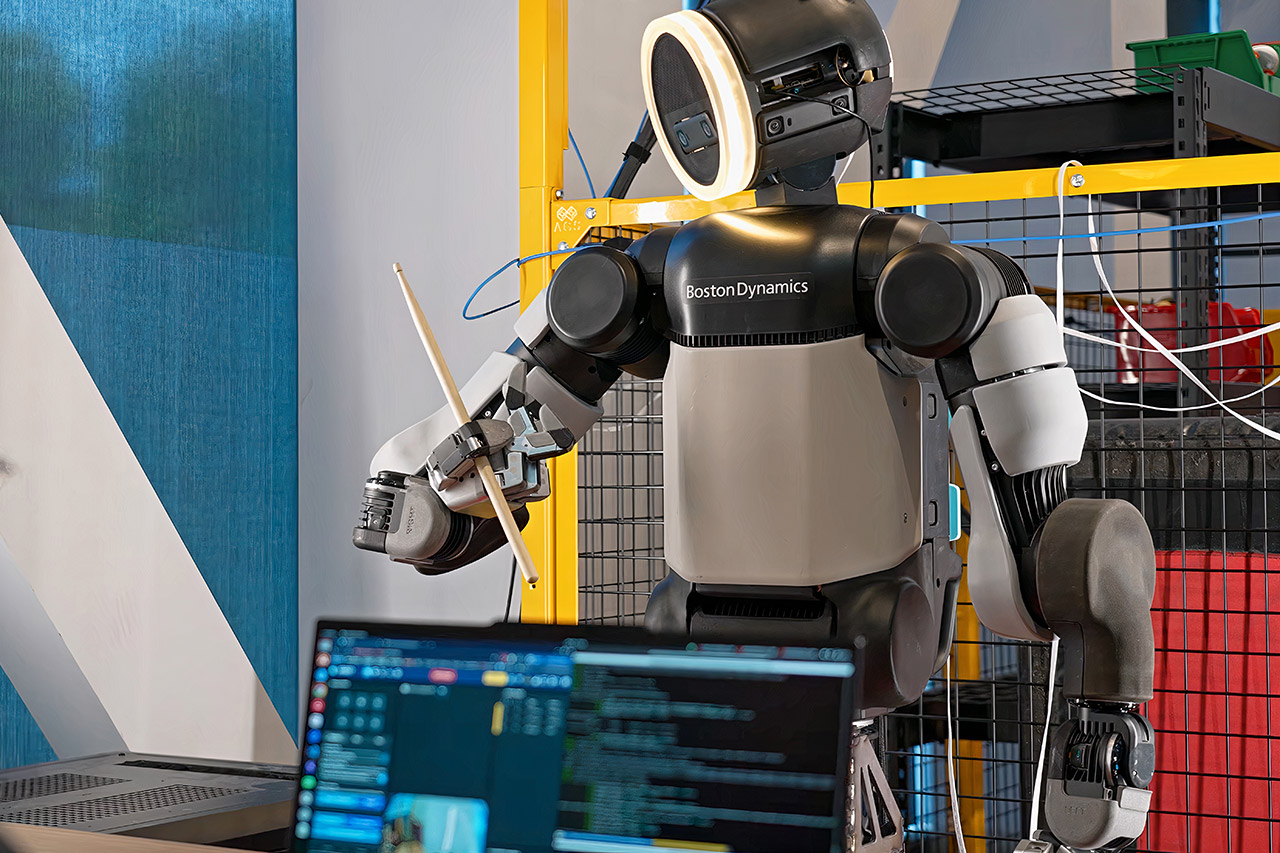
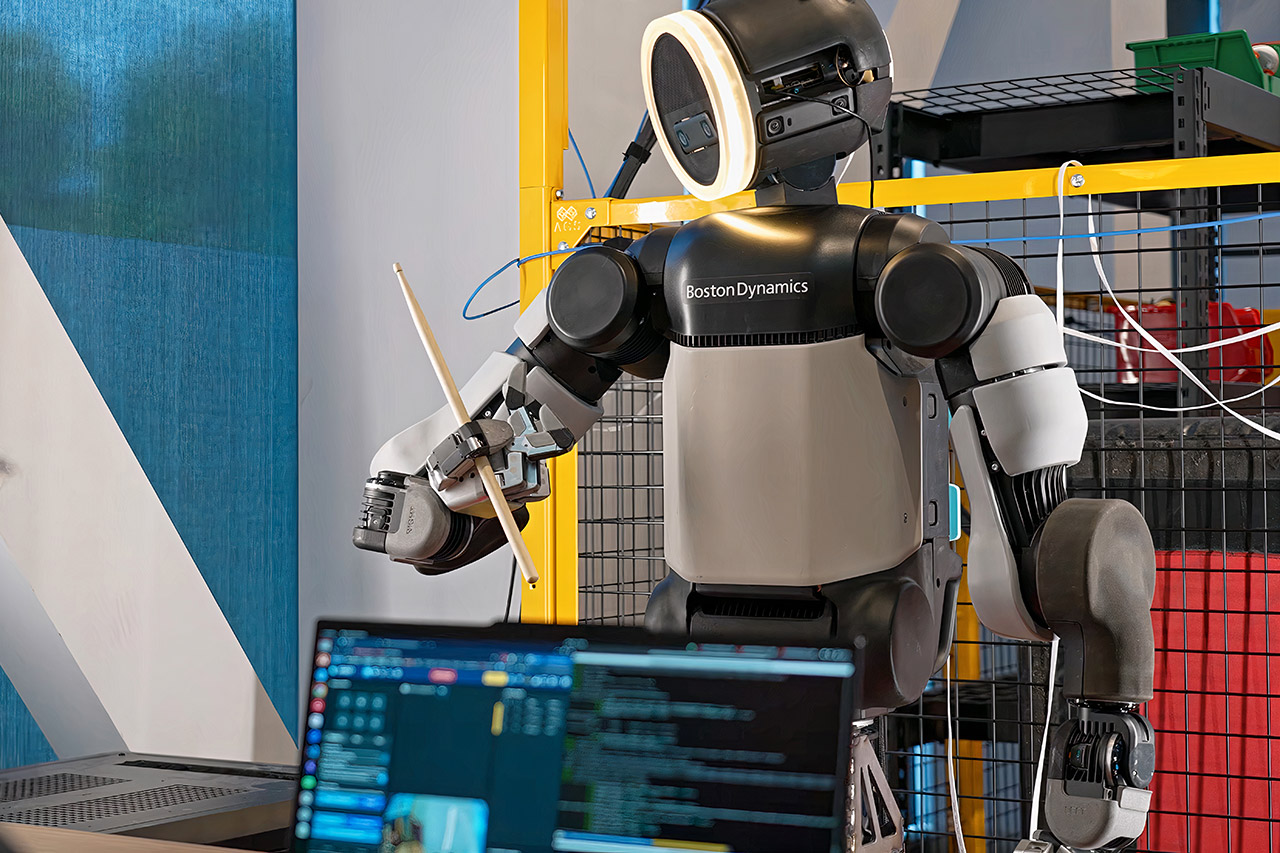
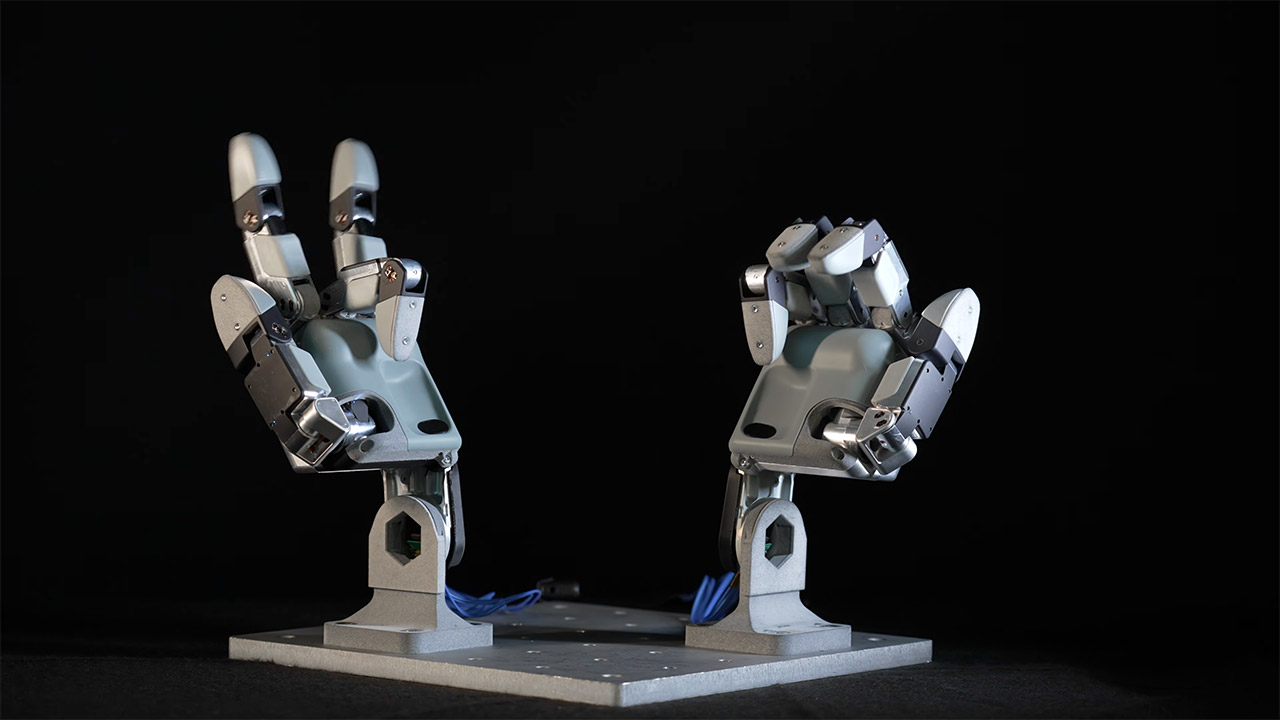
Boston Dynamics spent this morning showing Atlas a new pair of hands, and the first thing that stands out is a missing digit. There is no pinky. Four fingers sit on a palm a little larger than an average human hand, and the assembly is a little stronger than the gripper it replaces. Engineers reached that count with a blunt test: they taped a pinky to a ring finger and spent a day trying to work. The missing finger never blocked the jobs they cared about. Chief technology officer Zack Jackowski put the lesson in plain shop language. The best part is no part.
Older Atlas grippers, called GR2, had only seven degrees of freedom and were primarily meant to close around an object. The transition to newer models, such as the GR3, takes a significant leap to 13. Add in a thumb with four joints that can meet any other finger, as well as three joints on each of the other fingers that allow them to spread out and aim with precision. Every joint is powered by the same type of motor, which is snugly tucked inside the finger, eliminating the possibility of frayed external wires as the hand moved. This allows the hand to read the force of touch directly through the motors. The thick touch sensors on the fingertips and palm can detect even the smallest of touches that the motors may not be sensitive to.
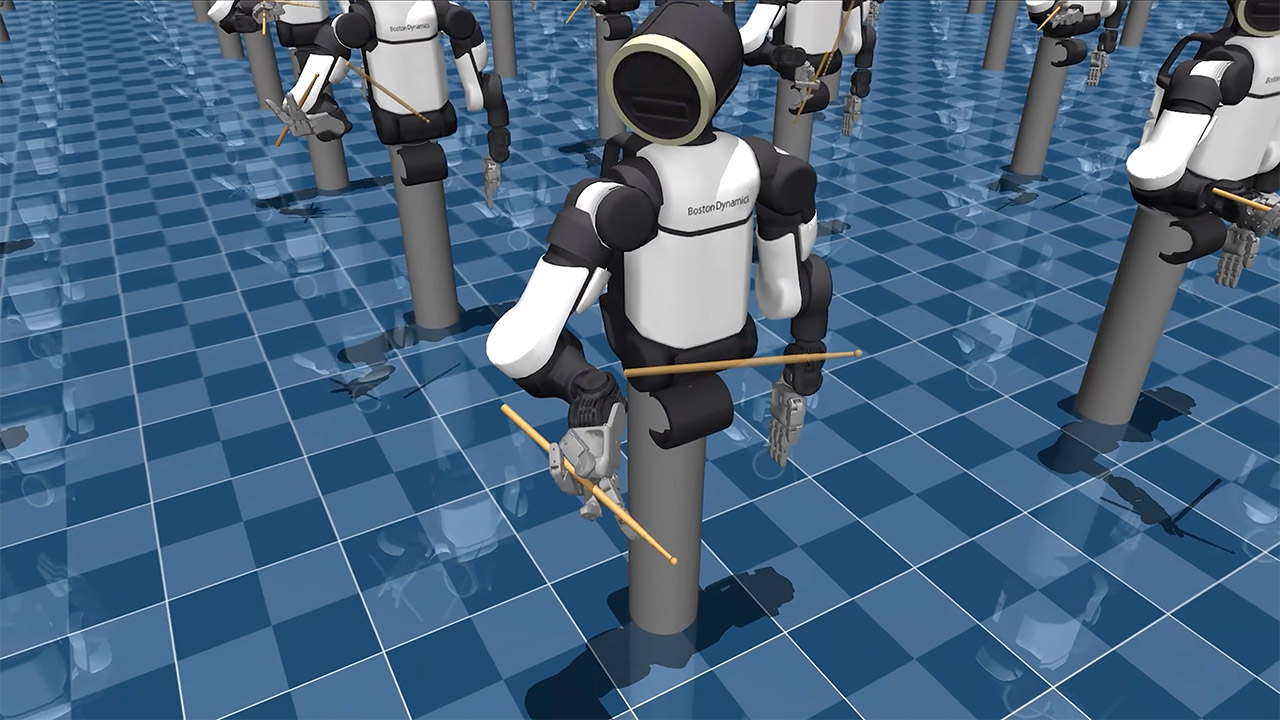
Clips from the latest video demonstrate how beneficial all of those extra joints are. A thumb can slide along another finger’s length or width when gripping a small object. Gripping with the thumb and any of the digits is also an option, and a 3-point grasp can be used to hold a tool steady while yet allowing you to move it about. Atlas has already demonstrated excellent performance by pressing triggers on drills, torque drivers, grinders, nail guns, and welding torches. If a grasp begins to slip, the fingers can recover without dropping the object being held. Atlas has a payload rating of over 100 pounds, and we’ve seen Boston Dynamics use the robot to walk with a loaded small fridge on its back, so these hands better be up to the task.
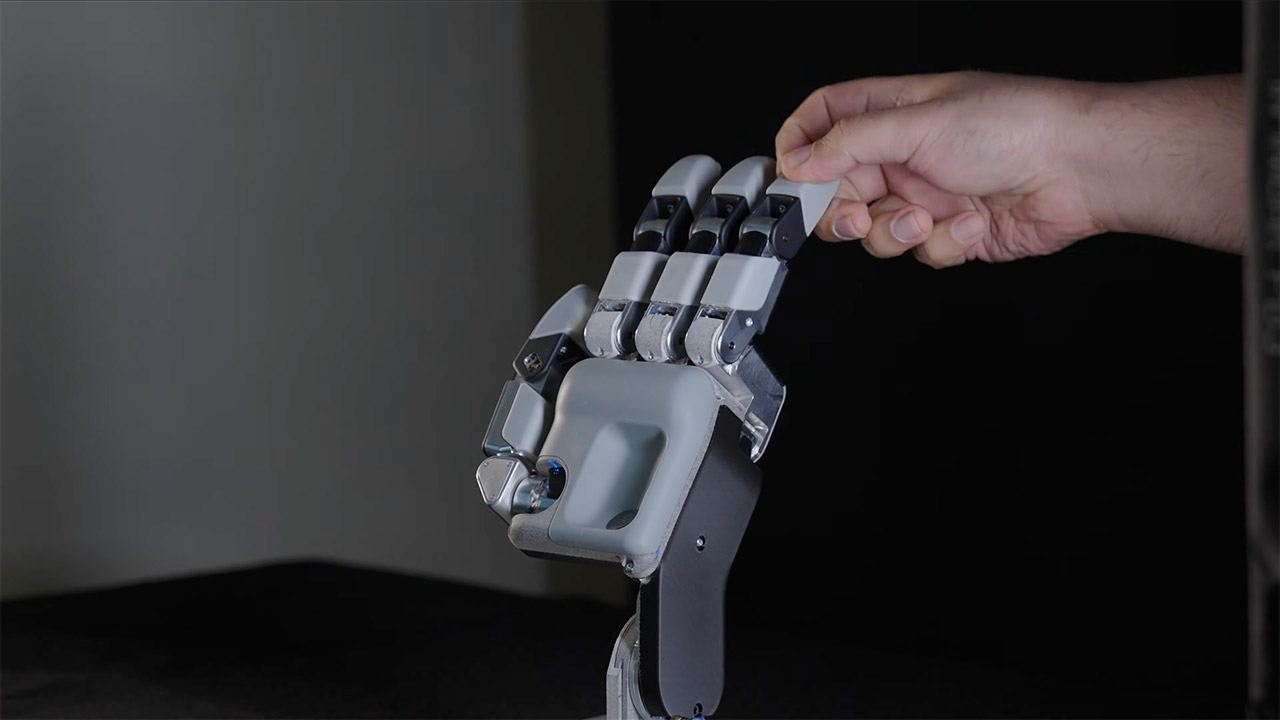
Alberto Rodriguez, who leads Boston’s robot behavior team, insists that hand design is all about giving up one thing to acquire another. Of course, this implies that strength, durability, affordability, repairability, and sensing are all competing for the same limited amount of space. Many other businesses are attempting to produce something that closely resembles a human hand, including tendons flowing through soft fingers. Those hands can look quite convincing in a movie, but they’re also fragile, prone to straining or cracking, and expensive to construct in large quantities. Atlas is willing to give up the cosmetic appearance in order to achieve something that functions.
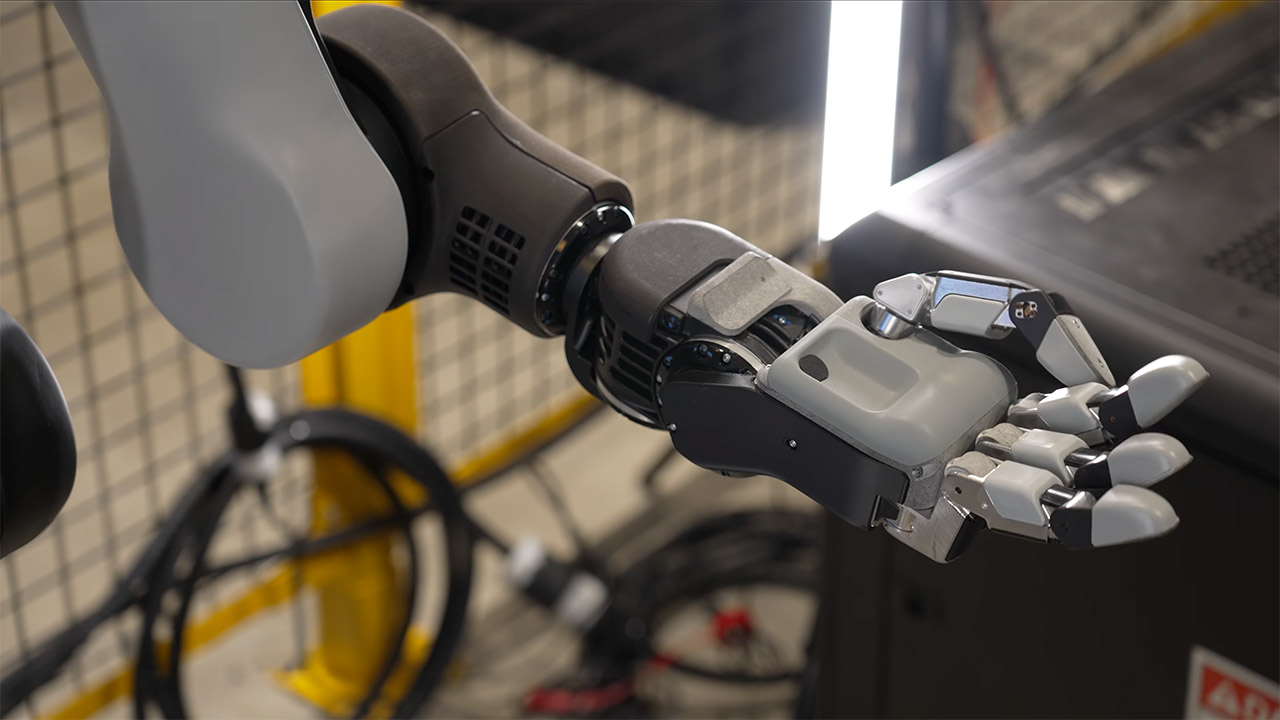
Rodriguez claims that the hand design is not horrible, but it does mean that the fingers can travel farther than a human hand would ever allow. Even so, he believes that by practicing in simulation, we can discover new ways to use those extra motions, and that because the hand is near enough in size to a human hand, we can still learn a lot from watching a human perform a task, even if it’s just the general outline of what has to happen.
The other part of the issue is getting the simulation correct. The motors are simple enough that we can replicate them fairly realistically, and training sessions can alter a variety of factors like as torque, friction, item form, and how something would drop on your palm. That way, when we come to the actual thing, we can be confident that the hand will continue to perform as planned. On the other hand, the motors’ quick readings provide the majority of the feedback we require, with the pads detecting even the tiniest touches. Swapping out a failing motor is as straightforward as swapping out an entire unit, so we can keep the hand going even if one of its components fails.
Tech & AI
EXCLUSIVE: How Mike Flanagan’s Carrie revitalizes Stephen King’s classic story for Prime Video

After adapting Stephen King stories like Gerald’s Game, Doctor Sleep, and The Life of Chuck, horror filmmaker Mike Flanagan has taken on the author’s breakout novel in Prime Video’s Carrie series. Many people are already familiar with the story: a shy teenager with telekinetic powers faces vicious bullying from her peers until she unleashes psychic vengeance on Prom Night.
While Carrie has been adapted into multiple feature films, most notably by Brian De Palma in the ’70s, Flanagan expands the original novel into an eight-episode Prime Video miniseries set in the present day. At this point, one may wonder why another Carrie adaptation is needed. But with its layered story, realistic characters, and timely depiction of school bullying, Flanagan’s Carrie delivers one of the best Stephen King adaptations ever.
Carrie expands King’s story and characters

Fans already know Carrie White as a girl brought up by her abusive, fanatical mother. However, Flanagan’s series builds upon that as we follow Carrie from childhood to adolescence with a new story. In the show, Carrie, played by Summer H. Howell, had never left her house and was homeschooled by her paranoid, conspiracy-based parents. On her first day of public school, she enters a whole new world, having never used a smartphone or even a computer. Because Carrie has grown up scared of the outside world, her journey to high school becomes even more terrifying for her and the audience.
The series doesn’t just change Carrie. This eight-episode story spends much of its time exploring the lives and struggles of Carrie’s mother, her classmates, and the adults who knew her in the town of Chamberlain. Even villains like Margaret White (Samantha Sloyan) and Chris Hargensen (Alison Thornton) evoke more sympathy because of their nuanced characters and troubled backgrounds. We then see how the two of them became abusive, mean-spirited people, showing how bullying can begin not at school, but at home.
Overall, the town of Chamberlain feels more like a character that changes throughout the series. The scope and depth of the story only heighten Chamberlain’s tragedy when Carrie destroys the town and kills many of its residents.
Flanagan delivers a fresh, faithful interpretation of Carrie

From Oculus to The Haunting of Hill House to The Fall of the House of Usher, Mike Flanagan has often told his horror stories in a nonlinear perspective, playing with audiences’ perception of time and reality. While this makes for unconventional retellings of classic stories, it fits perfectly with Carrie. King’s novel actually presents its narrative through in-universe books, news stories, and investigative reports about Carrie and her rampage on Prom Night, featuring testimonies from students, teachers, and locals who knew her.
As a result, Flanagan’s series tells the story much like a true-crime docuseries, with Kate Siegel’s character interviewing Prom Night survivors and exploring psychic phenomena throughout human history. It actually feels like we’re learning things about the story that weren’t covered before in previous adaptations. Since general audiences have seen multiple Carrie films told the same way, Flanagan’s series stands out with a more distinctive approach.
The series explores adolescence, bullying, and violence in the digital age

By setting King’s narrative in the present day, Flanagan’s Carrie expands on the source material by tackling issues affecting modern American youth. The show addresses problems like cyberbullying on social media, with Carrie becoming the center of a vicious meme account attacking everyone at her school. Sparking debates about misinformation and freedom of speech, this new storyline unleashes a firestorm of controversy that nearly destroys Chamberlain even before Prom Night.
Carrie also acts as a parable for mass shootings in schools, which have become more common in the decades since King published his novel. This can make Carrie’s psychic rampage at her school hit much closer to home with audiences. However, that makes King’s story as relevant today as it was 50 years ago.
Carrie ultimately shows how schools have become much more dangerous in modern America. At the same time, the show conveys how adults have failed the younger generation by mishandling parenting and education, making Chamberlain’s destruction seem even more inevitable.
Overall, Flanagan’s adaptation of Carrie makes some drastic changes to King’s original narrative. This can throw off fans of the latter, but the series justifies its existence by delivering a unique reimagining that tackles issues affecting modern schools. Though the story leaves the door open for another season, it preserves the horror and tragedy that made King’s story a groundbreaking classic.
Mike Flanagan’s Carrie premieres on Prime Video on October 7.

Whatever AI Safety Is, It’s Not This

Final Cut Pro 13 leaks ahead of announcement

Sir Kevin Sinfield surpasses £1million mark after latest leg of MND challenge


-

 Fashion6 days ago
Weekend Open Thread: J.McLaughlin – Corporette.com
-

 Tech & AI4 days ago
Anthropic turns Claude into an AI marketplace with 2,000+ plugins and connectors
-

 Tech & AI4 days ago
OpenAI is preparing “o,” an always-on ChatGPT assistant that could handle email
-
Business & Hustles3 days ago
Perpetua Resources at Mining Forum Americas 2026: shift to construction
-

 Business & Hustles7 days ago
Flock Safety camera hack yields 1.6M images, but expert says network safe
-

 Entertainment6 days ago
These 17 Amazon Fall Dresses Totally Conceal the Tummy
-
 Crypto4 days ago
Wall Street Giant Warns AI Agents Could Trigger a New Kind of Bank Run
-

 Crypto7 days ago
Crypto’s Split Screen: Washington Tightens the Rules as Markets Wobble and Hackers Strike Again
-
Business & Hustles3 days ago
Greatland Resources at Mining Forum Americas 2026: cash-rich growth push
-
Business & Hustles6 days ago
Security Breaches, Wall Street Deals and Tax Headaches Define a Turbulent Week in Crypto
-
Business & Hustles7 days ago
Explainer-What has turned the Afghan Taliban and Pakistan from partners to foes?
-

 Business & Hustles3 days ago
Andreessen Horowitz backs AI-era college alternative with $42M
-

 Tech & AI2 days ago
Alternatives to Animal Testing Are Finally Taking Off
-

 Business & Hustles7 days ago
Tokenised Deposits vs Stablecoins: Why Thailand’s Cautious Path Differs from Hong Kong and Singapore
-

 News Videos6 days ago
Being student with no income, while ur Family talks about financial problems around u#viralytquotes
-

 Tech & AI6 days ago
Anthropic rolls out up to $250 in free Claude Code credits, but only for cloud sessions
-

 Business & Hustles3 days ago
Bob Chapek on Disney Bob Iger power battle: Raised concerns weekly
-

 Business & Hustles4 days ago
What is the Budget and what could be in it?
-

 Business & Hustles4 days ago
Romania, Georgia and Latvia Lead Latest WHO-Based Ranking
-

 Crypto4 days ago
Citi says 77% of institutions eye tokenized collateral
You must be logged in to post a comment Login