For the longest time, reliability used to be the stick skeptics used to beat electric vehicles. The argument was that the things were rolling laptops, full of software and accompanying bugs that would inevitably freeze, along with batteries that would degrade into uselessness. Buy one, and you were an expensive beta tester just waiting for a problem to crop up outside of warranty.
However, we’ve found that this argument has aged rather like milk. As of 2026, electric vehicles are far more reliable than they were in 2016 — and this is to be expected, as with any nascent technology, the tech improves with time. A big plus in the EV corner is that these vehicles have a fraction of the moving parts that an ICE vehicle has, so mechanical problems are also far fewer. No timing chains, no about-to-go-bad exhaust systems, no fuel injectors that get clogged. Fewer parts, fewer problems — in one example, the vehicle used to be on Consumer Reports’ “least reliable” lists and is now on the other end of the spectrum — that’s how quickly the industry has matured.
Now, we’re not claiming that EVs don’t have their problems — far from it. Many do still have frequent glitches and bugs that prevent a smooth user experience. The charging network and speeds, though improved vastly, are still not where they need to be. However, from the lens of a relatively new technology, the notion that electric vehicles are automatically unreliable is out of date.
Advertisement
Ford F-150 Lightning
Just two years ago (at the time of writing), in 2024, the Ford F-150 Lightning electric truck earned itself a very undesirable spot on the Consumer Reports list of the most unreliable vehicles for that year. In 2024, the e-pickup got a miserably low Consumer Reports score of 28 points out of a total available 100 in the reliability metric.
In the 2025 overall Consumer Reports reliability survey, Ford vehicles got an overall score of 48, and the 2025 Ford F-150 Lightning got a reliability score of 45. That means that the blue oval EV pickup is about as reliable as the average Ford vehicle — which is a far cry from where it was two years ago. Readers should note that the 2026 Consumer Reports list of unreliable vehicles is out, and that the new F-150 Lightning is no longer on the list, which is a testament to the fact that stubborn-as-a-pack-mule Ford can still listen to customer and industry feedback when it wants to.
Advertisement
The reason we keep returning to the 2025 model is that Ford initially slowed production, and then eventually discontinued the F-150 Lightning after 2025. However, if you act fast, you might still be able to score a new F-150 Lightning from a dealer that still has one on the lot, or get one with low miles on the used market. In 2025, the F-150 Lightning had a maximum range of around 350 usable miles, and an MSRP of $65,190 (including destination).
Advertisement
Ford Mustang Mach-E
Though it carries the vaunted, historic Mustang nameplate, this thing is actually a crossover-ish SUV. Rightfully, this thing has got the purists sharpening pitchforks, but we can’t fault Ford for actually having the guts to experiment in this market. Initially revealed to the public at the end of 2019, the Mach-E SUV went on sale two short years later, as a 2021 model. A very trusted U.S. brand, J.D. Power recently released its EV ownership experience report for 2026. Historically, the Mustang Mach-E has done rather well in this comprehensive study, ranking in the top three (but never first) in 2022, 2023, and 2024. After a massive fall in rankings in 2025 (but still top ten), the Mach-E finally earned the coveted top spot for 2026.
Furthermore, the Mach-E also has insane levels of customer satisfaction, with nine out of 10 owners saying they would endorse it. For 2026, the Mustang Mach-E gets a reliability score of 74 out of a total available 100 points from the Auto Reliability Index, and 2021 models got a J.D. Power reliability score of 65, also out of a total available 100 points. The 2026 model comes with a 72 kWh battery and one motor as standard, which gives the vehicle about 264 horsepower and a range of about 250 miles. Pricing for the 2026 Mach-E begins at $37,795, on top of which a freight charge of $2,045 will be tacked on.
Advertisement
Volvo EX30
The EX30 is Volvo’s spiritual successor to the XC40 Recharge, which itself was the all-electric version of the brand’s popular small SUV, the XC40. Introduced in 2023, the EX30 had some teething problems, but it appears these have been sorted out. For 2026, the EX30 gets a respectable score of 71 out of 100 in its J.D. Power review, and an above-average 63 out of 100 in the reliability metric. The crossover SUV also got 86 out of 100 points under the driving experience metric, and 67 out of 100 in the resale value metric. For 2026, a new Volvo EX30 would sell for about $40,345 as base MSRP — including a $1,395 destination fee.
It is quite pricey for a compact-sized SUV, though proponents of the Swedish brand would argue that the excellent interiors and Volvo’s legendary safety reputation are worth the price. 2026 EX30s come with a 200 kWh battery pack as standard, along with one e-motor, which gives the car a range of about 261 miles. We should warn you that there is, however, a massive recall that affects a huge number of modern EX30s, so make sure that if you’re buying one of these, the fix has been done. Specifically, the recall was about a fire hazard from the battery igniting in about 40,000 vehicles or so.
Advertisement
Porsche Taycan
The Porsche Taycan is an all-electric, four-door car from Porsche that was very clearly intended to target buyers who wanted a Panamera, but electric. Now, no one should buy a Porsche vehicle expecting average or slightly above-average maintenance costs. It is a luxury vehicle with expensive parts and specialist labor, so the upkeep on this vehicle (and this entire class of vehicles) is meant for people for whom cost efficiency is not a top priority. And, famously, German vehicles tend to require exacting servicing standards to remain reliable — so when the Taycan gets out of warranty and its service contract, things can get extremely expensive extremely quickly.
However, while the car is being looked after by the dealer, and all preventative maintenance tasks are done on or before time, the Taycan is surprisingly reliable. For its part, J.D. Power gives the 2026 Taycan a driving experience score of 86, a resale score of 76, and a reliability score of 75. Overall, the 2026 Taycan gets a J.D. Power score of 81, with all figures out of a maximum 100 available points.
Advertisement
Consumer Reports also says that the 2026 Taycan is a “serious challenger” when pitted against the ever-popular Tesla Model S. Readers who are familiar with the Taycan will be sad to learn that the wagon body style on the Taycan, called the Taycan Cross Turismo, is being phased out, but only for America, since the model will continue to be sold overseas.
Advertisement
Hyundai IONIQ 6
The Hyundai Ioniq 6 — which also has a sporty “N” model available — is a four-door sedan from the Korean automaker that first went on sale in 2022. The 2025 model got a J.D. Power reliability score of 72 out of 100, and 79 out of 100 under the driving experience header. The resale score for the 2025 Ioniq 6 stood at 70 out of 100, which gave the vehicle an overall score of 73 out of 100 total available points for 2025. We do not have reliability scores for the 2026 Ioniq 6 — since the standard model has been axed for the 2026 model year, though the Ioniq N continues to be sold.
However, you might still be able to get a 2025 model as new or near-new from Hyundai dealers if you’re willing to shop around. Used models could be going for a steal, especially if you decide to trade in your current vehicle in some cases. For those who don’t know about the Ioniq 6, it is an all-electric model with a 53 kWh battery system in 2026 that feeds one electric motor, making about 149 hp of power.
These are standard figures for the 2026 model, which give the vehicle a range of 240 miles — though real-world usage, as with all EVs, will rarely hit that optimal-condition number. Still, for $37,850 as base MSRP ($1,745 as additional charges), it’s not too shabby a deal for a decently reliable and extremely good-looking daily driver vehicle.
Advertisement
BMW iX
It’s easy to get tangled up when reading about a BMW model; for the unaware, the BMW iX is a midsize luxury SUV intended as the electric version of the BMW X5. In 2026, the iX comes with dual e-motors powered by a 100 kWh battery system, and has space to seat five passengers in two rows. If you’re wondering, the car has about 87 MPGe (miles per gallon equivalent), which isn’t particularly striking, but then again, it’s a luxury SUV, and efficiency is rarely a concern for buyers. What might indeed be a concern is the range, which for standard iX models is a claimed 279 miles in total.
Remember that manufacturer-claimed EV ranges are under optimal conditions, which are hard to replicate in real-world use. Even for a luxury SUV, that range might be the limiting factor for buyers. J.D. Power gives the 2026 BMW iX a score of 77 out of 100 overall, and 78 out of 100 specifically for reliability, which is really good. For those looking to score a BMW iX, you should act fast, since BMW has said it will not sell the iX in the U.S. following the 2026 model year. Once again, buyers in other markets will continue to have access to the iX even beyond 2026, since the discontinuation is only here in America. The MSRP for a 2026 iX is $75,150, with $1,175 as destination.
Advertisement
Kia EV9
Kia
The Kia EV9 is the only vehicle on this list that can seat more than five people, with room for up to seven passengers across three rows of seating. With the optional captain’s chairs, total seating capacity drops to six. Power for the current 2026 model year comes from a 76.1 kWh battery that feeds a single e-motor, giving the EV9 an EPA-estimated range of 305 miles in certain high-end configurations.
The entry-level trim — which is called the “Light RWD” — drops the range to a barely usable 230 miles. J.D. Power gives the 2026 Kia EV9 an overall score of 72 out of 100, which breaks down into 67 out of 100 for reliability, 82 out of 100 for driving experience, and 77 out of 100 for resale. Another neat feature of the Kia EV9 is the fact that it is compatible with any Tesla Supercharger in the U.S., which greatly improves the charging outlook on road trips with the family, for example.
Advertisement
What’s not great about the EV9 is the price, since it starts at a base MSRP of $54,900 for 2026, which is not inclusive of a pricey $1,645 destination fee that is tacked on top of the MSRP. If you’re open to looking at used models, the 2024 EV9 (which also got a J.D. Power reliability score of 70 on 100) is selling for about $30,000 on the used market as of August 2026.
Advertisement
BMW i4
The BMW i4 is an all-electric, medium-sized executive sedan with sporty fastback styling and borrows heavily from the styling of its corporate cousin, the BMW M4. For 2026, the model has an 83.9-kWh battery and powers dual e-motors, giving the car a total range of 333 miles. However, this car is not what we’d call accessible to the average buyer, since it is somewhat hard to find at a dealer and is also prohibitively expensive to buy. 2026 models come with a starting sticker price of $57,900, plus a freight fee of $1,175. Slightly older models, like the ones from 2024, are selling for much cheaper — $40,000 at the time of writing — but you’d lose two years of warranty when buying those.
However, for those who want to scoop one up, you can console yourself knowing that you’re in one of the best-looking, best-performing cars on sale. If you’re wondering, J.D. Power has not rated the 2026, 2025, or 2024 models of the BMW i4, though 2023 models got 74 on 100 in reliability, and 78 on 100 overall. Furthermore, Consumer Reports says that the 2026 BMW iX will have about-average reliability, which is a pretty good outlook (even though it’s based on predictive data), considering that it’s an EV.
Advertisement
Lexus RZ
Surprisingly, this list has not been dominated by Japanese vehicles (which usually top every single reliability listicle out there), since Japan has tended to lean toward hybrids rather than pure EVs. This then makes the Lexus RZ the only Japanese EV to make our list, yet it smashes all metrics by which it is measured. Consumer Reports says that the 2026 Lexus RZ will be “more reliable” than your average new vehicle, which is pretty high praise from the company. The interior of the Lexus RZ is something that we absolutely have to mention, since it looks like the inside of a futuristic spaceship.
Many of the interior controls are still via buttons, making the Lexus RZ one of the rare new car models that still use buttons and knobs aplenty. This use of buttons is (arguably) even rarer on a current-generation EV, since the manufacturers want to present the car as “futuristic” — so screens are the norm. The 2026 Lexus RZ comes with a 75 kWh battery pack and has one e-motor on the base model, with a claimed range of about 301 miles.
At the time of writing, the 2026 RZ only had one outstanding recall from the NHTSA, related to a potential ECU failure. It’s also worth mentioning that J.D. Power has never rated the Lexus RZ since its release in 2023, which is why we can’t give you any scores for the same.
Advertisement
Tesla Model 3
One of the first electric vehicles — arguably the first, in fact — that really became popular was the Tesla Model 3. It is one of the oldest nameplates on our list, having been on sale since 2017 — which, for those counting, is almost a decade. Unsurprisingly, many kinks in the design and software have been worked out by now, which means that the Model 3 for 2026 is one of the most reliable electric vehicles on the market.
Advertisement
The Model 3 nabbed the top spot in the J.D. Power EV ownership study that we quoted at the beginning of this article for 2026, which is quite impressive. Tesla also has one of the best charging infrastructure networks in the U.S. for EVs, which is a big plus in the Model 3’s favor. J.D. Power gives the Tesla Model 3 a resale value of 77 on 100, a driving experience value of 92 on 100, and a reliability value of 92 on 100.
When combined, these figures give the Model 3 an overall score of 82 on 100 from J.D. Power. Pricing for the 2026 Model 3 begins with a base window sticker of $36,990, and a destination charge of $1,390 added to the MSRP. This generation comes with a 69.5 kWh battery and a single electric motor, giving the five-seater a range of about 321 miles.
Advertisement
Tesla Model Y
The Tesla Model Y is the company’s crossover SUV, and if you think it looks similar to the Model 3 that we just looked at, that’s because it is. The Model Y is actually based on the Tesla Model 3, and the two variants share many parts. For 2026, the Model Y comes with a similarly sized 60 kWh battery pack and one e-motor, making about 295 hp. All things put together, the Model Y is supposed to get a total driving range of about 321 miles, which is the same as that of the Model 3 from above.
The price is, naturally, higher for the Model Y, with the 2026 model selling for $61,990 as base MSRP, plus $1,390 for destination charge. J.D. Power gave the 2026 Model Y an overall score of 81, a driving experience score of 87, a resale score of 80, and a reliability score of 78 — all values out of 100. Consumer Reports says that the Tesla Model Y would be “much more reliable” compared to the average new vehicle on sale.
It’s worth mentioning that many of the Consumer Reports scores that we list are based on predictive modeling of past units — which we feel is fine, since there usually aren’t many mechanical differences between intra-generational models that we’ve listed. Furthermore, many models that we’ve listed are first-gen ones that will only get more reliable with time.
Newly revealed security research found that until recently, marketing tech giant Klaviyo was inadvertently sharing the sign-up information of its new customers, including their passwords, with outside advertisers.
Sam Jadali, a security researcher and co-founder of cybersecurity startup Melurna, told TechCrunch that the web form on Klaviyo’s sign-up page was misconfigured between at least February 2024 through November 2025, though likely longer.
The startup’s tests found that anyone who signed up to Klaviyo using the misconfigured form may have had their sign-up information shared with any of the third-party tech giants and advertisers whose trackers are also embedded on the company’s website.
This sign-up data included the customer’s email address and password, as well as their company’s name, website address, and phone number. This information was shared with advertising and tech giants including Facebook and Google; marketing giant HubSpot; Microsoft and its subsidiary LinkedIn; social media site X, and others.
Advertisement
The startup shared its findings with TechCrunch ahead of its talk at the Def Con security conference in Las Vegas.
Klaviyo confirmed to TechCrunch that it fixed the website bug, but questions linger about the incident, including how many people were affected by the data leak over the years. The Boston-based marketing giant allows its 205,000 paying customers to send advertising campaigns across email, text messages, and other channels. Klaviyo’s website says it manages over seven billion customer profiles.
The bug underscores the data risks that third-party trackers can pose to website users when not using defensive tools, like ad-blockers. Klaviyo is the latest company in recent years to have been caught out by inadvertently sharing data with outsiders.
Website trackers, known as “pixels,” allow website and app owners to collect information about their visitors and users, often for understanding how their apps are used and for identifying bugs. These trackers can be misconfigured to also share personal information entered into any web page that they are on.
When reached by TechCrunch, Klaviyo spokesperson Danielle Zanatta confirmed that the bug was related to an “application configuration issue.” Zanatta said the number of known individuals affected was fewer than 200 people, “based on our readily available active logs.” Klaviyo would not say how far back it stores logs, or for how long the bug was active on its website.
Klaviyo said it notified the known individuals affected, but would not provide a copy of the communication that the company allegedly shared with affected customers when asked by TechCrunch.
It’s unclear why the company did not publicly disclose the incident.
Advertisement
When you purchase through links in our articles, we may earn a small commission. This doesn’t affect our editorial independence.
Ceva Logistics, one of the world’s largest shipping and logistics giants, has been hacked. Several companies that rely on Ceva for shipping their products to their customers say that their personal information was also stolen in the breach.
The cyberattack on Ceva is affecting at least eight warehouses across Europe used for shipping goods across the continent, the company told TechCrunch.
Industry news site FreightWaves reports that the hack began on July 29 and is causing shipping delays for many of the goods in affected warehouses.
Ceva is a France-headquartered shipping and logistics giant that companies around the world rely on to deliver their goods from their assembly lines to customer homes. The company, which brought in $18.3 billion in revenue in 2025, has over a thousand warehouses across the world.
Advertisement
Shipping and logistics giants have become a growing target for cybercriminals in recent years for their ability to access and hijack trucks and containers full of goods into the hands of real-world gangs.
The hack at Ceva also resulted in a data breach, affecting a large amount of personal information belonging to retail customers that Ceva relies on for delivering goods to people’s home addresses. Several companies reported that hackers took their customers’ names, home addresses, phone numbers, and email addresses used to place their orders from Ceva’s systems.
Dutch online retail giant Bol said on its website that hackers gained access to systems of its warehousing partner, Ceva, and warned that their customers’ data may have been taken. Bol also said that it expects delays and some customer orders to be cancelled as a result of the incident.
De Bijenkorf, another Dutch luxury retailer, similarly confirmed order delays following the theft of its customers’ data, per local media. Football club Ajax, banking giant ING, and eyeglass maker Ace & Tate also reported that customers’ shipping information was affected.
Advertisement
Video game giant Valve told customers that it learned on August 7 that data was taken from Ceva’s systems, and alerted customers who recently bought its Steam hardware that they had personal information taken in the incident. Valve said in its note to customers, posted to Reddit, that Ceva stores their shipping and delivery information for 90 days following their order.
Valve spokesperson Doug Lombardi did not respond to a request for comment about the incident.
Ceva confirmed in a statement to TechCrunch that it was experiencing a cyberattack.
“On Aug. 1, CEVA Logistics confirmed to affected customers that a cyber intrusion was impacting part of its European contract logistics operations. As soon as the incident was identified, CEVA’s cybersecurity teams immediately activated its security protocols and launched a thorough investigation, which is still ongoing,” per the statement provided to TechCrunch. “The operational impact is limited to eight warehouses. No other CEVA systems globally were affected, and all other operations continue without incident.”
Advertisement
Ceva spokesperson Ryan Fisher would not answer TechCrunch’s questions about the incident, such as if the company knows how much personal data was taken, or if Ceva has received any communication from the hackers, such as a ransom demand.
Ceva said some of its affected applications and services are back online, and that it was working with the authorities. Ceva’s website was not properly loading at the time of publication on Monday.
Authorities in the Netherlands are said to be investigating the incident.
Mark Schenkel, a spokesperson for the Dutch data protection authority, did not respond to TechCrunch’s request for comment on Monday about the incident.
Advertisement
When you purchase through links in our articles, we may earn a small commission. This doesn’t affect our editorial independence.
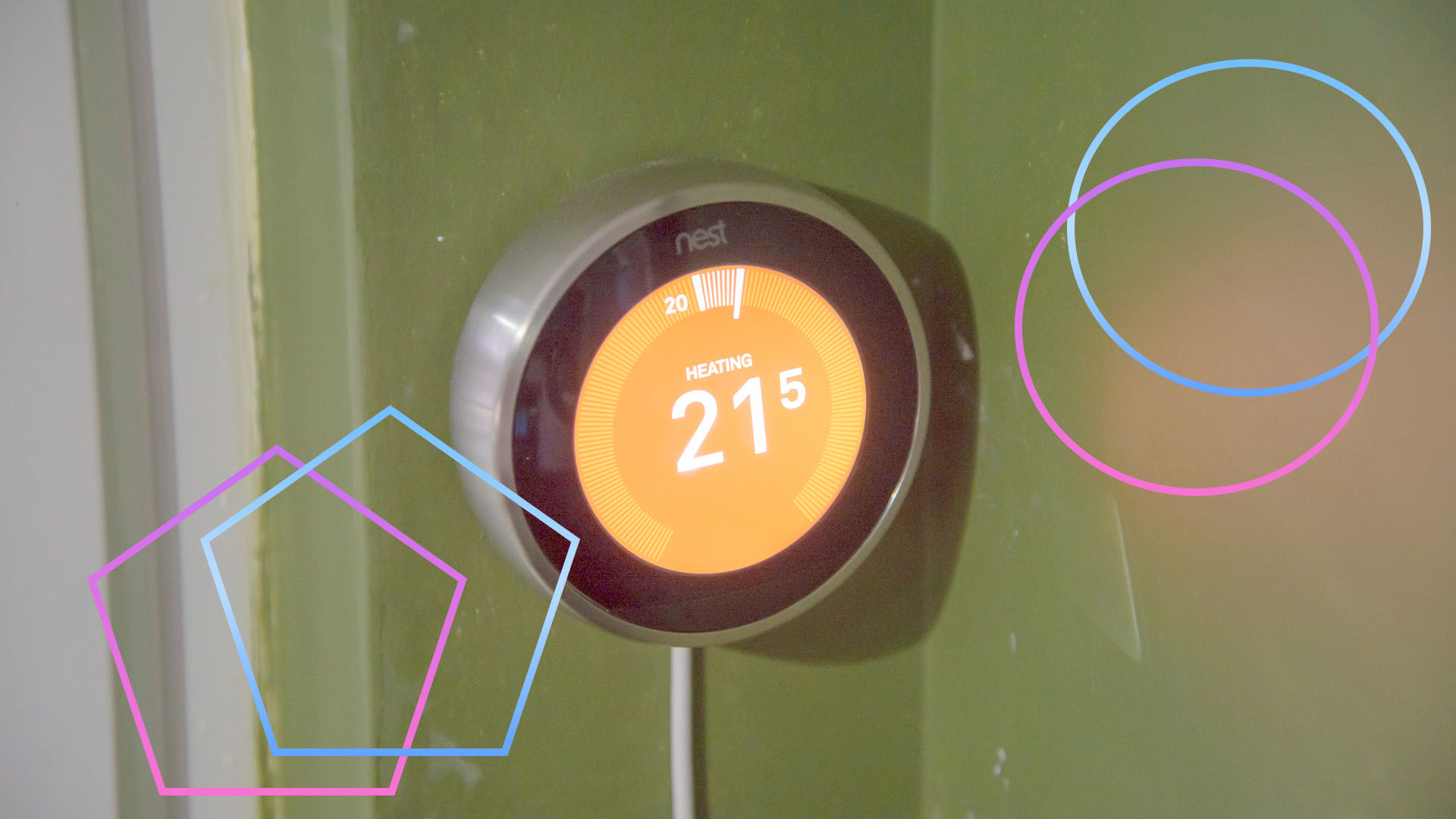
I’ve spent a fair bit of time being rude about how Google has handled Nest, with the company that kickstarted smart thermostats seeing a sad decline. Credit where credit’s due, Google has been extremely helpful dealing with a broken thermostat.
I use a Nest Thermostat 3rd Gen in a house we rent out because the hardware is robust, the device is mains-powered (so it can’t run out of battery), and it lets me turn the heating on and off depending on whether people are in the house.
Getting down to the house a week ago, I walked past the thermostat, only for it to light up and say that it can’t connect to the Heat Link. No problem, I thought; it had done this before, usually when a guest had turned the boiler off by mistake.
I checked, and the power to the boiler was on. So, I checked the Nest Heat Link (the device that actually controls the boiler), and it was dead, with no lights. I pressed the button in the middle, but nothing. I turned the boiler off and back on again, and nothing.
Advertisement
As the Nest Thermostat was installed back in 2019, I was resigned to the fact that I’d have to try and buy a new Heat Link online, but while searching, I came across this page on the BOXT website, offering free Heat Link replacements, provided you’d been through Google support.
Advertisement
Support was quick to get, and the fix free
Next, I went to the Google Home and Nest Help site, and filled in my product details, including the product’s serial number, and the problem I was having. I then had a choice of either using an online chat or having Google call me when a support person was free.
I picked the latter, and a minute later my phone rang. Within five minutes, I’d explained the issue, and it was agreed that there was a fault and that Google would authorise the repair.
Advertisement
A few seconds later, I had an email with a link to the BOXT website, with my support number pre-filled out. Then, I just had to pick a date for an engineer to come out (Friday 7 August), and that was it.
Sure enough, the engineer came out on the day, checked that the Heat Link was indeed dead. Now, I just need to wait a few days longer for the replacement Heat Link to be shipped out, and a the engineer will come back and fit it for me, free of charge.
For a product that’s now over seven years old, and well out of warranty, that’s quite a brilliant service. I’m glad it will keep my Nest Thermostat working for longer, even if I’m still a bit sad that the UK won’t see any future products.
But shortly afterward, his Patreon account was taken down too. In an email statement, a spokesperson for the platform said: “Patreon prohibits works that provide instructions around the creation of controlled substances or other recreational drugs. We take violations of our policies seriously, and after an internal investigation, we have removed the creator’s account.”
Myco hopes to successfully appeal the Patreon decision, as he pays his team through the funds accrued from his subscribers. “I know I’m a renegade, but I don’t promote the use [of drugs],” he says. “It’s all scientific. It’s all education, in the hopes to promote harm reduction.”
As hallucinogens edge closer to mainstream medicine, Myco is pushing in the opposite direction—away from clinics, regulators, and expensive trip-sitters, and toward radical self-sufficiency. To his many supporters, the outlaw chemist is democratizing psychedelic knowledge, out of the hands of academics, dealers, and erstwhile gatekeepers. To critics, his confidence occasionally outruns his science, and his commitment to secrecy raises questions about at least some of what he says.
Myco, a 38-year-old from Boston who now lives in his parents’ native Puerto Rico, seems at ease breaking the law.
Advertisement
He claims that, in 2002, he produced his own DMT by following a published scientific extraction method. Smoking the resultant hallucinogen was a transformative experience. Psychedelics “became my entire world,” he says, adding that he was dealing with “a really serious depression” at the time, after his parents split and his uncle died. He says he communed with his late uncle in the throes of that DMT trip. “He reassured me that everything’s all right,” recalls Myco. From that point on, “I knew I wanted to be part of psychedelic history.”
After studying microbiology in college, Myco says, he started posting on drug forums like the Shroomery, Mycotopia, and Nexus in 2009 but was appalled by their cliquishness. “They treated new cultivators and chemists like shit,” he says. (A moderator from Shroomery says cliquish behavior does exist and can shut down people with new ideas, but they are glad it did not stop Myco “from pursuing his passion for chemistry and mycology.”)
Myco says he went on to work for a pharmaceutical company in Boston “making more money than I’d ever seen,” but it was only ever a stopgap. He says that in late 2014 he posted his first explainer video on YouTube on aspects of growing psilocybin mushrooms, while wearing a gas mask. Several months later Myco logged back into his YouTube creator account and discovered “it had completely blown up,” accruing thousands of subscribers. So he quit his job and created a Patreon—anointing his supporters as the “Trip Team family.”
In mid-2023 he started drawing up plans to brazenly educate people on how to produce LSD. “Sure, a chemist can go get a synthesis schematic and synthesize LSD, but for the average Joe it would look like hieroglyphics,” he says.
Advertisement
So he decided to try to become the first person to bring to the screen long-established LSD recipes shared by legendary psychedelic chemists Albert Hofmann and Sasha Shulgin. To minimize the threat of censure or even prosecution, Myco claims that in May 2024 he found a university laboratory in Pakistan, which apparently secured government approval to produce the psychedelics for scientific research.
Ordering things from Amazon is extremely convenient, especially with all the perks you get with Amazon Prime. The trouble is, you don’t always get what you pay for. Sometimes, this is because of an error during the shipping process or a defective product. But in many cases, it’s simply because sellers can hugely exaggerate the capabilities of their products and Amazon does very little to stop it. Some of the most shocking examples of this can be found if you’re trying to shop for ultra-bright flashlights. There are scores of cheap flashlights on Amazon from brands you’ve never heard of, with many of them promising outputs of 1 million lumens or more for a price of less than $50. The best-selling examples among them have racked up hundreds or even thousands of reviews, many of which are positive. Some have even been given the “Amazon’s Choice” label by the retailer.
Put simply, these output claims are completely false. Testing by 1Lumen shows that even the brightest flashlights in the world peak at around 200,000 to 230,000 lumens, and only a handful are capable of reaching the 100,000-lumen mark. These class-leading flashlights are bulky and very expensive, requiring their own built-in fans to stay cool enough to operate. To illustrate just how outlandish the claims of these budget Amazon flashlights are, Torque Test Channel measured the lumen output of various flashlights that had been purchased from the retailer. The very best of these budget flashlights achieved only 0.24% of its advertised lumen output, while the worst achieved just 0.05%.
Advertisement
Claimed lumen outputs keep climbing
Skrypnykov Dmytro/Shutterstock
The Torque Test Channel comparison took place in 2024, and at the time, the highest claimed output for one of these budget flashlights was 1 million lumens. Notably, at the end of the analysis, the YouTuber noted that the advertised output of some of the flashlights had changed even in the short time between ordering them and testing them. The outputs that sellers advertised kept going up even though the product being sold hadn’t changed, leading to the YouTuber joking that “2 million lumen flashlights will be right around the corner.”
Two years later, that prediction proved to be correct. Multiple sellers on Amazon now advertise flashlights with 2-million-lumen outputs, and some claim even higher numbers. One flashlight that we found on Amazon is sold by a brand called Gekiro and claims to produce 2.5 million lumens despite costing just $29.99. The flashlight’s description claims that 2.5 million lumens is “as bright as […] car headlights.” In reality, older halogen vehicle headlights average around 3,000 lumens, while modern LED headlights are often around 6,000 lumens. If the flashlight seller’s claims were true, that would actually make the Gekiro flashlight around 417 times brighter than modern car headlights.
It isn’t just Amazon that has a problem with sellers posting unrealistic outputs either. A quick search through eBay listings brings up a string of flashlights with claimed 1-million-lumen outputs, while some AliExpress flashlight sellers have taken things a step further and now claim outputs of 10 million lumens.
Advertisement
How to avoid falling for sellers’ lies
Liudmila Chernetska/Getty Images
Until these retailers implement policies to properly regulate sellers’ advertising, these massively inflated claims won’t go away. That leaves buyers with the task of figuring out which flashlights actually live up to their maker’s claims and which are falsely advertised. A flashlight advertising a 1-million-lumen output is easy to spot as a lie, but a flashlight that claims to produce 5,000 or 10,000 lumens doesn’t immediately stick out in the same way.
The key to making sure you’re getting what you’re paying for is to ensure that any ultra-bright flashlight you buy has been independently tested by a professional reviewer who can validate its maker’s claims. The most powerful flashlights on the market have all been tested in this way, so if you can’t find any reputable reviews outside of Amazon for a product, that’s usually a red flag. It’s also well worth considering how much output you realistically need from your flashlight. We’ve previously argued that 1,000 lumens is more than enough for most camping flashlights, and 300 lumens might be fine in some cases. Too many lumens — or in other words, too much light being emitted — from a flashlight can actually be a hindrance rather than a help.
Advertisement
If you buy from a trusted manufacturer, check that independent reviews (not Amazon’s on-site reviews) back up the seller’s claims, and don’t overestimate the output you need, there are plenty of affordable, powerful flashlights to pick from. Ironically, most of those quality, affordable flashlights will be more powerful in the real world than a supposedly 1-million-lumen flashlight from a no-name brand on Amazon.
Sunglasses were a simple product for most of their existence. Two lenses, a frame, UV protection. Then Meta put cameras in them, the smart glasses category took off, and a pair of shades became something a stranger could use to record you without your knowledge. DuckDuckGo, which has built its entire identity around the idea that your data shouldn’t be collected without consent, looked at that trend and responded with a product that refuses to participate in it: sunglasses with no camera, no microphone, no Bluetooth and no AI. They block sunlight. That’s the complete list of things they do.
Enter DuckDuckGo, the privacy-focused internet search engine and web browser company. The company has partnered with eyewear company Knockaround and is now selling what it calls “anti-surveillance” sunglasses, a simple yet chic style that’s just like the sunglasses we all knew before the AI surge. They protect your eyes and don’t spy on anyone.
Yes, you can buy analog sunglasses in a million other places, including your local drugstore. But DuckDuckGo is out to make a point: AI glasses don’t respect your privacy, and the best way to protest them is not to buy them. The DuckDuckGo sunglasses even have a sassy name: Normal F* ****** Sunglasses.
“We see the new wave of AI glasses as yet another privacy-invasive technology from Big Tech, so we created a satirical campaign around them and released Normal F****** Sunglasses,” a DuckDuckGo representative said. “Why? Because ultimately, the only truly privacy-respecting glasses are ones without cameras, mics, or AI listening in on you and others you come into contact with.”
Advertisement
The representative noted that DuckDuckGo CEO Gabriel Weinberg has publicly said that “AI surveillance should be banned while there is still time.”
The matte black sunglasses come in Knockaround’s Paso Robles frame design, look a lot like classic Ray-Ban Wayfarers with a small DuckDuckGo logo, and offer polarized lenses and UV400 protection. The playful website copy declares that they include zero cameras, guarantee zero notifications, offer a seamless offline mode and infinite charge life. They sell for $35 a pair.
Humor publication The Onion published a sly post about the DuckDuckGo sunglasses, sharing comical quotes from made-up consumers. “0/10, useless for perverts,” says one fictional person. Says another, “Guess I’ll have to violate people’s privacy the old-fashioned way: From the bushes.”
The representative told us that “a significant percentage of the inventory has sold, though it’s still too early to release sales data.”
Advertisement
CNET editor Gael Fashingbauer Cooper, a journalist and pop-culture junkie, is co-author of “Whatever Happened to Pudding Pops? The Lost Toys, Tastes and Trends of the ’70s and ’80s,” as well as “The Totally Sweet ’90s.” She’s been a journalist since 1989, working at Mpls.St.Paul Magazine, Twin Cities Sidewalk, the Minneapolis Star Tribune, and NBC News Digital. She’s Gen X in birthdate, word and deed. If Marathon candy bars ever come back, she’ll be first in line.
See full bio
The capital holds two-thirds of capacity, while multimegawatt projects gather beyond the M25
A snapshot of Britain’s datacenter estate puts nearly 40 percent of its facilities in London, along with about two-thirds of its estimated colocation capacity, although development is spreading beyond the capital.
The analysis counts 555 UK server farms, matching Statista’s latest figure. It puts their combined IT capacity at about 1.6 GW.
Advertisement
By facility count, that would put Blighty second only to the US, although there is a considerable gap between the two.
The study data was compiled by Karas Plating, a UK-based specialist in electroplating and surface coatings for critical electrical components and power distribution systems.
The firm presumably has an eye on where new business might emerge as new datacenters are planned as part of the government’s AI Opportunities Action Plan.
It will surprise nobody that London is the nexus of the UK’s data infrastructure, with clusters of bit barns to serve the financial markets in the City, and along the M4 motorway corridor close to the fiber-optic cable routes that stretch west from the capital to join the undersea cables linking with North America.
Advertisement
London has 219 active facilities, according to the analysis, or about 40 percent of the total. This adds up to 1,048 MW, or two-thirds of the country’s entire datacenter compute capacity. It also leads the way in future growth with 15 planned expansion projects.
But the report also indicates there is a significant shift taking place toward high-capacity regional infrastructure to support growing demand. This is something The Register has previously reported on, as developers look away from London due to issues like power shortages and planning constraints.
Outside the Big Smoke, South East England claims 62 current facilities, adding up to 128 MW capacity, with ten planned developments, the second-biggest expansion queue nationwide. We assume that these include bit barns close to London’s M25 orbital motorway, such as the massive campus planned by colocation firm Equinix at South Mimms.
Further afield, North West England has 39 active facilities with 52 MW capacity, and five upcoming builds. This makes it the region with the largest number of planned projects outside of the traditional hot spot of London and the South East.
Advertisement
The East of England and Scotland both have more operational datacenters, the first with 45 and a total of 44 MW capacity, while north of the border there are no fewer than 49 with a total of 30 MW.
Wales currently boasts 32 active sites, but these make for a total of 154 MW of IT capacity, coming in second only to London.
The region with the fewest current operational server farms is the South West, which has 20 sites adding up to 54 MW, and two new facilities planned. One of these is presumably the controversial Devon data campus near Great Torrington, which is claimed will house 1.5 GW of AI-optimized compute capacity.
Just ahead is North East England, where there are 21 sites with a total of 17 MW capacity. This will change in the near future, however, as US investment giant Blackstone has plans for a huge facility near Blyth, Northumberland, said to be large enough for 720 MW of IT.
Advertisement
OpenAI also aims to build a Stargate datacenter project at Cobalt Park, North Tyneside, although it has put these plans on hold for now, citing reasons such as the cost of energy in the UK. ®
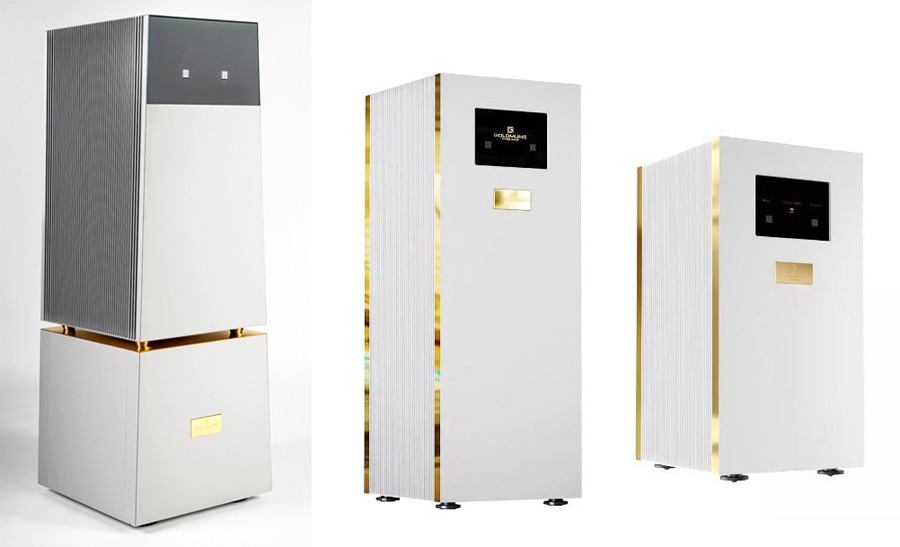
Goldmund has introduced the Telos 9800, a new flagship mono power amplifier that delivers more than 1,500 watts and represents the most advanced amplifier the Swiss company has developed to date. With a $500,000 asking price, one might reasonably wonder whether it also includes a chalet in Gstaad, a numbered bank account, and someone to explain the purchase to your mistress in Geneva.
The Telos 9800 builds on the foundation of the Telos 8800, introduced in 2023, while incorporating new design and engineering developments that move it above both that model and the recently launched “midrange” Telos 4800. Goldmund does not replace its flagship amplifiers very often, so the Telos 9800 will likely remain at the top of the company’s lineup for several years.
Related Reading:
The Swiss Touch
Engineered and assembled in Switzerland, the Telos 9800 is built around an entirely new amplification platform. Its power supply and amplification stages are housed in separate but interconnected units, allowing each section to operate under optimal conditions while reinforcing the system’s overall mechanical and electrical integrity.
Designed with a symmetrical signal path from input to output, the Telos 9800 is intended to preserve signal integrity while minimizing electromagnetic interference and unwanted noise. It remains stable into loads as low as 1 ohm and incorporates comprehensive protection systems designed to maintain reliability under demanding operating conditions.
Advertisement
Developed in collaboration with designer Cécile Barani, the Telos 9800 introduces a new visual direction for Goldmund. Its two-part form mirrors the physical separation of the power supply and amplification stages, giving the amplifier a functional relationship between its internal architecture and exterior design. Precision-machined aluminum surfaces, a new digital interface, and a restrained gold accent complete a look that is notably more architectural than Goldmund’s previous flagship amplifiers.
Taken together, Goldmund says these design and engineering changes allow the Telos 9800 to deliver high output with greater control, particularly during demanding musical passages and large dynamic swings. The company also claims improvements in low-level detail, clarity, and overall precision, although those performance claims will ultimately depend on the associated system, loudspeakers, and listening environment.
What Makes the Goldmund Telos 9800 Different
Power Output: The Telos 9800 delivers 1,560 watts RMS into 8 ohms, with a specified total harmonic distortion (THD) of 0.005% from 20 Hz to 20 kHz.
Dynamic Range: Goldmund specifies a dynamic range of 117 dB, measured with a 22 kHz bandwidth, which is intended to preserve low-level detail across a wide range of listening levels.
Advertisement
Damping Factor: The Telos 9800 has a specified damping factor of 900 at 1 kHz and an output noise floor of less than 3 μV, both of which are intended to support low noise and strong loudspeaker control.
Gain: Amplifier gain is adjustable in 3 dB increments, allowing users to better match the Telos 9800 with different source components and system configurations.
Analog Signal Path: The Telos 9800 uses a fully analog signal path from input to output and incorporates thermal and short-circuit protection. An automatic shutdown system is designed to protect both the amplifier and connected loudspeakers in the event of an operating fault.
Advertisement. Scroll to continue reading.
Advertisement
Connections: The Telos 9800 includes analog and digital inputs, including RCA and XLR connections. The rear panel also features multiple loudspeaker binding posts, a ground-lift switch, a universal power connection, and a 12-volt trigger input for external control.
Power Management System: Goldmund’s proprietary power-management system combines 10 kVA of transformer capacity with the largest capacitor bank the company has developed to date, providing 648 mF of stored energy. Custom capacitors, in-house-designed transformers, and a redesigned amplification stage using next-generation power boards are intended to improve stability, instantaneous current delivery, and loudspeaker control under demanding loads.
Goldmund Telos Mono Power Amps Comparison
Telos 9800 (2026)
Telos 8800 (2023)
Telos 4800 (2024)
Price
US – $500,000 CHF – 400,000 GB – £370,000 AUS – $800,000
US – $366,000 CHF – 320,000 GB – £350,000 AUS – $650,000
US – $260,000 CHF – 220,000 GB – £235,000 AUS – $445,000
22 kHz measurement bandwidth (flat), true RMS unloaded: 117 dB
22 kHz measurement bandwidth (flat), true RMS unloaded: 117 dB
Damping Factor
900 at 1 kHz / 8 Ω
600 at 1 kHz / 8 Ω
600 at 1 kHz / 8 Ω
Distortion
IMD (SMPTE), unloaded: < 0.01 %
THD+N unloaded: < 0.005 % from 20 Hz to 20 kHz at 30 Vrms output
IMD (SMPTE), unloaded: < 0.01 %
Advertisement
THD+N unloaded: < 0.005 % from 20 Hz to 20 kHz at 30 Vrms output
IMD (SMPTE), unloaded: < 0.01 %
THD+N unloaded: < 0.005 % from 20 Hz to 20 kHz at 30 Vrms output
Output Noise Floor
Analog input terminated with RCA Shorting Caps, unloaded: < 3 V from 20 Hz to 20 kHz
Analog input terminated with RCA Shorting Caps, unloaded: < 3 μV from20 Hz to 20 kHz
Analog input terminated with RCA Shorting Caps, unloaded: < 3 μV from 20Hz to 20 kHz
Gain
35 dB, +/- 9 dB (adjustable in steps of 3 dB for each input)
35 dB, +/- 9 dB (adjustable in steps of 3 dB for each input)
35 dB, +/- 9 dB (adjustable in steps of 3 dB for each input)
Input Levels
Max level before clipping
Advertisement
Analog input: 2 Vrms
Digital input: 0 dBFS
Max level before clipping
Analog input: 2 Vrms
Advertisement
Digital input: 0 dBFS
Max level before clipping
Analog input: 2 Vrms
Digital input: 0 dBFS
Advertisement
Output Levels
Max level before clipping: 1% THD, unloaded: 375 Vpp
Max level before clipping: 1% THD, unloaded: 300 Vpp
Max level before clipping: 1% THD, unloaded: 300 Vpp
Audio Inputs
Analog input RCA unbalanced connector
Analog input XLR balanced connector
Digital input (RCA connector)
Analog input RCA unbalanced connector
Advertisement
Analog input XLR balanced connector
Digital input (RCA connector)
Analog input RCA unbalanced connector
Analog input XLR balanced connector
Advertisement
Digital input (RCA connector)
Audio Outputs
2 x speaker output binding posts (red & black)
1 x output Goldmund speaker 4B type connector
Digital Output (RCA Connector)
Advertisement
2 x speaker output binding posts (red & black)
1 x output Goldmund speaker 4B type connector
Digital Output (RCA Connector)
2 x speaker output binding posts (red & black)
Advertisement
1 x output Goldmund speaker 4B type connector
Digital Output (RCA Connector)
Additional Rear Panel Connections
Power cord: universal socket 3 lugs, 16 A
Main fuses
Advertisement
AC black GND Binding post (with bridge connection)
Green-yellow AC earth binding post (with bridge connection)
RS232 command connector
Power cord: universal socket 3 lugs, 16 A
Advertisement
Main fuses
AC black GND binding post (with bridge connection)
Green-yellow AC earth binding post (with bridge connection)
RS232 command connector
Advertisement
Power cord: universal socket 3 lugs, 16 A
Main fuses (F1: 2.5A ; F2: 1A F3: 8A)
AC black GND binding post
Green-yellow AC earth binding post
Advertisement
Ground lift switch.
RS232 command connector
Jack connector for 12 Volt Trigger
Power Supply
Nominal line voltage: 115 V or 230 V
Advertisement
Input voltage range: +/- 5 %
Nominal line voltage: 115 V or 230 V
Input voltage range: +/- 5 %
Nominal line voltage: 115 V or 230 V
Advertisement
Input voltage range: +/- 10 %
Power Consumption
Not Provided
IEC 60065, 1/8 Output Power at 8 Ω: 750 W
IEC 60065, 1/8 Output Power at 8 Ω: 680 W
Finish Options
Not Provided
Black, Silver Grey
Standard – Grey On Request – Black
Dimensions (WxHxD)
50 x 136.7 x 50 cm
20 x 63.18 x 20 inches
42 x 113 x 47 cm
Advertisement
16.6 x 44.5 x 18.5 inches
42 x 82.6 x 50 cm
16.6 x 32.6 x 20 inches
Weight
360 kg
Advertisement
794 lbs
265 kg
584 lbs
195 kg
Advertisement
430 lbs
The Bottom Line
The Goldmund Telos 9800 occupies a rather lonely corner of the high-end audio market where 1,560 watts into 8 ohms, stability down to 1 ohm, a 10 kVA power supply and 648 mF of energy storage are considered reasonable engineering targets. Its new two-unit architecture, which physically separates the power supply from the amplification stage, is arguably more interesting than the headline power figure because it shows how far Goldmund was willing to go to improve isolation, current delivery and thermal management.
There are alternatives at this level, most notably the Dan D’Agostino Relentless Epic 1600, Boulder 3050 and CH Precision M10, although each approaches the problem somewhat differently. Anyone spending $500,000 on amplification is well beyond conventional notions of value, and system matching becomes far more important than shopping from a specification sheet.
For that reason, Goldmund’s own passive loudspeakers are probably the safest and most logical place to start. Models such as the Tethys Passive keep the amplifier and loudspeaker within the same engineering ecosystem, whereas Goldmund’s flagship Gaia and Apologue speakers already incorporate their own Telos amplification and therefore do not require the 9800.
Advertisement
Is the Telos 9800 necessary? Of course not. Neither is a penthouse overlooking Lake Geneva. At this altitude, that stopped being the point several hundred thousand dollars ago.
Price & Availability
The Goldmund Telos 9800 is priced at CHF 400,000 per unit, approximately £370,000, €430,000, or $500,000 USD.
If your internet feels unstable or slow at times, it’s natural to blame the ISP or the router. A router essentially handles everything and your ISP is responsible for providing fast, seamless internet. In such cases, upgrading to a high-speed internet plan or buying a new router may seem like the perfect solution. But as surprising as it may sound, these might not be the real problems. The router could just be overloaded, and as a result, struggling to deliver optimal performance. And there are typically two router settings that can help solve the problem, QoS (Quality of Service) and SQM (Smart Queue Management). If configured correctly, this will significantly reduce slowdowns, allowing you to delay the router upgrade.
Before we delve into configuring the settings, it’s vital to understand why your router could be the bottleneck due to bufferbloat. Data transmitted over the internet is broken into small packets which your router handles, and it can only transmit a given number of packets at once. When traffic exceeds the available bandwidth, extra packets are stored in a memory buffer and wait for their turn. As the buffer grows, so does the time it takes for recent packets to be transmitted. This directly translates into increased latency. Regular internet speed tests don’t help pinpoint the problem, because they generally check for the download and upload speeds. That’s why you need to configure features like QoS and SQM.
Advertisement
Understanding QoS and SQM
Kazim Alvi/SlashGear
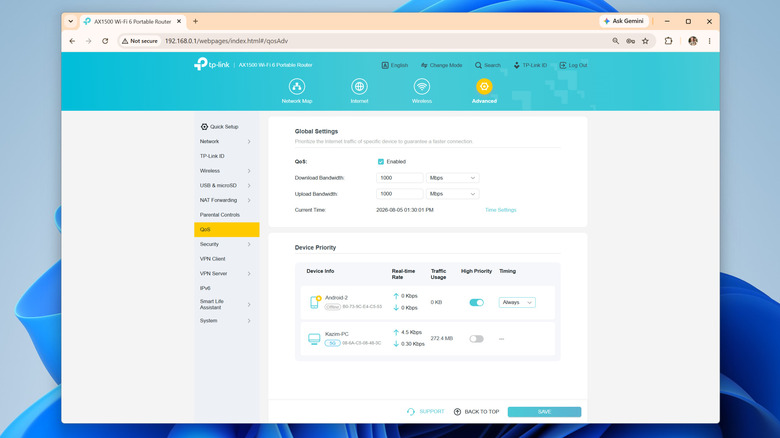
QoS or Quality of Service is a feature available on most routers that allows you to prioritize specific devices or data types on the network. For instance, you could prioritize your PC over your smartphone, or gaming over downloads and backups, and vice versa. Different router manufacturers offer different controls over QoS, but the feature is generally available on most modern routers. SQM or Smart Queue Management, on the other hand, is an advanced QoS feature designed to handle bufferbloat, which is basically the overloaded memory queue we discussed earlier. With SQM, your router prioritizes traffic from tasks that are latency-sensitive, say gaming and video calls.
If you are aiming for lower latency, SQM will help. But if download speeds are slow because multiple devices are competing for the available bandwidth, you are better off with QoS. That’s because Quality of Service lets you prioritize important devices and traffic types, which in this case is downloads. Also, on older routers, SQM may not be natively available, and you may need to install an open-source router firmware like OpenWRT to set up the feature, which is a hassle for the average user.
Turning on and setting up QoS and SQM will vary based on your hardware, so check your instruction manual to know for sure (most routers have a PDF version on the manufacturer’s website), but it generally goes like this: open your router’s admin panel, go into the QoS section (it may be under something like Advanced Settings), turn the feature on, and configure device or traffic priority. For instance, if you actively download files on your computer, prioritize it over other resource-intensive devices on the network. On routers that grant granular controls, you can specifically prioritize downloads or file transfers over other types of traffic.
Advertisement
Easy tricks to speed up downloads
New Africa/Shutterstock
Beyond QoS and SQM, there are a couple of other tips and tricks that will help improve connectivity and speed up downloads. The most important of all, and perhaps the simplest, is effective router placement. If your router is far away from the connected device, the signal strength will be low, and you will subsequently notice lower download speeds. Simply bringing the router closer to the device or using a Wi-Fi range extender or a mesh network will do the trick for most.
If physically moving the router is not an option, you can consider connecting the more important devices using an Ethernet cable. When it comes to stability and consistent speeds, Ethernet is undoubtedly a better choice over Wi-Fi, although the difference is usually less noticeable on modern routers with better coverage. In case your laptop doesn’t feature a LAN port, get a USB-to-Ethernet adapter to add the functionality.
Advertisement
Similarly, optimal band selection and minimizing interference is just as important. You should ideally have the non-critical devices, like smart plugs and security cameras, on the 2.4 GHz band, while reserving the 5 GHz band for computers, smartphones, gaming consoles, and smart TVs. As for wireless interference, move common interference-causing household appliances like microwaves and baby monitors away from both the router and the device in question.
Industrial and commercial applications accounted for more than 70pc of humanoid robot shipments.
Humanoid robot sales have skyrocketed 272pc in a year as the maturing technology proves its use in industrial settings, a new report finds.
China remains the centre of this booming industry, holding more than 97pc of the market, while representing more than 85pc of the global demand.
Sales are further expected to triple year-over-year by 2026 to around 60,000 units, reported Smart Analytics Global (SAG), with industry-wide revenue expected to hit more than $1.6bn. The sector is expected to grow from nearly $5.5bn in 2026 to more than $50bn by 2035.
Advertisement
Shipments grew from just more than 5,000 units to more than 19,000 in the first half of this year, bolstered by government led support from China – including helping developers test and deploy robots – abundant funding and emerging businesses that are expanding through public listings in the country.
Hangzhou-based Unitree’s Shangai listing received nearly 10m retail orders, marking an oversubscription of more than 5,500 times, as the company readies to become mainland China’s first publicly traded humanoid robot maker.
Advancements in physical AI are also attracting innovative robotics start-ups, major tech companies and automakers.
Domestically, Shanghai-based Agibot overtook Unitree to become the world’s largest humanoid robot vendor capturing 44pc of the global market. Together, the two vendors account for 75pc of robot sales across the world. Behind the two leaders are Beijing-based Galbot, Shenzen’s Ubtech and Guangdong-based Leju.
Advertisement
Major sellers include half-size bipedal robots, which dominated Agibot’s its humanoid portfolio and wheeled robots designed for more efficient mobility, stability and cost, over fully human-like locomotion.
Home robots still far off
Industrial and commercial applications accounted for more than 70pc of humanoid robot shipments in the first half of this year – up from 50pc in the same time last year, SAG said.
The growth comes as vendors narrow in on manufacturing, logistics, warehousing and other structured commercial environments, where robots can perform defined tasks and demonstrate measurable productivity.
Advanced use cases such as bionic humanoid robots targeting human interaction, for example, are much slower to grow on account of technology and regulatory limitations around AI, and customer acceptance.
Advertisement
The analytics firm said general-purpose home-service humanoid robots, something Meta is working towards with its recent acquisition of Assured Robot Intelligence, is unlikely to reach mass market scale in the next five years.
Reports suggest that Meta has made “significant” investments in this category with goals to create humanoid robotic hardware to help with household chores.
Recent US restrictions on foreign-made robots could create additional issues for Chinese sellers looking to expand into mature markets, the report found.
Similarly, the EU’s scrutiny over AI applications across autonomous robots in manufacturing and personal assistance also places hurdles for growth.


























































You must be logged in to post a comment Login