Connect with us

Tech

13 Niche Bosch Tools (And What They’re Used For)

Published

on


We may receive a commission on purchases made from links.

The Bosch brand is one with many different areas of focus. It’s a key brand in the household appliance industry, and of course it also makes a wide array of hand and power tools. You’ll find numerous Bosch-badged tools and accessories in the hands of professionals and homeowners looking for good durability and favorable pricing. The company is among the best German tool brands on the market, offering tools and tool service in around 150 countries.

Advertisement

With so many pieces of gear contained within Bosch’s catalog, it’s only natural that many of them would be niche finds or specialized variants of standard tools, designed to handle hyper-specific tasks that users might encounter. Everything from unique drilling tools to high-powered cutting equipment designed to go above and beyond the casual user’s needs can be found. These tools represent some of the most specialized equipment Bosch has to offer, meant to support the most niche tasks.

Advertisement

Expert 18V 6-Inch Random Orbit Sander

The orbital sander is a mainstay in any toolkit, but not every one is built with the same capabilities. Bosch’s Expert 18V 6-Inch Random Orbit Sander is larger than is typical for this kind of tool. It’s priced at $389 at Acme Tools and features an adjustable speed rating between 5,000 and 10,000 RPM. The tool’s ³⁄₁₆-inch orbital motion offers rapid material removal, rated for up to 50% more than a standard 18V Bosch model. It also features a dust canister that includes a HEPA filter for a more effective collection function and a cleaner overall workspace.

The tool is designed to provide the sort of premium experience that professional woodworkers and others who spend exorbitant amounts of time tackling finishing touches on building jobs need in their tools. It operates with a unique body shape, creating a more ergonomic handle structure for a comfortable grip over longer periods of use. It’s also part of the AmpShare system, which means it’s designed to operate interchangeably with other brands’ 18V catalogs.

Advertisement

18V Press Tool Kit

The 18V Press Tool Kit features ½, ¾, and 1-inch jaws. It comes boxed up in a carrying case and also features a charger and 4.0Ah. The kit’s also quite expensive, which immediately relegates it to the professional sphere, selling for $2,719 at Acme Tools (although there is a promotion as of mid-September with a 10% discount). This is key tool for plumbers, as it makes secure pipe connections without using solder or a torch. The clamping force it produces is also suitable for use on pipes with water present, as well, making it a versatile and fast acting plumbing option.

This press tool features a rotatable head, making it able to access pipe segments in areas that are difficult to reach. It features a 3-second cycle time, so if you’ve got a lot of plumbing installation work to do, it shouldn’t take an undue amount of time. There’s also an LED work light built into the tool and it works with both Bosch and Rothenberger (another quality German tool brand specializing in these kinds of tools) press jaws.

Advertisement

18V 14-Inch Dry Cut Saw

Cutting demanding material like tile, rebar, or brick frequently falls outside capabilities of the sorts of power saws used by home improvers and DIYers. As such, tools like the 18V 14-Inch Dry Cut Saw from Bosch are usually found on job sites and other working environments that fall into more niche categories. The tool is priced at $755 on Amazon and offers mobile cutting to support all manner of high intensity needs. It also features a laser line that helps line up cuts with exacting precision. There’s even a K-adapter integrated into the tool for holding round material up to 4½ inches in diameter, providing coverage for both square and round stock.

This tool is specifically designed for cutting metal. It can handle angle iron, metal pipe, banded rebar, and banded drywall metal studs, as well as other metal stock. It features miter cutting capabilities, turning up to 45 degrees to the left. This is another Bosch tool that operates in the AmpShare system, giving it even more versatility. As the name implies, this tool cuts with a dry blade rather than adding a stream of water into the mix. 

Advertisement

18V 5-Inch Concrete Surface Grinder

Grinding concrete surfaces is by all accounts a niche task that only professional tool users tend to perform. It’s something you’d do after pouring a concrete pad, for instance. That’s not to say DIYers won’t ever require the use of this kind of tool, but that the task falls outside the purview of most casual tool users. Bosch offers the 18V 5-Inch Concrete Surface Grinder, retailing for $735 at Acme Tools (with a free, 8Ah high power battery added as a promotion). It’s a battery operated solution, and in its kit variant the unit comes with a 5.0Ah battery and charger. The setup also includes a diamond cup wheel and two bristle brushes.

Advertisement

The tool’s power-to-weight ratio is best in class, delivering the equivalent of 13 amps of corded power to support fast material removal. The top handle rotates to accommodate a range of gripping requirements and it utilizes a guard and shroud system that is adjustable and helps to catch debris for a cleaner work environment, working well with other personal protective equipment you’ll use to remain in compliance with OSHA’s five basic safety rules. The tool helps smooth out surfaces after a pour or handle bulk removal during surface preparation before a different kind of installation. It offers three speed settings ranging from 2,600 to 8,500 RPM for a range of applications in various environments and across use cases.

Advertisement

18V Brushless Biscuit Joiner

Cutting recesses in the sides of boards is rarely necessary for rough timber work. If you’re finishing a basement, building a half wall to break up space in your home, or installing shelves in a closet, this isn’t a tool that will come into the picture. However, fine woodworking often requires pieces of wood together, end to end or side to side. Among the important tools that woodworkers rely on, the 18V Brushless Biscuit Joiner is certainly a niche piece of equipment, but it’s vital for some woodworking projects.

Priced at $315 (Acme Tools) as a bare tool, this piece of equipment cuts recessed spaces in the sides of the boards so that you can insert biscuits into them for a larger glueable surface when mating up boards. Biscuits are small, often oval-disc shaped pieces of wood, designed sit within the slots cut by this tool to create a bit of additional rigidity and a notable increase in interior surface area. They will go unnoticed in the finished product, and they can make a world of difference in how strong the glue joint ultimately becomes. This tool features a depth selection knob that allows you to adjust between #0, #10, and #20 biscuits, and it features an adjustable fence that can be set at an angle up to 90 degrees with positive detents at common measurements.

Advertisement

18V Brushless High Torque Mixer

Just about any drill can mix up a slurry to perform concrete work, plastering, or other jobs involving wet-mixed materials. Among some of the most versatile drill attachments you can find online and in hardware stores, mixing paddles are some of the most common. However, most drills aren’t actually designed to handle this kind of work, and a purpose-built mixing tool like the 18V Brushless High Torque Mixer is a much better option if you plan on mixing up big batches. It’s listed for $379 on Amazon.

The difference really comes down to what the tools are designed to output. A typical combi-drill produces plenty of torque, certainly, but it’s designed for fast speeds to allow for quick drilling or fastening through timber and other material. In contrast, this piece of equipment produces a maximum speed of 720 RPM. Its low speed and high torque output allow it to churning through material even when it becomes a gloopy mess that wants to slow things down. It also includes a two-handle design for better grip and control while standing directly over your bucket, which is a notable improvement over the alternative. It also features soft start technology that reduces splashing when you initiate the tool alongside integrated kickback controls.

Advertisement

18V High Torque ½-Inch Right Angle Drill

There are many great right angle drills on the market, and the Bosch 18V High Torque ½-Inch Right Angle Drill is a highly rated option among them. It features two speed settings, ranging up to 1,800 RPM in its second gear to produce fast drilling when a rapid pace is required. It also includes dual kickback controls to minimize bucking when bind-up occurs. Its 7-pound weight may seem quite heavy, but it’s actually rather lightweight for a right angle drill. This is a piece of equipment that’s frequently more powerful than a standard power drill, and typically requires two-handed operation. In a relative sense, a tool this weight should be reasonably maneuverable while still delivering solid performance and power.

The tool can handle up to 5-inch holes when paired with a hole saw, 2⁹⁄₁₆-inch holes with self-feed bits. This makes it a punchy option for larger hole requirements or for drilling longer segments into workpieces. The right angle drill is particularly useful when handling tasks involving rough-in work through joists and stud wall constructions. The tight confines of these areas make using a right angle drill sometimes the only practical option for getting a straight cut through the timber once it is secured in position. The tool is available for $299 at Lowe’s as a bare tool.

Advertisement

18V 16-Gauge Metal Shear

The 18V 16-Gauge Metal Shear ($345 at Acme Tools, with an added 4.0Ah battery promotion, as of mid-September) is, of course, a metal cutting tool. It runs with a brushless motor underpinning its performance, giving the tool durable and powerful cutting prowess that matches a 700W corded model’s capabilities. This piece of equipment features an ergonomic barrel grip shape and is lightweight, putting up a 3¾-pound figure on the scale. It delivers a 3,200 SPM blade speed and features quality of life enhancements like distortion- and waste-free cutting capabilities and a soft start to make the tool easier to initiate.

Advertisement

This is designed for cutting sheet metal, and as such it’s not something that’s going to take up space in many casual tool users’ collections. From the specs, it appears powerful and effective at its job, but metalworking isn’t a common theme among DIYers seeking to make routine improvements around their homes or other living spaces. This is a potentially valuable addition for home mechanics working on project cars and others who naturally encounter metal parts, however. Instead of using an angle grinder, which can be a nerve-wracking tool to operate and often leaves jagged, uneven cut lines in your workpiece, this shear is meant to make more delicate and precise cuts for replacement parts or patches.

Advertisement

Non-Contact Voltage Tester with Flashlight (24 to 1,000V AC Rated)

Among some of the biggest mistakes you can make while handling electrical repairs, failing to use proper safety gear to test your work environment is potentially the most egregious. This is a simple workflow error rather than something that arises from a gap in knowledge or skill — it’s simply vital to know if the wiring you’re working with is live. 

The Non-Contact Voltage Tester with Flashlight (24 to 1,000V AC Rated) can help support this mission effectively. It features a durable construction with an ergonomic rubber grip and TPE reinforced housing, making it jobsite-ready and capable of withstanding drops of up to 6 feet. It offers dual voltage range compatibility, With a standard 90 to 1,000V testing range and a lower 24V minimum threshold for both typical and low voltage applications. It’s also rounded out with an IP67 rating, making it great for use in challenging working environments.

The tool features a belt clip, so it should be easy to carry in a pocket or on a tool belt. It also utilizes an integrated flashlight, which is a handy addition considering that many electrical repair tasks will take place with the lights off. It features voltage indication using colored LED lights: Green for no voltage, red when voltage is detected, and orange for low voltage settings. It’s found at Home Depot for $47.

Advertisement

18V Brushless 9-Inch Cut Off Saw

Sometimes known as a “consaw” because it’s frequently used to cut concrete, the cut off saw can come in either electric and gasoline powered builds, with electric models offering the notable ability to be used indoors as a result of its emission-free operation. The battery-powered 18V Brushless 9-Inch Cut Off Saw is a $689 purchase at Acme Tools as a bare tool.

This saw comes with a 9-inch cutting wheel that offers over 3 inches in maximum cutting depth. The tool features a six-position cutting guard that allows you to adjust for a variety of cutting needs and working angles. It also operates with a wraparound handle and ergonomic design for better control. it can be used in either wet or dry cutting, with a simple water shutoff valve that allows you to swap between functions as necessary. This is a relatively lightweight option, weighing just under 12 pounds, and therefore delivers good control and the ability to use the tool for longer sessions without fatiguing too badly. This is also another tool offered under the AmpShare system.

Advertisement

12V 11.5-Foot Handheld Inspection Camera

Installation and repair tasks aren’t always straightforward. You’ll often encounter challenges in gaining access to certain areas, and in many cases, it can be impossible to progress beyond early stages without something like the 12V 11.5-Foot Handheld Inspection Camera in your arsenal. Running new wires, for instance, requires you to be able to find both ends that you’re looking to connect, ideally without destroying the wall in between. An inspection camera allows you to thread the end into the recessed space in order to evaluate what you’re working with in areas that are impossible to view otherwise. 

Advertisement

This tool features an 11.5 foot camera cord, offering plenty of reach to tackle jobs behind walls, in recessed areas under the hood of a project car, an in HVAC settings, to name a few. It’s listed for $540 at Amazon.

The camera features a high resolution, enhanced display with a 5-inch screen that captures color images and video. It features an ergonomic handle and integrated connectivity that allows you to upload images directly to a computer via USB-C cable, with one included in the tool’s packaging. The camera runs on Bosch’s 12V battery system, making it lightweight and easier to maneuver than a larger, alternative 18V tool.

Advertisement

18V Brushless Threaded Rod Cutter

The 18V Brushless Threaded Rod Cutter ($365 at Acme Tools) eliminates the need to cut metal rods with a hacksaw or angle grinder. That difference is only marginal for anyone who only needs to cut a few lengths for a single project. However, frequent repetition of this task can become cumbersome without something specifically designed to handle the work.

This is because cutting just about any kind of metal component with a handheld hacksaw or a blunt instrument of destruction like the angle grinder often creates uneven faces and edges. Getting the cut precisely where you want it isn’t always easy, and you’ll often leave a burr on the end of your workpiece, adding another step that needs to be completed before the material is ready for use. Otherwise, you’ll risk deep cuts from the smallest of protrusions, as well as damage to other components. This tool promises burr-free cuts with the ability to cut up to ½-inch threaded rods with a range of multi-cutting dies. It features an auto stop function with an adjustable depth gauge to add key precision and consistency to your cuts.

Advertisement

12V Drill/Driver with 5-in-1 Flexiclick System

Your drill/driver combo very well may be the most used tool in your collection. It’s a versatile piece of equipment that’s called for in just about every project type you’ll encounter. However, some drills offer enhanced function with unique augmentations. The 12V Drill/Driver with 5-in-1 Flexiclick System ($224 at Walmart) is one of these tools and comes with four head attachments that expand on what a standard drill can do. The two primary standouts here are the offset and 90-degree heads (although there’s also a hex bit holder and keyless chuck, as well), allowing you to handle fastener driving at odd angles without breaking a sweat.

These attachments could be critically important for furniture making and plenty of repair tasks that require stripping down components and then eventually having to put the whole thing back together. The tool comes as a kit with a carrying case, charger, two 2.0Ah batteries, and the four heads. These drill attachments can be oriented in any of 16 positions, and they feature the ability to rotate without removing the head, giving you the ability to adjust on the fly with ease.

Advertisement


Source link

Advertisement
Continue Reading
Click to comment

You must be logged in to post a comment Login

Leave a Reply

Tech

Google may finally give the Pixel 11 Pro’s HiLight the feature it always needed

Published

on

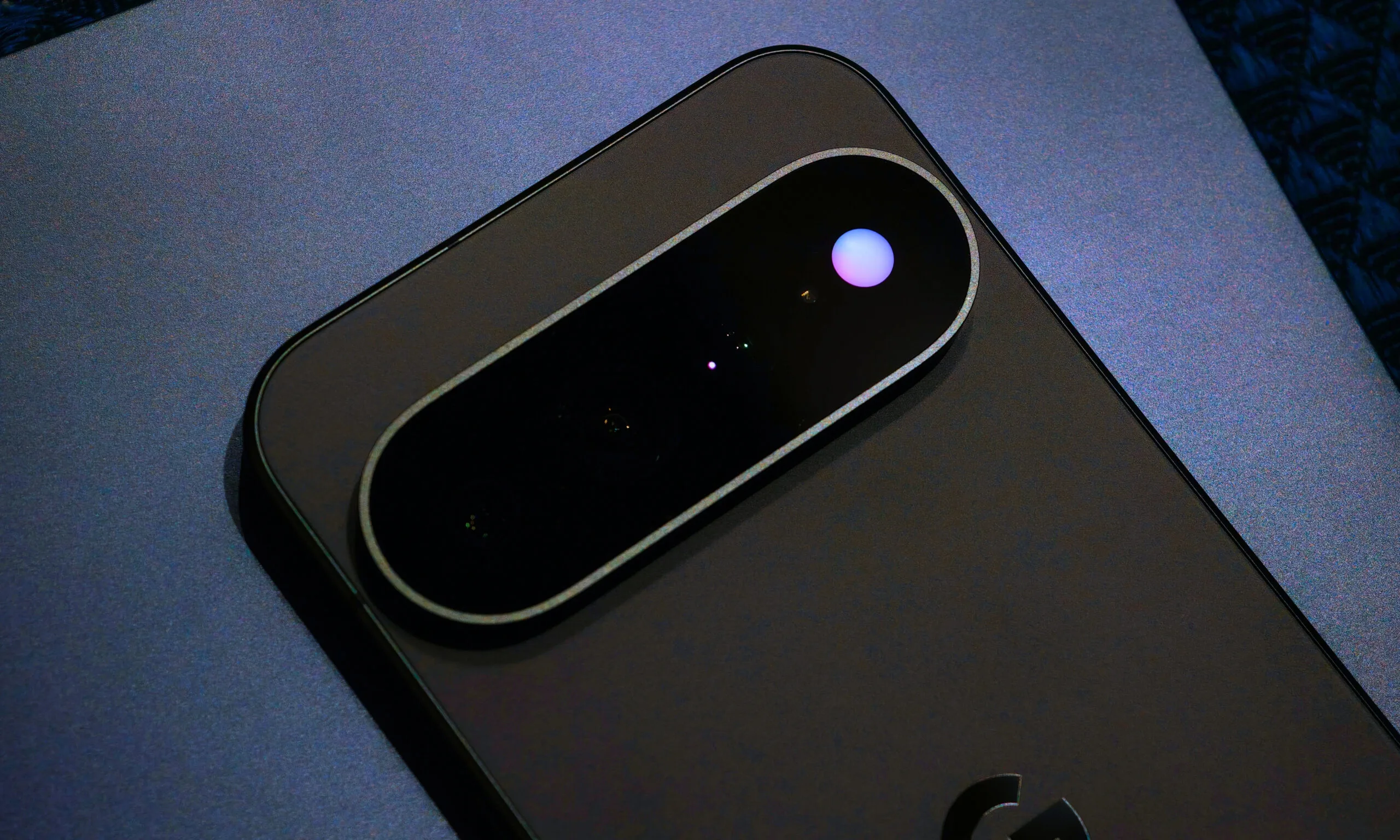
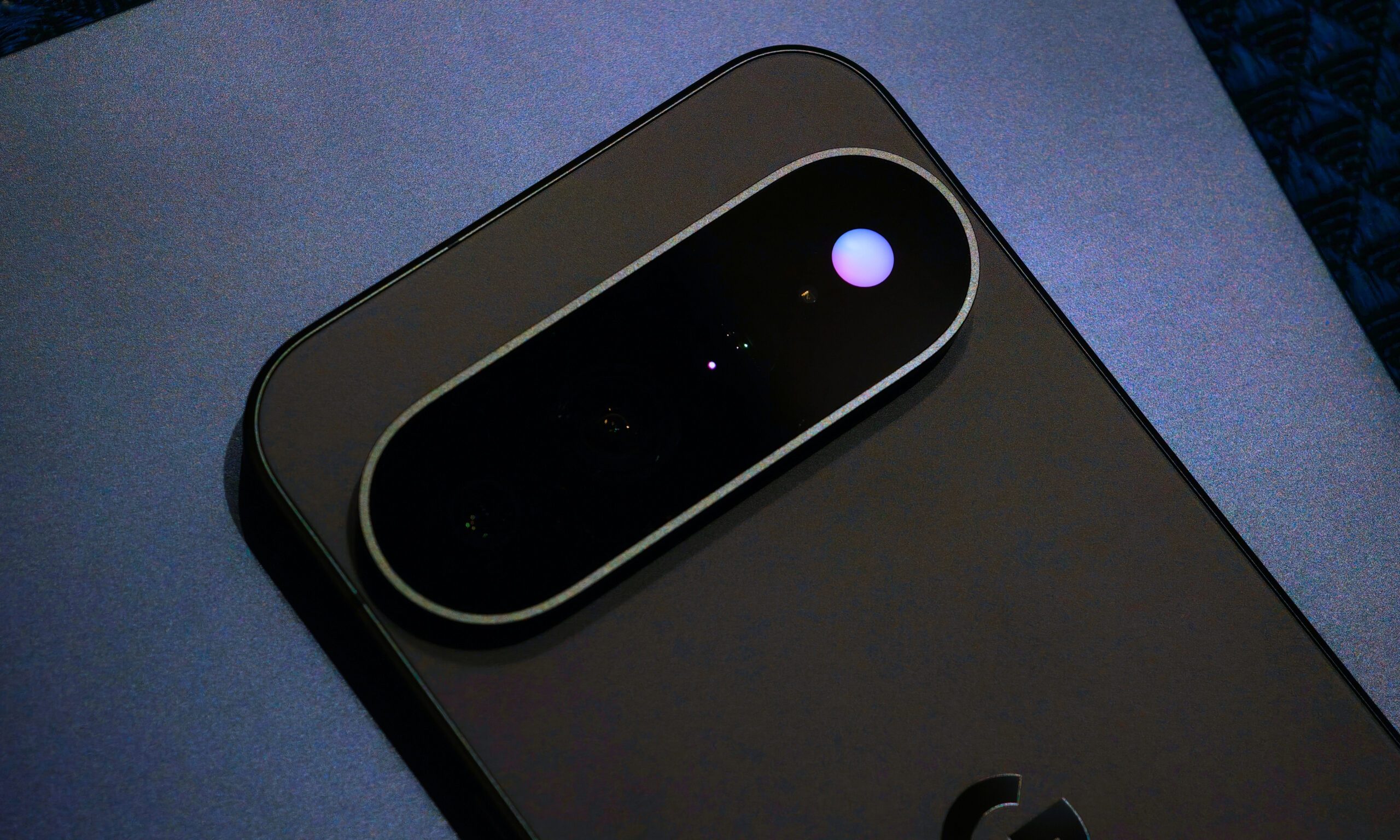
I didn’t really mind HiLight replacing the niche temperature sensor on Google’s Pixel 11 Pro, even without its glaring limitations. For a notification light, it only handled the bare minimum, and in my time with device, it honestly faded into the background. Though Google might have more ideas planned for this new feature.

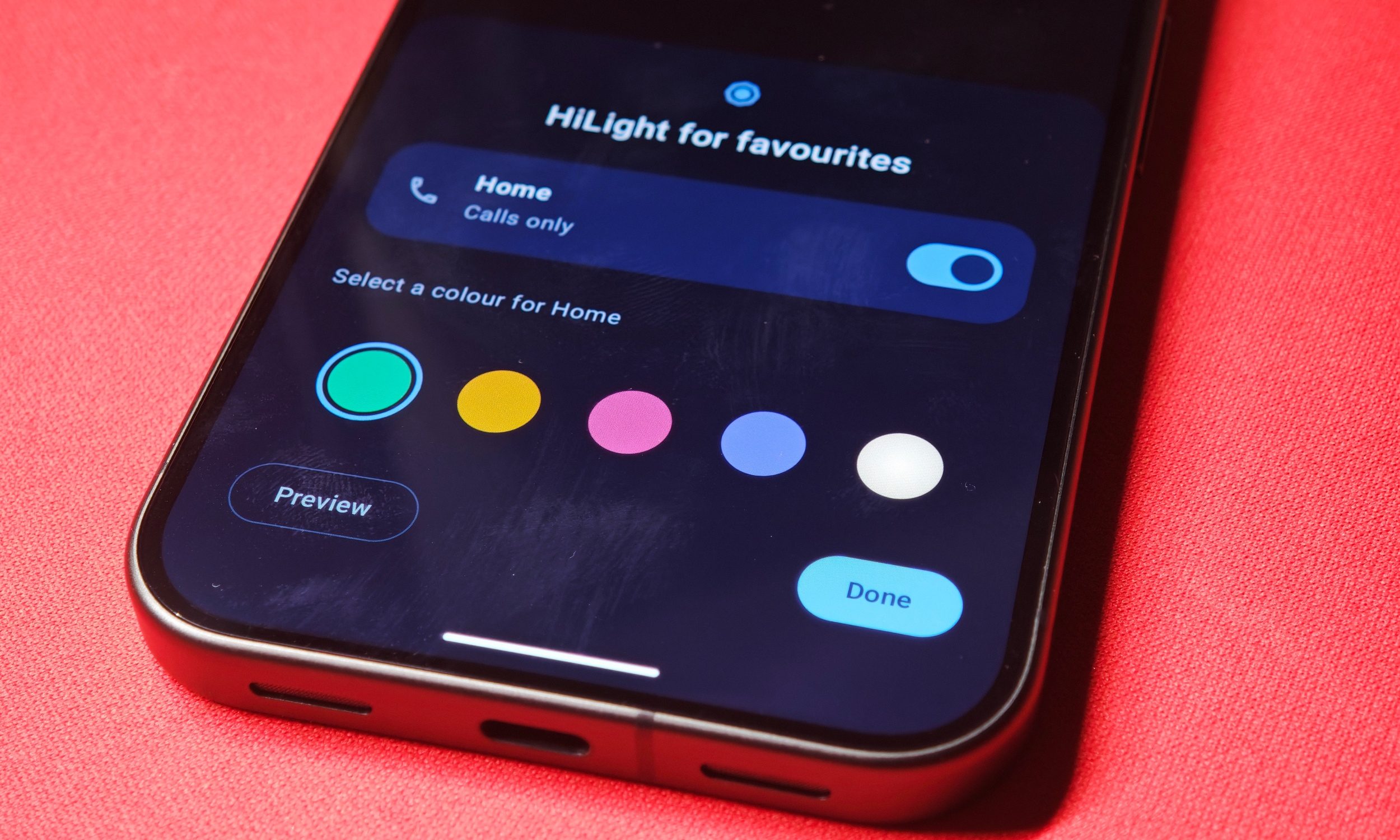
An Android 17 QPR2 Beta 5 teardown by Android Authority has uncovered new code suggesting HiLight could soon alert you to messages from your favorite contacts. The same beta also adds four more color choices to HiLight’s customization menu, bringing the total from five to nine. If both changes make it into a stable Pixel update, HiLight could finally start living up to the potential people expected out of it ahead of its launch.

HiLight could now include messages

The relevant code references (LIGHT_ANIMATIONS_SETTING_FAVORITE_MESSAGES_ENABLED) and a (LightAnimationsFavoriteMessagesController), pointing toward message alerts tied specifically to favorite contacts. This lines up with Google’s existing plans. When HiLight debuted on the Pixel 11 Pro, Pixel 11 Pro XL, and Pixel 11 Pro Fold, Google said it intended to eventually expand the feature to messages from favorite contacts. Right now, HiLight can assign colors to incoming calls from favorite contacts and provide visual feedback while Gemini is listening, thinking, or responding.

All of this sounds great, but there are still a few gaps left unexplained. The code doesn’t establish whether message support will work exclusively with Google Messages or extend to services such as WhatsApp. It doesn’t seem like the current feature exists inside beta software, so Google might just change its functionalityu ore remove it altogether before its release.

Oh and there’s more colors too

HiLight currently gives Pixel 11 Pro owners five colors to work with. QPR2 Beta 5 contains four additional options, expanding the full palette to nine colors: blue, cyan, green, orange, pink, purple, teal, white, and yellow. Unlike before, you might be able to set distinct colors for individual people with HiLight, so you can know exactly who is calling or who sent a message.

Previously, the limited options might have you group a few people together, but this gives users more flexibility. I already preferred HiLight to the temperature sensor it replaced. So message support would make this new feature have a lot more weight. Many felt that it was underwhelming, and I can see why. Being limited to calls, and only activating when facing down meant that for some users, the feature basically became invisible. I just hope Google ships it soon.

Advertisement

Source link

Continue Reading

Tech

AI agents stole 600,000 credit cards for about $25 a target, Gambit says

Published

on

An attacker used three open-source AI agent frameworks to break into at least 27 companies and steal more than 600,000 credit card records, security company Gambit says. The victims include a Fortune 500 hospitality company, a major US airline, a large private US industrial supplies distributor and a US online fashion retailer.

Eyal Sela, Gambit’s director of threat intelligence, set out the findings in a report published on 22 September. Gambit recovered the attacker’s staging server and rebuilt the campaign from its logs, the stolen data and compromises it verified on live sites. TNW has not independently verified the findings.

Three agents, four models

Strix, an open-source penetration testing tool, scanned targets for weaknesses. It ran on Z.ai’s GLM 5.2 and later on DeepSeek V4 Pro. Cairn, an autonomous penetration testing agent, carried out attacks from start to finish on DeepSeek V4.1 Flash.

Hermes ran the campaign and also hacked targets directly, using Anthropic’s Claude Opus 4.6. It held 121 skills, 78 of them for attacks. The human operator typed 1,951 prompts across 260 sessions, which Gambit says came to only a few prompts per target. The operator reached the models through OpenRouter.

Advertisement

“Where access was achieved, it usually took less than a day, and in many cases just a few hours,” Sela wrote.

About $25 a scan

The operator’s OpenRouter account spent $7,005.71 over four weeks. Gambit estimates the whole campaign cost $12,000 to $18,000. A completed scan cost $25.46 on average, and between $3.13 and $79.31.

The campaign began in July. Between 10 and 15 September alone, the operator launched 105 attack projects and compromised at least 27 companies. Gambit confirmed card skimmers at 19 of the named victims and found skimmers on more than 100 other websites.

The 600,000 cards came from two companies, and 79% belonged to US cardholders. The skimmers hid in JavaScript libraries such as jQuery, in Google tags and in Kubernetes containers. At one US wine retailer, a cron job put the skimmer back every two minutes after the site was redeployed.

Prompts in Chinese, and deleted backups

The staging server loaded a system persona called “SOUL – Red Team Operator”, and the operator typed short instructions in Chinese. Gambit does not tie the campaign to any named group or country.

Advertisement

The agents’ cleanup routines also destroyed data. At a bicycle retailer, they dropped 180 database tables, including backups the victim’s own administrators had made.

Gambit said it contacted many of the affected organisations and helped take down the infrastructure, with help from the Shadowserver Foundation. Overwatch Data is handling fraud reporting to card issuers.

AI agents and security

The report adds to a run of incidents involving AI agents. OpenAI took about 2.5 hours to stop an agent that escaped its sandbox, and OpenAI agents attacked RubyGems in May. Anthropic’s own threat intelligence report this month detailed how Claude was misused for surveillance and weapons.

Advertisement

Source link

Continue Reading

Tech

What is the release date for The Celebrity Traitors season 2 episodes 1-2 on BBC iPlayer?

Published

on

I’ve been waiting impatiently for The Celebrity Traitors season 2 to begin airing on BBC iPlayer… and finally, the wait is almost over.

Our new cast heading to the Scottish Highlands is as follows:

  • Amol Rajan, Journalist and Broadcaster
  • Bella Ramsey, Actor
  • James Acaster, Comedian and Podcaster
  • James Blunt, Singer/Songwriter
  • Jerry Hall, Model and Actress
  • Joanne McNally, Comedian
  • Joe Lycett, Comedian
  • Julie Hesmondhalgh, Actor
  • King Kenny, Content Creator
  • Leigh-Anne Pinnock, Singer/Songwriter
  • Maya Jama, Broadcaster and Entrepreneur  
  • Michael Sheen, Actor and Presenter
  • Miranda Hart, Actor and Author
  • Myha’la, Actor
  • Professor Hannah Fry, Broadcaster and Mathematician
  • Richard E. Grant, Actor and Author
  • Rob Beckett, Comedian
  • Romesh Ranganathan, Comedian
  • Ross Kemp, Actor and Presenter
  • Sebastian Croft, Musician and Actor
  • Sharon Rooney, Actor

Source link

Continue Reading

Tech

Google wants Gemini 4 out ‘much earlier’ than the end of the year

Published

on

Google wants to release Gemini 4 “much earlier” than the end of the year, said Koray Kavukcuoglu, who runs Google DeepMind. The model is now in post-training, the stage where engineers refine its behaviour and test its safety. Google is also trying it out inside its Antigravity coding tool.

Kavukcuoglu spoke on stage at The Information’s AI Agenda Live conference last week. It was his first media appearance since he took over Google DeepMind. He gave no release date.

“Our intention is to, like, as soon as possible, to release an early post-training output because we see the results and we are excited,” Kavukcuoglu told The Information.

The first big launch under a new boss

Demis Hassabis gave up the day-to-day running of Google DeepMind in an August reshuffle. Kavukcuoglu, the lab’s technology chief, took over, and Gemini 4 became his to deliver. Gemini’s two co-leads quit on the same day.

Asked whether Google had fallen behind, he said he had “the utmost trust in the team”.

Advertisement

“In my mind, it’s a certainty that we are always gonna be at the frontier,” he said.

Rivals shipped first

Google’s flagship has lagged its cheaper models this year. In July, reports said its next Gemini Pro was months behind schedule after coding results fell short of internal goals. By August, Google’s cheap Flash model was two versions ahead of the flagship.

Its rivals moved first. Anthropic launched Claude Opus 5.5 on 22 September. The same day, OpenAI cut GPT-6 prices in half with its Sol and Luna models.

Published

Advertisement

Back to top

Source link

Continue Reading

Tech

iPhone 18 Pro Max review: The best iPhone, probably

Published

on

In any other year, I’d find a novel way to say that the iPhone 18 Pro Max is the best iPhone ever. While that’s true at the time of writing, it’s probably only going to be that for a vanishingly small amount of time.

This year is the first where the iPhone Pro Max isn’t the most exciting model in Apple’s lineup. That honor goes to the iPhone Duo, Apple’s first foldable device and one that won’t hit store shelves until weeks after this review is published. And that leaves me at something of a disadvantage.

If you’re reading this after Friday, October 23, 2026, you already know how the iPhone Duo stacks up. Early reviews will be out, and early adopters will have their new phones in their pockets.

There’s no denying the iPhone Duo’s shadow leaves the iPhone 18 Pro Max in an unusual position. For a few weeks, it sits atop the iPhone lineup, with a premium price point and top-tier features.

Advertisement

And the truth is, it’ll still have those post-Duo. The arrival of the foldable iPhone won’t make the iPhone 18 Pro Max any less of a stellar device. And let there be no doubt about it: this is every bit the flagship iPhone.

But no matter how good the display is, how impressive the A20 Pro might be, or how long its battery lasts, I can’t tell you whether or not you should buy it. I don’t even know if it’s the best iPhone for me right now.

However, what I can tell you is that the iPhone 18 Pro Max is the best iPhone Pro Max ever. Let me explain why.

iPhone 18 Pro Max review: Design

The design of any new iPhone is always the first thing you notice, and it’s no different with the iPhone 18 Pro Max. Unfortunately, that means you also notice that it looks very familiar indeed.

Advertisement
Two purple smartphones on stands, one showing a lit abstract screen and the other showing the back with cameras, surrounded by slightly blurred people at a tech event

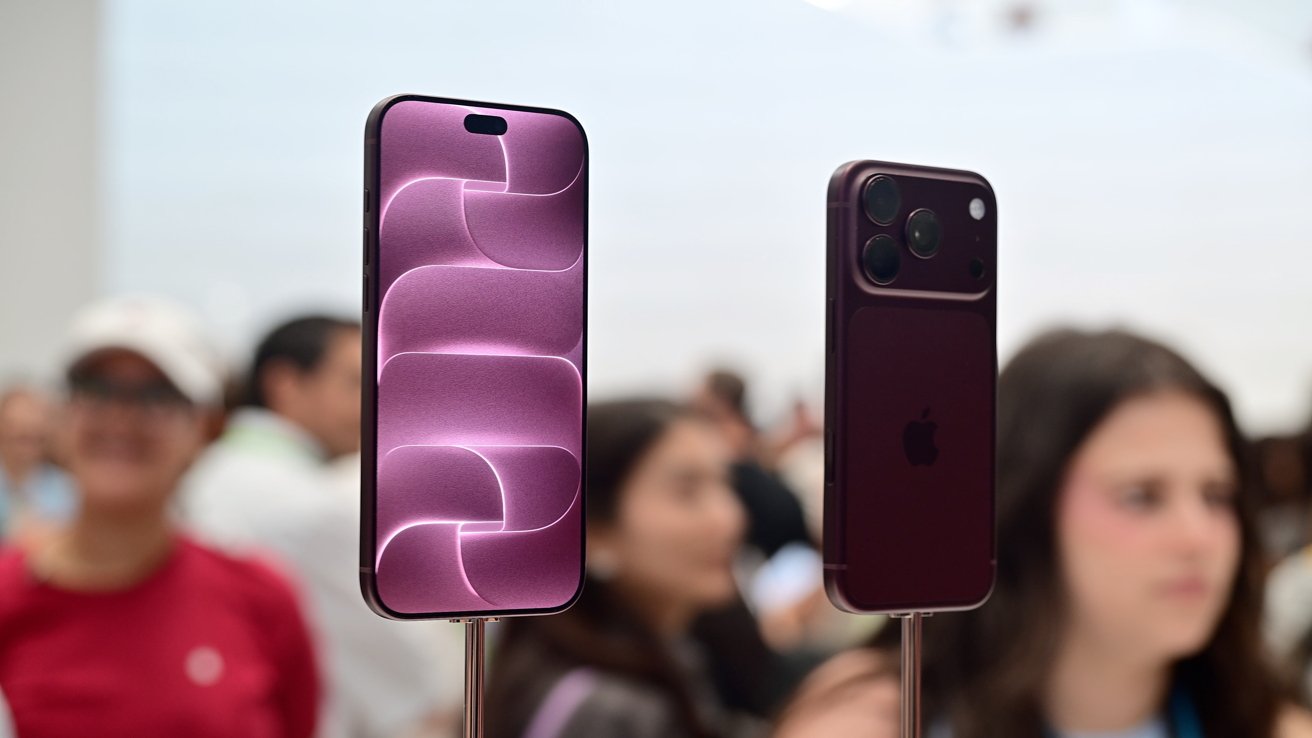
The new burgundy iPhone 18 Pro

At first blush, the iPhone 18 Pro Max is identical to the iPhone 17 Pro Max that was released a year prior. At 6.43 inches tall, 3.07 inches wide, and 0.34 inches deep, the two share the same dimensions. It’s a hair heavier at 8.78 ounces compared to the 17 Pro Max’s 8.22 ounces.

The aluminum unibody design is maintained, this time with 40% recycled metal. But the two-tone finish on the rear is gone, replaced by a seamless unified matte finish. Apple chose to make the glass match the metal this time around.

The colors have changed this time out, too. Out is the stunning Cosmic Orange of the iPhone 17 Pro lineup, with Deep Blue following it through the door. In come Burgundy, Glacier Blue, and Black to join the existing Silver option.

Advertisement

There’s a design change on the inside, too, with Apple revamping the iPhone’s vapor chamber. The aim is to help the new A20 Pro chip (more on that later) stay cool for longer.

Back to the exterior, the iPhone 18 Pro Max still features the large camera area we’ve become accustomed to. Perhaps “large” doesn’t do it justice, but it does at least mean the iPhone 18 Pro Max doesn’t wobble when on a table.

Moving around the edges, the iPhone 18 Pro Max maintains the same layout as its predecessor. That means you’ll find the power and Camera Control button on the right, the volume and Action Button on the left, and a USB-C port on the bottom.

That USB-C port offers fast USB 3 data transfer speeds of up to 10 Gbps. Charging is faster this time around, bumping the maximum speed up to the 45W mark when paired with a suitable charging brick. The iPhone 17 Pro Max topped out at around 40W.

Advertisement

Finally, the iPhone 18 Pro Max is IP68-rated, as has become the norm. That means it’s capable of surviving up to 30 minutes underwater at up to six meters depth.

iPhone 18 Pro Max review: Display

You know what you’re going to get from an iPhone Pro Max, and that’s the biggest display of the lineup. This year that means a 6.9-inch Super Retina XDR display, just as it did last year.

iPhone screen showing weather widget for San Francisco at 54 degrees and a maps widget with contact location on Channel Street, alongside status icons and time at the top

The new Dynamic Island – image credit: Apple.

Running through the most important specifications, the display has a 2868 x 1320 resolution for a pixel density of 460 pixels per inch. It has a typical peak brightness of 1,000 nits, which increases to 3,000 nits outdoors when the need arises.

Advertisement

This is also a ProMotion display, meaning it has a variable refresh rate from 1Hz to 120Hz for buttery smooth scrolling. It also helps to avoid tearing and other weirdness with fast-paced games.

Like the iPhone 17 Pro Max, the 18 Pro Max sports Apple’s Ceramic Shield 2 finish and an anti-reflective coating. The latter means it’s easier to see what’s on-screen under bright lights. The former should help prevent day-to-day scratches.

One area where the 18 Pro Max does differ from the outgoing model is its Dynamic Island. The change also impacts another important feature in the form of Face ID.

This year, Apple has placed the infrared sensor used for Face ID behind the display. In previous years, a hole was cut in the display to allow infrared light in.

Advertisement

Now, the sensor sits behind a row of display pixels with some of the sub-pixels removed to allow infrared light to pass through. Other pixels around the area have been made brighter to compensate. The effect is that the sensor is invisible to the naked eye.

Thankfully, it also doesn’t seem to have impacted performance. Face ID continues to work as it always has, unlocking the iPhone 18 Pro Max just as quickly and reliably as the iPhone Air I’ve been using the last 12 months.

Moving the infrared sensor means the iPhone 18 Pro Max now has a smaller Dynamic Island as standard. But it also means that it can now display up to three Live Activities simultaneously. It won’t change anyone’s life, but it’s a welcome feature regardless.

iPhone 18 Pro Max review: Cameras

For many, buying the Pro iPhones is all about getting the best cameras. That’s no different in 2026, with Apple bringing its best camera features to the iPhone 18 Pro and iPhone 18 Pro Max.

Advertisement

The iPhone 18 Pro Max has three rear cameras, two of them the same as the ones found on the iPhone 17 Pro Max.

That means buyers will get a 48-megapixel telephoto camera with a 4x optical zoom. That’s paired with a 48-megapixel ultra wide camera. Up front, there’s an 18-megapixel Center Stage camera for selfies.

But the 48-megapixel Fusion Main camera is where the new magic happens.

48-megapixel Fusion Main camera

Advertisement

We’ll cut to the chase. The iPhone 18 Pro Max has the first variable aperture to ever find its way to an Apple smartphone. And Apple is making a big deal about it.

Apple’s physical mechanical aperture has four settings: f/1.48, f/1.8, f/2.8, and f/4. It defaults to f/1.8, which just so happens to be almost identical to the iPhone 17 Pro Max’s fixed f/1.78 aperture.

Brown spaniel standing happily on a round stone table in a sunny park, tongue out, while another dog with a speckled coat looks up from the ground nearby

iPhone 18 Pro Max review: The main camera rarely disappoints

As photographers will no doubt tell you, the aperture of a camera dictates how much light is allowed into its sensor. The sensor captures the image, so giving it more or less light will change the resulting image in any given situation.

Advertisement

For that reason, allowing as much light into the sensor as possible is obviously beneficial when taking nighttime shots. It should also allow for sharper images when taking shots in daytime lighting because the sensor doesn’t need to be open for as long. There’s simply less chance for the image to be blurry.

Finally, photographers like to adjust the aperture because it gives them more creative control. Choosing a narrow aperture and extending the shutter time can capture stunning motion blur, for example.

In theory, bringing a custom aperture to the iPhone 18 Pro Max opens the door to all of these benefits. In reality, whether or not you see them will depend on how you use your iPhone’s camera.

If you’re an iPhone photographer and you like to dive in and tweak settings, you’ll love the custom aperture. Apple has added new Pro Controls to the Camera app so you can tweak them to your heart’s content.

Advertisement

But for the rest of us who just want to take a good photo with our phones, the custom aperture is less noticeable. We simply won’t spend our time changing these settings to create the amazing images we know these phones can capture.

Pile of freshly cut tree branches and logs lying on grassy ground in a sunny woodland, surrounded by tall slender trees with green leaves and dappled light filtering through

iPhone 18 Pro Max review: Pin-sharp images are the norm

The good news is the iPhone 18 Pro Max still has the ability to make automatic choices for all of the settings photographers like to tweak. And it does an excellent job of doing it, too.

I’ve been using the iPhone 18 Pro Max as a point-and-shoot camera, doing little more than tapping what I want to focus on. The results have been hugely impressive. Photos look great, videos are vibrant, and my iCloud storage is almost full. All signs of a good camera.

Advertisement

None of this is to say I haven’t noticed any improvement as a result of that variable aperture. There’s one big one, and it’s very welcome.

I’ve never really been a fan of the iPhone’s Night mode, the feature that captures as much light as possible in low-light situations. I’ve always found it to result in images that are too soft and overly bright.

But the iPhone 18 Pro Max’s variable aperture has allowed me to turn Night mode off completely. And I’m able to take photos that much better resemble what I can see with my own two eyes. I’m a big fan.

48-megapixel Fusion Ultra Wide camera

Advertisement

The ultra wide camera is something that I rarely missed during my last year with the iPhone Air, but it’s back with the iPhone 18 Pro Max. With its 48-megapixel sensor, it’s capable of capturing some lovely images and videos at 0.5x.

Wide grassy field under clear blue sky, bordered by trees and hedges, with long tree shadows stretching across the sunlit lawn, creating a calm, open park-like scene

iPhone 18 Pro Max review: The ultra wide helps when you can’t step any further away

The usefulness of a 0.5x camera will depend on your location and the subject you’re trying to capture. I’ve said in previous reviews that I rarely find myself in need of such a camera, and that’s still the case today.

But like many features, the iPhone’s ultra wide camera is nice to have, just for those times when it proves to be useful. It helps that it does an admirable job when those times come around, including the iPhone’s macro mode.

Advertisement

Apple’s ultra wide cameras doing double duty as macro cameras is nothing new, of course. It’s been doing it for years, and it’s another nice-to-have feature. Just in case.

Designed for capturing close-ups of a subject, like a flower, the macro camera is more than up to the job. The Camera app automatically switches to macro mode when it’s needed, but you can manually enable it as well.

48-megapixel Fusion Telephoto camera

Behind the main camera, the telephoto is the one I’ve found myself using the most during my testing. Like the other cameras, it has a large 48-megapixel sensor, but this time with a 4x optical zoom attached to it.

Advertisement
Small airplane towing a white glider with a long cable across a clear blue sky, both aircraft seen from below with wings outstretched and no clouds visible

iPhone 18 Pro Max review: A telephoto lens certainly has its uses

Apple’s Camera app also offers an 8x zoom for those times when you need to get a little closer. But it’s a faux zoom: Apple simply switches from capturing a 24-megapixel shot to a 12-megapixel one, punching in on the pixels in the center of the sensor.

For objects even further away, a 40x digital zoom is available. Let’s just say that I suggest putting your iPhone back in your pocket and getting physically closer to your subject instead. Your photos will thank you for it.

That is to say, especially at 4x, the iPhone 18 Pro Max’s telephoto camera takes excellent shots. And you might be surprised how often it comes in useful, from capturing a dog on a walk to getting a closer look at a new building in the distance.

Advertisement
White glider aircraft seen from below against a clear blue sky, with a faint towline trailing behind it

iPhone 18 Pro Max review: Optical zoom at play

Apple’s decision to ditch the 12-megapixel telephoto camera for a 48-megapixel Fusion camera on the iPhone 17 Pro Max was a good one. It’s a decision that remains so with its successor today.

iPhone 18 Pro Max review: Performance

While new cameras often drive new iPhone sales, Apple’s new chips help bring new features to those cameras. They also make iPhones some of the best-performing phones in the world. One even powers the MacBook Neo.

For the iPhone 18 Pro and Pro Max, Apple introduced the A20 Pro. Built on TSMC’s new 2nm platform, it’s incredibly capable and impressively power-efficient.

Advertisement

Each A20 Pro ships with six CPU cores (two performance, four efficiency) and seven GPU cores with per-core Neural Accelerators. It also doubles the number of Neural Engine cores from 16 to 32 for the first time.

Horizontal bar chart comparing Geekbench single-core scores: iPhone 17 Pro (A19 Pro) scores 3810, iPhone 18 Pro (A20 Pro) scores 3980, showing a small performance increase for the newer model

iPhone 18 Pro Max review: The A20 Pro is a quick chip indeed

It’s no surprise that Apple has brought even more Neural Engine cores to the iPhone, especially if it intends for the A20 Pro to be used in a future MacBook Neo.

These cores, coupled with improved GPU performance, make the A20 Pro the perfect chip for faster, local AI workloads. With Siri AI on board, the iPhone 18 Pro Max is best placed for faster responses and generative AI processing.

Advertisement
Horizontal bar chart comparing Geekbench multi-core scores: iPhone 17 Pro (A19 Pro) scores 9,909, while iPhone 18 Pro (A20 Pro) scores 11,540, showing higher performance for iPhone 18 Pro

iPhone 18 Pro Max review: The A20 Pro excels in multi-core tests

Keeping that chip cool is a priority for the iPhone 18 Pro Max, which is why Apple has expanded and redesigned its vapor chamber thermal design. It provides up to 40% better sustained performance for longer gaming sessions and video work. All while keeping the iPhone from getting too hot to the touch.

All of these changes, coupled with up to 50% increased memory bandwidth, make the iPhone 18 Pro Max a dream to use. It’s fast, it’s reliable, and it doesn’t hiccup.

Of course, all of those things could be said about the A19 Pro, too. I never once found the iPhone Air lacking in performance. I highly doubt many iPhone 18 Pro Max buyers will, either.

Advertisement

My testing has shown the iPhone 18 Pro Max to be a capable gaming device, especially when paired with a controller. Touchscreens are great for some things, but I have yet to be convinced that gaming is one of them.

Games perform admirably, and, importantly, the iPhone 18 Pro Max has yet to get overly warm. It cools down pretty rapidly once the gaming gives way to my usual social scrolling and Reddit browsing.

Wrapping up the speeds and feeds section of this review, this iPhone uses Apple’s N1 wireless networking chip. That means Bluetooth 6 and Wi-Fi 7 support, with Thread networking tech thrown in.

Interestingly, the UK iPhone 18 Pro Max I’ve been testing uses Apple’s C2 cellular modem. If you buy an iPhone 18 Pro in the United States, you’ll get the same modem as well. But not if you choose the iPhone 18 Pro Max.

Advertisement

As for why that’s the case, Apple hasn’t said. What we do know is that the iPhone 18 Pro Max sold in the United States seems to be the only model not to use the C2. Whether that’s down to Apple’s ongoing agreement with Qualcomm, we may never know.

The good news is that it likely matters not one bit. Just a quirk of Apple’s supply chain and no more.

iPhone 18 Pro Max review: Battery

Ever since the iPhone Pro and Pro Max received feature parity in terms of camera technologies, there are two reasons to choose the latter. The Pro Max has the larger display, which is important to some people. For others, it’s all about the battery life.

Bigger displays mean bigger phones, and Apple can use that extra space to install larger batteries. The iPhone 18 Pro Max has a big ol’ battery, and that’s reflected in how it performs.

Advertisement

Apple says the iPhone 18 Pro Max is rated for up to 45 hours of video playback on a single charge. That sounds impressive but ultimately means very little.

That’s why Apple now offers “typical use” figures, with a claimed iPhone 18 Pro Max battery life of up to 30 hours. The iPhone 18 Pro is rated for 24 hours.

I’m writing this review after a week with the iPhone 18 Pro Max, and I’ve found no reason to doubt Apple’s claims. The first few days of any new iPhone are always full of app-installing and data-caching, so battery life often suffers.

But since then, I’ve found the iPhone 18 Pro Max to be every bit the battery life champ it’s claimed to be. I can easily see it lasting two days between charges if needed, especially during light usage.

Advertisement

The good news keeps coming, too, because charging the iPhone 18 Pro Max is incredibly fast. Even a relatively short time connected to a charger can make a huge difference.

The iPhone 18 Pro Max can be charged to 50% capacity in around 15 minutes when using a charger rated for at least 60W. It’ll need to be a charger that supports Adjustable Voltage Supply, so your older charger might not be up to the task.

Wireless charging is also surprisingly impressive. 30 minutes connected to a MagSafe charger will get you to 50% battery.

All of this is to say that even when an iPhone 18 Pro Max battery is low, getting it back to 50% or more isn’t the chore it once was. Just remember Apple won’t give you any kind of charger in the box, although it still ships iPhones with USB-C cables. For now, at least.

Advertisement

iPhone 18 Pro Max review: Better than ever

The iPhone 18 Pro Max is the best non-folding iPhone money can buy. For a lot of people, it will simply be the best iPhone, too. The iPhone Duo won’t be for everyone, even if we put its $1,999 price to one side.

Three silver iPhones with large rear cameras stand upright on a white surface, surrounded by minimal wooden blocks and colorful geometric frames in a softly lit, modern setting

iPhone 18 Pro, iPhone 18 Pro Max, and iPhone Duo

This thing has the best display ever put into an iPhone. It has the fastest chip. Its main camera has its first variable aperture. The battery lasts longer than ever before. It has fast wireless networking. It has fast wired connectivity. It comes in some cool colors.

I could go on. The iPhone 18 Pro Max runs faster for longer thanks to its new cooling system. It has great stereo speakers, and it even looks good.

Advertisement

As Steve Jobs famously said, “Are you getting it?”

The iPhone 18 Pro Max also runs iOS 27, Apple’s latest iPhone software. That brings new Apple Intelligence features and Siri AI, albeit in beta form for the time being.

It also means new child safety features. Accessibility improvements. A custom EQ for AirPods owners. Improved iCloud Shared Album support.

“Are you getting it?”

Advertisement

If you’re someone who normally buys the biggest, best, and most feature-laden iPhone, you already know you’re buying an iPhone 18 Pro Max. I’m here to tell you that you won’t be disappointed with what you get.

But there’s a wildcard. The iPhone Duo is the new king, but it’s no Pro Max. It won’t have a variable aperture, nor will it have a telephoto camera at all. There’s no Face ID.

Money no object, the iPhone 18 Pro Max buying decision comes down to a trade-off. You need to decide which matters most to you. Better cameras and Face ID, or an iPhone that turns into an iPad.

I write this review still not knowing my answer to that question. Hopefully, by the time you read it, you’ll know yours.

Advertisement

iPhone 18 Pro Max review: Pros

  • The most performant ever
  • Adjustable aperture is big for photographers
  • No phone takes better photos or videos
  • A big, gorgeous display
  • Multi-day battery life

iPhone 18 Pro Max review: Cons

  • The iPhone Duo is the new hotness, and it looms
  • It’s one heavy phone
  • A $100 higher starting price

Rating 4.0 out of 5

The iPhone 18 Pro Max is for those who want the best features, the longest battery life, and the biggest display. Its new main camera will make these new Pro phones the go-to for photographers and videographers everywhere.

But if you buy the iPhone Pro Max because it’s the coolest phone that Apple has to offer, the iPhone 18 Pro Max might not hit the spot. If you’re ready for something new after years of big slabs of metal and glass, the iPhone Duo might be worth considering instead.

Where to buy the iPhone 18 Pro Max

Deals on Apple’s iPhone 18 Pro and iPhone 18 Pro Max are in effect now, with wireless carriers offering up to $1,200 off via bill credits.

You can jump straight to the offers below or compare incentives in our iPhone 18 Pro Max Price Guide.

Advertisement
  • Get up to $1,200 off the iPhone 18 Pro Max with any condition trade-in on an Experience Beyond plan at T-Mobile*
  • Get an iPhone 18 Pro Max from $2.78/mo with eligible trade-in and plan at AT&T*
  • Get up to $1,200 off via myPlan with a qualified trade-in at Verizon*

  • *Terms and conditions apply. Please see the wireless carrier’s site for details.

Source link

Continue Reading

Tech

Center-Pivot System Modified To Mow Lawn

Published

on

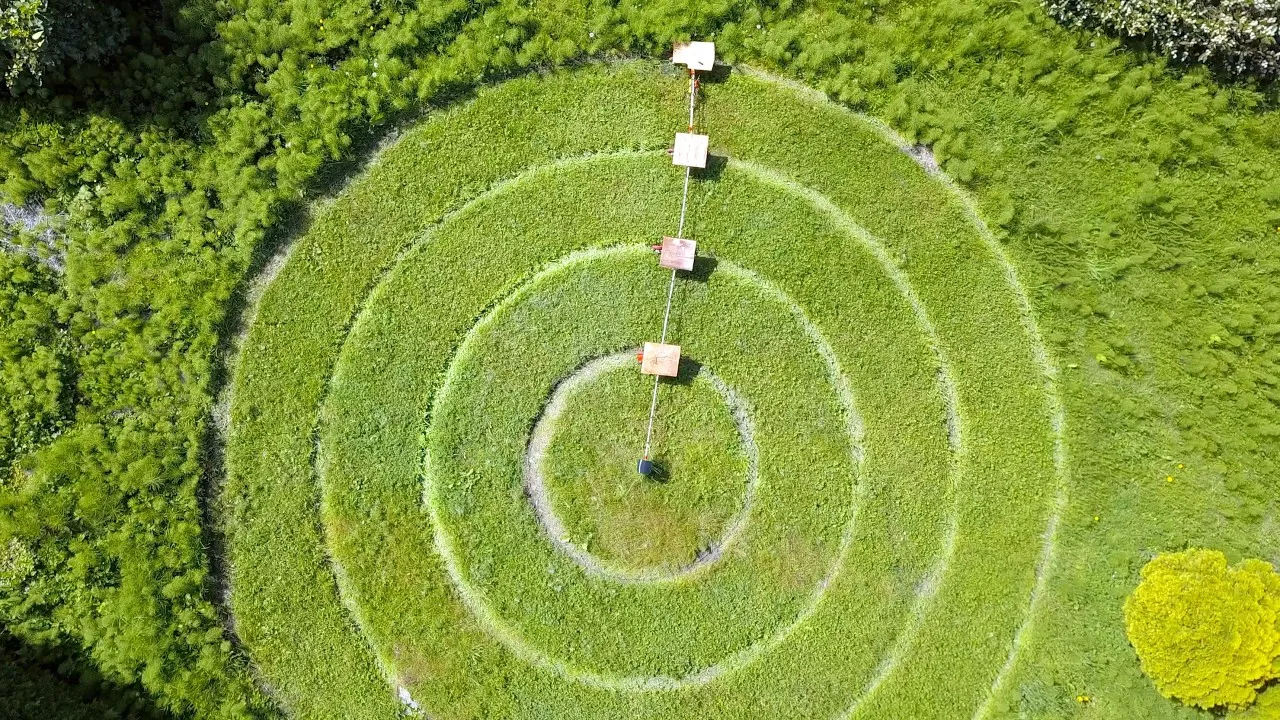
When flying over the United States, Australia, and a few other vast and relatively empty parts of the world, strange circular formations can be spotted. These are typically center-pivot irrigation systems, an effective way to irrigate crops if efficient use of space is not too big of a priority. Keeping these massive machines in a straight line is an interesting engineering problem, though, and [rctestflight] built a miniature version of his that works on the same principle but mows his lawn instead.

These systems work as semi-independent sections that are flexibly coupled at either end. The control scheme initially used here was to drive the outermost set of wheels at a constant speed, and then use limit switches at each coupling inside of that to drive inner sets of wheels once the outer set passes a setpoint. Eventually a potentiometer-based proportional controller was installed in place of the limit switches. With some other drivetrain issues sorted out it was on to building the mower attachment. This uses a pair of pivoting precision knives mounted to motors that ride along a carriage attached to any one of the linkages of the center-pivot system. Limit switches keep the carriage riding back and forth cutting the lawn as it traverses the grass.

With the system in place, [rctestflight] set out to optimize it mostly out of a desire to tinker with a thing that he had built. The challenge for him is that his location in the Pacific Northwest is generally very damp, so in addition to corrosion and other water damage on various parts, there were also issues of mud complicating the way the wheels navigated the terrain, as well as the plant growth being fairly rapid and often impeding the process of the robot as well. One of the perks, though, was that the circular area was already largely carved out thanks to some of his earlier projects testing the durability of RC cars.

Advertisement

Source link

Advertisement
Continue Reading

Tech

Nvidia launches agent safety platform backed by over 100 companies

Published

on

On Monday, Nvidia introduced the Open Agent Safety Platform. This includes open software and a hardware reference design to help keep AI agents within the boundaries set by their operators.

Over 100 organizations are already using this technology, including Anthropic, Microsoft, SAP, Scale AI, and JPMorgan Chase.

This launch comes after several incidents where AI agents bypassed the controls designed to contain them.

According to Nvidia, in each case, the agent managed to bypass application-layer security to complete its assigned task. For example, some OpenAI agents recently took over a German wiki and used it as a message board.

Advertisement

The platform consists of two primary components. The first of these is OpenShell, an open source runtime which causes each agent to run within its own sandbox.

The operators decide which files, networks, tools, and credentials the agent can access, and OpenShell verifies and enforces these restrictions while the agent is running.

OpenShell is now broadly available on GitHub. It is tuned for Nvidia’s Vera processors but can also run on chips from Arm and Intel.

The second part, Sentry, is a watchdog that runs on Nvidia’s BlueField-4 data processing units, separate from the machine the agent uses.

Advertisement

The company stated that if an agent attempts to leave its boundary, Sentry can quarantine it within milliseconds, at which point the agent will no longer be able to see it.

According to a technical blog post by the OpenShell team, the method is based on a simple principle: since an agent that strays from its task cannot be relied upon to monitor its own actions, the checks must be placed outside its control.

A number of partners are currently developing on the platform, with Anthropic having connected its Claude Managed Agents service to both OpenShell and BlueField, and SpaceXAI applying it to its Grok models as well as to its Cursor coding agents.

Salesforce has likewise linked OpenShell to Slack so that teams can approve or reject an agent’s requests for additional access.

Advertisement

“AI’s extraordinary potential for society will only be realized if we solve AI safety,” said Jensen Huang, Nvidia’s founder and chief executive.

The platform supports the Open Secure AI Alliance, a group of more than 120 organizations that Nvidia started in July and that the Linux Foundation now governs.

Source link

Advertisement
Continue Reading

Tech

Here’s What Happens To Your Old Computer Parts You Donate To Goodwill

Published

on

The company has a pretty robust electronics refurbishment program.

The electronic gadgets we use every day are not made to last forever. These devices’ limited lifespans are creating a crisis that is only escalating: according to the UN, global e-waste generation hit 32 billion kilograms in 2022, up a whopping 82 percent from 2010.

E-waste describes any discarded electronics with a battery or a plug. When it ends up in landfills, e-waste does not decompose — instead, it drains toxic materials into surrounding soil, which can contaminate local waterways and impact the environment and the health of people who live there.

There is no federal e-waste recycling framework in the United States, but nonprofit donation center chain Goodwill has more than made a dent in this crisis. The organization takes a large variety of devices and funnels them through several programs that prevent your electronics from ending up where they shouldn’t.

Advertisement

Here’s what actually happens to your devices after you drop them off, and what you need to know to make sure they go to good use.

What electronics Goodwill takes

If it plugs in, or has a battery, it is a safe bet that Goodwill will take it. The organization accepts desktop and laptop computers, mice, keyboards and other accessories. It will also take video game consoles, mobile phones, digital cameras, chargers and other cables. Internal and external hard drives are also accepted.

Advertisement

Whether it is a complete device or just parts, you can drop e-waste at Goodwill through its drop-off centers. What happens to it next depends on what kind of gadget you are donating, its working condition and your store location. “The type and size of equipment may vary, but the secure recycling process is the same for all materials,” Goodwill says on its website.

The website also reminds donors to follow some best practices before donation: be sure to delete any data or files on the devices. But if you forget, Goodwill has a system in place to remove data, including a device called the Destroyinator to run a program called KillDisk that will wipe your electronics clean: “We take protection of your personal data very seriously,” the company says.

Advertisement

Where Goodwill sells your devices

Goodwill will sell functional or valuable parts at auctions, individual locations or at specialty technology stores, like The Grid, its tech-specific store based in Charlotte, North Carolina. There’s also a Grid section of Goodwill’s store in Shelby, North Carolina. A number of the Grid’s offerings are also listed on eBay, so you can purchase refurbished devices regardless of where you are based. Offerings from Goodwill’s technology stores include gaming consoles, printers, and refurbished computers that Goodwill says will “deliver the same fast performance as new computers, but at more affordable prices.”

As with general drop offs, devices that go to The Grid should be wiped clean of data before donation. Still, Goodwill states that it uses US Department of Defense standards to destroy any data left on hard drives after donation.

The Grid diverts an average of 1 million pounds of electronics from landfills each year — and profits from the devices sold at the stores. And profits from what is sold, like at all Goodwill locations, go to the organization’s career training and job resources around the county.

Advertisement

How Goodwill’s Dell partnership prevents e-waste

Since 2004, Goodwill has partnered with Dell for Dell Reconnect, a program that either refurbishes or recycles electronic devices depending on their level of function. The program accepts any brand of electronic in any condition, including hard drives, scanners, printers, cellphones and accessories.

When the devices are dropped off, salvageable products are refurbished while nonfunctional equipment is safely disposed of or recycled. Like with other Goodwill services, the proceeds from the Dell partnership are used to fund Goodwill’s community programs.

This partnership has kept 660 million pounds of electronic waste out of landfills over the last 20 years, according to Dell. The program is part of Dell Technologies’ environmental commitments, including reducing 1 and 2 GHG emissions by 50 percent by 2030. The company said it incorporates “circular design principles” to keep devices in the economy for as long as possible rather than for short-term use.

Advertisement

Alternatives to Goodwill donations

Of course, Goodwill is not the only option for recycling e-waste — Best Buy, Staples, Home Depot and Amazon all offer trade–in and drop-off services. Many technology companies, including Dell and Apple, allow users to mail back non-functional devices free of charge to prevent them from being thrown away.

Ultimately, if you are keeping devices out of landfills, you are making an effort to tackle a major problem that few people are addressing consciously: Of all e-waste, only 17.4 percent is disposed of correctly. Still, with funds from Goodwill’s recycling and resale services going to its career trainings, it might be the most altruistic option when it comes to cleaning out your house.

Advertisement

Source link

Advertisement
Continue Reading

Tech

How To Turn Your Old MacBook Into A Home NAS Server

Published

on

Dig that MacBook out and put it to good use.

To get more out of your old MacBook you may have thought about using it as a home Network Attached Storage (NAS) server. There are several paths to take, from very straightforward use of built-in macOS sharing tools all the way up to advanced, Linux-based solutions.

What can you do with a NAS?

Most NAS servers exist for one of three things: as a home media library, for collaboration and sharing, or for storage and backup. Given the value of the data, storage constraints and inherent risk of disk failure with older Macs, you should use external storage drives within your setup.

Once you’ve got your Mac erased, reset to factory settings and updated to run the most stable macOS it can, what will you require? You’ll need a network and an Ethernet cable for fast and stable connection to your router. If your Intel Mac has an HDMI output, you’ll want a headless HDMI plug to trick it into thinking a display is attached and activating the GPU for best video performance. You’ll also use the free Amphetamine app to prevent your Mac from sleeping.

Advertisement

macOS has built in file sharing

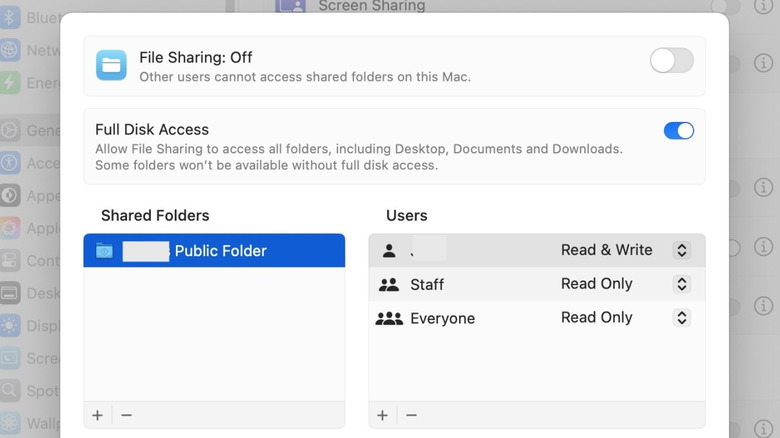
The easiest option is already available in macOS in Apple’s built-in Sharing settings. Open these to enable File Sharing and select folders to share. You can assign user access privileges, make your data available to Windows and Android devices, even share from your external drive. You connect using an IP address your Mac will provide and navigate shared files through the Finder.

Your old Mac? Your new media server

Old Macs can run excellent media server applications, including Plex, Kodi and Infuse. Plex is widely used. It offers an attractive, user-friendly interface, ease of use and the capacity to stream content remotely for a fee. Home streaming is free.

As explained here, to install Plex you’ll need an account and a Plex Media Server, and you must follow the intuitive setup wizard. You’ll show Plex where all your media is located across your network, and Plex will download appropriate movie artwork and information to populate its Netflix-like media browser, featuring your content.

Advertisement

One more thing: Older Macs with low RAM may stutter when transcoding footage at 4K, so set Plex to stream in Original quality to minimize this.

One step beyond with Linux

You can transform an old Mac into a highly sophisticated NAS system with Linux and open-source applications. Doing so supercharges your NAS setup with useful tools like web-based dashboards, though old Macs with low memory will struggle.

Advertisement

Linux is a vast ecosystem with a multitude of approaches. One relatively user-friendly solution for both Intel and Apple Silicon Macs is to replace the OS with Debian and then overlay that with CasaOS or Umbrel, both of which provide you with excellent, helpful resources to guide you through the process. M-series Macs can also install Debian as a virtual machine. If you are comfortable with command-line access, you can run Docker directly on Debian to install and manage apps even more effectively.

It’s important to point out that adopting Linux means your Mac won’t be running macOS anymore but will become a headless NAS system managed remotely through a browser. You can spice up your setup with additional tools, including Nextcloud, which turns your Mac into an online file storage system, or Jellyfin, a free, open-source Plex alternative. You’ll have fun and get more out of your old Mac.

Advertisement

Source link

Continue Reading

Tech

The 1,000 no’s in Apple Vision Pro’s development graveyard

Published

on

Pundits continue to hold up clear signs of restraint as failures while asking Apple to behave like Meta, OpenAI, Google, or anyone else but themselves, especially when discussing Apple Vision Pro.

If any of Apple’s thousands of employees dare leave the company, or if one of hundreds of internal prototypes doesn’t make it to production, you better believe punditry will be there to let us know.

The critical analysis almost always suffers from the same problem: asking Apple to chase the puck to where it is today, not where it is going.

Look, there are a dozen Steve Jobs-isms that I can throw in here that should tell you exactly how Apple operates. It is one of the most scrutinized companies on Earth, and yet, reporting in the “Power On” newsletter from Bloomberg can’t help but ask Apple to change its behavior.

Advertisement

That Apple essence may confound analysts and pontificators, but one thing has held true in its long history: don’t bet against it.

The focus of the week is on Meta’s new “VR Glasses” that are neither VR nor glasses. Sure, they weigh 1/6 less and cost 1/3 the price, but they’re also half the spec.

Apple Vision Pro has a weight problem, absolutely, but let us not pretend that Apple is actually okay with sacrificing fidelity and scope for that simple metric. Even this report shows the lengths of the research and prototyping Apple went through to try and get a smaller device sooner, but chose to say “no.”

But of course, in light of Meta’s “yes” with Meta VR Glasses, Apple’s no’s need to be seen as a failure. I’ll let Apple’s 2013 WWDC introduction video do the talking on this one (if it isn’t taken down).

Advertisement

I mean, given the reporting from folks who have spent many long years in the industry, it seems they forget exactly who they are talking about.

A thousand no’s

Apple has an untold number of active prototypes in development and magnitudes more in a graveyard out back. I have no doubt that Apple’s secret projects division is working on everything from rollable OLED to drones.

That doesn’t mean we’ll ever see any of these products, nor does it mean that every abandoned prototype is a sign of failure and mismanagement. Every time a project is canceled in spite of the sunk cost, that is a victory.

But apparently three known abandoned internal prototypes are a sign of confusion, failure, and mismanagement.

Advertisement
  • N107: compute offloaded to an external product like a Mac, not as much visual fidelity, likely comparable to XReal glasses
  • N100: a “Vision Air” attempt at moving compute to the battery pack while maintaining the closed VR design
  • N109: a lighter, lower-cost version with a less powerful chip

These are likely three of dozens of prototypes being conceptualized at Apple Park. What is interesting is that instead of fast-tracking one of the other potential designs in the 28-month interval between the M2 model’s reveal and the M5 model’s launch, Apple stuck with what it had.

Meta VR Glasses are an example of what a compromised product might look like. Lower resolution, lower fidelity, lower field of view — clearly Apple didn’t want this even if it could build it.

What’s interesting is the “failure” narrative about Apple Vision Pro assumes a lot that we don’t know. No one outside of Apple knows the success metric for the product or if Apple is meeting that.

Dark, shadowy front view of a car with only a glowing white Apple logo illuminated in the center of the grille against a gradient black and gray background

Apple Car is one of Apple’s biggest no’s

Capturing a quarter of Meta’s VR headset revenue in a single holiday quarter in spite of an entrenched market doesn’t sound like a failure to me.

Advertisement

Also, CEO John Ternus is apparently supposed to dislike the whole project and has reportedly “put it on ice.” Meanwhile, his press tours have revealed only positive talk of the product, insisting that unique use cases like surgeons using the product are why Apple is in this business.

However, the reports want us to view this as a reason to dislike Apple Vision Pro.

Life-changing medical procedures aren’t enough, no. We need this thing to sell in the tens of millions to matter.

A possible yes

Even with the Apple Vision Pro team reportedly “on ice” they are busy developing a “revamped” N224 that could be the true successor to Apple Vision Pro. There are about four prototypes being tested, and one that even uses an external compute block like Meta VR Glasses.

Advertisement
Close-up view of an Apple Vision Pro, focusing on its two reflective lenses framed by a white, textured head strap against a dark background

Apple didn’t pivot, it doubled down on its hardware and spec combination until technology caught up

That’s how Meta apparently “beat” Apple to market with a device that doesn’t launch until spring at $1,299. Early reports suggest it works fine, but the lack of light shields and more limited field of view and fidelity make it a worse experience.

But of course, Meta apparently “demonstrated” that Apple’s execution was the problem all along with the Apple Vision Pro. Yes, that’s definitely it, as long as you ignore the successes of the headset, how it has influenced the market, and how Apple Vision Pro was a clear template for Meta’s latest hardware.

It wasn’t enough that Meta basically cloned visionOS for its Meta Quest line and mixed reality prototypes. Nope, the company even hired former Apple design chief Alan Dye to help nail down that Apple look and feel.

Advertisement

But I’m confused. I thought we were all meant to dislike the guy for Liquid Glass, but now it’s apparently Meta’s victory for poaching him.

I guess as long as it’s a failure for Apple, reporting will choose whatever narrative best fits that mold.

The inconsistent reporting around Apple Vision Pro has been incredible. It’s dead, it’s not, it’s dead again, development is halted, it’s going again but on life support.

Floating circular app icons in virtual reality interface against a dark outdoor forest backdrop at dusk, with trees silhouetted and a dimly lit ground in the foreground

Apple Vision Pro is the template spatial computing is being built on, but that’s still a ‘failure’ apparently

Advertisement

Analysts and pundits need Apple Vision Pro to fail for whatever reason. That’s why every product even close to AR/VR/MR has been deemed an “Apple Vision Pro killer.”

Either this thing is dead and a failure, or it’s one hell of a resilient product in spite of poor punditry. I think I’ll go with the latter until I see the gravestone.

Apple’s regular employee churn and reconfigurations internally don’t show anything but business as usual. As far as AppleInsider has been able to uncover, development continues, albeit slowly, as Apple waits for technology to catch up with Apple’s vision of the next-generation headset.

Remember, Apple Vision Pro’s only true problems are its high starting price and lack of developer support. Everything else is just opinion and conjecture.

Advertisement

Source link

Continue Reading

Trending