Connect with us
DAPA Banner

Tech

2026 Green Powered Challenge: A Portable Solar Panel, Made Better

Published

on

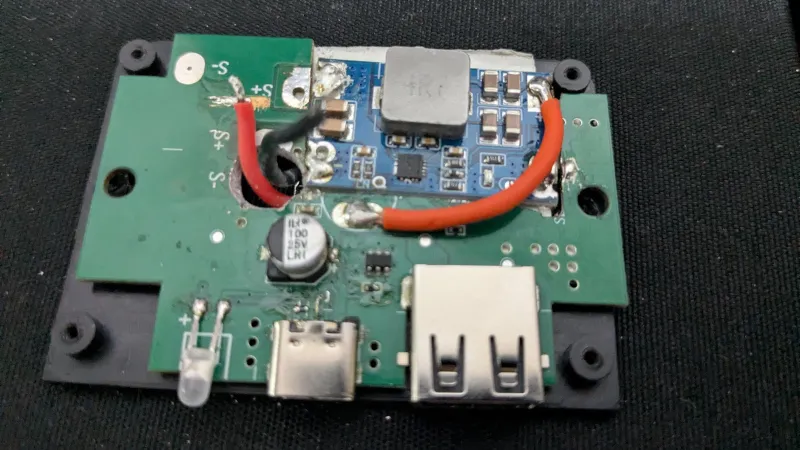
Many of us will have seen the portable solar panels offered on our favourite online purveyors of electronics, but some who have bought them remain unimpressed with their performance.  [t.oster92] had just such an issue, and concluded that since it had great dull-day performance, it wasn’t the panels themselves that were at fault. There followed a teardown and an investigation of the circuitry inside.

The panels fed a small PCB containing a buck converter, with an 8-pin SOIC carrying an untraceable part number. Some detective work revealed it was likely to be a rebadged version of a more common part, which exposed the problem as a converter without the rating to deliver the power it should. The solution, at least in part, was to replace it with a more powerful chip on a module and reap the benefits.

This would be the end of the story, but this is an ongoing project. Next up will be adding MPPT capability to extract the last bit of juice from those panels. That makes this one a story to keep an eye on, because we could all use a decent set of panels.

Advertisement

This hack is part of our 2026 Green Powered Challenge.

Source link

Advertisement
Continue Reading
Click to comment

You must be logged in to post a comment Login

Leave a Reply

Tech

Semiconductors core to Tyndall’s five-year strategy

Published

on

The institute said its strategy is aligned with government policies such as Silicon Island and Impact 2030 while helping towards Ireland’s obligations under the European Chips Act.

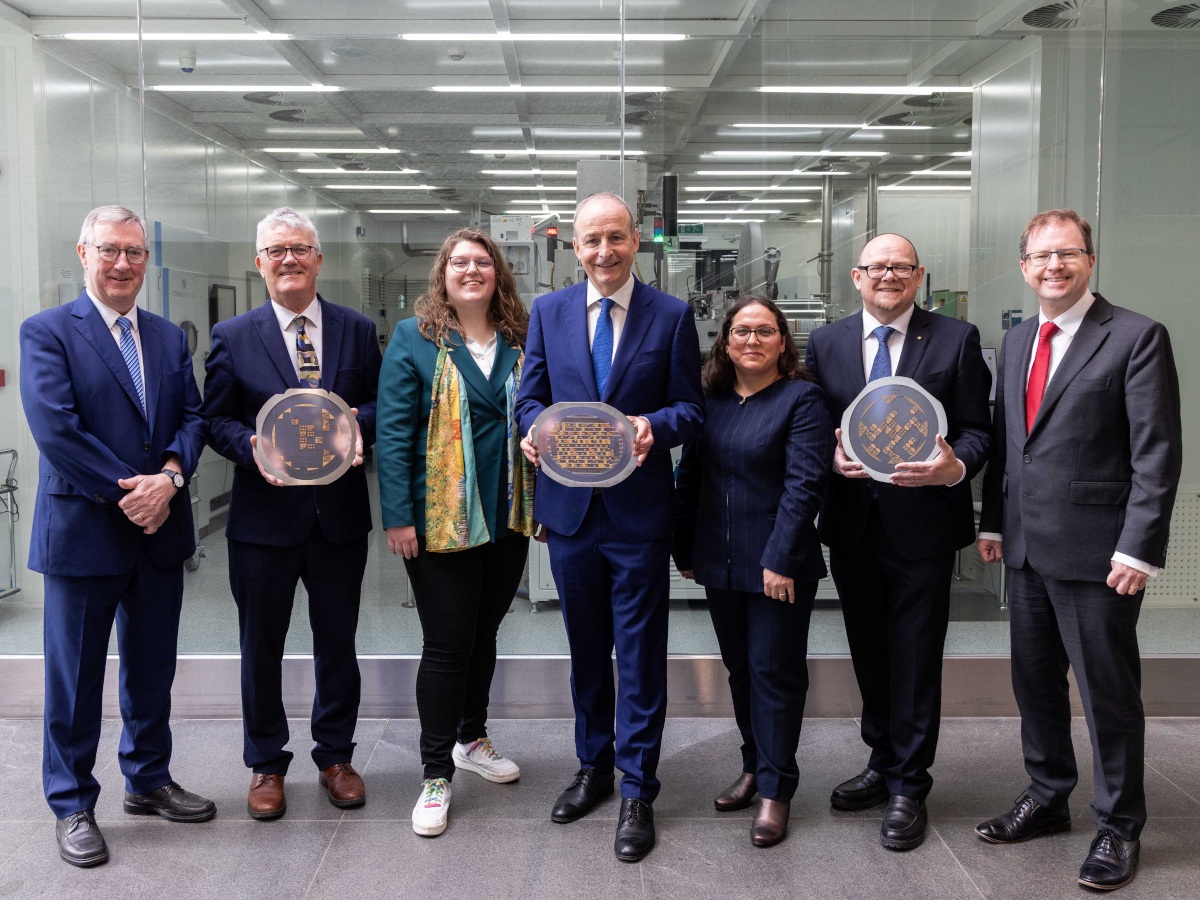
Tyndall National Institute is aiming to place itself at the core of Ireland’s semiconductor ecosystem, while strengthening Irish and European positions in the sector, with its new five-year strategy.

‘Tyndall 2030’ is aligned with government policies such as ‘Silicon Island’ and ‘Impact 2030’ while helping towards delivery of Ireland’s obligations under the European Chips Act, according to the organisation.

Launching its strategy on Saturday (25 April), Tyndall noted the centrality of semiconductors to every aspect of modern life and their importance to Ireland and Europe’s competitiveness and digital sovereignty.

Advertisement

The framework plans for a “significant expansion of Ireland’s semiconductor capability, through increased infrastructure, investment in research programmes and the development of future talent”, according to Tyndall.

“Tyndall 2030 is about translating world-class research into real-world impact,” said Prof William Scanlon, CEO of Tyndall.

“We are investing in both our people and our infrastructure to expand the footprint of Tyndall as a national asset, one that connects ideas, accelerates innovation, and delivers measurable economic value.

Tyndall 2030’s five core pillars are cited as research leadership, innovation, infrastructure, talent and optimal positioning of Ireland in the space. The body plans to “significantly scale its economic and societal impact” by growing annual income to more than €80m and expanding its workforce to more than 750 people.

Advertisement

Taoiseach Micheál Martin, TD said: “Tyndall, along with Ireland’s national semiconductor strategy, Silicon Island, is ensuring that Ireland remains a global leader in the technologies that underpin everything from climate action to AI data centres.”

The University College Cork-based institute said it is currently “widely recognised as a European and global leader in semiconductor research and advancement” and “plays a central role in Ireland’s semiconductor ecosystem” across “the full technology value chain”.

Minister for Further and Higher Education, Research, Innovation and Science James Lawless, TD said: “Tyndall 2030 sets out an ambitious vision to strengthen Ireland’s research and innovation capability in the critical technologies that will shape our future.”

Silicon Island is a part of the Programme for Government, is aligned with the European Chips Act and the EU Digital Decade, and aims to supercharge the country’s semiconductor industry through skills development, boosting R&D, the development of the domestic semiconductor ecosystem and attracting foreign investment.

Advertisement

Source link

Continue Reading

Tech

The antidote to Zombie Projects that drain productivity is AI

Published

on

We’ve all had that sinking feeling after a long weekend or holiday: opening our inbox to find projects that haven’t yet moved forward but haven’t been scrapped either. They sit in limbo, quietly draining time and reducing productivity.

These are what we call ‘Zombie Projects’, and they are becoming a real productivity problem for UK businesses. Our recent research found that 41% of UK workers usually carry projects over from one year into the next, and 90% of respondents surveyed globally say they’ve caused problems.

Sven Peters

AI Evangelist at Atlassian.

Source link

Continue Reading

Tech

Why Blue Badges Disappeared From Toyota Hybrids

Published

on


Toyota regularly weighs in as the world’s largest automaker by volume, and even if you aren’t sure what the Toyota name actually means or where its logo comes from, the company’s badge is easily one of the most recognizable ones in the world. However, if you’ve looked closely at the badge on certain Toyota models over the last decade and a half, you may have noticed different colors on some models.

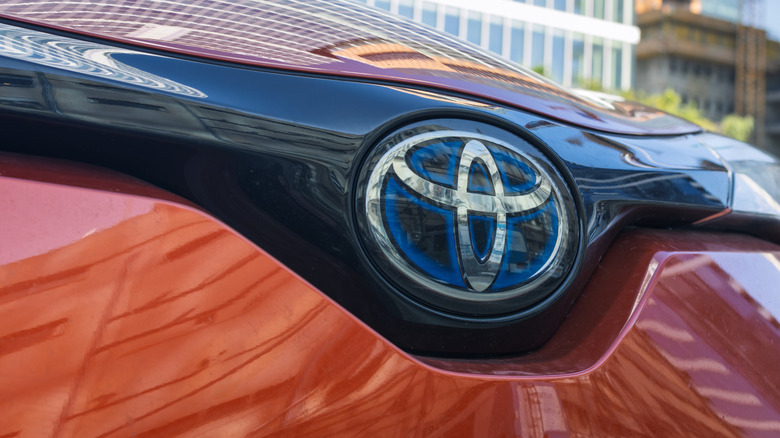
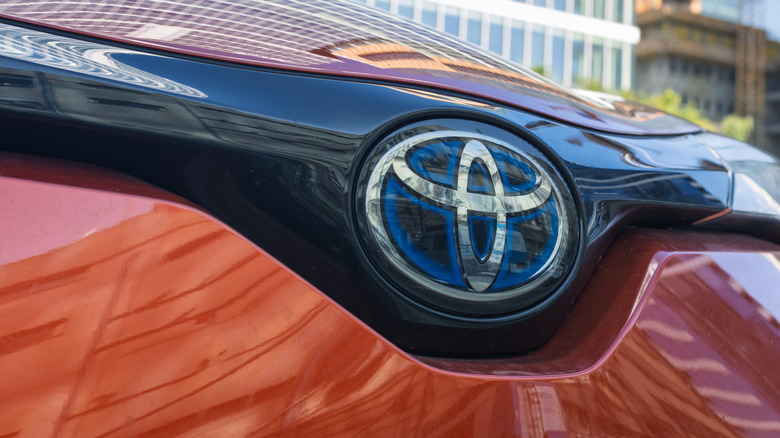
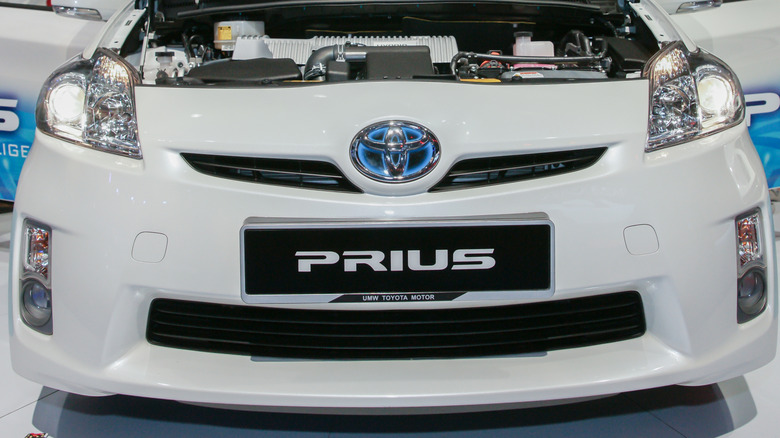
The logo itself, with its overlapping ovals representing the letter “T” and a steering wheel, is the same — but some vehicles add a blue-colored halo to the design. The blue emblem was used on Toyota’s hybrid models, serving as a subtle way to distinguish Toyota hybrids from their non-hybrid counterparts for years. This was particularly important for models like the Camry and RAV4, which were formerly offered with both hybrid and non-hybrid powertrains.

In late 2023, however, Toyota began to phase out the familiar blue badges on its hybrid models. This was primarily driven by the automaker’s move toward its then-new “Beyond Zero” branding, which encompasses all its electrified models, as well as other alternative-fuel vehicles it makes. Most notably, the shift comes as an increasingly large part of Toyota’s lineup comes standard with hybrid powertrains.

Advertisement

From one hybrid era to another

The blue halo Toyota badge first appeared on the third-generation Prius when it debuted in 2009. While the Prius has suffered a dip in popularity in 2026, the wedge-shaped hybrid was the model that symbolized Toyota’s hybrid technology more than any other in the 2000s and early 2010s – and the blue Toyota badge was one of its unique touches. As the hybrid lineup continued to expand, the blue Toyota badge would appear on other hybrid models like the Camry, Corolla, and RAV4, which were sold alongside their non-hybrid counterparts wearing the standard Toyota badge.

By the early 2020s, most of Toyota’s cars and smaller SUVs were offered with available hybrid powertrains, almost making the blue hybrid badge a formality rather than a unique identifier. Likewise, the growth of the EV market and new brands like Tesla had begun to overshadow Toyota’s increasingly mainstream hybrid lineup as the poster children for low-emissions motoring.  

Advertisement

Enter the Beyond Zero branding. While other automakers went all-in on EVs, Toyota’s Beyond Zero approach is much more diversified, and includes the company’s vast gasoline-electric hybrid lineup along with plug-in hybrids, full EVs, and hydrogen fuel cell vehicles. With this new approach, it was time to kiss the old, blue Toyota hybrid logo goodbye.

Advertisement

Welcome to Beyond Zero

With the old badges gone, Toyota opted for a subtle new blue dot emblem on the rear to represent the Beyond Zero branding. The same emblem also appears on all of Toyota’s newer electrified models. This new badge first appeared on the new 2023 Prius, and really hit mainstream awareness with the redesigned 2025 Camry, which introduced a standard hybrid powertrain across the lineup.

Along with the move away from the blue Toyota logo badge itself, Toyota also began to do away with the old “Hybrid” badging in favor of “HEV”, which stands for ‘hybrid electric vehicle”. Meanwhile, Toyota’s all-electric models, like the bZ, get the same Beyond Zero blue dot emblem, but with the letters “BEV” for “battery electric vehicle”.

Toyota hybrids may no longer be the hippest or most fashionable way to advertise one’s green sensibilities, but that’s probably a good thing for both Toyota as a company and for our planet. Not only are Toyota hybrids more refined and more popular than ever, but the company’s fuel-saving technology has also become so widespread and so normalized that the cars no longer need their own version of the Toyota badge. In fact, if they’d kept the blue badge for all hybrid models, it’s likely the original badge that would have become the outlier.

Advertisement


Source link

Advertisement
Continue Reading

Tech

The next iPhone moment might come from an AI company, not Samsung or Apple

Published

on

Your smartphone has a pile of apps. OpenAI wants to replace all of them with one AI agent that just gets things done. That’s the vision behind the company’s plans to build its own smartphone, complete with a custom processor co-developed with MediaTek and Qualcomm, as first reported by analyst Ming-Chi Kuo on X.

And Sam Altman seems to agree. In a post on X, the OpenAI CEO wrote, “feels like a good time to seriously rethink how operating systems and user interfaces are designed.” That is not a subtle hint.

feels like a good time to seriously rethink how operating systems and user interfaces are designed

(also the internet; there should be a protocol that is equally usable by people and agents)

— Sam Altman (@sama) April 26, 2026

Advertisement

Why would OpenAI want to make a phone?

We have seen earlier attempts at developing truly agentic AI in the form of Rabbit, Humane AI Pin, and other AI devices. However, those devices lacked the tight integration with our phones, apps, and services, resulting in failure. It seems that OpenAI wants to sidestep the limitation by creating its own phone to provide users with a true AI assistant. 

There are three solid reasons. First, to deliver a truly comprehensive AI agent experience, OpenAI needs full control over both the software and the hardware. Relying on Android or iOS means playing by someone else’s rules.

Second, your smartphone knows more about you than any other device. It tracks your location, your habits, and your daily context in real time. That kind of data is gold for an AI agent trying to anticipate your needs before you even ask.

Third, smartphones are and will remain the biggest device category on the planet. If OpenAI wants to scale, this is where it needs to be. 

Advertisement

How will the AI actually work on this phone?

According to Ming-Chi Kuo, the new OpenAI smartphone will work on a two-layer system. The phone will handle lighter tasks on-device, like understanding your context, managing memory, and running smaller AI models. Heavier tasks get offloaded to the cloud. 

It’s similar to what Apple does with its iPhone and Private Cloud Compute, but OpenAI has the benefit of an actually working artificial intelligence model and not the disaster Apple calls Apple Intelligence.

On the business side, OpenAI is likely looking at bundling hardware with subscriptions, similar to how Apple bundles services, while also building a developer ecosystem around its AI agents.

Who is helping OpenAI build this thing?

Mr. Kuo reports that MediaTek and Qualcomm are the processor co-development partners, while Luxshare is the exclusive system co-design and manufacturing partner. Luxshare is particularly interesting here. 

According to Kuo, the company has long tried to challenge Hon Hai’s (read Foxconn) dominant position in Apple’s supply chain without much success. This project gives Luxshare an early foothold in what could be the next major smartphone generation, and that is a big deal for the company.

Advertisement

2028 feels far away, but if OpenAI pulls this off, the smartphone you are using today might look very different in the near future.

Source link

Continue Reading

Tech

Trump has terminated several members of the independent National Science Board

Published

on

As reported by several outlets, the Trump administration dismissed members of the National Science Board (NSB), which is tasked with establishing policies for the National Science Foundation. It’s not clear how many members have been dismissed. According to screenshots shared with The Washington Post, board members received a message that their position was “terminated, effective immediately.

The NSB establishes policies for the National Science Foundation (NSF), the independent US agency responsible for apportioning about 25 percent of federal support towards research conducted by the country’s colleges and universities. The foundation has existed for over 75 years and has contributed to the development of MRIs and cellphones, among other breakthroughs. Up to 25 active members can head the NSB, however, the current board only has 22 members; the NSF’s former director, Sethuraman Panchanathan, abruptly resigned last year.

In response, Congresswoman Zoe Lofgren called the latest decision a “real bozo the clown move” in a statement. “This is the latest stupid move made by a president who continues to harm science and American innovation,” Lofgren, who also serves as the Ranking Member of the House’s Science, Space and Technology Committee, added in the statement. “It unfortunately is no surprise a president who has attacked NSF from day one would seek to destroy the board that helps guide the Foundation.”

It’s unclear if the NSB’s next scheduled board meeting for May 5 will take place. When asked about the recent terminations and the next meeting, the NSB referred to the White House for additional details. We’ve reached out to the Trump administration for confirmation and will update the story when we hear back.

Advertisement

Source link

Continue Reading

Tech

Mist, Mirrors, Laser : Multi-view 3D Projection

Published

on

“Lights, camera, action!” might have been the call when recording back in the day, but for an awesome three-dimensional viewing experience, you might try yelling “Mist, Mirrors, Laser!” and following in the footsteps of [Ancient]’s latest adventure in voxel displays, which is also embedded below.

He starts with a naive demonstration: take a laser projector and toss an image into a flat cloud of mist. That demonstrates that yes, the mist does resolve an image, and that the viewing angle is very poor– that is, brightness drops off sharply when you’re out of line from the projector. In this case, that’s a good thing! It means more angles can be projected into that mist for a three-dimensional, hologram effect.

The optical train gets folded up, probably to make this fit on a tabletop: first, an array of flat mirrors in front of the projector splits the image from the projector into multiple viewpoints, which are each bounced to a second flat mirror that sends the image into the fog bank.

Some might call the resulting image a hologram; others might complain that that’s technically something totally different, and that this volumetric display is just all smoke and mirrors. We can hope that [Ancient] sees fit to share more details, like the software stack needed to generate the video feed– though it’s likely using a version of the same software as his last volumetric display, which used the same laser but whose point cloud was made from a bubblegram rather than an actual cloud. With a lot more points, though, the resolution is amazing in comparison, at the cost of appearing fuzzy at the edges. Unfortunately, we do not see the display in this demo run DOOM, as one of his previous projects did.

Advertisement

This video is more of a demo than a how-to, but it’s a heck of an impressive demo. If you don’t feel like watching the assembly, jump right to 9:00 to be impressed. It comes across a lot better on video than in the screenshot.

Source link

Advertisement
Continue Reading

Tech

Amazon’s new podcast strategy: Monetize everything

Published

on

Amazon’s podcasting business has transformed over the past six months, according to The New York Times.

Back in August 2025, the company reportedly eliminated more than 100 jobs from its podcast studio Wondery. At the time, Amazon insisted it was not shutting Wondery down, and that appears to be technically true — it still uses the Wondery brand.

But the NYT said Amazon “took a sledgehammer” to the studio. Audio-only podcasts now operate under Audible, while a new department called Creator Services works with on-camera celebrities like Dax Sheperd, Keke Palmer, and Jason and Travis Kelce.

For example, the company said it’s creating an “expanding universe” around the Kelce brothers’ “New Heights,” with monetization plans that go far beyond standard podcast ads. There’s a new section on Amazon called Kelce Clubhouse, where fans can buy “New Heights” merchandise, watch the documentary “Kelce,” and purchase recommended products for a football-watching party.

Advertisement

In the words of Creator Services general manager Matt Sandler, Amazon is trying to “infuse both the content and the commerce together.”

Of course, other online creators are also betting on commerce. But according to the NYT, Amazon is the only one that “dismembered a company” to get here.

Source link

Advertisement
Continue Reading

Tech

China formalises gig worker protections for 200 million platform workers with algorithm transparency and 2027 deadline

Published

on

TL;DR

China’s CPC Central Committee and State Council issued comprehensive labour rules for the country’s 200+ million gig workers, the first time the party’s highest authority has formalised protections for platform workers. The rules mandate minimum wage, maximum working hours enforced by the app itself, algorithm transparency subject to collective bargaining with unions, and a 2027 compliance deadline. The regulations are both labour policy and demand-side economics: Beijing’s consumption-driven growth pivot requires gig workers earning $563-845/month to become consumers, and the platform companies — Meituan, Didi, Alibaba, are profitable enough to absorb the costs.

China’s most powerful governing bodies, the Chinese Communist Party Central Committee and the State Council, issued comprehensive labour rules for gig workers on Sunday, the first time the party’s highest authority has formalised protections for the more than 200 million people who deliver food, drive cars, and livestream products through online platforms. The mandate requires platforms to pay at least the local minimum wage, enforces maximum working hours after which the app must stop sending orders, mandates algorithm transparency when platform policies affect pay or task assignment, and sets a target of 2027 for broadly standardising labour practices across the platform economy. Previous regulatory efforts came from individual ministries and carried the weight of guidelines. This comes from the top, and it covers everyone: Meituan, Didi Chuxing, Alibaba’s Ele.me, JD.com, SF Express, and ten other major platform and logistics operators summoned by the Ministry of Human Resources and Social Security in February for what the government called “employment administrative guidance.”

Advertisement

The rules

The regulations establish several concrete protections that did not previously exist in binding form. Platforms must ensure gig workers receive at least the local minimum wage, with reasonable additional compensation for work during public holidays. Enterprises must negotiate with labour unions or worker representatives to determine maximum consecutive order-taking time and maximum daily working hours. When workers reach those limits, the system must stop dispatching new orders and send push notifications through the app reminding workers to rest. Businesses must enter into employment contracts with workers when conditions for an employment relationship are met, and for workers who fall below that threshold, they must sign written agreements specifying terms. Platform enterprises must seek worker input when formulating or revising labour rules, which must be publicly displayed for at least seven days before taking effect.

The algorithm provisions are the most significant departure from previous Chinese labour regulation and from anything the European Union or the United States has enacted for gig workers. Platforms must develop and regularly revise the algorithms that control onboarding, task assignment, piece rates, commission structures, compensation, work hours, and incentive or penalty systems. They must consider labour union or worker representative opinions when designing those algorithms and must agree to negotiations if unions request them. They must furnish the information and materials necessary for those negotiations. This is not a transparency requirement in the Western sense, where a company publishes a report about its algorithm. It is a requirement that the algorithm itself become a subject of collective bargaining, that the code governing how a delivery rider earns a living be open to negotiation with worker representatives. Many jobs are being reshaped at the task level by AI rather than disappearing wholesale, and nowhere is that reshaping more literal than in the gig economy, where the algorithm is the manager, the dispatcher, and the payroll department.

The system

The conditions the regulations address have been documented for years. In September 2020, Renwu magazine published “Delivery Workers, Trapped in the System,” an investigation based on six months of research that became the most viral article on the Chinese internet that year. It documented how Meituan and Ele.me’s algorithms progressively shortened delivery times, forcing riders to run red lights, drive against traffic, and sprint up staircases. Per-order pay was determined by a system that factored in average daily orders, punctuality, customer ratings, and complaints, a calculation opaque to the riders whose income depended on it. In Shanghai, in the first half of 2017, one delivery rider was injured or killed every 2.5 days. In Chengdu, in the first seven months of 2018, there were roughly 10,000 traffic violations by delivery riders, 196 accidents, and 155 injuries or deaths, approximately one per day. In September 2024, a delivery rider in Hangzhou collapsed and died after working 18-hour days. A 2023 survey found that roughly half of food delivery riders earn between 4,000 and 5,999 yuan per month, $563 to $845, and only 7% earn more than 8,000 yuan.

Ele.me’s response to the Renwu investigation was to introduce a button allowing customers to “wait five extra minutes,” a gesture that was widely criticised for shifting responsibility from the platform to the consumer. Workplace surveillance under a different name is not unique to Chinese platforms. Meta has installed tracking software on American employees’ computers to monitor keystrokes and mouse movements. But the scale of algorithmic control in China’s gig economy is different. Meituan alone had 4.72 million active riders as of 2020. Didi created 30.66 million flexible job opportunities. Meituan and Ele.me together control approximately 98% of China’s food delivery market. When two companies’ algorithms govern the working conditions of six million delivery drivers, regulating those algorithms is not a labour policy niche. It is macroeconomic governance.

The context

The timing of the regulations is inseparable from China’s economic circumstances. Youth unemployment stood at 16.5% in December 2025, and some economists estimate the real figure exceeds 40% when discouraged workers and those in involuntary part-time work are included. More than 12 million university graduates are expected to enter the job market in 2026, and many of them will find their first employment on a platform. The 15th Five-Year Plan, covering 2026 to 2030, elevates consumption to a dedicated chapter for the first time, reflecting Beijing’s strategic pivot from export-led and investment-led growth toward domestic consumption. That pivot requires household income to grow, which requires the 200 million workers in flexible employment, roughly 27% of the total workforce and 43% of the urban labour force, to earn enough to spend. Gig workers who earn $563 a month and have no social insurance are not consumers who drive a consumption economy. They are a fiscal liability and a source of social instability. The regulations are labour policy, but they are also demand-side economics.

Advertisement

China has nearly closed the AI performance gap with the United States, spending 23 times less on AI investment to do so, and the platform companies that employ these gig workers are at the centre of that achievement. Meituan, Didi, and Alibaba are not just delivery and ride-hailing firms. They are AI companies whose logistics algorithms, recommendation engines, and autonomous delivery experiments represent some of the most advanced commercial AI deployments in the world. Beijing’s calculation is that it can impose labour costs on these platforms without destroying the innovation ecosystem, because the platforms are profitable enough to absorb them and because the alternative, 200 million workers with no protections and no purchasing power, is worse for the economy than higher delivery costs.

The comparison

The EU Platform Workers Directive, adopted in December 2024 with a transposition deadline of December 2026, takes a different approach. It establishes a rebuttable legal presumption of employment: if a platform exercises direction and control over a worker, the worker is presumed to be an employee unless the platform proves otherwise. The burden of proof is on the company. Workers cannot be fired solely by algorithm. The UK Supreme Court ruled in 2021 that Uber drivers are workers, not independent contractors, and that waiting time counts toward minimum wage calculations. California’s Assembly Bill 5 presumed gig workers were employees, but the platforms spent over $200 million campaigning for Proposition 22, which exempted them and was upheld by a state appeals court in 2023. The EU AI Act targets safety, transparency, and ethics but falls short on socio-economic impact, and the Platform Workers Directive was partly an attempt to fill that gap.

China’s approach is less categorical than the EU’s presumption of employment and more interventionist than America’s deference to corporate self-governance. It creates a spectrum: formal employment relationships requiring full contracts and benefits at one end, a middle category with written agreements and partial protections in the middle, and a regulatory floor of minimum wage, maximum hours, and algorithm transparency for everyone. The middle category is where the ambiguity lies. It gives platforms a classification that carries fewer obligations than full employment but more than the independent contractor status that Uber and DoorDash insist on in the United States. Whether that middle category becomes a genuine improvement or a loophole that platforms exploit to avoid full employment obligations depends on enforcement, and enforcement is the historical weakness of Chinese gig worker regulation. China’s AI governance framework requires all generative AI models to pass a security evaluation, and the Cyberspace Administration of China enforces those requirements rigorously. Whether the labour agencies tasked with enforcing the new gig worker rules will demonstrate the same rigour is an open question.

The test

The companies have already begun responding. SF Express set aside 200 million yuan, approximately $29 million, to increase delivery worker income. Didi announced 1.1 billion yuan in driver subsidies. Alibaba pledged to cover at least 50% of social security for delivery riders. JD.com committed to full social benefits for all full-time riders. Meituan and Ele.me both pledged enhanced social security coverage. These are not trivial commitments, but they are pledges made under regulatory pressure, and the gap between a pledge and a payslip is where previous Chinese gig worker regulations have failed. The 2021 guiding opinions from eight ministries covered labour income, safety, social security, and conflict resolution. They were widely acknowledged and narrowly implemented. Delivery times kept shrinking. Riders kept dying. Algorithms kept optimising for speed over safety.

Advertisement

The difference this time is the source. Ministry-level guidelines can be deprioritised. A mandate from the CPC Central Committee and the State Council cannot. The 2027 compliance deadline gives platforms 18 months to restructure their labour relationships, algorithm governance, and social insurance contributions. The enforcement mechanisms remain underspecified in the publicly available text, and that is a legitimate concern. But the political signal is unambiguous. Xi Jinping’s government has decided that the platform economy’s treatment of its workers is a problem significant enough to warrant the highest level of party intervention. Whether the intervention produces the kind of structural change that 200 million workers need, or whether it produces another round of corporate pledges that dissolve into algorithmic business-as-usual, is the test that 2027 will answer. China has written the rules. The question, as always in Chinese regulation, is who enforces them and what happens when they are broken.

Source link

Advertisement
Continue Reading

Tech

What Is Georgia’s Clean Air Force & Where Is It Located?

Published

on


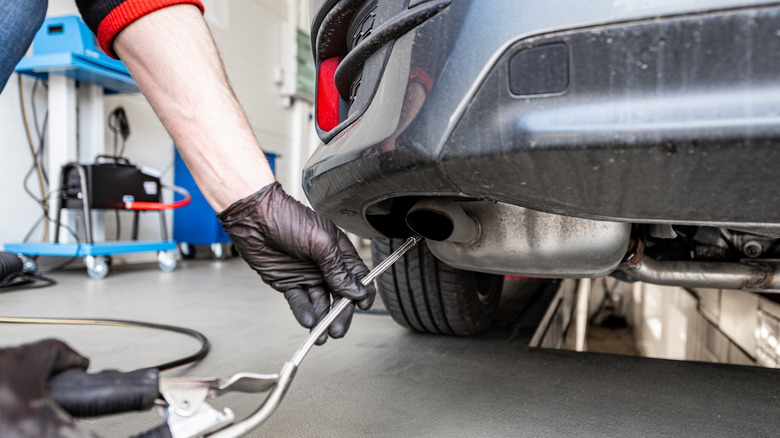
If you know anything about businesses or government agencies, you know that, in general, they love a good acronym. For cases in point, check out the likes of IBM (International Business Machines), IKEA (Ingvar Kamprad Elmtaryd Agunnaryd), and the FBI (Federal Bureau of Investigation) to name a few. Heck, even GEICO is an acronym, standing in for Government Employees Insurance Company. There are, however, a few lesser-known agencies in the world that also use acronyms, including Georgia’s Clean Air Force, which is often referred to as the GCAF by those in the know.

 To be clear, the agency has nothing to do with military members with an affinity for flying fighter jets. Rather, the GCAF is focused on vehicles on the road. More specifically, the agency is dedicated to ensuring cars, trucks and SUVs registered in the state of Georgia are compliant with both state and federal emissions standards. 

Advertisement

The state founded the agency in 1996for that specific purpose in reaction to the passing of the United States Environmental Protection Agency’s (EPA) Clean Air Act. In the three decades since the passing of that act, the GCAF has continued to help ensure Georgia remains compliant.

Advertisement

Here’s where cars are required to visit GCAF sites in Georgia

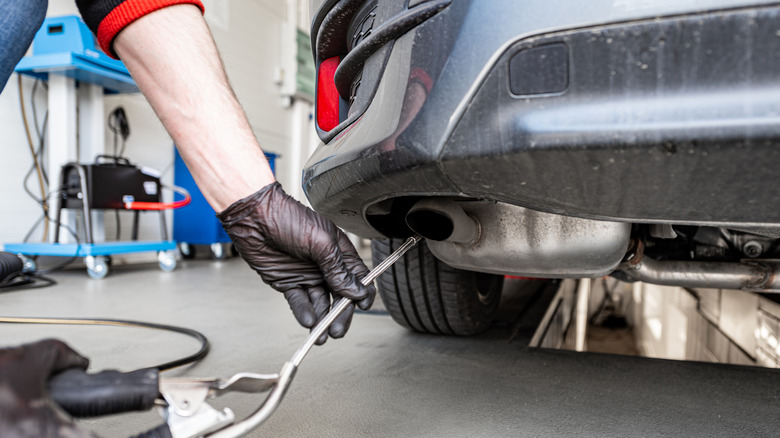
The EPA’s Clean Air Act helped to establish national clean air standards in the US, doing so in part by altering the way states measure and control vehicle emissions. Many states, of course, already had measures in place to help monitor emissions, and those measures include testing motorcycles for emissions as well. In Georgia, those tests are undertaken in specific testing stations that are operated by the GCAF. In the years since its formation, Georgia’s Clean Air Force claims its stations have been able to identify some 4.8-million heavy polluting vehicles within the state’s borders, the repair of which has helped produce cleaner, safer air for residents within the state’s borders. 

Interestingly enough, not every vehicle in the state is subjected to regular emissions testing from Georgia’s Clean Air Force. Instead, only locales designated as “non-attainment” areas due to elevated pollution levels are required to utilize GCAF facilities. In Georgia, that largely means the various counties that form the greater metropolitan area surrounding Atlanta. 

For the 2026 registration period, gas-powered cars and light-duty trucks from the model years of 2002 to 2023 are due for annual emissions tests. The list of vehicles required to undergo annual emissions testing is further restricted to vehicles registered in one of the following 13 counties, including: Cherokee, Clayton, Cobb, Coweta, DeKalb, Douglas, Fayette, Forsyth, Fulton, Gwinnett, Henry, Paulding, and Rockdale. So, if you live and drive a vehicle in one of those counties, you’ll need to ensure it is GCAF compliant. 

Advertisement


Source link

Continue Reading

Tech

Canadian premier wants to ban social media and AI chatbots for kids in Manitoba

Published

on

Manitoba could be the first province in Canada to establish a social media ban for kids, but the proposal’s details aren’t very clear yet. The province’s premier, Wab Kinew, announced during a fundraiser event on Saturday and on X that Manitoba would put in place a ban for social media and AI chatbots for its youth.

“They’re doing these very awful things to kids all in the name of a few likes, all in the name of more engagement, and all in the name of money,” Kinew said at the event. “Our kids will never be for sale and their attention and their childhoods should never be profited from.”

Kinew didn’t elaborate on the ban’s crucial details, like the specific age restriction, when it will be introduced nor how it will be enforced. CBC reported that Kinew didn’t speak to reporters after his remarks at the fundraiser.

Besides Manitoba, the Liberal Party of Canada recently voted in favor of proposals to restrict both social media and AI chatbot use for anyone under 16 during the party’s national convention in Montreal. There are several efforts to restrict social media across Canada. One even seeks to limit those under 14 from accessing these platforms, an even younger cutoff than the ban recently enacted in Australia. However, a recent poll from the Molly Rose Foundation has cast some doubt on the effectiveness of such laws, which other countries have also adopted or are currently considering. The poll showed that a majority of teens still have accounts on banned social media platforms, or have found ways around the ban.

Advertisement

Source link

Continue Reading

Trending

Copyright © 2025