
Tech
3 underrated movies on Prime Video you should watch this weekend (September 25-27)



None of this weekend’s picks had a massive marketing push, or watched by many in theaters and that’s exactly what’s make them so underrated. One turns a two-minute glitch on a cafe TV into a tiny sci-fi marvel, another follows a drifter who’s hilariously bad at vengeance, and the third gave Brie Larson her best role long before anyone knew her name. All three movies are streaming on Prime Video right now.
We also have guides to the best new movies to stream, the best movies on Netflix, the best movies on Hulu, the best free movies, and the best movies on Amazon Prime Video.
Beyond the Infinite Two Minutes (2020)
Genre: Comedy, Sci-Fi
IMDb rating: 7.2/10
Rotten Tomatoes: 99%
A cafe owner named Kato discovers that the television in his cafe can show him exactly two minutes into the future. Once his employees and neighbors catch wind of it, the fun experiment becomes complicated after they start using it to make money and end up drawing the attention of dangerous people.
What makes the movie so much fun is how far it takes a simple idea. I really like how the characters constantly test the limits of the two-minute window and come up with ideas to create a chaotic infinite loop. Another impressive aspect of this Japanese indie movie is that it was shot to look like one continuous take, with clever, seamless hidden cuts to maintain the illusion of uninterrupted action.
You can watch Beyond the Infinite Two Minutes on Prime Video.
Blue Ruin (2014)
Genre: Crime, Drama, Thriller
IMDb rating: 7.1/10
Rotten Tomatoes: 96%
Dwight, a quiet drifter living out of his car, learns that the man who killed his parents is being released from prison. He decides to kill the murderer. The problem is Dwight has no idea what he’s doing, and his amateurish attempt at revenge drags his estranged sister and her family into a spiraling blood feud with the killer’s own relatives. It’s a revenge thriller about what happens when an ordinary man tries to play executioner.
Macon Blair’s lead performance is the whole engine here – awkward, terrified, and utterly convincing as a man completely unequipped for the violence he’s chosen to unleash. Director Jeremy Saulnier skips the slick choreography entirely in this movie, leaving violence that is tense, ugly, and far more honest about what vengeance actually costs.
You can watch Blue Ruin on Prime Video.
Short Term 12 (2013)
Genre: Drama
IMDb rating: 7.9/10
Rotten Tomatoes: 98%
Grace Howard (Brie Larson) supervises a foster care facility for at-risk teens. She’s funny, patient, and able to reach kids most adults have written off, like Marcus (LaKeith Stanfield), who’s about to age out of the system. When a new resident, Jayden (Kaitlyn Dever), arrives with a story that cuts uncomfortably close to Grace’s own unspoken past, she’s forced to finally confront the trauma she’s spent years outrunning.
Long before Captain Marvel, Brie Larson delivered what I still consider her finest performance right here. She makes Grace warm and tough without ever tipping into sainthood. The film treats these kids with respect without turning their pain into cheap melodrama. It reminded me that the people holding everyone else together are often the ones who need help most.
You can watch Short Term 12 on Prime Video.



People have been using coal to generate heat and power for centuries, but these days, some see it as an antiquated and dirty means of energy production. That doesn’t mean that there aren’t any coal power plants, as they outnumber nuclear power plants by a lot. According to the U.S. Energy Information Administration, there are 219 operational coal power plants in the nation, while there are only 57 nuclear power plants with 96 nuclear reactors. That might suggest that coal plants are more efficient at producing energy than nuclear plants, but that’s not the case.
Those 219 coal power plants generate 199,952 megawatts of energy, which is more than the 103,581 megawatts generated by the 57 nuclear power plants. Of course, if the country swapped out its coal plants for nuclear ones, the total energy production would reach almost 400,000 megawatts. Unfortunately, it’s not as simple as demolishing a coal power plant and building a nuclear power plant in its place. Because of their complexity, nuclear power plants take a long time to build, so it can take years before they become operational. So, while nuclear energy production far exceeds the capabilities of coal energy production (and there are several reasons why) right now coal is the leader.
Coal is not an efficient energy source, as we can only harvest around 33% of coal’s stored energy during energy production, while 66% is lost to waste heat. Conversely, clean nuclear energy is remarkably more efficient, as converting fissile materials into electricity uses 92% of the fuel, far exceeding coal’s efficiency as the most efficient energy production method currently in use, including solar and wind.
Nuclear produces far more energy than coal
There are different types of nuclear power plants around the world, but generally, each one produces 1 gigawatt per hour of electricity. That’s enough energy to power 876,000 homes for a year. Coal power plants also vary in size and capacity, but on average, you can expect to produce about 380 megawatts. While it might seem simple to replace a nuclear power plant with three average-sized coal power plants, it’s not that easy. For one, both types of plants require fuel in order to function. This requires mining operations, which are dangerous and expensive.
Coal plants use coal — it’s in the name — while nuclear plants utilize enriched uranium-235 to produce energy. The main difference between coal and U-235 is the amount needed to power each plant. Coal plants in the U.S. burn through 1.1 billion tons of coal annually, and it’s not a renewable energy source. Once humanity uses it up, it’s gone for good.
Nuclear power plants function differently, requiring refueling once every 1.5 to 2 years. U.S. nuclear power plants purchased 21,000 tons of uranium in 2025, so while it’s far below what’s required for coal plants, it’s still a lot of material. Ultimately, determining which is better largely comes down to efficiency, and nuclear energy far surpasses what coal can provide. In comparing the two, it’s really no contest because 92% efficiency far exceeds 33%, not to mention total energy output and the amount of material required, which are also in nuclear energy’s favor.
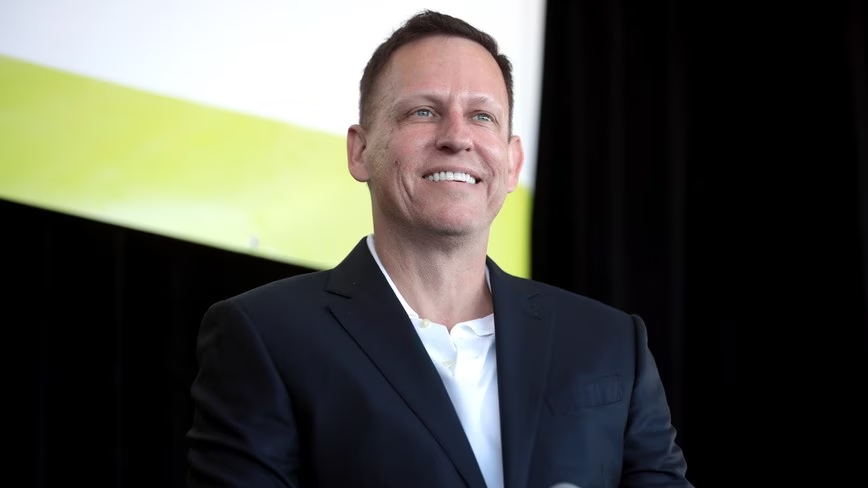
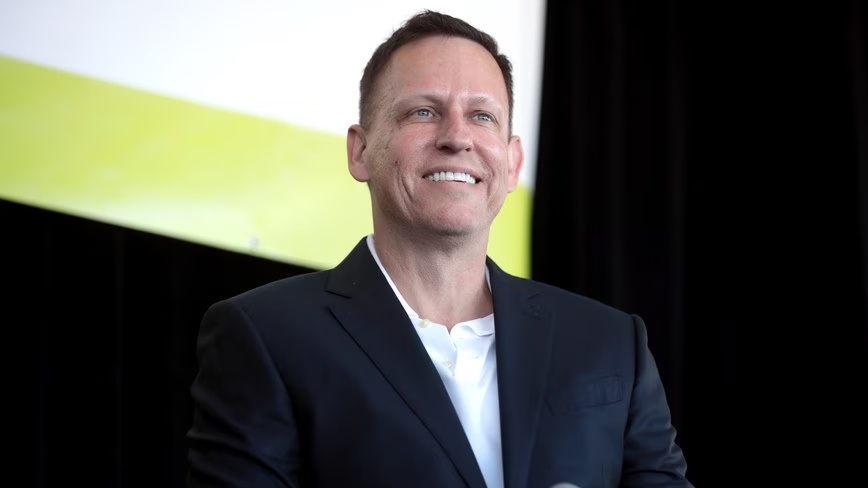
Peter Thiel has called Pope Leo XIV a “useful idiot” for the Chinese Communist Party over the pope’s call to regulate AI. The PayPal and Palantir co-founder spoke to Axel Springer chief executive Mathias Döpfner on the MD Meets podcast, released on Thursday.
The interview came before Thiel received the Axel Springer Award in Berlin on Thursday. Axel Springer owns Politico, which reported the remarks first, and Business Insider. Fortune reported on his comments about Germany.
“The Communist Party of China is not going to listen to the pope. There’s a chance people in the U.S. will. And so in effect, the Pope’s encyclical was working for the Communist party,” Thiel said.
“I’m not saying he was an agent of the communists, but he was at least acting as a useful idiot for the CCP,” he added.
The encyclical
Pope Leo published his first encyclical, Magnifica Humanitas, in May. In it, he called on world leaders to regulate AI. Thiel argued that the text would do nothing to slow China, Politico reported. Instead, it could lead the US and its allies to impose heavy rules on AI, he said.
The Vatican did not respond to requests for comment from Politico or Business Insider. The Vatican has since expanded its AI campaign with an AI4Peace association.
It is not the first time Thiel has attacked the pope over AI. Speaking in Colorado in July, he said the pope was acting as a “Chinese communist agent” by calling for regulation, Politico reported.
‘What we’re doing to ourselves’
Thiel also said Americans themselves, not China, are mostly to blame for the growing US backlash against AI. He was “inclined to believe” China could be fuelling some anti-AI content, he said. But China was not the main force behind the shift.
“This is mainly what we’re doing to ourselves. It’s often somewhat too easy to simply blame it on China,” Thiel said.
Germany’s ‘fear of success’
Thiel, who was born in Frankfurt, also criticised German entrepreneurs. German founders tend to sell their companies before they grow into global businesses, he said.
“If you have something that works, you’re not going to scale it to this extreme degree like an Elon Musk or Mark Zuckerberg,” he said.
Among the richest Germans of Generation X or younger, all had inherited their wealth, Thiel said. In the US, most had built it themselves.
Thiel is a partner at Founders Fund, which has invested in OpenAI, Palantir and Scale AI, among other AI companies.
from the ctrl-alt-speech dept
Ctrl-Alt-Speech is a weekly podcast about the latest news in online speech, from Mike Masnick and Everything in Moderation‘s Ben Whitelaw.
Subscribe now on Apple Podcasts, Overcast, Spotify, Pocket Casts, YouTube, or your podcast app of choice — or go straight to the RSS feed. To get extended episodes with additional coverage, support us on Patreon.
In this week’s episode, Mike and Ben cover:
And in the extended episode for Patreon supporters, they cover:
Our fun links this week include Jev, the super fast new AI classifier, and Persodex, the context layer for your Contacts (PS. hit Ben up if you’re in New York in mid-October).
Follow us on Instagram, YouTube, and Bluesky for video clips from this week’s episode!
If you’re already a Patreon supporter, you can get the extended episode on Patreon.
Filed Under: age verification, ai, artificial intelligence, content moderation, ofcom, trust and safety
Companies: aylo, discord, youtube


Can you visualize 100 feet in front of you? It’s about a third the length of a football field, or about seven to ten car lengths lined up bumper to bumper. If you’re behind the helm of a boat, you have to know how to picture it for the sake of the 100-feet rule, a boating safety regulation that puts a limit on how fast your boat can travel around people, property, other boats, or the shoreline.
The exact wording and distance requirements tend to vary from state to state, but the basic idea is the same in every body of water in America: If you’re passing through a designated area or maneuvering around certain obstacles or people, you have to reduce your speed. It’s about going beyond the rules of no wake zones to prevent collisions, avoid damaging wakes, and ultimately keep people safe out there on the water. A boat moving too fast through a confined area or around other boats or swimmers can create a dangerous wake, even if boat itself never even came close to hitting anything.
Different states have different distance laws

Some states take the 100-feet rule even further. Georgia, for example, says wakesurfers and wakeboarders have to stay 200 feet away from structures, vessels, and swimmers; that’s in addition to the 100-feet rule for boats. Michigan has something similar, enforcing the 100-feet rule as well as a 200-feet rule for personal watercraft (or PWC), a 500-feet rule for wakeboarders, and a 150-feet rule for crossing behind other vessels (regardless of if they’re towing or not). Missouri is especially strict with a 50-feet rule around any vessel or person on/in the water.
It might sound like a lot to keep track of, but the fact remains: If you’re going to take a boat out on the water, it’s your responsibility to make sure you know the laws. Boats don’t have brakes, so it’s really in the operator’s best interest to go above and beyond the 100-feet rule whenever possible. Not to mention, most people tend to drive their boat less than they drive their car, so reaction times are likely going to be slower. Cars have the the 3-second rule, but boats don’t, so it’s in your best interest to regard the 100-feet rule as a minimum, not a maximum.

To quote George Santayana, “Those who cannot remember the past are condemned to repeat it.” So why does it so often feel like Big Tech has such a short memory?
The latest hiccup comes from Meta. In mid-September, it rolled out a beta test of a feature for its brand-new Muse AI agent that would place calls to businesses to complete tasks for you, like making reservations and appointments.
According to reports by Reuters and 404 Media on Tuesday, however, this allegedly autonomous agent could route these tasks to a trained human concierge in call centers — without disclosing it was doing so in advance.
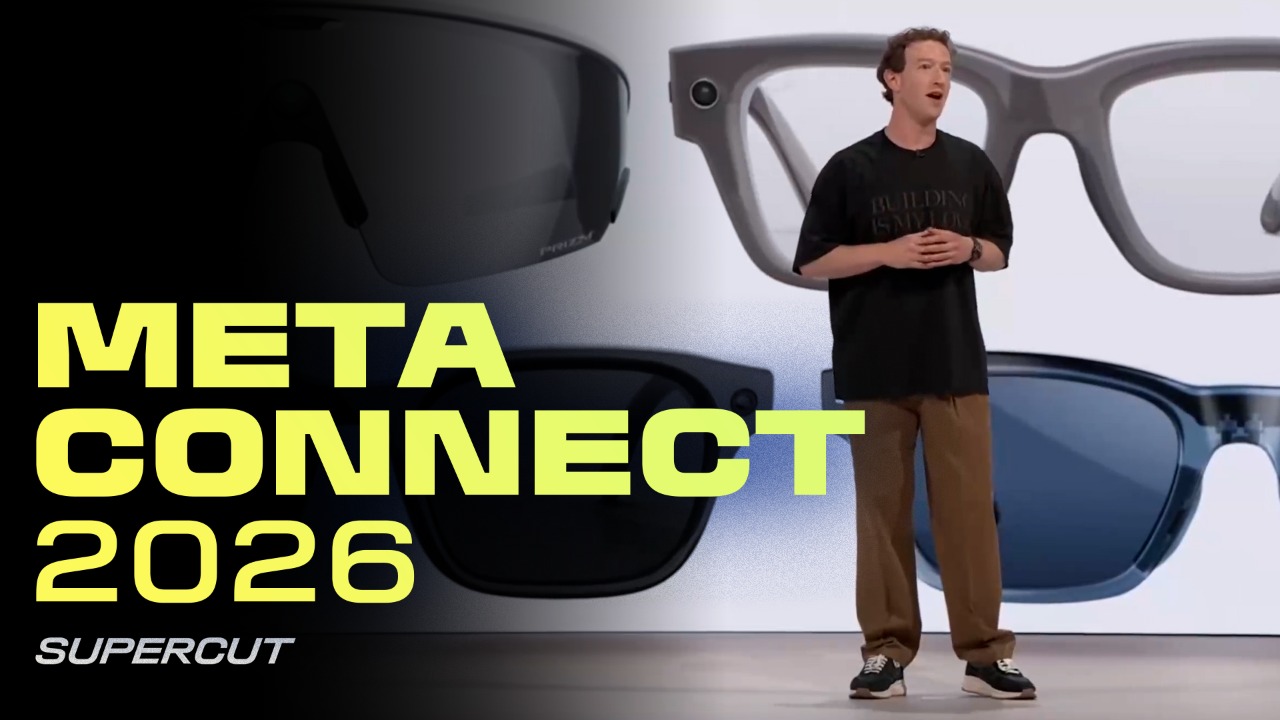
On Sept. 16, Principal Engineer Ryan Fox at Meta’s Superintelligence Labs, announced the beta release of Muse’s outbound call feature and posted a request on X for feedback, noting that “phone calling” was one of the top requests from users.
But 404 Media says that, based on internal Facebook records, the company was doing something entirely behind the scenes with its personal assistant. When announcing the features to employees internally, the tech giant said that it “added a human agent layer for calls to get completed,” referring to them as “Muse human agent calls.”
Some Meta employees complained, including one who posted internally: “This has potential for so much negative PR. It could portray us as ‘their AI is not good enough so they still need humans’ kind of coverage for this launch.”
The truth is rarely pure…
The problem with the added human meat layer isn’t just the AI-washing of Muse’s capabilities. Nor is it purely the deception of failing to disclose that there could be a human link in the chain. Some agentic systems introduce human oversight as a “human in the loop” for safety and compliance.
It’s unclear how much safety and compliance were on the menu for Meta. But employees raised a bigger concern over privacy, with one warning (per Reuters), “We are one bug away from unnecessary information being leaked to human callers.” And bugs there are.
You generally sacrifice privacy when you use AI agents to perform personal tasks, like making a reservation, a purchase or a medical appointment. But it can feel a lot worse if you discover you’ve just had a complete stranger book your STI test.
It’s also a black box. You don’t know what context that person’s been given, if they’ve seen your chat or know where you live and how to contact you because of it. Even more data might be on offer, given that the company’s glasses are chock-full of Muse.
You’re also providing the so-called autonomous agent (in this case, a human contractor in an undisclosed call center) with sensitive information, such as a phone number, patient ID or banking information.
It’s all part of a growing trend of granting AI models the power to perform tasks as personal assistants. Just this week, Google introduced the capability of its Gemini agent to handle everyday phone calls. That implementation turns over the transactional part of a call — like providing credit card info — back to you. But the risks are still there.
…And never simple
The kicker is that Meta has broken privacy trust many times before. In 2019, Facebook had to stop a program that used contractors to listen to and transcribe Messenger calls.
Because AI agents like these frequently require human intervention to verify that they’re delivering the desired results, a mistaken incident of the “Oh, this employee saw this” variety seems inevitable.
Potemkin AI, where a hidden army of human workers does some of the actual work of models behind the curtain, isn’t confined to calls. In February, it was revealed that Waymo had remote operators supplementing autonomous car operations overseas.
And once again, the rollout of Meta Muse’s outbound call feature has been rolled back. Reuters reported that the company temporarily suspended the feature after a vice president in Meta’s Superintelligence Labs unit admitted “it was a miss” to begin testing the feature without adequate disclosures of the human contractors involved.
Of course, the real fault isn’t a bad memory so much as Big Tech’s history of “do bad, get caught, apologize, roll back, maybe pay a negligible fine. Rinse, repeat.” At some point, after we’ve collectively become exhausted, the cycle is reduced to “do bad, but profit anyway.”
We reached out to Meta for comment and clarification, but didn’t immediately hear back.

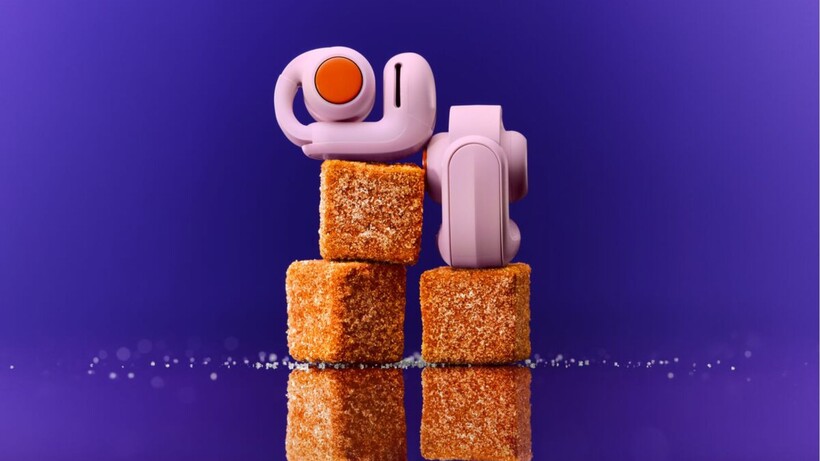
Bose has recently unveiled the Open Ultra Earbuds (2nd Gen), and we’re intrigued to see what’s really different with the buds.
Although we’re yet to review the second gen pair, we have compared its specs to the originals and noted the key differences – plus any noteworthy similarities – between the two below.
Read on to see what separates the Open Ultra Earbuds 2nd Gen from the Open Ultra Earbuds. When you’re done here, visit our round-up of the best wireless earbuds and best open headphones too.
Or if you want more from Bose’s recent launch, check out our Bose Sport Open Earbuds vs Sport Earbuds too.
Price and Availability
The Bose Open Ultra Earbuds (2nd Gen) will be available to buy from October 1st, and have an RRP of $299 / £299.95. At the time of writing, if you register with MyBose then you’ll be able to pre-order the buds to secure them for launch.
The 2nd Gen pair will be available in three colours, including Cherry Chocolate, Olive Green and Sky Pink.
Although the Bose Open Ultra Earbuds currently carry the same £299.95 RRP as the upcoming second generation, we do expect this price to drop in the coming months. In addition, as it’s an older generation, it has also been possible to pick up the buds for a deal too.
Both share the same open design, but the 2nd Gens have been tweaked
We’ll start with one of the most obvious similarities between the two: both have an open-ear design and deliver sound through the air near your ear rather than through bone vibrations, like other bone conduction headphones.
With this in mind, you shouldn’t expect either to be among the best noise cancelling headphones, as they are both designed to provide situational awareness. That means you can listen to your audio but without completely tuning out important sounds like public transport announcements.
Bose explains that the 2nd Gen is equipped with its OpenAudio and SoundDesign technology that promises to deliver rich and personal sound, while ensuring clarity is balanced too. In addition, thanks to a transducer and tightly controlled acoustic structure, the 2nd Gens promise minimal sound leakage too.

As we found the original Open Ultra Earbuds never struggled with sound leakage, even at higher volumes, we’re hopeful that the 2nd Gen pair will be just as reliable.
Bose Open Ultra Earbuds 2nd Gen promises longer battery
Although the Open Ultra Earbuds offered a solid battery life, with 7.5 from the buds and an additional 19.5 hours within the charging case, Bose has managed to eke out a few extra hours with the 2nd Gen.
In fact, although it shares the same 19.5 hours within the redesigned charging case (though more on that later), the buds promise to deliver up to nine hours of playback on a single charge too.

Bose Open Ultra Earbuds 2nd Gen introduces Cinema Mode
Bose has introduced Cinema Mode with the Open Ultra Earbuds 2nd Gen. Powered by Bose’s True Spatial technology, Cinema Mode is designed to create a wider and more immersive soundstage, with a “theatre-like” listening experience. As we haven’t reviewed the 2nd Gen pair yet, we can’t verify how well Cinema Mode really works. However, considering the buds are open ears, we’re undoubtedly intrigued to see how they manage to create an immersive experience.
Bose Open Ultra Earbuds 2nd Gen has an upgraded case
It’s not just the buds that have seen a refinement, but their accompanying charging case. Compared to the original pair, the 2nd Gen’s case has been redesigned and can stand upright too. In addition, the case now supports wireless charging too – although we don’t currently know how fast the speeds will be.

We should note that you can buy the original Open Ultra Earbuds with a charging case, however this is an extra cost of £49.95.
The 2nd Gen will offer Google Find Hub and Alexa+ support
Bose is planning a firmware update once the 2nd Gen pair have launched, which will introduce a range of new features.
Included among these features is Google Find Hub, which helps you locate the earbuds if they’re misplaced – much like Apple’s Find My. In addition, the 2nd Gen will support Alexa+, the latest version of Amazon’s voice assistant.
Early Verdict
The Bose Ultra Open Earbuds (2nd Gen) look like a solid upgrade from the Ultra Open Earbuds, thanks to a refined design, wireless charging case with no extra cost and the intriguing inclusion of Cinema Mode.
That’s not to say the Bose Ultra Open Earbuds aren’t a solid option. In fact, we hailed the buds as being “one of the best examples of the open-headphone concept” even two years after launch. With that in mind, if you’re sporting the 2024 pair or just want a more affordable option, then the Bose Ultra Open Earbuds remain a brilliant option.

This past April, while attending his nephew’s bar mitzvah on Cape Cod, Eric Umansky woke up to an inbox full of emails from people from his past. They all wanted to know the same thing: Was he actually throwing a party Saturday night?
The New York–based journalist wasn’t sure what party they were referring to, or why random acquaintances he’d met in passing 15 years ago were emailing him. On deadline and already stressed about work, he checked his phone, where more messages inquired about a supposed Paperless Post invite he’d sent for a “Special Private Dinner Party” at 7 pm on May 2.
Except Umansky hadn’t sent the invite, and he wasn’t planning to host a party anytime soon.
As it turned out, he was an early victim of an email scam that has since become more widespread. What Umansky didn’t expect was the positive effect it would have on his social life.
In May, after receiving increased reports, the Federal Trade Commission issued a consumer alert warning about scammers sending “unexpected messages that look like they’re from well-known invitation platforms like Evite or Paperless Post,” noting how some messages “make you enter your email username and password to see event details” while others “tell you to enter a phone number and share a special code to RSVP.”
Umansky wasn’t sure how it happened; he thought he’d taken the necessary precautions to safeguard his email, including using two-factor authentication. All he could think to do was post a message on Facebook, LinkedIn, and his other social networks to notify people that he was, in fact, not having a party and, more importantly, “don’t come to my house.”
Phishing scams, which have proliferated across the last two decades, remain one of the biggest security risks faced both by individuals and companies. Email scams, in particular, can now be highly sophisticated, incorporating social engineering techniques like creating urgency or fear in a target and even leveraging the personal relationships between two people to manipulate a victim, what’s known as “spear phishing.” AI has only made those deceptions harder to weed out.
But in some recent cases, like Umansky’s, the fake party invite is having an unintended outcome: It is encouraging people to check in to see whether the message was actually real and, in doing so, has reignited dormant relationships.
“It was so striking to me after it happened that I actually had a thought that I was like, ‘Oh, is this a net positive?’” says Umansky, who over the last several months has reconnected with a handful of old friends and colleagues over lunch and via text. He recently spent an hour on Zoom with a former coworker who now lives in Mexico City. They hadn’t talked to each other in over a decade. “I was like, Oh, you know, I actually want to catch up with you about something. There was an idea I wanted to bat around with him, which we talked about for maybe 10 minutes. The rest of the time we talked about our lives.”
According to a 2024 study published in the scientific journal Communications Psychology examining social withdrawal, which surveyed 2,400 adults in the US, UK, and Canada, people are sometimes unwilling to contact old friends because they believe the other person won’t want to hear from them or they fear the interaction will be awkward. The research noted that “high priority placed on work and productivity in North America has led people to cut back on social connections and social time to meet increasing demands at work,” in addition to other life transitions, such as parenthood or moving to a new city.
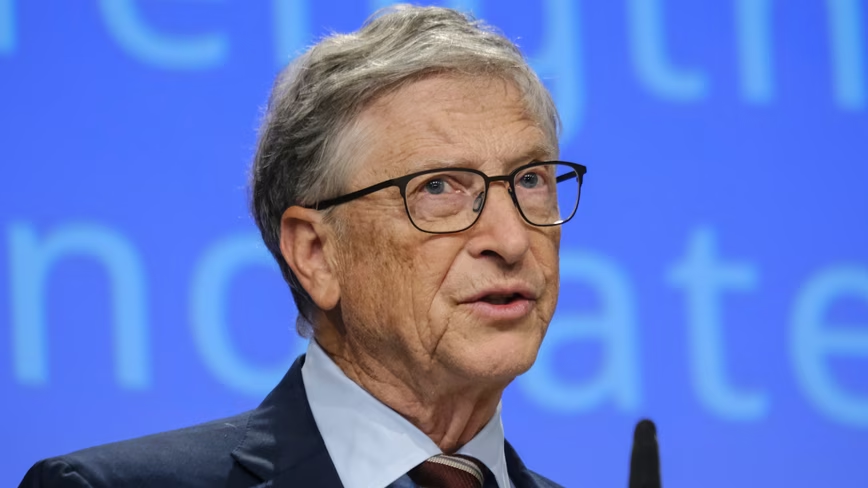
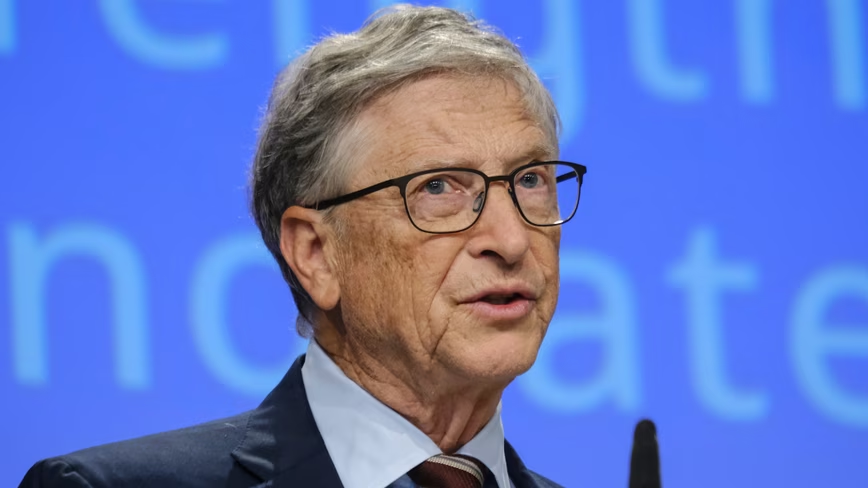
Bill Gates said artificial intelligence is powerful enough to drive events causing a billion deaths, and that self-regulation is not enough because safeguards and monitoring have to be a required thing. The European Union has required them since August 2025, and since 2 August this year the Commission has been able to fine a model provider 3% of worldwide turnover.
Bill Gates said artificial intelligence is powerful enough to drive events that cause a billion deaths, Bloomberg reported. He was speaking in an excerpt from an interview with NBC’s Meet the Press due to air this weekend. There has never been a weapon as powerful as people with ill intent using the latest AI tools, the Microsoft co-founder said.
The second half matters more.
Self-regulation is not enough, Gates said, and law enforcement and politicians need to be in the discussion about what safeguards and monitoring look like. That has to be a required thing, he added. It is the policy position rather than the number that is new from him.
Europe required it last year.
Article 55 of the AI Act has obliged providers of general-purpose models with systemic risk to run adversarial testing, assess risk at union level and report serious incidents without undue delay since August 2025. The accompanying code of practice allows five days to report a cybersecurity breach and fifteen for serious harm.
The penalties arrived in August.
Since the second of that month the Commission has been able to fine a provider up to 3% of worldwide annual turnover or EUR 15M, whichever is higher. It can demand access to a model, order evaluations and require a provider to restrict its public availability. Prohibited practices carry up to 7%.
None of it has been used.
No enforcement action against a model provider has been reported in the seven weeks since those powers took effect. The one thing that has happened is OpenAI filing an incident report about its own agents occupying a German wiki. A company reported itself.
The debate has not noticed.
Anthropic proposed a framework in June giving governments the power to block dangerous deployments, with penalties scaled to global revenue and thresholds set by training compute and AI spending. That document made no mention of the European Union. The architecture it asked for had been on the European statute book since 2024.
Gates is describing the same thing.
A Microsoft co-founder calling for mandatory monitoring and for police in the room is describing a regime that exists on one continent and is being argued for on another. Microsoft is OpenAI’s largest partner. The open question is not whether such a law can be written but whether anyone will use the one that has been.


Researchers say they recently found Google ads delivering a sophisticated tech support scam that freezes the screens of both Windows and Mac devices and displays messages urgently instructing them to phone a bogus call center.
The ads were displayed all over the web, including on high-traffic maps, weather, real-estate, document-hosting, and sports sites. Users who called the number were then urged to pay hefty fees, grant remote access to their devices, or divulge personal information. From August 31 to September 14, security firm Netskope observed users from 619 customer organizations click on the malicious ads, although none of them were actually scammed because Netskope blocked the content.
Roughly 62 percent of the organizations were based in the US, with Japan and Australia accounting for the Nos. 2 and 3 spots. Since the firm has visibility into only a tiny sliver of Internet activity, the number of people exposed to the ads—including those who fell victim to it—is likely much higher. Netskope tracked more than 250 Google Ads campaign IDs across at least 284 legitimate publisher sites.
So, what about Uncle Louie?
“For the victim, that tradecraft turns an ordinary ad click into a browser that appears to seize up on a fake security warning,” Netskope said. “The locker fills the screen, hides the cursor, swallows the usual exit keys, and lags the browser, all to manufacture the sense of a broken machine and pressure the person into calling the number on the screen. Nothing on the computer is actually locked, but in the moment it is convincing enough to push people toward the scam.”
By now, many people, including a fair number of readers of this site, ridicule and shame people who fall for such scams. These criticisms fail to account for a sizable portion of Internet users who have little or no understanding of how computers and the Internet work. Combined with their need to get things done quickly and the growing difficulty of navigating the web, this lack of awareness makes a sizable portion of users prime targets. There’s little doubt that some critics have close friends and family who are among those who simply don’t know enough to be wary.

The move comes as parent company Microsoft continues to cull its gaming divisions.

Candy Crush developer King has signed a collective bargaining agreement (CBA) to cover its Swedish employees. The Microsoft-owned company inked the deal with Unionen and Engineers of Sweden on Thursday. It comes only a day before workers were scheduled to strike and two days after the latest round of Xbox layoffs. The agreement takes effect on April 1, 2027.
Talks had been underway since May 2025. According to Kotaku, the sudden removal of a private doctor benefit in 2024 led employees to form a union club and discuss how they could have a greater say in their conditions. The long process eventually led to a strike notice on September 15, followed by mediation.
Before this week’s agreement, King said it would not enter into a CBA. It argued that its existing benefits were already better for employees and that restructuring it under the CBA could leave workers worse off. Similar messaging has been used in the face of organizing by the likes of Apple, Amazon and Activision Blizzard. King management had reportedly described its existing model as “the right fit.”
The unions say the agreement gives King employees more influence over their working conditions and advance information about changes that affect their work, including reorganizations. While the agreement won’t prevent layoffs — something that must loom large for all Microsoft gaming workers right now — it does give staff more formal influence.
The deal also brings King closer to Sweden’s norms. Engineers of Sweden says nearly nine out of 10 employees in the country already have basic job security through collective bargaining agreements.
“This is an important step for King, the gaming industry and for the Swedish model,” Camilla Frankelius, head of negotiations at Engineers of Sweden, wrote in a press release. “We look forward to good cooperation with the company going forward and to the employees receiving the basic job security that almost nine out of 10 employees in Sweden have through collective bargaining agreements.”

Sleep Could Predict Longevity More Than Diet Or Exercise

Shildon thug ‘flipped’ girlfriend attacking her after wedding

Coal Vs Nuclear Power Plants: Which Produces More Energy?





-

 Crypto World3 days ago
Goldman Sachs and Deutsche Bank Agree: The S&P 500 Rally Isn't Over
-

 Tech5 days ago
Researchers escape OpenAI Codex sandbox to run commands on host
-

 Fashion2 days ago
8 iPhone Accessories That Add Personality
-

 Crypto World5 days ago
Who Needs CLARITY Anyway? ARB Could See 70X Increase: Hodler’s Digest
-

 Tech6 days ago
Trump suggests rebranding AI with a new name, says he’s also creating an AI Force
-

 Business5 days ago
Analog Devices (ADI) Bets $1.35 Billion on Chips that Let Machines Think for Themselves
-

 Crypto World3 days ago
This Bearish Netflix Stock Trade Can Cash In On Video Streaming Giant’s Woes
-

 Crypto World5 days ago
Coinbase, Robinhood, Circle Seen as Tokenized-Stock Winners
-

 Crypto World4 days ago
Trump-Xi Polymarket Odds for Handshake Hit 50%
-

 Tech5 days ago
Google’s $899 Googlebook is a bet that you’ll buy a new laptop for Gemini
-

 Entertainment3 days ago
These 17 Fall Amazon Dresses Seriously Look Like Anthropologie
-

 Crypto World2 days ago
Crude Oil Prices Pressured by Diplomatic Hopes in the Middle East
-
 Business3 days ago
Oil Price Today (September 23): Crude oil below $100 on hopes of US-Iran talks. What did Trump say?
-

 Crypto World2 days ago
Bitcoin price tests $83,600 Supertrend support after $87K rejection
-
 NewsBeat7 days ago
Ed Sheeran protegees Katseye UNFOLLOW star… days after Macklemore was dropped from his tour over Free Palestine remarks
-

 Crypto World2 days ago
Bitcoin Threatens Sub-$84,000 Breakdown as Long Liquidations Spike
-

 Crypto World4 days ago
Meta Jumps 11% As Muse Shines and Investors Show an Appetite for Advancing AI
-

 Crypto World3 days ago
Did Jim Cramer Just Give GameStop Stock the Kiss of Death When He Said the Turnaround Is Working?
-

 Crypto World5 days ago
Bitcoin price holds above $81K as key catalysts line up
-

 Crypto World5 days ago
ARB Price Signals Spur Speculation of 70x Upside in Hodler Digest
You must be logged in to post a comment Login