If you’re looking for somewhere soft to land at the end of each day, a Tempur-Pedic mattress is a safe bet. Tempur-Pedic is known for its super-soft memory foam mattresses, and has a huge range of products for you to end your day on. I’ve slept on everything from a Tempur-Pedic mattress to sheet sets and even pillows from the brand—truly, if there’s new bedding you need, particularly anything with a soft, sinking sensation to cradle you as you sleep, you can find it from Tempur-Pedic.
You can get the ultra-soft goods for a little cheaper thanks to WIRED’s Tempur-Pedic coupon codes, no matter what kind of super-soft bedding you’re hoping to find with Tempur-Pedic’s famous feel. Explore our Tempur-Pedic discount codes to get deals on mattresses, toppers, pillows, and more.
Save With the Tempur-Pedic Sale
Shopping the Tempur-Pedic sale is one of the best ways to score huge discounts on usually pricey buy-it-for-life items like mattresses. Tempur-Pedic offers and discounts rotate (but usually hover around 30% off), but I’d recommend checking back often to see what new items are on sale and what new seasonal discounts have sprung up. Some of the best Tempur-Pedic discounts we’ve seen are huge price reductions on pillow bundles, buy two and save 30% on sheet sets, and 25% off pillows and bedding.
Get a 30% Tempur-Pedic Promo Code When You Sign Up
This isn’t the “forward this email or be cursed” email chain you got as a kid. Sign up for Tempur-Pedic’s email updates, and get a solid 30% off discount on pillows and sheets. Plus, you’ll be the first to know about new launches, sales, and everything Tempur-Pedic is up to in the sleep realm. Why wait on savings and better sleep?
Advertisement
Tempur-Pedic
Tempur-Adapt ProAdjust Pillow
Tempur-Pedic
Tempur-Breeze ProHi Pillow
Advertisement
Save $300 and up to 50% Off With Today’s Tempur-Pedic Coupons
If you’re looking to stay cool and comfortable, Tempur-Pedic has got your back (literally). Right now, you get $300 off when you bundle a (qualifying) mattress with Tempur-Ergo power bases and ProSmart bases. Just as breezy as they sound, each of these mattress lines really emphasize cooling and aim to dial down the temperature—and from my prior testing experience, they are very cool to the touch. Speaking ofl, you can also get 50% off a TEMPUR-ProAir Sheet Set, which features a moisture-wicking design to keep you cool and comfortable while you sleep. On top of that, be sure to take advantage of more bedding deals, like 25% off pillows and bedding, pillow bundles starting at 2 for $69, and 30% off any 2 Tempur-Pedic sheet sets.
Purchase a Tempur-Pedic Mattress Set, Get $300 Off Bases
You’re one of those “all in” kind of people when it comes to big decisions—respect. Game recognizes game, and Tempur-Pedic’s giving you a deal that’s hard to pass up. When you get a select Tempur-Pedic mattress and a Tempur-Ergo adjustable power base, you can get $300 off the base. Plus, you can get 25% off select bedding and pillows to really go for the full package.
Tempur-Pedic
Tempur-ActiveBreeze
Advertisement
Enjoy $39 Off Bundle Discounts on Tempur-Pedic Pillows
Tempur-Pedic doesn’t just create high-quality mattresses that exemplify awesome pressure relief and spine alignment. It also has a variety of pillows to carry out this mission, because there’s no lack of support happening on their watch. You can bundle pillows and get a nice discount while you’re at it: Get two Tempur-Cloud Pillows for $119; two dual-sided Tempur-Symphony Pillows for $169, two Tempur-Cloud Dual Cooling Pillows for $259; or two Tempur-Neck Pillows for $179 and save $39. When one pillow already has a higher price tag, this is a really good deal to double up on.
Tempur-Pedic
Tempur-Adapt ProHi Pillow
Get Two Tempur-Pedic Sheet Sets and Save 30%
A nice pair of sheets can really make or break your sleep experience. Plus, you’ll need a few pairs depending on the season: something cooling like the ProAir for summer, rayon bamboo if you want a silky feel, or cottonflannel for a cozier vibe. You’ll want to invest in a few pairs for every season (not to mention for extra clean ones if you want to avoid laundry). When you buy 2 Tempur-Pedic sheet sets, you’ll save 30%.
The one-man F&B biz sells over 2,000 chimney cakes a month
Hungary’s official national dessert, kürtőskalács (also known as kurtos), is not exactly a familiar sight in Singapore. The chimney-shaped pastry is characterised by a caramelised crust wrapped around a hollow, pillowy centre.
One of the few places you can find it is at VivoCity, where Rollneyhas been selling the Hungarian treat since 2024.
According to founder Narresh Babu, kurtos remains virtually unknown in Singapore. But he’s betting that’s about to change.
We spoke with Narresh about how he brought the brand to Singapore, built it beyond a single dessert shop, and where Rollney is headed next.
Advertisement
Rollney was first founded in Malaysia
Rollney Malaysia’s Perak store./ Image Credit: Rollney Official
His idea was to pair the cylindrical pastry with soft serve ice cream, blending Hungarian baking with Asian dessert preferences. The brand eventually grew to 12 outlets across various states like Kuala Lumpur, Johor Bahru, and Perak.
Rollney Singapore launched in Jan 2024 when Narresh, a friend of Yee Ke, joined him through a joint venture. Narresh became director of the Singapore business, overseeing its local operations and international expansion independently of Rollney Malaysia.
He invested S$260,000 into the Singapore operation, with 60% coming from his own savings and the remaining 40% from a family loan. His relatives later told him to keep the money for expansion instead.
Each Rollney kurtos starts with a sweet, yeasted dough that is portioned and hand-wrapped around a traditional wooden spit. After proofing, the dough goes into a customised vertical oven, where multiple rolls can be baked at once.
Each one is made to order and takes around three to five minutes to bake.
Advertisement
The roll is filled immediately after it comes out of the oven. Crunchy toppings and compote are layered into the hollow centre before soft serve is added on top, followed by the customer’s choice of toppings.
There are more than 30 options, ranging from Milo powder and pistachio sauce to lemon pie sauce, Oreo crumbs and seasonal specials.
The soft serve is also made in-house daily at Rollney’s central kitchen.
We do not buy from suppliers, but produce our own ice cream, so we know the quality of the ice cream is different from any other soft serve.
Narresh Babu
Advertisement
A one-man F&B show
Image Credit: Rollney Singapore
Rollney started with a humble 300 sq ft store at VivoCity.
The first three months were promising. Then, sales started to dip.
“It doesn’t matter if you’ve got a good product, a fun store or a nice concept. It doesn’t mean people will just come in and buy,” Narresh said. “Awareness is the biggest key for everything.”
Narresh began putting more time into Rollney Singapore’s social media in Jul 2024, and sales gradually recovered.
But getting customers through the door was only part of the challenge. The shop’s average profit margin was between 25% and 28% in 2024, according to Narresh, but fell to 6% in 2026.
Advertisement
With an average customer spend of S$5 to S$8, the economics of running a physical F&B outlet were also difficult. Narresh estimated that Rollney needed roughly twice the daily transactions of a restaurant to cover the overheads of five staff and rent.
Rather than opening more outlets or switching to a different product, Narresh started looking for ways to make the same product work harder.
When he ran the numbers for a second physical store, he realised that the cost would be roughly equivalent to deploying six soft-serve vending machines.
That comparison led Rollney Singapore in a very different direction.
Advertisement
A new way to sell soft serve
Rollney Singapore now has 30 soft serve vending machines all over the city./ Image Credit: Rollney Singapore
In Nov 2025, Narresh invested S$125,000 to deploy five machines.
He said they were the first vending machines in Singapore to use a robotic arm to serve ice cream from scratch within the unit.
Unlike a physical outlet, each machine could be placed in a different location to reach different customer groups. And if a site underperformed, Narresh could simply move the machine elsewhere without being locked into a long-term lease or having to hire additional staff.
The machines also offered something a traditional vending machine couldn’t: a bit of spectacle. The robotic arm has become a draw in itself, with Narresh noticing that children in particular get excited when they see it in action.
Building multiple businesses around one dessert
Rollney’s answer to the challenges of running a small F&B outlet was not simply to sell more kurtos. It was to find more ways to make money from the same product.
Advertisement
Today, the business has four revenue streams: its physical VivoCity outlet, its own fleet of soft serve vending machines, a vending machine franchise model, and event rentals.
Image Credit: Rollney Singapore
The VivoCity store remains the brand’s public face and the only place where its kurtos rolls are made. But even that is being reworked. The current store will close on Sept 5 and reopen in Oct as a much smaller 20 to 40 sq ft kiosk, allowing Rollney to maintain its presence at VivoCity while cutting its rental costs.
The bigger bet, however, has been on vending machines. Rollney’s own machines dispense fresh soft serve from S$3 a cup, with sales growing by around 3% to 4% month-on-month. They have sold between 20,000 and 25,000 cups to date.
Narresh then realised he could sell more than just ice cream through the machines—he could sell the machines themselves.
Rollney now offers the vending machines as a franchise, charging operators S$28,000 per unit. In return, the company takes care of the operational work, including cleaning, maintenance, servicing and refills. The model gives franchisees a way into F&B without having to deal with the staffing, kitchen and day-to-day demands of running a traditional outlet.
Advertisement
Servicing costs around S$6,000 per run and covers 12 to 15 machines at a time. As more machines join the network, those costs can be spread across a larger base.
There are now 30 franchisees operating Rollney vending machines across Singapore, with the network on track to reach 50 machines by Sept.
Rollney’s fourth revenue stream comes from event rentals, where the machines are brought to corporate events and private functions. It gives the company another source of income while also putting the brand in front of potential customers beyond its usual retail locations.
In the span of a few years, Narresh has effectively built several businesses around one dessert. The kurtos may still be unfamiliar to many Singaporeans, but Rollney is no longer relying on customers walking into a shop to discover it.
Advertisement
A business refusing to stay still
Rollney Singapore’s Kaya Toast Kurtos and World Cup Argentina Kurtos./ Image Credit: Rollney Singapore
One of the more interesting aspects of Rollney Singapore is how quickly Narresh can take an idea from concept to counter.
The latest example was the Milo Dinosaur Kurtos, a limited-time National Day special that was conceived, tested and launched within three days.
Narresh’s process starts with the occasion. He thinks about what Singaporeans associate with it, then works backwards to see whether those flavours can be translated into a kurtos or ice cream combination.
“Milo Dinosaur is the first thing that tourists come here to try. So I came up with the Milo Dinosaur Kurtos,” he said.
The same thinking went into the Kaya Toast Kurtos, which combines Hokkaido ice cream with pandan kaya and sugar breadcrumbs for crunch.
Advertisement
Narresh during the 2026 World Cup Season./ Image Credit: Rollney Singapore
That speed is partly a product of how closely Narresh is involved in the business. There is no purchasing team or R&D committee to run ideas through.
“The good thing about being so involved is there’s no approval process in between,” he said. “I decide everything.”
He sources the ingredients, tastes them individually and together, works out whether the flavours and textures fit, and calculates whether the final product can be sold at a price customers will accept. If it works, it goes on the menu. If it doesn’t, he drops it.
That approach has allowed Rollney to experiment at a pace that would be harder for a larger F&B operation. During the 2026 World Cup, for instance, the brand came up with 10 different kurtos flavours inspired by 10 popular footballing nations.
The experimentation appears to have translated into a steady volume of sales. Rollney Singapore currently sells around 2,000 to 2,500 chimney cakes a month.
Advertisement
But Narresh’s ambitions extend beyond creating more flavours. He is targeting 100 vending machines across Singapore by Jan 2027, followed by another two to three physical outlets by the end of 2027.
For him, growth is not simply about how many stores Rollney can open.
“Some people feel they measure the success of a shop by how many outlets they have, but they don’t see the behind-the-scenes of the hard work behind just one single store,” Narresh said.
Rollney Singapore has come a long way from the 300 sq ft shop where it started—and Narresh’s next phase of growth looks increasingly like it will happen outside the four walls of a traditional F&B outlet.
Corma raised $60M seed from Sequoia, Khosla, Coatue. Building first defensive cybersecurity foundation model. In simulations, AI attackers won 88%, defenders caught 12%. Already deployed at Fortune 100/500 orgs. Team from DeepMind and Unit 8200.
In hundreds of simulations modelled on Fortune 500 companies with dozens of security tools, Corma tested leading AI models including GPT and Claude. First, the models attacked the simulated organisations and planted persistent threats. Then the same models were asked to defend and find what they had planted.
The attackers succeeded in 88% of simulations. The defenders caught 12%. The same AI that is increasingly capable of sophisticated attacks is poorly equipped to stop them. Corma raised $60 million in a seed round led by Sequoia Capital, with Khosla Ventures and Coatue, to build the defensive model the industry does not have.
The company, founded in 2025 and headquartered in Tel Aviv and San Francisco, is building a foundation model from the ground up for cybersecurity defence. Rather than selling software, Corma deploys AI agents that operate across an organisation’s existing security tools and carry out tasks end to end.
Advertisement
“We don’t replace anyone and we are not a product,” CEO Alon Pluda told Calcalist. “We sell virtual human resources.” Each organisation determines how many it needs. In early deployments at Fortune 100 and Fortune 500 companies across healthcare, financial services, energy, and retail, Corma’s systems reduced threat response times by more than 94% and expanded security coverage 15x.
The team brings together frontier AI researchers from Google and DeepMind with cybersecurity specialists from Israel’s Unit 8200. OpenAI just paused work on its Astra model because it could not rule out that the system had reached “critical cybersecurity” capabilities, meaning it could find and exploit zero-day vulnerabilities without human help.
That is the offensive side accelerating. Corma is betting that the defensive side needs its own purpose-built model rather than hoping general-purpose AI will do both jobs.
The gap Corma identified is structural. Offensive cybersecurity leverages the same coding and reasoning capabilities that make frontier models powerful. Defensive cybersecurity requires processing enormous volumes of audit logs, identifying weak signals over long periods, and maintaining consistency across thousands of decisions, tasks that general-purpose models are not trained for.
I have used Finder for as long as I have owned a Mac, and for most of that time, I never gave it a second thought. You open a window, dig through some folders, drag a file where it needs to go, and move on with your day. That’s just how it works, right?
Except it should not. Constantly opening new windows to move a file from one folder to another, waiting on searches that dig through my entire drive when I only want results from one folder, resizing the same columns over and over because they never remember their width (this one is especially galling) should not be normal.
None of it feels like a big deal on its own. But add it up over months and years of daily use, and it’s a lot of wasted clicks. Even then, I was not specifically searching for a solution, because in truth, I didn’t even know the problem existed. That is, until I discovered Bloom, and that changed everything. It has become one of my favorite Mac utilities, so let’s talk about it.
Multiple panes changed how I work
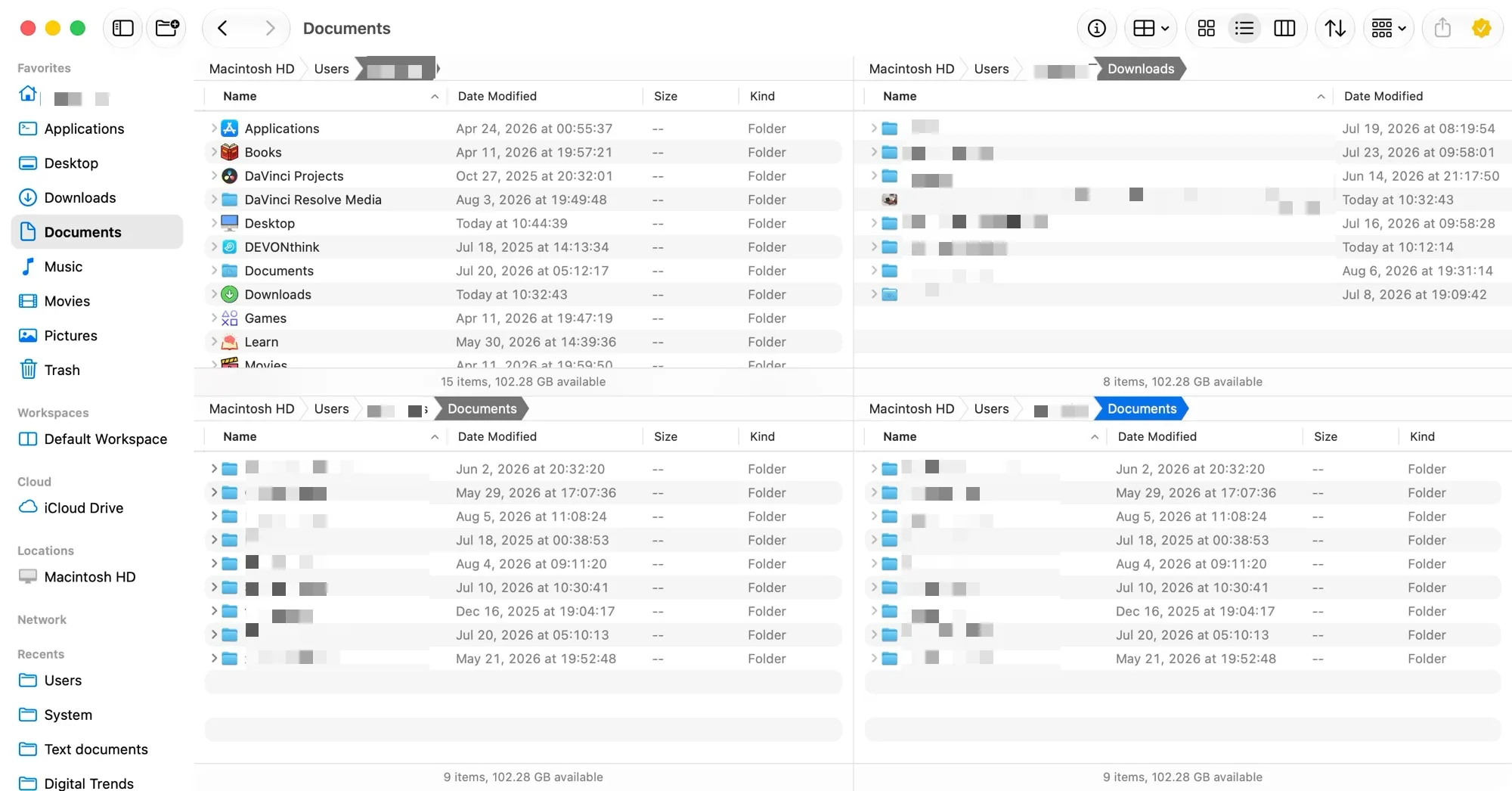
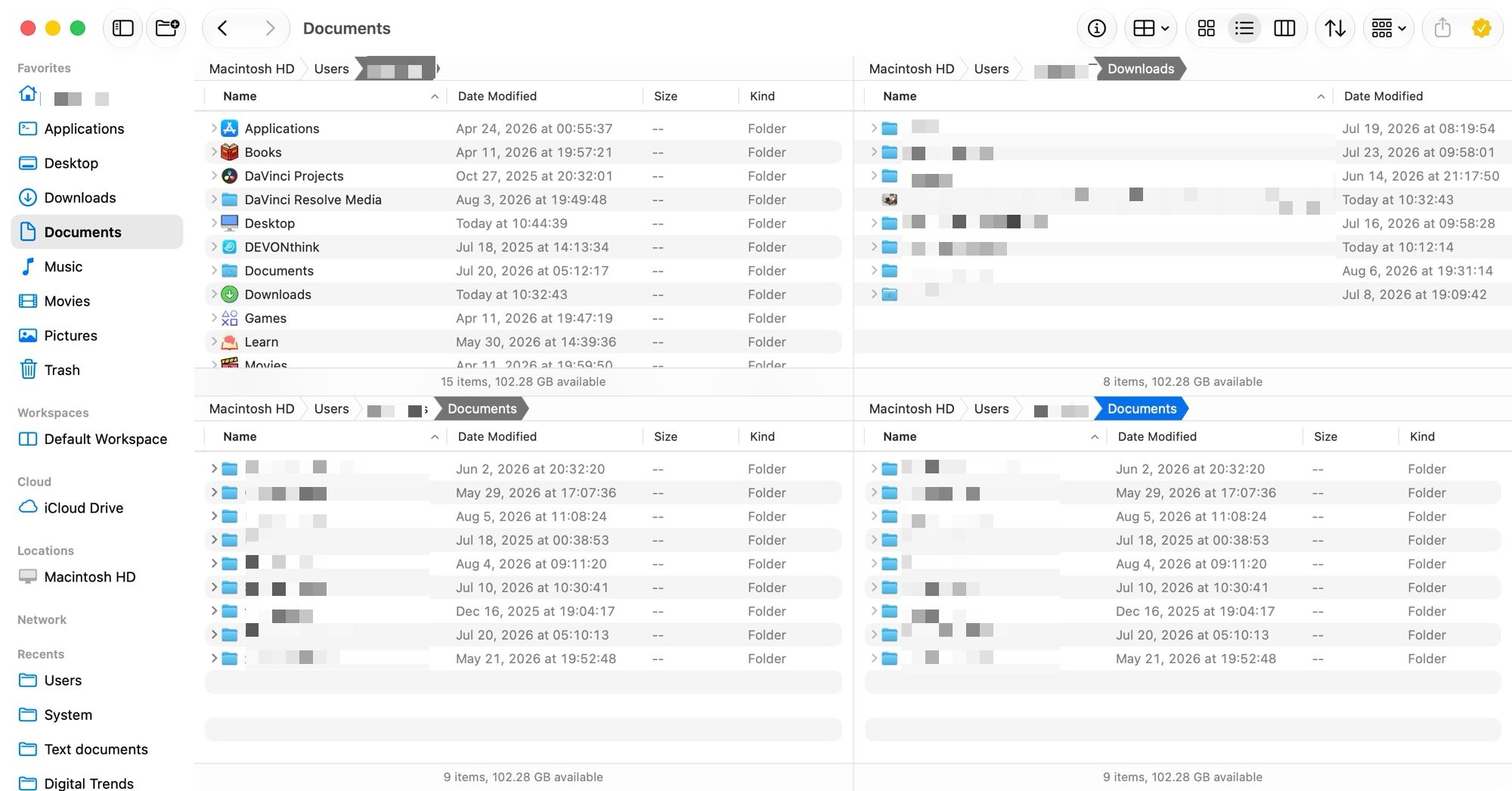
The first thing that hooked me was Bloom’s multi-pane layout. Instead of juggling separate Finder windows to move files around, Bloom lets you split a single window into several panes. There are up to 12 configurations to choose from, and you can set any one as your default setup.
Advertisement
Rachit Agarwal / Digital Trends
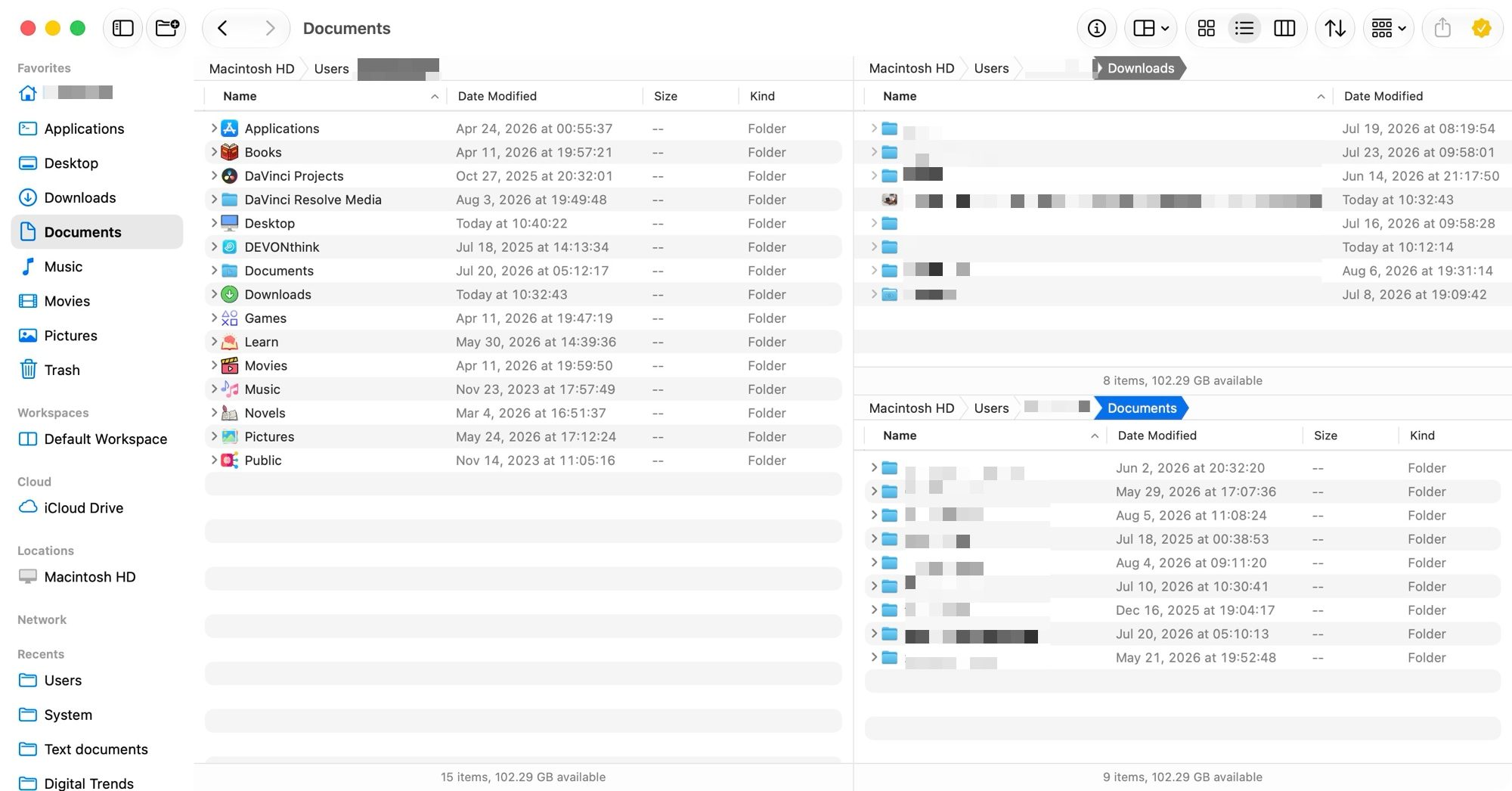
My go-to setup is three panes, a bigger one on the left and two smaller ones stacked on the right. The main three folders I access are the main directory, the Downloads folder, and the Documents folder. I keep the main directory open in the left pane, while the two other folders get the small right pane. Any time I want to move a file between the three folders, I can drag and drop without opening a new window.
Rachit Agarwal / Digital Trends
Even better, you can save these pane setups as Workspaces. I have a few saved for different parts of my routine, so when I sit down to work, I pull up the right workspace from the toolbar or a keyboard shortcut, and everything is exactly where I left it.
A floating window that follows you around
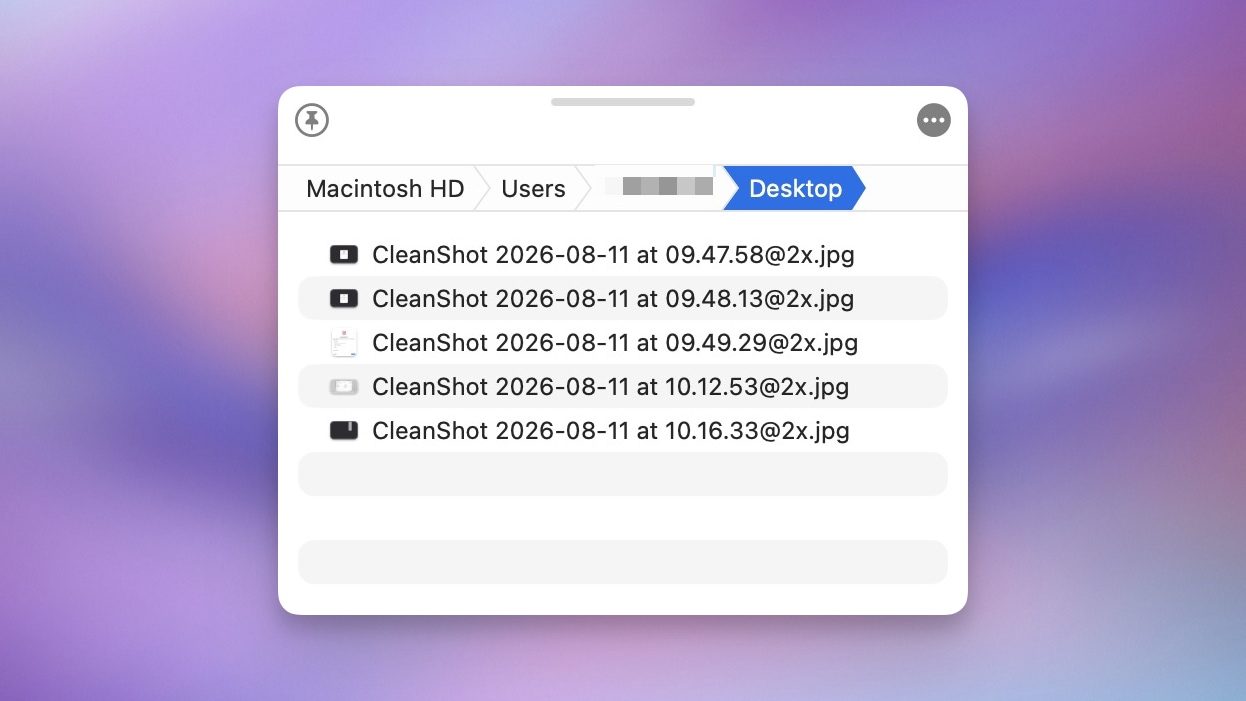
One of my favorite features of Bloom is something called the Portal, a small window that can float on top of whatever app you’re using. Think of it as a shelf for files you need to grab repeatedly while working somewhere else. I use it constantly whenever I need to pull files into another app without losing my place or breaking focus on what I’m actually doing.
Rachit Agarwal / Digital Trends
Search finally makes sense
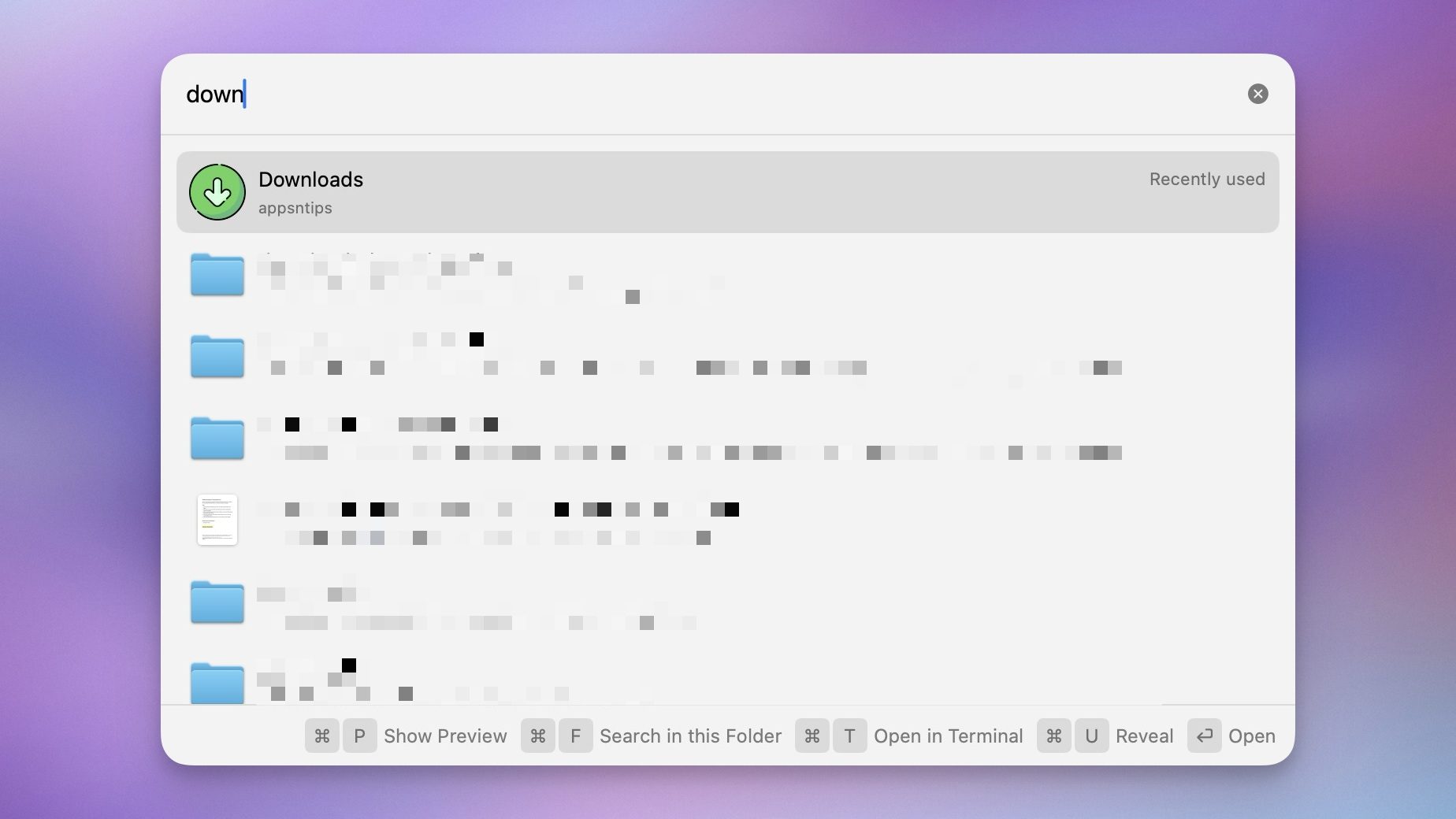
The one feature that saves me more time than anything else in Bloom is its search capabilities. I can hit a global shortcut, type a folder name, and jump straight to it from anywhere. It’s far superior to the Go to Folder feature in Finder.
Rachit Agarwal / Digital Trends
Another thing I like about Bloom is that by default it searches inside the folder and not my entire Mac directory. I can hit Command-F, and instead of searching my entire drive as Finder does by default, which is both needless and time-consuming, Bloom searches the folder you’re currently in.
The little things I didn’t know I needed
Beyond the big features, Bloom is full of small touches that quietly save time. It can peek inside zip files and other archives without making me extract anything first, and lets me partially extract files.
The Columns resize themselves automatically instead of me fussing with them every time a filename is too long. This is my biggest annoyance with the Finder, and I am so relieved that I don’t have to deal with it anymore.
Rachit Agarwal / Digital Trends
There’s a menu bar app for quick access to your favorites, folders, and workspaces, plus built-in image editing tools and a shortcut to pop open your current folder in Terminal.
There’s also Footprints, which logs every file operation you make, so if you delete something you shouldn’t have or a batch rename goes sideways, you can undo it. Finally, it packs a regex-powered rename tool, which is a genuinely useful upgrade over Finder’s basic version.
Advertisement
Should you make the switch?
Bloom is a simple app that can quietly slide into your workflow and improve your life. It looks and feels familiar enough that you can start using it immediately. That said, there’s a surprising amount of depth for anyone willing to dig in.
If you manage even a moderate number of files on your Mac, I think you’ll notice the difference within a day. If you ever found Finder annoying or just not sufficient, I highly recommend you buy this app. I have been using this app for a month or so, and I cannot imagine going back to the Mac’s Finder.
The Big Bang Theory‘s Bernadette as a demon is something I didn’t think I’d ever see in Stuart Fails to Save the Universe — but, now that I have, it somehow makes complete sense.
Last week’s episode saw us meet her in a wizarding world but, in this week’s entry we’re swapping the magical action for something a little more One Flew Over the Cuckoo’s Nest-coded.
But who, if anyone, really is crazy? And when does Stuart Fails to Save the Universeepisode 4 arrive on HBO Max?
Advertisement
Latest Videos FromTechRadar
What time can I watch Stuart Fails to Save the Universe episode 4 on HBO Max?
Stuart Fails to Save the Universe 1×04 Promo “Stuart Makes a Wallet” (HD) Big Bang Theory spinoff – YouTube
For US viewers, Stuart Fails to Save the Universe episode 4 will drop on Thursday, August 13 at 6pm PT/ 9pm ET.
Internationally, you’re looking out for these timings:
US – Thursday, August 13 at 6pm PT / 9pm ET
Canada – Thursday, August 13 at 6pm PT / 9pm ET
UK – Friday, August 14 at 2am BST
India – Friday, August 14 at 6:30am IST
Singapore – Friday, August 14 at 9am SGT
Australia – Friday, August 14 at 11am AEDT
New Zealand – Friday, August 14 at 12pm NZDT
When do new episodes of Stuart Fails to Save the Universe come out?
Me and who being suited and booted for more episodes? (Image credit: HBO Max)
New episodes of Stuart Fails to Save the Universe will make landfall every Thursday in the US and on Fridays everywhere else. Here are the all-important dates you need to know about:
For as capable as smartphone hardware is, the software running on them can be especially restrictive and cumbersome. Unlike a single-board computer with GPIO running a standard Linux operating system and some intuitive programming language like Python, smartphones are generally walled gardens where programming major overhead, and if a custom program can be run on them at all the user still has to figure out how to interface hardware with a USB-C port. To skip past all of this, [nicolas.ma] built an audio modem that can send keyboard input to a computer with nothing more than a browser.
The “keyboard” starts off in a browser running on a standard smartphone. A user can input text into the browser, which then gets converted into a series of audible audio pulses that can be sent to the keyboard. The keyboard itself listens to those pulses, decodes them, and then sends the text through to the computer as a standard USB device thanks to an Arduino Micro at the center. Arduino Micros are excellent choices for keyboard controllers because they have a built-in USB chip.
The protocol used here is designed and built by [nicolas.ma] as well. The words allow for variable length, with the device determining message length, and a word-ending scheme that automatically sends the message to memory when it’s detected that the message is finished. There’s also integrity checking and the ability to check on the link’s state. From hardware to software it’s an impressive build, and for anyone wondering what this might be used for [nicolas.ma] has already built a password manager from it.
Three years to the day after settling a bruising legal fight over trade secrets, Archer Aviation is buying the company that once sued it. On Monday, Archer and Boeing announced definitive agreements under which Archer will acquire Wisk Aero along with two other Boeing subsidiaries, SkyGrid and Insitu. In return, Boeing will receive a substantial equity stake in Archer, warrants for more shares later, a board seat, and continued access to key autonomy technology.
Archer, a California-based air taxi startup still struggling to thrive in commercial air taxi journeys, has accepted to the complete package of Boeing’s advanced autonomy and unmanned aircraft ventures. Wisk has spent several years building fully autonomous electric vertical takeoff and landing aircraft. He has successfully designed, constructed, and flown six successive versions of these machines, conducting more than 1700 flight tests. In December 2025, their most recent full-scale prototype, Generation 6, was able to take to the air. In order to keep autonomous aircraft safely in sync with both traditional crewed aircraft and each other, SkyGrid is developing digital air traffic management software. Building and maintaining military drones, which are used for intelligence, surveillance, and reconnaissance, is the main focus of Insitu’s business. These drones have flown over 3500 aircraft, operate in 35 countries, and generate over $200 million in revenue annually.
Due to platform compatibility issue, the DJI Fly app has been removed from Google Play. DJI Neo must be activated in the DJI Fly App, to ensure a…
Lightweight and Regulation Friendly – At just 135g, this drone with camera for adults 4K may be even lighter than your phone and does not require FAA…
Palm Takeoff & Landing, Go Controller-Free [1] – Neo takes off from your hand with just a push of a button. The safe and easy operation of this drone…
Boeing will receive newly issued Archer Class A shares equal to 19.75 percent of the shares outstanding immediately before the deal closes. That translates to roughly a 16.5 percent ownership stake once the new shares are issued, as well as two warrants that will provide them an additional $100 million when they come to utilize them (at $13 & $17.88 per share). The arrangement of this purchase is rather simple and all-stock. Boeing has the authority to designate one of their own directors to serve on the board of Archer as long as they maintain their ownership of the company. Finally, a tech-sharing agreement between the two businesses allows Boeing to continue utilizing Wisk’s fundamental autonomous flight capabilities in their own commercial and defense initiatives.
Advertisement
It is all set to close by the end of 2026, if they receive regulatory approval, which will include an antitrust investigation. May 2027 is one of the dates they will need to work toward. For Archer, the impact of getting their hands on Insitu comes very soon. They’ve been struggling to make any kind of revenue from their air taxi work so far, so this brings them a lot more cashflow from the defense business, as well as customers and operational scale, all while the passenger carrying electric aircraft work takes a little longer to get certified and off the ground. The technology they receive from Wisk and SkyGrid will be directly integrated into Archer’s own plans, as they have been working on something called the ZEE AI foundation model for some of the most complex aero and defense applications. They hope to kick things off in the self-flying air taxis and autonomous systems space by combining the flight time of acquired teams (almost two million hours) with the work they already have going on. [Source]
Amazon, on the other hand, is fighting the measure to stop use of contractors for last-mile delivery.
Spencer Platt/Getty Images
New York City Mayor Zohran Mamdani is throwing his office’s support behind a measure to change last-mile delivery practices. The Delivery Protection Act was introduced several months ago in the major metropolis’ City Council. Many companies that do high-volume deliveries, most notably Amazon, rely on contractors rather than employees to take packages on the final legs of their journeys to customers. The proposed legislation would create new licensing rules for those last-mile operations as well as requiring the delivery workers to be regular hires rather than contractors.
In a video statement released today announcing his backing for the bill, Mamdani spoke to how Amazon controls many of the details around when and how deliveries are made in the metropolis, but avoids responsibility for any incidents that might occur on the job because the delivery drivers and couriers are contractors. “If Amazon is delivering your packages, they should follow the same rules of every other delivery company,” Mamdani said.
Supporters of the bill, including the International Brotherhood of Teamsters, argue that this helps hold the large companies responsible for the delivery experience and would offer better pay and benefits to the professionals making those deliveries. Opponents, which unsurprisingly include Amazon, say the bill would lead to increased costs and slower deliveries for customers. It could see those companies with massive delivery operations move their distribution centers out of New York City to avoid the added regulation.
Every day seems to brings fresh news of an AI agent going “rogue.” Whether that’s compromising Hugging Face, hacking a gym website, or creating its own fake profiles to socially engineer an intrusion, AI models are increasingly behaving like bad actors.
So, the AI labs that make the models doing the hacking are expanding their cyber protection offerings. This week, OpenAI announced an expansion of Daybreak, its cyber defense service which it launched earlier this year, not long after Anthropic released its cyber-focused model Mythos.
Daybreak is a service that bundles access to models, tools and workflows for defenders. The expansion includes access to a brand new cyber-focused model designed for defensive work.
OpenAI said Monday that Daybreak would now consist of two tiers: Blue and Red. Both of these tiers will allow approved customers access to OpenAI’s limited-access frontier cyber models. Frontier models — the most advanced available — have been a subject of controversy. The Trump administration previously sought to collaborate with AI companies on the roll out of such models, purportedly over safety concerns. Previously, OpenAI deployed significant guardrails to using these models, limiting what customers could do with them.
Advertisement
Blue, which appears to be the more basic of the two, offers a variety of cyber services, including incident response, malware analysis, and patch validation. OpenAI calls Blue its “recommended starting point for most defenders,” implying that it should be more than enough for most enterprises.
Red, on the other hand, offers a broader and potentially more dangerous toolkit. The company grants its users “purpose-trained cybersecurity models,” designed to carry out security testing and vulnerability research.
With Red also comes the new model, GPT‑5.6‑Cyber, which is only available at that tier. 5.6-Cyber is built off of GPT‑5.6 Sol, and offers enhanced capabilities for certain specialized cybersecurity tasks, the company said.
At the moment, GPT‑5.6‑Cyber is only being made available for “trusted customer partners,” including reportedly Accenture, IBM, Crowdstrike, Cloudflare, and others.
Advertisement
While the threats from AI agents are rapidly increasing, critics have also pointed out that they function as marketing opportunities for the AI labs. OpenAI is certainly marketing its upgraded Daybreak that way.
“The cybersecurity world is rapidly changing—threat actors will increasingly use AI to conduct cyberattacks at unprecedented speed and scale, including in fully autonomous ways,” the company said in a blog post. “As these capabilities spread, defenders have a narrowing window to prepare.”
At the same time, enterprises remain interested in buying their protection from the AI labs who know the security risks best, because they know them first-hand.
When you purchase through links in our articles, we may earn a small commission. This doesn’t affect our editorial independence.
The iPhone is a surprisingly capable meteor-hunting camera, but it’s definitely not a point-and-shoot sort of situation. Here’s how to take excellent photos of the Perseids, satellites, and more.
Image credit: Florian Seiffert / @ popipaan on X
It’s August, which means those in the northern hemisphere are being treated to the annual Perseids meteor shower. If you’ve got an iPhone, you’re pretty much ready to go take some stunning astrophotography shots yourself. Of course, it’s not as simple as heading outside and pointing your iPhone at the sky, but you probably already knew that. Fortunately, we’re here to help. Continue Reading on AppleInsider | Discuss on our Forums
North Korean government snoops are operating LLMs locally and collecting technology to weave AI into their attack operations, according to South Korean security firm Genians.
The researchers said they observed Kimsuky setting up and operating local LLM environments using Ollama, GPT4All, and Msty, experimenting with other AI tools such as Cursor, and using retrieval-augmented generation (RAG) for local document searches. This prevents the data from getting sucked into the cloud where enemies might see it and try to stop it.
Kimsuky, a cyber-espionage crew that operates under North Korea’s Reconnaissance General Bureau, has for years used phishing and decoy documents in attacks targeting government agencies, think tanks, academia and security research organizations.
Genians’ findings “provide concrete evidence that the Kimsuky-affiliated threat actor is moving beyond one-off experimentation with AI and is continuously preparing to integrate the technology into actual attack capabilities, including malware development, data analysis, and the advancement of attack techniques,” the researchers said in a Monday report.
Advertisement
The North Korean group’s recent phishing emails use ZIP archives containing malicious LNK files – Kimsuky typically disguises these as materials related to international events, research reports, or meeting requests. When the recipient opens the archive and executes the LNK file contained within it, the shortcut runs an embedded PowerShell loader.
In some cases, the goon squad used AI to create lures related to virtual assets and finance, we’re told. These decoy documents “use natural language, a highly polished structure, and formats similar to actual business materials to increase user trust and induce the execution of malicious files,” the security analysts noted.
Additionally, the Pyongyang spies use various obfuscation techniques, including Base64 encoding, string splitting, and custom decoding routines, to hide the files’ malicious behavior.
The PowerShell script collects a ton of system information, including operating system version and architecture, system configuration, PC type, operating system installation and boot history, and a list of running processes. The attackers use this information to assess the infected environment and support follow-on attacks.
Advertisement
As with earlier Kimsuky campaigns, these intrusions use Git repositories for command-and-control (C2) infrastructure.
“During the analysis, Genians Security Center identified multiple public GitHub repositories operated by the threat actor,” the researchers wrote. “One repository contained not only configuration files and PowerShell scripts, but also various payloads used in subsequent attacks.”
Additionally, the months-long investigation uncovered the spies also using the Git-based C2 infrastructure for malware development and testing, stolen data management, and AI technology research.
This included setting up multiple local LLM environments using Ollama, GPT4All, and Msty on infrastructure it controlled. “Because the local approach prevents conversation data from being transmitted to external AI services, it reduces the risk of external exposure, making it a particularly attractive option for a state-sponsored threat actor,” Genians said.
Advertisement
The miscreants also collected a “large number” of libraries, such as LLaMaSharp and Microsoft.Extensions.AI, plus packages including OpenAI and Azure.AI.OpenAI, which call and integrate commercial AI services into their own custom applications.
“The fact that development components spanning ‘local AI execution → document retrieval (RAG) → automated agents → external AI integration’ were collected together strongly suggests that they were not gathered out of simple curiosity, but for the direct development of an AI-based tool designed for a specific purpose,” according to the threat hunters.
Genians uncovered logs containing speech-to-text tools, such as OpenAI’s Whisper speech recognition models, and evidence that the spies used Cursor AI to edit code and tested RAG for document-based question answering. Using RAG on stolen files can help attackers more quickly and automatically identify valuable information within large volumes of data.
While the researchers noted that they did not identify any evidence that the Norks have begun training their own models – but rather remain focused on applying AI to malware development and attack operations – the findings make a strong case for defenders needing to shift away from content-based assessment to behavior-based detection.
Advertisement
Assessing threats based on the quality of fake documents, such as unnatural translated language, poor formatting, and spelling errors, is no longer effective because AI is really good at producing convincing decoys.
In addition to using indicators of compromise (IoC) to detect attackers in their environments, organizations should look for anomalous behaviors following LNK execution – such as PowerShell execution, persistence establishment, and external communications – to hunt for threats.®



-SOURCE-Kat-Merck.jpg)




























































You must be logged in to post a comment Login