








Connect with us
DAPA Banner

Tech

5 Clever Finds To Make Oil Changes Easier And Mess-Free

Published

on


We may receive a commission on purchases made from links.

When it comes to car maintenance, it can be easy to miss crucial tasks that can drastically improve the longevity of your vehicle, like routine oil changes. It comes with the mental load of choosing the right oil filter brand and risking damage to your property with an oil spill. Plus, the cost of necessary equipment and parts, like automotive jacks and creepers, can be expensive, and you may not have the space to accommodate them.

Advertisement

However, there are still a lot of valid reasons why you may want to still do it yourself. It’s always a good idea to develop car maintenance skills, especially if you want to be the kind of person who doesn’t need to rely on other people in an emergency.

While it’s not always the most cost-effective way of doing things, if you decide to take the DIY route, we’ve made a step-by-step guide that you can follow. That said, what you lack in skill, you may be able to make up for with the right tools. Through some strategic shopping, you can avoid some common oil change issues. To help you, we’ve taken note of some clever finds that people swear by. We also let you know our methodology for how we’ve narrowed down our selection and why we chose them at the end.

Advertisement

TEC Products FlexAll Long Flexible Funnels

The first thing you’ll need for an oil change, is a way to get the oil into the engine, and that starts with a funnel like the TEC Products FlexAll Long Flexible Funnels. Available in two sizes (small and large) its prices range between $24.99 to $34.99. If you’re not sure what size to get, it’s important to reflect on whether you need high volume or want the compactness for tighter spaces.

When not stretched out, the small model measures 12 inches in length with a 4-inch cone and spout that is 0.53 inches. On the other hand, the large option is 16 inches in length with a significantly wider 5.3-inch cone mouth and 0.71-inch spout. You can also trim the outlet to your desired size.

Made for heavy-duty automotive use, you can safely use it for all kinds of automotive liquids from oil, ethylene glycol-based antifreeze, and hydraulic fluid. Since it’s made of nitrile rubber, it can be cleaned with just warm soapy water after every use.

Advertisement

Listed as an Amazon’s Choice Product, more than 1,400 people rated it around 4.6 stars. A Made in the USA product, 72% of users rated it a perfect rating with most people saying it meets expectations. But while only 3% thought it was 1-star material, there were some disappointed customers who commented that it melted in the heat, was too thin, and the wind blows it away too easily.

Advertisement

WORKPRO Oil Filter Wrench

To help you grip your automotive oil filters more effectively, the WORKPRO Oil Filter wrench set is for you. If you just want the 12-inch model, it retails for $13.05. But if you want the set that includes both the 9-inch and 12-inch models, you’ll only need to shell out $17.99 for both. If you’re wondering which option to get, the 9-inch variant has a jaw capacity between 1-3/4 -inches to 3 inches, while the 12-inch model can fit 2-½-inch to 3-¾-inch. Either way, both sizes are made of heat-treated carbon steel with a soft grip handle.

In general, WORKPRO is known to be a pretty reliable brand when it comes to hand tools. In fact, we’ve recommended everything from its pliers sets to big mechanics tool sets. Knowing this, it’s unsurprising that this particular oil filter wrench offers also fares pretty well with an average rating of 4.6 stars from 1,700+ Amazon customers.

An Amazons’ Choice product, an impressive 77% of users thought it was worth giving a perfect rating. In general, people think that it grips well and a good alternative to strap wrenches. But take note, the 4% of buyers who were unhappy enough to rate it a single star said it had problems with rusting, not locking, and slipping.

Advertisement

Drymate Oil Spill Mat

Made to prevent all sorts of liquids from staining your garage floors, the Drymate Oil Spill Mat is made of 2 layers. First, it has a polyester fabric that absorbs any oil, brake fluid, or coolant that falls on it. Second, it has a slip-resistant backing, which it’s soft enough that you can lie on top of it if you need to get to work on your car. As for regular maintenance, you can use soap and water to clean any residue off and simply hang it to dry. While there are hundreds of cheaper products out there, this one is made for those patriotic environmentalists, because it’s both Made in the USA and built with recycled fibers.

With prices that start at $15.99, it comes in different sizes and even has versions made to be garage floor runners and mats. For the 36-inch by 59-inch XL mats, you can get a pair for $39.99 (around $20 each) or a dozen for $199.99 (around $16.70 per unit). It can also be cut to fit your preferred sizes. Apart from being an Amazon’s Choice product, the oil spill mats have collectively been both a highly rated and popular product. As of April 2026, more than 7,000 people have rated it 4.5 stars on average.

Advertisement

Capri Tools Portable Oil Drain Pan

Available in two colors (black and green), the price for the Capri Tools Portable Oil Drain Pans starts at just under $29.99. With a capacity of 4.5 gallons, the polyethylene drain pan has features like an anti-splash lip and molded handle. Measuring 23 inches by 29 inches by 6 inches, it has a 1-inch diameter spout that can be used to prevent accidental spills. it’s also stackable and weighs just 2.5 pounds, so you can easily store a few of them in your garage. Or you can use the front hole to hang it up.

Advertisement

Aside from being an Amazon’s Choice product, it has an impressive ratio in terms of satisfied customers. So far, over 2,500+ Amazon buyers have rated it 4.8 stars on average with a whopping 88% giving it a perfect 5-star rating. In general, people often praise its user-friendly design and capacity. 

Among satisfied reviewers, some mentioned that it works great for large oil changes, such as trucks. Others shared that the product works for years with no problems. Perhaps it’s even more impressive is not a single user has rated it 1-star. Although some 3-star reviews note that it doesn’t pour as cleanly when it’s too full and doesn’t let you put the old filter in the pan. Alternatively, if you don’t really need the large capacity, Capri Tools also offers a 2 Gallon model for $24.99.

Advertisement

EWK Vacuum Oil Extractor Pump

For people who don’t want to crawl under their cars anymore, the EWK Vacuum Oil Extractor Pump helps you avoid having to jack up your car, as well the risks of getting oil stains on your new shirt by skipping risky part of transferring the oil from your pan. It comes with a 6L oil container, hose set, pump handle, sealing cap, and pour spout. Apart from its 59-inch clear hose, it also has a 42-inch flexible metal probe. While it’s not meant for fluids hotter than 175°F, you can use it for other kinds of liquids, like coolant and power steering fluids. It’s also fit for other vehicles, like boats, jet skis, motorcycles, and even lawnmowers.

Priced at $49.99, the EWK Vacuum Oil Extractor Pump has generated an average rating of 4.5 stars from more than 1,500 Amazon customers. An Amazon’s Choice product, around 79% of users rated it a perfect 5 stars with many saying it was simple to use, affordable, and multi-purpose, since you can use it for other vehicles apart from your car. Among satisfied customers, they mentioned that it works well with correcting over-filling.” Although, there a few peppered complaints with 6% of users rating it a single star, such as people wishing the reservoir had a cap, issues with vinyl flaking, and concerns about durability.

Advertisement

Methodology

We scoured the internet to find products that address different issues that we all tend to encounter during the oil change process. In particular, we looked for options that helped make the process more efficient and to reduce the expected clean up afterwards. Next, we chose products that have been rated at least 4.5 stars by more than a thousand users. Then, we made sure to only include tools that more than 70% have given a perfect rating and less than 10% rating it a single star.

Lastly, we mentioned specific issues that people have raised, so you can manage your expectations regarding their performance. While it didn’t impact their inclusion on this list, we also shared if the product was listed as made in the USA, which may matter to people who want to support local products. We also took note if they’ve been tagged as Amazon’s Choice products.

Advertisement


Source link

Advertisement
Continue Reading
Click to comment

You must be logged in to post a comment Login

Leave a Reply

Tech

What Is The 90-Minute Rule For Concrete?

Published

on


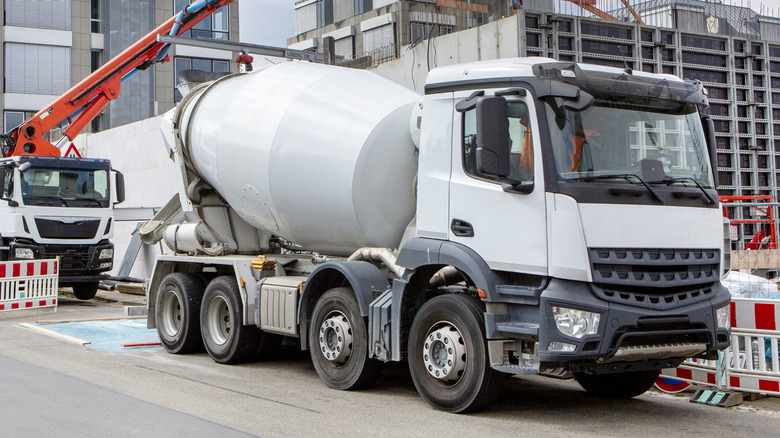
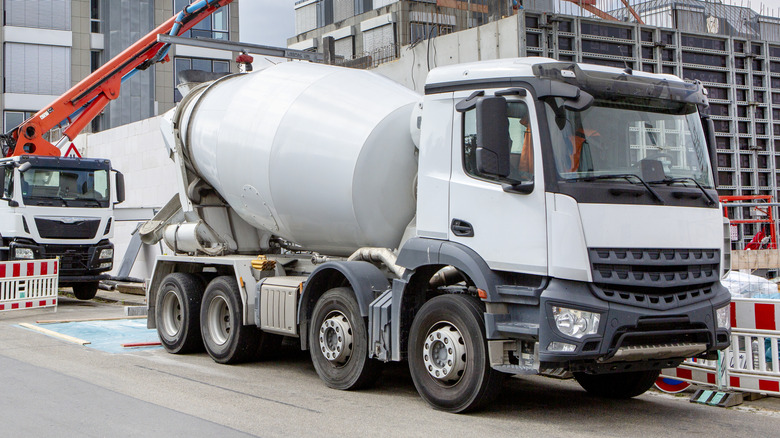
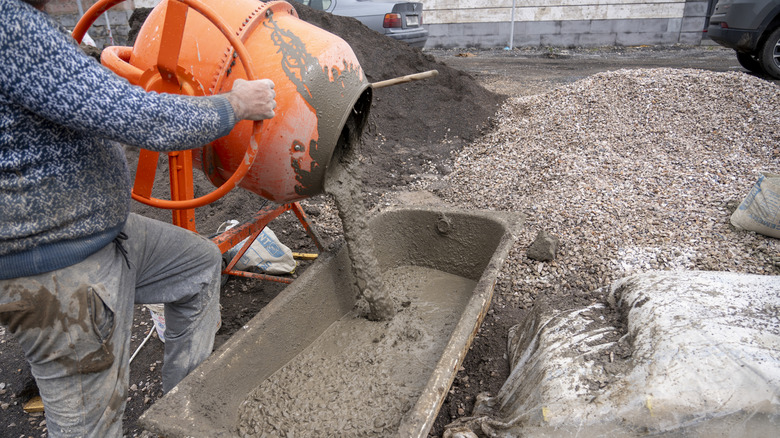
Mixing concrete for industrial purposes often requires heavy machinery. Specifically designed trucks are used to prepare the mixture, the volume of which is determined by a calculator. It is then poured to lay everything from a city sidewalk to a residential driveway. But there’s more to the process, as workers often follow the 90-minute rule, which means that prepared concrete must be emptied from the mixing truck within 90 minutes after mixing begins.

The reason for this is due to how the mix behaves over time. A concrete mix is kept fresh with a consistent texture thanks to the spinning cement truck. The truck does its job by preparing the concrete to be poured, and once it’s ready, the operator can release it accordingly. But after the 90-minute window closes, the mix isn’t what it used to be and if poured after the fact, there’s no guarantee it will set properly.

The 90-minute mix time keeps the cement loose, and easily workable, as the hydration process takes place. Without that process, the cement would become less fluid and eventually it could get firm, essentially “setting” in the truck’s mixer. However, temperature fluctuations can also cause the same effect. Moisture loss is another problem for the mixer’s contents, as it can directly affect how easily the concrete is poured. In the end, the longer the mix is in the truck, the more challenging everything becomes.

Advertisement

Concrete timing is more flexible than it used to be

The 90-minute rule regarding the mixing of concrete has been in place since around the 1930s. It is a long-standing guideline set by the American Society for Testing and Materials (ASTM). In fact, ASTM C94 governs ready-mix concrete standards used throughout the United States in construction projects. The rule has been well established over time thanks to both building codes and state highway associations. It was originally based on older production methods, as well as shorter transportation distances overall.

But the 90-minute rule isn’t as rigid as it was once. That’s because today’s standards allow for more flexibility based on the actual condition of the concrete at the time of placement. As of this writing, updated ASTM guidance no longer enforces a strict time limit. Any adjustments are instead allowed during transportation or at the job site itself. As long as the concrete meets its required expectations, workers can safely pour and it should be effective.

Advertisement

Because of this different approach, and due to preexisting standards under ASTM C94, the 90-minute rule is mostly connected to ready-mixed concrete instead of hand mixing. So even if you’re using a portable mixer or doing it yourself by hand, there’s no real hard and fast rule like the truck delivery standard. Of course, wet concrete mix shouldn’t remain in a holding state for long as it will eventually begin to harden.


Advertisement

Source link

Continue Reading

Tech

Discord users breach access controls to reach Anthropic’s Mythos model

Published

on

A recent security incident involving Anthropic has highlighted just how fragile the safeguards around advanced AI systems can be. A Wired report suggests that a small group of users, operating through private Discord channels, managed to gain unauthorized access to the company’s highly restricted Mythos AI model – an experimental system designed for cybersecurity applications.

A Breach That Exposes Bigger Risks Around AI Control

The incident appears to have occurred almost immediately after Mythos was made available to a limited group of trusted partners. According to multiple reports, the unauthorized users gained access through a third-party vendor environment, rather than directly breaching Anthropic’s core systems.

Some accounts suggest that members of a private Discord community were able to exploit access permissions or identify entry points using publicly exposed information, effectively bypassing restrictions placed on the model.

Importantly, there is no confirmed evidence that the system was used for malicious activity. In fact, reports indicate that the users interacted with the model in relatively limited ways. Still, the fact that access was obtained at all is the real story.

Mythos itself is not just another AI model. It is designed to identify vulnerabilities in software systems and simulate cyberattacks – making it one of the most sensitive AI tools currently under development. That dual-use capability is precisely why access was tightly restricted in the first place.

Advertisement

Why This Incident Matters Beyond One Breach

At a glance, this might seem like a contained security lapse. In reality, it underscores a broader issue facing the AI industry: control is becoming harder than capability.

AI models like Mythos are built to find weaknesses in systems, which means that in the wrong hands, they could accelerate cyberattacks rather than prevent them. Researchers and officials have already warned that such tools could pose significant risks if misused, given their ability to automate complex attack chains.

What makes this case particularly notable is how the breach happened. It wasn’t a sophisticated hack targeting core infrastructure. Instead, it appears to have leveraged gaps in the surrounding ecosystem—contractors, permissions, and access management.

That distinction matters. It suggests that securing advanced AI isn’t just about the model itself, but the entire environment around it.

Advertisement

Why It Should Matter To You

For everyday users, this incident may feel distant, but its implications are closer than they seem.

AI systems like Mythos are being developed to secure everything from browsers to financial systems. If those same tools are exposed prematurely or improperly controlled, the risk shifts from defensive to potentially offensive.

Even without malicious intent, unauthorized access introduces uncertainty. It raises questions about how well companies can protect technologies that are increasingly critical to digital infrastructure.

In simpler terms, if AI is being built to protect the internet, it needs to be protected first.

What Happens Next For Anthropic And AI Security

Anthropic has already launched an investigation into the incident and has stated that the breach was limited to a third-party environment, with no evidence of broader system compromise.

However, the timing of the breach – coinciding with the model’s early rollout – will likely intensify scrutiny around how such systems are tested and shared. Regulators and industry bodies are already paying close attention to high-risk AI models, and incidents like this only add urgency to those discussions.

Advertisement

Going forward, expect stricter access controls, tighter vendor oversight, and potentially new frameworks for handling sensitive AI tools. Because if this episode proves anything, it’s that the challenge is no longer just building powerful AI – it’s keeping it contained.

Source link

Advertisement
Continue Reading

Tech

Battlefield movie reportedly in the works with Christopher McQuarrie and Michael B. Jordan

Published

on


According to The Hollywood Reporter, producer Christopher McQuarrie and collaborators pitched a feature film adaptation of EA’s Battlefield series to studios and streaming services this week. McQuarrie is expected to write, direct, and produce the project, while Oscar-winning actor Michael B. Jordan (Sinners) is reportedly in talks to produce and…
Read Entire Article
Source link

Continue Reading

Tech

Where Apple products are assembled, and where parts come from

Published

on

Making an iPhone or iPad is a global effort, with companies across North America, Europe, and Asia contributing to every stage of the process. Here’s how it all fits into place.

Earth viewed from space with various Apple products floating above Asia, including iPhones, AirPods, Apple Watch, iPad, and an M5 processor chip.
Apple products are assembled in multiple countries.

Apple relies on multiple supply chain partners, with assembly plants located throughout the world. The United States’ ever-changing tariff policies throughout 2025 affected everyone, from consumers to corporations. It made us more aware of where a given product was made.
While the average person had to figure out the extra fees they had to pay for orders from China, Apple had to find ways of diversifying its already complex supply chain.
Continue Reading on AppleInsider | Discuss on our Forums

Source link

Continue Reading

Tech

This Galaxy Z Fold 7 deal knocks $400 off Samsung’s super-thin foldable

Published

on

Foldable phones have spent years asking you to accept tradeoffs, but the Samsung Galaxy Z Fold 7 is the clearest sign yet that the category has finally grown up and stopped apologising for itself.

That confidence is well-timed, because the Samsung Galaxy Z Fold 7 is currently down from $1,999.99 to $1,599.99 at Amazon, saving you $400 on one of the most fully realised foldables Samsung has built.

Samsung Galaxy Z Fold 5on a blue backgroundSamsung Galaxy Z Fold 5on a blue background

The Samsung Galaxy Z Fold 7 is now available for under $1600

For anyone who has been waiting for a foldable that genuinely earns that price, this $400 discount makes the timing difficult to argue with.

Advertisement

View Deal

The most immediate upgrade over its predecessor is physical: the Galaxy Z Fold 7 is 3.2mm thinner and 24g lighter when folded, which means it finally sits in a jacket pocket without announcing itself.

Advertisement

That slimmer profile doesn’t come at the expense of screen real estate either, since the inner display still stretches to eight inches at 2520 x 1080 across an AMOLED panel running at a 120Hz refresh rate.

The 6.5-inch cover display deserves particular attention here, because it’s wide enough to handle most day-to-day tasks without ever needing to unfold the phone, which changes how the device actually feels to carry and use.

Advertisement

Camera is where the Galaxy Z Fold Z makes its most significant generational leap, with a 200MP main sensor arriving on a Fold for the first time, paired with a ProVisual Engine for processing that keeps detail sharp even in challenging light.

Advertisement

The Whatsapp LogoThe Whatsapp Logo

Get Updates Straight to Your WhatsApp

Join Now

Advertisement

Powering all of this is the Snapdragon 8 Elite chip customised for Galaxy, which Samsung claims delivers 38% faster CPU performance and 41% quicker AI processing compared to previous Galaxy Z Fold models.

That AI muscle feeds directly into the software experience, with Google Gemini integration allowing you to go live with the camera for real-time assistance, share your screen for contextual help, or point at something on screen for an instant explanation.

Durability has been reinforced through Armor Aluminum framing and Corning Gorilla Glass Ceramic 2 on the display, with the hinge rated to at least 200,000 folds, which Samsung equates to roughly ten years of average use.

At $1,599.99, the Samsung Galaxy Z Fold 7 remains a premium commitment, but for anyone who has been waiting for a foldable that genuinely earns that price rather than asking for patience, this $400 discount makes the timing difficult to argue with.

Advertisement

Advertisement

SQUIRREL_PLAYLIST_10148964

Source link

Advertisement
Continue Reading

Tech

Brev raises $3.3M for AI agents that keep companies on track with goals

Published

on

Brev co-founders Vic Hu (left) and Chris Pitchford. (Brev Photo)

Brev, a startup with roots in Seattle’s tech community, has raised $3.3 million in pre-seed funding for its AI tools that automatically track how companies are performing against goals.

The company’s AI agents join standups, business reviews, and other internal meetings, then automatically update goals and flag risks. Brev also pulls data from tools like Slack, Jira, and Salesforce, generates agendas, and tracks follow-through on action items. 

Overall, the idea is to replace manual coordination that often slows teams down. 

“Everything is grounded in quotes from participants, which keeps the AI accurate and unlocks context that would otherwise be lost across hundreds of meetings every quarter,” explained Brev CEO and co-founder Chris Pitchford in an email this week. 

Pitchford is a serial startup founder and a former executive at Ally, a Seattle goal-tracking startup that Microsoft acquired in 2021. He founded Brev with CTO Vic Hu, a former senior engineer at Meta and engineering manager at Indeed. Benn Graham is founding engineer.

Advertisement

Its pre-seed funding, announced Wednesday, was led by Resolute Ventures, with participation from ShuckerVC, Duro VC, Gaingels, and FOG Ventures. Brev plans to use the money to expand its engineering team and deepen integrations with business tools its customers use. 

When GeekWire first reported on Brev in October 2024, it was bootstrapped and pitching itself as a “business performance OS.” Since then, it has launched a self-serve product with usage-based pricing, and started working with companies including RecordPoint, Flex, and Patlytics. 

The company competes in a space that includes goal-tracking and performance-management software, along with a growing wave of AI meeting assistants. In effect, Brev is aiming to bridge those two segments, connecting what happens in meetings to larger company goals rather than treating them as separate workflows. 

Notably, Microsoft discontinued Viva Goals in 2025, the successor to Ally, the company where Pitchford was previously an exec, leaving a gap in the market that Brev could help fill.

Advertisement

Brev’s longer-term goals include moving beyond tracking into actively driving execution for its customers, with AI that coordinates across teams and tools.

The company is based in San Francisco, where Pitchford is now located, with Hu based in the Seattle area and Graham in Toronto. It has contractors across multiple time zones and is hiring.

Source link

Advertisement
Continue Reading

Tech

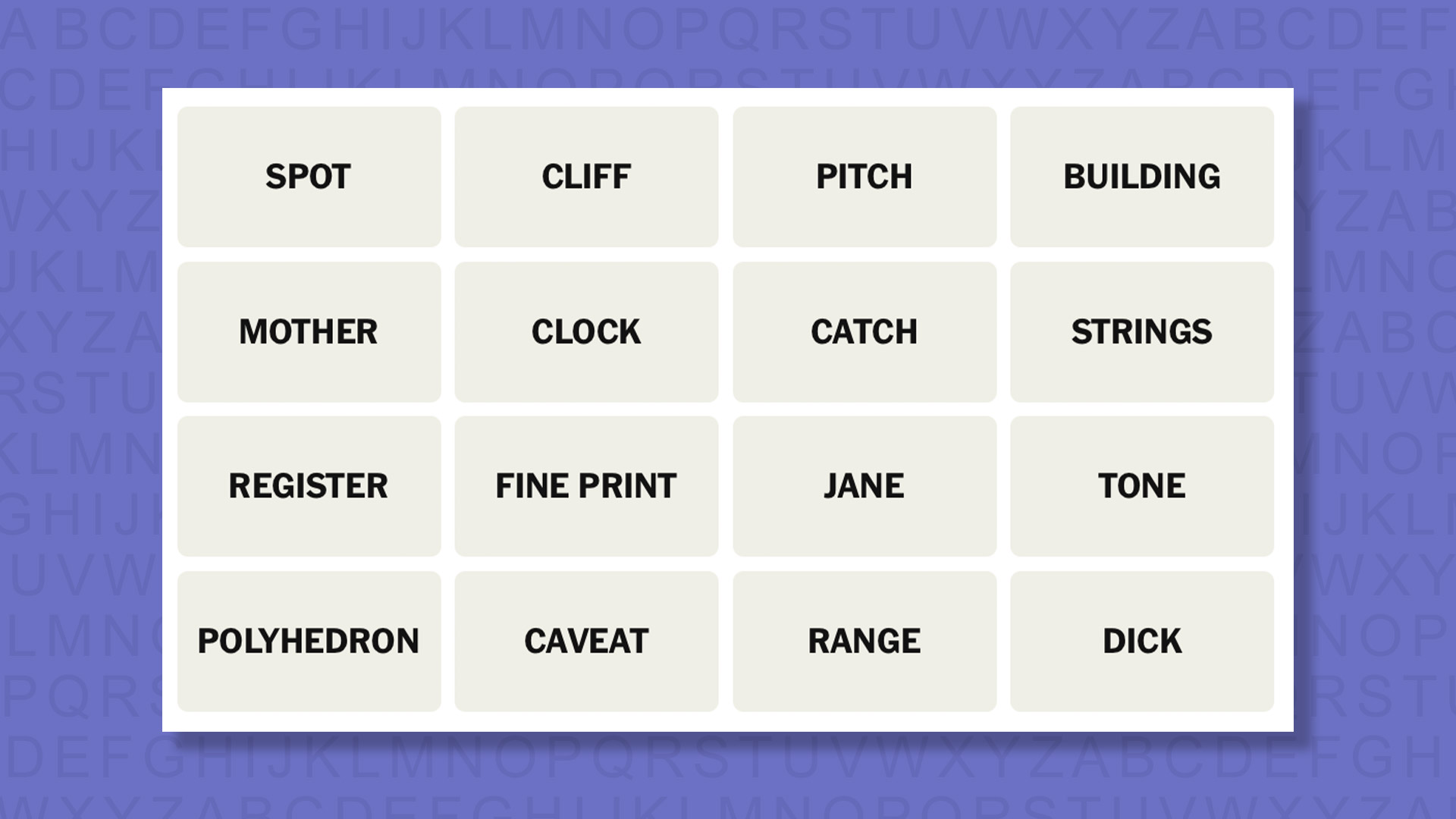
NYT Connections hints and answers for Sunday, April 26 (game #1050)

Published

on

Looking for a different day?

A new NYT Connections puzzle appears at midnight each day for your time zone – which means that some people are always playing ‘today’s game’ while others are playing ‘yesterday’s’. If you’re looking for Saturday’s puzzle instead then click here: NYT Connections hints and answers for Saturday, April 25 (game #1049).

Good morning! Let’s play Connections, the NYT’s clever word game that challenges you to group answers in various categories. It can be tough, so read on if you need Connections hints.

Advertisement

Source link

Advertisement
Continue Reading

Tech

Apps to distract you from the endless cycle of doomscrolling

Published

on

You open your phone to check the time or a quick message. The next thing you know, an hour has passed and you’ve scrolled through endless celebrity drama, cat videos, awful news stories, influencer rants, and whatever else the algorithm decided to throw at you.

Even though you probably don’t want to keep wasting your time and energy on this mind-numbing content, you do it again the next day.

Doomscrolling, the habit of spending excessive amounts of time consuming content on social media, has become incredibly widespread. A survey from last year found that 64% of Americans say they doomscroll

Researchers have warned that doomscrolling can negatively affect several aspects of your well-being, including your mental health and attention span. Spending long periods scrolling can lead to brain fatigue, difficulty focusing, and disrupted sleep. And if a lot of the content you’re consuming is negative or stressful, it can leave you feeling disheartened, anxious, and emotionally drained. 

Advertisement

It’s hard to break the cycle of doomscrolling, but there are plenty of apps that provide content that’s engaging and productive.

Of course, you could always read a book or go for a walk (we have a guide on how to stop doomscrolling), but this list is for when you have a few spare minutes and want something to do on your phone that isn’t endless scrolling. 

Dudel Draw

Image Credits:Dudel Draw

If you want to take a break from doomscrolling and try something creative, Dudel Draw might be a good app for you. Each day, the app gives you a random shape that you turn into a drawing. These daily shapes vary from basic geometrical forms to more complex and abstract designs.

Techcrunch event

San Francisco, CA
|
October 13-15, 2026

Advertisement

You can also get your friends in on the creativity with some fun competition by comparing your different creations, which could serve a nice break from sending each other endless TikToks or Instagram Reels.

Dudel Draw is available for free on iOS.

Advertisement

Radio Garden

Image Credits:Radio Garden

If you still want to feel connected to the world without scrolling through social media, you can check out Radio Garden. The app lets you listen to over 25,000 live radio stations from across the globe. 

Once you open the app, you’ll see green dots marking cities and towns. Tap any dot to listen to radio stations broadcasting from that location. You can add favorites or search for radio stations, countries, and places. 

Radio Garden is free, but it also offers an ad-free premium plan for $2.99 per month. The app is available on both iOS and Android

Elevate

Image Credits:Elevate

Elevate is an app designed to help improve focus, memory, reading, math skills, and other cognitive abilities. It includes over 40 games to train different abilities you use in everyday life, from reading faster to comparing prices more efficiently. 

You can track training streaks and compare your mind’s performance over time. 

The app offers a free version with access to three games per day, or a yearly subscription of $39.99 for unlimited access. It’s available on both iOS and Android

Advertisement

Vocabulary 

Image Credits:Vocabulary

Vocabulary is an app that helps you learn new words every day. You can pick your difficulty level and choose categories that interest you, like emotions, the human body, business, and more. Each word comes with a definition, example sentences, and a guide on how to pronounce it. 

The app also includes mini-games to help you review the words you’ve learned. You can set a goal of how many words you want to learn each week and create a regular learning routine. 

Vocabulary offers a free trial, and then costs $4.99 per month or $59.99 per year. It’s available on iOS and Android

Seterra

Image Credits:Seterra

If you’re a geography nerd looking to test your knowledge or just want to improve your geography skills, Seterra is perfect for you. The app features over 300 different games to test your map skills. You can test your knowledge of world flags; discover oceans, seas, and rivers; and explore mountain ranges and volcanoes across the globe.

Seterra lets you track your progress across categories and see leaderboards for top scorers for each game. 

The app is free and available on both iOS and Android

Advertisement

NYT Games

Image Credits:NYT

The NYT Games app offers several word, logic, and number games that change every day to exercise your mind. You can play the crossword, try the word-guessing game Wordle, group words with a common theme in Connections, see how many words you can make from seven letters in Spelling Bee, and more. 

The app costs $5.99 per month for unlimited access and archives, but some games like Wordle, Strands, and the Mini Crossword are available to play for free. 

NYT Games is available on both iOS and Android

Drops

Image Credits:Drops

If you want to learn a new language but want to try something other than Duolingo, Drops is a good option. The app uses visually engaging mini‑games to help you build vocabulary and common phrases in more than 45 languages, with bite‑sized lessons designed to be completed in about five minutes a day.

Drops is designed for both beginners and experts who want to grow their foreign language vocabulary.

The free version of the app offers five-minute lessons per day. You can get unlimited access and premium features for $11.99 per month or $79.99 per year. The app is available on both iOS and Android.

Advertisement

This story was originally published in March 2026 and is updated regularly with new information.

When you purchase through links in our articles, we may earn a small commission. This doesn’t affect our editorial independence.

Source link

Advertisement
Continue Reading

Tech

Why Cohere is merging with Aleph Alpha

Published

on

Canadian AI startup Cohere is taking over Germany-based Aleph Alpha, with the blessing of their governments, in a bid to offer a sovereign alternative to enterprises in an AI landscape dominated by American players. “Sovereign AI” refers to systems where companies and governments retain full control over their own data — rather than routing it through U.S. tech giants like Microsoft or Google.

As companies that develop large language models, Aleph Alpha and Cohere have been hometown stars, while still lagging far behind OpenAI and the likes globally. But similarities aside, this isn’t an alliance between equals. Last valued at $6.8 billion, Cohere will lead the new entity that will incorporate Aleph Alpha, subject to approval by authorities and shareholders.

The deal’s key financial backer is Schwarz Group, a German retail conglomerate. As an existing shareholder in Aleph Alpha, it is already fully onboard with the acquisition. And going forward, it will also become a strategic backer of the newly combined entity with €500 million in structured financing (approximately $600 million). In return, Schwarz Group expects the new entity to run on STACKIT — the sovereign cloud platform operated by its IT division, Schwarz Digits — giving the retail giant a major enterprise customer for its cloud business.

To fund the combined entity, Cohere is also raising a new round of financing — a Series E — and Schwarz Group will serve as its lead investor. The valuation has already been set: according to German business media outlet Handelsblatt, the term sheet pegs the company’s combined worth at around $20 billion.

Advertisement

This would be a significant leap that combined revenue alone can’t justify. While Cohere reported $240 million in annual recurring revenue in 2025, Aleph Alpha had previously generated little revenue and significant losses. But investors are betting that teaming up will improve their odds against much larger rivals.

They may not be alone in the thinking that consolidation is the path forward. Elon Musk’s AI startup xAI has reportedly discussed a three-way partnership with France’s Mistral AI and Cursor, which SpaceX recently secured the option to buy. But it remains unclear whether Mistral would be interested in risking undermining its positioning as an alternative to U.S. tech that boosted its revenues. A partnership with xAI — an American company — would complicate that identity.

Cohere, too, is hoping to get tailwinds from enterprises looking for alternatives to AI providers that may not meet their requirements when it comes to privacy and independence. The new entity plans to target highly-regulated industries — including defense, energy, finance, healthcare, manufacturing and telecommunications— as well as the public sector.

Techcrunch event

Advertisement

San Francisco, CA
|
October 13-15, 2026

Aleph Alpha also developed specialized language models targeting enterprises and public institutions in Europe, such as the PhariaAI suite. A subsequent pivot away from building its own frontier models and the departure of its cofounder and CEO Jonas Andrulis made its strategy and leadership less clear, and left it in a weakened negotiating position. But its team of 250 people and their expertise could still complement Cohere.

Advertisement

“Their focus on small language models, European languages and tokenizers is a really complementary one to our own, which is more of a general focus on large language models,” Cohere CEO Aidan Gomez said in a press conference announcing the plans on Friday.

Amid growing tensions with the United States, Canada has been increasingly keen to sign bilateral initiatives with a variety of partners, including Germany. With a shared concern for privacy and security, the two countries recently launched a Sovereign Technology Alliance to “strengthen sovereign AI capacity and reduce strategic technology dependencies.”

The question remains whether European organizations will view an initiative involving Canada as sufficiently sovereign, or whether they will trust that the alliance will remain transatlantic in the long run. According to Gomez, “Cohere will become a Canadian-German company.” But that promise could be harder to keep if the company goes public — putting ownership in the hands of global shareholders with no particular allegiance to either country.

When you purchase through links in our articles, we may earn a small commission. This doesn’t affect our editorial independence.

Advertisement

Source link

Continue Reading

Tech

Alexander 3D-Printed a Real Engine That Runs

Published

on

3D-Printed Working Engine
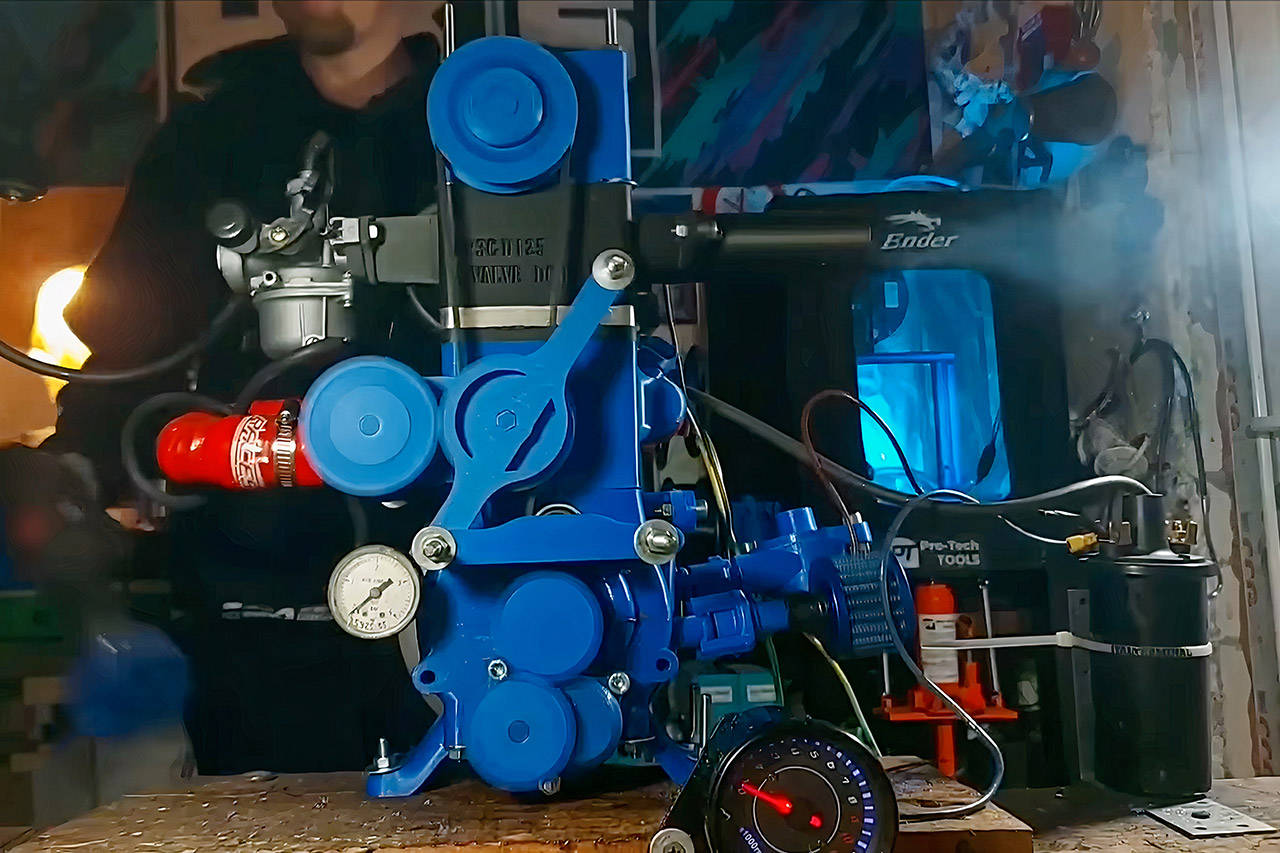
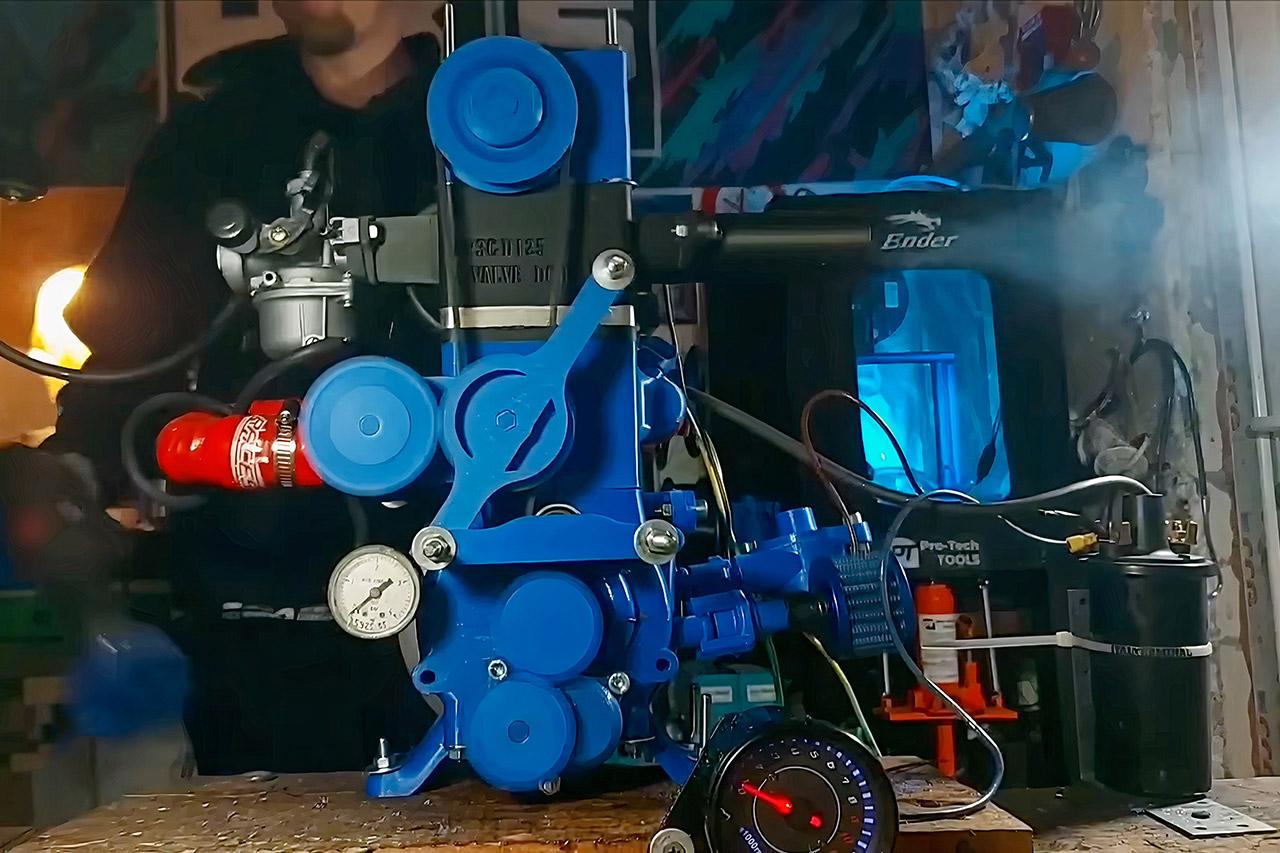
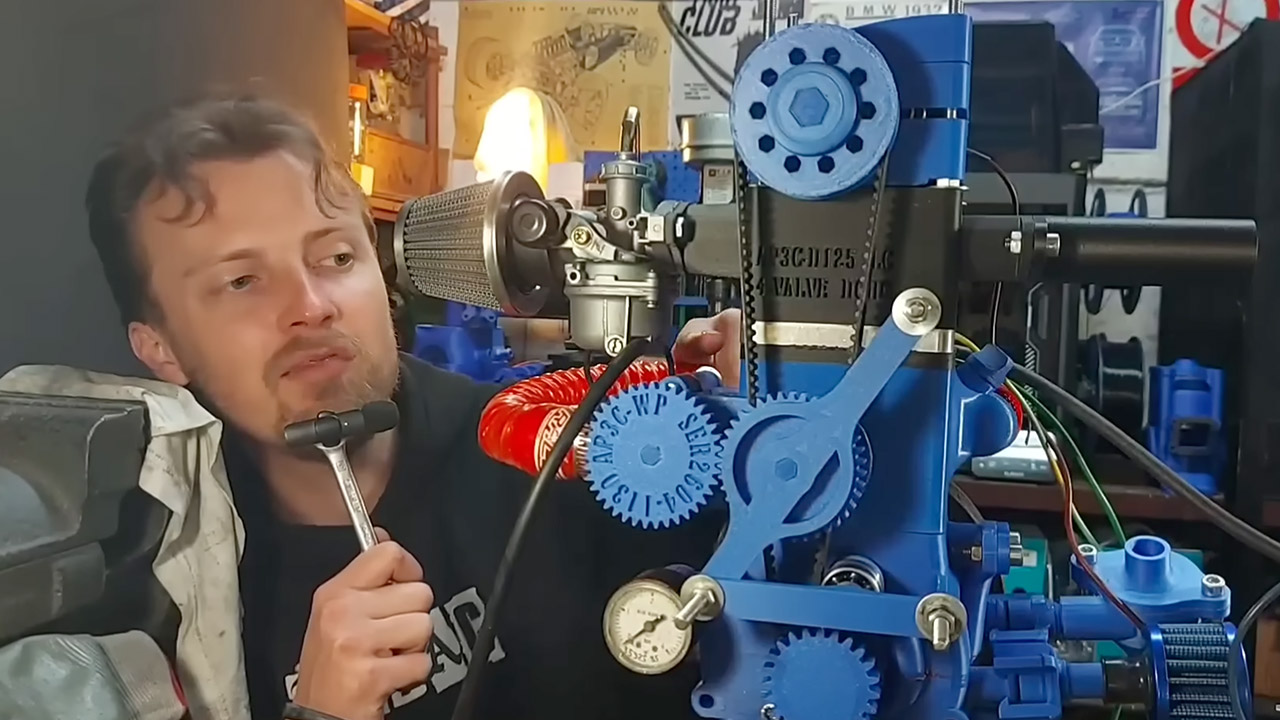
Alexander worked in his workshop for years on a simple goal: to turn spools of everyday filament into a workable internal combustion engine. That is, anything with a few hundred horsepower to get the aging bones going. His third generation of this made-from-scratch engine, known as the AP3 Carbon D125, has recently met that target. The new design surrounds a 125cc single-cylinder four-stroke engine, which is commonly found in scooters.


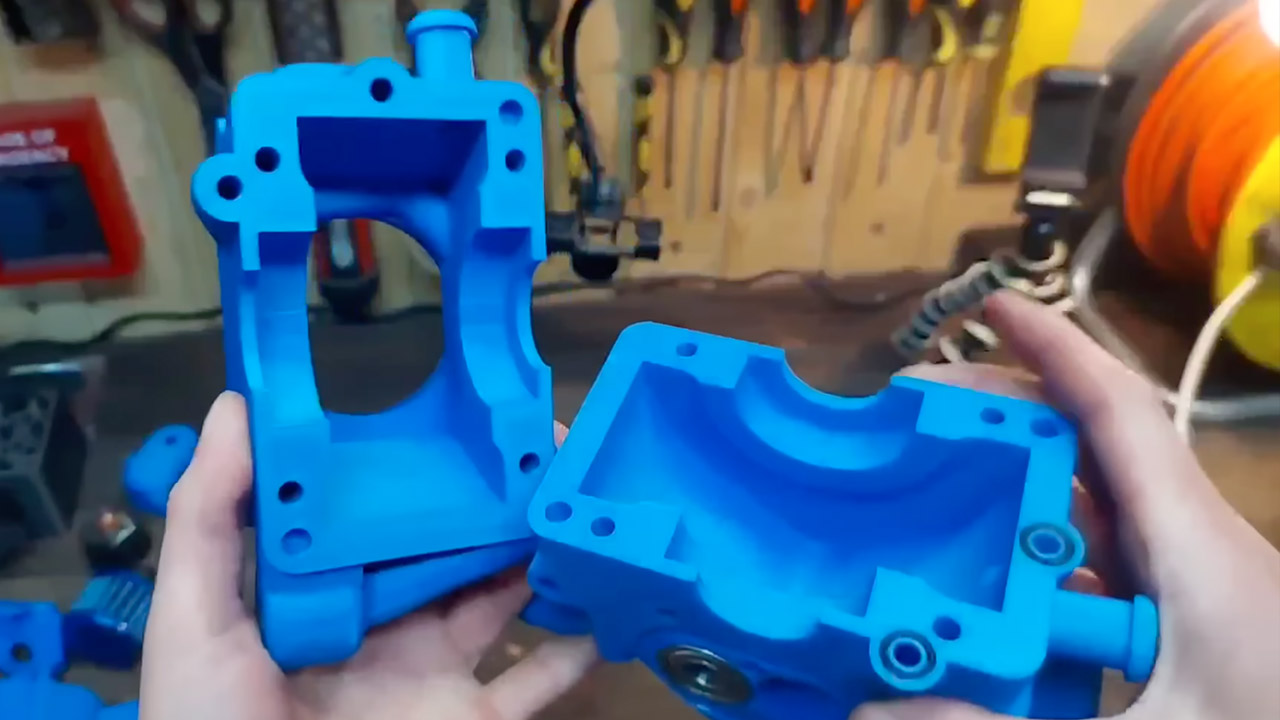
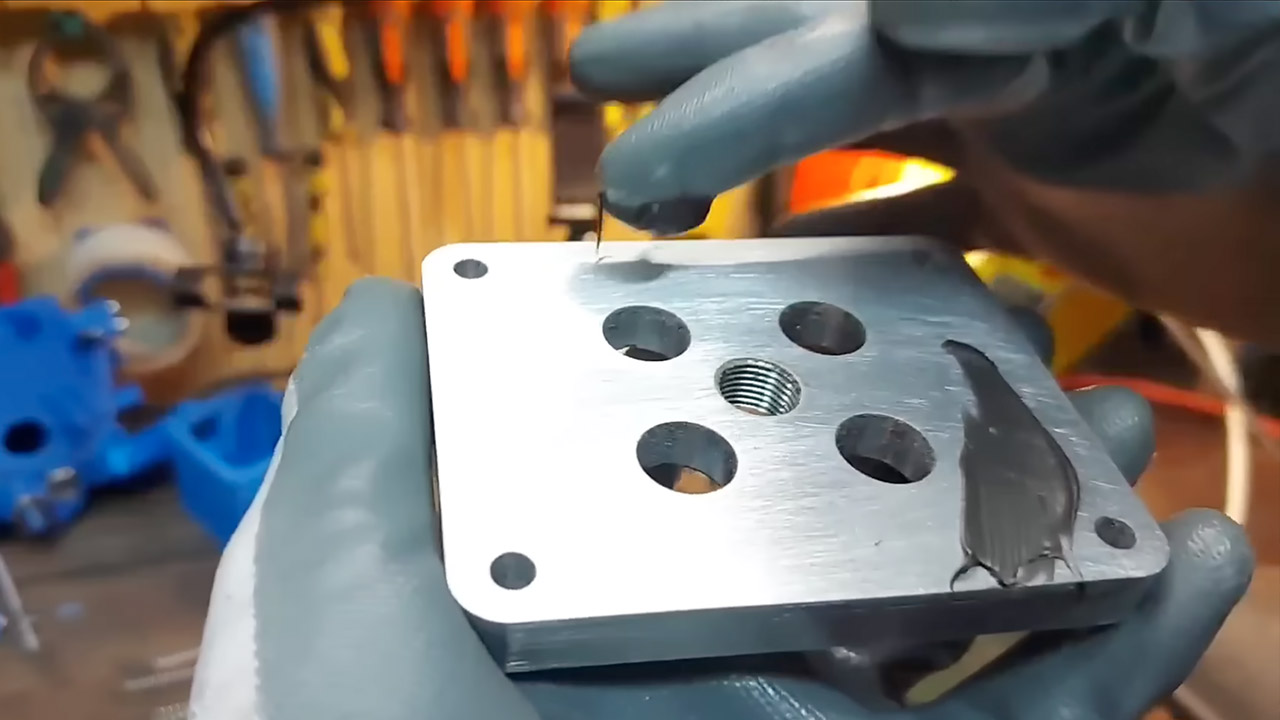
The majority of the engine parts were created in his workshop using an Elegoo Centauri Carbon 2 Combo printer and a variety of different types of filament, specifically ASA, ABS, and PET-CF, but the cylinder bore is lined with a stainless steel sleeve, giving the entire thing a bit more reliability than the other parts. A friend at a CNC shop delivered the head, which was machined from aluminum to contain four valves and dual overhead cams. Bearings, belts, and some odd bits of hardware were required to complete the engine. The previous attempts taught us a lot of hard lessons, as the second engine ran for four minutes before heat melted the cylinder body and killed the compression completely, the nuts were in some awkward spots, torque was impossible to apply evenly, and water and oil mixed inside the head. Alexander had to virtually dismantle everything and start from scratch.


Bambu Lab A1 3D Printer, Support Multi-Color 3D Printing, High Speed & Precision, Full-Auto Calibration…
  • High-Speed Precision: Experience unparalleled speed and precision with the Bambu Lab A1 3D Printer. With an impressive acceleration of 10,000 mm/s…
  • Multi-Color Printing with AMS lite: Unlock your creativity with vibrant and multi-colored 3D prints. The Bambu Lab A1 3D printers make multi-color…
  • Full-Auto Calibration: Say goodbye to manual calibration hassles. The A1 3D printer takes care of all the calibration processes automatically…

3D-Printed Working Engine
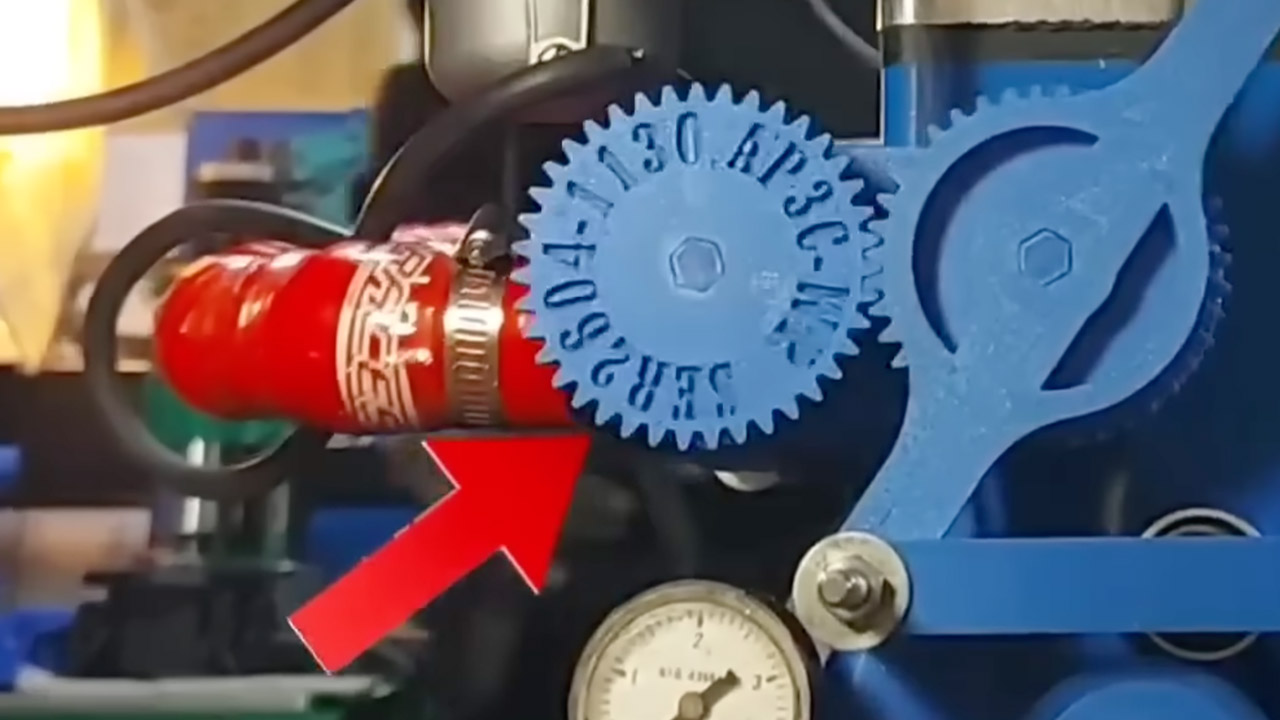
This time, however, he put an oil pump directly into the crankcase. Four small bearings and a pair of gears revolve inside a printed enclosure to accomplish this. A basic pressure regulator fits in the main gallery and ensures that the oil gets to where it needs to be. There’s no need for an external pump this time. He also installed a separate positive crankcase ventilation system to keep the oil where it belonged. The cooling system underwent a similar makeover. A mechanical water pump was printed onto the cylinder body. Its impeller rotates on bearings and a timing belt. Coolant circulates through passages in the cranium and around the sleeves. Long story short, there are no fancy electric pumps and no mysterious leaks between the oil and water lines.

3D-Printed Working Engine
Now, he used the old crankshaft from his prior attempts, but first checked it with a dial indicator. The needle changed only 0.05 millimeters, which is well within the tolerance for a 125cc engine. He also created a head gasket with braided copper wire around the sleeve and a high-temperature material rated for 1,000 degrees Celsius. Putting it all together was a tedious task. Alexander hand lapped the valves and carefully sealed each joint. When everything was ready, he filled the crankcase with 10W40 and attached it to a test rig.

3D-Printed Working Engine
The initial crank brought instant effects, and this time it caught, settled into a steady idle, and kept the compression, which was a good start; however, a brief timing check revealed that the water-pump pulley was spinning at the incorrect speed due to a slipped tensioner. A little tweak and it was all set. On the second run, the pump operated well and the coolant flowed properly. However, the oil pressure gauge remained silent, either because the sender required calibration or because the tolerances were just a little too loose, and a suspected vacuum leak appeared on the intake side where the epoxy had not yet been entirely applied. Still, it ran smoothly enough to demonstrate that the main architecture held together properly.

3D-Printed Working Engine
Alexander believes the crankcase oil pump was the true game changer; seeing the oil pour through the gallery during a bench test gave him the confidence to put the rest together and see it operate. Every printed part not only survived, but appeared to manage the heat and vibration of the first few minutes with ease.
[Source]

Source link

Advertisement
Continue Reading

Trending

Copyright © 2025