
TL;DR
Starling Bank is cutting around 130 jobs as it restructures operations and pushes AI deeper into its business. The neobank’s profits fell for a second consecutive year, but its technology licensing arm Engine grew revenue 25%.



Building your ideal hi-fi setup is no small task. Depending on your specific goals, you could be in for buying a lot of different gear to perfect your sound and make sure you have everything you need to listen to what you love, how you’d love to. That’s an expensive endeavor — and sometimes, a confusing one. It’s sometimes difficult to tell what different devices can do, or how they differ from one another.
Deciding how to play vinyl is similarly difficult, yet vital. If you’re interested in vinyl, then there’s a good chance that you’re already committed to achieving the best sound you can at home. So, naturally, you’ll want to make sure you pick up the most suitable gear possible. There’s a great turntable out there at almost any budget, but there’s a crucial difference to be aware of before you splash the cash: whether you need a record player or a turntable.
Although the two phrases are used interchangeably, they’re actually different equipment. Generally speaking, a record player is an all-in-one device that has everything you need to play vinyl, including built-in speakers. Turntables, on the other hand, only play records themselves, with no speakers. That means you need to hook turntables up to amps and speakers if you want to hear anything. That offers invaluable flexibility if you’re an audiophile crafting your dream listening experience, even if it can be a little inconvenient.
When you pick a turntable, you’re just choosing the device that spins your records and the stylus that translates the grooves into electrical signals, not your speakers, amplifier, subwoofer, or anything else. As a result, you can build the exact setup you want by picking up a turntable instead. Think of it as a modular system, where the turntable makes up one part of the wider hi-fi setup. Meanwhile, when you pick a record player, you’re also often picking the amplifier, speakers, and anything else it comes with.
For many audio lovers, selecting the equipment to get the sound they want is a big part of the fun. Audiophilia is a hobby, after all. With that in mind, using ready-out-of-the-box audio equipment — like a record player with a built-in amplifier and speakers — can take some of the joy out of the process. Using a turntable, on the other hand, opens up a world of possibilities, since you can use it with other components you may be interested in.
While it’s convenient to grab a record player and be able to use it straight away without needing other equipment, that convenience comes with a compromise: you’re generally restricted to the components it comes with, at least to some extent. That’s not always the case, though, as some record players do essentially double up as turntables, allowing you to hook them up to other equipment like speakers. But you’re still going to be somewhat restricted by the player’s internals and overall capabilities.
Being stuck with the amplifier and speakers that your record player comes with isn’t only a problem of limited customizability. Unfortunately, sometimes whatever’s built into your all-in-one record player just doesn’t sound that good to start with. These decks have to spin the records, amplify the sound, and push it through the built-in speakers, and this all-in-one nature can lead to sonic compromises. If you can’t enjoy the sound, it defeats the purpose of investing time and money into your setup.
Generally speaking, all-in-one record players don’t offer the best sound quality. They can sound tinny and lack clarity, stopping you from getting the most out of your collection’s potentially high-fidelity capabilities. Instead, you run the risk of getting a listening experience you could just as easily get from a small radio, speaker, or even your phone. For that reason, some opt to skip all-in-one options in favour of turntables designed to work with proper hi-fi equipment.
Interference is also a common problem with all-in-one record players. That happens when the stylus picks up vibrations from the built-in speakers as it’s playing a record. Usually, this happens with a slight delay, which can lead to a messy, discordant, and even distorted sound. This can happen with any vinyl setup, but the proximity of the speakers to the turntable’s stylus means it’s much more common with record players.
When a record player breaks, you could be looking at anything from a duff speaker to a busted amplifier and a good few things in between. That’s because of all the functions they perform. In some cases, a broken part could even be the end of the line for that record player altogether, leaving you to pick up an entirely new one.
Turntables, on the other hand, are typically a little more straightforward. Sure, there is still plenty that can go wrong — including the belt (or drive motor), cartridge, arm, or power supply — but it’ll be something specific to the vinyl-spinning process itself. Pretty much everything else that makes up your setup is separate, meaning that replacing a busted speaker is a matter of buying some new speakers rather than opening up your player to see what’s inside, or replacing the player altogether.
One related area where record players are at a significant disadvantage compared to turntables is the stylus or needle. Styluses wear down over time, and you should replace them to reduce the risk of damaging your records. However, some record players are designed in a way that means you can’t replace the stylus. So, that means that when your needle reaches the end of its life, your record player does as well. That’s a lot of waste, and a fair amount of risk for your records.
Even with all their faults, an all-in-one record player might still tempt some with its ease of use and affordability. However, that convenience and cost could quickly turn into an expensive and awful ordeal if it ends up damaging your records. There are a couple of culprits behind this, but one of them is down to the placement of your record player’s speakers.
All sound is vibration. That means that when your record player’s speakers blare out whatever you’re spinning, your deck is also vibrating. Your record spins on top of the deck, while it’s being read by the player’s needle. Except that the vibrations will cause all of it to move slightly. In turn, the player’s stylus might move around more than it should, and it may skip across the record and scratch it. Some slight scratches on records can go unnoticed, but damage builds up over time, and deeper scuffs can cause audible imperfections or even skips. Nobody wants that, audiophile or otherwise.
That isn’t the only time that needles can cause damage to your records. Records can wear down over time, and this can happen on any system, regardless of whether it’s a record player or turntable. However, budget all-in-one record players may also have budget needles, which could cause more damage in the long-term compared to a finer needle. Another thing to keep in mind is that you won’t have much room to adjust settings like the tracking force.
All-in-one record players are at a particular disadvantage compared to turntables when it comes to the tonearm. The tonearm is a crucial part of any record deck, as it holds the cartridge in place, allowing it to follow grooves on a vinyl record and for the turntable to produce sound. It also ensures the needle is stable and that the pressure (or tracking force) is consistent, reducing the risk of damaging your records while reproducing the music as clearly as possible. Overall, being able to adjust the tracking weight is important for playback, ensuring your records sound great, don’t skip, and don’t wear out too quickly. Despite that, it’s not an option on many popular all-in-one record players.
In some cases, the arm is set to the wrong weight altogether, so the tonearm places far too much pressure on the record. That’s no big deal if you can adjust the weight, but if you can’t, you’re stuck with a significant risk of your LPs getting damaged over time. That’s the last thing anyone would want, but it’s probably going to be a deal-breaker if you’re especially invested in enjoying the highest fidelity sound possible, or if you collect rare records. As a result, any gear that doesn’t offer tonearm adjustability is inherently less appealing than gear that does.
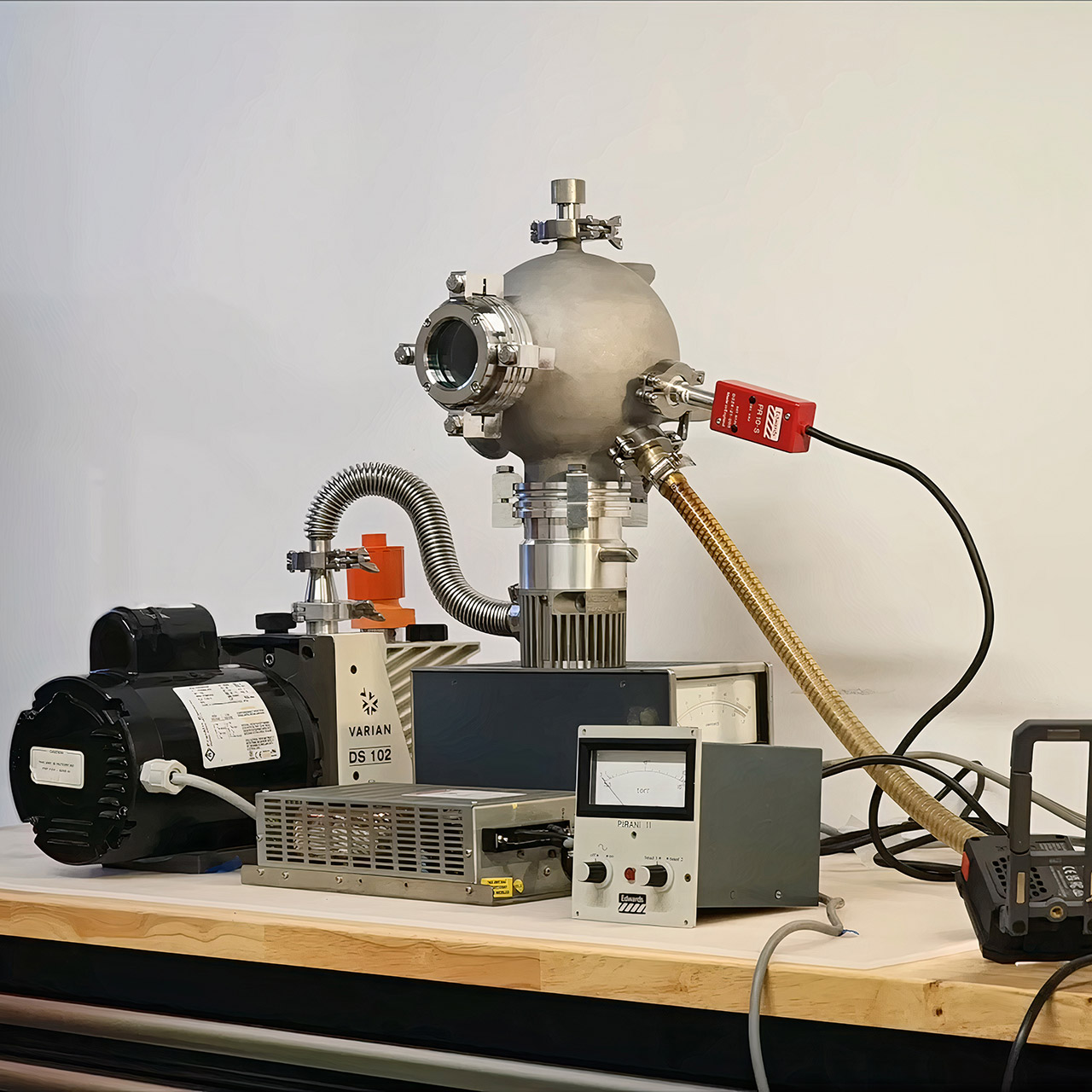
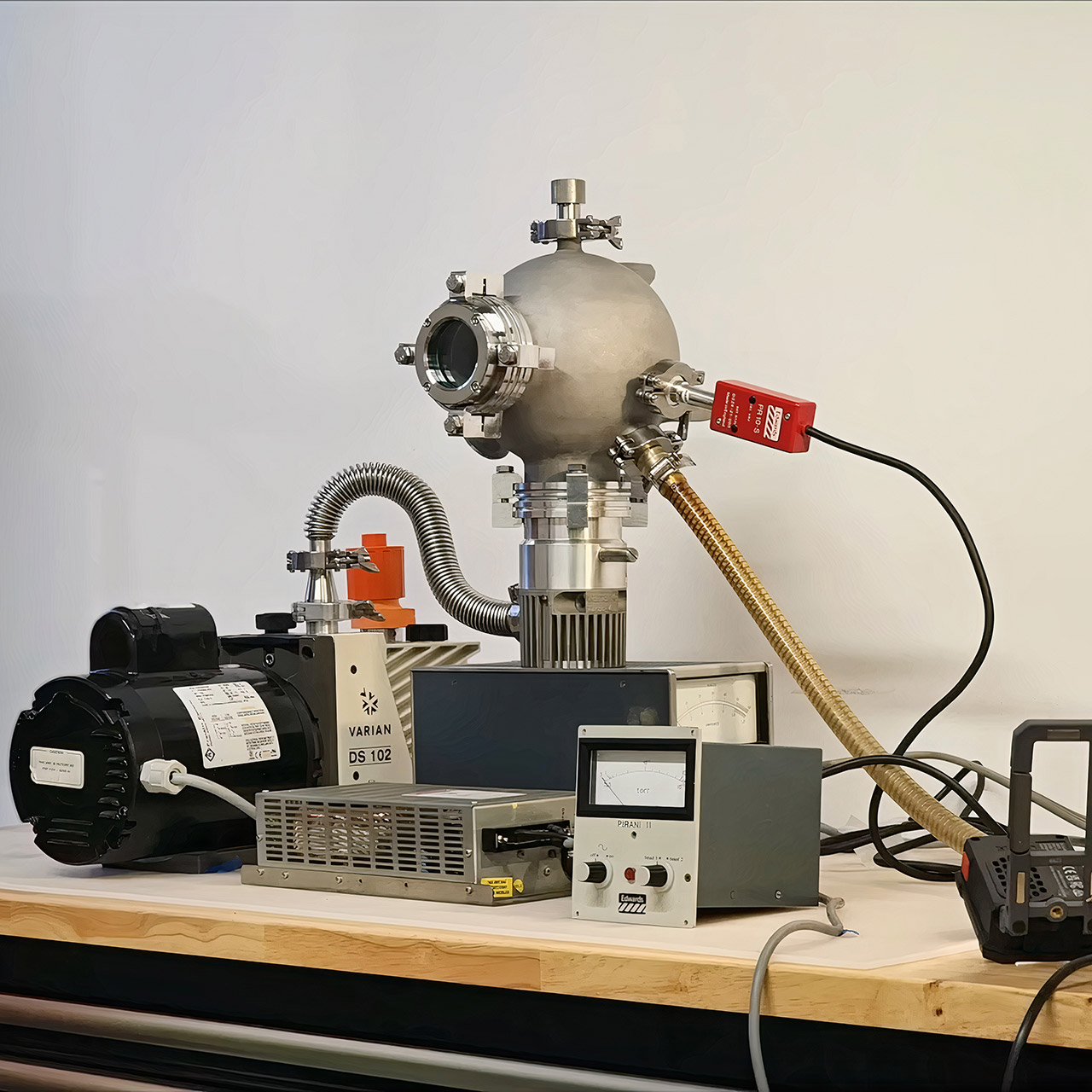
Martin never meant to spend a year and a half building anything nuclear. Another demanding task kept getting pushed aside, and the delay turned into something much larger. What began as avoidance became a complete fusor, a compact device that creates the conditions for atomic nuclei to fuse using straightforward electric fields instead of the enormous machines found in national labs.
A fusor works by separating gas molecules and crashing their nuclei together at high speeds. Martin targeted deuterium, a heavier type of hydrogen. Inside a sealed spherical chamber, a central wire grid is at a high negative voltage. Electrons shoot off the grid, transforming the gas into plasma. The remaining positive ions accelerate inward. Because the chamber is spherical, many ions bounce off the inner wall and return to the center for another chance to collide. Under the right vacuum and voltage conditions, these collisions can produce fusion and emit neutrons.
Sale

Traditional fusor builds begin with a significant cost. A ready-made spherical vacuum chamber with many ports for pumps, power, and equipment can cost more than $15,000. Welding flanges onto a bespoke steel sphere or constructing standard fittings still costs thousands. Martin wanted something far less expensive while maintaining the spherical form that allows ions to cycle properly. Metal 3D printing offered the breakthrough by melting metal powder with a laser, one thin layer at a time, to build complex forms with minimal waste material. Martin printed the whole chamber body, including all essential ports, in a single run. The part came out sturdy and geometrically perfect, but the surface quality caused the following issue.
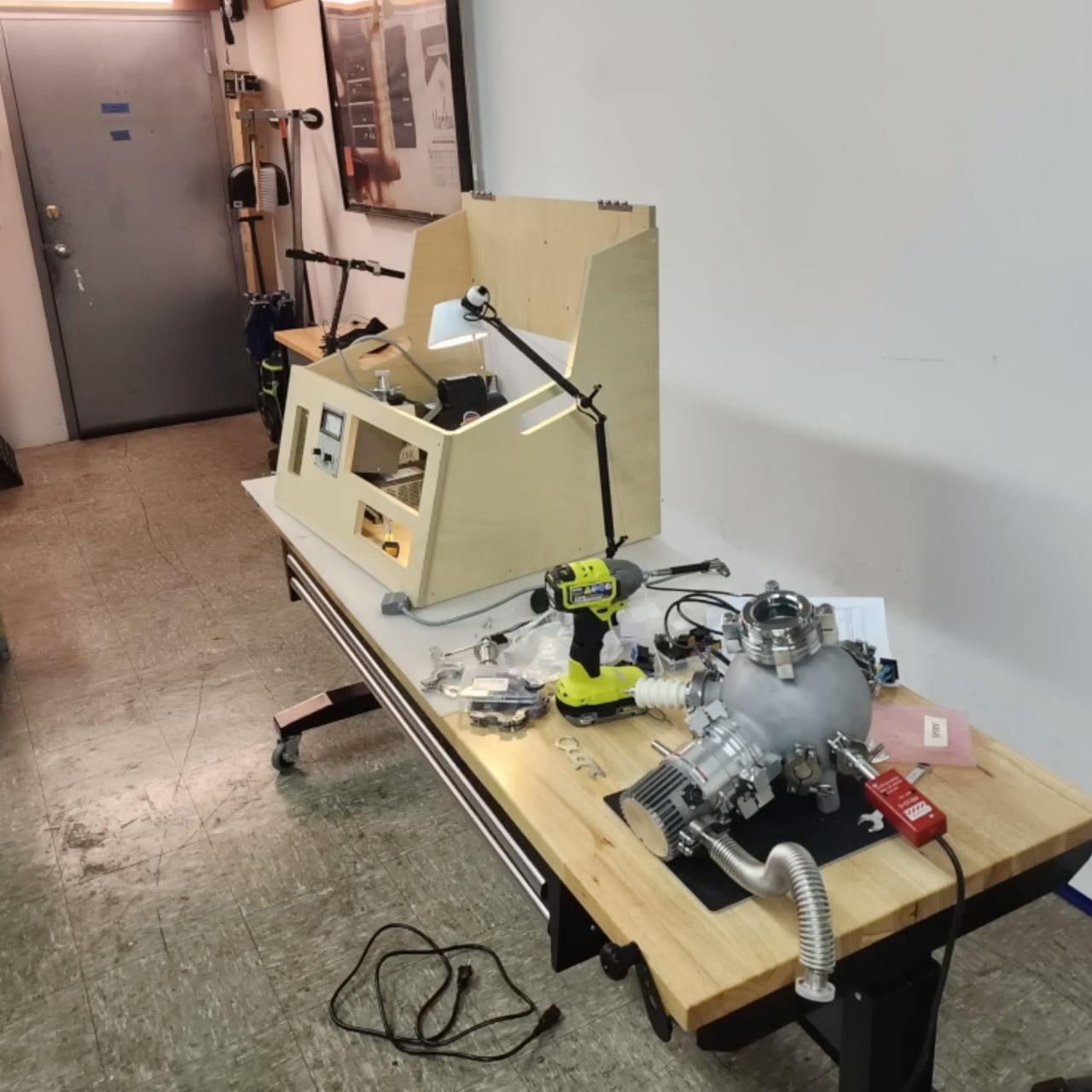
Vacuum seals require mirror-smooth metal where rubber O-rings contact flanges. Standard ISO connections were chosen because they are easier to build than knife-edge. Conflat sealing will leak on the slightly rough texture created by 3D printing. Martin solved this problem with smart fixturing rather than purchasing a more expensive printer or post-processing equipment. He added feet to the chamber floor and arranged most apertures along a single axis. A steel base plate perforated with a series of holes allows the item to spin into six different positions. The assembly was delivered to a nearby CNC shop, where a five-axis machine (three-axis machines may perform identical tasks with additional settings) carved precise sealing grooves and flat faces on the key surfaces.

Once machined, the chamber was compatible with ordinary vacuum hardware. Martin attached a roughing pump to swiftly lower pressure, followed by a turbomolecular pump to achieve the deep vacuum required for ions to traverse long distances without interacting with stray air molecules. A rudimentary Pirani gauge purchased on eBay was used to check the pressure. Unused ports remained blanked off. The system pulled down and maintained vacuum for days without measured leakage, demonstrating that the seals and printed-and-machined chamber functioned well.
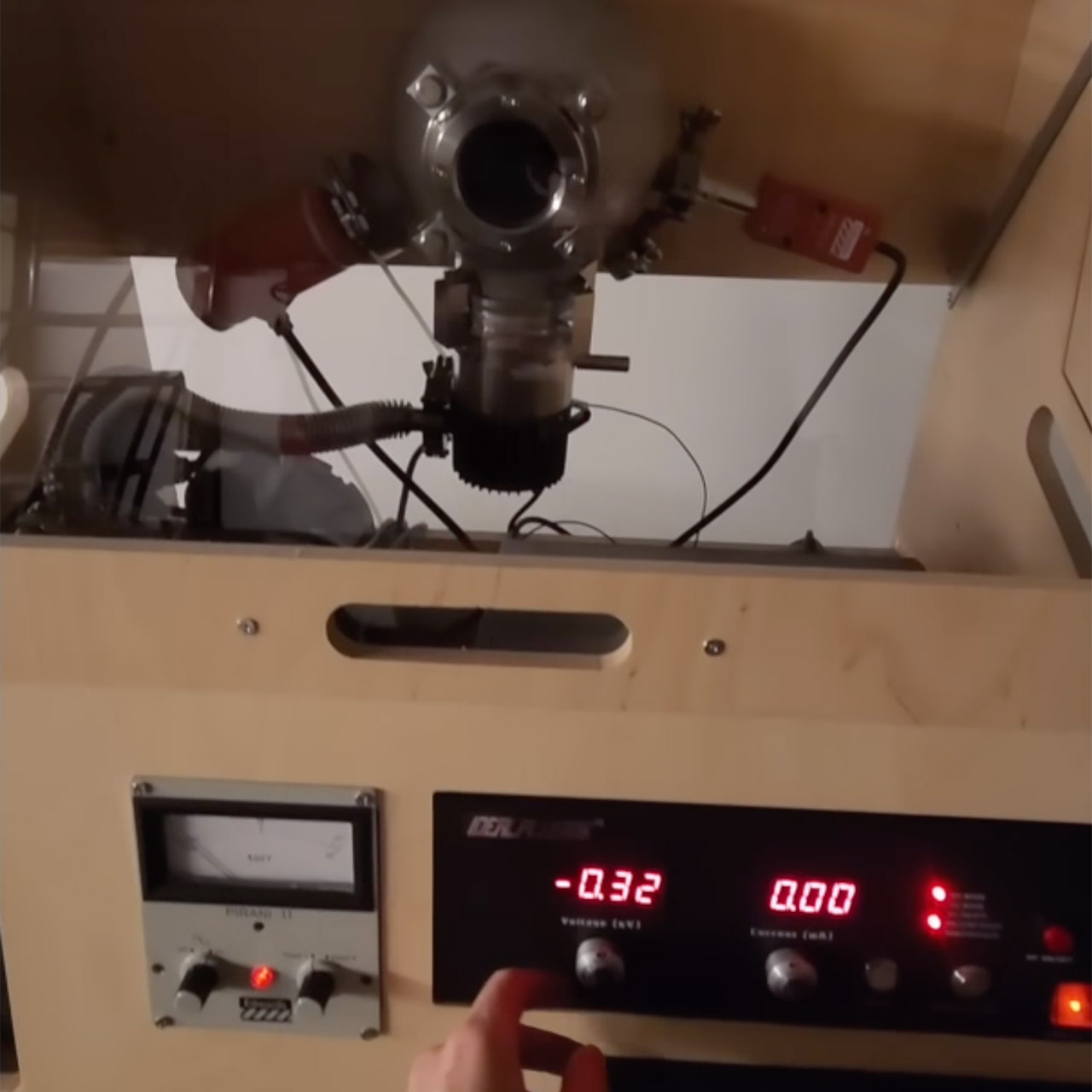
Power came last, as high voltage fed to the central grid created precisely the plasma conditions required for fusion process. The chamber glowed with the typical glow of ionized gas in the presence of intense electric fields. Martin confirmed that the machine had entered the regime where adding deuterium would result in genuine fusion. He simply never introduced the gas. Fueling was impracticable at the time due to supply constraints and high deuterium prices in his location, as well as the cost of producing it at home using heavy water. Without fuel, the project was unable to produce neutrons, but all supporting systems functioned well.
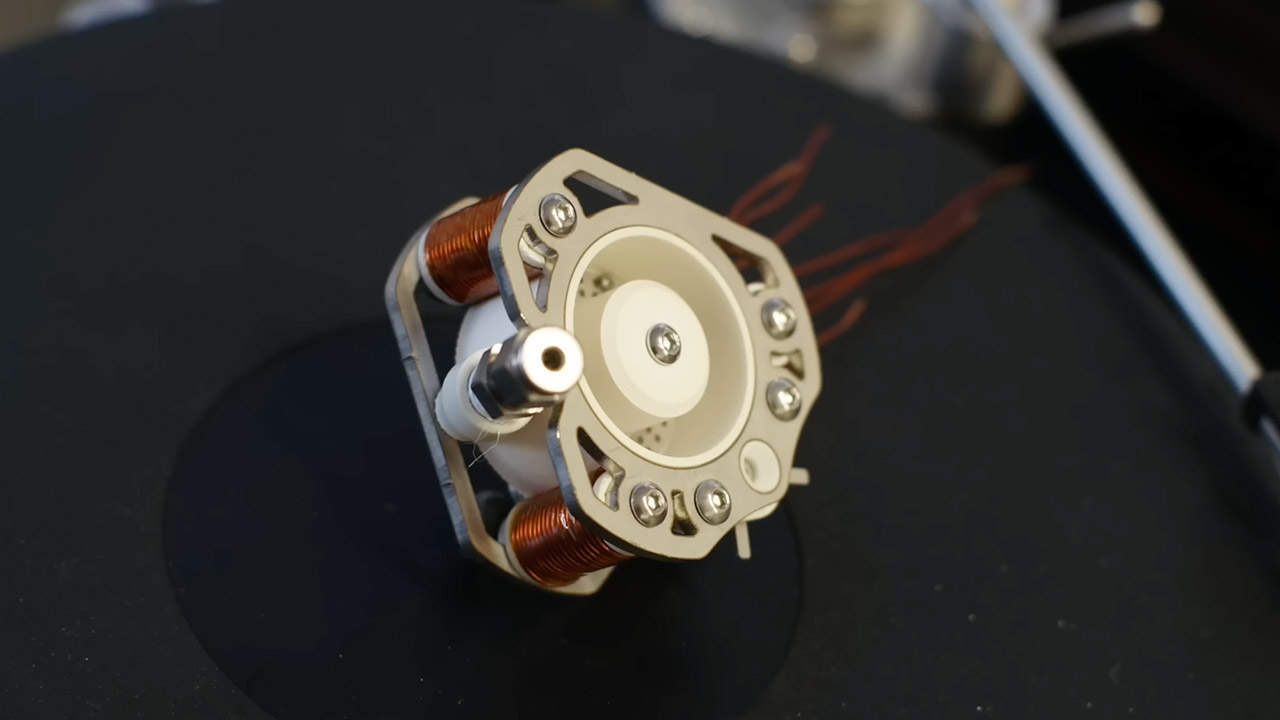
Martin also created a wooden enclosure for the system using CNC technology. It completed the project by establishing a basic physical barrier during high-voltage operation. The actual shift occurred after the plasma formed. Martin concluded that the vacuum chamber itself was the most valuable consequence. Ultra-high vacuum capabilities is useful for much more than only fusion demonstrations. The same technology may power ion thrusters, support electron microscopy studies, and facilitate other complex hobby and student projects. His attention shifted from completing a single reactor to developing designs and technologies that allow anyone to order or build viable vacuum systems without large budgets or factory access.

Starling Bank is cutting around 130 jobs as it restructures operations and pushes AI deeper into its business. The neobank’s profits fell for a second consecutive year, but its technology licensing arm Engine grew revenue 25%.
TL;DR
Starling Bank is cutting around 130 jobs, roughly 3% of its 4,000-strong workforce, as the London-based neobank restructures its banking and technology operations. Staff were told this week that the changes were intended to simplify how the company operates, reduce duplication, and accelerate product delivery.
The cuts come as Starling pushes AI deeper into its operations. In March, it launched Starling Assistant, an agentic AI tool that can set up savings goals, organise bill payments, and quiz customers on their spending patterns using voice or text prompts.
The restructuring follows a second consecutive year of declining earnings. Pre-tax profit fell to £217 million in the year to March, down from £223 million a year earlier, while total revenue dropped from £940 million to £887 million.

The 💜 of EU tech
The latest rumblings from the EU tech scene, a story from our wise ol’ founder Boris, and some questionable AI art. It’s free, every week, in your inbox. Sign up now!
Starling attributed the decline to falling interest rates, which have squeezed margins across UK banking. The neobank remains profitable, having now posted five consecutive years in the black, but the direction of travel is clear.
Customer numbers continued to grow, with platform accounts reaching 6.2 million, up from 5.3 million the previous year. Deposits rose to £12.7 billion.
Starling’s AI push is part of a broader race among digital banks to automate customer-facing operations. Revolut launched its own AI assistant, AIR, to UK customers in April, offering similar capabilities around spending analysis and account management.
Starling’s scam detection tool, launched in October 2025, uses Google’s Gemini models to analyse marketplace listings and flag fraud in real time. The tool has since been expanded to detect more than ten types of scam, including romance fraud and deepfake phishing.
“A key factor in our competitive edge over legacy banks is our agility, our ability to test, launch, learn and reorganise at pace,” a Starling spokesperson said. The bank added that it is continuing to hire technology and AI engineers even as it cuts elsewhere.
The brighter part of Starling’s business is Engine, the software-as-a-service arm that licenses the bank’s core technology stack to other financial institutions. Engine’s revenue grew 25% last year as its client base doubled on international demand.
Engine already powers banks in the UK, Romania, Australia, and New Zealand, and is now targeting the US market. The division has opened an office in New York with a reported $50 million investment and is in discussions with mid-tier American lenders.
Morgan Stanley estimated in June that AI could eliminate as many as 400,000 European banking jobs by 2030, double its earlier forecast of 200,000. ABN Amro announced last year that it would cut roughly 20% of its workforce by 2028, primarily through automation.
Starling’s 130 cuts are modest by comparison, but they signal a shift within the neobank sector itself. The digital challengers that once defined themselves against the bloated workforces of high-street banks are now applying the same efficiency logic to their own operations.


The device is still in the early stages of development. SpaceX has told some investors that the design could change and that it is not yet clear whether the product will ultimately come to market. Representatives for SpaceX and Qualcomm did not respond to requests for comment.
Read Entire Article
Source link

China’s Alibaba will ban employees from using Anthropic’s programming tool Claude Code, starting on July 10, according to multiple reports.
Anthropic already prohibits Chinese companies, as well as foreign entities owned by those companies, from using its models. The company has reportedly been working to close loopholes that allow Chinese users to access Claude.
According to a recent Reddit post, some of that loophole-closing involved a version of Claude Code that could secretly identify Chinese users. Anthropic’s Thariq Shihipar said in a post on X that this was “an experiment we launched in March that was meant to prevent account abuse from unauthorized resellers and protect against distillation.” (Distillation is a practice where AI models are trained on the outputs of other models.)
“The team has landed stronger mitigations since then and we’ve actually been meaning to take this down for a while,” Shihipar said.
Nonetheless, Alibaba has reportedly classified Claude Code as high-risk software and is instructing employees to use the company’s own Qoder tool instead.
Why you can trust TechRadar
We spend hours testing every product or service we review, so you can be sure you’re buying the best. Find out more about how we test.
Living in the south of England, you’d expect the internet speeds to be pretty decent, and at one time, not long ago, in the New Forest, they were. But then, as the area started to develop, connection speeds dropped and became increasingly unstable, meaning that if you run a business, fallbacks are needed if you want to keep running.
However, even then, the cellular networks can be hit and miss, aim for the high ground, and ordinarily, you can get a signal, so when my fibre network at home keeled over completely, I reached for my usual choice of mobile network router to get me back online.
However, this time the fibre connection has not been short and tipping over for over a week with no connection and intermittent service for the last few months, I’ve had to look for a more permanent solution. Thankfully, the G572 was in for review and has now been delivering impressive connection speeds to the 4G network from its high point in the house and office.
Unlike my high-end portable 5G router, this box requires AC power, but then it provides wireless coverage that essentially matches that of the Eero 6 routers we usually use at home. In an area where connection speeds are usually lacking, the powerful antennas do the job.
While I still can’t connect to a 5G network, the 4G connection speeds are impressive, with the speed test nearly reaching 80 Mbps and upload speeds of around 6 Mbps. Still some way off the fibre connection, but a lifesaver when you rely on that connection for work and, of course, entertainment.
But this router has not only stepped in where the fibre connection fails, in the office, but another once-sweet spot for bad fibre connection, which, on last checking, has now dropped below 10Mbps and the cellular network is close to non-existent. Using this router, the cellular network connection speeds have improved enough to enable some email, web browsing, and music streaming; video streaming might be wishful thinking. Then there’s also the ability to just plug it directly into the 10G network, fully integrating it with the office network.
The other point at home is that multiple devices can be easily connected with surprising efficiency. Most days when working at home, I’d have two to three machines, three robot vacuums, which I discovered only work when there’s an internet connection, the Alexa, and a couple of mobile phones.
In the evening, that volume of connection uplifts with my partner’s phone and laptop and the use of the Fire Stick. Ordinarily, this volume of connections would cause a slowdown of the connection speeds, especially as the usual mobile router would need to be placed in relative proximity to where the devices were being used, but here, placed on another floor, the connection speeds are still impressive, with a floor between the router and the devices used.
I looked at the previous iteration of this router, the D-Link G530, last year, and was impressed with the Wi-Fi 6 performance. This new model boosts the wireless connection speed to Wi-Fi 7 and adds three more network ports to the back. The uplift in performance is significant to the point that, for most people, with a dedicated network SIM, you can seriously move away from a wired broadband connection, even if you’re limited to the 4G connection.
In my household, while this unit came in for review, the real-world testing has been a little more real-world than I would have liked. While I’m impressed with the download speeds, the upload is a little more limited.
However, if you need a fast and reliable connection in a workshop, studio, office, or at home where you don’t have a fibre connection, or you have a good 5G connection and are happy to rely on a cellular network, then this is a great option. Most importantly, while this box is expensive and the data-only SIM also doesn’t come cheap, the impact of no internet at all makes this fallback a valuable addition to your business costs.
At present, the D-Link G572 will set you back around £350 for the base unit. On top of that cost, you will also need a mobile SIM contract.
In this test, I used the Unlimited plan from Vodafone, which is uncapped on both usage and speed through the business plans, and this set me back around £250 for the year.
There are cheaper data plans out there, but if you rely on the internet and a clean connection, then this plan, even when limited to the 4G speeds due to local network coverage, will ensure you can keep your business going.

Antenna: 10 x Wi-Fi internal antennas, 4 x LTE/5G NR internal antennas, two of which can be substituted with external TS-9 antennas
Interfaces: 4 x Gigabit Ethernet LAN ports, 1 x 2.5 Gigabit Ethernet WAN port, 1 x SIM card slot
Wireless speed: 7200Mbps (5GHz up to 5764Mbps / 2.4GHz up to 1376Mbps)
IEEE Standard: IEEE 802.11be/ax/ac/n/g/b/a, IEEE 802.3u/ab
Size: 137 × 146 × 205mm; 660g
OS installed: Router firmware with Web UI and D-Link Falcon app management
Accessories: Power adapter
Wi-Fi standard: IEEE 802.11be/ax/ac/n/g/b/a
Wi-Fi speed: BE7200, up to 5764Mbps on 5GHz and 1376Mbps on 2.4GHz
Ethernet: 4 × Gigabit LAN, 1 × 2.5GbE WAN
SIM: 1 × Nano SIM card slot
Antennas: 10 internal Wi-Fi antennas; 4 internal LTE/5G NR antennas, with two substitutable via external TS-9 antennas
Security: WPA/WPA2/WPA3, WPS, SPI firewall, anti-spoofing, IP filtering, and DMZ support
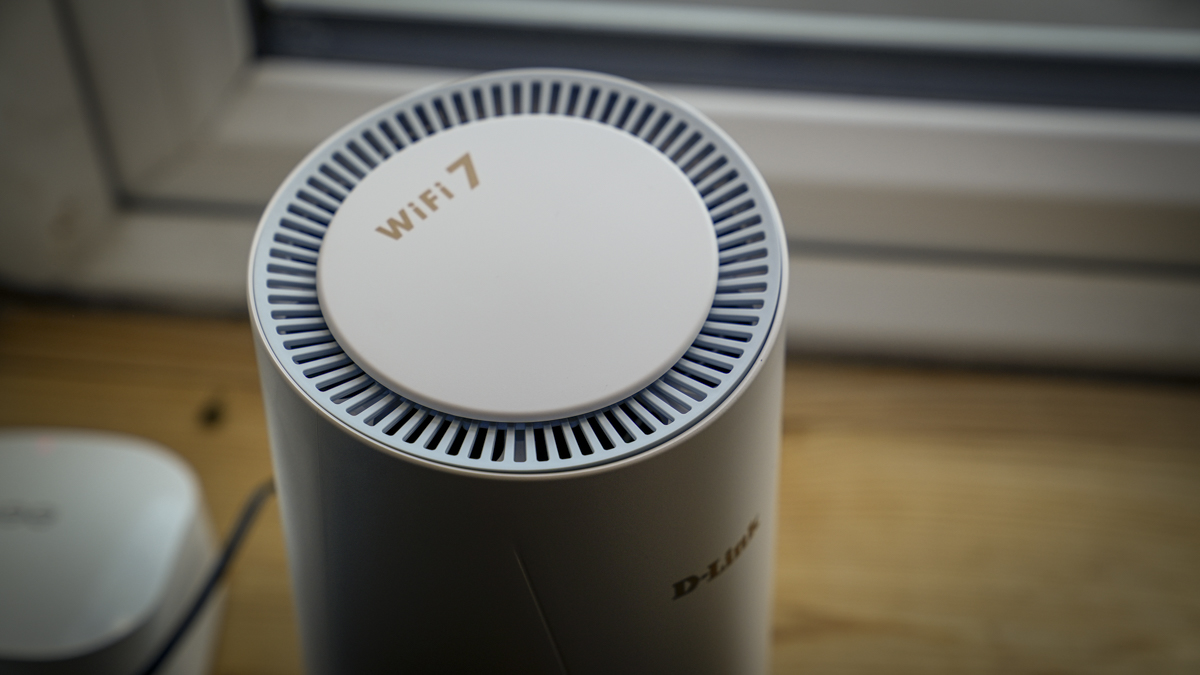
Like the excellent G530 I looked at last year, the G572 uses an almost identical upright white tower design that sits neatly on a shelf or windowsill. Throughout the test, I moved the router around to find the strongest connection in the home, and, just like with your mobile phone, it’s worth checking the signal strength.
As there’s no screen or readout on the router itself, you need to rely on the companion app, which, while simple, highlights basic information, including that all-important signal strength. While mine was still only three bars, flickering onto four on occasion, the performance was maximised for the area.
The relatively small footprint of 137 x 146mm enables easy positioning. However, you do need to make sure that the positioning is near an AC plug. In the house, that wasn’t an issue, with the prime location directly next to a socket.
Likewise, in the studio, a plug was easily located; however, in the office, the prime location was some distance from the nearest AC socket, so rather than using an extension cable, I used a Jackery 1000 V2 power station, which kept the router running happily throughout the day with a minimal impact on the capacity.
While the unit has a relatively small footprint, the height of 205mm means that you do need a decent-sized shelf height to position the router, and as I moved from one location to another, I actually found that this height was pretty average for most of the shelving units that I use across all locations, so the router fitted without issue.

On the back of the router is a 2.5GbE WAN and four gigabit Ethernet ports, which I was able to plug directly into the network, then there’s the all-important slot of the Nano SIM and AC power socket and the option to connect the TS-9 antenna if you need a connection signal strength boost. Locally, for me, this might have been an idea, but those were not provided for this review.
Getting started with the router is straightforward: install the Nano SIM, then plug the box into the mains. Once done, you install and connect the app, update passwords, and create or log in to your D-Link account, and then you’re pretty much set to go.
For wireless, like any router, you need the username and password; for the wired network connection, it just needs to be plugged in. I installed the DXP4800 GT and the IDX6011 Pro as part of my usual video setup.
As a cellular router, the ease of use and integration into my existing network while I wait for the fibre to be fixed was surprisingly smooth and easy.

The G572 is quite an upgrade from the already impressive G530, with the main focus being the switch to Wi-Fi 7 and the inclusion of four network ports on the back. The cellular connection also offers 5G NR support, with theoretical download speeds of up to 7.01Gbps in SA mode for pure 5G potential and up to 5.67Gbps in NSA mode, where the 4G/LTE network is still the base infrastructure, which is the system by which I tested the unit.
Wi-Fi 7 BE7200 supports multi-link operation and dual-band speeds of up to 7200 Mbps, which really makes a difference as more devices are connected. It lets multiple devices connect to the same router using different bands, freeing up bandwidth and improving speeds.
On the back of the router are five network ports, with one WAN 2.5GbE set apart from the four Gigabit LAN ports that enable you to connect to your computer, NAS devices and other office equipment.
The main feature that sets this apart from a standard router is the slot for a Nano SIM. This is essentially the same type that you find in most phones, and you can get a data-only SIM package from most mobile providers.
Once inserted into the slot, it can connect to the cellular network to provide a fast internet connection. While a cellular network connection option is what differentiates this from the standard router, you can also plug directly into your standard wired fibre network connection with automatic failover.
The incoming network cable plugs directly into the 2.5GbE port; if your wired network fails, then it will automatically switch to the mobile connection, so you don’t have any downtime.
Through the test, I tried several locations, in the studio where it stood alone with the cellular network connection. In the home, the fibre internet had failed, so the box was positioned on the second story for the best hebest cellular network signal.
Finally testing in the office, where the wired connection is extremely slow and has dropouts, I put the router between the wired connection and used it as my Wi-Fi network so that when the fibre connection dropped, it automatically switches to the cellular network.
Alongside the hardware is also the D-Link Falcon app and the web UI, which enable you to set up and manage the box. The app, which is how most people will access and communicate with the router, is relatively simple and easy to navigate with access to all the settings you want. If you want a little bit more in-depth control, then you can use the web view that can be accessed directly from your browser window.
When it comes to security, the usual boxes are ticked: WPA/WPA2/WPA3 security, SPI firewall, anti-spoofing, IP filtering, DMZ, and WPS. I was also pleased to see that it offers parental controls, as well as a switch that basically turns everything off at night, so if you’re in the office and you want to switch it off completely when you leave, then you can just access the app, and it’s a simple one-touch button to switch it off.
If you’re in the home, using separate parental controls on the access, essentially saying that after 6 o’clock in the evening, all internet connections are off. The great thing here is that D-Link has really sorted this out, so it’s probably one of the quickest and easiest options I’ve come across in a long time.
The other big feature here, especially for office use, is that you can connect plenty of devices, so within the studio, I had one PC, two Macs, and two mobile phones connected. I also had two NAS systems, and the box handled everything with ease, providing fast internet and network access over the cellular and wired networks.
Even though the LAN ports only offer a Gigabit connection, as my network is isolated at 10GbE through the switch, this wasn’t too much of an issue and only limits the speed at which the wired devices to the router will connect to the internet, which, with the 4G connection, didn’t really pose an issue.

Test Scores
Download speed: 79.3Mbps (4G network)
Upload speed: 5.97Mbps (4G network)
The G572 sounds like a great idea on paper and can be used in several ways. Firstly, if you’re in an office, outhouse, studio or other location where there is no wired internet connection, then you can use this router to connect to the cellular network, and then all of the devices can connect to it in exactly the same way as you usually have with a wireless router.
Alternatively, if the internet connection is absolutely critical and slightly unstable, as it often is here in the New Forest, you can place it between your wired connection and use it as a wireless router in exactly the same way as all other routers of this type. However, if that wired connection falls over at any point, then the cellular connection kicks in, meaning that you have no break in network connectivity. If you plug it into your existing wireless network, as I have in this review, you’ll notice very little difference in the connection, even if there is a slight drop in speed, unless it’s uploads where there will a significant slow down.
Unlike portable cellular routers that you can take anywhere, this one is designed to be plugged into mains power, so you can use it in your office, home, or anywhere else with mains power. In this review, I also had to plug it into a Jackery 1000 V2 power station because the place with our best cellular connectivity in the office was too far from a plug to connect without an extension lead. Used in this way, it actually provided a sound solution.
Getting set up and started with it was all easy enough, and once the unit was taken out of the box, it was simply a case of plugging my Nano SIM into the slot on the back and then plugging it into the mains. In the studio, this was as far as it went. I was able to connect using the app and get the rest of the unit set up; it was all quick and really straightforward.
Once connected, whilst I could only find a 4G connection, the transfer rates were almost at 80 Mbps, which was impressive on the download, although the upload speed, closer to 5 and 6 Mbps, was less impressive than my usual wired connection, but in line with what I’ve experienced in the past.
Once everything was set up, I could connect to whichever device I wanted to the router, select that network name, enter the password, wait a couple of seconds, and it would connect. What was impressive here was that every device I connected to delivered similar performance: newer Wi-Fi 7 devices were limited only by the cellular network speed, while older devices that only featured Wi-Fi 6 still produced very fast speeds. Unfortunately, there is no 5G coverage in this area.
Used off-site with no wired connection, I had the router running for around six weeks, and it provided a solid, stable connection throughout, even during the heatwave, when the wired connection at home decided to come to a grinding halt and has since failed to come back online.
While the first month of the test proved just how good this router was in the office and studio, where it provided decent internet connection for download and moderate for upload, the real test came where I had to package up the router and take it home, find a location around the house where I could actually get a mobile phone signal for that data connectivity, and then plug it in.
I’m used to network speeds of around 150 Mbps and upload speeds that are equally impressive; however, while we used to have very decent cellular connectivity, that connectivity has recently dropped out this year. In searching around the house for a decent location for the router, I finally settled on the second floor and the rear of the house, which must have had the clearest line of sight to whichever mast it’s picking up.
Once it was switched on and connected, the 4G connectivity showed at three to four bars, and testing out the transfer rates, I was again surprised to see that I was getting around 80 Mbps, not at all bad.
Now, in my second week of using it as my main internet connection, I can confirm it works incredibly well. I might not be able to test out the 5G speed, but even at 4G, with the slightly ropey connectivity of the area, I’m still getting those fast download rates, although uploads are slightly slower at about 5 to 6Mb per second, and you do have to pick your time of day, with that signal dropping to about 20Mb per second at the height of what seems to be mobile phone use in the area.
Despite that, in the evenings, we’d have at least one Alexa going, two laptops, possibly two mobile phones, and the Fire Stick playing whichever streaming channel we’d settled on for the evening. The D-Link G572 was able to supply all devices without issue, and whilst you could tell, especially with the streaming services, that I wasn’t having the usual speed of connection that I’m used to with the wired fibre connectivity, it was still incredibly impressive.
When the unit first arrived, and after I’d initially set it up, I tested it with the wall connection, installing it as the main router for the house and connecting it to the 2.5GbE WAN port at the back. I was again really surprised by the coverage it provided in the house, surpassing the Eero 6 wireless router I presently use. I also noted that those devices that utilise Wi-Fi 7, primarily a couple of mini PCs that I have for a review, saw the transfer rates vastly increased, still limited somewhat by the 2.5GbE input, but still significantly more than the other router.
Back in the office, and with it just connected to the mobile network and with one of the worst fibre connections going, I connected to the back of the D-Link G572 again, although this time it was more to see whether it could improve the connectivity I usually have in the office.
Here, I was really impressed: every time the wired connection cut out and switched to the mobile network, it was still not great and was far slower than when I was using it at home, but a definite improvement on what I’m used to.
To get a fast connection in my office, I need to cross the car park and go into the next building. There’s obviously a connection somewhere within the old building. However, having this router in between meant that when my wired connection was actually feeling like working well, I’d have a relatively decent connection, and then when it would drop out, it switched over to the cellular network, and for the first time, I was able to work nonstop using the internet connection without worrying about it dropping out partway through a call or upload.
What I really like about the router, although its speed was slightly limited, was the fact that it had those four Gigabit LAN ports, which means I can plug in my NAS boxes for archive and working, along with the network printer, which made them more easily accessible on the network, both wired and wireless. While my actual network in the office runs at 10GbE, this downgraded it to just one. For most office work, this is absolutely fine, and when I actually need faster connectivity, I can go through the switch and plug directly into the faster NAS.
As I’m used to working in an environment where the internet connection can be variable, from very good to absolutely non-existent, always having some sort of wireless router with me is an essential part of my working kit, and I usually rely on the Netgear Nighthawk M7, as it’s just a very powerful and portable solution, although even that struggles at the moment in the office.
The D-Link G572 is a far cheaper solution, which is good, especially considering the cost of a 5G unlimited data package, which can also see costs rise rapidly. With this AC-powered router, I was impressed from the outset. It is a bit of a shame that those LAN ports are limited to a Gigabit, but when it comes to one of these devices, it’s just simple. It does what it does, and you don’t need to really think about it. It’s exceptionally good, and for someone like me, who works in an older building in a town with very little internet, this makes a lot of sense.


When I tried out the predecessor to the D-Link G572 last year, I was impressed by just how versatile it was and by the fact that it could serve as a backup to my internet connection. At that time, my wired and cellular network connections around the New Forest were exceptional, but in the intervening year, the cellular network dropped out entirely, and even the wired network that had always been so reliable became especially unreliable, meaning I had to look for alternative solutions.
Having now burnt through EE, O2, Vodafone and a few other providers, it turns out there’s been an issue with our mast for almost a year, so a device with a good antenna to pick up whatever signal you can get is essential.
What I found with the D-Link G572 was that, even without the optional antenna, it still picked up a pretty decent signal as long as it was positioned correctly. That place in the house took quite some time to locate, but once I did, I was seeing speeds in excess of 80 Mbpsd, far faster than I would have thought possible and over 20 Mbps faster than the comparable rate on my iPhone 15 Pro using the same network.
I also like that I could plug it in between my wired fibre connection and use it as my wireless router, with it switching to cellular when the wired connection drops out. Even though many of my devices around the house couldn’t fully use that Wi-Fi 7 connectivity, it was fully backwards compatible and still provided all devices with a strong signal, enabling me to continue working despite cellular and wired connection issues.
As a solution for anyone working off-grid or in a location where a wired or even cellular data network can be an issue, this D-Link G572 is certainly worth the money. Whilst it might seem that it is a premium option, especially when you consider you’re also going to need a data SIM contract, actually, just the fact that it keeps you working online and able to do business makes it a valuable asset for any business.
|
Value |
Initially, it seems expensive, especially when you put the cost of a cellular network package on top, but then, if it keeps you working, it more than pays for itself. |
4.5/5 |
|
Design |
Very neat, with a tower design that sits easily on a shelf or window ledge, as long as you have power nearby to keep it running. |
4/5 |
|
Features |
5G and Wi-Fi 7 are leading features, and it’s also good to see that it’s fully backwards compatible with your older gear. |
4.5/5 |
|
Performance |
Only really limited by your cellular network connection, and when it works, plugging it into your wired connection improves usability. |
4/5 |
|
Overall |
A great choice as a fallback if you have an internet connection that is temperamental and unreliable, and more than worth the money to keep you working. |
4.5/5 |
For more connectivity solutions, we’ve tested the best Wi-Fi routers.


Keeping your windshield clean and clear is quite important while driving, so it can be frustrating when there’s a stubborn stain blocking your vision and windshield wipers don’t seem to be enough to wipe it away. However, don’t act too hastily. There are a few things you should keep in mind if you don’t want to scratch your windshield and keep it as clear as can be.
You’ll first need some essential tools, including microfiber towels, a soft-bristled brush, distilled water, white vinegar, glass cleaner, and rubbing alcohol. Some tougher stains may even call for a clay bar. If you’re cleaning a water stain, start by rinsing the windshield with plain water to remove loose debris that could scratch it. Spray your glass cleaner onto the stained area, then let it sit for a little while. Take out the microfiber towel and gently wipe the area in a circular motion. You may need to use the soft-bristled brush for tougher stains. After, rinse the windshield with the distilled water. If the stain is still there, try white vinegar instead of water and repeat the process.

While your car is parked outside, a bird may poop on your car, or tree sap can even start dripping onto the windshield. But even driving isn’t safe, since you may end up hitting some bugs that splatter onto the glass. For these kinds of situations, dampen a microfiber towel with rubbing alcohol and let it sit on the stain to soften the debris. Then, using a dedicated clay lubricant or soapy water as a glide, gently rub a clay bar over the area to remove the remaining debris. Even for these tougher stains, don’t use paper towels or sponges — they can leave behind tiny scratches on the glass.
It can be tough to fully avoid these kinds of windshield stains, but there are a few preventative measures you can take. Using a scratch-resistant car cover or windshield cover is always a great option, but even then, you should regularly clean your car to avoid debris turning into stubborn stains. Luckily, there are a lot of household items that are perfect for cleaning your car’s windshield. You may also want to consider a protective coating for your windshield.

Looking for the most recent Strands answer? Click here for our daily Strands hints, as well as our daily answers and hints for The New York Times Mini Crossword, Wordle, Connections and Connections: Sports Edition puzzles.
Today’s NYT Strands puzzle is a fun one, and if you’re a fan of a certain domestic animal, you might ace this puzzle. Some of the answers are difficult to unscramble, so if you need hints and answers, read on.
I go into depth about the rules for Strands in this story.
If you’re looking for today’s Wordle, Connections and Mini Crossword answers, you can visit CNET’s NYT puzzle hints page.
Read more: NYT Connections Turns 1: These Are the 5 Toughest Puzzles So Far
Today’s Strands theme is: Barking up the right tree
If that doesn’t help you, here’s a clue: Doggone it!
Your goal is to find hidden words that fit the puzzle’s theme. If you’re stuck, find any words you can. Every time you find three words of four letters or more, Strands will reveal one of the theme words. These are the words I used to get those hints but any words of four or more letters that you find will work:
These are the answers that tie into the theme. The goal of the puzzle is to find them all, including the spangram, a theme word that reaches from one side of the puzzle to the other. When you have all of them (I originally thought there were always eight but learned that the number can vary), every letter on the board will be used. Here are the nonspangram answers:
The completed NYT Strands puzzle for July 5, 2026.
Today’s Strands spangram is HUNTINGBREEDS. To find it, start with the H that is the last letter on the far-left vertical row, and wind over and up.
Will your phone be getting the upgrade?
Siri has never been the smartest virtual assistant, but what is especially disappointing is how it has refused to evolve despite Apple’s aggressive push for Apple Intelligence. Two major versions of iOS have come and gone without the supercharged Siri that Apple originally promised. Apple finally announced an improved version of Siri in its WWDC 2026 keynote, and it would appear that the virtual assistant is finally living up to the expectations the company set years ago. We went hands-on with Siri AI and found it to be actually useful in answering complex queries and carrying out chained commands.
Only devices compatible with Apple Intelligence will be receiving Siri AI later this year. This includes every iPhone released since the iPhone 15 Pro, alongside iPad and Mac models powered by Apple silicon. The 2024 iPad mini is also supported since it uses the same SoC as the iPhone 15 Pro. Launch the Settings app, scroll down a bit, and if you spot the Apple Intelligence & Siri section, your iPhone is on track to receive the AI-powered Siri upgrade when the stable release of iOS 27 rolls out this fall.
Interestingly enough, Apple says the new assistant will initially be released as a beta. Users will likely need to manually opt in to access Siri AI, much like those testing the iOS 27 developer beta had to hop on a waitlist. Fortunately, compatibility with iOS 27 should not be a cause of concern, given how Apple is extending support all the way back to the iPhone 11.
Siri is now better equipped to handle personal requests — it understands context and can reference information from your notes, messages, emails and photos. It is powered by newer Apple Foundation Models that are stored on-device, which should help with both response times and privacy. More complex prompts are offloaded to the bigger models stored on the cloud through Private Cloud Compute, which Apple claims ensures your data is inaccessible to anyone else besides you.
If you own an iPhone 17 Pro, 17 Pro Max or the iPhone Air, Siri AI will be able to take advantage of an even more powerful on-device model. This should improve the overall experience, but more importantly, it enables expressive voices for Siri, improved speech recognition and more accurate dictation.
The upcoming iPhone 18 Pro and rumored iPhone Fold will also enjoy powerful on-device AI models, but it’s uncertain if the base model iPhone 18 will too. Analyst Ming-Chi Kuo reported that Apple is looking to bump up the memory in the non-Pro iPhones to 9GB. However, Apple mentions that its most powerful on-device AI models require at least 12GB of RAM.
We must admit, much of the Apple Intelligence suite so far has been sloppy AI features that don’t meaningfully improve the iPhone experience. Siri AI seems to be genuinely useful, though. Even on the beta builds we’ve tried, the virtual assistant has been fast and accurate.


As the country marks its 250th birthday this week, Microsoft is rolling out an unlikely summer project: a six-part series of short videos, hosted by Microsoft President and Vice Chair Brad Smith, that look to American history for lessons relevant to technology and innovation today.
The premise is that every technology debate of the moment — over such issues as patents, privacy, and who gets to shape AI — has a precedent somewhere in the country’s past, and that we’d all benefit from remembering how we got here in the first place.
“We felt that the 250th anniversary of the country deserved some added reflection about the lessons of history, the role of technology, and the questions that we’re facing as a country,” explained Smith, a well-known history buff, in an interview with GeekWire this week.
In the first episode, for example, he stands in Philadelphia’s Independence Square to explain how a steamboat demonstration on the Delaware River in 1787 helped inspire the Constitutional Convention to give Congress the power to grant patents. This was the basis for the intellectual property framework that Smith describes as a bedrock of American innovation.
Savvy viewers may see some irony in a company extolling the virtues of IP protections even as Microsoft and OpenAI defend themselves against a New York Times copyright suit over the material used to train their AI models.
Asked about that, Smith made it clear he doesn’t see a contradiction.
“Every generation of technology has required a new round of legal thinking, legislation and oftentimes lawsuits, so that courts can sustain the balance that has always been needed between new innovation and the protection of things created already,” he said.
He also noted that Microsoft is often the party going to court to protect customers, pointing as one example to the company’s move this week to intervene before Europe’s top court in defense of the European Union and U.S. data-protection framework.
The six-part series was overseen by Smith’s longtime chief of staff, Carol Ann Browne, a Microsoft vice president; and produced by Kirkland, Wash.-based Trifilm. The episodes, around 3 or 4 minutes each, will roll out in the coming weeks. Smith said they recorded during existing travel plans, working the shoots into stops on trips he was already taking.
The series travels next to a Boston courtroom for the birth of privacy rights, Henry Ford’s Detroit assembly line for the spread of new technology, Cincinnati for Tocqueville’s take on nonprofits, Great Falls, Md., for George Washington’s early infrastructure ambitions, and the Lewis and Clark expedition in Montana for the value of uniting competing viewpoints.
“The 250th anniversary of the country is quite rightly an occasion to honor the past, celebrate the past,” Smith said, explaining the motivation for the series. “But let’s make sure we get something out of the past that helps us be more successful in the future.”

Looking for a different day?
A new Quordle puzzle appears at midnight each day for your time zone – which means that some people are always playing ‘today’s game’ while others are playing ‘yesterday’s’. If you’re looking for Saturday’s puzzle instead then click here: Quordle hints and answers for Saturday, July 4 (game #1622).
Quordle was one of the original Wordle alternatives and is still going strong now more than 1,500 games later. It offers a genuine challenge, though, so read on if you need some Quordle hints today — or scroll down further for the answers.
Enjoy playing word games? You can also check out my NYT Connections today and NYT Strands today pages for hints and answers for those puzzles, while Marc’s Wordle today column covers the original viral word game.
SPOILER WARNING: Information about Quordle today is below, so don’t read on if you don’t want to know the answers.
• The number of different vowels in Quordle today is 3*.
* Note that by vowel we mean the five standard vowels (A, E, I, O, U), not Y (which is sometimes counted as a vowel too).
• The number of Quordle answers containing a repeated letter today is 2.
• No. None of Q, Z, X or J appear among today’s Quordle answers.
• The number of today’s Quordle answers starting with the same letter is 2.
If you just want to know the answers at this stage, simply scroll down. If you’re not ready yet then here’s one more clue to make things a lot easier:
• P
• S
• T
• P
Right, the answers are below, so DO NOT SCROLL ANY FURTHER IF YOU DON’T WANT TO SEE THEM.

The answers to today’s Quordle, game #1623, are…
Today felt like a Greatest Hits of Quordle game, with two very familiar words in PINTO and PINEY making their third appearances of 2026.
Meanwhile, it was nice to see SWOON. It’s one of my favorite words — the sound is nice, the meaning is great, and for a bonus it’s also the title of an excellent album by Prefab Sprout.

The answers to today’s Quordle Daily Sequence, game #1623, are…




Weekend Open Thread: High Hopes


The House | “Reframing the debate from a binary discussion of winners and losers”: Yuan Yang reviews ‘We Are Not Machines’


Strategy authorizes up to $1.25B in Bitcoin sales under new capital plan


MAJOR BITCOIN & MARKET UPDATE!!!! (MUST WATCH ASAP!!!)


Anonymous researcher drops 0-day ‘exploitarium’ repo


Australia treasurer says alleged access of prime minister’s bank data ’incredibly concerning’

Taylor Swift and Travis Kelce wedding staffer hilariously struggles to keep her cool while checking in megastars

The AI boom won’t burst all at once. It will pop in ‘rolling bubbles’: Macquarie


Broncos roster: OL Ben Powers (No. 74) entering final year of contract


Presenter Caroline Flack’s brother Paul Flack dies aged 55


Binance stock trading tops $1B in first month after launch


How to Build INSANE Live Financial Dashboards With Claude


Alibaba-affiliate Ant Group enters the humanoid robot market with 12 deals

New exhibition reflects five decades of movement between island of Ireland and GB


What a 10 Percent Drop Means for Buyers, Sellers and Renters


Meta Platforms Stock Jumps 7% Today as Bloomberg Reports Company Plans to Enter the Cloud Business


Binance Re-Enters Philippines As EU MiCA Rules Restrict Access

Airdrop Registration Becomes Key Focus For Remittix As RTX Launch Updates Approach


The attack that hijacked Claude Code came through Sentry. Datadog, PagerDuty, and Jira have the same exposure.

PRISM’s IPO filing mentions Zostel case, CCI investigation



You must be logged in to post a comment Login