


Connect with us
DAPA Banner
DAPA Coin
DAPA
COIN PAYMENT ASSET
PRIVACY · BLOCKDAG · HOMOMORPHIC ENCRYPTION · RUST
ElGamal Encrypted MINE DAPA
🚫 GENESIS SOLD OUT
DAPAPAY COMING

Tech

5 Ryobi Yard Tools Users Say You Should Steer Clear Of

Published

on


We may receive a commission on purchases made from links.

Keeping your yard in shape can be a lot of work, so you want to make sure you have good tools from a quality brand that you can rely on. One of the more popular options out there is the Home Depot-affiliated manufacturer, Ryobi. The brand has hundreds of gardening and landscaping products available, ranging from corded and gas-powered tools to cordless options that run on Ryobi’s USB Lithium, 18V, 40V, and 80V battery systems. The sheer size of the library of tools is one of the biggest selling points for the brand, as it means that you will have plenty of options available once you commit to a battery system. Better yet, Ryobi releases new tools for your garage and yard year after year.

Advertisement

Ryobi isn’t exactly known for making the most powerful tools on the market, but it is extremely popular in the DIY community due to its high cost-to-performance ratio. Fans have claimed that these green tools will give you 90% of the performance offered by premium brands at half the price. 

That said, even the best cordless yard tool brands miss the mark from time to time, and some of these tools might not be as good as others. Ryobi products rarely fall below 4 stars on the Home Depot website, so one that dips into the mid-3s is a pretty strong indicator that there might be some kind of issue that buyers would want to steer clear of. By taking a look at Ryobi’s lowest-rated yard tools and seeing what users have had to say about them, you can get a better idea about which of the company’s products are best avoided and why.

Advertisement

40V Vac Attack Cordless Leaf Vacuum/Mulcher

If you live in an area where many leaves fall in autumn, then getting a quality mulcher can save you a lot of time and effort. It’s also a great way to gather leaves and start breaking them down if you want to use them for compost. Ryobi makes a tool called the Vac Attack Cordless Leaf Vacuum/Mulcher, which goes for $149 and is powered by the brand’s 40V battery system.

This is an interesting tool. It has a heavy-duty vacuum extension on plastic wheels that sucks up lawn debris, passing it through a metal impeller to mulch it before passing it into an attached bag. Ryobi states that this can compact as much as 16 bags of lawn debris down to one. It doesn’t have the longest run-time, but at least it promises 30 minutes on a 4Ah battery. It also has a variable speed dial that allows you to control airflow.

The item was rated 3.1 stars out of 5 on the Ryobi site and 3.4 on Home Depot, with only 62% of reviewers stating that they would recommend it to other buyers. A major complaint is that, while the suction hose has wheels on it, the waste bag simply hangs from the handle. This means that the user has to bear the weight of the gathering mulch. Customers have also complained about having trouble emptying the bag once it’s full, issues with the wheels breaking, and problems with the bag’s seams coming apart. Some have also reported clogging issues. Even though the vacuuming or mulching mechanisms appear to work as intended, there are a slew of other reported issues that appear to have made users feel that the tool simply isn’t worth the headache.

Advertisement

ONE+ 18-Volt 12-inch Cordless 3-in-1 Trim Mower

The general rule of thumb for lawn maintenance is that you need three tools: a mower, a trimmer, and an edger. But there are a lot of people out there who only have a small lawn and might not want to invest a ton of money and storage space into three separate tools. This is where the Ryobi ONE+ 18-Volt 12-inch Cordless 3-in-1 Trim Mower might seem like a good idea. It combines all three tools into a single compact and affordable design.

Advertisement

The tool works similarly to the Ryobi Expand-It Attachment System. It has a telescoping power head where you attach the battery. This can be connected to separate attachments, including a pivoting 10- to 12-inch string trimmer with an auto-feed line head that can also function as an edger and a specialized 12-inch mower deck. This easily disconnects via a step release on the back, and it has four-position single point height adjustment (ranging from 1 ½-inches to 3 ½-inches).

It retails for $199 and boasts a respectable 4.1 out of 5 stars on the Ryobi site, where it had just over 50 reviews at the time of this writing. Unfortunately, the score is much lower on Home Depot, where it has over 600 reviews. Here, it only has a 3.5-star rating, with just 62% of customers claiming that they would recommend it. Why? Several users have had issues with the tool’s durability. It seems that the place where the power head attaches to the mower deck is a common breaking point. Multiple others have also complained that several of the plastic components in the string trimmer attachment break easily. The general consensus appears to be that it can adequately handle light-duty work for a while, but you shouldn’t expect it to last more than a year or two.

Advertisement

ONE+ 18V EZClean 320 PSI 0.8 GPM Cold Water Power Cleaner

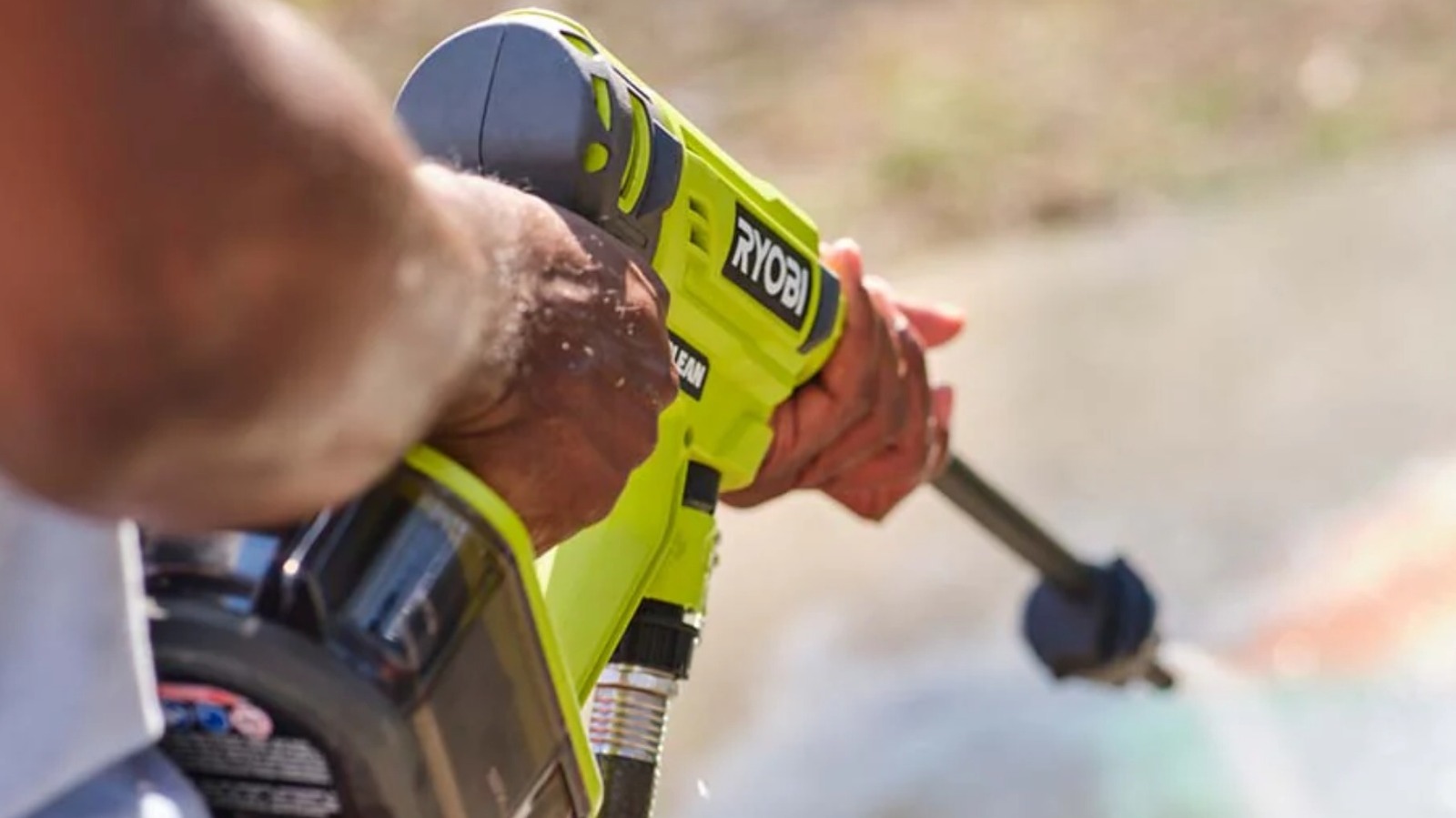
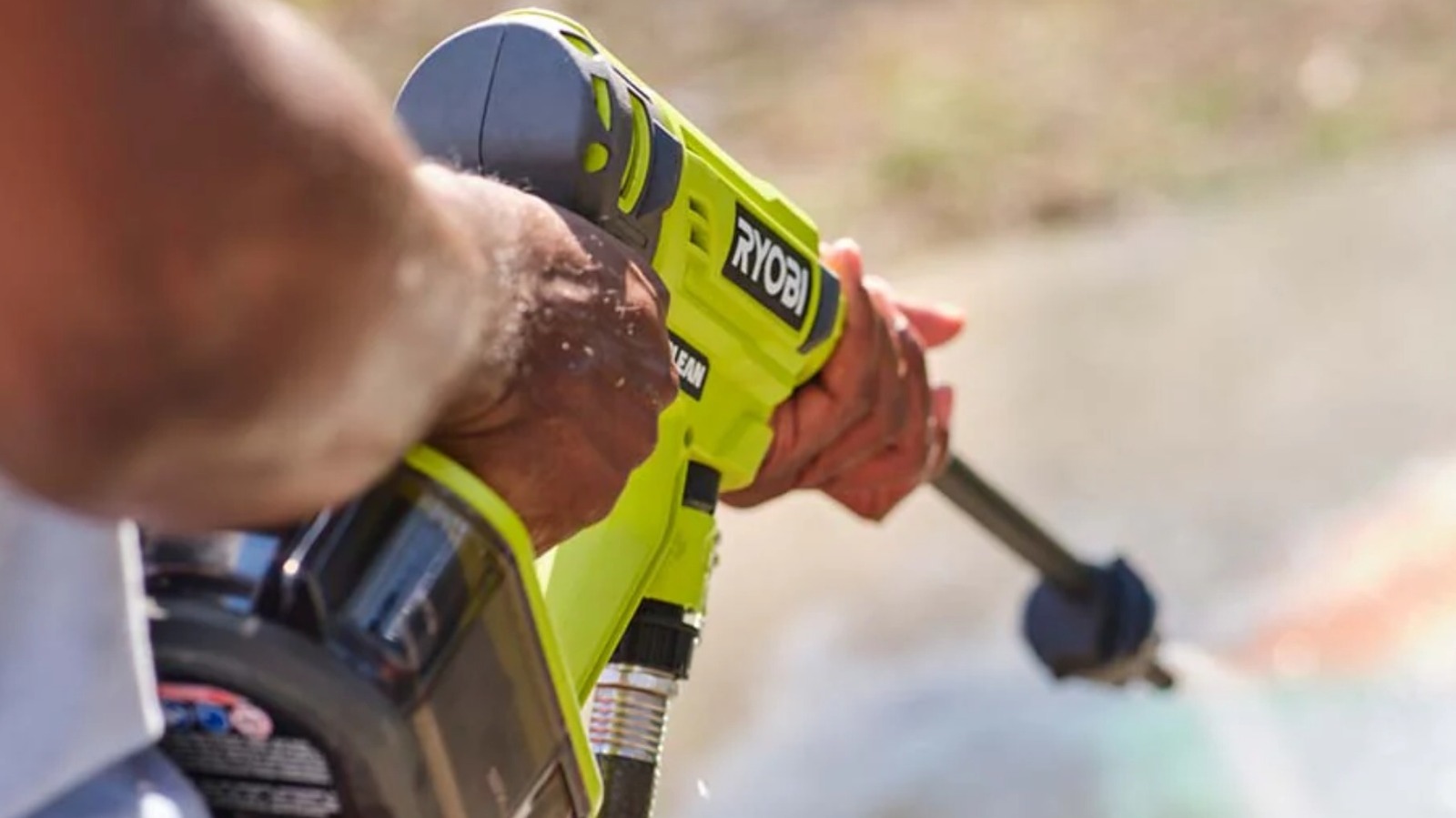
There are a lot of different kinds of pressure washers out there, and not all of them need to be able to blast the paint off your deck. Some people just want something for washing off lawn furniture and house siding once or twice a year. In those cases, a handheld washer could be a solid option. However, users aren’t exactly sold on the Ryobi ONE+ 18V EZClean 320 PSI 0.8 GPM Cold Water Power Cleaner despite the fact that it retails for just $49.

This is a tankless 320 PSI 0.8 GPM power washer that has three different ways of sourcing water. You can connect it to a siphon hose that can draw water out of a bucket, a 2-liter bottle adaptor, or directly to a garden hose. This, coupled with the fact that it’s cordless, might be enticing to those who want to power wash objects that are far from water sources and power outlets.

This is another one where we see some discrepancies in the ratings, though. The tool has a 4.2 rating on Ryobi’s site, but it only has a 3.6 on Home Depot, with a 73% recommendation rate. The cause of this high number of negative reviews primarily boils down to a single failure point. There have been multiple reports of the water connection port breaking clean off the tool. “I love most of my Ryobi tools, but not this one,” said one user. “The piece of plastic where the hose connects has a plastic wall that is less than 1/16″ thick. When it snaps off, as it inevitably will, the tool is useless.” 

Advertisement

40V HP Brushless 18-inch Rear Tine Tiller

Chopping up soil for cultivation is back-breaking work that can be made much easier with the use of a motorized tiller. One option you might see while walking the aisles of your local Home Depot is the Ryobi 40V HP Brushless 18-inch Rear Tine Tiller. This one retails for a whopping $999, so you can be sure that customers will want it to be worth the investment.

Advertisement

The Ryobi Rear Line Tiller is a heavy duty piece of equipment that is designed to tear through hard earth quickly and efficiently, with Ryobi stating that it “delivers more power than a 208cc gas tiller.” Promising to cultivate up to 3,000 square feet per charge, it has a variable speed, a self-propelling mechanism, and a Transport Mode for moving the tiller without engaging the tines. Additionally, it comes with a nine-position depth adjustment stake and a side shield that protects existing plants from debris thrown by the tiller.

It has a 4.1 rating on the Ryobi site and a 3.6 on Home Depot, with just 68% of customers claiming that they would recommend it. This seems to primarily come down to a couple of issues. Some customers complained that the tool isn’t able to handle dense soil, stating that the batteries pop out when the tool is under load and that it isn’t able to adequately till their land. Another common complaint has to do with the shear pins. These are a deliberate weak point in the design, meant to break when the tiller hits a rock to protect the engine. However, some users have complained that the pins break far too easily, with one customer stating it broke on a 1-inch thick grape vine, and another saying it broke in damp soil.

Advertisement

3300 PSI 2.4 GPM Cold Water Gas Pressure Washer with 212cc Carb Compliant Engine

The final item on our list is the only one that is gas-powered. The Ryobi 3300 PSI 2.4 GPM Cold Water Gas Pressure Washer is powered by a 212cc Carb Compliant Engine, giving it a pretty decent amount of horsepower. It has specialized idle-down tech that allows it to burns less fuel and operate significantly quieter. It has a hand-truck frame with 12-inch wheels, a 0.95-gallon fuel tank, and an onboard soap tank. It also comes with four nozzles: soap, 25-degree, 40-degree, and a second story extension nozzle for cleaning high areas without the need for a ladder. These attach via a quick-connect coupler and can be stashed in the washer’s onboard storage when they’re not in use.

The washer retails for $399. It has been rated 4.1 stars on the Ryobi site and 3.8 stars on Home Depot. What’s really interesting, however, is that only 27% of customers recommend it. Even more odd is that there doesn’t appear to be one single issue that stands out as a primary culprit. Constant engine stalling appears to be the most common complaint, but one person had a wheel break, another has the host fitting break, a third had leaky water valves, a fourth had an oil leak right out of the box, and a fifth had it fail to create pressure altogether. These appears to speak more to a general lack of quality control than to any specific failing in the design.

Advertisement

Our methodology

Ryobi is generally considered to be a trustworthy and reliable brand. The vast majority of its tools are generally well-regarded among consumers and their customer rating scales generally reflect that. In order to find the weakest yard tools in Ryobi’s lineup, I started by organizing the Ryobi Yard Tools section on the Home Depot website by customer rating, and then looking at the tools that ranked lowest. I used the Home Depot site for this as well, as it generally has a larger review pool than the Ryobi site.

Once I had a handful of the lowest-rated yard tools picked out, I examined each of their specifications to illustrate their intended performance metrics. I then looked at the most critical reviews to see if there were any repeated complaints that could indicate a design flaw or failure of performance that caused the tool’s score to be dragged down. This way, readers can be forewarned as to the nature of any weaknesses that these tools might have and make their buying decisions accordingly.

Advertisement


Source link

Advertisement
Continue Reading
Click to comment

You must be logged in to post a comment Login

Leave a Reply

Tech

Sunday Reboot: The right marketing, the wrong changes

Published

on

In this week’s “Sunday Reboot,” Beats subverts the World Cup, and GymKit and Malcolm’s gym are updated in opposite ways.

Young man wearing large black headphones with a small white strip on the side, looking over his shoulder toward the camera, dressed in a dark hoodie against a plain background
Jamal Musiala with some taped Beats – Image Credit: Instagram/Beats/Jamal Musiala

Sunday Reboot is a weekly column covering some of the lighter stories within the Apple reality distortion field from the past seven days. All to get the next week underway with a good first step.
This week, current Apple CEO Tim Cook warned of price increases, Brazil adopted EU-style App Store rules, and supply chain assembler Tata is accused of contaminating the water supply in India. Also, leakers are worried we could have another colorgate issue this fall.
Continue Reading on AppleInsider | Discuss on our Forums

Source link

Continue Reading

Tech

Plastic waste could soon fuel aircraft as researchers develop cheaper jet fuel from discarded materials using a new reactor system

Published

on


  • Plastic waste can now be converted directly into usable jet fuel
  • A tandem reactor system breaks plastic down at 460 degrees Celsius
  • Ruthenium catalyst sites delivered far better selectivity than commercial alternatives

Researchers at Nanjing Forestry University and Tsinghua University have demonstrated a new method for converting plastic waste directly into usable jet fuel, with estimated production costs ranging from $1.0 to $1.8 per kilogram.

The work comes as airlines, governments, and fuel producers continue searching for alternatives that could reduce dependence on conventional fossil-derived jet fuel.

Source link

Continue Reading

Tech

Ubisoft co-founder Claude Guillemot dies in plane crash

Published

on

Claude Guillemot, co-founder of French video game company Ubisoft, died Friday at the age of 69.

According to French media (via Bloomberg), Guillemot died in a plane crash in the French resort town of La Baule. He was one of two people aboard the plane, both of whom died.

Guillemot founded Ubisoft with his four brothers in 1986. Since then, the company has published the Assassin’s Creed, Far Cry, Prince of Persia, and Tom Clancy video game franchises, as well as many other titles. The family retains control of Ubisoft, and Guillemot’s brother Yves is still CEO.

Guillemot was also chairman of Guillemot Corp., which makes gaming and audio accessories.

Advertisement

“Ubisoft was deeply saddened to learn of the death of Claude Guillemot, co-founder of the group and chairman of Guillemot Corp., in an accident,” Ubisoft said in a statement. “Our thoughts are with his family and loved ones during this difficult time. No further statements will be made at this time.””

Source link

Continue Reading

Tech

Doom Composer Bobby Prince Has Died

Published

on

Prince also worked on Wolfenstein and Duke Nukem games.

Video game composer and sound designer Bobby Prince has died. An obituary states that Prince died on June 16 at the age of 81 following an illness. Developer id software shared the news of Prince’s passing.

Prince was perhaps best known for his pioneering work on the Doom series. The Library of Congress inducted his soundtrack for the original game into the National Recording Registry just last month.

Advertisement

“Despite the limitations of the 1993-era sound card drivers, Prince composed the perfect riff-shredding accompaniment for the game’s demon-slaying journey to hell and back,” the Library of Congress stated. “Taking advantage of his knowledge of MIDI, Prince even worked to ensure that the sound effects he created could cut through the music by assigning them to different MIDI frequencies.”

Prince also worked on games such as Wolfenstein 3D, Rise of the Triad and Duke Nukem 3D. In 2006, the Game Audio Network Guild honored Prince with a lifetime achievement award.

“Everyone at Romero Games is deeply saddened to learn of the passing of Bobby Prince,” Doom co-designer and id Software co-founder John Romero wrote on X. “He left an incredible mark on games and on my life.”

Advertisement

Source link

Advertisement
Continue Reading

Tech

If You’re Searching for a New Skillet, Consider Stainless Steel

Published

on

If you’ll excuse the pun, skillets seem to always be a hot topic.

More than in other sections of cookery, there is a continual quest to find the best one, or at least the best one you can afford. I’ve seen cycles of fetishization come and go for copper, cast-iron, and carbon steel.

At the Mall of New Hampshire in the 1980s, I remember watching a miraculous cooking-store demonstration of omelettes effortlessly sliding out of a Teflon pan. Then, only a few years ago, the industry pretty much dropped the whole Teflon category like a hot potato due to the pans’ propensity to give off harmful fumes if they get too hot. Less durable ceramic immediately filled the void, and we’re already realizing how quickly it can lose its nonstick magic.

All this time, stainless-steel pans have been waiting in the wings. They are durable, and lighter and less fussy than cast iron and carbon steel. They’re not nonstick, but that’s often fixed with a pat of butter. They sear well, and with a bit of TLC, they’re built for a lifetime of hard work.

Advertisement

All-Clad has been one of the great brands in stainless for years, but I wondered if other slightly more expensive skillets were worth a look, particularly as some are new to the market and others have been flying under the radar. Along with a 10-inch All-Clad, I called in similar-sized pans from Hestan, Viking, and Heritage Steel. Testing all these sounded like fun at first, but things got weird and stayed weird for a while, and only with a bunch of hands-on data gathering and time at the stove did I understand which pans I could recommend.

Pans Labyrinth

A smart and easy cheat for someone like me is to use All-Clad’s 10-inch D3 Fry Pan as a baseline. (“Fry pan” and “skillet” are used interchangeably in this category.) The D3 has been an America’s Test Kitchen and Wirecutter darling for years, with advocates seeking out traits like uniform heating across its surface, a comfortable handle, and cladding (layers of different metals). It’s $170 with a lid and $150 without, which is a good chunk of change, but it feels like a fair price for buy-it-for-life durability.

I own and love one of All-Clad’s 4-quart D5 Essential Pans, which is like a high-sided skillet, and it has a perfectly flat cooking surface. But the cooking surface on the D3 skillet All-Clad sent to me for this story was a bit domed–high in the center and low around the outside—not horribly so, but surprising to me, and among the dozen or so pans I called in, it was among the furthest out of whack. I also noticed that the rivets that hold the handle to the pan weren’t fully squished on there. It felt fine and didn’t wobble, but an All-Clad representative confirmed this wasn’t right. They sent another pan, and the rivets were as they should be on that one, but the bottom was pretty much the same. I learned that this amount of doming is within All-Clad’s tolerance range, but not within mine. What can I say? I like flat pans, I thought, looking wistfully at my perfect D5.

I had a similar level of trouble with another pan I had high hopes for. The new 10-inch Viking Pure Glide Pro, which I had seen at my favorite trade show, has a textured titanium layer for the cooking surface above an aluminum core and stainless-steel bottom layer. Impressively, this combination of materials created a capable nonstick competitor that I’d be a lot more excited about if it was part of a better, sturdier pan. The Viking had some temperature management issues that I’ll get to in a moment, and it either warped or arrived warped to the point that heating oil would form a moat around the center of the pan. If Viking fixes this, the Pure Glide Pro has the potential to be a hell of a pan, but it’s not there yet.

Advertisement

Source link

Continue Reading

Tech

Podcast: LOEWE TVs & Headphones at AXPONA 2026

Published

on

Recorded from the show floor at AXPONA 2026, this episode features Kendall Costello, Sales Operation Analyst at Loewe, and Amir Hejazi, Senior Engineer at Loewe. Topics covered include details about Loewe’s latest Stellar TVs and Leo headphone lineup, along with their return to the U.S. market. The conversation focuses on design priorities, key features, and how Loewe is positioning its products in a competitive premium market, with insight into how engineering and product strategy come together across both categories.

Sponsors: Thank you SVS for sponsoring this episode, along with Audeze for supplying all guests LCD-S20 Headphones, and Loewe and T10 Bespoke for sharing lounge space at AXPONA 2026.

This episode was recorded on April 12, 2026 (the third day of AXPONA 2026).

Where to listen:

On the Panel:

  • Kendall Costello, LOEWE Sales Support Manager
  • Amir Hejazi, LOEWE Sr. Engineer
  • Chris Boylan, eCoustics Editor-at-Large
  • Brian Mitchell, eCoustics Founder & CEO (Host)

AXPONA 2026 Podcasts:

Credits:

Advertisement. Scroll to continue reading.
Advertisement

Source link

Continue Reading

Tech

BMPS 2026 Grand Finals Rankings After Day 3: GodLike Qualify For EWC in Paris

Published

on

The BMPS Grand Finals have just concluded, and what an action-packed three days they were. We saw the rise of new titans like Divine Gaming, who, up until today, were the favorites to win the title. Sadly, veteran GodLike had other plans, who just had a stellar day in every single match. Another big surprise was the return of OG, who also qualified for the EWC in Paris by defeating SouL in the overall team standings. Here’s what the final BMPS rankings look like.

BMPS Grand Finals Rankings After Day 3

Rank Team WWCD Finish Points Position Points Total Points
1 GODL 2 104 58 162
2 DIVINE 2 96 56 152
3 VS 2 79 54 133
4 GDR 1 93 35 128
5 TAG 2 95 28 123
6 iQOOxOG 1 78 41 119
7 iQOOxTT 1 78 38 116
8 VASISTA 2 76 37 113
9 iQOOORGE 2 68 43 111
10 NBE 1 73 34 107
11 iQOO8BIT 0 73 30 103
12 GENS 0 70 29 99
13 iQOOSOUL 1 66 30 96
14 7GODS 1 64 31 95
15 iQOORNTX 0 67 19 86
16 MYTH 0 50 13 63

Source link

Continue Reading

Tech

Apple’s era of wearable intelligence begins in 2027 and cameras will be a big part of it

Published

on

Apple’s wearable future is starting to come into focus, and cameras appear to be at its center. Bloomberg’s Mark Gurman reports that camera-equipped AirPods and Apple’s first smart glasses are currently on the roadmap for 2027. While they may look like ordinary accessories on the surface, both products could play a crucial role in helping Apple Intelligence understand the world around its users in real time.

Your AirPods might start paying attention

When most people think of AirPods, they think of music, podcasts, and phone calls. Cameras aren’t exactly high on the wishlist. But Apple has a different vision. The cameras wouldn’t be there for recording videos. Instead, they’d help gather information about the world around you and feed that data into Siri and Apple’s AI systems.

Imagine asking Siri about a building you’re looking at, identifying an object in front of you, or getting contextual information without ever pulling out your phone. So, your AirPods could become another set of eyes for Apple’s AI; that’s a dramatically different role from what earbuds do today.

Glasses to see, not just display

Then there’s Apple’s smart glasses, arguably one of the company’s most anticipated future products. Unlike the bulky Vision Pro headset, smart glasses could bring AI into a form factor people might actually wear all day. While details remain scarce, cameras are expected to play a crucial role, helping the device understand its surroundings and deliver real-time, useful information.

What’s particularly interesting is how these products fit into Apple’s broader AI strategy. Most companies are trying to make AI more useful through apps and chatbots. Apple appears to be exploring something more ambient — AI that observes the world around you and responds when needed. Whether consumers are ready for camera-equipped wearables is another question entirely. But if Gurman’s report is accurate, 2027 could be remembered as the year Apple stopped thinking about AI as software and started turning it into something you wear.

Advertisement

Source link

Continue Reading

Tech

5 Everyday Tech That Can Track Your Activity

Published

on


It’s virtually impossible to live in modern society and not be tracked in some way. Websites track you, the apps you need and use every day could be the worst offenders in privacy invasion, and the devices you use it is tracking you, too. And even if you turn off the phone and go outside, you could being watched by the widespread Flock cameras that might be in your neighborhood. We know that tracking devices are all around every single one of us, all the time, every day. But sometimes you don’t even realize a device can track you in the first place.

Now, to walk things back a bit. We’re not out to terrify you into thinking your smart toaster is equivalent to the “1984” telescreen. Oftentimes, tracking is inevitable and even benign. Most electronic devices connected to the internet and receiving updates need basic usage telemetry to help the manufacturer fix bugs and optimize performance. With that in mind, these are five everyday tech devices that might be tracking your activity — for better or for worse.

Advertisement

Wi-Fi routers

In recent years, we’ve seen a scary news headline that says that Wi-Fi routers can be used like sonars to “see” inside buildings. Sadly, it’s no exaggeration. A Wi-Fi router can be utilized to map its surroundings. The technology is so sensitive it could theoretically track someone’s gait when walking, and possibly their breathing, even in another room.

What’s worse, a bad actor wouldn’t even have to compromise the network or buy a $10,000 frequency analyzer tool to do it; They’d only need a cheap smartphone kept in the network’s vicinity. Victims wouldn’t know when they were being tracked, either, and the more devices victims have, the more accurate the tracking gets. We already have concerns about mass surveillance with cameras, but now imagine the thousands upon thousands of Wi-Fi networks in every city and state retrofitted into a tracking apparatus that has x-ray vision — and imagine what dark forces out there would love to get their hands on said apparatus.

Now for a dose of reality. We’ve seen that this works, in theory, but so far we haven’t found documented cases where this has been abused. There are certainly concerning trends in that direction, like court cases arguing that that authorities should be able to track you with WiFi-based location, and consumer devices made by shady companies that boast Wi-Fi motion detection. On the flip side, a lot of the research around Wi-Fi sensing has been focused on potentially good use cases. We’d probably all be okay if grandma’s Wi-Fi network was leveraged to alert us in the event she takes a fall. For the possible unsavory uses of the tech, it may be possible to mitigate them by polluting the real data with false data.

Advertisement

Smart TVs

Let’s not beat around the bush: your smart TV could be spying on you. It’s something most people never think of, and yet at the same time, it’s completely unsurprising. Tech companies are some of the biggest privacy abusers. Why wouldn’t they take the big screen situated in your living room, the locus of your home’s activity, and track its behavior? Consumer Reports explains how smart TVs use ACR (automatic content recognition) to track you. Basically, ACR is “watching” what you watch, compiling and analyzing that info, and then using it to recommend further content. That Consumer Reports article also has a guide on how to disable ACR in most major TV brands.

In the past, we’ve seen companies do all sorts of spooky things with smart TVs. Samsung was once caught saying that it would collect personal data unrelated to a voice command query over your microphone (the clause has since been removed from Samsung’s privacy policy). There was also that thoroughly dystopian UAB (unique audio beacon) tech that allowed advertisers to figure out who exactly was watching their ads by pinging nearby smartphones with inaudible, ultrasonic noise. Case in point, tech companies have stooped to some disturbing stuff before, and they might try again.

Advertisement

However, we’re not saying you should throw away your fancy OLED panel in favor of an old CRT. Just do some digital hygiene. Go into your smart TV’s settings and disable analytics and ACR; disable features you never use, like the microphone for voice commands; learn how to disable ads on your TV, if possible. If you do all your watching through a streaming box, then you might even disconnect the smart TV from Wi-Fi entirely, since the streaming box is the only thing that needs to be connected.

Advertisement

Smart glasses

Smart glasses with cameras seem like a cool way to film things hands-free… except when they enable loathsome individuals to secretly film others in public. We’ve already discussed at length where Meta Ray-Bans and their ilk should and shouldn’t be used, and laws are already in the pipeline to curb their misuse, but it’s not just unsavory people using the glasses for unsavory purposes — It’s the companies, like Meta. They’re not as concerned with filming other people as much as filming you, the user.

The Electronic Frontier Foundation reports how Meta’s smart glasses in particular don’t have any strictly-offline functionality. AI voice chats and media recordings get pumped into the cloud and may in some cases see employees annotating them for AI training. It would appear, according to a Svenska Dagbladet investigation, that users may not always control what’s recorded and uploaded. Imagine going to the bathroom with the glasses on — but not recording — and someone on the other side of the world seeing the whole thing. One of the workers quoted in the aforementioned report said that the stuff they see on a daily basis would unleash “enormous scandals.”

While you might think that the same privacy risk applies to a smartphone, it’s important to remember that a smartphone isn’t sitting on your face, pointed at your surroundings whether or not you’re using the camera. Smart glasses inherently introduce a new class of privacy risk. Considering Meta is up to its neck in a huge class action lawsuit as a result of everything we’ve mentioned, we’d say this is the one device on this list most should avoid entirely.

Advertisement

Doorbell cameras

It’s impossible to deny the benefits of a doorbell camera. You can see who’s at your door — even when not at home — as a security measure, a means to avoid unwanted visitors, and a way to keep tabs on anyone who’s entered your property line. As you can probably guess, however, having a camera in your home that’s owned by a tech company requires trusting that only you will be able to see the footage. We’re not just fearmongering baselessly. Ring — one of the most popular doorbell camera makers in the U.S. — was accused by the FTC of spying on users without their consent.

There’s also been growing concern in recent years that the Ring cameras belonging to your neighbors are surveilling and tracking you. We all know that one curmudgeon who makes everyone’s life miserable at the HOA meeting, who spends half their day with a drawn curtain in one hand and a phone dialed to 911 in the other. Now that curmudgeon has a camera that’s on even when they sleep, a camera which footage they can pass along to the police and get them involved even when you’re innocent. And there are probably a lot of these cameras in your neighborhood.

Again, we wouldn’t necessarily advocate for getting rid of your Ring camera. Instead, go into the settings and change a few. Some of the things we’ve mentioned — like Ring Neighbors — can be disabled entirely. Of course, Ring is just one company on the market making these doorbell cameras. It doesn’t matter which brand you’re using. Limit what privacy settings you can, and be wary of any camera-enabled device that’s filming continuously in the background, 24/7.

Advertisement

Smart home devices

Once you get used to controlling your lights verbally with your smartphone’s AI assistant, it’s painful to go back to the olden days of getting up off the couch and switching lights on manually. Now, you can fill your home with an army of smart devices that make things more secure and convenient — and affordably so. Once again, we extend a gentle reminder that these tech devices are made by companies that may not respect your privacy, or even adhere to their own privacy policy. There’s ample evidence to suggest they’re listening in constantly, gathering information, and potentially sharing it. And if they’re not listening, the devices themselves may be vulnerable to hackers.

First we’d say, use common sense. Don’t put an indoor camera in your bedroom, for example, and be careful what brands you buy from. You only have to Google a device’s manufacturer name paired with keywords like “security vulnerabilities” to quickly find the ones to avoid. Don’t make common Wi-Fi mistakes like using weak, outdated encryption for your home network, since it’s the bedrock of your smart home. Consider keeping some “dumb” devices, like a non-smart front door lock, to limit the attack surface.

In truth, most of this stuff is basic security practice that you should already be doing on your PC and smartphone anyway. Things like setting strong passwords for smart home platforms, like Google Home, and keeping all devices updated to the latest software. Hackers love an easy, low-hanging fruit, so even doing the bare minimum makes you a much less desirable target.

Advertisement


Source link

Advertisement
Continue Reading

Tech

John Ternus plans to shake up Apple’s design work

Published

on

John Ternus has been talking about focusing on Apple’s core strength of design once he takes over as CEO, and a now a questionable report extrapolates that this means he’ll shake up the design team.

John Ternus is now best known for taking over as Apple CEO from Tim Cook, but as recently as January 2026, he took control of the firm’s design team. Now according to Bloomberg, far from leaving that because of other CEO duties, he is planning to continue working on Apple’s whole design philosophy.

Reportedly, Ternus told staff that under him, Apple will “keep focusing on design, because design is core to what we do in Apple.”

He said that Apple has brought “truly incredible design” to customers, and done so more than any other firm. Ternus claims that the best-designed item that most customers have, is an Apple product.

Advertisement

“We’re going to make sure that stays the case,” he said.

There are no further details, although the report echoes claims from January 2026 that Ternus plans a shakeup of the design teams. What is clear, though, is that this is going to mark a clear difference between Ternus and his predecessor, Tim Cook.

Cook was once criticized by Steve Jobs for not being a product person, in the way that Jobs or Jony Ive would obsess over them. It’s repeatedly been reported that Cook did not often visit the design teams, and now it’s said that Ternus has already devoted a lot of his time to the design division.

The first products to come out under Ternus’s aegis will be the iPhone 18 range in September 2026, the month he officially takes over. It’s said that Apple is aiming to mark the 20th anniversary of the original iPhone with a series of new devices, including a new iPhone Fold, and AirPods with cameras, in 2027.

Advertisement

Even those, though, are already at the testing stage. So while Ternus has been involved with them, it could take a couple of years before Apple releases a device that was made entirely on his watch.

Source link

Advertisement
Continue Reading

Trending

Copyright © 2025