




Connect with us

Tech

5 Tools Ryobi Makes That Makita Doesn’t

Published

on


We may receive a commission on purchases made from links.

Makita and Ryobi are both popular tool brands that offer many of the same products, but they’re certainly not interchangeable. Makita has been around for over a century and has a strong reputation for high-quality tools and equipment made for trades like construction and woodworking. That’s why there are tools sold by Makita that Ryobi doesn’t make, like heavy-duty breaker hammers, rebar tying tools, and massive cordless circular saws. While DIYers can certainly make use of Makita’s premium-grade products, its tools are built for professionals who can rely on them every day for big jobs and serious projects.

Advertisement

Ryobi also makes well-made tools, but it caters more toward prosumers than professionals. DIYers and casual homeowners looking for good-quality products often choose Ryobi, as do some professionals. There is plenty of gear that both brands manufacture, like cordless drills and saws, as well as accessories like jobsite fans and work lights. But, because Ryobi’s core user base is a bit more casual than Makita’s, its catalog of products differs in certain ways.


Though it offers some hand tools, Ryobi focuses heavily on its battery systems, which power its cordless tools. It’s not afraid to try out new types of tools and devices that users who already own compatible Ryobi batteries may try out. Compared to Makita, it also offers a wider range of more low-key and offbeat gadgets. That’s why you can find things like Ryobi bug zappers and heated seat cushions that use the same batteries as its impact drivers. To better illustrate the different nature of each brand’s product catalog, here are five tools Ryobi makes that Makita doesn’t.

Advertisement

Power carver

One category where you can typically find more Ryobi tools than Makita ones is crafting. Crafting can certainly require a ton of skill, but it doesn’t require the sorts of professional tools that Makita makes. A power carver is one of those tools that can be very useful for both crafting and more serious carpentry, as it can be used for detailing shelving and other furniture. Nonetheless, Makita doesn’t make one, whereas Ryobi does — in fact, its Ryobi USB Lithium Power Carver is the first cordless carver of its kind.

The Ryobi USB Lithium Power Carver (model FVH51K) has a compact, straight design and carves with a 1-mm stroke length. The 4-volt tool runs at 14,000 strokes per minute, and you can monitor battery life with a push-button LED indicator. The power carver comes bundled with a 21-inch USB cable and a USB Lithium 2 Ah rechargeable battery, which can be used with other compatible Ryobi products.

The tool also comes with three different attachments: a straight chisel, U-gouge, and V-gouge. Equipped with these three accessories, the product is one of Ryobi’s many budget-friendly hobby tools and can perform a range of carving tasks for various kinds of woodworking projects. The straight chisel works well for detail work, making it particularly useful for furniture restoration, while the 90-degree V-gouge is designed for relief carving and cresting detailed lines through channels. The U-gouge has a ¼-inch wide blade, allowing it to clear relatively large amounts of wood.

Advertisement

Glue gun

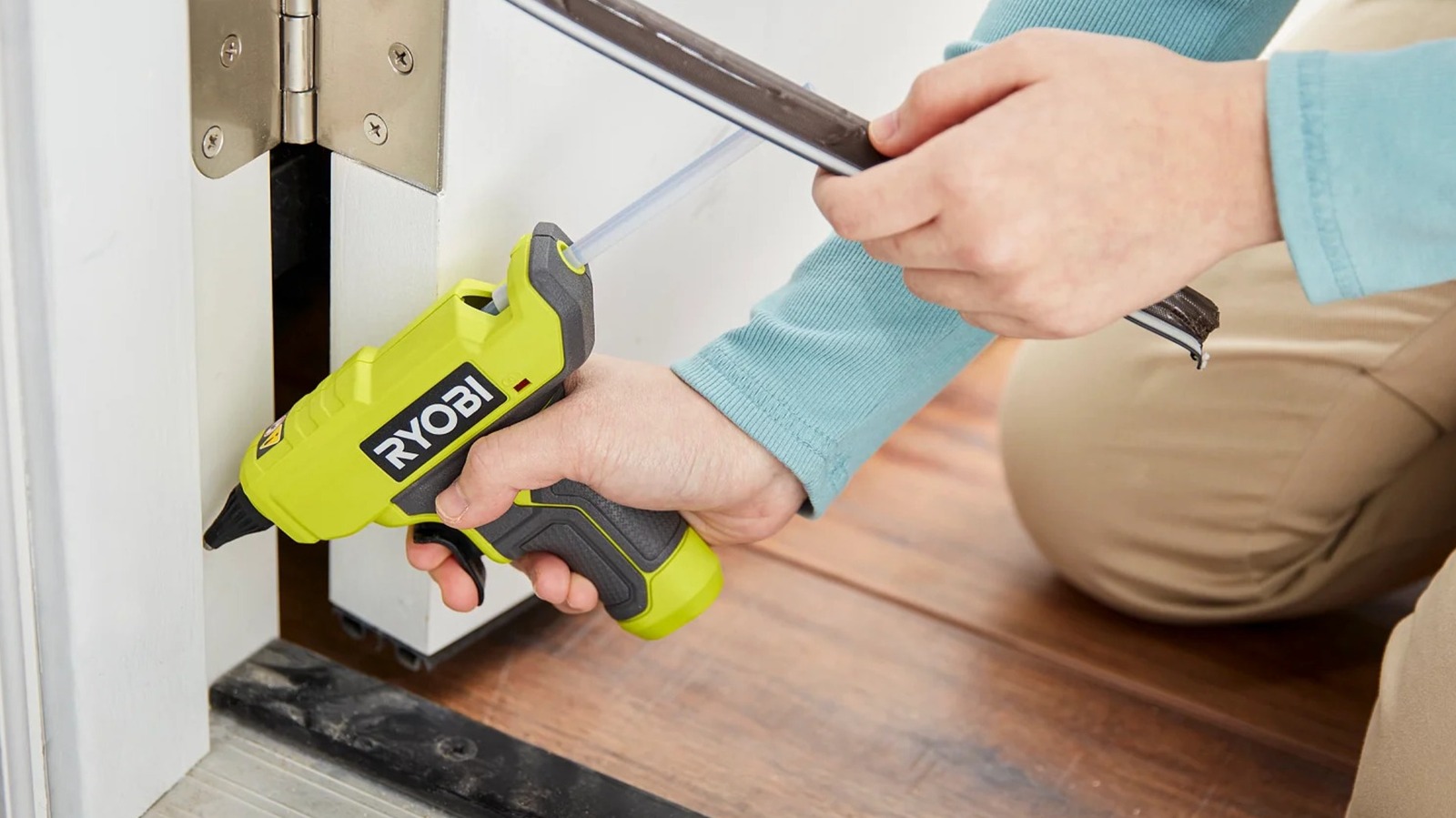
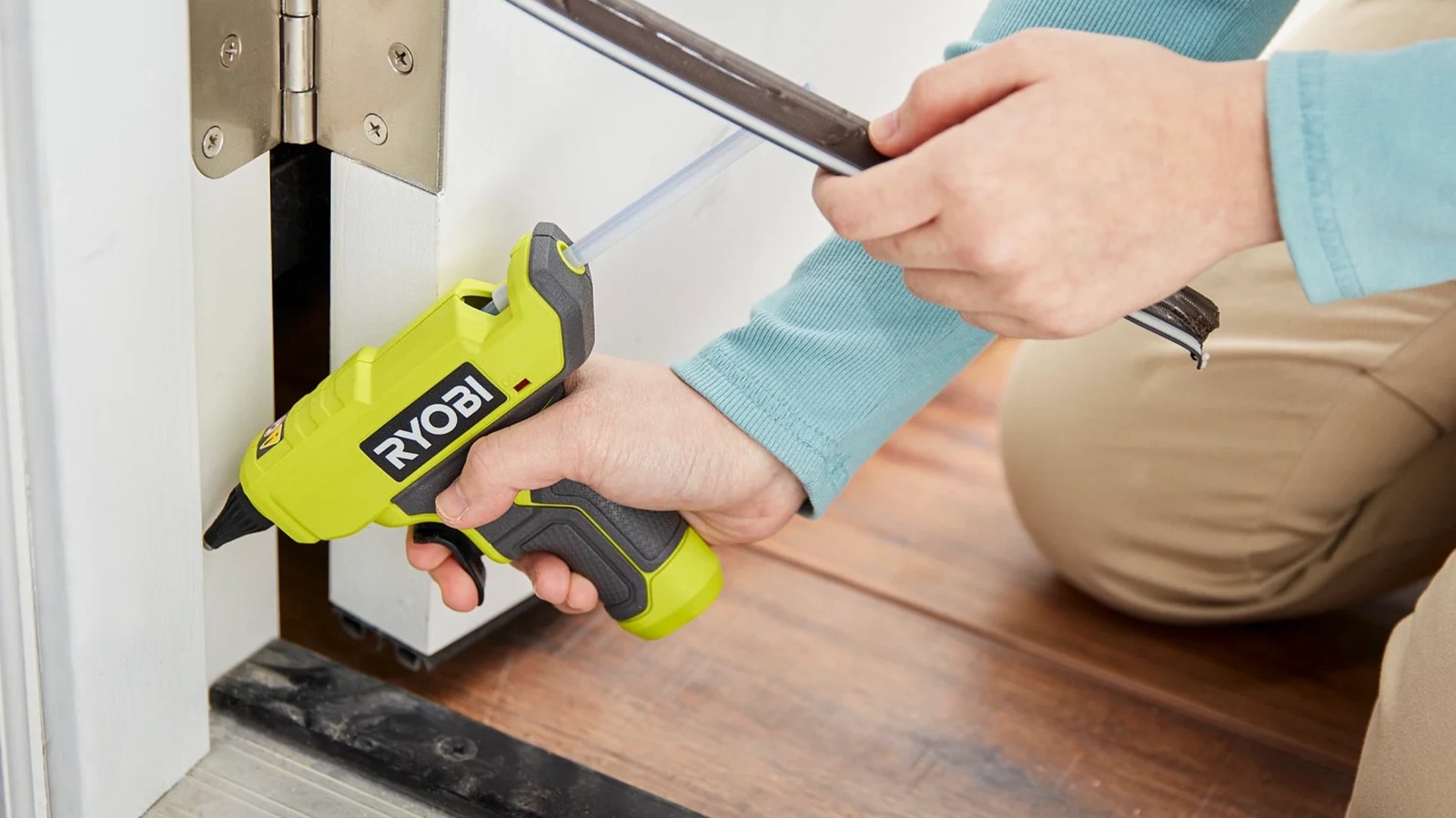
Another crafting tool Makita lacks in its product catalog is a hot glue gun. Ryobi, on the other hand, makes multiple different models, allowing users to opt for the one that best suits their needs and preferences. This includes glue guns for both its USB Lithium and 18V One+ power systems, with the USB Lithium Glue Gun (model FVH57K) coming with a 2 Ah battery and USB charging cable, as well as three glue sticks to start you off.

Advertisement

The brand’s 18V One+ Compact Glue Gun (model P306) is still a small tool despite using a much larger battery, and also comes with three mini glue sticks. When powered by a Ryobi 18V One+ 4 Ah battery, it can go through over 100 mini glue sticks before needing to be recharged. However, the most popular Ryobi glue gun looks to be its dual-temp model. The Ryobi 18V One+ Dual Temperature Glue Gun (model P307) offers users more versatility because of its ability to run at two different heat modes: 248 degrees Fahrenheit or 320 degrees Fahrenheit. The lower-temperature setting allows the tool to be used with more heat-sensitive materials, while the higher mode can liquefy construction glue and other heavier-duty adhesives. The gun heats up to the necessary temperature in two minutes.

Along with 10 general-purpose glue sticks, the dual-temperature glue gun comes with an extended precision nozzle and spreader nozzle in addition to a standard nozzle. These add to the tool’s versatility, letting you use it for multiple applications. The Ryobi 18V One+ Dual Temperature Glue Gun also features a fold-out drip tray and an integrated LED that changes color when the tool is sufficiently heated.

Advertisement

Ice auger

Like Ryobi, Makita makes a cordless earth auger that can drill into the dirt. Unlike Ryobi, though, Makita doesn’t offer an ice auger. Despite both tools having similar design and function, there are differences between an ice auger and an earth auger, and the latter won’t work very well if you need to make holes in ice. Ice augers, often used for both work (researching ice core samples) and play (ice fishing), need to deal with much harder drilling surfaces and function in very cold environments.

The Ryobi 40V HP Ice Auger (model RY40712) is a battery-powered drill designed to handle especially thick ice. Ryobi says that its brushless motor and 40-volt battery technology enable the cordless auger to deliver 30% more torque than gas-powered equivalents. It can be used in three different modes: high power, low power, and reverse.

Ryobi’s ice auger weighs 34 pounds, which isn’t exactly lightweight but still manageable for transportation and control. It has a two-handled top-down design, like a jackhammer, with a simple trigger mechanism for drilling. Ryobi also says it has engineered the tool to vibrate less during use, offering more comfort and control as it runs. The Ryobi 40V HP Ice Auger also includes the necessary 8-inch ice bit, which can be swapped out when it dulls.

Advertisement

Bucket top wet/dry vacuum

Just as many major tool brands do, Makita sells wet/dry vacuums that can be used to clean workshops and jobsites. However, Ryobi offers an interesting take on the tool that Makita has yet to copy. The Ryobi 18V One+ Bucket Top Wet/Dry Vacuum (model PCL732B) doesn’t come with its own container for liquids or dry debris. Instead, the tool itself fits on standard 5-gallon buckets. This makes the tool much more compact and easier to store, especially if you use your bucket for other applications.

Advertisement

Weighing 4.25 pounds, it’s also more portable if you’re bringing it to a site that already has buckets you can use. The vacuum’s built-in storage lets you keep the hose and crevice tool that comes with it attached to the vacuum, simplifying things. The hose is 1-¼ inches wide and 4 feet long, giving you a bit of flexibility when trying to clean tight or hard-to-reach areas. It also comes with a blower port that lets you use the vacuum to clear spaces of dust and debris, as well.

Ryobi says its 18V One+ Bucket Top Wet/Dry Vacuum is the most powerful cordless bucket-top vac on the market. In addition to the hose and crevice tool, the machine comes with a filter bag that helps keep dust and debris out of its motor. Replacement filter bags are available for when it wears out, as is a replacement accessories kit that bundles a new hose and crevice tool.

Advertisement

Soldering iron

Makita’s decision to ignore crafting gear like glue guns and power carvers to focus on more powerful, professional tools may make sense from a business perspective, but not offering a soldering iron is a bit of a head-scratcher. A soldering kit is certainly useful in many crafting projects, but it’s also an essential tool in other trades, as well, whether it’s for building circuit boards, repairing connectors, or splicing wires.

Ryobi offers a soldering iron in both its 18V One+ and USB Lithium lines of tools. The USB Lithium Soldering Iron (model FVH61K) has an ultra-portable, compact design, but is still capable of heating up to 900 degrees Fahrenheit in less than two minutes. Its smaller size and fine point make it especially useful for working with tiny components found in electronics and jewelry repair. Features include a tip cover that automatically turns the iron off when attached, an integrated worklight, and an LED battery life status indicator.

The Ryobi 18V One+ 120W Soldering Iron (model PCL946B) is a more versatile tool, as it’s equipped with a temperature control dial that lets you adjust the iron’s heat to suit your task. It can fully heat up in under 90 seconds and has a temperature range from 400 to 900 degrees Fahrenheit. An LED status indicator tells you when the iron is heating up, when it’s at its max temperature, and when it’s cooling back down. The soldering iron also has a 3-foot reach for more mobility at your workbench and to access harder-to-reach areas. Along with a solder coil, the tool comes with an iron holder and a fine point tip.

Advertisement


Source link

Advertisement
Continue Reading
Click to comment

Leave a Reply

Your email address will not be published. Required fields are marked *

Tech

9 amazing Valentine’s Day gifts to show your other half how much you appreciate them

Published

on

It seems like just yesterday that I was shopping for Christmas gifts and now I’m scrambling to find the perfect Valentine’s Day present for a special someone. How time flies – so get a wriggle on, folks, as February 14 is just days away! If you’re still scratching your head as to what to get your other (better?) half or anyone you want to treat this February (even yourself), I’ve got a few Valentine’s Day gift ideas to share with you.

Personally, I love the Philips Hue Iris 2.0 smart lamp, particularly the Copper variant, as it looks gorgeous and supports both white and coloured light, while the Breville InFizz Fusion makes excellent carbonated beverages – I should know, I have one at home and make cocktails. Does your loved one prefer coffee over cocktails? The Wacaco Nanopresso is the perfect portable espresso maker – and you can get it in red to keep with the Valentine’s Day theme!

Source link

Advertisement
Continue Reading

Tech

Top 5 Siemens Appliances That Are Must-Haves for Every Modern Kitchen

Published

on

In contemporary kitchens, where style meets functionality and smart technology reigns supreme, Siemens appliances stand out as essential companions. Drawing from the latest lines available on Kitchen Brand Store and Siemens’ home branding, here are five must-have Siemens essentials that elevate any modern cooking space.

1. StudioLine blackSteel Oven (iQ700 Series)

The StudioLine blackSteel design delivers an elegant, minimalist look—its glass handle blends seamlessly into the door, creating a sleek visual statement. More than just appearance, the iQ700 range from Siemens packs advanced culinary features. With coolStart to eliminate pre-heating, ActiveClean pyrolytic cleaning, and even steam injection for perfectly moist baking, this oven simplifies cooking while saving time. Its intuitive smart programming and premium design make it an indispensable piece for modern kitchens.

2. Built-in Refrigerator with hyperFresh & LED lighting

Siemens refrigeration offers sublime interior visibility thanks to energy-efficient LEDs and thoughtful lighting design—including spotlighting hyperFresh drawers for produce storage. Their modularFit built-in models integrate seamlessly into cabinetry, supporting flexible layouts and clean lines. Freshness, style, and integration: a trifecta every modern kitchen demands.

3. iQDrive Dishwasher with VarioSpeed & AquaStop

A modern kitchen isn’t complete without smart, quiet dishwashing. The Siemens iQDrive motor offers powerful yet whisper-quiet operation, while AquaStop delivers flood protection around the clock. With VarioSpeed Plus, you can cut cleaning time by up to 66% when you’re short on time. Flexible loading via varioFlex Pro baskets and varioDrawer Pro ensures even large utensils fit comfortably.

Advertisement

4. InductionAir Plus Hob + Integrated Extraction

Siemens’ inductionAir Plus cleverly integrates hob and extractor into one sleek module, blending into your countertop for a minimalist, uncluttered look. This all-in-one solution delivers power and ventilation in a compact package—ideal for those who favor clean surfaces and maximum efficiency without compromising performance or design.

5. EQ Series Fully-Automatic Coffee Machine (e.g., iQ700 Coffee Center)

For coffee lovers, the Siemens built-in EQ series brings café-quality beverages to your home at the touch of a button. The iQ700 Coffee Center offers a full range of drink options—espresso, cappuccino, latte—all from one intuitive interface. Convenient, stylish, and high-performing, it’s the perfect finish to a modern kitchen setup.

Why These Five?

Synergy of style and performance: Each of these models combines refined aesthetics with cutting-edge innovation—from blackSteel finishes to integrated appliances.

Smart convenience and energy savings: Whether it’s oven steam functionality, water-saving dishwash cycles, or well-lit refrigeration, these appliances are designed for efficiency and ease.

Advertisement

Seamless integration: Built-in refrigerators, induction hobs, and ovens with minimal protrusion reinforce a clean, contemporary layout.

Culinary versatility and lifestyle appeal: From gourmet cooking within the blackSteel oven to designer integrated ventilation, these select devices cater to both daily practicality and elevated living.

If you’re designing or upgrading a modern kitchen, these five Siemens appliances—blackSteel oven (iQ700), built-in refrigerator, smart dishwasher (iQDrive), inductionAir Plus hob-extractor, and EQ coffee machine—are top-tier choices. Together, they offer the perfect blend of sleek design, smart technology, and luxurious convenience that today’s modern households crave.

If you want to buy, visit here: https://www.kitchenbrandstore.com/collections/siemens-109

Advertisement

Source link

Continue Reading

Tech

8849 TANK X Smartphone Boasts a Built-in DLP Projector, Night Vision Camera

Published

on

8849 TANK X Smartphone Projector
Most smartphones are preoccupied with being as slim and shiny as possible, but the 8849 TANK X doesn’t care. At 1.26 inches thick and 750 grams, it’s a hefty, heavy beast designed for places where your precious little smartphone would sugarcoat and die: dust storms, getting rained on, being dropped from chest level, -28°C or 56°C heat, you name it. It has IP68 and IP69K classifications, as well as military-grade ruggedness that would make even the most ardent outdoor enthusiast happy.


One of the Tank X’s most notable features is its built-in DLP projector, which will either convert you to the Church of Portable Movie Nights or make you laugh at the expense of some unfortunate soul who thought it sounded like a half-baked idea. The resolution is full 1080p (up to 1920×1080), and the brightness is 220 lumens. Plus, with laser focusing, you can expect razor-sharp shots from about half a meter to 3-4 meters away, and keystone correction ensures that the image remains level even if the phone is held at an angle. The projection area is around 10 feet square, making it ideal for movie evenings under the stars or displaying a map on a wall to confuse all of your lost buddies. You can get 5 hours of use out of it at maximum brightness in high mode or 6 in night mode. The previous Tank models were stuck to 720p, so this is a significant advance.

Sale


Google Pixel 9a with Gemini – Unlocked Android Smartphone with Incredible Camera and AI Photo Editing,…
  • Google Pixel 9a is engineered by Google with more than you expect, for less than you think; like Gemini, your built-in AI assistant[1], the incredible…
  • Take amazing photos and videos with the Pixel Camera, and make them better than you can imagine with Google AI; get great group photos with Add Me and…
  • Google Pixel’s Adaptive Battery can last over 30 hours[2]; turn on Extreme Battery Saver and it can last up to 100 hours, so your phone has power…

The battery capacity is a whopping 17,600mAh, split between two cells to keep it going for ages, and by “ages,” I mean several days of average use or 25 hours of movie playback. Or, if you’re having a lengthy phone session, you could easily talk for dozens, if not hundreds, of hours. Now, I get what you’re thinking: “But what about when the projector turns on?” Well, the power management is fairly conscientious, so it does not drain the battery.

Advertisement


So, what makes this thing tick? It’s powered by a MediaTek Dimensity 8200, a very strong 4nm octa-core processor paired with 16GB of LPDDR5 RAM (expandable by another 16GB, since who doesn’t like that?) and 512GB of UFS 3.1 storage. It’s all powered by Android 15, which, even on a beast like this, manages to keep things running smoothly whether you’re running multiple apps, playing a few games, or simply goofing around.

Connectivity is excellent, including 5G bands, Wi-Fi 6, Bluetooth 5.4, and GPS accuracy to within a few feet. There’s also a 3.5mm jack, an IR blaster for controlling your fancy TVs and appliances, and an FM radio for when you’re out of the loop.

8849 TANK X Smartphone Projector
Cameras are more than just good for taking casual images, beginning with the 50MP primary sensor, which employs Sony’s IMX766 to capture solid daylight shots with full-pixel focusing. Then there’s the 8MP telephoto, which can zoom in three times and should come in handy, but the true star of the show is the 64MP night vision camera, which is equipped with four infrared LEDs and autofocus, allowing you to see as clearly as day in almost complete darkness. A 50MP front camera for selfies and video calls completes the self-portrait package. With a dual-tone flash and a pair of extra IR lights to help you in low-light settings, you should look sharp.

8849 TANK X Smartphone Projector
On the back, there’s a 1,200-lumen RGB camping light that functions as a little spotlight; you can vary between modes such as white light, some great color options, SOS patterns, or even just a strobe or sound alert. It’s useful for emergencies or simply navigating a trail in the dark.

8849 TANK X Smartphone Projector
The 6.78-inch LCD display has 2460×1080 resolution and a 120Hz refresh rate, with a maximum brightness of 750 nits. It’s nice to see they eliminated the PWM flicker that causes eye strain after long viewing periods. Furthermore, with this display, outside visibility is acceptable, and the panel works well with the projector.

8849 TANK X Smartphone Projector
The Tank X was priced at $1,049.99 (ugh), but an early bird pricing of $549.99 made it slightly more affordable. You can also place a pre-order beginning February 1, 2026, and they will ship from warehouses in the United States, Canada, the United Kingdom, Australia, and other locations beginning March 1.
[Source]

Source link

Advertisement
Continue Reading

Tech

Today’s NYT Mini Crossword Answers for Feb. 4

Published

on

Looking for the most recent Mini Crossword answer? Click here for today’s Mini Crossword hints, as well as our daily answers and hints for The New York Times Wordle, Strands, Connections and Connections: Sports Edition puzzles.


Need some help with today’s Mini Crossword? I don’t know my Greek letters, so whenever there’s a clue like today’s 7-Across, I just have to hope the other answers fill it in for me. Read on for all the answers. And if you could use some hints and guidance for daily solving, check out our Mini Crossword tips.

If you’re looking for today’s Wordle, Connections, Connections: Sports Edition and Strands answers, you can visit CNET’s NYT puzzle hints page.

Advertisement

Read more: Tips and Tricks for Solving The New York Times Mini Crossword

Let’s get to those Mini Crossword clues and answers.

completed-nyt-mini-crossword-puzzle-for-feb-4-2026.png

The completed NYT Mini Crossword puzzle for Feb. 4, 2026.

Advertisement

NYT/Screenshot by CNET

Mini across clues and answers

1A clue: “The Rachel Maddow Show” channel, after a 2025 rebranding
Answer: MSNOW

6A clue: Childhood
Answer: YOUTH

7A clue: Greek letter after zeta and eta
Answer: THETA

Advertisement

8A clue: What helicopter parents do
Answer: HOVER

9A clue: Sound at the dog park
Answer: ARF

Mini down clues and answers

1D clue: “Cats always land on their feet,” e.g.
Answer: MYTH

2D clue: Neighborhood in both London and Manhattan
Answer: SOHO

Advertisement

3D clue: ___ York, Spanish name for New York
Answer: NUEVA

4D clue: Furry mammal that eats crustaceans
Answer: OTTER

5D clue: Docking area
Answer: WHARF


Don’t miss any of our unbiased tech content and lab-based reviews. Add CNET as a preferred Google source.

Advertisement

Source link

Continue Reading

Tech

Tech Moves: Tableau CEO steps down; Microsoft taps new executive VPs; Avanade’s new CEO

Published

on

Former Tableau CEO Ryan Aytay, pictured during a visit to Seattle in 2024. (GeekWire File Photo / Todd Bishop)

Ryan Aytay, a longtime Salesforce exec who has led Tableau as CEO since 2023, is departing.

Aytay revealed the news on LinkedIn on Tuesday. He called his 19-year tenure “a front-row seat to innovation, a masterclass in leadership, and a community that has shaped who I am professionally and personally.” Aytay said he’ll share more about a “new challenge” later.

Aytay joined Salesforce in 2007 and became chief business officer in 2020 before taking the president role at Tableau in February 2022. A year later he replaced Mark Nelson as CEO.

The appointment came four years after Salesforce paid $15.7 billion to acquire Seattle-based Tableau, a leader in the data visualization sector.

Tableau reported 4% revenue growth in Salesforce’s most recent quarter — down from 15% growth in the previous quarter.

Advertisement

In his post, Aytay praised Tableau’s “DataFam” community and said “the future of Tableau and Salesforce is incredibly bright.”

His departure follows the recent exit of Denise Dresser, who led Slack, another Salesforce division. Dresser is now chief revenue officer at OpenAI. Salesforce’s cybersecurity leader announced Monday that he left the company last week.

Salesforce stock is down more than 14% over the past week amid investor fears over AI disrupting traditional software providers. The company maintains an office in Seattle’s Fremont neighborhood and another in Bellevue.

— Microsoft is naming four new executive vice presidents, according to a memo viewed by CNBC.

Advertisement

Deb Cupp, Nick Parker, Ralph Haupter, and Mala Anand will get the new titles. They will continue reporting to Judson Althoff, who took on the newly created position of CEO of Microsoft’s commercial business in October. Althoff is overseeing a reformulated commercial team that includes engineering, sales, marketing, operations, and finance leaders representing more than 75% of Microsoft’s revenue.

Microsoft reported better-than-expected earnings last week but its shares fell as much as 12% in trading the day after the earnings report — erasing $357 billion from its market value. Several factors may be contributing to market skepticism, including the company’s massive AI spending bets and concern about dependence on OpenAI.

— Avanade named Chris Howarth as its new CEO. Howarth previously spent nearly three decades at Accenture, where he was a senior managing director leading the firm’s Accenture Business Group that focuses on Microsoft, Accenture, and Avanade.

Howarth replaces Rodrigo Caserta, who is joining Microsoft as a corporate vice president. He spent more than a decade at Avanade, and was named CEO in 2024.

Advertisement

“Rodrigo’s leadership has positioned Avanade for sustained momentum, and his move to Microsoft further strengthens our partnership,” Howarth said in a statement. “I’m excited to work with our people, clients, and partners at this pivotal moment, delivering on the huge potential of AI to drive transformation and accelerate value.”

Avanade formed in 2000 by Accenture and Microsoft and provides various digital, cloud, and AI-related services across the Microsoft ecosystem.

Kelsey Peterson, a former vice president at Weber Shandwick and senior director at Rubrik, joined Microsoft as a senior communications manager for the company’s security business.

Read about other Tech Moves from earlier today here.

Advertisement

Source link

Continue Reading

Tech

Robot Videos: DARPA Triage Challenge, Extreme Cold Test

Published

on

Video Friday is your weekly selection of awesome robotics videos, collected by your friends at IEEE Spectrum robotics. We also post a weekly calendar of upcoming robotics events for the next few months. Please send us your events for inclusion.

ICRA 2026: 1–5 June 2026, VIENNA

Enjoy today’s videos!

One of my favorite parts of robotics is watching research collide with non-roboticists in the real (or real-ish) world.

Advertisement

[ DARPA ]

Spot will put out fires for you. Eventually. If it feels like it.

[ Mechatronic and Robotic Systems Laboratory ]

Advertisement

All those robots rising out of their crates is not sinister at all.

[ LimX ]

The Lynx M20 quadruped robot recently completed an extreme cold-weather field test in Yakeshi, Hulunbuir, operating reliably in temperatures as low as –30°C.

Advertisement

[ DEEP Robotics ]

This is a teaser video for KIMLAB’s new teleoperation robot. For now, we invite you to enjoy the calm atmosphere, with students walking, gathering, and chatting across the UIUC Main Quad—along with its scenery and ambient sounds, without any technical details. More details will be shared soon. Enjoy the moment.

The most incredible part of this video is that they have publicly available power in the middle of their quad.

[ KIMLAB ]

Advertisement

For the eleventy-billionth time: Just because you can do a task with a humanoid robot doesn’t mean you should do a task with a humanoid robot.

[ UBTECH ]

Advertisement

[ KAIST ]

Okay, so figuring out where Spot’s face is just got a lot more complicated.

[ Boston Dynamics ]

Advertisement

An undergraduate team at HKU’s Tam Wing Fan Innovation Wing developed CLIO, an embodied tour-guide robot, just in months. Built on LimX Dynamics TRON 1, it uses LLMs for tour planning, computer vision for visitor recognition, and a laser pointer/expressive display for engaging tours.

[ CLIO ]

The future of work is doing work so that robots can then do the same work, except less well.

Advertisement

[ AgileX ]

From Your Site Articles

Related Articles Around the Web

Source link

Advertisement
Continue Reading

Tech

Apple integrates Anthropic’s Claude and OpenAI’s Codex into Xcode 26.3 in push for ‘agentic coding’

Published

on

Apple on Tuesday announced a major update to its flagship developer tool that gives artificial intelligence agents unprecedented control over the app-building process, a move that signals the iPhone maker’s aggressive push into an emerging and controversial practice known as “agentic coding.”

Xcode 26.3, available immediately as a release candidate, integrates Anthropic’s Claude Agent and OpenAI’s Codex directly into Apple’s development environment, allowing the AI systems to autonomously write code, build projects, run tests, and visually verify their own work — all with minimal human oversight.

The update is Apple’s most significant embrace of AI-assisted software development since introducing intelligence features in Xcode 26 last year, and arrives as “vibe coding” — the practice of delegating software creation to large language models — has become one of the most debated topics in technology.

Apple says that while integrating intelligence into the Xcode developer workflow is powerful, the model itself still has a somewhat limited aperture. It answers questions based on what the developer provides, but it doesn’t have access to the full context of the project, and it’s not able to take action on its own. That changes with this update, the company said during a press conference Tuesday morning.

Advertisement

How Apple’s new AI coding features let developers build apps faster than ever

The key innovation in Xcode 26.3 is the depth of integration between AI agents and Apple’s development tools. Unlike previous iterations that offered code suggestions and autocomplete features, the new system grants AI agents access to nearly every aspect of the development process.

During a live demonstration, an Apple engineer showed how the Claude agent could receive a simple prompt — “add a new feature to show the weather at a landmark” — and then independently analyze the project’s file structure, consult Apple’s documentation, write the necessary code, build the project, and take screenshots of the running application to verify its work matched the requested design.

According to Apple, the agent is able to use tools like build and screenshot previews to verify its work, visually analyze the image, and confirm that everything has been built accordingly. Before, when interacting with a model, it would provide an answer and just stop there.

The system creates automatic checkpoints as developers interact with the AI, allowing them to roll back changes if results prove unsatisfactory — a safeguard that acknowledges the unpredictable nature of AI-generated code.

Advertisement

Apple says it worked directly with Anthropic and OpenAI to optimize the experience with particular attention paid to reducing token usage — the computational units that determine costs when using cloud-based AI models — and improving the efficiency of tool calling.

According to the company, developers can download new agents with a single click, and they update automatically.

Why Apple’s adoption of the Model Context Protocol could reshape the AI development landscape

Underlying the integration is the Model Context Protocol, or MCP, an open standard that Anthropic developed for connecting AI agents with external tools. Apple’s adoption of MCP means that any compatible agent — not just Claude or Codex — can now interact with Xcode’s capabilities.

Apple says this also works for agents that are running outside of Xcode. Any agent that is compatible with MCP can now work with Xcode to do all the same things — project discovery and change management, building and testing apps, working with previews and code snippets, and accessing the latest documentation.

Advertisement

The decision to embrace an open protocol, rather than building a proprietary system, represents a notable departure for Apple, which has historically favored closed ecosystems. It also positions Xcode as a potential hub for a growing universe of AI development tools.

Xcode’s troubled history with AI tools — and why Apple says this time is different

The announcement comes against a backdrop of mixed experiences with AI-assisted coding in Apple’s tools. During the press conference, one developer described previous attempts to use AI agents with Xcode as “horrible,” citing constant crashes and an inability to complete basic tasks.

Apple acknowledged the concerns while arguing that the new integration addresses fundamental limitations of earlier approaches.

The company says the big shift is that Claude and Codex have so much more visibility into the breadth of the project. If they hallucinate and write code that doesn’t work, they can now build, see the compile errors, and iterate in real time to fix those issues — in some cases before presenting it as a finished work.

Advertisement

Apple argues that the power of IDE integration extends beyond error correction. Agents can now automatically add entitlements to projects when needed to access protected APIs — a task the company says would be otherwise very difficult for an AI operating outside the development environment dealing with binary files it may not have the format for.

From Andrej Karpathy’s tweet to LinkedIn certifications: The unstoppable rise of vibe coding

Apple’s announcement arrives at a crucial moment in the evolution of AI-assisted development. The term “vibe coding,” coined by AI researcher Andrej Karpathy in early 2025, has transformed from a curiosity into a genuine cultural phenomenon that is reshaping how software gets built.

LinkedIn announced last week that it will begin offering official certifications in AI coding skills, drawing on usage data from platforms like Lovable and Replit. Job postings requiring AI proficiency doubled in the past year, according to edX research, with Indeed’s Hiring Lab reporting that 4.2% of U.S. job listings now mention AI-related keywords.

The enthusiasm is driven by genuine productivity gains. Casey Newton, the technology journalist, recently described building a complete personal website using Claude Code in about an hour — a task that previously required expensive Squarespace subscriptions and years of frustrated attempts with various website builders.

Advertisement

More dramatically, Jaana Dogan, a principal engineer at Google, posted that she gave Claude Code “a description of the problem” and “it generated what we built last year in an hour.” Her post, which accumulated more than 8 million views, began with the disclaimer: “I’m not joking and this isn’t funny.”

Security experts warn that AI-generated code could lead to ‘catastrophic explosions’

But the rapid adoption of agentic coding has also sparked significant concerns among security researchers and software engineers.

David Mytton, founder and CEO of developer security provider Arcjet, warned last month that the proliferation of vibe-coded applications “into production will lead to catastrophic problems for organizations that don’t properly review AI-developed software.”

“In 2026, I expect more and more vibe-coded applications hitting production in a big way,” Mytton wrote. “That’s going to be great for velocity… but you’ve still got to pay attention. There’s going to be some big explosions coming!”

Advertisement

Simon Willison, co-creator of the Django web framework, drew an even starker comparison. “I think we’re due a Challenger disaster with respect to coding agent security,” he said, referring to the 1986 space shuttle explosion that killed all seven crew members. “So many people, myself included, are running these coding agents practically as root. We’re letting them do all of this stuff.”

A pre-print paper from researchers this week warned that vibe coding could pose existential risks to the open-source software ecosystem. The study found that AI-assisted development pulls user interaction away from community projects, reduces visits to documentation websites and forums, and makes launching new open-source initiatives significantly harder.

Stack Overflow usage has plummeted as developers increasingly turn to AI chatbots for answers—a shift that could ultimately starve the very knowledge bases that trained the AI models in the first place.

Previous research painted an even more troubling picture: a 2024 report found that vibe coding using tools like GitHub Copilot “offered no real benefits unless adding 41% more bugs is a measure of success.”

Advertisement

The hidden mental health cost of letting AI write your code

Even enthusiastic adopters have begun acknowledging the darker aspects of AI-assisted development.

Peter Steinberger, creator of the viral AI agent originally known as Clawdbot (now OpenClaw), recently revealed that he had to step back from vibe coding after it consumed his life.

“I was out with my friends and instead of joining the conversation in the restaurant, I was just like, vibe coding on my phone,” Steinberger said in a recent podcast interview. “I decided, OK, I have to stop this more for my mental health than for anything else.”

Steinberger warned that the constant building of increasingly powerful AI tools creates the “illusion of making you more productive” without necessarily advancing real goals. “If you don’t have a vision of what you’re going to build, it’s still going to be slop,” he added.

Advertisement

Google CEO Sundar Pichai has expressed similar reservations, saying he won’t vibe code on “large codebases where you really have to get it right.”

“The security has to be there,” Pichai said in a November podcast interview.

Boris Cherny, the Anthropic engineer who created Claude Code, acknowledged that vibe coding works best for “prototypes or throwaway code, not software that sits at the core of a business.”

“You want maintainable code sometimes. You want to be very thoughtful about every line sometimes,” Cherny said.

Advertisement

Apple is gambling that deep IDE integration can make AI coding safe for production

Apple appears to be betting that the benefits of deep IDE integration can mitigate many of these concerns. By giving AI agents access to build systems, test suites, and visual verification tools, the company is essentially arguing that Xcode can serve as a quality control mechanism for AI-generated code.

Susan Prescott, Apple’s vice president of Worldwide Developer Relations, framed the update as part of Apple’s broader mission.

In a statement, Apple said its goal is to make tools that put industry-leading technologies directly in developers’ hands so they can build the very best apps. The company says agentic coding supercharges productivity and creativity, streamlining the development workflow so developers can focus on innovation.

But the question remains whether the safeguards will prove sufficient as AI agents grow more autonomous. Asked about debugging capabilities, Apple noted that while Xcode has a powerful debugger built in, there is no direct MCP tool for debugging.

Advertisement

Developers can run the debugger and manually relay information to the agent, but the AI cannot yet independently investigate runtime issues — a limitation that could prove significant as the complexity of AI-generated code increases.

The update also does not currently support running multiple agents simultaneously on the same project, though Apple noted that developers can open projects in multiple Xcode windows using Git worktrees as a workaround.

The future of software development hangs in the balance — and Apple just raised the stakes

Xcode 26.3 is available immediately as a release candidate for members of the Apple Developer Program, with a general release expected soon on the App Store. The release candidate designation — Apple’s final beta before production — means developers who download today will automatically receive the finished version when it ships.

The integration supports both API keys and direct account credentials from OpenAI and Anthropic, offering developers flexibility in managing their AI subscriptions. But those conveniences belie the magnitude of what Apple is attempting: nothing less than a fundamental reimagining of how software comes into existence.

Advertisement

For the world’s most valuable company, the calculus is straightforward. Apple’s ability to attract and retain developers has always underpinned its platform dominance. If agentic coding delivers on its promise of radical productivity gains, early and deep integration could cement Apple’s position for another generation. If it doesn’t — if the security disasters and “catastrophic explosions” that critics predict come to pass — Cupertino could find itself at the epicenter of a very different kind of transformation.

The technology industry has spent decades building systems to catch human errors before they reach users. Now it must answer a more unsettling question: What happens when the errors aren’t human at all?

As Apple conceded during Tuesday’s press conference, with what may prove to be unintentional understatement: “Large language models, as agents sometimes do, sometimes hallucinate.”

Millions of lines of code are about to find out how often.

Advertisement

Source link

Continue Reading

Tech

Optical Combs Help Radio Telescopes Work Together

Published

on

Very-long baseline interferometry (VLBI) is a technique in radio astronomy whereby multiple radio telescopes cooperate to bundle their received data and in effect create a much larger singular radio telescope. For this to work it is however essential to have exact timing and other relevant information to accurately match the signals from each individual radio telescope. As VLBI is used for increasingly higher ranges and bandwidths this makes synchronizing the signals much harder, but an optical frequency comb technique may offer a solution here.

In the paper by [Minji Hyun] et al. it’s detailed how they built the system and used it with the Korean VLBI Network (VLB) Yonsei radio telescope in Seoul as a proof of concept. This still uses the same hydrogen maser atomic clock as timing source, but with the optical transmission of the pulses a higher accuracy can be achieved, limited only by the photodiode on the receiving end.

In the demonstration up to 50 GHz was possible, but commercial 100 GHz photodiodes are available. It’s also possible to send additional signals via the fiber on different wavelengths for further functionality, all with the ultimately goal of better timing and adjustment for e.g. atmospheric fluctuations that can affect radio observations.

Advertisement

Source link

Advertisement
Continue Reading

Tech

AMD suggests the next-gen Xbox will arrive in 2027

Published

on

Microsoft could launch the next-generation Xbox console sometime in 2027, AMD CEO Lisa Su has revealed during the semiconductor company’s latest earnings call. Valve is on track to start shipping its AMD-powered Steam Machine early this year, she said, while Microsoft’s development of an Xbox with a semi-custom SOC from AMD is “progressing well to support a launch in 2027.” While it doesn’t necessarily mean Microsoft is releasing a new Xbox console next year, that seems to be the company’s current goal.

Xbox president Sarah Bond announced Microsoft’s multi-year partnership with AMD for its consoles in mid-2025. Based on Bond’s statement back then, Microsoft is embracing the use of artificial intelligence and machine learning in future Xbox games. She also said that the companies are going to “co-engineer silicon” across devices, “in your living room and in your hands,” implying the development of future handheld consoles.

Leaked documents from the FTC vs. Microsoft court battle revealed in the past that Microsoft was planning to make the next Xbox a “hybrid game platform,” which combines local hardware and cloud computing. The documents also said that Microsoft was planning to release the next Xbox in 2028. Whether the company has chosen to launch the new Xbox early remains to be seen, but it is possible when the Xbox X and S were released in 2020, and they haven’t sold as well as the Xbox One.

Source link

Advertisement
Continue Reading

Tech

Washington’s ‘millionaires tax’ targets top earners as tech leaders warn of startup fallout

Published

on

Washington state’s Legislative Building, which houses the Legislature. (GeekWire Photo / Brent Roraback)

Washington state Democratic leaders on Tuesday at last unveiled their so-called “millionaires tax” — a proposed 9.9% tax applied to taxable, personal annual income that exceeds $1 million.

For the first time in decades, the lawmakers are advancing a personal income tax aimed at high‑income residents that would go into effect in two years, and pairing it with small business and low‑income tax breaks.

The action comes as the state is struggling to plug a more than $2 billion budget hole with spending cuts and a slate of potential tax changes, while at the same time some of Washington’s largest employers are cutting thousands of jobs from their payrolls.

The combined pressures — set against a backdrop of ongoing uncertainty around federal policies and funding — has leaders in the business community concerned about additional financial burdens in an increasingly shaky economy.

“Proposing a personal income tax is a major economic move for our state — one that will have consequences — and it’s not something that we, or anyone in Washington, is taking lightly,” said Rachel Smith, president of Washington Roundtable, nonprofit representing business executives, in a statement.

Advertisement

Others were more blunt.

“This tax is just another brick in the wall of anti-entrepreneurialism from state and local legislators. The average Amazon employee probably won’t mind, but this stuff is devastating to company creation,” Kirby Winfield, founding general partner at Seattle venture capital firm Ascend, said via email.

The message, said Winfield, is that “Washington does not value job creation or wealth creation for risk-taking founders and startup employees.”

In a state that has historically relied heavily on property, sales and business taxes to balance its books, Gov. Bob Ferguson has repeatedly expressed support in recent months for an income tax on the state’s highest earners.

Advertisement

In December, he said that a tax similar to what has been proposed would apply to fewer than 0.5% of Washington residents and would raise more than $3 billion each year. An official fiscal note on the bill has not been released.

But the governor on Tuesday said the draft legislation fell short in supporting small businesses and lower-income residents in the state. The bill is “a good start, but we still have a long way to go,” he said in a press conference.

“We are listening and hearing the voices of many, many Washingtonians who are struggling right now and having a lack of affordability in our state,” Ferguson said. “And we need to address that head on.”

Gov. Bob Ferguson holds a press conference in Olympia on Tuesday regarding a proposed income tax in Washington state. (Screenshot via TVW stream)

Tax increases and new deductions

The proposed tax, which is being introduced as Senate Bill 6346 and House Bill 2724, includes multiple provisions:

  • A 9.9% tax on Washington taxable income above a $1 million standard deduction per individual, built off of federal adjusted gross income.
  • It allows up to $50,000 a year in charitable deductions per filer (or per couple), and nonrefundable credits to avoid double‑taxing income already hit by Washington’s B&O, capital‑gains taxes, or other specific exemptions.
  • There are multiple definitions of residents subject to the tax, including someone who lives here more than 183 days per year.
  • It would apply to income earned beginning Jan. 1, 2028, with the first payments dues in April 2029.

Supporters of the tax say it brings more fairness to the state’s tax structure. Washington is one of nine states that lack an income tax, and has prohibited the taxation of personal wages.

“Washington’s antiquated tax code is the second-most regressive in the country, which means that working people pay more, while the gap between rich and poor continues to widen,” Invest in Washington Now, a Seattle nonprofit supporting progressive tax policy, said in a statement.

Advertisement

The measure includes targeted tax breaks:

  • The small business B&O tax credit doubles, so businesses with annual gross receipts of less than $250,000 would no longer pay that tax.
  • The temporary B&O surcharge on high-grossing companies would end one year early, in 2028.
  • The Working Families Tax Credit removes the age limit for participation.
  • A new sales tax exemption for grooming and hygiene products would take effect Jan. 1, 2029.

At his press conference Tuesday, Ferguson called for bigger benefits for small businesses and families. The governor said he wants to devote $1 billion of tax relief to small business owners, while the proposed bill provides a little more than $100 million. Ferguson also called for expanded eligibility for the family tax credit and to provide larger amounts to recipients, plus more extensive sales tax relief.

Now comes negotiations on a tight timeline. This year’s 60-day legislative session is scheduled to end March 12.

“So it’s a challenge for something this big and this complex” to find solution, Ferguson said, but added that he sees potential for “a lot of collaboration.”

If approved by lawmakers, the governor said the proposed tax was certain to go before voters for approval and would face legal challenges as well.

Advertisement

Nixing Washington’s ‘tax advantage’

While the new income tax has worried some on the business community, it’s not the only controversial tax being considered in Olympia this year.

Tech industry leaders have been up in arms over a separate proposal that would broaden the state’s capital gains tax to apply to profits from the sale of qualified small business stock (QSBS) even when gains are exempt under federal law. The change, codified in SB 6229 and HB 2292, would impact startup company founders, early employees and investors.

Aviel Ginzburg, a Seattle-based venture capitalist at Founders’ Co-op and leader of the startup community Foundations, recently posted a satirical video to highlight his opposition to the QSBS and millionaires tax.

“People are happy to pay more taxes. I am too, especially when the …. money is spent well,” Ginzburg said, asserting that’s not the case here. “We’re about to kill the golden goose.”

Advertisement

Another piece of legislation that’s modeled on Seattle’s payroll tax, which targets Amazon and other big companies, was floated unsuccessfully last year and is not gaining traction this session.

Other states are likewise struggling with affordability issues and looking to raise income taxes on the highest earners, with Colorado moving toward a ballot measure and Michigan considering a similar move. California, meanwhile, is exploring a one-time, 5% tax on residents a net worth exceeding $1 billion — which has caused at least six billionaires to flee the state.

Winfield of Ascend dismisses comparisons between Washington’s and California’s tax burdens given other, outsized strengths in the state to the south.

“Given the choice between paying absurd taxes here or California, founders will just move to the Bay Area,” he said. The billions of dollars of venture capital, massive tech talent and tolerance for risk are beyond comparison.

Advertisement

“Seattle is great but it doesn’t come close,” Winfield said. “And when you remove the tax advantage you lose your biggest draw.”

Source link

Continue Reading

Trending

Copyright © 2025