[Chris Doble] has high ambitions: he’s making his own scanning-electron microscope, and as the first step he’s built a high-vacuum system. This required its own controller to manage the various electronics involved in the system, which he’s documented and open-sourced.
The vacuum system itself starts with a rotary-vane roughing pump, which can bring a chamber down from atmospheric pressure to about 10-3 millibar. This is still too high a pressure, so the second stage is a turbomolecular high-vacuum pump, which can operate from 18 millibar down to 10-7 millibar. To protect the turbomolecular pump in case the roughing pump suddenly stops, it includes an anti-suckback valve. Connected to these pumps is a pressure gauge which uses a pair of sensors to sense the entire pressure range. All this setup worked well, but the turbomolecular pump and the pressure sensor each used their own interfaces, while [Chris] wanted a single interface for the eventual microscope.
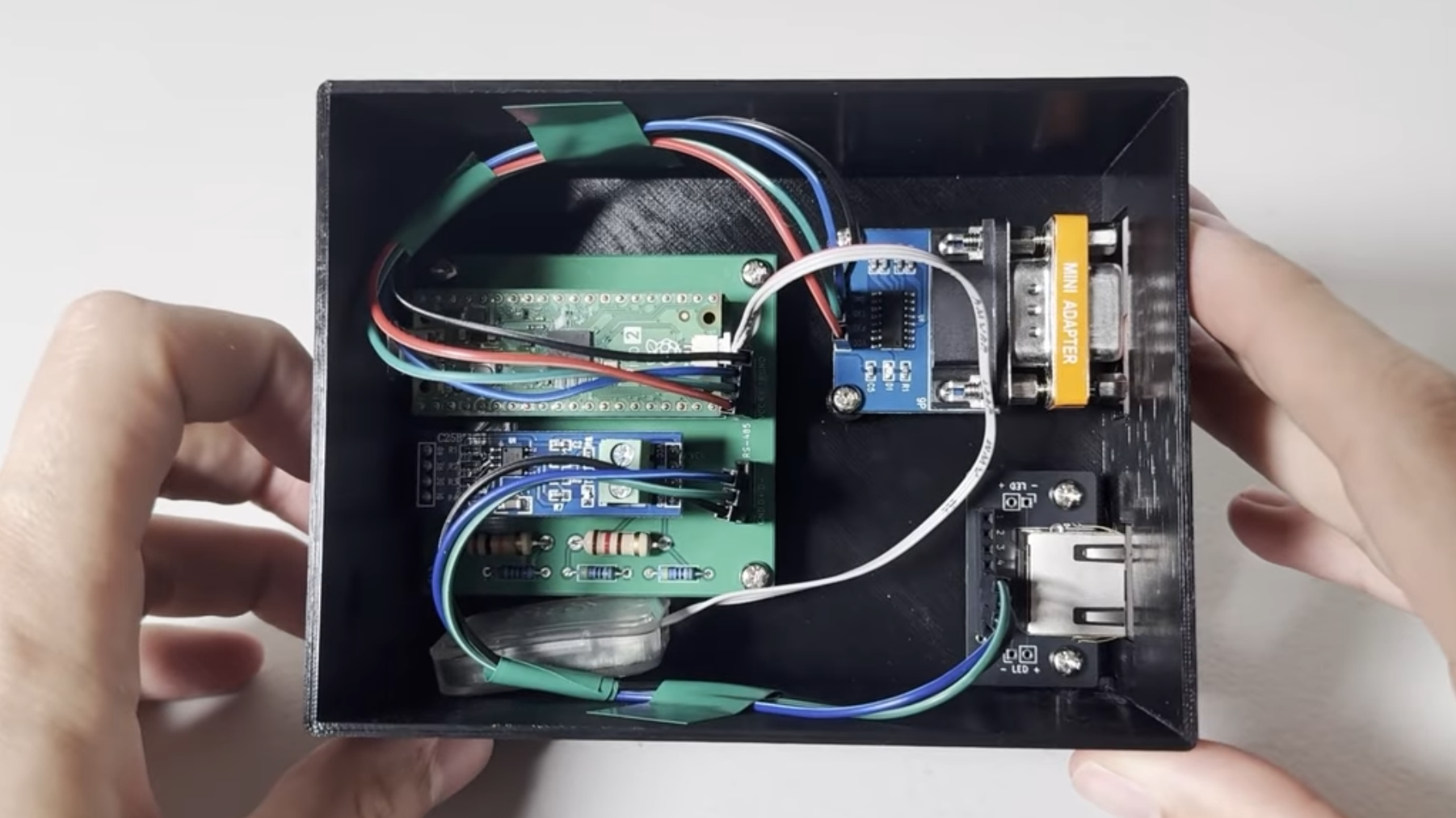
[Chris] therefore designed his own controller based on the Raspberry Pi Pico 2, with firmware written in Rust. The pressure gauge uses an RS-232 interface, which he connected to the Pico’s UART pins using an RS-232 level shifter, with a null modem to swap over the transmitting and receiving pins. The turbomolecular pump used an RS-485 interface, which required a converter circuit and some level-shifting resistors. A custom PCB and 3D-printed case hold the final circuit, which provides a host computer with a single USB interface. When [Chris] tested the controller, the vacuum chamber reached a pressure of 10-6 millibar, and was still slowly falling when he ended the test.
A bipartisan group of UK politicians is sounding the alarm over the country’s partnership with the data analytics company Palantir.
In a report published Tuesday, the 11 members of Parliament’s Science, Innovation, and Technology Committee warned that the country’s ballooning reliance on Palantir’s technology “represents an unacceptable point of weakness” that could hand the company overwhelming bargaining power in future negotiations.
“We know that with vendor lock-in, over time, we’ll get more expensive and worse services,” Dame Chi Onwurah, chair of the committee and member of Parliament, tells WIRED. “It’s a trap that has to be avoided.”
In a worst-case scenario, a deeply entrenched supplier could threaten to withhold service as a way of imposing its will, Onwurah believes. “That could bring public services and our economy to a halt,” she says. “That’s a huge risk.”
Advertisement
Though the committee says that its objections to Palantir are not ideologically motivated, the report also describes a “clear mismatch with UK values.” It points to politically charged comments by Palantir cofounder Peter Thiel—who in 2023 described the British public’s affection for the NHS as “Stockholm syndrome”—and a 22-point manifesto based on a recent book by CEO Alex Karp, which advocates for an overriding fealty to the US and its interests.
“We have a key vendor saying they will exercise technology in accordance with their political mission,” Onwurah says. “If what the UK is trying to do in our NHS or our defense does not align with Palantir’s political objectives, we clearly can’t depend upon them as a supplier.”
To minimize the risks, the committee recommended that the National Health Service, one of Palantir’s primary partners in the UK, activates a clause in its contract next February that would terminate the relationship early.
The UK government began to use Palantir’s technology in 2020 as it scrambled to map the spread of the Covid-19 virus and route medical equipment across the country. Since then, Palantir and its partners have won contracts worth a combined $750 million with the NHS and the Ministry of Defense, among others. The company has touted its ability to enable “innovation and fast-paced problem solving” in the UK public sector.
Advertisement
The report outlines similar dependencies on US-based cloud providers Microsoft and Amazon Web Services, and Fujitsu, the Japanese company at the center of the Post Office Horizon scandal. But “Palantir concerns us most,” the committee wrote.
Palantir did not immediately respond to a request for comment.
The relationship has attracted increased scrutiny of late over the company’s work with US Immigration and Customs Enforcement (ICE), as well as the US and Israeli militaries. The manifesto based on Karp’s book further inflamed concerns about the company’s politics.
“They’re not a company that should be anywhere near British public services,” says Donald Campbell, director of advocacy at Foxglove, a nonprofit that has previously campaigned for the NHS to back out of its contract with Palantir. “Do you want to be giving a company of this kind—with these openly expressed opinions and ideologies—a central role in the UK state that it may get harder and harder to remove them from?”
Advertisement
Appearing before the committee in July last year, Louis Mosley, who heads up Palantir’s European business, distanced the company from Thiel’s comments about the NHS. Palantir’s objective is to “support democratically elected governments in delivering the mandate that they have been elected to deliver,” he said. “We represent a diversity of political views and do not take political positions as a company.”
With little fanfare, US President Donald Trump may have signed one of the most important executive orders in his second term at the White House. With the “Promoting Advanced Artificial Intelligence Innovation and Security” EO, the US government is finally putting its finger on the scale of AI development, more or less demanding that AI companies provide it with access to their Frontier Models for a period of 30 days before their public release.
Since no national US regulations currently exist for AI and much of the oversight is being left to a hodgepodge of mostly in-process state-level regulation, this is the first whiff of broad-based control.
While most of the major AI companies, including Meta, OpenAI, and Anthropic, appear to support the order, they also appear caught off guard by the casual signing and have yet to weigh in.
“One of the quotes I find most inspiring on a hard day: ‘Whatever your hand finds to do, do it with all your might, for in the realm of the dead, where you are going, there is neither working nor planning nor knowledge nor wisdom’ Ecclesiastes 9:10”
That may or may not be a commentary on Trump’s order, but one could fairly wonder whether there’s a hint of concern there, and in other AI halls, about White House meddling in the course of AI.
one of the quotes i find most inspiring on a hard day:”Whatever your hand finds to do, do it with all your might, for in the realm of the dead, where you are going, there is neither working nor planning nor knowledge nor wisdom”Ecclesiastes 9:10June 2, 2026
With new models coming out almost monthly and regular reports that China is closing the gap between Western models and its own model work, there are concerns that a delay to allow the US Department of War, the NSA, and other US Government trusted partners to examine these models could slow down OpenAI, Anthropic, and others, and result in them and the US falling behind this crucial race.
Advertisement
Sign up for breaking news, reviews, opinion, top tech deals, and more.
Anthropic, which is not exactly the US Government’s favorite AI purveyor, may have sparked this move to, if not control, manage the scale and growth of AI when it released its potential cybersecurity-breaking Mythos model, which could find hidden vulnerabilities in almost any vintage software.
Ostensibly, this is the kind of risk the US Government will be looking for: any threat to cybersecurity or infrastructure. But the order doesn’t really specify how these agencies will carry out their work, and, to be honest, I do wonder whether the Trump administration will be digging around for other “issues.”
Advertisement
Where have I seen this before?
It’s highly unusual for commercial software to run through a government agency for vetting unless, say, you’re in China, which demands access to all technology developed within its borders. It’s one of the reasons the US Government was never comfortable with the Chinese company ByteDance developing the TikTok algorithm.
One has to wonder if global partners will soon be looking sideways at Frontier Model work subsequently provided by Anthropic, Meta, OpenAI, Microsoft, and other US-based companies.
Who’s to say the US government won’t look for Frontier model responses that go against the US government party line on various policies? Could they also look for DEI (Diversity, Equity, Inclusion) principles and demand they be scrubbed from Frontier models before they’re released?
Advertisement
The problem here is that this is an executive order coming from a White House that has made no bones about where it stands on a range of social issues. When people talk to their AI chatbots, they often discuss personal issues that could concern topics that run afoul of the White House’s current policies and stances.
It would be better if regulation came from a bipartisan or third-party independent space, one with no stance on police beyond general principles of common good and fairness.
But because the US government cannot agree on anything, that’s not going to happen.
The White House happily steps into this gap and is now in a position to regulate virtually every major model released within US shores. It might be helpful, but it could also be a recipe for disaster on many levels.
I’ve been reviewing robot vacuum cleaners since Ecovacs Robotics brought its first Deebot to Australia about a decade ago. So I like to think that I’ve learnt a few things about what to look for when buying one — knowledge that I’ve used to curate the best robot vacuums in Australia right now.
The manufacturers don’t make it easy, do they? They make every spec sheet sound glowing, but you get what you pay for, especially when it comes to robot vacuums. It’s understandable that you’d want an affordable model, and there are plenty that make sacrifices to keep costs down — you just need to be able to understand what those sacrifices mean for your personal use case.
In the same vein, you don’t have to spend thousands on a robovac, although you will get the top-of-the-line models at premium prices that offer plenty of smart features. Some of those, like agentic voice assistants and Matter connectivity, aren’t really necessary, but you might want pet-specific features that cheaper models won’t have. But not all expensive models are reliable cleaners.
So, what’s a good robot vacuum to buy then? I’ve taken a look at the dozens of robovac discounts on Amazon‘s Mid-Year Sale and picked four at different price points even though they all do pretty much the same thing — vacuum, mop, and clean themselves. Without a discount, they’re all on the expensive side, but the offers make each of them a good-value proposition for different reasons.
I picked the above robot vacuums based on my own or a colleague’s experience of either trying the exact model or a related one that’s very similar. When we test robovacs here at TechRadar, we look at specific things like cleaning prowess, battery life, dock performance and much more.
Advertisement
Allow me to break it down into easier terms for you here, so you can choose the best automated cleaning machine yourself from my four picks or any other model you might have been eyeing.
1. Suction power It’s in the name — a robovac’s primary function is to vacuum, and for that it needs good suction power. Gone are the days when 6,000Pa was considered class leading. Now it’s upwards of 20,000Pa. Now, while the higher suction power is a good thing, a robovac’s cleaning prowess is also dependent on the airflow inside the bot to ensure it’s able to suck up even fine particles and push them through into the onboard bin. If you have carpets, definitely look for high suction specs, but hard floors will be cleaned easily with less.
(Image credit: Sharmishta Sarkar / TechRadar)
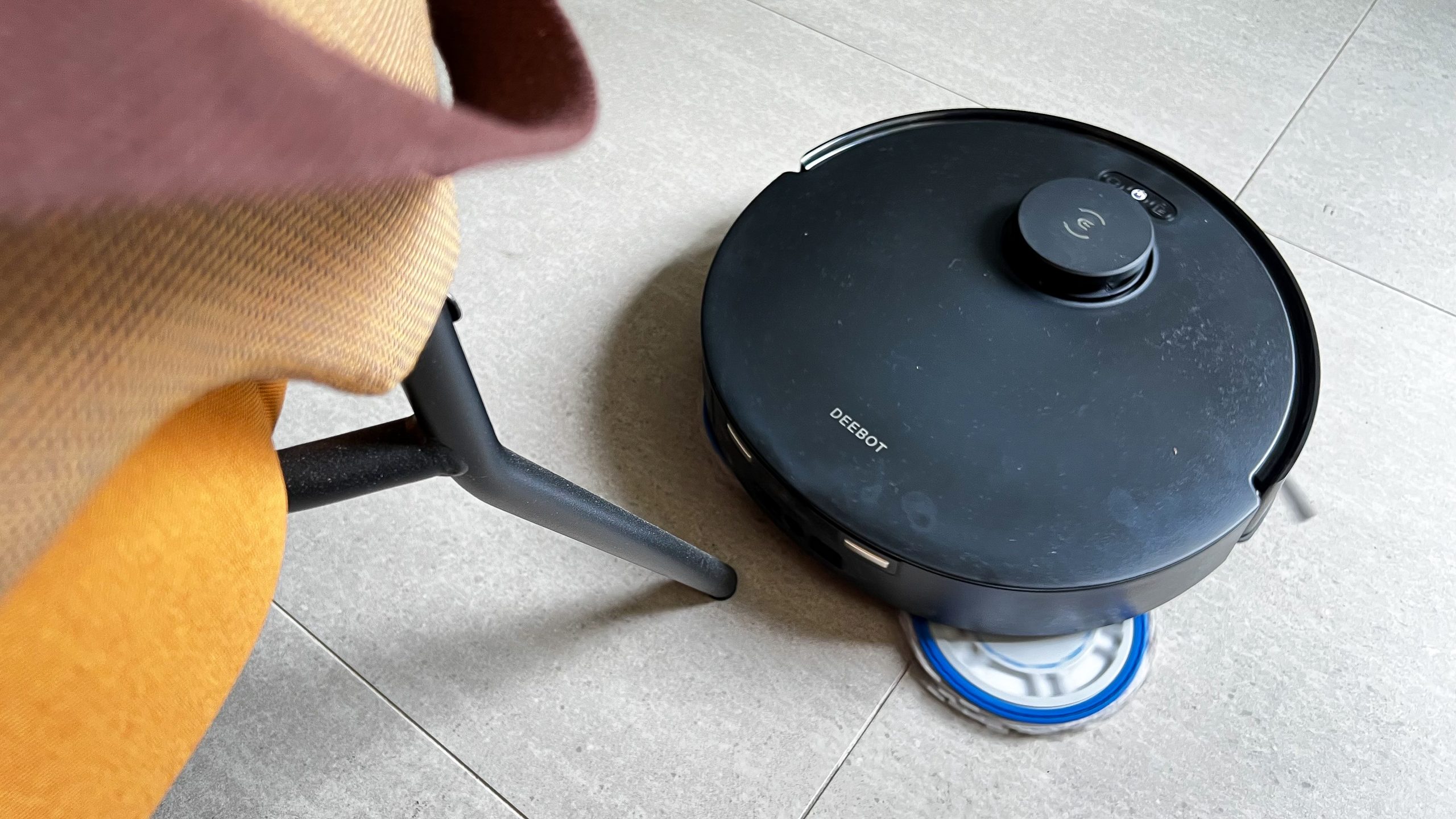
2. Mopping Practically every robovac available today can mop as well, so you’re paying for the feature anyway, but how well they’re able to do so varies. Older models barely wet the floor, but newer models allow you to set a water-flow rate to suit your floor type. Some models that use circular mop pads can apply a little scrubbing motion and a tiny amount of downward pressure to tackle some stains, but I’ve found that roller mops perform better. However, robovacs with rollers are the premium kind, although models like the Roborock Saros 10 listed above can mop really well with its pads. Just make sure you pick one that can extend both pads outward for edge cleaning.
3. Robot height & threshold clearance Most bots have a little puck on the top that houses their navigation tech and, sometimes, a camera. This can prevent the droid from rolling under some low-lying furniture, which means you may have areas being left uncleaned. If you do have low furniture, pick a model with no puck or a retracting puck, but these are premium options. Similarly, you’ll want a bot that can clear at least a 3cm threshold or you’ll need to move it manually if it gets stuck somewhere. Again, premium models can now do well over 4cm.
Advertisement
(Image credit: Future)
4. Dock performance You definitely want to make sure the mops on the bot are cleaned thoroughly after each mopping session, and then dried as well. This prevents germ growth and odour build up. Now, every all-in-one model has a dock uses warm water and air to do so, but the more effective cleaners use hot water and warm air for the same task. I’m yet to meet a dock that isn’t too loud when sucking out dirt into the dust bag, though — I’d love that.
5. Navigation & obstacle avoidance This is very important, of course. If the tech can’t ensure the bot can circumnavigate around socks, shoes, toys or anything else on the floor, what’s the point? So ensure you find a model with good software that allows it to travel a path that’s both effective and efficient. You also want one that doesn’t keep going around in circles, cleaning the same spot multiple times.
6. Battery life This really shouldn’t be an issue with most robovacs available today as most will offer a decent runtime, but you definitely want to pick one that can clean for at least 20-30 minutes at higher settings. Sadly manufacturers only list the maximum runtime based on the lowest settings, so take it with a pinch of salt as real-world use will never get you upwards of 100 minutes as some spec sheets claim.
7. Other features to consider You want to make sure the mops can extend for edge cleaning, while a side brush will typically take care of the vacuuming part. Note, however, that most robot vacuums, no matter how expensive, can miss corners. If you have pets, there are premium models that now offer pet-poo avoidance features and higher suction power to suck up fur and dander. Even for just the family, you definitely want a bot that uses an anti-tangle central bar brush. Smart features, like voice control or Matter connectivity, are nice but unnecessary for the average user. And while some robovacs can double up as a security bot, allowing you to keep an eye on your home via its onboard camera, there are security risks with this feature — another one that’s nice to have but not necessary.
Advertisement
8. Never pay full price If there’s one home appliance you should never pay RRP for it’s robot vacuums. They’re frequently discounted, which means you can pick up a really good one at a better price.
Looking for the most recent regular Connections answers? Click here for today’s Connections hints, as well as our daily answers and hints for The New York Times Mini Crossword, Wordle and Strands puzzles.
I have a complaint about the yellow group in today’s Connections: Sports Edition puzzle: How can a word be a synonym for itself? That will make sense once you play today’s game. If you’re struggling with the puzzle but still want to solve it, read on for hints and the answers.
Connections: Sports Edition is published by The Athletic, the subscription-based sports journalism site owned by The Times. It doesn’t appear in the NYT Games app, but it does in The Athletic’s own app. Or you can play it for free online.
Hints for today’s Connections: Sports Edition groups
Here are four hints for the groupings in today’s Connections: Sports Edition puzzle, ranked from the easiest yellow group to the tough (and sometimes bizarre) purple group.
Yellow group hint: Helps to be tall.
Advertisement
Green group hint: They’re used to winning.
Blue group hint: Hoops players.
Purple group hint: Clues relating to one player.
Answers for today’s Connections: Sports Edition groups
Yellow group: Dunking synonyms.
Advertisement
Green group: Teams with 5+ NBA titles.
Blue group: Nicknames of players in the NBA finals.
Understanding where your deleted files actually go
Unsplash
When you delete a file, it does not disappear immediately. It sits in a kind of digital purgatory, existing in fragments on your drive before being permanently wiped to free up space.
If a hacker encrypted or erased your data, you could theoretically reach back in and pull those files out before they vanish for good. The problem is that modern SSDs, which power most laptops and computers today, manage this space carelessly.
When the drive needs space, it clears deleted data based purely on efficiency, with no awareness of how recently files were removed. Files deleted during a ransomware attack could get wiped first, while old junk files from weeks ago survive.
How your SSD can be turned into a cybersecurity tool
The system works by sequencing deleted data by age, so the oldest deleted files go first, and the most recently deleted files stay protected for as long as possible. It also extends the window for recovering deleted data to up to 126 days, improving data protection by at least 60% with minimal impact on drive speed.
Since the storage drive operates independently from your operating system, it can keep protecting your data even after hackers have taken full control of your software. The research is now in active discussions with industry partners about bringing the technology to market.
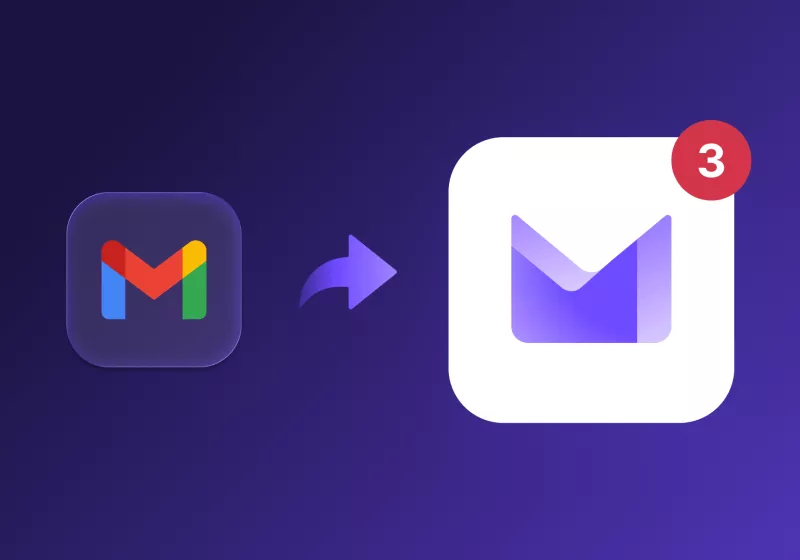
Proton Mail has introduced a new way for Gmail users to switch to its hosted email service. The company is making it easier for people to leave Gmail by adding an option to send and receive emails using a Gmail address directly within Proton Mail. Proton argues that users should… Read Entire Article Source link
You don’t infect anyone in Russia or other CIS countries
Even ransomware cartels make mistakes, and in this case, it was a biggie that could have landed the responsible crim in a Russian gulag: accidentally infecting a company located in a Commonwealth of Independent States country.
In what threat-hunter Dominic Alvieri deemed the ransom “dumbass of the day,” Nova, the affiliate program for ransomware crew RAlord, on Tuesday issued an apology to Eriell Group, a major oilfield services company with headquarters in Uzbekistan and a corporate office in Moscow.
Advertisement
Apparently, Eriell contacted Nova and notified the ransomware operators about an affiliate’s mess-up.
The affiliate has since been banned from the criminal operation, we’re told. In addition to issuing a “formal apology,” the ransomware gang promised to assist Eriell with the recovery process “free of charge.” The malware slingers claimed they didn’t encrypt any files, and pledged not to leak any of the stolen data.
“Apparently, the first rule of ransomware club, you don’t attack organizations in the Commonwealth of Independent States (CIS), is still very much in effect in 2026,” Recorded Future threat intelligence analyst Allan Liska told The Register.
While cybercrime is technically illegal in Russia and other CIS countries, their governments often provide safe harbor for extortionists and other financially motivated crims – especially if they also happen to work day jobs as state-sponsored hackers – and local police look the other way unless the gangs infect any in-country organizations.
The first rule of ransomware club: You don’t attack organizations in the Commonwealth of Independent States
Advertisement
Earlier this year, notorious data-leak-and-extortion crew Scattered Lapsus$ Hunters claimed they had gained “full access” to Resecurity’s systems and stolen “everything.” Resecurity later offered its “congratulations” to the cybercrime crew, which had fallen into the threat intel team’s honeypot – resulting in a subpoena being issued for one of the data thieves.
Pro-Russian hacktivist crew CyberVolk got sloppy when they debuted a ransomware service late last year. They hardcoded the master keys – this same key encrypted all files on a victim’s system – into the executable files, thus allowing victims to recover encrypted data without paying any extortion fees.
While that mess-up worked in the victim orgs’ favor, another coding error committed by Sicarii malware developers makes it nearly impossible for companies to recover their files: the Sicarii encryptor generates a new cryptographic key pair during every execution – but then discards the private key, meaning there’s no recoverable master key.
Similarly, a programming mistake in Nitrogen ransomware prevents the gang’s decryptor from recovering victims’ files, again making paying up futile.
Advertisement
Trellix VP of threat intel strategyJohn Fokker recently told us that he got so sick of seeing the security industry “glorifying threat actors,” that he and his team decided to troll the baddies, and started publishing the Dark Web Roast.
“These are just individuals, they just use computers, and they just want to steal your data and make money,” Fokker told The Register. “They’re not mythical. They don’t have superpowers.” And just like any other individual – or superhero – they sometimes slip up, and give the rest of us a moment of snarky joy. ®
Samsung’s next foldable could finally tackle three of the biggest complaints people have had about book-style folding phones for years.
A fresh leak has revealed what appears to be the most detailed look yet at the rumoured Galaxy Z Fold 8 Wide, which Samsung is expected to unveil alongside the Galaxy Z Fold 8 Ultra later this summer.
According to the leak, the Galaxy Z Fold 8 Wide could weigh just 201g, making it noticeably lighter than the current Galaxy Z Fold 7. That would put Samsung’s large-screen foldable surprisingly close to traditional flagship phones, while offering a a tablet-sized display when unfolded.
The leak also points to a 4.5mm thickness when open, alongside a larger 4,800mAh battery and support for 45W charging. If accurate, that would represent a welcome upgrade over previous Fold models which have often lagged behind rivals when it comes to battery capacity.
Advertisement
However, the most interesting claim concerns the display itself.
Elsewhere, the Fold 8 Wide will feature a 5.4-inch cover display and a 7.8-inch inner screen with a 4:3 aspect ratio. Camera upgrades may also be on the cards, including a new 50MP primary sensor capable of capturing 24MP images.
Advertisement
As always with pre-launch leaks, there’s reason to be cautious. Samsung has yet to confirm the existence of a Fold 8 Wide model, and specifications can change before release.
Still, if these details prove accurate, Samsung may finally have a foldable that feels less like a compromise. A lighter chassis, larger battery and less visible crease could do more to improve the Fold experience than flashy AI features ever could.
Samsung is widely expected to reveal its next foldables at a Galaxy Unpacked event which is heavily rumoured to take place on July 22nd, although that is also still unconfirmed.
Ask for weather apps for iPhone, and you’ll get dozens of recommendations. Some stand out with unique features you won’t find elsewhere, like checking weather along your driving route. The problem is a lot of these include paid subscriptions for their best features, and there’s one free app you already have that can probably do 99% of what you want: iPhone’s Weather app. The weather app may not always have the best weather predictions, but it’s shockingly good for being ad- and subscription-free software.
Being an Apple app, it looks very sleek, adhering to the brand’s minimalistic interface, and — you would think — offers nothing substantial beyond that glossy exterior. You’d be wrong, as some of the best features of the iPhone Weather app are not immediately obvious.
Whether you’re a long-time user of Apple’s Weather app or someone who’s barely touched it, these are the software’s best-kept secrets, plus a couple of somewhat hidden extra functionalities. These recommendations assume that you’re updated to the latest version of iOS.
Advertisement
Use widgets on your Home Screen and Today View page
Jordan Wirth/SlashGear
Perhaps the best way to use the Weather app is to never have to open it; That’s the beauty of the Weather widget. To put a widget on the Home Screen and get at-a-glance forecasts, press and hold on an empty space on your Home Screen until the app icons start wiggling, then hit “Edit” in the top-left corner and choose “Add Widget.” Search in the pop-up menu for “Weather.” Most people would probably go for the 1×1 square that only shows a location’s current temperature and a general forecast with highs and lows, but there’s a lot more, including a 1×2 rectangle and massive 2×2 square with full-week forecasts, temperature ranges… the works. However, these take a full 1/3 or 2/3 of your screen.
Bear in mind that you can add additional weather locations for each individual widget by tapping it in wiggle mode and adding a location. For example, you could have one widget for home and another for your workplace. Conversely, you could add the weather app to a Smart Stack or custom-made widget stack, to bundle together multiple widgets into the space of a single 1×1 square.
Advertisement
If your Home Screen is getting a little crowded, then consider putting the weather widget in Today View. This is the side menu overlay you summon from Home Screen with a right swipe. It exists only for widgets, making it perfect for this purpose. I find this keeps the home screen a lot cleaner and more focused, since even the small 1×1 widget takes up the space of four app icons.
Advertisement
Check air quality
Jordan Wirth/SlashGear
Air pollution is one of these threats that many don’t take seriously enough. Fine particles produced by everyday city traffic and other factors pose a serious danger to respiratory health. Wearing a mask or switching on a quality air purifier on smoggy days should be taken more seriously. Luckily, the Apple Weather app includes air quality data, so you don’t need to download a third-party app just to get this information on your phone.
To find air quality data, select a location and scroll down to the Air Quality section. You can tap it for more information and see comparisons to the day before, potential health risks, the primary pollutants at play, and further details on additional particulate matter, in case that information is relevant to you. Otherwise, you can tap the map icon in the bottom left corner and see a full world map. Use this to see air quality in the general region surrounding your home, or compare it across locations.
The only downside is that iPhone currently does not have a way to show air quality from a widget. The fastest way we found was asking Siri for the air quality, but this is one of these things you shouldn’t use a vocal assistant for, as it only provided the bare minimum info. For easier access, we’d recommend apps like IQAir AirVisual, which supports Home Screen widgets and is an amazing app besides.
Advertisement
Enable weather notifications
Jordan Wirth/SlashGear
There’s nothing worse than going out on a clear weather, only to get soaked by a sudden downpour later on because you didn’t have an umbrella. Consider yourself lucky if you don’t live in a place where weather can turn on a dime from sunny to rainy, without warning. Either way, it helps to have the iPhone Weather app notify you when the clouds are about to rejoin the rivers.
On the main location selector screen, press the three-dot button on the top right and choose “Notifications.” You have two options: Severe Weather and Next-Hour Precipitation. Pretty self-explanatory, and probably the only weather notifications most people need. Note, you can change these granularly by enabling notifications for your current location and/or any other location you have added.
We should note that if you want a more aggressive alert for weather-related emergencies (like heavy rain leading to a flood), these are already enabled by default and make a loud noise regardless of notification settings. Go to Settings > Notifications and make sure “Emergency Alerts” is toggled on, just in case. Depending on where you live, these may be impossible to turn off.
Advertisement
See information on moon phases, sunrises, and sunsets
Jordan Wirth/SlashGear
There are few things quite as majestic as a full moon on a quiet night. The problem is most of us only eyeball the moons waxing and waning, and as a result miss its best moments. The iPhone’s Weather app has moon cycles baked in with all the detail a casual viewer could ever want.
Scroll down on the overview for a location and tap the moon section. You’ll be surprised just how much information there is here, from the current moon phase and details on its illumination percentage, to moonset and moonrise and its distance from Earth. Scroll down a little more, and you’ll find a moon calendar with dates for new moons and full moons, plus a scientific explainer for what exactly “moon illumination” means and why moon distance can vary so much.
Equally useful is the sunrise and sunset data, which you can also tap on in the overview to see more info. You can see exact times for sunrises and sunsets to plan for the upcoming ones, or see the ones you missed. Below that, you’ll find sunrise and sunset time averages and average total daylight hours throughout the year. Although there’s no way to have the weather app notify you when sunrise or sunset is approaching, you can add a sunrise/sunset widget to your Home Screen. If you have an Apple Watch, you can set sunset and sunrise as a complication.
Advertisement
Find more information in the overview
Jordan Wirth/SlashGear
We’d wager that when most people use the weather app, they just glance at the location overview and then leave it at that. Huge shame, since there’s a dragon’s hoard of information there that takes only a single tap to access. To see what we’re talking about, tap on the weather conditionbox. Here, you’ll find detailed forecast graphs and comparisons of “actual” and “feels like” temperature, precipitation chances and totals (measured in millimeters), a forecast summarized in plain English describing the day’s weather, and more. And that’s just the first box!
It’s the same story throughout the entire overview. Tap the precipitation box to see a moving time-lapse of predicted storm patterns; Tap UV index to see how much exposure you’ll be getting throughout the day or week; Tap the wind box to see wind speed, direction, and an animated wind map. We could keep going, but you get the point.
Advertisement
What’s unfortunate is that Apple doesn’t really advertise the full depth of information hidden in the Weather app. Many get pulled into expensive subscription-based weather apps, thinking that’s the only way to find an ad-free, comprehensive breakdown, but in reality, any Apple user already has an entire weather station at their fingertips.
President Trump signed an executive order on Tuesday establishing a voluntary framework for government review of frontier AI models before public release, ending weeks of internal White House conflict over how aggressively to regulate the technology. The order, titled “Promoting Advanced Artificial Intelligence Innovation and Security,” was signed privately without the usual livestream or public ceremony, a contrast with the fanfare that typically accompanies presidential AI announcements.
The final version is substantially narrower than the draft Trump rejected on 21 May, when he scrapped a planned signing ceremony over concerns that the order “could dull America’s edge on AI technology.” The original draft proposed a 90-day mandatory pre-release review period and would have given the government formal evaluation authority over frontier models. The signed version asks companies to voluntarily submit models 30 days before release and participate in a collaborative framework rather than submitting to mandatory testing.
What the order does
The executive order establishes three main mechanisms. First, a voluntary pre-release review framework in which AI developers can engage the government to determine whether models under development qualify as “covered frontier models,” provide access for up to 30 days before planned release, and collaborate on selecting “trusted partners” for early access. The framework is explicitly voluntary, meaning companies can decline to participate without penalty.
Second, the order creates an AI cybersecurity clearinghouse within 30 days, coordinated by the Treasury Secretary, the National Cyber Director, the NSA, and CISA. The clearinghouse will scan for software vulnerabilities, validate discoveries, and coordinate remediation and patch distribution, a direct response to the Mythos crisis that demonstrated how AI-discovered vulnerabilities can outpace existing disclosure and patching processes.
Advertisement
Third, federal agencies are directed to develop benchmarks for assessing AI models’ cybersecurity capabilities and to strengthen the government’s own security defences against AI-enabled threats. The order also addresses AI safety research, though the specific provisions are less prescriptive than what the original draft contained.
The differences between the scrapped draft and the signed order reflect the victory of the pro-industry faction within the White House. The 90-day mandatory review was reduced to a 30-day voluntary window. The formal government evaluation authority was replaced with a collaborative framework. The reporting requirements for companies developing powerful models, which would have echoed provisions in Biden’s repealed AI executive order, were softened to avoid what industry allies characterised as regulatory overreach.
Silicon Valley’s objections to the original draft were decisive. AI companies argued that mandatory pre-release testing would slow American innovation, create a competitive disadvantage relative to Chinese firms facing no equivalent requirements, and establish a precedent for government gatekeeping of technology deployment. The signed order addresses those concerns by making participation voluntary and framing the government’s role as collaborative rather than regulatory.
The gap it leaves
The voluntary framework means the order’s effectiveness depends entirely on whether AI companies choose to participate. Companies already engaged in pre-release testing with CAISI, including Google, Microsoft, and xAI, may continue or expand that cooperation. Companies that view government review as commercially disadvantageous or that are racing to ship products can simply opt out.
The EU’s AI Act, entering full enforcement in August, provides a stark contrast: mandatory requirements, statutory authority, and penalties for non-compliance. The Trump order establishes norms and creates institutional infrastructure (the cybersecurity clearinghouse, the benchmark development process) but relies on goodwill rather than obligation.
Advertisement
For the White House, the quiet signing may be the point. The order gives the administration a policy document it can reference when asked about AI oversight, creates structures that could be strengthened later, and avoids a public confrontation with an AI industry whose leaders are among the administration’s most visible supporters. Whether a voluntary framework is adequate for a technology that can discover 10,000 zero-day vulnerabilities in a month is the question the order deliberately leaves unanswered.




















































You must be logged in to post a comment Login