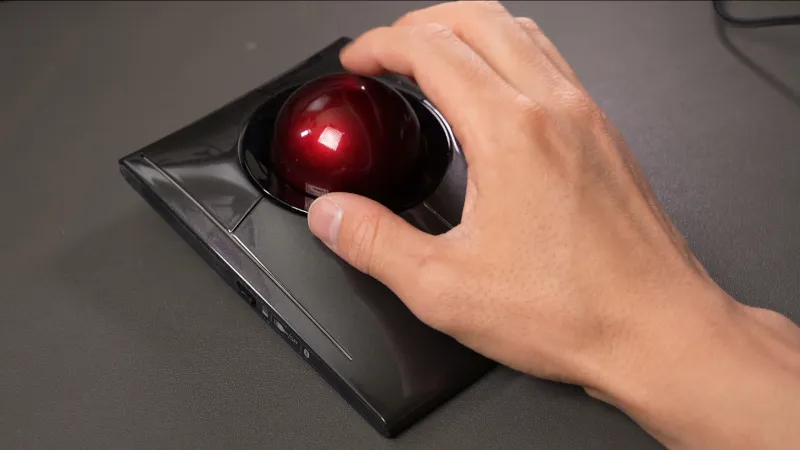
We use CAD packages in our 3D work, and it’s likely that many of us have become annoyed by the limitations of controlling the view of a 3D object using a 2D interface, our mouse. Joystick-like 3D controllers exist for this purpose, but [David Liu] found them inconvenient. He tried a trackball, but that didn’t improve matters. His response was to take the trackball and change the way it controlled the software, turning it from the equivalent of a ball rolling over a surface to a ball representing the object on the screen itself. He can turn and rotate the object intuitively just by moving the ball.
He started with a Kensington off-the-shelf trackball and adapted its electronics and handy twin optical sensors such that it worked in the required fashion. There was a lot of iterating and tuning to get the control feeling right, but he’s ended up with a peripheral that replaces both mouse and 3D joystick, and leaves the other hand free for those keyboard shortcuts.
He’s making a go of it as a product called the Rotatrix, which is definitely worth a look. But we know the Hackaday community, and we’re sure this will have given some of you ideas as to other new ways to control your CAD models. Here’s to a new era of useful peripherals!
The round is led by Headline, with new investors Bullhound Capital, Felix Capital, and Daphni. Valuation is undisclosed. Sereact’s vision language action models already run in BMW, Daimler Truck, and logistics customers. The $110M is more than four times the €25M Series A raised just 15 months ago.
Sereact, the Stuttgart-based AI robotics software company, has raised $110 million in a Series B round led by Headline, the international venture firm with offices in Berlin, San Francisco, and Paris. New investors Bullhound Capital, Felix Capital, and Daphni joined alongside several existing backers.
The company declined to disclose its valuation. Funds will be used to develop Sereact’s core AI model, one that “makes robots smarter and more adaptable to different tasks”, and to scale deployment across logistics, manufacturing, and, increasingly, humanoid robot platforms.
Sereact was founded in 2021 by Ralf Gulde (CEO) and Marc Tuscher (CTO), both former AI researchers, at the University of Stuttgart.
Advertisement
The 💜 of EU tech
The latest rumblings from the EU tech scene, a story from our wise ol’ founder Boris, and some questionable AI art. It’s free, every week, in your inbox. Sign up now!
The company’s technical approach is grounded in Vision Language Action Models (VLAMs): AI systems that combine computer vision, natural language understanding, and action planning into a single model, allowing robots to perceive their environment, interpret instructions, and execute physical tasks without requiring complex programming or environment-specific pre-training.
A robot picking a fragile object can, in principle, evaluate whether its planned grip will cause damage before its gripper closes.That capability is the meaningful differentiator in a market where most industrial robotics still operate on pre-programmed sequences that assume a controlled, predictable environment.
Advertisement
Warehouses, manufacturing floors, and logistics facilities are not controlled environments: objects arrive in unpredictable orientations, packaging varies, and edge cases are constant.
Sereact’s software-first approach, explicitly positioned against the hardware-first strategies of most robotics companies, is designed to make robots adaptable to this variation without requiring engineers to reprogram them for each new object type or layout change.
In Gulde’s formulation from the Series A announcement: “with our technology, robots act situationally rather than following rigidly programmed sequences.”
The commercial record behind the Series B is substantive. Customers include BMW Group, Daimler Truck, the Dutch e-commerce fulfilment company Bol, and logistics specialists MS Direct and Active Ants.
Advertisement
The deployment at automotive OEMs is editorially significant: BMW and Daimler Truck are not pilots or proof-of-concepts, they are production environments where the economic cost of a robot failure is measured in line stoppages.
Sereact’s technology reaching production at that tier of customer is the validation signal that distinguishes it from the large number of AI robotics companies still operating at the demonstration stage.
The funding trajectory makes the ambition of the round clear. Sereact raised $5 million in seed funding in 2023, €25 million (approximately $26 million) in a Series A led by Creandum in January 2025, and now $110 million in April 2026, a more than four-times step-up from the Series A in fifteen months.
Creandum’s Johan Brenner captured the investment thesis at the Series A: “most AI robotics companies are currently hardware-first. What sets Sereact apart is their software-first, foundational approach which means they have the potential to become the brain of any robot that requires vision and autonomous capabilities.”
Advertisement
That thesis, a software-first robotics intelligence layer deployable across any hardware platform, is essentially the same thesis that has made Mobileye valuable in autonomous vehicles and that Nvidia is pursuing through its Isaac robotics platform: the idea that the highest-margin position in robotics is not the robot itself but the intelligence running it.
The broader market context is accelerating. Humanoid robot deployments by Figure AI, Boston Dynamics, and Unitree are moving from controlled tests to commercial production at warehouse and manufacturing customers.
The global humanoid robot market, valued at under $1 billion in 2023, is projected to exceed $38 billion by 2030. Tesla’s Optimus production ramp, targeting volume output from July 2026, will require robotics intelligence software at scale.
Sereact’s explicit intention, stated at the Series A, to expand beyond logistics into humanoid robot platforms positions it to compete for that market. The $110 million Series B is the capital raise that makes that expansion credible.
Samsung has come a long way from its humble beginnings as a grocery trading store all the way back in 1938. In addition to being a household name in the appliance world, the brand has become synonymous with mobile phones. Among the major moments in the history of Samsung Mobile is the introduction of the very first Samsung cell phone, which happened way earlier than you might think. While it took until the 1990s and 2000s for handheld mobile phones to truly boom, the first Samsung cell phone was slightly ahead of the curve, debuting in 1988.
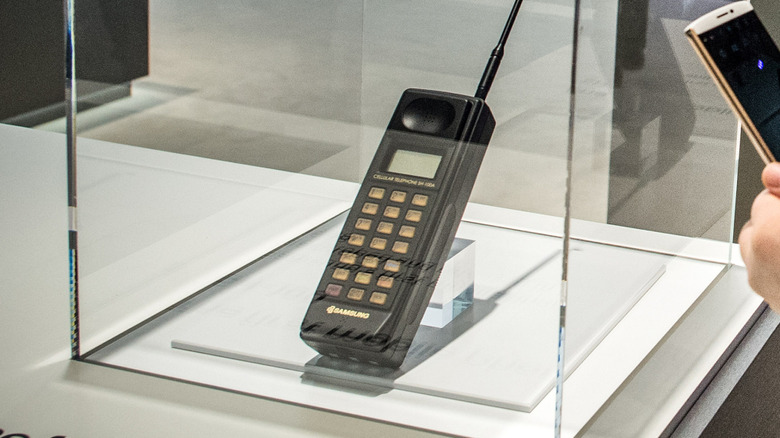
Dubbed the Samsung SH-100, this blocky, antennaed phone isn’t much to look at by modern standards. However, it has earned its place in history as not only Samsung’s first foray into the cell phone market, but as the first cell phone ever produced by a South Korean company. It was shown off for the first time during the Seoul summer Olympics, but this major spotlight didn’t translate to incredible sales success. Estimates place the sales numbers on the SH-100 at a mere few thousand units, which is hardly a strong start for Samsung’s cell phone endeavors.
Despite this, Samsung has gone on to become a hugely successful entity in the phone world. Not only is this remarkable given the SH-100’s rocky start, but also because of the less than stellar performance of its even more antiquated predecessor.
Advertisement
While dated, the SH-100 was a huge step up for mobile phone technology
David Ramos/Getty Images
Even with its lack of exciting features and bulky design, the SH-100 is a key player in the history of Samsung mobile phones. It set the stage for future advancements from the company in the following years, such as the release of the world’s first MP3-enabled phone, the Samsung SPH-M2500 in 1999, and Samsung’s first foray into the world of Android, the Galaxy S, which hit the market in 2010. Of course, it’s entirely possible none of these and others would have come to fruition had it not been for the first Samsung phone, the only-somewhat-mobile SC-1000.
Yes, on a technicality, there’s a mobile phone made by Samsung before the SH-100, but calling it a true mobile phone is a stretch. The SC-1000, which released in 1985, was an old school car phone meant to be used while on the move. It couldn’t leave the vehicle, and it was quite cumbersome in size and shape. That’s to say it wasn’t a huge hit and ultimately fizzled out, along with the wider car phone trend, as the 21st century approached and cell phone technology advanced. Still, car phones are a key step in the stunning transformation of cell phones throughout the years, and the SC-1000 was needed to reach the SH-100 and phone models beyond.
Advertisement
Samsung’s SH-100 is a dinosaur from a 2026 perspective, but its place in phone and communication history can’t be denied. It wasn’t the most successful model Samsung has ever seen, but it endures as a major advancement for the company all the same.
Do you remember 3D TVs? They had a roughly six-year run from 2010 to 2016, a timespan that witnessed the demise of plasma TVs and the ascent of OLED TV technology. At that same time, there was a 3D movie boom in theaters, with nearly every major release getting a 3D-format screening, whether the content benefited from the addition of a third dimension or not.
Booms are usually followed by a bust, and these days most folks don’t even give a second thought to 3D movies. In an ironic twist, however, recent advances in display tech have created fertile ground for 3D viewing, particularly for watching 3D movies at home.
To 3D or not to 3D
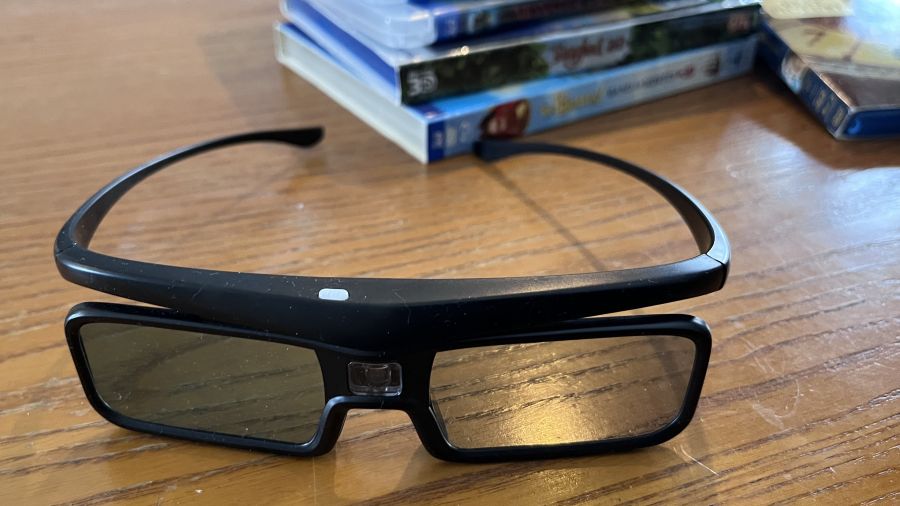
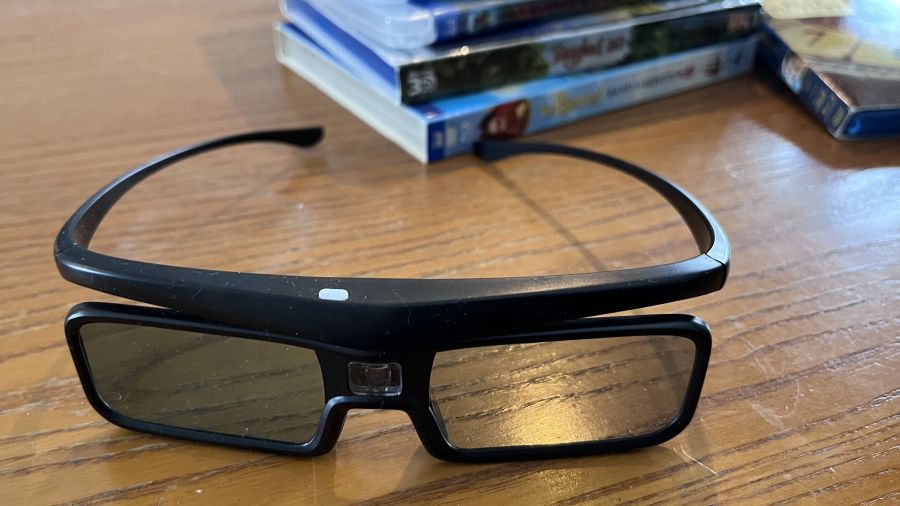
AWOL Vision’s DLP Link active 3D glasses
I’ll admit to having geeked out on 3D during the last boom period, partly because I was regularly reviewing TVs at the time, and also because I had young kids who wanted to see the new animated movie releases, most of which were shown in 3D. Consequently, I spent many a weekend wearing 3D glasses in theaters, and also amassed a decent-sized Blu-ray 3D disc library for home viewing.
Looking back at that time, my recollection is that the 3D kinda sucked, both at the theater and at home. In theaters, it was the pre-laser projector era, when the brightness of a typical digital cinema projector was significantly lower than what you get in today’s venues. Put on 3D glasses, and the picture put out by that already brightness-challenged projector could look almost unacceptably dim.
Along with being dim, many movies shown in 3D weren’t actually shot using 3D cameras but instead converted to 3D. Not surprisingly, any 3D effect in these titles was minimal, or even accidental.
Advertisement
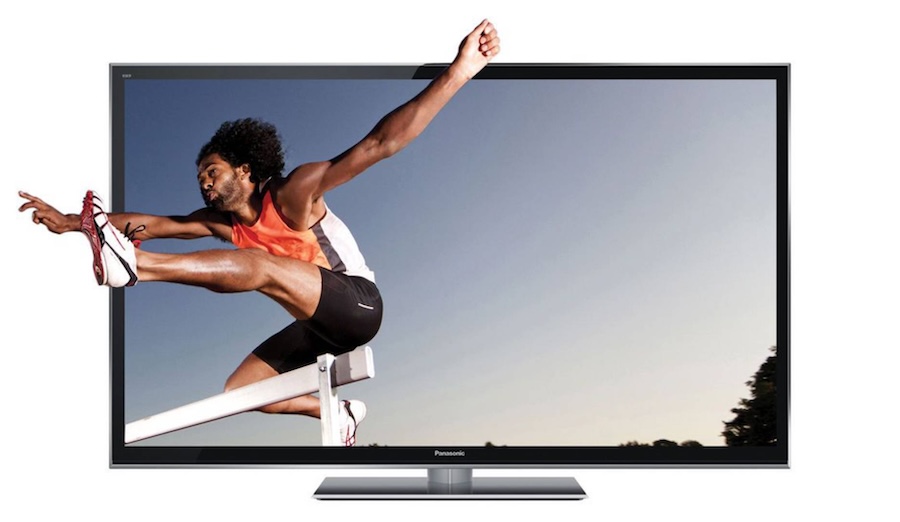
One of Panasonic’s final 3D TV offerings before abandoning both 3D and the US TV market
On the home front, the 3D TVs of the time had smaller screen sizes and were significantly less bright than today’s models. Today, a typical lineup from any TV brand ranges from 55 inches up to 98 inches, and peak brightness for higher-end models is in the 2,000-3,000 nits range. Back in 2015, screens generally maxed out at 65 inches, with 55 inches being a more common size. As for brightness, one of the last 3D TVs I measured, a Panasonic LCD model, topped out at a mere 132 nits.
(Looking back at that 2015 review, I was reminded that Netflix at one time streamed 3D content, and that I had actually watched a Wim Wenders 3D movie on the Panasonic. Crazy.)
Most home projectors in that earlier era also supported 3D, which let you watch 3D movies on 100-inch-plus-size screens. But while a bigger screen provided a better and more immersive experience, the brightness of pre-laser, lamp-based home projectors was much less than what you can expect today. To cite one example, the Sony VPL-VW350ES, a 4K SXRD projector that cost $10,000 when I tested it in 2015, had a specified 1,500 lumens brightness. Today, the Sony Bravia Projector 7, the company’s entry-level 4K laser model, lists for the same price and has a specified 2,200 lumens brightness, a near 50% increase.
Surveying the 3D landscape
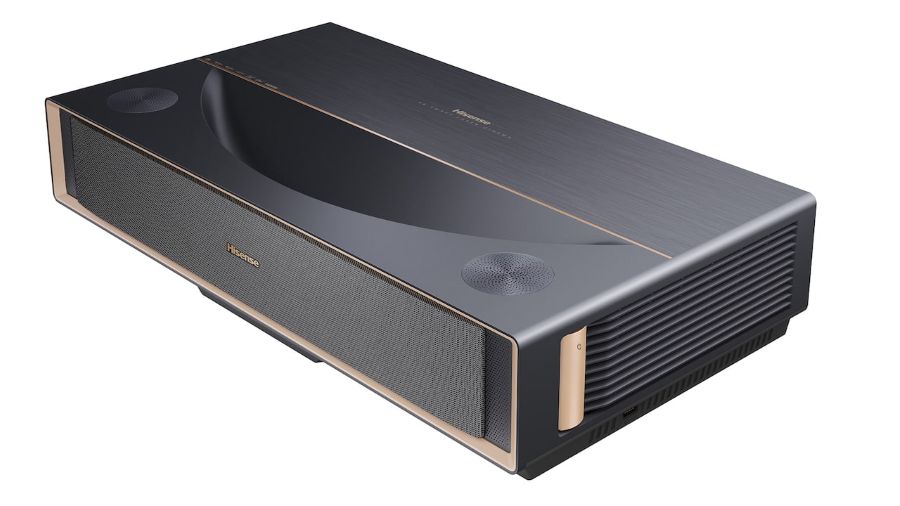
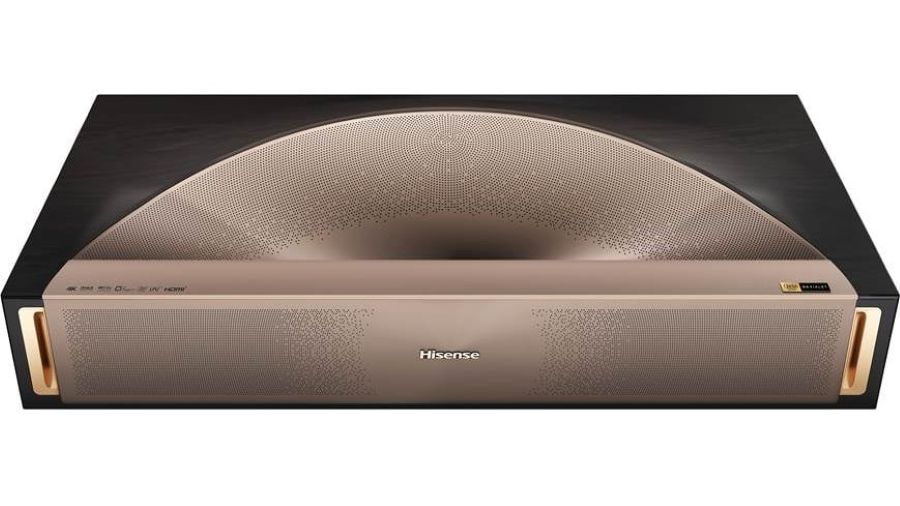
The Hisense PT1 is an affordable ultra short throw RGB laser projector with 3D support
Today, there are still some 3D theatrical releases, though most are kids-oriented animated movies like the recent Pixar hit Hopper and The Super Mario Galaxy Movie. New Blu-ray 3D discs also continue to trickle out, with the latest entry in the Avatar franchise, Avatar: Fire and Ash, which is scheduled to ship in May 2026, being one notable release.
Anyone who owns a 3D-capable Blu-ray player and picks up Avatar: Fire and Ash on disc will find the 3D at home landscape much improved compared to the 3D boom years, and that comes down to one product category: projectors.
I recently got my hands on the Hisense PT1, a 3D-capable projector. The PT1 is an ultra short throw (UST) model designed for close placement to a screen and it supports screen sizes up to 150 inches. At $2,500, it’s affordably priced for a 4K UST projector, and its 2,500 lumens specified brightness exceeds that of considerably more expensive long throw projectors such as the Bravia Projector 7, a model that, despite its relatively high price, doesn’t offer 3D support.
Advertisement
Advertisement. Scroll to continue reading.
Having the Hisense PT1 in-house gave me an opportunity to do something I’ve long been wanting to do: revisit my Blu-ray 3D disc collection to see how the experience holds up on a bigger, better, and brighter display than what I was used to in the old days. For my viewing, I paired the Hisense with a 100-inch Elite Pro AV Floor Riser Pro DarkUST 3 projection screen using an Oppo UDP-203 4K Blu-ray player as a source. Active 3D glasses were AWOL Vision DLP Link.
3D Revisited
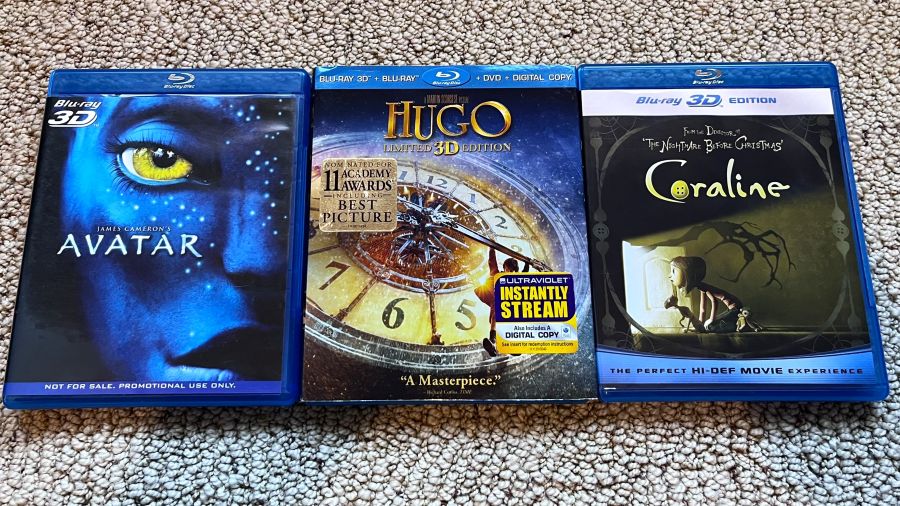
The holy 3D Blu-ray trinity. Each of these movies was shot using a stereoscopic process as opposed to being converted to 3D in post-production
To get the 3D TV party started, I selected three movies that I know were actually shot using a stereoscopic process and not upconverted to 3D: Avatar, Hugo, and Coraline. It didn’t hurt that these are all good movies – very good in the case of Coraline – and that I remembered them as having a pronounced 3D effect when I first watched them, both in the theater and at home.
Avatar is the king of modern 3D spectacles, and it was the disc I was most eager to check out on the Hisense projector. (The next chapter in the series, Avatar: The Way of Water, was also a 3D banger when I watched it at my local IMAX theater, and it looked great on an Apple Vision Pro headset that I briefly had on loan.)
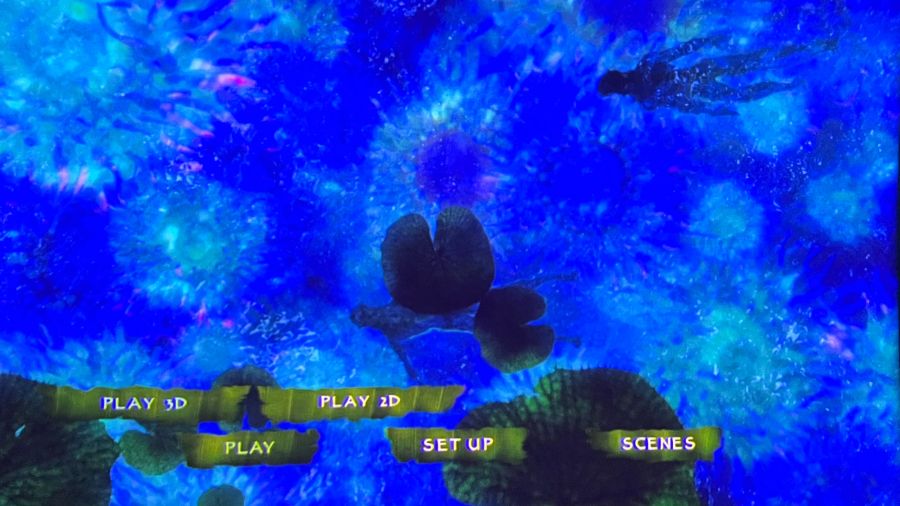
To quickly sum things up, Avatar looked great on the system. The picture had strong contrast and bold color, especially in the luminescent forest scenes early on, and the 3D effects were even more pronounced than I remembered. There really was a sense of being there in the forest with those blue aliens. I found that brightness could have been better – I guess I got spoiled by watching Avatar: The Way of Water in optimal 3D viewing conditions – but the picture wasn’t so dim as to prevent me from enjoying it.
Advertisement
Hugo on the Hisense was another case where the 3D effects were more pronounced than I remembered – the picture was almost too three-dimensional. Unlike Avatar, Hugo is a good enough movie (it was directed by Martin Scorcese) that you don’t need 3D to fully enjoy it, so this is one case where I’d forego the third dimension to get the added picture brightness in 2D.
Coraline (2009) was the first stop-motion animated feature to be shot in 3D, and it received a 4K restoration and 3D theatrical re-release in 2024. Unfortunately, the remastered version didn’t make it to Blu-ray 3D, though a 4K disc version is available.
Watched on the Hisense UST projector, my original Coraline disc lacked the 3D depth swagger of Avatar and Hugo, though there were some scenes that strongly benefited from the extra dimension, particularly the ones where Coraline crawls through the passage to and from the Other World. I had caught the remastered 2D version in theaters back in 2024, but watching it in 3D on a 100-inch screen at home was a compelling enough experience that I found myself sitting again through the entire movie.
Plowing through select scenes from the rest of my collection, I was surprised to see how good some of those discs, which I previously hadn’t been impressed by, looked on the big screen. Disney’s Tangled (which even has previews in 3D) and How to Train a Dragon both had subtle, yet impressive depth effects, and the IMAX documentary Deep Sea 3D was a visual delight, particularly the jellyfish segment. The Tsui Hark historical martial arts drama Flying Swords of Dragon Gate, in contrast, was almost too much in 3D given its non-stop over the top, gravity defying action scenes. And the same could be said for Pacific Rim, which had a near-wobbly look due to the shifting spatial perspectives.
Advertisement
Some things are better left in two dimensions.
A 3D TV revival?
The Hisense L9Q, the company’s flagship UST projector, is rated at 5,000 lumens
The popularity of 3D movies may come and go, but the format will never completely disappear – it’s got way too much sticking power. What I don’t expect to see revived at any time in the near future is 3D TVs. Set manufacturers, and the viewing public, seem pretty much done with that concept.
Fortunately for 3D movie fans, 3D lives on in projectors. That’s not to say that all new projectors support 3D. In fact, Epson, Sony, and JVC have all dropped 3D support in their latest models. But other projector brands such as Hisense, Optoma, AWOL Vision/Valerion, and XGIMI are bullish on 3D, providing broad support for the format across their respective product ranges.
Looking back on my 3D experiment/nostalgia trip, the one thing I would have changed was to use a brighter projector. With a rated 2,500 lumens, the Hisense PT1 has good brightness for the price, and is a great value for an RGB laser projector. But the company’s flagship UST model, the Hisense L9Q, which is rated at 5,000 lumens, twice the brightness, would have been a better choice. The L9Q costs $6,000, and while that price might be high, it is apparently the cost of doing proper 3D business.
CNET just launched People’s Picks, a series of surveys where actual real-life humans like you vote for the products and services they use and can’t live without. For our first survey, we want you to weigh in on your favorite headphones and earbuds. We’ll choose winners based on your recommendations and publish a roundup featuring your top picks. So be sure to check back in a few weeks to see if your favorites made it to the list.
Watch this: AirPods Max 2 vs. Sony WH-1000XM6: Which Headphones Are Better?
Why we want to hear from you
Our writers and editors test hundreds of products each year, but your real-world experience with these devices is something we can’t replicate in our labs. You’ve used these headphones at the gym, on your commute to work and on long flights, and that perspective is invaluable. Your voice helps others know about the headphones or earbuds you love, too.
Advertisement
“I review a lot of headphones and earbuds for CNET, and there are plenty of great models from the top brands in this survey that I rate highly. I’m always curious about what models people ultimately choose and why, so I’m excited to get your feedback and learn the results of this survey,” says David Carnoy, CNET’s executive editor and headphones expert.
With our survey, we’ll collect answers from real-world users like you. The headphones and earbuds chosen through our 3-minute survey will be featured in our People’s Picks roundup of the top picks based on your recommendation.
Watch this: AirPods Pro Alternatives. Great Sound for Less, but Is That Enough? | All Things Mobile
Make your voice heard
Whether you swear by a pair of $25 earbuds or love a pair of high-end headphones, your pick counts. The survey takes just a few minutes to complete, and after we gather enough information, we’ll tally the results and publish the winners.
Advertisement
Not sure what to pick? Check out our list of the best headphones to revisit your favorites before voting.
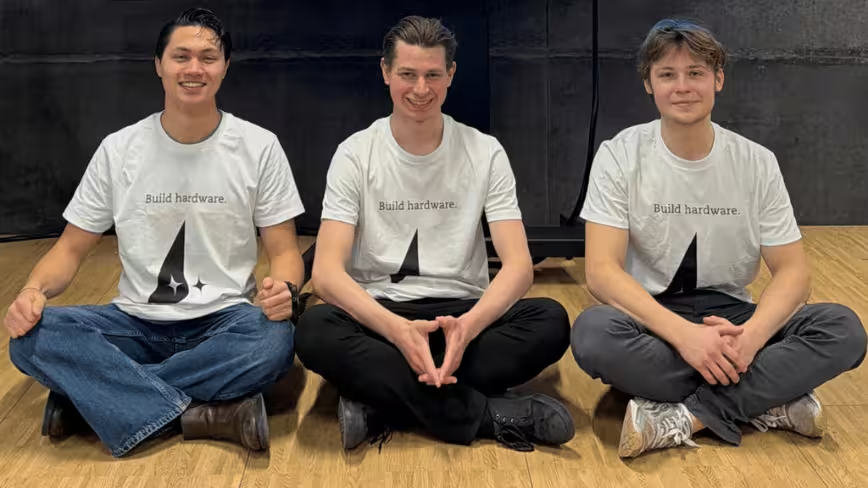
The round amount is undisclosed. Backers include Nordic Makers, Emblem, the Lovable company itself, the Sequoia Scout Fund, and the Andreessen Horowitz Scout Fund. Lovable CEO Anton Osika personally endorsed the team. Atech lets users describe a hardware concept in natural language and receive a working prototype.
Atech, a Copenhagen-based AI hardware startup, has raised an undisclosed pre-seed round from Nordic Makers, Emblem, Lovable, the Sequoia Scout Fund, and the Andreessen Horowitz Scout Fund.
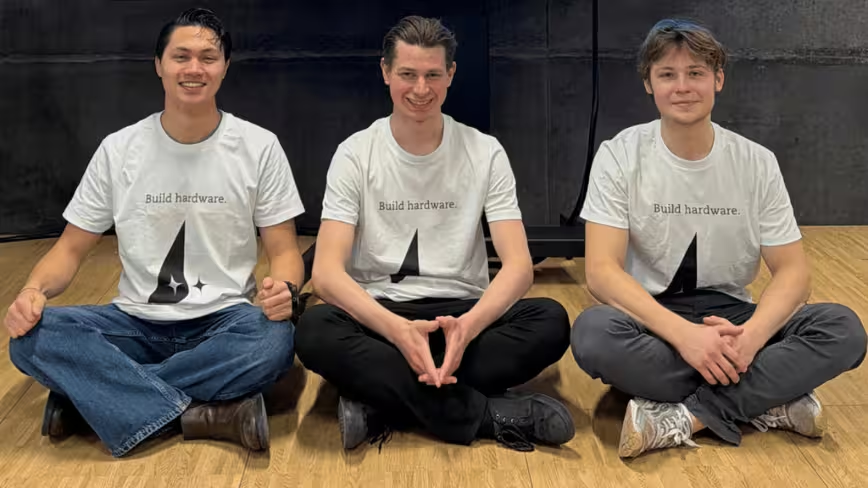
Founded by Vladimir Baran (CCO), Tomas Erik Harmer (CEO), and David Stålmarck (CTO), the company is building what it calls “vibe-engineering” for hardware, a platform that lets users describe a physical device concept in natural language and receive a working prototype, with all underlying technical complexity handled by the platform.
The conceptual anchor is the parallel with what Lovable did for web application development. Lovable, the Swedish startup that allows non-developers to build full-stack web applications through natural language prompts, is valued at over $1 billion following rapid growth from its 2024 launch.
Anton Osika, Lovable’s CEO, backed Atech directly and provided the company’s most significant endorsement: “I am seeing the same patterns Lovable had but for hardware. I’m really excited to see Atech’s journey. The team is one of a kind.”
Advertisement
That institutional stamp of approval, from the founder of the software-vibe-coding category, is the most newsworthy element of the announcement and frames Atech explicitly as the hardware equivalent of an already-validated category.
The problem Atech is addressing is genuine and well-documented. Building a hardware prototype has traditionally required either years of specialised engineering expertise or significant capital to hire that expertise.
A developer can build and deploy a web application in a weekend using modern tools; the equivalent end-to-end hardware experience does not exist. This asymmetry has kept hardware innovation concentrated among a small group of specialists and within well-capitalised companies, while software development has been progressively democratised over the past decade through layers of abstraction that removed the need to understand compilers, memory management, or network protocols.
Harmer, Atech’s CEO, described the gap: “Software has an entire stack of tools that lets a teenager build an app in a weekend, hardware doesn’t, and we’re still working at the first level of abstraction. Atech is building the missing layers, so creating in the physical world can feel as fast and joyful as writing code.”
Advertisement
The investor syndicate is notable for a pre-seed round and warrants careful characterisation. The Sequoia Scout Fund and the Andreessen Horowitz Scout Fund are scout programmes operated by Sequoia Capital and a16z respectively, through which scouts, typically founders and operators in the funds’ networks, make small investments (often $5,000 to $100,000) in early-stage companies on behalf of the firm.
Scout fund participation does not constitute a direct investment by Sequoia or a16z in the traditional sense, and does not imply follow-on commitment from the parent firms. For Atech, the value of scout participation is primarily signalling, proximity to two of the world’s most prominent venture capital firms, rather than the capital amount itself.
Nordic Makers is a Copenhagen-based angel investor collective with deep ties to the Danish and broader Nordic startup ecosystem. Emblem is a European seed fund.
Lovable’s participation as a corporate backer, rather than just as an endorser, gives the round a strategic dimension: Lovable has a direct commercial interest in seeing hardware development democratised, as it would expand the surface area for Lovable-style interfaces.
Advertisement
The broader thesis Atech is operating within, which the company refers to as “Physical AI”, is gaining traction across the industry. Nvidia’s 2025 annual report framed Physical AI as its next major market opportunity: intelligent systems that sense, interact with, and act upon the physical world, including robotics, autonomous vehicles, drones, and industrial systems.
As these applications proliferate, the ability to rapidly prototype physical hardware becomes a competitive capability rather than a niche skill.
Whether a natural-language-to-prototype platform can genuinely close the hardware-software gap depends on how far the abstraction stack Atech is building can reach: PCB layout, component selection, firmware, and manufacturing considerations are all domains where the penalty for getting things wrong is a physical object that does not work, not a bug fix pushed in a pull request.
That is a harder problem than Lovable solved, and it is the question the company’s first customers will answer.
Elon Musk called violent crime in San Francisco “horrific” and moved the offices of his social media business X outside the city in 2024 because of safety and business considerations. Other local tech companies have attempted to address their security concerns by partnering directly with cops.
Airbnb and Salesforce are among businesses that for years have contracted San Francisco police to protect their offices on a regular basis, according to public records obtained by WIRED. Airbnb, for example, spent roughly $428,443 for the presence of uniformed, armed officers in 2024, the most recent year for which complete data was received. Salesforce shelled out about $727,907 through a security vendor. The payment amounts have not been previously reported.
Salesforce hired police to protect its offices in San Francisco’s tallest structure, known as Salesforce Tower, as well as a nearby building in the city’s busy downtown area. It also spent nearly $41,000 for officers at its TrailblazerDX 2024 conference hosted at the city’s convention center.
The security practices of tech companies in San Francisco have received renewed attention in recent weeks after a man allegedly threw a molotov cocktail toward the home of OpenAI CEO Sam Altman and tried to barge into the company’s headquarters by ramming a chair into the building’s glass doors. Authorities allege the suspect wrote a document criticizing AI technologies that outlined a goal to kill Altman and referenced the names of other AI executives. He is facing state and federal prosecution but hasn’t entered formal pleas yet.
Advertisement
OpenAI and Anthropic, the two leading generative AI model developers based in San Francisco, have not been regular customers of the city rent-a-cop program, according to police spokesperson Allison Maxie.
Salesforce, Anthropic, and Airbnb declined to comment. OpenAI did not respond to requests for comment.
The contracting program is known locally as 10B, which is also the section of the city code authorizing it. Any person, company, or organization that desires extra personnel or equipment for “law enforcement purposes” can request “such personnel to perform such services,” as long as the police chief signs off on it first. Under the law, companies pay the same hourly rates for officers that the city would, including overtime. In early 2024, the rate for a standard officer was $135 an hour during the day, while a lieutenant fetched up to nearly $190 at night, records show.
The program is often used by organizations hosting concerts, events, and conferences, as well as by sports teams that need additional security. The largest spender in 2024 was the San Francisco Giants baseball team, with a bill approaching $1.9 million. That year, at least four National Basketball Association teams paid a collective sum of about $16,500 for police escorts.
Advertisement
Several tech companies used the program on one-off bases in 2024. Records list OpenAI as paying $813.43 for unspecified coverage at the Asian Art Museum, Microsoft having a single bill of $1,622.16, and Zoox running a tab of $838.43. Occasional or one-time customers in prior years have included Affirm, Cruise, Datadog, and Fanatics.
Zoox spokesperson Marisa Wiggam said police protected a large offsite gathering for employees and that it is open to using the program again if a need arises. Microsoft and Affirm declined to comment. The other companies did not respond to requests for comment.
The program has been used more regularly by houses of worship, office building landlords, retail stores, and bank branches, including Apple, Bank of America, Best Buy, Bloomingdale’s, Chase, Lululemon, and Sephora, records show. The firm Security Industry Specialists paid over $1.2 million in 2024 for what police records described as coverage at three Apple stores, making it the year’s second-largest customer.
An estimated 80 percent of police departments across the country allow moonlighting by officers informally or through formal policies like San Francisco’s, according to a survey from over a decade ago by Seth Stoughton, faculty director of the University of South Carolina’s Excellence in Policing & Public Safety Program. Some cities have raised concerns about the conflicts of interest and liability risks posed by the arrangements. But agencies that permit them say they benefit community relations and officers’ wallets, Stoughton’s survey found.
Folks who pony up for the privilege of purchasing bulk goods at big-box wholesaler Costco might be quick to tell you there are many reasons they opt to shop there. While it may not be the first reason they list, it’s likely that the wholesale chain’s customer-friendly return policy is one of the more legitimate pluses. If you’re unaware of Costco’s policy, it offers a 100% satisfaction guarantee on virtually any item you purchase within its walls.
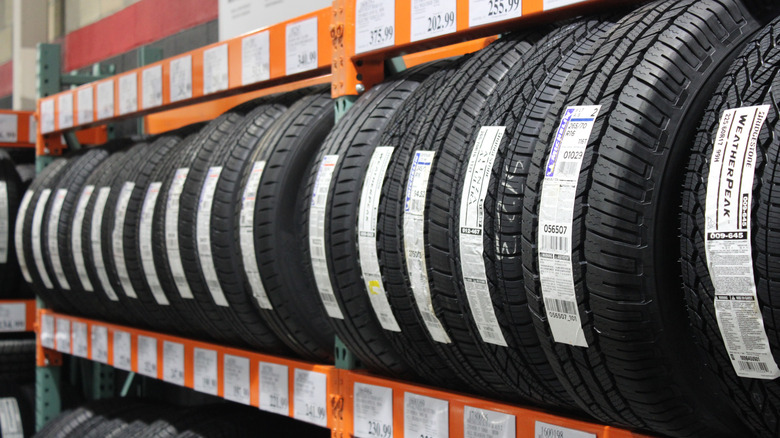
That, of course, means that almost any item you buy at your local Costco can also be returned within 90 days of purchase. “Almost” would be a word worth keying in on when it comes to the wholesaler’s policy, however, as there are some items that are simply not eligible for a return. Costco does, after all, sell virtually everything you can imagine these days, including even tires for cars, trucks, and SUVs. Since the chain’s wholesale setup allows it to undercut some retailers on pricing for desirable models from the major tire manufacturers, tires have become big sellers at Costco.
However, if you choose to buy your tires there, you may not be able to return them, as Costco has designated them as items with a “limited useful life expectancy.” That list also includes things like batteries, which begin to degrade almost immediately after being installed. That fact is enough to disqualify tires from its otherwise liberal return policy. There are, however, scenarios in which tire returns may be accepted at Costco.
Advertisement
What to know about Costco’s policy on tire returns
B2GDrone/Shutterstock
Regarding those products with “limited useful life expectancy,” it appears that Costco’s no-return policy applies to items that have already been used. For instance, batteries that have been opened and installed in a device cannot be returned. Ditto for tires that have already been installed on a vehicle and driven on. If, however, you purchased your new tires online from Costco and decided that you no longer wanted or needed them, they can be returned unused to the store for a refund.
According to Costco’s FAQ page for tire purchases, there are two avenues available to members who’ve decided they don’t want to keep their tires, with the wholesaler offering a refund to those who promptly visit the Wholesale Tire Center once the tires have arrived. You can also contact Costco directly, and a representative will submit a refund request on your behalf. That refund can be credited back to your original method if you purchased the tires from Costco.com. However, exchanges are not an option in this scenario, with Costco requiring shoppers to place a separate order if they want different tires.
Advertisement
While Costco will apparently not accept returns on installed or used tires, shoppers may not be completely out of luck if they are not satisfied with their new tires. That’s because many manufacturers offer warranty coverage on their tires for as many as 60 days, as is the case with the family-owned Michelin brand. Those policies tend to require that customers return the tire to the point of purchase, where sellers like Costco can offer an exchange for a tire of equal or lesser value.
Samsung is rolling out a new ‘Trips’ feature to Samsung Wallet
This automatically groups your travel plans, creating a timeline within the Wallet
You can also manually add itinerary items and notes
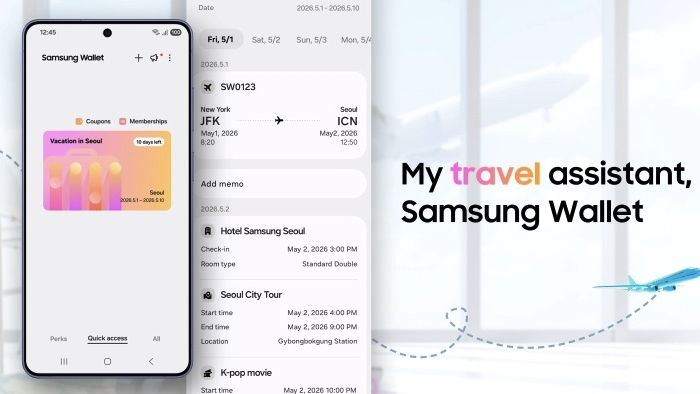
Samsung Wallet just got a big upgrade, as the company is now rolling out what it calls ‘Trips’ — a feature that lets you organize and manage your travel plans all in one place.
You can add all your travel tickets to Trips, whether they’re for flights, hotels, buses, trains, car rentals, sporting events, or excursions, and then it automatically groups them together based on things like time and location, and creates a travel timeline.
You can also go beyond just adding eligible tickets by manually adding itinerary items and including your own memos alongside saved items.
Article continues below
Advertisement
The end result is that you can have a comprehensive travel schedule, complete with tickets and important information, all within Samsung Wallet.
All your travel plans in one place
(Image credit: Samsung)
Trips is a nice idea, since your tickets can already be housed in the Samsung Wallet, so it’s an app you’ll probably be turning to a lot. It makes sense to be able to include other relevant information too — and have it all grouped so it’s kept organized and easy to find.
Advertisement
And this isn’t something you’ll really find anywhere else on Android. Google Wallet lets you add similar kinds of tickets, but won’t automatically turn them into a grouped timeline, and while there are third-party apps for creating travel itineraries, you usually have to manually add tickets to them, if they support tickets at all.
Trips is rolling out this month, so if you don’t already have it on your Samsung phone, you should do soon — though right now, it’s only coming to users in the US, UK, and South Korea.
Sign up for breaking news, reviews, opinion, top tech deals, and more.
Public stock exchanges “appear to be warming to climate tech startups,” reports TechCrunch. “Or at least some of them.”
This week, nuclear startup X-energy went public, raising $1 billion in an upsized share offering that appears to have delivered a windfall for its investors, including Amazon [and Google]. Retail investors apparently can’t get enough, with the stock popping 25% in its first hour of trading. Also this week, geothermal startup Fervo said it filed for an initial public offering. The size of the Fervo IPO has yet to be disclosed, but private investors have valued the company at around $3 billion, according to PitchBook.
The move to go public aligns with what investors told TechCrunch at the end of last year. After years of tepid attitudes toward climate tech companies, they expected public markets to start welcoming energy-related startups. Nearly every investor that weighed in on the question said the startups with the best chances of going public specialize in either nuclear fission or enhanced geothermal. Fervo, specifically, was mentioned several times. Thank data centers for that. The AI craze has taken a trend of rising demand for electricity and made it sexy and salable.
Welcome back to TechCrunch Mobility — your central hub for news and insights on the future of transportation. To get this in your inbox, sign up here for free — just click TechCrunch Mobility!
Tesla earnings came and went, and much of it fell into the “we expected this” category. Investors seemed surprised by the $1.4 billion in free cash flow, which gave shares a brief bump, and revenue met or slightly exceeded expectations, depending on which batch of analysts you reviewed.
The earnings call, however, did deliver one eyebrow-raising moment that prompted readers (including some ex-Tesla engineers and other founders in the industry) to reach out to me with some schadenfreude-tinted prose. CEO Elon Musk admitted that millions of Tesla owners will need hardware upgrades to run a future, more capable version of its Full Self-Driving software that doesn’t require human supervision.
There are financial and legal implications for Tesla. As senior reporter Sean O’Kane wrote, Tesla owners with Hardware 3 cars have spent years bugging the company and Musk for a straight answer about whether they would be able to run this advanced version of Full Self-Driving — which, it should be noted, Tesla has not yet released or even proven it is capable of releasing. Tesla sold these Hardware 3 cars between 2019 and 2023.
Advertisement
Now, here is the kicker and it made me guffaw. Musk said the company would need to physically upgrade each of these vehicles, a feat that would require Tesla to set up microfactories in several major cities to service potentially millions of vehicles.
Microfactories? Yes, you heard correctly. This is not going to be cheap, and it could be one of the line items in Tesla’s capital expenditures budget, which it expanded to a whopping $25 billion this year.
A little bird
Image Credits:Bryce Durbin
Senior reporter Sean O’Kane obtained (and verified) an internal memo sent by Redwood Materials founder and CEO JB Straubel that announced layoffs and a restructuring. (Thanks to the little bird who shared it.) Straubel is a former CTO of Tesla.
Techcrunch event
San Francisco, CA | October 13-15, 2026
Advertisement
The company laid off around 135 employees, or roughly 10% of its workforce, as it restructures to better accommodate its growing energy storage business. O’Kane later learned several executives have also recently left. Chief operating officer Chris Lister is retiring, and at least three other VPs have left in recent months, with the company telling TechCrunch there has been a focus on reducing layers of management.
Last week, I shared that a new autonomous hauler startup (think a cabless autonomous big rig) backed by Eclipse was about to break cover and announce a seed round, thanks to a little bird. Welp, it happened just days later.
Advertisement
The San Francisco-based startup, called Humble Robotics, raised $24 million in a seed round. Eclipse led the round, which also included backing by Energy Impact Partners and RedBlue Capital, a small early-stage VC firm that is surprisingly active.
As I had been told, Humble really is chock-full of Silicon Valley elite, including founder Eyal Cohen, who previously had stints at Apple special projects, Uber ATG, Pronto, and Waabi. He also founded Spark AI, which was acquired by John Deere in 2023.
Other execs include Drew Gray, who has a similarly AV-heavy résumé, including early days at Cruise, before jumping over to self-driving trucks startup Otto, which was acquired by Uber. After leaving Uber, he became CTO at Voyage, which was then acquired by Cruise.
A full-circle moment, cemented by this fun fact: Humble Robotics is in the same building Cruise was in right after the startup moved out of founder Kyle Vogt’s garage. I know, we keep circling back to 2016.
Advertisement
Except it’s not 2016, and Cohen and Gray talked to me about how much has changed since then, why this is the time to launch an AV startup, and where the industry is headed. Stay tuned for that story next week.
Lyft stuck to the North American market for much of its history, while Uber took a global, expand-at-all-costs strategy. Lyft has been trying to catch up since last year when it bought German multi-mobility app Freenow from BMW and Mercedes-Benz Mobility for about $197 million in cash.
Now it’s acquiring ride-hailing app Gett’s U.K. business. Lyft says the deal will give it the majority of registered black cab drivers across Greater London on the Lyft platform. The company didn’t disclose the terms, but Calcalist reported it was $55 million.
The company is also building out other means of transport in the region, including its recently renewed partnership with Serco to provide the bikes and stations for Europe’s bike-share system Santander Cycles. Lyft is also planning to start testing autonomous rides in London with Baidu later this year.
Advertisement
Other deals that got my attention …
A&K Robotics, a Vancouver, Canada-based maker of autonomous vehicles for airports, raised an $8 million CAD Series A round led by BDC’s Industrial Innovation Venture Fund and Vantage Futures.
Decade Energy, which provides power infrastructure at logistics depots, raised €22 million in funding led by Eiffel Investment Group and SET Ventures, along with existing investors.
Reliable Robotics, a Silicon Valley startup developing autonomous systems for aircraft, raised $160 million in a round led by Nimble Partners, existing backers Eclipse, Lightspeed, Coatue, and Pathbreaker Ventures, and new investors Island Green Capital, Socium Ventures, AE Ventures (a strategic partner of the Boeing Company), RTX Ventures, Presidio Ventures (Sumitomo Corporation), UP.Partners, KAS Venture Partners, What If Ventures, Calm Ventures, Gaingels, and Mana Ventures. History lesson: Co-founder and CEO Robert Rose had a brief stint at Tesla where he was senior director of Autopilot and helped ship that first iteration in 2015.
Advertisement
PlusAI and blank-check company Churchill Capital Corp IXterminated its SPAC merger deal due to market conditions.
Porsche is selling its stake in the Bugatti Rimac joint venture, which it formed in 2021, as well as electric-vehicle maker Rimac Group. Porsche, which holds a 20.6% stake in Rimac and a 45% stake in the joint venture, is selling to HOF Capital. Financial terms weren’t disclosed.
Notable reads and other tidbits
Image Credits:Bryce Durbin
Einride is adding 75 of its electric heavy-duty trucks to Amazon’s Relay freight network as part of a deal that gives the Swedish startup a toehold in the e-commerce giant’s operations.
Ford and Chinese automaker Geely reportedly held talks about extending a European tie-up into the U.S., the Wall Street Journal reported. The implications, of course, would be Chinese vehicles entering the U.S. market. But it sounds like talks have stalled, leaving this consequential deal in limbo. Bloomberg reported that Ford has denied these claims.
Porsche is adding another EV to its lineup. The Cayenne electric coupe will come to market in late summer. There’s some interesting data in my article on why this one might be a winner for Porsche.
Advertisement
The first customer-ready Rivian R2 SUVs rolled off the production line at its factory in Normal, Illinois, just days after it was hit by an EF-1 tornado that tore off part of the roof. Founder and CEO RJ Scaringe said Rivian doesn’t anticipate any delays to the R2, which are expected to reach customers in June.
One more thing …
Image Credits:Kirsten Korosec
As diligent readers of this newsletter know, I test-drive a fair number of vehicles, and sometimes they are not EVs. Take the Aston Martin Vantage Roadster, for instance. I was anxious to get into the roadster, not just because this $205,000 chiltern-green machine is sleek, powerful, and a convertible. I wanted to test the Apple CarPlay Ultra, the next-generation infotainment system that projects iPhone content to the vehicle’s screens (including the instrument cluster) and integrates vehicle controls like the radio, performance settings, and climate. CarPlay Ultra first launched in the Aston Martin, which isn’t exactly easy to get my hands on.
My first experience with Apple Ultra CarPlay last summer was mixed. It was great — when it worked, but it often didn’t. The problem seemed to be tied to a bug that showed two versions of the vehicle in the Bluetooth settings.
This time around, the setup was instant and it never glitched. Hooray. And it always worked. This really matters for Aston Martin, which for years was stuck with Mercedes-Benz’ old COMAND system. (Mercedes ditched that system in 2018 for its new MBUX one).
When you purchase through links in our articles, we may earn a small commission. This doesn’t affect our editorial independence.


















































You must be logged in to post a comment Login