Connect with us
DAPA Banner

Tech

Accel raises $5B to back late-stage bets

Published

on

Accel announced on Tuesday that it raised $5 billion in fresh capital to back late-stage companies.

The venture firm told Bloomberg that $4 billion will go to its late-stage Leaders Fund, for which it hopes to cut at least 20 checks, averaging $200 million each. Accel is looking to invest in companies building AI-powered technology, with a focus on software, hardware, robotics, defense tech, and data center infrastructure.

Accel limited partners also poured in $650 million, which will go to a “sidecar” fund, Bloomberg reported, allowing the firm to increase its investments in certain companies. 

Accel has backed more than 800 companies to date, including Anthropic, Perplexity, and Lovable. This latest fundraise comes as the firm hopes to keep up with the AI boom competition.

Advertisement

A spokesperson for Accel did not respond to a request for comment.

Source link

Continue Reading
Click to comment

You must be logged in to post a comment Login

Leave a Reply

Tech

Boston Dynamics’ Robot Dog Can Now Read Gauges, Spot Spills, and Reason

Published

on

Boston Dynamics has integrated Google DeepMind into its robotic dog Spot, giving it more autonomous reasoning for industrial inspections like spotting spills and reading gauges. Spot can also now recognize when to call on other AI tools. IEEE Spectrum reports: Boston Dynamics is one of the few companies to commercially deploy legged robots at any appreciable scale; there are now several thousand hard at work. Today the company is announcing that its quadruped robot Spot is now equipped with Google DeepMind’s Gemini Robotics-ER 1.6, a high-level embodied reasoning model that brings usability and intelligence to complex tasks.

[T]he focus of this partnership is on one of the very few applications where legged robots have proven themselves to be commercially viable: inspection. That is, wandering around industrial facilities, checking to make sure that nothing is imminently exploding. With the new AI onboard, Spot is now able to autonomously look for dangerous debris or spills, read complex gauges and sight glasses, and call on tools like vision-language-action models when it needs help understanding what’s going on in the environment around it. “Advances like Gemini Robotics-ER 1.6 mark an important step toward robots that can better understand and operate in the physical world,” Marco da Silva, vice president and general manager of Spot at Boston Dynamics, says in a press release. “Capabilities like instrument reading and more reliable task reasoning will enable Spot to see, understand, and react to real-world challenges completely autonomously.”

You can watch a demo of Spot’s new capabilities on YouTube.

Source link

Advertisement
Continue Reading

Tech

Judge Tosses Trump’s Ridiculous $10 Billion Defamation Suit Against Rupert Murdoch

Published

on

from the with-friends-like-this… dept

Back in January of last year, the Wall Street Journal published a story about a leather-bound birthday book that Ghislaine Maxwell had assembled for Jeffrey Epstein’s 50th birthday in 2003. The book included letters from various associates, and one of them bore Donald Trump’s name. According to the article, it featured a hand-drawn outline of a naked woman with typewritten text inside. The page was signed with a recognizable squiggly “Donald” signature positioned to mimic pubic hair and closed with the ridiculously creepy line: “Happy Birthday—and may every day be another wonderful secret.”

Trump denied writing the letter and called it “a fake thing” before suing the Journal, Rupert Murdoch, News Corp, and the two reporters for a mere $10 billion. Each count asked for at least $10 billion, because apparently that’s the going rate for Donald Trump’s hurt feelings these days.

On Monday, federal judge Darrin Gayles dismissed the lawsuit, finding that Trump hadn’t come anywhere close to adequately alleging “actual malice,” the standard required for a public figure to win a defamation claim. For those who follow this stuff, that’s about as unsurprising as it gets.

The actual malice standard, established in New York Times v. Sullivan decision, requires a public figure to show that the defendant either knew the story was false or published it with reckless disregard for the truth (which courts have interpreted to require that the publisher actually harbored serious doubts about whether the statement was true). It does not mean, as many people assume, the colloquial meaning of “malice”: that they just don’t like the person. Trump’s complaint was heavy on boilerplate language about malice and light on, well, anything resembling actual facts supporting it. Judge Gayles was blunt about the gap:

Advertisement

The Complaint comes nowhere close to this standard. Quite the opposite.

The “quite the opposite” is the fun part. Trump’s own complaint described the reporters reaching out to him, as well as the FBI and the Justice Department, before publication. Trump gave them a denial, which they printed; the DOJ didn’t respond and the FBI declined to comment. Trump’s argument was essentially that since he told the Journal the letter was fake before publication, running the story anyway proved they had serious doubts about its truth and therefore acted with actual malice.

You hear this a lot from SLAPP defamation filers, pretending that a mere denial by them means that anyone printing what they’re accused of is actual malice. But that’s not how any of this works. Just because you deny something, doesn’t automatically mean the journalists have to believe it’s false. Their evidence can (and often does) reveal that the subjects of their reporting are lying in their denials. A denial is not proof of falsity. It’s just proof that you’re denying something. The court wasn’t buying any of it:

To establish actual malice, “a plaintiff must show the defendant deliberately avoided investigating the veracity of the statement in order to evade learning the truth.”…

As the judge noted, printing Trump’s denial alongside their own journalistic findings demonstrated responsible reporting — the opposite of actual malice, which would require evidence that the reporters had serious doubts about the letter’s authenticity and deliberately avoided investigating further. Then printing the denial alongside the evidence, again, was the opposite of actual malice:

The Article also informed readers that President Trump decried the Letter as a fake and denied writing it. By “allowing readers to decide for themselves what to conclude from the [Article], any allegation of actual malice [is] less plausible.” Turner, 879 F.3d at 1274. See also Michel, 816 F.3d at 703 (holding that “reporting perspectives contrary to the publisher’s own should be interpreted as helping to rebut, not establish, the presence of actual malice.”)

The judge also, somewhat gently, reminded Trump’s lawyers that actual malice is an actual legal standard, not just ‘they don’t like me.’

Advertisement

President Trump’s allegation that Defendants acted with ill-will is insufficient to plead actual malice. Aside from being conclusory and without factual support, “ill-will, improper motive or personal animosity plays no role in determining whether a defendant acted with actual malice.”

Meanwhile, as this lawsuit wound through the courts, the very letter Trump claimed didn’t exist surfaced publicly. The House Oversight Committee subpoenaed the Epstein estate and obtained the birthday book. They released it publicly, and wouldn’t you know it, there’s a page that matches the Journal’s description of the letter exactly:

The somewhat horrifying line drawing of a woman's outline with the weird creepy poem inside and Trump's well-known signature below.

The judge couldn’t consider the produced letter at this stage of the litigation because Trump disputes its authenticity, which is his right procedurally. And the judge has to treat the claims in the complaint as true. But the rest of us sure can look at it. And judge for ourselves.

The court gave Trump until April 27 to file an amended complaint, and a spokesman for his legal team promised he would “refile this powerhouse lawsuit.” I suppose if you squint hard enough at a complaint a federal judge said “comes nowhere close” to meeting basic legal standards, “powerhouse” is one word you could use for it — just probably not in the way they mean.

The Journal’s defense team also sought attorneys’ fees under Florida’s anti-SLAPP statute. The judge denied the fee request for now, since Trump gets a chance to amend. But that request can be renewed, which means if the amended complaint fares no better, Trump could end up paying for the privilege of having sued the Journal over a story that appears to be true.

This is also a reminder of why we need stronger anti-SLAPP laws in every state, as well as a federal anti-SLAPP law.

Advertisement

This case isn’t over yet, but the judge clearly sees it as just as weak as we said it was when it was filed last year. As always, Trump files these vexatious lawsuits knowing none of them have a real shot — the goal is to burn time and money for media organizations, and scare some of them into softening their coverage or thinking twice before calling out his behavior.

The guy who presents himself as a champion of free speech remains the most anti-free speech president we’ve had in any of our lifetimes, consistently abusing the judicial system as a way to punish those who make him look bad.

Filed Under: actual malice, darrin gayles, defamation, donald trump, jeffrey epstein, rupert murdoch, slapp

Companies: news corp., wsj

Advertisement

Source link

Continue Reading

Tech

Amazon buys Globalstar to bolster Leo’s satellite capabilities

Published

on

Amazon has also announced a telecoms partnership with Apple to power satellite services on its products.

Amazon is acquiring satellite telecommunications provider Globalstar, as the company eyes Starlink’s top rank in satellite services.

The $11.6bn deal buys Amazon Globalstar’s existing satellite operations, infrastructure and licences. According to data compiled by Reuters, Globalstar has 32 planned active low Earth orbit (LEO) satellites.

Amazon plans to integrate Globalstar’s assets into its own space internet service Leo, which aims to have more than 3,200 satellites in space.

Advertisement

Currently, the company has more than 200 satellites in space already, and is planning several launches over the course of the year. SpaceX’s Starlink, for comparison, has around 15,000 authorised satellites with around 10,000 active in orbit.

With the Globalstar integration, Amazon will be able to add direct-to-device (D2D) services to its LEO satellite network and extend cellular coverage. The company said it plans to deploy its own D2D satellites systems by 2028.

Globalstar stockholders can choose to receive, per share, $90 in cash or around 0.3 shares of Amazon stock with a value cap.

Alongside the acquisition, Apple has agreed to use Leo to power satellite services for iPhones and Apple Watches. Apple, which bought a 20pc stake in Globalstar in 2024, had been using the company’s satellites to power its products. Apple has spent years building its satellite features, but struggled to catch up with competitors.

Advertisement

Currently, Amazon said it will continue to support Apple using Globalstar’s existing and planned LEO constellations. The company plans to collaborate with Apple on future projects using Leo.

“By combining Globalstar’s proven expertise and strong foundation with Amazon’s customer obsession and innovation, customers can expect faster, more reliable service in more places – keeping them connected to the people and things that matter most,” said Panos Panay, the senior vice president of devices and services at Amazon.

Earlier this year, Jeff Bezos’s other venture Blue Origin announced TeraWave, a satellite internet service with a planned constellation of around 5,400 satellites. Blue Origin claims that TeraWave will deliver connection speeds of up to 6Tbps anywhere on Earth.

Don’t miss out on the knowledge you need to succeed. Sign up for the Daily Brief, Silicon Republic’s digest of need-to-know sci-tech news.

Advertisement

Source link

Continue Reading

Tech

Freddie King ‘Feeling Alright’ RSD 2026 Release Captures Sizzling 1975 Nancy Jazz Pulsation Concerts

Published

on

A live recording from Freddie King arrives for Record Store Day 2026 as Elemental Music presents Feeling Alright: The Complete 1975 Nancy Jazz Pulsation Concerts on a three LP set. Recorded at the Nancy Jazz Pulsations, the release captures King’s full 1975 performance in France, offering a complete and carefully assembled document of the blues guitarist at a pivotal moment in his later career.

While much of this material has appeared on two individual CDs issued in Europe back in 1989, this is the first time the entire show is being released on both CD and vinyl.

freddy king live in nancie 1975

I never really gave it much thought before, but the mid-1970s arguably marked a peak for Freddie King who was finally achieving wider success.  At the time of this concert he was signed to Robert Stigwood’s RSO Records label and had a new single-disc album out called Larger Than Life which was receiving favorable reviews.  

So it makes a lot of sense for Elemental Music to highlight this era with a complete concert recording. Official press materials offer more insights into this new RSD set: “3-LP set featuring the blues legend Freddie King live before more than 50,000 fans in October 1975, the final full year of his life. Joining King are organist Alvin Hemphill, guitarist Ed Lively, pianist Lewis Stephens, bassist Benny Turner and drummer Calep Emphrey. The deluxe package features appreciations from his daughter, Wanda King, as well as ZZ Top’s Billy Gibbons, plus liner notes by author Cary Baker. The set documents an essential blues artist whose ferocious guitar tone, commanding singing, and genre-bridging vision helped reshape modern blues and rock.”

freddie-king-larger-than-life

According to an online listing for the CD edition: “The audio was transferred directly from the original stereo tape reels at INA and mastered by Matthew Lutthans at The Mastering Lab, ensuring stunning sound quality that brings every note to life. This limited edition includes rare, previously unpublished photographs from the festival and new liner notes.”

And indeed, on this high energy set you get to hear Mr. King soar.  Some fave tracks so far include King’s own “Have You Ever Loved A Woman?” and “The Things I Used To Do” (both released on his RSO album of that time) and the T-Bone Walker classic “Stormy Monday Blues.”  And his cover of Dave Mason’s Traffic classic “Feelin’ Alright” is a joy.  

Advertisement
freddie-king-playing-live

The sound quality on this recording is really quite good and I’m pleased about the album pressing quality which is dead quiet and well centered. 

While I don’t know the exact RSD pricing for Feeling Alright: The Complete 1975 Nancy Jazz Pulsation Concerts it is fair to guess that it will be in the $60-70 range given its 3LP length.

Alternately, if you don’t score a copy or are on a tighter budget, you can pre-order the 2CD version for $24.98 at Amazon. All in all if you are a Freddie King fan and don’t have many live recordings by him from this era, Feeling Alright would be an key choice for Record Store Day.


Mark Smotroff is a deep music enthusiast / collector who has also worked in entertainment oriented marketing communications for decades supporting the likes of DTS, Sega and many others. He reviews vinyl for Analog Planet and has written for Audiophile Review, Sound+Vision, Mix, EQ, etc.  You can learn more about him at LinkedIn.

Advertisement. Scroll to continue reading.
Advertisement

Source link

Continue Reading

Tech

MSI unveils a barrage of laptops with up to RTX 5090 graphics and Intel Arrow Lake chips

Published

on

Subtlety is overrated, and MSI just proved that. The Taiwanese laptop maker has rolled out a sweeping refresh, unveiling more than a dozen new gaming laptops spread across its Cyborg, Crosshair, Raider, Stealth, and Titan lineups. 

The models cover 15-inch, 16-inch, and 18-inch form factors, ensuring there’s something for every gamer or professional user, making it hard for buyers to run out of excuses for not upgrading this year. 

So, what’s actually new inside these machines?

It is Intel’s newly announced Arrow Lake-HX Plus chips, specifically the Core Ultra 9 290HZ Plus, that acts as a catalyst for MSI’s new lineup. Other manufacturers, such as Acer, Asus, and Dell, have already launched laptops powered by these chips. MSI is late, but it’s here fully loaded. 

Eight of the new MSI laptops, including the Raider 16 Max HX, Raider 18 Max HX, Stealth 18 HX, and Titan 18 HX, run on the Core Ultra 9 290HX Plus chipset. Further, they feature a wide variety of powerful GPUs, ranging from the RTX 5070 Ti and RTX 5080 to the RTX 5090. 

Out of all, the Crosshair 16 Max HX is the first laptop to ship with Nvidia’s yet-to-launch 12GB RTX 5070 laptop GPU. Meanwhile, the Raider 16 Max HX, which was present at the CES 2026, delivers a combined system power of 300W, out of which 175W comes from the GPU alone. 

Advertisement

Should budget gamers even care?

Yes, absolutely, MSI has also refreshed the Crosshair 16 HX with relatively older Intel 14th-gen processors and RTX 5050/5060/5070 GPUs. The entry-level Cyborg 15 series returns with quite accessible specs. 

Although MSI hasn’t revealed pricing yet, the lineup spans multiple segments, likely from mid-range to premium laptops. To me, the lineup looks like it was launched under some sort of pressure (from competition), as even I’m having trouble keeping a count of the models and their specifications. 

Source link

Advertisement
Continue Reading

Tech

Amazon-backed X-energy files to raise up to $800M in IPO

Published

on

Nuclear startup X-energy began its investor roadshow Wednesday as it works toward its IPO, setting its target price between $16 and $19 per share, according to documents filed with the U.S. Securities and Exchange Commission. If it lists at the high end, the startup could net about $814 million.

X-energy and its peers have been riding a renewed wave of interest in fission power as demand for electricity has surged on the back of AI data centers and society-wide electrification. 

Amazon is one of X-energy’s biggest backers. The tech giant led a $500 million Series C-1 round and has pledged to buy as much as 5 gigawatts of nuclear power from the company by 2039.

The IPO is sure to come as a relief to X-energy’s investors, which have put about $1.8 billion into the company, according to PitchBook. The startup had previously attempted to go public via reverse merger with a special purpose acquisition company, but the two parties canceled the deal in 2023 as the SPAC craze petered out.

Advertisement

X-energy’s reactor is what’s known as a high-temperature, gas-cooled reactor. Inside, uranium encased in spheres of ceramic and carbon is cooled by helium gas. The gas then transfers heat to a steam turbine loop to generate electricity. The fuel design, known as TRISO, is expected to be safer than previous fuel arrangements, though it’s not widely used today.

The startup said in its SEC filing that it’s already embroiled in a patent dispute with another company that recently went bankrupt. Ultra Safe Nuclear Corporation (USNC) went bankrupt in 2024, and its assets were purchased in bankruptcy to form Standard Nuclear. X-energy alleges that USNC infringed on its fuel fabrication patents and that the matter hasn’t been resolved to its satisfaction during the course of the bankruptcy proceedings.

Outside of China, development of new nuclear reactors has all but stalled, stymied by delays and cost overruns. A new breed of startups hopes that by shrinking reactors, they’ll be able to overcome some of the challenges that have beset traditional designs.

Techcrunch event

Advertisement

San Francisco, CA
|
October 13-15, 2026

None of the small modular reactor startups have built a power plant yet, though several are racing to meet a deadline of July 4 set by the Trump administration.

Advertisement

While many might miss the arbitrary deadline, they’re still likely to achieve criticality, the moment when fission reactions become self-sustaining.

But the road from criticality to profitable power plants is likely to be long. Mass manufacturing can help bring costs down, but it usually takes around a decade for the process to start paying dividends. What’s more, the number of reactors these companies are planning to build might be more than other companies have attempted, but it might not be high enough to reap the true benefits of mass manufacturing.

X-energy expects that by the time its reactor production techniques are mature — what experts call “Nth-of-a-kind” — it will be able to bring costs down by 30% relative to the first-of-a-kind. Investors should pay close attention to how much that first reactor costs. It could make or break the company’s prospects.

Source link

Advertisement
Continue Reading

Tech

Amazon has an easy to way reduce your monthly streaming bills

Published

on

Have you looked at how much your streaming subscriptions are costing you each month and wondered whether there is a smarter way to keep everything you actually watch without paying full price for all of it?

The answer here is Amazon’s Apple TV and Peacock Premium Plus bundle, now available through Prime Video for $19.99 per month against a combined standard cost of $29.98, a saving of over 33%.

Prime video logo on an orange backgroundPrime video logo on an orange background

This Amazon Prime bundle knocks 33% off Apple TV and Peacock Premium Plus, making it an easy way to reduce your streaming bills.

Have you looked at your streaming subscriptions and wondered if there was a better way to keep everything without paying full price?

Advertisement

View Deal

The bundle brings Apple TV’s original programming alongside Peacock’s live sports, NBC shows, and Universal movies into a single subscription managed through your existing Prime Video account and payment method.

Advertisement

On the Apple TV side, that means ad-free access to originals, including Severance, Shrinking, The Studio, and the upcoming fourth season of Ted Lasso, alongside live sports such as Formula 1 and Friday Night Baseball.

Peacock Premium Plus adds NFL Sunday Night Football, Premier League, NBA, and Major League Baseball coverage, plus NBC series like the One Chicago franchise and Law and Order, Bravo content, and Peacock Originals, including The Traitors.

Advertisement

The Whatsapp LogoThe Whatsapp Logo

Get Updates Straight to Your WhatsApp

Advertisement

Join Now

Both services are ad-free within this bundle, with Apple TV offering that experience across its originals and Peacock Premium Plus covering virtually all on-demand content, which is a meaningful upgrade over Peacock’s standard tier.

Advertisement

Everything streams through the Prime Video app on whatever device you already use, from Fire TV and smart TVs to phones, tablets, and games consoles, with no separate apps or logins required for either service.

To add it, open the Prime Video app or head to the Prime Video website, navigate to the subscriptions section, select the Apple TV and Peacock Premium Plus bundle, and complete the sign-up using your existing Amazon account details.

The bundle is available for a limited time, so it is worth acting on sooner rather than later if the combined sports and drama lineup covers enough of what you watch to justify consolidating two separate bills into one lower monthly payment.

Advertisement

Advertisement

SQUIRREL_PLAYLIST_10148964

Source link

Continue Reading

Tech

Is this the tipping point for AI at work? New Gallup survey finds half of all US employees now use it in some way

Published

on

Half of American workers now say they use some form of AI technology in their role, pushing the number over the critical point for the first time.

New Gallup research found 50% of employees now reported using AI tools at work in some capacity, a rise of 4% from the previous quarter, and up 21% from the same period just three years ago.

Source link

Continue Reading

Tech

INNOCN’s 27″ QD-OLED 2K Display Brings Sharp Detail and Fluid Motion to More Desks with 280Hz Refresh Rate

Published

on

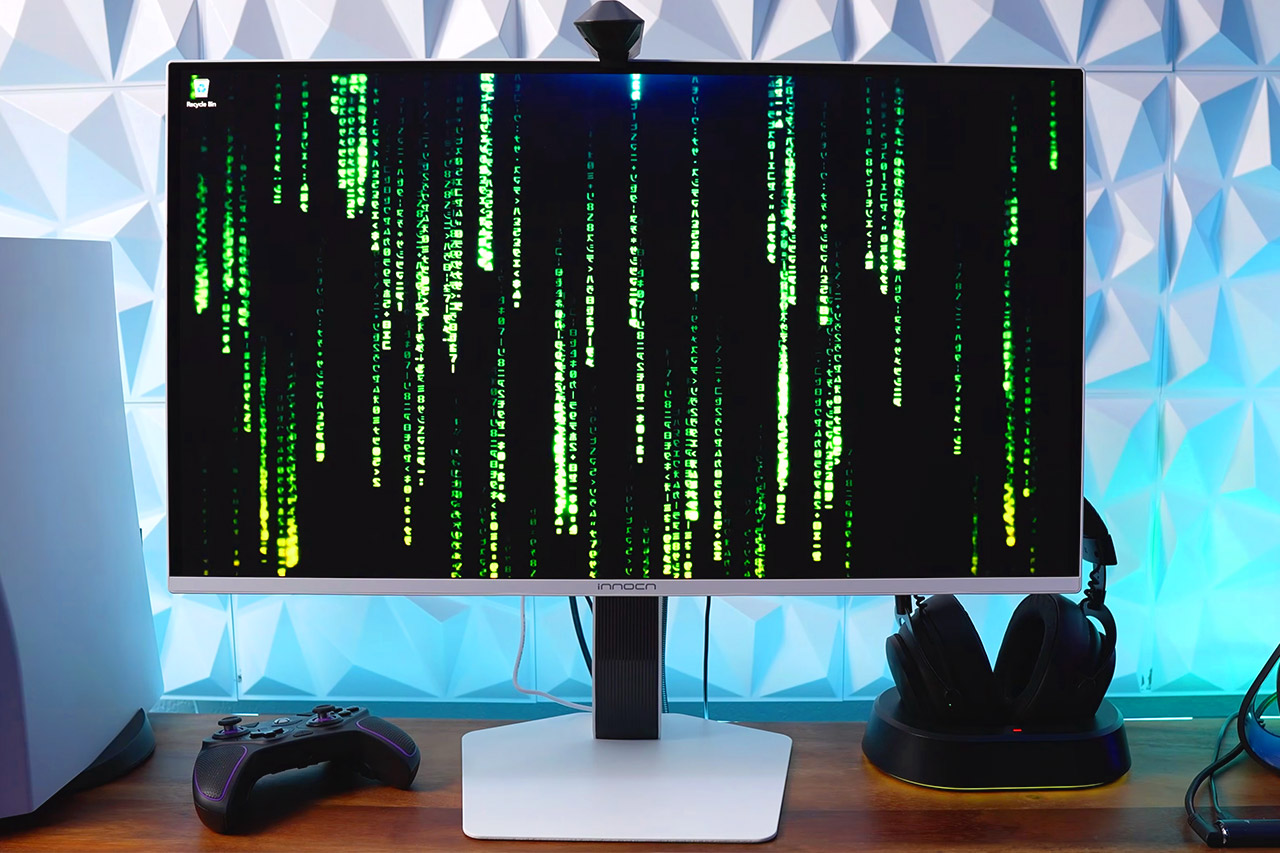
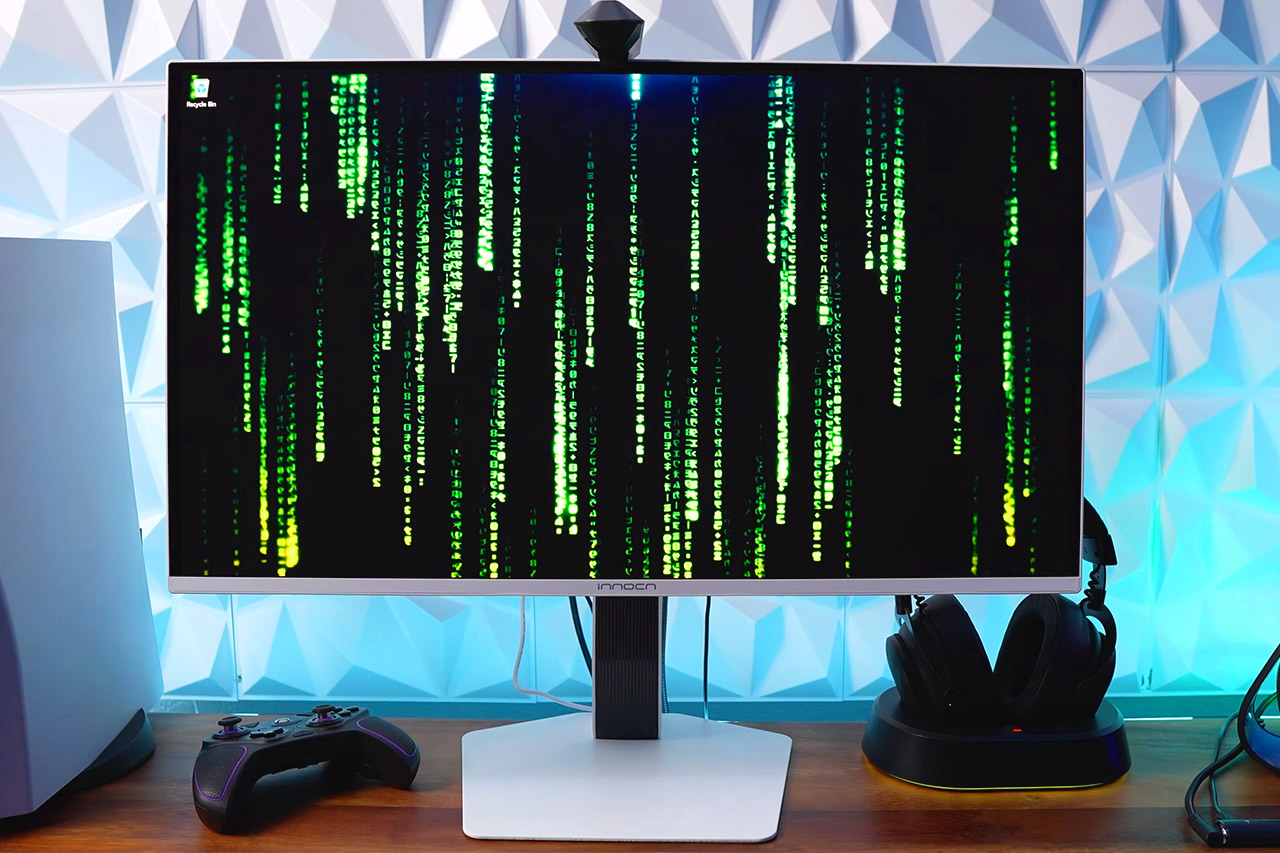
INNOCN 27-inch QD-OLED GA27S1Q Monitor
Gamers who are constantly on the lookout for a new screen will notice when a model comes up that provides excellent visuals at a reasonable price. The INNOCN 27″ QD-OLED 2K (model GA27S1Q) is a prime example, priced at $399.98 (was $450). Once out of the box, the stand snaps into place without the need for tools, and you have full movement in all directions, including height, tilt, swivel, and pivot. So, if you’re the type of person who enjoys switching between working at a desk and gaming on the sofa, you can find the perfect angle.


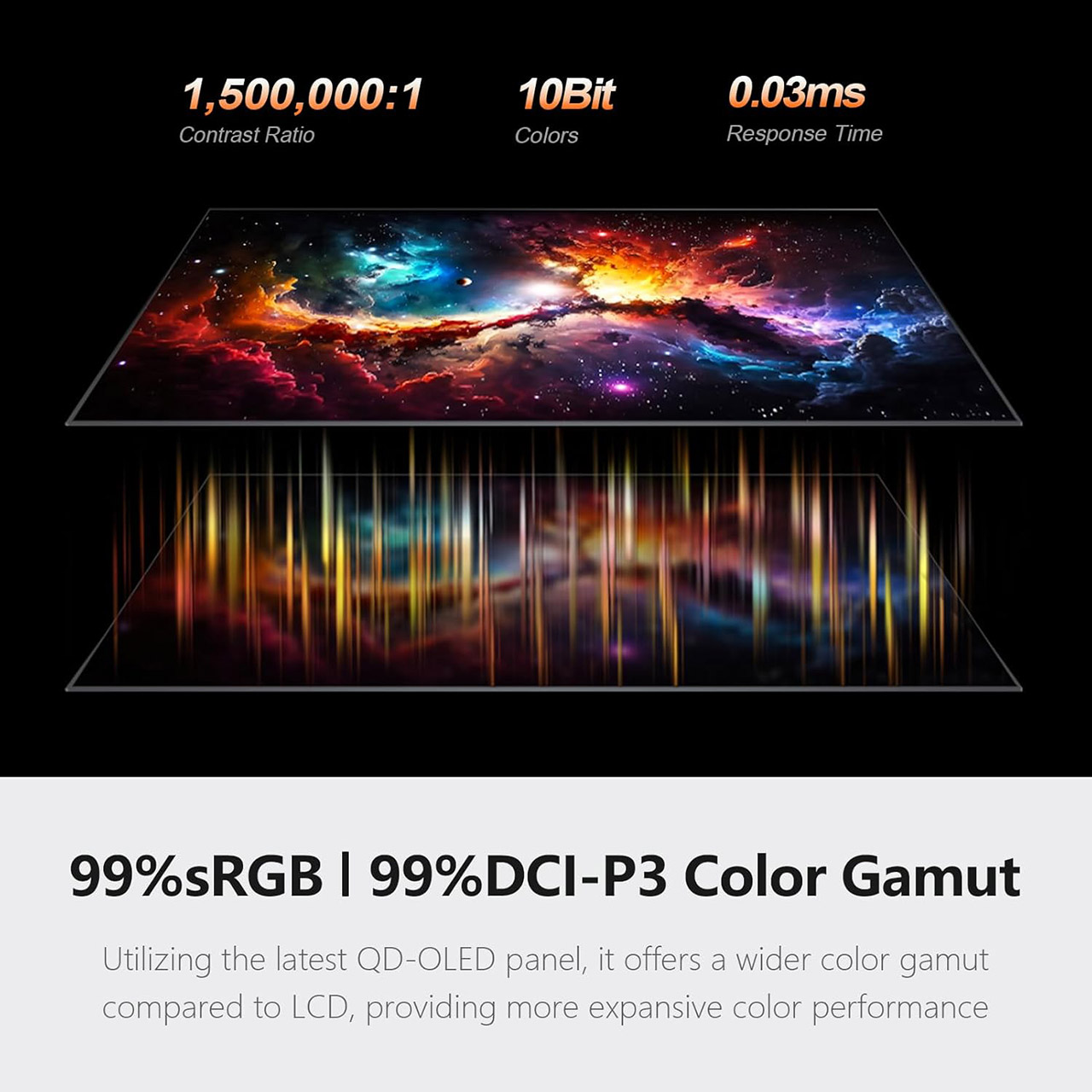
The images on-screen are noticeably vibrant right away, with black areas remaining deep / dark rather than washing out to gray, bringing the highlights and colors to life in each scene. The panel also covers almost all of the colors required for modern games and media, so reds and greens appear nice and vibrant with no dull areas, and the animation remains very clean even when things get really fast. With a 280Hz refresh rate that can reach 280 frames per second and a response time measured in thousandths of a second, fast-moving objects maintain sharp edges and prevent blurring that occurs on slower panels. If you’re a die-hard gamer, you’ll notice the difference in quick turns and abrupt adversary movements, whereas casual sessions simply feel more responsive overall.

Sale


INNOCN 27″ QD-OLED 2K QHD 2560 x 1440P 280Hz 240Hz PC Computer Gaming Console Monitor, G-Sync Compatible…
  • Experience Ultimate Gaming Visual Clarity: This 27-inch QD-OLED gaming monitor delivers stunning 1440p resolution with perfect blacks and vibrant…
  • Dominate with Blur-Free 280Hz Speed: Gain the competitive edge with a blistering 280Hz refresh rate and near-instantaneous 0.03ms response time. Enjoy…
  • Next-Gen QD-OLED Visual Fidelity: Witness breathtaking contrast and rich colors powered by QD-OLED technology. Enjoy immersive PC gaming and HDR…


Connections are rather comprehensive for a monitor at this price point, with two HDMI 2.1 connections capable of handling consoles and newer graphics cards at full speed, as well as a pair of DisplayPort 1.4 inputs for further versatility if you have a desktop system. The built-in speakers will suffice for brief checks and the odd thing, but most people prefer to plug in headphones for better sound during extended playback.

Advertisement

INNOCN 27-inch QD-OLED GA27S1Q Monitor
This monitor has features for both comfort and lifespan. It has low blue light and flicker-free settings to lessen eye strain if you stare at it for an extended period of time, as well as some useful routines that look for static images and adjust brightness to prevent permanent markings from appearing. Don’t worry about the power drain; it’s rather low at roughly 65 watts, so the monitor runs cool and won’t put too much burden on your outlet.

INNOCN 27-inch QD-OLED GA27S1Q Monitor
One other advantage is that its slim bezels keep your focus on the image, and the rear has some modest illumination that adds a stylish touch to your setup without drawing too much attention. Overall, for anyone looking at monitors of this size and resolution, this one demonstrates that you don’t have to trade quality for a reasonable price. Give it a few hours, and you’ll see why the word is spreading so quickly, as the mix of crystal-clear visuals and seamless pace makes it a true winner.

Source link

Continue Reading

Tech

From RSA to Lattices: The Quantum Safe Crypto Shift

Published

on

The race to transition online security protocols to ones that can’t be cracked by a quantum computer is already on. The algorithms that are commonly used today to protect data online—RSA and elliptic curve cryptography—are uncrackable by supercomputers, but a large enough quantum computer would make quick work of them. There are algorithms secure enough to be out of reach for both classical and future quantum machines, called post-quantum cryptography, but transitioning to these is a work in progress.

Late last month, the team at Google Quantum AI published a whitepaper that added significant urgency to this race. In it, the team showed that the size of a quantum computer that would pose a cryptographic threat is approximately twenty times smaller than previously thought. This is still far from accessible to the quantum computers that exist today: the largest machines currently consist of approximately 1,000 quantum bits, or qubits, and the whitepaper estimated that about 500 times as much is needed. Nonetheless, this shortens the timeline to switch over to post-quantum algorithms.

The news had a surprising beneficiary: obscure cryptocurrency Algorand jumped 44% in price in response. The whitepaper called out Algorand specifically for implementing post-quantum cryptography on their blockchain. We caught up with Algorand’s chief scientific officer and professor of computer science and engineering at the University of Michigan, Chris Peikert, to understand how this announcement is impacting cryptography, why cryptocurrencies are feeling the effects, and what the future might hold. Peikert’s early work on a particular type of algorithm known as lattice cryptography underlies most post-quantum security today.

IEEE Spectrum: What is the significance of this Google Quantum AI whitepaper?

Advertisement

Peikert: The upshot of this paper is that it shows that a quantum computer would be able to break some of the cryptography that is most widely used, especially in blockchains and cryptocurrencies, with much, much fewer resources than had previously been established. Those resources include the time that it would take to do so and the number of qubits (or quantum bits) that it would have to use.

This cryptography is very central to not just cryptocurrencies but more broadly, to cryptography on the internet. It is also used for secure web connections between web browsers and web servers. Versions of elliptic curve cryptography are used in national security systems and military encryption. It’s very prevalent and pervasive in all modern networks and protocols.

And not only was this paper improving the algorithms, but there was also a concurrent paper showing that the hardware itself was substantially improved. The claim here was that the number of physical qubits needed to achieve a certain kind of logical qubit was also greatly reduced. These two kinds of improvements are compounding upon each other. It’s a kind of a win-win situation from the quantum computing perspective, but a lose-lose situation for cryptography.

IEEE Spectrum: What do Google AI’s findings mean for cryptocurrencies and the broader cybersecurity ecosystem?

Advertisement

Peikert: There’s always been this looming threat in the distance of quantum computers breaking a large fraction of the cryptography that’s used throughout the cryptocurrency ecosystem. And I think what this paper did was really the loudest alarm yet that these kinds of quantum attacks might not be as far off as some have suspected, or hoped, in recent years. It’s caused a re-evaluation across the industry, and a moving up of the timeline for when quantum computers might be capable of breaking this cryptography.

When we think about the timelines and when it’s important to have completed these transitions [to post-quantum cryptography], we also need to factor in the unknown improvements that we should expect to see in the coming years. The science of quantum computing will not stay static, and there will be these further breakthroughs. We can’t say exactly what they will be or when they will come, but you can bet that they will be coming.

IEEE Spectrum: What is your guess on if or when quantum computers will be able to break cryptography in the real world?

Peikert: Instead of thinking about a specific date when we expect them to come, we have to think about the probabilities and the risks as time goes on. There have been huge breakthrough developments, including not only this paper, but also some last year. But even with these, I think that the chance of a cryptographic attack by quantum computers being successful in the next three years is extremely low, maybe less than a percent. But then, as you get out to several years, like 5, 6, or 10 years, one has to seriously consider a probability, maybe 5% or 10% or more. So it’s still rather small, but significant enough that we have to worry about the risk, because the value that is protected by this kind of cryptography is really enormous.

Advertisement

The US government has put 2035 as its target for migrating all of the national security systems to post quantum cryptography. That seems like a prudent date, given the timelines that it takes to upgrade cryptography. It’s a slow process. It has to be done very deliberately and carefully to make sure that you’re not introducing new vulnerabilities, that you’re not making mistakes, that everything still works properly. So, you know, given the outlook for quantum computers on the horizon, it’s really important that we prepare now, or ideally, yesterday, or a few years ago, for that kind of transition.

IEEE Spectrum: Are there significant roadblocks you see to industrial adoption of post-quantum cryptography going forward?

Peikert: Cryptography is very hard to change. We’ve only had one or maybe two major transitions in cryptography since the early 1980s or late 1970s when the field first was invented. We don’t really have a systematic way of transitioning cryptography.

An additional challenge is that the performance tradeoffs are very different in post-quantum cryptography than they are in the legacy systems. Keys and cipher texts and digital signatures are all significantly larger in post-quantum cryptography, but the computations are actually faster, typically. People have optimized cryptography for speed in the past, and we have very good fast speeds now for post-quantum cryptography, but the sizes of the keys are a challenge.

Advertisement

Especially in blockchain applications, like cryptocurrencies, space on the blockchain is at a premium. So it calls for a reevaluation in many applications of how we integrate the cryptography into the system, and that work is ongoing. And, the blockchain ecosystem uses a lot of advanced cryptography, exotic things like zero-knowledge proofs. In many cases, we have rudimentary constructions of these fancy cryptography tools from post-quantum type mathematics, but they’re not nearly as mature and industry ready as the legacy systems that have been deployed. It continues to be an important technical challenge to develop post-quantum versions of these very fancy cryptographic schemes that are used in cutting edge applications.

IEEE Spectrum: As an academic cryptography researcher, what attracted you to work with a cryptocurrency, and Algorand in particular?

Peikert: My former PhD advisor is Silvio Micali, the inventor of Algorand. The system is very elegant. It is a very high performing blockchain system and it uses very little energy, has fast transaction finalization, and a number of other great features. And Silvio appreciated that this quantum threat was real and was coming, and the team approached me about helping to improve the Algorand protocol at the basic levels to become more post-quantum secure in 2021. That was a very exciting opportunity, because it was a difficult engineering and scientific challenge to integrate post-quantum cryptography into all the different technical and cryptographic mechanisms that were underlying the protocol.

IEEE Spectrum: What is the current status of post-quantum cryptography in Algorand, and blockchains in general?

Advertisement

Peikert: We’ve identified some of the most pressing issues and worked our way through some of them, but it’s a many-faceted problem overall. We started with the integrity of the chain itself, which is the transaction history that everybody has to agree upon.

Our first major project was developing a system that would add post-quantum security to the history of the chain. We developed a system called state proofs for that, which is a mixture of ordinary post-quantum cryptography and also some more fancy cryptography: It’s a way of taking a large number of signatures and digesting them down into a much smaller number of signatures, while still being confident that these large number of signatures actually exist and are properly formed. We also followed it with other papers and projects that are about adding post-quantum cryptography and security to other aspects of the blockchain in the Algorand ecosystem.

It’s not a complete project yet. We don’t claim to be fully post-quantum secure. That’s a very challenging target to hit, and there are aspects that we will continue to work on into the near future.

IEEE Spectrum: In your view, will we adopt post-quantum cryptography before the risks actually catch up with us?

Advertisement

Peikert: I tend to be an optimist about these things. I think that it’s a very good thing that more people in decision making roles are recognizing that this is an important topic, and that these kinds of migrations have to be done. I think that we can’t be complacent about it, and we can’t kick the can down the road much longer. But I do see that the focus is being put on this important problem, so I’m optimistic that most important systems will eventually have good either mitigations or full migrations in place.

But it’s also a point on the horizon that we don’t know exactly when it will come. So, there is the possibility that there is a huge breakthrough, and we have many fewer years than we might have hoped for, and that we don’t get all the systems upgraded that we would like to have fixed by the time quantum computers arrive.

From Your Site Articles

Related Articles Around the Web

Advertisement

Source link

Continue Reading

Trending

Copyright © 2025