
Tech
Adobe’s new Firefly AI Assistant wants to run Photoshop, Premiere, Illustrator and more from one prompt



Adobe today launched its most ambitious AI offensive to date, unveiling the Firefly AI Assistant — a new agentic creative tool that can orchestrate complex, multi-step workflows across the company’s entire Creative Cloud suite from a single conversational interface — alongside a raft of new video, image, and collaboration features designed to position the company at the center of the rapidly evolving AI-powered content creation landscape.
The announcements, which also include a new Color Mode for Premiere Pro, the addition of Kling 3.0 video models to Firefly’s growing roster of third-party AI engines, and Frame.io Drive — a virtual filesystem that lets distributed teams work with cloud-stored media as though it lived on their local machines — represent Adobe’s clearest signal yet that it views agentic AI not as a feature upgrade but as a fundamental reshaping of how creative work gets done.
“We want creators to tell us the destination and let the Firefly assistant — with its deep understanding of all the Adobe professional tools and generative tools — bring the tools to you right in the conversation,” Alexandru Costin, Vice President of AI & Innovation at Adobe, told VentureBeat in an exclusive interview ahead of the launch.
The stakes could hardly be higher. Adobe is fighting to convince Wall Street, creative professionals, and a wave of well-funded AI-native competitors that its decades-old software empire can not only survive the generative AI revolution but lead it.
How Adobe turned a research prototype into a 100-tool creative agent
The centerpiece of today’s announcement is the Firefly AI Assistant, which Adobe describes as a fundamentally new way to interact with its creative tools. Rather than requiring users to manually navigate between Photoshop, Premiere, Illustrator, Lightroom, Express, and other apps — selecting the right tool for each step of a complex project — the assistant lets creators describe an outcome in natural language. The agent then figures out which tools to invoke, in what order, and executes the workflow.
The assistant is the productized version of Project Moonlight, a research prototype Adobe first previewed at its annual MAX conference in the fall of 2025 and subsequently refined through a private beta. “This is basically [Project] Moonlight,” Costin confirmed to VentureBeat. “We started with all the learnings from Moonlight, and we engaged with customers. We looked internally. We evolved that architecture to make it more ambitious.”
Under the hood, Adobe says it has assembled roughly 100 tools and skills that the assistant can call upon, spanning generative image and video creation, precision photo editing, layout adaptation, and even stakeholder review through Frame.io. The system is built around a single conversational interface inside the Firefly web app where users describe what they want and the assistant maintains context across sessions. Pre-built Creative Skills — purpose-built, multi-step workflow templates such as portrait retouching or social media asset generation — can be run from a single prompt and customized to match a creator’s own style. The assistant also learns a creator’s preferred tools, workflows, and aesthetic choices over time, and understands the content type being worked on — image, video, vector, brand assets — to make context-aware decisions.
Crucially, outputs use native Adobe file formats — PSD, AI, PRPROJ — meaning users can take any result into the corresponding flagship app for manual, pixel-level refinement at any point. “We always imagine this continuum where you can have complete conversational edits and pixel-perfect edits, and you can decide, as a creative, where you want to land,” Costin said. The Firefly AI Assistant will enter public beta in the coming weeks, though Adobe did not specify an exact date.
Why Wall Street is watching Adobe’s AI pricing model so closely
For a company whose AI monetization story has faced persistent skepticism from investors, the pricing structure of the Firefly AI Assistant will be closely watched. Costin told VentureBeat that, at launch, using the assistant will require an active Adobe subscription that includes the relevant apps — meaning users who want the agent to invoke Photoshop cloud capabilities, for instance, will need an entitlement that includes the Photoshop SKU. Generative actions will consume the user’s existing pool of generative credits, consistent with how Firefly credits work across the rest of Adobe’s platform.
“To use some of these cloud capabilities from Photoshop and other apps, you need to have a subscription that includes access to the Photoshop SKU,” Costin explained. “You’ll be consuming your credits when you use generative features.” He acknowledged, however, that the model could evolve: “As we better understand the value of this — and the costs of operating the brain, the conversation engine — things might change.”
The question of whether Adobe can convert AI enthusiasm into meaningful revenue growth is anything but theoretical. When Adobe reported its most recent quarterly results in March, it touted 10% year-over-year revenue growth to $6.4 billion and disclosed that annual recurring revenue from AI standalone and add-on products had reached $125 million — a figure CEO Shantanu Narayen projected would double within nine months.
Adobe adds Chinese AI video models to Firefly, raising commercial safety questions
Alongside the assistant, Adobe is expanding Firefly’s roster of third-party AI models to include Kling 3.0 and Kling 3.0 Omni, two video generation models developed by Kuaishou, the Chinese technology company. Kling 3.0 focuses on fast, high-quality production with smart storyboarding and audio-visual sync, while the Omni variant adds professional controls for shot duration, camera angle, and character movement across multi-shot sequences. The additions bring Firefly’s model count to more than 30, joining Google’s Nano Banana 2 and Veo 3.1, Runway’s Gen-4.5, Luma AI’s Ray3.14, Black Forest Labs’ FLUX.2[pro], ElevenLabs’ Multilingual v2, and others.
When asked whether Adobe had concerns about integrating a model from a Chinese tech company given the current geopolitical climate, Costin was direct: “We think choice is what we want to offer our customers.” He explained that Adobe’s strategy distinguishes between its own commercially safe, first-party Firefly models — trained on licensed Adobe Stock imagery and public domain content — and third-party partner models, which carry different commercial safety profiles. “For some use cases, like ideation, non-production use cases, we got requests from customers to support some external models,” Costin said. “If I’m in ideation, I might be more flexible with commercial safety. When I go into production, I’d want to have a model that gives you more confidence.”
This raises an important nuance for the agentic era. When the Firefly AI Assistant autonomously selects which model to use for a given task, the commercial safety guarantees may vary depending on which engine it invokes. Costin pointed to Adobe’s Content Credentials system — the metadata-and-fingerprinting framework developed through the Content Authenticity Initiative — as the mechanism for maintaining transparency. “The agentic power — and the fact that the assistant has access to all of those models — means it could decide to use a model that carries different content credentials,” he acknowledged. “But with the transparency of content credentials, the user will know how a particular piece of content was created and can decide whether that’s commercially safe or not.” Adobe offers commercial indemnity for its first-party Firefly models but applies different indemnity levels for third-party models — a distinction that enterprise buyers, in particular, will need to carefully evaluate.
Inside Adobe’s active collaboration with Nvidia on long-running AI agent infrastructure
Adobe’s agentic ambitions also intersect with its strategic partnership with Nvidia, announced earlier this year at Nvidia’s GTC conference. When asked whether the Firefly AI Assistant’s agentic capabilities are built on NVIDIA’s agent toolkit and NeMo infrastructure, Costin revealed that the collaboration is active but has not yet made it into a shipping product.
“We’re in active discussions — investigating not only Nemotron,” Costin said. “They have this technology called Open Shell and Nemo Claw, which give us the ability to efficiently run long-running agentic workflows in a sandboxed environment.” He said the technology would become increasingly important as Adobe pushes the assistant to handle longer, more autonomous creative tasks — but cautioned that “it’s not shipping yet. It’s being actively explored.”
For Nvidia, which is building an ecosystem of enterprise AI agent platforms with partners like Adobe, Salesforce, and SAP, the partnership could eventually serve as a high-profile proof point for its agent infrastructure stack in the creative vertical. For Adobe, the ability to run complex, long-duration agentic workflows efficiently and securely in sandboxed environments could be the technical foundation that separates the Firefly AI Assistant from lighter-weight chatbot integrations offered by competitors. The partnership also signals Adobe’s recognition that the computational demands of agentic AI — where a single user request may trigger dozens of model calls and tool invocations — require infrastructure partnerships that go well beyond what a software company can build alone.
Premiere Pro’s new color grading mode and the tools Adobe is shipping today
Beyond the headline AI assistant announcement, Adobe’s broader set of updates reflects a company trying to strengthen its position across every phase of the content creation pipeline. Color Mode in Premiere Pro may be the most significant near-term upgrade for working editors. Entering public beta today, Color Mode is described as a first-of-its-kind color grading experience built specifically for the way editors — rather than dedicated colorists — think and work. Adobe notes that it was developed through an extensive private beta with hundreds of working editors, and that participants reported they “actually enjoy color grading” — a sentiment suggesting Adobe may have found a way to democratize one of post-production’s most intimidating disciplines. General availability is expected later in 2026.
The Firefly Video Editor gains audio upgrades including the Enhance Speech feature migrated from Premiere and Adobe Podcast, direct Adobe Stock integration with access to more than 800 million licensed assets, and simple color adjustment controls with intuitive sliders and one-click looks. On the image editing front, Adobe introduced Precision Flow, which generates a range of semantic variations from a single prompt and lets users browse them via an interactive slider — a novel approach that Costin described as “the best slider-based control mixed with the best semantic understanding of not only the existing scene, but what the scene could be.” AI Markup complements this by letting users draw directly on images to specify where and how edits should be applied. After Effects 26.2 adds an AI-powered Object Matte tool that dramatically accelerates rotoscoping and masking — create accurate mattes of moving subjects with a hover and click, refine with a Quick Selection brush, and perfect edges with a Refine Edge tool.
Frame.io Drive wants to kill the shipped hard drive and make cloud media feel local
Rounding out the announcements, Frame.io Drive addresses one of the most persistent pain points in distributed video production: getting media from point A to point B without losing hours — or days — to downloads, syncing, and shipped hard drives. Frame.io Drive is a desktop application that mounts Frame.io projects to a user’s computer so media appears in Finder or Explorer and behaves like local files. The underlying technology, called Frame.io Mounted Storage, streams media on demand as applications request it, while local caching ensures smooth playback. The product builds on streaming technology provided by Suite Studios, and the real-time file access capability is included with every Frame.io account. Adobe emphasized that all content lives solely within Frame.io and is never shared with third parties.
The move positions Frame.io not just as a review-and-approval tool at the end of the production pipeline but as the central media layer from the very beginning of a project — from first capture through final delivery. If successful, the strategy could significantly deepen Adobe’s lock-in with professional video teams by making Frame.io the single source of truth for distributed productions. Frame.io Drive and Mounted Storage will roll out in phases, with Enterprise customers gaining access starting today and accounts on other plans following shortly. Others can join a waitlist.
Adobe’s biggest challenge isn’t building the AI — it’s convincing creators to trust it
Taken together, today’s announcements paint a picture of a company executing aggressively across multiple fronts — but also one that is navigating a complex moment. Adobe first introduced Firefly in March 2023 as a family of generative AI models focused on image and text effects, with a strong emphasis on commercial safety through training on licensed Adobe Stock content. In the two years since, the company has rapidly expanded into video generation, multi-model access, and now agentic workflows — a trajectory that mirrors the broader industry’s shift from standalone AI features to AI-native systems.
But the competitive field has grown dramatically. Runway, Pika, and a host of AI-native video generation startups have captured mindshare among creators. Canva has aggressively integrated AI into its design platform. And the emergence of powerful foundation models from OpenAI, Google, and Anthropic — the latter of which Adobe says it will integrate with Firefly AI Assistant capabilities — means the barrier to building creative AI tools has never been lower. Adobe is also navigating these product ambitions against a complex corporate backdrop: the impending departure of CEO Shantanu Narayen, an actively exploited zero-day vulnerability in Acrobat Reader (CVE-2026-34621) that had been used by hackers for months before being patched this week, a U.K. antitrust investigation over cancellation fees, and a recent $75 million lawsuit settlement.
Adobe’s response, articulated clearly through today’s launches, is to lean into what it believes is its deepest moat: the integration of AI into a set of professional-grade, category-leading applications that no startup can replicate overnight. Costin framed the agentic transition as empowering rather than threatening to creative professionals, comparing Creative Skills to a next-generation version of Photoshop Actions — the macro-recording feature that has long allowed power users to automate repetitive tasks. “We want to help our customers become — from the ones doing all the work — to be creative directors, doing some of the work, but most importantly, guiding the assistant in executing some of those creative visions,” he said.
It is a compelling pitch — and, in its own way, a revealing one. For three decades, Adobe made its fortune by selling the tools that turned creative vision into finished pixels. Now it is asking its customers to let an AI agent handle more of that translation, trusting that the human role will shift from operating the tools to directing the outcome. Whether creators embrace that bargain — and whether Wall Street rewards it — will determine not just Adobe’s trajectory but the shape of an entire industry learning to create alongside machines.


Abortion provider Carafem’s phones were ringing nonstop over the weekend after a US federal appeals court reinstated a nationwide requirement that the drug mifepristone, one of two pills used for a medication abortion, must be obtained in person. The decision, handed down on Friday, left patients unsure if they could gain access to their treatment through telehealth. “People are afraid, and they’re angry,” says Carafem’s chief operations officer, Melissa Grant. “I had people contact us saying, This can’t be true. Do you still have the medication available? Can’t you just give it to me? They were bargaining.”
With the restriction in place, Carafem quickly pivoted to a backup approach. Instead of prescribing the two-drug protocol typical for a medication abortion—mifepristone, which blocks progesterone and prevents the pregnancy from progressing, and then misoprostol, which causes the uterus to contract—the organization began prescribing misoprostol on its own. While slightly less effective than the dual-pill option, it’s been widely used in the past. “We feel comfortable prescribing it,” says Grant.
Some Planned Parenthood clinics also pivoted to the misoprostol-only regimen this weekend. “Planned Parenthood providers are doing everything they can to make sure patients know that medication abortion is still safe, legal, and available,” says Danika Severino, vice president of care and access at Planned Parenthood Federation of America.
On Monday, the Supreme Court offered a temporary reprieve, pausing the appeals court ruling for a week. The measure allows patients to once again get mifepristone through virtual clinics at least until May 11, when SCOTUS will take another look at the case. Carafem and Planned Parenthood say they are prepared to shift back to misoprostol-only if necessary. Other providers, including the digital abortion clinic HeyJane, have confirmed that they will also take that approach if necessary.
Mifepristone was developed in the 1980s in France and has been extensively studied for safety and efficacy. It was approved by the Food and Drug Administration in 2000. Under President Joseph Biden, the FDA first allowed the drug to be obtained by mail instead of in person in April 2021, during the Covid-19 pandemic. The agency permanently lifted the in-person dispensing requirement in 2023.
After the Supreme Court overturned Roe v. Wade in 2022, ending the constitutional right to an abortion, medication abortion via telehealth became a more sought-after option, especially for patients in states that adopted abortion restrictions. Approximately one in three abortions that took place in the first half of 2025 used abortion pills obtained through telehealth, according to public health nonprofit Plan C.
Access to mifepristone has become the next major battleground in reproductive health, with anti-abortion politicians and lobbyists seeking to reinstate in-person dispensing requirements on the drug and, by doing so, make medication abortion harder to obtain.
After conflicting legal rulings in 2023 sparked confusion over whether mifepristone would be available from virtual clinics, some of them planned to temporarily shift to offering misoprostol-only medication abortions. Some virtual clinics have offered single-pill options even before that. Carafem offered misoprostol-only medication abortions beginning in 2020, in an effort to provide patients with options for virtual care during the early days of Covid.
Originally developed to treat gastric ulcers, misoprostol has been used for medication abortion since the late 1980s. It remains the primary method of medication abortion in many parts of the world where access to mifepristone is limited.
“Mifepristone and misoprostol are both very safe medications, and in general, having mifepristone increases the efficacy and decreases complication rates of medication abortion,” says Rachel Jensen, a fellow with the American College of Obstetricians and Gynecologists, which endorses the misoprostol-only protocol when mifepristone isn’t available. The single-drug regimen is also endorsed by the World Health Organization, the Society of Family Planning, and the National Abortion Federation.

School’s (almost) out for summer.
When it comes time to throw open campus doors for the new school year in the fall, research tells us one out of every seven teachers won’t be returning — either because they moved schools or left the profession entirely.
But when the going gets tough, teachers don’t necessarily want to leave. Even when they’re burned out, they still love what they do.
So, the concerning data throughout the country tells a story about how stark the conditions of the teacher workforce are. In Wisconsin, for instance, teachers say they are exiting the profession at the highest rate in 25 years thanks to a range of issues, from poor leadership to safety concerns like students bringing guns to school.
Worse, shrinking student populations and rising costs have forced school districts like Portland Public Schools to make staff cuts in the face of astronomically high budget gaps. Early career teachers are thinking hard about whether they even want to continue in their chosen field.
That’s why we at EdSurge want to hear from educators who have recently left or plan to leave their jobs for another sector: What was the deciding factor? What could your school (or district or state-level leaders) have done differently to change your mind?
Your responses will help shape our coverage, and we may be in contact for an interview.
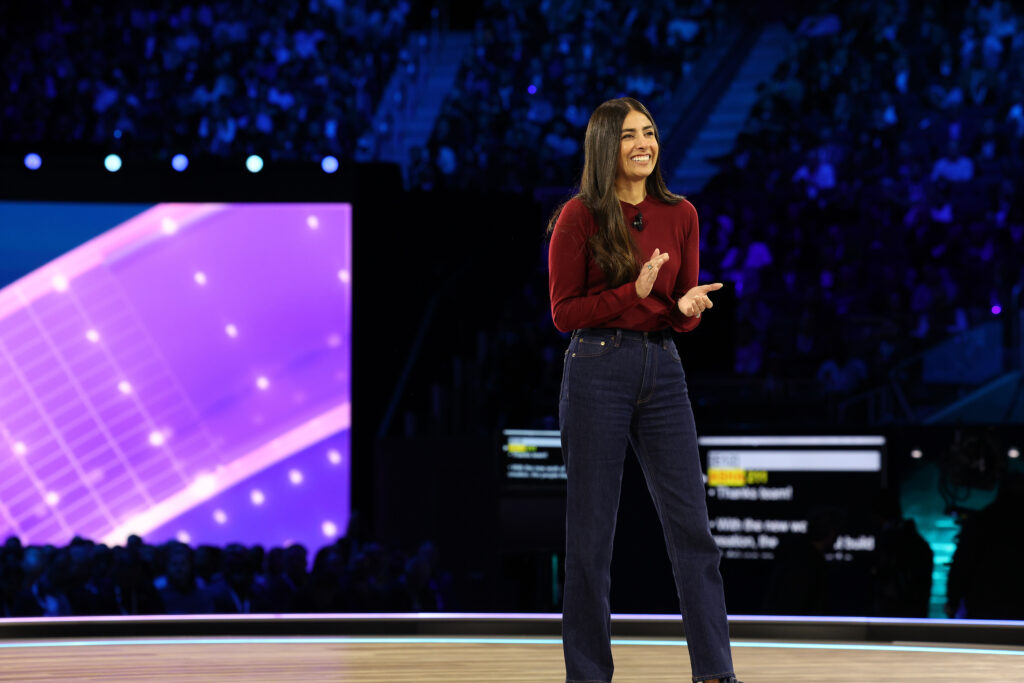

Microsoft is pulling the plug on its AI-powered Copilot assistant for Xbox, winding down the feature on mobile and canceling its planned launch on consoles.
The pullback, announced Tuesday by new Xbox CEO Asha Sharma, comes barely a year after the company debuted the gaming chatbot as a centerpiece of its AI push into gaming, demonstrating the limits of Microsoft’s strategy of embedding AI across its product lineup.
Microsoft first unveiled Copilot for Gaming at the Game Developers Conference in March 2025, pitching it as an AI sidekick that could offer gameplay tips, coaching, and recaps of where players left off. A beta launched on the Xbox mobile and PC apps and later on the ROG Xbox Ally handheld. The console version was expected to arrive later this year.
Sharma’s decision to kill the feature aligns with the AI strategy she outlined in an April 30 post on X, where she said Xbox was “refocusing our AI efforts to solving player problems like enhancing real-time graphics, improving discovery, and deepening personalization.”
She pointed to Automatic Super Resolution, which boosts image quality and performance in the background, as an example of AI done right — a contrast with the chatbot approach.

It’s part of a broader set of changes by Sharma, who told employees in a memo Tuesday that she’s overhauling Xbox’s leadership team, including bringing in executives from the Microsoft CoreAI engineering group where she previously worked.
“Xbox needs to move faster, deepen our connection with the community, and address friction for both players and developers,” Sharma wrote on X, noting that the company promoted leaders who helped build Xbox while bringing in new voices to the gaming unit.
According to CNBC, which saw the memo, the changes include the addition of four executives from CoreAI:
- Jared Palmer, formerly a vice president of product in CoreAI and a senior vice president at GitHub, will work on engineering, developer tools, and infrastructure.
- Tim Allen, a vice president of design who previously led design and research at Instacart, will lead Xbox design.
- Jonathan McKay, a former Meta director and head of growth for ChatGPT at OpenAI, will lead Xbox growth.
- Evan Chaki, a general manager, will run a forward-deployed engineering team focused on simplifying development.
In addition, David Schloss, a senior director of product and growth at Instacart, will take charge of Xbox’s subscription and cloud business.
Two execs with more than two decades each at Microsoft are departing: Kevin Gammill, who oversaw Xbox user experience and game development platforms, and Roanne Sones, who led devices and ecosystem and will take a leave of absence before moving to an advisory role.
Sharma took over as Xbox CEO in February, replacing Phil Spencer, who retired after 38 years at the company. She had been running Microsoft’s CoreAI product organization and previously served as chief operating officer at Instacart and as a vice president at Meta.
Since arriving, she has moved quickly, cutting Game Pass prices, dropping the “Microsoft Gaming” name in favor of Xbox, and adopting daily active players as the division’s new internal success metric.
The changes come as Xbox faces a sustained revenue slump. Gaming revenue totaled $5.3 billion in the most recent quarter, down from $5.7 billion a year earlier, and has declined in four of the past six quarters. Hardware revenue fell 33%.
Microsoft’s recent 10-Q filing also disclosed impairment charges in the gaming business, meaning the company has written down the value of some gaming assets, suggesting that parts of its gaming portfolio aren’t performing as expected.
Sharma described the decision to wind down Copilot on mobile and stop its development for consoles as part of a plan to “retire features that don’t align with where we’re headed.” Her post did not address the status of the Copilot beta on the Xbox PC app or the ROG Xbox Ally handheld.
The feature drew skepticism from the start. Gaming writer Thomas Wilde called it “a solution looking for a problem” in a March 2025 analysis on GeekWire, questioning whether players wanted an AI chatbot alongside their games.
More recently, Wilde raised additional concerns about the feature pulling guide content from the open internet without attribution, writing that Gaming Copilot was “eating its own seed corn” by undermining the ecosystem of online guides it depended on.
The feature’s full lifecycle, from announcement to cancellation, spanned roughly 14 months.

Apple has settled a class-action lawsuit over its delayed Siri features.
While Apple’s promised Siri overhaul is still nowhere to be found, shareholders who sued over the delay can now rest easy, thanks to a huge settlement.
At WWDC 2024, as part of its Apple Intelligence announcements, Apple previewed major enhancements for Siri. The virtual assistant was supposed to receive an AI-powered cognitive boost, allowing for advanced in-app actions, contextual awareness, and more.
The company went so far as to feature Siri’s new capabilities in its marketing materials, including video advertisements. Things went south in a matter of months, however.
Apple had to delay its planned Siri update, which led to a class-action lawsuit that was settled in December 2025. On Tuesday, as noted by The Financial Times, the settlement details were finally revealed.
The parties settled for $250 million, offering U.S. Settlement Class Members $25 per eligible device. Still, Apple could be forced to pay up to $95 per device if the number of claims filed is low. Part of Apple’s $250 million settlement will also go toward administrative costs and attorneys’ fees.
Eligible devices include iPhone models with Apple Intelligence support, purchased between June 10, 2024, and March 29, 2025, in the United States. This encompasses the entire iPhone 16 range, along with the iPhone 15 Pro and iPhone 15 Pro Max.
Those who wish to submit a claim will need to provide proof of purchase, the serial number of the eligible device, their phone number, and Apple Account information. Apple will begin inviting claim submissions within 45 days, as of May 5, 2026.
Apple also provided a statement on the matter, as shared by 9to5mac.
“Since the launch of Apple Intelligence, we have introduced dozens of features across many languages that are integrated across Apple’s platforms, relevant to what users do every day, and built with privacy protections at every step. These include Visual Intelligence, Live Translation, Writing Tools, Genmoji, Clean Up, and many more.
Apple has reached a settlement to resolve claims related to the availability of two additional features. We resolved this matter to stay focused on doing what we do best, delivering the most innovative products and services to our users.”
As one would expect, Apple’s statement largely praises the currently available Apple Intelligence features, while treating the Siri-related settlement as little more than a footnote.
The now-settled class-action lawsuit accused Apple of promoting “AI capabilities that did not exist at the time, do not exist now, and will not exist for two or more years.”
It was also said that Apple’s advertisements “saturated the internet, television, and other airwaves to cultivate a clear and reasonable consumer expectation that these transformative features would be available upon the iPhone’s release.”
Legal troubles over Siri delays will continue elsewhere
At the time of writing, the long-overdue Siri features are still not available to end users. They are expected to roll out with the iOS 27 update, which is set to debut at WWDC 2026 on June 8.
However, Apple’s legal issues over its delayed Siri features are set to continue via a separate class-action lawsuit. This one is led by South Korea’s National Pension Service, which argues that Apple’s delays have cost billions in stock market losses.
“It is no secret that Apple faced challenges and weathered ups and downs in its stock price in 2025, like many major companies,” Apple said in a February 2026 request to dismiss the suit. “But plaintiff takes a massive and unsupported leap by claiming that securities fraud caused the temporary price drops.”
Ultimately, it remains to be seen if this lawsuit will be dismissed or if Apple will reach a similar settlement as it did in its other Siri-related case.

You might run into trouble if you try to browse Reddit posts without logging in on your phone. Some Reddit users have reported seeing a new pop-up when visiting the website on mobile that prompts you to download the app to keep reading.
The social media platform said it’s running a test on a “small subset” of users who frequent the site on mobile browsers while logged out.
Multiple Reddit users have shared a prompt they encountered that says, “get the app to keep using Reddit.” I wasn’t able to replicate this message after deleting the Reddit app from my phone and poking around on the web version. Those who encounter the prompt while using their mobile web browser may be able to log in to continue without installing the app.
A Reddit spokesperson told CNET the company is running a test to see whether users find the app more satisfying than a mobile browser.
“These users are already familiar with Reddit, and we’ve seen that the experience is much better for them in the app,” according to a statement from Reddit. “The app offers a more personalized experience, and users can more easily find communities that match their interests.”
Redditors who noted the change expressed frustration with having to be routed to an app just to browse something that was otherwise visible as a website in a web browser. “This is a website,” one user said. “I do not want to use an app to view your website.” Others suggested possible workarounds, like having the site display as a desktop site.
Running into a prompt to log in or download an app isn’t uncommon when using social media platforms. LinkedIn curbs my anonymous snooping, so I’ve resorted to screen recording to share TikToks with some friends who’ve avoided the app.
During a quarterly earnings call last week, Reddit CEO Steve Huffman said that logged-in users spend more time on the platform than logged-out users, due to personalization.
“Seeing more users in the app, more users logging in, more users getting the personalization faster, drives engagement and, then, therefore, monetization,” Huffman said, according to a transcript of the call. “Again, all roads lead to basically the same strategy, which is: Help users find content that’s relevant to them and come back to the app more often.”


The full assets of Metal Gear Solid 2’s HD remaster were recently leaked on 4chan. An unnamed party used the notorious imageboard to distribute the source code for every version of the remaster across all supported platforms, including the PlayStation Vita edition. The leak also reportedly includes 30GB of raw,…
Read Entire Article
Source link


Boston Dynamics engineers just released new footage of their Atlas robot being tested. The machine is shown lurching from two feet to all sorts of weird positions, challenging its balance with each stride. It is not uncommon to watch it shift its weight from both legs onto one while the other extends outward like a spear, arms waving in sync to keep its center of mass stable as it totters about. Atlas quickly puts both hands on the floor and throws its entire body into a handstand, smooth as silk.
Then, just as you get comfy, the legs fly straight out in a horizontal line. Atlas manages to ease right back down again, with no wobble or drama, just flawless. Following that, the robot performs some gymnastics, moving into a clean stand-up stance and landing flat on both feet with barely a judder. Every recovery is a precision motion, as the software makes the smallest modifications on the fly, via the hips and ankles, to absorb the shock. The same process occurs in a cartwheel, where the arms and legs work in perfect harmony to keep the torso on track.

Unitree G1 Humanoid Robot(No Secondary Development)
- Sleek & Durable Design: Standing at 132cm tall and weighing only approx. 35kg, the G1 is constructed with aerospace-grade aluminum alloy and carbon…
- High Flexibility & Safe Movement: Boasting 23 joint degrees of freedom (6 per leg, 5 per arm), it offers an extensive range of motion. For safety, it…
- Smart Interaction & Connectivity: Powered by an 8-core high-performance CPU and equipped with a depth camera and 3D LiDAR. It supports Wi-Fi 6 and…
We already know that Atlas is more than willing to do some heavy lifting for factories, transferring loads with steady hands from container to dolly without flinching, even in uneven flooring environments, and the balance system that allows the robot to flip also means it has the ability to step across uneven ground or recover when loads shift unexpectedly on the job, as the robot delivers results on both fronts with aplomb.
Boston Dynamics claims that its test teams fine-tune Atlas by subjecting it to simulation after simulation after real-world test, with the machine learning its way through to the point where it can detect its own position without relying on external cues to stay on track. All combined, its hydraulic/electric actuators respond faster than the blink of an eye to data from all of the numerous sensors, transforming moments of uncertainty into smooth sailing.
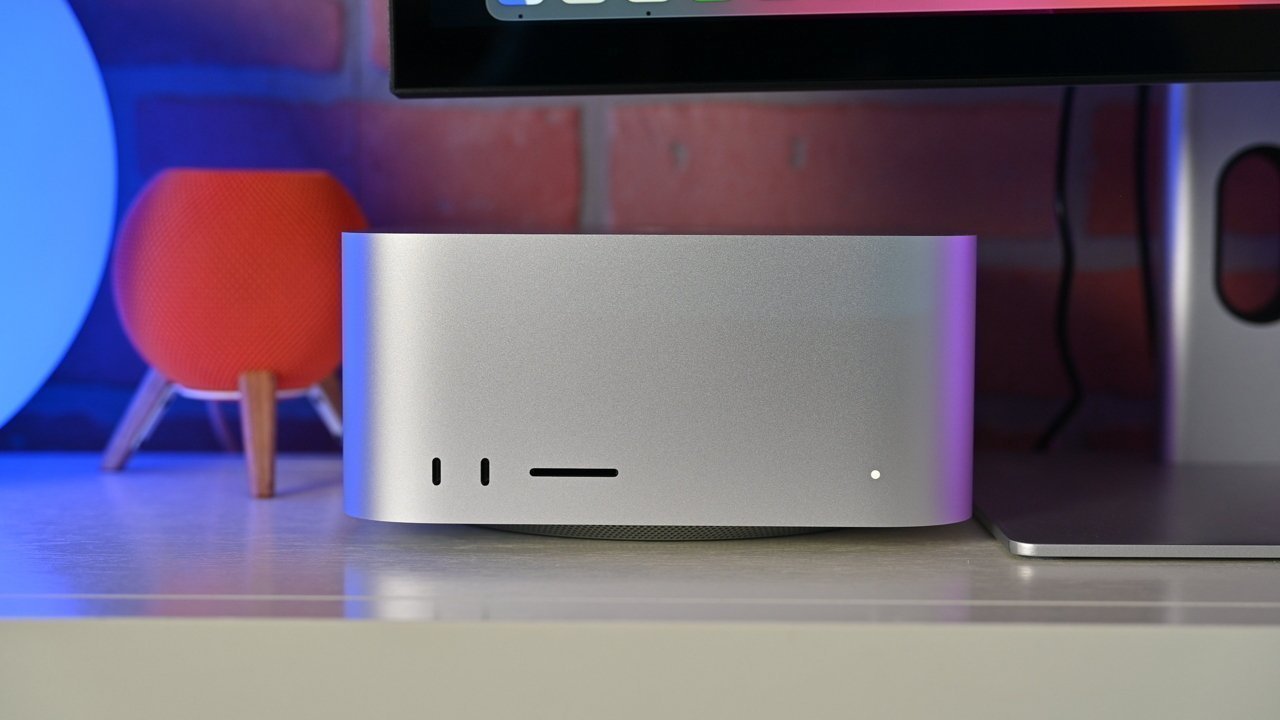
Apple has pulled even more higher-end configurations of its Mac Studio and Mac mini, removing some of the most expensive memory options as the entire industry deals with the RAM crisis.
The ongoing memory supply problem has claimed another victim from Apple’s roster. After the removal of the 512GB RAM option for the Mac Studio in March, Apple has slimmed down its product options a bit more, as component costs bite.
This time, it’s not just the Mac Studio that’s being hit. The Mac mini is also affected by the memory downgrade.
Prospective buyers of the M3 Ultra version of Mac Studio previously could buy the model with either 96GB or 256GB memory. However, as spotted by @BasicAppleGuy on X, potential shoppers selecting the model will no longer see the 256GB option, only the 96GB.
During April, it was found that the M3 Ultra Mac Studio with 256GB was “unavailable,” while the 96GB version had a lengthy lead time. There was also a similar issue for the M4 Max version, which listed the 128GB capacity as unavailable.
Checks reveal that the 128GB option is also not listed at all for the M4 Max Mac Studio either.
At the same time, anyone looking at the Mac mini with one of the M4 Pro chips will see slim pickings when it comes to memory. Previously, it had an option for 64GB of unified memory, but that too has disappeared, leaving 24GB and 48GB options.
This is the second configuration change for the Mac mini in May alone. Earlier in the month, it removed the option for the $599 256GB capacity M4 model.
Instead, consumers wanting the cheapest desktop Mac model will have to pay at least $799 for the M4 Mac mini with 16GB of memory and an increased 512GB of storage.
RAM bites
While Apple has so far insulated itself from the memory problems affecting the rest of the industry, it wasn’t going to be that way forever.
During the Q2 results call, current-CEO Tim Cook confirmed that the memory pricing problem is affecting Apple’s bottom line. While it didn’t affect the December nor March quarters due to carry-in inventory offsetting the issue, Cook said there would be a significant effect felt in June.
Into future quarters, Cook warned that there will be a further increase in impact, but added that Apple had a range of options available.
Evidently, those options include lopping higher-priced configurations off the deck.
Tech
Dropship Down Over Strogg Turf: Ten Minutes of Gameplay From The Awakening, Quake 4’s Canceled Expansion


Over the past two weeks, those of us who spent hours mulling over the Strogg combat from Quake 4 have been in for a treat, a 10-minute clip of the previously unfinished expansion. The Awakening has appeared on the internet. That’s right, Justin Marshall has now produced a clean version free of the obvious watermarks that were muddying up prior versions of the footage. Anyone viewing can now see a truly raw early prototype build straight from the creators, with all of the bells and whistles intact as they were when the team ceased working on it.
Ritual Entertainment was the team behind the project, and they had the Quake formula down pat after honing their talents with one of their previous mission packs. Unfortunately for them, the parent firm, Activision, canceled the entire project after Quake 4 sales fell short of expectations. According to reports, the expansion was 95% ready at the time, with a few scraps reaching users via the version 1.3 patch. The original game had a napalm launcher and eight new multiplayer levels, as well as a new team-based mode dubbed DeadZone, which sparked a lot of interest.
Sale

ASUS ROG Xbox Ally – 7” 1080p 120Hz Touchscreen Gaming Handheld, 3-month Xbox Game Pass Premium…
- XBOX EXPERIENCE BROUGHT TO LIFE BY ROG The Xbox gaming legacy meets ROG’s decades of premium hardware design in the ROG Xbox Ally. Boot straight into…
- XBOX GAME BAR INTEGRATION Launch Game Bar with a tap of the Xbox button or play your favorite titles natively from platforms like Xbox Game Pass…
- ALL YOUR GAMES, ALL YOUR PROGRESS Powered by Windows 11, the ROG Xbox Ally gives you access to your full library of PC games from Xbox and other game…

The new footage jumps right into the campaign, with cutscenes that use straightforward blocking and conversation to introduce the new group and task. It seems like a homecoming as we join up with the marines who have been through so much and hear their experiences as they trade them on the transport during Operation Sentinel. The squad joins up with Atlas walker forces and Hades infantry to take down one of Strogg’s oldest raw materials processing plants, as the aim is simple: get in there, grab some data, and then blow it up.

Naturally, not everything goes as planned. Anti-aircraft fire appears out of nowhere and whacks the dropship, causing it to take significant damage and rapidly lose altitude, with the crew calling out coordinates and warnings as the engines begin to shut down. You have to make quick judgments, and one of the team members must cut the harness so that the team can jump to safety or at least lower ground. It’s chaos, with shouts and the sound of metal ripping apart as the dropship battles to stay airborne long enough for everyone to escape.

When the crew hits the ground, the pace kicks up again, and we’re back in the Quake 4 groove, with Strogg turrets hammering the area and friendly walkers and troops locked down. You know the score; move low, use your cover, and wait for partner forces to call in reinforcements. There are supply tubes that provide a secondary route to the injured walkers for plate repairs. Clearing those tunnels and continuing the offensive are critical for progress.

Even though we are still looking at an early build, the level design maintains the tight flow of movement and shooting that defines Quake 4. The surroundings combine industrial Strogg architecture with the tight passageways and open kill zones that fans are already accustomed to. Of course, there are a few reminders that we’re looking at an unfinished prototype; placeholder textures and some weird animations here and there indicate that this is still a work in progress, not the finished product.
[Source]

Audio Advice is heading west. The Raleigh-based high-end audio and home theater retailer, already one of the largest players in the Southeast, has announced its expansion into Las Vegas with Chris Oram appointed as General Manager of the new location. After moving into the Midwest last year and with another Audio Advice Live event scheduled for August, the Las Vegas move suggests the company is no longer thinking like a regional retailer.
Sin City may be better known for casinos, spectacle, and bad decisions made after midnight, but it is also a serious luxury market and that makes it fertile ground for custom theaters, premium two-channel systems, and CI projects with real budgets.
The Las Vegas move also makes sense once you look beyond the Strip, the casinos, and the tourists who think a $38 cocktail is a personality trait. Henderson, Summerlin, Anthem, and other affluent suburbs around the valley have become landing spots for wealthy buyers relocating from California, Washington, and other high-tax markets, bringing the kind of homes and budgets that support serious custom theaters and high-end audio systems.

Vegas is also no longer just a weekend escape hatch; it is becoming a major sports and technology market, with the Raiders already in town, the Athletics relocation underway, the Golden Knights proving that hockey can own the desert, and the NBA formally exploring Las Vegas as a potential expansion city. Add Mitch Marner’s new eight-year, $96 million Golden Knights deal to the mix, and yes — he can probably afford something with more channels than a Rogers cable package. Audio Advice Las Vegas might be arriving at exactly the right moment.
Las Vegas Gets a Serious High-End AV Super-Showroom
Audio Advice is expanding into the western U.S. with a new super-showroom in Las Vegas, marking the company’s latest move beyond its Southeast roots and recent Midwest expansion. The new location will operate at 750 Pilot Rd, Las Vegas, NV 89119, with former Eagle Sentry executive and industry veteran Chris Oram appointed General Manager to lead the launch and growth of the storefront.

Audio Advice’s modern showroom model is built around letting customers experience complete systems in person, from smart home control and lighting to two-channel audio and full-scale home theater systems. That matters in a category where photos, spec sheets, and YouTube demos can only do so much. At some point, you need to sit down, dim the lights, press play, and see whether the system delivers or just looks expensive in walnut.
“Chris is an exceptional leader with deep industry expertise and a proven track record of building high-performing teams and delivering outstanding customer experiences. His passion for innovation, operational excellence, and commitment to the client journey make him the ideal person to lead our expansion into Las Vegas,” said Jonathan Stephens, Chief Revenue Officer of Audio Advice. “We’re thrilled to welcome Chris to Audio Advice as we continue building world-class experiences for customers nationwide.”
Oram’s appointment also gives Audio Advice someone with established local market experience and a background in custom integration, which should matter in a city where residential AV projects can quickly move from “nice media room” to “Bond villain bunker with Dolby Atmos.”
“I’m incredibly excited to join Audio Advice and be part of this next chapter,” shares Chris Oram, General Manager of Audio Advice Las Vegas. “I’ve admired Audio Advice for years. As a longtime YouTube subscriber, I’ve always appreciated their dedication to authentic, expert guidance and helping customers make confident decisions. They’ve also built an incredible community, something I’ve had the opportunity to experience firsthand at Audio Advice Live. I’m honored to bring that same passion for excellence to the West Coast and create exceptional experiences for clients in Las Vegas.”

The Bottom Line
Audio Advice Las Vegas is a smart move because the company is not just opening another retail box with demo rooms and a few expensive loudspeakers under dramatic lighting. The bigger play is customer experience, education, and regional reach. Based on our experience at Audio Advice Live 2025, and with Audio Advice Live 2026 coming this August, Audio Advice has shown that it understands something a lot of the high-end audio industry still pretends not to know: people need to hear it, see it, touch it, ask questions, and feel like they are part of the process before they commit real money. “Trust us, it’s good” is not a sales strategy. It’s what villains say before the trapdoor opens.
The Las Vegas location gives Audio Advice a serious foothold in the western U.S. and a market filled with luxury homes, custom integration opportunities, and customers who are not afraid of premium experiences when those experiences are properly explained. It also raises a very interesting question: could Audio Advice Live Las Vegas eventually become a thing? Nothing has been announced, so let’s not pretend the dice have already landed. But Vegas already has the hotels, infrastructure, airport access, and national draw to support something like that. CES is still huge, but outside of TVs and some scattered audio demos, it has largely stopped being a meaningful high-end audio and home theater show. That leaves room.
Could an Audio Advice Live event in Las Vegas pull attention from T.H.E. Show Las Vegas or even T.H.E. Show SoCal? Possibly. Not because Audio Advice would simply be another show on the calendar, but because its formula is different. Audio Advice is a retailer with access to some of the best brands in the world, but its real strength is the face-to-face educational model: curated systems, real demos, expert guidance, and customers who can ask actual questions without being treated like they wandered into the wrong velvet-rope room.
Audio Advice is betting that the West Coast and Southwest luxury AV market is ready for a larger, experience-driven showroom model. In Sin City, that may be one of the smarter bets on the board.
AUDIO ADVICE LAS VEGAS
750 Pilot Rd
Las Vegas, NV 89119
Phone: (702) 381-1899
Related Reading:

IRON CASH 3 (AKI & PAWPAW) – Nigerian Movies 2026 Latest Full Movies | OSITA IHEME, CHINEDU IKEDIEZE

'I have to make my own dog food' – voters counting living costs on eve of election

BeInCrypto Institutional Research: 15 Firms Leading Digital Asset Adoption

Manchester United reach agreement with Casemiro over contract clause amid transfer speculation

US brings back mandatory military draft registration

Steven Gerrard disagrees with Gary Neville over ‘shock’ Chelsea and Arsenal claim | Football


-

 NewsBeat2 days ago
Channel 5 – All Creatures Great and Small series 7 new post
-
 Tech4 days ago
Trump’s 25% EU auto tariff breaches Turnberry Agreement that also covers semiconductors and digital trade
-
 Business6 days ago
Tesla Officially Registers Elon Musk’s Stock: What Investors Need to Know
-
 Sports4 days ago
Paul Scholes issues Marcus Rashford reality check as agreement emerges over Man United star
-

 Business7 days ago
Barclay Brothers Avoid Bankruptcy: HSBC Drops High Court Petitions After IVA Deal
-

 Entertainment4 days ago
Met Gala 2026 Rumored Guest List Is Turning Heads
-

 Entertainment6 days ago
Celebrities Who Are Attending the 2026 Met Gala Event
-

 Entertainment6 days ago
Insider Claims Reason Behind Key & Peele Split
-

 Tech6 days ago
Texas Instruments made a new flagship graphing calculator: the TI-84 Evo
-

 Business5 days ago
Two Powerball Tickets Split $143 Million Jackpot in Indiana and Kansas
-

 Business6 days ago
Strait of Hormuz Remains Heavily Restricted on April 29 Amid Iran Conflict
-

 Crypto World6 days ago
Meta (META) starts stablecoin payout to creators in Circle’s USDC on Polygon, Solana via Stripe
-
Business5 days ago
Strait of Hormuz Blockade Persists Amid US-Iran Standoff, Sending Oil Prices Soaring
-
Business2 days ago
Winning Numbers Drawn as Jackpot Resets to $20 Million
-

 Sports6 days ago
Saudi Arabia set to withdraw LIV Golf funding after 2026 season, per reports
-
 Crypto World5 days ago
CoreWeave (CRWV) Stock Climbs 8% Despite $45M Insider Share Dump
-

 Entertainment4 days ago
Kylie Jenner Hit With Second Lawsuit From Ex-Housekeeper
-
 Crypto World6 days ago
Securitize and Computershare Enable Tokenized Equity Issuance for Over 25,000 U.S.-Listed Stocks
-
 Sports4 days ago
David Benavidez responds to team Canelo saying the fight will never happen
-

 Crypto World6 days ago
Gibraltar Proposes Tokenized Funds Regulation to Bolster Compliance
You must be logged in to post a comment Login