The French have never suffered from a shortage of self-confidence. Their cars, cinema, food, and hi-fi tend to arrive with a point of view, and the Advance Paris A10 Classic is no exception. With illuminated VU meters, two ECC81/12AT7 tubes glowing behind its front panel, and a Class AB output stage rated at 130 watts per channel into 8 ohms and 190 watts into 4 ohms, it looks less like another anonymous black box and more like something intended to command the room. This is not amplification for the light and fluffy croissant crowd.
The A10 Classic is not a new integrated amplifier. It has been part of the Advance Paris lineup for several years, preceding both the company’s anniversary APEX models and the flagship NOVA electronics that we experienced at AXPONA 2026. That does not make it irrelevant. If anything, the A10 Classic helps explain how Advance Paris arrived at its current formula: bold industrial design, tubes where they can influence the character of the presentation, solid-state output stages where current and control matter, and enough connectivity to anchor an entire two-channel system.
Advance Paris NOVA A-i190 at AXPONA 2026
At AXPONA, Advance Paris placed the spotlight on the NOVA A-i130 and A-i190 integrated amplifiers, which push that concept further with DSP, more sophisticated subwoofer management, modular streaming, and optional bi-directional Bluetooth. The A-i190 was one of our Best in Show selections because it balanced vintage-inspired styling with genuinely useful system flexibility and a surprising amount of power driving a pair of Vienna Acoustics floor standing loudspeakers. The A10 Classic is a simpler and older interpretation of that philosophy, but the family resemblance is unmistakable.
Its continued relevance also says something about why integrated amplifiers have become so popular. Listeners increasingly want fewer boxes, but they are not necessarily willing to surrender vinyl playback, digital inputs, television connectivity, subwoofer support, or enough power to drive demanding loudspeakers.
Advertisement
On paper, that promises some of the tonal body associated with tubes, the control and current delivery of transistors, and enough flexibility to replace several separate components. The newer NOVA models may represent where Advance Paris is going, but the A10 Classic reveals a great deal about how the company got there. The question is whether all that established French muscle still delivers sufficient finesse or merely a very convincing accent.
Related Reviews:
From Jadis Romance to Advance Paris Muscle
There was a time when French hi-fi had a fairly recognizable personality. The better examples from Jadis and YBA could sound delicate, spacious, and beautifully saturated through the midrange, with a sweet top end that made strings and vocals especially inviting. The trade-off was sometimes a slight softening of low-level detail and bass that emphasized warmth and texture over speed or absolute control. Think red Burgundy rather than a chilled Sancerre: richer, rounder, and not especially interested in showing you every sharp edge.
It also reminded me of driving around Paris in an old Citroën with my cousin, who worked as a researcher at the Institut Pasteur. The car’s famously compliant suspension floated over damaged pavement and insulated us from nearly everything happening beneath the tires. It was wonderfully comfortable, but you did not always receive a detailed report from the road. Some older French amplifiers could behave the same way, smoothing over rough recordings and delivering a more romantic presentation while sacrificing a little grip, transparency, and bottom-end precision.
The newer French approach is rather different, although Devialet and Advance Paris do not arrive there by the same technical route. Devialet’s patented ADH architecture operates its Class A analog and Class D switching amplifiers simultaneously in parallel. The Class A section determines the output voltage but is relieved of supplying the corresponding current; the Class D stage provides that current and performs most of the heavy lifting. The objective is to preserve the linearity of Class A while gaining the power density, efficiency, and loudspeaker control of Class D. It is considerably more sophisticated than placing two different amplification technologies in consecutive stages.
Advertisement
Advance Paris A10 Classic
The A10 Classic follows a more conventional, and arguably more serviceable, division of labor. Its ECC81/12AT7 tubes operate in the preamplifier stage, where they handle the low-level signal before passing it to a Class AB push-pull transistor output section. The tubes are therefore not driving the loudspeakers or sharing output duties with the transistors; they are used upstream, where they can influence gain structure and tonal character, while the solid-state section supplies the current, control, and 130 watts per channel into 8 ohms. It is hybrid amplification in series rather than Devialet’s parallel ADH topology, and the distinction matters.
Which approach is superior? That depends on whether you prioritize tonal beauty and forgiveness or speed, resolution, control, and system flexibility. Having owned both Jadis and YBA components, I understand the attraction of the older school. I also experienced enough operational eccentricity to distinguish charmingly French from utterly weird. There is quirky, and then there is wondering whether your amplifier has decided that electrical consistency is merely an Anglo-Saxon suggestion. I have been there. I will not be going back.
As this is being written, France are two victories away from winning the 2026 World Cup and will face Spain in the semifinal on July 14. Their attacking group of Kylian Mbappé, Ousmane Dembélé, Michael Olise, and Bradley Barcola has been dangerous not simply because of its pace, but because it understands when to press, when to create space, and when to strike. France reached the semifinal after beating Morocco 2–0, with Mbappé and Dembélé supplying the goals.
Advertisement. Scroll to continue reading.
Advertisement
The A10 Classic leans much closer to that newer French philosophy. It is forceful, quick, and capable of delivering genuine low-frequency authority, but its tube preamplifier stage keeps it from becoming sterile or relentlessly clinical. It retains some of the tonal color associated with the older French school while providing the control, power, build quality, and day-to-day reliability that I would now demand from an integrated amplifier. The older approach could be seductive. The A10 Classic is more interested in winning the match.
The A10 Classic is less Cyrano and more Nikita: unmistakably French, outwardly stylish, and capable of delivering considerably more force than its polished appearance suggests.
Technology and Specifications
The A10 Classic is designed as the center of a serious two-channel system rather than another amplifier pretending to be a tablet. It delivers 130 watts per channel into 8 ohms and 190 watts into 4 ohms, with a High Bias setting that increases the standing bias of the output stage for the first few watts. Advance Paris does not publish the precise Class A operating range, but it definitely results in a warmer top panel.
The amplifier also requires approximately 30 seconds to warm its two ECC81/12AT7 tubes after startup, with a countdown displayed on the front panel before operation begins. High Bias mode produces additional heat, so placement matters: Advance Paris recommends at least 50 mm, or 2 inches, of clearance on each side and 100 mm, or 3.9 inches, above the chassis. This is not an amplifier to bury inside a tightly packed cabinet beneath a cable box and three years of unopened mail.
Advertisement
Its analog connectivity is unusually comprehensive. Five line-level RCA inputs are joined by a balanced XLR input and an MM phono stage with selectable capacitance settings of 100, 200, or 320 pF. The phono input does not support moving-coil cartridges, but the adjustable capacitance makes it more useful than the fixed MM stages fitted to many integrated amplifiers.
Pre-out and amp-in connections allow the two sections to be separated, while a fixed record output, two mono subwoofer outputs, two switchable speaker zones, a trigger connection, and a front-panel headphone jack cover most conventional system requirements.
The digital section is built around an ESS9018 DAC and includes three optical inputs, one coaxial input, USB-B for computer audio, USB-A for MP3 playback, HDMI ARC for a television, and a second HDMI audio input for a compatible source. USB-B supports PCM up to 32-bit/384 kHz and DSD256 through DoP; coaxial reaches 24-bit/192 kHz and optical is limited to 24-bit/96 kHz. Bluetooth is optional through Advance Paris’s X-FTB01 aptX or X-FTB02 aptX HD module rather than being built into the amplifier.
There is no Wi-Fi, Ethernet, native streaming platform, app control, room correction, moving-coil phono stage, or HDMI eARC. The subwoofer outputs also lack adjustable crossover, high-pass filtering, and time alignment, so bass management remains the responsibility of the subwoofer. The HDMI inputs provide a convenient route for stereo television and source audio, but the A10 Classic is not an AV receiver and Advance Paris does not document Dolby or DTS decoding. Its appeal is hardware longevity: add the streamer of your choice today and replace that source when the software industry moves the goalposts again.
Advertisement
Advance Paris A10 Classic Specifications
Type: Hybrid stereo integrated amplifier
Tubes: 2 x ECC81/12AT7 in the preamplifier stage
Power output:
130 watts per channel into 8 ohms
190 watts per channel into 4 ohms
Amplification: Class AB with switchable High Bias mode
DAC: ESS9018
Analog inputs: 5 x stereo RCA, 1 x balanced XLR
Phono: MM; 47 kΩ; 100, 200, or 320 pF capacitance
Digital inputs: 3 x optical, 1 x coaxial, USB-B, USB-A, HDMI ARC, HDMI Audio In
Maximum digital resolution: PCM 32-bit/384 kHz and DSD256 via USB-B
Bluetooth: Optional aptX or aptX HD module
Outputs: Pre-out, amp-in, fixed record out, 2 x mono subwoofer, Speaker A/B, headphone, trigger
Frequency response: 20 Hz to 80 kHz, ±3 dB
Dimensions (W x H x D): 430 x 175 x 385 mm (16.9 x 6.9 x 15.2 inches)
Weight: 14.5 kg / 32 pounds
Listening
I have lived with the Cambridge Audio Edge A integrated amplifier for close to five years, and at no point have I felt any desire to replace it. It has been consistently reliable, is built to an exceptionally high standard, remains relatively cool even when driven hard, looks appropriately substantial, and can power a wide range of loudspeakers without sounding strained. More importantly, it continues to sound excellent.
In several respects, the Advance Paris A10 Classic feels like a distinctly French interpretation of the same basic idea: a powerful, full-featured integrated amplifier designed to serve as the foundation of a serious two-channel system. For this review, I used it with the Q Acoustics 5040, Magnepan LRS, Acoustic Energy AE100 MK2, Wharfedale Diamond 12.3, and Wharfedale Super Denton loudspeakers.
The analog front end included Thorens turntables fitted with cartridges from Ortofon, Goldring, and Sumiko, while network playback was handled by components from Bluesound, WiiM, and Cambridge Audio. System cabling came from Advance Paris, QED, Analysis Plus, and Clarus Audio.
Anyone expecting the A10 Classic’s tubes to produce a soft, velvety, or overtly romantic tonal balance should think again. The amplifier sounds comparatively linear, with good control, clarity, and extension at both ends of the frequency range. The tubes contribute additional texture, prevent the presentation from becoming sterile, and give instruments greater body and dimensionality, but they do not dominate the amplifier’s overall character.
Advertisement. Scroll to continue reading.
Advertisement
Think of it as a very French friends-with-benefits arrangement with Léa Seydoux: sophisticated, textured, and never overplayed, provided you remember the galette, carrot salad, and a bottle of wine good enough to avoid ending the relationship.
As much as I love the Magnepan LRS, they need an amplifier with more than an impressive power rating on paper. Their 4-ohm impedance and relatively low 86 dB sensitivity place greater demands on current delivery as playback levels increase, even though their largely resistive load is easier to manage than the severe impedance swings presented by some conventional loudspeakers.
It has always seemed slightly unusual that my Schiit Ragnarok 2 drives them as well as it does. Its 100-watt-per-channel rating into 4 ohms is hardly excessive by modern standards, but it remains composed and sounds convincing as long as I am prepared to push the volume control farther than usual. The Cambridge Audio Edge A drives the LRS with considerably less apparent effort, and the A10 Classic proved similarly comfortable with them.
Advance Paris A10 Classic (off)
The Advance Paris added greater texture, firmer control through the upper bass, and more tonal color than I generally hear from the LRS with the Ragnarok 2. Nobody buys these loudspeakers for subterranean bass; their specified response begins at 50 Hz (which I think I think is being overly generous) but the A10 Classic gave what was available more shape, weight, and definition. I like color in my food, music, movies, and, yes, in the women who have tolerated me. The A10 Classic understood the assignment.
Advertisement
Nick Cave’s “Avalanche” and “Comancheria,” the latter from his and Warren Ellis’s superb score for Hell or High Water, require an amplifier capable of reproducing tonal weight without sacrificing speed or clarity. “Avalanche,” in particular, depends heavily on the physical presence of Cave’s piano. If the notes lack body, resonance, and convincing decay, the performance loses much of its impact, darkness, and emotional weight.
The A10 Classic got all of this right. Piano notes arrived with the necessary mass and initial attack, followed by a natural sense of resonance and decay rather than disappearing abruptly or lingering without definition. “Comancheria” was equally convincing, with the amplifier preserving the score’s tension, space, and low-level texture without making it sound overly polished.
Cave’s voice on “Avalanche” is an equally important test. Some amplifiers smooth over its rough edges and diminish the authority of the performance. That is simply wrong. His delivery needs to sound gravelly, bold, and unsettling, or much of the song’s character disappears. The A10 Classic retained that texture while keeping the vocal clear and intelligible, demonstrating that its strong tonal density does not come at the expense of transparency.
Three very different tracks highlighted two of the A10 Classic’s strongest qualities: its ability to give voices convincing body and texture, and its refusal to sound slow when the music becomes more rhythmically or dynamically demanding.
Advertisement
Jonatan Alvarado’s “Amargura (El Floridense)” has a more ethereal presentation, with his voice floating within a spacious and carefully recorded acoustic. Through both the Magnepan LRS and Q Acoustics 5040, the A10 Classic gave his vocal greater fullness and dimensionality without making it sound heavy or overly forward. The soundstage extended almost wall to wall, which was impressive for me and considerably less appreciated by the rest of the house.
Kefaya and Elaha Soroor’s “Gole Be Khar” and “Jama Narenji,” from Songs of Our Mothers, were a completely different proposition. Soroor’s voice comes at you with far more weight and authority, and the arrangements are packed with percussion, strings, and shifting textures that can turn into a traffic jam through a slower amplifier.
The A10 Classic never lost its footing. It kept Soroor firmly in the center, let the instruments breathe around her, and gave the music the pace and muscle it needed without blurring everything together. This is not an amplifier that moves through dense material in soft shoes. It can get up and go.
Electronic music has become more of a thing for me with age. I know. Act my age. Kraftwerk, Daft Punk, Boards of Canada, deadmau5, and Aphex Twin all need an amplifier with a firm bottom end, but also enough definition to make the bass lines easy to follow. Synths need pace, space, and real energy through the midrange and top end. Nothing kills this kind of music faster than flat, lifeless synthesizers.
Advertisement
Advertisement. Scroll to continue reading.
The A10 Classic handled all of this rather well. Bass had grip and definition, the soundstage remained open as the mixes became denser, and it never sounded slow or congested. It did not have quite the same low-end impact or midrange punch as the Cambridge Audio Edge A, but we are also talking about an amplifier that costs roughly twice as much. Getting about 90 percent of the way there for a lot less money is nothing to sneeze at.
I have heard amplifiers deliver more decay and considerably more top-end sizzle. The latter is often passed off as “more detail,” which can sound impressive for the first 15 minutes and increasingly unbearable after that, especially with speakers that already lean bright. The A10 Classic does not make that mistake. It has enough energy and clarity to keep electronic music lively, but it knows when to stop thinking you are at some rave in a dingy warehouse in Porte de la Villette.
Restraint is probably the wrong word. Control feels more accurate. My French teacher once suggested that restraints might be required when I was a child, but that is an entirely different conversation. The A10 Classic sounds confident with almost every genre of music without trying to dominate the recording.
Advertisement
The MM Phono Stage Is No Afterthought
It would have been useful for the A10 Classic to include moving-coil support, but its MM phono stage is no slouch. It was quiet with the Ortofon, Goldring, and Sumiko cartridges used during the review, and offered good clarity, tonal weight, and texture without sounding overly warm or soft.
Advance Paris specifies a 47-kilohm input impedance, 2.5 mV sensitivity, and selectable capacitance of 100, 200, or 320 pF. The company does not publish a gain figure, RIAA accuracy, overload margin, or phono-specific signal-to-noise ratio.
A better external phono stage will deliver more space, detail, and dynamic contrast, but most MM users will not feel pressured to upgrade immediately.
The Bottom Line
The Advance Paris A10 Classic stands out because it combines real power, extensive analog and digital connectivity, and a tube preamplifier stage without turning into either a soft-sounding nostalgia piece or a software-dependent lifestyle product. It sounds linear, confident, and controlled, but the tubes add enough texture, body, and tonal color to keep instruments and voices from becoming sterile. It can also drive a wide range of loudspeakers, including the current-hungry Magnepan LRS, without losing its composure.
Advertisement
It is not fully equipped for every modern system. The phono stage supports moving-magnet cartridges but not moving-coil designs. Bluetooth requires an optional module, and there is no built-in Wi-Fi, Ethernet, or native streaming platform. The two subwoofer outputs are useful, but there is no adjustable crossover, high-pass filtering, room correction, or more advanced bass management. Buyers looking for an all-in-one streaming amplifier may find those omissions significant.
The A10 Classic is for listeners who want one substantial integrated amplifier to handle vinyl, digital sources, television audio, external streamers, headphones, and demanding loudspeakers without becoming obsolete when the next streaming platform changes direction. It offers much of the authority and refinement of more expensive integrated amplifiers while retaining a distinct tonal personality of its own.
An Editor’s Choice recommendation? Mais oui—and bring the good Bordeaux, not the bottle you use for cooking.
Pros:
Powerful, stable Class AB amplification
Tube preamplifier stage adds texture and body without excessive warmth
Strong bass control and consistently clear midrange
Drives a wide range of loudspeakers with confidence
Excellent analog and digital connectivity
Adjustable MM phono stage is quiet and genuinely useful
HDMI ARC and separate pre-out/amp-in connections
Substantial build quality and distinctive industrial design
Strong value compared with more expensive integrated amplifiers
The big picture: A new generation of cooling technology is beginning to move from lab testing into early real-world trials, as researchers and startups look for ways to cool buildings without relying on traditional refrigerants. The push comes as demand for air conditioning accelerates in Europe, where rising temperatures are exposing the limits of both existing systems and the buildings they are meant to cool.
Several of these new approaches are now being tested. Some rely on metals that cool when stretched and released. Others use semiconductors, magnetic fields, or pressure-sensitive materials to move heat without the chemical refrigerants used in conventional air conditioning. Most are still in early stages, but the activity reflects a growing effort to rethink how cooling works at a fundamental level.
The urgency reflects how quickly climate conditions are shifting beyond what much of Europe’s infrastructure can handle. In late June, temperatures exceeded 40 degrees Celsius in parts of the region, triggering a surge in demand for cooling equipment. In France, shoppers forced their way into stores to grab portable air conditioners and fans before supplies ran out. The International Energy Agency estimates that by 2050, two-thirds of households worldwide could have air conditioning.
Europe remains behind other markets, with about 20% of households using air conditioning, compared with roughly 90% in the United States. In the UK, adoption is closer to 4%. But that gap is expected to shrink as heat waves become more frequent, ..particularly in countries where air conditioning has not historically been a priority.
Advertisement
Cooling is no longer just about comfort. It affects productivity, sleep, and public health, especially during prolonged periods of extreme heat. Research has linked access to air conditioning with lower mortality rates during heat events, including an estimate that nearly 200,000 premature deaths among people over 65 were avoided globally in 2019.
An elastocaloric demonstrator depicting nickel-titanium elements and a cooling setup
At the same time, scaling conventional air conditioning presents its own set of challenges. Most systems still rely on refrigerants that cycle between liquid and gas to transfer heat. While effective, they are energy-intensive and carry environmental risks. Cooling already accounts for about 3% of global greenhouse gas emissions, and demand for electricity used in cooling is expected to more than triple by 2050.
The refrigerants themselves are under increasing scrutiny. Fluorinated gases, widely used today, can have a global warming impact thousands of times greater than carbon dioxide if they leak. The European Union moved in 2024 to phase them out. “In the next few years, air conditioners and heat pumps using these gases won’t even be able to be sold here,” Fabian Voswinkel, an energy-efficiency policy analyst at the IEA, told Wired. Alternatives such as propane and ammonia are available but introduce trade-offs, including flammability and toxicity.
Advertisement
Those limits are pushing researchers toward solid-state cooling, a category of technologies that eliminates the need for refrigerants altogether. Instead, these systems rely on materials that change temperature when exposed to external forces such as mechanical stress, electrical current, or magnetic fields.
At Saarland University in Germany, researchers are testing nickel-titanium alloys that generate a cooling effect when stretched and released, a process known as elastocaloric cooling. Early results suggest the approach could lower indoor temperatures by 5 to 10 degrees Celsius and operate more efficiently than conventional systems.
The team, led by Paul Motzki, is working with Irish company Exergyn to develop refrigerant-free heat pumps and expects initial deployment in new buildings within the next few years. Motzki said the technology “could lead to disruption, even a paradigm shift, because the technology is so different from established cooling systems.”
Other companies are testing different approaches. Mimic Systems is testing a semiconductor-based heat pump that uses electrical currents to move heat, with a prototype installed in an apartment in Vancouver. Germany-based Magnotherm is developing cooling systems that rely on magnetic fields and plans to test them in a German supermarket chain before expanding into air conditioning. In the UK, Cambridge spinout Barocal is working with plastic crystals that release heat when compressed and has raised $10 million in seed funding.
Advertisement
For now, most of these systems remain unproven at scale. Lindsay Rasmussen, who works with climate-tech startups at Third Derivative, said the technologies are “promising, but unproven at scale,” adding that “the space can move quickly if the right capital and partnerships are in place.” Their path to market may depend on whether large manufacturers adopt and scale them.
Even with new technologies, rising cooling demand cannot be addressed through equipment alone. Much of Europe’s building stock was designed to retain heat, and dense urban areas tend to trap it. Researchers and policymakers are increasingly calling for a “cooling hierarchy” that prioritizes reducing heat buildup through design measures such as shading, ventilation, and reflective materials before turning to mechanical systems.
Some cities are already experimenting with broader infrastructure solutions. Paris has expanded its district cooling network, which circulates chilled river water through underground pipes to cool public buildings. Voswinkel said such efforts reflect a growing recognition that adapting to rising temperatures will require more coordinated planning.
Augmodo, the Seattle startup that straps AI-powered cameras onto retail workers to track store shelves, has raised $21 million as it pushes its technology beyond grocery aisles and into warehouses, factories, and other physical workplaces.
The new funding, led by existing investor TQ Ventures, values Augmodo at $350 million.
CEO Ross Finman, who told GeekWire he wasn’t even looking to raise fresh capital, said he was motivated by interest in the startup’s technology from customers beyond retail, including automotive settings and hospitals.
Augmodo CEO Ross Finman. (Augmodo Photo)
“Fundamentally, someone grabbing a wrench at an automotive factory isn’t that different from someone grabbing a Cheerios box,” Finman said. “Turns out the algorithms work pretty well across all of those.”
Founded in 2023, Augmodo builds AI-powered “Smartbadges” — lightweight wearable devices with dual cameras — that store employees wear passively as they move through aisles. The badges use computer vision, 3D mapping, and spatial computing to track shelf inventory in real time, building what the company calls a digital “Realogram” of each store.
Augmodo raised $37.5 million a year ago in a round that came after Australian pharmacy chain Chemist Warehouse — the startup’s first big customer — moved from a pilot to a full contract and validated the technology at scale. Now others want in on the action.
Advertisement
“Our whole mission statement is AI systems for the physical workforce,” Finman said. “Everyone’s focused on the 20% of the workforce that’s knowledge work, and we’re focused on the 80% of the workforce that’s physical work.”
That demand has pulled Augmodo into warehouses, facility maintenance, delivery operations, and even employee training — verticals the company didn’t originally set out to serve. Existing retail customers, Finman said, kept expanding their contracts to cover new parts of their operations, from auditing warehouse pallets to logging maintenance work like HVAC repairs.
The Smartbadge itself has evolved, too. Finman said it’s now lighter than an iPhone Air and has grown into what he calls an “everything device,” adding walkie-talkie capabilities, an opt-in panic button, and a digital ID display, on top of its original inventory-tracking function.
“That’s actually become a really big selling point,” Finman said. “You don’t need to buy five or six different devices, you buy one at cost, and then here’s all the different features that you can get out of it.”
Advertisement
The company says it has grown 10x in revenue over the past year and now maps more than 186 million square feet of retail space monthly — a figure it expects to cross 1 billion square feet per month by year’s end. Augmodo is adding 50 to 100 new store locations a month.
The company’s headcount has grown 5x over the past year to more than 50 employees, including new CTO Bradford Snow, who joined in January after previous stints at Axon, Meta, Amazon and Microsoft.
Augmodo is ranked No. 145 on the GeekWire 200 list of top Pacific Northwest startups and was a finalist in the Hardware, Robotics, and Physical AI of the Year category at the 2026 GeekWire Awards.
Beyond TQ Ventures, backers include Lerer Hippeau, Jefferson River Capital, Arena Holdings, Chemist Warehouse, New Fare, Interlace, and Webb Investment Network.
Advertisement
Andrew Marks, co-founding partner at TQ, called Finman an “exceptional” leader and said every board meeting reinforced that demand for Augmodo’s tech was outpacing the team’s ability to serve it.
“When you pair a truly special founder with customers lining up around the door and pulling you into new markets, it was obvious we should propose putting more fuel on the fire,” Marks said.
Augmodo said it plans to use the new capital to expand its global enterprise footprint, invest further in its core AI models, and grow its engineering team — with a particular focus on hiring for computer vision and machine learning roles as the company scales its data processing beyond retail.
In the world of vacuum cleaners, especially in 2026, we’ve truly never had it so good. With continued innovation, driven by competition from brands across the globe, there’s a ton of variety available to people of all budgets and home sizes, but if you’re someone who lives with a pet or two then having a vacuum with a more powerful edge is essential. To truly stay on top of all the shedding our furry friends leave behind, you’ll need one of the best vacuums for pet hair.
Before we get ahead of ourselves, it’s worth explaining exactly what pet-friendly vacuums are all about. Instead of the rest of the pack, which can be found in our guide to the best vacuum cleaners overall, these models have brush heads that are better equipped to collect and sift through pet hair, stopping it from getting all tangled up and creating issues down the line.
Because pet hair can be quite thick in certain cats and dogs, these vacuums also have fairly heavy-duty motors to allow for a high level of suction. On top of this, you might find accessories included, such as brush heads that are better equipped to vacuum pet beds. Some vacuums even boast HEPA filters to avoid unwanted smells from being agitated and added to the atmosphere, but this is a rarer feature.
The one issue to bear in mind is that, in order to access all of these extra features, consumers are expected to hand over a bit more than they would for a typical vacuum. This isn’t always the case as there are now more budget-friendly options within this sector, but for helping you to stay on top of accumulating pet hair, we’d argue that it’s worth the expense.
Advertisement
Regardless of the budget you have to work with, you can rest assured that every model featured on this list has been tested by one of our tech experts, so you can’t go wrong, no matter which one you get. If you’re tempted to go down the automation route and take a lot of the cleaning process off your to-do list then you can do exactly that with our list for the best robot vacuum cleaners. Similarly, the best cordless vacuum cleaners are perfect for stowing away when you don’t have much storage space to work with.
Advertisement
SQUIRREL_ANCHOR_LIST
Learn more about how we test vacuum cleaners
Every vacuum cleaner that we test goes through exactly the same tests. We use both real-world tests and technical measurements to tell the good from the bad. First, we measure suction power in Air Watts (AW), which is a combination of suction and airflow. This lets us compare the raw power of each cleaner.
Advertisement
Actual performance depends on a lot of factors including the quality of the accessories and the ability of a vacuum to agitate dirt. For that reason, we take before and after pictures of dust collection on carpet, hard floors and with pet hair.
We don’t weigh the before and after results, as this test is notoriously difficult to do properly, as vacuum cleaners will pick up fibres from the floor that will add to the weight collected. And, without a super-sensitive set of scales it’s impossible to measure fine differences between machines.
If you want to learn more, please visit our detailed page about how we test vacuum cleaners.
Very flexible
Self-empty station works brilliantly
Excellent performance
Advertisement
Hard to empty cleanly manually
The Shark PowerDetect Speed Clean and Empty Pet Pro IA324UKT already stands on some excellent foundations as the previous-gen version (which lacks the Pet Pro moniker), is still a fantastic vacuum, even if it can be a little heavy at times. This more recent revamp shakes up the design in a handful of meaningful ways and, as you might expect, is well equipped to tackle pet hair.
The first thing you’ll notice about the IA324UKT, especially if you’ve spent any time with its predecessor, is that this vacuum boasts a much sleeker build. At just 3.22kg, this vacuum is far easier to push around and you’re less likely to encounter fatigue which is really the last thing you want to come up against when giving your home a proper clean.
There’s now a built-in light on the head of the vacuum too which can reveal a lot of hidden dirt and debris that’s collected on your floor, making sure that nothing gets missed as you go. What really comes in handy for pet owners is the MultiFlex stem that allows the vacuum to bend seamlessly and reach under sofas and low tables. If you have pets that like to hide away in these placed then this gives you a chance to pick up any shedded hair there.
Advertisement
As you might expect from a Shark vacuum, performance is stellar across the board. It can peak at 322W when setting the suction to the highest mode, which is more than enough to tackle serious messes. During our flour test, not only did the vacuum do an incredible job of making sure that nothing was left behind, but it also scooped up a whopping 95.9% of debris right up to the edge of a skirting board.
Hard floor performance is equally brilliant, so there isn’t really an issue that you won’t be able to tackle if you have the IA324UKT in tow. Unfortunately, trying to empty the dust bin manually can be a bit convoluted, so if you have a budget that can cover it, we recommend spending just a bit more to pick up the optional automatic self-emptying dock. You can thank us later.
Advertisement
Powerful cleaning
Large selection of tools
LiftOut mode makes the vacuum more flexible
Edge pickup could be better
Although we’re big fans of cordless options like the Dyson V16 Piston Animal for how easy they are to use in a pinch, for more involved cleans that require some heavy-duty features, the Vax LiftOut Multi Pet-Design is a great option to buy.
When putting the Vax cleaner to the test, we picked up on an impressive 151AW suction power which, despite being slightly less than certain competitors like the Hoover HL4 Pet, is able to achieve that suction at a more economical rate, using just 600W.
Advertisement
In our dust test, the cleaner was able to scoop up roughly 97% of the debris when moving it forwards and backwards, and it performed to a similar degree when dust was scattered right up against the skirting board. Pet hair and human hair didn’t stand a chance either, and thanks to the design of the brush, it was all funnelled automatically into the onboard bin.
As great as the Vax LiftOut Multi Pet-Design is for the more open areas of your floors, where the appliance really comes into its own is when you need to tackle the parts that are tucked away under furniture. With the included LiftOut mechanism, you can separate the bin and motor from the floor head, making it simple to vacuum under the sofa, or on smaller surfaces such as the stairs.
If you have a large household to clean then you’ll be glad to know of the massive two-litre bin that’s included. With that much space in tow, you have the freedom to clean for longer in a single session, instead of having to stop things mid-way through and empty the bin before tackling whatever’s left.
Advertisement
Brilliant cleaning
Very well designed
Automatic power adjustment
If you live with quite a few pets and need a heavy-duty cordless solution to stay on top of all the hair-related mess involved then look no further than the Dyson V16 Piston Animal. This won’t be an option for most folks given its price tag of £749.99, but if you can stretch your budget to meet it then the V16 Piston Animal is well worth the investment.
The highlight of this vacuum is that it comes with an all-new motor that cranks up the degree of suction available. In our tests, we picked up on a whopping 401AW when running the vacuum on Boost mode, which is practically unheard of for a cordless vacuum and leaves the competition in the dust.
Advertisement
To save you from using the vacuum with that much power too often and completely draining the battery as a result, the V16 has an ingenious auto detect mode that works brilliantly, taking out the guesswork from your cleaning by intelligently analysing the floor as you go.
When testing out this suction power on both carpet and hard floors, we were massively impressed by what the V16 could achieve. For example, when spreading 10g of flour on our test carpet, the V16 had no issue with collecting practically all of the mess in just a few swipes, even right up to the skirting board.
For collecting hair, the conical nature of the brush allows pet hair to shuffle off at the ends and be stored in the dust bin, saving you from needing to manually extract any hair after the fact. You can even use a compacting tool to push down on the contents of the bin and create more space as you go.
Advertisement
Lots of tools
Great suction and cleaning power
Excellent manoeuvrability
A little heavy
Tools can only attach to the long wand
If you’re looking for a vacuum that delivers consistently powerful cleaning performance, is easy to manoeuvre and makes light work of tricky jobs like picking up pet hair or cleaning hard-to-reach spaces, then the Dyson Ball Animal Multifloor is a great choice.
Advertisement
Weighing 7.6kg, the Dyson Ball Animal Multifloor is heavier than most of the best cordless vacuum cleaners, however the large ball at its base ensures the vacuum is easy to push around. In fact, we hailed this as the “most manoeuvrable plug-in vacuum cleaner” we’ve tested.
Its anti-tangle floor head is fitted with cleverly arranged bristles which prevent hair from wrapping around and becoming tangled, making this a great choice for pet owners and those with long hair. Also included is a two-in-one crevice tool, dusting brush, stair tool and an anti-tangle turbine tool that’s specifically designed for tackling embedded pet hair. The latter was particularly impressive and even picked up longer hair without becoming tangled.
All tools work via the Dyson Ball Animal Multifloor’s extendable wand which we found makes it easy to vacuum higher up, particularly where the wall meets the ceiling.
Overall we found the Dyson Ball Animal Multifloor to be a powerful vacuum, able to collect between 92-94.35% of dirt across our carpet tests and 100% of mess on our hard floor tests. Most impressively, it showed no difficulty in picking up pet hair either.
Advertisement
Good battery life
Can stand up by itself
Lots of power
Good cleaning for the price
Weight not that well balanced
Edge cleaning could be better
Advertisement
Of all the models we’ve tested recently, the Hoover HF6 TurboSense is one of the best examples to show just how far the industry has come when regards to offering high-performing cordless vacuums at a very reasonable price. At £249.99, although we’ve seen it go for less at certain retailers, you’re getting an impressive amount of power that can tackle pretty much anything you care to throw at it.
The real draw here is the suction power, which we measured at 28AW on the lowest setting, and does the job for general maintenance of your floors, but crank that up to the mid-range level and you’re looking at 125AW – more of what you’d want most of the time. For instances where there’s a serious amount of debris that needs cleaning, the highest setting capped out at 336AW which is almost unbelievable for a vacuum of this price.
Within that context, the raw performance of the HF6 TurboSense isn’t that far off the Shark IA3241UKT or the Dyson V16 Piston Animal. What this translated to in our testing was that, for all of our on-hand debris including flour, rice and hair, the vacuum did an incredible job. Crucially, hair doesn’t get trapped in the brush head so for taking care of shedding left behind by pets, it works wonders.
You’d be forgiven for thinking that, in order to keep the power so high and the cost so low, the one area where Hoover would have had to make concessions is in battery life, but you’d be wrong. Absolutely trouncing a lot of the competition here, the HF6 can run for up to 100 minutes under the right circumstances. Even when toggling the boost mode, we still got the vacuum to last for 16 minutes and 50 seconds which isn’t bad at all.
Advertisement
The only area where the HF6 TurboSense did let us down is with edge cleaning. This won’t be an issue for most messes but if something has gone right up to the skirting board then we recommend getting out the crevice tool as you’ll need it to do the job right. Otherwise, this is a fantastic cordless vacuum that offers outstanding value for money.
High suction power
Brilliant mopping
Can climb high thresholds
Flexible when dealing with mixed flooring
Advertisement
Too many water levels to choose from
If you’re thinking about offloading a fair amount of the cleaning process because you’re strapped for time or have more pressing responsibilities that need sorting, then the Roborock Saros 20 is by far one of the best robot vacuums you can buy if you’re a pet owner. This powerful automated cleaner can do a bit of everything, but it ticks all of the most important boxes so that you can get on with your day.
Starting with the power at hand, the Saros 20 is capable of 36,000Pa suction which, in real-world terms, means that it’s more than equipped to pick up dust and hair as it monitors your floors. Crucially for when it comes to cleaning up after any shedding, hair doesn’t get stuck in the brush so you won’t have to worry about trying to manually remove it from the brush head after the fact.
In our flour test, the Saros 20 did an incredible job of making sure that no hint of the previous mess was left behind, and that extended to edge cleaning too. Where the Saros 20 really kicks things up a notch is with the mopping element. By using dual spinning microfibre pads, the vacuum is able to agitate dried in messes and remove them with ease. This is perfect for any muddy paws that have turned your floors into a right state.
Advertisement
In our mopping tests, the Saros 20 made short work of coffee, red wine and mud, so it isn’t hard to imagine it handling most messes without issue. The only time it ran into a bit of trouble was with trying to remove a stubborn ketchup stain, but it just took a few more passes in order to get rid of it completely.
If you live in a home with mixed flooring then you won’t have to worry as the Saros 20 can intelligently separate hard floors from carpet and adjust its settings accordingly. Your home can also be mapped out via the Roborock app, so if you only want the vacuum to tackle a few rooms at a time, you can do just that. Lastly, if you have any thresholds that might trip up robot vacuums then fear not as the AdaptLift system allows the Saros 20 to climb right over them, so long as they’re not higher than 4.5cm.
Advertisement
Huge range of accessories
Clever filter cleaning
Powerful cleaning
Average suction power
Can’t fold in half for storage
If you need a vacuum cleaner that’s both powerful enough to make light work of cleaning up pet hair across all household surfaces but is considerably cheaper than a premium option then the Bosch Unlimited 7 ProAnimal is a great choice.
We found the Bosch Unlimited 7 ProAnimal has enough suction power for everyday household tasks, which is made even easier with the included tools and accessories, although we did conclude that it doesn’t have quite the same reach as more powerful models. As it’s a mid-range option, this perhaps isn’t too surprising but still worth keeping in mind.
Advertisement
Even so, the Bosch Unlimited 7 ProAnimal is able to clean up notoriously difficult pet hair combed into carpet, and even long strands of human hair, without issue.
Bosch includes a selection of tools and accessories to assist in a whole house clean. The main tool, and probably the one you’ll use the most, is the ProAnimal floor head which is fitted with Bosch’s anti-tangle technology, designed to pick up hair without it getting caught in the brush, resulting in fewer troublesome blockages.
Also provided is a mini motorised tool for stairs and upholstery (which is especially useful for removing hair from pet beds), a long and flexible crevice tool to help you reach tricky areas, and even a keyboard and drawer nozzle which is made up of multiple tubes for removing dust from tricky areas.
With an impressive battery life of over 30-minutes on its lowest power mode and nearly 17-minutes on automatic mode, the Bosch Unlimited 7 ProAnimal should last long enough to comfortably clean your entire home. The vacuum is also compatible with the Power For All 18V battery range which means you can swap out batteries with other compatible devices for uninterrupted use.
Advertisement
Good value
Powerful cleaning
Dust-free emptying
Long battery life
Not an anti-tangle floor head
Could do with mid-level power mode
Advertisement
For households with allergy sufferers, the Henry Quick Pet cordless vacuum uses a clever pod system that keeps dust and pollutants secure and makes emptying the vacuum that much easier.
Included with the Henry Quick Pet are six pods which are essentially dust bags. Simply slot a pod into the front of the vacuum and, when full, push the eject button to have the pod deposit itself cleanly and efficiently into the bin, ensuring no dust or debris is spilled.
The Henry Quick Pet boasts the majority of features found in its sibling, the Henry Quick, including a long battery life that can last over an hour on low power mode and the same range of accessories: a crevice tool, a two-in-one brush and a motorised main floor head.
The difference is that the Henry Quick Pet comes equipped with a motorised mini tool for pet beds and upholstery.
Advertisement
Overall we found the Henry Quick Pet has a slightly lower than average air watt rate in standard mode, at just 23AW, although this increases significantly to a more powerful 192AW when Boost mode is enabled.
This means for everyday vacuuming the Henry Quick Pet should suffice in standard power mode, however for more difficult cleaning such as against edges, Boost mode will need to be enabled.
We also found that while the main floor head picked up shorter pet hair with ease, any longer human hair tended to get wrapped around the brush and needed to be cut out, which is a particularly unpleasant job. An anti-tangle floor head would have been better suited.
There’s also a scent stick that can be inserted into the back of the vacuum which freshens the exhaust air, much like the Shark Stratos IZ420UKT. Although this doesn’t actually help in cleaning the floor, it does ensure the room smells fresh.
Advertisement
If you or members of your household suffer from allergies then the Henry Quick Pet is a great way to collect pesky dust and debris and eventually dispose of it without risking any spillage.
Brilliant to use
Cleans well on low power setting
Super light
Advertisement
Not for carpets
Doesn’t have a smaller handheld mode
Dyson has put out some pretty inventive vacuums in its time, but very few have had the head-turning quality of the Dyson PencilVac. This is a vacuum so thin that it’ll have you questioning how it all works the moment you lay eyes on it – it’s a marvel of engineering, but all you need to know is that it works as intended, and brilliantly at that.
At just 38mm across and weighing only 1.8kg, the PencilVac is the easiest vacuum to manoeuvre on this entire list, and that in turn makes the process of cleaning up the leftover hair from your pets far less of a workout. With the unique conical brush head, the PencilVac can glide across your floors like no one’s business.
That same brush head, thanks to its design, is able to pick up hair and let it slide off at the sides where it can then be swooped up into the bin – there’s no need to get the scissors out and remove hair manually. In spite of its slimline stature, the PencilVac still does a great job with picking up dust, even at the edges of your floors.
Advertisement
Of course, because this is such a light vacuum, you don’t have to worry about carving out a decent amount of space to store the PencilVac when it’s not in use. You can easily stow it away in a cupboard where it won’t take up much space at all.
The only place where the PencilVac does struggle is in vacuuming carpets to a degree that we’re happy with. You can find much better carpet-ready vacuums like the Shark PowerDetect Clean & Empty IP3251UKT, so that’s worth bearing in mind before deciding on which vacuum to buy. If you only have hard floors however then this won’t be an issue, and you’ll get on just fine with the Dyson PencilVac.
Advertisement
FAQs
What accessories are needed for pet hair removal?
A motorised floor brush is an essential, as it agitates and loosens pet hair in carpets. For sofas and soft furnishings, look for a vacuum cleaner with a mini motorised tool.
Is suction power important for pet hair removal?
Advertisement
Suction power is important in so much as it helps a vacuum cleaner remove dirt, but a motorised brush is more important. Vacuum cleaner that operate on suction alone are not very effective at removing pet hair.
Will removing pet hair help with allergies?
Yes. Most people are allergic to a pet’s saliva or dead skin cells, which attach themselves to the pet hair. Removing the hair, removes the allergens also.
Advertisement
Should I get a cordless or corded vacuum cleaner?
Either will do the job: corded cleaners have the advantage that they can keep running and are slightly more powerful; cordless models are more convenient, particularly if you want to clean other areas, such as your car.
Advertisement
Test Data
Shark PowerDetect Speed Clean and Empty Pet Pro IA3241UKT
Vax LiftOut Multi Pet-Design
Dyson V16 Piston Animal
Dyson Ball Animal Multifloor
Hoover HF6 TurboSense
Roborock Saros 20
Bosch Unlimited 7 ProAnimal
Henry Quick Pet
Dyson PencilVac
AirWatts (low)
59 AW
–
45 AW
–
28 AW
–
27 AW
23 AW
33 AW
AirWatts (medium)
82 AW
–
98 AW
–
125 AW
–
–
–
56 AW
AirWatts (high)
322 AW
151 AW
401 AW
203 AW
338 AW
–
93 AW
192 AW
103 AW
Sound (low)
65.5 dB
–
63.3 dB
–
67.5 dB
–
67.3 dB
70.5 dB
69.8 dB
Sound (medium)
68.6 dB
–
70.4 dB
–
69.5 dB
–
–
–
71.2 dB
Sound (high)
75.1 dB
73.2 dB
75.1 dB
67.8 dB
73.8 dB
58 dB
72.5 dB
76.5 dB
74.5 dB
Advertisement
Full Specs
Shark PowerDetect Speed Clean and Empty Pet Pro IA3241UKT Review
Vax LiftOut Multi Pet-Design Review
Dyson V16 Piston Animal Review
Dyson Ball Animal Multifloor Review
Hoover HF6 TurboSense Review
Roborock Saros 20 Review
Bosch Unlimited 7 ProAnimal Review
Henry Quick Pet Review
Dyson PencilVac Review
Manufacturer
Shark
Vax
–
Dyson
Hoover
roborock
Bosch
Numatic
Dyson
Size (Dimensions)
260 x 350 x 1120 MM
270 x 370 x 1160 MM
250 x 1298 x 259 MM
280 x 390 x 1065 MM
298 x 222 x 1200 MM
350 x 353 x 79.8 MM
202 x 251 x 1320 MM
240 x 270 x 1220 MM
38 x 226 x 1160 MM
Weight
3.22 KG
6.63 KG
3.4 KG
7.3 KG
5.76 KG
–
2.8 KG
3.2 KG
1.8 KG
ASIN
–
–
–
–
–
–
B09YMR9QGN
–
–
Release Date
2026
2025
2025
2024
2026
2026
2024
2023
2026
First Reviewed Date
27/04/2026
15/01/2026
09/09/2025
28/01/2025
28/04/2026
26/02/2026
28/03/2024
26/07/2024
02/02/2026
Model Number
Shark PowerDetect Speed Clean and Empty Pet Pro IA3241UKT
Vax LiftOut Multi Pet-Design
Dyson V16 Piston Animal
Dyson Ball Animal Multifloor
Hoover HF6 TurboSense
Roborock Saros 20
Bosch Unlimited 7 ProAnimal
Henry Quick Pet
Dyson PencilVac
Vacuum cleaner type
Cordless stick
Plug-in upright
Cordless stick
Plug-in upright
Cordless stick
Vacuum cleaner and mop
Cordless stick
Cordless stick
Cordless stick
Provided heads
Floor head, 2-in-1 tool, mini motorised brush
Crevice tool, mini motorised brush, pet hair remover, stair tool
Floor head, crevice tool, 2-in-1 tool, mini motorised brush
Given how many options we have at our disposal, it’s never been easier to find a television that fits specific requirements and a budget — but it has also never been harder to decide which one is actually worth buying. One quick look at a retailer’s website, and you’ll find yourself scratching your head trying to pick between LCD, OLED, or Mini LED options. If you’re even a bit tech-savvy, you’ll recognize OLED as the superior display technology of the bunch — but OLED TVs aren’t exactly budget-friendly.
Mini LED technology has been on the rise recently, bridging the gap between LCD and OLED panels. How Mini LED works is pretty fascinating — it uses hundreds of tiny LEDs behind the LCD panel, giving you several local dimming zones. This lets the TV control bright and dark elements on screen more precisely, as opposed to how a traditional LCD TV would simply light up large portions of the panel. Mini LED panels, can therefore, produce inky blacks while also maintaining high brightness levels when required.
Of course, there’s no one-size-fits-all solution with Mini LED TVs. Sure, newer technologies like QD-Mini LED produce more convincing images, but there are a few downsides that the more expensive OLED TVs don’t have to deal with. I’ve recently made the jump to Mini LED myself, and while it is a noticeable upgrade over my older LCD TV, there are still a few compromises that I’ve had to accept.
Advertisement
Mini LED TVs suffer from blooming
Adam Berry/Getty Images
It’s difficult to completely eliminate the blooming effect even on premium mini LED TV models — this is simply a technological limitation that comes with panels that use any form of backlight. Blooming refers to the weird halo effect you can sometimes spot around bright objects that are surrounded by a dark background — think of streetlights or the moon against a dark night sky. Blooming is even more noticeable with white subtitles if they are laid over a particularly dark scene, or positioned within the letterbox bars — this is quite difficult for me to miss on my TV.
Blooming happens because of the limited number of dimming zones found in Mini LED TVs. If a bright object is smaller than the dimming zone it’s positioned within, the TV still lights up the entire dimming zone, in turn bleeding the light into the surrounding pixels that should technically have remained dark. A way to make sure you don’t get stuck with a TV with horrendous amounts of blooming is to simply buy one that has more local dimming zones. This ramps up the price noticeably, but it’s still a more affordable affair than going with an OLED panel.
Advertisement
I noticed that reducing the overall brightness of my TV or turning on a light source in the room helped lessen the visibility of the halo effect. OLEDs don’t suffer from blooming, since every pixel is self-emissive and doesn’t rely on a backlight.
Advertisement
Worse contrast and a higher response time than OLED
Maksime/Getty Images
OLED’s biggest selling point is how inky the blacks can get, and since every pixel generates its own light, all the TV has to do is turn off the ones responsible for displaying pure black. While premium Mini LED TVs can do a remarkably good job at replicating the contrast levels of OLED panels, the latter is clearly superior given how it has a loyal following among home theater enthusiasts despite the price difference.
RTINGS compared the two technologies in great detail, and another aspect where Mini LED panels fall short is response time. OLED panels have pretty much no latency compared to LCD panels, since each pixel can be updated instantaneously. While response time is mostly relevant when shopping for gaming monitors, it does also affect how fast-moving images appear on TVs. Plus, many OLED and Mini LED TVs are now being advertised as being gaming-ready, and if you’re hooking up a console or gaming PC and meaning to get competitive, this is a factor worth considering. I’ve played some fast-paced games on my TV, and its 288Hz VRR (Variable Refresh Rate) is quite fantastic.
Colors are a huge part of what makes a movie watching experience enjoyable, and fortunately, most Mini LED TVs have excellent color reproduction. In fact, they beat WOLED panels and are on par with QD-OLED displays, thanks to the fact that many mid-range and high-end Mini LED TVs also use quantum dot technology, which produces richer colors.
Advertisement
Poor viewing angles and the Dirty Screen Effect
In RTINGS’ roundup of the best Mini LED TVs, a common criticism was poor viewing angles, even on the Sony Bravia 9, which is a flagship television. This is because most Mini LED TVs and monitors opt for VA panels that provide deep contrast, but have noticeably poor visibility when viewed from extreme angles. For large living room setups attempting to accommodate multiple viewers, this can be a genuine drawback with Mini LED TVs. That said, traditional LCD TVs also suffer from poor viewing angles, and generally, only OLED panels get you the best viewing experience regardless of where you’re seated.
Mid-range and flagship Mini LED TVs, when adjusted for the optimal TV viewing distance, can still provide a great experience. Another characteristic of OLED TVs is how slim they are. Since Mini LED and regular LCD TVs require a backlight, the additional layer behind the panel adds both thickness and weight. If you’re looking to wall-mount your TV and care about getting the aesthetics just right, then an OLED’s paper-thin profile is difficult to beat.
Mini LED TVs are also susceptible to the Dirty Screen Effect (DSE). It usually shows up as dark patches or long streaks of lines, mostly visible on plain, gray backgrounds. Inconsistencies in backlight diffusion are often the cause of the Dirty Screen Effect, to which OLEDs are nearly immune. That said, I appreciate not having to worry about burn-in on my TV — something OLED owners always have to keep in the back of their minds.
Advertisement
Our methodology
Adnan Ahmed / SlashGear
Despite all the downsides, Mini LED is an exciting technology that borrows from the positives of both OLED and LCD panels. You get much better contrast levels than LCD TVs and noticeably higher brightness than OLED TVs. Most of the drawbacks we’ve noted are also true for traditional LCD TVs, so unless you’re willing to spend the premium that OLED TVs ask for, we’d say Mini LED TVs are still a fantastic option.
For this article, we also referred to the in-depth analysis carried out by RTINGS across different aspects of TV performance, like contrast ratios, color reproduction, gray uniformity, and response times. Upper-mid-range or premium Mini LED TVs manage to deliver excellent picture quality, even if they can’t quite match OLED in terms of black levels or response time. Some of the best TVs you can buy use either OLED panels or Mini LED technology with a thousand or more dimming zones.
Advertisement
In fact, after much deliberation, I picked up the TCL C7K (QM7K in other regions) for my own living room. It has 1,008 dimming zones and support for high refresh rate. While I do notice blooming around the subtitles, the contrast ratios being infinitely better than traditional LCD TVs more than make up for it. My unit fortunately doesn’t have the DSE and viewing angles are pretty solid. More importantly, the TV’s peak brightness of 2,600 nits helps with visibility even during the day with the sun at full blast.
Solar boss reckons challenges are regulatory, not technological
It is just over a year since a pilot project to install photovoltaics on a railway line kicked off. According to the CEO of Sun-Ways, the company behind the scheme, the challenge was not so much technical as regulatory.
The project, a 100-meter photovoltaic installation on a railway line open to traffic, was inaugurated on April 24, 2025 in Buttes, Switzerland. It’s fair to say it went well; the 48 solar panels wedged between the tracks have generated more than 19 MWh to date.
Advertisement
According to the company’s CEO, Joseph Scuderi, more than 11,000 trains have passed over the solar power plant without incident. There has been no impact on railway operations or solar generation.
It’s a novel idea – use the space between rails for solar power generation. While the angle of the panels might not be ideal, the losses would be relatively minor compared to the potential gains. In Switzerland alone, Sun-Ways reckons there is a potential 1 TWh available, enough to meet 30 percent of the country’s public transport needs.
The panels themselves use anti-reflection material to avoid distracting train drivers with glare, and are resistant to micro-cracks, which could lead to a higher risk of fires.
And then there is the installation itself, which required coming up with a rail-mounted machine to deploy the panels. According to Scuderi, the company now has a machine capable of installing up to 300 solar panels per hour, over hundreds of kilometers, rather than the 100 meters of the pilot.
Advertisement
Solar panels installed between railway tracksPic credit: Sun-Ways
However, as Scuderi told The Register, “Technology wasn’t the problem.
“After all, we’re capable of sending people to the Moon…
“The real challenge is regulation. The strictest safety requirements apply in the rail sector. It took us years to obtain authorization to test our Sun-Ways solar power plant on a line open to passenger trains.”
According to a report published in April by the European Environment Agency, renewables (including solar) accounted for 25.2 percent of final energy consumption in the European Union. In the past year, renewables have accounted for 43.3 percent of generation in the UK, according to the National Grid (the UK’s power transmission network), with 6.9 percent coming from solar.
Advertisement
The EU’s minimum target is 42.5 percent from renewables by 2030, so sticking solar panels on the space between the rails carries a certain appeal. Scuderi told us that agreements had been made with Italy and France’s SNCF, and that talks were underway with South Korea, Spain, and Portugal.
He said, “I envisage a market launch as early as 2028, with the deployment of small Sun-Ways power plants of 10 km (10,000 m2), then an increase in capacity to reach 1000 km installed by 2035 and 10,000 km in 2040.”
It’s an ambitious plan, and might have seemed the stuff of fiction when Sun-Ways was founded in the early 2020s. Maintaining the panels, track (and track bed), and keeping the units clean enough to generate a worthwhile amount of power were obvious concerns, but the project has shown that these technical challenges can be overcome.
Indeed, equipment capable of installing 300 panels per hour beats the rate at which canopies and station buildings could be plastered with photovoltaics. That said, panels away from the line don’t share the same concerns about impacts from rail traffic or the inconvenience of track maintenance.
Advertisement
Scuderi told The Register, “The financial projection we have made show a LCOE [Levelized Cost of Energy] from 0.05 €/kWh to 0.09 €/kWh, depending on the amount of sunlight (southern or northern Europe).”
“And for a customer such as a railroad company,” he added, “the LCOE corresponds to the final cost of electricity, since it is not subject to taxes or fees on the public grid, as solar energy is fed directly into the traction grid.”
It is hard not to remember the initial excitement that surrounded solar roadways a decade ago, which unraveled as realities such as the weight of traffic and maintenance requirements struck home. Solar railways, however, appear to be a success thus far, with the panels requiring little maintenance and producing the expected power. The next challenge is scaling it up. ®
If any astute Hackaday reader saw [dongvua90]’s Newton’s cradle go on without human intervention all day long, they’d probably suspect the truth: there’s a battery and a magnet involved. But it is a nice desk piece, and you might be able to fool your less enlightened friends that you’ve discovered perpetual motion. Watch the resulting faux perpetual motion machine in action in the video below.
The trick is to sense the ball’s travel and inject a little electromagnetic pulse at just the right time. No problem for an ESP32 and a proximity sensor like the ones you find on some 3D printers. In fact, there’s very little custom circuitry. Everything is a module, and even the Newton’s cradle is cut out of a premade toy. A printed case and some software are really the heart of the design.
We can imagine this might be an interesting science demonstrator. Show the class the cradle with the electronics turned off, then subtly turn it on and ask the class what changed. You could even make the point by having students do it normally, while only you can get it to keep going forever, and challenge them to deduce what’s going on.
Tata Consultancy Services plans to build a team of up to 8,900 forward-deployed AI engineers and is looking for acquisition targets in AI and cybersecurity, chief executive K Krithivasan said.
The move is India’s largest IT firm answering the question that has hung over the sector since the arrival of agentic AI in enterprise stacks, which is whether the industry that sells engineering hours has anything left to sell.
Krithivasan said TCS aims to convert between 1% and 1.5% of its associate base into forward-deployed engineers. Against a headcount of 593,798 at the end of June, that works out at roughly 5,900 to 8,900 people.
The term is borrowed from the AI labs, where forward-deployed engineers sit inside the client’s business and make the model actually do something. Chief operating officer Aarthi Subramanian described them as specialists who are multi-skilled but deep in one particular area, which is a polite way of saying they are the people sent in when the pilot does not survive contact with production.
Advertisement
The 💜 of EU tech
The latest rumblings from the EU tech scene, a story from our wise ol’ founder Boris, and some questionable AI art. It’s free, every week, in your inbox. Sign up now!
Krithivasan has framed the programme as evidence that AI creates jobs rather than destroys them. He did not say whether the engineers will be hired externally or retrained from within, and on a base of nearly 600,000 people, that distinction is the whole story.
TCS added 9,279 employees in the June quarter, its second consecutive quarter of headcount growth after a stretch of contraction. Net profit rose about 5% year on year to ₹13,349 crore, on revenue up 14% to ₹72,275 crore, with an operating margin of 24%.
Advertisement
“Q1 FY27 reflects continued growth momentum and the strength of our strategic positioning, despite geopolitical and macro-economic headwinds,” Krithivasan said alongside the results, which also carried a ₹12 interim dividend. Growth of 14% is not the profile of a company being hollowed out, though it is also not yet the quarter in which the theory gets tested.
The company reported an order book of $9.5bn for the quarter, including an AI-led transformation deal with the Swedish bearings maker SKF, and said its AI business is now running at a $2.6bn annualised revenue rate, per its own results statement. That last figure is the one investors will test, because it is the only line that distinguishes AI revenue from the rest.
The anxiety it is meant to answer is straightforward. India’s $315bn IT services industry sells effort, and clients who believe AI shortens projects will expect a share of the productivity gain to show up as a lower price.
Acquisitions are the second half of the answer. Krithivasan said TCS is scanning for targets in AI and cybersecurity, though the company named no candidates, gave no budget, and set no timeline.
Advertisement
TCS is not alone in trying to sit closer to the model layer. Anthropic’s $100m Claude Partner Network pulled Accenture, Deloitte, Cognizant and Infosys into its enterprise ecosystem in March, which tells you where the integrators think the margin is going to sit.
India, meanwhile, is trying to move up the stack in hardware as well as services, with CG Semi beginning commercial chip production at its $870m Gujarat plant this month. The services giants and the fabs are, for once, chasing the same customer.
What TCS has not disclosed is how the forward-deployed engineers will be priced. Consulting firms have historically billed by the hour, and an engineer whose job is to make a model replace hours is an awkward thing to put on a rate card.
The company will report again in October. By then the useful number will not be 8,900, but whether the $2.6bn AI run rate has grown faster than the business it is supposed to be cannibalising.
What just happened? The long-running effort to introduce the click-to-cancel policy will end this October – for those living in New York City. Consumers will no longer be forced to jump through so many hoops when trying to cancel a subscription that they’re encouraged to give up, and the process will be carried out via the same method they used to sign up.
Mayor Zohran Mamdani and the Department of Consumer and Worker Protection (DCWP) announced that the city’s final Click-to-Cancel Rule will take effect on October 1. New York will become the first US city to impose this type of requirement at the municipal level.
“Whether it’s hidden fees that suddenly appear at checkout or subscriptions that take one click to sign up for and a dozen steps to cancel, the result is the same: working people pay more while corporations profit,” said Mayor Mamdani. “That ends now.”
The regulation covers automatic renewals and continuous-service subscriptions, including streaming platforms, gyms, subscription boxes, and free trials that turn into paid plans.
Advertisement
Businesses must clearly disclose the price, billing frequency, renewal terms, cancellation deadline, and available cancellation methods before asking for payment details or consent.
Companies must allow customers to cancel at any time using a process as easy as the one used to subscribe and through the same medium – so no being forced to cancel over the phone. A business that accepts sign-ups through several channels must offer cancellation through all of them. Even subscriptions started in person must have an online cancellation option.
The rule also targets those all-too-familiar retention tactics. Companies can’t hang up on customers, hide or misrepresent cancellation instructions, lie about the consequences of leaving, or unreasonably delay a request. Consumers cannot be charged to return items supplied for free without their affirmative consent.
Subscriptions with terms of at least six months will require a reminder 15 to 45 days before the cancellation deadline. Businesses must also warn users before free trials lasting more than a month become paid-for and provide notice of material changes, including price increases.
Advertisement
Violations can bring restitution and civil penalties starting at $525 and rising to $1,050 for a second offense and $3,500 for subsequent violations. The city estimates the rule could save residents between $21.5 million and $162.5 million annually.
We previously reported on the FTC approving a nationwide click-to-cancel rule in 2024, its decision to delay enforcement in May 2025, and an appeals court vacating it two months later because the agency skipped a required preliminary economic analysis. The FTC restarted the rulemaking process in March.
States have continued filling the federal gap. California’s expanded Automatic Renewal Law mandates simple online cancellation and renewal reminders, while Colorado, Connecticut, Massachusetts, Minnesota, and Utah have also strengthened their automatic-renewal rules, although the details differ.
The click-to-cancel measure is final, but New York City’s companion proposal requiring businesses to display all mandatory “junk fees” in the advertised price must still go through a public-comment period and a hearing.
Microsoft and backup are two words often uttered together, usually in the form of “Microsoft Windows has crashed again, where’s my backup?” The question is: what would a backup look like for a digital sign in Derby?
Spotted by eagle-eyed Register reader “nategee”on a stroll in Derby, this sign appears to have spent much of the day pleading to be backed up.
Advertisement
This poses an interesting question. What, exactly, would constitute a backup for a sign? Microsoft would obviously like somebody to log in with a Microsoft account so the data on the computer behind the scenes can be squirted into its cloud.
However, we’d contend that a more appropriate backup for a digital sign would involve glue, paper, and a person on a ladder, wielding a brush.
Although the words “if anything gets my back up” is often muttered by Windows users faced with yet another surprise update or unexpected screen of blue, the backup suggestion usually pops up when Windows restarts after an update. Microsoft has examined the user’s device and tightly clutched its pearls upon realizing that the PC isn’t backed up.
And now would be the perfect time to back it up by signing in with a Microsoft account, at least as far as the tech giant is concerned. The owners of the billboard might disagree.
Advertisement
Sadly, there is nowhere obvious for a technically minded passer-by to attach a keyboard and mouse to let the sign continue the startup process, and the hard-pressed techie responsible, doubtless sitting behind a desk at the mothership, has yet to give a remote command to unbork the signage.
Digital signage might be flexible, but we doubt Microsoft is advertising backups here – or reminding everyone that Windows has a habit of nagging users into doing what Redmond thinks is best for them.
Perhaps it’s best to back up to something that doesn’t involve Microsoft’s OS, or maybe even save the power, dust off the poster poster and glue pot. No tech required. ®
South Korea will draw up record budget spending of more than 800 trillion won ($530.97bn) for fiscal 2027, supported by stronger tax revenues from the booming AI chip industry, the government said on Monday.
It is the clearest sign yet that Seoul intends to spend the semiconductor windfall rather than save it, an argument the country has been having since it floated a ‘future response fund’ built on chip tax receipts earlier this month.
Budget Minister Park Hong-keun, speaking at a national fiscal strategy meeting, said the plan would be financed through higher tax receipts and expenditure cuts. The proposal compares with this year’s 727.9 trillion won spending plan, excluding supplementary budgets.
Three “mega-projects”, covering chips, AI data centres and physical AI, will receive top fiscal priority. The government said it would secure the funding capacity through a major restructuring of existing programmes rather than relying solely on the extra tax revenue, which is a more disciplined framing than the numbers alone suggest.
Advertisement
Park said the restructuring would target about 50 trillion won of spending, twice last year’s level, through a review of discretionary and mandatory expenditures and cuts to underperforming programmes. That is the part of the plan that will meet resistance, because every underperforming programme has a constituency.
The 💜 of EU tech
The latest rumblings from the EU tech scene, a story from our wise ol’ founder Boris, and some questionable AI art. It’s free, every week, in your inbox. Sign up now!
President Lee Jae Myung said the government would use all available means to keep corporate investment on schedule. “Additional tax revenue coming at this time is a precious resource to be used at a golden time when global AI dominance will be determined,” he said.
Advertisement
The windfall is real and it is concentrated. Combined operating profits at Samsung Electronics and SK Hynix are projected to exceed 600 trillion won this year, up from roughly 90 trillion won a year earlier, and semiconductors now account for a rising share of national exports.
Seoul has already committed $880bn to chips, data centres and robots over the next decade under the same mega-project framing. The 2027 budget is the first annual instalment that has to be written against actual receipts rather than pledges.
It is also a visible upgrade on the government’s own plan. Under fiscal guidelines approved by the Cabinet in March, 2027 spending was pencilled in at 764.4 trillion won, with officials saying at the time that the figure could reach around 800 trillion won only if tax revenues improved and the expansionary stance held. Both conditions, it turns out, were met by the chip cycle.
The Future Response Fund now has a defined shape, at least on paper. It will operate as a strategic investment platform, setting aside tax revenue that exceeds long-term trends and directing it into four areas: youth, growth engines, regions and talent.
Advertisement
What the government did not say is how large the fund will be, when it launches, or how “long-term trends” in tax revenue will be calculated. Those are the details that decide whether it is an endowment or an accounting line.
A budget written on cyclical profits is a bet that the cycle holds. Memory has crashed before, and the profits funding this plan come from two companies selling into a single wave of AI infrastructure spending.
The boom is also already distorting things closer to home, with the chip rally pressuring Korea’s bond market and record chip bonuses flagged as an inflation risk by economists. An expansionary budget on top of that is a choice, not a neutral act.
The government will publish the full 2027 budget bill later this year, when the restructuring targets stop being a headline figure and start naming programmes. That is when the 50 trillion won will get tested.



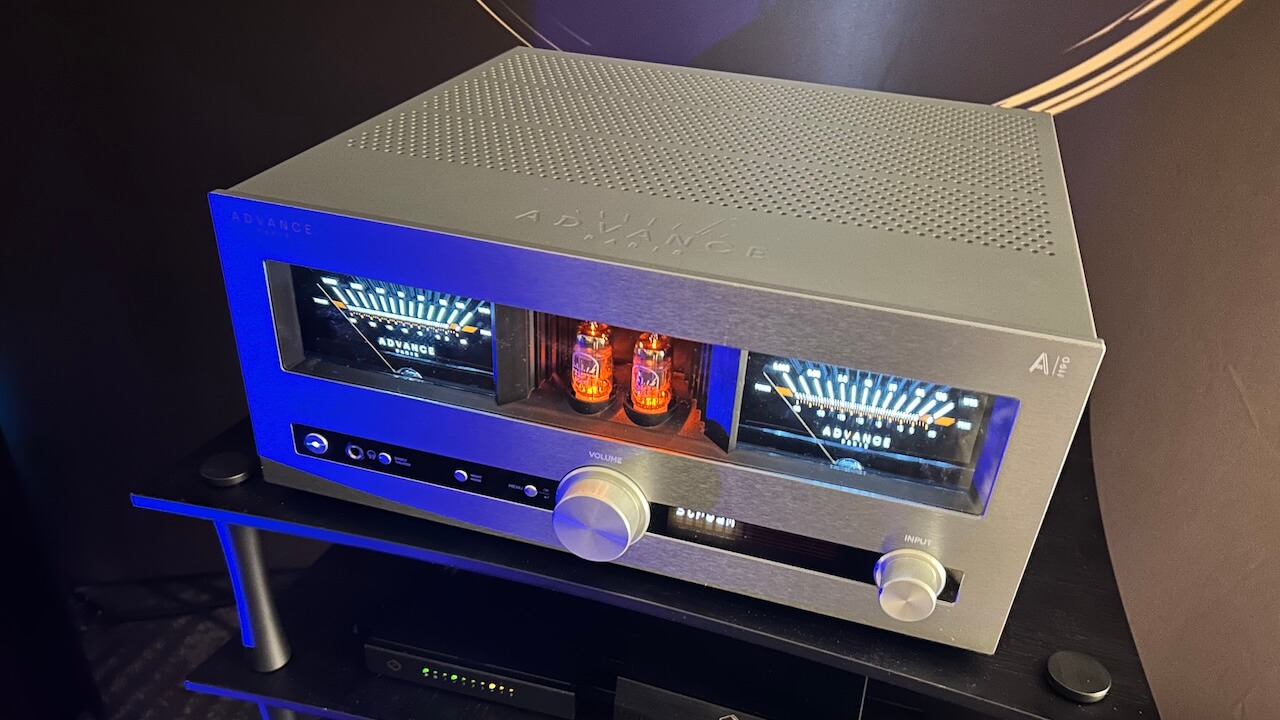
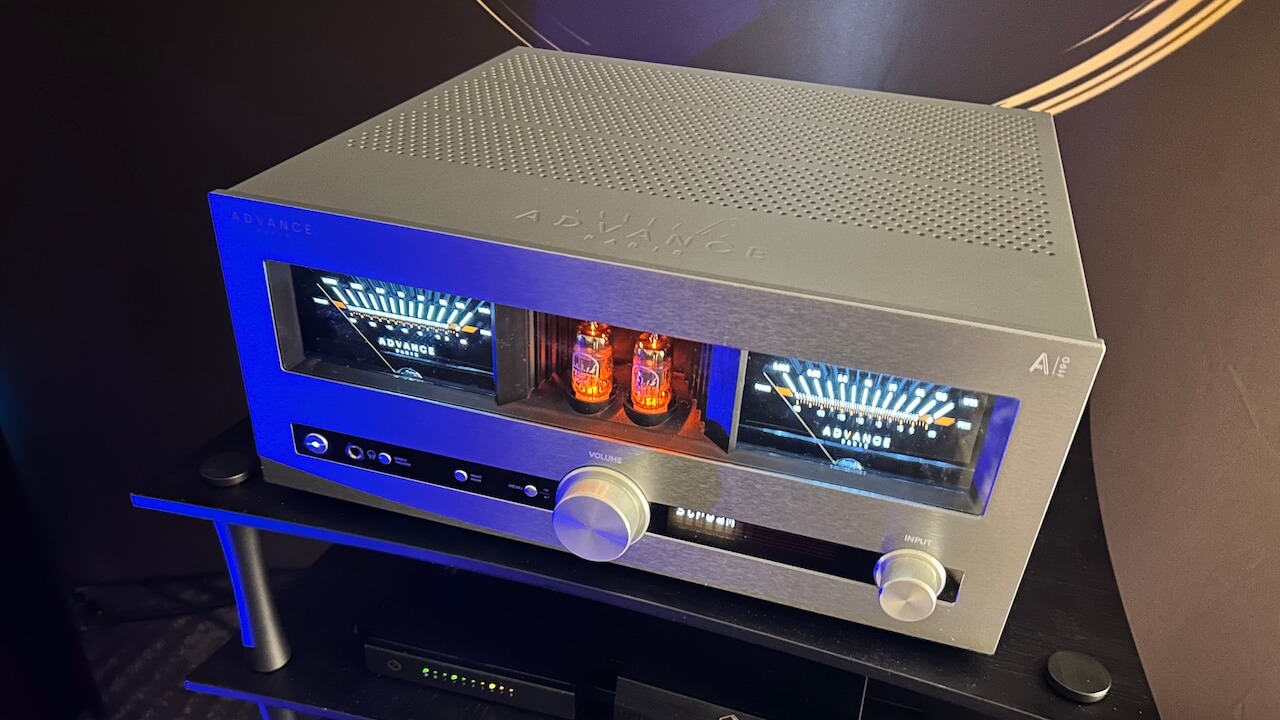
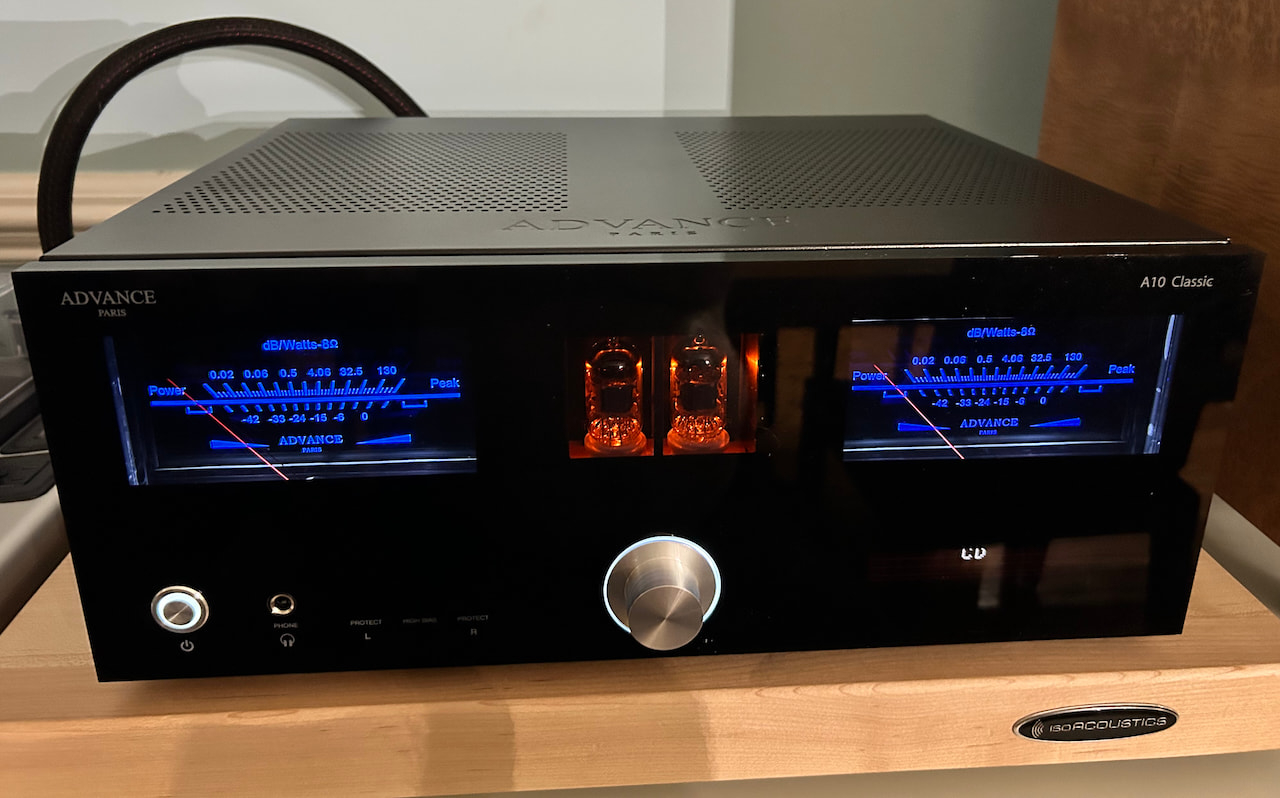
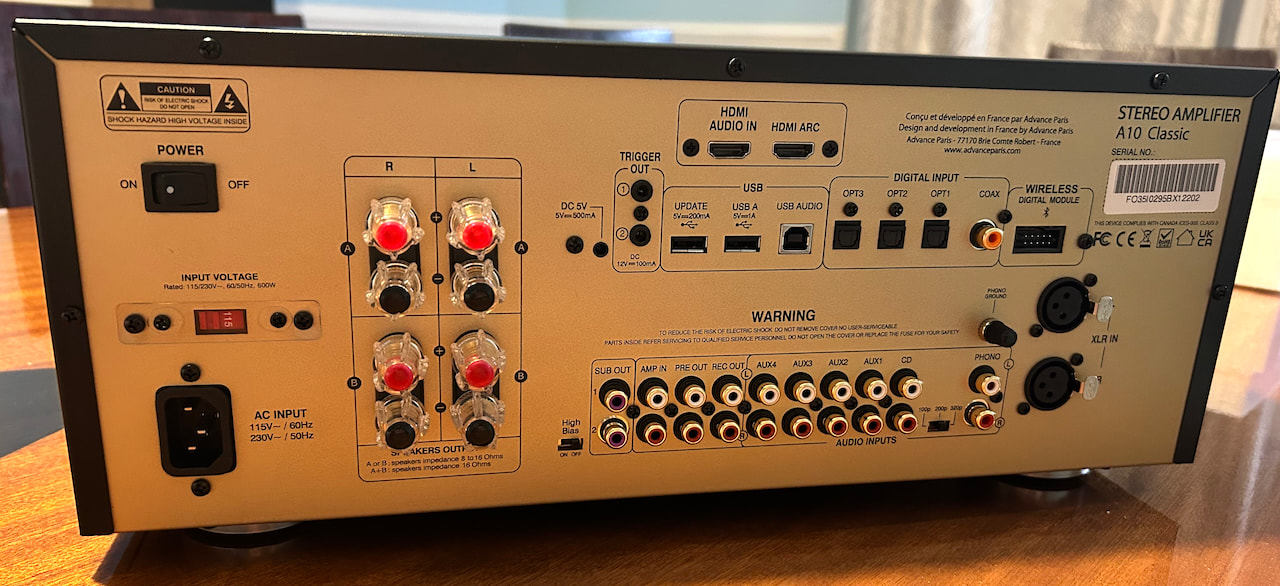
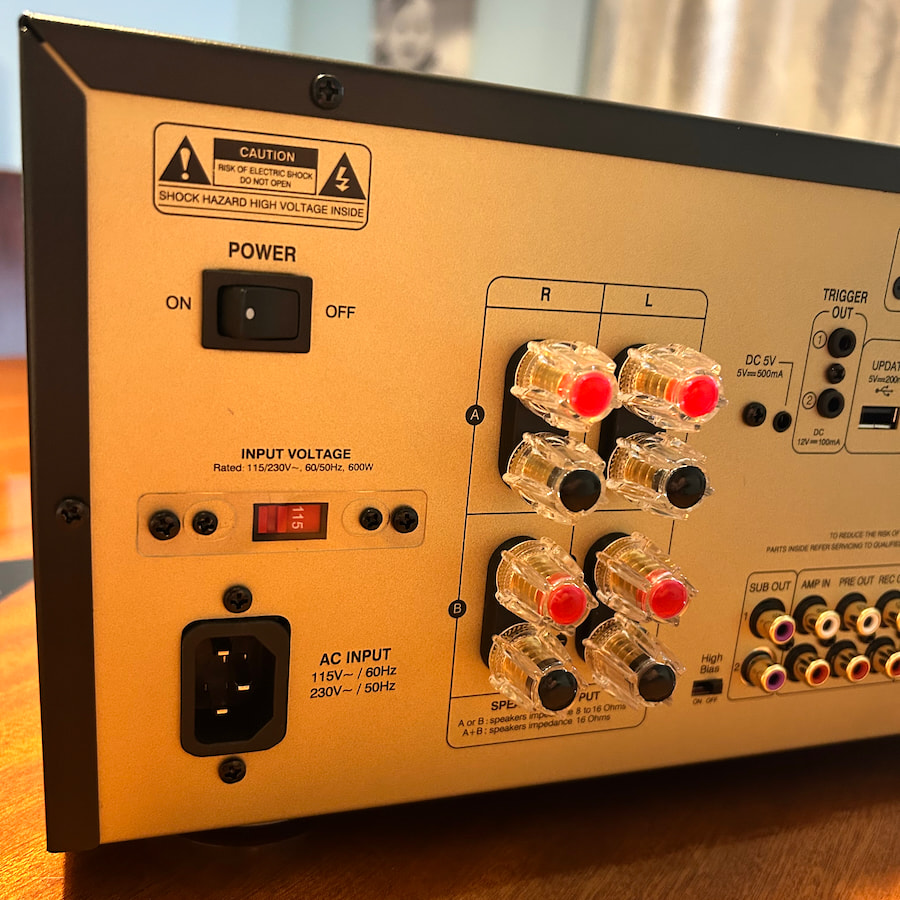
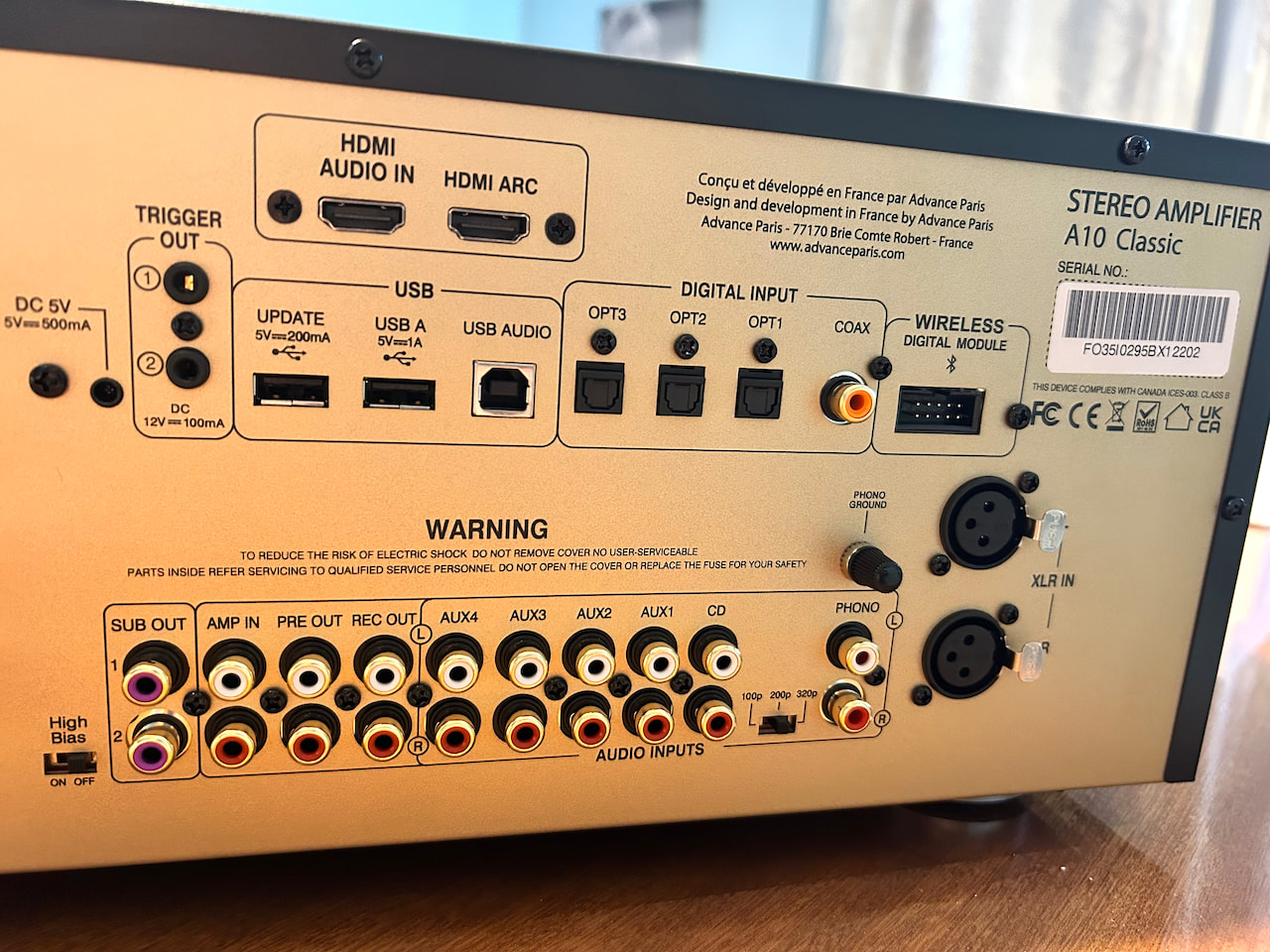
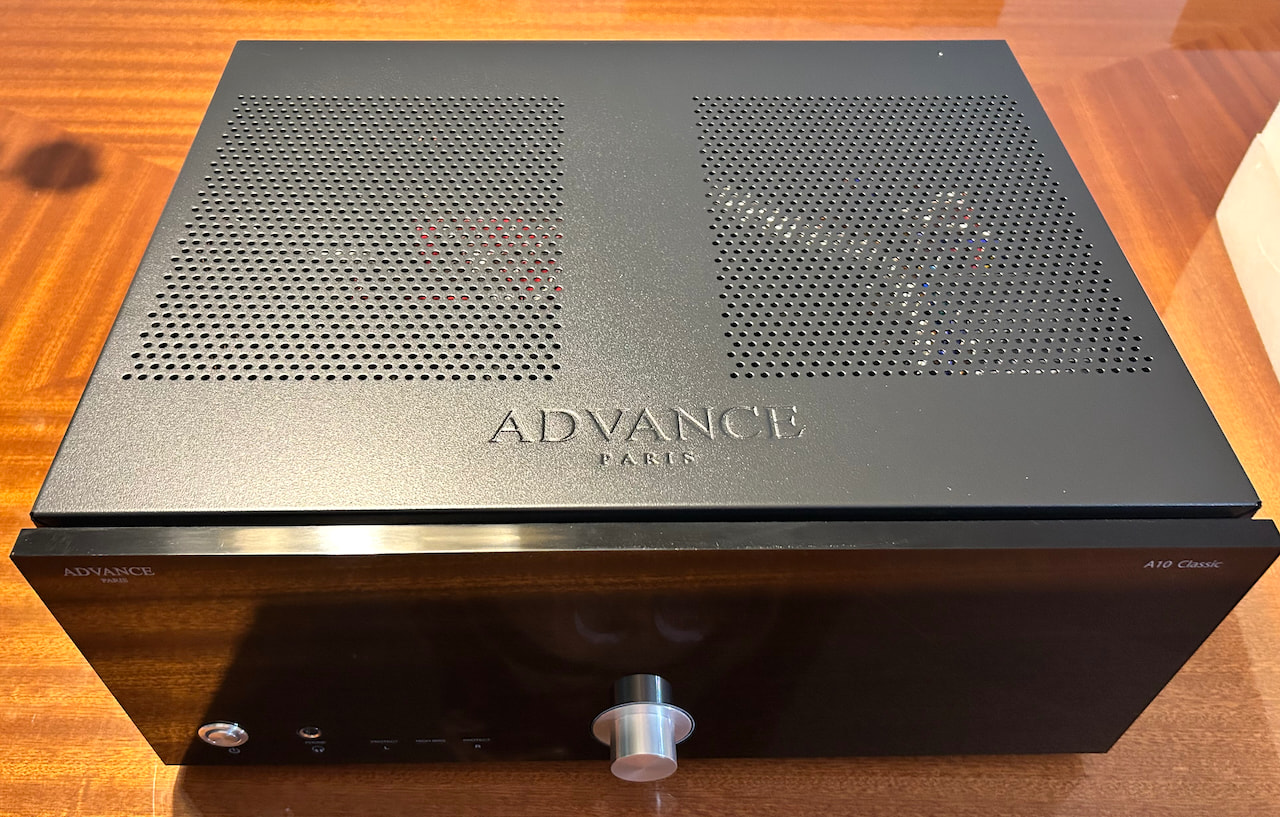



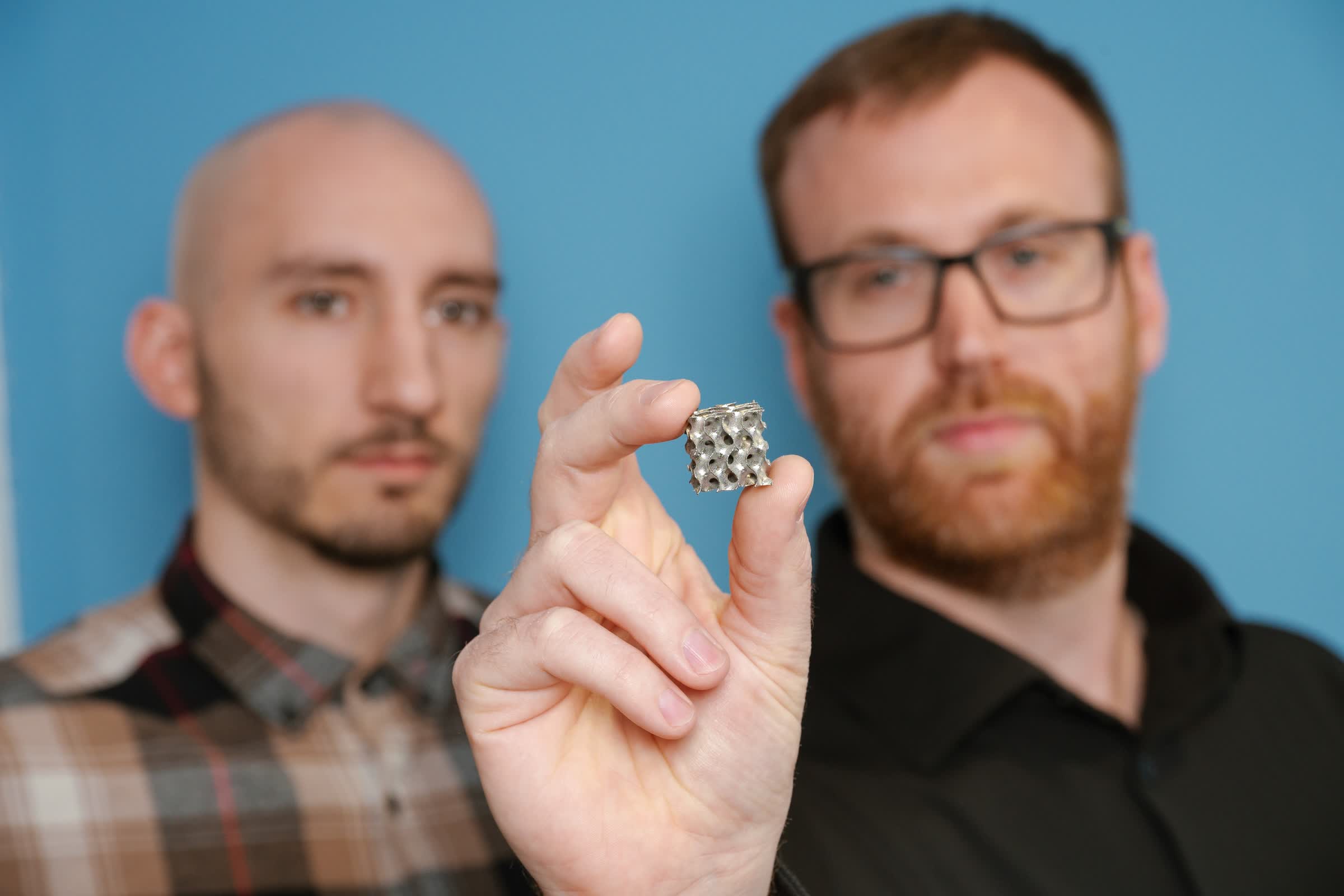
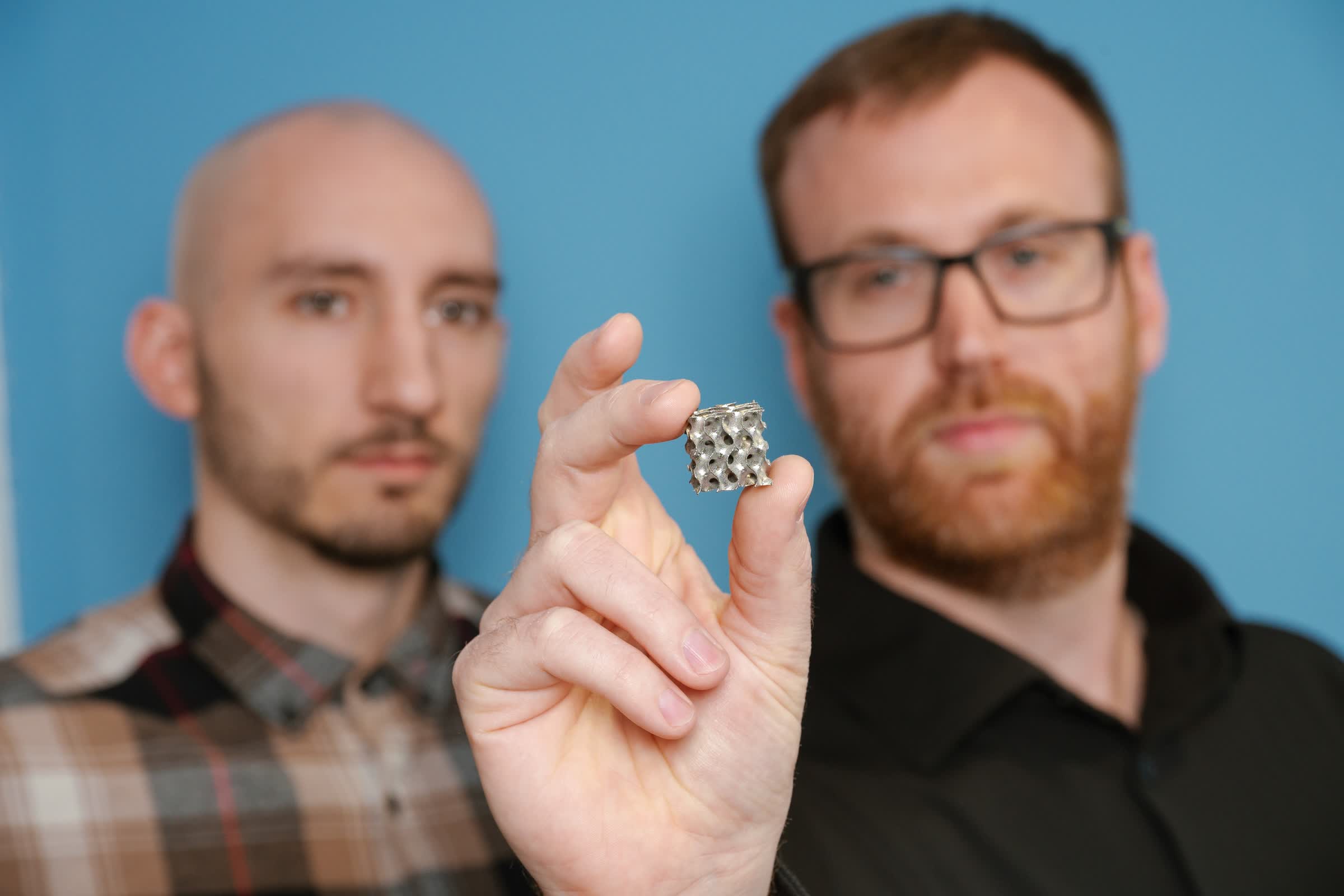




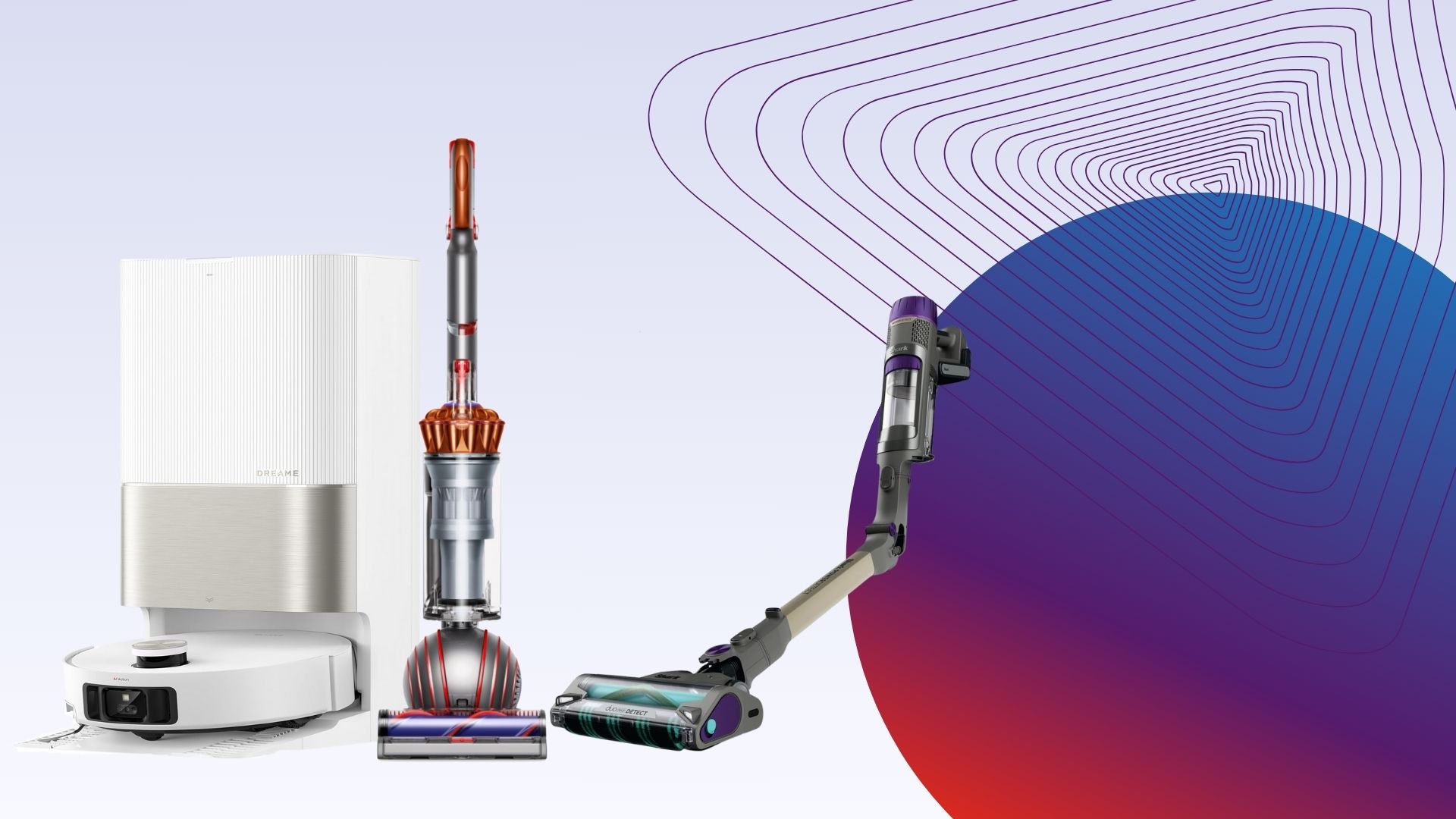













































You must be logged in to post a comment Login