Virginia-based AI startup Trase is expanding its presence in the Seattle region, with plans to grow from about 20 employees in the area today to as many as 100 in the coming months.
The 56-person company this week publicly launched and raised a $107 million seed round to focus on highly regulated industries like healthcare. Arch Venture Partners led the seed round.
GeekWire previously reported on the company’s hiring of Baskar Sridharan — a longtime Microsoft, Google Cloud and Amazon Web Services engineering leader — as president. It is now using the Seattle area as a key engineering hub, with plans to expand in the region with new offices to accommodate growth plans.
Sridharan, who is growing the Seattle-area team, said AI adoption is stalling where it’s needed most.
“AI adoption is faltering within sectors that need it most: complex, highly regulated enterprises overburdened with administrative tasks that are ripe for automation,” Sridharan wrote in a previous LinkedIn post. “The issue isn’t innovation, it’s implementation.”
Advertisement
He added: “The next era of technology will be increasingly defined by those willing to solve the messy, complex problems of real-world AI deployment at scale.”
Before joining Trase, Sridharan spent nearly 16 years at Microsoft, where he helped build Azure storage technologies. He later became vice president of engineering for Google Cloud before joining Amazon Web Services as vice president of AI, machine learning services, and infrastructure.
The company also recently hired Srirama Koneru, the former general manager of Bedrock Agentic AI Infrastructure and GenAI Services at Amazon Web Services and former senior director of engineering at Google and at Salesforce. The company’s CEO is Grant Verstandig, the founder and CEO of Red Cell.
Trase, incubated by the venture studio Red Cell Partners, is building an agentic platform that enables enterprises in healthcare, national security and energy to deploy autonomous AI agents within existing infrastructure while meeting security and compliance requirements.
Advertisement
Customers include Duke University Health System, which is using the specialized agents in its Division of Cardiology to automate the more than 5,000 faxes the clinic receives each month.
The expansion adds to Seattle’s growing reputation as a hub for enterprise AI talent, particularly among startups recruiting experienced cloud infrastructure leaders from Microsoft, Google and Amazon. GeekWire tracks a list of more than 100 engineering centers in the Seattle area.
We’ve reached out to the company and we’ll update this post as we learn more. The expansion in Seattle was first reported by The Puget Sound Business Journal. Update: The company confirmed its expansion plans in the region and provided this statement: “Seattle is one of the nation’s leading technology hubs, making it a natural market for Trase as it continues to scale its operations.”
When we talk about the scourge of anti-vaxxer philosophy within the federal government, we naturally spend a great deal of that time talking about RFK Jr. He’s the Secretary of Health and Human Services and perhaps the most infamous anti-vaxxer on the planet, after all. But if you thought HHS was the only part of the government infected with this dangerous unscientific nonsense, you’d be wrong.
In April of this year, Pete Hegseth, Secretary of Whatever-We’re-Calling-It-Today, rescinded a requirement for America’s fighting forces to be inoculated against influenza. Why? Well, because it just wasn’t necessary, you see. Also, freedom. Probably bald eagles. Perhaps apple pie and baseball are involved. It’s really anyone’s guess these days. Hegseth stated the following publicly on his decision:
“The notion that a flu vaccine must be mandatory for every service member, everywhere, in every circumstance, at all times, is just overly broad and not rational,” the secretary said. “Our new policy is simple: If you, an American warrior entrusted to defend this nation, believe that the flu vaccine is in your best interest, then you are free to take it; you should. But we will not force you.”
“Our men and women in uniform were forced to choose between their conscience and their country, even when those decisions posed no threat to our military readiness,” Hegseth said. “That era of betrayal is over. Under President [Donald J.] Trump, the War Department continues to take decisive action to once again restore freedom and strength to our joint force. We’re seizing this moment to discard any absurd overreaching mandates that only weaken our warfighting capabilities.
So, to summarize, the requirement that soldiers be vaccinated against influenza was as follows:
Advertisement
Broad and irrational
A betrayal
An absurd and overreaching mandate
Weakened our fighting forces
Would be ended and soldiers would no longer be forced to be vaccinated
I assume that analysis still holds, other than the last, now that the military is once again mandating the flu vaccine for its soldiers because, and this will shock you, a bunch of soldiers got sick.
The Army, Navy, and Air Force are once again requiring basic trainees to get vaccinated against influenza after the virus quickly swept through an Air Force base in Texas, sickening at least 222 recruits and hospitalizing four. Last week, news broke of a flu outbreak sweeping through Lackland Air Force Base, part of Joint Base San Antonio in Texas. Two unnamed sources told ABC News that the situation at the base has been worsening.
In addition to the 222 cases and four hospitalizations reported as of Tuesday, one recruit, Keon McDaniel, died. McDaniel was in his sixth week of basic training and suffered a medical emergency on June 12. It’s unclear if his death was related to the outbreak.
ABC News reported that sources think only about 40 percent of the new Air Force trainees at the base were vaccinated and that the outbreak began in early June.
So, according to Hegseth himself mere months ago, sixty percent of the new Air Force trainees at the base are going to be subject to a broad, irrational, absurd, freedom-stealing betrayal mandate to get the flu vaccine? Cool.
It’s absolutely incredible just how shallow the anti-vaxxer mentality can be. Freedom, I am told, is worth fighting and dying for. If a flu vaccine mandate is anti-freedom, why are we letting some illnesses and potential deaths cause us to take actions that are anti-freedom?
Advertisement
The answer is because it isn’t about freedom at all. It’s about placating the dumbest corners of our society just because they happen to be a voting bloc aligned with Donald Trump, a man not exactly known for his incredible good health and fitness.
Pentagon spokesperson Sean Parnell said that the Pentagon had granted exceptions to Hegseth’s optional flu shot policy to the Army, Navy, Air Force, National Security Agency, and the Defense Health Agency. The exceptions came after a “comprehensive review” and are in line with a standard policy of “adapting force health protection measures to critical operational realities.”
“The decisions were based upon thorough risk assessments and are designed to maximize operational readiness, lethality, and force generation, while safeguarding at-risk populations,” Parnell said.
And that’s any different than the situation three months ago, exactly?
It’s not different at all, of course. Pete Hegseth directly, and of his own accord, managed to get hundreds of soldiers sick, at a minimum. He reduced our war-fighting readiness as a result. And he reversed course the moment the inevitable outcome reared its ugly, feverish, coughing head.
Advertisement
Vaccine mandates are bad when its politically advantageous to say they are, but good when you’re in charge and need to prepare for an invasion of Cuba, or who knows where else.
LastPass says hackers stole customers’ personal information, support case records, and sales data by breaching market research partner Klue. The password manager told TechCrunch that its own systems and password vaults were unaffected. However, the hackers used their access to obtain “reams of data about LastPass customers,” the report says. From the report: In a blog post that shared information about the incident, LastPass said the hackers took customers’ names, phone numbers, email addresses, and physical addresses, as well as customer support case data and sales-related data. It’s not yet known what was in the contents of customer support tickets, although they likely contain fragments of potentially private or sensitive information. Customers typically contact customer service when they are having a billing issue or need assistance in gaining access to their accounts. Past incidents involving customer support tickets have included credentials and government-issued identity documents. The last data breach LastPass reported was in 2022, when hackers stole the company’s entire store of customer password vaults.
OpenAI is making yet another big, visible bet on India. It has appointed former Uber India and South Asia president Prabhjeet Singh as its first managing director for the country to scale its presence in what it has called its second-largest market after the U.S.
Singh, who announced his resignation from Uber on Friday, will join OpenAI in September and report to Kiran Mani, the company’s managing director for Asia Pacific, the company told TechCrunch. He will be responsible for OpenAI’s performance in India across consumer growth, enterprise adoption, partnerships, regulatory engagement, and operations, the company said.
The hire marks OpenAI’s latest investment in India. The company opened its first office in New Delhi last August and earlier this year said it would establish new offices in Mumbai and Bengaluru. In 2024, it hired former Truecaller and Meta executive Pragya Misra to lead public policy and partnerships before expanding her role to head of strategy and global affairs last year. OpenAI had earlier brought on former Twitter India head Rishi Jaitly as a senior adviser to help establish its engagement with the Indian government on AI policy.
The company has simultaneously ramped up hiring in India, with openings including AI deployment engineers, developer experience engineers, a developer marketing lead, a partner director, and solutions engineers.
Emotiva has built its reputation on delivering high-performance audio components with solid engineering, serious build quality, and prices that usually make the competition look a little too comfortable.
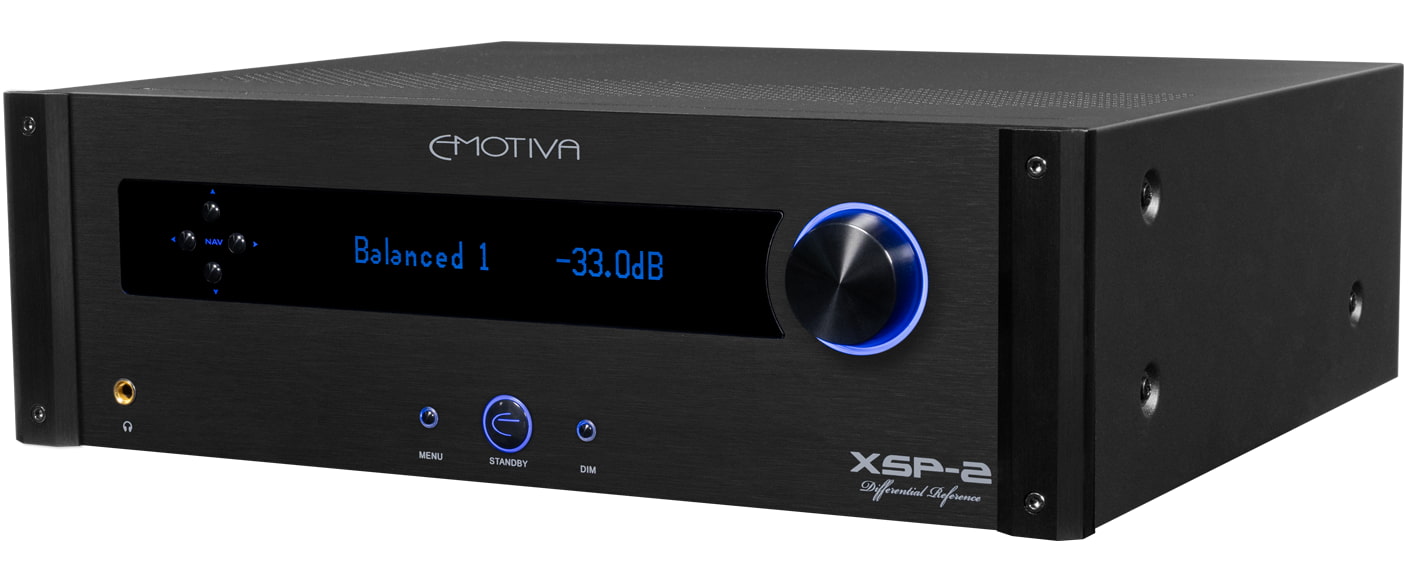
For 2026, the company is taking another run at the serious two-channel market with the XSP-2 Differential Reference Stereo Preamplifier, a major update to the well-regarded XSP-1 that first arrived in 2013. The new XSP-2 keeps the separates-first mindset intact, but adds a more modern modular platform, including a fully balanced ESS-based DAC module installed from the factory and an expansion path for a future streaming module.
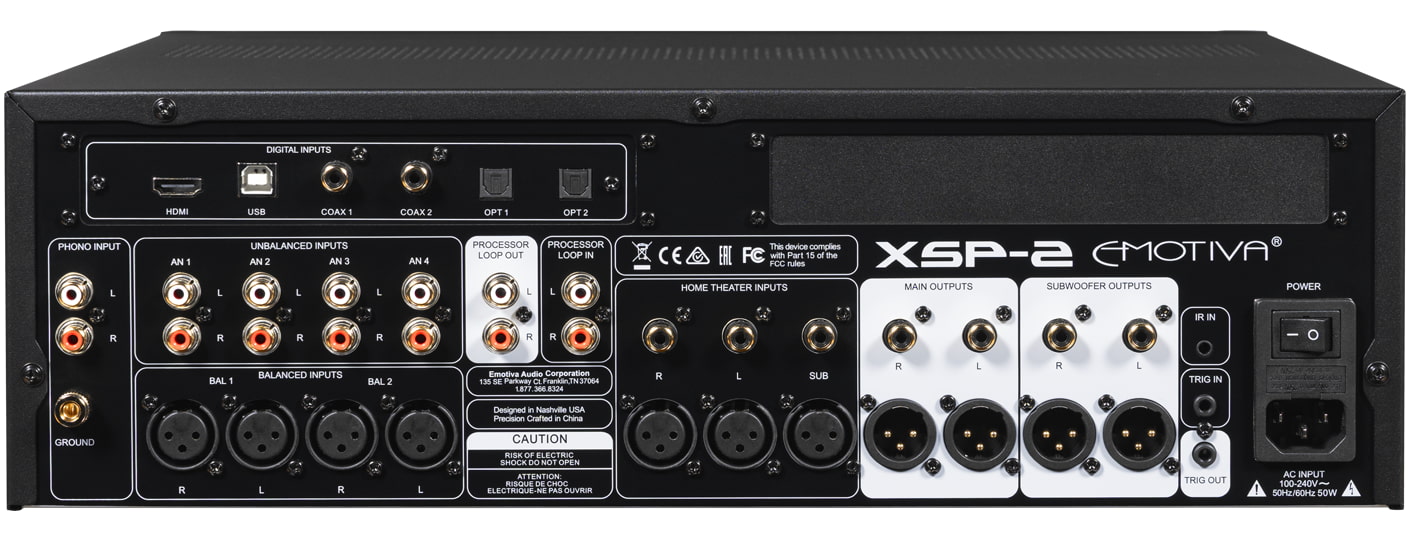
The XSP-2 ships with a pre-installed DAC module that expands its connectivity with HDMI-ARC, USB-C, two coaxial inputs, and two optical inputs. Dedicated shielding keeps the digital section isolated from the preamplifier’s pure analog signal path.
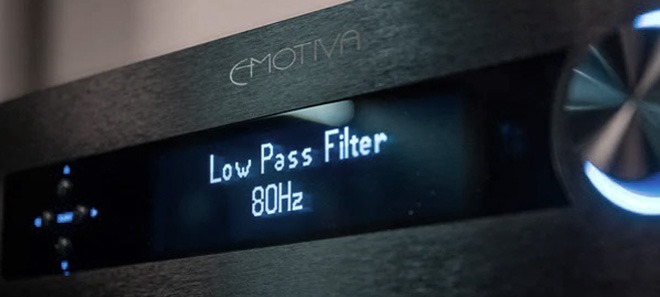
The XSP-2’s fully balanced, fully differential analog signal path is designed to lower noise, reject interference, and preserve low-level detail. It also includes fully balanced bass management for 2.1 or 2.2-channel systems, with independent high-pass and low-pass crossover settings at 40, 60, 80, or 100 Hz, plus stereo or summed mono subwoofer output options.
Advertisement
The XSP-2 also includes an onboard MM/MC phono section for easy connection to most turntables, along with a dedicated headphone output driven by a current-mode feedback amplifier designed to handle more demanding headphone loads.
All audio switching is handled by fourth-generation hermetically sealed subminiature relays, helping preserve signal purity throughout the audio path while reducing noise, crosstalk, and switching artifacts.
An external processor loop and Home Theater Bypass provide additional flexibility, allowing the XSP-2 to integrate more easily into mixed two-channel and home theater systems.
The front panel features a large blue OLED display, which is larger than the display used on its predecessor, along with a flexible menu system that can be controlled from the front panel or the included remote. The display is easy to read, and the menu system provides quick access to the XSP-2’s core setup and control features such as MM/MC cartridge select, balance, high pass filter, low pass filter, and selectring subwoofer mono/stereo choices.
“The XSP-1 is one of the most popular products in the history of the brand,” saysDan Laufman, President, Emotiva Audio Corporation. “It’s famous for being a highly flexible preamp that performs well above its price…After years of focused R&D, we’re finally ready to launch a worthy successor that retains the sonic benefits that made the original a hit, but with added flexibility across the board…The XSP-2 is not only a best-in-class preamp for today’s consumers, but it’s also ready for whatever comes next, including a streamer module that is currently in the works. When it launches, all it will take is a few easy steps to add it to the XSP-2.
The frequency response shown was measured with a high-resolution digital source. At lower sample rates, the frequency response will be limited by the sample rate of the content.
115 VAC or 230 VAC +/- 10% @ 50 / 60 Hz (automatically detected and switched).
Dimensions
17” wide x 5-1/4” high (without feet) x 14-1/2” deep (without connectors)
17” wide x 5-2/4” high (including feet) x 15” deep (including knobs and connectors)
17” wide x 6” high x 16.5” deep (includes feet and terminals)
Weight
13 lbs (unboxed)
28 lbs (unboxed)
Expansion Slots
2 x rear panel slots
None
The Bottom Line
The Emotiva XSP-2 looks like a strong value play in the serious two-channel preamp category. It’s competitively priced and feature packed with a fully balanced analog signal path, built-in MM/MC phono stage, balanced bass management, Home Theater Bypass, an external processor loop, and a factory-installed ESS-based DAC module for $1,599.
What makes the XSP-2 more interesting than a typical stereo preamp is its modular architecture. The two rear expansion slots give Emotiva room to add future functionality, and the included DAC module already brings HDMI-ARC, USB, coaxial, and optical digital inputs without turning the XSP-2 into a compromised digital-first control box. The analog section remains the main event.
Advertisement
Advertisement. Scroll to continue reading.
The catch is obvious but important: the XSP-2 is a preamplifier, not an integrated amplifier. It still needs to be connected to a power amplifier before it can drive a pair of loudspeakers. Emotiva’s own options include the XPA-2 Gen3 stereo power amplifier at $1,499, a pair of XPA-DR1 Differential Reference monoblocks at $1,699 each, or one of its Build-Your-Own XPA Gen3 power amplifiers starting at $1,499.
Also missing at launch is built-in streaming. Emotiva says a streaming module is in the works, but for now, anyone who wants network playback will still need to add an external streamer or use one of the XSP-2’s digital inputs. HDMI-ARC is useful for TV integration, but this is still a two-channel preamp, not a surround processor or all-in-one streaming amplifier.
Pro Tip: You may also desire to include one or two subwoofers into the mix, such as the xs12e ($399 each).
Advertisement
Price & Availability
The Emotiva XSP-2 Differential Reference preamplifier is available now for $1,599 at Emotiva.com.
Repair costs are often unknown until you visit a service center. ASUS aims to address that with its new Part Price Checker, which lets customers check the prices of genuine spare parts online before booking a repair. The user just needs to provide the device’s serial number to view the prices of ASUS spare parts. This will give them an idea of the cost of repairs before going to a service center.
Part of the ASUS Assurance Program
The Part Price Checker is part of the ASUS Assurance program, which aims to make after-sales support more convenient for customers. The program is built around four key pillars: Assured Quality, Always-on Support, All-around Coverage, and Added-value Services. The new tool lets customers check the prices of genuine spare parts online before visiting a service center. This makes it easier to estimate repair costs before taking the device for service.
ASUS recently expanded the availability of genuine laptop batteries through its Exclusive Stores and authorized partners across India. The Part Price Checker builds on that effort by giving customers another way to plan repairs before booking a service.
Instead of guessing replacement costs, customers can determine the true cost before visiting their authorized ASUS repair facility. This enables customers to budget for the repair and schedule visits to the repair facility at a convenient time.
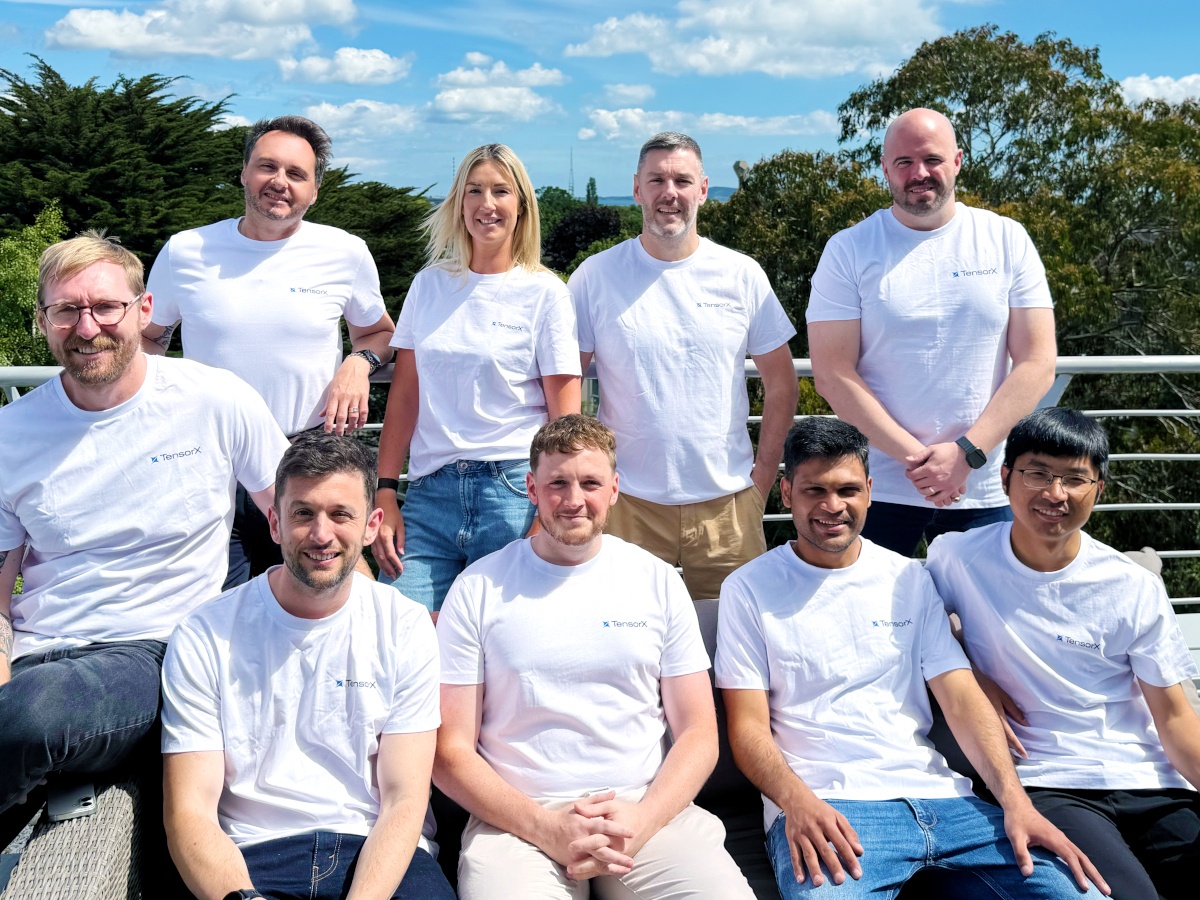
Earlier this week, TensorX raised €8m in a seed funding round, which its founder Shane Morton described as an ‘opening move’ ahead of a much larger build-out.
Irish AI infrastructure company TensorX is to collaborate with finance provider Solstice in a partnership to deliver up to $1bn-worth of sovereign European AI infrastructure.
The companies said they “will work together to create a facility … to finance AI hardware and data centre build-out to meet rising demand for sovereign compute across the EU”.
Dublin-based TensorX buys and runs AI hardware and data centre capacity across the EU, with the aim of connecting its start-up and enterprise clients to private compute and keeping “prompts and data on European infrastructure with full data residency and zero retention”.
Advertisement
Solstice is described as “an on-chain settlement and yield protocol and part of the Deus X Capital ecosystem”.
“Europe wants AI that can run on its own terms, on its own soil, without handing its data to someone else’s cloud on the world stage,” said Tim Grant, the chair of TensorX.
“Meeting that accelerating demand takes hardware, and a lot of it. The billion dollars going into GPUs and data centre capacity is the first step, and we expect to keep buying as demand grows. Solstice gives us a financing partner that can keep pace with this incredibly fast-moving market.”
Relatedly, Solstice will launch a yield asset named ‘aiUSX’ to help companies finance AI build-outs using capital they already hold.
Advertisement
“Every company is turning into an AI company, and every one of them watches its inference bill climb,” said Ben Nadareski, CEO of Solstice.
“aiUSX puts the money they set aside for AI to work in the meantime. They get access to the kind of AI-infrastructure lending that used to sit with large institutions, the capital stays liquid, and what it earns goes toward inference later.”
Earlier this week, TensorX raised €8m in a seed funding round with the goal of further contributing to European plans for sovereign AI infrastructure, which its founder Shane Morton described as an “opening move” ahead of a much larger build-out.
The EU is concerned about the control US technology companies wield over the bloc’s technology infrastructure and data.
Advertisement
“European companies don’t want to make a political statement about their AI stack. They want to make a practical one,” said Grant earlier this week. “Their data has to stay in Europe, on infrastructure they can trust, under laws they are required to comply with.”
Data from Accenture suggests that 62pc of European organisations seek sovereign AI, while 75pc of European enterprises plan to move AI workloads to local providers by 2030, according to Gartner.
“Sovereign AI is one of the biggest infrastructure build-outs of this decade, and it runs on capital as much as it runs on chips,” said Stuart Connolly of Deus X Capital.
“TensorX builds the compute, Solstice brings the financing and aiUSX lets more companies take part in funding it.”
Advertisement
Don’t miss out on the knowledge you need to succeed. Sign up for the Daily Brief, Silicon Republic’s digest of need-to-know sci-tech news.
Recent estimates approximate that there are 16.4 billion Google searches per day globally. A huge portion of those searches is for people’s names. Of those names, many are likely public figures, like Lionel Messi, Sabrina Carpenter, or any number of politicians doing something nefarious. But a great many of the name searches are ostensibly for normies. Maybe even you. Definitely me, based on the deluge of spam calls I get.
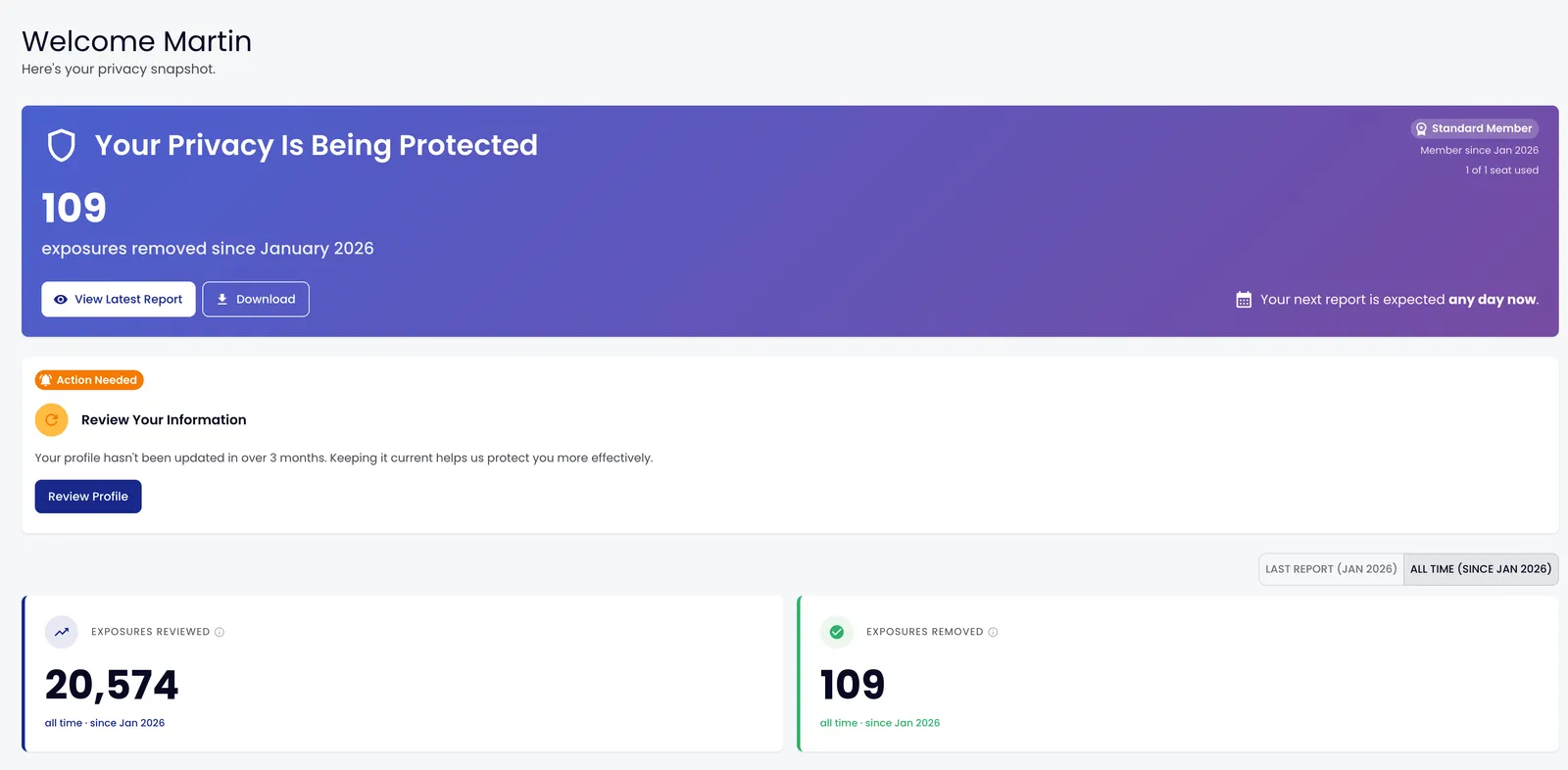
DeleteMe was founded in 2010 and claims to be one of the oldest companies in data removal. Services like DeleteMe and its competitor Incogni work by contacting data brokers on your behalf and getting them to remove your personal information, including your current and past mailing addresses, your phone numbers, and your email address. Theoretically, this process removes you from annoying marketing lists and makes it harder for randos to find you. I’ve used DeleteMe since January, and while it’s not a silver bullet for ensuring the complete absence of unwanted communication from strangers and scammers, it seems to have helped with the number of unsolicited marketing calls I get. It also helped clean up personal info from my Google results, so you’re more likely to read an old article I wrote than see where I live.
DeleteMe via Martin Cizmar
I have also used Incogni, where I managed an account for my elderly mother. She got similar results, which is to be expected, says DeleteMe executive Jason Dalrymple. Services like DeleteMe and others “all basically do the same thing,” he says. “We’re bound by the same laws and constraints in compliance. It’s a cat-and-mouse game.”
That’s because the degree to which data brokers need to cooperate with the requests of deletion companies is legally murky, given that there’s no comprehensive federal law in the US that regulates the way private companies can use personal data. Rather, most regulations are at the state level, where protections are varied (I live in Missouri, where I feel lucky to have running water). Some states, like California, have more protections, while many states have none. Regardless of where you live, data brokers aren’t necessarily just going to delete your information upon request. They may request further verification of your identity before complying and confirming the request was granted, they may deny the request, and they may ignore the request completely—all actions that require follow-up correspondence with the deletion service.
Advertisement
With DeleteMe and Incogni, you can track progress via a dashboard that provides an at-a-glance update on how many removal requests have been made and fulfilled. A few more clicks will show you specifics on each broker, though most of these will be unfamiliar to typical users. The main difference I noticed between DeleteMe and Incogni is that the former’s dashboard doesn’t update as often as the latter’s and also doesn’t show as many brokers being contacted.
I prefer the Incogni dashboard because it’s satisfying and reassuring to log in every few days and see that the company is crawling the web and busting brokers, each of which it rates based on their speed and general compliance. There are constant status updates for thousands of websites. DeleteMe, on the other hand, creates a report every few months showing progress on a smaller number of sites. Dalrymple argues that his company’s surgical approach is a feature, not a bug.
Apple said it couldn’t shield customers from rising component costs anymore.
An exacerbating chip shortage has led Apple to hike up prices for several of its products. Price jumps go from as little as €40 for the HomePod Mini, to nearly €1,000 for the Mac Studio M3 Ultra, though iPhones are unaffected for now.
Apple share prices dropped more than 6pc yesterday, before making marginal gains in pre-market trading today (26 June). Prices, however, have dropped more than 10pc in a month.
“The rapid expansion of AI data centres has created an extraordinary surge in demand for memory and storage”, a company spokesperson told news publications, adding that Apple has “never seen a component price increase this much, this quickly”.
Advertisement
Apple said that the worsening situation meant that it couldn’t shield customers from the rising component costs any longer.
The company previously raised prices for the iPhone 17 Pro, MacBook Air and MacBook Pro, but this is the first time it is hiking rates on products across several categories at once.
iPads will now cost EU customers €100 more at €529; the iPad mini will jump by €120 to €719. The new MacBook Neo, launched in March, is also seeing a price hike of €140, now costing customers €839 to purchase in the EU.
Outgoing CEO Tim Cook told investors in April that AI-led component shortages would constrain supply for Mac, Mac Mini, Mac Studio and MacBook Neo for the June quarter.
Advertisement
“Realistically, on the Mac Mini and the Mac Studio, I believe it will take several months to reach supply-demand balance,” he said at the time. “We are not at the point where we are saying this is going to end anytime soon.”
Chief financial officer Kevan Parekh, meanwhile, said that iPhones faced supply constraints in the March quarter. Bloomberg Intelligence expects iPhone prices to also rise, likely targeting the Pro models.
Apple isn’t alone in suffering from a shortage in memory chips. According to Counterpoint Research, global smartphone shipments are poised to drop nearly 14pc in 2026, with the squeeze particularly affecting entry-level and mid-range smartphones. Prices are expected to jump by as much as 13pc this year.
Meanwhile, rising prices allow for second-hand and refurbished sellers to fill in gaps with cheaper and environmentally better alternatives, according to Refurbed co-founder Kilian Kaminski.
Advertisement
Don’t miss out on the knowledge you need to succeed. Sign up for the Daily Brief, Silicon Republic’s digest of need-to-know sci-tech news.
Looking for the most recent regular Connections answers? Click here for today’s Connections hints, as well as our daily answers and hints for The New York Times Mini Crossword, Wordle and Strands puzzles.
Today’s Connections: Sports Edition features a tricky purple category. You’ll need to look inside of words for four words that have a certain connection. If you’re struggling with the puzzle but still want to solve it, read on for hints and the answers.
Connections: Sports Edition is published by The Athletic, the subscription-based sports journalism site owned by The Times. It doesn’t appear in the NYT Games app, but it does in The Athletic’s own app. Or you can play it for free online.
Hints for today’s Connections: Sports Edition groups
Here are four hints for the groupings in today’s Connections: Sports Edition puzzle, ranked from the easiest yellow group to the tough (and sometimes bizarre) purple group.
Yellow group hint: Wow, you’re terrific!
Advertisement
Green group hint: Hoops winners.
Blue group hint: Hoops stars who’ve been honored.
Purple group hint: A name is hidden in each word.
Answers for today’s Connections: Sports Edition groups
Yellow group: A revered star.
Advertisement
Green group: Last four NBA champions.
Blue group: WNBA players in the Basketball Hall of Fame.
What are today’s Connections: Sports Edition answers?
The completed NYT Connections: Sports Edition puzzle for June 27, 2026.
NYT/Screenshot by CNET
The yellow words in today’s Connections
The theme is a revered star. The four answers are great, icon, legend and superstar.
The green words in today’s Connections
The theme is last four NBA champions. The four answers are Boston, Denver, New York and Oklahoma City.
Advertisement
The blue words in today’s Connections
The theme is WNBA players in the Basketball Hall of Fame. The four answers are Cash, Catchings, Leslie and Whalen.
The purple words in today’s Connections
The theme is starts with an NFL starting QB. The four answers are Jacksonville, Mayer, Williamsport and Youngster.
Toughest Connections: Sports Edition categories
The Connections: Sports Edition puzzle can be tough, but it really depends on which sports you know the most about. My husband aces anything having to do with Formula 1, my best friend is a hockey buff, and I can answer any question about Minnesota teams.
That said, it’s hard to pick the toughest Connections categories, but here are some I found exceptionally mind-blowing.
Advertisement
#1: Serie A Clubs. Answers: Atalanta, Juventus, Lazio, Roma.
#2: WNBA MVPs. Answers: Catchings, Delle Donne, Fowles and Stewart.
#3: Premier League team nicknames. Answers: Bees, Cherries, Foxes and Hammers.
#4: Homophones of NBA player names. Answers: Barns, Connect, Heart and Hero.
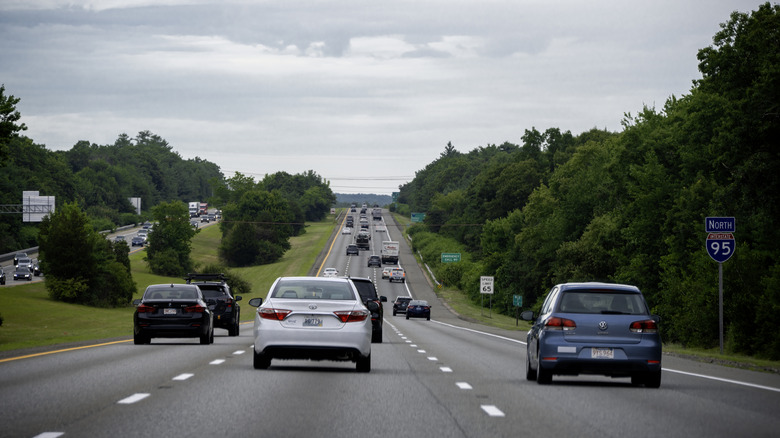
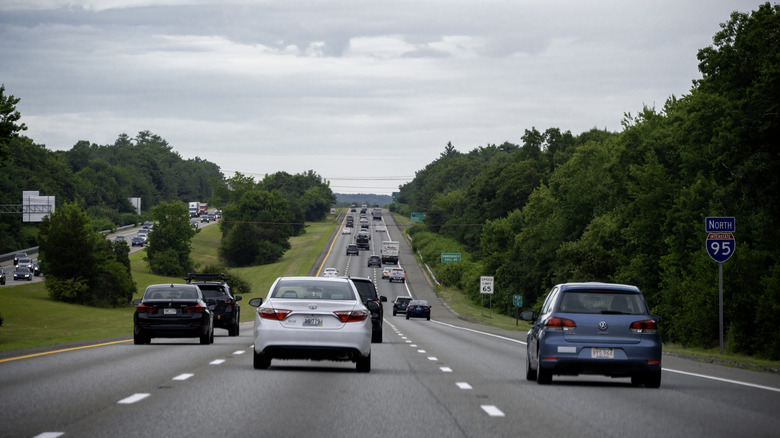
Many motorists simply don’t feel the need to “upgrade” and opt for the latest model year whenever it’s available. Not doing so, it seems, is becoming increasingly popular among drivers. The United States Department of Transportation has presented data on the average age of cars and trucks in operation in the country since 2000, with data sets that include 2000-2016 and 2022-2025. It shows that there has been a slow but constant increase in the average age of passenger cars on U.S. roads, beginning with 8.9 years in 2000 and climbing all the way up to 14.5 years in 2025. Light trucks also saw an overall trend upwards over the last quarter-century from 8.4 to 11.9 years in age.
This is not just a U.S. trend, either. In August 2025, the U.K’s Royal Automobile Club reported that cars across the United Kingdom had reached an all-time-high average age of nine years and ten months, up from just seven years and five months in 2015. The reasons for this on both sides of the pond seemingly include the heavy costs associated with getting a new car, as well as a collective reluctance to embrace evolving technology like EVs. There are still concerns about critical factors like getting the most range out of an EV that spook many drivers, after all. Let’s take a closer look at some of these factors, as well as the potential impact that all these aging vehicles can have on the industry.
Advertisement
Costs associated with buying a new car are rising
Todayistuesday/Getty Images
Fuel prices are one huge issue that motorists face in 2026, and some solutions to ease it, like promoting wider use of E15 fuel, are temporary measures that won’t suit every type of engine. More fundamental ways around this issue, such as switching to an EV, are also prohibitive because the cost of buying one will tend to be higher than with a gas-powered counterpart. It’s also true that EVs and hybrids are becoming an ever-more important part of the puzzle when it comes to new vehicles, and there’s a considerable subset of drivers who don’t want to take the plunge with one of these just yet.
The unpredictable nature of government subsidies on EVs and the charging infrastructure to support them is a huge part of this. However, many are simply being priced out of buying a new vehicle in general. In December 2025, The Independent reported that the average price of a new vehicle in the U.S. had risen to $50,000, translating to hefty payments.
Over time, a driver will become extremely familiar with their car and the routes they tend to take it on. They’ll develop a routine for the type of maintenance to give it and how often, how each of its features and applications need to be treated, and any warning signs to watch for. It can be very difficult to surrender that for a model that may have issues you’re not used to managing. After all, while some motorists relish the chance to have a instrument panel full of new toys to tinker with, others will see them as more of a liability, filled as it is with unfamiliar features that could go wrong. All of this is assuming, of course, that the motorist is able to front the hefty cost of a new vehicle in the first place.
Advertisement
Automakers are providing increased support for a population driving older vehicles
Andresr/Getty Images
As The Wall Street Journal puts it, “automakers, dealers and repair shops are changing business practices to adapt to a new normal: the 13-year-old car.” How is this adaptation taking place? There are several factors to this, and one is ensuring that longer-lasting service can be provided for those vehicles. An important part of this is establishing longer-lasting warranties for the model. This same increased availability, however, also makes it more complicated and time-consuming to administer repairs, because some of the parts that were previously mechanical are now implemented into the system itself.
Though this can make repairs more complex (and potentially more expensive), there’s also the big advantage of this electronic system: Patches and updates can be applied that will fix issues and provide new features for what might be a long time to come. This keeps vehicle, owner, and manufacturer in a closer relationship throughout that period. It’s also a matter of continuing to support models that are no longer manufactured. For instance, in June 2025, it was reported that Honda would begin manufacturing official replacement parts for one of its beloved classics: the first generation NSX. This concept was expanded in April 2026 in the shape of the Honda Heritage Works, which, Honda reports, heralded “global sales of Honda Heritage Parts and a new Honda Restoration Service in Japan for classic Honda sport-type models.”
Advertisement
It’s also true that manufacturers are trying to incentivize buyers to invest in newer models by providing features that appeal more to different types of customers. For instance, some may have been turned off from upgrading their vehicle by the increasing prominence of touchscreen technology, and so there have been developments in systems that utilize classic physical buttons as well.




















































You must be logged in to post a comment Login