‘AI companies shouldn’t leave American ratepayers to pick up the tab’: Anthropic says it will cover electricity price increases caused by its data centers
President Trump has urged Big Tech to absorb rising energy bills, not consumers
Anthropic says it will pay upgrade costs and procure net-new power generation where possible
CEO Dario Amodei promises to be a “responsible neighbor” and work with communities and governments
Anthropic has boldly offered to cover electricity price increased caused by its own data centers, with CEO Dario Amodei stating the power of powering its AI models should fall on the company, not consumers.
This, of course, follows a recent request by President Trump for Big Tech companies to “pay their own way”, and not let US citizens face higher electricity bills as a result of their operations.
Back in January 2026, when Trump posted this request to Truth Social, he confirmed Microsoft had already shown willingness to comply with this, promising “major changes.”
Anthropic to help US citizens lower their energy bills
Though it may be near-impossible to quantify the exact effects that Anthropic has on local and national grids, Amodei did offer some suggestions: it would pay 100% of grid upgrade costs needed to connect its data centers and it would procure net-new power generation where possible to match its consumption.
Where that’s not possible, Anthropic is offering to cover the estimated demand-driven price increases.
Besides covering those extra bills, the company also covered its commitment to improving energy efficiency in the first place, including deploying liquid cooling.
Advertisement
Anthropic also stressed that it’s been a “responsible neighbor,” and that it’s set to create “hundreds of permanent jobs and thousands of construction jobs” per its existing project pipelines.
Sign up to the TechRadar Pro newsletter to get all the top news, opinion, features and guidance your business needs to succeed!
“These commitments are the beginning of our efforts to address data centers’ impact on energy costs,” the post reads.
“We look forward to working with communities, local governments, and the Administration to get this right,” Amodei added (via The Register).
It still feels like a technological marvel: Waymo’s autonomous cars are now transporting passengers across six cities. Alas, this driverless future comes with its own set of problems. These vehicles can be rendered inert if a passenger accidentally leaves the door open.
According to a Reddit post, one DoorDash driver discovered this issue when an odd request appeared in their queue. Instead of making a delivery, the driver was offered $6.25 to drive less than one mile to a Waymo vehicle and close its door. After “verified completion,” they would get an extra $5.
It seems too ironic to be real. Waymo vehicles represent technological breakthroughs that once seemed unfathomable. The Alphabet-owned company just raised $16 billion to take its driverless cars international!
But Waymo and DoorDash confirmed to TechCrunch that this Reddit post is legitimate. This is, in fact, a real problem.
Advertisement
“Waymo is currently running a pilot program in Atlanta to enhance its AV fleet efficiency. In the rare event a vehicle door is left ajar, preventing the car from departing, nearby Dashers are notified, allowing Waymo to get its vehicles back on the road quickly,” Waymo and DoorDash said in a joint response. (The door-closing partnership, which began earlier this year, is just one facet of Waymo and DoorDash’s broader relationship. In October, the companies launched an autonomous delivery service in Phoenix, where Waymo vehicles deliver food and groceries to DoorDash customers.)
If a Waymo door is left open, it’s worth it to the company to pay someone to close it — the car cannot complete any more rides if it’s left immobile. Not to mention, an unmoving car could block the flow of traffic.
Techcrunch event
Boston, MA | June 23, 2026
Advertisement
This isn’t the first time Waymo has enlisted help with its door troubles. In Los Angeles, Waymo works with Honk, an app that’s like Uber for towing services. According to reports, Honk users in L.A. have been offered up to $24 to close a Waymo door — more than double what Atlanta DoorDash drivers receive.
The company noted that Waymo’s future vehicles will have automated door closures. But for now, gig workers are Waymo’s best bet.
Chinese AI startup MiniMax, headquartered in Shanghai, has sent shockwaves through the AI industry today with the release of its new M2.5 language model in two variants, which promise to make high-end artificial intelligence so cheap you might stop worrying about the bill entirely.
It’s also said to be “open source,” though the weights (settings) and code haven’t been posted yet, nor has the exact license type or terms. But that’s almost beside the point given how cheap MiniMax is serving it through its API and those of partners.
For the last few years, using the world’s most powerful AI was like hiring an expensive consultant—it was brilliant, but you watched the clock (and the token count) constantly. M2.5 changes that math, dropping the cost of the frontier by as much as 95%.
By delivering performance that rivals the top-tier models from Google and Anthropic at a fraction of the cost, particularly in agentic tool use for enterprise tasks, including creating Microsoft Word, Excel and PowerPoint files, MiniMax is betting that the future isn’t just about how smart a model is, but how often you can afford to use it.
Advertisement
Indeed, to this end, MiniMax says it worked “with senior professionals in fields such as finance, law, and social sciences” to ensure the model could perform real work up to their specifications and standards.
This release matters because it signals a shift from AI as a “chatbot” to AI as a “worker”. When intelligence becomes “too cheap to meter,” developers stop building simple Q&A tools and start building “agents”—software that can spend hours autonomously coding, researching, and organizing complex projects without breaking the bank.

In fact, MiniMax has already deployed this model into its own operations. Currently, 30% of all tasks at MiniMax HQ are completed by M2.5, and a staggering 80% of their newly committed code is generated by M2.5!
As the MiniMax team writes in their release blog post, “we believe that M2.5 provides virtually limitless possibilities for the development and operation of agents in the economy.”
Advertisement
Technology: sparse power and the CISPO breakthrough
The secret to M2.5’s efficiency lies in its Mixture of Experts (MoE) architecture. Rather than running all of its 230 billion parameters for every single word it generates, the model only “activates” 10 billion. This allows it to maintain the reasoning depth of a massive model while moving with the agility of a much smaller one.
To train this complex system, MiniMax developed a proprietary Reinforcement Learning (RL) framework called Forge. MiniMax engineer Olive Song stated on the ThursdAI podcast on YouTube that this technique was instrumental to scaling the performance even while using the relatively small number of parameters, and that the model was trained over a period of two months.
Forge is designed to help the model learn from “real-world environments” — essentially letting the AI practice coding and using tools in thousands of simulated workspaces.
“What we realized is that there’s a lot of potential with a small model like this if we train reinforcement learning on it with a large amount of environments and agents,” Song said. “But it’s not a very easy thing to do,” adding that was what they spent “a lot of time” on.
Advertisement
To keep the model stable during this intense training, they used a mathematical approach called CISPO (Clipping Importance Sampling Policy Optimization) and shared the formula on their blog.
This formula ensures the model doesn’t over-correct during training, allowing it to develop what MiniMax calls an “Architect Mindset”. Instead of jumping straight into writing code, M2.5 has learned to proactively plan the structure, features, and interface of a project first.
State-of-the-art (and near) benchmarks
The results of this architecture are reflected in the latest industry leaderboards. M2.5 hasn’t just improved; it has vaulted into the top tier of coding models, approaching Anthropic’s latest model, Claude Opus 4.6, released just a week ago, and showing that Chinese companies are now just days away from catching up to far better resourced (in terms of GPUs) U.S. labs.
MiniMax M2.5 line plot comparing different models performance over time on SWE benchmark. Credit: MiniMax
Advertisement
Here are some of the new MiniMax M2.5 benchmark highlights:
SWE-Bench Verified: 80.2% — Matches Claude Opus 4.6 speeds
MiniMax M2.5 various benchmarks comparison bar charts. Credit: MiniMax
On the ThursdAI podcast, host Alex Volkov pointed out that MiniMax M2.5 operates extremely quickly and therefore uses less tokens to complete tasks, on the order $0.15 per task compared to $3.00 for Claude Opus 4.6.
Breaking the cost barrier
MiniMax is offering two versions of the model through its API, both focused on high-volume production use:
Advertisement
M2.5-Lightning: Optimized for speed, delivering 100 tokens per second. It costs $0.30 per 1M input tokens and $2.40 per 1M output tokens.
Standard M2.5: Optimized for cost, running at 50 tokens per second. It costs half as much as the Lightning version ($0.15 per 1M input tokens / $1.20 per 1M output tokens).
In plain language: MiniMax claims you can run four “agents” (AI workers) continuously for an entire year for roughly $10,000.
For enterprise users, this pricing is roughly 1/10th to 1/20th the cost of competing proprietary models like GPT-5 or Claude 4.6 Opus.
Strategic implications for enterprises and leaders
For technical leaders, M2.5 represents more than just a cheaper API. It changes the operational playbook for enterprises right now.
The pressure to “optimize” prompts to save money is gone. You can now deploy high-context, high-reasoning models for routine tasks that were previously cost-prohibitive.
Advertisement
The 37% speed improvement in end-to-end task completion means the “agentic” pipelines valued by AI orchestrators — where models talk to other models — finally move fast enough for real-time user applications.
In addition, M2.5’s high scores in financial modeling (74.4% on MEWC) suggest it can handle the “tacit knowledge” of specialized industries like law and finance with minimal oversight.
Because M2.5 is positioned as an open-source model, organizations can potentially run intensive, automated code audits at a scale that was previously impossible without massive human intervention, all while maintaining better control over data privacy, but until the licensing terms and weights are posted, this remains just a moniker.
MiniMax M2.5 is a signal that the frontier of AI is no longer just about who can build the biggest brain, but who can make that brain the most useful—and affordable—worker in the room.
There’s a native YouTube app for Apple Vision Pro that’s great for user-uploaded VR180 and 3D 360 content, but 2D video is better watched in Safari or third-party apps.
YouTube has a native app on Apple Vision Pro
When Apple Vision Pro launched in February 2024, there was a host of popular apps missing from it, including YouTube. While many apps still aren’t on the platform or native, including Apple’s, Google has finally brought its app to the platform. The app itself is straightforward and functions identically to the YouTube app on iPad. There are some spatial components to it, like the floating sidebar and the video controls at the bottom. Continue Reading on AppleInsider | Discuss on our Forums
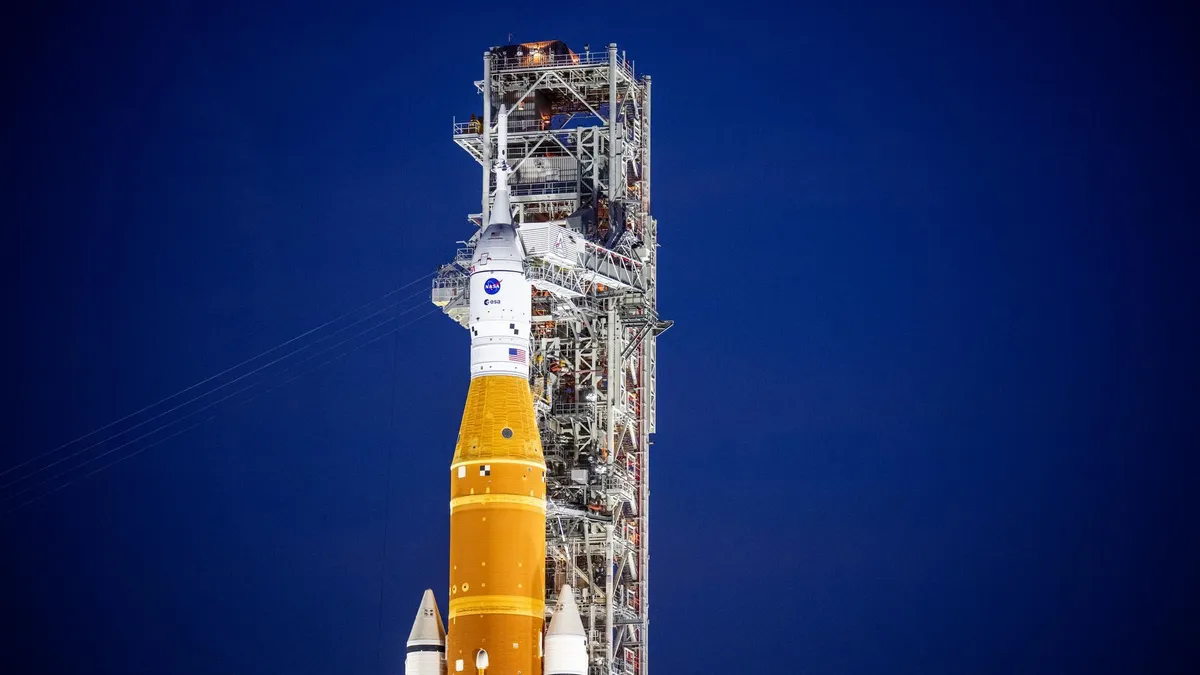
NASA is just hours away from its first crewed launch of 2026, and its first since Crew-11 flew to orbit in August last year.
Just ahead of Crew-12’s liftoff, the space agency has released a short trailer (above) for the mission, which will send four astronauts to the International Space Station (ISS). The crew will travel aboard a SpaceX Dragon capsule carried to orbit by a SpaceX Falcon 9 rocket.
NASA astronauts Jessica Meir and Jack Hathaway, ESA (European Space Agency) astronaut Sophie Adenot, and Roscosmos cosmonaut Andrey Fedyaev, are expected to blast off from from Space Launch Complex 40 at Cape Canaveral in Florida at 5:15 a.m. ET on Friday, February 13. If you’re interested in watching a livestream of the event, Digital Trends has all the information you need.
The mission team had been hoping to launch early on Wednesday, but poor weather conditions in the ascent corridor prompted it to push the launch to Thursday. But then another forecast pushed it to Friday. Thankfully, everything is looking good for the launch in just a few hours from now.
Advertisement
“Weather forecasters issued an improved outlook for the launch site conditions, with a 90% chance of acceptable weather at launch time,” NASA said in a post on its website. The team will assess a final forecast at around 10 p.m. ET, a few hours before the crew suits up. Be sure to check NASA’s X account for any last-minute changes to the schedule.
The crew will spend eight months aboard the orbital outpost performing research, technology demonstrations, and maintenance activities, some 250 miles above Earth.
“We do research on the International Space Station because it provides a very unique and novel environment that we cannot replicate here on Earth,” Jessica Meir, on her second mission to the ISS, says in NASA’s trailer. “We’ll be doing a wealth of scientific experiments, ranging from physiology and medical experiments to radiation material science experiments, deploying small satellites, you name it. Really, every aspect of science is represented in the work that we do on the International Space Station.”
Jack Hathaway adds that it’s “important to push the boundaries of what’s possible — if we’re just satisfied with what we have, we’re never going to create the technology to make our lives better.”
The future is bright — we mean that quite literally — and it’s on your roof, or at least, it could be. As of 2024, five million Americans had installed solar panels on their homes, and that number is expected to hit ten million by 2030, according to the Solar Energy Industries Association (SEIA). Most people install solar panels hoping to lower their electricity bills, but the upfront costs can be significant, and the average cost of installation is over $30,000. To avoid those initial costs, some people choose to lease the equipment, including the solar panels, and sign a contract to use the system. Whichever path you choose, however, you should always read the contract before you sign your name, and that’s one lesson that a Texas resident learned after receiving a six-figure bill for her solar panel installation.
Local Houston news station KPRC 2 News reported that Frances Holt answered the door to a solar panel salesperson in 2024. She reviewed and electronically signed a 43-page contract on the spot but admits that she didn’t thoroughly read the contract and never received a physical copy. Ultimately, a company called Sunrun installed the solar panels, a process which Holt claims damaged her roof. She then decided not to activate the system, only to receive a bill for $134,097.18, a balance she believes was supposed to have been spread out over 25 years had she activated her account. In the end, Sunrun agreed to remove the equipment at no cost and Holt is off the hook for that massive bill.
Advertisement
States lay groundwork to protect against fraud
Happy Kikky/Getty Images
The solar company involved in this particular incident, Sunrun, stated to KPRC 2 News that “[w]e regret the difficulties Ms. Holt has experienced and acknowledge that we did not meet our high customer service standards in this case.” It’s not clear if the company intentionally misled Holt or if she simply misunderstood the terms of the agreement, but one thing is obvious — it’s vital that you read the entire contract and understand all the terms and conditions before you enter into any agreement.
KPRC 2 News reports that AARP Texas has detailed a deluge of complaints related to solar panels in recent years, with a more than 500% increase from 2018 to 2023. One challenge for consumers is when contracts are presented only on electronic tablets, which can make them harder to read. Texas recently passed the Residential Solar Retailer Regulatory Act, which gives the state the ability to more closely regulate residential solar sales. It will take effect later in 2026. Other states have passed similar legislation, including Nevada and California.
There are simple steps that consumers can take to protect themselves from any kind of fraudulent contract. First, be prepared to say no to door-to-door salespeople and shut your door if you must! Never sign a contract without thoroughly reading it in its entirety, and research any company before you sign. Look for consumer reviews and complaints and be sure to completely understand both upfront and any continuing costs that may be associated with the product or service. Finally, in the case of solar panels, be sure your roof is suitable for such an installation.
An anonymous reader shares a report: Just weeks after a dramatic purge of China’s top general, the CIA is moving to capitalize on any resulting discord with a new public video targeting potential informants in the Chinese military. The U.S. spy agency on Thursday rolled out the video depicting a disillusioned mid-level Chinese military officer, in the latest U.S. step in a campaign to ramp up human intelligence gathering on Washington’s strategic rival.
It follows a similar effort last May that focused on fictional figures within China’s ruling Communist Party that provided detailed Chinese-language instructions on how to securely contact U.S. intelligence. CIA Director John Ratcliffe said in a statement that the agency’s videos had reached many Chinese citizens and that it would continue offering Chinese government officials an “opportunity to work toward a brighter future together.”
With the launch of the WF-1000XM6 TWS earbuds, Sony has once again thrown the flagship earbuds competition wide open. The earbuds push audio performance, promise better noise cancellation, and deliver better battery life than ever, but the $330 question is: how do they compare with other flagship offerings?
Sony faces white-hot competition from two well-received heavy-hitters from Bose and Apple. Sony is climbing higher up the price ladder when pitted against the second-gen Bose QuietComfort Ultra and the third-gen AirPods Pro. But do Sony’s legacy and the generation-over-generation upgrades on the WF-100XM6 justify the high asking price? Well, that depends on the additional conveniences you expect from your high-end earbuds, instead of just sheer audio excellence.
Price and availability
Sony’s WF-1000XM6 is available for $329.99 at the company’s official website, Amazon, Best Buy, and other authorized retailers. This is a $30 increase over the WF-1000XM5’s launch price.
Released in September 2025, the Bose QuietComfort Ultra (2nd Gen) maintained the same launch price as its predecessor: $299.00. However, you can currently grab a pair of these earbuds at $249.00 via the company’s website.
Sony WF-1000XM6s feature a stem-free, bulbous oval pill-shaped design with an all-matte plastic finish and foam eartips that should provide a superior grip and seal. The outer surface of the earbuds registers touch inputs.
The Bose QuietComfort Ultra earbuds are based on the familiar stem-based design (with a relatively flatter and wider stem). They also have a soft silicone loop (wrapped around the earbuds) for a firmer grip on the inner ear walls. The stem also registers touch-sensitive pads for swipes and taps.
Apple’s AirPods Pro 3 retain the classic white stem-based design, but the earbuds are angled inward for a better, more secure fit. The device comes with foam-infused eartips, which, by the way, are available in five sizes (from XXS to L). It features a force- and capacitive-touch sensor for gesture-based controls.
While the Sony and Bose earbuds carry an IPX4 rating for basic sweat resistance, the AirPods flaunt an IP57 rating, offering protection against both dust and water immersion. All the earbuds come with USB-C charging cases and support wireless charging.
The AirPods Pro 3’s earbuds are the lightest at 5.55 grams, followed by Sony’s at 6.2 grams and Bose’s at 7.3 grams. Bose’s charging case is the largest and heaviest at 59.8 grams, compared to Sony’s 47 grams and Apple’s 44 grams.
Sony WF-1000XM6: Black, Platinum Silver
Bose QuietComfort Ultra: Black, White Smoke, Midnight Violet, Desert Gold, and Deep Plum
AirPods Pro 3: White
Audio
The WF-1000XM6 sport 8.4mm dynamic drivers with a redesigned soft edge and a lightweight dome to improve both treble and bass. Sony has equipped them with the QN3e processor (along with the V2 co-processor for 32-bit audio processing). Supported codecs include SBC, AAC, LDAC, and LC3 (LE Audio).
Sony
The WF-1000XM6 are the only earbuds in this comparison that provide a 10-band equalizer via the Sound Connect app for a truly customizable output, making them most suitable for audiophiles. Furthermore, the earbuds are certified for Hi-Res Audio Wireless (24-bit / 96 kHz) via the LDAC codec.
The Bose QuietComfort Ultra, on the other hand, come with slightly bigger 9.3 mm dynamic drivers with the company’s CustomTune technology (calibrated audio performance based on your ear’s shape). With a Qualcomm chipset that supports Snapdragon Sound, the earbuds support SBC, AAC, and the aptX Adaptive family of codecs (including aptX Lossless).
Advertisement
Nadeem Sarwar / Digital Trends
When used with compatible devices, the earbuds provide CD-quality or near-CD-quality bitrates via the aptX codecs. Compared to the XM6’s 10-band equalizer, the three-band equalizer on the QuietComfort Ultra is quite a bummer. You get four basic presets: Bass Boost, Bass Reducer, Treble Boost, and Treble Booster.
With custom 10.7mm high-excursion Apple drivers and a new multi-port acoustic architecture, the AirPods Pro 3 deliver noticeably thumpier bass and generate a much wider soundstage compared to the AirPods Pro 2. They feature Apple’s H2 chip and support limited codecs (AAC, SBC, and AAC-ELD for lossless audio with Vision Pro).
The AirPods are popular for their Spatial Audio and head tracking functionality, and the Pro 3 don’t disappoint in that regard. They offer Adaptive EQ, which tunes music to the unique geometry of your ear canal. You still get Headphone Accommodations for fine-tuning the output, but nothing beats a customizable equalizer (good job there, Sony).
Noise cancellation & transparency
Before I get into the nitty-gritty, all three models represent the pinnacle of noise cancellation, allowing you to create a bubble of isolation around you to focus on work, read a book, or be at peace. Most people won’t be able to differentiate between the noise cancellation on the earbuds.
Sony
With the QN3e HD noise-cancelling processor, the V2 chip, and four microphones on each earbud, the WF-1000XM6 claim to offer “the world’s best noise cancelling performance.” While that’s hard to comment on right now, Sony says the earbuds are 25% better than their predecessors at blocking environmental noise.
They also offer the Adaptive NC Optimiser, which automatically tunes the noise cancellation to your fit and environment. Early reviews suggest that the earbuds are noticeably better than their predecessors, but they’re a tad behind Bose’s flagship earbuds, which still seem to have an edge in cutting out low-frequency sounds.
Next up on the list are the QuietComfort Ultra, which do an excellent job of neutralising deep, constant low-frequency sounds (like an airplane’s engine), sudden high-frequency sounds like emergency sirens, and create an intense, vacuum-like effect, as if you’re floating in the middle of the space. The earbuds offer three ANC levels: Quiet (the strongest one), Aware, and Immersion.
Advertisement
Finally, we have the AirPods Pro 3, which claim to offer twice the noise cancellation of the AirPods Pro 2, thanks to the H2 chip and ultra-low noise microphones. They aren’t as isolating as Bose’s earbuds, but instead offer a slightly more natural, airy (compared to a vacuum) version of the vacuum we were talking about earlier.
There’s an Adaptive Audio mode as well, which adjusts the intensity of ANC based on the ambient sound levels. According to SoundGuys, the AirPods offer an average 90% reduction in loudness, followed by the WF-1000XM6s at 88% and the QuietComfort Ultra at 85% (despite being highly regarded as the best ANC earbuds).
You see, all three models are right there at the top, with gaps so minimal that a regular user would spend hours figuring them out. When it comes to audio passthrough, the XM6s feature an Ambient Sound Mode with a customizable ambient noise level, but early reviews remain skeptical about the voices sounding slightly more robotic than they should.
Nadeem Sarwar / Digital Trends
Bose also offers an Aware Mode with ActiveSense technology, but it is the AirPods that are said to offer the most natural passthrough audio via Transparency Mode.
Features
Among the unique features of Sony’s flagship earbuds is 32-bit audio processing, which delivers higher-resolution audio with richer textures and finer details (especially in the background score). The earbuds also support DSEE Extreme, Sony’s proprietary technology that restores the sound quality that is often lost with streaming. You also get native Gemini AI support for talking to Google’s chatbot.
Then there’s a Find Your Equaliser feature in its companion app that plays different sonic signatures to help you figure out your preferred audio profile. The app also lets you switch between ANC and ambient modes based on your location. To ensure clear calls, the earbuds feature a bone conduction sensor, two beam-forming microphones, and AI noise reduction.
Advertisement
Sony
The Bose QuietComfort Ultra (2nd Gen) earbuds use TrueSpatial technology to enhance the soundstage and offer a new Cinema Mode for replicating a theater-like sound experience. The ActiveSense feature monitors for sudden sounds and cancels them in real-time.
You also get useful features like SpeechClarity for isolating your voice during calls, Bluetooth Multipoint support for simultaneous connections to two devices, customizable controls, and Google Fast Pair for near-instant connection with compatible devices. The earbuds can also invoke Gemini AI if it is set as your smartphone’s default assistant.
The AirPods Pro 3 stand out in this regard, offering three features, or rather experiences, that no other earbuds do. First, they come with dedicated sensors to measure heart rate during workouts (via the Fitness or Health app). Speaking of workouts, the Workout Buddy provides personalized motivational messages.
The device also offers Live Translation, a feature currently available in limited languages that allows real-time translation directly through the earbuds. Finally, Apple offers clinical-grade hearing aid functionality and automatic Conversation Boost among other hearing health features. There’s a Conversation Awareness feature as well.
Both the WF-1000XM6 and AirPods Pro 3 feature advanced tracking technology. While the former relies on Google’s Find Hub, the latter uses Apple’s Find My network to crowdsource the location of the devices. Apple’s earbuds also include the U2 chip (ultra-wideband) for Precision Finding.
Battery life
With ANC on, the WF-1000XM6 and the AirPods Pro 3 last up to eight hours on a single charge; their charging cases add another 16 hours, bringing the total playback time to 24 hours. They also support fast charging, with a five-minute charge providing up to an hour of listening time.
Advertisement
Sony
The QuietComfort Ultra, on the other hand, lasts up to six hours with ANC, and up to 24 hours with the charging case. A 20-minute charge can provide up to two hours of battery life.
Verdict
If sound quality is your top priority, consider the WF-1000XM6. They offer Hi-Res Audio Wireless (LDAC) support, a 10-band equalizer for the most customizable audio experience, 32-bit processing, DSEE Extreme, and an excellent battery life.
Sony / Bose / Apple
If you want deep, immersive ANC that blocks most rumble, you can go with the Bose QuietComfort Ultra (2nd Gen). They offer the most secure fit of all earbuds, support multi-point Bluetooth, provide strong call quality, and offer the company’s signature sound profile.
If you’re an Apple user, the AirPods Pro 3 are the most feature-packed earbuds you can buy. They offer the best Transparency in the group with excellent ANC and double as a health-oriented device with heart-rate tracking and hearing aid features. Of course, you also get the Apple ecosystem perks.
During its State of Play livestream on Thursday, Sony revealed the first PlayStation Plus Game Catalog addition for February and it’s a doozy. Marvel’s Spider-Man 2 (PS5) will finally websling its way onto the Game Catalog on February 17.
Marvel’s Spider-Man 2 was released in October 2023, and Insomniac’s third Spidey game is the the best of the bunch. You can play as both Peter Parker and his protégé Miles Morales. Each Spidey has his own skill tree and moveset to master.
Traversing New York (with a lot more of it explorable than in previous entries) has never felt better thanks to the addition of the wingsuit, while the set pieces are frequently breathtaking. Marvel’s Spider-Man 2 remains one of the PS5’s flagship games, and with Marvel’s Spider-Man: Remastered and Miles Moralesalready on the Game Catalog, Extra and Premium subscribers can now play the whole series while they wait for Insomniac’s Wolverine game to arrive later this year.
Sony later revealed the full PS Plus Game Catalog lineup for February on the PlayStation Blog. It includes Neva (PS4 and PS5), a stunning 2D platformer that’s pretty much an interactive fairytale. Engadget’s Jessica Conditt opened her review of the game by saying she had “absolutely nothing negative to say” about it, which is surely about as effusive as a recommendation can get. (A paid expansion that acts as a prequel is on the way next week too.)
Advertisement
The other titles coming to the PS Plus Game Catalog on February 17 are:
Test Drive Unlimited Solar Crown (PS5)
Season: A Letter to the Future (PS4 and PS5)
Monster Hunter Stories 2: Wings of Ruin (PS4)
Monster Hunter Stories (PS4)
Echoes of the End: Enhanced Edition (PS5)
PS Plus Premium members will have an extra game to play on PS4 and PS5 in the form of Disney Pixar Wall-E. This version was originally released in 2008 for the PlayStation 2.
Looking further ahead, Tekken Dark Resurrection will be available to Premium subscribers in March. Premium members will be able to play the original Time Crisis on their PS5 with gyro controls in May, which sounds fun. Also,Big Walk, a multiplayer game from Untitled Goose Game developer House House, will be available on all three PS Plus tiers when it debuts later this year.
Update February 12, 6:43PM ET: Added the full list of PS Plus Game Catalog titles for February.
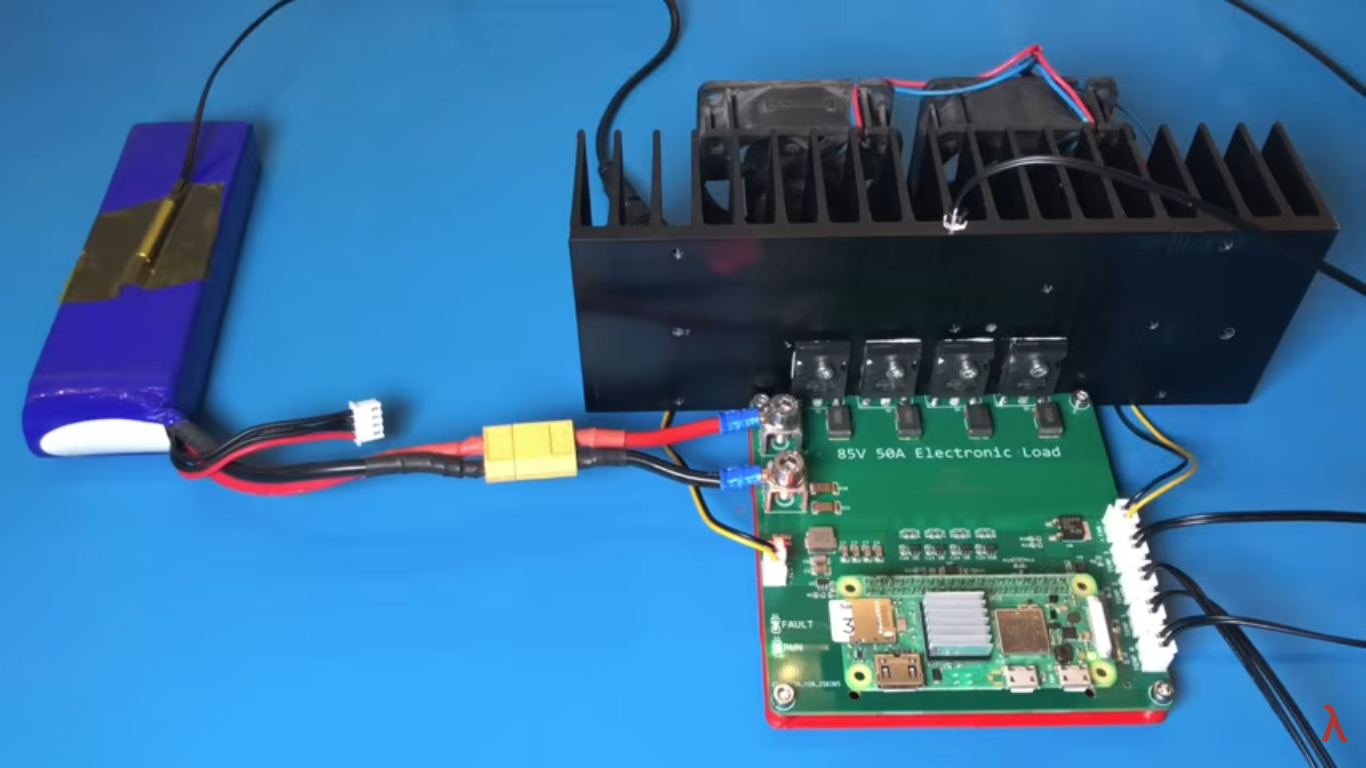
The main idea is to trap an electron using a magnetic field into a circular path. You can then compute the forces required to keep it in that circle, along with some other equations, and combine them. The result lets you compute the charge to mass ratio using parameters you can either control or measure, like the radius of the circular path and the electric field.
Helmholtz coils create the magnetic field, and a cold cathode tube provides the electrons. Honestly, the equipment looks a bit like something out of an old monster movie.
Advertisement
Of course, the result is the charge to mass ratio, which means to get the mass, you need to know the charge of the electron. Today, you can look that up, but in 1897, no one knew what it was. [Robert Millikan] would conduct another experiment using oil drops about a decade later to determine that number, and then the world could know the mass of a single electron.
The resulting ratio was very close to the accepted value. It would be fun to see someone replicate the oil drop experiment, too. You could spend a lot of time recreating classic science experiments. Some of the experiments are easy with today’s gear.
Sectors such as services, manufacturing, and R&D to lead the way in job creation
Investment commitments secured in Singapore throughout 2025 are projected to generate 15,700 new jobs as they materialise over the next five years. Significantly, approximately two-thirds of these positions are expected to offer a gross monthly salary exceeding $5,000, the Economic Development Board (EDB) said on Monday (Feb 9).
In a statement released Feb 5, the EDB noted that the 15,700 projected jobs are largely geared toward the professional, manager, executive and technician (PMET) workforce. The sectoral split sees services taking the lead at 40%, followed closely by manufacturing at 37%, and research and development (R&D) and innovation accounting for the remaining 23%.
Addressing the media at the statutory board’s 2025 year-in-review press conference held at its Raffles City Tower office, EDB chairman Png Cheong Boon said the new jobs would open doors for fresh graduates and mid-career hires.
“They will offer meaningful career pathways for our workers, especially those who have the necessary expertise and have done well; they will also offer opportunities to learn new skills and to take on new roles,” he said.
Advertisement
The nation’s fixed asset investment in 2025 reached S$14.2 billion, a modest 5.2% increase from S$13.5 billion in 2024, reflecting continued spending on long-term assets such as facilities, equipment, and machinery.
Whereas total business expenditure, which refers to companies’ incremental operating costs including wages and rent, edged up to S$8.9 billion in 2025 from S$8.4 billion the year before. The majority came from investments in headquarters, professional services and R&D.
Similar to last year, tech companies were the largest contributor to HQ investments, reflecting a strong demand for digital solutions and services in the region, Loy said.
“And we also saw many companies investing in R&D through new centres of excellence, and by locating their product roadmaps and commercialisation functions here in Singapore,” he said.
Advertisement
Despite the higher volume of investments, the 15,700 jobs expected to be created are the lowest in a decade, representing a decline of about 16% from the 18,700 projected in 2024.
He added that there are “some structural shifts at play as well, with higher levels of automation and digitalisation across industries”.
The director explained that as industries transform, they are increasingly seeing job roles evolve.
Advertisement
“More than ever, they require strong digital capabilities, and some require new and specialised skillsets,” he said.
Still, Loy said, “the jobs expected to be created are good, high-value roles that will offer meaningful career pathways for Singaporeans”.
Investments poured into manufacturing
Image Credit: IM Imagery via Shutterstock
Electronics and biomedical manufacturing were the leading industries for investment commitments last year, contributing 33% and 30.8%, respectively.
This is a stark contrast with 2024, when electronics investments dominated, accounting for 57% of the total.
EDB reported that of the S$14.2 billion in fixed asset investment commitments for 2025, approximately S$12.1 billion came from manufacturing-related projects.
“We also saw strong global demand for AI-related activities—chips, servers, server-related products— and these were all key drivers of investments in the semiconductor industry,” he added.
“At the same time, we also saw biomedical manufacturers investing to meet demand for high-value biopharma and medtech products, and chemical manufacturers investing in specialty chemicals and sustainable materials.”
Additionally, EDB advanced its efforts in growth sectors such as AI, precision medicine, the green and bio-based economy, and next-generation hardware and mobility.
Advertisement
The agency secured new projects in data centre hardware and infrastructure, as well as emerging areas like quantum hardware testing.
In the mobility sector, new projects involving autonomous vehicles and electrification technologies helped create new jobs in automation, software, and hardware development.
According to Loy, the precision medicine sector is emerging as a key growth area for Singapore, driven by rising healthcare demands and wellness trends that are boosting the need for data-driven medical equipment.
China’s rising stake
Image Credit: Ministry of Digital Development and Information
By region, most fixed asset investment commitments originated from Europe, China, and the US.
The US’s share of investment commitments dropped sharply from 55.5% in 2024 to 17.3% in 2025, while China’s share rose from 2.5% to 20.6% over the same period.
Advertisement
For the first time, China surpassed the US in fixed asset investment commitments. In terms of total business expenditure commitments, China now accounts for the largest share at 50.7%, up sharply from 15% in 2024.
“Singapore has always been an open economy. Foreign companies with substantive business activities are welcome to set up here as long as they abide by our laws and regulations,” Png said.
Many Chinese companies are looking to expand internationally in response to slower domestic growth. In recent years, firms headquartered in China across various sectors have been increasing their presence in Singapore, Loy added.
Notable examples include e-commerce and gaming brands such as Bytedance and Mihoyo.
Advertisement
Singapore has a “good track record” of hosting multinational corporations from the US, Europe, Japan, India, China, and other Southeast Asian countries, he added.
“We continue to look towards the US and Europe to be key sources of investment commitments in terms of stock and flow,” he added.
Png noted that MNCs in 2025 generally adopted a “wait-and-see” approach to figure out how to respond to the evolving geopolitical environment.
“This year, business leaders have told us that while they expect volatility and uncertainties to remain, with the global economy remaining fragmented, they are ready to make calculated moves to grow or transform,” he added.
Advertisement
What lies ahead
Image Credit: 2p2play via Shutterstock
Png observed that an increasing number of global businesses are seeking growth opportunities and stronger supply chain resilience by expanding beyond their traditional markets and operating bases.
He added that Southeast Asia offers “brighter growth prospects”, with Singapore “well positioned” to support companies looking to expand into the region.
However, he cautioned that Singapore is now operating in a different context than before and should remain “clear-eyed” about these changes.
Looking ahead, EDB expects continued intense global competition for investments. With structural shifts in the global business landscape, creating jobs will become more challenging.
To create the same number of jobs, EDB will have to bring in even more new projects, Png explained. This implies engaging more companies across more sectors and regions, and of different company sizes and growth stages.
Advertisement
“To remain competitive and secure more investments, we must double down on sectors where Singapore has built-up strong capabilities, established global leadership positions and therefore has a competitive advantage,” he said.
He gave the example of Singapore’s aerospace sector, which has a “global leadership position in aircraft engine component repairs” and is one of the country’s strongest growth sectors.
One focus is reinforcing Singapore’s leadership in growth sectors such as AI, with the aim of establishing the country as a leading AI hub and a fully AI-empowered economy.
“With automation, AI and productivity, as all of us hope to achieve, there will be higher value-adding industries and business activities. That means with higher value-add per worker, you will not need as many workers,” he said.
EDB stated that it continues to collaborate with companies, training partners, and industry associations to enhance the competitiveness of Singapore’s workforce.
EDB will also explore emerging opportunities to develop new growth engines and focus on identifying, attracting, and anchoring high-growth companies with the potential to become future industry leaders.
Advertisement
“We will also continue our partnerships with companies to train and upskill our local workforce to ensure they have a strong talent pipeline with future-ready skills to fuel future growth,” Png said.
Monday’s EDB data was released ahead of Singapore’s budget, which Prime Minister and Finance Minister Lawrence Wong is scheduled to deliver on Feb 12.
Read more articles we’ve written on job trends here.
Featured Image Credit: Shadow_of_light/ depositphotos