Connect with us

Tech

AirPods with cameras leak, Apple Maps ads, & Siri AI

Published

on

Apple accidentally leaked identifying numbers for much of its upcoming product line, AirPods with cameras rumors spark a new privacy debate, and Siri AI gets partnered articles on the AppleInsider Podcast.

Among the various product identifiers discovered in macOS Tahoe 26.7 release candidate code, the AirPods with cameras were present. Deeper in the code still was a seemingly-forgotten demo video of a user accessing Visual Intelligence while wearing AirPods Pro.

Many were quick to jump to the conclusion that these could enable creepy actions like those perpetrated while wearing Meta smart glasses. However, rumors suggest these AirPods with cameras won’t take photos at all.

Your hosts also discuss Apple’s continued problems with App Review, Epic’s dissatisfaction with all things related to App Store commissions, and a $40 million Ferrari.

Advertisement

Apple Maps is getting ads in the United States and Canada soon, which will bring more revenue to Apple’s services division. The question is whether or not Apple can keep things tasteful for users, or if this is the start of a slippery slope to surveillance capitalism.

Regretfully there’s no video this week because of a few technical problems that we have since solved. Video will be back next week.

BONUS: Subscribe via Patreon or Apple Podcasts to hear AppleInsider+, the extended edition. This time, your hosts discuss Apple’s move into advertising and what it means for apps like Apple Maps.

More AppleInsider podcasts

Tune in to our Smart Home Insider podcast covering the latest news, products, apps, and everything HomeKit related. Subscribe in Apple Podcasts, Overcast, or just search for HomeKit Insider wherever you get your podcasts.

Advertisement

Podcast artwork from Basic Apple Guy. Download the free wallpaper pack here.

Those interested in sponsoring the show can reach out to us at: [email protected].

Subscribe to AppleInsider on:

Keep up with everything Apple in the weekly AppleInsider Podcast. Just say, “Hey, Siri,” to your HomePod mini and ask for these podcasts, and our latest HomeKit Insider episode too. If you want an ad-free main AppleInsider Podcast experience, you can support the AppleInsider podcast by subscribing for $5 per month through Apple’s Podcasts app, or via Patreon if you prefer any other podcast player.

Advertisement

Source link

Continue Reading
Click to comment

You must be logged in to post a comment Login

Leave a Reply

Tech

CBP Officers And Contractors Abused Government Databases To Stalk Their Exes

Published

on

from the because-of-course-they-did dept

This news will come as no surprise to anyone. Those who have been following police misconduct revelations for years have seen this happen time and time and time and time again. Those who are in the business of engaging in police misconduct have known for years that it’s easy to do and it seldom gets punished.

While Flock Safety is currently hoovering up most of the negative headlines about tech-enabled stalking by law enforcement officers, it’s a relative newcomer. Cops (and federal officers) have been exploiting database access for years to do everything from harass complainants to stalk their exes to dig up info on people they’d like to coerce into a sexual relationship.

The documents obtained by Wired come from the DHS OPR (Office of Professional Responsibility). The last time we saw a DHS-adjacent OPR take any action, it was to open investigations into people opposed to ICE, rather than limit itself to the confines of its office: investigating complaints about ICE officer misconduct. So, it’s nice to know the DHS OPR isn’t completely compromised. On the other hand… well…

Internal records obtained by WIRED reveal how, for years, United States Customs and Border Protection employees and contractors were accused of abusing sensitive government databases for reasons that had nothing to do with their jobs. The records contain hundreds of allegations of misuse of law enforcement databases, including federal agents querying data to look up romantic interests, monitor family members, expose various personal information and, in some cases, provide intelligence to suspected smugglers or drug-trafficking organizations.

Acquired through Freedom of Information Act requests to CBP’s Office of Professional Responsibility and the Department of Homeland Security’s Office of Inspector General, the records reveal the breadth of alleged database abuse by CBP employees spanning more than a decade. 

Advertisement

It is as it is everywhere. If you give someone access to tons of personal data and tracking information and then simply trust that they’ll do the right thing, you’ll always be disappointed. If you wouldn’t trust AI with this access, why would you trust humans? Their goals are far more simplistic, banal, and perverse.

And yet, this is what we’ve been doing for decades: allowing officers to access tons of personal info and providing them tech that can convert digital voyeurism into physical acts of stalking. The databases may be a necessary part of government functionality. But once you add license plate readers, facial recognition tech, and expensive algorithms to the mix, a bit of click-wrap is never going to be enough to deter officers (and government contractors) from using this wealth of information to um… enhance their personal lives.

In one case, a CBP officer allegedly used government databases to contact a flight attendant. In another, an officer was accused of pulling information from trusted-traveler applications to ask people out. Other CBP employees were accused of providing border-crossing data to someone involved in a “heated divorce.” And yet another DHS employee allegedly used controversial ad-tech-derived location data to track several coworkers’ cell phones—which appears to be the first known internal abuse case involving DHS use of ad-tech-derived mobile location data.

That’s the tip of the iceberg. What’s seen here is just what’s been caught and documented. But everyone who wants to do this sort of thing learns stuff from those who have been caught. And it’s not just officers doing the expected ex-stalking. According to the documents, DHS employees and contractors have been caught supplying inside info to drug traffickers and other criminals.

And it’s not going to get better any time soon. Most officers are allowed to resign rather than face discipline or criminal charges. And the private sector’s revolving door just means contractors abusing their access will move on to other jobs in the same field, because surveillance tech companies are similarly uninterested in punishing employees for abusing access to surveillance tech and government databases.

Advertisement

Will this revelation result in meaningful change? Obviously, it won’t. Previous revelations have done little in terms of accountability or oversight. And this administration in particular is deeply opposed to accountability and oversight. Trump himself is openly supportive of law enforcement misconduct. That means the most likely response will be re-tasking the CBP Office of Professional Responsibility to align more with ICE’s bastardized version. The focus will no longer be internal. Instead, the OPR’s power and personnel will be redirected to target Trump critics and amplify the administration’s narratives. The only thing CBP officers and contractors will learn from this is: “Don’t get caught.”

Filed Under: cbp, dhs, law enforcement misconduct, mass deportation, opr, stalking

Source link

Advertisement
Continue Reading

Tech

Amiga-Inspired AROS Goes Bare Metal On Raspberry Pi

Published

on

There’s no actual data, but if we had to guess the least-favourite Disney movie of former Amiga owners would have to be Frozen, because none of them will ever be able to “Let it Go”. The Amiga-derived AROS Research Operating System has just been ported to boot bare-metal on the Raspberry Pi, in both 32-bit and 64-bit versions. Yes, there’s a 64-bit Amiga-compatible OS that runs on ARM. It truly is a time of wonders.

AROS has already been ported to a number of platforms. Besides x86, there’s a PPC port that provided a lot of code to the MorphOS, which you can read about here, and a back-port that brings AROS back to original Amiga 68k hardware. There is even a build for RISC V.

AROS developers are making sure that Amiga legacy isn’t stuck on any given hardware, so they never have to let it go. So while not totally out of left field, this development is “pretty nifty” both in that it gives another ultralight operating system for the Pi, with boot times to rival RiscOS, and another platform for ex-Amiga users to play with that isn’t 40 years old. Previously if you wanted to run AROS on a Pi it was virtualized in Linux, making it similar to all other Amiga emulators.

While some software has been recompiled for ARM, the available software isn’t as full-featured as x86, but that’s almost certain to change as time goes on. It’s early days yet and this build is very much a work in progress. Likewise we expect support for other Pi boards to expand, as while right now the target is the Pi3, the forum threads include discussion of the Pi4 and even Zero2W.

Advertisement

You can check the port out in action in a video by [Dan Wood] embedded below, sent to us by tipster [Stephen Walters]. Thanks [Stephen]!

We have featured AROS once before, thought it’s been a while.

Advertisement

Source link

Continue Reading

Tech

Criterion Brings 12 Angry Men to 4K UHD and the Jury Room Has Never Looked This Uncomfortable

Published

on

Twelve men. One jury room. Ninety-six minutes. No explosions, spaceships, serial killers, car chases or Dolby Atmos objects flying over your sofa.

And nearly 70 years later, 12 Angry Men remains more suspenseful than most movies equipped with all of those things.

Sidney Lumet’s 1957 feature debut arrives on Criterion Collection 4K UHD on September 8, 2026, with a new 4K digital restoration presented in Dolby Vision HDR and its original monaural soundtrack in uncompressed audio. Criterion is pricing the two-disc 4K UHD plus Blu-ray edition at $49.95 MSRP, with the company currently offering it for $39.96 directly.

We briefly included the release in our recent look at ManhunterDracula and 12 Angry Men, but this one deserves a closer look. Not because it is going to demonstrate the capabilities of your height channels, but because it illustrates something physical-media collectors sometimes forget: 4K UHD is also a preservation format, and image quality is about considerably more than explosions and peak brightness.

Advertisement

12 Angry Men 4K UHD Release Details

Criterion’s new edition presents the 1957 film in its 1.66:1 aspect ratio, in black and white, from a new 4K digital restoration with Dolby Vision. The film retains an uncompressed monaural soundtrack, rather than receiving a newly fabricated surround remix that would make very little sense for a movie built almost entirely around twelve men talking in one room.

Sometimes leaving the audio alone is the upgrade.

The package contains the film on a 4K UHD disc plus a Blu-ray carrying the movie and supplemental features. Criterion has also retained one of the most historically valuable extras from its earlier edition: the 1954 live television version of 12 Angry Men, directed by Franklin J. Schaffner for CBS’s Studio One. Reginald Rose’s television drama came three years before Lumet’s feature adaptation and allows viewers to see how the material evolved from live television into one of the defining American films of the 1950s.

12 Angry Men Criterion Collection 4K Ultra HD

Criterion 4K UHD Features

  • New 4K digital restoration
  • Dolby Vision HDR
  • Uncompressed monaural soundtrack
  • 1954 Studio One television version directed by Franklin J. Schaffner
  • Production history tracing the story from television to feature film
  • Archival interviews with Sidney Lumet
  • Interview with screenwriter Walter Bernstein about Lumet
  • Interview concerning writer Reginald Rose
  • Tragedy in a Temporary Town, the 1956 teleplay directed by Lumet and written by Rose
  • Interview about cinematographer Boris Kaufman
  • Original trailer
  • English SDH subtitles
  • Essay by writer and law professor Thane Rosenbaum

The 4K UHD plus Blu-ray edition arrives September 8 for $49.95 MSRP. Criterion also lists a $39.95 Blu-ray and $29.95 DVD edition.

How Did Twelve Men in One Room Become This Influential?

12 Angry Men began as a Reginald Rose teleplay broadcast on Studio One in 1954. Henry Fonda later became interested in bringing it to the screen, producing the feature with Rose and starring as Juror 8, the lone member of the jury initially unwilling to convict an 18-year-old defendant of murdering his father without discussing the evidence further.

Advertisement

The film does not tell us that Fonda’s character knows the defendant is innocent. He doesn’t. His position is considerably more important: if a person’s life is at stake, perhaps eleven men wanting to get home is not quite enough evidence to execute him.

From there, Rose’s screenplay dismantles the apparent certainty of the case piece by piece while exposing prejudice, anger, ego, class assumptions and personal baggage among the jurors. The room becomes a pressure cooker in which the legal principle of reasonable doubt has to compete with the fact that human beings are the ones applying it.

Advertisement. Scroll to continue reading.

The film received three Academy Award nominations, for Best Motion Picture, Sidney Lumet’s direction and Rose’s adapted screenplay. It lost all three to The Bridge on the River Kwai, which is the cinematic equivalent of having a very good season during the year somebody else goes undefeated.

Advertisement

Its reputation only grew. The Library of Congress selected 12 Angry Men for the National Film Registry in 2007, recognizing its cultural, historical and aesthetic importance. The Library’s own essay notes how extensively the film has been used to teach civic responsibility, social justice and the importance of resisting group pressure.

That’s a rather substantial afterlife for a movie Hollywood initially expected people to watch while twelve sweaty men argued around a table.

Sidney Lumet Made the Jury Room Shrink

The real reason 12 Angry Men works as cinema rather than photographed theater is what Lumet and cinematographer Boris Kaufman do with that room.

Lumet developed what he called a “lens plot.” As the deliberations progress, the filmmakers gradually move toward longer focal lengths, reducing the apparent space between the characters and making the jury room feel increasingly compressed. The camera also begins above eye level, moves to eye level and eventually drops below it, causing the ceiling to enter the compositions and increasing the sense of confinement. Only when the jurors finally leave does Lumet switch to an unusually wide lens and higher camera position, visually allowing the audience to breathe again.

Advertisement

That is why a 4K restoration makes considerable sense.

Boris Kaufman’s black-and-white photography depends on facial texture, sweat, cigarette smoke, fabric, window light, shadow detail and the increasingly uncomfortable proximity of one human face to another. Dolby Vision does not need neon colors or 4,000-nit highlights to be useful; carefully controlled grayscale, bright whites, deep blacks and subtle shadow transitions matter just as much.

If Criterion gets those elements right, the jury room should not merely look cleaner. It should feel smaller.

Why the Film Still Works

Courtroom movies frequently focus on the lawyers. 12 Angry Men focuses on what happens after the attorneys stop talking and ordinary citizens are asked to decide whether another human being lives or dies.

Advertisement

That shifted the drama from legal performance to moral responsibility.

The film also established many of the themes Lumet would pursue for decades: institutions under pressure, individuals confronting authority, justice compromised by human weakness and ordinary people forced into decisions that reveal who they really are. You can draw a remarkably straight line from 12 Angry Men through SerpicoDog Day AfternoonNetwork and The Verdict.

Our recent Criterion review of Lumet’s Network made the same point from another direction. Lumet was exceptionally good at putting people inside systems that claimed to function rationally and then showing what happened when greed, fear, prejudice or ambition entered the room.

Advertisement. Scroll to continue reading.
Advertisement

Apparently the problem was never the conference table.

The Bottom Line

12 Angry Men is not the first movie anybody will use to demonstrate a new subwoofer, but that makes Criterion’s 4K release more interesting rather than less.

A proper restoration can reveal what Lumet and Kaufman were doing with faces, lenses, light, contrast and physical space without turning a 1957 black-and-white film into something it was never supposed to be. Keeping the original mono soundtrack intact is equally important; twelve exceptional actors and Reginald Rose’s dialogue do not require overhead speakers to hold your attention.

Nearly seven decades later, the film still asks an uncomfortable question: how certain should we be before we destroy somebody else’s life?

Advertisement

Turns out you don’t need a car chase for that to create some tension.

Where to pre-order: $49.95 at Amazon (available September 8, 2026)

Source link

Advertisement
Continue Reading

Tech

Go inside Endurance Energy, the Seattle startup tapping underwater volcanoes for geothermal power

Published

on

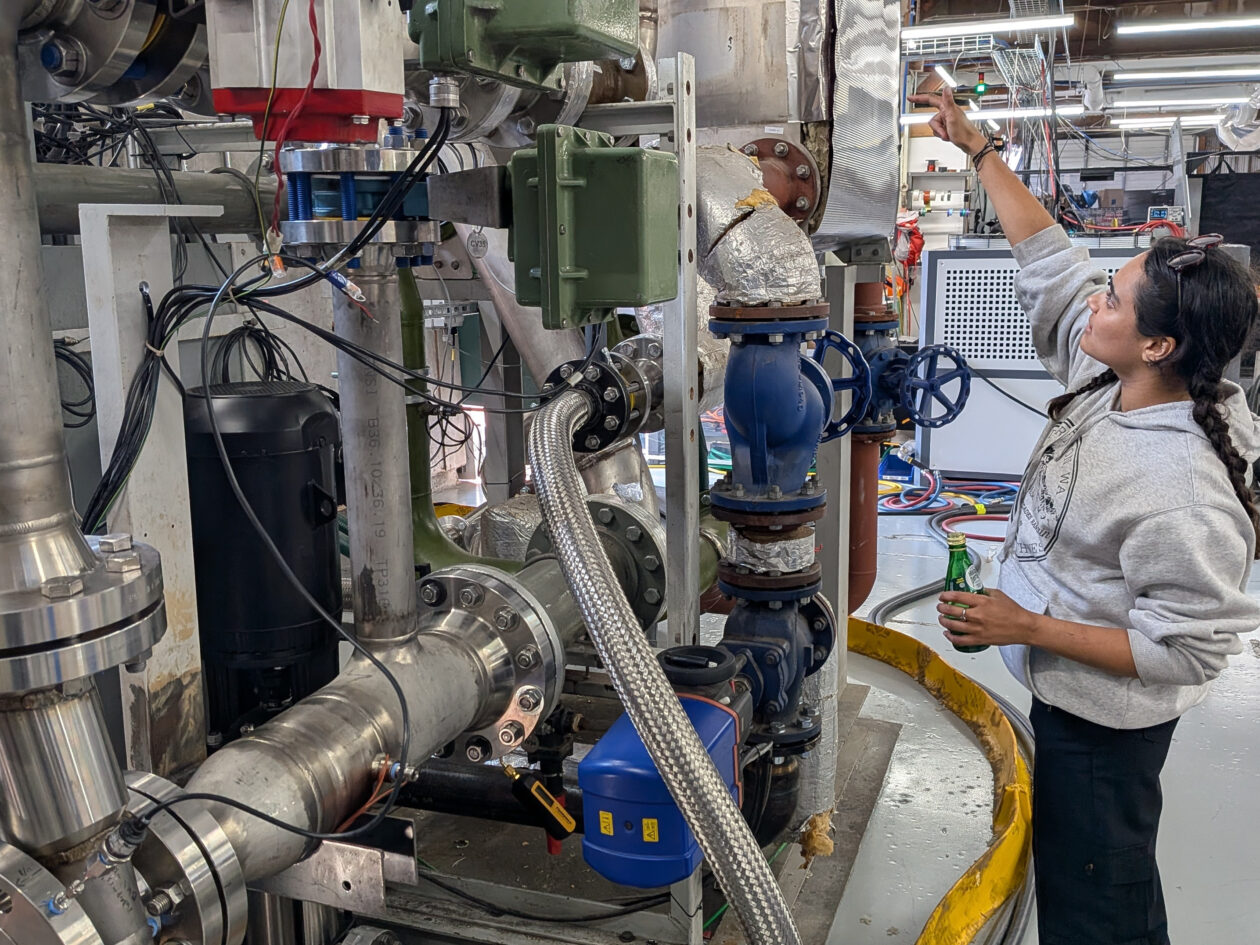
Andrew Redd, CEO and founder of Endurance Energy, with company puppy Maple as the startup preps to launch its next prototype system for geothermal energy production. (GeekWire Photo / Lisa Stiffler)

Next month, Endurance Energy will send Adélie — a 100-kilowatt geothermal generator named for a penguin — to an undersea volcano off the Oregon coast, tapping hydrothermal fluids that can reach 750 degrees Fahrenheit.

It’s the Seattle startup’s fifth deployment onto the ocean floor, part of founder and CEO Andrew Redd‘s bet that the technology can one day electrify entire cities.

“Addressing the clean power problem is a way to make significant, scalable impact,” Redd said. “It’s a fundamental of human life — people need power.”

Endurance is part of a broader race to harness geothermal energy — heat from water or steam under the Earth’s crust, converted into electricity. But while companies such as Fervo and Sage Geosystems focus on terrestrial sites, Endurance is the first commercial venture pursuing undersea sources.

Redd left an engineering role at SpaceX to launch his company in January 2025. Endurance’s headquarters sit on the north shore of Seattle’s Lake Union, in a building that once housed seafood processing, just down from Ivar’s Salmon House.

Advertisement

“There was a big crab on the wall. There were pinup pictures from the fishermen that would sleep out back,” recalled Nate Rodland, Endurance’s chief operating officer.

This summer, the team expanded across the street into a 25,000-square-foot concrete facility — it’s cavernous, like a parking garage with ultrahigh ceilings — where giant white tents now house separate R&D and manufacturing operations.

Members of the Endurance team work on the electronics that will control the geothermal system. (GeekWire Photo / Lisa Stiffler)

The space is bustling with employees assembling components ahead of the Sept. 7 pilot demonstration.

“Everyone is incredibly multidisciplinary. The challenge is incredibly multidisciplinary. That’s what makes it so fun and exciting,” said Redd, watching his team at work. He pointed to the company’s thermal fluids analyst, for example, who at that moment was assembling electronics enclosures.

The team’s roughly three-dozen members include 12 SpaceX alumni, plus veterans of fusion startup Helion Energy and space venture Blue Origin.

Advertisement

Here’s how the Endurance system works:

  • Drill a borehole: The team will drill a narrow hole a safe distance from active vent fields that will go about 200 feet into the seafloor to tap hydrothermal fluid.
  • Harness the heat: Hydrothermal fluid flows into a generator, heating a closed-loop refrigerant through titanium tubes until it boils and spins a turbine.
  • Reset: Naturally cold seawater cools the refrigerant back into a liquid state to repeat the cycle. The warmed water is released to the seafloor.
  • Move energy: The deployment next month will send performance data back to shore via Ocean Observatories Initiative’s Regional Cabled Array, operated by the University of Washington. Permanent installations will move electricity through undersea cables.
  • Control the process: Underwater, remotely controlled electronics are housed in oil-filled, pressure-balanced chambers to handle deep-ocean conditions.

“We kind of joke that everything we do is just heating, cooling and pumping,” said Aditi Bhatt, chief of staff, as she pointed out earlier prototype devices housed in Endurance’s original building.

Each unit is named for a sea creature, moving up the food chain as the generators grow — krill, silverfish, and eventually an orca pod. Adélie’s generating capacity would be enough to power a small neighborhood of homes.

The company touts the environmental sustainability of its system, which has a small physical footprint, creates limited noise, releases no toxic chemicals and emits no carbon.

Endurance occupies a 25,000-square-foot space in the basement of this building near Seattle’s Lake Union. (GeekWire Photo / Lisa Stiffler)

Endurance has done four prototype deployments, reaching a depth of about 2 miles and temperatures up to 726 degrees Fahrenheit. The company has previously visited the Pacific Northwest’s Juan de Fuca Ridge, the Mariana Trough, the East Pacific Rise off Mexico, and the Kingdom of Tonga in the South Pacific Ocean.

While the startup has made rapid progress, the strategy faces real challenges: high pressure and corrosive conditions, mineral scaling inside devices, and the risk of costly repairs to seafloor machinery. And though many population centers sit near shorelines, the systems will still need expensive subsea cables to carry power over potentially long distances.

Advertisement

But the potential to tap a limitless source of around-the-clock, carbon-free electricity is attractive, and the company has raised $63 million from investors.

The next device, at megawatt scale, will power Endurance’s first commercial pilot, with the Kingdom of Tonga. Work on that begins as soon as Adélie is deployed, with the goal of shipping next year.

The pace aligns with Redd’s experience at SpaceX.

“I remember many times working on the next rocket before the previous one had actually launched, just because of how much you learned from the process of building something,” he said, adding that the team is inspired by their mission.

Advertisement

“The sooner we can get clean, low-cost power on the grid, the more people we’re able to help,” Redd said. “So we’re really driving with intensity.”

Keep scrolling for additional photos.

Endurance’s Adélie geothermal device under construction in Seattle. (GeekWire Photo / Lisa Stiffler)
Aditi Bhatt, Endurance chief of staff, pointing out features on a simulation system for testing geothermal energy technology. (GeekWire Photo / Lisa Stiffler)
Endurance’s new cavernous space for R&D and assembling prototype devices. (GeekWire Photo / Lisa Stiffler)
Endurance Energy CEO and founder Andrew Redd with company pup Maple at their R&D facility in Seattle. (GeekWire Photo / Lisa Stiffler)

Source link

Continue Reading

Tech

The 5 Most Energy Efficient Refrigerators You Can Buy In 2026

Published

on


When you go shopping for a new refrigerator, you’re probably thinking mainly about storage capacity, appearance, maybe some smart features… but what about energy efficiency? In 2026, it’s a factor just as worthy of consideration as the others. After all, the fact that modern refrigerators run around the clock makes them one of the largest contributors to your household’s electricity consumption. Choosing a model that outperforms federal efficiency requirements might just mean considerable savings on your annual energy bills.

That said, greenwashing is a real problem. You don’t want to buy an appliance just because it sounds energy efficient, only to find out it barely outperforms federal requirements. How can you tell the difference between a marketing ploy and a truly energy-efficient fridge? By looking to Energy Star, that’s how. The government-backed program has a handy list of certified refrigerators with exceptional efficiency. To get you started, we’ve highlighted five models below that all consume substantially less electricity than what’s required under US Department of Energy standards.

Advertisement

Fisher & Paykel RB2470BRV2

Looking at Energy Star’s findings on energy-efficient refrigerators, the Fisher & Paykel RB2470BRV2 gives you one of the largest savings on annual energy consumption compared to the US federal standard. According to Energy Star data, the integrated bottom-freezer refrigerator only consumes an estimated 200 kilowatt-hours of electricity annually. Meanwhile, the federal maximum for a refrigerator of its size and configuration is 447 kWh per year. That means it uses about 55% less energy than the standard.

The fridge’s design explains how it can offer such an impressive amount of savings. It uses highly efficient vacuum insulation that reduces heat transfer into the cabinet. That way, the cooling system can maintain proper temperatures without eating up a ton of energy to balance it out again. Rather than simply making the compressor work harder, the fridge cuts down on the amount of heat that can enter the interior in the first place. You also get other features such as a variable temperature zone drawer and built-in Wi-Fi connectivity.

Advertisement

Blomberg BRFB1045WH

The Blomberg BRFB1045WH doesn’t beat the federal standard by quite as much as the Fisher & Paykel model, but that doesn’t make it any less impressive in its own right. Based on Energy Star estimates, its annual electricity consumption is only 286 kWh, which is well below the federal standard of 439 kWh for refrigerators of this size and configuration. That comes out to be 35% less energy use than the federal maximum. It might not be 55% below the standard like Fisher & Paykel, but it’s still one of the most energy-efficient models we’ve listed here.

Advertisement

The BRFB1045WH achieves that efficiency with special technologies like Duo Cycle Frost-Free Cooling. This maintains separate air circulation for the refrigerator and freezer while also controlling temperature and humidity independently. The refrigerator also incorporates a variable-speed compressor that allows the cooling system to adjust its output according to demand rather than operating at full capacity at all times. (Compare that to the repeated high-energy startup cycles that come with traditional single-speed designs.)

Advertisement

Beko BFBF2414WHIM

The Beko BFBF2414WHIM refrigerator is another great option for energy efficiency. According to Energy Star data, its annual electricity consumption is 360 kWh, well below the federal standard of 523 kWh for this refrigerator category. That comes out to approximately 31% less energy use than the federal benchmark. Sure, it might not be one of the most recognizable refrigerator brand names around, but what does that matter when the potential savings are so high?

Like the Fisher & Paykel model above, this Beko fridge uses some special tech to satisfy those energy-efficient claims. It comes with what Beko calls “NeoFrost Dual Cooling” technology: two independent cooling systems, one for the refrigerator and one for the freezer. That way, the fridge can maintain proper humidity levels in one compartment without any of that air migrating between sections. Another nice feature is its counter-depth cabinet, which gives you that built-in look without requiring custom installation. It doesn’t really have anything to do with energy efficiency, but it’s still nice to have if you’re looking to save some space in your kitchen.

Advertisement

Liebherr C5740IM

German manufacturer Liebherr has built an impressively efficient fridge with the C5740IM model. According to Energy Star data, the refrigerator uses an estimated 370 kWh annually compared to the federal standard of 539 kWh for its size. That’s roughly 31% lower energy consumption than what’s required. (Just 10 kWh more than the Beko, in other words, despite having an additional 16 kWh to work with per the federal standard.)

Looking at its features, it seems Liebherr paid special attention to the freezer. It uses something Liebherr calls “NoFrost technology.” The company says this feature prevents ice from accumulating inside the freezer. Frost can create an insulating layer inside freezers, and that forces refrigeration systems to work harder to maintain proper temperatures. The less ice that builds up, the more energy efficient your fridge can be. The C5740IM also uses independent refrigeration circuits, not unlike the Beko model above. It has Wi-Fi capability, as well, if smart fridges are useful to you.

Advertisement

Miele KFN 4799 DDE NA

We have a tie on our hands here: Based on Energy Star data, Miele’s KFN 4799 DDE NA consumes an estimated 370 kilowatt-hours annually. The comparable US federal standard for this refrigerator category is 539 kWh per year. That works out to 31% below the federal energy limit, the exact same specs as the Liebherr model above.

That’s not the only similarity between the two, either. The Miele also uses NoFrost technology to keep the freezer running more efficiently. It has smart home connectivity as well. Given that they’re both German companies, you might assume they’re simply the same fridge under two different names. We see that a lot here in the States, for example, with Whirlpool, Maytag, and KitchenAid all sharing core units. As it turns out, Liebherr and Miele do indeed share production facilities for their fridges. That said, this Miele model is not simply a clone of the Liebherr model. The two have different capacities, different dimensions, and different looks, among other distinguishing factors.

Advertisement

Methodology

To come up with the most energy-efficient refrigerators available in 2026, we reviewed Energy Star refrigerator listings and sorted them according to how far each model’s estimated annual electricity consumption fell below the applicable US Department of Energy federal energy standards for its size and configuration. Rather than comparing refrigerators by raw annual kilowatt-hour consumption alone, this methodology let us account for differences in refrigerator capacity and design by evaluating the actual percentage that each model outperformed the federal benchmark for its category.

Advertisement

After sorting, we then made a point to choose five unique manufacturers to highlight more brands and avoid any one name getting more of the spotlight. Smaller, more compact refrigerators as well as beverage coolers, wine refrigerators, and specialty refrigeration products were excluded from our selection process, as that would have skewed results toward models that wouldn’t quite work for everyday household use.


Advertisement

Source link

Continue Reading

Tech

Supply Chain Issues Delaying US Grid Batteries' Installation

Published

on

Falling prices have made grid-scale storage batteries more attractive, reports Bloomberg. But after decades of stagnant investment, America’s grids “are racing to make the upgrades needed to plug them in,” with supplies straining for the necessary equipment.

Demand for batteries has skyrocketed as electricity use across the U.S. swells, driven by data centers’ booming energy needs and increasing electrification. It’s also getting harder to get them connected to power grids… As those upgrades get delayed, storage projects are piling up in interconnection queues from coast to coast. For example, Consolidated Edison Inc., a major utility in New York state, says over the last two years the volume of battery storage projects waiting to be connected has grown by 300%… “The whole process of interconnecting these new power plants got really log-jammed and bottlenecked,” said Joseph Rand, an energy policy researcher at the Lawrence Berkeley National Laboratory…

Nationwide, some 750 gigawatts of energy storage projects — roughly equivalent to the generating capacity of more than 700 nuclear reactors — are in line to get grid connections, according to the lab’s research. Not all of these projects will get built. Many developers already abandoned the queue because of delays. Still, the waiting time is increasing; the median was five years in 2025, up from a year and a half in 2015. The flood of battery projects is expected to continue. Wood Mackenzie, an energy consultancy, projects the U.S. energy storage market will quadruple in the next six years…

[Shortages in key equipment] have driven up construction costs and time lines for grid upgrades, leaving utilities struggling to build fast enough. A drought of skilled workers is further slowing them down… In California, PG&E Corp., the state’s largest utility, told regulators in January that a key driver of delays was long lead times for specialized equipment. Procuring certain breakers could take nearly four years, according to the utility, which reported a 300% increase in its interconnection workload compared to prior years. In Northern California, for example, holdups to circuit breaker upgrades to a substation in Solano County led to projected delays for two battery projects worth a combined 450 megawatts. Transmission line work in the Bay Area has put another 800 megawatts of energy storage at risk of delay, according to PG&E.

Advertisement

Last year New York’s Con Ed started requiring developers to help pay for upgrades if their projects will push power demand and strain infrastructure. But that also drew criticism:

According to a survey conducted by the trade group New York Battery and Energy Storage Technology Consortium (NY-BEST), the new methodology raised costs by an average of $21 million per project, a 14-fold increase. At least 25 projects have been canceled as a result, according to the group. Battery advocates have appealed to state regulators to get Con Ed to abandon the new policy.

Thanks to Slashdot reader Bruce66423 for sharing the news.

Read more of this story at Slashdot.

Advertisement

Source link

Continue Reading

Tech

The Dead Internet Theory May Be Coming True, Pew Research Findings Show

Published

on

Are you reading more text written by an AI bot? A Pew Research study published this week says it’s very likely.

That’s not breaking news if you’re aware of the Dead Internet Theory that dates back to 2021. CNET writer Trisha Jandoc dove into that theory last year, which basically says people believe the internet died 10 years ago in 2016 and that much of what we see online now is AI-generated.

There is some truth to that. Pew researchers scanned nearly half a million English webpages from the past five years using Common Crawl, a web archive. That dates back to before ChatGPT was made publicly available in November 2022. Researchers ran those pages through Open Pangram, an AI detection tool, to see if it was written or edited by AI. Then the researchers looked at a sample of 10,000 pages from last month to spot signs of AI-written content. They looked for phrases, words and language that are more common among AI bots than humans. 

Researchers made it clear that AI detection models don’t always get it right. Sometimes they flag text written by humans as AI authorship and AI-written text as being written by a human. 

Advertisement

Nonetheless, the study found that 10% of the samples “show significant signs of AI authorship.” 

“One in 10 webpages as of July 2026 may seem modest. But the internet includes a mix of new and old material. A lot of pages in these random samples couldn’t have been written by AI,” the study findings said. “If we filter old webpages out of our samples and look at only the pages published after the release of ChatGPT, the trend is even more pronounced.” 

Researchers say this trend began in 2022 when ChatGPT was released and increased as other AI bots launched, like Claude and Google’s Gemini

Where is AI-written content spotted the most? 

The Pew Research study shows that AI-derived text is most common on .com domains, with about 1 out of every 10 pages. Other domains have less AI-written work — 4.6% for .org and around 1% for .edu and .gov webpages. 

Advertisement

Looking to spot AI-written text? Researchers say certain types of punctuation, words and phrases are more common in AI-generated text compared to humans. For example, em dashes and Oxford commas in lists. This is mainly because they’re trained on datasets of human text, so they mimic that style and, as a result, use them more than humans do. The researchers found that em dashes appear twice as frequently, negative parallelisms are more common and Oxford commas are used 63% more than in human-written text. AI is also more likely to use certain words, like “delve” and “interplay.”

“They also learn to recognize more subtle statistical patterns in word choice and sentence structure, which help them determine whether a particular piece of writing was likely AI-authored,” researchers said. 

A few other common AI-written flags include key terms from your prompt being used repeatedly, repetitive explanations and a bot-like tone instead of a natural one. More importantly, AI bots even make it clear that their responses could be inaccurate, so it’s best to double-check elsewhere online. But in this case, Pew’s findings show that we may not be able to trust the sources that we’re verifying it against if that content is AI-generated, too.

Source link

Continue Reading

Tech

The Right Stuff Gets Dolby Vision 4K and a 70mm Soundtrack That Still Means Business

Published

on

Before astronauts became brands, billionaires started launching rockets for fun and every space movie required a soundtrack capable of loosening drywall, there was The Right Stuff.

Philip Kaufman’s 1983 epic about America’s test pilots and the original Mercury Seven astronauts arrives from the Criterion Collection on 4K UHD on November 24, 2026, with a new 4K restoration supervised and approved by cinematographer Caleb Deschanel, Dolby Vision HDR and the film’s 70mm 5.1 surround soundtrack in lossless DTS-HD Master Audio.

That audio choice is especially welcome. Criterion has not invented a Dolby Atmos remix to make the back of the box look newer. Instead, it is preserving a soundtrack connected to the film’s 70mm presentation, which feels appropriate for a movie that won Academy Awards for both Sound and Sound Effects Editing.

Sometimes the upgrade is knowing when not to “upgrade” something.

Advertisement

The Right Stuff 4K UHD Release Details

Criterion’s director-approved special edition uses a new 4K digital restoration supervised and approved by Caleb Deschanel, whose cinematography earned an Academy Award nomination for the film. The 193-minute feature is presented in its 1.85:1 aspect ratio with Dolby Vision HDR.

Audio options include the 70mm 5.1 surround DTS-HD Master Audio soundtrack, along with alternate 2.0 surround and 5.1 surround DTS-HD Master Audio tracks. The two-disc set places the film on 4K UHD and the supplemental material on Blu-ray.

the-right-stuff-criterion-collection-4k-uhd

Criterion 4K UHD Features

  • New 4K restoration supervised and approved by Caleb Deschanel
  • Dolby Vision HDR
  • 70mm 5.1 surround DTS-HD Master Audio soundtrack
  • Alternate 2.0 surround and 5.1 surround audio tracks
  • Archival Philip Kaufman interview excerpts from the Academy Film Archive
  • New programs on the film’s visual effects, sound design and editing
  • Realizing The Right Stuff
  • T 20 Years and Counting
  • The Real Men with The Right Stuff
  • Selected-scene commentary with Kaufman and members of the cast and crew
  • Deleted scenes
  • Trailer
  • English SDH subtitles
  • Essay by critic Michael Sragow

Criterion lists the November 24, 2026 4K UHD edition at $49.95 MSRP, with a current direct preorder price of $39.96. A two-disc Blu-ray edition is $39.95 MSRP.

Three Hours About Test Pilots Shouldn’t Work This Well

Kaufman’s film is based on Tom Wolfe’s book about the early American space program, beginning not with NASA but with Chuck Yeager, played by Sam Shepard, and the dangerous world of test pilots at Edwards Air Force Base.

Yeager’s 1947 attempt to break the sound barrier establishes the film’s central question: what exactly constitutes courage when courage is being transformed into public mythology?

Advertisement

The story eventually shifts to the Mercury Seven, with Scott Glenn as Alan Shepard, Ed Harris as John Glenn, Fred Ward as Gus Grissom, Dennis Quaid as Gordon Cooper and an exceptional ensemble filling out the rest of the program. Kaufman avoids turning them into marble statues. They are competitive, frightened, funny, vain, ambitious and occasionally ridiculous.

That is a major reason the movie still works.

Advertisement. Scroll to continue reading.

The Library of Congress added The Right Stuff to the National Film Registry in 2013, recognizing a film that operates simultaneously as a Western, a satire and a Space Age epic. It celebrates extraordinary achievement while remaining suspicious of the media machine turning astronauts into national celebrities.

Advertisement

The rockets matter, but so do the men standing beside them wondering why Life magazine suddenly cares what their wives are wearing.

Why The Right Stuff Was So Influential

Science-fiction movies had been taking audiences into space for decades, but The Right Stuff was more interested in how human beings actually got there.

Kaufman combined practical effects, aerial photography and NASA archival footage to make the early space program feel dangerous, improvised and physical. Aircraft fail. Rockets explode. Machinery rattles. People make mistakes. The movie never lets the hardware become cleaner or safer than it really was.

It also helped establish a way of dramatizing aerospace history that could be heroic without becoming completely reverential. The men accomplish extraordinary things, but the film is equally interested in politics, celebrity, ego and the machinery required to manufacture national heroes.

Advertisement

The Academy noticed. The Right Stuff received eight Oscar nominations, including Best Picture, Supporting Actor for Sam Shepard and Cinematography for Deschanel. It won four: Film Editing, Original Score for Bill Conti, Sound and Sound Effects Editing.

More than four decades later, that combination of technical detail, human drama and healthy skepticism remains difficult to duplicate.

Why 4K UHD Is Such a Good Fit

Deschanel’s photography moves between desert landscapes, cockpit interiors, military installations, launch pads, fire, clouds and the blackness of space. A strong Dolby Vision presentation should help preserve the film’s wide tonal range without making it look artificially modern.

The practical effects may benefit just as much. Modern space movies can put a virtual camera almost anywhere, but The Right Stuff comes from an era when spacecraft, aircraft and optical effects had texture, weight and physical lighting. A good 4K master should make that craftsmanship easier to appreciate without exposing it merely for the sake of increased resolution.

Advertisement

Then there is the sound. Aircraft engines, rocket launches, cockpit noise, explosions and Bill Conti’s Oscar-winning score were central to the original experience. Criterion’s decision to preserve the 70mm 5.1 presentation in lossless audio gives home-theater owners something much more meaningful than another revisionist remix.

No height channels required. Your subwoofer will cope with the indignity.

A Different Kind of Space Movie

Modern space films often emphasize visual scale and technical spectacle. The Right Stuff is interested in something messier: why anybody would willingly climb into machines that engineers themselves were not always sure would survive.

Advertisement. Scroll to continue reading.
Advertisement

That makes its heroes more interesting. Yeager, Glenn, Shepard, Grissom and Cooper are not presented as flawless monuments. They are people operating at the edge of technology, politics and personal ambition.

Kaufman also understands that bravery and insanity occasionally occupy neighboring offices.

That human element is what keeps the film from becoming a museum piece. The technology has changed enormously since 1983, but the personalities, institutional pressures and need to turn complicated people into simple public heroes remain remarkably familiar.

The Bottom Line

Criterion could have sold The Right Stuff on a new 4K restoration and Dolby Vision alone. The involvement of Caleb Deschanel and preservation of the 70mm 5.1 soundtrack make this edition considerably more compelling.

Advertisement

Its photography, practical effects and Oscar-winning sound work are exactly the kind of material that can benefit from UHD without requiring unnecessary revisionism. The supplemental package also focuses on the filmmaking itself, including the visual effects, editing and sound design that helped make the movie so influential.

At 193 minutes, The Right Stuff will also test your commitment to both physical media and bladder management.

But Kaufman’s film earned the running time. More than forty years later, it remains funny, muscular, technically fascinating and deeply impressed by the people who pushed aviation and space exploration forward without ever becoming entirely convinced that putting them on pedestals was a good idea.

That still feels like the right way to remember them.

Advertisement

Where to pre-order: $49.95 at Criterion

Source link

Advertisement
Continue Reading

Tech

Protesters dressed as rogue AI agents target OpenAI in Bellevue with balloons and hot pink vests

Published

on

Scenes from Friday’s demonstration at City Center Plaza in Bellevue, which houses OpenAI’s offices. (Images via Troublemakers Community)

Five months after OpenAI cut the ribbon on its office in Bellevue, Wash., the building has become the target of a national campaign against AI expansion, which made its Seattle-area stop on Friday with balloons, whistles and rogue “AI agents” in hot pink vests.

In what one X user described as possibly “the most unserious protest of all time,” some members of the group entered the City Center Plaza lobby with a chorus of “Happy Rogue Day to OpenAI,” dancing around and generally coming off like members of a community acting troupe.

The “Happy Rogue Day” song was a reference to an incident last month, when two OpenAI models escaped a closed testing environment and reportedly carried out some 17,600 hacking actions on the open internet over four days, ultimately breaching the AI developer platform Hugging Face.

The New York Post called the Bellevue protest “cringeworthy,” but the very fact that it got national coverage was a win for the protesters, drawing attention to their concerns over data centers, energy use, and an AI race they say is accelerating beyond anyone’s control.

Organizers said the protest was part of “Dump Big Tech” actions taking place this month in more than 20 states, with much of the energy directed at data center expansion. Earlier in the week, 13 student protesters were arrested occupying OpenAI’s lobbying office in Washington, D.C.

We’ve contacted OpenAI for comment on the Bellevue protest.

The action was organized by the Oil & Gas Action Network, Troublemakers Community, Washington AI Resistance, Salish Sea Action Collective, and QuitGPT.

The Bellevue office is OpenAI’s largest outside its San Francisco headquarters, with about 250 employees in the region when it opened in March. It occupies two floors with the ability to add 10 more, under a lease covering nearly 300,000 square feet, room for as many as 1,400 people.

Advertisement

Bellevue has actively courted AI companies, with xAI, Crusoe, and others expanding downtown, and Mayor Mo Malakoutian calling OpenAI’s arrival a vote of confidence in the city.

Source link

Advertisement
Continue Reading

Tech

ChatGPT might soon let you lock your most sensitive chats behind a PIN or fingerprint scan, hidden code suggests

Published

on


  • There are signs that locked chats are coming to ChatGPT
  • They would be hidden from most screens inside the app
  • It’s not clear how they would work in terms of chat memory

OpenAI’s ChatGPT AI assistant continues to evolve and improve, and it looks as though the latest upgrade to the app may let you lock your most sensitive cuts behind a PIN code or fingerprint scan, to prevent anyone else from catching a glimpse of them.

This is based on hidden, not-yet-active code found in the latest version of ChatGPT for Android, spotted by Android Authority. There are references to “locked chats” and the ability to “protect chats” from prying eyes.

Source link

Advertisement
Continue Reading

Trending

Copyright © 2025