Alphabet went into its second-quarter results on Wednesday carrying one question louder than the rest: whether the tens of billions it is funnelling into AI infrastructure has started to earn its keep. Judged by the after-hours share price, the answer was not yet.
The company reported revenue of $119.8bn for the three months to June, up 24% from $96.4bn a year earlier and comfortably ahead of forecasts.
Google Cloud did the heavy lifting, with revenue climbing 82% to $24.8bn, operating income more than tripling to $8.8bn, and its margin widening to about 36%. Group operating margin edged up to 34% from 32%.
That extends a streak that had Alphabet closing in on Nvidia as the world’s most valuable company, and it slots into a Big Tech capex cycle now running past $650bn a year. Cloud backlog, the contracted work Google has yet to book, rose to $514bn from $490bn.
Advertisement
Going in, the pressure was explicit. Bloomberg framed the quarter as a test of whether the spending pays off, and Alphabet was hardly alone in facing it, with investors weighing the same question at Tesla and across the rest of the Magnificent Seven the same week.
The 💜 of EU tech
The latest rumblings from the EU tech scene, a story from our wise ol’ founder Boris, and some questionable AI art. It’s free, every week, in your inbox. Sign up now!
The spending, not the growth, is what rattled them. Alphabet lifted its full-year capital-expenditure guidance to as much as $205bn, up from a prior range of $180bn to $190bn, and said quarterly capex had roughly doubled from a year earlier to $44.9bn.
Advertisement
Even $205bn does not cover it. Alphabet said it would keep expanding rented, third-party capacity as a bridge while its own data centres come online, a measure of how quickly demand is outrunning what it can build.
The bill pushed free cash flow to negative $5.9bn, the first quarterly outflow in nearly two decades.
Shares fell about 5% in extended trading despite the revenue beat, part of a now-familiar rhythm this earnings season of clean beats undone by capex lines that land heavier than expected.
The scale is the story. Alphabet is on course to spend more on capital investment in a single year than it books in net income over a comparable stretch, funding the build largely from a search and advertising business growing far more slowly. Analysts have started asking when, exactly, that gap closes.
Advertisement
The backlog is the counterargument the bulls reach for. A book of $514bn in contracted, not-yet-recognised revenue suggests the capacity being built already has buyers waiting; the bearish read is that it is a promise Alphabet still has to fund and deliver while the meter runs.
What both sides agree on is that the answer hinges on cloud becoming self-sustaining before the capex wave crests.
The headline profit figure did not settle the argument. Net income came in at $112.1bn, close to quadruple a year earlier, but roughly $98bn of that was an unrealised paper gain on Alphabet’s stake in SpaceX. Strip it out and the underlying number looks a good deal more ordinary.
The core ad engine held. Search revenue rose 17% to $63.3bn and YouTube advertising 13% to $11.1bn, while the Gemini app reached 950 million monthly active users and Alphabet’s first-party model APIs processed some 22 billion tokens a minute.
Advertisement
Sundar Pichai said AI features in Search were driving incremental queries while still sending billions of clicks to websites each week, and that AI Mode had passed 1 billion monthly users.
To pay for the build, Alphabet has already leaned on a record $85bn equity raise and a debut yen bond. CFO Anat Ashkenazi told investors no further equity offerings were planned beyond a $40bn at-the-market programme starting this quarter.
For all the noise, the results left open the one question they were meant to answer. The AI spending is clearly producing growth.
When it begins paying for itself, and how much more Alphabet is willing to spend while it waits to find out, is still unresolved.
Adata chief predicts memory shortages could persist throughout the next decade
Chen says AI demand still exceeds most industry expectations worldwide
DDR5 prices climbed another 7% during July despite earlier market optimism
Chen Li-bai, chairman of memory chip manufacturer ADATA, has dismissed growing market speculation about an imminent collapse in AI-related investment.
Speaking after TSMC’s stock price plummeted following its recent earnings call, Chen argued that discussions about an AI bubble remain premature at this stage.
He stated bluntly that any real conversation about a potential bubble should wait until after 2030.
Latest Videos From
Global demand still outpacing market expectations
Global demand for AI computing power, memory chips, and electricity continues to exceed what most market analysts had projected.
Advertisement
Meta’s recent decision to lease out surplus computing resources sparked speculation that cloud providers had overbuilt capacity faster than demand justified.
That interpretation, according to Chen, does not necessarily mean overall AI demand has fallen below earlier projections.
Future AI applications, he believes, will expand across multiple business models simultaneously, spanning B2B, B2G, B2C, and B2B2C categories.
Advertisement
Sign up to the TechRadar Pro newsletter to get all the top news, opinion, features and guidance your business needs to succeed!
Chen criticized analysts who judge the broader AI boom using only short-term capital expenditure or single-company utilization figures.
Such a narrow approach, he warned, amounts to a “view of the sky through a pipe” that underestimates long-term demand.
Even as Samsung Electronics, SK Hynix, and Micron pursue expanded production capacity, Chen predicted continued scarcity across the memory sector.
Advertisement
Electricity, particularly green electricity, and memory will remain the two scarcest global resources over the coming decade, in his view.
Manufacturers are now expected to pursue rational, prudent expansion rather than repeat past cycles of disorderly, large-scale capacity increases.
Advertisement
DDR5 prices already reflect the tightening squeeze
Real-world pricing data already supports Chen’s underlying argument about persistent structural shortage rather than temporary market noise.
DDR5 memory kits in Germany rose 7% in July 2026 alone, reaching new all-time price highs according to 3D Center.
That increase pushed average DDR5 costs to 448% above prices recorded in July 2025, representing more than a fourfold jump within a single year.
Much of that surge occurred between October 2025 and January 2026, despite brief stagnation between February and June.
Advertisement
Beyond AI data centers, Chen expects robots, autonomous vehicles, unmanned factories, unmanned stores, smart homes, low-orbit satellites, and related ground infrastructure to require additional memory capacity.
He argued these combined demands cannot be satisfied by the three dominant memory manufacturers, or even major Chinese producers, within a single decade.
As AI applications extend from centralized data centers into physical devices and infrastructure, memory scarcity may become a structural trend rather than a passing cyclical phase.
For consumers and PC manufacturers already contending with elevated component costs, Chen’s outlook offers little indication that relief is arriving anytime soon.
“If you’re posting content that is taking advantage of people and harassing them, like a lot of these pickup line kinds of videos that we’ve heard of and seen, then we’re going to take the content down,” Instagram head Adam Mosseri recently said in a social media post. “We don’t want people to be surreptitiously taking videos of other people and harassing them and then posting them on our platform.”
Advertisement
Regular Instagram users will likely have run into some of this stuff. Much of it involves arrogant content creators doing pranks on service workers, all while secretly filming everything with Meta Glasses or a similar product. Many of these “pranks” verge on harassment.
Other videos involve men filming their interactions with women in public. The women typically don’t know they are being filmed, which has given Meta’s specs unfortunate nicknames like “pervert glasses” and “predator glasses.” That is not great for branding and the continued success of the products.
We don’t know just how many videos have been removed under the new policy. Business Insider has noted that a pair of high-profile accounts that regularly film women in public without consent have been deactivated. The company also confirmed to the publication that those accounts were banned specifically for posting harassment content filmed with its glasses.
This isn’t the only move Meta has made to try to stem the tide of creepy behavior enabled by smart glasses. The company recently added software that disables the camera entirely if the LED light that indicates recording has been tampered with. People have been hiding this light with tape, film or by drilling holes.
Advertisement
This led to the creation of a cottage industry of people willing to “jailbreak” smart glasses so users can film without that pesky light going off. Meta’s recent software fix hasn’t been live long enough for us to get a sense if it made any kind of a dent in unsavory behavior.
However, it’s worth noting that the LED light isn’t exactly a spotlight. It’s easy to miss, even when turned on. This is especially true while recording outside in natural light. Still, it’s good Meta is doing something about a problem that the company had a major hand in creating.
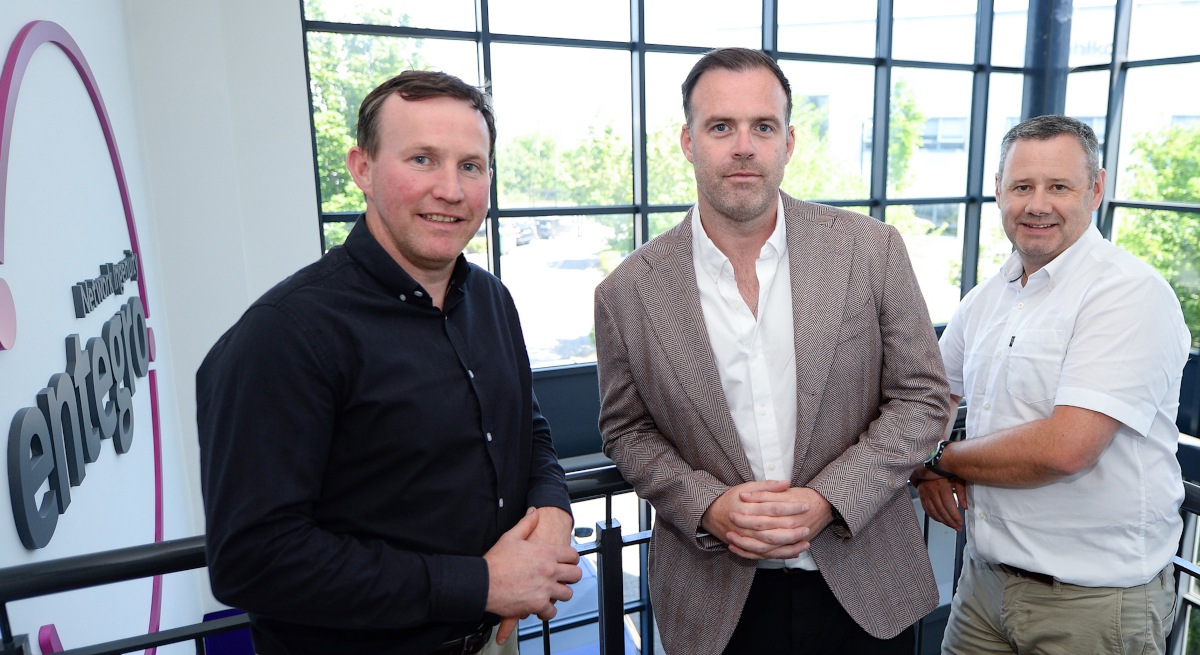
Entegro is extending its expertise in fibre telecommunications and network infrastructure by moving into the renewable energy sector.
Entegro, a Kilkenny-based engineering group, has announced the acquisition of renewable energy specialist Acel Energy, a solar energy company headquartered in Monaghan.
In acquiring Acel Energy, Entegro aims to further its expertise in the designing, building and operation of critical fibre telecommunications and network infrastructure. The move will involve the formation of a new entity – Entegro Energy – and there are also plans to grow its workforce from 200 employees to roughly 300.
Entegro said its acquisition also builds on an established partnership with high- and medium-voltage engineering specialist Nahanagan Electrical.
Advertisement
According to Entegro, the new deal will align complementary capabilities under a single roof, furthering expertise in the delivery of renewables generation, battery storage and high-voltage infrastructure solutions domestically and internationally.
Established in Kilkenny in 2019, Entegro, which is part of the Kyntus Group, has a presence in Ireland, the UK and the US, and delivers services from design and engineering through construction, commissioning and operation, with business units spanning fibre and telecommunications, transformation services and energy.
Commenting on the announcement, John Rooney, the group CEO for Entegro, said, “The board and I welcome the Acel team to the Entegro group. This is another milestone for Entegro as we continue to build a multi-utility business across telecoms, power and infrastructure to meet the demands of Ireland and beyond.
“Entegro has always sat at the heart of critical infrastructure, so moving into energy is a natural next step rather than a departure.
Advertisement
“Bringing Acel and Nahanagan together gives us the ability to design, commission and run energy systems end to end, from an Irish base and with a trusted team that keeps growing. That is the future we want to help build and to build well.”
Barry Sherry, the managing director at Acel Energy, added, “Declan McDonald and I built Acel on engineering-led renewable generation and storage, and joining Entegro lets us do that at a scale we could not reach alone.”
Don’t miss out on the knowledge you need to succeed. Sign up for the Daily Brief, Silicon Republic’s digest of need-to-know sci-tech news.
Runway no longer wants to be just another AI model company. It wants to become the infrastructure layer for generative media.
On Thursday, the startup launched Runway Media Router through Runway Dev, its developer platform, released earlier this month, that provides API access to a growing roster of third-party image, video and audio models alongside Runway’s own.
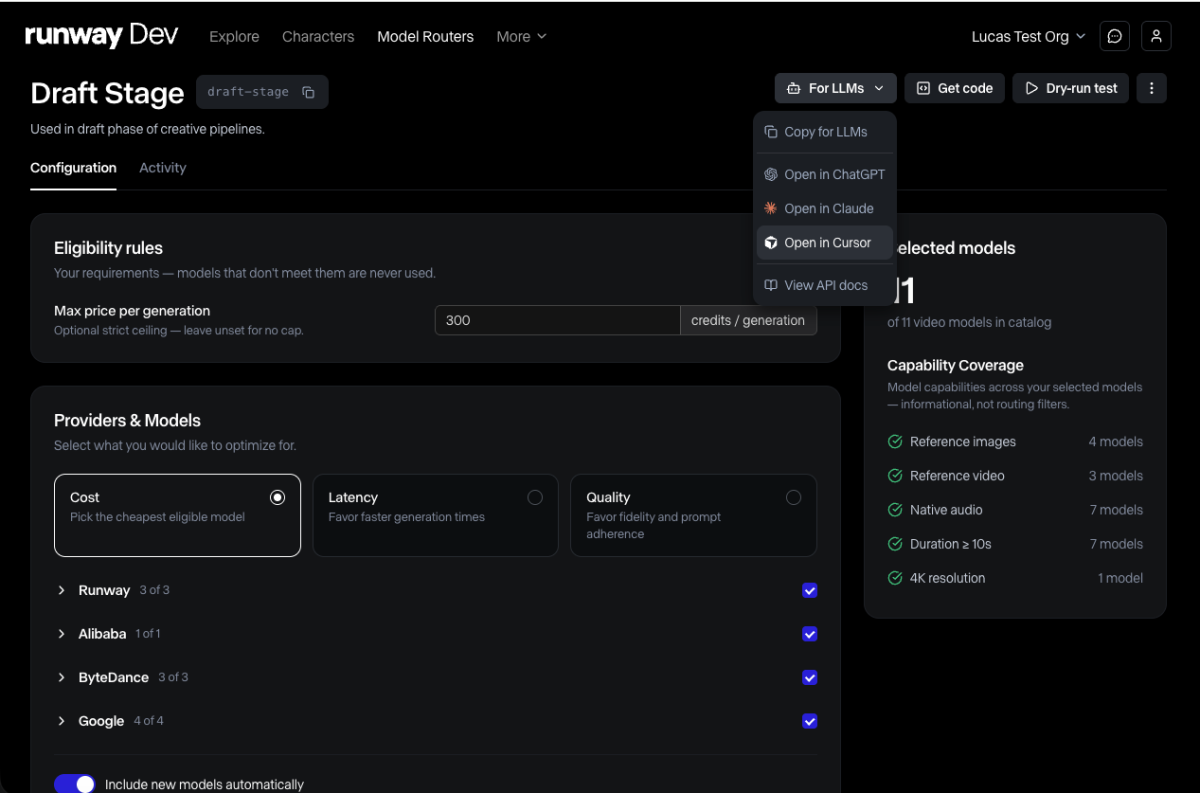
The Media Router is a tool that automatically selects the best image, video, or audio generation model for a request based on whether a developer prioritizes quality, speed or cost. While model routers have become increasingly common in the world of large language models, Runway says this is the first built specifically for generative media.
“The routing really fits into that overall promise of being the easiest one-stop shop for developers to integrate with any type of generative media model,” Anthony Maggio, Runway’s chief product officer, told TechCrunch.
Advertisement
The launch, shared exclusively with TechCrunch, marks another step in Runway’s evolution from an AI video startup into infrastructure for companies building with generative media. Through Runway Dev, customers including Adobe, Cloudflare, ElevenLabs, Expedia, Shutterstock, and Quora can build media generation directly into their own products using Runway’s API rather than sending their users to Runway’s own app or site.
The launch of the router comes as the number of generative media models has exploded, making it increasingly difficult and time-consuming for developers to evaluate new releases. Through the Runway Dev platform, developers can access the latest media models when they’re released.
“Most developers are not spending the time to really understand the capabilities of each of these models and where they excel or differ based on various types of outputs across video, image, and audio,” Maggio said. “The unique proposition we’re bringing to the table is all of that intelligence around what the best model is for each different use case, and meshing that with preference you apply around the context of your business.”
Maggio noted that Chinese generative media models are becoming increasingly popular. However, many businesses building their own products might not be comfortable working with models that come out of China, so they could, he said, potentially set a preference for American model providers — a preference that may become more common as the Trump administration explores bans and sanctions against Chinese open AI models.
Advertisement
That’s just one example of preferences that developers can set, though. Maggio says customers are mainly interested in routing the model to account for token pricing and quality. Token pricing has become a hot topic in 2026 as enterprises that went all-in on agentic AI felt the sting of high token bills. In the world of LLMs, model routing for token pricing has become common, so it only makes sense that routing for generative media would follow. The Media Router launch also comes weeks after Runway replaced its unlimited subscription plans with token-based pricing, a move that drew criticism from some users.
On the quality front, deciding what models provide the best quality for any given task isn’t as easy for generative media as it is with language models, Maggio says. That’s where the router’s intelligence layer kicks in. It’s based on the expertise Runway’s in-house creative team has developed in evaluating output across every media type — things like how video models handle motion, how image models handle composition, or how voice models handle lip syncing.
Runway had already done a lot of the work building that intelligence layer for its agent product, a conversational AI creative partner that Runway launched in May to help turn text prompts into fully edited multi-shot videos and marketing campaigns.
The Runway Media Router, Maggio says, takes the same routing technology Runway built for its own products and packages it for outside developers to use.
Advertisement
Runway’s strategy today reflects how fragmented and competitive the current generative media landscape is, and how much the startup needs to expand and pivot to stay competitive. Runway’s last AI video model release — Gen 4.5 — was in December. At the time, the model topped leaderboards, outperforming similar models from incumbents like Google. In the same month, Runway released its first world model.
Aside from an upgrade to its video editing model, Aleph 2.0, in May, Runway hasn’t dropped a new dedicated frontier video model in months. (TechCrunch has asked when the startup plans to release Gen-5.) Today, while Aleph 2.0 ranks among the leading video editing models according to Artificial Analysis, the company’s text-to-video and image-to-video models no longer lead the rankings. In the top 20 spots are models from heavy hitters like Google and China’s ByteDance and Alibaba.
Rather than asking developers to bet on a single model staying ahead, Media Router assumes that the best model will continue to change — and it keeps Runway in the game so that it can continue to build on the frontier. If not as the best new AI model, then as the best orchestration layer.
Anastasis Germanidis, Runway’s co-founder and co-CEO, acknowledged that the startup has been known for a long time primarily for “that end user piece,” but it had to build a full stack to get there, one that includes a developer platform, a creative tool suite, and an inference layer underneath it all. He says the company has seen increasing interest from companies for Runway to live across every part of that stack.
Advertisement
“You need great models underneath, but the orchestration increasingly matters a lot because people are building entire campaigns with those models, or they’re building entire finished multi-scene generations out of those models,” Germanidis told TechCrunch. “It’s something that we increasingly had to build — that intelligence layer that comes on top of the pure pixel models. The router is one way in which the benefits of that come to users.”
Or as Maggio put it more broadly: “If you zoom out at the one thing Runway has been doing since 2018, it’s that we’re deeply focused on research, while building for where we think the space is going at the same time.”
Got a sensitive tip or confidential documents? Rebecca Bellan is reporting on the inner workings of the AI industry, from the companies shaping its future to the people impacted by their decisions. Contact her securely, and off the record, on Signal at rebeccabellan.491or via email at rebecca.bellan@techcrunch.com from a non-work device.
When you purchase through links in our articles, we may earn a small commission. This doesn’t affect our editorial independence.
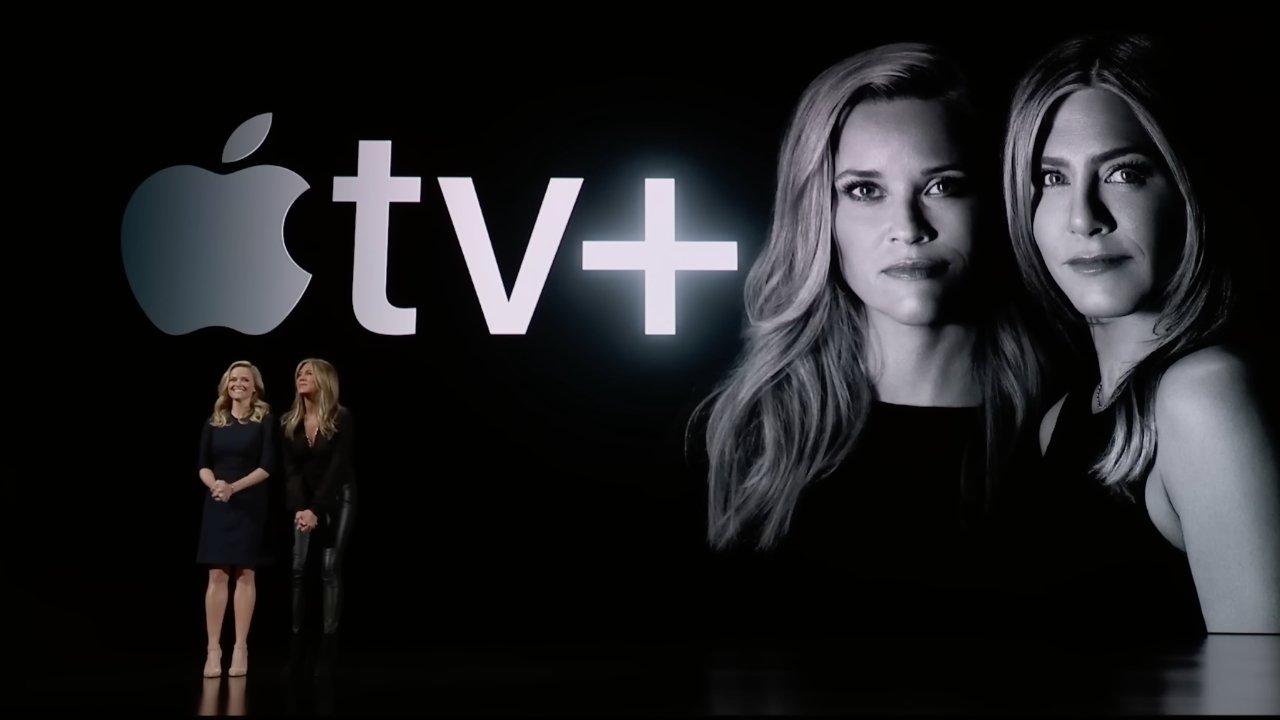
Jennifer Aniston and Reese Witherspoon helped bolster fledging Apple TV with “The Morning Show” in 2019. The final season of the award-winning drama has been announced, bringing an era to a close.
Eddy Cue wanted “The Morning Show.” Long before the service was announced in March 2019, or debuted in November that year, Cue was looking for shows that would bring the streamer attention, and “The Morning Show” was being shopped around.
Created by Jay Carson and developed by Kerry Ehrin, the drama was being executive produced by its stars, Jennifer Aniston and Reese Witherspoon. “I thought the show was amazing,” Cue later toldVariety, “but… I came down to the realization that we weren’t going to get it, because somebody would always offer more.”
“But I thought we were special, and so I asked for a meeting with [Aniston and Witherspoon],” he continued. He says he asked “whether they thought they were going to make one of the best shows ever in television,” and they said yes.
Advertisement
“So do I,” he told them. “That means you need to do it with us, and the reason you have to do it with us is because we don’t have any other shows. So we believe 100% in what you’re doing, and we’re going to launch our service on that.”
Launching Apple TV+
The first star on stage at the launch of Apple TV+, as it was originally known, was Steve Spielberg. Then the lights went down, there was a long pause, and the spotlight came up on Reese Witherspoon and Jennifer Aniston.
“Reese and I are so proud to be a part of this exciting launch with Apple, officially announcing our new project, ‘The Morning Show,’” said Aniston.
“So in ‘The Morning Show,’ said Witherspoon, “we pull back the curtain on the power dynamics between men and women in the high-stakes world of morning news shows.”
Advertisement
“It’s a real insider’s view into the lives of the people who help America wake up every day,” she continued before handing back to Aniston.
“And through the prism of those under-slept, over-adrenalized people behind and in front of the camera, we take an honest look at the complex relationships between women and men in the workplace, and we engage in the conversation people are a little too afraid to have unless they are behind closed doors.”
That’s “The Morning Show,” and that’s exactly where the show went over what we now know will be its eight-year run.
As with many Apple TV series, “The Morning Show” was given a two-season order right at the start. But it has not aired as consistently as later hits such as “Slow Horses,” which runs annually.
Advertisement
Instead, “The Morning Show” has aired only four seasons so far, with its fifth and final one now in production to air in 2027. It’s worked out as a new season every second September, and perhaps because of that, each run has been a critically-acclaimed event event.
The show didn’t ignore how comparatively slowly it was being released, either as the story moved on two years between seasons three and four. It’s not known yet when the final season’s storylines will pick up, but it is known that it will feature new characters played by Jeff Daniels, Jesse Williams, and more.
Those new faces will join the regulars including Aniston, Witherspoon, and Billy Crudup. Crudup is just one of the actors to have won awards for the series, but he holds the distinction of having won the very first Emmy that Apple TV ever received.
If the new season keeps to the existing format, it will bring the total number of episodes up to 50. It’s a small number compared to network TV shows of the past. Over the same time frame, for example, Aniston’s “Friends” cranked out 194 half-hour episodes.
Advertisement
But maybe this what has made “The Morning Show” so consistently strong. Seasons are released when they’re ready, more or less, instead of having to hit specific air dates.
The seasons are long enough, at 10 episodes each, to tell a meaty story. But they’re not so long as to need those tales being stretched out unnaturally.
Back when hour dramas ran for upwards of 22 episodes per season, there used to be a reluctant belief on the part of producers. One third of your season’s episodes could be great, they would say, one third might be okay, but try as you might, one third would be terrible.
So far “The Morning Show” has avoided that trap. Here’s looking forward to seeing if it can get to the finishing line as strongly as it has run so far.
Advertisement
Apple has not announced any details of the last season yet, but if it follows form, the season will run in September 2027. And we’ll have to wait until August 2027 to even see the first trailer.
A great many drones out there, whether homebuilt or store-bought, follow the same basic format. Four motors, some kind of controller, and a lithium-polymer battery supplying the juice to keep everything in the air. It’s a format that produces a remarkably capable air vehicle, suitable for everything from high-speed camera work to urban search and rescue.
With that said, the format does have its limitations. [Suryansh Sharma] has been working on alternative designs for fancy and interesting drones that are half quadcopter and half blimp, and he came to Hackaday Europe 2026 to tell us all about it.
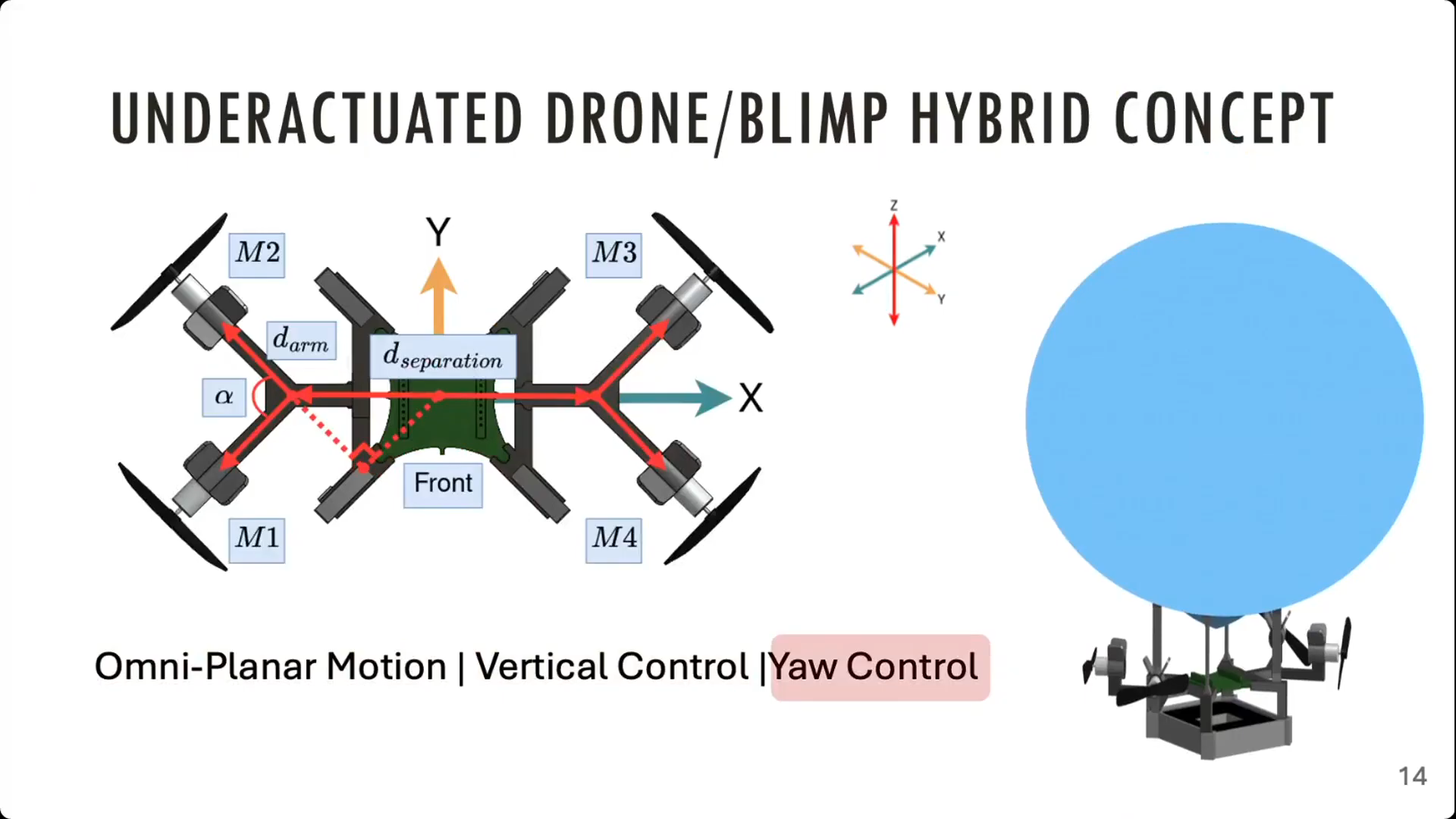
Combining a multirotor design with a balloon for additional lift proved useful for certain applications. Despite the motors all being mounted in the horizontal plane, vertical translation is possible by firing the right combination of motors, due to convenient aerodynamic effects. Credit: slides
[Suryansh]’s talk took in a number of drone projects which he has been involved with. The first was the creatively-named BEAVIS, or Balloon Enabled Aerial Vehicle for IoT and Sensing. This was a project that aimed to tackle one of the greatest limitations of the common multirotor drone. Namely, as [Suryansh] so elegantly puts it, they “suck when it comes to staying in the air.” This is for a very simple reason—much like the helicopter, a multirotor drone must expend energy continuously to generate lift by spinning its propellers. Conventional multirotors don’t have wings that generate lift from forward motion, and any sort of gliding or similar behavior is basically impossible. Continual energy expenditure is the only thing keeping a multirotor aloft.
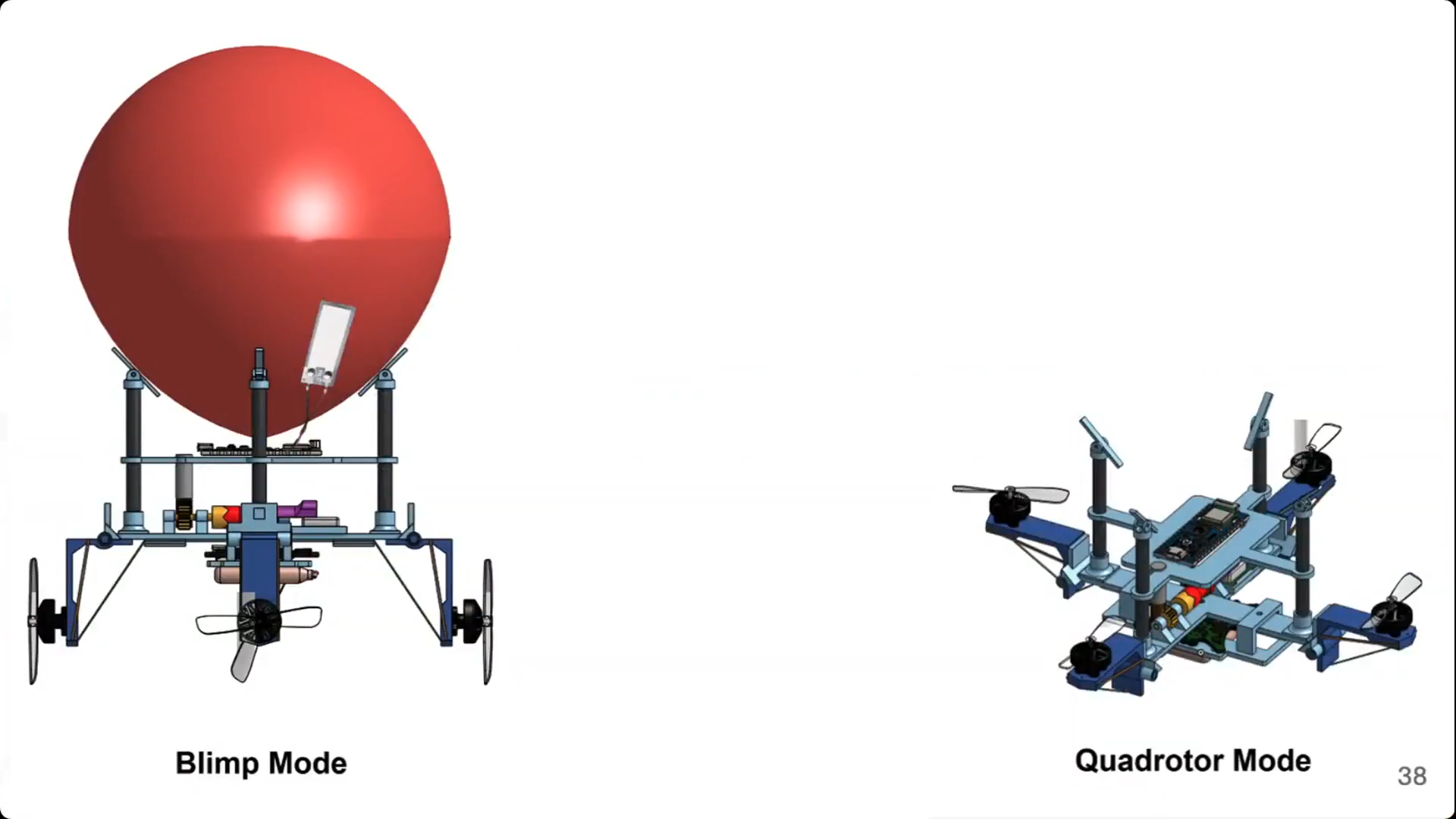
The point of BEAVIS was to fix this by combining drone tech with a simple lighter-than-air balloon. It’s an interesting combination, because a multirotor drone has excellent maneuverability and agility, but terrible endurance. A lighter-than-air balloon is quite the opposite, which has excellent endurance while suffering in all other respects. The BEAVIS concept outfits a small balloon with four motors in a split-cross configuration, which allows for planar translation as well as the ability to control yaw of the craft. With all four motors mounted horizontally in the same plane, it may seem like vertical control is not possible. However, by turning on two opposing props, it’s possible to create a low-pressure region beneath the craft which tends to push it downwards. Meanwhile, if you turn all four props on in the right directions, you create a high pressure region underneath the balloon which pushes the craft up. With the balloon, it has the benefit of being able to just hang in the air without continually burning through battery power. Endurance times of well over an hour were possible with this build, compared to maybe less than ten minutes for a comparable pure multirotor.
Advertisement
BEAVIS was developed into JANUS, a drone with an actuator system that pivots the motors so that it can fly in a pure quadcopter mode in the event of balloon failure. Credit: slides
BEAVIS was eventually developed into Janus— described as a “morphing quadrotor blimp with balloon failure resilience.” The goal was to build a craft that was viable for deployment in the real world, and that could undertake mobile ecological sensing work. The main difference to the previous design was that it would no longer solely fly as a balloon with horizontally-mounted props. Instead, Janus would feature a mechanism to allow the rotors to be positioned in the vertical axis to allow for conventional multirotor flight. This was key to allowing the craft to fly both as a lighter-than-air craft, and to survive and keep flying in the event the balloon burst or was otherwise damaged. The build was eventually deployed in Kenya to aid in ecological data collection for conservation efforts.
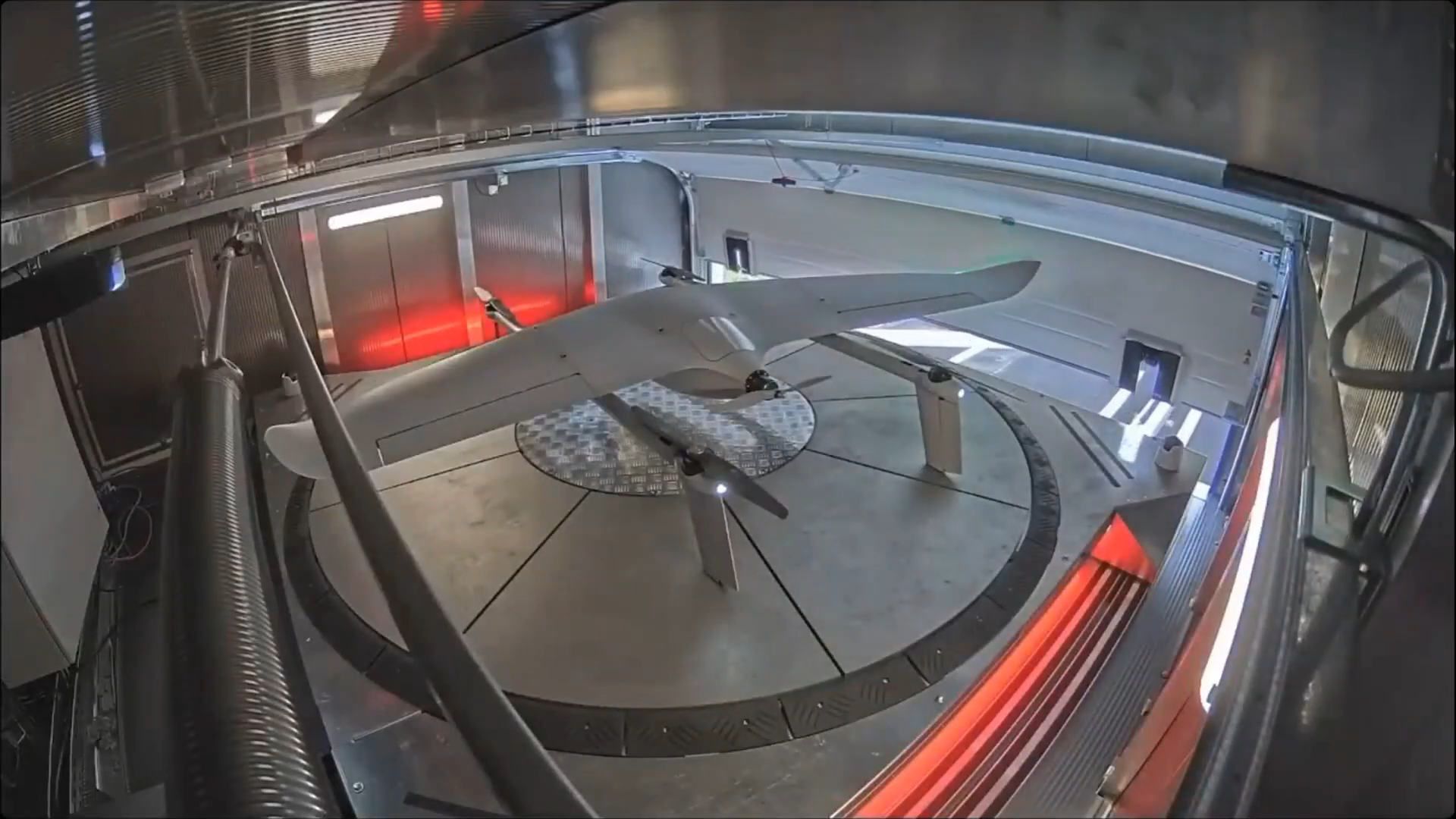
The Avy emergency response drone uses a metal launchpad and pogo pins to provide electrical power to keep the batteries topped off at all times. Credit: slides
[Suryansh] has been involved in other drone-related projects, too. Open Gimbal was a particularly interesting effort, involving the construction of a bench-testing rig for developing small multirotor drone craft. The 3-DoF platform offered unrestricted rotational freedom, allowing for a craft to be put through its paces in a controlled way without requiring a large open space for free flight. [Suryansh] also discusses his work with a company called Avy, which specializes in VTOL drones with a focus on emergency response roles. The company has deployed drones that use multirotor technology to launch vertically, while relying on fixed wing aerodynamic elements to extend range and improve efficiency for longer flight times. The drones feature a neat charging setup, wherein pogo pins on the fins pick up power from the metal launchpad to ensure that batteries are fully charged and the drone is ready to go at all times.
Ultimately, multirotor drones have taken on their basic form for good reason. With that said, as [Suryansh]’s talk explains, modifications to the form can have great utility when made to suit a particularly specific mission or application. If you’re developing a drone for a certain purpose, and you’re running into hard limitations, you might try thinking outside the box to make something more fitting for your goals.
Scientific American reports that the 2026 Fields Medals went to four mathematicians for work ranging from the theory of knots to the motion of fluid: The Fields Medals went to Hong Wang of New York University and France’s Institute of Advanced Scientific Studies (IHES), Yu Deng of the University of Chicago, John Pardon of Stony Brook University and Jacob Tsimerman of the University of Toronto. In the awards’ 90-year history, Wang is only the third woman to win one, after mathematicians Maryam Mirzakhani and Maryna Viazovska in 2014 and 2022, respectively. Wang and Deng represent the prizes’ only Chinese-born recipients besides mathematician Shing-Tung Yau, who won a Fields Medal in 1982.
Hong Wang co-proved the three-dimensional Kakeya conjecture, establishing a fundamental limit on how little space is needed to rotate a line through every possible direction. Mathematician Nets Katz called it the field’s “holy grail” problem and said the achievement made her “a central figure” in the area.
Yu Deng and his collaborators reconciled the microscopic and macroscopic mathematics of fluid motion, proving that equations describing chaotic molecular interactions and large-scale fluid behavior are fundamentally connected. N.Y.U. mathematician Scott Armstrong called it “a truly spectacular, singular result.”
John Pardon made an early breakthrough in knot theory by proving that certain sequences of knots can have arbitrarily large “distortion,” a measure of how difficult they are to traverse. Princeton mathematician David Gabai said the problem had “attracted much interest among mathematicians during the previous 25 years.”
Jacob Tsimerman and two collaborators proved the Andre-Oort conjecture, giving mathematicians a stronger way to understand special points on complex geometric objects known as Shimura varieties. Collaborator Jonathan Pila described him as “a brilliant mathematician” known for his “brilliance and resourcefulness.” Tsimerman has also advanced Hodge theory and hopes pure mathematics can help researchers better understand AI.
The U.S. government is warning that Iranian state-backed hackers are actively breaking in and disrupting industrial control systems at American water and energy providers. This new alert comes months after federal agencies warned of an escalation in hacking from Iranian actors amid the ongoing war.
In an advisory updated Wednesday, the FBI, the NSA, the Department of Energy, and CISA said Iranian hackers were targeting programmable logic controllers on internet-connected operational networks, allowing them to manipulate data on their displays, causing outages and disruption.
The Iranian hackers were initially discovered earlier this year to be targeting controllers made by Rockwell, but the advisory has now expanded the types of industrial control systems under attack to include products from Schneider Electric and Siemens.
The agencies warn that “potentially all internet exposed” industrial control systems may be affected, and urged critical infrastructure owners to take action. Per the advisory, the Iranian-backed hackers were “conducting this activity to cause disruptive effects within the United States,” likely in response to the ongoing war between Iran, and the U.S. and Israel.
Advertisement
According to the FBI, the hackers broke into one critical infrastructure provider and changed the controllers’ programming logic to disabled processes that handled critical shutdowns and alarms. The feds said this allowed “systems to enter unsafe conditions without notifying operators of the anomalies.”
This is the latest in a series of cyberattacks launched by Iranian government hackers and their proxies across the region since the start of the war in February.
Handala also took credit for a data breach affecting California water provider Cal Water in June, and claimed it could have disrupted the water supply (without providing evidence). The water provider said that it saw no evidence of unauthorized access to its operational networks, which control the water supplies.
Advertisement
When you purchase through links in our articles, we may earn a small commission. This doesn’t affect our editorial independence.
Primate Labs released Geekbench 7 for macOS, iOS, Android, Windows, and Linux, redesigning its cross-platform benchmark to better reflect how current software uses CPUs and GPUs.
The update changes Geekbench’s multi-core methodology and adds workloads for artificial intelligence, media processing, gaming, and content creation. Primate Labs says the revisions account for increasingly demanding computing tasks and the larger data sets handled by modern devices.
Geekbench 7 remains free for personal use.
Geekbench 7 scores aren’t compatible with Geekbench 6
Geekbench scores can look like a universal measurement of processor performance, but the numbers only have meaning within the version of the benchmark that produced them. A score from Geekbench 7 can be compared with another Geekbench 7 result, but not directly with a result from Geekbench 6.
Advertisement
Because Geekbench 7 changes its workloads, data sets, and multi-core methodology, its results shouldn’t be treated as directly comparable with Geekbench 6 scores.
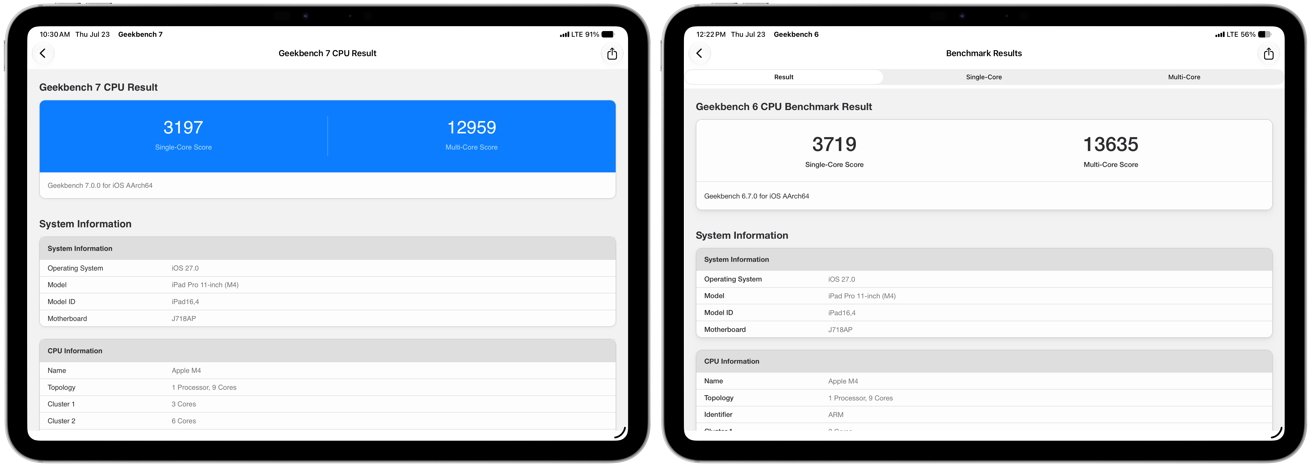
We ran both versions on the same 11-inch M4 iPad Pro using iPadOS 27. Geekbench 6 reported a 3,719 single-core score and a 13,635 multi-core score, while Geekbench 7 returned 3,197 and 12,959, respectively.
Those results make the same iPad appear about 14% slower in single-core performance and 5% slower in multi-core performance. The hardware didn’t lose performance between tests. Geekbench 7 changed what it measures and how it calculates its scores, demonstrating why results from the two versions can’t be placed on the same performance chart.
Comparing results between Geekbench 6 and Geekbench 7
A device’s Geekbench 6 result should therefore remain in charts and comparisons built around Geekbench 6. New Geekbench 7 scores will need their own baseline as results accumulate across different processors and devices.
Geekbench 7 changes how it measures multi-core performance
The difference between Geekbench 6 and Geekbench 7 results reflects more than a recalibrated scoring scale. Geekbench 7 also changes which workloads contribute to its multi-core score.
Advertisement
Geekbench 7 only runs a workload in multithreaded mode when the task it represents is also multithreaded in real software. Primate Labs says treating every workload as multithreaded can inflate benchmark results without accurately showing how a device handles everyday apps.
Not every real-world task benefits from being divided across all available processor cores. The HTML5 Browser test, for example, isn’t included in the multithreaded suite because Primate Labs says browsers are generally single-threaded or lightly threaded.
The revised approach should make Geekbench 7’s multi-core score more representative of how software uses a processor. It also makes the methodology behind the score more important when comparing devices instead of relying on the number alone.
A new video workload encodes screen-sharing footage with AV1, modeling the technology behind screen-sharing features in videoconferencing apps. Another compresses music and spoken audio with the Opus codec, reflecting work performed by voice-recording and podcast apps.
Advertisement
Geekbench 7 also decodes video and audio while generating live captions with the Whisper speech-recognition model. The workload represents video playback with automatic subtitles enabled rather than testing speech recognition by itself.
Recognizable tasks give Geekbench scores a clearer relationship to common software features.
A new Game Physics workload uses the Jolt Physics engine found in popular video games. Primate Labs has also expanded its Photo Editor test and updated the Photo Library workload to import and process JPEG XL and DNG images.
The recognizable tasks give Geekbench scores a clearer relationship to common software features, although no benchmark can reproduce the performance of every app or workflow.
GPU testing adds AI and content-creation workloads
Geekbench 7 shifts its GPU benchmark toward machine learning, video, and content-creation tasks. New GPU workloads track faces and apply live video effects, upscale images with machine learning, and blur backgrounds in videoconferencing streams.
Each workload reflects a feature commonly used in social media, photo-editing, or communication apps. The benchmark also adds RAW image processing, LUT-based video color grading, path tracing, and fluid simulation.
Advertisement
CUDA joins Metal, OpenCL, and Vulkan as a supported GPU API. The addition allows Geekbench 7 to test Nvidia GPUs through CUDA, while Apple devices continue to use Metal.
Larger data sets make Geekbench 7 more demanding
Primate Labs says computing workloads and data sets have grown more demanding since it released Geekbench 6, prompting the company to increase the amount and variety of data processed by Geekbench 7.
The File Compression test now handles a larger and more varied collection of source code, object code, and text documents. Its PDF Viewer workload includes files ranging from park maps to technical documents and academic papers.
Developer and image-processing workloads also use more assets and additional image formats. The changes are intended to better reflect the files and projects handled by current phones, tablets, and computers.
Advertisement
Geekbench 7 pricing and availability
Geekbench 7 is available now for macOS, iOS, Android, Windows, and Linux. The benchmark is free for personal use across supported platforms.
Primate Labs is also offering 20% off Geekbench 7 Pro through August 6. The paid version adds features intended for professional and commercial use, including command-line tools and automated benchmark deployment.
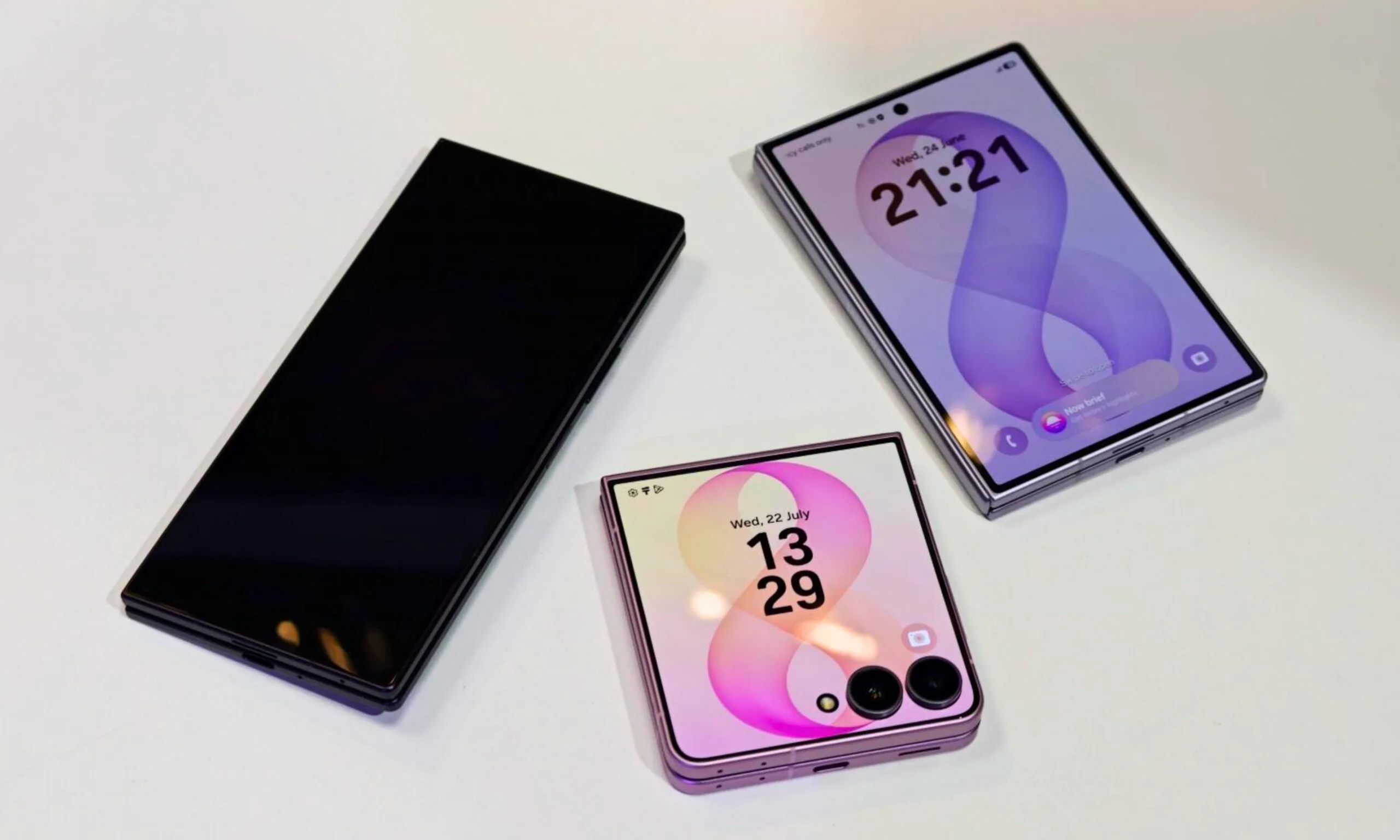
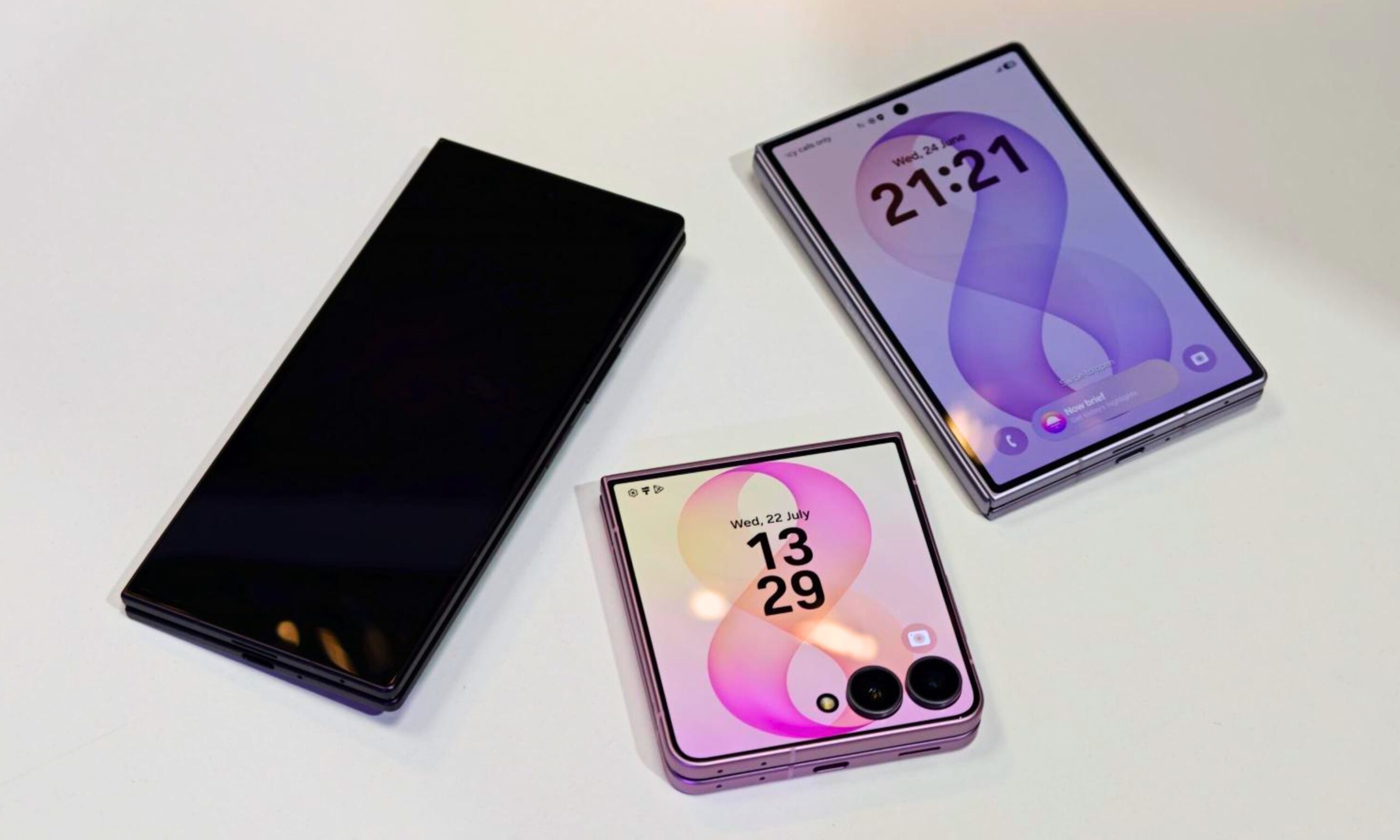
After years of reviewing foldable smartphones, I have learned that choosing one involves much more than what looks pretty or how large you want. Book-style foldables are usually sold as productivity machines, while flip phones cater to people who value portability. Samsung’s latest lineup complicates that choice by introducing two very different book-style models alongside its familiar clamshell.
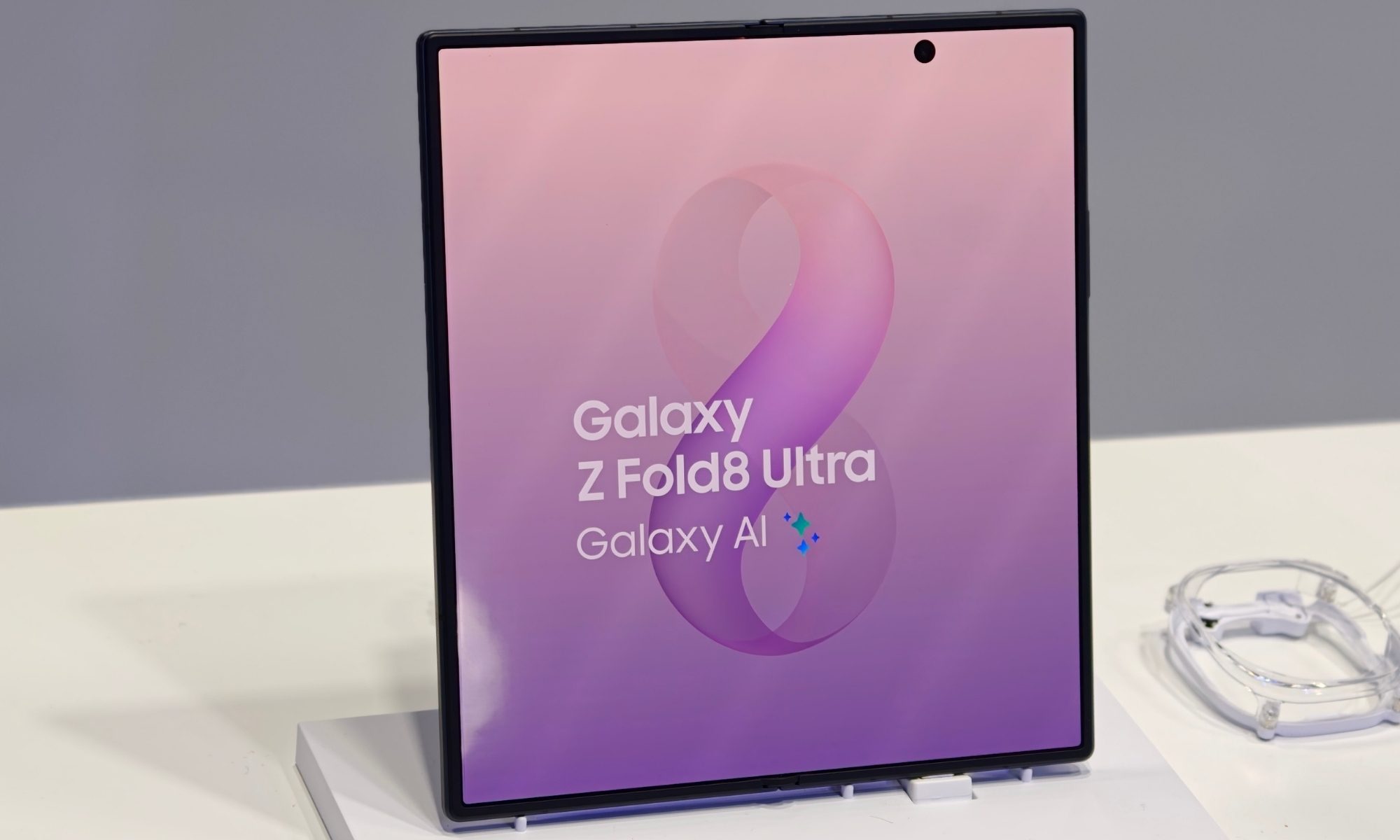
Most of their shared specifications fade into the background once you start using them. Their shapes and screens have a much greater impact on daily life. So here’s how I’d make a decision when choosing between the new Galaxy Z Fold 8 Ultra, Galaxy Z Fold 8, and Galaxy Z Flip 8.
Nadeem Sarwar / DigitalTrends
Samsung Galaxy Z Fold 8 Ultra vs Galaxy Z Fold 8 vs Galaxy Z Flip 8: Specs
Snapdragon 8 Elite Gen 5 for Galaxy, 12GB or 16GB RAM, 256GB, 512GB, or 1TB storage
Snapdragon 8 Elite Gen 5 for Galaxy, 12GB or 16GB RAM, 256GB, 512GB, or 1TB storage
Snapdragon 8 Elite Gen 5 for Galaxy, 12GB RAM, 256GB or 512GB storage
Cameras
Rear: 200MP main camera, 50MP ultrawide, 10MP telephoto Front: 10MP and 10MP
Rear: 50MP main camera, 50MP ultrawide Front: 10MP and 10MP
Rear: 50MP main camera, 12MP ultrawide Front: 10MP
Battery and Charging
5,000mAh, 45W wired, 20W wireless
4,800mAh, 45W wired, 20W wireless
4,300mAh, 25W wired, 15W wireless
Size and Weight
Unfolded: 158.4 x 143.2 x 4.1mm Folded: 158.4 x 72.8 x 8.9mm 215 grams
Unfolded: 123.9 x 161.4 x 4.5mm Folded: 123.9 x 81.9 x 9.7mm 201 grams
Unfolded: 166.9 x 75.4 x 6.1mm Folded: 85.7 x 75.4 x 13.1mm 180 grams
Price
$2,099
$1,899
$1,199
Galaxy Z Fold 8 Ultra: The power-user choice
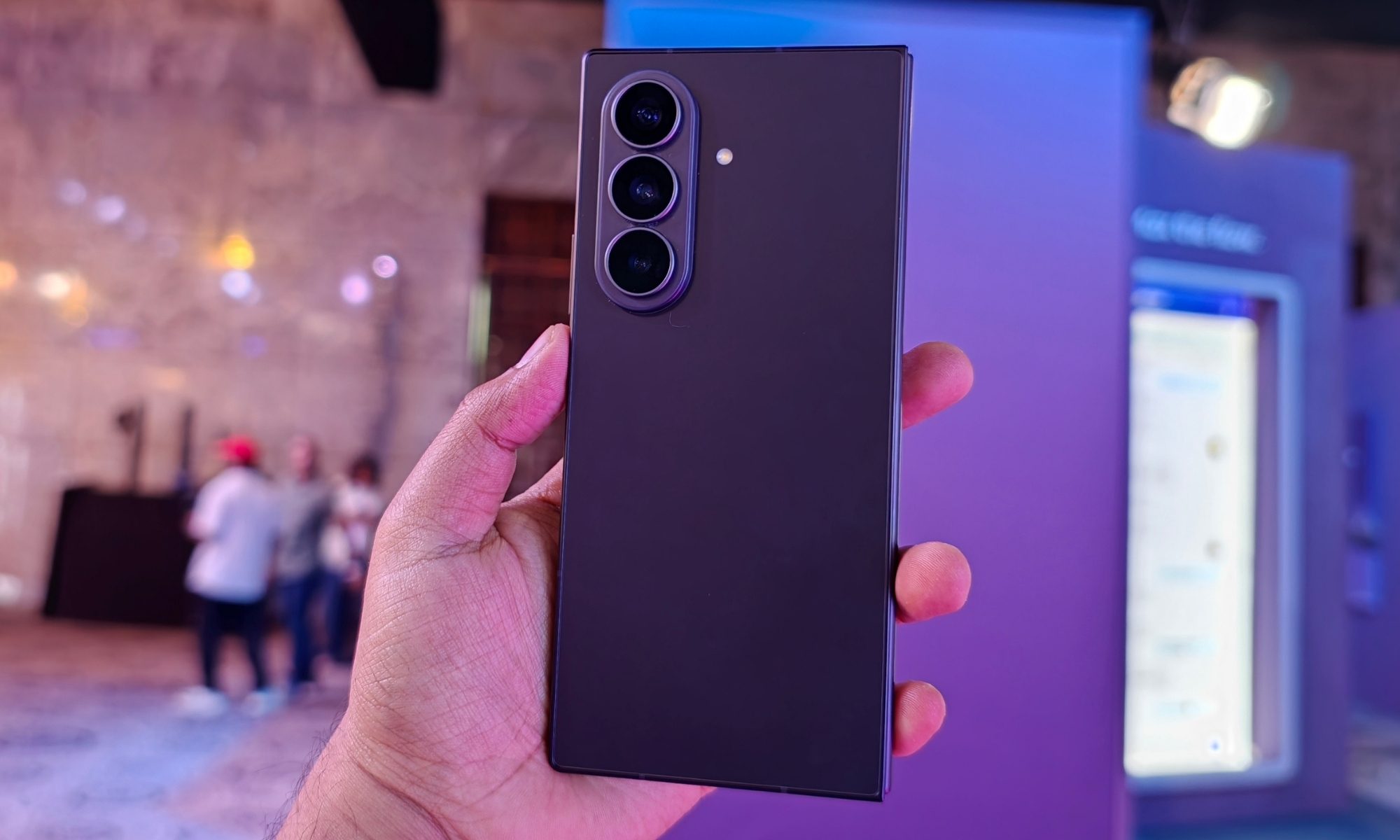
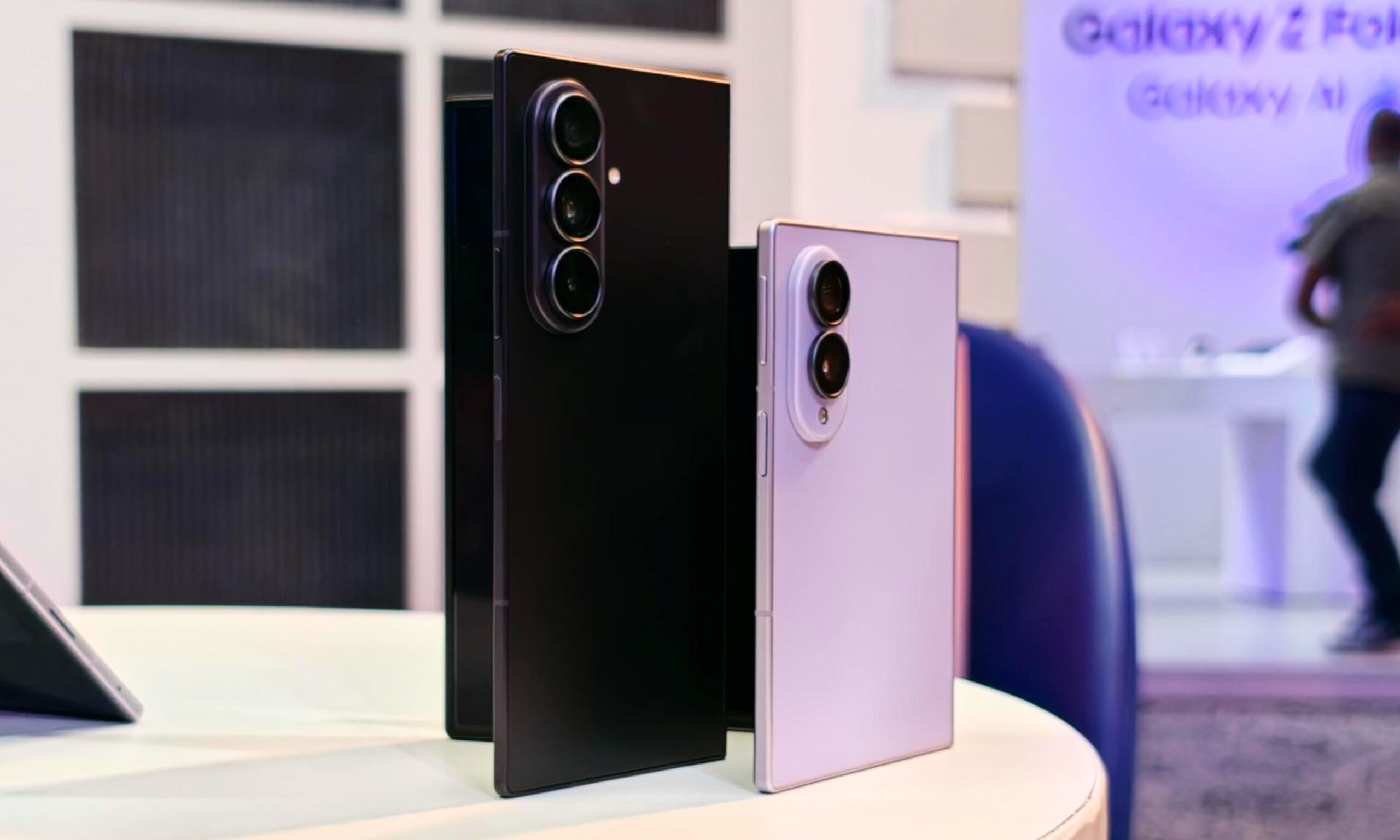
The Galaxy Z Fold 8 Ultra is the easiest model to recommend to someone who wants everything Samsung can put into a foldable. Its overall experience represents another measured step beyond its predecessor. Samsung has refined the design and improved the hinge that also reduced the crease.
The display appears flat, and the crease is hardly visible.Nadeem Sarwar / Digital Trends
None of these changes completely reinvent the device, but they polish an already mature formula–and this familiarity works in its favor. The tall cover display operates much like a conventional smartphone, and opening the device gives you a large canvas for running several apps together.
This is the model I would pick for serious multitasking. You can keep a document beside a browser, respond to messages while watching a video, or move information between apps without constantly switching windows. The 8-inch inner screen provides enough screen real estate to never feel cramped.
Nadeem Sarwar / Digital Trends
It also has the strongest camera system of the three. The 200MP main camera, 50MP ultrawide, and 3x telephoto give it the versatility expected from an expensive flagship. Foldable cameras often trail their slab-phone counterparts, so having strong main and ultrawide cameras makes the Ultra more reliable as your daily driver. The 5,000mAh battery is Samsung’s largest in a foldable, while 45W charging finally reduces some of the frustration around topping one up.
Galaxy Z Fold 8: The new multimedia pick
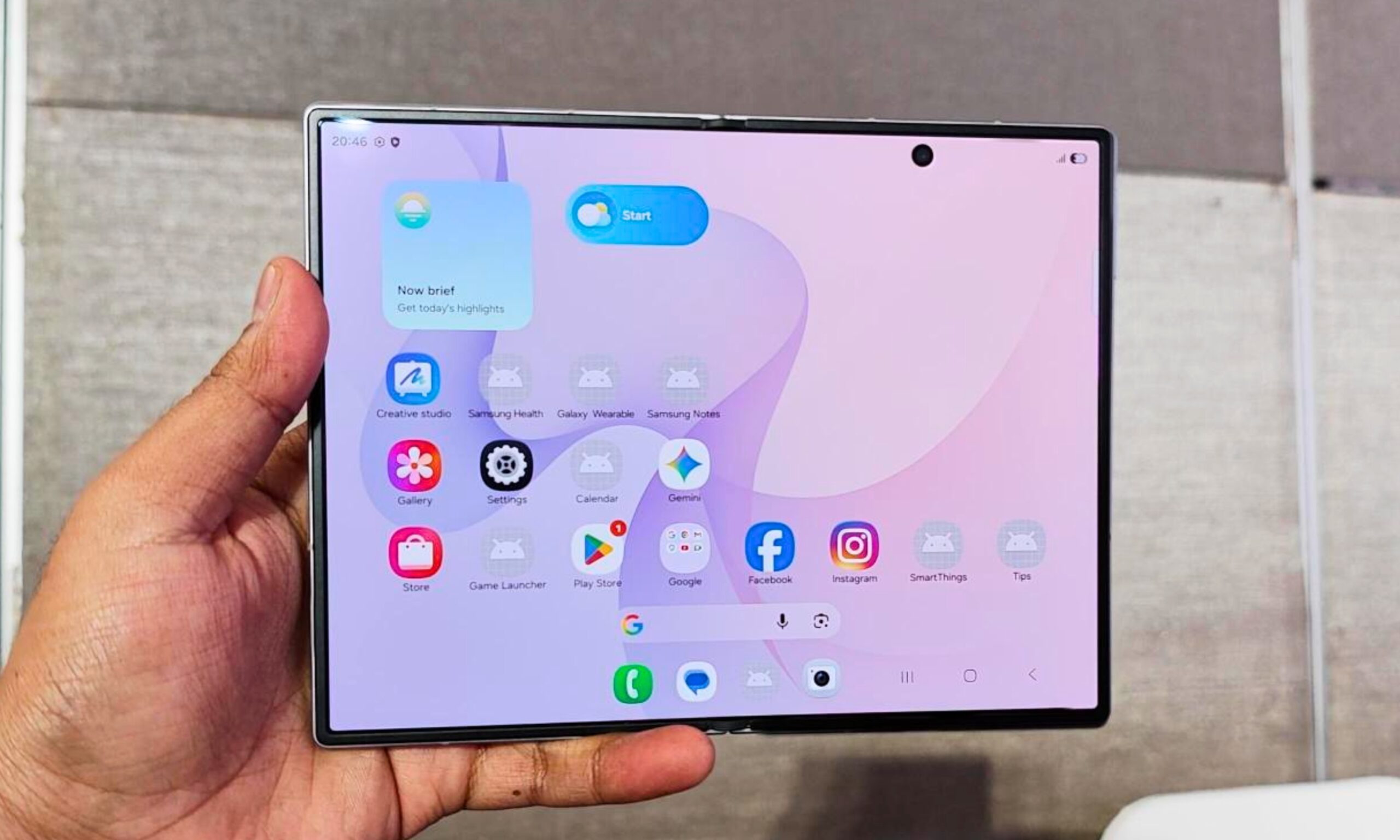
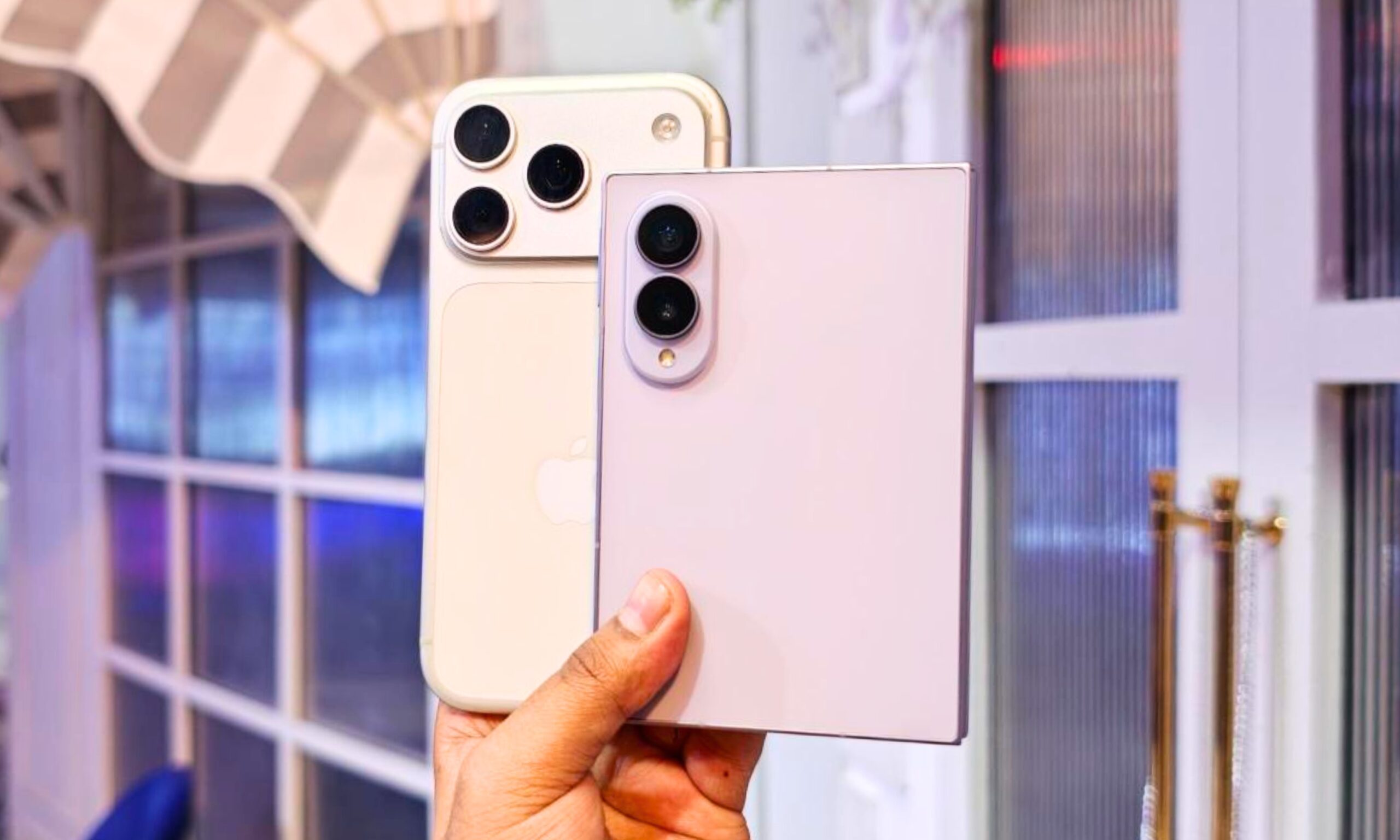
The standard Galaxy Z Fold 8 has the most unusual design of the lineup. Its short, wide body resembles a passport more than a traditional smartphone. The 5.5-inch cover screen comes closer to a compact device. Though its squat proportions require a little adjustment. Opening it reveals the reason Samsung chose this shape.
Advertisement
Nadeem Sarwar / DigitalTrends
The 7.6-inch inner screen has a 4:3 aspect ratio, making it especially well suited to photos, videos, websites, and social content. Pictures fill the display more naturally, while movies and videos gain a wider viewing area than they would on the taller Ultra.
So this is easily my main choice if I just consider the multimedia advantages. Its inner screen provides an excellent space for a number of different tasks. Watching pictures and videos finally feels natural on Samsung’s foldable. I can even picture reading e-books, browsing, or playing games fitting in naturally as well. At 201 grams, it is also considerably easier to carry than many large foldables. For context, the Motorola Razr Fold I’m currently using measures over 40 grams heavier. This even makes it lighter than the iPhone 17 Pro.
Nadeem Sarwar / DigitalTrends
Multitasking remains part of the experience. Two apps can still sit beside each other, and the device has the same flagship processor as the Ultra. Except the different aspect ratio gives each window less vertical room. So complex multi-app layouts may not flow as naturally. Photography is another compromise. The Fold 8 has capable 50MP main and ultrawide cameras, but the telephoto is dropped entirely. Choose this one when the idea of a wider, more portable foldable matters more than maximum productivity or camera versatility.
Galaxy Z Flip 8: The compact-phone alternative
The Galaxy Z Flip 8 is the easiest choice for someone who has little interest in carrying a book-style foldable. I have always preferred compact phones, and a clamshell remains one of the best ways to put a large display into a small pocket. The Flip 8 opens into a conventional 6.9-inch smartphone, then folds into a much smaller square when you are finished.
Nadeem Sarwar / Digital Trends
Samsung has also made the 4.1-inch FlexWindow more useful. One UI 9 brings a proper app tray, recent apps, improved widgets, and access to more everyday functions without opening the phone. While there are limitations, Samsung’s most complete attempt at making the cover screen useful beyond notifications and camera previews.
A flip phone should take advantage of its clamshell design, and the Z Flip 8 is finally the complete package now. The Flip 8 also suits people who enjoy taking selfies and group pictures. Flex Mode can prop the phone up without a tripod, while the cover display lets you frame shots with the superior rear camera.
Nadeem Sarwar / DigitalTrends
Its battery, charging speeds, and camera selection sit below the two Fold models. But coming in at hundreds of dollars cheaper, it is a worthwhile trade for someone whose priorities begin with portability.
Three foldables for three very different people
The Galaxy Z Fold 8 Ultra is the easy choice for power users. Its larger displays, stronger camera system, bigger battery, and familiar proportions make it the most complete device of the three.
Advertisement
Samsung’s regular Fold 8 serves a more specific audience. Its wider screen is excellent for media, photos, reading, and anyone drawn to its unusual compact shape.
Nadeem Sarwar / Digital Trends
The Galaxy Z Flip 8 remains my pick for compact-phone fans. It slips into smaller pockets, works like a conventional phone when open, and finally gives the cover screen a more meaningful role.
Samsung has given each foldable a reason to exist. Your choice comes down to the experience you value most: maximum capability, better media viewing, or true pocketability.


























































You must be logged in to post a comment Login