

Business
Adani Green shares tumble 5% after Q1 results. Here’s why Bernstein has an Underperform rating

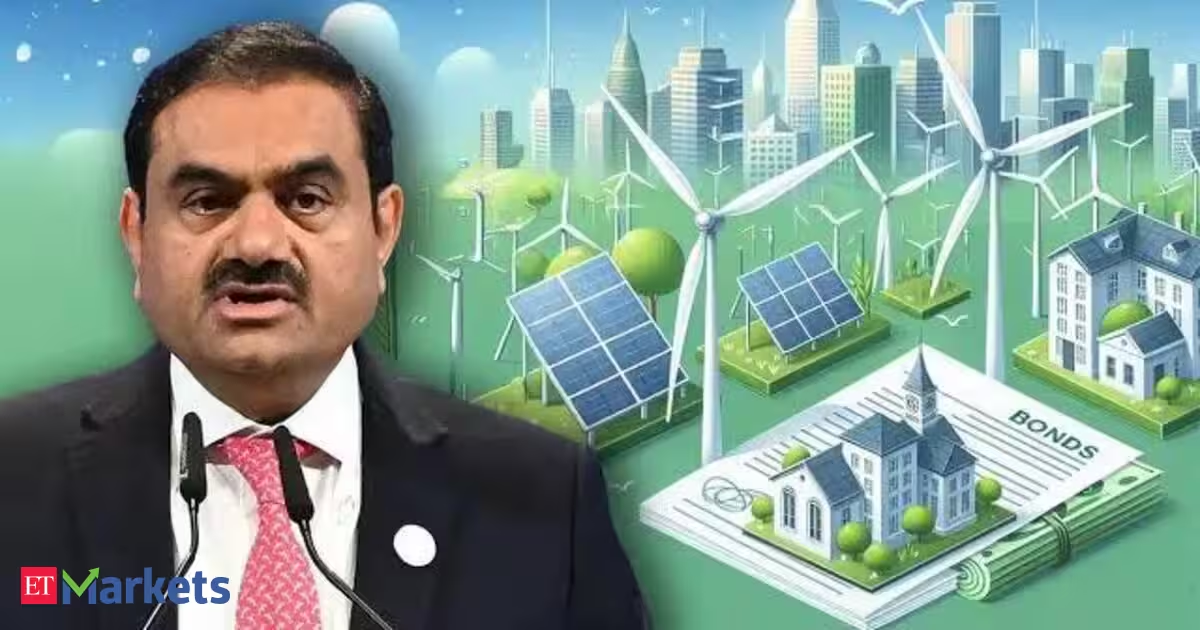
Revenue from operations in the reporting period increased 16% YoY to Rs 4,663 crore. Revenue from power supply rose 29% YoY to Rs 4,280 crore from Rs 3,312 crore.
Adani Green said that its performance was driven by capacity expansion and strong operating performance. The company’s operational capacity rose 27% YoY to 20,142 MW as of June 2026, compared with 15,816 MW a year earlier and 19,294 MW at the end of March 2026.
Energy sales rose 30% YoY to 13,657 million units in Q1FY27, helped by fresh greenfield capacity additions and higher generation. The company added 848 MW of capacity during the quarter and 4,327 MW on a YoY basis.
Also read: FIIs are leaving Adani Enterprises. Here’s who is buying

Adani Green’s EBITDA from power supply rose 33% YoY to Rs 4,122 crore from Rs 3,108 crore. The EBITDA margin stood at 94%, compared with 93% a year earlier and 91% in the March quarter.
Why Bernstein dislikes Adani Green
Bernstein retained its Underperform rating on Adani Green, saying the company remains the best player in the renewable energy space but raising concerns over its new structure for the commercial and industrial segment.
The brokerage highlighted Adani Green’s decision to allocate its entire merchant generation capacity, comprising 4 GW of operating and planned capacity, along with its entire battery storage capacity of 10 GWhr coming online this year, to Adani Energy Solutions on a long-term fixed tariff basis.
According to Bernstein, the structure allows Adani Green to focus on execution while maintaining its existing return hurdles, with Adani Energy Solutions selling the power forward to industrial customers such as data centres. While Bernstein said Adani Green has remained well ahead of its peers in renewable energy, it believes a reasonable portion of the potential upside has shifted to Adani Energy Solutions following the transaction.
Apart from this, execution remained on track, although curtailment reduced EBITDA by 5-7%, which the company expects to normalise in the second half.
Adani Green Q1 management commentary
CEO Ashish Khanna said the company began FY27 with strong momentum and crossed the 20 GW operational capacity milestone. “As renewable penetration rises and power demand continues to grow, storage will play a critical role in ensuring round-the-clock reliability and grid stability,” he said.
Read more: India needs 2,000 GW new power capacity in 20 years, says Adani Green’s Sagar Adani
Adani Green said it is progressing on the development of its 30 GW renewable energy plant at Khavda in Gujarat. The project is spread across 538 sq km, which the company said is almost five times the size of Paris.
Operational capacity at Khavda rose to 10.3 GW from 5.6 GW a year earlier. The portfolio at Khavda includes solar, wind and hybrid capacity. The company said it remains on track to achieve 30 GW renewable energy capacity at the site by 2029.
On a YoY basis, Adani Green added 3,051 MW of solar capacity, including 2,662 MW in Khavda and 389 MW in Rajasthan. It also added 684 MW of wind capacity and 592 MW of solar-wind hybrid capacity at Khavda.
(Disclaimer: Recommendations, suggestions, views and opinions given by the experts are their own. These do not represent the views of The Economic Times)


Boyd Gaming tops Q2 EPS estimate, but fall short on revenue
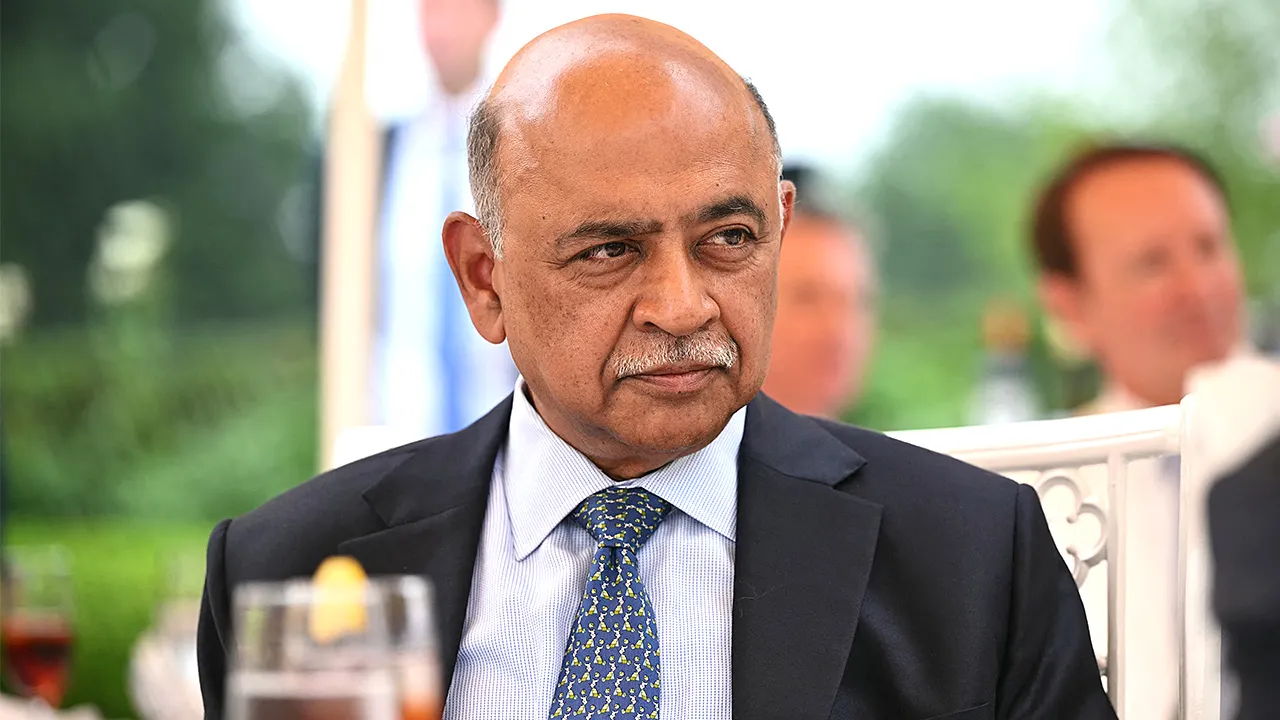
IBM CEO Arvind Krishna joins ‘The Claman Countdown’ after IBM trimmed its full-year sales growth forecast after an earnings warning.
IBM CEO Arvind Krishna set the record straight over fears of a long-term tech slowdown, revealing that one-third of the major enterprise deals delayed during a rocky second quarter have since returned to the company.
Speaking on “The Claman Countdown,” Krishna explained that a major semiconductor price increase forced enterprise clients to briefly divert spending toward physical servers.
While that spending shift hurt IBM’s upfront software sales, Krishna said artificial intelligence remains a major growth driver and that delayed deals are already coming back.
“One-third of all the deals that fell out of the second quarter have already come back. So, that gives us a signal, maybe not proof yet, but a signal that that was indeed just a deferral for a few weeks, not a destruction,” Krishna said Thursday.
FIDELITY ESTIMATES RETIREES WILL SPEND $185,500 ON HEALTHCARE AND MEDICAL EXPENSES IN RETIREMENT
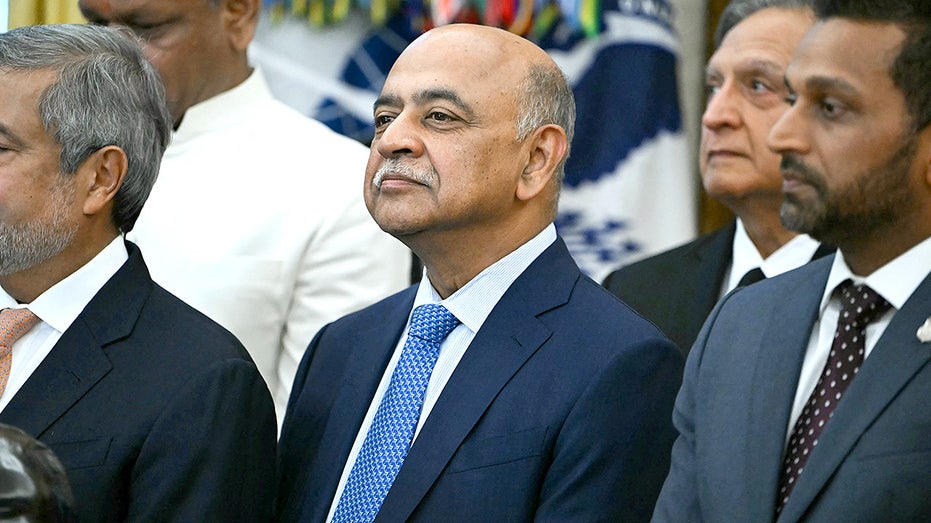
IBM CEO Arvind Krishna, center, and FBI Director Kash Patel attended a Diwali celebration with President Donald Trump and Indian American leaders in the Oval Office of the White House on Oct. 21, 2025, in Washington, D.C. (Andrew Caballero-Reynolds/AFP via Getty Images / Getty Images)
The statement comes one day after IBM cut its full-year revenue growth forecast from over 5% down to 4% to 5%.
Earlier this month, IBM issued an earnings warning after prices for chip hardware spiked nearly 60%. The increase prompted many Fortune 100 companies to prioritize purchases of physical hardware, leaving less money for their software budgets. That led many clients to delay software purchases from IBM, contributing to a decline in the company’s stock.
“When those are going up at 60% year over year, people are worried, and that’s the classic inflation that if it’s going to go up that much, I need to buy that now,” Krishna said. “And, so, I redirect my CapEx to that side.”
But Krishna said the slowdown was only temporary as companies took time to get through on their software orders. Still, he said the company is working to prevent this in the future by shifting its sales strategy.
CATHIE WOOD SAYS BATTERED SPACEX COULD BECOME ‘MOST IMPORTANT COMPANY IN GLOBAL HISTORY’
While 80% of IBM’s software revenue comes from subscription contracts, 20% comes from upfront purchases, which was what was hit by the client delays.
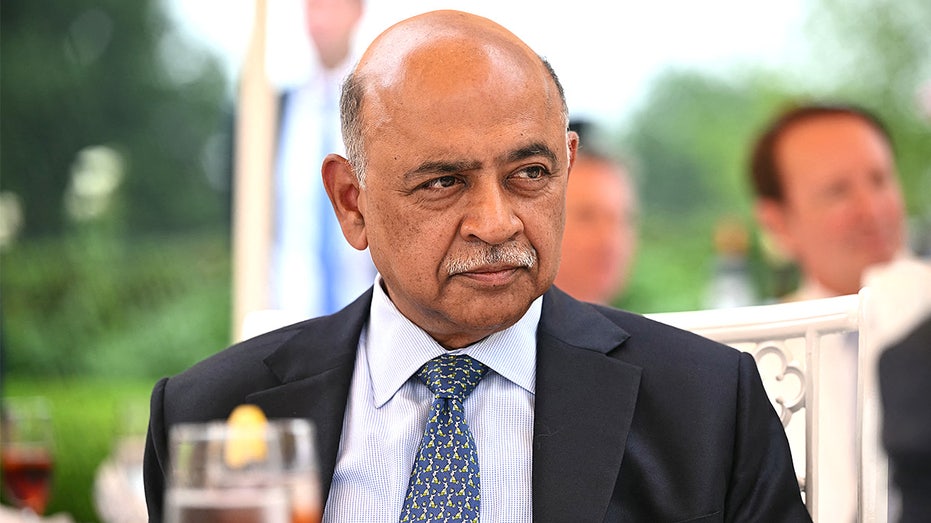
IBM CEO Arvind Krishna attended a Rose Garden Club event at the White House on July 6, 2026, in Washington, D.C. (Getty Images)
“We have to focus more on growing the 80 and not depend on the 20% growing fast,” Krishna said.
He emphasized that the company is also doubling down on quantum technology, highlighting its recent acquisition of quantum research lab HRL Laboratories. He said the move positions IBM to lead a new market.
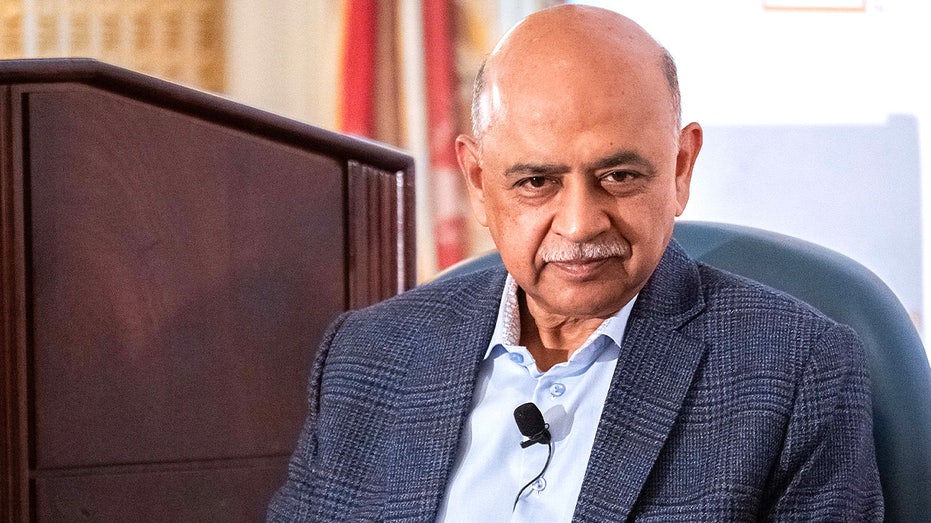
IBM CEO Arvind Krishna speaks during an Economic Club of New York event on June 17, 2026, in New York City. (Adam Gray/Bloomberg via Getty Images / Getty Images)
GET FOX BUSINESS ON THE GO BY CLICKING HERE
“We think quantum is an incredibly important technology for national security but also for economic advantage,” the IBM CEO said.
“So, now we’re sort of increasing our total investment and increasing the different alternate technologies that we have inside our portfolio, which only then increases the chances that we are one of the winners and are quantified. I think I’m now going to up my estimate to where quantum by the end of the next decade is likely going to be a trillion-dollar impact on the industry.”
Focused Wealth Management Managing director Philip DeAngelo explains why IBM stock is a long-term buy despite a 25% drop after a profit warning.

Operator
Good day, everyone, and thank you all for joining us to discuss Equity LifeStyle Properties Second Quarter 2026 results. Our featured speakers today are Marguerite Nader, our Vice Chairman and CEO; Patrick Waite, our President and CEO; and Paul Seavey, our Executive Vice President and CFO.
In advance of today’s call, management released earnings. Today’s call will consist of opening remarks and question-and-answer session with management relating to the company’s earnings release. [Operator Instructions] As a reminder, this call is being recorded.
Certain matters discussed during this conference call may contain forward-looking statements in the meanings of federal securities laws. Our forward-looking statements are subject to certain economic risks and uncertainty. The company assumes no obligation to update or supplement any statements that become untrue because of subsequent events.
In addition, during today’s call, we will discuss non-GAAP financial measures as defined by SEC Regulation G. Reconciliations of these non-GAAP financial measures to the comparable GAAP financial measures are included in our earnings release, our
There is a particular kind of Monday that is supposed to be boring, and thank God for it. Kettle on, radio grumbling about the M25, the machinery of the country turning over with all the drama of a filing cabinet. That is how it is meant to go. Not this week.
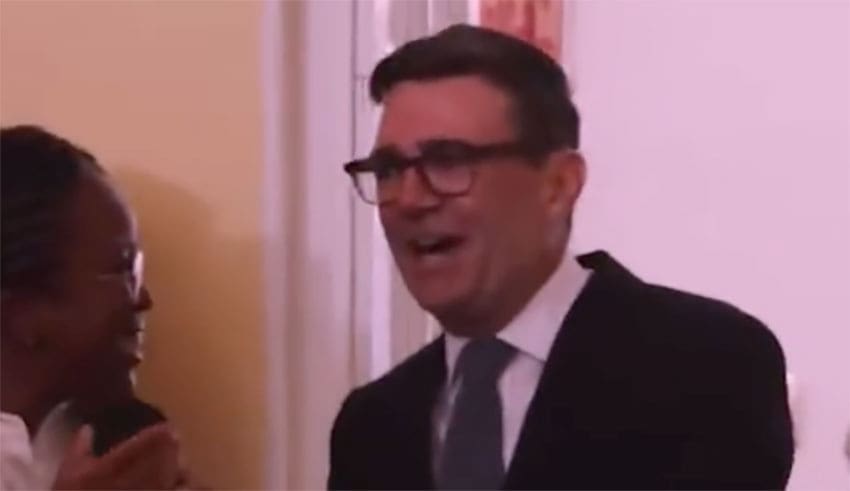
Because on Monday, while the rest of us were getting on with the unglamorous business of a normal week, our new Prime Minister was making an entrance. Andy Burnham did not walk into Number 10 so much as arrive at it, chin up, grin wide, working the cameras with the swagger of a man strolling into a villa in Mallorca rather than a draughty Westminster terrace with a famously temperamental boiler.
And here is the part that stopped me cold. This was not a leak. It was not some cruel edit stitched together by a bored teenager with too much time and a grudge. This was posted, deliberately and proudly, to Downing Street’s own official TikTok account, scored, captioned and cut for maximum engagement by the very communications machine that is meant to be running the country. The Prime Minister’s first act in office was not a statement to the House. It was a Tok.
@ukgov Welcome @Andy Burnham ♬ A hot new bom shel enters the vila – Bella
It was, unmistakably, a villa entrance. I am not the target audience here. I am old. I am not of the TikTok generation. I am not on TikTok. I have never once said “my type on paper”. But you do not need to be fluent in reality television to read the choreography. The pause on the threshold. The knowing look to camera. The body language of a man who has been told there are lenses on him and intends to make the most of it. This was not a Prime Minister turning up to do a job. This was a bombshell entering the villa, and he knew it.
Once you have seen it, you cannot unsee it, and the format is horribly generous. If Number 10 is the villa, the whole grammar of government rearranges to fit. The Cabinet no longer sits, it lounges, twenty-odd ministers arranged around the pool in factor 50 and coordinated swimwear, red boxes balanced on their knees, glistening. A phone buzzes on the decking. Somebody bolts upright, clutches it to their chest and shrieks the four words that now run the country: I’ve got a text. The nation is given roughly twenty minutes to get ready, and a recoupling, which you and I would call a reshuffle, duly begins by firelight.
The fire pit, naturally, is the Despatch Box, the place where new couplings are announced and the freshly single are walked off into the night with a wheelie suitcase and a haunted expression. Cobra convenes around it too, everyone weighing the Strait of Hormuz over a sharing platter. Casa Amor becomes a reshuffle away-day, the Chancellor flown somewhere warm and introduced to a villa full of hungrier backbenchers, purely to test whether his head is turned by a better offer at the Treasury. The old challenges, once a matter of eating something unspeakable for a text, are now solemnly rebranded as fiscal events.
And the demotions are pure Love Island. Nobody is sacked outright, that would be far too clean. The minister who has displeased the producer is simply sent to top up the factor 50, left to redden quietly on a lounger with no portfolio and no signal, until the public forgets he was ever a contender. Then, every so often, the music swells, a returning bombshell struts back in behind a pair of sunglasses, and everybody already coupled up feels their stomach drop. We call that a leadership contest.
The mechanics match because the incentives match. Love Island runs on dramatic arrivals and the ever present threat of eviction, on the iron certainty that whoever struts in on Monday will be dragging that suitcase down the stairs before long. Which, if you have watched British politics this past decade, you will recognise less as entertainment than as a documentary. Our new man understands the genre completely. The entrance is everything, the exit comes for everyone, and he has simply had the nerve to stop pretending otherwise and lean into the tan.
Here is where the business reader, who has indulged the metaphor this far, sits up. The entrance has a bill attached, and it is not a small one.
Mr Burnham is our seventh Prime Minister in a decade. Seven. If a company had run through seven chief executives in ten years, no bank would lend it a fiver and no serious investor would return its calls. Within hours of the villa entrance, the new man mused aloud about seeking “any flexibility” in the borrowing rules, and the bond market did what bond markets do to improvisation. Gilt yields, already among the highest in the G7 and stuck near their peaks for weeks, twitched up again. The pound softened. He had posted a Tok. The market posted a reply. Nobody in the City was charmed by the walk-in, because the City does not price charisma. It prices predictability.
And predictability is the one asset this government keeps setting fire to. Eight in ten small business owners were nervous about a Burnham premiership before he had signed a single thing. With Bank Rate still parked at 3.75 per cent and every mortgage, overdraft and asset finance deal in the land keyed off those same jittery gilts, the cost of the performance is not abstract. It lands on the 5.5 million small firms that make up 99 per cent of British business, as a dearer loan and a shorter planning horizon. A shorter horizon is how firms stop hiring and start hoarding cash against a rainy day a little grown-up calm might have prevented.
This is the thing every half-decent founder learns the hard way. The entrance is not the business. I have watched entrepreneurs pour a fortune into the launch, the brand film, the influencer with the drone, and next to nothing into the boring machinery of delivering the thing they actually sold. They optimise for the arrival. And a million views is a vanity metric. It is not revenue, it is not margin, and it will not refinance a single pound of the national debt. The market, patient and merciless, waits for the operations. The bond market is the only follower that has ever mattered, and it does not care how well the video performed.
I wrote here only last month that Burnham would be wise to take a rival’s counsel rather than trust his own showmanship, and nothing about Monday has changed my mind. The advice stands. Britain does not need a bombshell. It needs a boiler that works.
So I will not be tuning in for the recoupling. But the new resident should remember the one rule the villa never breaks. The islander who plays to the camera instead of doing the graft is always the first to get the text. And in this series, the public vote is counted in the bond market.

Richard Alvin
Richard Alvin is a serial entrepreneur, a former advisor to the UK Government about small business and an Honorary Teaching Fellow on Business at Lancaster University.
A winner of the London Chamber of Commerce Business Person of the year and Freeman of the City of London for his services to business and charity. Richard is also Group MD of Capital Business Media and SME business research company Trends Research, regarded as one of the UK’s leading experts in the SME sector and an active angel investor and advisor to new start companies.
Richard is also the host of Save Our Business the U.S. based business advice television show.
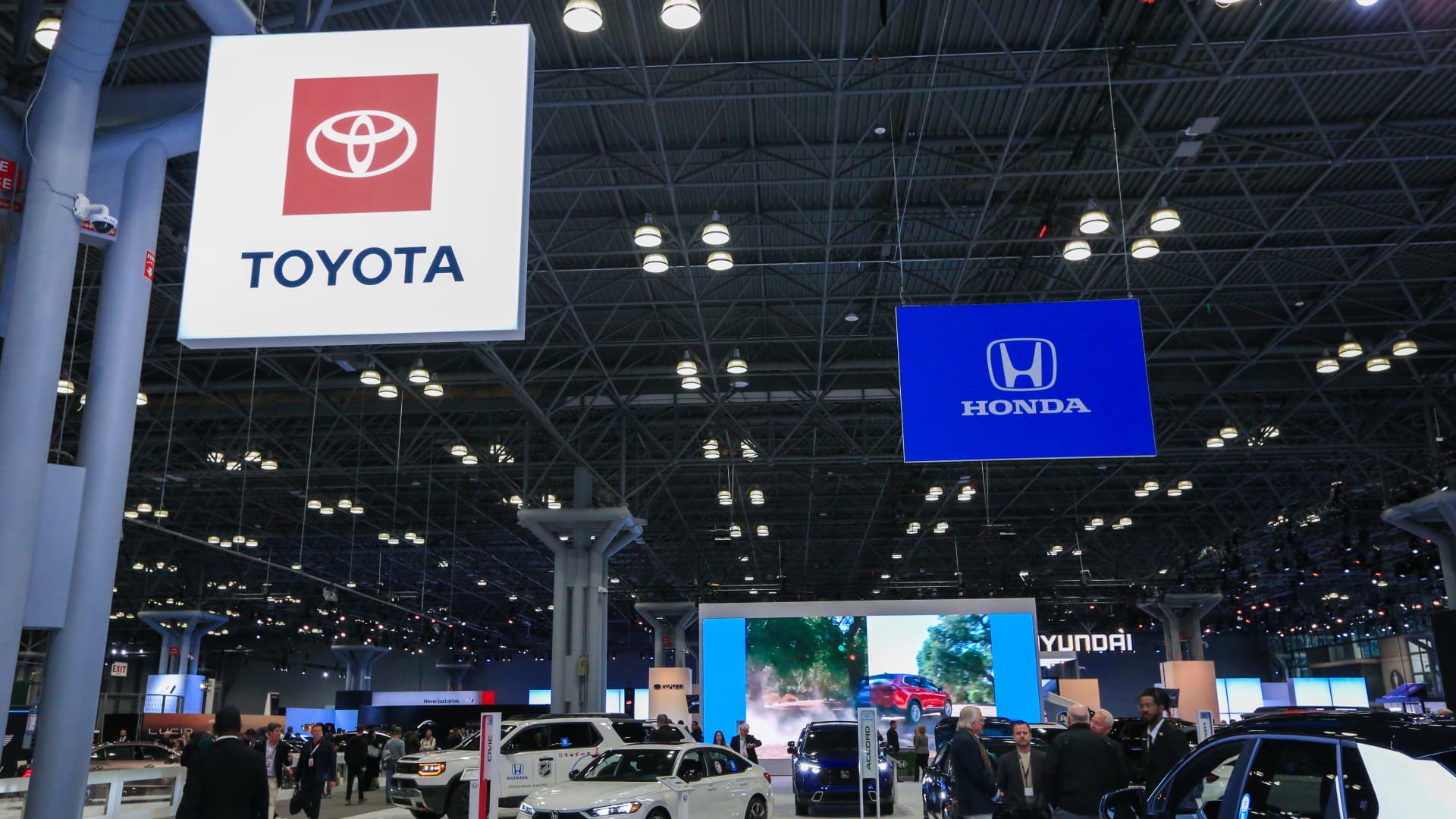

Just three automakers control the majority of one of the hottest segments in the U.S. car market — and none of them are American companies.
In the first half of 2026, sales of hybrid cars — not long ago considered a bridge to fully electric vehicles — have risen nearly 20% year over year to a record market share of 15.4%, according to the Center for Automotive Research, almost three times the share of pure EVs.
“The only growth we’re seeing is in hybrid market share,” said Elizabeth Krear, CEO of the Center for Automotive Research. “All other propulsion systems have lost market share year to date.”
It has been a boon to the few automakers that invested heavily in the hybrid vehicle market. Toyota, Hyundai Motor Group and Honda together control 86% of it, according to automotive market analysis firm Baum & Associates.
“Consumers want the vehicles. The problem is there are relatively few automakers that offer those vehicles,” said Alan Baum, principal at Baum & Associates.
Toyota sold more than 600,000 hybrids in the first half of 2026 between its two brands, Toyota and Lexus. It controls half the market. Toyota’s hybrid lineup has pushed overall U.S. volumes closer to top seller General Motors, which has bet big on EVs and has only one hybrid in its U.S. lineup in the Corvette E-Ray. GM told CNBC in an email that “hybrids do have a role in our future product plans.”
The other automaker that has invested heavily in hybrids is Hyundai Motor Group, which owns the Hyundai, Genesis and Kia brands. It just barely surpassed Honda in the first half of 2026, according to data from Baum & Associates.
Hyundai has added hybrids to a wide range of vehicles, including large SUVs.
Honda is still the second-bestselling hybrid brand in the country behind Toyota. Hybrids account for 31% of American Honda’s sales, according to the company, and it set a U.S. hybrid sales record in the first half of 2026.
“We’re, extremely happy with how our hybrids have been doing,” said Gary Robinson, vice president of auto strategy at American Honda Motor Co., the Japanese carmaker’s U.S. arm.
Hybrids past and present
High fuel prices, broader selection and lingering skittishness around EV range and charging are pushing an unprecedented number of buyers toward hybrids. Historically, hybrid versions of cars have cost more up front than gas vehicles, due to the more complex powertrains required, Krear said.
But buyers can save somewhere between 30% and 50% on fuel costs, given hybrids’ better economy, Krear said. A hybrid buyer can recover the added up-front cost in two to three years, she added.
That’s evolved since the powertrain was introduced.
“The consumer value proposition wasn’t as compelling as it is today,” Krear said. “Gas prices were lower, so the up-front premium was harder to justify. Early hybrids were mostly small cars, while American consumers were moving towards SUVs and trucks. It took time for the consumers to understand the value proposition and the economics, as well as for the product availability to align up with consumer preferences.”
Though Toyota created the Prius in 1997, the Honda Insight sedan was the first to the U.S. market, in 1999. The Prius followed in 2000 and, from there, Toyota claimed about 75% of the market share in the mid-2000s, according to CAR’s Krear. But around that time, hybrid sales made up only 2% of overall new-vehicle sales.
“If you go back at that time to some of the media reports, a lot of the the comments were, ‘What is it and why do we need it?,’” said Dave Christ, group vice president and general manager of the Toyota brand in the U.S. “We really brought it out at a time when hybrid technology probably wasn’t necessary, but we felt a long-term commitment to the technology, and we felt that putting it in our lineup was good for consumers.”
Toyota and Honda stuck with the technology, investing in it far more than rivals. They persisted even after Tesla and other automakers started churning out pure EVs — something for which both automakers, especially Toyota, took criticism from activists and their own shareholders.
Honda, which has long been a leading maker of fuel-burning engines, saw its first loss in almost 70 years as a public company in 2026 due in part to a $16 billion charge it took on restructuring its EV division.
But now the hybrid bet seems prescient.
“Toyota had a very much a North Star strategy,” Krear said.
The company argued it could reduce carbon emissions more effectively at scale by making huge quantities of fuel-sipping hybrids that had smaller batteries, rather than a small number of EVs with big ones. It also “met the customers where they were at,” she said.
“Hybrids deliver that meaningful fuel savings without requiring changes in driving habits or charging infrastructure,” Krear said.
It also gave the companies the chance to improve the technology, Robinson said. This has positioned them well for the future.
In 2030, Baum & Associates expects EV market share to climb to 9.5% and hybrids to be a quarter of the market.
Meanwhile, Honda is planning the release of a new hybrid system that will better fit larger vehicles, in order to maintain its position in the face of the onslaught.
“At that point, there’s really nothing to stop us in terms of battling it out with anybody in terms of hybrids,” Honda’s Robinson said.
Business
Bluestone Jewellery shares rocket 36% in just three days after Q1 results. Can the momentum sustain?

The company said its standalone revenue rose 48.8% year-on-year to Rs 733 crore. Same-store sales growth stood at 39% YoY during the quarter, while standalone EBITDA increased 134.6% YoY to Rs 55 crore. The company added 12 stores in Q1FY27, taking its total store count to 352 across 139 cities.
The company said the performance reflected resilient consumer demand and the relevance of its portfolio across different price points. Operating leverage continued during the quarter, with the EBITDA margin improving by 273 basis points from a year earlier. After reporting its first full year of positive reported PAT in FY26, BlueStone continued its profitability trajectory into FY27.
The company added that the “performance is particularly satisfying as it came despite the rise in custom duty on gold from 6% to 15%, reflecting the structural drivers we have consistently spoken about – a portfolio that stays relevant across price points th rough design and technique innovation.”
What to expect post Q1 results?
Systematix has maintained a Buy rating on BlueStone Jewellery with a target price of Rs 832, level the stock clinched today. The brokerage expects the company to add around 75 stores annually and expand its total store network to 571 outlets by FY29E.
Also read:Q1 surprise sends jewellery stocks shining 40% in a month. Will the surge last in next quarters?
The brokerage said the expansion plan appears achievable, subject to sustained consumer traction and continued brand strengthening. Its revenue estimates factor in an age-cohort framework, under which store productivity improves as outlets mature.
Stores that were more than three years old accounted for 27% and 46% of the network in FY25 and FY26, respectively, and this proportion is expected to rise to 56% in FY28E and 60% in FY29E. Systematix expects the average store age to increase from 2.3 years in FY25 and 2.7 years in FY26 to 3.6 years in FY28E and 4 years in FY29E.The outlook beyond the June quarter also remains constructive as leading players continue to project strong long-term demand.
“The strong start to FY27 by market leaders reinforces confidence in the sector’s demand outlook. Within our coverage universe, we prefer Titan Company and Bluestone Jewellery as our preferred picks over the next 12–18 months,” Pankaj Kumar, VP Fundamental Research at Kotak Securities, told ETMarkets.
Anil shares a similar view, saying the growth momentum appears sustainable beyond Q2, although the pace will depend on gold price movements and consumer sentiment. Stable gold prices should support demand, as jewellery purchases are typically influenced more by price volatility than by absolute price levels. He also believes initiatives such as gold exchange and recycling programmes will improve affordability and customer engagement.
Importantly, the second half of the year is typically stronger for the industry, supported by the festive season and the peak wedding period. If gold prices remain relatively stable, leading organised jewellery retailers should continue delivering healthy growth over the coming quarters.
Going forward, investors will closely monitor management commentary, festive season demand and the pace of store expansion, all of which are likely to shape the sector’s performance over the coming quarters.
(Disclaimer: Recommendations, suggestions, views and opinions given by the experts are their own. These do not represent the views of The Economic Times)
US Justice Department streamlines merger review process
Business
Meghan Markle Faces New ‘Bullying’ Claims Ahead of MasterChef Australia Episode Amid Denials of Tension
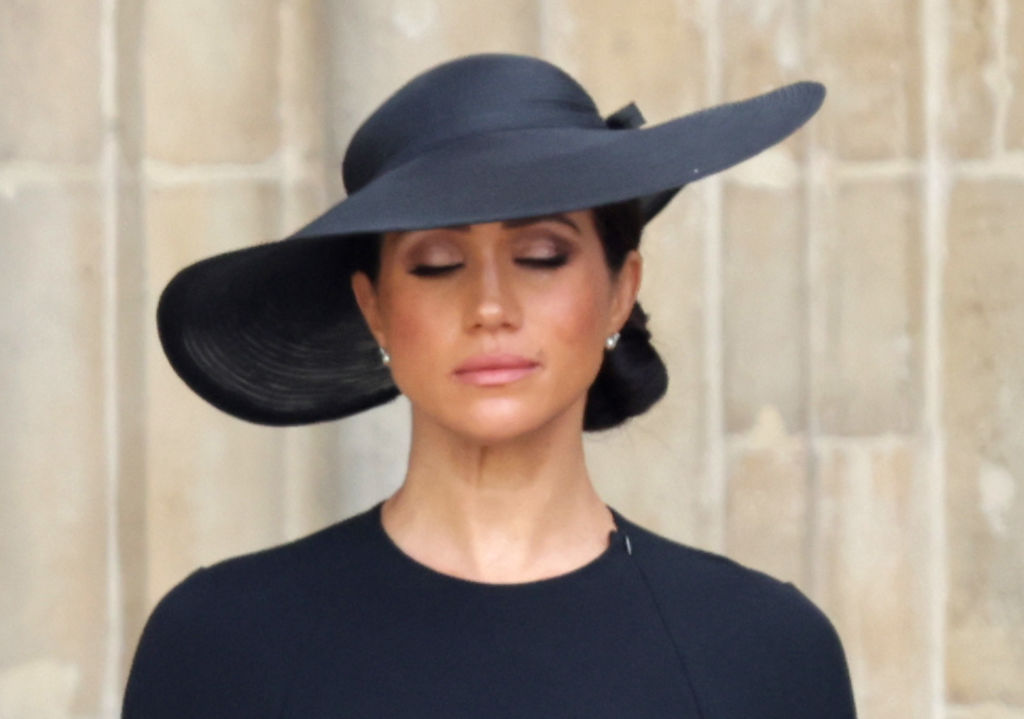
Meghan, the Duchess of Sussex, is facing a fresh round of criticism from some social media users after Australian tabloid reports suggested behind-the-scenes friction with a “MasterChef Australia” judge during the filming of her upcoming guest appearance, even as multiple sources close to the production have publicly denied any serious conflict occurred.
The duchess is set to appear as a guest judge on “MasterChef Australia” this Sunday, July 26, at 7 p.m. local time on Channel 10. Her segment was filmed in April during a visit to Australia with her husband, Prince Harry, and will feature Meghan emphasizing seasonal ingredients and personal storytelling as she challenges contestants to prepare a “dish fit for a duchess” using a selection of produce and pantry items she curated herself.
What the reports allege
Australian magazine New Idea reported that tension developed on set when several contestants reportedly gravitated toward series judge Poh Ling Yeow for feedback and reassurance rather than directing their attention to Meghan as the episode’s headline guest. According to one unnamed source cited by the outlet, “It was a bit awkward at times. You could tell Meghan was wondering what was going on.”
A separate point of friction reportedly involved Yeow introducing Meghan as “royalty” during the segment, despite Meghan and her team having asked producers beforehand not to use that word, according to Sky News reporting cited by multiple outlets. In a promotional clip for the episode, Yeow can be heard saying, “We’ve had royalty in the MasterChef kitchen before, but no one like this. All the way from sunny California, please welcome to MasterChef Australia, the Duchess of Sussex, Meghan Markle.” Sky News reported that the introduction left Meghan “very frustrated,” which in turn reportedly left Yeow feeling upset about the moment.
Sources close to production push back on the characterization
Despite those reported moments of friction, several unnamed sources cited across multiple outlets have downplayed any suggestion of a serious rift. One insider told reporters that the issue had little to do with Meghan personally, saying Yeow “felt she had been unintentionally drawn into a royal protocol issue she never intended to be part of” and had wanted to reach out and apologize directly, but was advised by producers to let the matter be handled through standard production channels.
Another source explicitly rejected the idea that real tension existed on set, telling outlets, “There was no tension whatsoever, but it did feel like everyone was working hard to create those picture-perfect TV moments.” A third source offered a lighter take on the dynamic between the two women, describing Yeow’s high-energy, joke-filled personality as not always landing as intended when paired with Meghan, but characterizing any friction as minor. “It wasn’t major drama, just a few awkward moments during filming that were adjusted in the final edit,” the source said, adding, “Meghan was a great guest, and we feel very lucky she agreed to appear on the show.”
Public reaction has been more pointed
Despite those efforts to downplay the situation, the story has generated notable pushback from some viewers on social media, many of whom referenced past allegations involving Meghan’s treatment of staff during her time as a working royal. One Instagram commenter wrote that the “bullying allegations” pattern had become repetitive, adding that “she can’t even go on a show without trying to create issues about random things.” Other social media users echoed similar sentiments across platforms including X, with some questioning why the story kept recurring around Meghan’s public appearances.
It’s worth noting that the characterization of the on-set moments as “bullying” originates largely from social media commentary and headline framing rather than from any on-the-record accusation of mistreatment made by Yeow, her fellow judges or MasterChef Australia producers.
What the judges themselves have said
Speaking separately about Meghan’s approach to the episode, Yeow described the duchess as having been clear and intentional about what she wanted from the segment. “This was actually quite clear about wanting to get to know the contestants better,” Yeow said, describing Meghan’s interest in hearing personal stories from the competitors. “And she said, you know, you know these guys, but I don’t, so I really would like to see some stories and, yeah, food that’s gonna show us their personalities.”
Fellow judge Sofia Levin offered a positive reflection on Meghan’s connection to food as a home cook and gardener. “She’s a home cook and she’s a gardener herself,” Levin said. “So, when you think about it, you know, we’re getting more and more connected to our food.”
What to expect from the episode
Meghan will appear alongside judges Poh Ling Yeow, Sofia Levin and Jean-Christophe Novelli for the episode, with judge Andy Allen absent due to the birth of his son. During filming, Meghan reportedly told contestants that “there is a lot of pressure in that kitchen,” adding that she prefers cooking in “a really relaxed fashion” and encouraging competitors to “keep a sense of humour about it, and to cook from the heart.” She also spoke about cooking as an expression of care for the people in her life, saying that food is “how I show my nurturing and love for my friends, family and my kids.”
Context around the visit
Meghan and Harry’s April trip to Australia marked their first joint visit to the country since their 2018 royal tour, and included humanitarian and mental health-focused engagements alongside Meghan’s MasterChef appearance. The guest judging segment, recorded in Melbourne, was teased extensively in the show’s promotional material ahead of Sunday’s broadcast.
With the episode set to air this weekend, it remains to be seen how the final edited version portrays the interactions between Meghan and the judging panel, and whether that broadcast will do anything to settle the competing narratives that have circulated in Australian and international tabloid coverage in the days leading up to its release.
Business
‘Ransom Canyon’ Season 2 Returns to Netflix Today With Josh Duhamel and Minka Kelly’s Long-Awaited Reunion
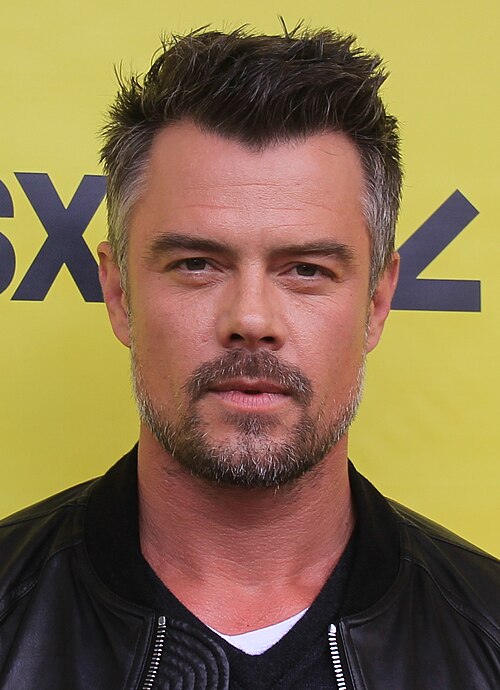
Netflix’s Texas-set romantic drama “Ransom Canyon” returns for its second season Thursday, dropping all eight new episodes at once and picking up the on-again, off-again love story between its two central characters roughly six months after the first season’s cliffhanger ending.
The series, based on the book franchise by author Jodi Thomas, stars Josh Duhamel as rancher Staten Kirkland and Minka Kelly as dance hall owner Quinn O’Grady, whose long-simmering romance became the emotional center of the show’s first season before it ultimately fell apart amid Staten’s unresolved grief and anger. Season 2 begins streaming at 3 a.m. Eastern time, or midnight Pacific time, the standard release window for Netflix original series.
Where the story picks up
According to Netflix’s official synopsis, Season 2 opens six months after the events of Season 1, with Staten fighting to reclaim his standing after being unseated as trustee of his family’s Double K Ranch. Quinn, meanwhile, spent that time away in New York City pursuing her career as a concert pianist, leaving her hometown, and her relationship with Staten, behind.
The new season’s early preview clips show Staten learning that Quinn has returned to Ransom, setting the stage for their reunion. But according to Netflix’s Tudum editorial site, Quinn does not come back to town alone: during her time in New York, she appears to have begun a new relationship, a development the show’s trailer suggests will fuel jealousy on Staten’s part and further complicate their long-running dynamic.
New love triangles brewing
Beyond the central Staten-and-Quinn storyline, the new season’s trailer teases several additional romantic entanglements developing across Ransom’s tight-knit community. A love triangle appears to be forming involving rancher Yancy, a character named Ellie, and Yancy’s wife Sidney, a role played by newcomer Heidi Grace Engerman, who joins the cast this season. The trailer also hints at romantic tension developing between the character Lauren and Lucas’s brother Kit, even though, according to reporting on the show’s development, series creator April Blair had originally conceived of a different pairing for those characters before the storyline shifted during the writing process.
Showrunner and executive producer April Blair described the series’ guiding themes ahead of the new season’s release. “We have these three tenets, which are land, love, and legacy,” Blair said, characterizing the framework the show continues to build its interconnected storylines around heading into Season 2.
Cast changes
Season 2 arrives with a notably different supporting cast than the show’s first run. According to Deadline, two key cast members from Season 1, Eoin Macken and Andrew Liner, who played father-and-son ranchers Davis Collins and Reid Collins, will not return in regular roles this season. No official explanation was given for their departures, though their absence effectively closes out a love triangle from Season 1 in which Davis competed with Staten for Quinn’s affections.
Joining the returning ensemble is Patricia Clarkson, the Emmy-winning actress who takes on the role of Quinn’s mother this season, alongside Steve Howey, who plays Staten’s half-brother Levi in a recurring capacity. The broader Season 2 cast also includes returning performers Lizzy Greene, Garrett Wareing, Jack Schumacher, Marianly Tejada, Casey W. Johnson, Ben Robson, Tatanka Means, Justin Johnson Cortez, Philip Winchester, Jennifer Ens, Brett Cullen and Niko Guardado.
A show built on Yellowstone-style drama
“Ransom Canyon” premiered on Netflix in April 2025 and quickly drew comparisons to modern Western dramas like “Yellowstone,” blending ranch-set family conflict with sweeping romantic storylines centered on a fictional small Texas town. The series follows several interconnected families navigating land disputes, long-held rivalries and complicated romantic histories, themes that made the first season one of the platform’s more talked-about original dramas following its release.
Netflix confirmed the show’s renewal for a second season in June 2025, just two months after the first season debuted. Blair expressed enthusiasm about continuing the story at the time. “I couldn’t be happier that Netflix is ready to get back in the saddle for Ransom Canyon!” Blair said in a statement announcing the renewal. “Our dreamy little corner of Texas Hill Country is full of stories still untold, and we can’t wait to bring them to our incredible fans. Get ready for another ride.”
Production timeline
Filming for Season 2 began in the fall of 2025, following months of early writers’ room development that started even before the show’s official renewal. Blair told TV Insider in an interview that the writing process began ahead of the formal green light. “We’ve already started the writers’ room, even though the show hasn’t been picked up to series yet for Season 2,” Blair said at the time, reflecting the show’s confidence heading into its second outing.
What’s next for the series
As of Thursday’s premiere, Netflix has not publicly confirmed whether “Ransom Canyon” will return for a third season, leaving the show’s long-term future an open question even as all eight new episodes become available for fans to watch in a single release. Given the extensive setup embedded in the Season 2 trailer, including new relationships, family power struggles and unresolved tension between its central couple, the show appears positioned to leave plenty of narrative threads open heading into any potential future installment.
For now, fans eager to see whether Staten and Quinn finally find their way back to each other, and how the show’s newly introduced love triangles play out, can stream the full second season of “Ransom Canyon” starting Thursday on Netflix.
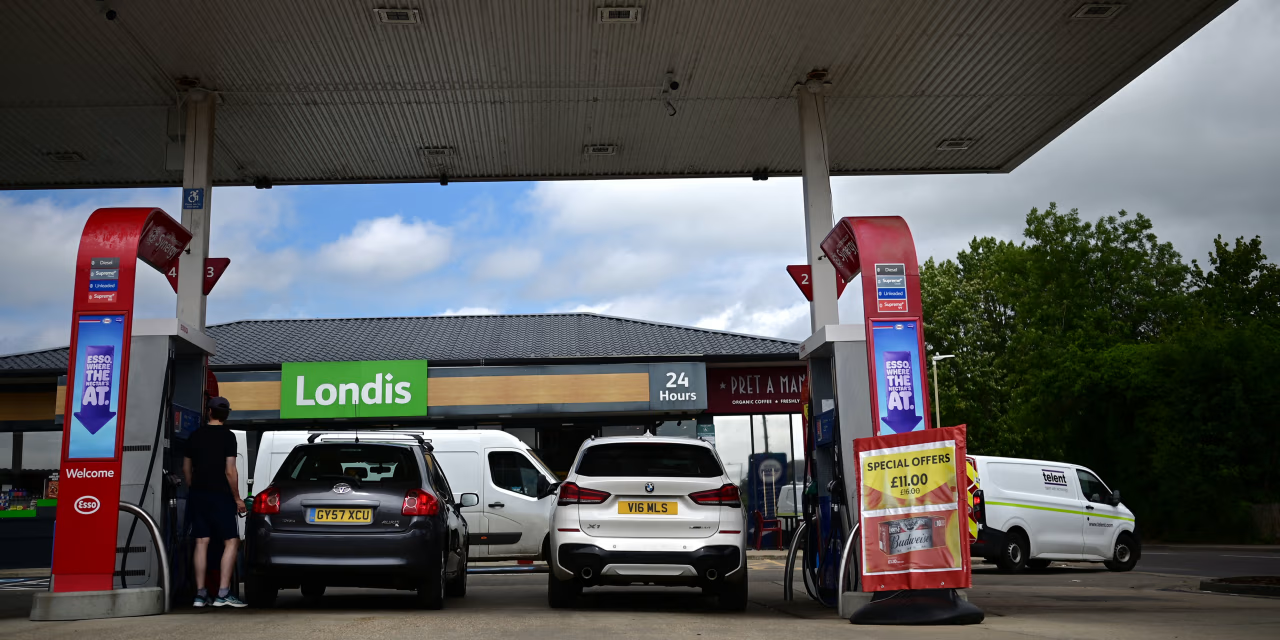
The U.K.’s rate of inflation in June declined to its lowest level in more than a year after gasoline costs fell, raising the likelihood that the Bank of England will keep its key interest rate on hold next week, even with prices likely accelerating in the months ahead.
Consumer prices were 2.6% higher in June than the same month of last year, slowing from a 2.8% inflation rate in both April and May, the Office for National Statistics said Wednesday. That marked the lowest annual increase in prices since March 2025. Economists polled last week by The Wall Street Journal expected a reading of 2.7%.
Copyright ©2026 Dow Jones & Company, Inc. All Rights Reserved. 87990cbe856818d5eddac44c7b1cdeb8

Clarity Act expected to miss its window before Congress’ summer break, leadership says
Want to Be On A Dating Reality Show? Here’s What To Know About Casting

York to feature in Sunday’s episode of Channel 4’s The Piano

Renter of Home in Anne Heche Crash Denies Settlement With Son

No Jackpot Winner as $257 Million Prize Rolls Over to $269 Million Monday Draw

Weekend Open Thread: Staud – Corporette.com

XRP HOLDERS ARE PRE-RICH! – PREPARE TO CASH OUT LARGE SUMS OF MONEY DO THIS FIRST?

CA Foundation QA | Mathematics of Finance -2 | Sep 26 | Sankat Mochan 6.0 | Anurag Chauhan

MONEY – LISA | JUST DANCE 2022 – Fanmade by EloW340
-

 Fashion6 days ago
Weekend Open Thread – Corporette.com
-

 Politics5 days ago
The House | The City of London can help the new chancellor deliver growth in every postcode
-

 Crypto World5 days ago
Ripple Payments Joins MiCA With 14 Firms, Does It Mean Anything For XRP?
-
 Crypto World6 days ago
Two July Windows Left: The CLARITY Act’s Senate Fight and What Failure Means
-

 Politics4 days ago
Democrats look to World Cup watch parties to register thousands of voters
-

 Crypto World6 days ago
Ripple wins EU-wide access as ESMA adds it to MiCA register
-

 Crypto World2 days ago
Grayscale Files For Worldcoin ETF, WLD Registers Sharp Rise
-

 NewsBeat3 days ago
Unregistered fitter used Gas Safe logo on business flyers
-

 Tech3 days ago
Sail Virtually Aboard The “Itanic” With IA-64 Emulator
-

 Crypto World7 days ago
Injective Submits SEC Transfer-Agent Registration to Onchain Ownership Records
-
 Tech3 days ago
Turtle Beach Command Series KB7 review: a nifty screen-equipped gaming keyboard
-

 NewsBeat6 days ago
Registration is now open for March for Men with Kev 2026
-
 Business2 days ago
New Jersey voter registration controversy explained: How 6,600 noncitizens got on the rolls, and what happens next
-

 Crypto World7 days ago
Claude Fable 5 Slips to Second in AI Coding Leaderboard
-

 News Videos7 days ago
Money | Class 12 Economics | CBSE Board Exam 2026-27
-

 Business7 days ago
Banco Bilbao Vizcaya Argentaria, S.A. (BBVA) Discusses Global Macro Environment and Economic Outlook for Core Markets Transcript
-

 Crypto World5 days ago
Kaspersky exposes OkoBot’s 20-module crypto wallet attack
-

 News Videos4 days ago
Big Money Is Entering XRP
-

 Business6 days ago
Airlines warn Sunshine Protection Act could disrupt flight scheduling
-
 NewsBeat6 days ago
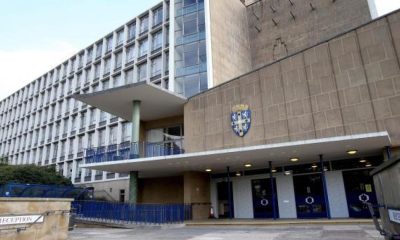
Durham County Council to send out electoral registration emails
You must be logged in to post a comment Login