The war in Iran has hammered global oil markets, with gas prices in the U.S. spiking significantly. Amid the rise in transportation costs, Amazon has instituted a new 3.5% fuel surcharge for sellers that use its distribution network. The policy has the potential to inflict significant new costs on the untold merchants that rely on the e-commerce giant to sell their products.
Amazon told TechCrunch that the surcharge would be in place for the foreseeable future, although the company said it will continue to evaluate a potential policy shift as market conditions evolve. The news was originally reported by Bloomberg.
“Elevated costs in fuel and logistics have increased the cost of operating across the industry,” a spokesperson said. “We have absorbed these increases so far, but similar to other major carriers, when costs remain elevated we implement temporary surcharges to partially recover these costs.” The spokesperson added that the surcharge was “meaningfully lower than surcharges applied by other major carriers.”
The new policy will take effect on April 17 and will impact sellers who use the company’s Fulfillment by Amazon service, Bloomberg writes. Fulfillment by Amazon, commonly known as FBA, allows companies to send their products to Amazon’s warehouses, where they are packed and shipped to buyers. Amazon doesn’t disclose how many merchants use FBA, but the program underpins the vast majority of third-party sales on its platform.
Iran is strategically located along the northern border of the Strait of Hormuz—a narrow but critical shipping lane for global oil supplies through which roughly 20% of the world’s oil supply passes—and the country has sought to block shipping lanes there, a move that has majorly impacted energy prices throughout the world.
A group of 20 Snap alumni has come together to launch a fund called Ghost Angels to back the next generation of social media. The fund declined to disclose how much it has raised so far, but says it has backed at least five companies and plans to deploy the remaining capital within the next year into at least 15 companies.
Max Rivera, who once led global partnerships at Snap, started the fund in 2025 to formalize the already-growing Snap alumni angel-investing community. Though Rivera runs the fund, there are around 20 other founder members and investors, including a small number of those still at Snap, alongside alumni like Alexandra Levitt, who ran Snap’s corporate accelerator, and Will Wu, who was a founding member of Snap’s product and design team.
“We were intentional about the mix,” Rivera, who currently works at Microsoft’s AI lab, told TechCrunch, noting that Ghost Angels wanted to bring in former senior executives alongside those earlier in their careers, too. “That diversity of thought and experience is core to how we evaluate deals and support founders.”
Much has changed since he first started at Snap nearly 10 years ago. Today, the people building companies have much leaner teams, while “founders are launching fast and iterating in public.”
Advertisement
Image Credits:Ghost Angels
“We’re seeing experimentation of different monetization models beyond ads with subscriptions, token [and] usage-based, or even outcome-based,” he said. “Founders are also more in the forefront, with founder-led GTM as a key pillar.”
Naturally, the fund is focused on investing in pre-seed to seed AI startups that are building in social media and consumer. Rivera said one of the biggest trends he has noticed about the next generation of social media is how “social” and “media” have actually split. The idea of what consumers know as social media today is a platform that relies heavily on ads, with an algorithm driving content and recommendations.
“A lot of people are disillusioned with that relative to the original promise of connecting people in your life,” Rivera said. TechCrunch reported last year that the next generation of social media was moving away from building generalized platforms and toward niche communities.
“On the social side, we’re backing founders that are applying AI in creative ways to finally deliver on that original promise,” Rivera continued. “On the media side, [we’re backing] AI native formats and generative creative tools across different media types, from music to gaming, sports, and fashion, that are dramatically lowering the barrier to creation and distribution.”
When you purchase through links in our articles, we may earn a small commission. This doesn’t affect our editorial independence.
This is the place where you face yourself, the you that could be you with a few different parts, a pump for your heart, eyes off color, and fresh off the shelf fake hair (a bit obvious), skin smoothed. You’re not perfect, but it’s a good start.
Down to small digits, you’ll be improved. Memory maintained by small motors, as long as these gizmos don’t glitch. What’s before you? Full replacement or a constant game of test and switch, pieces peeled off, disconnected, removed, until you are not yourself, at least, not the self you knew. That self has ceased, bit by bit less you at each release.
The value of a mirror is in its clarity. If the reflection is cast by [danicakostic17]’s Uncooperative Mirror though, you’ll find anything but. It’s described as a useless machine, because it appears as a tiled mirror. As you approach it though, the tiles shake around and make it very difficult to follow what’s in front of you. It’s an art piece and a prank all in one, and we like it.
Behind the mirror is a 3D printed frame and a set of small servos with what look like some belts to hitch them up. There’s an ultrasonic sensor and an Arduino Uno, that sets those servos going as soon as the ultrasonic sensor sees anything. We can see this thing would be fun at a party.
Everything you’ll need is on the Instructables page linked above should you be foolhardy enough to want your own, and there’s even a YouTube video which we’ve placed below.
Marques Brownlee, aka MKBHD, recently accompanied the NBC production crew and Spurs staff for an in-depth look at the tools and people who transform an NBA playoff basketball game into the polished feed that millions watch from home. His tour included camera placements across the arena, specialist rigs designed for dramatic views, audio capture stations strewn throughout the court, and trucks that connect everything together as the action develops.
NBC typically sets up 40 to 50 cameras for key games. Many of their basic broadcast units rely on their trusty Sony P50 cameras, which have a sensor small enough to fit on a fingernail and can shoot 1080p video at 60 frames per second with global shutter capability. Individual units are expensive, costing close to $50,000 each. About six of these cameras work side by side with swiveling seats, and their primary function is to capture clear, isolated pictures of individual players. When the director calls out for a certain player over the headset, the operator has only about 2 seconds to track him down, frequently from behind, as he sprints down the court, and lock in a steady frame before moving on to the next thing. They have a fast reference sheet with images of the players to help them out.
Cinematic-Style Footage – Experience the power of Xtra Muse’s 1-inch CMOS sensor, capable of recording breathtaking 4K resolution videos at 120fps…
Ultra-Steady Shooting – No more shaky videos! Xtra Muse’s advanced 3-axis gimbal camera stabilizer ensures exceptional smoothness. Enjoy smooth…
Effortless Framing – Enjoy Xtra Muse’s expansive 2-inch touch screen, and switch between horizontal and vertical shooting effortlessly.
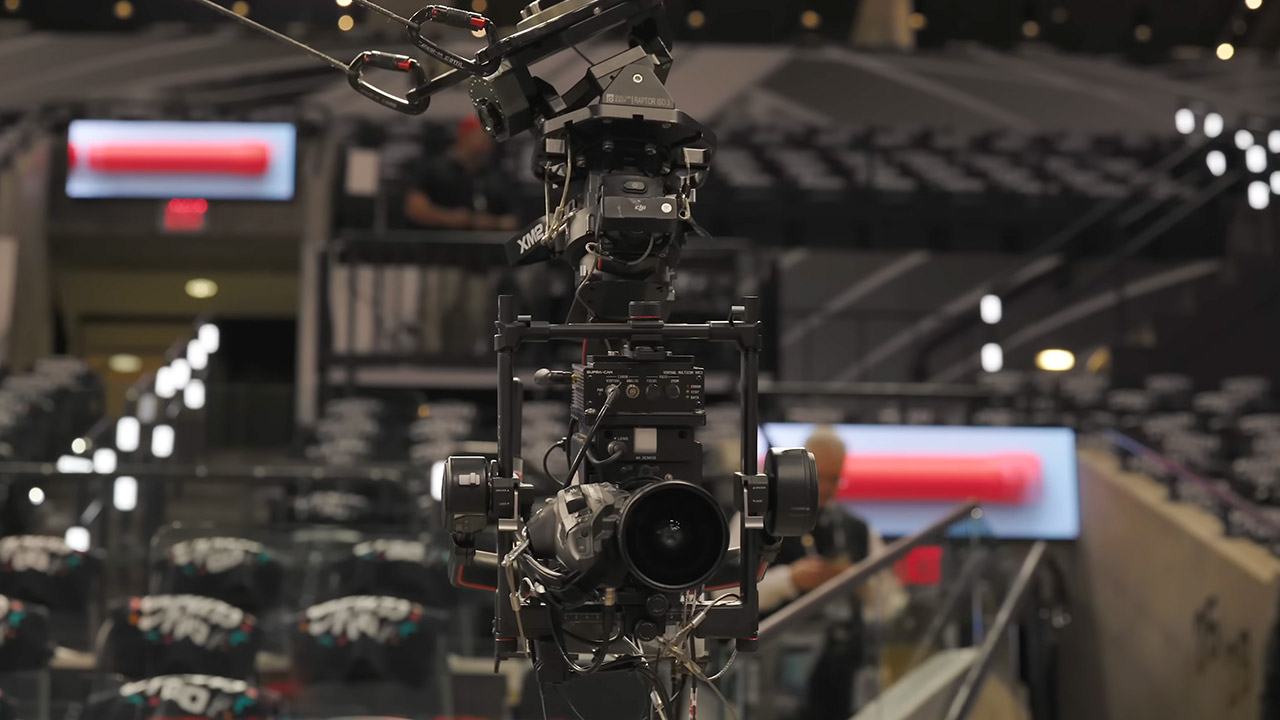
Many of these cameras now have more than just conventional lenses. One variant has an 8-to-1000 millimeter range, resulting in 122 times optical zoom. The servo controls, however, maintain focus and zoom changes smooth as silk, even while things are going at full speed, and there’s that one famous opening picture, a cable rig that runs along the arena’s ceiling, with a Sony P50 camera dangling from it on a stabilized gimbal. Two operators work together to make the photo just perfect, with one moving the entire apparatus through the air and the other handling framing, zoom, and focus.
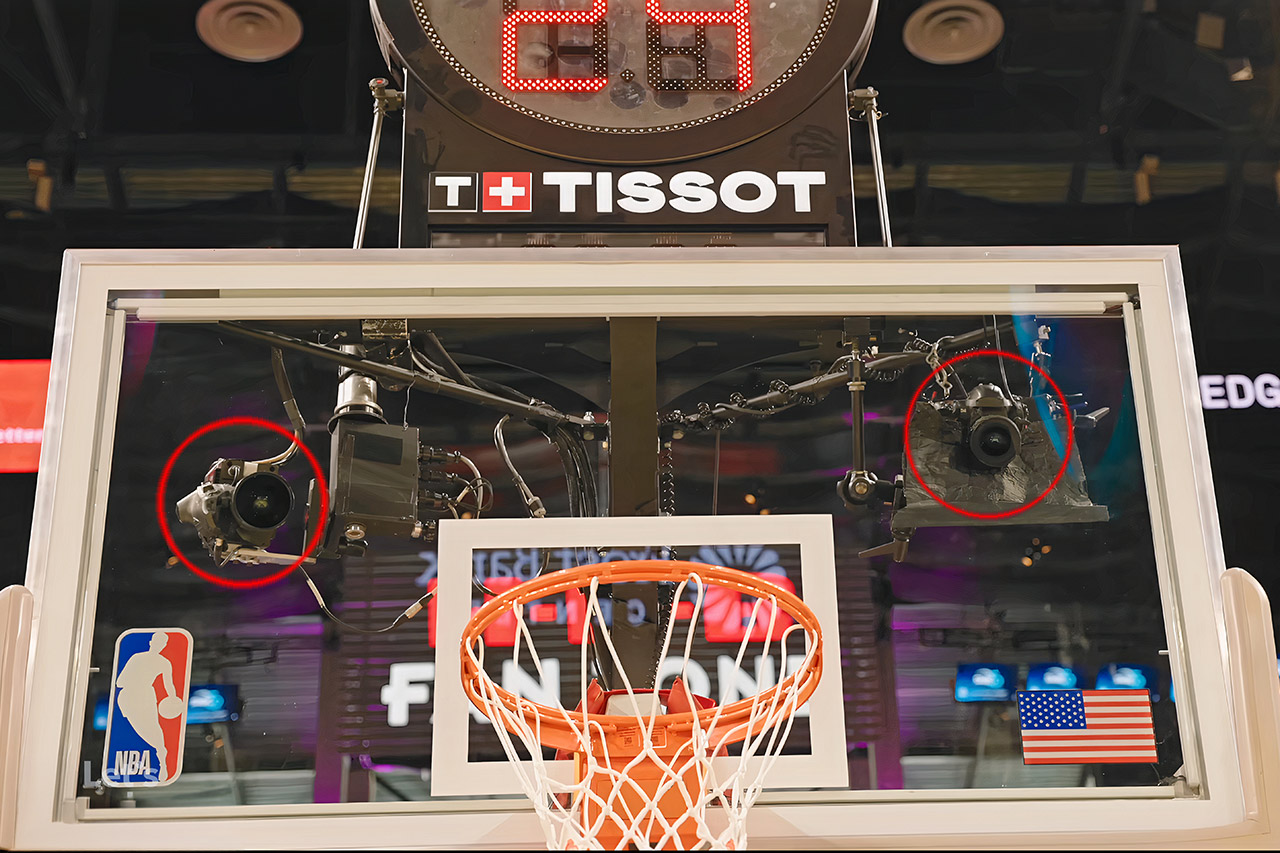
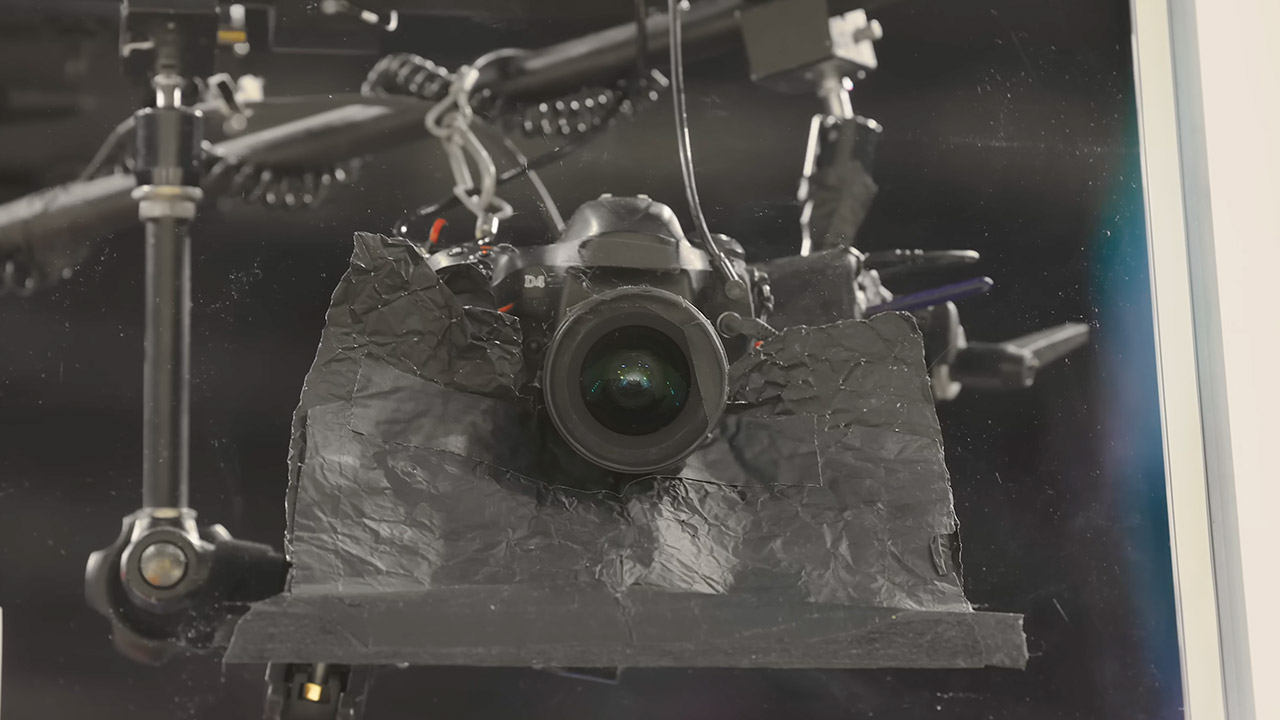
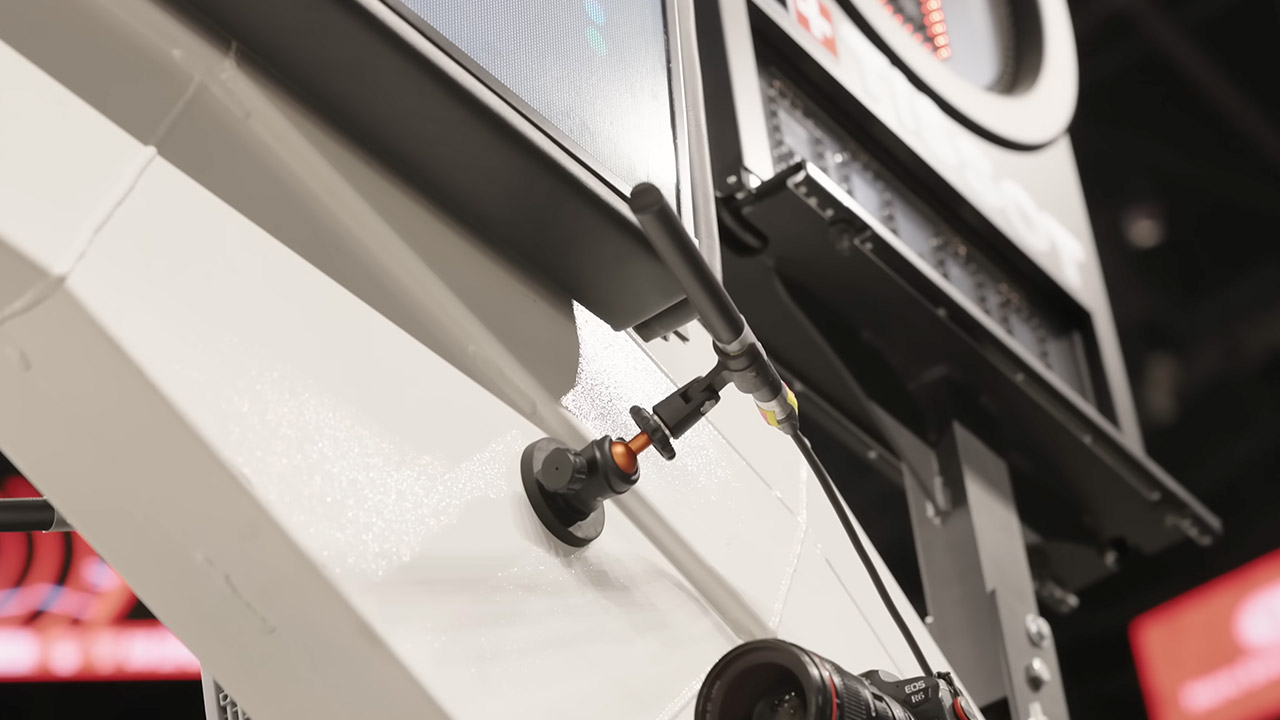
Each basket has its own support structure with extra gear on it, such as your RED and Sony cameras providing alternate viewpoints or stills, and Sennheiser shotgun mics dispersed throughout to capture the sounds of sneakers on the floor, the ball bouncing against the rim, and all that other nice things. Then there’s a remote camera sitting right above the rim, giving you those awesome straight-down views of dunks and such. Cameras aren’t the only game in town; you’ve got your wide-angle shots showing the entire court, your low-angle units providing dramatic floor-level perspectives, your dedicated feeds following key players or the bench, and your Steadicam operator moving along the baseline with a stabilized rig for silky smooth sideline coverage. If that isn’t enough, you can also use your remote dome cameras to get rotational views of the entire arena.
Of course, audio receives the same treatment, with microphones positioned all over the court and in the seats, some for capturing on-court sounds and others for layering in crowd excitement from various parts of the arena. The ultimate goal is straightforward: keep the audio in time with what’s happening on the court and make it sound like you’re right there in the action. Brownlee linked to a video by Dallas Taylor that demonstrates what happens with the audio engineer on NBC’s broadcasts.
All of that video and audio is then routed to a cluster of broadcast trucks situated a few hundred yards away from the arena. Teams inside perform their magic to color-grade all of the camera feeds, make the live audio sound clean and clear, prepare fast replays, and decide which shot to air next. The replay specialists then get to work, utilizing their fancy controls with scrubbing wheels and variable-speed levers to quickly locate and slow down critical moments.
If you have the space in a spare room, having your own fitness equipment at home can help. Smart home gym equipment can replace dumbbells and other machines because they’re meant to be an all-in-one machine. I’ve tested many popular smart home gyms on the market, so I know what the experience is like and what to consider when buying one.
Why we like it: The NordicTrack X24 is one of NordicTrack’s newest treadmills, and it offers a max 40% incline. This high incline lets you enjoy a variety of workouts, including hiking. If you want to walk or run at a decline, it also has a minus 6% max option.
Advertisement
Jump to details
Pros
Versatile for walking, hiking and running
Connects to third-party apps
Compatible heart rate monitors and Bluetooth headphones
Cons
Costs extra to access iFIT Pro membership ($40 per month)
Requires ample room because of its size
May not be in everyone’s budget at more than $3,000
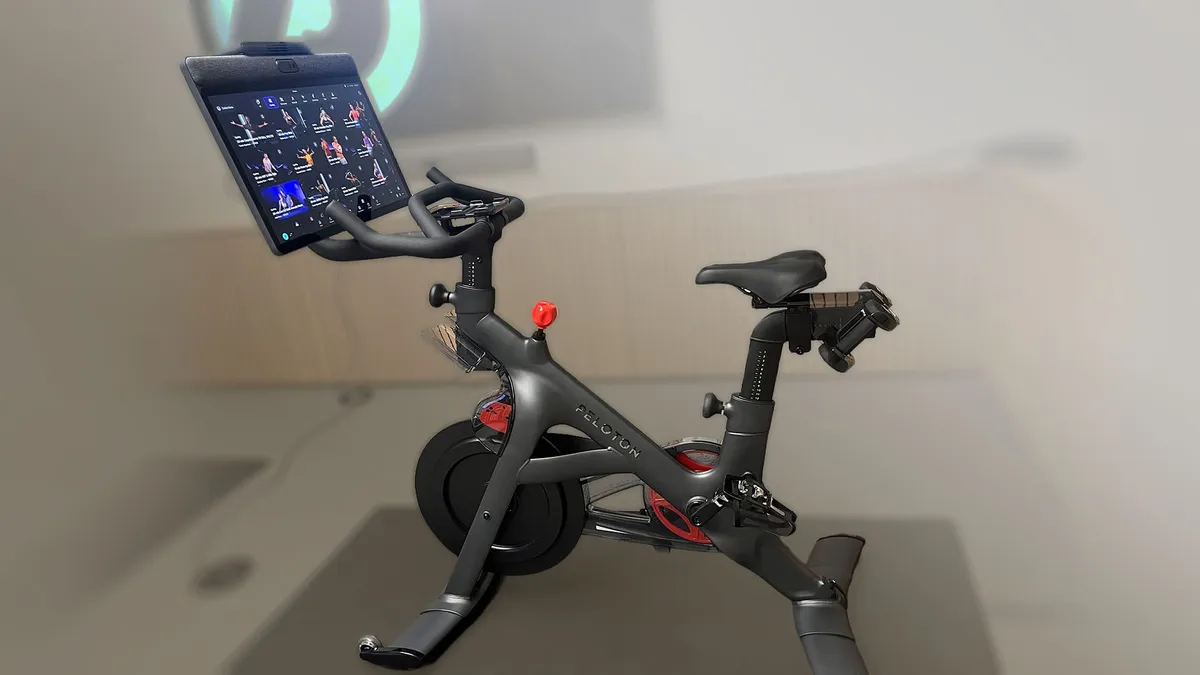
Why we like it: The Cross Training Bike Plus is the newest version of the Peloton Bike. Peloton made some upgrades, such as an extra-cushioned seat and an HD touchscreen that now rotates 360 degrees, so you can work out from anywhere on the floor. The 23.8-inch full HD touchscreen also includes a camera, which gives you access to Peloton’s AI-powered feature, Peloton IQ.
Jump to details
Pros
Peloton stays true to its brand design and function
Peloton IQ could benefit some members who want more guidance
The screen swivels 360 degrees, making it ideal to workout anywhere on the floor
Cons
Expensive and trade-in discount if you own a Peloton bike and want to upgrade it
Some members may expect more from Peloton IQ and be let down by the experience
All-Access Membership increased from $45 to $50
What we like about it: The Tonal 2 is the second version of Tonal, a strength training smart home gym that became popular in the fitness community, along with endorsements by athletes such as LeBron James and Serena Williams. It resembles a cable machine combined with a touchscreen TV and is intended to replace your dumbbells, barbells and weight plates while saving space in your home. It has 13 sensors to track your form and technique, while the smart handles and bar accessories (an optional, additional $495) have a gyroscope motion sensor that keeps track of your reps.
Jump to details
Advertisement
Pros
It is a space-saving, wall-installed machine
It’s quiet, which works well if you don’t want to disrupt the neighbors
It functions like a personal trainer
You aren’t limited to just using it for the classes and you can do your own customized workout
Cons
Your walls have to meet the requirements to install Tonal
The price is high for a machine ($4,295) that doesn’t include the cost of its own custom accessories or required professional installation
FITNESS DEALS OF THE WEEK
Deals are selected by the CNET Group commerce team, and may be unrelated to this article.
With years of experience testing fitness equipment, I’ve narrowed down the best machines based on cost and size and included memberships and overall performance. Below are the best smart home gyms to install in your home this year.
Latest updates
Aug. 1, 2025: We updated this list to reflect equipment that is still available and removed discontinued products. We updated Tonal to Tonal 2 and removed the NordicTrack Commercial 14.9 elliptical because it has been discontinued.
Advertisement
April 2, 2026: We updated the list to replace the NordicTrack Commercial 2450 with the NordicTrack X24. We added the Cross Training Peloton Bike Plus. The Tempo Studio has been discontinued and removed from the list.
What is the best overall smart home gym?
Our roundup includes the best pieces of equipment across various categories: mirrors, bikes, rowing machines, treadmills and the like. These aren’t comparable and there is no winner, but every product listed is the best in its category based on my expertise and rigorous testing.
Buying advice for smart home gyms
A lot of people set improving their overall health as a New Year’s resolution, and building a home gym is a smart way to approach this goal. It makes it easier to fit training into your schedule and stick to your commitment, because consistency will get you the best results. And if you choose to buy smart home gym equipment, you can make this process a lot of fun by accessing different training routines and virtual classes.
With that said, it’s never a bad idea to also compare and see whether an actual gym membership would make more sense. If you’ve found yourself to be self-motivated, have the extra space and don’t mind the added effort of buying and selling equipment, buying smart home gym equipment for your setup will make sense and should see some good use. But if you’ve found yourself feeling better training amongst people and don’t have the space to spare, joining an actual gym will have a more meaningful impact on your goals. Take these factors into account as you shop to improve your health.
Advertisement
Best smart home gyms for 2026
Pros
Versatile for walking, hiking and running
Connects to third-party apps
Compatible heart rate monitors and Bluetooth headphones
Cons
Costs extra to access iFIT Pro membership ($40 per month)
Requires ample room because of its size
May not be in everyone’s budget at more than $3,000
Why we like it: The NordicTrack X24 is one of NordicTrack’s newest treadmills, and it offers a max 40% incline. This high incline lets you enjoy a variety of workouts, including hiking. If you want to walk or run at a decline, it also has a minus 6% max option.
NordicTrack’s trademark SmartAdjust feature automatically adjusts your incline and speed. This function activates during an iFIT workout since the speed and incline are adjusted automatically based on the instructor’s cues. Considering the commercial size of this treadmill, you can enjoy it whether you walk, run or jog.
Advertisement
The 24-inch touchscreen is big enough that you can view an iFIT class (through NordicTrack’s workout app) clearly or your favorite Netflix show, as long as you have the iFIT Pro membership ($40 per month). If you’re an iFIT member, you also have access to iFIT’s AI Coach, which functions as a personal assistant and schedules your workouts.
Who it’s best for: This treadmill is best for the serious runner or those who enjoy hiking. The steep 40% incline and other treadmill features are beneficial whether you’re training for a race with various inclines or you enjoy a challenge when walking. You can also connect to third-party streaming apps, such as Netflix and Prime Video, to keep you entertained during your workout.
Who shouldn’t get it: This treadmill is large because it’s commercial-sized. Therefore, if you opt to buy it, make sure you have plenty of room to keep it. I had just enough space to test it in my home, but I would still recommend making sure you have more than enough space around it. This is important if you plan to do the iFIT classes and need to pivot the screen for your floor workouts.
I didn’t love the design on the speed and incline buttons because they’re flush with the treadmill and sometimes required me to press them multiple times to adjust these features. This isn’t helpful when you’re sweaty mid-workout and trying to adjust your speed quickly.
Advertisement
Pros
Advertisement
Peloton stays true to its brand design and function
Peloton IQ could benefit some members who want more guidance
The screen swivels 360 degrees, making it ideal to workout anywhere on the floor
Cons
Expensive and trade-in discount if you own a Peloton bike and want to upgrade it
Some members may expect more from Peloton IQ and be let down by the experience
All-Access Membership increased from $45 to $50
Why we like it: The Cross Training Bike Plus is the newest version of the Peloton Bike. Peloton made some upgrades, such as an extra-cushioned seat and an HD touchscreen that now rotates 360 degrees, so you can work out from anywhere on the floor. The 23.8-inch full HD touchscreen also includes a camera, which gives you access to Peloton’s AI-powered feature, Peloton IQ.
Peloton IQ is Peloton’s personal trainer experience during strength training sessions, counting reps, identifying the weights you’re lifting and checking your exercise form. The camera captures your body in frame during your workout, allowing you to use this feature.
Who it’s best for: The Cross Training Peloton Bike Plus is best for new Peloton fans who enjoy cycling and group fitness classes. If you like the idea of having an AI coach, you’ll like the Peloton IQ feature. Plus, having the bike makes it multi-functional for other workouts besides cycling.
Who should not get it: If you already own the original version of the Peloton Bike or Bike Plus, you won’t get a trade-in deal for the upgraded version. That means you’ll spend $2,695 to upgrade a bike you already own just to get the camera function. I also thought Peloton IQ could use some improvements. Until some changes are made, it may not be worth replacing your old bike for a new one.
Advertisement
If you purchase the Cross Training Peloton Bike, you can still take advantage of some of the Peloton IQ features without the camera. The all-access membership also went up in price (originally $45, now $50) — regardless of whether you own one of the new machines.
Pros
Advertisement
It is a space-saving, wall-installed machine
It’s quiet, which works well if you don’t want to disrupt the neighbors
It functions like a personal trainer
You aren’t limited to just using it for the classes and you can do your own customized workout
Cons
Your walls have to meet the requirements to install Tonal
The price is high for a machine ($4,295) that doesn’t include the cost of its own custom accessories or required professional installation
What we like about it: The Tonal 2 is the second version of Tonal, a strength training smart home gym that became popular in the fitness community, along with endorsements by athletes such as LeBron James and Serena Williams. It resembles a cable machine combined with a touchscreen TV and is intended to replace your dumbbells, barbells and weight plates while saving space in your home. It has 13 sensors to track your form and technique, while the smart handles and bar accessories (an optional, additional $495) have a gyroscope motion sensor that keeps track of your reps.
The latest version of Tonal also includes a smart view, which allows you to view yourself as you do your workout and has an Aero feature, which allows you to use it for cardio or HIIT classes. Tonal 2 uses up to 250 pounds of total resistance and calibrates your weights for different exercises based on your initial fitness assessment. Before you start a workout, Tonal can also tell which muscle groups are fatigued on the day of your workout and make sure to work around them.
Tonal offers thousands of on-demand and live workouts for beginners to advanced athletes. It even has five dynamic weight modes that make your workout harder and function like a personal trainer. If you don’t want to take a class, you can use the Tonal on its own and customize your own workout while still receiving the same feedback you would in class. You can also connect your Amazon Music or Apple Music account and listen to your own music during your workout.
Who it’s best for: Tonal 2 is best for the serious weightlifter or someone who is into strength training, but wants more guidance during their workouts. They’ll appreciate the 250 pounds of total resistance and especially being able to view themselves as they do their workout. It is a big investment at $4,295, so it’s best for the exerciser who plans on being committed to using it.
Advertisement
Who should avoid it: I would avoid buying the Tonal 2 if you know you aren’t going to be consistent with your strength training workouts. I also wouldn’t recommend it if you don’t have the space for it or the budget. The original Tonal was cheaper, and I didn’t find the upgrades to be worth the big price jump this time around. It also requires 7 feet of wall space and floor space. If the next iteration has more unique features and functions, then I might say the price point is worth it.
How we test smart home gym equipment Each smart home gym is tested differently based on its category since no two are alike. We narrowed down the best smart home gyms based on each of their respective categories. These include treadmills, ellipticals and mirror gyms, all of which have been tested by various CNET editors over the years.
Budget: Smart home gyms tend to be expensive and can easily cost a minimum of $1,000. Therefore it’s an investment you want to make sure is going to be worth it for your home and exercise preferences. Consider how much you’re willing to spend and what’s included in that price.
Advertisement
Space: Many smart home gyms are relatively large pieces of equipment. Before purchasing one, make sure you have enough room to set it up and move around it. For example, if you’re purchasing a machine such as a treadmill, it’s ideal to look for one that folds for easier storage. Whereas if you are purchasing a smart fitness mirror you’ll want to make sure that wherever you mount it there’s still room to exercise in front of it.
Versatility: Smart home gyms usually offer more than one function. If you’re buying a smart home gym, make sure it also offers a variety of classes so you can build a well-rounded workout. If you want personal training, make sure the smart home gym offers it as an option.
Membership: Since smart home gyms typically replace a gym membership, you’ll want to make sure that the membership provided will allow multiple user profiles so your whole family can use it.
Tempo Studio: We previously named the Tempo Studio the best smart home gym for strength training with free weight, but it has since been discontinued. Instead, you can opt for the Tempo Move or Core (the smaller version of the Studio).
Advertisement
Since the types of smart home gyms that exist vary across the board, there aren’t best practices that apply to all of the ones on this list. Instead, there are some key things to keep in mind–particularly for treadmills, ellipticals and rowing machines.
Best treadmill practices: Make sure to get clearance from your doctor first if you are pregnant, have been sick or recovering from an injury or surgery. Your treadmill workout should consist of a five to 10-minute warm-up, pace yourself and don’t run too fast too soon, avoid holding on to the handrails and keep your arms by your side, but use them so you’re a more efficient runner. Focus on running tall and light and relaxed to avoid any unnecessary tension.
Best rowing machine practices: Learn the importance of the setup which is broken up into four parts known as the catch, drive, finish and recovery. If you’re really interested in getting into rowing, it’s recommended to learn the right technique from an expert.
Best elliptical practices: Make sure to stand tall, keep your core engaged, and avoid slouching. Hold onto the handles and keep your feet flat and sturdy on the pedals when you pedal forward.
Advertisement
This depends on what you’re looking for in a smart fitness mirror. Most offer a variety of classes that are updated regularly but have a different purpose. Some focus on perfecting the artificial intelligence aspect of it to give you form feedback, while others prefer to concentrate on personal training or high-quality group fitness classes. The smart fitness mirror you choose will also depend on your preference, budget and space availability.
Owning a smart home gym can make it easier for you to stay active because you have a full gym at home.You can also share the experience with other family members looking to get fit.
Your smart home gym or smart fitness mirror will come with instructions on how to maintain and care for it. Some recommend only using microfiber or cleaning cloths to keep it clean and dust-free. Never use cleaning products that have not been approved by the manufacturer.
Neat Acoustics will preview its new Vito Classic loudspeaker at HIGH END Vienna 2026, giving the British brand’s latest and most ambitious Classic range model its first public outing. For a company that has been building compact, musically focused loudspeakers in northern England for more than three decades, the Vito Classic feels like a reminder that Neat has flown under the radar in North America for far too long. Much like Cyrus Audio, Graham Slee, and the late Glenn Croft’s wonderfully stubborn corner of British hi-fi, Neat has never needed flashing lights or luxury pricing to make its point.
I still remember hearing a pair of Neat loudspeakers years ago at a Toronto dealer, paired with a mix of Naim and Exposure gear. They were quick, spacious, and far bigger sounding than their footprint suggested. For anyone living with real-world space limits, especially in an apartment where refrigerator-sized loudspeakers are a non-starter unless eviction is the goal, Neat made a lot of sense. I should have bought them. File that one under “audio regrets, British division.”
Slim Cabinet, Big Neat Energy
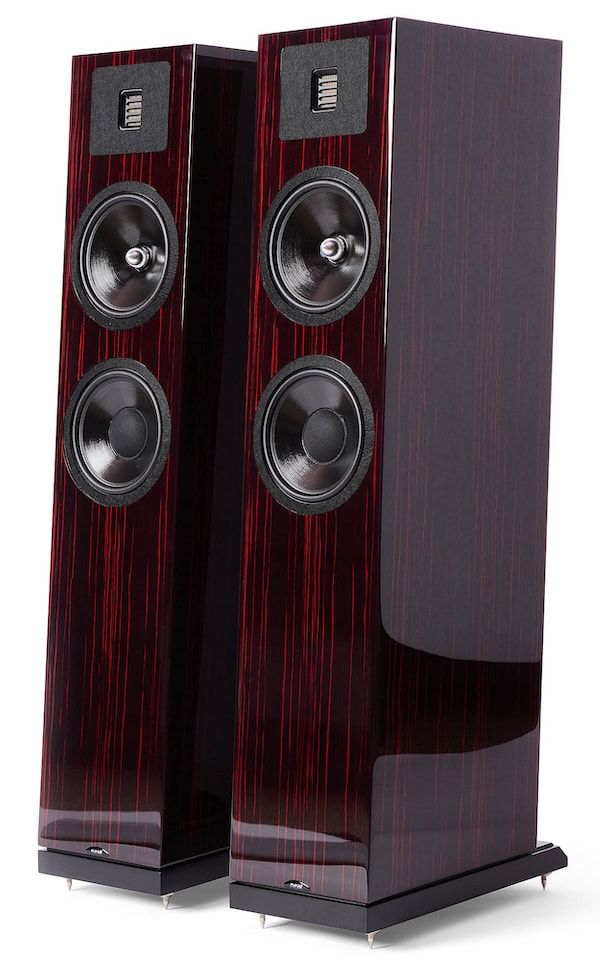
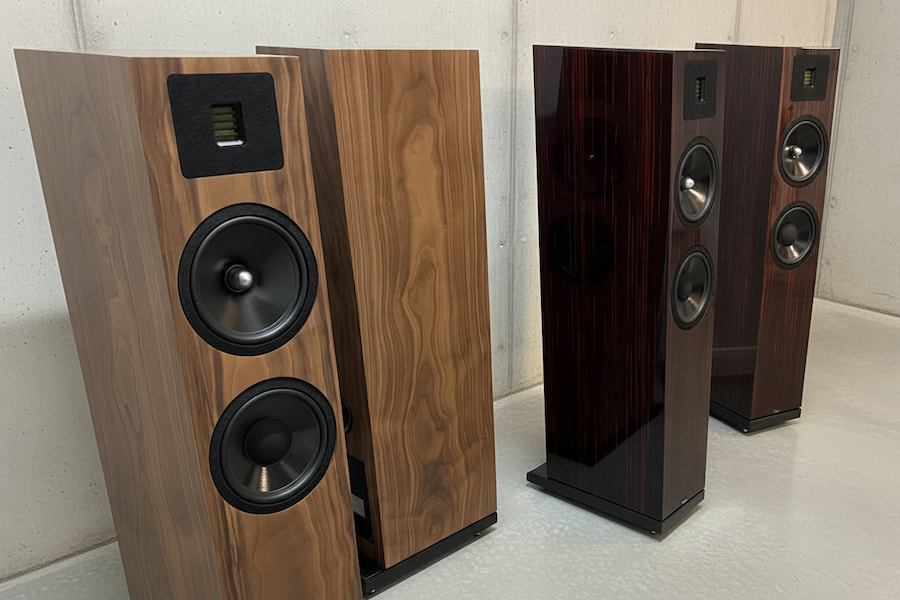
The new Vito Classic sits at the top of the Classic range and follows that same thinking: a slim 2.5-way floorstanding loudspeaker built around an AMT tweeter, dual bass drivers, a claimed 22Hz to 22kHz frequency response, 6-ohm nominal impedance, and a recommended amplifier range of 25 to 200 watts. At 90 x 19 x 30 cm, it is not trying to dominate the room. It is trying to disappear into one, which has always been part of Neat’s appeal.
That matters because Neat has built much of its reputation on speakers that sound bigger, faster, and more alive than their dimensions suggest. The original Iota, Iota Alpha, Iota II, and Momentum models all leaned into compact cabinets, strong timing, surprising bass output, and an energetic presentation without turning the treble into dental work.
I really enjoyed the Iota Alpha for its open treble and tight bass from a tiny floorstanding cabinet, while the Iota II came across as agile, punchy, energetic, and capable of surprising scale from a very small enclosure. The newer Momentum J-S continued that pattern with an AMT tweeter, deep bass for a standmount, and a clean, articulate presentation.
Advertisement
A lively top end has long been part of the Neat recipe. Not bright. Not etched. Not the kind of thing that makes cymbals sound like someone dropped cutlery down a stairwell. But dull? That word rarely gets anywhere near a Neat loudspeaker, and the Vito Classic does not appear eager to change that. The Vito Classic appears to follow that same path: compact footprint, real bass ambition, and enough top-end life to keep things moving along with some presence.
The Bottom Line
The Neat Vito Classic looks like the company’s most ambitious Classic range loudspeaker yet, but the appeal is not just that it sits at the top of the lineup. What makes it interesting is the combination of a slim 90 cm floorstanding cabinet, AMT tweeter, dual bass drivers, claimed 22Hz bass extension, and Neat’s familiar preference for tuning by ear first and measurement second. That approach has defined the brand for decades, and the Vito Classic appears to be aimed at listeners who want scale, speed, and energy without surrendering half the room.
First customer deliveries are expected in September 2026, but official U.S. pricing has not been announced. It will not be cheap. Based on its position above the Classic Mystique and the reported U.K. pricing around £4,995 per pair, it is hard to imagine the Vito Classic landing under $5,000 USD once import costs, distribution, and dealer margins enter the chat. Nobody should pretend otherwise until Neat or its U.S. distributor confirms the number.
Amplifier matching should be part of the conversation. Based on personal experience with Neat speakers and direct conversations around what works well with them, the usual British suspects make a lot of sense: Naim Uniti models, Exposure integrated amplifiers and power amps, Cyrus Audio, Rega, Roksan, and Quad’s new 3 integrated amplifier. The WiiM Ultra also belongs in the discussion as a flexible streaming front end, especially for systems where budget needs to stay attached to reality.
The Vito Classic is not for someone chasing giant cabinets, luxury jewelry finishes, or audio furniture that announces itself from across the street. It is for listeners who want a compact British floorstander with real bass ambition, a lively but not bright top end, and enough musical momentum to make smaller and medium-sized rooms feel far larger than they are. Neat has been quietly doing this for a long time. The Vito Classic looks like the company finally asking more people to notice.
The C8 Corvette is an incredible machine. The Z06 model is one of the fastest production cars from the United States to take on the Nürburgring, currently sitting in 39th place with a time of 7:07.30. Even the base model shouldn’t be glossed over thanks to its mid-engine V8 powertrain and exceptional handling. If you’re looking to take your C8 Corvette Stingray to the track, you should be considering the Z51 performance package.
The Z51 package is $5,000, so it doesn’t come cheap. Especially when the C8 Corvette Stingray is already over $72,000 to start (plus a $2,495 destination fee). But if you’re looking for the best track performance from your Stingray, the Z51 could be a must-have, offering better handling and higher speeds while keeping the car cool and efficient.
Advertisement
What makes the Z51 performance package $5,000
The Z51 package may be expensive, but it comes with plenty of performance-boosting upgrades that could very well pay off if you love pushing yourself on the track. If you want to keep up with the Miatas and 911s on those turns, the Z51 offers firmer suspension and passive dampers for more body control on tough corners. The Z51 has a shorter final-drive ratio for better acceleration, bringing the base model’s 4.89:1 ratio to 5.17. A new front and rear splitter offer improved aerodynamics. For better grip, you’ll also get Michelin Pilot Sport 4S ZP summer tires in place of the base model’s all-seasons.
Advertisement
Since you’ll be driving faster on the track, the engine will be working harder — and getting hotter. The Z51 package adds a third radiator in the driver’s-side air intake for increased cooling capacity. In addition, you’ll get a transmission cooler and additional built-in air funneling to the front and rear brakes. Speaking of, the Z51 has larger rotors than the base model, with the front increasing to 13.6 inches and the back to 13.8 inches. This will ensure you can stop efficiently while driving at higher speeds.
We use thermocouples linked to computer software to measure internal grill temperatures.
Brian Bennett/CNET
Our testing process varies by grill type, but most models go through three core challenges: a high-heat test like searing steaks or grilling burgers, a medium indirect-heat cook like a whole chicken over an hour, and a low-and-slow session with a full rack of ribs. Across more than 30 grills tested, we’ve refined this into a reliable routine.
Throughout each cook, we track total cooking time, internal grill temperatures, and the temperature inside multiple cuts of meat simultaneously. That data tells us what a grill’s own thermometer might not — where hot spots hide, how evenly heat actually distributes, and whether the readings you’re seeing on the dial match what’s happening on the grates
Advertisement
High heat test: Cooking 5.3-ounce burger patties until they reach 145 F internally.
Indirect heat test: Cooking a 5.5-pound chicken off the flames to 160 F.
Low and slow: Cooking a rack of pork ribs at 225 for 3 hours and taste testing.
Temperature consistency
James Bricknell/CNET
We use the InfiRay P2 Pro to test how fast the grills heat up and if the heat is even. It only works as the grills heat up because the top temperature is too high, but it gives us a good idea of how well each grill spreads the needed heat. The InfiRay P@ allows us to take temperature readings at multiple points across the heating area to obtain a more accurate average. We also use it to see if there is any major heat loss from other areas of the grill that may indicate poor-quality construction.
We also use a stopwatch to determine how quickly the temperature drops over a one-minute interval when opening the lid. It’s an especially helpful test for smokers, where you may need to check the meat but don’t want to compromise the cooking time. We always suggest using a meat thermometer to check the internal temperature of any food you are smoking, rather than opening the lid, as they almost all lose around 100 degrees per minute.
Taste testing
Delicious food is delicious
James Bricknell / CNET
There’s also a fair amount of (read: so much) taste testing, lively debate, and voting among our editors and families, in addition to the data we gather about grilling temperatures and cooking times. You might think it would be more fun than work to eat delicious food while discussing the merits of a grill, and you’d be right.
Advertisement
We don’t just taste test the three specific products in our temperature tests, as that wouldn’t give us a good spread. We choose products that people love to grill, including vegetables like corn, asparagus, and mushrooms, and meats like chicken legs, wings and steaks. When we can, we cook on multiple grills at once and keep a note on which products come from where. Then ask our (lucky) testers which they like the most. This is the least objective of the tests, but it is helpful in a real-world way. If the food just doesn’t taste good, then that grill likely isn’t doing a good job.
You can grill flaky fish or make a diner-style breakfast on Ninja’s FlexFlame gas grill and griddle.
David Watsky/CNET
If you’re interested in any particular method of testing, we have a dedicated how we test page, plus our recommendations for cooking with kamado grills, portable grills and charcoal grills ready for your perusal. Happy grilling.
A morning walk through East Lawn Cemetery in Ithaca, New York uncovered an immense colony of some 5.5 million subterranean bees. The discovery, which a Cornell University research team published in April in the journal Apidologie, documents one of the largest aggregations of these insects ever recorded in the world. The population, belonging to the species Andrena regularis, occupies an area of about 1.25 acres and is crucial for pollination of the region’s orchards, demonstrating that historic cemeteries can prove unsuspected refuges for urban biodiversity.
The Genesis of the Discovery
It all began in the spring of 2022, when Rachel Fordyce, then a laboratory technician in Cornell University’s entomology department, noticed an anomalous presence of insects during her usual walk to work. After collecting some specimens, she showed them to Bryan Danforth, an entomologist at the same university. Analysis revealed that they were Andrena regularis, commonly called the mining or miner bee. Unlike honey bees, this wild species has a solitary lifestyle and nests by digging tunnels in the ground. Historical records indicate that the insect has been present in the cemetery, established in 1878, since at least the early 1900s.
The Census
To calculate the size of the colony, scientists placed 10 traps placed in the cemetery between late March and mid-May 2023. These small net curtains cover less than one square meter of soil and channel insects coming out of the ground to a glass container. In total, more than 3,000 insects belonging to 16 different species were sampled, including bees, beetles, and flies, with an overwhelming prevalence of Andrena regularis. Extrapolating from the average density found in the traps, the researchers estimated a total population of between 3 and 8 million, with an average value of 5.5 million—the equivalent of more than 200 domestic bee hives.
The research yielded previously unpublished data on the biology of this little-studied insect. The traps revealed that males emerge from the ground a few days earlier than females during the first warm days of April, a strategy that maximizes mating opportunities. Subsequently, females dig nests and lay eggs in cells filled with pollen and nectar. The species has the distinction of wintering at the adult stage underground, which allows it to become active very early in the spring, in perfect synchrony with the flowering of apple trees in the nearby Cornell University orchards. Monitoring also revealed the presence of complex ecological dynamics, such as parasitism by bees of the Nomada imbricata species, which lay their eggs in the nests of the host species at the expense of the original larvae.
Advertisement
A Heritage to Conserve
The discovery highlights the need to protect the nesting sites of wild bees, 75 percent of which are solitary species living underground. Places such as old city cemeteries offer ideal conditions: sandy soils that are easy to dig, no pesticides, and an environment that is not subject to the profound alterations typical of intensive agriculture or housing development. To prevent populations of this magnitude from being accidentally destroyed by concrete pours or road work, the study’s authors have launched a global citizen science initiative. The project invites citizens to report the presence of underground bee aggregations in order to survey and protect these vital pollinators before habitat fragmentation jeopardizes their survival.
This story originally appeared on WIRED Italia and has been translated from Italian.
A research team found “extensive changes” on brain scans of 13 young women taking
GLP-1 drugs, reports the Washington Post:
Within only a few months, the brain connections in the salience network, which helps target attention, had multiplied… [“We didn’t expect to see this effect, and we really don’t know what it means,” said an assistant professor assisting the research.] Ozempic and other GLP-1 drugs were initially understood as a metabolism breakthrough: medicines that act like hormones to control hunger, blood sugar and weight. But as researchers probe deeper into how the drugs work, early evidence suggests that GLP-1s may also be reshaping parts of the brain.
Tens of millions of people are now taking the medications worldwide, turning what began as an obesity and diabetes treatment into what could be modern medicine’s largest unplanned neuroscience experiments… Long before Oprah Winfrey and social media influencers helped popularize GLP-1 drugs, physician-scientist Lorenzo Leggio was studying them as a possible addiction treatment… Several major studies examining GLP-1 drugs on nicotine dependence, opioid- and cocaine-use disorders, gambling addiction and binge eating are also underway. “It’s very exciting times, but we don’t fully understand how it works,” Leggio said…
As evidence has grown that inflammation, metabolism and mental health may be far more connected than scientists once believed, researchers have become intrigued by patients who say GLP-1 drugs appear to ease anxiety, compulsive thinking and emotional distress. Daniel Drucker, a University of Toronto researcher and GLP-1 drug pioneer who receives funding from several drugmakers, said researchers are investigating the medications across a variety of psychiatric and neurological conditions, though none are approved for them. “We have so many anecdotal reports: They were treated for blood sugar and then they felt much happier. Or they took one dose of the drug and their brain fog cleared,” he said. The article suggests social media complaints “raise deeper questions about what, exactly, these drugs are changing.
Advertisement
“If GLP-1s alter the brain systems involved in reward, craving and motivation, researchers wonder, where is the line between quieting a person’s destructive impulses and reshaping personality itself?”














































You must be logged in to post a comment Login