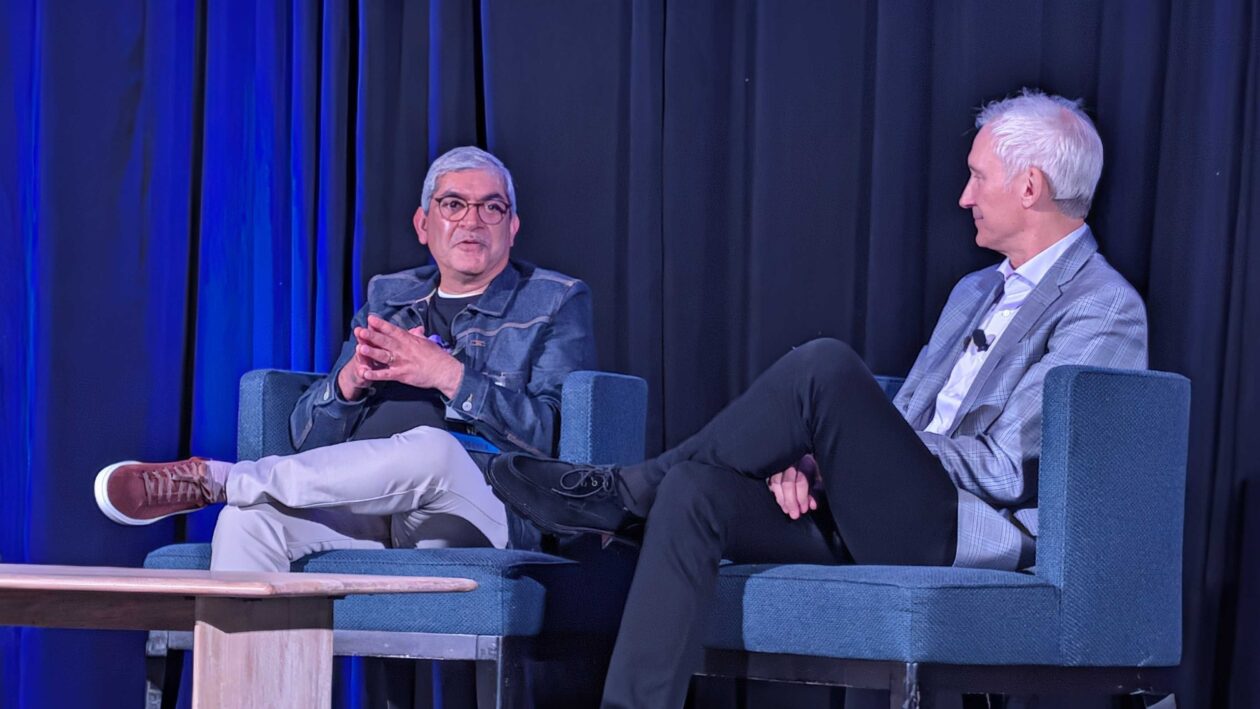
Rajeev Badyal, vice president of Amazon Leo, discusses Amazon’s plans for satellite broadband services while Chris Weber, Amazon Leo’s vice president of business and product, looks on during the Technology Alliance’s State of Technology Luncheon in Seattle. (GeekWire Photo / Brian M. Westbrook)
Amazon Leo is still months away from the commercial launch of its satellite broadband network, but there’s already at least one satisfied user: Rajeev Badyal, who heads up the Amazon Leo team.
“I was in a remote location last week,” Badyal said today at the Technology Alliance’s annual State of Technology Luncheon in downtown Seattle. “I had the terminal with me. … I was in a place surrounded by mountains. I go, ‘There’s no way that we can make it here.’ The team said, ‘Just go put it there, we’ll take care of the rest.’ And they did it. It worked flawlessly.”
Badyal said he and his wife even streamed a movie in an isolated location where their phones couldn’t pick up a signal. “We were both like two kids who had never seen the internet before, discovering the internet for the first time,” he recalled.
For now, Badyal and other insiders are the only ones trying out Amazon Leo’s satellite service on a beta-testing basis, but it won’t be long before the first customers will be able to sign up.
Badyal, who leads the effort as vice president of Amazon Leo, can hardly wait. “That, to me, is the ultimate milestone,” he said. “That’s why all of us have been working on this — to get it out there, get it in the hands of the customers.”
Advertisement
Amazon Leo won’t be entering virgin territory. For years, SpaceX’s Starlink network has enjoyed the dominant position in the market for satellite broadband services via low Earth orbit. Starlink currently has more than 10,000 satellites in orbit, serving more than 10 million customers around the world.
Amazon Leo currently has a little more than 300 satellites in orbit, one year after its launch campaign began in earnest. Over the next year, the team expects the pace to pick up dramatically. “Just a little over a year ago, we used to make one satellite a month, and that was 24/7,” Badyal said. “Now we can do tens of satellites a week at our factory in Kirkland.”
By mid-2029, Amazon is due to have more than 3,200 satellites launched on rockets provided by United Launch Alliance, Blue Origin, Arianespace and even SpaceX, under the terms of its license from the Federal Communications Commission. And it’s already received the FCC’s preliminary go-ahead to add another 4,500 second-generation satellites to the network.
Advertisement
Pieces of the puzzle are coming together on the consumer side as well: Although Amazon Leo hasn’t yet announced plans for pricing and availability, it has released information about three levels of service, offering downlink speeds that range from 100 megabits per second to 1 gigabit per second. This week, the FCC released information about Amazon Leo’s Wi-Fi routers.
During today’s luncheon presentation, Badyal and Chris Weber, Amazon Leo’s vice president for business and product, shared a few inside stories about the network’s development.
How it all began
Before joining Amazon, Badyal worked at Starlink’s satellite development operation in Redmond, Wash., and was famously fired by SpaceX CEO Elon Musk in June 2018. Not long afterward, Badyal met with Amazon founder Jeff Bezos, who he said was “extremely passionate and bullish” about creating a satellite broadband network.
“The next thing you knew, I said, ‘OK, I will come and help you build this constellation and make this vision come true,’” Badyal recalled. “And we joined in October.”
Advertisement
Badyal and five other engineers worked out the design for the satellite constellation in an office that was blocked off with curtains. “These were black curtains, and it basically said, ‘Keep Out,’” Badyal said. The engineers wrote up a vision document that ran longer than Amazon’s traditional six pages. “It was harder to write the document than it was to design the constellation,” Badyal joked.
“In January of 2019, we were in front of Jeff. He had just come back from an earnings announcement, and he had the 40-page document in his hand,” Badyal said. “He puts it on the table, and then he goes, ‘I love this stuff.’ I’ll never forget those words: ‘I love this stuff.’”
How Project Kuiper became Amazon Leo
In the beginning, the network was called Project Kuiper. That was an inside-baseball reference to the icy Kuiper Belt that surrounds the planets of the solar system, in a way that’s similar to the belts of satellites that surround Earth.
Amazon Leo’s Chris Weber says the purplish shade that’s used for branding purposes is not actually purple, but “krypton.” It’s meant to match the color of the plasma generated by the krypton thrusters on Amazon Leo’s satellites.
“Project Kuiper was a project name, so we knew at some point we’d have to evolve that from a project name to an official brand name,” Weber said. “A couple of things went into it: One is, we had to have a name that resonated globally. Number two, it had to be easy to say.”
“Kuiper” just didn’t cut it. Weber recalled an internal video in which an assortment of influencers pronounced the word as “Ky-per, Kweeper, Cooper, etc.”
Advertisement
“Leo,” on the other hand, resonated. For one thing, it’s easy to pronounce. “Leo obviously gives a nod to ‘low Earth orbit,’ so we like that as well,” Weber said. And putting “Amazon” at the front of the name “really means a lot, around trust and credibility,” he said.
Technological turning points
Badyal said the hardest challenge to solve didn’t have anything to do with the satellites themselves, but with building low-cost customer terminals.
“The challenge for us was, can you integrate what you call a receive antenna and a transmit antenna into a single panel that’s small enough and that’s cost-effective?” he said. “We proved that out in 2020. That was the key pivotal point in the program, where you can say the floodgates were open.”
Another breakthrough came with the development of the optical laser links that transfer data between Amazon Leo’s satellites. Badyal said the first test of the satellite-to-satellite connection didn’t work because the satellites weren’t configured correctly. “It’s always the config file that’s the problem,” he said. After the configuration was corrected, the satellites successfully transferred data at the target rate of 100 gigabits per second.
Advertisement
“I couldn’t believe it,” Badyal said. “I had to call the team that night and just tell them what an incredible job they’d done. For me personally, it was emotional. I had to actually sit down for a little bit, just to collect myself. And I was screaming, by the way, and my wife goes, ‘What went wrong?’”
How satellite broadband will change the world
Weber said learning about potential use cases for high-speed connectivity via satellites is “one of the coolest things in my job.”
“I was in Argentina, and we visited a school where the students have a single cellphone that everyone has to share with a connection that’s less than 3G speed. So essentially it’s almost completely unusable,” he said. “What satellite connectivity will bring to those classrooms there is game-changing, not only for that school [but for] that entire community.”
On the business front, Weber said satellite connectivity will also provide greater resilience for enterprises and manufacturing facilities in case terrestrial coverage goes down. And he said there are “tons of use cases” for government services, including connectivity for first responders in remote locations.
Advertisement
“Everyone in Amazon Leo, they come to this not because it’s a job. It’s because it’s this mission of delivering connectivity to underserved and unserved communities across consumers, government and business,” Weber said. “That’s the thing that we wake up to every day.”
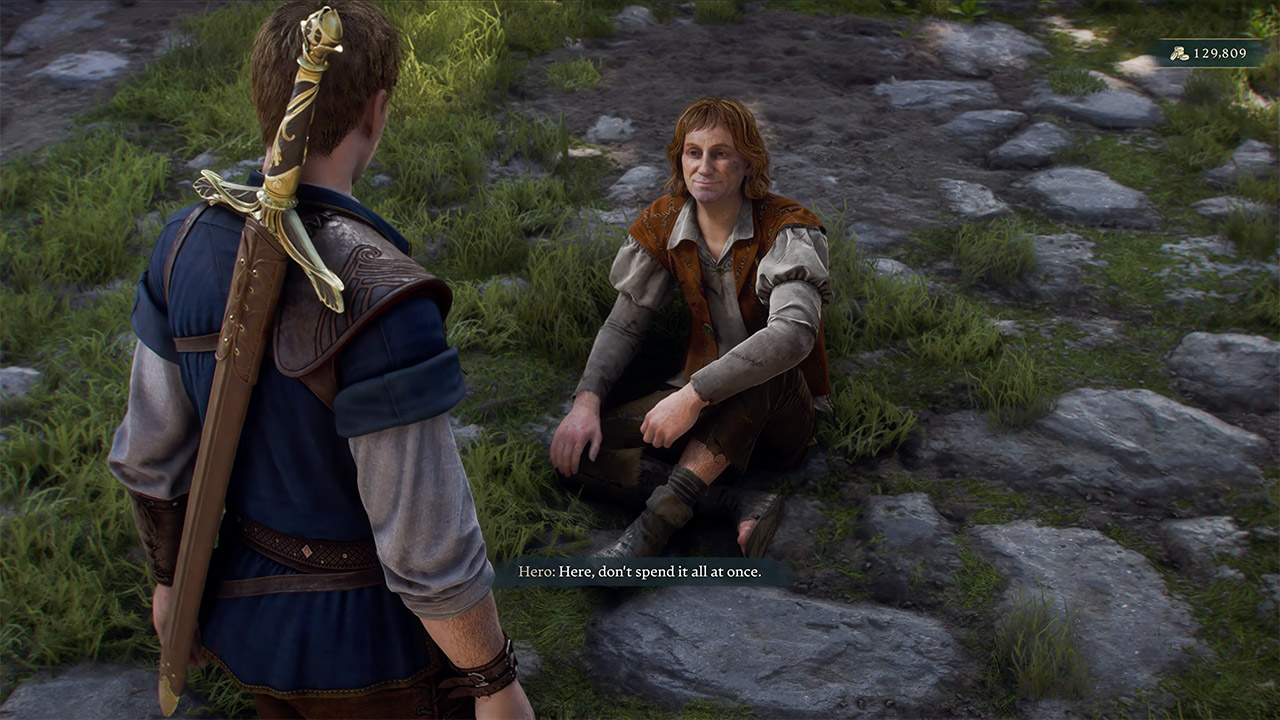
Microsoft shared a 30-minute gameplay video for Fable right after the latest Xbox showcase. The footage offers the most detailed look yet at how Playground Games plans to handle the return to Albion. Players step into the role of a hero who begins as a child discovering unusual powers in the village of Briar Hill. A time jump then moves the story forward to adult life, where decisions start to shape both the character and the surrounding world.
Playground Games based the game on three key ideas from previous entries. A fairytale tone is undoubtedly evident, but it is balanced by a particular British sense of humor and a heavy emphasis on making decisions that will have long-term consequences. The new story stands on its own, but it has a very familiar approach to fantasy.
FASTEST, MOST POWERFUL XBOX — Experience next‑generation performance with 12 teraflops of processing power, delivering smoother gameplay, richer…
TRUE 4K GAMING UP TO 120 FPS — Enjoy breathtaking visuals with true 4K resolution, HDR, and frame rates up to 120 FPS, plus support for advanced…
1TB CUSTOM SSD & VELOCITY ARCHITECTURE — Reduce load times dramatically with the custom 1TB SSD and XBOX Velocity Architecture, enabling…
The combat system functions efficiently because it is divided into three fundamental categories: Strength for close-up and melee combat, Skill for ranged attacks, and Will for magic. Some of the videos show some very innovative uses for that magic, such as transforming an enemy into a chicken and then shooting them with a fireball, or sneaking up behind someone and teleporting past for a quick strike before the green orbs light up to indicate you’re accumulating experience.
Reputation is based on what others see you do, not on an abstract number. So, assisting someone in need may earn you a virtuous or merciful reputation, which may result in a more welcoming reception from the community. If you cause disturbance in public, you may gain a reputation as a troublemaker, which could make things more difficult in the future. The system is clever since it allows you to build a reputation through a combination of good deeds as well as selfish goals, and you can even try to shape people’s impressions of you by spreading rumors or paying off local gossipmongers.
Is it more than just fighting and main quests? You can truly establish your existence in the world. You can purchase a home, open a bar, a blacksmith business, and so on. You can even develop relationships with others, some of which may lead to your own family or a shared home. Instead of always rushing to complete the main story, the game lets you to take a break and enjoy the journey.
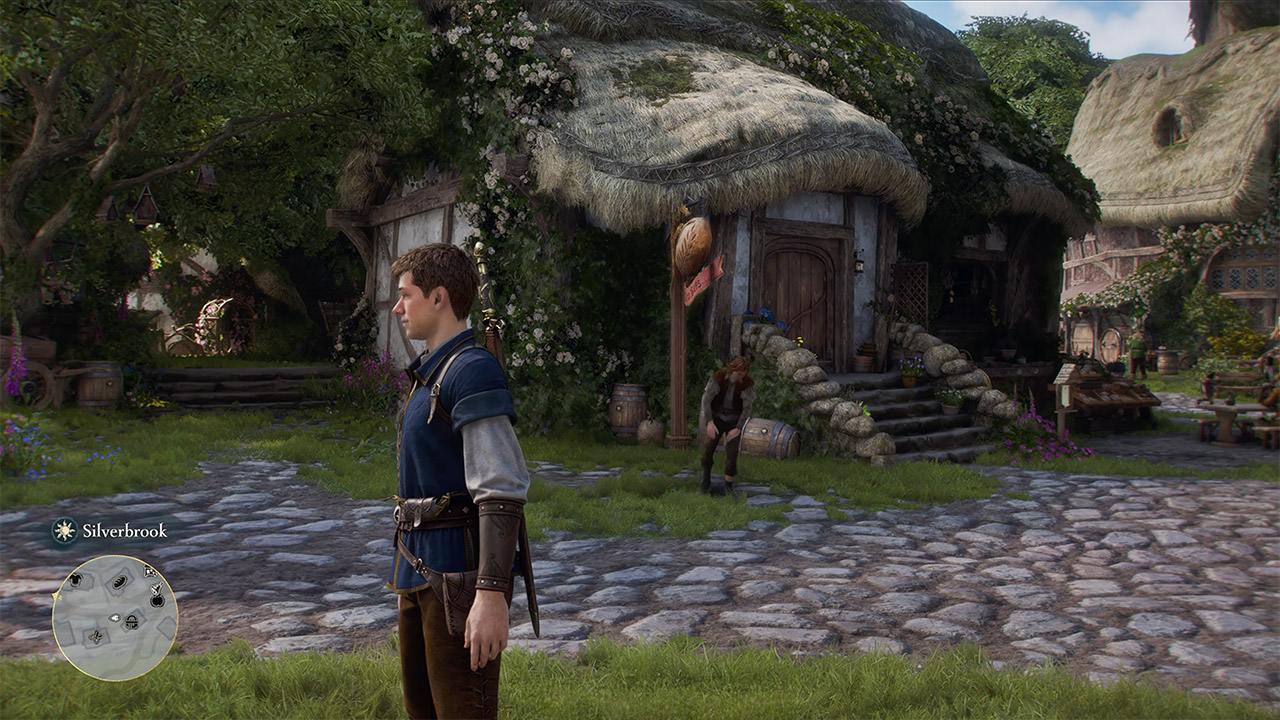
Albion, the land in which you play, is full of little side paths and detours. There is no one “correct” way to play, so go explore, do some local jobs, and start building a life in any community you find yourself in. Towns look to be populated by real people, rather than just waiting for the hero to show, because the residents have their own schedules rather than simply hanging out till you arrive.
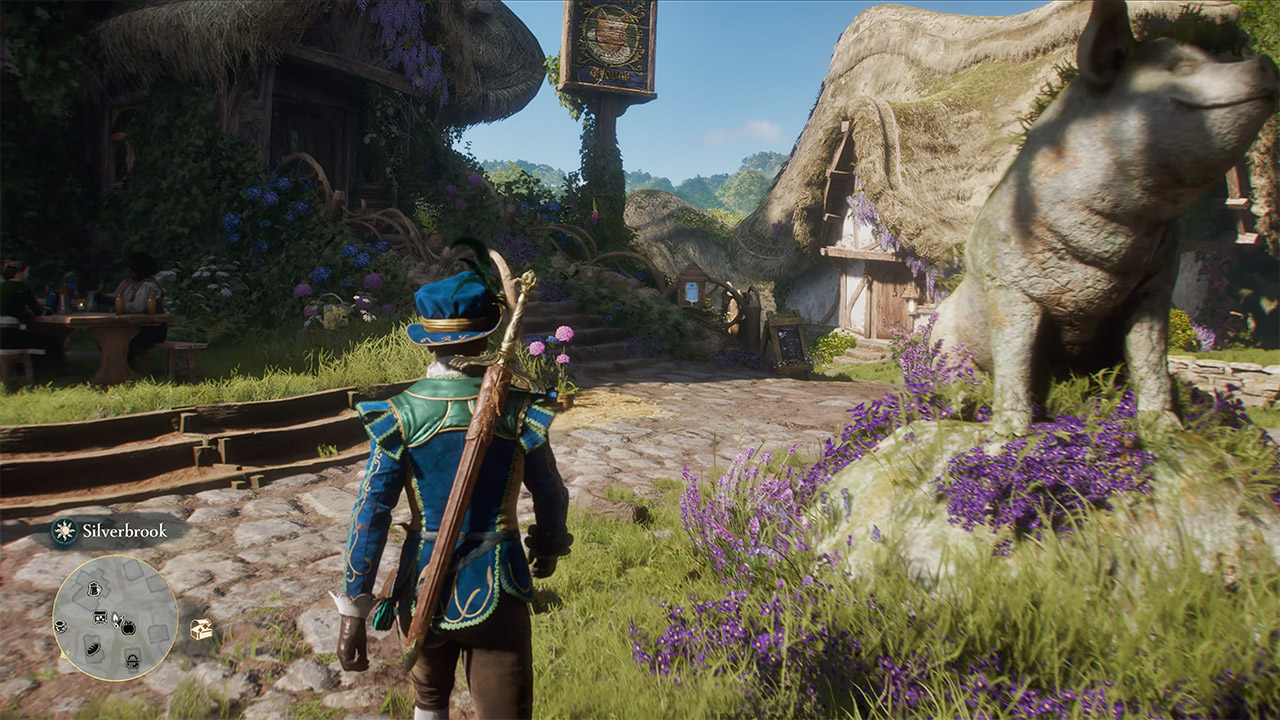
The visuals are bright and stunning, with a timeless quality about them. The villages are full of flowers and thatched roofs, and the locals look to be going about their everyday lives rather than standing around waiting for you, which is one of the most impressive elements of this demo, given that the entire game will be released on February 23rd, 2027. [Source]
Every generation has its iconic cars. From the hot rods of the 1930s to the sleek sports cars of the 1980s, each era can be defined by its unique take on the age-old idea of how to make cars that are fast, cool, and expressive.
Across all of automotive history, the 1960s stand out as a special time for cars. High-performance vehicles were incredibly affordable, and gas wasn’t the premium product it is now. Many houses had one- or two-car garages, and most had a car that served as an extension of their own personality. The cars of this era had not yet settled into the homogenized style of the 1970s, retaining much of the hot-rod flair of earlier decades without becoming luxury status symbols reserved for only the wealthiest elites.
Advertisement
Let’s travel back in time to the golden age of automobiles and look at some of the most legendary vehicles of that one-of-a-kind decade. If you grew up in the ’60s, you definitely remember these cars. And if you didn’t, you surely still find yourself looking at them with an envious wistfulness of vicarious nostalgia. Simply put, they don’t make ’em like that anymore.
Advertisement
1965 Pontiac GTO
Over the years, Jay Leno’s Garage featured tons of iconic and expensive cars, but few are as downright legendary as this one. When the 1965 Pontiac GTO Royal Bobcat was featured on an episode of Jay Leno’s Garage, the former Tonight Show host described the vehicle as the first true supercar, an early example of the burgeoning American muscle car scene. He even went so far as to say, “This was the dream car when I was 14 or 15 years old.”
The Pontiac GTO was special because it broke, or at least sidestepped, the rules. Back in the day, General Motors limited the size of a midsize car’s engine to 330 cubic inches. Big cars get big engines, small cars get small engines. But the engineers at Pontiac managed to stuff a 389-cubic-inch V8 engine into a midsize car, and the rest was history. Initially pitched as an optional engine upgrade for the Pontiac Tempest, its popularity led to the invention of the 1966 GTO as its own bespoke vehicle, and the birth of the American muscle car.
There’s nothing like the rev of an oversized V8 engine that’s just a little (or a lot) too big for the car it’s powering. Every child of the ’60s who sat in a car and felt the entire frame vibrate as the driver revved the engine had the exact same thought: “When I grow up, I want one of these.” Chances are, that car was a Pontiac GTO.
Advertisement
1968 Ford Mustang
For many automotive enthusiasts, love for cars comes from exposure to TV and movies. In that regard, the 1960s had some of the most legendary vehicles ever to grace the screen. There’s the 1966 Batmobile driven by Adam West in “Batman” and the Mach 5 from “Speed Racer,” as well as the Black Beauty from “The Green Hornet” and the Elva Mk VI, driven by none other than Elvis Presley in “Viva Las Vegas.”
However, if there’s a single scene that represents the blending of cars and cinema, it’s the 1968 Ford Mustang driven by Steve McQueen in “Bullitt.” For the most part, “Bullitt” is a by-the-numbers detective movie bolstered by McQueen’s cool charisma in the title role. However, it kicks into overdrive during the show-stopping ten-minute car chase sequence, which was a turning point in action cinema. The entire car chase genre, including the “Fast & Furious” series, would not exist without “Bullitt.” McQueen does much (but not all) of his own driving in the scene, which sees Frank Bullitt outmaneuver hitmen in a pulse-pounding pursuit through the streets of San Francisco.
Advertisement
The movie and its car chase inspired a whole generation of car fanatics. Everyone who saw “Bullitt” wanted a Ford Mustang. More than five decades later, Ford is still releasing modern Mustangs inspired by the one used in the film, such as the 2020 Ford Mustang Bullitt, named after the movie. As for the original 1968 Mustang used in the movie, it was sold for $3.74 million at a 2020 auction, making it the single most valuable Mustang of all time.
Advertisement
1967 Chevrolet Camaro
In 1966, Car and Driver magazine went hands-on with the 1967 Chevrolet Camaro SS 350 and came away impressed, though with more than a hint of melancholy. The Camaro, they surmised, was aimed at the youth market, which had been sideswiped by the escalation of the Vietnam War. The Camaro was hip and relatively inexpensive but hindered by the fact that its target audience of young men had been drafted into military service.
Nevertheless, the Camaro was priced reasonably, with both the hardtop and convertible versions retailing for less than $3,000 each, competitive with its main rival, the Ford Mustang. One of the more popular versions of the Camaro was the RS, or Rally Sport, variant, which featured concealed headlights, mag wheels, options for vinyl roof customization, and rally stripes. They don’t make the car any faster, but they sure look neat!
The car was marketed toward young people, though it earned the respect of auto enthusiasts due to its use as the Pace Car in the 51st Indy 500 in 1967, with none other than three-time Indy 500 champion Mauri Rose behind the wheel, thus giving the vehicle credibility among the gearhead community. As a result, the Camaro ingratiated itself with Indy 500 fans of all ages. There would be many Camaro variants over the decades, but the 1967 version is among the best-looking Chevy Camaros of all time. Not bad for a car approaching 60 years old.
Advertisement
Volkswagen Van
Even if you’re not a “car person,” you know what a Volkswagen van is. It’s the iconic “hippie bus,” and it’s instantly recognizable as an iconic car of the era. Design-wise, it had a ton of room in the back, which was perfect for road trips and the nomadic lifestyle of counterculture kids. Remember, back in, say, 1967, gasoline was only 33 cents per gallon on average, so going on even a cross-country trek wasn’t as difficult as it is now. If you wanted to drive for days at a time, you could just go without selling off all of your possessions first.
The original run of the Volkswagen Transporter was actually introduced way back in 1950, and it became popular in the beach scene. Teenagers of the era would pack into a VW and head to the beach for fun in the sun. Later on in the 1960s, however, the bus would become the de facto automobile mascot of the hippie scene. It was perfect for packing in many riders to go to protests, and there was plenty of room in the back for a little “free love,” if you will.
Advertisement
In 1967, the second-generation iteration of the vehicle was introduced, though it lost some of its bus-like novelty with the removal of the iconic split windshield design in favor of a more traditional single-pane windshield, among other changes that sacrificed the classic identity of the original Transporter. The VW Bus would evolve considerably over the years, but the original is still a fan favorite.
Advertisement
1963 Porsche 911
There were sports cars before Porsche, but the 1963 Porsche 911 changed the game. It wasn’t the first classic Porsche, but it was sleek and small with an instantly recognizable silhouette. Under the hood, the 911 boasted an air-cooled engine that delivered 130 HP. Despite making sports cars, Porsche also had a reputation for being (relatively) affordable and would go on to develop the Porsche 912 in 1965 as a less expensive alternative to the regular 911.
The Porsche 911 is an iconic car for bringing luxury sensibilities to everyday suburbia in the 1960s. Its engine may not have been able to compete with the muscle cars of Pontiac or Ford, but Porsche would upgrade the engine over the years. In 1966, the Porsche 911S boosted the engine to a more palatable 160 HP, and by 1971, the Porsche Carrera RS would boast a stellar 210 HP engine.
For many young people in the 1960s, Porsche was their introduction to the very concept of a sports car. For those who didn’t see the appeal of a bulky, muscular hot rod but still wanted to go fast, Porsche was the origin point for a lifetime of aspirational thinking.
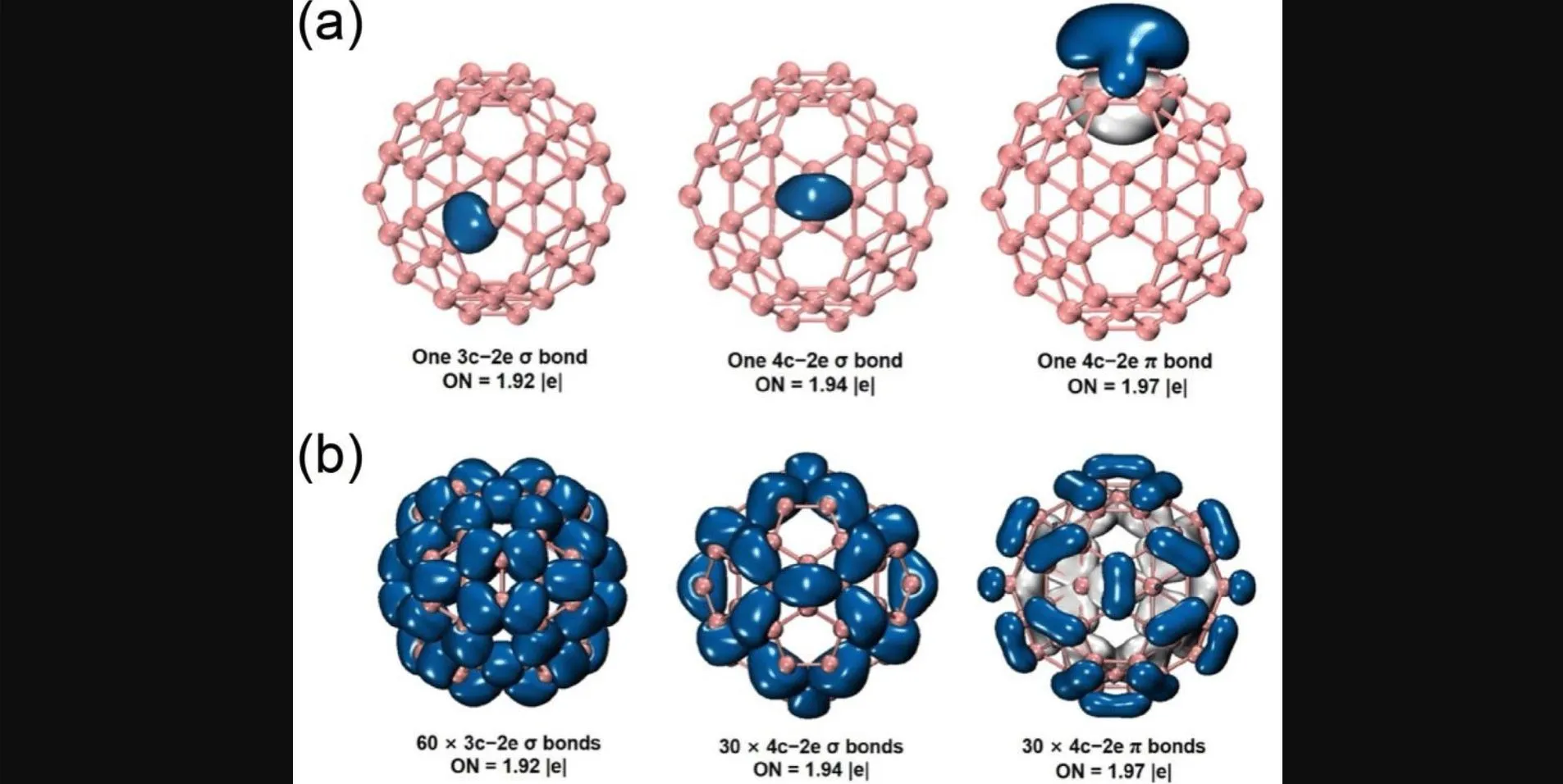
A buckminsterfullerene, also known as a buckyball, is typically a fullerene consisting of sixty carbon atoms (C60) arranged in a way that resembles a football-like sphere. Extending this arrangement to other types of atoms has until now however proven as illusive as finding non-carbon-based lifeforms. In a paper by [Hyun Wook Choi] et al. and published in Chemical Science the discovery of boron buckyballs is detailed. There is also a soft-paywalled article in the Chemical & Engineering News magazine for a higher-level perspective.
The discovered boron-based buckyball ups the number of atoms to eighty, forming B80 (boron fullerite) with a slightly larger diameter than C60 at 0.85 nm versus 0.71 nm. Perhaps more interesting are the claims by the authors that boron fullerite may have more practical applications than its carbon-based cousin, mostly due to it being predicted to be a semiconductor with an 0.8 eV energy gap and better electron acceptance that provides interesting doping prospects.
Producing these boron structures used laser vaporization with a helium carrier gas that was seeded with argon to increase cooling efficiency. Inside this boron cluster the reported structures were then discovered and characterized as described in the paper.
Advertisement
Obviously, going from a fascinating laboratory discovery to bulk production won’t be easy, and the predicted properties of boron fullerite may turn out to be incomplete or have a dark side that we aren’t aware of. Regardless, they’re bound to be more useful at least than the carbon version that’s remained mostly a curiosity despite many years of research.
A former engineer at Elon Musk’s xAI has filed suit against the company and its parent SpaceX claiming he was fired for raising concerns about AI safety.
Devin Kim, who left xAI in September 2025, filed the suit in a California state court on Tuesday. The complaint comes days before SpaceX is set to join the public markets in what’s shaping up to be the largest IPO in history.
According to the lawsuit, which TechCrunch has viewed, Kim became a prominent voice for AI safety while working on Grok, xAI’s AI chatbot. He allegedly complained repeatedly about xAI’s failure to prioritize safety in Grok’s development, a product that has since come under fire for a range of safety and behavioral issues. In particular, Kim was concerned with the possibility that Grok could foment discrimination and help spread information about weapons of mass destruction.
“Grok, of course, proved Mr. Kim right by engaging in spectacular displays of online hatred and vitriol, with the model likening itself to Hitler (‘MechaHitler’),” the lawsuit reads. “Following the Hitler debacle, Mr. Kim worked to re-evaluate Grok’s political bias and discriminatory tendencies.”
Advertisement
September was my last month at xAI! I joined as one of the first members of the post-training team in 2024 and eventually led research tooling, where we built some of the world’s best systems to accelerate Grok’s development.
On my first day, I was at the whiteboard with @ibab…
A few months after Kim departed xAI, Grok made headlines again when the chatbot was used to flood X — Musk’s social media platform that also falls under the xAI umbrella — with nonconsensual sexual imagery.
The lawsuit also positions Kim as a whistleblower who was concerned about xAI’s alleged disregard for AI safety as “unlawful” in areas such as internet regulation, consumer protection and unfair business practices, and arms and explosives regulation, among others.
Advertisement
xAI and SpaceX did not immediately respond to requests for comment.
Kim’s focus on AI safety predates his time at xAI. While working at Scale AI, Kim worked on early safety AI initiatives, like leading a project that produced training data for AI to train systems to detect harmful content and comply with governance policies. Last week, the nonprofit Center for AI Safety, which focuses on AI risks, named Kim as its president.
Interestingly, the lawsuit doesn’t implicate Musk himself as a reason for a lack of safety. Rather, Kim’s lawyers describe Musk as having directed xAI to follow the law and implement appropriate safety and testing processes. Instead the claim targets Kim’s supervisor, xAI co-founder Jimmy Ba — who left the company earlier this year — saying that Ba ignored Musk’s directives and retaliated against Kim for pushing for safeguards, in an effort to “silence his repeated complaints about AI safety and biases.”
The lawsuit portrays Ba as someone who vehemently opposed AI safety measures, allegedly telling Kim at one point “AI will kill us all anyway,” and who was instead driven by a mission to make xAI the first to reach superintelligence.
Advertisement
“In one instance in or around August 2025, Mr. Ba attempted to thwart EU safety regulations during the release of Grok Code 1, misrepresenting aspects of the model in order to avoid legally required testing,” the complaint says. “Mr. Ba indicated that he would rather release an unsafe model than a poor-performing one. Mr. Musk ultimately had to intervene.”
According to the lawsuit, Kim intended to give a presentation of his findings the week of September 15, 2025, but Ba called him into a meeting and told him they should “go [their] separate ways” without providing a satisfactory reason.
TechCrunch has reached out to Ba for comment.
Kim is seeking compensatory and punitive damages, as well as a declaratory judgment that xAI and SpaceX’s conduct was unlawful.
Advertisement
When you purchase through links in our articles, we may earn a small commission. This doesn’t affect our editorial independence.
from the calls-are-coming-from-inside-the-house dept
The more things change, the more they remain the same. That could be said of anywhere in this country, now that the Trump administration is trying to turn the clock back to 1940, if not 1840.
But it’s especially true in Los Angeles, where law enforcement agencies have apparently learned nothing, despite being the ignition source of two riots. The 1965 Watts riot was provoked by racist, abusive actions of the LAPD. The 1992 riots were similarly provoked by the racist, abusive actions of the LAPD.
Before, between, and after, Los Angeles law enforcement agencies haven’t done much to improve. When not actively thwarting federal investigations and running illegal jailhouse informant programs, the Los Angeles Sheriff’s Department has hosted any number of “gangs” composed of officers who are more willing than others to engage in violence and rights violations.
The LASD’s gangs have made headlines for most of the last decade, including stuff that would otherwise seem to be the broadest of satires:
Advertisement
Los Angeles Sheriff’s Deputy Allegedly Removed ‘Unauthorized” Sheriff’s Gang Tattoo With A Bullet
It’s admittedly hilarious, but only in the darkest sense. While absolutely absurd, it also indicates that LASD officers (especially those who are in LASD gangs) feel the solution to every problem — including tattoo removal — is to start blasting.
A handful of people who’ve run on “reformer” platforms have either failed to be elected, or have been elected only to renege on their reformation promises.
The LAPD covers less area and has fewer officers than the Sheriff’s Department. But it still has nearly 9,000 officers, which is only about a grand short of the LASD total (10,000 officers). If nothing else, basic mathematics would strongly suggest the LAPD would be just as receptive to internal gangs as the Sheriff’s Department.
The LAPD internal investigation leveled a troubling allegation: Officers in a specialized unit tasked with combating street gangs had themselves behaved like a gang.
In 2023, officers in the San Fernando Valley were accused of making dozens of improper traffic stops and attempting to hide their actions from their supervisors by switching off their body cameras.
Advertisement
When confronted by Internal Affairs detectives, according to the findings of a months-long probe, officers in the Valley’s “gang enforcement detail” said they were engaged in a “gun hunting competition,” with each firearm-related arrest tracked on a whiteboard in their office. Cops with the most seizures would pose for pictures with pro-wrestling-style championship belt that had “Mission GED Pistoleros” emblazoned on the buckle.
And so it is. While this opening salvo of paragraphs merely suggest some members of the LAPD were more prone to doing bad stuff than others, the Internal Affairs report makes it more explicit.
The report said the Valley unit was a “law enforcement gang.”
That report was buried by the LAPD for almost three years. But that burial proved temporary. The report — which had previously only been seen by LAPD officials and some city lawmakers — prompted further inquiries. And those further inquiries generated answers that raised even more questions:
LAPD leaders said at the time that the problems were confined to that one division. But a new case involving similar allegations against anti-gang officers operating out of South L.A.’s 77th Street patrol area has reignited questions about whether there are deeper issues across the department.
Oh, the fucking irony. An anti-gang squad that behaves like a gang. Wow, imagine if we’d ever seen this anywhere else multiple times. I mean, say the first thing that comes to mind when I say “rampart.”
Advertisement
It’s tempting to simply say that no one cares. But I don’t think that’s true. I do think a lot of people care, including LA lawmakers who want to see real reform. The problem is that the people with the most power don’t care. That not only includes law enforcement unions, law enforcement officials, elected officials (including sheriffs), but also the handful of lawmakers who actually think law enforcement officers should be allowed to violate rights while performing their duties.
That’s the headwind reform efforts face. While thousands (or millions, in this case) may recognize the problem and want reform, it only takes a handful of powerful people to prevent their voices from being heard. And while it’s easy to tell people to vote their way back into power, we only need to look to the White House to see how facile and futile the “vote the bastards out” suggestion is. It’s something that should have been addressed years ago, because if you give the bastards an inch, they’ll entrench a mile. If Los Angeles is going to fix this, it will require the concerted efforts of people who are more motivated to protect their paychecks than serve the public. I wouldn’t hold my breath.
With new generations of AI models fueling both rapid software vulnerability discovery and the potential for faster exploitation by malicious hackers, the United States Cybersecurity and Infrastructure Security Agency released a new directive on Wednesday that requires more rapid and efficient software patching by federal civilian agencies. The “binding operational directive” (BOD) lays out a rubric for how quickly bugs must be fixed based on four assessments of urgency, with a turnaround time in critical cases of just three days.
Chris Butera, CISA’s acting executive assistant director for cybersecurity, told reporters on Wednesday that the goal of the directive is to help agencies prioritize, so they can address the most problematic vulnerabilities first while taking more time to remediate bugs that pose a less-pressing risk. The directive comes as private companies and governments have been scrambling to assess the extent of the cybersecurity reckoning that AI vulnerability and exploit development capabilities could unleash.
“Prioritizing IT and security operations attention on the most at-risk assets is particularly important now given advancements in artificial intelligence, which allow threat actors to find and exploit vulnerabilities in [federal] assets,” Butera said on Wednesday. “Defenders cannot afford to take weeks to patch systems that can be autonomously exploited en masse.”
The CISA directive’s criteria for evaluating patch urgency includes looking at whether a vulnerability is in a system that is publicly exposed, whether the bug is listed in CISA’s Known Exploited Vulnerabilities Catalog, whether an attacker could automate all of the steps to exploit the vulnerability, and how much access an attacker would get to the target if the bug were exploited. A vulnerability where all four points apply must be fixed within three days, according to the new directive, and the agency must also execute a “forensic triage” process to determine whether systems have already been compromised.
Advertisement
The directive supersedes two previous CISA orders related to patching timelines for urgent vulnerabilities—one from 2019 and one from 2021. Those established a framework in which the most critical bugs had to be patched within 15 days of detection and another class of high-urgency vulnerability had to be remediated within 30 days. And both encouraged faster patching for severe flaws when possible. Even before the AI era, in 2021, CISA wrote that “threat actors are extremely fast to exploit their vulnerabilities of choice: of those 4% of known exploited [vulnerabilities], 42% are being used on day 0 of disclosure; 50% within 2 days; and 75% within 28 days.”
US federal cybersecurity has improved significantly over the past decade, but it still often lags, thanks to funding shortfalls and competing priorities. CISA’s Butera said that the agency developed the new assessment rubric and the directive more broadly with these limitations in mind. He noted, for example, that the three-day deadline for the most urgent vulnerabilities isn’t, say, 24 hours, because such a short timeframe would not be feasible for most agencies.
New AI capabilities are already changing the landscape of vulnerability detection and bug hunting. And as this spurs new urgency in patching, many researchers have started to conclude, essentially, that no amount of patching will be enough—and that the software development community globally must work to adopt new, architectural or systemic approaches to invalidating whole classes of vulnerabilities at a time.
“CISA’s directive has its heart in the right place, but it only tackles half the challenge,” says Emily Long, CEO of the cloud security firm Edera. “If your architecture doesn’t limit what an attacker can reach after a breach, you’re just running faster on the same treadmill. Patching will always be important, but we should be talking more about containment by design.”
Advertisement
CISA’s Butera seemed to acknowledge this evolution on Wednesday. The new directive “is an initial step to counter the increased capabilities of emerging AI models,” he says. “Yet there is still more work to do.”
A man raises his phone as police move into a crowd. The video is shaky, loud, immediate. Within minutes, it is online. Within hours, it is everywhere. This is how accountability works now. Something happens, someone records it, and that footage can show what really happened, sometimes contradicting official accounts. It can empower citizens and create consequences for officials.
An ouroboros is an ancient Egyptian symbol, a snake or dragon eating its own tail. As I began to see patterns in my broader research on surveillance corporatism and governance lag, I began using the term “surveillance ouroboros” to describe this recursive pattern of observations intended to hold power accountable becoming new input for the same surveillance infrastructure.
Advertisement
Facial recognition changes accountability
During the George Floyd protests in 2020, people filmed police in real time. Phones were pointed at officers, not at each other. The goal was simple: to show what the state was doing. That footage spread quickly and became part of a much larger pool of public data.
At the same time, reporting from outlets including The New York Times and BuzzFeed News showed that law enforcement agencies were using facial recognition tools, including systems built by Clearview AI. Those systems were built from billions of images scraped from across the internet, including publicly available photos and videos.
The basic approach is now routine: People record the state, or anything else—as in the January 6 attack on the U.S. Capitol—and the state compiles that footage and data into a searchable environment, which may later be used to identify some of the same people who made the footage.
Facial-recognition systems used by law enforcement are increasingly outpacing the legal safeguards.
Advertisement
A 2024 Government Accountability Office review found that federal law enforcement agencies continued to expand their use of facial-recognition systems for criminal investigations despite ongoing concerns around training, privacy protections, civil-liberties safeguards, and oversight. Earlier GAO findings showed that agencies had conducted roughly 60,000 facial-recognition searches before formal training requirements were put in place for personnel using the systems.
The American Civil Liberties Union and other groups have warned that these tools could be used to identify people from images shared online, including protest-related footage. Concerns about facial recognition led some U.S. states and cities, including San Francisco and Boston, to restrict or ban government use of the technology, while federal agencies have continued to face scrutiny over how such systems are tested, deployed, and audited. A 2024 analysis published in Internet Policy Review warned that facial-recognition systems used by law enforcement are increasingly outpacing the legal safeguards meant to govern them, creating growing tensions around data protection, oversight, and proportional use.
The spy network that built itself
Surveillance used to require infrastructure. Cameras had to be installed and data had to be collected deliberately. That is no longer the case. People carry cameras everywhere. They record constantly and upload in real time. Events are documented from multiple angles without planning or coordination. The cumulative result is a continuous stream of usable data: faces, locations, timestamps, and interactions. The Internet of Things also waits all around us, gathering information and releasing it when people least expect it, as Andrew Guthrie Ferguson describes in a recent excerpt of his book Your Data Will Be Used Against You.
Similar dynamics are emerging globally. A recent analysis in the International Journal of Law and Information Technology examined how facial-recognition systems in China and Japan are expanding faster than the legal frameworks governing them. Reporting by The Guardian described the limited legal protections around the rapid deployment of AI-assisted surveillance infrastructure across parts of Africa.
There used to be a clear distinction between surveillance and accountability. Surveillance meant the powerful watching the people; authorities tended not to share their imagery except under duress or a court order and usually after a long delay. Accountability meant the people watching the powerful, and often publishing imagery immediately to head off or counteract official mischief. That distinction no longer holds. The same footage can serve both roles. A recording meant to expose misconduct can later be used to identify someone else entirely.
Surveillance ouroboros is not a future risk. It is already here.
This dynamic persists because people still need to record. In many places, it is one of the only tools available when formal accountability breaks down. When oversight institutions weaken or fail, public documentation becomes a substitute. In that environment, people turn to visibility. But that visibility comes with a cost. The more people that document, the more data that exists. The more data that exists, the easier it is to search, match, and store. Every video feeds the ouroboros. People are not feeding the system because they trust it. They are feeding it because the alternative is silence.
Advertisement
Most of the people in these videos are not the focus. They are in the background, passing by or standing nearby. But that distinction does not matter once the footage enters a system. Today’s facial recognition can identify even a face that passed through the corner of a frame. Someone who did nothing can still become part of a dataset without ever knowing it. As recognition systems improve, older footage becomes more useful, and invasive.
No single decision created this outcome. It emerged gradually through more cameras, better recognition, larger datasets, and easier integration. Each step made sense on its own. Together, they changed what recording means.
Public recording is still necessary. Without it, many forms of abuse would remain hidden. But recording is no longer just exposure. It is also contribution. If you published imagery or video last year, you may already have contributed to a system you have never seen, but the ouroboros has.
Surveillance ouroboros is not a future risk. It is already here. Every time someone presses publish, they are doing two things at once. They are exposing power, and they are helping build the system that the powerful will later use to track the less powerful.
After four years, we finally get a second Kingdom Hearts 4 trailer
Disney characters were few and far between, but two worlds were teased
We also didn’t get a release date
It’s tough being a Kingdom Hearts fan. The series is an all-time great, but if its platform-hopping origins weren’t frustrating enough — with entries exclusive to different consoles and even different regions for a while — we must now face the fact that Square Enix loves taking its time between entries, and between a new game’s announcement and release.
Kingdom Hearts 3 wasfirst showcased around five and a half years before its release, and it seemed Kingdom Hearts 4 might take just as long between merely its first and second trailers. That is, until we got a brand new look at the game at Nintendo Direct, saving this year’s Summer Game Fest event for me just as I had conceded the Disney meets Final Fantasy crossover would be absent yet again.
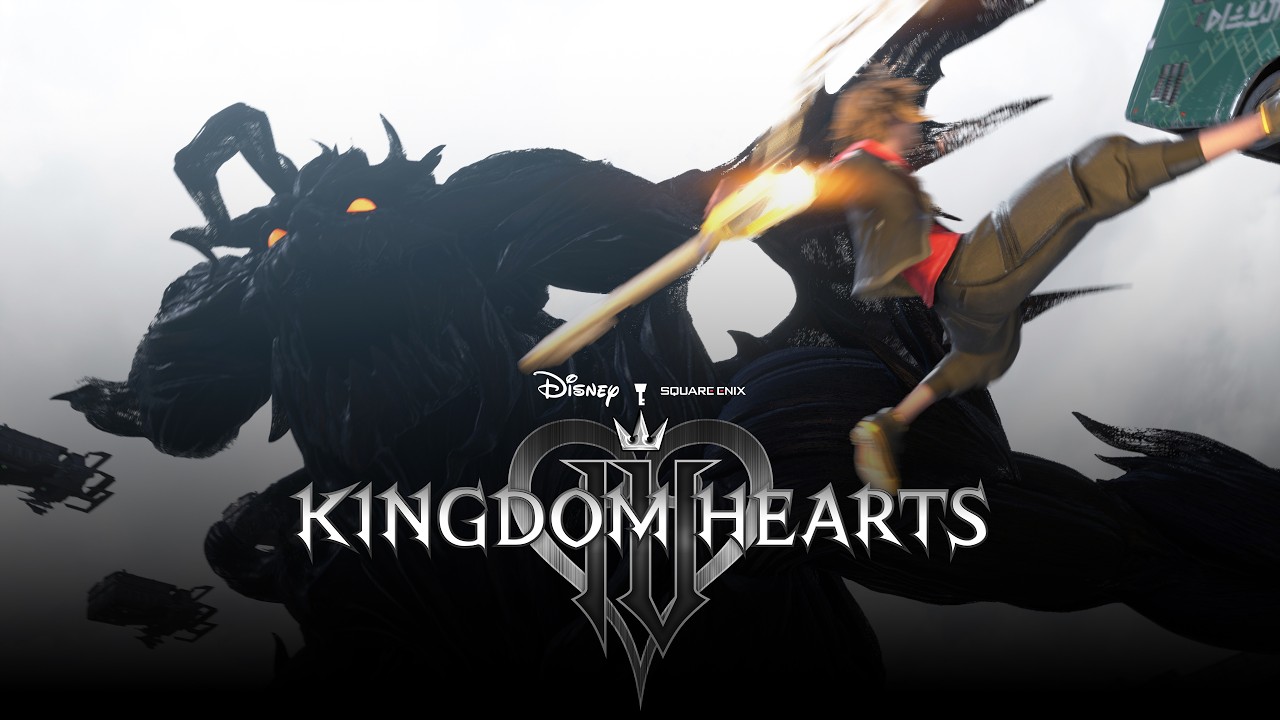
The minute and a half of footage blended combat gameplay with cutscenes of black robe-clad figures, protagonist Sora facing off against a Heartless behemoth on the streets of Tokyo, and a few new and familiar faces — including several from Kingdom Hearts’ now-defunct mobile and browser games.
Latest Videos From
Despite these more obscure inclusions, Square has said KH4 is meant as a jumping-on point for the series, with the game’s director, Tetsuya Nomura, describing the KH3 ending in a interview as a “reset” — one which “should make it even easier for newcomers to join the story starting from KH4.”
KINGDOM HEARTS IV Teaser Trailer | June 2026 – YouTube
I’m not convinced the latest trailer supports Nomura’s claims, though, as a long-time fan who has loved the series’ weird spin-offs, I’m not complaining.
Advertisement
The one other interesting detail of the trailer for me is how short it is on Disney characters. We only get the briefest glimpse of Donald and Goofy surrounded by blue flames.
Though we did get hints at two possible Disney worlds we’ll get to visit in some capacity. The first comes from those blue flames, which strongly hint at the return of Hades, the god of the underworld, from Hercules. Hercules’s world has appeared in almost every entry in the series so far, so its inclusion in 4 makes plenty of sense.
Sign up for breaking news, reviews, opinion, top tech deals, and more.
Advertisement
Further, while Sora’s fate at the end of Kingdom Hearts 3 is a little strange, it seems he has died in a way, so a god of death would likely be involved in his friend’s quest to find him. Plus, Hades’ voice actor has since teased his involvement online, saying “I might have a little bit of inside knowledge on this” and sharing the latest trailer.
I might have a little bit of inside knowledge on this. Just gonna say, it’s terrific, and maybe one of the best of the series. https://t.co/uUpFf7s2REJune 9, 2026
The other hint comes from Sora’s keyblade — a swirl of fire and water combined into one weapon. While we don’t get the best look at it while it’s swung around in combat, this feels like a clear reference to 2023’s Elemental, especially as the keyblade creates a flower effect when it hits enemies, which looks a little bit like the film’s vivisteria flowers.
Interestingly, Sora has this keyblade while battling in the realistic version of Tokyo, suggesting he’ll be world-hopping while still trapped in this alternate reality — one which didn’t experience the visceral conflict of light and darkness before his arrival, we learn in this new clip.
The only thing missing is a release date or even a release year. After four years since it was first teased, you’d hope Square Enix would be able to give us some kind of timeline for this game’s release.
My guess is sometime in late 2027 at the earliest, maybe early 2028. That’s based on a new Kingdom Hearts collection that is landing this October, and that we have the final part of the Final Fantasy VII Remake trilogy dropping in Spring next year (that’ll be sometime in March through May).
This is certainly frustrating. I can’t tell you how desperate I am to jump back into the Kingdom Hearts world, but hopefully the wait will be worth it.
Admittedly, this trailer makes me a little concerned. Perhaps it’s the wide open space of Tokyo’s streets, but the combat felt a little sparse, and something seemed a little off about Sora’s fight against the giant Heartless. Footage, so perhaps things will change come Kingdom Hearts 4’s eventual full release.
Advertisement
At least we found out it’ll be yet another multi-platform launch across PlayStation 5, Xbox Series X, PC, and the Nintendo Switch 2.
Poetic is an automation start-up servicing companies including Sofi and Chime.
OpenAI is backing automation start-up Poetic in a $50m funding round as it emerges from stealth, Bloomberg news reported today (10 June).
Poetic is developing a platform to automate time-consuming tasks using AI across wide use cases, including finance and insurance underwriting.
Advertisement
According to Bloomberg, Poetic has created a new programming language meant to help professionals use AI more efficiently.
The company was founded in 2023 as Forge by Markie Wagner, a Thiel Foundation fellow who worked as a researcher at Stanford and Waymo. Wagner also founded and led an AI consultancy called Delphi. She holds computer science degrees from the University of South California and Stanford.
According to Poetic’s website, the company is backed by Kleiner Perkins and Peter Thiel’s Founders Fund, with participation from OpenAI, First Harmonic and Genius Ventures. Its website lists American International Group, Chime and Sofi as customers. Poetic is expected to officially announce the funding round today.
“What Poetic has built is genuinely different – a platform that can execute the complex, high-stakes processes that large enterprises actually run, with accuracy that exceeds what human teams can deliver,” Leigh Marie Braswell, a partner at Kleiner Perkins told Bloomberg News.
Advertisement
Poetic is hiring for a range of roles in the US, including engineering, strategy and office management.
OpenAI’s support for Poetic comes as the company readies itself to go public. Estimates from last year suggest an IPO could value the $852bn ChatGPT maker at up to $1trn. The company’s start-up fund has backed the likes of Cursor, Harvey, Physical Intelligence and Kick.
Don’t miss out on the knowledge you need to succeed. Sign up for the Daily Brief, Silicon Republic’s digest of need-to-know sci-tech news.
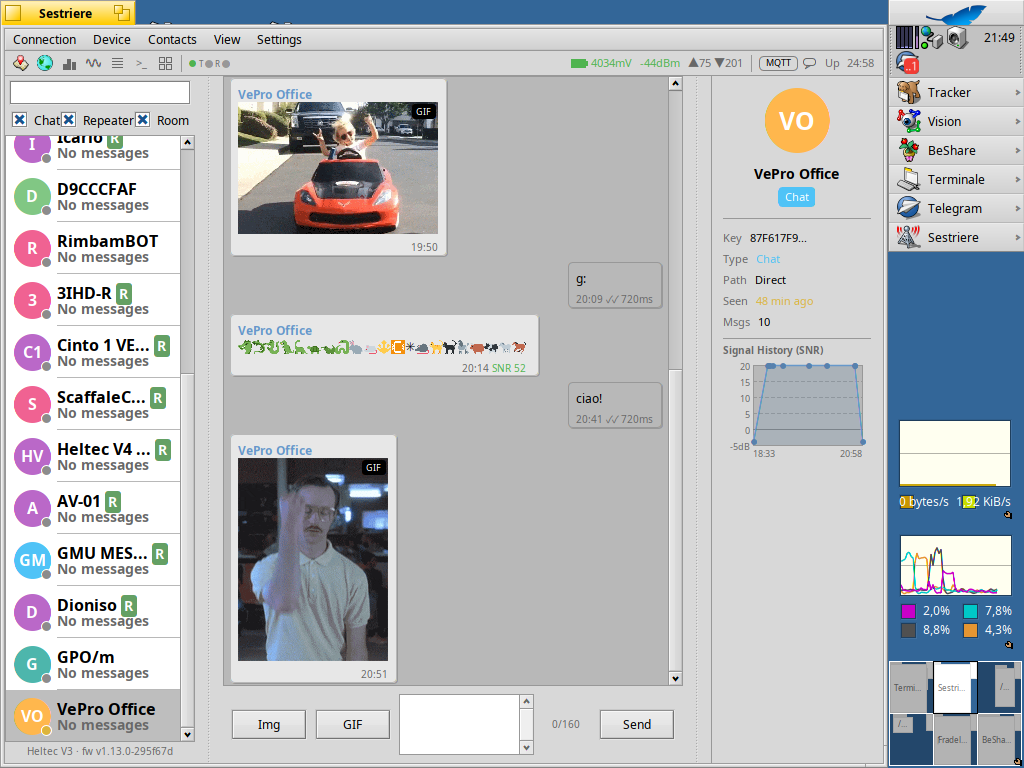
No, we’re not talking about cultural appropriation of Japan’s most famous form of short poem–this is the other Haiku, the open-source descendant of BeOS, which now has a fully-native meshcore chat client called Sestriere, thanks to the efforts of one [Atomozero]. Of course you’ll need a LoRa radio to act as a modem, but anything that speaks USB serial– which is any of the ESP32-based offerings on the market–should work.
This is interesting in that we don’t see many desktop applications leveraging LoRa networks– meshtastic or meshcore– so for one to appear for the relatively-obscure BeOS derivative is just neat. It’s also a nice peice of work: the chat window is full featured, organizing your contacts, and communicating not just with text but emojis and reaction GIFs. GIFs seem a bit extravagant for LoRa bandwith, but apparently it works. There are also Codec2-based voice messages, another thing that we didn’t expect to see over LoRa, since most ‘chat’ projects restrict themselves to text messaging.
The chat window. One nice thing about Haiku APIs is that look-and-feel isn’t in question.
The software will also map all the nodes with which you are in contact, both diagrammatically and geographically, overlaid on OpenStreetMap tiles. The network map conveniently colour-codes your contacts by the link quality, but what’s even more interesting is the WireShark-inspired packet sniffer built into the software to let you keep a really close eye on traffic on the mesh network.
Neither Haiku or MeshCore are to everyone’s tastes, but as an OS it is a worthy daily driver, even if you have to jump through some hoops to install it if you have a UEFI-only system.




















![KINGDOM HEARTS Collection [I ~ III] Announce Trailer - YouTube](https://img.youtube.com/vi/ldMqRmTwy80/maxresdefault.jpg)







































You must be logged in to post a comment Login