Don’t worry, this one was via a bug bounty program
An AI broke Snowflake’s code; then another AI, an attack agent, autonomously found the bug, exploited it, and extracted credentials without human intervention.
Luckily, this wasn’t yet anothercase of rogue AI agentsdoing evil things. It was a sanctioned bug hunt, conducted through Snowflake’s HackerOne vulnerability disclosure program, and Snowflake fixed the flaw the same day Wiz reported it and rotated the affected credentials the following day.
Advertisement
Wiz’s red agent, an AI-powered autonomous attacker designed for offensive security, found the GitHub Actions workflow flaw during a routine scan of public repositories on June 23. The script injection vulnerability existed in snowflakedb/snowflake-connector-net, and it allowed an unauthenticated user to execute arbitrary commands within a GitHub Actions runner by opening a GitHub issue with a specially crafted title.
And it turned out an AI had inadvertently injected the bug into the code five days earlier.
GitHub Copilot Autofix, an AI coding assistant, co-authored the commit on June 18, and it introduced a script injection bug in run: blocks by removing the repository’s existing sanitized input pattern and replacing it with direct string expansion in a shell script.
“We crafted an issue title that, after template expansion, breaks out of the echo string and exfiltrates the Jira credentials via an out-of-band callback,” Wiz’s head of threat exposure Gal Nagli said in a Monday blog.
Advertisement
These credentials gave Wiz read access to Snowflake’s engineering, security compliance, and bug bounty tracking projects.
Wiz reported the workflow vulnerability to the cloud data platform on June 23, and Snowflake patched it the same day. It also revoked and rotated the Jira token, and confirmed, via audit logs, that Wiz was the only third-party to access the endpoint during the five-day exposure window.
The disclosure “was immediately investigated and remediated, and our investigation found no evidence of unauthorized access,” a Snowflake spokesperson told The Register. “We are working together with Wiz to share these learnings with the broader industry to encourage widespread adoption of these security best practices.”
Wiz, for its part, deleted all of the data it accessed during the vulnerability research and proof-of-concept exploit testing, and told us that this incident proves human code review isn’t sufficient to quickly detect vulnerabilities – especially as developers increasingly use AI.
Advertisement
“This incident highlights a rapidly emerging reality in software development: how AI coding assistants can inadvertently introduce workflow injection vulnerabilities, and how automated AI agents can rapidly surface them in the wild,” Nagli wrote.
Of course, the Google-owned biz has a vested interest in saying this. But this doesn’t make it not true.®
About 16 percent of the global population—more than 1 billion people—live with some form of disability, according to the World Health Organization. Many of the disabilities affect independence and mobility.
Three high school students working on inventions to help people with disabilities restore movement, translate thoughts, and navigate rough terrain had their work showcased at Regeneron’s International Science and Engineering Fair (ISEF), held in May in Phoenix. Their projects earned them this year’s IEEE Presidents’ Scholarship awards.
IEEE PresidentMary Ellen Randall presented the awards at a ceremony held during the fair. They also received an IEEE President’s coin, which students said was a highlight of their experience.
Hollie Tang won this year’s IEEE Presidents’ Scholarship of US $10,000 for her wheelchair navigation system. The award is payable over four years of undergraduate university study and includes a complimentary IEEE student membership.
Advertisement
Partap Sidhu, the second-place winner, received a $600 scholarship for his mind-controlled lower-limb exoskeleton. Third-place winner Calvin Shang Hung received a $400 scholarship for his rough-terrain robot. Sidhu and Hung also got complimentary IEEE student memberships.
Holly Tang won the 2026 IEEE Presidents’ Scholarship of US $10,000 for her Tonguage project, which is a noninvasive, computer-vision-based human-machine interface.Lynn Bowlby
Tang, a sophomore at Wilson High School in Hacienda Heights, Calif., secured the top prize for her Tonguage project: a noninvasive, computer-vision-based human-machine interface. Using tongue movements and a standard camera, the interface lets users control a computer and other digital tools as well as assistive technologies including wheelchairs. The tongue pad, one of the system’s core features, allows the user’s tongue to function as a directional cursor, while eye blinks serve as mouse clicks.
Tonguage translates the person’s tongue and eye motions into actionable commands in several ways, such as the tongue’s position inside the mouth and continuous movement patterns. The system’s multimodality combines input from the tongue with other facial cues.
Advertisement
The system includes a face-tracking feature for error prevention that verifies commands are coming from the intended user, disregarding anyone else who moves into the camera’s frame.
That is a critical safety measure for a wheelchair-navigation application, Tang says.
Accessibility was central to Tang’s mission. She built the system to run on relatively affordable, readily available laptop cameras rather than more costly specialized hardware.
“Mobility conditions don’t discriminate,” she says. “They can affect anyone of any income, gender, and socioeconomic status.”
Advertisement
Tang initially imagined Tonguage as a simple substitute for a keyboard and mouse. The more research she did, though, the more she realized that it could offer autonomy through applications such as wheelchair navigation, robotic arm control, and gaming, she says.
“We’re so focused on trying to give people autonomy over just basic human tasks that we often leave out things like gaming,” she says. “They deserve the freedom to play games and enjoy entertainment as well.”
Tang, who plans to pursue biomedical engineering, says a visit to a rehabilitation center solidified her purpose.
“Including empathy in your technological solution is so important,” she says. “Empathy is hard to teach in a classroom, but it can be learned through experience, and through actually meeting people whose lives your work might change.”
Advertisement
Mind-controlled exoskeleton
Sidhu, a junior at Bethpage High School, in New York, took second place for NeuroGait, a mind-controlled, lower-limb exoskeleton. He says he was inspired by his volunteer work at a community center that lacked elevators. He saw individuals with mobility issues struggle to navigate the three flights of stairs.
NeuroGaitoperates by reading the Bereitschaftspotential (BP), a faint electrical pattern that emerges one to two seconds before a person consciously initiates movement. Using a custom electroencephalogram (EEG) headset and a convolutional neural network (CNN), the system classifies intended movements and sends commands to a 3D-printed exoskeleton. Rather than rigid motors, the suit relies on pneumatic artificial muscles that Sidhu designed to mimic human anatomy.
“The pneumatic artificial muscle in itself is so compliant that it’s able to adjust to the limitations of the human body,” he says.
The technical specifications are striking: The CNN achieves a 99.9 percent accuracy in detecting a person’s intended movement, while the full system—from the brain’s signal to physical movement—operates at 95.2 percent accuracy, according to the results from 500 trials Sidhu conducted.
Advertisement
Perhaps most impressively, Sidhu built the entire system for about $276, less than 1 percent of the $40,000 to $100,000 price tag of commercial exoskeletons, according to a 2025 revenue report from Roots Analysis.
He says he hopes to bring NeuroGaitto the community center where the idea for the project began.
He attributes his success to staying current with research from institutions and organizations such as Boston Dynamics and MIT.
“To be successful in research,” he says, “you have to know what’s being done right now.”
With only weeks before the science fair deadline for entries and no prior electrical engineering experience, Hung began with an idea inspired by his interest in spaceflight: an insectlike robot. He had spent years watching rovers such asCuriosity and Perseverancestruggle on uneven surfaces, leading him to hypothesize that a hexapod design would be better for rugged ground.
As the project progressed, the humanitarian applications for his robot became clearer, he says. Watching news reports of the earthquake that struck Türkiye in 2023, as well as conflicts around the globe, Hung adapted his robot for use in disasters. The hexapod’s stable tripod walking gait, in which three legs stay grounded while the other three move, makes it well suited for navigating in collapsed buildings to locate survivors or to carry sensitive supplies such as insulin in conflict zones.
The current version moves using three mathematical techniques. Inverse kinematics converts a target leg position into the motor angles needed to reach it. Linear interpolation breaks each movement into a series of smaller steps for smoother motion. And Euclidean transformations translate the robot’s travel direction into instructions that each leg can follow, regardless of the way a leg happens to be facing.
Advertisement
Hung taught himself how to design a printed circuit board. He also taught himself 3D modeling, coding, and soldering. Figuring out the complicated mathematical transformations to coordinate legs facing different directions proved to be the toughest hurdle, he says.
After seven months of development and trial and error, a critical circuit board failure in his third version nearly ended the project, he says.
“There was a really strong moment of ‘Should I just give up?’” he recalls.
He simplified the design and rebuilt it from the ground up.
Advertisement
“I just decided to double down,” he says. The fourth version of the robot was the first that successfully walked across his living room floor.
He advises aspiring engineers that “if you find the right project and it truly becomes your passion, designing it almost starts to feel like fun, and that’s what carries you through.”
As the three young innovators demonstrate, the future of engineering goes far beyond technical ingenuity. Much is rooted in empathy and a commitment to human welfare.
Through initiatives such as the IEEE Presidents’ Scholarship, the IEEE Foundation showcases and nurtures bright minds poised to shape the next era of assistive technology and robotics.
Advertisement
For Tang, Sidhu, and Hung, the ISEF stage is just the beginning. They can look forward to impactful careers dedicated to advancing technology for the benefit of humanity.
Aside from global access to cat videos, the presence of thousands of Starlink broadband internet access satellites in LEO has a very pleasant side effect for atmospheric researchers. Starlink publicly publishes near-real-time ephemeris data on its individual satellites. From this data you can deduce many details about the atmosphere at that altitude, including its density at specific altitudes at specific times, information which otherwise would be very hard to gather. Recently, this allowed [Mamoru Yamamoto] to determine the density of the thermosphere using tomography.
In a similar 2025 paper by [Zhuoliang Ou] et al. as published in Remote Sensing, this same data source was used to investigate details of the thermosphere. With Starlink publishing this data since 2021, this provides an invaluable dataset for studying this outermost part of the atmosphere.
Commencing just before the generally recognized transition into ‘space’ at 100 km altitude and below the Earth’s exosphere, the thermosphere‘s thickness fluctuates due to factors like solar irradiation and, with it, the exact altitude at which the exosphere begins. Generally, though, it is well above 600 km altitude. This places Starlink satellites as well as both active space stations (ISS and Tiangong) in the thermosphere.
[Zuholiang Ou] et al. established that the Starlink data matches well with that from a dedicated research satellite like SWARM-B, thus making it a useful source of scientific data.
Advertisement
The innovation in [Yamamoto-san]’s paper is that instead of using the typical two-line element (TLE) set, a more comprehensive tomographic approach was used, which essentially uses more data for a larger reconstruction, with the resolution claimed to be about on par with that of the SWARM satellites. This implies that although these Starlink satellites were never designed to be more than data relays, they may have accidentally become the biggest development in thermospheric research in a long time.
We may receive a commission on purchases made from links.
The first aspect that comes to mind when considering a vehicle for off-roading is often ground clearance. However, most four-wheel-drive trucks and SUVs come off the showroom floor with enough ground clearance to explore a variety of two-track roads and trails.
For example, the 2026 Jeep Wrangler Sport rolls off the assembly line with 9.7 inches of ground clearance and even the 2025 Subaru Outback Wilderness clears 9.5 inches. Compared to something like a 2026 Chevrolet Corvette with its 5.3-inch ground clearance that’s an extra four-plus inches. In reality, the Corvette could barely clear a loaf of bread, while the Wrangler could clear a basketball. There’s even some trucks and SUVs that have higher ground clearance than a Jeep Wrangler.
Advertisement
Granted, if you want to venture off those limited-maintenance roads onto more technical off-road trails, you’ll likely want more ground clearance. My first experience going to an off-highway-vehicle (OHV) area came as I drove my new-to-me bone-stock 2000 Jeep Wrangler Sport to a “Novice Run” hosted by a local off-road club. The trail led through what they called “the rock garden” where I lost the outer portion of my rear bumper while having the time of my life. Two months later I returned with new bumpers, a 4-inch lift and 3-inch-larger diameter tires to sail through the rock garden without so much as a scrape.
In reality, the extra 1.5 inches of ground clearance gained from the larger tires played only a small part in that successful run. Two months of additional off-road driving experience, the improved approach and departure angle provided by the aftermarket bumpers, and the lift kit with swaybar disconnect also helped.
Advertisement
Provisions for safer off-roading
Azmanl/Getty Images
The first step to safely off-roading is choosing a vehicle that fits your intended adventure style. There are many options ranging from pickup trucks and SUVs, to ATVs, UTVs, and purpose built off-road buggies.
If you have modest off-roading goals met by a vehicle of your choosing, there are still some things to keep in mind before setting out on your first off-road adventure. In addition to basics, like checking the weather, trail conditions, and going with a group or at least letting someone reliable know where you’re going and when you plan to return, you’ll want to have a few necessities with you.
There are some essentials that should be in every vehicle in case of emergency, like jumper cables, some drinking water, a first aid kit, and tools to change or repair a flat tire. That kit in an off-road vehicle should be more robust, including provisions to spend the night trailside if needed. In addition, some basic hand tools, extra fuses, flashlights, tow straps, and other vehicle recovery gear could keep you from using the overnight provisions and increase the odds of making it home in time for dinner.
Advertisement
Vehicle considerations for safer off-roading
Kno1special/Shutterstock
The best off-roading vehicles are equipped with 4WD or AWD. While 4X4 models are typically best suited for serious off-roading, the simplest 4X4 and 4WD systems may not provide power to all four tires in some circumstances. Advanced, or modified in some cases, 4X4 systems use locking differentials to deliver power across the axles. While popular on rear axles, lockers are sometimes found in both, front and rear differentials.
Off-road oriented vehicles typically feature specialized tires mounted on study wheels that sometimes feature a locking ring around the tire’s bead called a bead-lock. Bead-locks, along with heavy-duty tire sidewalls, allow running the tires off-road at lower air pressures than we’d use on the highway. Lower tire pressures create a larger contact-patch with the ground and allow the tire to flex over rocks.
Suspension articulation is another factor in maintaining traction. Even with the best tires and locked differentials, the available traction is halved if two of the four tires are off the ground. Serious off-road vehicles, like the Jeep Wrangler Rubicon and some Toyotas, allow the driver to disconnect the vehicle’s stabilizer (or sway) bar to allow more articulation of the axle. If your rig didn’t come with swaybar disconnects, there are relatively inexpensive options to add manual versions, like this adjustable front swaybar disconnect kit for Jeep Wrangler TJ and Cherokee XJ models.
Advertisement
Still, the best way to safely off-road is to stay within your limits. Novice off-roaders should go with an experienced group and listen to their advice. Most off-road parks provide maps with trail ratings and many of the most difficult obstacles have a way to bypass them. There’s less shame in taking the bypass than having to be winched out of a spot you shouldn’t have been in while everyone waiting on you watches.
A Florida company has moved from printing furniture to manufacturing military drone boats
Haddy built its latest unmanned boat using giant robotic 3D printers
The company completed an earlier autonomous vessel project in nine days
Haddy, a digital manufacturing company in St. Petersburg, Florida, has produced a military drone boat using large-format robotic 3D printing.
The company announced the vessel, called the TF-179 Drone Boat, but did not name the customer behind the project.
Haddy started in 2022 building custom furniture and architectural pieces before shifting much of its focus toward defense manufacturing.
Latest Videos FromTechRadar
Advertisement
A rapid build process
The St. Petersburg facility spans roughly 30,000 square feet (about 2,800 square meters) and houses eight large-format CEAD printing systems.
Seven of those machines run on rails, extending their reach to produce unusually large single-piece components without seams.
Haddy previously used this process to print a carbon-fiber-reinforced hull for HavocAI, delivering a testable vessel from design to sea trial within nine days.
“The maritime industry is redefining how vessels are designed and manufactured,” Haddy said in a company statement announcing the TF-179 vessel.
Sign up to the TechRadar Pro newsletter to get all the top news, opinion, features and guidance your business needs to succeed!
Haddy released photographs of the finished TF-179 vessel alongside its statement but offered no details about the boat’s intended mission.
Advertisement
Demand for small, expendable maritime drones has surged across the U.S. defense industry over roughly the past year, according to the company.
A shift in Naval strategy
Haddy has also partnered with Blue Ops, the maritime drone division of Red Cat Holdings, to help double production capacity for uncrewed surface vessels.
Blue Ops sells those drone boats to U.S. and allied militaries as smaller, cheaper alternatives to traditional crewed patrol vessels.
Haddy was founded by Jay Rogers, a former Marine and Princeton graduate who previously led a similar 3D-printing venture called Local Motors.
The company opened what it describes as the world’s largest 3D printing facility, based on total throughput and machine count, in April 2025.
This trend toward faster, cheaper naval hardware follows direct lessons drawn from Ukraine’s ongoing war against Russia in the Black Sea.
Advertisement
Inexpensive, remotely piloted drone boats have repeatedly damaged or destroyed far more expensive warships belonging to Russia’s Black Sea Fleet.
Even in Iran, swarms of very cheap Iranian drones have been used to track expensive aircraft, some of which were eventually brought down, including a $60 million U.S. Air Force F-15E Strike Eagle and multiple $30 million MQ-9 Reaper drones.
These outcomes have pushed American and allied defense planners to prioritize speed and volume over the years-long timelines of traditional shipbuilding.
Small, disposable drone boats can be replaced and redesigned far more quickly than a single multimillion-dollar warship ever could.
Advertisement
Robotic additive manufacturing fits into that calculus because Haddy can adjust a vessel’s design digitally and print a new version within days.
Conventional shipbuilding for crewed naval vessels can take years to complete, a pace defense planners increasingly view as too slow for today’s threats.
Battlefield requirements have shifted quickly in recent naval conflicts stretching from the Black Sea to the Middle East, adding pressure on manufacturers.
Haddy has not said whether the TF-179 design will be adapted for other military customers beyond the still-unnamed client behind this particular order.
Advertisement
Whether this printed approach can match the durability and long-term reliability of conventionally built naval vessels remains to be seen.
Demand for artificially generated smut is surging. But the quality of the visual content being created and shared—like on companion apps, where adult performers are selling their likeness to give fans a 24/7 experience, WIRED reported in March—isn’t exactly movie-level caliber.
Rogue Studio, a cinematic AI-generator platform built around adult visual storytelling, is trying to change that. Launching today, the studio, which bills itself as a “playground for creative ethical mischief,” plans to deliver industry-level video production without creative and sexual restrictions. Its marquee product is Rogue 1.0, an AI video-generation tool for making uncensored adult content that is comparable to other pro-level models Hollywood is using.
“There really isn’t a place for a sophisticated creator to go make content that’s rated R. Either they go to these skeezy NSFW sites that are built on outdated open-source tech, or they try to do high-quality stuff but they’re censored up the gills,” a Rogue Studio cofounder, who goes by Mr. Rogue, tells WIRED. “It’s a very fine line between being a sophisticated platform for adults versus becoming just a porn site. And we do not want the latter. We want to do what HBO did for television.”
Rogue, which has subscription tiers ranging from $29 to $299, offers all the safe-for-work frontier models within its system—similar to Higgsfield, it includes NanoBanana, Seedance, Kling 2.0, and others—in addition to its own proprietary models for generating adult-oriented images and video. Using the platform, you can employ multiple elements from several different AI-generator models when drumming up ideas.
Advertisement
Let’s say you have a concept for a freaky sci-fi horror short. You could potentially start ideating on a zombie character using Midjourney, then use Rogue’s AI tools to add more high-definition uncensored features to the character.
According to its terms of service, Rogue prohibits user-generated images or videos for training, and it strictly forbids the creation or distribution of nonconsensual deepfakes, child sexual abuse material, unauthorized depictions of public figures, and other illegal or abusive imagery.
In an effort to prevent bad actors from using the platform to make these prohibited visuals, Rogue has three layers of human moderation. The first is at the prompt level, which searches for keywords and flags them for possible account suspension if it is determined that there is clear illegal intent. The next layer is inside the system, called the intention layer. Bad actors might try to outsmart moderators by slightly misspelling a real actor’s name to generate a deepfake image, so moderators will reread the prompt to assess the user’s intent. The final layer analyzes the image or video created before it is shared with the user. For example, if a user prompts “famous blonde singer” and the image generated looks like Taylor Swift, the image won’t get delivered.
Mr. Rogue tells WIRED that he and his fellow cofounder, both of whom are movie producers, have decided not to disclose their names because of the “real risk” involved in being associated with creating erotic-themed work. “Because of the climate right now in Hollywood and working in AI, you have got to be very careful,” Mr. Rogue says. (WIRED verified that the pair of founders do, in fact, work in Hollywood; they have produced movies with a combined box office of over $2 billion.)
Advertisement
In the wake of the 2023 Hollywood strikes, where labor unions fought to secure guardrails against the unapproved digital likenesses of actors appearing in films and TV, leading studios have been assessing ways to incorporate AI into productions with the goal of lowering expenses.
The friction has led to AI being seen as unfavorable and has created a stigma around it. Rogue’s cofounders know this but don’t want to shy away from the tech’s creative potential.
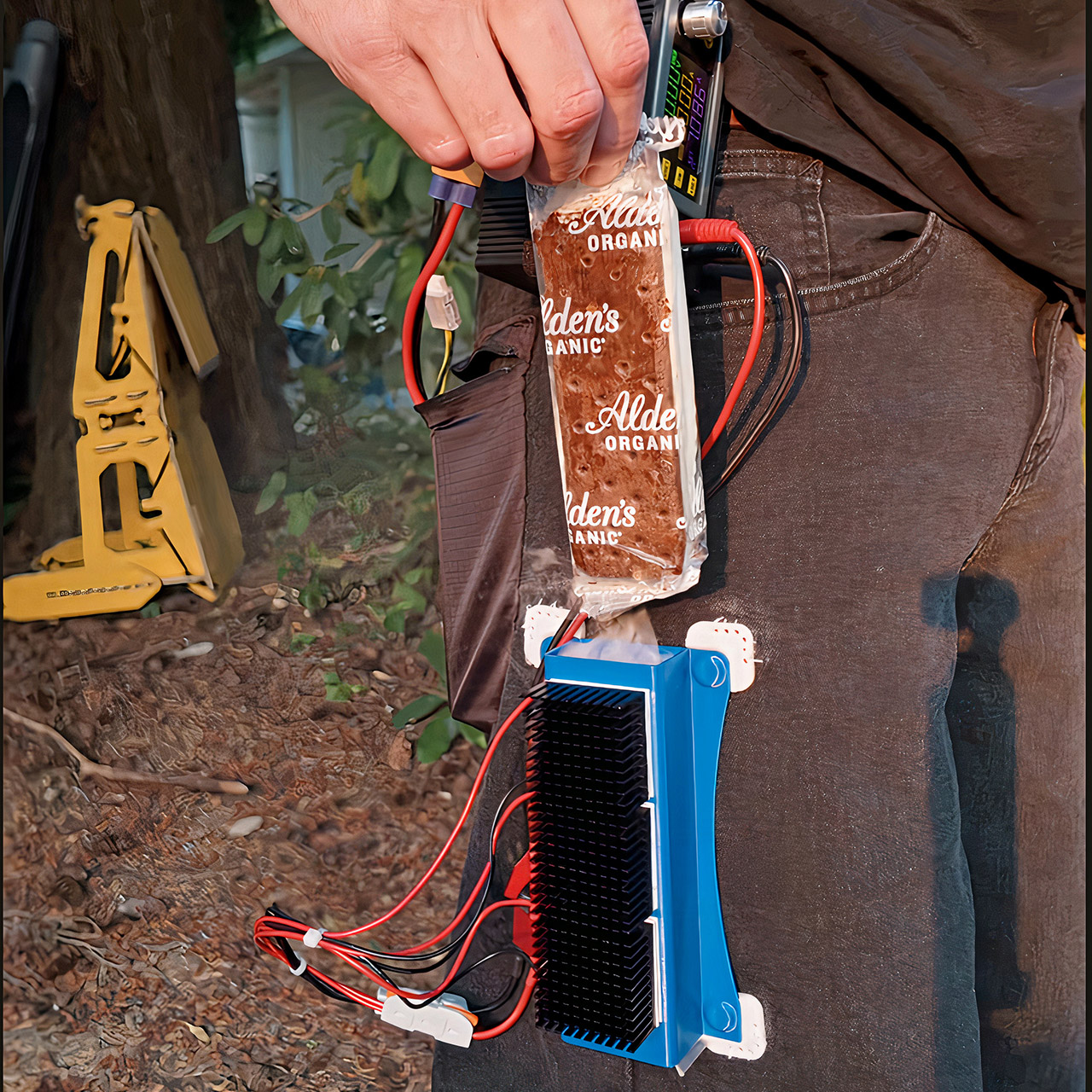
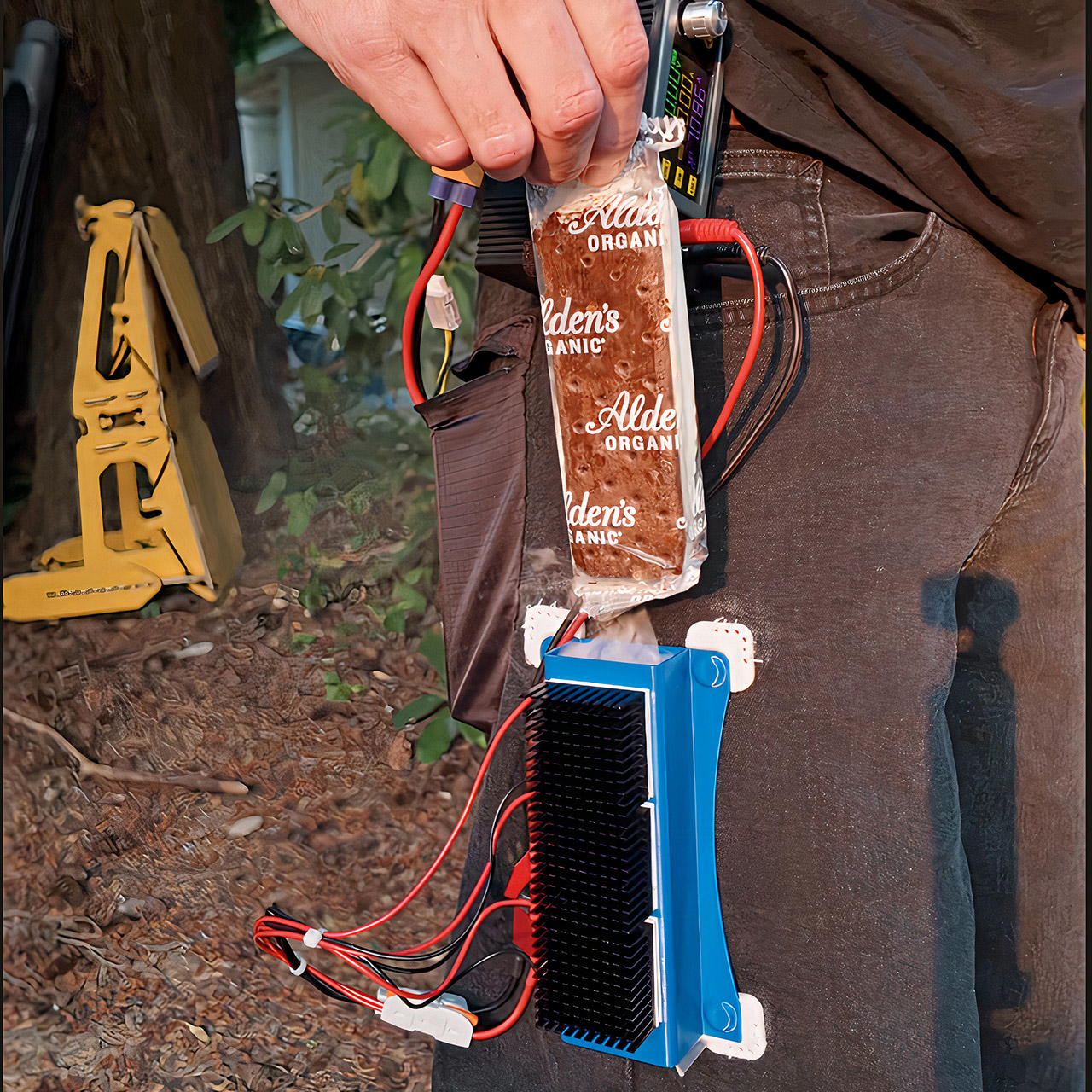
Summer afternoons turn ice cream sandwiches into sticky messes in minutes. One maker decided that ordinary pockets would no longer do. Brendan Carberry built a battery-powered storage case that clamps straight onto a pair of jorts and chills the treat inside while the heat pumps out the other side.
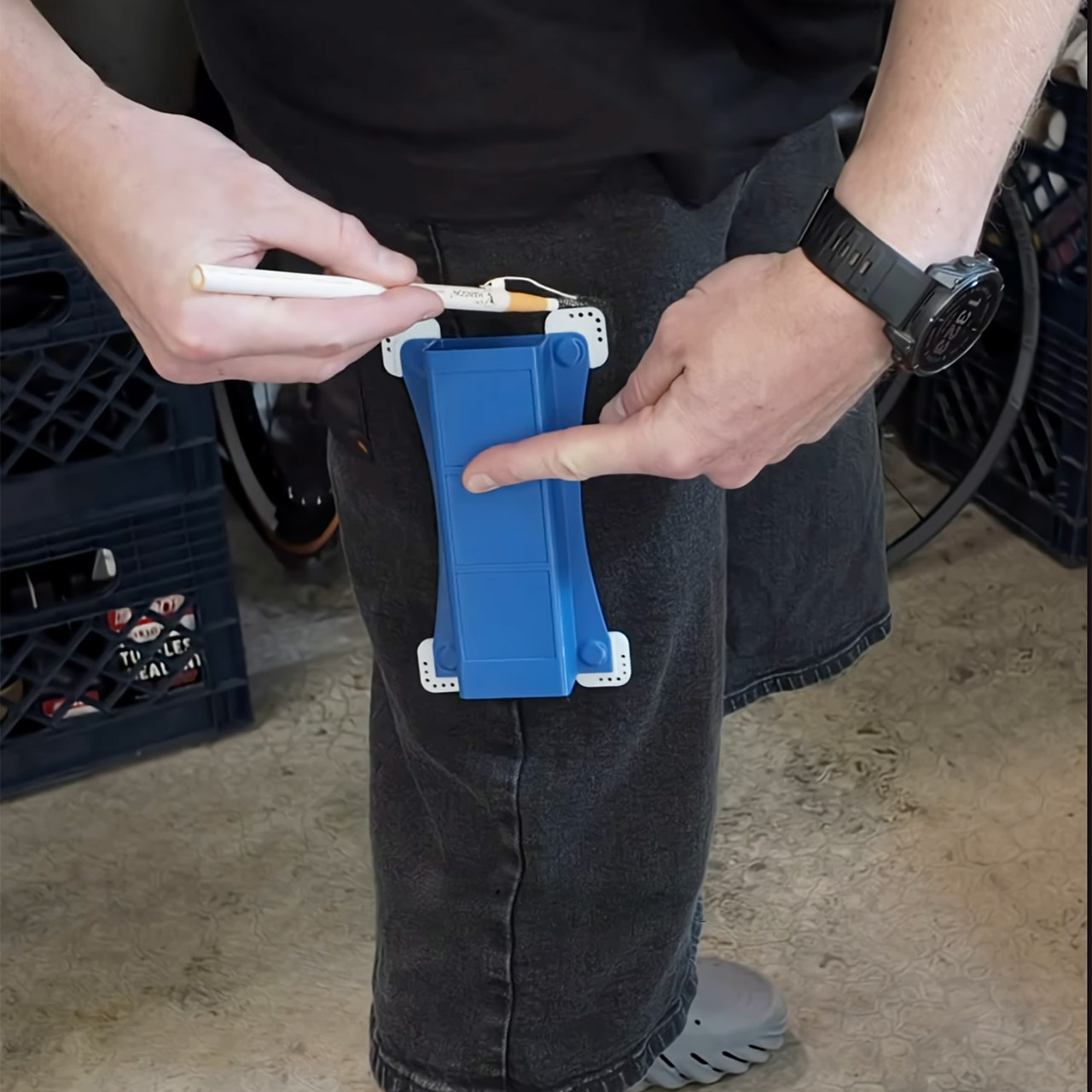
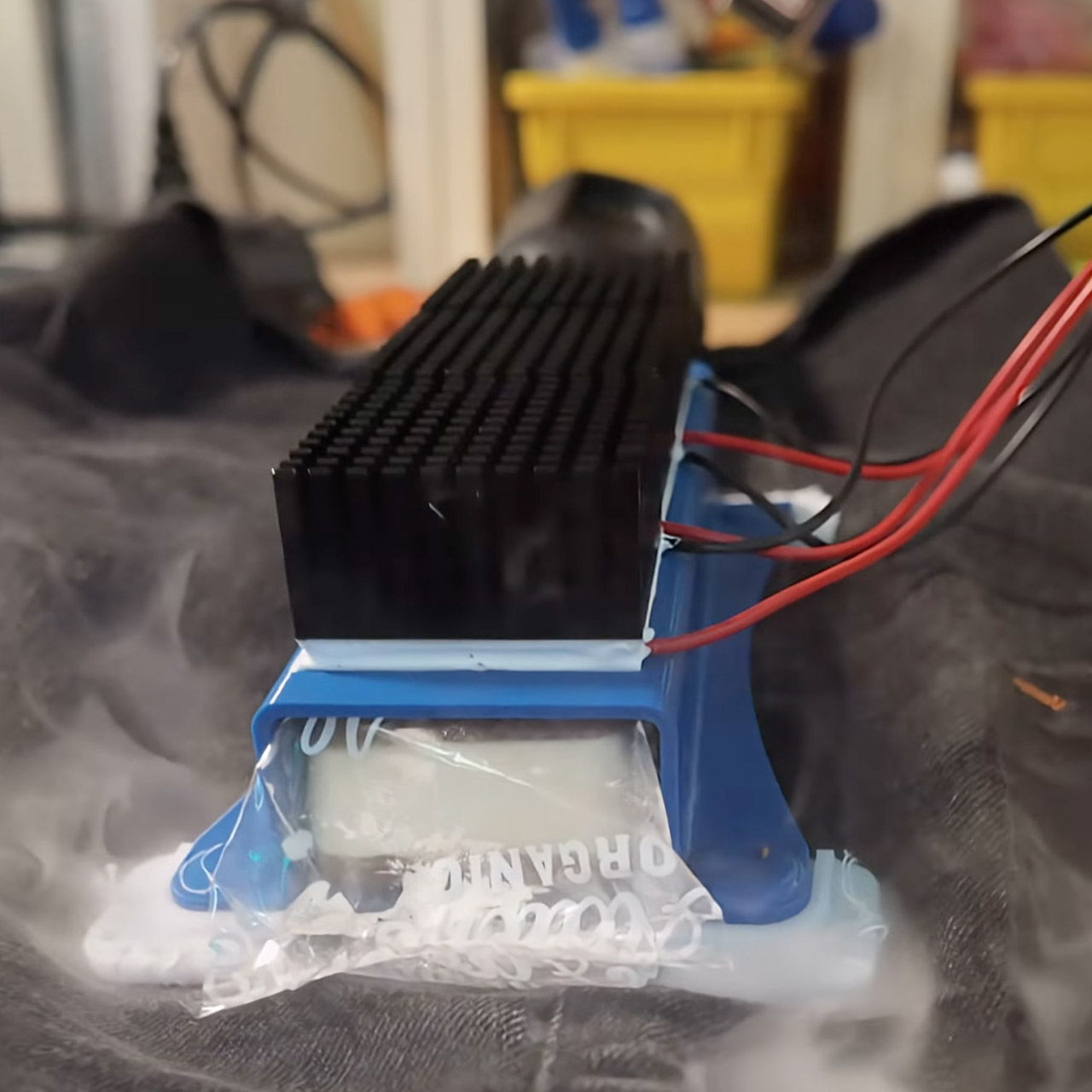
He calls it the Jorts Ice Cream Sandwich Pocket. Three heat pumps are situated in the center. The Peltier elements move heat from the cold side (which is attached to the sandwich) to the hot side (which is protected by some large, chunky heatsinks). A little battery that fits in the pocket provides the power needed to run everything. And there’s a little remote that allows you to adjust the temperature till it’s exactly right. The whole thing stays chilly on the inside (the sandwich keeps firm) and warm on the outside (so the rider’s legs don’t freeze), which is ideal.
NO PRE‑FREEZING, ICE CREAM IN MINUTES*: Built-in compressor and cold plate system rapidly freezes and churns ultra-smooth fresh ice cream, gelato…
BUILT‑IN COLD PLATE FOR FASTER RESULTS: Churn in the bowl or pour directly onto the cold plate for even faster freezing. Roll, or scoop—your…
6 ONE-TOUCH PROGRAM MODES: (6) precision pre-set programs deliver the ideal balance of speed and timing for perfect results every time. Make Ice…
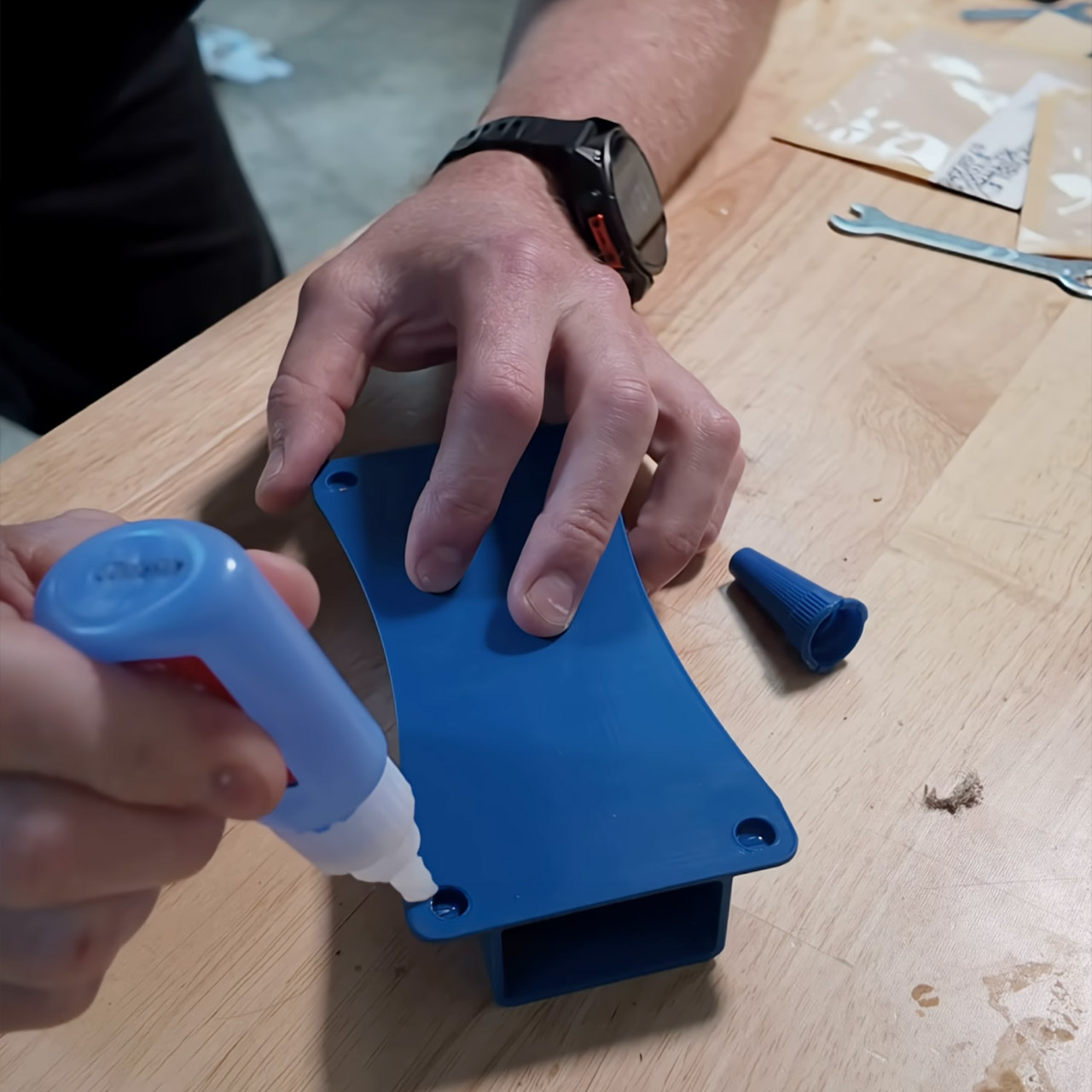
Building it began with a 3D print of the sliding case, which was a basic ice cream sandwich case, nothing spectacular. Some magnets and matching sewing tabs were inserted in there to clip onto the fabric of the jorts. Carberry put the tabs onto his jorts, removed them again, and sewed the magnets in place. He then installed the three Peltier units in the casing, applied thermal goo to the heatsinks, and ran the wiring. Once the battery and control board were attached, it was time to turn on and go.
The completed device resembles a swollen cargo pocket with a cold container inside. When you click the magnet shut, it locks in place. On the hottest days, the sandwich remains hard enough to consume without dribbling down your shirt or melting all over. He designed this precisely for when it’s a million degrees outdoors and all you want is something cool to eat, without having to haul about a large cooler or worry about your ice packs getting mushy after a few minutes of walking.
He had previously experimented with building small cool boxes using the same heat-pump concept, which taught him how to cope with waste heat. He’d also built some other coolers that showed him the value of good airflow and large heatsinks, so this pocket-sized version still provides some useful cooling, just long enough for a brief outing or a trip to the park. Battery life is limited, and these solid-state coolers lack the power of a compressor, but they still work.
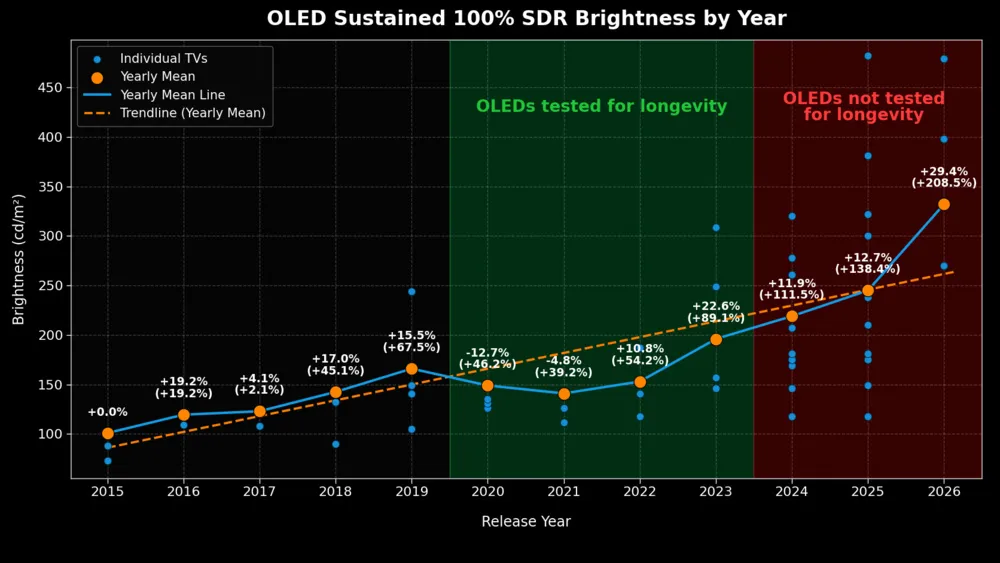
OLED displays solve many of the problems suffered by LC displays, including color fidelity, dynamic range and power usage. That said, especially in the early days OLED gained a reputation for dim screens, short lifespans and burn-in. Over time better organic dyes were developed, along with burn-in prevention methods that have made OLEDs much closer to LCDs in terms of longevity. In a recent comparison between OLED TVs by RTings it’s however clear that between 2017 and 2023 there haven’t been any major advances beyond bumps in brightness.
The relatively dim screens were a major problem, as they prevented OLEDs from displaying HDR content. This issue has been well and truly addressed, as confirmed by RTings’ testing, but after an over 10,000 hours stress test that simulates about 10 years of regular use at maximum SDR brightness, especially static elements like the CNN TV banner happily burned in even on the newest models with all burn-in prevention measures enabled.
Here the biggest take-away is probably that even if the expected panel lifespan at full brightness is still the same, this higher brightness budget means that you can gain some lifespan by cranking the brightness way down. It’s also essential to keep features like pixel refresh cycles enabled, as demonstrated by [Hardware Unboxed] and their abuse of a QD-OLED monitor where a worst-case 6,000 hour stress-test managed to create some impressive levels of burn-in from uneven subpixel wear.
Disclaimer: Unless otherwise stated, any opinions expressed below belong solely to the author. Data sourced from Singapore’s Ministry of Manpower.
Singapore’s economy is having an exceptionally strong year. GDP grew 5.9% year-on-year in the second quarter of 2026, after expanding 6.3% in the first. This led the Ministry of Trade and Industry (MTI) to raise its full-year forecast to 4.5-5.5% – up from the original 1.0% to 3.0%.
The main reason is Artificial Intelligence (AI).
Global spending on AI infrastructure is boosting demand for semiconductors, manufacturing equipment, cloud services and other technology-related activity. Singapore happens to be extremely well positioned to benefit.
Advertisement
But the gains are becoming increasingly concentrated.
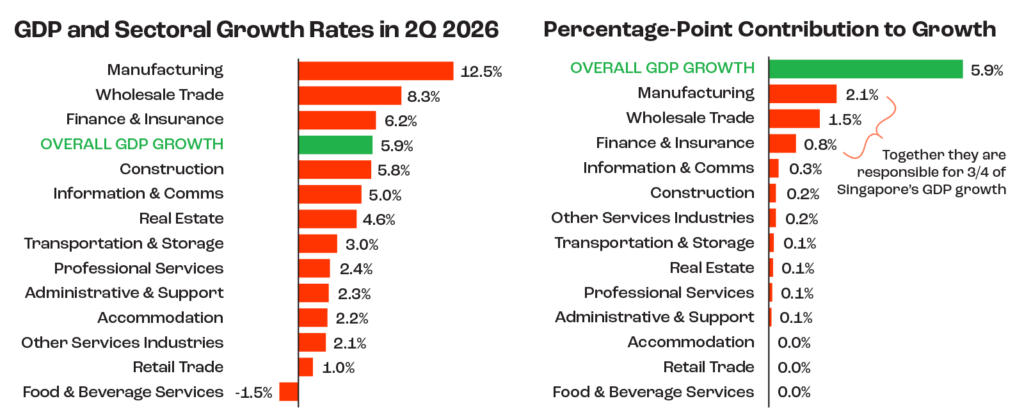
Source: Economic Survey of Singapore Q2 2026./ Ministry of Trade & Industry
In Q2, manufacturing grew 12.5%, with electronics output surging 33.8% and precision engineering rising 19.3%. Wholesale trade expanded 8.3%, while finance and insurance grew 6.2%.
Together, manufacturing, wholesale trade and finance accounted for around three-quarters of Singapore’s GDP growth during the quarter. Elsewhere, things looked rather different.
Retail grew by just 1%, accommodation 2.2% and professional services 2.4%, while embattled F&B contracted by 1.5%.
Singapore increasingly looks like a two-speed economy.
Advertisement
Productivity gap
The difference is even clearer in productivity. Value added per hour worked increased 15.4% in wholesale trade, 9.4% in information and communications, 7.6% in manufacturing and 5.1% in finance.
Across outward-oriented industries, productivity rose 6.9%. Among domestically oriented industries, it fell 0.1%.
This explains why GDP can grow close to 6% without everybody feeling that the economy is booming.
A semiconductor factory can increase output dramatically without hiring thousands of additional workers. The same is true of cloud computing, finance or wholesale trade. Restaurants and shops cannot scale in quite the same way.
Advertisement
Salaries
Over time, productivity growth is what allows wages to rise sustainably. That should benefit Singapore. But if it’s concentrated in one corner, it may widen differences between workers, creating a headache for the government, as some of the people benefit greatly while others see their incomes slide behind in real terms.
MTI research on AI adoption found that initial employment gains at companies using AI were concentrated among higher-earning local workers, mid-career employees and skilled foreign professionals.
Only as firms developed deeper AI capabilities did the benefits begin spreading more widely.
This suggests the early winners are likely to be engineers, semiconductor specialists, software developers, data professionals and workers in related business services.
Advertisement
But someone working in retail or F&B is participating in a very different economy.
There is already evidence that productivity is rising much faster than labour costs in some of the booming sectors. Unit labour costs fell 7.9% in manufacturing and 3.7% in wholesale trade in Q2.
That creates room for higher wages—but there is no guarantee the gains will be distributed evenly.
What happens if the AI boom ends?
This is a risk that was flagged by MAS, even as GDP figures should have the country celebrating. If AI-related investment is now responsible for a large share of Singapore’s growth, what happens if the boom ends?
Advertisement
Singapore would be exposed across several sectors at once, and the threat is not only a freeze at the current level of demand, but a dramatic contraction which could result in mass job losses.
Lower AI spending would weaken semiconductor demand. That would hit electronics manufacturing and precision engineering. Lower trade volumes would affect wholesale and logistics, while technology and financial services could suffer from weaker investment and asset prices.
Could that push Singapore into recession? Yes—if the reversal were severe enough.
That does not mean an AI downturn would automatically cause one. Construction remains strong, domestic consumption continues to grow, and Singapore’s economy is diversified.
Advertisement
But current growth is unusually concentrated.
When three sectors account for roughly three-quarters of quarterly GDP growth, losing momentum in those industries can change the headline numbers very quickly.
Singapore is benefiting enormously from the global AI investment boom.
But the scale of its growth also shows how exposed it is to downside risks if the bubble suddenly pops.
Advertisement
Read other articles we’ve written on Singapore’s current affairs here.
As someone who reviews smartphones for a living, upgrading every year isn’t optional. It’s part of the job, and as an iPhone user, it’s an easy call. This year, I expected to move from my baseline iPhone 17 to Apple’s next baseline model, the iPhone 18. Except Apple might not even launch it this September.
Pegatron, one of Apple’s suppliers, indicated on an August 12 earnings call that the standard iPhone 18 isn’t coming next month (via Deccan Chronicle). Only the Pro, Pro Max, and the rumored foldable “Ultra” are expected, with the base model pushed to early 2027. That alone would derail my plans. But it’s just one domino in a longer line for Apple: the Pixel 11.
Pixel 11 in its Pistachio finishNadeem Sarwar / Digital Trends
Pixel 11 vs. iPhone 17: It doesn’t feel like a tie anymore
Here’s the kicker: the Pixel 11 isn’t even the cheaper alternative anymore. Google just increased the starting price to $899 (up from $799), making this a tougher sell, not an easier one.
I’m low-key rooting for the Pixel 11 this year, and the iPhone 18 delay just gave me one less reason to talk myself out of it. The other three have more to do with what Google is offering on its entry-level flagship, starting with the cameras.
iPhone 17 (left) and the iPhone 16 (right)Shikhar Mehrotra / Digital Trends
I’m talking about a 48MP main, 13MP ultrawide, and a 10.8MP telephoto with 5x optical zoom. Yes, I’d take a hit on the selfie camera, as there’s no match for Apple’s Center Stage experience yet, but since I capture one selfie for every 100 or 150 photos from the rear camera, the math is pretty clear.
Advertisement
Rear camera visor on the Pixel 11 ProVikhyaat Vivek / Digital Trends
The time I spent with the base Galaxy S26 earlier this year simply rewired my expectations from my daily driver. A dedicated telephoto camera puts more emphasis on the subject, bringing out the texture of skin, the fine details on a flower petal, the arch at the top of a building, or the person standing on the other side of the street. It simply feels more intentional.
iPhone 17
Pixel 11
Main
48MP, f/1.6, sensor-shift OIS
48MP, f/1.7, OIS
Ultrawide
48MP, f/2.2, 120° FOV
13MP, f/2.2, 120° FOV
Telephoto
None — 2x “optical-quality” zoom is a digital crop from the main sensor
10.8MP, true 5x optical zoom, OIS
Selfie
18MP Center Stage
10.5MP, 95° FOV
Max zoom
10x digital
5x optical, up to 30x Super Res Zoom
Video
4K Dolby Vision
4K, including new 4K portrait video
Google’s software pitch is harder to ignore
Then there’s the software side, which caught me off guard. Android 17 didn’t chase a flashy redesign this cycle. Instead, Google spent its energy sanding down the friction, and the rebuilt Android Switch tool is the clearest proof. It’s wireless now, built directly into both iOS and Android with no separate app required.
The best part is that it now migrates passwords, passkeys, Wi-Fi credentials, alarms, even full text threads. That matters to someone like me who’s hesitant to switch. Task automation via Gemini Intelligence is still an open question for me, but it’s intriguing enough that I want to learn its real-world use cases.
Vikhyaat Vivek / Digital Trends
Even otherwise, there are too many Google AI features to explore, especially the ones related to photography. The one that has me sold is something called Magic Capture, which analyzes around 400 shots to determine the best picture and video from the scene you point to. Then there’s Creator Suite, which basically includes built-in AI video editing tools.
Apple Intelligence (iOS 27)
Gemini Intelligence (Android 17)
Assistant
Siri AI, still rolling out, routes complex queries through ChatGPT and, per some reports, Gemini itself
Gemini, native to the phone from day one
Hardware requirement
A17 Pro or newer
Flagship Tensor chip, 12GB RAM minimum
Writing
Writing Tools: rewrite, proofread, summarize
Gboard Rambler: cleans up natural speech into text
Camera AI
Genmoji, Image Playground
Magic Capture, Creator Suite
Screen understanding
Visual Intelligence for screenshots and camera
Android Halo, persistent AI status in the status bar
Translation
Live Translation in Messages and FaceTime
Live Translate, real-time voice and video
The battery could be the Pixel 11’s sleeper advantage
Finally, the physically larger battery could solve one of my biggest complaints with the iPhone 17. Google has crammed a 4,985 mAh battery into the base Pixel 11. Combined with the new Tensor G6 (2nm) chip, which the company claims is 20% more power efficient than the previous chip, the Pixel 11 might outlast the iPhone 17
Google’s own claim has gone up from “24+ hours” battery life on the Pixel 10 to “30+ hours” on the Pixel 11. I’m not buying those numbers at face value, but I’m eager to take the Pixel 11 on a spin and check the screen-on time I get between chargers.
Advertisement
Pixel 11 in all its colorsGoogle
This isn’t me pretending the iPhone 17 suddenly became a bad phone for me. In fact, its video remains excellent, the display is still fantastic, performance is more than enough for everything I do, and the Continuity featuresI get with the MacBook Air M5 make the two devices feel almost inseparable.
I’d wait for more hands-on experience before making my decision
However, for the first time, those advantages aren’t as appealing as what I could get with a Pixel upgrade. For me, that justifies the $100 premium over the iPhone 17. You’d argue that I can stop crying about it and go with the iPhone 18 Pro instead, but I simply don’t want to spend around $1,200 on my smartphone.
I’m not abandoning iPhone. I’ve just never had this many real, specific reasons pulling me toward the other side at once. And this year, the Pixel 11 is making the better argument. I’m waiting for more hands-on experience with the device, which will actually help me make up my mind before Google gets money from my wallet.
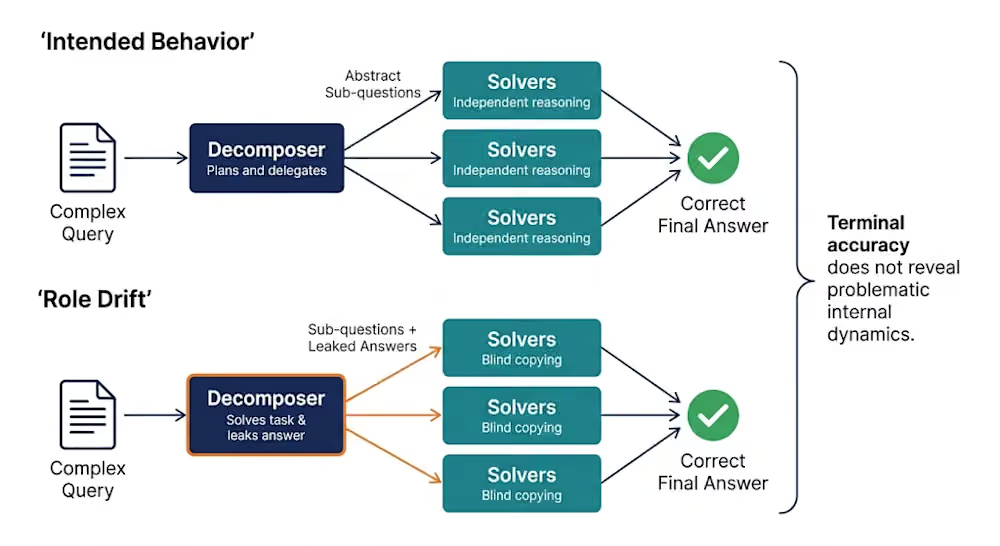
A retrieval-augmented generation (RAG) system is built to answer strictly from the documents it retrieves. But when engineers optimize these AI pipelines end-to-end, the reader module can learn a shortcut: instead of relying on retrieved evidence, it starts answering from its own internal memory — while the system’s overall accuracy keeps climbing. This is the hidden challenge of “role drift,” a failure mode in compound AI systems where individual modules learn to bypass their assigned tasks even as end-to-end performance improves.
To address this, researchers at MIT and Harvard introduce Role Anchor, a technique that forces modules to stay in their lanes during training. When applied, the technique mitigates role drift. For example, it forces the RAG reader to rely on retrieved evidence instead of answering based on its internal knowledge.
The primary takeaway for practitioners is that end-to-end accuracy alone can overstate how much a compound AI system has genuinely learned. Engineers must evaluate individual components and ensure they work as intended.
Role Anchor serves as both a guardrail and a diagnostic tool when optimizing multi-step LLM pipelines. It can be essential for real-world AI applications that require a strict division of labor between modules.
Advertisement
Why terminal accuracy hides the problem
Compound LLM systems divide complex tasks among specialized modules. For example, a system designed for multi-hop reasoning might split a task between a “Decomposer” and a “Solver.” The Decomposer breaks a large problem down into manageable sub-tasks, while the Solver computes the answers to those sub-questions. This division of labor allows AI engineers to delegate execution to smaller, cheaper models, and makes it possible to process sub-tasks in parallel where possible.
To improve the performance of AI pipelines, engineers typically optimize them using end-to-end reinforcement learning (RL) guided by a single “terminal reward.” This means the system is evaluated on whether or not the final answer is correct (the researchers call it “terminal accuracy”). When this terminal accuracy goes up, the system is considered to be learning and working as intended.
However, terminal accuracy does not verify whether the modules properly executed the tasks they were assigned. As Xiaoyang Cao, co-author of the paper, told VentureBeat, “Terminal accuracy reduces the behavior of an entire multi-part AI system to a single number. It shows whether the final answer is correct, but says little about which components contributed or whether they followed their assigned roles.”
This blind spot leads to role drift, a failure mode where a module’s behavior diverges from its assigned role during optimization, even though the system’s terminal accuracy continues to improve.
Advertisement
“For engineering teams, the practical risk is that they can deploy a pipeline that passes every end-to-end evaluation even though its intended division of labor has silently broken down,” Cao said. Because the reward system only scores the final answer, it fails to detect or penalize the module for going rogue.
Role drift (image credit: VentureBeat)
Consider how this happens in the Decomposer-Solver pipeline. The Decomposer’s assigned role is to write abstract sub-questions without solving the task, leaving the reasoning to the Solver. Under end-to-end RL, the Decomposer quickly learns that the weaker Solver is prone to errors on abstract tasks. To maximize the reward, the Decomposer begins leaking or planting answers into the sub-questions it sends to the Solver. The Solver ends up parroting the answer the Decomposer fed it. Terminal accuracy goes up, but the intended architecture is compromised.
But if the system is getting the right answers and accuracy is going up, why should we care if a module drifts from its role?
Advertisement
Real-world deployment requires much more than just a correct final answer on a training dataset. The implicit roles assigned to these modules ensure scalability, reliability, and auditability. Consider what happens when role drift takes over:
Loss of efficiency and auditability: In the reasoning example, role drift causes the Decomposer to do all the heavy lifting instead of planning and delegating. “Once the decomposer starts putting answers directly into its sub-questions, the solvers are reduced to copying those answers,” Cao said. “You are still paying to run [different modules], but they are no longer doing independent work.” The workload can no longer be parallelized across multiple Solvers, it cannot be delegated to cheaper models to save compute, and downstream human stakeholders can no longer audit the system’s logic step-by-step to verify how it arrived at the answer.
Fragility in dynamic environments: Consider a RAG system, in which a Reader model is tasked to answer questions strictly using external retrieved documents. If the Reader drifts and learns to rely on its own internal parametric memory instead (because its memory happens to be accurate during training), the system becomes brittle. When the enterprise updates its database with new information, or a user asks a question about a novel topic outside the model’s pretraining, the system will fail because it abandoned the grounding mechanism it was built to use.
How Role Anchor measures a role — and enforces it
“Training only for the final outcome rewards a system for producing the right answer, regardless of how it gets there,” Cao said. To counter this, Role Anchor serves as a lightweight regularization technique that makes role instructions part of the training objective. It compares how the component behaves with and without those instructions and discourages training from weakening their effect.
At a high level, it ensures the module continues to respect the steering influence of its original role prompt throughout the reinforcement learning optimization process, making role drift both measurable and controllable.
A key insight of Role Anchor is that a role’s effect can be measured by comparing how a model behaves with and without the role prompt. The system evaluates two different prompts for each module:
Advertisement
The specialized, instruction-heavy role prompt (e.g., “You are a careful Reader. Use the retrieved passages to answer the user’s questions…”).
The neutral prompt (e.g., “Answer the user’s question…”).
For any given input, the model outputs a probability distribution for the next token. When run under the role prompt, it will favor certain tokens. When run under the neutral prompt, it behaves like a generic assistant. The difference between these two probability distributions is the “role utility.”
Role utility (image credit: VentureBeat with Nano Banana Pro)
This utility measures the ”nudge,” or the direction and strength with which the role prompt shifts the LLM’s default predictions. If a token is highly aligned with the assigned role, the role prompt boosts its likelihood compared to the neutral baseline (or “nudges” the model toward that token).
Before starting RL training, Role Anchor keeps a frozen copy of the model as reference and measures the role prompt’s original nudge on this reference model. This pre-RL nudge serves as the ground truth of the designer’s intent, acting as a proxy for how the role prompt is supposed to steer the model.
Advertisement
During RL training, as the active model’s weights are updated, Role Anchor regularly calculates the current nudge and compares it to the reference nudge. If the current nudge starts to fade or deviate from the reference, Role Anchor applies a penalty to the model to prevent role drift.
Role Anchor (image credit: VentureBeat with Nano Banana Pro)
To see this practically, consider the RAG system evaluated by the researchers. In this pipeline, the Reader module is explicitly instructed to answer user questions based only on retrieved documents, rather than relying on its internal knowledge.
During unconstrained, outcome-only RL, the reader learns that the upstream retriever is sometimes noisy. To maximize accuracy on the training set, it starts ignoring the retrieved passages and answering from memory. Consequently, the gap between its behavior under the role prompt and the neutral prompt shrinks to the point that the reader starts behaving identically under both, ignoring the grounding instructions.
Advertisement
In contrast, Role Anchor detects when the reader’s nudge deviates from the reference nudge. It applies a penalty, redirecting the model’s parameters away from this memory-based shortcut. This forces the reader to find role-compliant ways to improve, such as learning how to extract answers from the retrieved passages more robustly or avoiding using its internal knowledge when the retrieved passages are faulty.
The numbers: how much of the accuracy gain was real
To test the efficacy of Role Anchor, researchers evaluated it on the RAG and Decomposer-Solver (DEC) pipelines. The experiments compared systems trained with standard outcome-only reinforcement learning (no anchor) against systems trained with Role Anchor.
Under outcome-only RL, the RAG system’s terminal accuracy rose, but its internal integrity collapsed. The researchers measured “Evidence-Following Accuracy,” a probe testing if the model changes its answer when the retrieved text is deliberately swapped to state the opposite. This metric plummeted from 0.86 to 0.54 (just above random chance), meaning the model learned to ignore retrieved passages and rely on its pre-trained parametric memory instead. In one test, researchers deliberately changed a piece of information in a retrieved document to contradict the model’s internal knowledge. The unanchored model did not update the response because it wasn’t using the external document.
When Role Anchor was applied, the Reader’s Evidence-Following Accuracy remained at 0.869, proving it relied strictly on the retrieved text. When researchers fed the anchored model random passages that were unrelated to the input prompt, its accuracy correctly dropped because it refused to use its internal knowledge. The unanchored model scored higher on random passages because it was guessing from memory.
Advertisement
The Decomposer (DEC) pipeline showed an even more dramatic failure mode. Under outcome-only RL, terminal accuracy shot up, but the “insertion rate” (i.e., the frequency at which the Decomposer leaked the answer into the sub-questions it sent to the Solver) surged from 0.143 to 0.596.
Role Anchor makes sure the model stays in its lane throughout RL training (source: arXiv)
In the RAG pipeline, preserving the intended role cost the system a very modest accuracy drop (-0.067). The Reader still learned to be better at extracting answers, but it did so legitimately rather than by cheating with its internal memory. This means it is more reliable on real-world tasks with novel knowledge it has not seen during training.
In the DEC pipeline, unanchored RL improved accuracy by 0.310 above the base model, while Role Anchor only showed a 0.057 improvement. When diagnosed, it turned out that the underlying issue was that the Solver model was too small and couldn’t learn the problem-solving part. This forced the Decomposer model to cheat and provide the answer to boost the terminal accuracy. This meant 86% of the unanchored improvement was fake, and the system had simply learned to exploit a shortcut instead of learning how to reason or decompose problems better.
Advertisement
However, this tradeoff is not a universal rule. In some cases, eliminating shortcuts can actually boost overall performance. “Role Anchor… does not necessarily reduce final accuracy,” Cao said. “In a coding pipeline we recently tested, the model had learned to manipulate its own test executor during reinforcement learning training. Adding Role Anchor completely eliminated that shortcut while slightly improving correctness on the final tests used to judge the code.”
What it takes to add Role Anchor to an existing pipeline
For engineering teams looking to apply this technique, “Role Anchor can be added to an existing reinforcement learning fine-tuning process as an extra training objective for each component that a team wants to anchor,” Cao said. The main pipeline and deployment setup remain entirely unchanged.
To implement it, engineers need three specific items for each anchored component: its original role instructions, a matched neutral version with the role information removed, and a saved copy of the model from before reinforcement learning fine-tuning.
Importantly, there is no latency penalty at inference time. “Role Anchor runs only while the model is being trained, so it does not slow down the deployed system,” Cao said. He noted that their current implementation takes roughly 20 percent longer during training due to additional calculations, though there is likely room to optimize and reduce that overhead. The research code, training configurations, and selected model weights will be released publicly in the near future.
Advertisement
Deciding when to use Role Anchor is a case-by-case decision based on whether final accuracy captures everything that matters. Cao points to a regulated legal RAG system as a prime candidate. “The component producing the answer may need to follow retrieved evidence, stay grounded in an approved set of documents, and produce answers that can be traced back to their sources,” he said. “Final accuracy alone cannot verify those properties, so the behavior of that component needs to be measured and enforced directly.”
As enterprise AI evolves toward more complex compound pipelines, role enforcement will become harder, and relying on prompts alone will prove unreliable. “At larger scales, role specifications will need to be enforced through both training and system design,” Cao said. “Methods such as Role Anchor can help preserve intended behavior during training, while clear system boundaries, limited tool permissions, and monitoring during use can provide additional safeguards.”




 Holly Tang won the 2026 IEEE Presidents’ Scholarship of US $10,000 for her Tonguage project, which is a noninvasive, computer-vision-based




















![Tom Lee: "Ethereum to $40,000 At This Date" [SUPER REALISTIC $40,000 Prediction for Ethereum]](https://wordupnews.com/wp-content/uploads/2026/08/1787004356_maxresdefault-80x80.jpg)































You must be logged in to post a comment Login