
Tech
Antitrust head overseeing Netflix-Warner merger resigns


The head of the antitrust division is out at the US Department of Justice. Gail Slater, a former JD Vance adviser and Fox Corp VP, reportedly clashed with Attorney General Pam Bondi. Their longstanding feud is said to have centered around Slater’s skepticism of corporate mergers.
“It is with great sadness and abiding hope that I leave my role as [Assistant Attorney General] for Antitrust today,” Slater posted on X. “It was indeed the honor of a lifetime to serve in this role.”
Although Slater technically resigned, The Guardian reports that she was forced out. The fallout was said to be over her differences with Bondi (who just yesterday yelled, insulted and deflected her way through a hearing over the DOJ’s stonewalling of the Epstein files). In recent weeks, Bondi reportedly reiterated to the White House that Slater’s views on the antitrust division’s direction made the pair’s relationship irreconcilable.
Attorney General Pam Bondi (Photo by Win McNamee/Getty Images) (Win McNamee via Getty Images)

The tensions reportedly began simmering last summer, when Slater sought to block the merger between Hewlett-Packard Enterprise and Juniper Networks. She opposed the deal out of concerns that it would create a duopoly in cloud computing and wireless networking. In addition, Slater reportedly told Bondi that US intelligence hadn’t raised any concerns about blocking the merger. However, CIA Director John Ratcliffe later claimed that blocking it would pose national security risks because it could lead to the loss of business to China. The Trump administration’s merger-friendly DOJ ultimately approved the deal.
Alongside Bondi, Slater was overseeing the DOJ’s review of Netflix’s proposed acquisition of Warner Bros. Discovery. In December, Trump said he would be involved in the regulatory review. That followed intense lobbying by Netflix and Paramount, the latter of which launched a hostile takeover bid. Earlier this month, The Wall Street Journal reported that the department was investigating whether Netflix was involved in anticompetitive practices during the process.
Slater’s ousting also comes weeks ahead of the DOJ’s antitrust trial against Ticketmaster owner Live Nation. The department’s lawsuit was filed during the Biden administration. It claims that Live Nation is operating as a monopoly, harming competition, fans, industry promoters and artists.


IBM said it will triple entry-level hiring in the US in 2026, even as AI appears to be weighing on broader demand for early-career workers. From a report: While the company declined to disclose specific hiring figures, it said the expansion will be “across the board,” affecting a wide range of departments. “And yes, it’s for all these jobs that we’re being told AI can do,” said Nickle LaMoreaux, IBM’s chief human resources officer, speaking at a conference this week in New York.
LaMoreaux said she overhauled entry-level job descriptions for software developers and other roles to make the case internally for the recruitment push. “The entry-level jobs that you had two to three years ago, AI can do most of them,” she said at Charter’s Leading With AI Summit. “So, if you’re going to convince your business leaders that you need to make this investment, then you need to be able to show the real value these individuals can bring now. And that has to be through totally different jobs.”

After a career counselor visited one of her classes earlier this year, Lily Hatch found herself asking a chatbot for guidance about college.
A junior at Wake Forest High School in North Carolina, Hatch had taken an in-class career quiz that recommended she pursue dermatology. She had finished quickly and so approached the counselor to find out how to explore that profession further. The counselor gave a couple of suggestions, before adding that Hatch could also play with a chatbot to explore her college options.
So, that’s what Hatch did.
But instead of returning information on which schools rank highly for dermatology, the chatbot — a general-purpose consumer product, rather than an edtech tool — veered off into offering information about climate, telling Hatch to consider the University of North Carolina in Wilmington because it’s near a beach.
It felt a little like a runaway train, with the bot dragging her down a pre-laid track. “I was looking for advice on what colleges would be ideal for me. And it switches into going more into what things in my life I would be looking for in the future, which was not what I was looking for,” Hatch says.
Today’s high school students — who spent years of their academic careers surfing disruptions and the challenges of returning to the classroom after the pandemic school closures — are preparing to enter a labor force and broader economic system that can seem confusing and unstable, as technologies like artificial intelligence are reshaping the career ladders that their parents climbed. Some national surveys show that Gen Z students feel more prepared for their futures now than they did in past years, but for those about to graduate, that’s not always the case. Many students describe a general pessimism about the future.
“There’s a lot of fear there,” says Matthew Tyson, CEO of Tapestry Public Charter School in DeKalb County, Georgia. Tyson notes that many of his students aren’t planning for college, or feel discouraged by the fast-changing nature of life around them.
Navigating these major shifts about starting a career requires both educators and young people to think flexibly, according to experts. Students need honest guidance, Tyson says, adding that adults should be transparent about the reality that they don’t have all the answers.
But new AI tools don’t have all the answers either, not even those purpose-built to offer career guidance. At least, some human counselors don’t think so.
“The AI stuff is kind of crazy to think about,” says Ian Trombulak, a school counselor in Vermont. “That’s not going to help us reverse the trend here of career readiness scores being low.”
Still, some say they are open to the possibility that offloading aspects of their work to AI may, ironically, free them up to offer better support to students contending with the disruptions AI is creating in the labor market.
A Tough Job
Career counseling is a demanding gig these days.
Youth unemployment rates are increasing, and recent assessments reveal dips in college readiness. And two-thirds of parents desire an increase in job skills and workforce training opportunities in high school, according to a figure from the Hunt Institute.
Yet counselors often have to make tough choices between giving academic and career advice or addressing students’ emotional crises, and many students seem to lack support systems, says Tyson, from the Georgia public charter school. Student traumas can spout up to the adults meant to give those students advice.

“A lot of times, there’s only so much water that can be taken out of a glass before the glass is empty,” Tyson says of counselors’ emotional states. Eager to assist students, counselors can burn out.
They also have to deal with staff shortages. Tapestry, Tyson’s public charter, doesn’t suffer from a shortage of counseling educators like some nearby schools. It has three counselors for 300 students, according to Tyson.
But across Georgia, there are 378 students for every school counselor, according to the latest data from the American School Counselor Association, which recommends one counselor for every 250 students. And that’s hardly the worst in the nation, with the ratios sitting at 573 students per counselor in Michigan and 645 per counselor in Arizona.
With human resources strained, schools are now considering how to use AI to create more opportunities to meaningfully advise students on how to approach the future.
Innovative uses of artificial intelligence can amplify the work of human college and career counselors, argues June Han, the CEO of EduPolaris AI, a company which offers Eddie, an AI counseling platform that includes counselor, student and parent portals licensed by schools. The company raised $1 million in early investments, and the company’s platform — which relies, at least in part, on third-party large language models — is being piloted in a handful of Title I high schools, the CEO told EdSurge.
School-support organizations, including the Homeschool Association of California, list the tool as a recommended AI resource, as does the White House.
Tapestry is one of the schools piloting Eddie. The platform has helped, according to Tyson, particularly because the dashboard lets Tyson see useful information such as how many students have completed their reference letters for college applications. From the dashboard, he can send a nudge to students, reminding them to finish. That feature cuts down on the number of meetings he has to take. The data collected by the platform also provides clues about what to focus on when he works with students, and where they need the most help, Tyson says.
The Davidson Institute, a nonprofit that provides educational opportunities to “profoundly gifted” students, uses the “Ask Eddie” chatbot function to counsel families in the Young Scholars Program for students ages of 5 through 18. Many of those students are on “nontraditional paths,” looking at early college, or coming from accelerated grades or homeschool backgrounds, says Megan Cannella, director of outreach.
More than 200 families in the program have used the tool since February 2025, according to Cannella. She says the big selling point is that it’s available 24/7 and in a number of languages. The nonprofit doesn’t offer traditional school counseling, so the AI tool boosts the limited support that staff provides. It’s proven particularly helpful for families just starting their college journey, and for homeschoolers, she adds.
Meanwhile, what students want from a career is also changing, in a way that makes it difficult for career counselors to keep up.
Shifting Interests
In northwest Missouri, students have become more interested in exploring non-college pathways after graduation, such as military service or vocational training, says Geoff Heckman, a school counselor at Platte County High School.
Apprenticeships, internships and alternative credentials feature more prominently in students’ plans these days because these options prepare them to step right into jobs when they leave high school, Heckman says. Indeed, around the country, students are skeptical about college, meaning that high school counselors can’t assume that pathway.

The students Heckman counsels at the public school outside of Kansas City are also starting to find postsecondary guidance resources on their own more often, using AI and social media, he adds.
There have been cultural shifts, sometimes away from the kinds of jobs the school’s infrastructure is set up to support. Not long ago, the career and technical school next door to Heckman’s school had a waiting list for its law enforcement opportunities. Now, there’s much less interest, Heckman reports.
Instead, some of the careers students now desire are hard for Heckman to understand. In the years since he’s become a counselor, students have found jobs as social media influencers and professional gamers. Indeed, the number of students who say their dream is to be a social media star has swelled.
“I want to support a student no matter how wild their dream may sound to me,” Heckman says.
It comes down to helping them construct a plan of attack, teaching them to research the industry of interest, to discern how strong their passion for this dream is and to reach out for mentorship, he adds. For example, last year a student came to Heckman and said she wanted to be a pilot. There was no program for that at the high school. But an effort from the district was able to create a new internship opportunity for the student through the local Air Guard, which has a flight school.
Similar situations occur in schools across the country, and many places are keen to build stronger career pathways.
For instance, Vermont switched over to proficiency-based grading requirements — beginning with the class of 2020 — and it has started to incorporate “self-direction skills” in the assessment of students. It’s a signal for schools to focus on skills that will be useful in a future where counselors can’t predict precisely what jobs students will be working, according to one school counselor in the state.
A lifelong Vermonter, Ian Trombulak came to career counseling after working in a group home after college. It sparked something, he says. After he left the emotionally tense work of a group home, he found himself pulled into schools where he could be the type of person who had helped him through high school.
Trombulak has worked in public education for nine years, and in that time, he’s seen “this continued drumbeat” where public educators are asked to do more with fewer resources, even as core components of education like curriculum have become swept up in political battles. Budgets are too tight to hire enough counselors, and counselors have too many students to feasibly advise, he admits.
“You know, we’re not superheroes,” he says. “At a certain point, you are constrained by the kind of resources that you have at your disposal, and public education is not working with a whole lot right now. Even in the best of times, it can be a struggle.”
Helping students steer through their uncertainty requires a deft approach. At the same time he’s helping ninth graders find their footing in the murky transition from middle school to high school, he’s also advising students on what could happen after graduation. On average, he meets about five to 10 students per day. Some meetings are pre-planned and some are drop-ins. A lot of his job happens outside of scheduled sessions, he says. While stopping in on a teacher, students will pull him aside to check in. There are about a dozen of those encounters a day.
Schools may be turning to AI out of desperation, Trombulak says. But he doubts it will advise students as well as human counselors.
EduPolaris leaders feel that the safeguards on Eddie, the AI counseling platform, position it to boost the human work of counselors. Han, the company’s CEO, argues that Eddie is so human-centric and school-specific that the tool amplifies the human counselor’s efforts, allowing for schools to provide personalized guidance even with limited resources.
Han argues that initial skepticism from counselors stems from a lack of AI literacy. Counselors and educators are afraid of losing control, she says.
Yet even if AI proves adept at providing accurate, useful career information and advice, that may miss the subtler value that can emerge when students sit down to chat with a trusted adult. That type of interaction is essential to building the “social capital” and interpersonal networks that actually help young people secure jobs, some researchers argue.
And much of Trombulak’s work is relational rather than transactional. Mostly gone are the days of relying on personality tests and career quizzes. Instead, Trombulak says, counselors hold open-ended conversations probing what students feel passionate about. It’s more self-exploratory and requires a more human touch. “I’m almost there as a mirror,” Trombulak says, or as a backboard to bounce ideas off.
Ultimately, a powerful lesson Trombulak believes he can teach students is how to find answers on their own. As students try on ideas, counselors teach them about what kind of path they would have to take to end up in a job. It means a lot of Googling with students. He goes through the process of how he, as a well-educated adult, would find answers.
Part of that process now is, yes, verifying information gathered from AI.
Unreliable Narrator
For students, what matters most is the quality of the advice they receive, whether it comes from a human or a bot.
After two or three weeks of back and forth with the chatbot, Hatch, the junior from North Carolina, didn’t return to the human career counselor.
But that doesn’t mean she found the AI useful.
The scraps of information she got could have been easily discovered by a quick Google search, she says. The experience contributed to her overall skepticism of AI, which she acts on as a student leader for her school’s chapter of Young People’s Alliance, which advocates for stronger AI regulations and more job training opportunities for young adults.
She doesn’t know yet where she wants to attend college, or even what she’ll study. Right now, instead of dermatology, Hatch is considering education as a career path.
So, what does she think about using AI for career counseling?
She wouldn’t recommend it. In fact, she’s not so keen on what she sees as an overreliance on technology in general. Students she knows use it to churn out passable school work, and in response, teachers even seem ready to give out good grades for subpar work when they feel it’s not AI-generated.
Students should really slow down, and rely on AI less, she says: “I feel like it overall is not as useful as people make it out to be.”
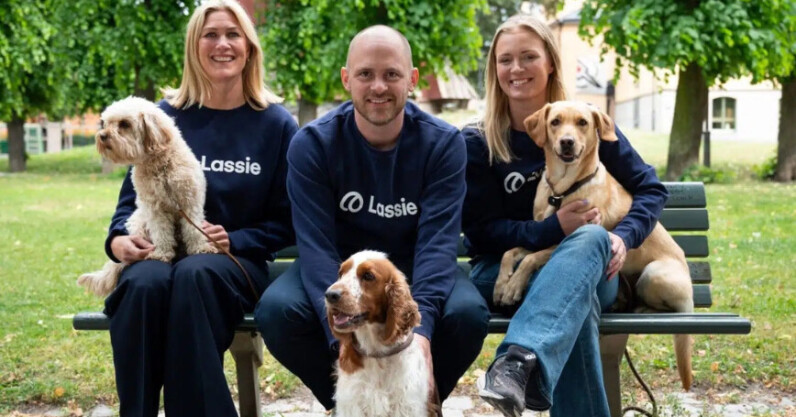
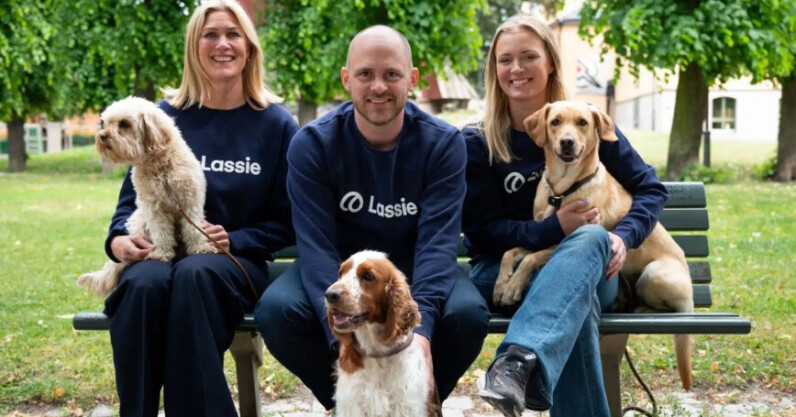
Imagine the moment you bring a new dog or cat into your life. That mix of excitement and responsibility. Vet visits, vaccines, learning what food suits them, managing check-ups, and always wondering how to keep them healthy as they grow. Most pet insurance only steps in after a costly accident or illness. It doesn’t help you avoid the situation in the first place. Lassie’s product is built around a different insight: giving owners the tools to look after their pets every day, not just when something goes wrong. Now, Stockholm-based insurtech Lassie has secured $75 million in a Series C…
This story continues at The Next Web
Researchers at Nvidia have developed a technique that can reduce the memory costs of large language model reasoning by up to eight times. Their technique, called dynamic memory sparsification (DMS), compresses the key value (KV) cache, the temporary memory LLMs generate and store as they process prompts and reason through problems and documents.
While researchers have proposed various methods to compress this cache before, most struggle to do so without degrading the model’s intelligence. Nvidia’s approach manages to discard much of the cache while maintaining (and in some cases improving) the model’s reasoning capabilities.
Experiments show that DMS enables LLMs to “think” longer and explore more solutions without the usual penalty in speed or memory costs.
The bottleneck of reasoning
LLMs improve their performance on complex tasks by generating “chain-of-thought” tokens, essentially writing out their reasoning steps before arriving at a final answer. Inference-time scaling techniques leverage this by giving the model a larger budget to generate these thinking tokens or to explore multiple potential reasoning paths in parallel.
However, this improved reasoning comes with a significant computational cost. As the model generates more tokens, it builds up a KV cache.
For real-world applications, the KV cache is a major bottleneck. As the reasoning chain grows, the cache grows linearly, consuming vast amounts of memory on GPUs. This forces the hardware to spend more time reading data from memory than actually computing, which slows down generation and increases latency. It also caps the number of users a system can serve simultaneously, as running out of VRAM causes the system to crash or slow to a crawl.
Nvidia researchers frame this not just as a technical hurdle, but as a fundamental economic one for the enterprise.
“The question isn’t just about hardware quantity; it’s about whether your infrastructure is processing 100 reasoning threads or 800 threads for the same cost,” Piotr Nawrot, Senior Deep Learning Engineer at Nvidia, told VentureBeat.
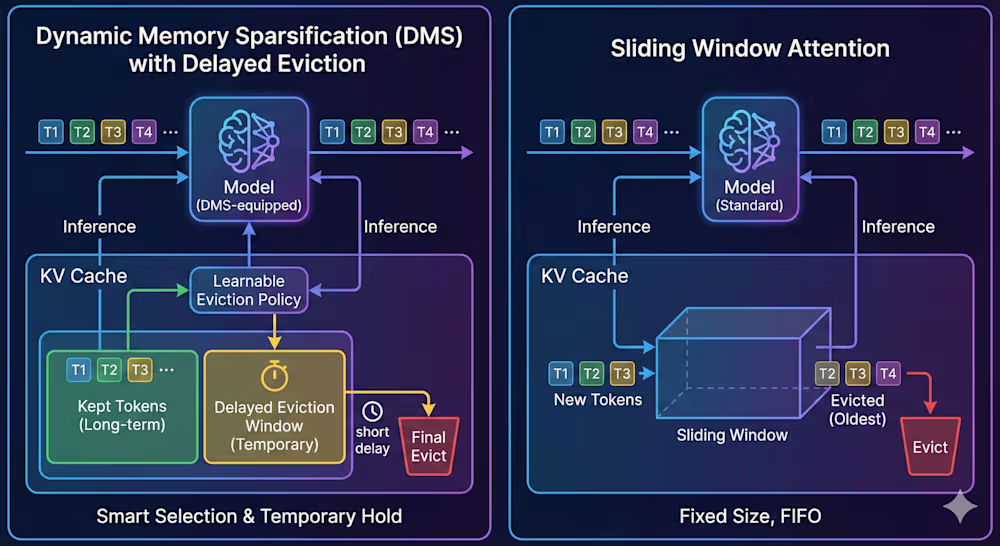
Previous attempts to solve this focused on heuristics-based approaches. These methods use rigid rules, such as a “sliding window” that only caches the most recent tokens and deletes the rest. While this reduces memory usage, it often forces the model to discard critical information required for solving the problem, degrading the accuracy of the output.
“Standard eviction methods attempt to select old and unused tokens for eviction using heuristics,” the researchers said. “They simplify the problem, hoping that if they approximate the model’s internal mechanics, the answer will remain correct.”
Other solutions use paging to offload the unused parts of the KV cache to slower memory, but the constant swapping of data introduces latency overhead that makes real-time applications sluggish.
Dynamic memory sparsification
DMS takes a different approach by “retrofitting” existing LLMs to intelligently manage their own memory. Rather than applying a fixed rule for what to delete, DMS trains the model to identify which tokens are essential for future reasoning and which are disposable.

“It doesn’t just guess importance; it learns a policy that explicitly preserves the model’s final output distribution,” Nawrot said.
The process transforms a standard, pre-trained LLM such as Llama 3 or Qwen 3 into a self-compressing model. Crucially, this does not require training the model from scratch, which would be prohibitively expensive. Instead, DMS repurposes existing neurons within the model’s attention layers to output a “keep” or “evict” signal for each token.
For teams worried about the complexity of retrofitting, the researchers noted that the process is designed to be lightweight. “To improve the efficiency of this process, the model’s weights can be frozen, which makes the process similar to Low-Rank Adaptation (LoRA),” Nawrot said. This means a standard enterprise model like Qwen3-8B “can be retrofitted with DMS within hours on a single DGX H100.”
One of the important parts of DMS is a mechanism called “delayed eviction.” In standard sparsification, if a token is deemed unimportant, it is deleted immediately. This is risky because the model might need a split second to integrate that token’s context into its current state.
DMS mitigates this by flagging a token for eviction but keeping it accessible for a short window of time (e.g., a few hundred steps). This delay allows the model to “extract” any remaining necessary information from the token and merge it into the current context before the token is wiped from the KV cache.
“The ‘delayed eviction’ mechanism is crucial because not all tokens are simply ‘important’ (keep forever) or ‘useless’ (delete immediately). Many fall in between — they carry some information, but not enough to justify occupying an entire slot in memory,” Nawrot said. “This is where the redundancy lies. By keeping these tokens in a local window for a short time before eviction, we allow the model to attend to them and redistribute their information into future tokens.”
The researchers found that this retrofitting process is highly efficient. They could equip a pre-trained LLM with DMS in just 1,000 training steps, a tiny fraction of the compute required for the original training. The resulting models use standard kernels and can drop directly into existing high-performance inference stacks without custom hardware or complex software rewriting.
DMS in action
To validate the technique, the researchers applied DMS to several reasoning models, including the Qwen-R1 series (distilled from DeepSeek R1) and Llama 3.2, and tested them on difficult benchmarks like AIME 24 (math), GPQA Diamond (science), and LiveCodeBench (coding).
The results show that DMS effectively moves the Pareto frontier, the optimal trade-off between cost and performance. On the AIME 24 math benchmark, a Qwen-R1 32B model equipped with DMS achieved a score 12.0 points higher than a standard model when constrained to the same memory bandwidth budget. By compressing the cache, the model could afford to “think” much deeper and wider than the standard model could for the same memory and compute budget.

Perhaps most surprisingly, DMS defied the common wisdom that compression hurts long-context understanding. In “needle-in-a-haystack” tests, which measure a model’s ability to find a specific piece of information buried in a large document, DMS variants actually outperformed the standard models. By actively managing its memory rather than passively accumulating noise, the model maintained a cleaner, more useful context.
For enterprise infrastructure, the efficiency gains translate directly to throughput and hardware savings. Because the memory cache is significantly smaller, the GPU spends less time fetching data, reducing the wait time for users. In tests with the Qwen3-8B model, DMS matched the accuracy of the vanilla model while delivering up to 5x higher throughput. This means a single server can handle five times as many customer queries per second without a drop in quality.
The future of memory
Nvidia has released DMS as part of its KVPress library. Regarding how enterprises can get started with DMS, Nawrot emphasized that the barrier to entry is low. “The ‘minimum viable infrastructure’ is standard Hugging Face pipelines — no custom CUDA kernels are required,” Nawrot said, noting that the code is fully compatible with standard FlashAttention.
Looking ahead, the team views DMS as part of a larger shift where memory management becomes a distinct, intelligent layer of the AI stack. Nawrot also confirmed that DMS is “fully compatible” with newer architectures like the Multi-Head Latent Attention (MLA) used in DeepSeek’s models, suggesting that combining these approaches could yield even greater efficiency gains.
As enterprises move from simple chatbots to complex agentic systems that require extended reasoning, the cost of inference is becoming a primary concern. Techniques like DMS provide a path to scale these capabilities sustainably.
“We’ve barely scratched the surface of what is possible,” Nawrot said, “and we expect inference-time scaling to further evolve.”


Expedia Group topped estimates for its fourth quarter results, posting revenue of $3.55 billion, up 11% year-over-year, and adjusted earnings per share of $3.78. Analysts expected $3.41 billion in revenue and EPS of $3.37.
Gross bookings rose 11% to $27 billion, also beating expectations. Expedia’s B2B arm, meanwhile, remained a major growth engine. In the fourth quarter, B2B gross bookings jumped 24% from a year earlier, compared with 5% growth in the consumer-facing B2C segment.
Expedia CEO Ariane Gorin said the earnings reflect “disciplined execution of our strategic priorities in a healthy demand environment.”
Seattle-based Expedia recently laid off 162 workers in Washington state as part of its latest workforce reduction.
For the first quarter, the company expects gross bookings between $34.6 billion and $35.2 billion, up 10% to 12% year over year, and revenue between $3.32 billion and $3.37 billion, up 11% to 13%. The company’s full-year guidance is in line with estimates.
Shares fell more than 3% in after-hours trading.
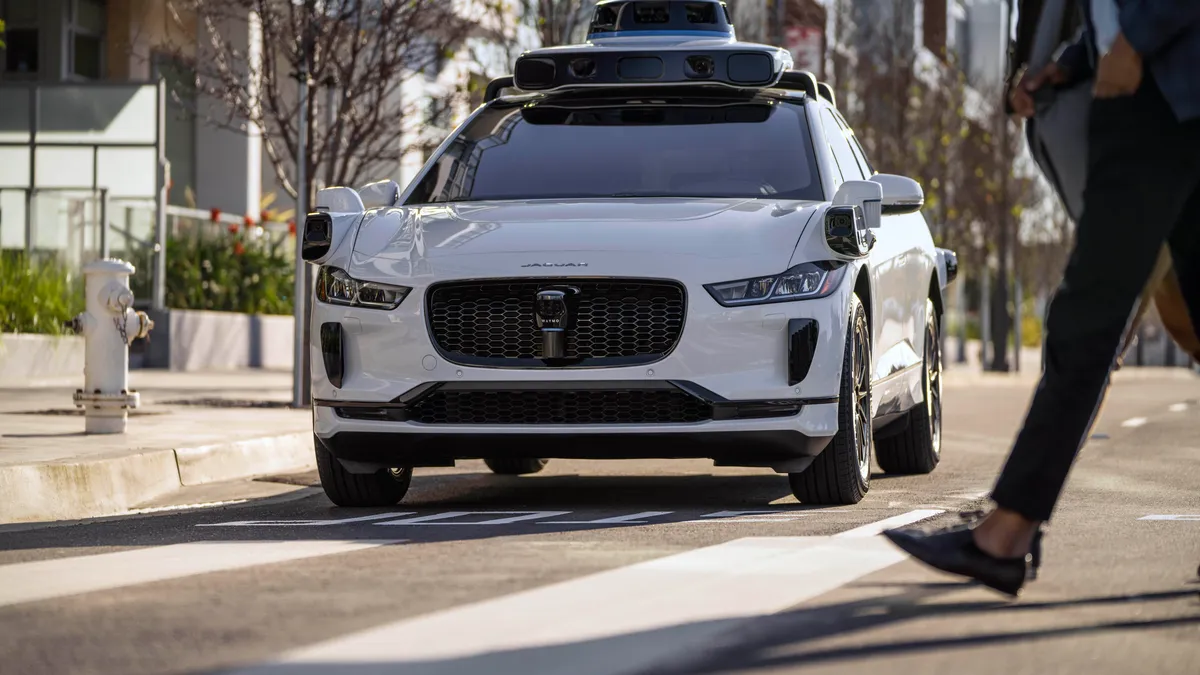
Self-driving cars are slowly becoming less sci-fi and more real-world as companies like Waymo, the autonomous arm of Google’s parent, Alphabet, expand into more areas. On Thursday, Waymo said it’s beginning fully autonomous operations with its latest, sixth-generation self-driving technology, which is built to handle extreme winter weather while scaling back costs.
The sixth-generation Waymo Driver builds on the company’s current autonomous technology by further tapping into AI advancements, Waymo said in a blog post. For instance, the updated vision system can find details in deep shadows or while being hit with high beams, and requires fewer cameras, thanks to higher-resolution image sensors. Waymo’s lidar sensors have gotten better at painting a 3D picture of the car’s surroundings in various weather conditions, and the company’s latest radar sensors use new algorithms to better track the distance, velocity and size of objects in rain or snow.
These capabilities can come in handy as Waymo expands to more cities with a variety of climates, such as Minneapolis, Detroit and London. The sixth-generation Waymo Driver will first be deployed on the Ojai, a modified Zeekr vehicle, before making its way to the Hyundai Ioniq 5. Fully autonomous trips using the sixth-generation driver will kick off with employees in the San Francisco Bay Area and Los Angeles before eventually opening up to the public.
Waymo currently offers fully autonomous rides to the general public in the all-electric Jaguar I-Pace in Phoenix, San Francisco, Los Angeles, Atlanta, and Austin, Texas. The vehicles can be summoned either via the Waymo app or Uber, depending on the city. In November, Waymo began driving passengers on freeways in San Francisco, Phoenix and LA. And in January, it opened up to its first public riders in Miami as it gradually expands access.
The self-driving company has added several new cities to its roster in recent months. In an Aug. 29 blog post, Waymo noted it’s “entering a new chapter and accelerating our commercial expansion.” You can find a full list of where Waymo currently operates and plans to expand below.
Waymo’s newest vehicle, dubbed Ojai, is a modified Zeekr equipped with the company’s latest sixth-generation self-driving technology.
Waymo expands and grows
Waymo’s growth extends to its manufacturing facilities. In May, the company said it’s opening a new, 239,000-square-foot autonomous vehicle factory in the Phoenix area. The plan is to add 2,000 more fully autonomous Jaguar I-Pace vehicles to its existing 1,500-vehicle fleet. Notably, Waymo indicated it received its “final delivery from Jaguar” earlier this year, as it plans for future iterations of its driverless rides.
Waymo added that the “facility’s flexible design” will allow it to integrate its upcoming sixth-generation self-driving technology into new vehicles, starting with the all-electric Zeekr RT, which Waymo has dubbed Ojai. In February 2026, Waymo said it was beginning fully autonomous operations with the sixth-generation driver aboard the Ojai, starting with employees before eventually expanding to more passengers.
In October 2024, Waymo also announced it’s partnering with Hyundai to bring the next generation of its technology into Ioniq 5 SUVs. In the years to come, riders will be able to summon those all-electric, autonomous vehicles using the Waymo app. Testing with these vehicles began in 2025 and they’ll become available “in the years to follow.”
And in April 2025, Waymo said it reached a preliminary agreement with Toyota to “explore a collaboration” geared toward developing autonomous driving tech, which could someday be factored into personally owned vehicles.
Waymo is working to expand its autonomous driving tech into trucking as well, but it said in 2023 that it’s scaling back those efforts for the time being, to focus on ride-hailing with Waymo One. It noted, “Our ongoing investment in advancing Waymo Driver capabilities, especially on freeways, will directly translate to trucking and benefit its development efforts.”
Waymo safety and pushback
The self-driving company says it’s driven nearly 200 million miles on public roads, and completes over 400,000 fully autonomous rides each week in San Francisco, Los Angeles, Phoenix, Austin, Atlanta and Miami. I’ve hailed several rides myself in San Francisco, and as off-putting as it can seem at first (especially to see a steering wheel turn by itself), I quickly adjusted, and it soon felt like an ordinary ride.
That’s not to say there hasn’t been pushback as Waymo rolls out to more cities. The company’s vehicles have been involved in a handful of high-profile collisions, including one with a bicyclist in San Francisco and another with a towed pickup truck in Phoenix. (Waymo recalled and updated its software to address the issue.) Its vehicles have also struggled to navigate construction zones, driven onto the path of an oncoming train and blocked traffic during a power outage in San Francisco. In January, a Waymo robotaxi hit a young pedestrian near a school in Santa Monica, California.
Waymo’s Safety Impact report notes that over the course of 71 million autonomous miles driven through March 2025, its Waymo Driver technology had 88% fewer crashes leading to serious injuries or worse and 78% fewer injury-causing crashes, compared with “an average human driver over the same distance in our operating cities.” It also reported significantly fewer crashes with injuries to pedestrians (93%), cyclists (81%) and motorcyclists (86%).
In some cities, Waymo is available on the Uber app.
How to hail a Waymo ride
As Waymo continues to expand and develop its self-driving tech, here’s how and where to summon a robotaxi if you’re in one of the few cities where the company currently operates its fleet.
Watch this: Testing Waymo’s Safe Exit Feature in a Self-Driving Taxi
Phoenix
Phoenix was the first city to open up fully autonomous Waymo rides to the public in 2020. To hail a ride, download the Waymo app on iOS or Android. The service operates 24 hours a day, seven days a week.
You can also use the Uber app to summon one of Waymo’s vehicles in Phoenix. When you request an UberX, Uber Green, Uber Comfort or Uber Comfort Electric ride, you’ll have the choice to confirm a Waymo ride if you’re matched.
In addition to hailing a ride, you may also have your Uber Eats meal delivered by an autonomous car. When placing an order in the Phoenix area, you might get a note that “autonomous vehicles may deliver your order.” When the Waymo car arrives, take your phone with you to pop open the trunk and grab your delivery. You can opt out of this during checkout if you’d rather have a human deliver your food.
Phoenix Sky Harbor International Airport became the first major airport to offer fully autonomous Waymo rides to its terminals. Waymo said in September 2025 that it had “served hundreds of thousands of trips to/from Sky Harbor, and it remains the single most popular Waymo destination in Phoenix.”
Waymo added freeway access for passengers in Phoenix in November.
San Francisco Bay Area
San Francisco followed suit after Phoenix, rolling out fully autonomous rides in late 2022. It scrapped the waiting list in June 2024, so now anyone can download the Waymo app to ride anytime. The service also operates 24 hours a day, seven days a week. There’s currently no Uber partnership in San Francisco.
In November, Waymo expanded its service area to more than 260 square miles across the San Francisco Bay Area and added freeway access for passengers. Riders can now hail a driverless ride to San Jose Mineta International Airport as well as San Francisco International Airport.
Los Angeles County
In November 2024, Waymo scrapped its waitlist for Los Angeles and began welcoming all public riders via the Waymo app. Now any interested passengers can hop in the robotaxis 24/7 and ride across nearly 120 square miles of LA County, including Santa Monica, Beverly Hills, Inglewood, Silver Lake, Playa del Rey, Ladera Heights, Echo Park and Downtown LA, and along all of Sunset Boulevard.
There’s currently no Uber partnership in Los Angeles.
In November, Waymo began rolling out freeway access to LA riders.
Austin
Riders can hail a Waymo across 90 square miles of Austin, including neighborhoods like Crestview, Windsor Park and Franklin Park and locations like The Domain and McKinney Falls State Park. There are more than 100 Waymo vehicles in the city, with plans for further expansion.
In Austin, the only way to hail a Waymo ride is through Uber — no Waymo app here. By requesting an UberX, Uber Green, Uber Comfort or Uber Comfort Electric, you could be matched with a Waymo vehicle — and you won’t be upcharged. If you’d rather not take a driverless ride, you can switch to a standard one. On the other hand, if you want to boost your chances of being matched to a self-driving car, you can go to Account > Settings > Autonomous vehicles, then hit the toggle next to Get more Waymo rides.
Unlock the door, pop open the trunk and start the ride from the Uber app. You’ll still be asked to rate your ride at the end, but you won’t be asked to tip.
If there are any issues, riders can access human support 24/7 via the Uber app and from inside the Waymo vehicle (there are screens in the front and back that let you quickly summon customer support).
As part of the Uber partnership, Uber will manage tasks like vehicle cleaning and repair, while “Waymo will continue to be responsible for the testing and operation of the Waymo Driver, including roadside assistance and certain rider support functions,” the companies said. The collaboration should make autonomous rides accessible to more people, so they won’t have to download a separate app to ride a robotaxi.
Atlanta
Waymo operates across 65 square miles of Atlanta, with plans for future expansions. As in Austin, you can only climb aboard a Waymo robotaxi via the Uber app. When you book a ride through UberX, Uber Comfort or Uber Comfort Electric, you might be paired with a Waymo vehicle at no additional cost. You’ll have the option to accept or decline the driverless ride each time.
You can unlock the vehicle, pop the trunk, and start the trip all from the Uber app, and you can access human support 24/7 via the app and touchscreens inside the vehicle.
If you want to boost your chances of being paired with a Waymo vehicle, you can opt in by going to the Uber app, tapping Account > Settings > Autonomous vehicles (under Ride Preferences), and then hitting the toggle next to Get more Waymo rides.
Waymo vehicles can now drive passengers on freeways in Phoenix, San Francisco and Los Angeles.
Upcoming expansions
Sacramento
Adding to the list of Californian cities in which it operates, Waymo said in February that it’s heading to Sacramento. The company will start by manually driving its Jaguar I-Pace vehicles around the city to better understand its layout, before scaling to autonomous driving.
It’s not clear when riders will be able to hail a ride in Sacramento. Waymo says it has the necessary DMV permit to operate autonomously in the city, but it hasn’t yet obtained a commercial deployment permit from the California Public Utilities Commission, which is required for driverless operations.
Boston
Waymo is bringing its vehicles to Boston, but there’s no clear timeline yet for when rides will be available to the public there. In a blog post, Waymo said it’s working with officials to get Massachusetts to legalize fully autonomous vehicles.
Baltimore
In December, Waymo said it was beginning manual driving in Baltimore. It’ll gradually work toward autonomous rides.
St. Louis
Waymo also launched manual driving operations in St. Louis in December, as it builds toward autonomous driving.
New Orleans
In November, Waymo said it would begin manual driving in New Orleans as it builds toward a robotaxi service there. It’s not clear when exactly the public will be able to ride in the city; it could be in 2026, depending on when the company validates its technology. Waymo is using its fifth-generation driving technology “as we lay the groundwork for our services,” the company said, with the option to add future vehicles equipped with its newer sixth-generation tech as it expands.
Minneapolis
Like New Orleans, Waymo began manual driving in Minneapolis in November. Once the company has validated its tech there, riders will be able to climb aboard.
Las Vegas
In January, Waymo said it would begin testing with manually driven vehicles in 10 new cities, starting with Las Vegas and San Diego. And in November, it announced that its robotaxi service will officially expand to those cities in 2026.
As part of the rollout, the company is deploying both its Jaguar I-Pace fleet, which already operates in a handful of other cities, and the newer Zeeker RT vehicles equipped with Waymo’s latest, sixth-generation self-driving technology.
“We’ve regularly visited Las Vegas over the years and found the Waymo Driver easily adapts to the city,” Waymo said in a blog post. “While Las Vegas is unique, its driving dynamics are familiar-similar to cities where we already operate. This familiarity positions us well to help serve Las Vegas’s 40-plus million annual visitors.”
Waymo said it plans to make its ride-hailing service available in Vegas in the summer of 2026. It began autonomous testing with a driver behind the wheel just before this year’s CES.
San Diego
San Diego is one of many cities Waymo is expanding to in its home state of California.
“As we work to expand our deployment permits, we’re partnering with local teams, training first responders, and deepening community relationships so we can best serve the community and its visitors when we open our doors,” the company said in a blog post.
It’ll deploy both its Jaguar I-Pace fleet and the newer Zeeker RT vehicles equipped with Waymo’s latest self-driving technology.
Waymo says it plans to open up its autonomous service in San Diego in 2026.
Detroit
Unlike many of the other cities Waymo is expanding to, Detroit presents the challenge of harsh winter weather. Similar to Las Vegas and San Diego, Waymo will deploy both its current Jaguar I-Pace fleet and Zeeker RT vehicles equipped with its latest autonomous technology.
In a blog post, Waymo said it has “regularly tested in Detroit during winter weather to develop our capabilities in snow and ice. We’ve made great strides in our efforts to operate in heavier snow – including testing in Michigan’s Upper Peninsula – and look forward to the 6th-generation Waymo Driver navigating Detroit streets this winter.”
London
In mid-October, Waymo said its vehicles are headed to London, making the city its first European location. It’ll start driving on the city’s roads with humans behind the wheel “while we lay the groundwork for fully autonomous operations,” the company said in a statement. “We will scale up based on guidelines established by the UK Department for Transport and Transport for London, and work closely with local and national leaders to secure the necessary permissions to offer fully autonomous rides in 2026.”
London is Waymo’s second international city, after it announced in 2024 that it’s expanding to Tokyo, though passengers can’t hail a ride there just yet either.
Nashville
Waymo is partnering with Lyft to expand to Nashville. Waymo began driving in the city autonomously in February, as it prepares to open to the public later this year. Riders will be able to hail vehicles through the Waymo app, and will eventually have the option to be matched with a robotaxi in the Lyft app, too.
As part of the collaboration, Lyft will manage the robotaxi fleet, which includes vehicle maintenance and cleaning, while Waymo will be responsible for the self-driving technology.
Denver
Waymo arrived in Denver in the fall “to lay the groundwork for a fully autonomous service in the future,” the company said in an early September 2025 blog post. It’ll deploy a mixed fleet consisting of Jaguar I-Pace vehicles with its fifth-generation Waymo Driver as well as Zeekr RT vehicles with the sixth-generation Waymo Driver. That newer technology “is informed by years of winter weather experience across Michigan, upstate New York, and the Sierra Nevada and engineered to autonomously sustain operations in harsher climates,” Waymo said.
Seattle
In early September, Waymo shared that it’s heading to the Seattle metropolitan area, noting in a blog post that it “spent years getting to know the area — from communities around the Lake to its notoriously wet weather.” It’s not yet clear when exactly that service will launch.
Dallas, Houston and San Antonio
Waymo is currently conducting early testing in Dallas, with plans to launch public rides via the Waymo app next year. The company is teaming up with Avis Budget Group, which will manage the fleet, including vehicle cleaning and maintenance.
“Our partnership with Waymo marks a pivotal milestone in our evolution, from a rental car company to a leading provider of fleet management, infrastructure and operations to the broader mobility ecosystem,” Avis Budget Group CEO Brian Choi said in a statement. “Together, we’re committed to making scaled autonomous mobility a reality for the people of Dallas, with plans to expand to additional cities in the near future.”
Waymo is also planning to launch in Houston and San Antonio next year. In November, Waymo said it would begin rolling out fully autonomous rides in the three Texas cities for employees, before launching for the public in 2026.
In January, Waymo shared it was beginning employee testing at Dallas Love Field Airport and San Antonio International Airport.
New York City
In June, Waymo shared plans to bring its autonomous tech back to New York, after having first manually operated its vehicles there in 2021. It once again began driving manually in the Big Apple in early July, specifically in Manhattan and parts of downtown Brooklyn, as well as in nearby Jersey City and Hoboken. Waymo submitted a permit application with the New York City Department of Transportation to operate autonomously with a human behind the wheel, which was granted in late August.
As part of the New York City permit, Waymo can test up to eight autonomous vehicles in Manhattan and downtown Brooklyn until September. After that, it can apply for an extension to the pilot testing period.
Existing laws in the state of New York don’t permit the same fully autonomous ride-hailing service that companies like Waymo offer in other parts of the country, so Waymo is still unable to charge for rides. In June, Waymo said it was “advocating for a change in state law that would allow for operating a vehicle with no human behind the wheel,” adding, “we have every intention of bringing our fully autonomous ride-hailing service to the city in the future.”
Philadelphia and Pittsburgh
Waymo said in July that it’s bringing a limited fleet of its vehicles to “the most complex parts” of Philadelphia,”including downtown and freeways.” And in December, the company said it’s now operating autonomously with a trained human specialist behind the wheel.
It’s also kicking off manual driving in Pittsburgh before eventually building up to autonomous driving.
Washington, DC
Waymo plans to start offering rides through its Waymo app in Washington, DC, in 2026. The company returned to the nation’s capital in January last year to test its autonomous driving tech. In late March, it said it was bringing more vehicles to the city and working to scale its service throughout the year. In a blog post, Waymo said it’ll “continue to work closely with policymakers to formalize the regulations needed to operate without a human behind the wheel in the District.”
Miami, Orlando and Tampa
In January, Waymo began offering fully autonomous rides to the public in Miami. “With nearly 10,000 residents already signed up, we will be inviting new riders on a rolling basis to ensure a seamless experience across our initial 60-square-mile service area,” the company said in a blog post. The initial service area includes the Design District and Wynwood, as well as Brickell and Coral Gables. Waymo plans to expand to Miami International Airport “soon.”
The company conducted weather testing in the lead-up to Miami’s rollout, noting in a blog post, “Our previous road trips to the Sunshine State’s challenging rainy conditions have been invaluable in advancing our autonomous driving capabilities.”
Waymo is collaborating with Moove, a fintech company that offers vehicle financing, first in Phoenix, where Moove will manage the robotaxi’s fleet operations, facilities and charging infrastructure. In Phoenix and then Miami, “Waymo will continue to offer our service through the Waymo app, and remain responsible for validation and operation of the Waymo Driver,” the company said in a blog post.
Waymo is also rolling out driverless rides in Orlando for employees as it prepares to launch its service there this year.
Waymo is also starting manual driving in Tampa, though it’s not clear when people will be able to hail a robotaxi ride there. It could be in 2026, if the company has validated its self-driving tech in the city.
Tokyo
In December 2024, Waymo announced it’s expanding to Tokyo, making it the company’s first international location. Waymo is partnering with Japanese taxi service Nihon Kotsu and taxi app Go.
Waymo says trained Nihon Kotsu drivers will manually drive its vehicles across seven Tokyo wards, including Minato, Shinjuku, Shibuya, Chiyoda, Chūō, Shinagawa and Kōtō. This will allow engineers to test and adapt Waymo’s autonomous driving tech to local road features and traffic.
“In Tokyo, we are abiding by the same steadfast principles that guide us in the US — commitment to safety, dedication to earning trust in communities where we operate, and collaboration with local officials and community groups here in Tokyo,” Nicole Gavel, Waymo’s head of business development and strategic partnerships, said in a statement.
It’s not clear when riders will be able to hitch a self-driving ride with Waymo in Tokyo.
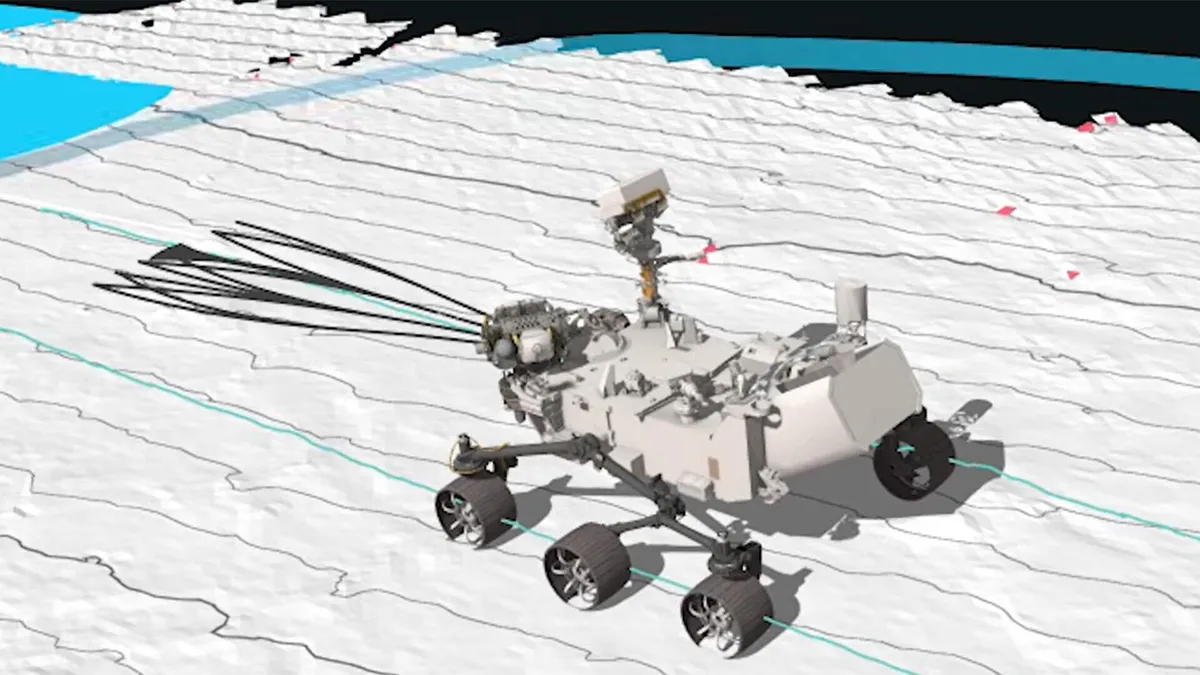
On Earth, we can punch an address into Google Maps and be on our way in seconds. But plotting a course for NASA’s Perseverance rover, 140 million miles away on Mars, is significantly more difficult. The rover’s course is usually plotted by a team at NASA’s Jet Propulsion Lab, who take into account terrain, obstacles and potential hazards.
For the first time, NASA’s JPL used AI to plot a course for Perseverance, and it seems to have worked out.
The two demonstrations, which took place on Dec. 8 and Dec. 10, were plotted by Anthropic’s Claude AI models and double-checked by JPL to ensure that the AI didn’t accidentally drive the rover into a ditch. Perseverance drove just under 1,500 feet across the two drives with no documented issues.
NASA took a similar approach with plotting the waypoints as it would with human operators. Claude was fed the same satellite imagery and data from NASA’s Mars Reconnaissance Orbiter that JPL scientists would use, and then asked to plot waypoints that Perseverance could handle safely.
The resulting path was slightly modified by NASA and then shipped to Perseverance, which then drove the path autonomously.
“This demonstration shows how far our capabilities have advanced and broadens how we will explore other worlds,” said NASA Administrator Jared Isaacman. “Autonomous technologies like this can help missions to operate more efficiently, respond to challenging terrain and increase science return as distance from Earth grows. It’s a strong example of teams applying new technology carefully and responsibly in real operations.”
You can watch the Dec. 10 drive on NASA’s YouTube channel, which has been condensed into a 52-second video.
The route planned by Claude is shown in magenta, and the actual path taken is in orange. NASA scientists only had to make minor adjustments to the AI’s pathing.
A more efficient way to do it
While AI is largely known as a provider of slop, which has been blamed for rapidly degrading people’s internet experience, it can be useful in some scientific pursuits. It takes time to parse years of imagery and data, plot the Perseverance waypoints, and then execute them.
Per NASA, waypoints are usually set no more than 330 feet apart, which means Perseverance is exploring the red planet one football field at a time. Take its epic climb out of the Jezero Crater in 2024. The journey took Perseverance 3.5 months and, all told, the rover climbed a total of 1,640 vertical feet. As of December 2025, the rover has driven a total of just 25 miles in roughly four years.
The goal, according to JPL space roboticist Vandi Verma, is to let Perseverance (and other Mars rovers) travel much farther while “minimizing operator workload.”
Verma also notes that AI could be used to flag interesting features on the planet, saving the human science teams time by eliminating the need to manually check “huge volumes of rover images.”
“This demonstration shows how far our capabilities have advanced and broadens how we will explore other worlds,” said Isaacman. “Autonomous technologies like this can help missions to operate more efficiently, respond to challenging terrain and increase science return as distance from Earth grows. It’s a strong example of teams applying new technology carefully and responsibly in real operations.”
Riding a motorcycle is one of the most freeing experiences you can have. Even if you have all the luxuries of being inside a car and even a chauffeur to drive you around in it, sitting astride a bike is just a different feeling. Modern motorcycles offer a ton of features that make for a more comfortable ride. However, doing so will always be a high-stakes game of focus, physics, and continuous learning. It doesn’t matter if you have the one of the safest and most beginner-friendly motorcycles ever built — you still need to take care while on the road.
After years on two wheels, I have realized that the most dangerous habits aren’t only the obviously reckless ones like performing stunts on highways or unnecessary speeding through traffic. For serious riders who really want to drive safely, you can’t overlook even minor issues; a small lapse in judgment can result in la life-altering injury on a bike. It’s not always about wearing a well-ranked bike helmet or sturdy, protective riding jacket; you can avoid major accidents by simply removing unnecessary risks from your ride.
Dangerous behavior can include things like wearing the wrong shoes, adopting bad driving habits, allowing yourself to get distracted, or blindly trusting what you see while on the road. It’s time to unlearn some of these bad behaviors. Here are five things that you need to stop doing if you drive a motorcycle.
Stop wearing loose shoelaces
It may sound like something your mom would tell you, but it’s a crucial point. You don’t want a loose shoelace getting tangled in your bike. It even happened to me very recently. As I went to put my left foot down to stabilize the bike, I realized I couldn’t move as my shoelaces had gotten themselves tangled around the gear lever. Thanks to my years of experience, I avoided a drop that would have otherwise led to some bruises and scratched fairings, but others might not be able to save themselves.
Loose laces can easily end up tangled at the same spot of your own bike, preventing you from shifting gears when you need to change speed. Things get especially dangerous when you have someone riding pillion, though; their loose laces can get into the most dangerous moving parts of a motorcycle like the rear wheel, drive, and sprockets. If their laces get stuck into any of these parts at speed, it doesn’t just snap the lace — it can pull their foot right into the machinery, resulting in something dreadful.
For all these reasons, many state DMVs will highlight the issue. An example of this is how the Washington Department of Licensing explicitly advises keeping all your gear secure to avoid interference with controls, stating that “laces should be tucked in to prevent them from catching on parts of the bike.” To avoid such mishaps, you should be rigorous about the type of footwear you wear. The California DMV Motorcycle Handbook likewise warns against the dangers, clearly suggesting wearing sturdy, over-the-ankle or closed-toe shoes.
Stop changing speed or gears mid-corner
Riding a motorcycle on a mostly-straight highway or freeway is a totally different skill from riding over hills or through twisty mountain roads. I’ve been a rider for more than a decade, but when I took my bike to Ladakh in the mountainous region of northern India, I learned a lot of new things about riding. One of the most crucial new lessons was you need to stay calm when approaching a sweeping curve so as to avoid slamming on the brakes or grabbing the clutch and downshifting.
Downshifting or braking might feel like a smart move, but it is actually one of the quickest ways to crash. Motorcycles rely on a limited amount of traction. When you lean your bike into a curve (the most common way of turning for heavy bikes those loaded down with gear), your tires are already using almost all the traction available. Downshifting or braking spikes your power delivery, and the bike loses traction.
Experts also agree that gear shifting and braking should happen before you are ready to lean the bike. According to a driving manual published by the Kentucky State Police (via DrivingTests.org), it is recommended to change gears before entering a turn. The manual notes that if shifting is necessary, it should be smooth and there should be no sudden change in power delivery, as it can cause the vehicle to skid. TVS Motor, one of the biggest manufacturers of two-wheelers in India, also suggests that you should enter the curve in the smoothest way possible. In other words, its safer to finish gear shifts and braking before entering the corner.
Stop watching the speedometer or using a phone
Modern-day motorcycles are equipped with TFT or LCD screens that are compatible with Apple CarPlay and Android Auto, allowing users to view all of their phone’s content, sometimes use apps on the display, and view other metrics. Even bikes that don’t support these features can often be fitted with a smartphone mount to use for navigation or other purposes. But because of all this, it becomes quite tempting for riders to spend too long looking down at these screens.
This distraction is often the cause of major accidents on the road. Looking down at the display or taking your eyes off the road, even for a fraction of a second, can result in a crash. While driving, your eyes are your primary tool. Not only should you stay vigilant about what’s happening in front of you, but you should also check your bike’s rear-view mirrors for possible dangers behind. You should be scanning the horizon for safely overtaking, avoiding potholes, or swiftly changing lanes, not flicking your eyes down to whatever’s on your phone screen.
Distracted riding is quite lethal, and even the best riding gear might not be able to save you from accident or injury. The NHTSA (National Highway Traffic Safety Administration) reports thousands of lives lost annually due to distraction, with more than 3,000 deaths in 2023 alone. Even manufacturers of smartphone mount holders like Mob Armor stress that paying too much attention to your phone can lead to catastrophic consequences while riding.
Stop blindly trusting brake lights
One of the biggest mistakes, often committed by beginners and experienced bikers alike, is believing that if the car in front isn’t showing red brake lights, it isn’t slowing down. If you rely solely on this signal, then you may end up kissing the trunk of someone’s car with a bang. This most commonly comes up with with manual transmission cars, which is very common where I’m from. A car with a manual transmission often uses engine braking to slow down, which doesn’t require a driver to step on the brake.
Brake lights only tell you that the driver is depressing the brake pedal. It doesn’t tell you if the driver is just coasting to a stop or downshifting. If you’re in the habit of following vehicles too closely, it’s all too easy for this to result in an accident. As per the Motorcycle Safety Foundation, a rider should remain highly engaged when on the road, doing your best to anticipate what’s coming down the road or to look for signs that the cars in front of you are slowing down.
This is why you should always leave adequate space between your motorcycle and the vehicle in front. By leaving a visible gap between you and them, you will have sufficient time to react and bring your bike to a stop safely. A good cue to look for is whether the tires of the vehicle in front of you are exhibiting signs of slowing. You should also evaluate whether the gap between the two of you is shrinking faster than normal. Is this a lot of work? Sure. It’s also critical for your safety.
Stop riding behind the center of a car
Riding a motorcycle can make you feel like royalty. It’s only natural to feel like you’ve got the right to cruise right down the dead center of your lane. However, that’s often considered the most dangerous spot for a two-wheeled vehicle. Since cars have four wheels, drivers usually center their vehicles over hazards to protect their own tires. This means the center of the lane becomes the collection point for all the stuff that cars have avoided, such as potholes, broken vehicle parts, and even spilled or leaking vehicle fluids.
Riding in the middle puts your front tire at great risk of hitting any of these obstacles. The last thing you want is ending up wrecked because you hit a pothole or slipped on an oil slick that accumulated in the center. More importantly, driving directly behind a vehicle in this way might make it hard for that driver in front of you to see you in their side mirrors, leaving you in their blind spot.
This is why your best bet is often to drive aligned with the left bumper of the car ahead of you. This places you squarely in view of the driver’s side mirror, making you harder to ignore. And second, it gives you a clearer view as you can more easily see past that vehicle, letting you avoid trouble down the road and minimizing your risk of an accident.


On Thursday, Google announced that “commercially motivated” actors have attempted to clone knowledge from its Gemini AI chatbot by simply prompting it. One adversarial session reportedly prompted the model more than 100,000 times across various non-English languages, collecting responses ostensibly to train a cheaper copycat.
Google published the findings in what amounts to a quarterly self-assessment of threats to its own products that frames the company as the victim and the hero, which is not unusual in these self-authored assessments. Google calls the illicit activity “model extraction” and considers it intellectual property theft, which is a somewhat loaded position, given that Google’s LLM was built from materials scraped from the Internet without permission.
Google is also no stranger to the copycat practice. In 2023, The Information reported that Google’s Bard team had been accused of using ChatGPT outputs from ShareGPT, a public site where users share chatbot conversations, to help train its own chatbot. Senior Google AI researcher Jacob Devlin, who created the influential BERT language model, warned leadership that this violated OpenAI’s terms of service, then resigned and joined OpenAI. Google denied the claim but reportedly stopped using the data.
Even so, Google’s terms of service forbid people from extracting data from its AI models this way, and the report is a window into the world of somewhat shady AI model-cloning tactics. The company believes the culprits are mostly private companies and researchers looking for a competitive edge, and said the attacks have come from around the world. Google declined to name suspects.
The deal with distillation
Typically, the industry calls this practice of training a new model on a previous model’s outputs “distillation,” and it works like this: If you want to build your own large language model (LLM) but lack the billions of dollars and years of work that Google spent training Gemini, you can use a previously trained LLM as a shortcut.


Have you ever asked Alexa to remind you to send a WhatsApp message at a determined hour? And then you just wonder, ‘Why can’t Alexa just send the message herself? Or the incredible frustration when you use an app to plan a trip, only to have to jump to your calendar/booking website/tour/bank account instead of your AI assistant doing it all? Well, exactly this gap between AI automation and human action is what the agent-to-agent (A2A) protocol aims to address. With the introduction of AI Agents, the next step of evolution seemed to be communication. But when communication between machines…
This story continues at The Next Web

Young and the Restless: Victor & Adam’s Explosive Father-Son Showdown Erupts!
IBM Plans To Triple Entry-Level Hiring in the US

We Spent 1,00,000 On Viral Adult Money Gadgets!!!

Smart energy pays enters the US market, targeting scalable financial infrastructure

Software stocks enter bear market on AI disruption fear with ServiceNow plunging 10%

Wikipedia volunteers spent years cataloging AI tells. Now there’s a plugin to avoid them.


-

 Politics4 days ago
Why Israel is blocking foreign journalists from entering
-
 Sports6 days ago
JD Vance booed as Team USA enters Winter Olympics opening ceremony
-
 Business4 days ago
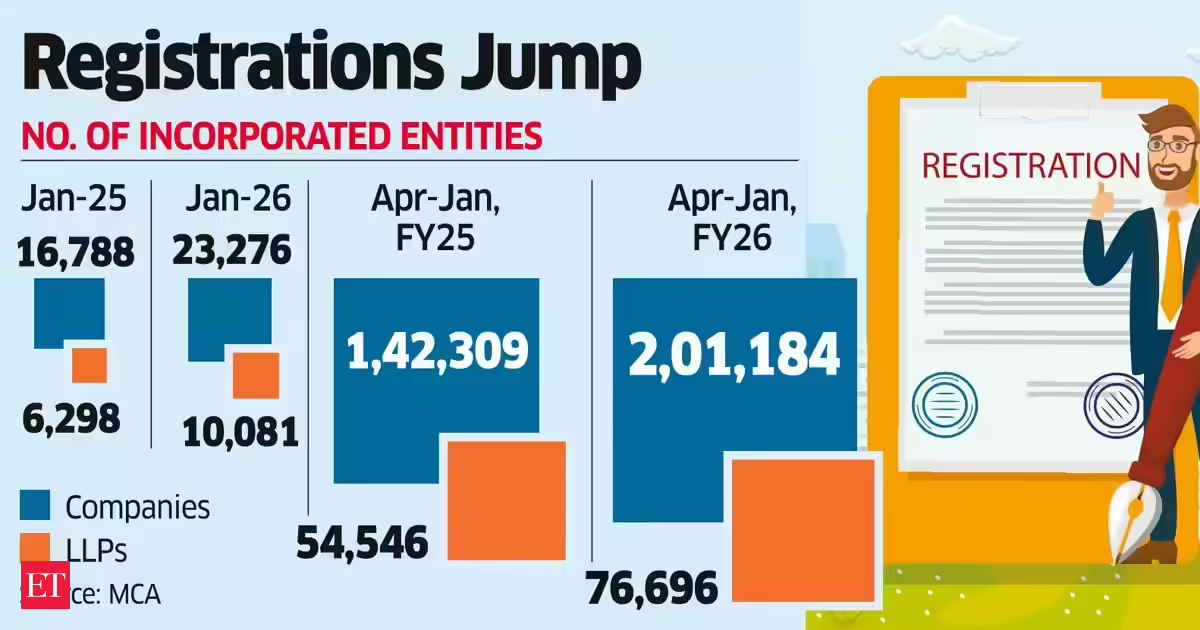
LLP registrations cross 10,000 mark for first time in Jan
-

 NewsBeat3 days ago
Mia Brookes misses out on Winter Olympics medal in snowboard big air
-

 Tech6 days ago
First multi-coronavirus vaccine enters human testing, built on UW Medicine technology
-

 Sports23 hours ago
Big Tech enters cricket ecosystem as ICC partners Google ahead of T20 WC | T20 World Cup 2026
-

 Business4 days ago
Costco introduces fresh batch of new bakery and frozen foods: report
-

 Tech2 days ago
SpaceX’s mighty Starship rocket enters final testing for 12th flight
-

 NewsBeat4 days ago
Winter Olympics 2026: Team GB’s Mia Brookes through to snowboard big air final, and curling pair beat Italy
-

 Sports4 days ago
Benjamin Karl strips clothes celebrating snowboard gold medal at Olympics
-
Sports5 days ago
Former Viking Enters Hall of Fame
-

 Politics4 days ago
The Health Dangers Of Browning Your Food
-
Sports7 days ago
New and Huge Defender Enter Vikings’ Mock Draft Orbit
-

 Business5 days ago
Julius Baer CEO calls for Swiss public register of rogue bankers to protect reputation
-
 NewsBeat6 days ago
Savannah Guthrie’s mother’s blood was found on porch of home, police confirm as search enters sixth day: Live
-
 Crypto World1 day ago
Pippin (PIPPIN) Enters Crypto’s Top 100 Club After Soaring 30% in a Day: More Room for Growth?
-

 Video20 hours ago
Prepare: We Are Entering Phase 3 Of The Investing Cycle
-

 Crypto World2 days ago
Blockchain.com wins UK registration nearly four years after abandoning FCA process
-

 Crypto World3 days ago
U.S. BTC ETFs register back-to-back inflows for first time in a month
-
 NewsBeat4 days ago
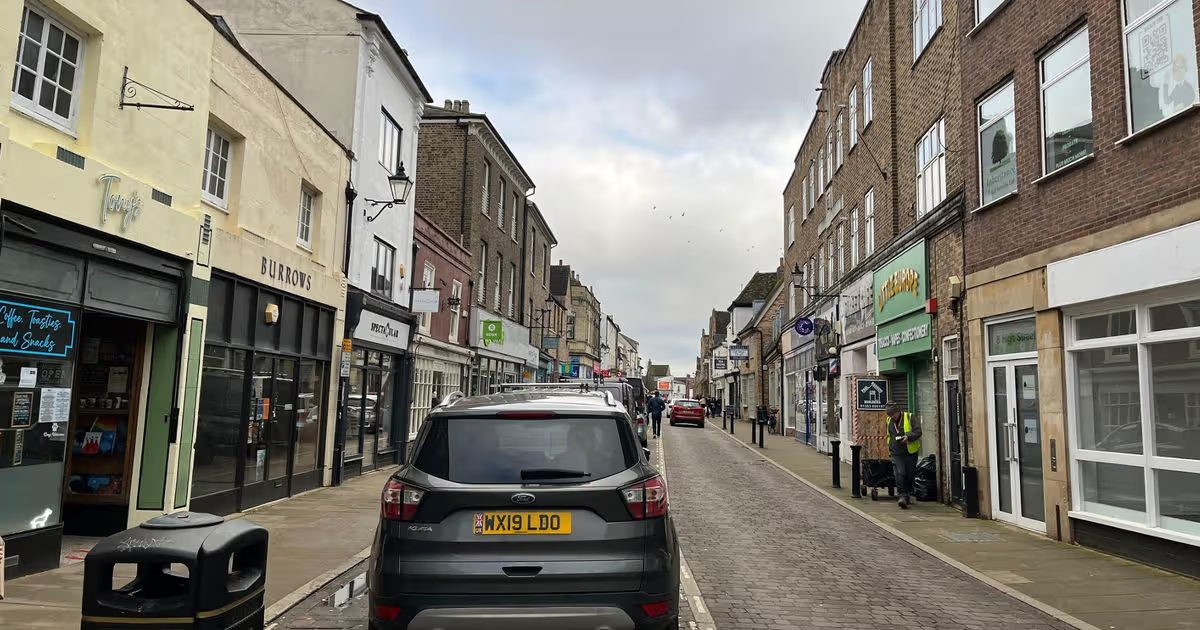
Residents say city high street with ‘boarded up’ shops ‘could be better’