

Join Mikko Hyppönen and security leaders from the NFL, CHANEL, and Atlassian for a two-hour digital summit on what AI-speed attacks change, what defenders should stop doing, and how to validate, decide, fix, and re-validate at machine speed.
Tech
Appeals Court Lets the Pentagon Designate Anthropic a Supply-Chain Risk


Anthropic lost a legal battle to overturn one of the supply-chain risk labels that the US Department of Defense slapped on the company, as a federal appeals court in DC on Friday refused to second-guess the Trump administration.
“The department had ample support for its conclusion that the continued integration of Claude into the department’s information systems, by the department or its contractors, presented a statutorily covered national-security risk,” the judges wrote in a majority opinion. “As Anthropic admits, the company encodes restrictions into Claude that prevent the model from performing tasks that Anthropic wishes to prevent.”
Anthropic spokesperson Danielle Cohen says the company remains confident in its position and is considering all options. That could include appealing to a broader panel of the DC Circuit Court of Appeals or the US Supreme Court.
Earlier this year, the Pentagon sanctioned Anthropic under a pair of separate supply-chain laws to remove the company’s Claude AI models from the military and other parts of the federal government by this month. Anthropic executives have said that the company would not allow the government to deploy its current AI models to support autonomous weapons or domestic surveillance. Secretary of Defense Pete Hegseth deemed the stance a significant national security risk.
The laws designating Anthropic had to be challenged in separate courts. A federal judge in San Francisco tossed out one of the supply-chain risk labels in March and confirmed that decision last month, but Friday’s ruling means the other one will stay in place indefinitely, meaning the Pentagon’s blocking of Anthropic can continue. Both rulings face the prospect of years of appeals before being fully resolved.
In the immediate aftermath of the designations, Anthropic said it lost out on revenue because customers were concerned about doing business with a government pariah. Anthropic hasn’t provided further updates about how the designations have affected its bottom line. But the company has generally touted growing sales in recent months and is moving toward a potential initial public offering of its shares later this year.
Meanwhile, the Pentagon hasn’t provided detailed updates about its progress in replacing Claude with alternatives such as SpaceX’s Grok, Google’s Gemini, or OpenAI’s GPT models. Some employees at Google and OpenAI have objected to their employers striking a deal with the US military that Anthropic had rejected, citing ethical concerns. But the companies have brushed aside protests and described supporting the US government as crucial.
The new decision by a US appeals court in Washington, DC, was somewhat expected. In April the same panel declined to temporarily block the supply-chain-risk designation after finding that Anthropic failed to meet “stringent requirements” for an immediate reprieve.
During a hearing ahead of their ruling, the three judges on the panel challenged both Anthropic and the US government on their arguments and appeared divided on how to rule on blocking the designation completely. The final decision came in 2-1.
The majority also rejected Anthropic’s claims that its due process and free speech rights were violated, saying that the government followed procedure and that the dispute was standard contract negotiations. The Pentagon “excluded Anthropic from its supply chain based on the company’s refusal to assent to a contract term that the Department deemed essential, not based on the company’s support for greater governmental regulation of AI technology,” the judges wrote.
Anthropic had argued that the government had acted beyond what the supply-chain law allows. But for now, the Pentagon and much of the rest of the Trump administration will be able to continue to steer clear of Claude ahead of Anthropic’s expected IPO.
Continue Reading


A cross-site request forgery (CSRF) vulnerability in the Elementor plugin for WordPress could allow an unauthenticated attacker to create administrator accounts.
Threat actors can exploit the flaw by tricking a logged-in administrator into opening a malicious link, causing the victim’s authenticated session to perform a REST API action permitted by their account.
On default installations, the result is the creation of an administrator account under the control of the attacker.
The Elementor Website Builder is a popular WordPress plugin active on 10 million websites that lets users create websites using a drag-and-drop interface.
The CSRF flaw has yet to receive an identifier and impacts only versions 4.3.0 and 4.3.1. According to statistics from WordPress.org, the two versions are used by up to 2 million sites.
Security firm Patchstack reported the vulnerability to the Elementor team on September 22 after receiving it from bug hunter “Saggre.” Elementor released a fix two days later, in version 4.3.2 of the plugin.
According to Patchstack’s analysis, the CSRF flaw is caused by Elementor’s Editor Events module checking the raw request URI for the elementor/v1/events/ path and bypassing WordPress’s REST nonce validation when that string is present.
Because the URI also contains attacker-controlled query parameters, attackers can append the path to requests targeting other REST endpoints and trick logged-in users into executing them with their existing privileges.
Patchstack says the flaw can be abused in one-click attacks against a logged-in administrator to create a new attacker-controlled admin account.
“One link, opened by a logged-in WordPress user, makes that user carry out any REST API action their account is permitted to perform,” Patchstack explains.
The security firm says that the attack does not require JavaScript, an attacker-controlled webpage, or a submitted form, and the link can be delivered to the target via email, a chat message, or a comment on the site.
Elementor releases before 4.3.0 do not contain the affected Editor Events proxy, but those older versions are vulnerable to other flaws, some of which are already actively exploited.
Users of the plugin are recommended to upgrade to Elementor version 4.3.2 as soon as possible, which prevents attackers from triggering the bypass through the query string.


Audioengine has a strong presence in the compact powered speaker category, and one of its most enduring products is the A2+ Series. Labeled as a home music system, the A2+ began as the A2 Desktop Hi-Fi system in 2007, followed by the first A2+ in 2013, which added a USB DAC. The A2+ Wireless followed in 2019 with Bluetooth connectivity, followed by the A2+ Next Gen and Anniversary Editions in 2025.
Building on the success of one of its best-known products, Audioengine has unveiled the A2+ Gen 3 for 2026 with additional improvements designed to keep it relevant in today’s market.
As with its predecessors, the A2+ Gen 3 consists of two compact powered speakers. The primary speaker (left) incorporates wireless and wired source connectivity, along with the amplification required to power both speakers. The secondary speaker (right) is passive and connects to the primary speaker using standard speaker cable.
Audioengine has been a major supporter of this type of system, with the A2 and A2+ helping inspire additional high-performance compact speaker systems such as the A5+, HD3, HD4, HD5, HD6, A1-MR, and more.

What’s New with A2+ Gen 3
The significant addition to the A2+ Gen 3 is the incorporation of Bluetooth 5.3 with Qualcomm aptX Adaptive Bluetooth, along with more refined USB compatibility.
“For years, the A2+ has been the product people recommend when someone asks how to get the highest-quality sound from a small desktop setup,” said Nate Rodriguez, President and CEO of Audioengine. “The A2+ Gen 3 keeps the size and simplicity people already know and love, but gives it broader Bluetooth support and better USB compatibility.”
aptX Adaptive is designed to dynamically adjust transmission based on the audio content and wireless environment. The system supports aptX Adaptive, aptX HD, aptX, AAC, and LC3. Bluetooth audio support now provides a 24-bit input through compatible aptX codecs, while the internal Qualcomm QCC3040 Bluetooth receiver handles wireless playback.
Another update Audioengine is including in the A2+ Gen 3 is the switch from Class A/B amplification to Class D, as well as an increase in power output from 15 to 20 watts per channel.
What Makes the A2+ Legacy Special
The A2+ has remained a successful part of the Audioengine lineup since its initial introduction as the A2, combining high-quality sound, straightforward connectivity, and a compact footprint without requiring apps, accounts, or a complicated setup. The A2+ Gen 3 continues that focus while introducing updated amplification and wireless connectivity to the platform.
“Technology changes, but the reason people buy an A2+ really hasn’t,” Rodriguez said. “They want their music to sound great without turning listening into a project. That continues to be the idea behind this product.”

Comparison
| Audioengine Model | A2+ Gen 3 (2026) | Audioengine A2+ Next Gen (2025) |
| Price | $299 | $279 |
| Product Type | Powered Wireless Speaker System | Powered Wireless Speaker System |
| System Configuration | 1 x Primary Speaker 1 x Secondary Speaker |
1 x Primary Speaker 1 x Secondary Speaker |
| Amplifier Type | Class D | Dual Class AB |
| Power Output | 20W RMS per channel at 4 ohms (measured in compliance with 16 C.F.R. § 432.3)
Peak Power Output per channel 30W per channel at 4 ohms (AES) Total Peak Power Output: 60W (AES) |
15W RMS per channel at 4 ohms (measured in compliance with 16 C.F.R. § 432.3)
Peak Power Output:30W per channel at 4 ohms (AES) Total Peak Power Output: 60W (AES) |
| Woofer (each speaker) | 1 x 2.75” aramid fiber | 1 x 2.75″ aramid fiber |
| Tweeter (each speaker) | 1 x 0.75“ Silk dome | 1 x 0.75″ silk dome |
| Bass Reflex | Yes – Front Slot | Yes – Front Slot |
| Bluetooth | Bluetooth 5.3 | Bluetooth 5.3 |
| Bluetooth Chip | Qualcomm QCC3040 | Qualcomm QCC 3031/3034/3040 |
| Bluetooth Codecs | aptX Adaptive, aptX HD, aptX, AAC, and LC3 | aptX HD, aptX, AAC, SBC |
| Inputs | 3.5mm stereo mini-jack, RCA L/R, USB-C | 3.5mm stereo mini-jack, RCA L/R, USB-C |
| Built-in USB DAC | Yes – PCM5100A DAC Chip | Chip model not indicated |
| Outputs | RCA variable line-out | RCA variable line-out |
| Input Voltages | 100-240 V 50/60 Hz auto-switching | 115/240 V, 50/60 Hz |
| SNR | >95 dB (typical A-weighted) | >95 dB |
| THD+N | Less than 0.05% at all power settings | <0.05% |
| Crosstalk | <50 dB | <50 dB |
| Frequency Response | 65 Hz-22 kHz ±2.0 dB | 65 Hz-22 kHz ±2.0 dB |
| Enclosure Material | Hand-crafted and hand-painted cabinets using a 13-step process | Hand-crafted and hand-painted cabinets using a 13-step process |
| Finishes | Black (matte) Green (matte) Yellow (high gloss) White (high gloss) Red (high gloss) |
Satin Black Matte Blue Hi-Gloss White Hi-Gloss Red |
| Dimensions (HWD) | 6″ (15.6 cm) x 4″ (10.6 cm) x 5.25″ (13.8 cm) | 6″ (15.6 cm) x 4″ (10.6 cm) x 5.25″ (13.8 cm) |
| Weight | Left (active) – 3.6 lb (1.72 kg)
Right (passive) – 3.2 lb (1.51 kg) |
Left (active) – 3.6 lb (1.72 kg)
Right (passive) – 3.2 lb (1.51 kg) |
| Included Accessories | 1 x A2+ Gen 3 Home Music System w/ Bluetooth aptX Adaptive powered (left) speaker
1 x A2+ Gen 3 Home Music System w/ Bluetooth aptX Adaptive passive (right) speaker Pre-Stripped Speaker wire 1 x USB-C cable 1 x AC power cord 1 x Mini-jack audio cable 2 x Microfiber speaker bag 1 x Microfiber cable bag 1 x Setup guide |
1 x A2+ Next Gen Home Music System w/ Bluetooth aptX Adaptive powered (left) speaker
1 x A2+ Next Gen Home Music System w/ Bluetooth aptX Adaptive passive (right) speaker Pre-Stripped Speaker wire 1 x USB-C cable 1 x Power supply 3.5mm mini-jack audio cable Quick start guide Protective microfiber bags for speakers and cables |

The Bottom Line
The wireless powered speaker category has become an increasingly popular option for a wide range of audio setups. These include computer workstations, gaming systems, soundbar replacements, and space-saving compact music systems.
Audioengine is a go-to brand in this category, offering consistently solid products that often perform beyond expectations. The periodic upgrades to the A2+, now in its third generation, continue that trend while keeping the price at or below $300.
However, despite the addition of Bluetooth aptX Adaptive, claimed improvements in USB audio, and the switch from Class A/B to Class D amplification, there are still some omissions from the A2+ that may be deal breakers for certain users.
For example, the A2+ still doesn’t provide HDMI ARC or a dedicated phono preamplifier. Adding these two features would noticeably improve setup flexibility, making the A2+ a more practical soundbar alternative while also bringing vinyl enthusiasts into the fold.
It is also important to keep in mind that there is some notable competition from brands such as KEF and Edifier.
KEF commands much higher prices but includes some of the aforementioned features, such as HDMI eARC, on several models, including the LSX II and LSX II LT. KEF also includes Wi-Fi, providing access to more streaming options than Bluetooth alone.
On the other hand, Edifier’s M90 does include HDMI eARC and is often on sale for around $300, while its step-up R2750DB MKII could appeal to listeners who don’t mind a larger speaker.
Ultimately, the Audioengine A2+ Gen 3 is for those looking for a compact desktop audio solution with minimal connectivity needs, or who primarily intend to use its Bluetooth wireless connection.
Where to Buy:
Related Reading:
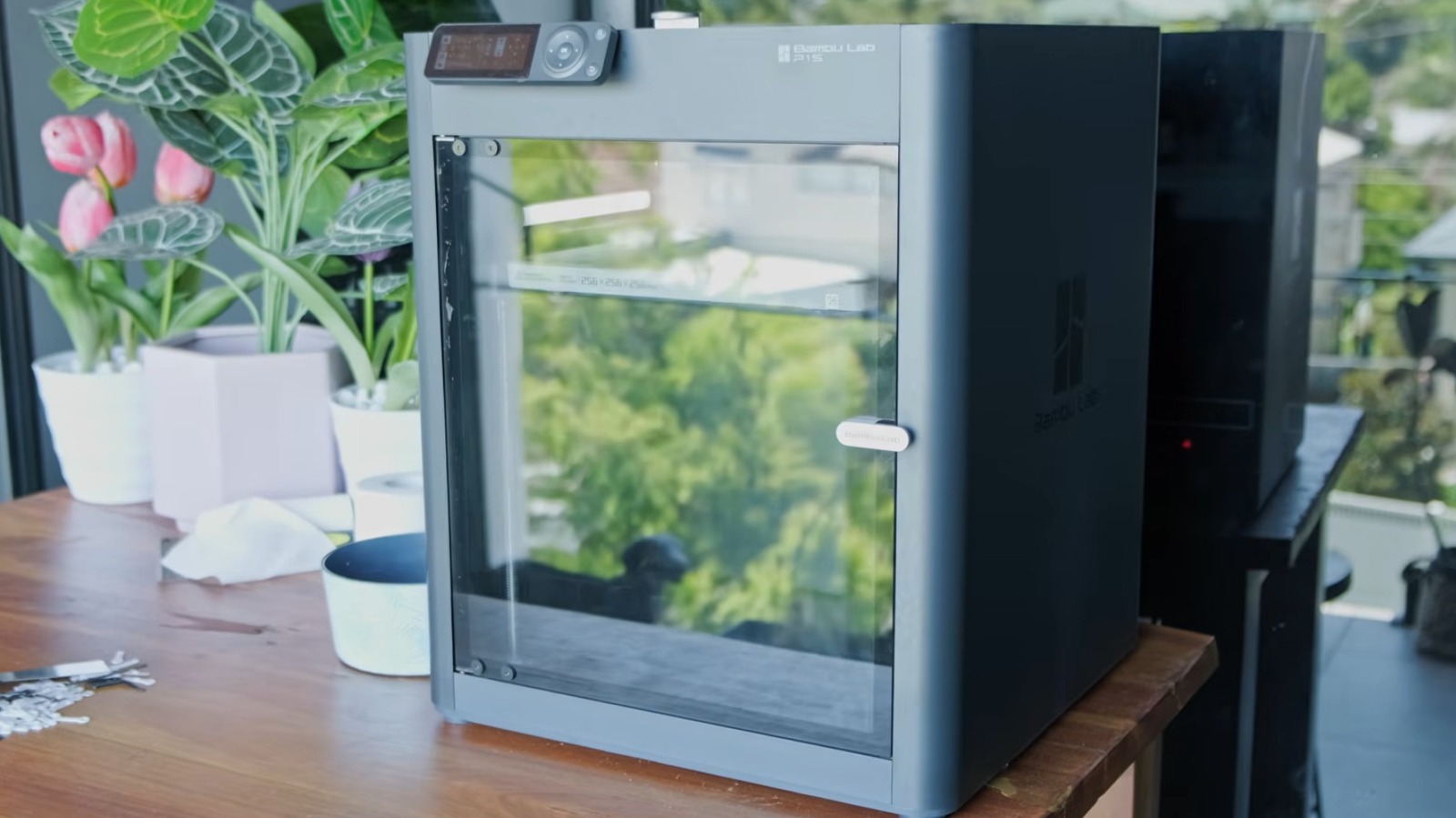
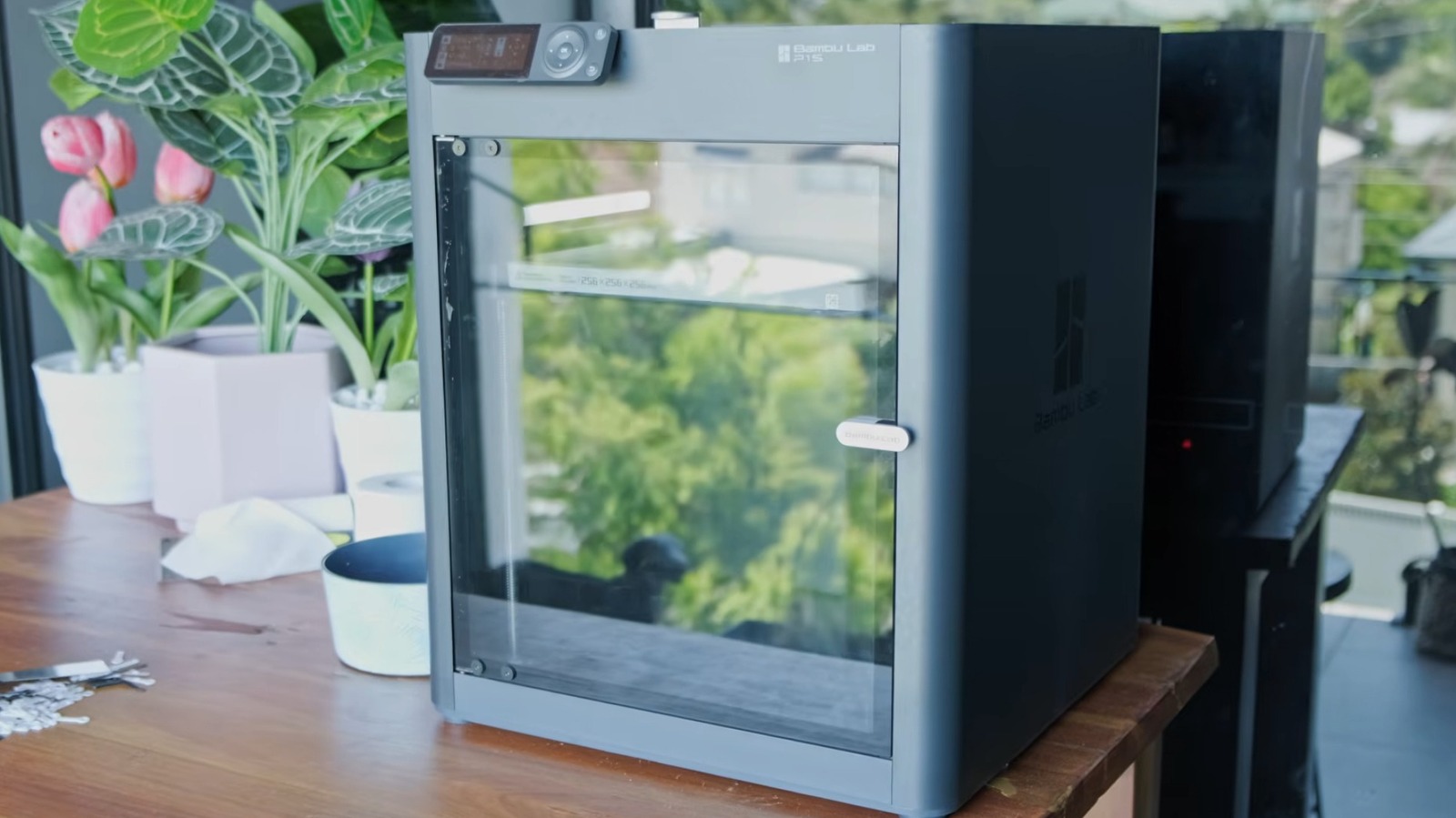
Bambu Lab is likely one of the best-known of the major 3D printer brands on the market, with a wide range of printers, materials, and accessories that make it a tempting choice for those looking to explore 3D printing. The company has made headlines recently, but for the wrong reasons. A Texas jury has found Bambu Lab liable for patent infringement, with the plaintiff, Stratasys, Inc., awarded a staggering $27.6 million in damages.
The controversy centers specifically on Bambu Lab’s X1, P1, and A1 3D printer lines. Stratasys claimed Bambu Lab illegally infringed 10 of its patents in two 2024 lawsuits, including the single-nozzle filament purging tower covered by patent US9421713B2 and the strain-gauge and force-sensor detection systems within patent US9168698B2. The court ruled that Bambu Lab’s first-gen machines infringed on both patents. The company managed to defend its use of two of Stratasys’ other patents, but Texas courts have yet to rule on four more disputed patents. These involve elements like RFID tags, remote networking, and automatic printer detection.
This isn’t the only legal challenge Bambu Lab has faced in 2026. The company has also been taken to court in China over copyrighted models on its MakerWorld platform. As far as this particular U.S. case goes, though, Bambu Lab is not taking the verdict lying down. The company has released a statement and outlined its next steps.
Bambu Lab’s response and next steps
In a statement to Tom’s Hardware, Bambu Lab representatives explained that the company disagrees with the verdict and intends to appeal. “The law provides Bambu with the right to seek post-trial review and to appeal, and Bambu intends to avail itself of these legal processes,” the company shared. Meanwhile, per TCT Magazine, Stratasys has reiterated its desire to protect its intellectual property and continue innovating for the benefit of its customers.
This comes after Bambu Lab’s legal victory outside the United States over the use of similar technology. Stratasys previously alleged that Bambu Lab illegally used the technology outlined in European patent EP2964450, which is similar to US9421713B2. However, the European Unified Patent Court dismissed Stratasys’ preliminary injunction in April 2026, with the company electing not to appeal the decision. This complicates the Bambu Lab-Stratasys situation, given the differing outcomes regarding similar patents.
Bambu Lab discontinued the X1 at the start of 2026, but the other affected printers are still available. Bambu Lab still sells the P1S, though its effective successor, the P2S, debuted in October 2025. The A1 and A1 Mini remain for sale. Time will tell what becomes of these models, and whether rumors of revised models free of patent-infringing elements will come to fruition. Should Bambu discontinue these models, there are, thankfully, other budget-friendly 3D printers worth considering instead.

These days, it’s pretty easy to buy old retail console games just by hunting online auction sites. It’s much rarer to come across a disc holding a beta version that was only ever intended for internal us, and yet, that’s precisely what landed in [MattKC’s] hands—a copy of the Beta 3 release of Burnout 3 for the original Xbox. He thus set about the task of investigating the differences to the retail release and preserving the beta for the future.
The first task involved figuring out how to read the disc. Retail Xbox games show up as a DVD Video disc if you put them into a PC, which can complicate reading them. However, being a burnt beta disc for use in an Xbox devkit, this one was a little different. It was easy enough to read and dump with a regular DVD drive and some common tools for ripping Xbox ISOs.
From there, it was a matter of comparing the dumped disc to the retail PAL release. There wasn’t a lot of differences to find—with [MattKC] noting that the beta was dated just six days before the official retail release. Mostly, this beta had just a few localization differences in non-English languages compared to the final release. Still, [MattKC] nonetheless was able to preserve this curio for the future, and it now lives on the Internet Archive for future generations to enjoy. Perhaps the diehard Burnout 3 fans will one day decide that PAL Beta 3 is the ultimate version of the game.
It’s always interesting to get a look behind the scenes of big-time game development. We’ve taken a look at console devkits before, too—hardware that is never intended for the public to see.

Within the realm of today’s conflicts, drones have become increasingly associated with kinetic targeting. Every step of the targeting cycle, from reconnaissance through surveillance to munition delivery, has emerged as a key arena for drone employment. However, one of the most ingenious early uses of an unmanned system was considerably stranger. This drone’s mission wasn’t to deliver a munition, but to deliberately fly into the engagement envelope of an enemy surface-to-air missile.
Throughout the early stages of the Vietnam War, American intelligence agencies were desperate to develop a technical understanding of the Soviet-designed S-75 Dvina, more commonly known by its NATO designation, the SA-2 Guideline. The problem was that some of the most valuable command and fuzing signals were difficult to collect from a safe distance. These generally operated at higher frequencies, were particularly short-ranged, or were shaped into specific directional beams, making conventional stand-off collection difficult.
The answer came in the form of the Ryan Model 147D/E. Derived from the Firebee target-drone, the Model 147D, and later the 147E, were specialized electronic-intelligence (ELINT) collection drones designed to collect radar signals, a concept that was quickly termed “SAM sniffing”.
The 147D/E carried specialized ELINT collection equipment and were fitted with radar beacons intended to mimic high-value American targets. They also carried radio equipment, enabling collected information to be relayed to a Boeing ERB-47H operating outside of the SA-2’s envelope. The overall technique was relatively simple, albeit requiring substantial indifference to the survival of the 147D/E. Put the drone and its collection equipment inside the guidance track of the missile, record every frequency and pulse duration from identification through terminal guidance to detonation, and send as much on as possible before the missile triggered its 400-lb high explosive warhead.
SAM sniffing and the collection of electronic intelligence

Defeating an adversary radar-guided missile begins with knowing what electronic signatures represent the functions or processes the missile is in at any point in time. As a missile’s radar transitions from target acquisition through tracking to terminal guidance, its operating parameters typically shift. Frequency increases, while detection range and field of view narrow in exchange for higher update rates, finer angular resolution, and greater tracking accuracy.
Knowing those operating frequencies enables a defending aircraft to identify when a threat radar is active and when the aircraft is being spiked. Simultaneously, electronic attack efforts like jamming can be substantially more effective as they can be better directed against those operating frequencies.
During the Vietnam War, understanding the SA-2’s electronic signatures very quickly emerged as one of the critical intelligence priorities of the air war. Collecting these signals was seen as critical in supporting the development of warning systems and the design of electronic countermeasures.
The difficulty was that an SA-2 engagement incorporated a variety of different signals to achieve different outcomes. The most critical of these for Western intelligence collection were the terminal guidance and proximity-fuzing signals associated with the missile in its final stages of flight. Because these signals were relatively high-frequency, transmitted with very little excess power, or confined to a narrow pencil beam, collecting them from a distance was impossible. In response, the value of an individual drone was determined to be lower than the value of the intelligence, and thus the Model 147D, and its later E variant, was conceived.
From Vietnam to the modern electronic battlefield
The most notable success of the 147D/E came in early 1966. Operation United Effort, the American mission to collect electronic data on the SA-2’s Fan Song and Spoon Rest radars, was yet to obtain those critical terminal signals. However, on 13 February, a Model 147E, masquerading as a Lockheed U-2, was ushered into an SA-2 envelope in the skies above North Vietnam. The missile operators took the bait by tracking, targeting, and engaging the “U-2” in their airspace. By the time the wreckage hit the ground, all of the secrets of the SA-2 were safely tucked away inside an ERB-47H that was tracking back toward Da Nang Airbase.
The intelligence had immediate strategic value. Perhaps the most notable result was the development of the AN/APR-26 launch-warning receiver, an aircraft defensive suite optimized to identify SA-2 launch signals. By the end of the Vietnam War, the AN/APR-26 was a common sight on American aircraft.
Beyond Vietnam, Western exploitation of the SA-2 emissions collected by the Model 147D/E heavily shaped wider technical intelligence efforts and the ensuing missions of Wild Weasel squadrons in later wars. UN and Coalition forces embroiled in conflicts from the Gulf, to the Balkans, and back to the Gulf, all made use of the findings derived from the 147D/E’s collection efforts to counter the SA-2s fielded by Iraqi Armed Forces, the Army of Republika Srpska, and the Armed Forces of Yugoslavia.
Today, additive manufacturing and simplified mass are changing how military assets are designed and employed. Alongside this, the role of electronic warfare continues to become increasingly relevant on the battlefield. In this environment, the idea of reconnaissance via attrition, the same thinking that led to the development of the Model 147D/E, is well-placed to re-emerge as a favored means of intelligence collection.
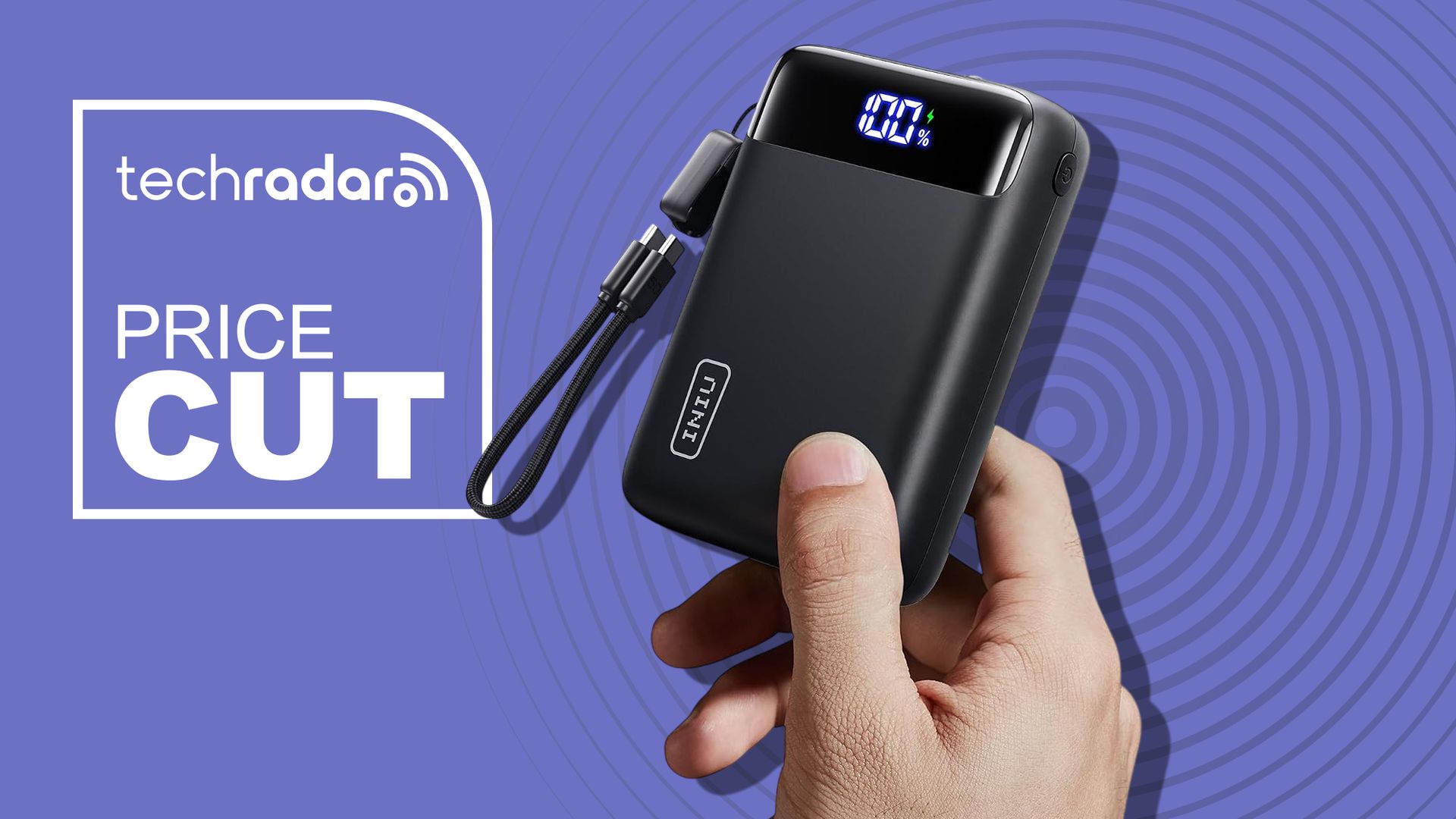
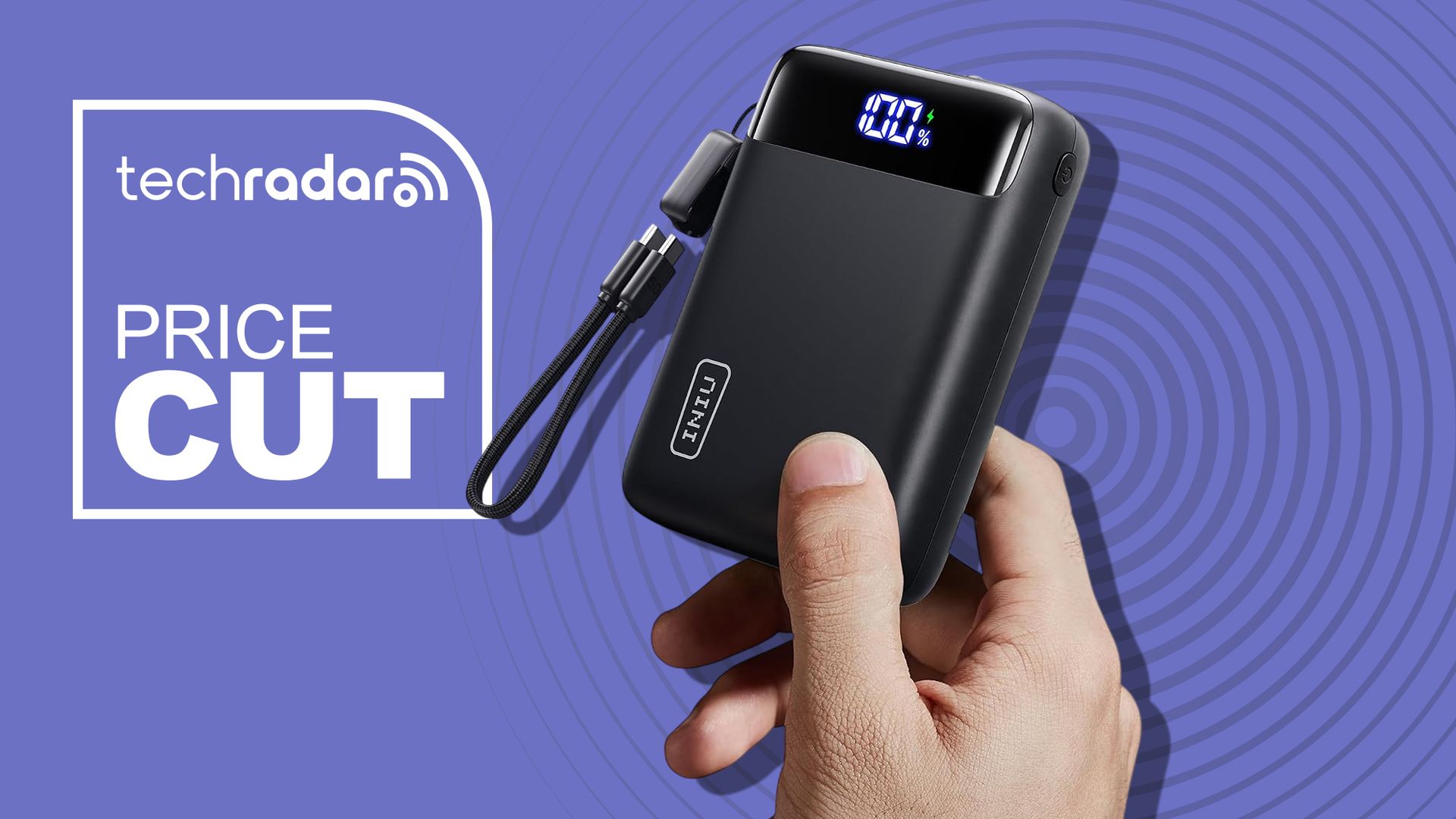
I do love a gadget, so this mini 20000mAh power bank from Inui really caught my eye. I can’t say it’s the smallest in the world, but it’s certainly ultra-compact and travel-friendly, with a built-in flashlight and USB-C cable that doubles as carry handle.
• Best for: Professionals, students, and travelers who want enough capacity for several phone charges without carrying a separate USB-C cable.
• The deal: The Iniu mini portable charger is now $27 (was $33) at Amazon.
• Why it matters: A 20,000mAh battery provides considerably more endurance than smaller pocket-sized power banks, while 22.5W output offers relatively quick phone charging. The portable unit also features a display, and a flashlight.
Why we recommend it
The Iniu charger measures just 4.1 x 2.8 x 1.2 inches and weighs 11.3oz, making it small enough to slip into a bag or pocket while providing greater capacity than other more-expensive power banks. It provides enough energy for around four full phone charges. You also get a built-in braided cable, which means there’s one less cable to remember to take with you.
Its 22.5W fast charging can top up compatible phones much faster than basic 5W or 10W battery packs. Iniu claims an iPhone 16 can reach 60% and a Samsung Galaxy S25 70% in 25 minutes. The built-in flashlight is a useful feature, and the digital display makes it easier to judge when it’s time to plug in the charger.
Price context & historical value
At $26.96, this is the lowest price I’ve seen – although that’s for the black version. Other colors – like beige white, blue, and green – are discounted, but the prices are slightly higher at $32. With this model, you’re saving just over 18%. That’s a welcome discount for a 20,000mAh model with an integrated cable.
For more shopping options, take a look at our roundup of the best power chargers.
Should you buy it?
✅ Buy the Iniu Portable Charger if…
You want plenty of battery capacity with fast charging and a few tricks up its sleeve without paying a fortune.
❌ Skip the Iniu Portable Charger if…
You want something that can charge your laptop. This is fine for phones and many smaller USB-powered devices, but it can’t handle more powerful devices.
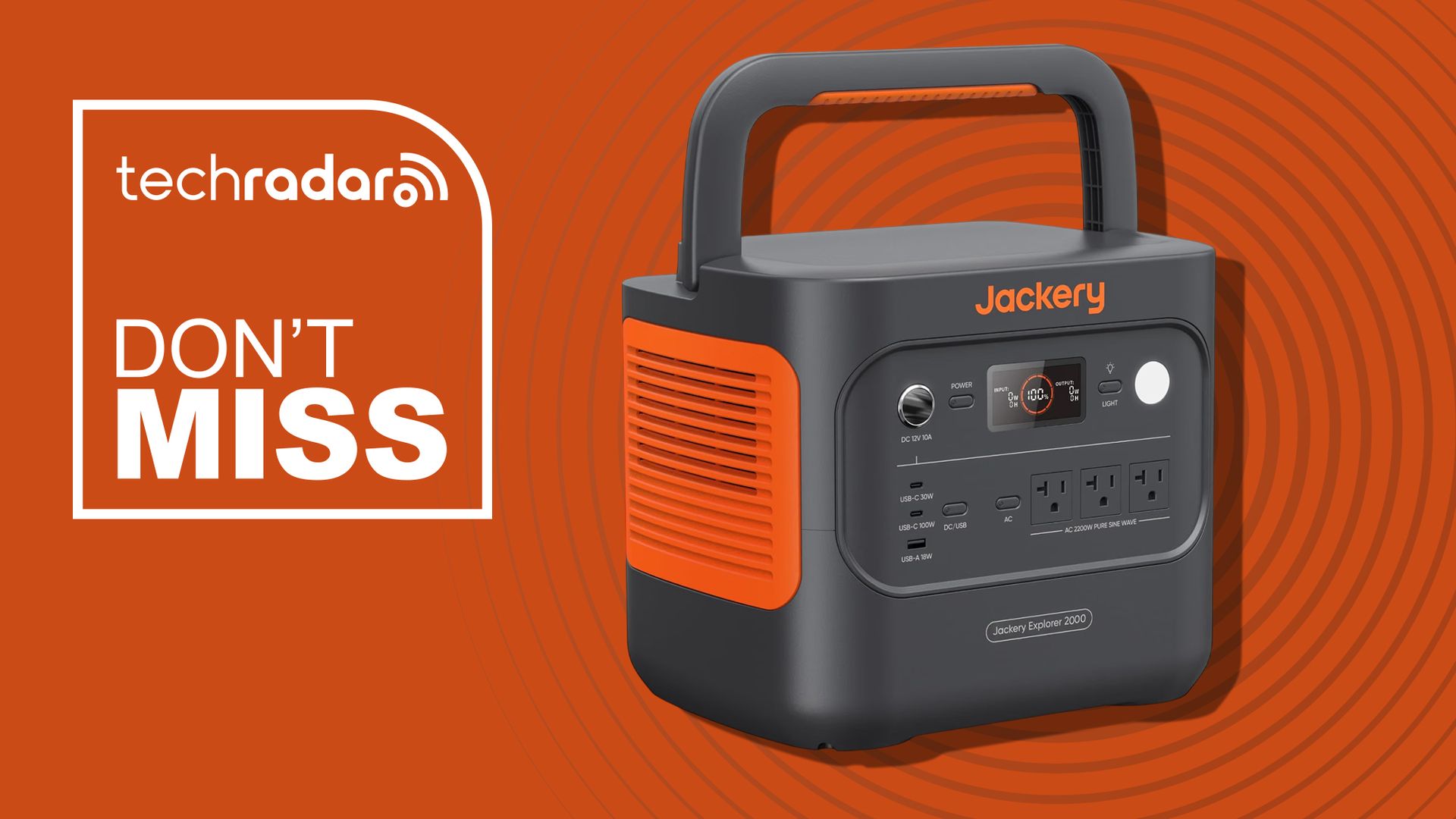
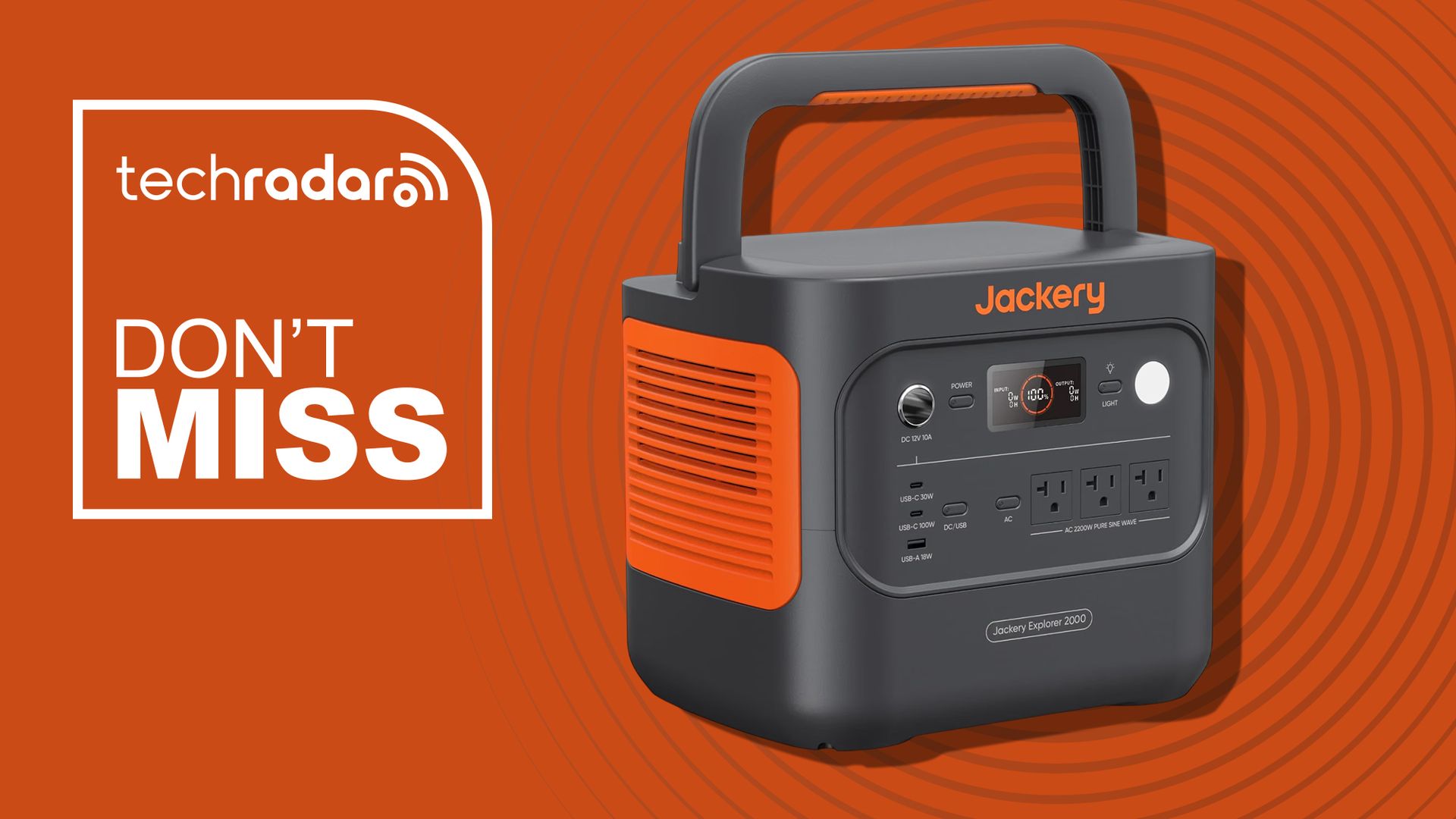
We’re big fans of the Jackery Explorer 2000 v2, which combines a 2,042Wh LiFePO4 battery with enough output to run demanding appliances and equipment.
Best for: Homeowners and campers who need enough stored power to run appliances and equipment rather than simply top up portable electronics.
The deal: The Jackery Explorer 2000 v2 is now $899 (was $999) at Amazon. In the UK, the power station is now £899 (was £1061).
Why it matters: This is the power station that saved our sanity (and our hunger) during power outages when we tested out this unit. Its combination of 2,042Wh capacity and 2,200W output means it can handle much more demanding equipment than smaller portable batteries.
Why we recommend it
In his recent 4.5-star review, our expert Owain said he found it “to be easy to use, simple to transport, and more than capable of dealing with everyday needs.”
It impressed him for several reasons. “Firstly, the build quality and easy setup stand out, limiting setup stress and giving you peace of mind. I also really liked the amount of power you get from such a small and portable unit. I used it extensively in different scenarios, including working, running home appliances, and during a camping trip, and it never even got close to running out. “
The Explorer 2000 v2 provides a lot of AC power across three outlets. Jackery uses a LiFePO4 battery for a service life of up to 10 years. Cell-to-Body construction helps keep the unit relatively compact at 13.2 x 10.4 x 11.5 inches and 39.5lb. There’s also a 100W USB-C PD connection for fast charging compatible laptops, phones and other electronics without needing their regular power adapters.
Price context & historical value
The reduction from $999 to $898.99 knocks $100.01 off the regular price. That’s not close to being its cheapest price however. I’ve seen it for as low as $743.83 on Amazon earlier in the year, and it may well be reduced further for this upcoming Black Friday.
For more options, take a look at our roundup of the best portable power stations.
Should you buy it?
✅ Buy the Jackery Explorer 2000 v2 if…
You want emergency home backup capacity for power outages, camping or RV trips and need something reasonably portable.
❌ Skip the Jackery Explorer 2000 v2 if…
You only need something to keep your phone, tablet and laptop charged. A smaller power station will cost considerably less and be much easier to carry.

“Weird Al” Yankovic’s name has just been approved for a new asteroid — (14331) Alyankovic = 1981 EC26 — by the International Astronomical Union, reports Space.com.
Yankovic’s asteroid was championed by planetary scientist Allison McGraw joined by “several heavy hitters in the planetary science field, according to the Tucson Star. (Astrophysicist Steve Desch from the School of Earth and Space Exploration at Arizona State University; Tim McCoy, one of the main curators of meteorites at the Smithsonian Institution; and University of Arizona research scientist Melissa Brucker, leader of the Spacewatch program, which has discovered more than 179,000 asteroids.)
The scientists also convinced the International Astronomical Union to name an asteroid after one of Yankovic’s major influences, famous musical humorist and political satirist Tom Lehrer, who died last year at age 97. Lehrer’s work includes “The Elements,” a 1959 song in which he recites the entire periodic table to the tune of Gilbert and Sullivan’s “Major-General’s Song.” “He was a mathematician and teacher and also wrote math- and science-themed songs,” McGraw said. “We felt that someone who had that kind of science enthusiasm really deserved to have their name up in the sky….” McGraw is hoping that naming space rocks after stars like Lehrer and “Weird Al” will cast some reflected light on two things she’s passionate about: asteroid research and science communication.
Six years ago a 92-year-old Tom Lehrer released all his lyrics into the public domain. (Wikipedia notes he’d “largely retired” by the 1970s to become a mathematics teacher at the University of California, Santa Cruz.) Slashdot ran a brief career retrospective when Lehrer died last year at age 97.
And the IAU writes that “Generations of scientists have been inspired” by Weird Al Yankovic’s “comedic musical works, including ‘It’s All About the Pentiums’ and ‘White and Nerdy’.” (“I’m fluent in JavaScript as well as Klingon,” Yankovic sings in the latter.) He appears in a song envisioning a rap battle between Bill Nye the Science Guy and Sir Isaac Newton… And in 1999 he recorded a five-minute summation of Star Wars: Phantom Menace, sung to the wistful tune of Don McLean’s American Pie. Performing it last month in a NPR Tiny Desk concert, “most of the audience was singing along,” remembers an interviewer at NPR. “It felt like something that was very personal to them.”
Weird Al: It’s one of those songs that means a lot to people, particularly “Star Wars” fans, of course. But I mean, I see a lot of people in the audience cosplaying as Jedi Knights and waving their light sabers… I’ve even heard that, you know, they play that song at “Star Wars” conventions, and people get weepy, you know… [I]t really hits people in a tender place somehow…
“Oh my, my, this here Anakin guy
may be Vader someday later, now he’s just a small fry.
And he left his home and kissed his mommy goodbye,
sayin’ soon, I’m gonna be a Jedi.”
Yankovic has led a geek-friendly career. In the heyday of Napster, he released an anthem-style parody mocking the arguments of the Recording Industry Association of America, titled “Don’t Download This Song. (“Even Lars Ulrich knows it’s wrong…”)
“Once in a while maybe you will feel the urge
To break international copyright law…
you start out stealing songs, then you’re robbing liquor stores
And selling crack and running over school kids with your car…”
As a student at Cal Poly, San Luis Obispo, Yankovic bootstrapped a career in 1979 by recording his first novelty song “My Bologna” (a parody of “My Sharona” by the Knack) while playing his accordion in a bathroom for its acoustics. And even the IAU acknowledged the geeky themes in his 1999 song “It’s All About the Pentiums” (a filk on Puff Daddy’s “It’s All About the Benjamins”).
“You’re usin’ a 286? Don’t make me laugh
Your Windows boots up in what, a day and a half?
You could back up your whole hard drive on a floppy diskette
You’re the biggest joke on the Internet…”


Read more of this story at Slashdot.

What once started as a health companion and second screen on your wrist has turned into something a lot more useful. Over the years, smartwatches have continued to become smarter, and their health tracking features are even more accurate. So after reviewing wearables for years, I got used to each new smartwatch generation having just a few polishes and updates.
But Huawei managed to have me obsessed with one of its latest models–and it’s the strap that has my attention. Packed on the underside of the strap is a thin inflatable bladder that runs along the inside of the band. Start a blood-pressure measurement, and that bladder begins expanding against your wrist, tightening in a way that’s familiar to how a doctor wraps a cuff around your upper arm.
This might make the Huawei Watch D3 sound like a thick and heavy wearable tech. But in reality, the Watch D3 is only 11.3mm thick, weighs just over 70 grams with its strap, and has a 1.92-inch AMOLED display. Huawei has also narrowed the inflatable section and made the strap 7.5 grams lighter than before. The blood-pressure feature is fascinating, as the company isn’t making it a software feature.

How does a blood pressure cuff fit inside a watch?
The trick starts with what Huawei calls its 2-in-1 strap-airbag. Rather than having a normal watch band sitting flush against your skin, part of the D3’s strap contains a thin mechanical airbag. When a measurement begins, the watch pumps air into that chamber, causing it to expand inward and apply pressure around your wrist.
Huawei uses the oscillometric method, the same broad measurement principle used by many electronic blood-pressure cuffs. A high-precision pressure sensor works alongside Huawei’s TruSense system to detect the pressure changes created by your pulse while the airbag is inflated. From those changes, the system calculates systolic and diastolic blood pressure.
Again, this is a proper mechanism that doesn’t rely purely on an optical sensor and an algorithm to infer your blood pressure. You can see it in the photos I took. The strap may look unusually thick, but that’s only because it was inflated to take a BP reading. Put the watch on, and that extra material pretty much disappears. You don’t particularly feel it out of place compared to your usual strap. Once you start the measurement, you can physically feel the pressure build as the bladder expands.

Even taking the reading has a very specific posture
To make things as accurate as possible, Huawei gives you some tips for the best possible results, and it starts with your posture. Your watch arm should be steady, elbow bent with your palm facing your chest, while the wrist and palm remain relaxed. It also needs you to support that elbow with your other hand so the Watch D3 sits roughly level with your heart.
Your feet should be flat on the floor and uncrossed, and you’re supposed to remain quiet and avoid moving your fingers, arm, or body while the cuff is working. I was explaining the watch to a friend when taking a measurement, and the Watch D3 promptly told me to pipe down. You can see the posture in the images I’ve shared.

The watch is trying to recreate, on your wrist, the controlled conditions that make a conventional cuff useful. Huawei even asks users to enter their wrist circumference so the watch can match the correct airbag size, with separate M and L strap-airbags supplied for wrists between 130mm and 210mm. So there’s a lot more thought put into this to avoid any kind of misreading. Health is a pretty serious matter for many, so avoiding any false results is key here.
Huawei is doing something very different from Apple and Samsung
Apple’s current Watch implementation looks for patterns associated with hypertension using its optical heart sensor over a 30-day evaluation period. It does not give you an on-demand systolic and diastolic measurement. If the Watch flags possible hypertension, Apple specifically recommends using a third-party cuff for seven days and discussing the results with a healthcare professional.

Samsung goes further. Compatible Galaxy Watches can produce blood-pressure values, but the system first needs to be calibrated against an upper-arm cuff, including three measurements during initial calibration, and Samsung requires recalibration every 28 days. Huawei’s solution, on the other hand, is mechanical by comparison. Sure, the Watch D3 is slightly bulkier and more specialized than a conventional smartwatch, but I find the engineering much more interesting.
It takes it one step further
The Huawei Watch D3’s strap also enables another cool feature, which is ambulatory blood pressure monitoring, or ABPM. You can start a 24-hour monitoring plan and have the watch take readings at preset intervals throughout the day and night. Huawei’s default schedule can prompt daytime measurements every 30 minutes. At night, the Watch D3 can automatically inflate while you’re asleep without requiring you to assume the daytime measurement posture.

Once the monitoring period ends, Huawei Health can show daytime, nighttime, and 24-hour averages and generate an ABPM report that can be saved or printed. Of course, the trade-off here is battery life. Huawei rates the watch for up to six days in typical use, while continuous ABPM cuts that estimate to about one day.
The Watch D3 is still a smartwatch, but it’s also certified
The engineering on the Watch D3 is quite intriguing. Its mechanical moving parts are things that set it apart. Still, it doesn’t look like dedicated medical equipment. On the outside, it has that familiar shape of a smartwatch. The white strap unit I have looks elegant and sleek. Its 1.92-inch display dominates the front. All of the UI and other elements function exactly as you’d expect them to.

It might not look like it, though this is kind of impressive when you read the marketing material. Huawei advertises the Watch D3 as a medical-grade wrist blood-pressure monitor in supported markets, and the UK product page says it is CE-MDR certified. However, measurement availability and regulatory status vary by country. It is worth noting that the measurements should only be treated as guidance. Any unusual results should be properly discussed with an actual healthcare professional. The main advice is not to self-diagnose from a single smartwatch reading.

Maddie Kowalski is a student at the University of Florida. Last November, someone found nonconsensual intimate images and videos of her, stitched them together, and uploaded them to X, where they were viewed millions of times.
“Can you imagine?” asked Ej Dickson, a senior culture writer at Wired who reported on Kowalski’s story earlier this month. “You’re 19 years old and a video that you don’t even remember shooting, let alone consenting to, goes viral nationally along with your name and your sorority, and your parents, your grandparents, everybody in your life sees it. It’s a humiliation and a privacy violation that is kind of incomprehensible.”
The video was followed by a campaign of intimidation and harassment. Kowalski and her parents received threatening phone calls and texts. People on the internet posted old photos of her, her father’s LinkedIn, and even his golf handicap. Kowalski sought help from the police, from the university, and from X. But the video was being shared faster than the posts could be removed, and her name became a trending topic on X.
What made the video go viral, Dickson explains, is something called the “burnerverse”: a loosely connected network of anonymous “burner” accounts on X. The community mainly exists to discuss college sports, but sometimes it disseminates videos and rumors aimed at shaming young women and ruining their lives. The burnerverse has harassed Kowalski and her family for nearly a year, sometimes encouraging her to kill herself.
Today, Explained co-host Noel King spoke with Dickson about the online network that targeted Kowalski, and why it’s been so difficult to do anything to stop it.
Below is an excerpt of the conversation, edited for length and clarity. There’s much more in the full podcast, so listen to Today, Explained wherever you get podcasts, including Apple Podcasts, Pandora, and Spotify.
Your story describes how Maddie has, without even realizing it, entered into something called the burnerverse. This is something I think a lot of us, prior to your piece, had not heard of. What is the burnerverse?
I hadn’t heard of it either. The burnerverse is an online community of anonymous accounts, and ostensibly these are college sports fan accounts. They talk about the coaches, the players, new recruits, they share memes after their team loses, but there’s a corner of the community that has emerged that is pretty violently racist and misogynistic and antisemitic. And one of the things that they’ve started doing in recent years is doxxing young college-age women like Maddie.
Why is it called the burnerverse?
Because it consists of burner accounts, anonymous accounts.
Okay. So the reason that whoever is spreading these videos of Maddie and others feels comfortable doing that is because they’re anonymous. Nobody knows who’s behind them?
Yes, exactly. And I also want to be clear: This is a small segment of the college sports burner community.
There are a lot of these accounts that are pretty innocuous and would never dream of doing something like this to a young woman. I would say probably the vast majority of these accounts are not like that, but it is a sizable enough segment that they’re able to make these types of narratives go viral.
What do we know about who is part of the burnerverse? Who is likely to be a part of this?
That was one of the most shocking things that I learned from my reporting, actually. I had assumed that these were largely frat kids. I assumed that they were largely SEC frat kids because a lot of these young girls who have been doxed were students at SEC schools. But when I actually started looking into these accounts and who was behind them and who was sharing these images and making these jokes about Maddie, I learned it was way more wide-ranging than that.
There are a lot of college students who are involved in the burnerverse, but it’s also men who are 10, 20, 30 years out of college. Sometimes they have wives. Sometimes they have children. Sometimes they have grandchildren. They’re from all over the country. It’s not limited to one race or economic demographic. It’s really very wide-ranging, which is kind of what makes it so terrifying.
And it is not just Maddie Kowalski. What did you learn about other young women who are targeted by this?
No, it’s not. So perhaps the most well-known case is this girl named Mary Kate Cornett, who was a student at Ole Miss in February 2025 when this salacious campus rumor about her sex life started going viral. And the rumor was false and it was clearly defamatory, but it went so viral that it kind of escaped containment from Ole Miss and went viral among SEC schools and then went viral nationally, to the point where her name was trending nationally on X.
This very famous ESPN personality, Pat McAfee, talked about her without using her name, but talked about her and the details of this rumor on his podcast. And a lot of these athletes and college sports personalities tweeted about it as well. What started as an unverifiable and false rumor about a college girl’s sex life was just blown up and amplified to the degree that it was a national news story within a couple of hours.
The speed with which this happens — [Cornett]she was telling me that basically a few hours after she learned that she was going viral, her parents’ house was swatted. The speed with which this community works toward making these women’s lives a living hell is really, really rapid.
Did you come away with an understanding of how an online community that is meant to be talking about college sports descends into this?
Part of it is just a consequence of how internet subcultures work. Even fairly innocuous, large internet subcultures and communities, there’s always going to be a small part of any online subculture that splinters off and forms its own community that is going to skew a little bit more extremist.
That’s not surprising in itself, but I do think that there is something about the discourse surrounding college sports, particularly the media ecosystem that’s represented by Barstool, that does create a space for this type of rampant misogyny to foment.
I don’t think it’s a coincidence that some of the accounts that I have seen posting really horrible defamatory content about Maddie are smaller Barstool accounts that are associated with individual colleges. I do think that has definitely played a role.
Why did Maddie become the target of these people in the burnerverse?
Because she’s young and she’s attractive. Basically, the criteria is these women are young, attractive, they’re usually white for some reason, and they are perceived to have departed from a sexual norm in some way.
They’re either subject to some sort of rumor about their sex life or their sexual behavior or maybe a text message leaks about them or a photo. Then these guys take it and they blow it up and it goes viral nationally.
They’re very purposeful about it too. I can’t tell you how many tweets I’ve seen that are just tweets of a girl’s name and they’re like, “Make her famous, make her go viral.”
In an ideal world, this kind of thing would be stopped before it even happened. So, knowing that there is not much that victims can do, what are the methods of preventing this?
That’s a very complicated question. I know that there are platforms developing various AI tools in order to prevent nonconsensual intimate images from spreading. But I imagine that would be pretty difficult to regulate, especially with the rise of deepfakes and with the rise of-AI manipulated nonconsensual images, so I don’t have a lot of faith in that.
Honestly, I think that the biggest path toward prevention is — can I say this? Parents raising their sons to not be pieces of shit.
You can say that. You can absolutely say that.
I think that the biggest course of prevention is parents raising their sons to not be pieces of shit, honestly. To just set a clear line and say, “It’s not okay to view women as commodities. It’s not okay to talk about women like this. It’s not okay to view social media engagement as the ultimate goal without thinking about the lives that you’re impacting by spreading this content.” I think that parents need to have conversations with their kids about that.
I think that there needs to be education within fraternities and sororities and universities because it’s not like what happened to Maddie Kowalski is an isolated incident. I was able to identify almost a dozen other young women who have been targeted by the burnerverse in this way.
I think that there needs to be more discussion of this in general because it’s not just the burnerverse. It’s this larger ecosystem that is socially ordained at this point of men saying horrible things and doing horrible things to women with impunity. That’s the real problem.

Entertainment59 seconds ago
Brandi Glanville Addresses How She Looked on Special Forces

Tech4 minutes ago
Elementor WordPress flaw lets attackers create admin accounts

Crypto World5 minutes ago
Death of Former Hack VC Partner Hsin-Ju Chuang Ruled Suicide





-

 Crypto World3 days ago
Goldman Sachs and Deutsche Bank Agree: The S&P 500 Rally Isn't Over
-

 Tech5 days ago
Researchers escape OpenAI Codex sandbox to run commands on host
-

 Fashion1 day ago
8 iPhone Accessories That Add Personality
-

 Crypto World5 days ago
Who Needs CLARITY Anyway? ARB Could See 70X Increase: Hodler’s Digest
-

 Crypto World7 days ago
Circle launches Arc Studio AI agent for building onchain apps
-

 Crypto World7 days ago
Trading Bitcoin on Robinhood? Why 2% Spread Has Traders Worried
-
 NewsBeat7 days ago
Trump says US has reached an agreement to take permanent control of Greenland’s security
-

 Tech6 days ago
Trump suggests rebranding AI with a new name, says he’s also creating an AI Force
-

 Business5 days ago
Analog Devices (ADI) Bets $1.35 Billion on Chips that Let Machines Think for Themselves
-

 Crypto World5 days ago
Coinbase, Robinhood, Circle Seen as Tokenized-Stock Winners
-

 Crypto World3 days ago
This Bearish Netflix Stock Trade Can Cash In On Video Streaming Giant’s Woes
-

 Crypto World7 days ago
Bitcoin price breaks channel as RSI climbs to 63
-

 Tech4 days ago
Google’s $899 Googlebook is a bet that you’ll buy a new laptop for Gemini
-

 Crypto World3 days ago
Trump-Xi Polymarket Odds for Handshake Hit 50%
-

 Entertainment3 days ago
These 17 Fall Amazon Dresses Seriously Look Like Anthropologie
-
 Business3 days ago
Oil Price Today (September 23): Crude oil below $100 on hopes of US-Iran talks. What did Trump say?
-

 Crypto World2 days ago
Crude Oil Prices Pressured by Diplomatic Hopes in the Middle East
-

 Crypto World7 days ago
World Money launches in 150+ countries with Stripe
-

 Crypto World2 days ago
Bitcoin Threatens Sub-$84,000 Breakdown as Long Liquidations Spike
-

 Crypto World2 days ago
Bitcoin price tests $83,600 Supertrend support after $87K rejection
You must be logged in to post a comment Login