





Connect with us
DAPA Banner
DAPA Coin
DAPA
COIN PAYMENT ASSET
PRIVACY · BLOCKDAG · HOMOMORPHIC ENCRYPTION · RUST
ElGamal Encrypted MINE DAPA
🚫 GENESIS SOLD OUT
DAPAPAY COMING

Tech

Apple's future smart glasses plan is just part of a larger computer vision play

Published

on

Apple Glass will be a direct competitor to Meta’s Ray-Ban smart glasses, but it will be only a part of a larger three-pronged AI wearable strategy for the company. Here’s what’s coming.

Two pairs of modern rectangular sunglasses, one black and one white, float against a dark gradient background, shown from a slight angle highlighting their thick frames and arms
Optimistic renders of what Apple Glass could look like – Image Credit: AppleInsider

Apple has long been working on its smart glasses, known as Apple Glass. What is anticipated to actually launch will be quite close to what the existing Meta Ray-Bans can already do.
In Sunday’s “Power On” newsletter for Bloomberg, Mark Gurman writes that the Apple Glass will be easily able to handle everyday uses, including photographs and video capture, dealing with phone calls, handling notifications from an iPhone, and music playback.
Rumor Score: 🤔 Possible
Continue Reading on AppleInsider | Discuss on our Forums

Source link

Continue Reading
Click to comment

You must be logged in to post a comment Login

Leave a Reply

Tech

AI ‘Crashes the Party’ at This Year’s Cannes Film Festival – Including Multi-Year Meta Partnership

Published

on

AI “crashed the party” at this year’s Cannes Film Festival, writes The Hollywood Reporter. The festival exposed “the fault lines reshaping cinema,” their article argues, including how “AI is here — and the industry has stopped pretending otherwise.”

A humanoid robot spotted marching up and down the Croisette seemed to sum up the worst AI fears of the film industry — the machines have arrived and they are taking your place. But inside the Palais and the market tents, the conversation over artificial intelligence had moved beyond fear into something more like uneasy acceptance. Fighting AI “is a battle we will lose,” said Demi Moore, a Cannes jury member this year, at the festival’s opening press conference, suggesting the film industry needs to “find ways in which we can work with it.”

That’s not the official Cannes line. The festival has banned films using generative artificial intelligence from its competition lineup. But at the Cannes film market, and in discussions at industry events over the past two weeks, the tone has shifted. AI-friendly tech giant Meta signed on as an official partner to the festival in a multiyear deal. Its AI tools were used to help produce an [out of competition] festival entry: Steven Soderbergh’s documentary John Lennon: The Last Interview. [Meta’s press release announcing the partnership touts “our creator partnerships,” their Meta AI assistant, and “our latest AI and wearable technologies” including Ray-Ban Meta AI features for smartglasses like “AI-powered translations that break down language barriers in real-time”.] At the Marché du Film [film market], there was an “AI for Talent Summit” that took the AI revolution as given, focusing instead on ethical AI use, data sovereignty and on the ways the technology can be used to enhance, rather than replace, creativity.

For the indie film industry, it felt like a turning point.

Advertisement

Source link

Continue Reading

Tech

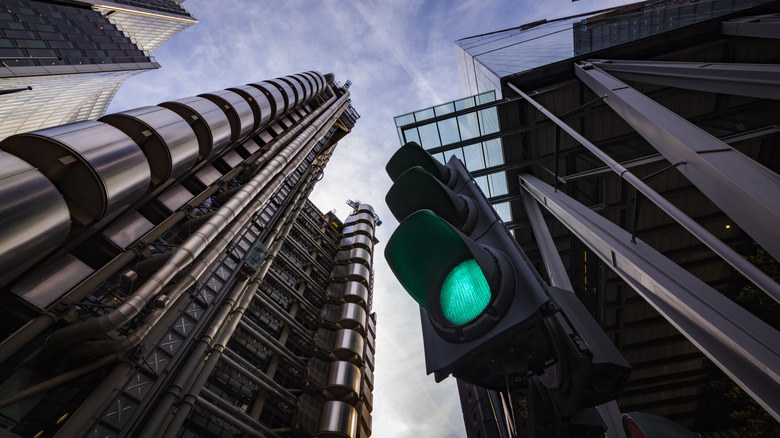
What’s The Difference Between American And European Traffic Lights?

Published

on


One of the most important safety advancements to happen to the world of wheeled transport, is the traffic light. If you have a driver’s license, you already know how it works; if the light is red, it means stop, and when the light turns green, it means go. In the United States, when the green light is up, the amber light comes on letting you know it’s time to slow down before it turns red. In Europe, that happens as well, but also, before they turn green, European traffic signals will enable both the red and amber light at the same time.

The amber and red lights illuminating simultaneously indicates that you should prepare to set off. That makes sense and considering Europeans use manual transmissions a lot more, it gives you just the right amount of time to push the clutch in and shift into first.  

In some European countries, the green signal also flashes a couple of times to let you know that it’s about to turn red. In the U.S., the amber light does not come on before the change from red to green.

Advertisement

Other key differences between European and American traffic signals

European traffic signals have a few other differences compared to American traffic signals. The colors are the same, and the colors on traffic lights have a pretty interesting origin story. One of the differences is the amber light flashing on its own; American traffic lights have this as well, but it’s usually to warn of pedestrians or other road hazards that are coming up, or they indicate that you should yield to oncoming traffic and pedestrians if you’re making a turn. 

In Europe, a flashing yellow traffic light often means that the signal has been disabled, and that you should pay attention to the road sign directly above the traffic light (which could be either right of way or yield). Traffic lights are always disabled when police officers are guiding traffic, and at that point, their signals take precedent over everything else. 

Advertisement

What’s more, European traffic signals are also designed around pedestrians and cyclists, since a lot of cycle lanes are often directly next to the road. Speaking of pedestrians, whereas most traffic lights in America will display Walk and Don’t Walk in big capital letters, European traffic lights simply use stick figures. Rhythmic clicking or beeping is also common for pedestrians with impaired eyesight.

A camera placed near or on the traffic light is common in Europe and the U.S. It can be a red-light camera in some European countries and cities, but more often than not, it’s a speed camera that fines you automatically if you’re going above the speed limit.

Advertisement


Source link

Continue Reading

Tech

Seattle, we’ve got an image problem

Published

on

The cover of Newsweek magazine, May 20, 1996 — exactly 30 years ago today.

Take a breath, close your eyes, and think about the words that define Seattle.

Innovative. Outdoorsy. Global. Inventive. Smart. Progressive. Independent. A little reserved. A little weird.

Thirty years ago today, Newsweek magazine published a cover story featuring political journalist Michael Kinsley titled: “Swimming to Seattle: Everybody Else Is Moving There. Should You?” 

We wrote about the piece a few years ago in a different context, and it came to mind again today — eerily, on the exact anniversary of that story.

Back in May 1996, Seattle was emerging as one of America’s great boomtowns: grunge, coffee, software, airplanes, the web. A place with talent, ideas, ambition and room to grow.

Advertisement

It’s one of the reasons why I moved here 30 years ago, from a small town in Ohio. 

Today, Seattle remains one of the world’s most important innovation hubs, home to global technology giants, leading AI research, world-class research and extraordinary entrepreneurial talent.

Which is exactly why the city’s shifting national image should concern us.

Because a new narrative about Seattle is taking hold nationally. And unlike the rain-slicker caricatures of the 1990s, this one isn’t charming.

Advertisement

The emerging narrative is this: Seattle has become increasingly ambivalent — even hostile — toward the very industries and innovators that helped build its prosperity.

Consider in the last month these headlines: 

And it’s not just the national media. Seattle’s KOMO News reported this week on remarks by former Washington state governor Chris Gregoire, who pointed out a ballooning state budget since she left office in 2013. 

“I would suggest to you, we don’t really have an income problem, we have a spending problem,” Gregoire said at a meeting hosted by the Association of Washington Business earlier this month. 

You may disagree with those headlines. You may dislike the politics behind them. But rhetoric, image and storytelling matter — especially in a moment when cities are competing fiercely for talent, investment, startups and relevance in the AI era.

Advertisement

And right now, Seattle’s story is drifting in the wrong direction.

This week, the chairman of an iconic Seattle company — not operating in the tech industry — told me that the city’s increasingly anti-business image was complicating a national CEO search. Meanwhile, entrepreneurs and investors regularly tell us they feel vilified or unwanted. 

We’ve spent more than 50 years importing some of the smartest people on the planet to this corner of the world — people working on things like cancer research, robotics, and yes AI — only to turn around and tell them not to let the door hit them on the way out.

Cities compete on psychology as much as policy. And our psychology is a bit shattered right now. 

Advertisement

Six years ago, another national narrative engulfed Seattle during the Capitol Hill Autonomous Zone, or CHAZ — a protest occupation in Seattle’s Capitol Hill neighborhood that formed during the 2020 national reckoning over policing and racial justice.

Living here at the time, I thought much of the national media portrayal was exaggerated. I remember assuring friends and family back in Ohio that Seattle had not, in fact, descended into dystopian chaos despite what cable news suggested. 

This moment feels different.

The concern now isn’t lawlessness or political theater. It’s civic drift. And right now, the national headlines resonate. They are telling a real story. 

Advertisement

Seattle’s uncertainty about the very economic engine that transformed it into a global city is something that competitors are already beginning to notice.

Contrast Seattle with San Francisco, another progressive West Coast city wrestling with many of the same challenges. Its leaders are aggressively selling a comeback narrative centered on AI, entrepreneurship and reinvention.

Seattle, by comparison, is a city arguing with its own success.

San Francisco’s current narrative: A city on the rise

Advertisement

Seattle’s current narrative: A city in demise. 

Of course, there has always been a strain of “Lesser Seattle” thinking woven into Seattle’s culture — the instinct to resist growth, keep outsiders away and preserve an earlier version of the city before construction cranes and rapid change arrived.

That sentiment isn’t entirely irrational. Growth brought real costs: affordability challenges, displacement, congestion, inequality.

But it also brought extraordinary opportunities.

Advertisement

And in an era when artificial intelligence is reshaping industries, cities cannot afford to become complacent, confused about their identity, or dismissive of the people and companies driving innovation.

Seattle still has remarkable advantages. But advantages are not permanent.

Cities rise because they project confidence, ambition, and possibility. They decline when they begin treating success as something inevitable — or worse, something suspect.

Maybe that’s why another piece of Seattle culture has been stuck in my head lately: the absurdly catchy 1996 song “Peaches” by the Seattle rock band The Presidents of the United States of America: “I’m movin’ to the country, I’m gonna eat me a lot of peaches.”

Advertisement

The song captured a certain quirky, ironic version of Seattle at the tail end of the grunge era, a city that didn’t take itself too seriously.

Right now, though, Seattle faces a much more serious question: What kind of city does it actually want to become?

The choice seems clear. Move forward, progress, and tell a fresh story of hope in a city that’s still swimming in opportunity.

PREVIOUSLY: Are we on a Road to Nowhere? Seattle’s growth masks deeper anxieties about its future

Source link

Advertisement
Continue Reading

Tech

How to watch Rick and Morty season 9 online from anywhere

Published

on

Ready to portal-jump back into the Morty-verse for Rick and Morty season 9? Perfect – we’ll show you how to watch season 9 from anywhere when episode 1 drops on May 24 in the US. Brits won’t have to wait long this year – season 9 drops on May 25 thanks to HBO Max.

The madcap irreverence that earned Rick and Morty such a huge and loyal following in the first place is still very much the backbone of the show, as demonstrated by Beth and Summer’s altercation with anthropomorphic furniture, the floor turning to lava and the plentiful pop culture riffs, which for the latest instalment include Planet of the Apes and Kill Bill (Pai Mei unleashes the Five-Point-Palm Exploding-Heart-Technique on Rick).

Source link

Advertisement
Continue Reading

Tech

Ninja’s Woodfire grill and smoker just dropped by 20% for summer

Published

on

Getting authentic smoky flavour from a backyard grill usually means committing to a bulky charcoal setup, hours of babysitting the temperature, and a clean-up job that extends well into the evening.

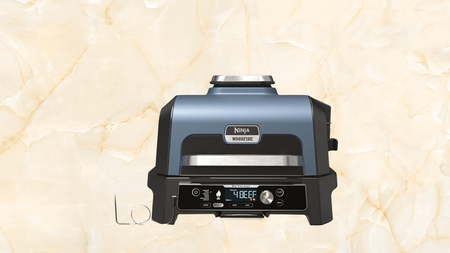
The Ninja Woodfire Pro Connect Premium XL Outdoor Grill and Smoker solves all three problems at once, and it’s now down from $499.99 to $399.98 on Amazon, saving you just over $100 heading into summer.

Ninja Woodfire Pro on a yellow stone backgroundNinja Woodfire Pro on a yellow stone background

Ninja’s Woodfire outdoor grill and smoker gets a tasty 20% price drop, just in time for summer cooking in the garden

With 180 square inches of cooking space, the Ninja Woodfire Pro Connect is a steal at any price, but this 20% discount is tempting indeed.

Advertisement

View Deal

The woodfire flavour here comes from real hardwood pellets, not gas or charcoal, and the integrated smoke box circulates that smoke evenly around the food, so the result tastes genuinely earned rather than artificially added.

Advertisement

Beyond smoking, the grill operates across seven functions, including grilling, air frying, roasting, baking, broiling, and dehydrating, which means it covers the full spread of outdoor cooking without requiring a separate appliance for each method.

Two built-in thermometers let you monitor two different proteins simultaneously and set individual doneness targets for each, which is the kind of practical feature that stops a cook from having to hover anxiously over the grill for the duration of the meal.

Advertisement

The Whatsapp LogoThe Whatsapp Logo

Get Updates Straight to Your WhatsApp

Advertisement

Join Now

The Ninja ProConnect app connects via Wi-Fi and Bluetooth, sending real-time notifications to your phone when the grill is preheated, when to flip, and when your food is ready, so you can actually be present with your guests rather than tethered to the cooking area.

Advertisement

With 180 square inches of cooking space, the Ninja Woodfire Pro Connect handles up to 10 burgers, two full racks of ribs, or a 12-pound brisket in a single cook, which is more than enough capacity for a proper summer gathering.

The stainless steel construction is rated weather-resistant for year-round outdoor storage, meaning it does not need to be hauled inside between uses, and the unit runs on electricity rather than gas, so there is no cylinder to manage or replace.

This is genuinely a strong buy for anyone who wants authentic smoky results without committing to the complexity of traditional BBQ, and a 20% discount heading into summer makes the case even harder to dismiss.

Advertisement

Advertisement

SQUIRREL_PLAYLIST_10148964


Source link

Advertisement
Continue Reading

Tech

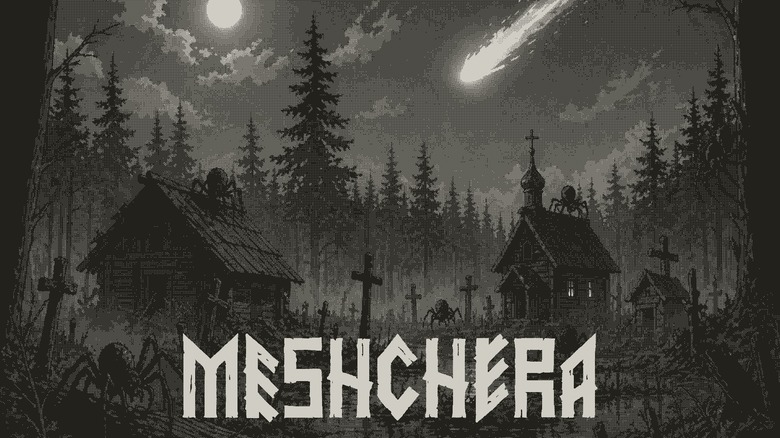
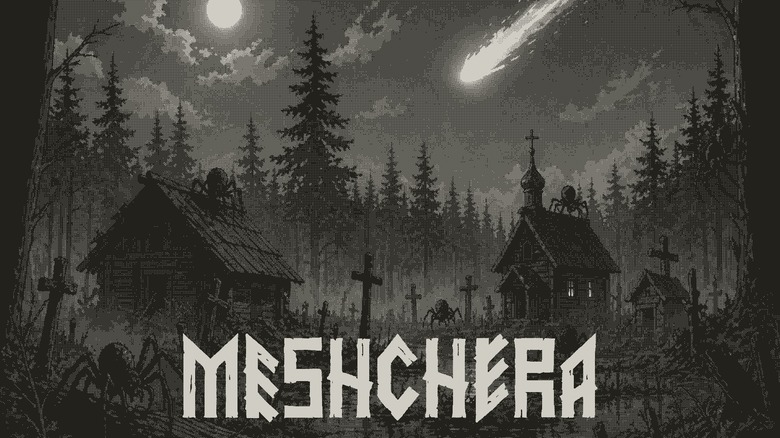
Check Out Meshchera, An Atmospheric Match-Three Game For Playdate Set In A Haunted Marsh

Published

on

Spiders? Skeletons? Bad omens? My kind of party.

I almost don’t want to call Meshchera a match-three game because I fear that kind of undersells how captivating it is. But, it is a game you play within a six by six grid, in which you have to group matching tiles in clusters of three or more so they may merge and become other, higher value tiles, so that’s the description we’re working with. The atmosphere is off the charts, though, which isn’t something I’m used to finding in these types of games. It has gorgeously detailed artwork and background music that you can get completely lost in.

In Meshchera, you can choose to go for the high score or pick from several challenges that will dictate how you approach the round, like “kill five monsters” or “keep 10 monsters for 10 turns.” The gameboard is a dark marsh that will slowly become overrun with vegetation and creatures, unless you can stay ahead of creep by skillfully matching tiles to condense them into other things. Grasses become flowers, which become trees, campfires, houses, churches, etc. It is a uniquely complex matching game — you’re given next to no information about how the items work or how different elements on the board behave and interact, so you have to figure it out along the way and course-correct as you learn.

I’ve spent quite a bit of time playing Meshchera over the last week, but certain things still elude me. Take the “create and destroy a Monster” challenge. I have absolutely no idea how to create a monster, and that’s not for lack of trying. But, this gives me something to keep working toward even as my high scores nudge higher and higher. The game includes 10 challenges right now, and the developer says more are coming soon. Meshchera is really good, and feels like the kind of game you can revisit ad infinitum. It’s already found itself a home in my folder of “go-to” Playdate games.

Meshchera isn’t available in the Playdate Catalog (yet?), but don’t let that stop you from trying it out. It’s on itch.io at the moment, and sideloading games onto the Playdate is incredibly easy. Once you have the game file, you can just drag and drop it right into your library by signing into your Playdate account and going to the Sideload tab. This can also be done via USB. Panic has a detailed explanation of all the options, if you need some guidance.

Advertisement

Source link

Advertisement
Continue Reading

Tech

Etzioni on AI: The Virgin Unicorns

Published

on

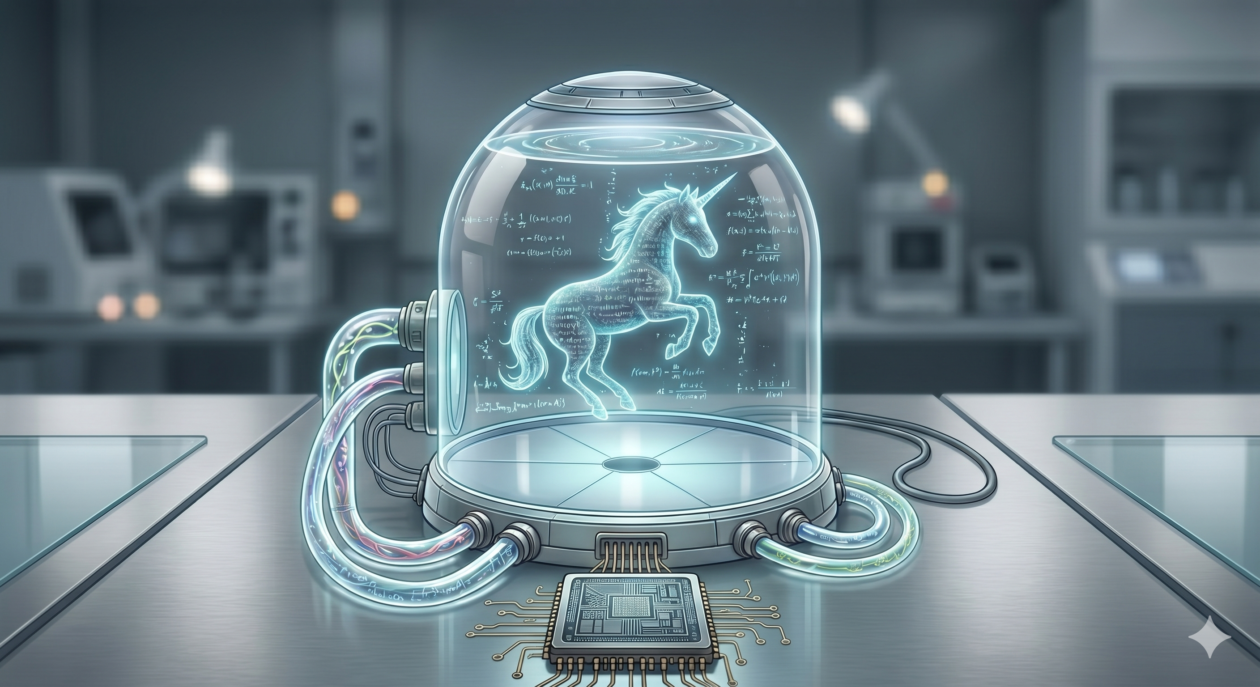
Illustration generated by Google Gemini

Twelve AI labs have a combined valuation larger than Ford and GM. None of them sell anything. I call them the Virgin Unicorns — valued above a billion dollars, but innocent of product or revenue.

OpenAI proved that an AI research lab with the right product could become one of the most valuable companies on earth. A dozen other AI labs are trying to repeat the trick. They have raised more than $29 billion at a combined valuation approaching $130 billion, without shipping anything a customer can buy.

Two questions are worth asking:

  • Why are sophisticated investors writing growth-stage checks to pre-companies?
  • What does history say about how this story ends?
Top Virgin Unicorns

.vu-table-wrapper {
overflow-x: auto;
margin: 1.5em 0;
height: auto !important;
min-height: 0 !important;
}
.vu-table {
border-collapse: collapse;
width: 100%;
font-size: 14px;
line-height: 1.4;
height: auto !important;
min-height: 0 !important;
}
.vu-table th,
.vu-table td {
border: 1px solid #ddd;
padding: 8px 10px;
text-align: left;
vertical-align: top;
}
.vu-table th {
background-color: #f4f4f4;
font-weight: 700;
}
.vu-table tr:nth-last-child(2) td {
font-weight: 700;
background-color: #f9f9f9;
}

Company Founded Founders Valuation Raised Lead Investors Product
Project Prometheus 2025 Bezos, Bajaj $38B $16.2B JPMorgan, BlackRock, Bezos None
Safe Superintelligence 2024 Sutskever, Gross, Levy $32B $3B Greenoaks, Sequoia, a16z, Lightspeed, DST, Alphabet, Nvidia None
Thinking Machines Lab 2025 Murati, Schulman, Zoph, Weng $12B $2B a16z, Nvidia, AMD, Cisco, Accel, Jane Street Tinker*
Reflection AI 2024 Laskin, Antonoglou $8B $2.1B Nvidia, Lightspeed, Sequoia, Schmidt, Citi, 1789 Capital None
Physical Intelligence 2024 Levine, Finn, Hausman, Ichter, Groom $5.6B $1B+ CapitalG, Lux, Thrive, Bezos, T. Rowe Price, Index Demo
Ineffable Intelligence 2025 Silver, Czarnecki, Espeholt, Oh $5.1B $1.1B Sequoia, Lightspeed, Nvidia, Google, UK Sovereign AI, Index None
World Labs 2024 Li, Johnson, Mildenhall $5B $1.2B a16z, NEA, Radical, Nvidia, AMD, Autodesk, Emerson Collective Marble*
Recursive Superintelligence 2025 Socher, Rocktäschel, Tian, Clune, Tobin $4.65B $650M GV, Greycroft, Nvidia, AMD None
Unconventional AI 2025 Rao, Carbin, Achour, Lee $4.5B $475M a16z, Lightspeed, Sequoia, Lux, DCVC, Bezos None
Humans& 2025 Zelikman, Harik, Peng, He, Goodman, and others $4.48B $480M SV Angel, Harik, Nvidia, Bezos, GV, Emerson Collective None
Ricursive Intelligence 2025 Goldie, Mirhoseini $4B $335M Lightspeed, Sequoia, DST, Nvidia, Felicis, Radical None
AMI Labs 2025 LeCun, LeBrun $3.5B $1.03B Cathay, Greycroft, Hiro, HV, Bezos Expeditions, Nvidia, Samsung, Temasek None
Total ~$127B ~$30B
* Limited research release. Tinker is a fine-tuning tool for researchers; Marble is a 3D-world-generation API in early partner access. Neither is a general-availability commercial product.
Sources: company announcements, Bloomberg, Financial Times, TechCrunch, Crunchbase, and PitchBook reporting from 2024-2026. Valuations reflect the most recent confirmed round; figures for rounds in active negotiation are not included.

To answer these questions, let’s identify four patterns across this cohort of companies.

Pattern 1: The pedigree premium. Every founder is a recognized leader in their field, and most come from a small set of institutions. Roughly four-fifths hold PhDs, mostly in computer science from a handful of universities — Berkeley, Stanford, MIT, Toronto, Alberta, Cambridge, UCL — and most of the rest left PhDs at one of those programs to start their companies.

Advertisement

On the employer side, the concentration is tighter still. Four of the twelve companies are anchored by DeepMind alumni (Ineffable, Reflection, Ricursive, Recursive Superintelligence). Two are anchored by OpenAI alumni (Thinking Machines, Safe Superintelligence). AMI Labs traces back to Meta’s FAIR group, and Humans& draws its founders from across Anthropic, xAI, and Google. Stanford and Berkeley faculty appointments account for most of the rest (World Labs, Physical Intelligence, and Noah Goodman of Humans&).

Four institutions — DeepMind, OpenAI, Berkeley, and Stanford — have produced the founders of nearly every Virgin Unicorn in the table. Investors are pricing CVs, not products.

Pattern 2: Nvidia as kingmaker. Nine of the twelve companies in the table have Nvidia as an investor. The supplier of the picks and shovels is also an equity holder in the prospectors. Nvidia gets early visibility into the most ambitious AI bets, locks in compute commitments, and earns multiples on capital deployed at near-zero marginal cost. Selling the shovels was already a good business. Owning the mines too is unprecedented.

Pattern 3: The cap tables are unusually wide. Each round in the table includes a syndicate of ten to twenty investors — venture firms, corporate strategics, sovereign wealth funds, and individuals. Sequoia and a16z still lead. But the rounds are large enough that they require balance-sheet capital — from JPMorgan, BlackRock, Alphabet, the UK Sovereign AI Fund, Samsung, Temasek, ADIA, and Bezos personally — to fill out. That makes these rounds structurally different from classical venture financings.

Advertisement

Pattern 4: A post-LLM thesis. Every company is arguing, in some form, that the current paradigm isn’t enough — that scaling LLMs won’t reach AGI, and that something else (world models, reinforcement learning, agentic systems, AI scientists, novel chips, formal mathematical reasoning) is required. The thesis is the product. The product is a promise.

Others have dissected these unicorns:

  • Howard Marks, in his December 2025 Oaktree memo Is It a Bubble?, described investor behavior as “lottery-ticket thinking” — investors backing startups with no product on the dream of an enormous payoff despite an overwhelming probability of failing.
  • Derek Thompson, writing in October, framed the same dynamic by reporting that a Thinking Machines pitch meeting was described by one investor as “the most absurd pitch meeting” because Mira Murati “couldn’t answer any questions” about what she was building.

  • GeekWire’s own year-end survey of regional venture investors found the same skepticism closer to home: the bubble, they said, is most pronounced at the early stages, where AI storytelling can substitute for real traction.

The lottery-ticket framing is now conventional wisdom. But will this lottery pay out? One way to handicap the odds is to look to the past.

What history teaches us

The closest historical parallel is not the dot-com era. Webvan, Pets.com, and Boo.com failed not because they were pre-product, but because they had products and bad business models. Those companies burned capital on infrastructure and marketing, not on research.

The closer cautionary tales are the celebrity-founder pre-product flops of the last fifteen years.

Advertisement
  • Magic Leap raised $3.5 billion over nine years on the strength of Rony Abovitz’s prior exit and shipped a flop.
  • Quibi raised $1.75 billion on Katzenberg and Whitman’s pedigree and lasted six months.
  • Inflection AI raised $1.5 billion on Mustafa Suleyman and Reid Hoffman and was effectively absorbed into Microsoft in 2024 — its team hired, its technology licensed, its company hollowed into a shell.

In each case, founder credentials raised the money. The product never justified the valuation.

The structurally closest analogy, though, is biotech. Roughly 80% of 2021 biotech IPOs were pre-revenue. The probability that a pre-clinical drug reaches commercialization is under 10%. Development takes a decade and costs $1 billion. Yet a Bentley University study of 319 biotech IPOs from 1997 to 2016 found that the cohort produced over $100 billion in net shareholder value despite a failure rate above 50%. The winners were large enough to carry the portfolio. And many of the most successful biotechs were acquired before reaching profitability.

The Virgin Unicorns are biotech-shaped businesses. Pre-revenue, science-driven, decade-long timelines, binary outcomes, acquisition as the usual exit. But they aren’t financed like biotechs. Biotech investors release capital in milestone tranches tied to specific scientific results, and they expect most candidates to fail. Virgin Unicorn investors release capital in one large round on the strength of a CV, and price for success. Same shape of business, opposite financing logic. That mismatch is where the disappointment will come from.

Why Sequoia invests anyway

The OpenAI story counters the biotech analogy. From its 2015 founding to the ChatGPT launch in late 2022, OpenAI looked exactly like a Virgin Unicorn — pre-consumer-product for seven years, billions in capital, and only research to show for it. Then ChatGPT shipped and revenue went from zero to over $10 billion in three years. No biotech has ever scaled like that.

Sequoia and other investors writing checks to today’s Virgin Unicorns aren’t pricing for biotech outcomes. They’re pricing for the second coming of OpenAI.

Advertisement

@media (max-width: 600px) {
aside.callout { float:none !important; max-width:100% !important; margin-left:0 !important; margin-right:0 !important; }
aside.callout .callout-img { display:none !important; }
}

The table above makes the size of that bet legible. Early-stage venture investors aim for a 10x return. Most of these twelve will return zero, so the one winner has to carry the other eleven by itself. At a $127 billion aggregate marked-up value, that means the winner alone has to produce something like $1.3 trillion in value.

That is not a forecast — it is the bet the VCs have already placed. Sequoia and a16z made exactly this kind of bet on OpenAI and Anthropic, and the on-paper returns have already vindicated it many times over. Anthropic itself looked like a Virgin Unicorn in 2022 — and then it shipped Claude and built revenue.

The historical record suggests some skepticism. But bubbles have a way of producing the occasional Amazon or Google amid the wreckage. Identifying which Virgin Unicorn will become a trillion-dollar company — a “kilocorn,” a thousand unicorns in one — is tough. Which one would you bet on?

Source link

Advertisement
Continue Reading

Tech

SpaceX scrubs Starship launch with seconds to go

Published

on

Science

Not all bad news: Crypto billionaire signs up for a mission to Mars

SpaceX called off the launch of its huge Starship rocket seconds before liftoff due to a ground equipment problem.

The countdown clock reached a planned hold at T-40 seconds after a relatively trouble-free process. Some iffy weather had cleared, and everything looked good for the twelfth Starship test flight – the first try-out for the latest generation of the vehicle and launchpad.

Advertisement

Alas, it was not to be. After repeatedly resetting the countdown clock to the T-40 second mark due to problems, which included warnings from sensors on the quick-disconnect arm on the launch pad and issues with the pad’s water diverter, SpaceX eventually threw in the towel and scrubbed the launch.

Boss man Elon Musk blamed the scrub on the ground equipment, and posted on X: “The hydraulic pin holding the tower arm in place did not retract.” Musk wrote that if the issue could be fixed, SpaceX will try again later today. The next window opens at 5:30 pm CT, according to the billionaire.

Considering that this was the first launch attempt from a new pad and the first of this vehicle’s iteration, the countdown problems are unsurprising. As such, getting to the T-40 second mark was an achievement in its own right. Sadly, the team had only a few minutes to deal with the problems, since the propellant loading was complete and the fuel temperature could not be maintained for long.

Expectations are high for this mission. Despite years of development and Musk’s promises, Starship is still non-operational, and its launches remain on suborbital trajectories during its test phase. The vehicle has quite a way to go before it can play a part in NASA’s goal of landing a crew on the Moon.

Advertisement

According to the company’s recent IPO filing, “We expect Starship to commence payload delivery to orbit in the second half of 2026.”

The second half of 2026 is only weeks away, so it’ll be an interesting few months.

The IPO filing also states that Musk’s performance-based restricted shares in SpaceX vest upon the establishment of a permanent human colony on Mars “with at least one million inhabitants.”

First, however, the SpaceX needs to get to Mars. During the scrubbed launch attempt, it announced that crypto billionaire Chun Wang, who commanded the Fram2 private human spaceflight mission in 2025, would be on the crew for a future flyby of the red planet.

Advertisement

Hopefully, Wang’s jaunt to Mars won’t end up canceled like the dearMoon project, a mission to the Moon financed by Japanese billionaire Yusaku Maezawa. The project was unveiled in 2018, but was eventually canceled in 2024. Starship has yet to hit Earth orbit, let alone head to the Moon. ®

Source link

Continue Reading

Tech

ZTE Day Indonesia 2026 strengthens AI innovation and digital infrastructure collaboration to accelerate Indonesia’s digital transformation

Published

on

The annual tech showcase highlights next-gen AI, cloud, and future-ready ICT solutions while uniting ecosystem partners to build the foundation for the nation’s AI era

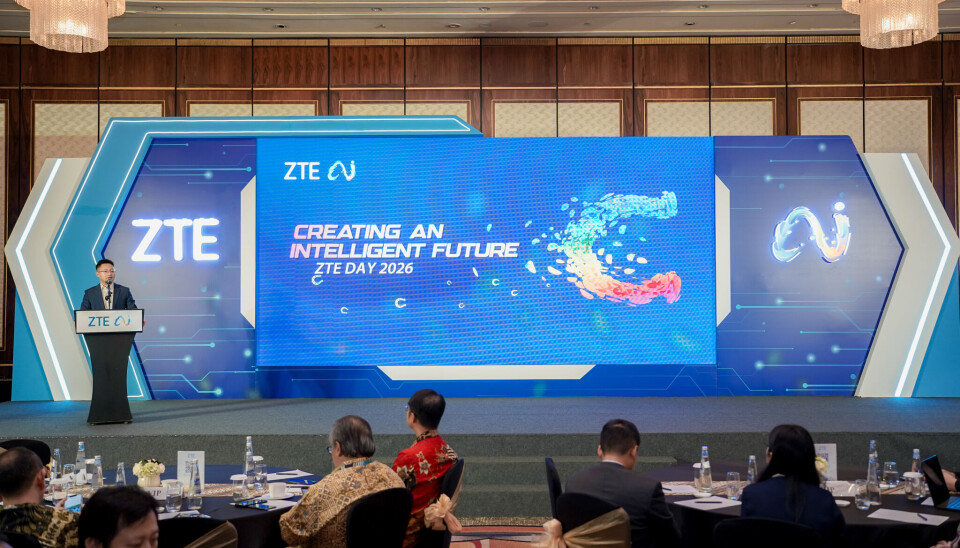
Partner Content ZTE Corporation (0763.HK / 000063.SZ), a global leading provider of integrated information and communication technology solutions, held ZTE Day Indonesia 2026 in Jakarta, as its annual technology showcase event, bringing together industry leaders, technology partners, and digital ecosystem players to discuss the future of AI, intelligent infrastructure, and digital transformation in Indonesia.


ZTE reinforced its commitment to accelerating Indonesia’s digital economy growth through intelligent and future-ready ICT solutions

As industries increasingly adopt AI, cloud technologies, and data-driven operations, the demand for smarter, adaptive, and future-ready digital infrastructure continues to accelerate. Responding to this momentum, ZTE Day Indonesia 2026 highlighted how AI, intelligent networks, cloud infrastructure, and next-generation connectivity are becoming key foundations for national digital competitiveness and future economic growth.

The event showcased a broad range of integrated ICT innovations spanning artificial intelligence (AI), intelligent computing, cloud infrastructure, optical transport, enterprise networking, Wi-Fi 7, and next-generation connectivity technologies designed to support enterprises, operators, and industries navigating the AI era.

Advertisement

Liu Sen, President Director of ZTE Indonesia, stated that Indonesia is currently entering an important phase of digital transformation, where progress will increasingly depend on strong collaboration between technology providers, infrastructure players, and partners across the digital ecosystem.

“Indonesia is currently entering an important phase of digital transformation, where AI, cloud technologies, and intelligent connectivity will become the key foundations of future digital economic growth. Through ZTE Day Indonesia 2026, we aim to demonstrate how technology innovation can be implemented to support the development of smarter, more efficient, and sustainable digital infrastructure. We believe that cross-industry collaboration will play a crucial role in building a strong digital foundation to support Indonesia’s vision of becoming a leading digital economy,” said Liu Sen.

Beyond showcasing technology innovations, ZTE Day Indonesia 2026 also emphasized the growing importance of ecosystem collaboration in supporting Indonesia’s AI-ready digital landscape.

During the exhibition showcase, ZTE presented a series of its latest innovations, including nubia’s latest AI smartphone, high-performance AI server solutions, optical transport technologies, AI-powered network management systems, and Wi-Fi 7 enterprise connectivity solutions.

Advertisement

ZTE also demonstrated its comprehensive end-to-end digital ecosystem capabilities through solutions covering RAN, microwave, transport network, core network, fixed network, and big video solutions. These innovations reflected the company’s commitment to supporting operators, enterprises, and industries in addressing the evolving demands of the digital era.

As part of ZTE Day Indonesia 2026, the ZTE Open Day Afternoon Session featured keynote presentations from Prof. Viciano Lee of Sertis Indonesia, Sami Muhammad Salman from Whale Cloud Technology Indonesia, Mohan Albert, Director of CTO Group at ZTE, and Chok Shin Lip, Partner Solution Architect Director at Alibaba Cloud Intelligence.

The keynote sessions explored the growing role of AI, cloud technologies, intelligent infrastructure, and ecosystem collaboration in supporting enterprise transformation and accelerating Indonesia’s digital economy development.

The event also hosted a panel discussion titled “Connecting the Ecosystem: Intelligent Connectivity for Enterprise Integration & Value Innovation”, featuring industry leaders including Eric Arianto, Chief Technology & Network Officer of Linknet, Irawan Delfi, Network Development Division Head of Fiberstar, and Sigit Dwi Cahyo, Head of Technology Planning and Product of Tower Bersama Group. The panel explored the importance of intelligent connectivity, fiber infrastructure readiness, and ecosystem integration in supporting enterprise digitalization, service innovation, and the growing demand for seamless digital experiences across industries.

Advertisement

Panel discussion titled “Connecting the Ecosystem: Intelligent Connectivity for Enterprise Integration & Value Innovation”

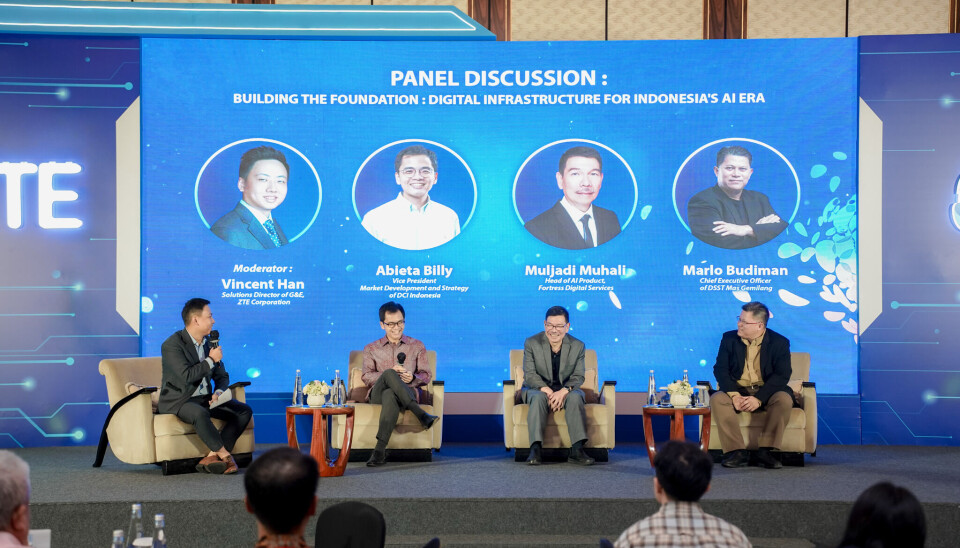
Another panel discussion titled “Building the Foundation: Digital Infrastructure for Indonesia’s AI Era”, moderated by Vincent Han, featured industry leaders including Abieta Billy from DCI Indonesia, Muljadi Muhali from Fortress Digital Services, and Marlo Budiman from DSST Mas Gemilang. The second panel emphasized the importance of strengthening digital infrastructure readiness, enhancing data center capabilities, and fostering industry collaboration to support the growing adoption of AI technologies and Indonesia’s broader digital transformation agenda.


Panel discussion titled “Building the Foundation: Digital Infrastructure for Indonesia’s AI Era”

Through keynote sessions, panel discussions, interactive product demonstrations, and networking activities, ZTE Day Indonesia 2026 provided customers, partners, and industry stakeholders with deeper insights into AI implementation, intelligent digital infrastructure, and real-world applications of next-generation technologies across industries.


ZTE Day Indonesia 2026 showcased the latest AI, cloud, and intelligent connectivity innovations to support Indonesia’s digital transformation

Contributed by ZTE.

Source link

Advertisement
Continue Reading

Tech

Image Playground to see upgrades in OS 27

Published

on

Image Playground will generate images based on provided photos and other inputs, but the results leave a lot to be desired

Generative AI is not Apple’s strong suit, but Image Playground, the tool responsible for horrific AI avatar generation and Genmoji, should see significant improvements with the OS 27 cycle.

Apple announced Apple Intelligence features that had to be delayed in 2024, and one of them should have been Image Playground. While the other AI tools were of passable usefulness and quality, the image generation tool still leaves a lot to be desired.

According to the “Power On” newsletter from Bloomberg, the Image Playground app should see a “big boost” from Apple’s upgraded Apple Foundation Models. It’s an obvious statement given that Gemini is being distilled into Apple’s models, and one of Gemini’s specialties is image generation.

Advertisement

However, even as Apple’s image generation feature improves, its models will still likely lag behind competing options by some margin. Users that want more oomph behind their image generation in Image Playground will be able to use third-party models of their choosing.

Image generation is bad AI

While the results are often unfortunate, Image Playground is more of a proof-of-concept than a useful tool in its current form. Apple presented it as a way to turn your mom into an AI-slop superhero for what would be a simply terrible birthday message.

While no one on Earth should use Image Playground for that function, it can be somewhat entertaining the same way other gen AI models have been. Using it to see how it might interpret a specific person or prompt can be amusing, but the output isn’t something anyone could or should rely on for anything beyond a giggle in an iMessage group chat.

The only good thing about Image Playground output (when using Apple’s models) is that it’s either on device or in Private Cloud Compute servers that run on renewable energy. While generative slop is loaded with moral quandaries, that’s one area Image Playground doesn’t suffer from.

Advertisement

Genmoji is the true winner in Image Playground. While it isn’t a function I’ve used much, it has enough guardrails that it can make some decent results.

Even if Image Playground is able to one day achieve Pixar or Ghibli-level results with on-device AI, there’s the argument that all gen AI is bad for humanity. One area of image generation Apple will no doubt stay away from is the ability to produce photorealistic output, which can lead to problems like deepfakes.

OS 27 getting new Apple Foundation Models

iOS 27 is expected to make Genmoji more proactive in the system by suggesting premade options in the text suggestion box. Shared Genmoji become available to the people you send them to, so everyone can get some use out of that weed emoji.

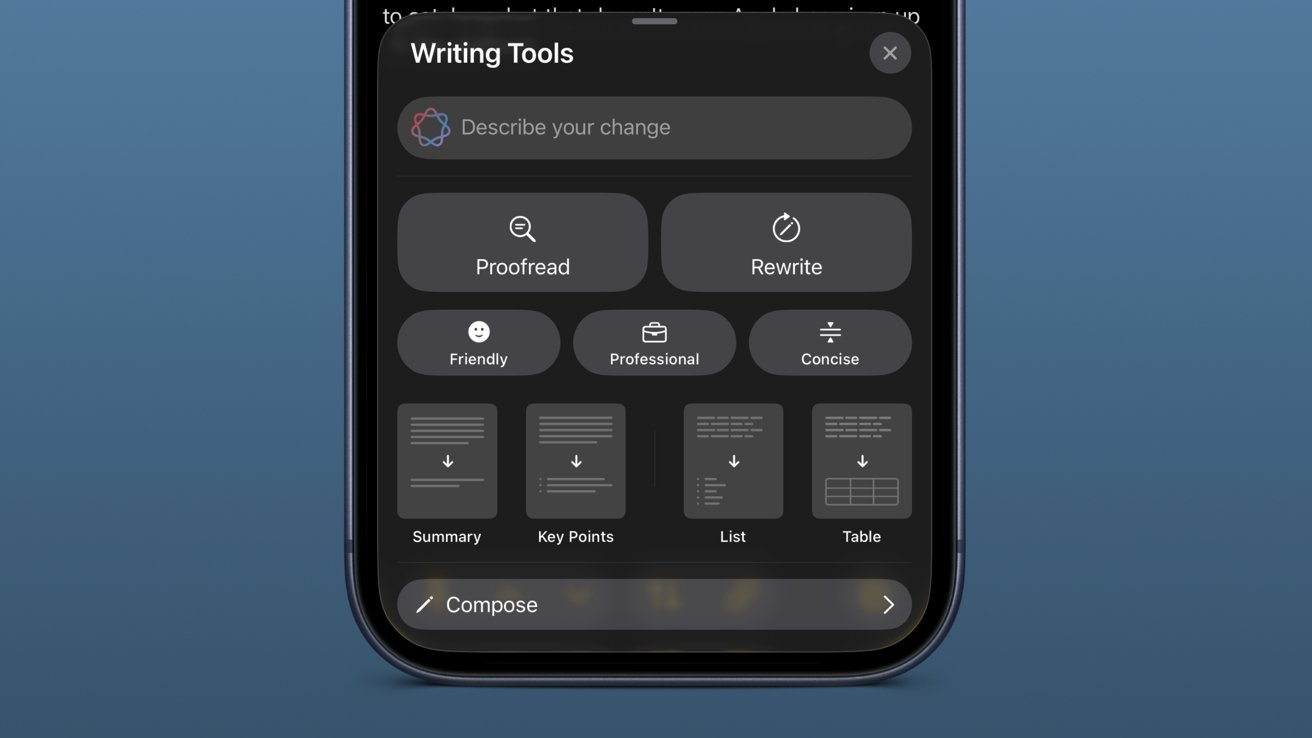
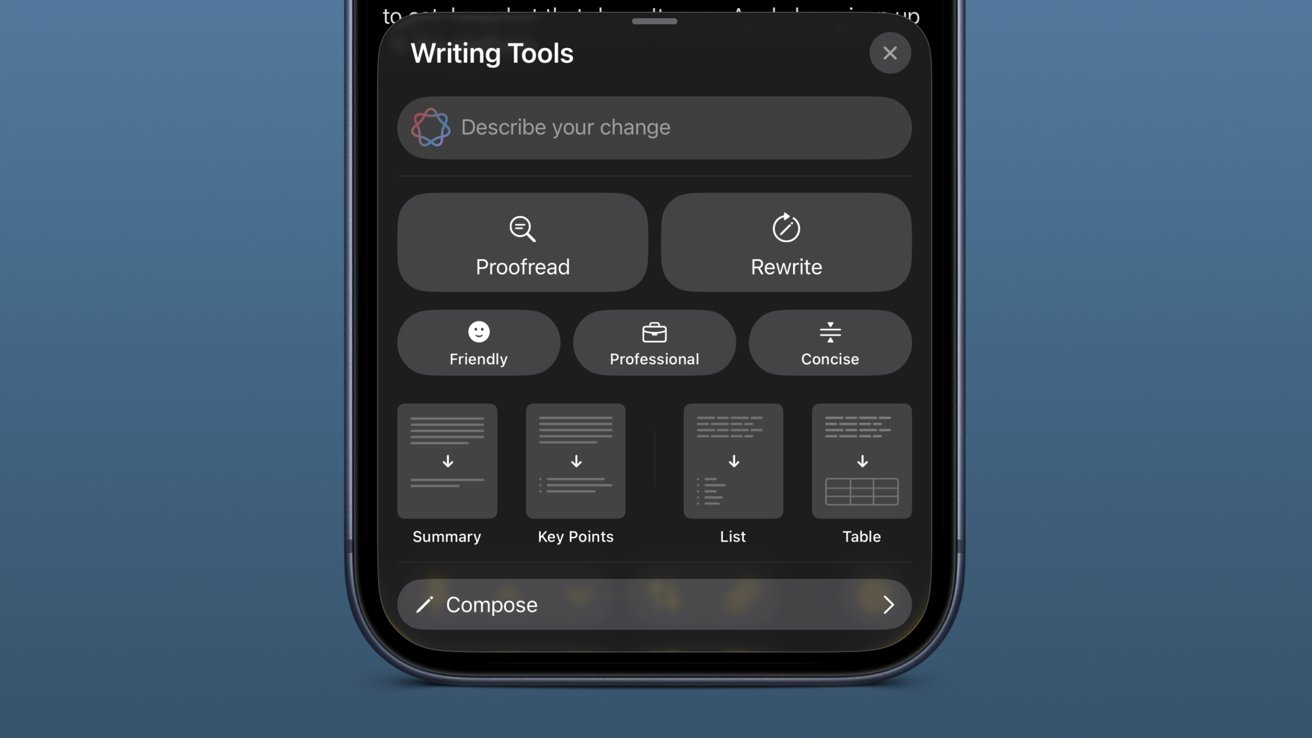
Smartphone screen showing a writing tools interface with options like proofread, rewrite, tone choices, and formatting styles such as summary, key points, list, and table on a blue background

Writing Tools are one of Apple’s better AI features

Advertisement

Apple’s weakest offerings in AI are its generative functions, however, they’re fully optional and easily ignored. There is no doubt Apple will continue to pursue better image generation, but if that’s something you want to do, you might want to stick to other apps.

That said, Image Playground could prove much better in OS 27 and earn its place as a useful toolset. The app itself is fine, but Image Playground also exists outside of the app as an extension interface in places like Notes and Freeform.

If Apple can make Image Playground a useful tool that can run on devices with Apple’s arguably somewhat ethical AI models, then I welcome it. Though improvements could mean turning the tool into a plagiarism machine, which will create a whole different set of issues.

People that want to perform these functions are going to seek out tools that offer them. If gen AI must exist to meet consumer expectations, then Apple should have a good offering.

Advertisement

These fake images that lack artistic ingenuity or integrity are getting created no matter what. So, if some of them can be made with ethically sourced AI, local models running on a device’s battery, or on private servers powered by renewable energy, I’d say it is a net positive.

The ability to choose third-party models for Image Playground through a system API will prove interesting. However, once you’ve sent your data to that third-party, all bets are off from an ethical and privacy-oriented standpoint.

At least you can make a plagiarized Ghibli avatar for social media instead of paying a human to make one for you, I guess.

Advertisement

Source link

Continue Reading

Trending

Copyright © 2025