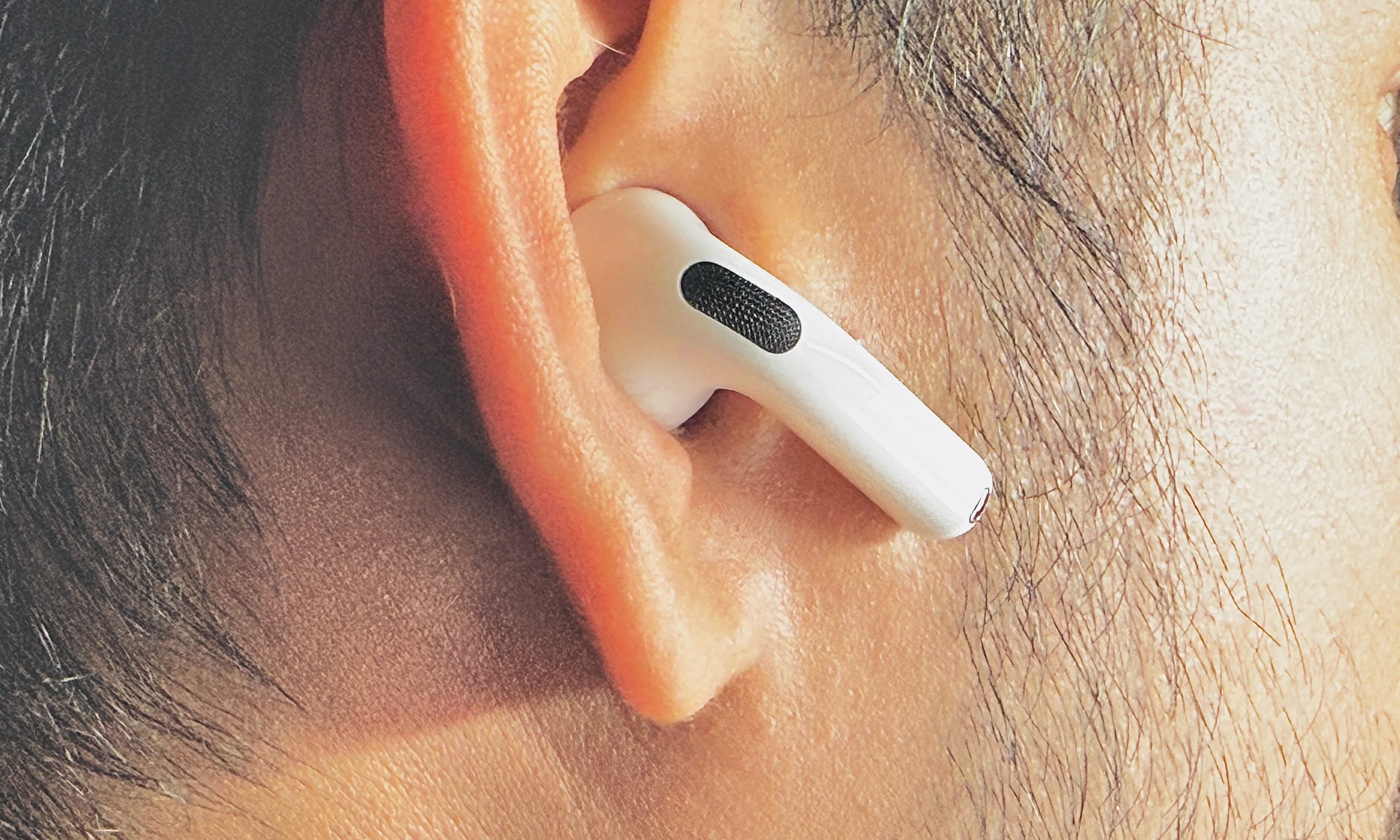
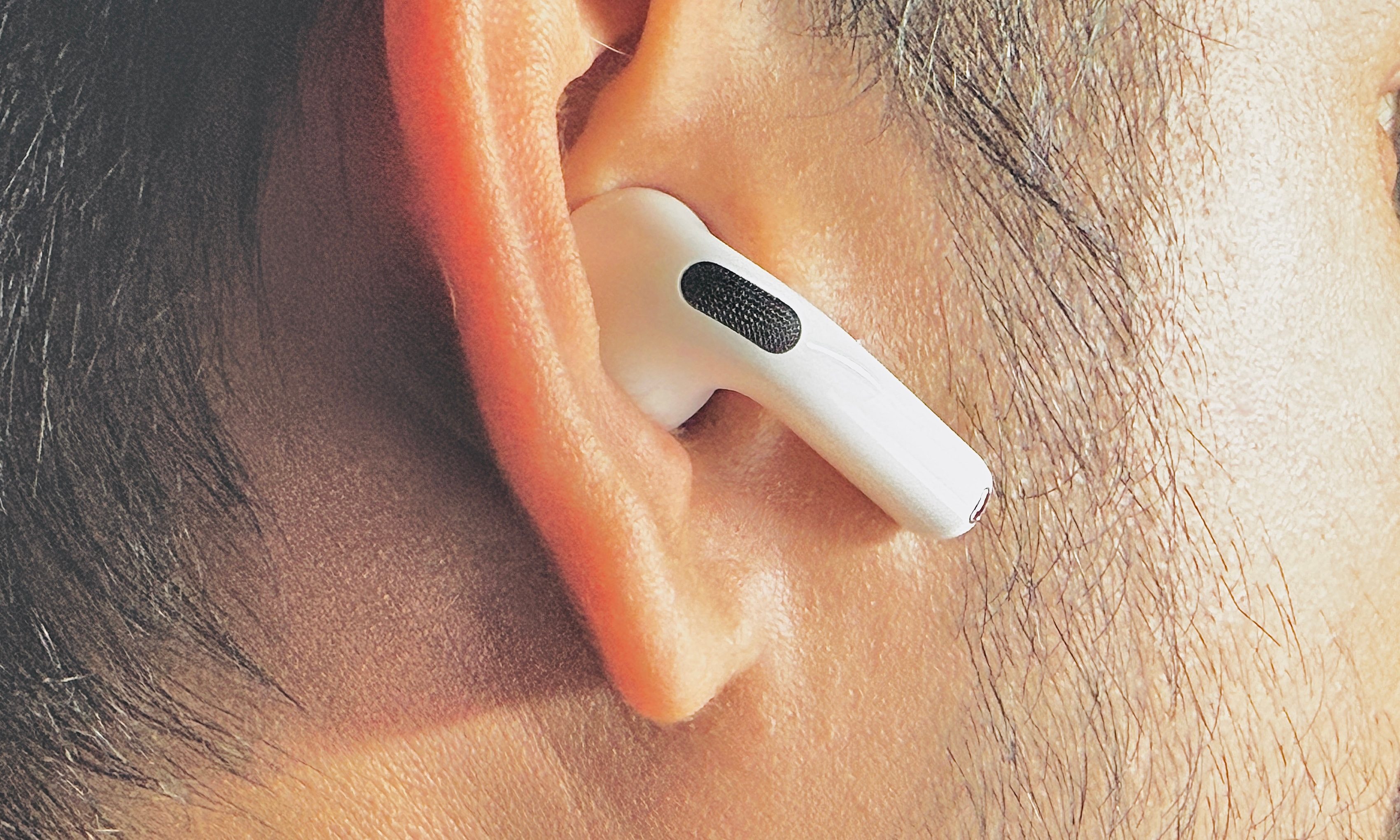
AI is still something most people have to consciously engage with. You open an app, type a prompt, take a photo, or ask a question. Apple’s next major AirPods upgrade could change that. According to Bloomberg’s Mark Gurman, the company is in late-stage development on camera-equipped earbuds that could put visual AI into a device that many people already use every day.
How close are these AI AirPods to launch?
Bloomberg reports that the earbuds have reached design validation testing, one of the final hardware stages before early mass-production testing. That means the hardware may be close, but the launch appears tied to Apple’s delayed Siri overhaul.
Nadeem Sarwar / Digital Trends
Gurman says Apple had planned to release the earbuds as early as the first half of this year, but the launch was pushed back after delays to a revamped Siri. That overhaul is reportedly on track for September after Apple upgraded its underlying models using Alphabet’s Gemini technology.
What would cameras in AirPods actually do?
The cameras are reportedly not meant for regular photos or videos. They would feed low-resolution visual information to Siri, helping it answer questions about what the user is looking at.
That could make visual AI more practical. You could look at ingredients and ask what to cook, get walking directions based on landmarks, or receive reminders connected to something the earbuds see.
Advertisement
Nadeem Sarwar / Digital Trends
Privacy will be the hard part. Bloomberg says Apple has built a small LED light into the earbuds that notifies users when visual data is being sent to the cloud. Apple will need to make that signal clear, because camera-equipped earbuds will only work if people trust when and how they are being used.
Battery life is still unclear. These are earbuds at the end of the day, and the addition of cameras is likely to use more power. AirPods Pro 3 currently offer up to 8 hours of listening time with Active Noise Cancellation on, and up to 24 hours with the charging case. Apple will likely have to decide whether it is willing to take a hit on battery life for visual AI, or find a smarter way to keep battery life respectable.
Looking for the most recent Strands answer? Click here for our daily Strands hints, as well as our daily answers and hints for The New York Times Mini Crossword, Wordle, Connections and Connections: Sports Edition puzzles.
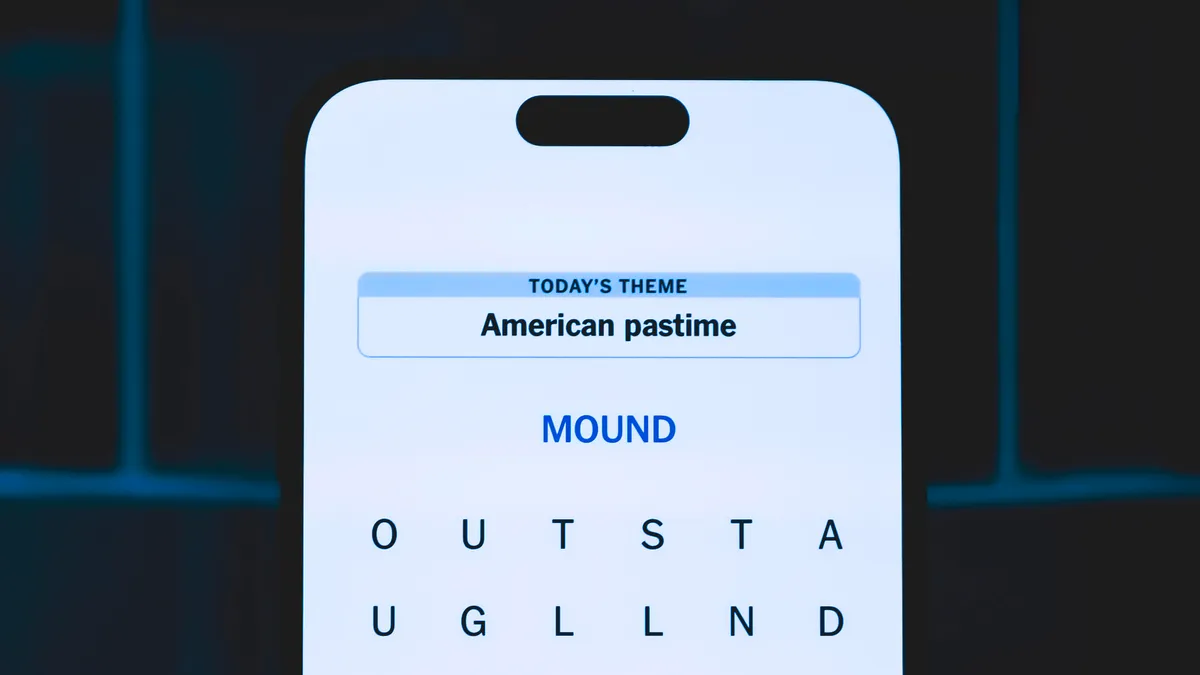
Today’s NYT Strands puzzle is pretty ho-hum. (That’s a hint, not an insult.) Some of the answers are difficult to unscramble, so if you need hints and answers, read on.
If that doesn’t help you, here’s a clue: Not very exciting.
Clue words to unlock in-game hints
Your goal is to find hidden words that fit the puzzle’s theme. If you’re stuck, find any words you can. Every time you find three words of four letters or more, Strands will reveal one of the theme words. These are the words I used to get those hints but any words of four or more letters that you find will work:
STEAD, DIRT, MANOR, MILL, NILL, DIARY, COTS, COST
Answers for today’s Strands puzzle
These are the answers that tie into the theme. The goal of the puzzle is to find them all, including the spangram, a theme word that reaches from one side of the puzzle to the other. When you have all of them (I originally thought there were always eight but learned that the number can vary), every letter on the board will be used. Here are the nonspangram answers:
BASIC, COMMON, PROSAIC, PEDESTRIAN, ORDINARY
Today’s Strands spangram
The completed NYT Strands puzzle for May 8, 2026.
NYT/Screenshot by CNET
Today’s Strands spangram is RUNOFTHEMILL. To find it, start with the R that’s the second letter on the top row, and wind down.
Advertisement
Toughest Strands puzzles
Here are some of the Strands topics I’ve found to be the toughest.
#1: Dated slang. Maybe you didn’t even use this lingo when it was cool. Toughest word: PHAT.
#2: Thar she blows! I guess marine biologists might ace this one. Toughest word: BALEEN or RIGHT.
#3: Off the hook. Again, it helps to know a lot about sea creatures. Sorry, Charlie. Toughest word: BIGEYE or SKIPJACK.
Kaleidescape, once deemed a “rich man’s toy,” has been making in-roads lately with products priced within reach of those with more reasonable means. With its most affordable movie player priced at $1,995, Kaleidescape is still not “cheap” by any means. But considering the price of entry just three years ago was over $10,000 for a basic player and server, we’re definitely seeing progress.
For those unfamiliar, Kaleidescape is a platform for movie lovers who want to experience films in their highest possible audio and video quality, without the need for massive disc collections taking up an entire wall in your home. With bit rates higher than the highest quality physical media, 4K resolution with Dolby Vision HDR and lossless Dolby Atmos and DTS:X surround, Kaleidescape offers an uncompromising viewing and listening experience combined with the convenience of digital downloads. As Our Editor in Chief Ian White puts it, Kaleidescape is for ‘people who understand that “good enough” is usually neither.’
Although I’ve seen Kaleidescape in action for years at events like CEDIA, CES and the TV Shootout, my first direct experience with Kaleidescape, from a reviewing experience, was with their Strato V player ($4,499). It’s a 4K movie player with nearly a terabyte of on-board storage. That’s room for about ten or eleven 4K movies. I was fairly blown away by the quality and convenience, though the user interface was a less robust version of their best-in-breed menu system. The standard Kaleidescape interface allows owners to easily browse through large collections of films, with associations made by genre, cast, director and other meta data.
The Kaleidescape “Collections” interface is what loads by default if you are only using on-board player storage for your movies (no server).
With only 5 to 10 movies on a player, the full user interface is overkill, so the system defaults to a simpler navigation experience if you are only using a standalone player, with no external servers. This time around, I requested the Strato E player ($2,995) with one of the company’s movie servers, the 8 TB Mini Terra Prime ($9,995), so I could enjoy the full Kaleidescape user experience.
As an aside, I should mention that the launch price of the Mini Terra Prime last year was $5,995 but AI has driven the costs of chips and solid state storage significantly, leading to that 67% price increase. Kaleidescape also offers a 6 TB Compact Terra Prime server for $4,995 which uses traditional hard drives for storage. All of Kaleidescape’s servers are industrial quality and all maintain the secure digital ecosystem that is required by the studios in order to do business. Unfortunately you can’t just load up on standard disc drives to house your growing movie collection; you need to keep it all in brand.
Advertisement
What Is It?
The Kaleidescape Strato E is a 4K media player with Dolby Vision and HDR10 HDR, as well as lossless audio support including Dolby Atmos, Dolby TrueHD, DTS:X, DTS-HD Master Audio and multi-channel PCM decoding. The player has half a terabyte of on-board storage, enough for roughly five or six 4K movies, as well as the option to play videos from a Kaleidescape server within your local network.
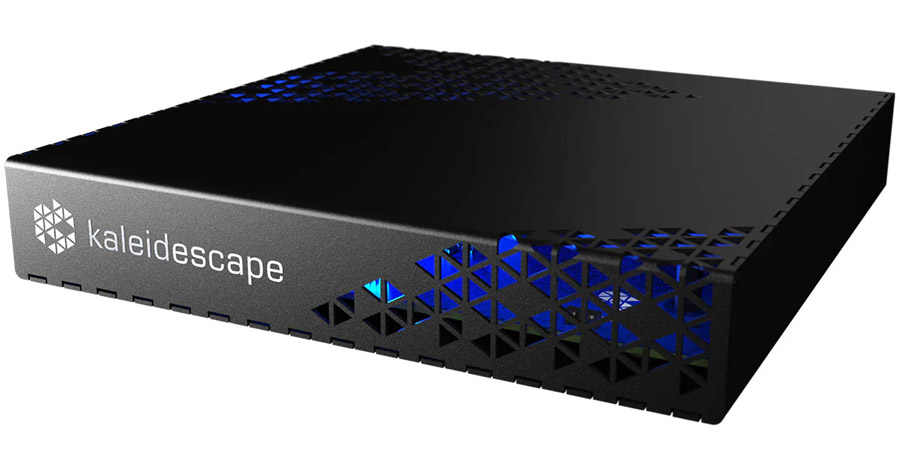
At $2,995, The Strato E is currently the most affordable 4K-capable Kaleidescape player. The company offers a more affordable player, with the same form factor and storage (Strato M), for $1,995 but that player is limited to 1080p resolution. The Strato E sports a compact form factor, measuring in at just 6.4 x 1.1 x 6.4 inches (16.3 cm × 3 cm × 16.3 cm). It weighs 1.6 pounds (0.73 kg) and is designed for residential, marine, and commercial systems, featuring a black, perforated steel casing for passive cooling.
Like the rest of Kaleidescape’s players, the Strato E lacks WiFi, requiring a hard-wired network connection for movie downloads or connection to a local Kaleidescape server. No connection is required to play movies once they have been downloaded to the unit’s on-board storage.
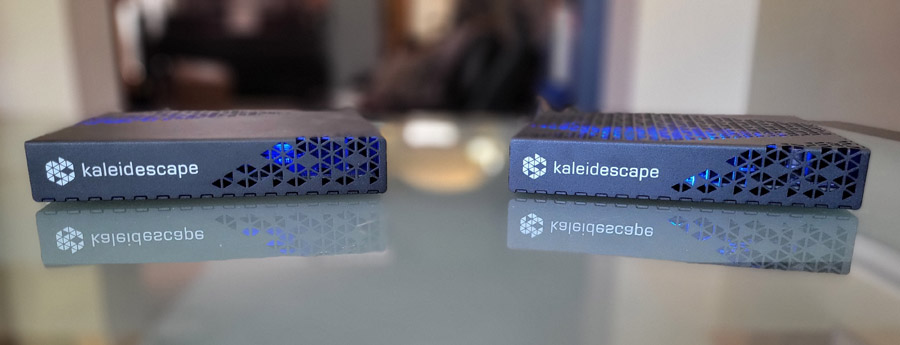
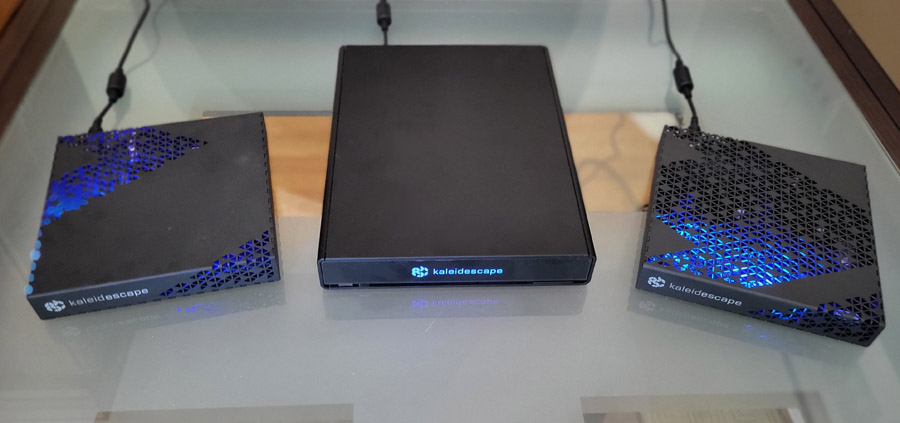
Kaleidescape Strato E player (left) and Mini Terra Prime Server (right).
The Kaleidescape Mini Terra Prime ($9,995) is a media server with 8 terabytes (TB) of solid state storage on-board. This is enough for approximately 125 movies. It requires a hard-wired network connection to your home network and out to the internet to download movies from the Kaleidescape store. Kaleidescape recommends a 2.5 GB network connection, though 1 GB (gigabit) network connectivity is also supported. Like the Strato E, the Mini Terra Prime features a compact chassis, 6.4 x 1.1 x 6.4 inches (16.3 x 3 x 16.3 cm) and weighs 1.7 pounds (0.77 kg).
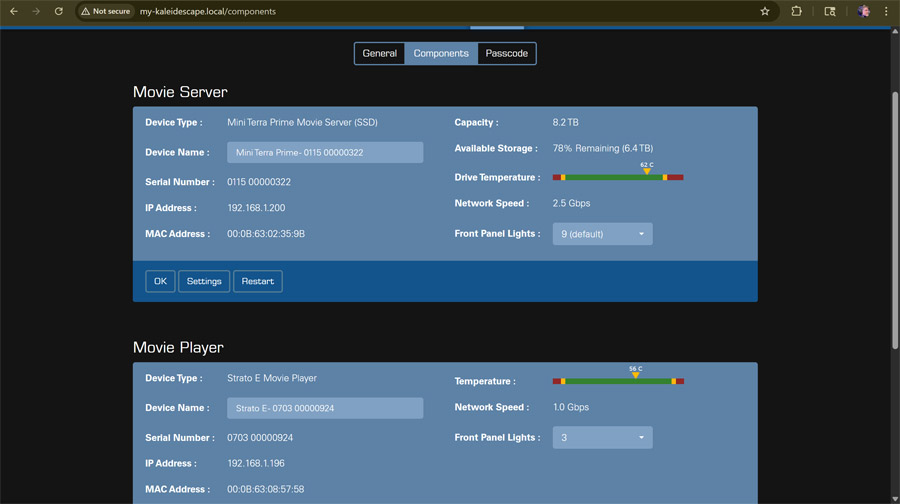
Like the Strato E, the Mini Terra Prime is fanless, designed for completely silent operation. Both the player and the server feature an on-board temperature sensor which can be viewed in the browser-based Kaleidecape admin interface. During my review, neither the player nor the server became appreciably hot, though they did both run slightly warm to the touch.
The Strato E back panel includes an ethernet port, HDMI jack and a USB port.
The Set-Up
Adding the new Strato E player to my system required activation of the player. If it’s your first player, you’ll need to create a Kaleidescape account so you can start building your library. But first you’ll need to plug the player into power, plug in a hard-wired ethernet cable connected to your home network, and plug in the player’s one HDMI output to your TV or projector. But how exactly do you turn the thing on? Use the remote! Oh, wait: there isn’t one!
Advertisement. Scroll to continue reading.
Advertisement
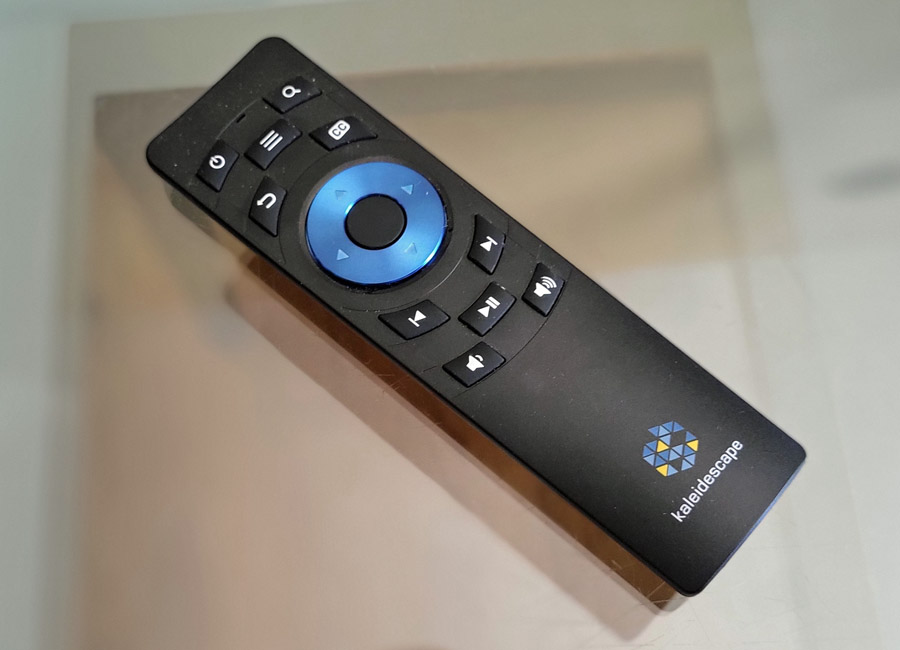
The Kaleidescape folks tell me that most of their customers never used the remote control they previously included in the box with each player as their players are typically tied into a control system like Control 4 or Crestron. So they stopped putting a remote in the box. Personally, I think a $3,000 media player should come with a remote, but maybe that’s just me? You can either purchase the Kaleidescape remote as a $50 accessory, or you can use the Kaleidescape app for iOS or Android to control playback and access the menus. I used the app, but I also had one of the remotes from an earlier review.
The Kaleidescape media player remote is a $50 option.
Once the activation and set-up process completed, I had access to the Kaleidescape movie store to start building a library. Kaleidescape was kind enough to load a few movies into the test account and gave me a store credit to explore the full download, rental and purchase operation.
I tested the Strato E player on its own at first. With about half a terabyte of on-board storage, the Strato E can store five or six 4K movies, depending on length. When you want to watch something new, you can simply download the new title and the player will automatically delete an older title if it needs to make room. All purchased movies reside in the cloud and can be downloaded at any time.
Size comparison: Kaleidescape Strato E, Strato V and Mini Terra Prime.
Movies and TV series on Kaleidscape are available either to rent or to purchase at prices comparable to other digital movie stores like iTunes and Amazon Prime Video, but generally in higher quality than either of those services. Because Kaleidecape is a download service (not a streaming service), they can offer higher quality digital files, without the risk of buffering or internet slowdowns impacting video and audio quality as it does with streaming. Kaleidescape recommends a 1 GB internet connection or higher. Over a 1GB connection, you can download a full 4K movie with Dolby Vision HDR and lossless immersive sound like Dolby Atmos or DTS-X in about 8-10 minutes.
Kaleidescape file size averages around 100 GB, but can be significantly higher for longer movies or a bit smaller for shorter ones. Meanwhile most 4K UHD Blu-ray Discs are capped at 66 GB due to the size limit of a dual-layer UHD Blu-ray Disc. Some longer movies are delivered on triple layer UHD Discs which can store up to 100 GB, but these are the exception, not the rule. The larger file size of a Kaleidscape file means that they can use less compression, and this leads to better overall picture quality.
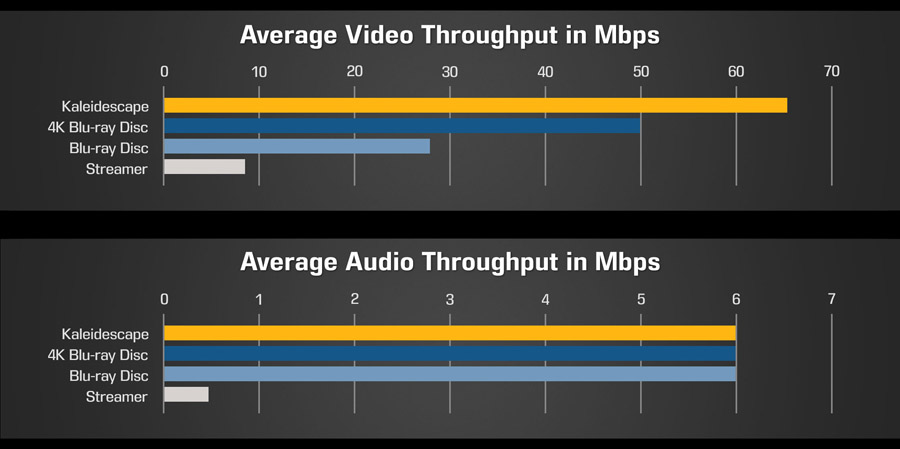
Larger file size and more reliable network bandwidth enable higher bit rates (and higher quality) for both audio and video of Kaleidescape downloads, particularly when compared to streaming.
Am I Gonna Have to Buy All My Movies Again?
While the hardware has gotten more affordable over time, Kaleidscape is still a proprietary closed ecosystem, so anything you want to watch on Kaleidedcape needs to be purchased or rented from the Kaleidescape store. And if you want to build a large library of digital movies, this can get pricey. Fortunately, for those who already have an extensive movie collection, Kaleidecape offers a “Disc to Digital” system which allows you to buy digital copies of movies you already own on DVD or Blu-ray Disc at a discount.
To take advantage of this, you will need a USB/Blu-ray Disc Drive. Kaleidescape recommends using a drive with external power (not USB-powered) and even recommends a few compatible drives. But these models are all discontinued. I found success with a slim Samsung SE-506 Blu-ray Writer, which is powered by the USB cable.
Advertisement
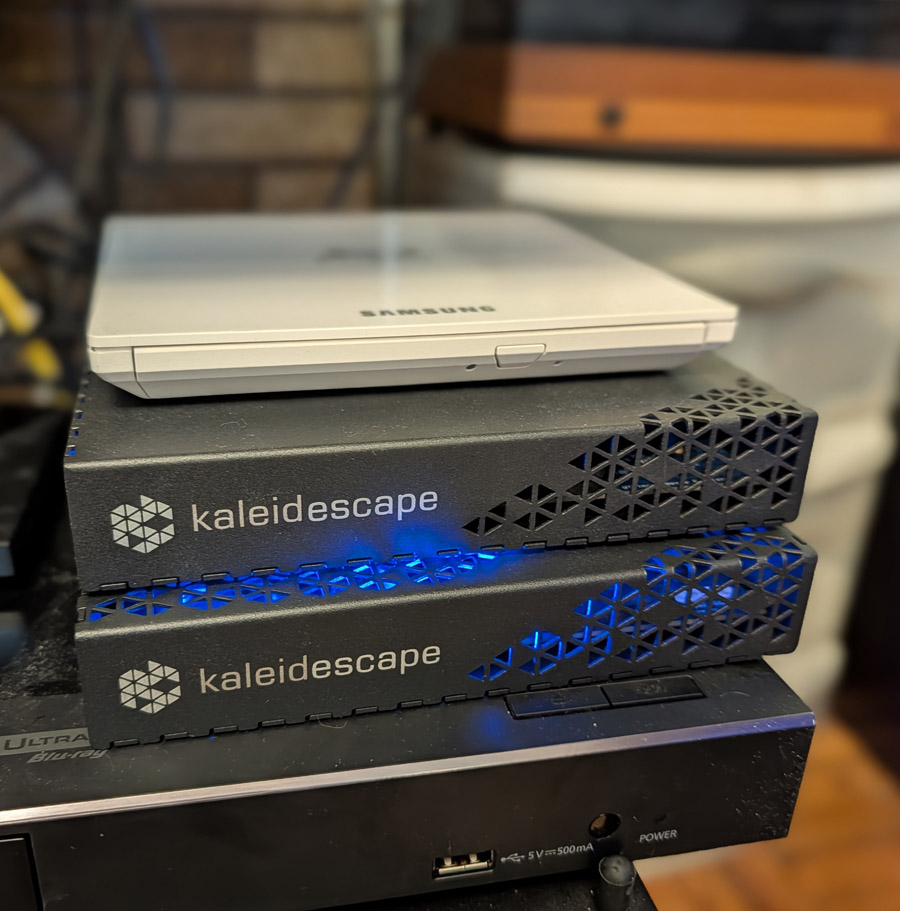
This slim Samsung BD drive was able to read and catalog my DVDs and Blu-rays with Kaleidescape in order to be eligible for “Disc to Digital” discounts.
You simply connect the drive to the USB port on the back of a Strato movie player, make sure the player is powered on, insert a DVD or Blu-ray Disc into the drive and the Kaleidescape system will catalog the disc in a matter of seconds. Once the title is cataloged, the system will then notify you in the Kaleidescape store of a “Disc to Digital” offer. Click that link or search the store for the title you just scanned and you should see the discount applied. Note that it sometimes takes several minutes after the scan is completed for the Disc to Digital offer to show up in the store, so be patient.
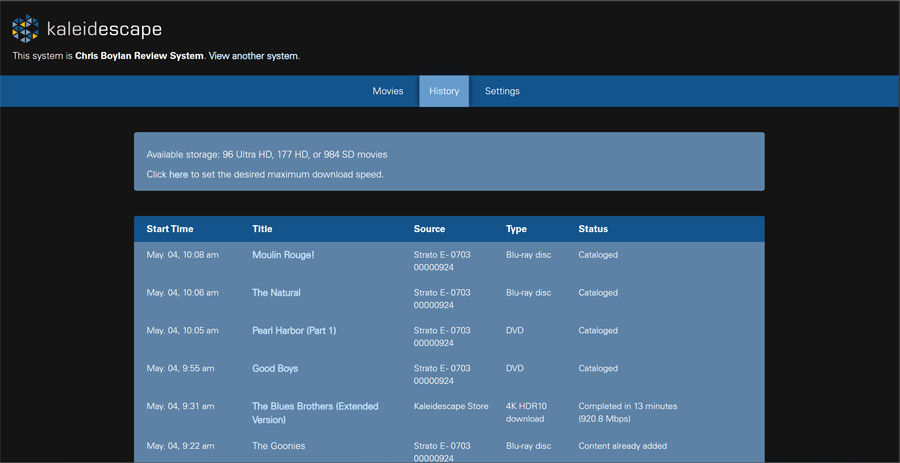
You can see a history of disc scans and downloads in the “History” panel in the Kaleidescape admin interface.
For the titles I tested, the Disc to Digital discount varied from a couple of dollars off to more than $20 off. “The Goonies” normally sells for $24.99 on Kaleidescape, but after scanning my Blu-ray, the price of the 4K version dropped to $4.92. If you scan a DVD, you’ll also get a lower price, but you will pay a bit more than if you already own and scan the Blu-ray version (which makes sense).
“Blues Brothers” 4K dropped from $14.99 to $4.92 after scanning in my Blu-ray Disc.
In many cases, the price of a 4K upgrade on Kaleidescape was $8.59 if I owned and scanned the DVD, but $4.92 if I scanned the Blu-ray. Kaleidescape doesn’t officially support scans of 4K/UHD titles, but some owners report that their Blu-ray Drives can scan 4K Discs just like Blu-ray Discs. In any case, most UHD Blu-ray Discs come with a Blu-ray version of the film so you can always scan that if you want to get the disc to digital discount. Sadly, Kaleidescape doesn’t support other digital copy services such as Movies Anywhere or VUDU/Fandango at Home so there’s no way to transfer or get credit for ownership of existing digital copies in the Kaleidescape ecosystem.
And now back to set up…
After some time using the Strato E on its own, I added the Mini Terra Prime server to the account so I could start using the full Kaleidescape User Interface. This entailed plugging the Mini Terra Prime into power and into a network cable connected to a network switch. The server comes with a QR code you can scan to get into the admin interface, but you can also just point any web browser to the Kaleidescape system’s IP address (in my case: http://192.168.1.200/) or to its host name http://my-kaleidescape.local and follow the links to add a new component to your current system. Note: these URLs only work if your computer or mobile device is on the same physical network as an existing Kaleidescape system.
Advertisement. Scroll to continue reading.
Kaleidescape’s admin panel allows you to view the status and make adjustments to settings of the components within your Kaleidescape system.
By moving all of the “heavy lifting” of system set-up and configuration to this web-based admin interface, two things happen: a) Kaleidescape can keep the main user interface simple for its end users and b) the system can be administered remotely by a dealer or custom installer, or by a handy DIYer. In the past, most Kaleidescape customers went through custom installation firms for purchase and installation, but with the pricing of the players coming down, tech-savvy hobbyists are now doing this set-up and configuration on their own.
Adding the server was simple but after I did so, that web-based admin interface became inaccessible for about 15 minutes. A Kaleidescape rep told me that this outage is to be expected as the server did an automatic software update once it was added to the system. If you install a player with up to date software, the outage is shorter.
Advertisement
When the system came back online, the server was now added to the system and the movies that had been stored on the player were deleted from its local storage. I had thought maybe the set-up process would move the movies from the player to the server, but it did not. So I went into the movie store and selected these and several other movies from the test account to download to the server. Movie downloads can happen overnight or in the background while you’re watching a different movie. Also, when you pre-order a movie, the system will download it in the background so it becomes available to watch right at its official release date and time.
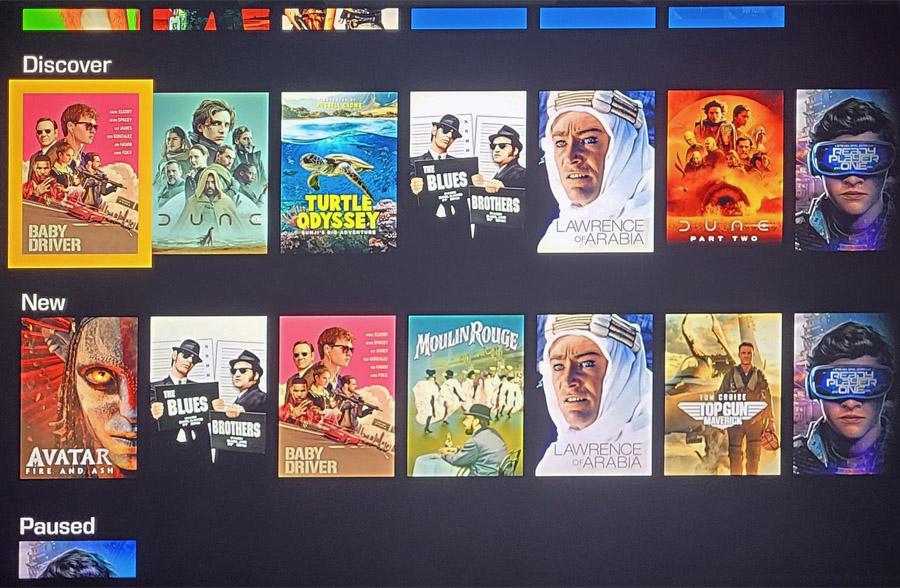
A click on the triangle in the Kaleidescape “covers” interface allows you to find related movies by genre, by director, or by actor.
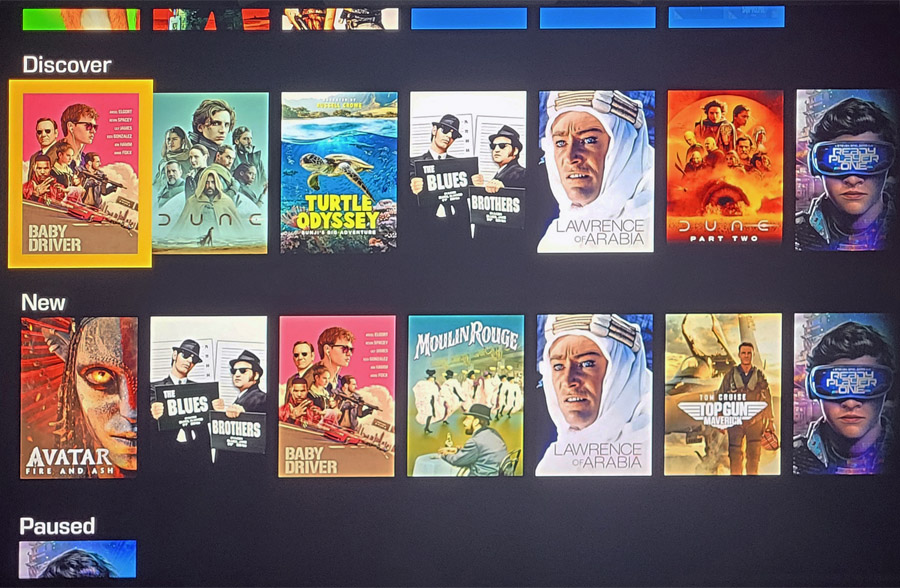
Adding the Server to the system enabled the more powerful “Covers” user interface that Kaleidescape is known for. The title you have selected is automatically surrounded by similar movies you also may like. And with a couple of button presses on the remote or in the remote control section of the mobile app, you can re-arrange the list of recommendations by genre, director or actor. You can set the interface to only show movies you already own or to expand its recommendation out to the Kaleidescape store so you can discover more movies or shows that you might like.
In terms of speed of access, I saw no noticeable delay when playing back titles from the server, compared to using the player’s local storage. I connected the server and player to my home network using a 2.5GB network switch, which is what Kaleidescape recommends. In the admin interface I could see that the Mini Terra Prime server was indeed capable of 2.5 GB network bandwidth, while the Strato E player was capped at 1 GB. This makes sense as the server can deliver movies to multiple players within a home network concurrently. The Mini Terra Prime supports up to 25 concurrent player connections so it needs a “fatter pipe” than the player does. Now all I need is 24 more players, and rooms to put them in, in order to test this.
Throughout the viewing experience, I didn’t experience any buffering nor other sorts of glitches in video or audio playback. I selected a title, hit Play and it started playing within seconds. Most of the titles I watched were available in 4K resolution with HDR10 or Dolby Vision HDR which looked as good as the best 4K UHD Blu-ray Discs I own. In fact, I compared video quality on Kaleidescape with a UHD Blu-ray Disc on several titles, including “Blade Runner: The Final Cut,” “Dune” and “Dune Part Two” and was unable to spot any meaningful differences in image quality.
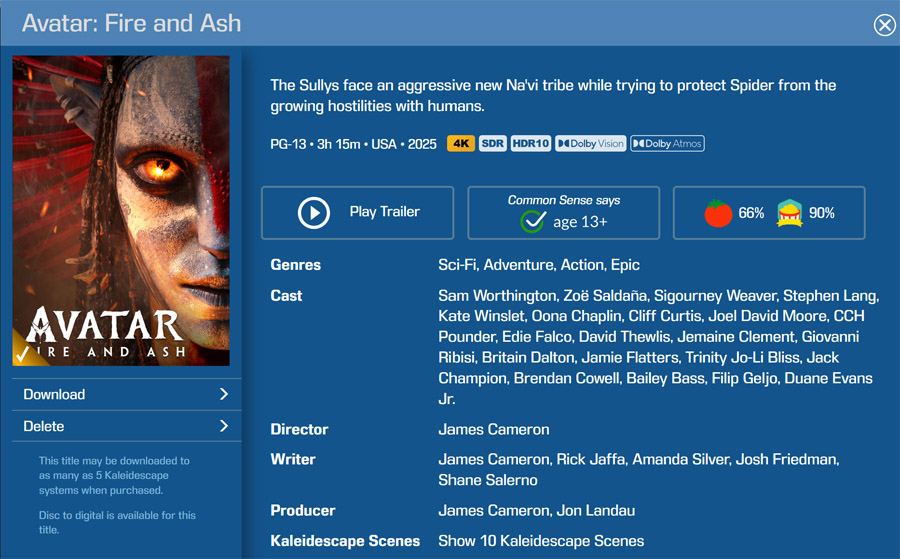
Many films, including major releases like the latest “Avatar” movie, are available on Kaleidescape in 4K resolution with HDR10 and Dolby Vision HDR as well as lossless Dolby Atmos immersive surround sound.
Most of the newer titles I viewed (but not all) were available in Dolby Atmos immersive surround. But this isn’t the same Dolby Atmos from streaming services like Netflix or Apple TV. The Kaleidescape version of Dolby Atmos uses the Dolby True HD lossless surround codec as the transport layer – just like on Blu-ray Disc and UHD Blu-ray – which means you get none of the compression artifacts that can affect the audio over streaming services.
For DTS:X, the story is similar – the transport layer for DTS:X on Kaleidescape is lossless DTS-HD Master Audio, not the lossy DTS:X Profile 2 codec used on streaming services like Disney+ and Sony Pictures Core. The only title I noticed that didn’t quite match the UHD Blu-ray version was “The Blues Brothers” which has a DTS:X soundtrack on UHD Blu-ray but only DTS-HD soundtrack on Kaleidescape. But this may not be true forever. Kaleidescape frequently posts enhanced/updated versions of movies online, usually at no additional charge to customers. It’s the only movie investment that actually gets better over time.
Advertisement
“All those moments will be lost, in time, like tears, in rain.” – Roy Batty (“Blade Runner”)
Scripts and Custom Scenes – Kaleidescape’s Killer Feature?
As a movie lover, I have an extensive collection of movie quotes living rent-free inside my brain. Certain scenes and cinematic moments have left indelible marks on my psyche and provide a wealth of inside jokes with those of similar tastes and predilections. With Kaleidescape’s ability to instantly access any part of any movie in your collection, you can put together a playlist of all your favorite movie moments.
When Kaleidescape adds a new title to their collection, they curate custom scenes for popular or memorable parts of the film. They also give you the ability to create your own custom scenes with a couple of presses of a button on the remote or in the app. It’s simple, just find the start of the scene, hit the pause button then the menu button (three horizontal lines), select “Add New Scene” and follow the prompts. Once you’ve identified and stored your favorite scenes, you can string these scenes together in a playlist which they call a “script.”
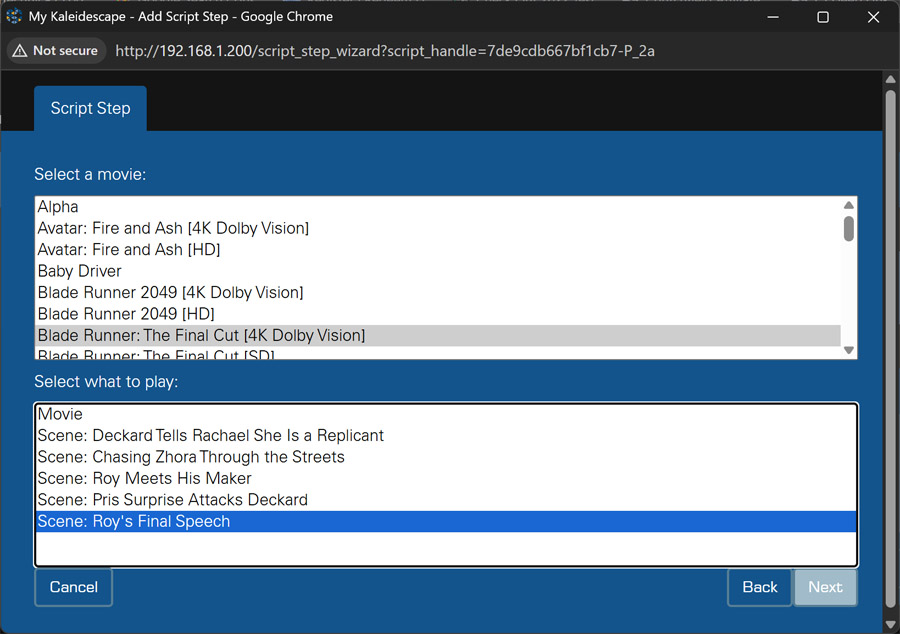
Once you’ve marked your favorite scenes, you can build a playlist or “script” in the Kaleidescape browser interface.
To build a script, you’ll need to go to the browser-based admin menu from Chrome or another browser. Just find the Scripts tab to create a new script or manually add “/scripts” to the end of the URL (e.g., http://my-kaleidescape.local/scripts). Here you can select each movie or TV show and then select a scene to add to your script. After you’ve added all the steps, you can find the script in your regular Kaleidescape player menu, in the “Collections” section. Scroll down to “Scripts,” select your script and enjoy your very own custom movie medley.
Advertisement. Scroll to continue reading.
Final Thoughts
Kaleidescape may have established itself as a no-compromise media player and movie library for the 1% who could afford it for their mansions and their yachts (Elmer J. Fudd, I’m looking at you), but times are changing. At $12,990, this specific system is still pretty pricey, but with a basic entry-level 4K player with built-in movie storage starting at under $3,000 and an entry level player/server combo starting at $6,500, the Kaleidescape ecosystem is becoming more attainable for those who love movies and want the absolute best way of enjoying them at home.
Advertisement
Pros:
Picture and sound quality that rivals, or exceeds the best physical media
Huge selection of titles in the Kaleidescape store
Convenience of instant downloads
Disc-to-Digital features offers steep discounts when you upgrade movies you already own on physical media to Kaleidescape versions
Intuitive user interface
Simple set-up and instant access to up to 125 4K movies
Custom scenes and scripts allow you to compile a “greatest hits” of your favorite movie or TV scenes
Cons:
Relatively expensive (particularly the server)
No support for 3rd party digital copy platforms like Movies Anywhere
No remote control included with players ($50 option)
Outages in the admin interface during system configuration changes can be confusing
A lot of the conversation around AI in healthcare focuses on diagnostics and drug discovery or on doctor-patient visits. But a less visible part of the system affects whether patients actually get seen at all, and it has less to do with the number of doctors in the world (too few) and more with the administrative work (too much) that happens between a primary care doctor writing a referral and a specialist’s office getting a patient on the schedule. That gap, it turns out, is huge, stubbornly manual, and increasingly attracting serious interest from venture capitalists.
Kaled Alhanafi, a former Lyft and Cruise executive, and Chetan Patel, who spent a decade building cardiac devices at Medtronic, co-founded Basata after each experienced the problem directly.
For Patel, the issue became personal when his wife fainted on a flight with their young children. Even with his deep knowledge of cardiology and the specific devices that could help her, he says navigating the administrative process to get her appropriate care took far longer than it should have. “We have the best doctors, we have some of the best medicines, but the care gap is just so wide,” he said.
Alhanafi describes a parallel experience with his own father, who was referred to three cardiology groups after a serious carotid artery diagnosis. According to Alhanafi, only one called back within a couple of weeks. Another responded after the surgery was already done. The third still hasn’t called.
Advertisement
These aren’t unusual outcomes, as nearly anyone who has tried to see a specialist in recent years can attest. Specialty practices that receive referrals are frequently processing hundreds or thousands of documents — most arriving by fax — with small administrative teams. Practices lose patients not because they don’t want to see them, the company argues, but because they can’t get through the intake backlog.
Basata, founded two years ago in Phoenix, is trying to fix this. When a referral comes in — still typically by fax, alas — Basata’s system reads and processes the document, extracts the relevant clinical information, and then an AI voice agent calls the patient directly to schedule the appointment.
Patients can also call the practice at any hour and reach an AI agent that can answer questions or handle common administrative needs like prescription renewals. Alhanafi says the company has recordings of patients audibly surprised by how quickly they’re contacted after a referral is sent. The goal, he says, is for a patient to have a scheduled appointment by the time they reach their car in the parking lot after seeing their primary care doctor.
Techcrunch event
Advertisement
San Francisco, CA | October 13-15, 2026
The company integrates with the electronic medical record systems that specific specialties actually use, which is why it says it has moved carefully — cardiology first, then urology — rather than trying to serve every corner of the market at once. The founders say they recently turned down a large deal in a specialty they haven’t yet mapped thoroughly enough to feel confident doing well.
Advertisement
The revenue model is usage-based: practices pay per document processed and per call handled, rather than per seat. The company says it has processed referrals for roughly 500,000 patients to date, with about 100,000 of those coming in the last month alone.
Basata says it has raised $24.5 million in total, including a new $21 million Series A round led by Lan Xuezhao of Basis Set Ventures, who began her career modeling the human brain as a PhD researcher before moving into corporate strategy at McKinsey and Dropbox and ultimately into investing. Cowboy Ventures, founded by Aileen Lee, also participated, as has Victoria Treyger, a former general partner at Felicis Ventures who more recently stood up her own venture firm, Sofeon (this is its first investment).
The space is getting crowded. Tennr, a New York-based startup founded in 2021, has raised over $160 million to date — including from Andreessen Horowitz, IVP, Lightspeed, and Google Ventures — and is now valued at $605 million. Tennr focuses heavily on document intelligence and has says it has built proprietary language models trained on tens of millions of medical documents. Assort Health, backed by Lightspeed, focuses on automating patient phone communication for specialty practices and last year raised at a $750 million valuation.
Lee said the founders’ years of experience are an asset in a space filling up with well-funded competitors. “There are a lot of [VCs] chasing around high school dropouts and college dropouts, but when you’re selling to medical practices, trust is a really big deal,” she said. “These doctors want to look you in the eye and know that they can count on you.”
Advertisement
Basata’s founders meanwhile argue that their differentiation lies in combining both capabilities into a single end-to-end workflow tailored to specific specialties instead of building a tool that handles just one part of the process. That may be harder to sustain as better-funded competitors expand, but there’s clearly a market signal here.
Of course, like many AI companies automating work that humans currently do, Basata will eventually face a harder question about where the line is between augmenting workers and displacing them. For now, the founders say the administrative staff they work with aren’t worried about that; they’re more worried about drowning. Indeed, Alhanafi notes that the administrative staff at specialty practices have often been in their roles for decades and know the work intimately; they’re also buried in volume that no reasonable number of hires could fully absorb.
Whether AI merely expands what these workers can do or gradually makes many of their functions unnecessary is a question that applies well beyond healthcare. For now, Basata’s pitch is the former: that freeing administrators from the most repetitive parts of the job makes them better at the rest of it. Judging by one stat shared by Alhanafi — that 70% of the company’s new deals now come through word of mouth — it seems the people closest to the problem find that argument convincing.
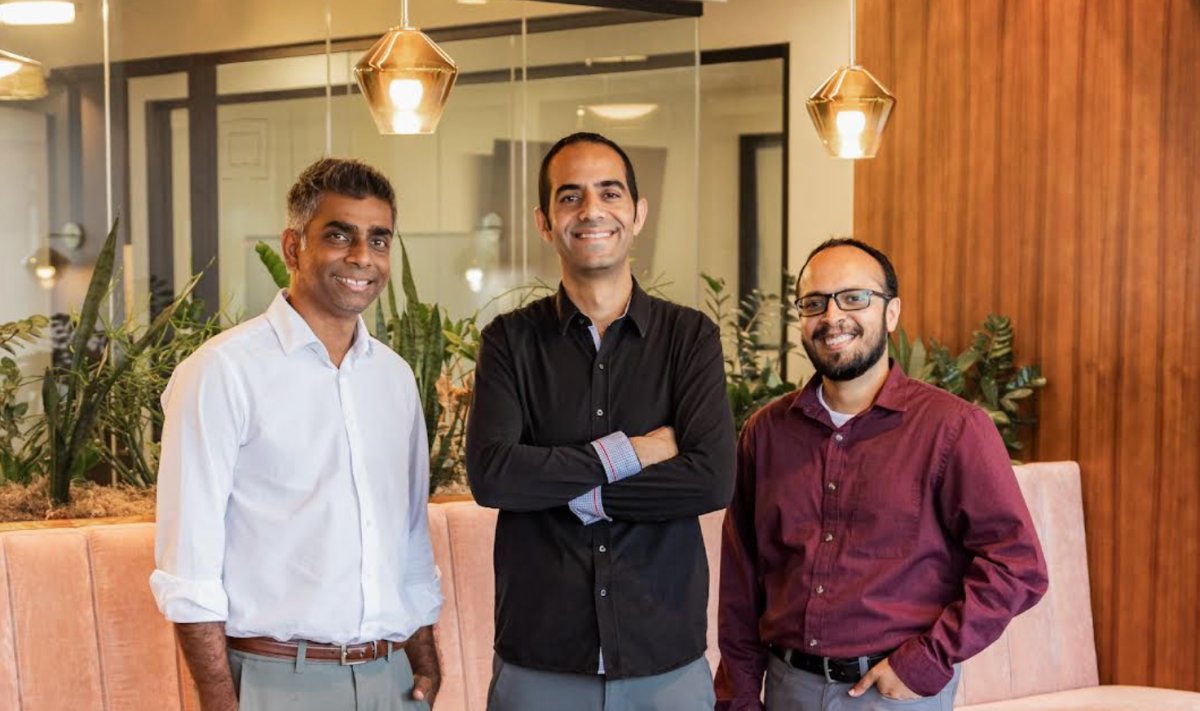
Pictured above, left to right: Chetan Patel, who is co-founder and president of Basata; Kaled Alhanafi, the company’s CEO; and Vivin Paliath, the company’s third co-founder and CTO.
Advertisement
When you purchase through links in our articles, we may earn a small commission. This doesn’t affect our editorial independence.
Audeze was early to figure out something the rest of the headphone industry was slow to accept: gaming was not a side quest. It became a multi-billion dollar category, and gamers were no longer satisfied with disposable plastic headsets that sounded like a drive-thru speaker with RGB lighting.
The California-based planar magnetic headphone specialist jumped into the space years ago with the Mobius, followed by the original Maxwell, both of which helped establish Audeze as a serious player in high-performance gaming audio. Maxwell’s success also arrived before Sony Interactive Entertainment acquired Audeze, a move that made it very clear that premium gaming audio had become big business.
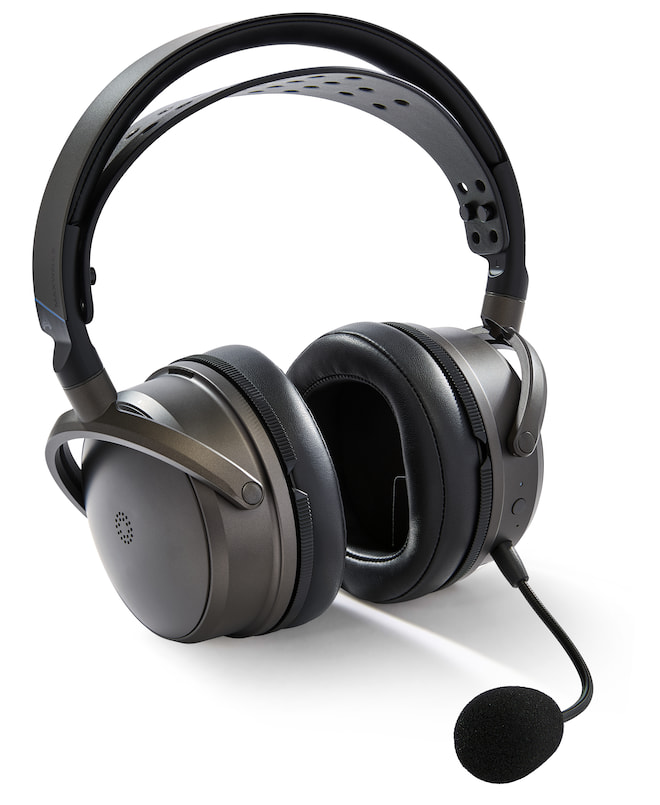
Now Audeze is taking the personalization angle further with ReSkin, a new program built around the Maxwell 2’s user-swappable magnetic earcup covers. The idea is simple: give Maxwell 2 owners a way to change the look of their headset without replacing the headset itself.
Audeze gave me and Editor-at-Large Chris Boylan a first look at ReSkin during CanJam NYC 2026, but the original designs were not ready for publication until the program was finalized. That restraint was probably wise. Gamers are not one tribe with one uniform. They are competitive players, streamers, collectors, anime fans, sci-fi addicts, design nerds, and people who just want their gear to look less like it was issued by an IT department with trust issues. ReSkin is Audeze recognizing that sound quality matters, but identity matters too.
Advertisement
What Is the Audeze Maxwell 2?
The Audeze Maxwell 2 is Audeze’s second generation wireless gaming headset, designed for players who want serious audio performance without giving up battery life, comfort, or broad platform support. It uses 90 mm planar magnetic drivers with Audeze’s Fluxor magnet arrays and Fazor waveguides, along with the company’s newer SLAM acoustic technology, which is designed to improve spatial precision and low frequency control without leaning only on DSP tricks.
Maxwell 2 also keeps the practical stuff in focus. It supports PlayStation, Xbox, Windows, macOS, Android, iOS, and Nintendo Switch, depending on version and connection type, with a USB-C low latency wireless dongle, Bluetooth 5.3, LDAC, LE Audio, AAC, and SBC support. Battery life is rated at over 80 hours at 80 dBA, which matters if your idea of a short gaming session somehow ends at 2:17 a.m. with poor decisions and one more match.
The design changes are not just cosmetic. Audeze reworked the suspension strap, earpads, internal fit, microphone system, and control app. The removable boom mic uses upgraded FILTER AI noise reduction, while the new app gives users more control over settings across desktop and mobile platforms. The magnetic earcup system also opens the door for ReSkin, which lets Maxwell 2 owners change the look of the headset without replacing the entire product. That is the smart part: Audeze is treating personalization as part of ownership, not as an excuse to sell another headset.
ReSkin Job?
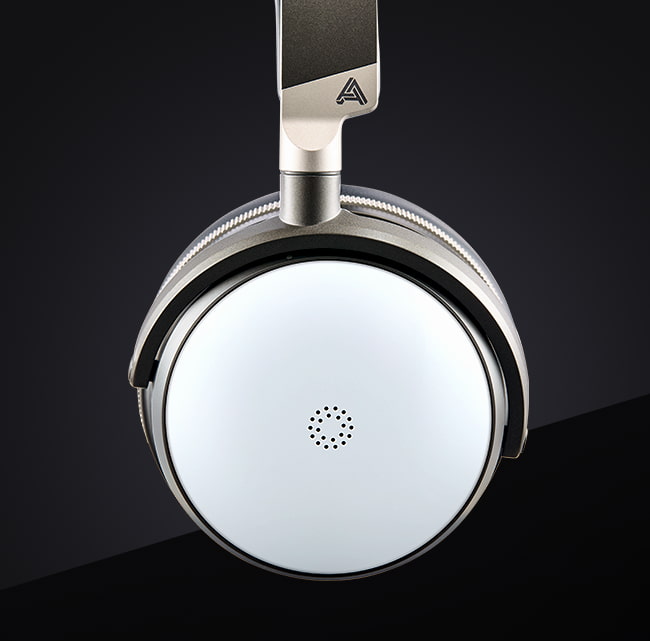
The first wave of Audeze ReSkin designs gives Maxwell 2 owners a range of curated magnetic earcup covers that go well beyond basic color swaps. The launch lineup includes Panopticon All Seeing Eye, Flux Warning Futuristic Biohazard Sign, Kankan Koneko Angry Cat, Planar Scan Audeze Driver Design, White Audeze Deco Cup Contemporary Style, and the Dia De Los Muertos No.001 to No.006 Prestige Edition designs.
Dia De Los Muertos Prestige Edition
The Dia De Los Muertos Prestige Edition pieces are the most limited and artisanal of the group. Audeze says those designs are handcrafted by a Southern California artisan and finished with a high gloss lacquer, giving them a more durable shine and a different feel from the standard designs. That matters because this is not Audeze tossing a few skins into the box and calling it customization. These are physical earcup attachments for a headset that was already designed to support magnetic cover swaps.
Advertisement
Audeze CEO Sankar Thiagasamudram says the goal is to give Maxwell fans “unique styles and looks,” with more designs and collaborations planned. That makes sense. Gamers are not a monolith, and neither are headphone buyers. Some want clean and understated. Others want angry cats, warning labels, driver graphics, or something that looks like it escaped a late night anime marathon with unfinished business.
The key detail is how simple the system appears to be. Maxwell 2’s earcup covers attach magnetically and can be removed with a simple motion, which means owners can change the look of the headset without tools, adhesive, or the kind of DIY mistake that ends with regret and customer support. ReSkin works because Maxwell 2 was built for this from the start.
Advertisement. Scroll to continue reading.
Audeze ReSkin (blank)
The Bottom Line
Audeze ReSkin gives Maxwell 2 owners a simple way to personalize their headset without replacing it or reaching for cheap stick-on skins. The magnetic earcup covers are available now for $39.99 or $59.99 each, work with both the PlayStation and Xbox versions, and turn customization into something physical, swappable, and actually tied to the product design. This is for Maxwell 2 owners who care about performance but also want their headset to look like theirs, not another black plastic gaming appliance waiting for a firmware update and therapy.
Google launched the Fitbit Air, a 100 dollar screenless fitness band that rivals Whoop’s hardware design but undercuts its subscription by more than half, paired with a Gemini-powered AI health coach at 10 dollars a month. The device launches alongside a forced migration of Fitbit data to Google accounts by 19 May and a rebranding of Fitbit’s software as Google Health, raising privacy questions about the company’s handling of sensitive health data.
Advertisement
Google spent 2.1 billion dollars buying Fitbit in 2021, three years dismantling the brand, and on Thursday launched a 100 dollar device with no screen, no buttons, and no independent functionality to bring it back. The Fitbit Air is a soft fabric band with a five-gram sensor pack underneath that tracks heart rate, steps, sleep, blood oxygen saturation, and heart rate variability.
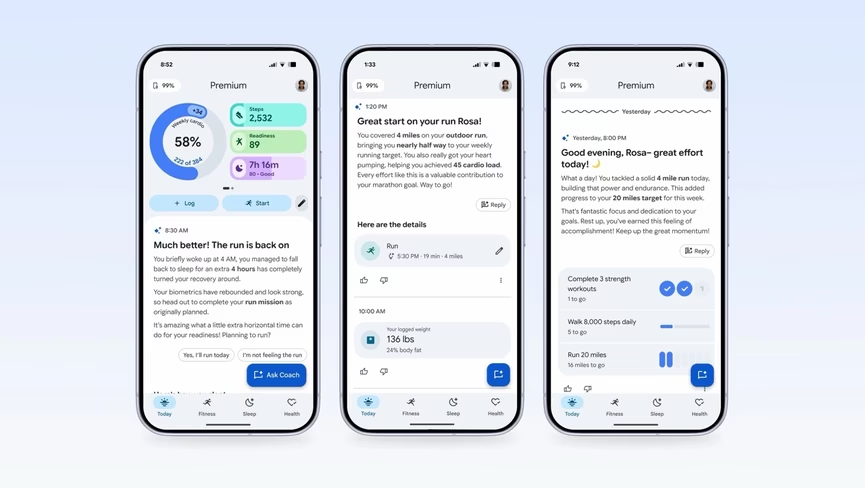
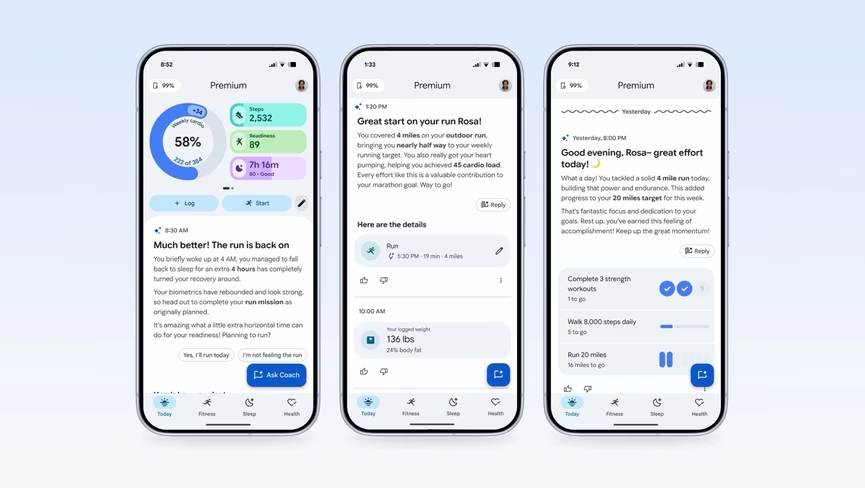
Google Health App, source: Google
It cannot display a notification, make a call, or tell you the time. What it can do is feed data into a new Google Health app powered by a Gemini-based AI health coach that interprets the metrics, designs workout plans, analyses photographs of meals for macronutrient content, and provides personalised coaching for 10 dollars a month. The device goes on sale on 26 May. Preorders begin Thursday. And the product Google is actually selling is not a fitness band. It is a subscription.
The device
The Fitbit Air weighs 12 grams with the strap and five grams without, making it lighter than most smart rings. Battery life is seven days, and a five-minute fast charge adds a full day of use. The band comes in four colours, obsidian, fog, lavender, and berry, with additional straps available for 35 dollars. Without a screen or physical buttons, the device uses haptic feedback for an alarm clock and a small LED to indicate battery status. It supports voice input for logging activity and meals but cannot audibly respond.
It can detect atrial fibrillation, a feature that has become standard across recent wearables after years of regulatory clearance work. The sensor pack is removable and clips into the fabric band, a design that is unmistakably modelled on Whoop’s hardware architecture.
Advertisement
The resemblance to Whoop is not coincidental. Whoop, which raised 575 million dollars in March at a 10.1 billion dollar valuation, has built a business around the thesis that a screenless wearable focused on recovery, strain, and sleep data can command premium subscription revenue without the distraction of notifications, apps, and display. Whoop does not charge for hardware but requires an annual subscription starting at 200 dollars. Google’s Fitbit has been developing health monitoring capabilities, including FDA-cleared atrial fibrillation detection algorithms, that bring it closer to the clinical-grade data that Whoop and Oura users rely on for training decisions.
The Fitbit Air’s 100 dollar price point and optional 10 dollar monthly subscription undercuts Whoop’s annual cost by more than half and Oura’s 349 dollar ring by more than two-thirds, while offering a comparable sensor suite. The question is whether the AI coach can deliver insights that justify the ongoing cost, or whether most users will rely on the free tier and treat the device as a basic tracker.
The software
The more significant announcement is the rebranding of Fitbit’s software ecosystem as Google Health. The new app, available on both iOS and Android, is structured into four tabs, Today, Fitness, Sleep, and Health, and provides standard metrics including steps, calories, sleep stages, and vital signs. Users can manually log meals and menstrual cycles and share data with contacts or other health platforms. The free tier covers all tracking features.
The 10 dollar monthly subscription adds the Google Health Coach, a Gemini-powered AI assistant that analyses sensor data in the context of a user’s stated goals and provides coaching recommendations. Users can upload photographs of meals for calorie and macronutrient assessment, a feature that leverages the multimodal capabilities of Gemini’s vision models.
Advertisement
Rishi Chandra, who leads Google’s wearables and health division, described the Health Coach as the beginning of a platform strategy. “We want every hardware product we’re building, from the Pixel Watch to the full Fitbit portfolio, to really optimise around this Health Coach,” he said. Google has invested tens of billions of dollars in AI capabilities, from its own Gemini models to a reported 40 billion dollar investment in Anthropic, and the Health Coach represents one of the first consumer applications designed to convert that AI investment into recurring subscription revenue through a mass-market hardware device.
Chandra’s analogy, that the Health Coach aims to give ordinary users the support structure of a professional athlete’s nutritionist, sleep coach, and fitness trainer, articulates the value proposition. The execution depends on whether Gemini can produce health insights that are consistently useful rather than generically encouraging, a distinction that will determine whether users continue paying after the three-month free trial included with the device.
The market
The wristband market that the Fitbit Air enters is dominated by Chinese manufacturers. Xiaomi controls roughly half the global wristband market, according to IDC, followed by Huawei at approximately a quarter and Samsung at 10 per cent. Fitbit holds about six per cent. Whoop, despite its 10 billion dollar valuation, holds only two per cent. The market grew 14.7 per cent in 2025, driven primarily by Xiaomi’s focus on affordability and scale.
The Fitbit Air’s 100 dollar price positions it above the cheapest Xiaomi bands, which start below 30 dollars, but well below the premium segment where Whoop and Oura operate. The strategic positioning is clear: Google is targeting the gap between budget Chinese bands and premium health trackers, offering AI-driven insights at a price point that neither end of the market currently serves.
Advertisement
The European Commission is preparing to force Google to open Android to rival AI assistants, a regulatory action that could affect the degree to which Google Health and its Gemini-powered coach can be bundled as default experiences on Android devices. But the Fitbit Air’s cross-platform strategy, launching simultaneously on iOS and Android, suggests Google is positioning Health as a standalone product rather than an Android exclusive.
Chandra described the Fitbit brand as Google’s primary wearable for a broader audience, with the Pixel Watch reserved for committed Pixel and Android users. The distinction matters: Fitbit’s historical strength was its platform neutrality, and the decision to launch Google Health on iOS signals that Google views the subscription revenue as more valuable than the ecosystem lock-in.
The migration
The launch coincides with a deadline that underscores the tensions in Google’s health data strategy. Fitbit users who have not migrated their data to a Google account by 19 May will lose access to the Fitbit platform entirely, with data deletion beginning on 15 July. The deadline, originally set for 2025, was extended to February 2026, then pushed again to May after user pushback.
The forced migration converts Fitbit’s health data, years of sleep records, heart rate trends, activity logs, and weight measurements, from a standalone health platform into a dataset attached to a Google account. Google has committed to keeping health data separate from Google Ads and has said it will not use the data for advertising purposes. Seven EU countries have accused Google of violating GDPR through user tracking, and the migration of sensitive health data into Google’s account infrastructure raises the same category of privacy questions that regulators across Europe have been asking about the company’s data practices for years.
Advertisement
Google’s history of discontinuing products casts a shadow over the Fitbit Air launch that no amount of marketing can dispel. The company has killed more than 290 products and services, from Google Reader to Google Plus to Stadia, and the three-year silence between Fitbit’s last major hardware launch and the Air has already prompted questions about whether the brand was being wound down. Chandra’s statement that the Fitbit Air marks “the beginning of a resurgence” for Fitbit is precisely the kind of commitment Google has made before abandoning products.
The difference this time may be the subscription model. Google Health at 10 dollars a month, attached to a hardware device that costs 100 dollars, creates recurring revenue that Google’s previous consumer products, many of which were free or one-time purchases, did not generate. The Fitbit Air is Google’s cheapest bet on consumer health. The AI coach is its most ambitious. And the question that will determine both products’ survival is whether a company that has never sustained a consumer subscription business outside of YouTube can build one around a device that cannot even tell you the time.
Nintendo is raising the price of its Switch 2 by $50 to $500 in the US as it faces higher memory costs and US tariffs, the company announced in its earnings report. That increase is less than the $150 that Sony’s PS5 console has gone up over the last year, but Nintendo has a younger, more price sensitive fan base, so that boost is likely to cut into sales.
The company revealed that it shipped 2.49 million Switch 2s this quarter, meaning it sold 19.86 million of the consoles in only three quarters over its last fiscal year. However, Nintendo is forecasting significantly lower sales of 16.5 million Switch 2s for the next full fiscal year.
Many analysts were expecting a sales forecast for next year of 20+ million Switch 2s considering the success of the console’s launch. The Japanese company may be tempering expectations a bit with its latest forecast, though, as it significantly underestimated sales last year. Nintendo still thinks its 16.5 million unit sales forecast “represents a solid level of adoption for Switch 2 in its second year after launch.”
Advertisement
Software sales also went up this year, with sales of 185.62 million units (Switch and Switch 2) compared to 155.41 million (Switch only) in FY 2025. Some of the highlights were Mario Kart World (14.7 million units), Donkey Kong Bananza (4.5 million units) and Pokemon Legends: Z-A (8.5 million units). Nintendo also noted that the Super Mario Galaxy movie has grossed over $800 million in its first four weeks.
Overall, Nintendo’s 2026 fiscal year revenue was up massively by 98.6 percent over 2025 to 2.3 trillion yen ($14.7 billion) compared to 1.16 trillion yen ($7.4 billion) the year before. It expects that to drop nearly 11.4 percent next year, though it’s forecasting a slight rise in operating profit due to boosted software sales. Its forecast included extra costs of about 100 billion yen “due to rising component prices, particularly for memory, and tariff measures.”
Apple is turning a new corner in 2026, as long-serving CEO Tim Cook steps down and current hardware engineering head John Ternus steps into the role once filled by Steve Jobs. Ternus has made his presence felt in the past several years, most recently taking Cook’s usual place on stage during the launch event for theMacBook Neo, Apple’s first budget laptop which is already proving a major threat to the Windows 11 ecosystem. With Cook voicing his biggest regrets as he exits, hope turns to Ternus for the future.
As 2026 draws on and Ternus’s control over Apple expands, we expect to see a number of new products that could be among the most exciting in quite some time. Some, like a folding iPhone, have spent a long time in development and have been expected. Others, such as a rumored “ultra” tier of touchscreen MacBooks, come out of the blue. Then there are a bevy of AI-powered gadgets which appear to be contingent on an AI-revamp for Siri. Of course, that Siri makeover has hit a number of snags along the way, so this is where things begin to venture into the realm of potential vaporware.
Before we dive in, it’s worth noting that none of these products have been officially announced by Apple, so it’s worth taking all of them with a grain of salt until you can walk into an Apple Store and buy one. With a volatile global market due to chip shortages driven by AI and an energy shock caused by the American-Israeli war with Iran, delays and product cancellations are even more likely than usual. With that out of the way, here are the most exciting Apple products in the pipeline for 2026 and beyond.
Advertisement
The iPhone Ultra will bring Apple’s smartphones into the fold
Alexandrbognat/Getty Images
By far the most exciting new Apple product of 2026 is the long-awaited foldable iPhone. Expected to launch as the most premium member of the iPhone lineup, we hear the foldable will be branded as the iPhone Ultra according. Oddly, Macworld reports that it may not be part of the iPhone 18 lineup. Although foldable phones have been available for years, with the Samsung Galaxy Z Fold debuting in 2019, Apple has established an historical pattern of arriving late to a market and shaking it up. The iPod was far from the first MP3 player, and the iPhone arrived after many years of BlackBerry and Palm devices, to name just a couple of examples.
For the folding iPhone, rumors and leaks appear to show Apple bucking trends. It will enter into a market dominated by Samsung and Motorola and will need to convince existing iPhone owners that a foldable is worth the price tag, which is likely to be high if the current crop of foldables is any indication. The rumored design is short and squat, similar to the original Google Pixel Fold and the Oppo Find N. This differentiates the device from competing models and may be a better experience for media consumption since the inner screen will be wider than those found on the Samsung Galaxy Z Fold 7 and other book-style foldables.
Advertisement
What will truly matter here is software. Samsung and other companies include a heap of software features designed to enhance the form factor. With a price tag north of $2,000 being bandied about, Apple will need to deliver similar value in order for the iPhone Ultra to be seen as more than a gimmick.
Advertisement
The MacBook Ultra could redefine Apple’s laptop lineup
Farknot Architect/Shutterstock
Apple won’t be resting on its laurels after finally launching the folding iPhone. We’re also seeing talk of a potential MacBook Ultra, which will sit above the MacBook Pro as the ultimate powerhouse for macOS users. Bloomberg’s veteran Apple leaker Mark Gurman reported it in March, and Macworld scooped additional details on April 30. The latter report suggests that the MacBook Ultra could be the first of Apple’s laptops to feature a touchscreen, reportedly with an OLED panel (fingers crossed it’s a tandem OLED of the type found in the iPad Pro’s gorgeous display).
If you’re familiar with Windows laptops, you’ll know that a touchscreen is hardly a groundbreaking feature in 2026. It was all the way back in 2012 that Microsoft launched Windows 8, completely redesigning its operating system for touchscreen support. Given that Apple has had capacitive touchscreens since the original iPhone, it’s shocking that it took nearly 20 years to put one in a Mac. Gurman projects that the touchscreen will help Apple to justify a significant price hike for the MacBook Ultra compared to the current MacBook Pro lineup.
More exciting is what could be under the hood. Apple reportedly plans on using the MacBook Ultra to showcase its upcoming M6 Pro and M6 Max chips. The M-series silicon has been one of Apple’s greatest triumphs, providing powerful and efficient performance. The M6 is expected to be built on a 2nm process from TSMC, providing respectable on-paper uplift to that already solid performance and efficiency. Other changes reportedly include a thinner design, a Dynamic Island like the iPhone in lieu of the notch found on current MacBook displays, and the addition of a cellular modem — Apple’s custom C1X or its successor.
Advertisement
Apple’s glasses could compete with Meta Ray-Bans
Justin Sullivan/Getty Images
Apple stumbled out of the gate when it entered the mixed reality market. The Apple Vision Pro, an XR headset built around spatial computing, was praised as one of the best computers you can strap to your face. However, its price tag of just under $3,500, coupled with a lack of killer apps, doomed its prospects. Even an updated M5 version couldn’t salvage it, and in late April, it appears that Apple is throwing in the towel.
But Apple is gearing up for another attempt to put tech on your face. This time, the company’s ambitions are far more modest. It is gearing up to launch a pair of smart glasses which, according to Bloomberg’s resident Apple scooper Mark Gurman, will be akin to the popular Meta Ray-Bans in that they will likely lack a display. Expected to launch in late 2026 and ship sometime in 2027, the glasses are expected to be more of a companion device for the iPhone as opposed to a standalone gadget. They will be able to capture photos and videos, play music, take phone calls, and handle voice commands using the new, AI-enhanced Siri.
The Bloomberg report claims Apple will differentiate its glasses by building them in-house rather than working with an established brand like Essilor Luxottica or Warby Parker, which are partnered with Meta and Google, respectively. Apple is betting that tight integration with the iPhone and a competitive price point will turn the frames into a ubiquitous accessory similar to AirPods or the Apple Watch. However, there’s a built-in ceiling to the smart glasses market that does not exist for earphones or watches. Those who do not require glasses to see clearly may be hesitant to adopt unless there’s a killer use case.
Advertisement
Apple’s long-delayed smart home hub may still be coming out
Runrun2/Shutterstock
In early 2025, we reported that Apple’s next device could flip the tablet script. Bloomberg had caught wind of a new smart home hub that would integrate with Apple Home. Back then, the product seemed relatively straightforward as a 6-inch, square-shaped tablet with an interface primarily suited to smart home controls. Now, it’s looking like Apple is launching an entirely new product ecosystem.
Apple now appears to be readying two different smart home hubs that will become part of an entirely new product ecosystem. Both are still tipped to use the reported square tablet design. However, it is now said to be 7 inches rather than 6. What will differentiate the two products is that one will come with an adjustable, hemispheric base that may somewhat resemble that of the iMac G4, but with a speaker included in it so that it can be used for music streaming, a similar concept to the Google Pixel Tablet. Gurman has even claimed it will be able to swivel around to face users, calling it a “tabletop robot.” The other will be wall mounted.
At first blush, this sounds like a weird iPad, but the home tablet is believed to run a new operating system specifically for home use. It will have hardware for Face ID, which may also be used to change what’s displayed based on which user approaches it. Details will likely become clearer as time goes on. Given that this product was initially tipped for a 2025 release and is rumored to have been delayed due to Apple’s struggles with AI, don’t expect to see this unique, new Apple device until the engineers in Cupertino can get the revamped Siri fully out the door.
Advertisement
AI AirPods and necklaces
photoschmidt/Shutterstock
There are a number of rumored AI gadgets which may or may not come to market. Apple’s struggles with AI are well documented, including a class action lawsuit for false marketing and the recent resignation of the company’s AI chief, John Giannandrea. Among these gadgets are the home hub, as well as a Humane Pin style pendant and AI AirPods.
The pendant seems least likely to come out, especially since the disastrous failure of the Humane Pin already proved there’s not much appetite from consumers. Bloomberg’s Mark Gurman reported in February that, unlike the Humane AI Pin, Apple’s wearable pendant will be connected to the iPhone, placing it closer to a display-free Apple Watch than a standalone smartphone replacement. Its exact capabilities are unknown, but it is expected to use onboard cameras and microphones for contextually aware functionality.
Advertisement
As for the AI AirPods, the idea is similar. The same report indicates that Apple plans to cram cameras into a pair of true wireless earbuds and see what kind of AI applications can be gained from that addition. It’s not an entirely unheard-of idea. At CES earlier this year, Razer showed off Project Motoko, a pair of gaming headphones with cameras on the outer shell of each earcup, but the company has yet to ship that product.
Given that Apple is pipelining three different display-free AI gadgets with cameras and microphones — glasses, the pendant, and AirPods — it seems unlikely that all three will launch. On the other hand, if it wants to push its AI deeper into users’ lives, perhaps allowing the consumer to choose the best form factor for their personal needs is a winning strategy.
Sony engineers dropped jaws at a TV conference in Algeria in April 1981. They brought out a completely functional setup complete with a camera, monitor, and tape recorder capable of capturing images sharper and more detailed than anyone had ever seen outside of a laboratory. NHK, Japan’s main public broadcaster, had spent years working on a new standard called Hi-Vision, which effectively gave a lot more lines of resolution than ordinary TV ever could. As a result of their close collaboration, development work moved forward at full speed. Sony introduced a full line of commercial gear under the HDVS branding in April 1984, with the HDC-100 camera and HDV-1000 recorder at the center.
This system worked by creating high-definition signals from analog video across 1125 scanning lines, 1035 of which included the actual visible image. They started with a 5:3 screen ratio before switching to 16:9, which they still use today. To ensure seamless movement, video was scanned in an interlaced pattern at 60 fields per second, and the picture was noticeably clearer than anything else on TV at the time.
Play Your Game Collection with Remote Play – PlayStation Portal Remote Player can play compatible games you have installed on your PS5 console…
Cloud Streaming from the Game Catalog and Classics Catalog – Discover an awesome library of PS5 games on the PlayStation Portal Remote Player with…
Cloud Streaming for PS5 Games in Your Library – With PlayStation Plus Premium, stream select digital PS5 games in Your Library from PlayStation Store…
The HDC-100 cameras were at the core of every production, with the original weighing approximately 22 pounds due to the three massive Saticon tubes within. It required calm hands to operate without overheating or causing unpleasant ‘burn in’ to the images. Later models, such as the HDC-300, attempted to enhance the tubes, while the 1988 HDC-500 began employing CCD sensors, which were much lighter and more dependable while still providing the same level of information. The recording equipment was similarly high-tech. The HDV-1000 reel-to-reel deck used standard one-inch tape but managed to record far more data. The tape moved so quickly on the heads that you were lucky to get an hour of recording on each reel, and a separate processor cleaned and smoothed the signal when you played it back.
As you can probably imagine, the pricing for this system were outrageous. In 1985, the total cost of a camera, recorder, and monitor was $1.5 million. Later digital improvements, such as the 1988 HDD-1000, boosted individual items to more than $600,000, with metal-evaporated tape adding thousands more each hour of recording. Few of these systems left the plant, but when they did, they were typically used in medical labs, aerospace facilities, or animation studios where the increased resolution was critical.
Advertisement
There were still opportunities for creative sorts to play. Arrival, a 1986 short film about Halley’s Comet, received a theatrical release after being converted to standard film. The next year, an Italian crew completed Julia and Julia, the first full-length drama shot exclusively on this system, and it starred Kathleen Turner. Genesis was also able to get some live music events on the list, capturing their Invisible Touch Tour at Wembley Stadium for home video release.
Stop signs can be found on roads across America, and unlike some of the more confusing traffic signs, the instruction that they give is a very straightforward one. You’ll see them at many different kinds of intersections, but one place you might not expect to see a stop sign is on an interstate on-ramp. Drivers usually expect to be increasing their speed to match traffic before merging onto the interstate, so stopping might seem counterintuitive.
They’re not common, but stop signs on on-ramps are sometimes used as a temporary measure when construction work is taking place. In February 2026, construction crews in Portsmouth, Virginia, installed a stop sign on the on-ramp from Frederick Boulevard to the westbound I-264. Crews needed to install sound walls along the side of the interstate and, therefore, needed access to the shoulders of the road. To enable that access, they had to partially block the on-ramp.
In an interview with WTKR, an official explained that they installed the stop sign because they “did not have enough room for the taper length to go from the on ramp to the interstate to have people move safely” onto the interstate. The option of closing the ramp altogether was floated, but in the end, officials decided that the stop sign would be less of an inconvenience for drivers.
Advertisement
Interstate users should accommodate for on-ramp stop signs
The installation of a stop sign on an on-ramp demands extra care for drivers looking to merge onto the interstate, and anyone tempted to breeze through one using a rolling stop might find themselves attracting the attention of law enforcement.
Advertisement
On-ramp stop signs require drivers who are already on the interstate to be vigilant, too. Speaking to WTKR, the Virginia Department of Transportation official asked that drivers “slow down and be aware that there’s people who are going to be at the stop sign for that on ramp,” making sure that they “give them a little bit of room to safely merge onto the interstate.”
As unusual as they might be, these on-ramp stop signs are far from the only rare stop sign variant that Americans might be able to spot on the roads. On certain private roads, drivers might also come across bright blue stop signs, which are most commonly found in Hawaii.
HMD plans to introduce the Vibe 2 5G in India on May 8. Ahead of the official debut, Flipkart has published a landing page confirming the handset’s online availability in the country. The teaser also reveals part of the phone’s front panel design.
HMD Vibe 2 5G Expected Features
The upcoming HMD Vibe 2 5G is expected to continue the brand’s focus on the affordable smartphone segment. The device may offer 5G connectivity at a budget-friendly price, which could help it stand out in the entry-level market. Some reports also suggest that the company could introduce a separate 4G version powered by a Unisoc T7200 processor.
The phone is expected to feature a 6.75-inch HD+ LCD screen with a 90Hz refresh rate. Other features could include 4GB of RAM and up to 256GB of expandable memory. There will be a 50MP dual rear camera system and a 5,000mAh battery as well.
The rumors indicate that the phone will have a 6.75-inch LCD display with HD+ resolution and a 90Hz refresh rate. In terms of photography, the device will have a rear camera with a 50MP primary sensor and a 2MP secondary sensor.
The HMD Vibe 2 5G is likely to target users looking for an affordable smartphone with modern features. According to rumors and previews, the phone might feature a huge screen that refreshes at 90 Hz, two rear cameras, memory expansion capabilities, and a large battery.
Advertisement
Most details about the HMD Vibe 2 5G are still under wraps for now. However, its predecessor, the Vibe 5G, offers a good look at the kind of features the new phone could bring. Last year, HMD launched the smartphone at a starting price of Rs. 11,999 in Black and Purple color options.


















































You must be logged in to post a comment Login