
Security teams log 54% of successful attacks and alert on just 14%. The rest move through your environment unseen.
The Picus whitepaper shows how breach and attack simulation tests your SIEM and EDR rules so threats stop slipping by detection.


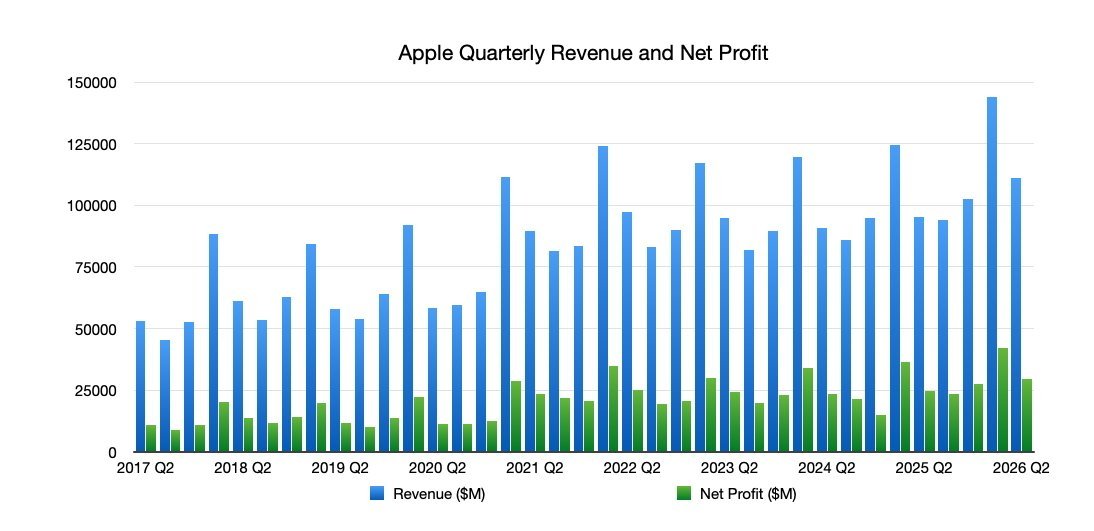
Apple has confirmed that its financials for the third quarter of 2026 will be reported on July 30. It certainly will be an event with a lot of talking points from the quarter, and it might be the last one with Tim Cook in attendance.
Every three months, Apple issues a quarterly report revealing how well it’s performed during the period. The third quarter results arrive at the end of July.
In a notification to investors and analysts, Apple states that it will be bringing out the third quarter results on July 30. The results will be followed by Apple’s usual conference call at 5 p.m. EDT, featuring both current CEO Tim Cook and CFO Kevan Parekh to talk about the numbers.
As always, AppleInsider will be analyzing the results as they are released, as well as reporting on the questions and answers in the conference call.
As part of Apple’s quarterly financial results for Q2, Parekh provided some forward-looking statements for the third quarter figures.
That included expectations of revenue growth at between 14% and 17% year-over year. That would translate into revenue going from $94 billion in Q3 2025 to a possible $110 billion for Q3 2026.
At the same time, the gross margin is anticipated to reach between 47.5% and 48.5%. Operational expenditure should lie between $18.8 billion and $19.1 billion.
The second quarter results were unusual for having a large number of events happening during the three-month period. One that was spiced up with the revelation that John Ternus will become Apple’s next CEO as Tim Cook steps down
That means the Q3 results will be the last that Cook will be fielding in the role as CEO. The Q4 results will happen in October, after the CEO transition takes place.

Apple quarterly revenue and net profit, as of Q2 2026
It is unclear if Cook will hang around for the Q4 figures due to being CEO for two of those three months. But you can expect there to be some discussion about Cook’s departure from the hot seat and the expectations of the inbound Ternus.
The call will be Cook’s 90th, which would be a nice round number.
There have not been any notable product launches in Q3 that will rock the balance sheet. The only real one of note are the AirPods Max 2, but that won’t set the finances alight.
That said, it will be the first full quarter of availability for products Apple launched in March, late in the quarter. That list includes:
There is also the problem of the price rises, which Cook warned about in June. During an interview, he admitted that the price rises were “unavoidable.”
While Apple had tried to shield consumers from the increases, Cook said the situation regarding memory price rises was “unsustainable.”

Apple unit revenue as of Q2 2026
Cook’s warning became a reality days later. On June 25, Apple raised the prices of its products significantly, across the range.
This included the MacBook Air going from a starting price of $1,9099 to $1,299, while the MacBook Neo jumped from $599 to $699. The MacBook Pro saw a $300 jump for its base price, with iMac going up $200 as well.
The Mac Studio was hit hard, with the base M4 Max version going from $1,999 to $2,499. The M3 Ultra version started at $3,999, but now costs from $5,299, due to its massive RAM capacity.
While other products also got hit, including a $200 hike on the Apple Vision Pro and $30 on the HomePod mini, it wasn’t the case for the iPhones. For the moment at least.
With the switch to the iPhone 18 generation a few months away, analysts will be keen to get hints as to what those models will cost consumers at launch.
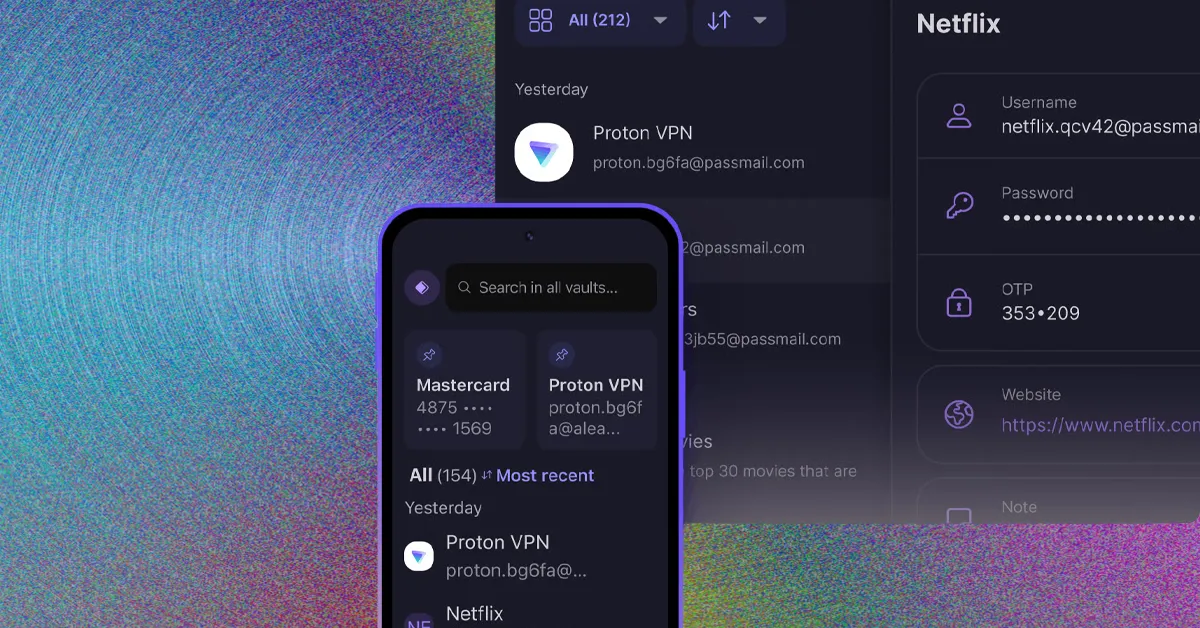
The downside of KeePassXC is that it doesn’t have official mobile clients. However, third-party apps are available for iOS and Android. KeePassXC is a fork of KeePass that offers better cross-platform support, but there are a handful of other forks available, as well.
Download the desktop app for Windows, macOS, or Linux and create your vault. There are also extensions for Firefox, Edge, and Chrome. The project does not offer apps for phones. Instead, it recommends KeePass2Android or Strongbox for iPhone.
Password managers are not a one-size-fits-all solution. Our top picks cover most use cases and are the best choices for most people, but your needs may be different. Fortunately, there are plenty of good password managers out there. Here are some more we’ve tested.
Google Password Manager (Free): Google has offered a password manager within Chrome for years, but it recently broadened with a dedicated Android app. Although storing passwords in your browser has a few security concerns, Google offers top-notch encryption, the option to turn on on-device encryption, and integration with biometric authentication on Android and Windows. It can even store passkeys. For most people, I recommend a third-party password manager, but if you aren’t using a password manager at all, Google Password Manager is a good option.
RoboForm ($30 Per Year, $48 Per Year for a Five-User Family Plan): RoboForm has most of the same features as the rest on this list, but it lacks some of the things that differentiate our top picks, like Bitwarden’s open source aspect and 1Password’s travel features. I’ve been testing the free plan for a while and haven’t run into any problems. There are apps for every common platform, and it’s easy to use. RoboForm recently completed an independent security audit and came out looking good.
Pass (Free): Pass is a command-line wrapper around GPG (GNU Privacy Guard), which means it is only for the nerdiest users. It supports managing encrypted .gpg files in Git, and third-party mobile apps are available. It’s not for everyone. For years, this was my password manager of choice, but eventually, Bitwarden’s ease of use won me over.
Most password managers are decent. Some are more secure than others, but the top password managers largely compete on features and pricing. Security is a prerequisite. However, there are a couple of password managers you should avoid for various reasons.
ExpressKeys by ExpressVPN: ExpressKeys is from ExpressVPN (formerly Keys by ExpressVPN that I tested, but it’s the same product), which ranks among the best VPN services on the market. But ExpressKeys doesn’t live up to the same standard. It’s secure, but I struggled to get it to work with any consistency. The browser extension requires the desktop ExpressVPN app to work, and closing either will force you to sign back in all over again. Worse, ExpressKeys wouldn’t recognize that I was signed into my ExpressVPN account about half the time. It needs some serious fixes before I can recommend it. —Jacob Roach
Google is preparing a new Chrome security feature that would block policy-installed extensions from hijacking the New Tab page or changing the default search engine.
BleepingComputer spotted the protection in a chain of work-in-progress Chromium Gerrit changes. It has not shipped yet, but Google plans to enable it by default once the changes are approved.
“In low-trust environments (unmanaged consumer devices), enterprise policy force-installs and recommendations are abused to lock in search engine or new tab page hijackers,” Anunoy Ghosh, who works at Google, wrote in a post.

“This CL enables the kBlockDseNtpOverrideExtensionsOnUnmanagedDevices feature flag by default, activating the end-to-end blocking defense on unmanaged Windows and macOS devices.”
Right now, Chrome allows organizations to use enterprise policies to force-install extensions and control browser settings.
It’s not exactly bad on properly managed work devices connected to a domain or mobile device management system, but malware has been abusing the same feature on regular consumer PCs.
A malicious program can add local Chrome policy keys without your permission and force-install an extension that replaces the New Tab page, changes your search engine, or redirects searches to suspicious websites.
Chrome may then believe that the extension was installed by an administrator, which prevents you from removing or disabling it.
In some cases, Chrome also displays the confusing “Managed by your organization” message, even though the PC is not actually owned or managed by an organization.
Google describes these consumer PCs as “low-trust” environments because Chrome is reading policies stored locally without confirmation from a trusted authority, such as a domain or MDM service.
Under the proposed protection, Chrome would block attempts to install policy-controlled extensions that override the New Tab page or default search engine.
The installation would be canceled, and Chrome would save the extension ID in a blocked-extension preference.
Chrome would also stop trying to download the same blocked extension during future policy checks, which should prevent repeated installation attempts and unnecessary network activity.
An extension that you installed manually would no longer be converted into a locked, policy-controlled extension. It would remain under your control, so you could still disable or remove it.
If a previously managed device loses its trusted management status but still has local policy keys, Chrome would automatically uninstall affected New Tab and search-engine override extensions.
Google is adding metrics to measure how often these policy-based hijackers appear and how frequently Chrome blocks them.
Legitimate administrators would also have access to an escape-hatch policy that disables the protection when a required enterprise extension overrides the New Tab page or search engine.
The Gerrit changes are still under review, so the feature is not available in stable Chrome yet.

Security teams log 54% of successful attacks and alert on just 14%. The rest move through your environment unseen.
The Picus whitepaper shows how breach and attack simulation tests your SIEM and EDR rules so threats stop slipping by detection.

The Malaysian government has ordered the shutdown of a startup-centric community called the Network School, according to The Wall Street Journal.
Billing itself as “a frontier community for techno-optimists,” the Network School reportedly grew out of entrepreneur and investor Balaji Srinivasan’s conviction that the United States is in irreversible decline; Srinivasan has said his goal is “to start a new country.”
So the Network School is supposed to represent the first step in a seven-stage plan (outlined in Srinivasan’s book “The Network State”) for building a new society. Based in an abandoned Malaysian hotel, the WSJ described the program as “part tech incubator, part self-improvement retreat.” Attendees, however, complained about moldy rooms, as well as a dearth of women and nightlife.
After receiving questions from the WSJ, Srinivasan – who apparently renounced his American citizenship in 2023 — published a lengthy post on X declaring himself “a proud Singaporean” and complaining that the WSJ was working on a “hit piece” that would make him look like “an odd duck […] as opposed to an early adopter.”
And although the current Malaysian campus will reportedly need to shut down due to licensing issues, Srinivasan recently announced a new agreement for a campus in Kazakhstan.

“When a group of teenagers set out to hike British Columbia’s famed Howe Sound Crest Trail in early July, Google Maps suggested the trek would take about five hours,” reports SFGate.
“Instead, the hike stretched deep into the night, leaving the group exhausted, dehydrated, injured and in need of a helicopter rescue…”
Although the approximately 18-mile route with a 6,000-foot elevation gain can be completed by experienced trail runners in a day, search and rescue officials generally recommend hikers treat it as a two-day backpacking trip. The teenagers, all 17 years old, believed Google Maps’ estimate that the route would take about five hours. The printed directions they were carrying, which were shared publicly by Lions Bay Search and Rescue, gave simple instructions for two legs of the trail, but didn’t account for the terrain or elevation. “[Google Maps] is calculating the time that you’re walking a straight road on pavement,” [said Maria Masiar, training officer and search manager with Lions Bay Search and Rescue]. “When you get into outdoor terrain, that no longer holds true.”
Expecting only a short outing, each hiker carried about half a liter of water and limited food. There are no reliable water sources along the trail, meaning hikers must carry enough supplies for the entire route. As the group climbed, they began suffering from dehydration and muscle cramps but continued onward despite falling dramatically behind schedule. Eventually, the group made the decision to turn back and abandon making it to the end of the trail — and as the sun began to set and the group started to descend, fatigue took its toll. According to Masiar, members of the group had already stumbled and fallen several times while trying to race the coming dark, and only one hiker had a headlamp. Eventually, another hiker slipped about 10 feet off a boulder, injuring his tailbone badly enough that he could no longer continue. Search and rescue crews responded, ultimately evacuating him by helicopter.
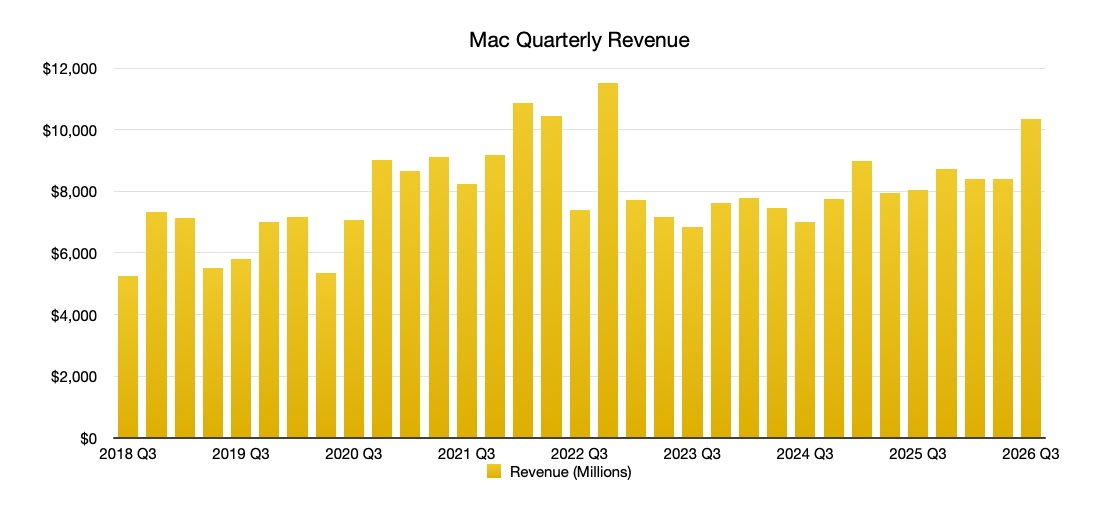
Apple’s Mac sales rose by more than 25% in the last quarter, compared to the same time period in 2025, solely on the back of the MacBook Neo that incoming CEO John Ternus championed.
Shortly before John Ternus was announced as Apple’s next CEO, it was noticeable that he was the one championing the MacBook Neo instead of Tim Cook. As well as part of handing over the reigns, though, this was because the MacBook Neo project was driven by Ternus.
Now according to figures from Apple’s latest earnings call, the company’s Mac revenues climbed by 28.66% over the last quarter. This is mostly due to the only new product available just prior to the quarter, the MacBook Neo.

Mac quarterly revenue, as of Q3 2026
Apple reports that during the quarter ended June 27, 2026, it sold $10.35B worth of Macs. That compares to $8.05B for the same quarter in 2025.
Significantly, though, there were no new Macs released during this quarter at all — but the MacBook Neo ramped up to full availability. The quarter also saw steep price hikes across the whole Mac lineup, including adding $100 to the price of the MacBook Neo.

Mac quarterly revenue change year-on-year, as of Q3 2026
The timing of that price rise won’t have been chance, though, as it was announced on June 25, 2026. That means that the MacBook Neo only saw the higher price for two days of the quarter.
Consequently there’s no indication of whether the MacBook Neo can continue this huge success in the next quarter. But it’s a measure of how the lower-cost MacBook Neo was an immediate boost to Apple’s bottom line.

Enterprise demand for high-capacity hard drives continues accelerating as artificial intelligence generates expanding datasets requiring reliable, affordable storage throughout increasingly complex cloud environments.
That growing appetite for storage has intensified competition among cloud providers building artificial intelligence infrastructure, keeping enterprise hard drives firmly within long-term investment plans.
Seagate‘s recent fiscal fourth-quarter and full-year 2026 financial results indicate continued demand from cloud data center customers despite no disclosure of future HDD allocation commitments.
Latest Videos FromTechRadar
AI relies heavily on enormous storage capacity because valuable data must remain available long after computations are done.
As organisations deploy larger AI models, the amount of stored information grows alongside computing requirements.
This significantly increases the dependence on enterprise hard drives for economical long-term retention.
Unfortunately, HDDs are becoming harder to secure, with manufacturers already booking long-term supply commitments years in advance.
Many HDD manufacturers have locked in contracts extending into 2028 and 2029, meaning customers wanting drives that far out may already be shut out of available slots
Seagate said robust cloud data center demand kept driving business growth, tying stronger storage purchases to AI infrastructure expanding across global markets.
“As AI accelerates data generation and its value, we see durable long-term demand for mass capacity storage,” said Dave Mosley, Seagate’s chair and chief executive officer.
Seagate expects strengthening exabyte demand through its Mozaic platform and differentiated HAMR technology roadmap as enterprise deployments continue expanding worldwide.
While Mosley did not explicitly say customers are reserving Seagate’s hard drive production through 2029, his remarks make clear that enterprise demand now sits at the core of the company’s strategy.
Seagate’s latest financial results provide additional evidence supporting enterprise storage demand.
Its annual revenue increased during fiscal 2026, while Q4 performance exceeded company expectations for revenue.
Operating cash flow reached $3.7 billion during fiscal 2026, while free cash flow totalled $3.1 billion after fourth-quarter operating cash flow reached $1.3 billion.
Seagate also reduced total debt by $1.4 billion during fiscal 2026, including $302 million during the fourth quarter, ending with outstanding debt of $3.6 billion.
Cash and cash equivalents reached $1.7 billion, while ordinary shares outstanding totalled 227 million and directors approved a quarterly dividend of $0.74 per share.
Seagate expects first quarter fiscal 2027 revenue near $4.1 billion alongside non-GAAP diluted earnings per share of approximately $7.30, subject to stated variations.
“Seagate’s strong fourth quarter exceeded our expectations for revenue and non-GAAP EPS, capping a fiscal 2026 in which we grew,” Mosley said.
“Our performance is being driven by robust cloud data center demand and disciplined execution, and we see the momentum continuing in 2027.”
Seagate’s rival, Micron, already made the move that Seagate is currently hinting at. It exited its Crucial consumer RAM businesslin 2025 to redirect supply toward enterprise customers.
Micron said the shift was meant to “improve supply and support for our larger, strategic customers in faster-growing segments,” cutting consumer buyers off from a manufacturer they had relied on for years.
Seagate has not gone that far with hard drives, but Mosley’s insistence that cloud demand is driving the business suggests it could prioritise enterprise demand if current trends continue.
Via TechPowerUp

Follow TechRadar on Google News and add us as a preferred source to get our expert news, reviews, and opinion in your feeds.

You’re not limited to only apps you can get on the Play Store.

A Chromebook can be a pretty flexible device. You can use it for productivity, to play games, watch movies and so on. To do these things, you might download apps from the Google Play Store. Linux apps and progressive web apps are supported too.
But maybe the experience you’re looking for isn’t available on the Play Store. Perhaps you haven’t seen a Linux app or progressive web app that does the trick. Instead, an Android app that you obtain from elsewhere on the internet may be the way to go. You may need to sideload this Android Package Kit (APK) onto your device, and we’re here to detail how to do that.
Before we get into the details of sideloading an Android APK onto a Chromebook, note that you do this at your own risk. Google hasn’t verified apps that you obtain outside of the Play Store. For your own sake, carry out due diligence to determine as best as possible that the APK you want to use is legitimate and free of malware and other nastiness. We’ll leave it to you to find the APK(s) you want.
There are several options for how to sideload an app onto a Chromebook. Enabling developer mode is one way to go. However, doing that will wipe all of the data on your system. Unless you’re setting things up on a brand-new Chromebook, you may not want to deal with that.
Let’s go in the other direction, with Google’s official methods for sideloading APKs on Chromebook. These use Android Debug Bridge (ADB). Note that this approach only works from Chromebooks that hit the market after 2020. This method also requires you to have the APK on your Chromebook already. We suggest renaming the file to something simple before installing it.
The first step is to enable Linux on your Chromebook, if you haven’t already done so. Open the Settings app, click the “about ChromeOS” option on the left, scroll down to “Developers” and then click “set up” on the Linux development environment option. Then go through the brief setup process, which includes setting aside a dedicated portion of storage space for Linux (you can modify this allocation later via the system settings).
Now you need to go through the same process until you get to “Linux development environment,” which now has its own sub-menu. From here, click on “Develop Android apps” then toggle “Enable ADB debugging” on. Your Chromebook will restart at this point, so make sure you save all your work and such first.
After your system reboots, you should see a message that reads “This device may contain apps that haven’t been verified by Google.” Just like that, the first part of the process is sorted.
We now have a couple of options to run the APK on your Chromebook. The first is by using Terminal. Here’s what to do:
Search for and open Terminal
Select the Penguin option
Install ADB, if you haven’t already done so, with this command: sudo apt install adb
If Terminal asks whether you want to continue, press the “Y” key
Next, input the following command: adb connect arc
To proceed, you’ll need to authorize USB debugging from the dialog box that pops up. Check the box that reads “Always allow from this computer” and click Allow
The last step is to install the APK. To do that, first move or copy it to your Linux Files folder
Input this command — adb install filename.apk — with the actual name of your APK in place of “filename.apk”
You should then be able to run the app you installed by searching for it in the Chrome OS launcher

Alternatively, you can run the APK using an emulator in Android Studio. If you don’t already have Android Studio set up, go to the Files app > My files > Downloads and locate the DEB package. Move or copy this to Linux Files. Then, in the Linux terminal, run the command “sudo apt install ./android-studio-panda2-cros.deb.” (Note that the filename for the DEB package might be slightly different, so make sure to account for that.)
After you open Android Studio, you can create an Android Virtual Device. This simulates an Android phone, tablet, Wear OS, Android TV or Automotive OS device. It’s up to you which you’d rather go with, though tablet and Android TV offer landscape formats.
All you need to do after that is drag and drop the APK onto the emulator screen. After the app is installed (an APK Installer box will pop up to indicate that’s happening), you can access it from your apps list.


Space-Eyes, a Miami geospatial-intelligence company backed by Eric Trump, plans to go public through a $638 million blank-cheque deal, deepening the family’s defence-tech ties.
A defence-technology company backed by Eric Trump is preparing to go public through a $638 million SPAC merger, deepening the Trump family’s already extensive ties to the national-security industry.
Space-Eyes, a Miami-based geospatial intelligence firm, would list through a blank-cheque deal, following the path of Foundation, another Eric Trump-backed defence venture now winning Pentagon contracts.
Space-Eyes is a niche but strategic player. Founded in 2001, the roughly 35-person company builds satellite-based AI that tracks maritime activity, trade flows, and other security signals for governments and businesses.
Its focus sits at a sensitive intersection. Maritime domain awareness, the monitoring of ships and ports, has become a priority for Western militaries wary of sanctions-busting and grey-zone activity at sea.
The demand is timely. Shadow fleets moving sanctioned oil, illegal fishing, and threats to undersea cables have pushed navies and coast guards to hunt for better ways to watch the oceans, a market Space-Eyes is built to serve.
The listing would be a sharp step up. A $638 million deal values a small firm well above its modest funding history, reflecting how much investors will now pay for anything tied to defence and intelligence.
It fits a family pattern. Eric Trump and his brother Donald Trump Jr. have poured money into defence and manufacturing ventures over the past year, from drones to humanoid robots to a manufacturing SPAC.
The backdrop is a spending surge. Their bets have coincided with a Trump administration channelling record sums into defence technology, an overlap that critics say raises obvious conflict-of-interest questions.
Those concerns are not hypothetical. Reporting has documented how the president’s sons stand to profit from companies whose fortunes depend on federal contracts and policy set by their father’s government.
The SPAC route adds its own scrutiny. Blank-cheque mergers let companies reach public markets faster and with lighter disclosure than a traditional IPO, a structure that has burned retail investors before.
Blank-cheque deals are also back in fashion. After a long slump, SPAC listings have revived on the back of AI, crypto, and defence, and politically connected sponsors have been among the most active.
Space-Eyes joins a crowded field. Defence-tech valuations have soared as the Pentagon pushes for drones, autonomy, and AI, with firms like Mach Industries ballooning past a billion dollars.
The money is chasing a real shift. Western governments are rearming, and the Pentagon has been signing classified AI deals as it races to fuse data, autonomy, and intelligence into new capabilities.
Space-Eyes pitches itself into that gap. Its systems promise to turn raw orbital imagery into warnings about illicit shipping, trade anomalies, and security threats, the kind of tool agencies increasingly buy rather than build.
The Trump name is both an asset and a liability. It opens doors and draws capital, but it also invites the assumption that access, not just technology, is part of what investors are buying.
The wider trend is the blurring of lines. The boundary between Silicon Valley, private capital, and the Pentagon has thinned dramatically, a shift crystallised when a top venture capitalist joined the Pentagon’s board.
Ethics watchdogs have taken notice. They argue that when a president’s family profits from defence firms while that president directs defence spending, the appearance of impropriety is hard to avoid, whatever the legal reality.
The Trump camp frames it differently. Supporters cast these as legitimate private investments in American strength, part of a push to rebuild the country’s industrial and military edge.
For Space-Eyes, the immediate prize is capital. A successful listing would hand a small firm the funds to scale, and hand its high-profile backer a public-market endorsement of the defence-tech bet.
The deal still has to close. SPAC mergers can fall apart or reprice, and this one will be watched as much for who stands behind it as for what the company actually does.

Apps are back, or maybe they never left in the first place.
While some people debate whether people will shift away from apps as AI agents make accessing online services more efficient, we’ve found the App Store to be alive and well, with a recent explosion of fun, creative, and innovative tools, experiences, and other indie efforts.
Some of the more recent launches may be attributed to the rise of AI coding, which has enabled people to ship software more quickly, and allowed novices to participate in the app ecosystem. According to one report, new app launches have soared in 2026, with worldwide new app releases up 60% year-over-year as of the first quarter across both the Apple App Store and Google Play. On Apple’s iOS store alone, that figure was an even higher 80%.
While there’s valid concern that vibe-coded apps in particular could be cluttering the App Store with lower-quality content, there are plenty of interesting apps worth exploring, and those that resonate with consumers will rise to the top. Many also use AI under the hood to perform their magic — they’re just not promoted as being “AI-powered.”
Below is our latest collection of App Store hidden gems, which we’ve added to our Home Screen. You can also visit TechCrunch’s prior app round-ups, like our looks at next-generation social apps, Apple Watch, and iPad productivity tools, and apps for digitally decluttering your life.

Albo (previously Sortd, but not that Sortd) is an excellent tool for anyone who regularly bookmarks content from social media, then promptly forgets about it. With Albo, the idea is that you’ll instead share the link to the TikTok, Instagram Reel, YouTube video, or other website to the app. Albo will then automatically pull the details from the post and categorize and save the idea for you. That post and its notes will remain available in Albo, even if the original content creator deletes their post or video at some point in the future.
The app works with a variety of social apps, including Pinterest, X, LinkedIn, Threads, Reddit, and Facebook, plus browsers like Chrome and Safari. You can also add screenshots to Albo.
This makes it easy to save any sort of online inspiration for easy access, whether that’s travel ideas, local spots to try, movie or shows to watch, books to read, recipes to cook, or workouts to do. Your collections can also be shared with friends.

Albo hails from the London-based app studio The Feel Good Project, which focuses on tech that makes users feel inspired and satisfied instead of drained by doomscrolling.
The app is free to use with advanced features available via subscription. We didn’t love how heavy-handed it was in pushing the trial subscription during onboarding, however.
Available on iOS and Google Play.

The recent parasite outbreak in the U.S. has people thinking more carefully about where their food comes from. Buying from local growers and bakers may be the safer option — and better for the community — but not everyone has time to make it to the farmer’s market over the weekend.
Coop‘s app offers an alternative through its neighborhood marketplace, where you can buy real handmade and homegrown items from the people near you, even from the farmhouse down the road that offers fresh eggs, or a neighbor willing to barter their items for yours. The idea is to allow commerce to stay local, while helping people turn their own garden, field, or craft into an additional income stream.
On Coop, you can browse and discover nearby sellers, follow your favorites, see how far they are from you, and purchase from them via the app’s Stripe integration. The seller then receives the order and prepares it for pickup.
Available on iOS and Google Play.

A colorful and somewhat chaotic app, PI.FYI, promises to bring back the “old internet,” where you found recommendations through a network of friends, not algorithms. Having emerged from a cult newsletter, the app has been around for a couple of years, but still feels fresh and modern and very much like the alternative to social media it aims become.
In PI.FYI, you can track what you’re into, share your taste, and browse by category or “scenes,” like music, whimsy, retro, and literature, to find your community, read interesting articles, make lists, gather local recommendations, and play games with friends. The app exudes a retro vibe itself, as if it were built when the internet was a little less polished, too.
Available on iOS and Google Play.

OK, it might not be as fun as sharing a letter via pigeon post, but the app for pen pals, Lettre, also embraces the fun of snail mail in a digital format. This letter-writing app lets you start new friendships with pen pals around the world, discovered through the app, or with anyone whose email address you already know. Unfortunately, letters are sent digitally through the app or email for now, but the company’s FAQ suggests it is considering a postal mail option for the future, which would be so much fun.
Available on iOS only.

While not a brand-new app, Sofa Time is one of several that is picking up where the recently shuttered TV Time app left off. The app has an easy-to-use, uncluttered interface for tracking the movies and TV shows you’re watching, organizing your watchlist, discovering what to stream next, and getting reminders about new releases.
While Sofa Time’s commenting section doesn’t yet rival TV Time’s forums, the app’s social elements leave room for the community to grow, as it supports the ability to react with a GIF or image alongside your text, and includes built-in translation features to support a global audience.
Available on iOS and Google Play.

ThingsBook, a new writing-focused app from South Korean internet giant Naver’s U.S. subsidiary, is hardly an indie effort, but it’s an interesting premise for what the future of social media could look like. Instead of doomscrolling, ThingsBook offers a flexible space where you can capture what you care about, whether that’s through journaling, logging ideas, or collecting things like books, travels, meals, hobbies, and goals into structured lists you can revisit and expand.
The company explains that the app’s purpose is not to focus on “fleeting trends” but to become a “living record of who you are and what you love.”
Available on iOS and Google Play.

App or artistic project? Pressed Petals is both. An indie effort from designer Cynthia Chen, the app turns the photos of flowers you find on your walks into a pressed specimen, like one you’d find in a “vintage botanical journal.” The app automatically saves the location where you spotted the flower, and the date and time, turning your nature walks into interactive experiences. It also identifies the flower by name, both its scientific name and its common name.
You can try the app to press two flowers for free, then pay a one-time fee of $4.99 to unlock the full experience. This could be a fun app for luring your little ones outside, as it gives them something else to do beyond the hike itself.
Available on iOS only.

We’re suckers for single-purpose apps that are built well. Moods Faster by Nick Leith is a perfect example, as it offers a way to log your moods for tracking in Apple Health in just two taps — one to select the mood and a second to save it.
You can choose between logging your current mood or your overall mood for the day, and can also optionally add information about the context and emotions you’re experiencing at the time of logging. In the settings, you can pick between different color schemes for your moods, though some are paywalled.
At $1.95 per month, it’s a reasonably priced subscription for anyone who regularly tracks their moods and emotions for mental health purposes.
Available on iOS only.

Originally pitched as a way to encourage kids to exercise, Activate Fitness has recently expanded its screen-time-earning app to include the whole family, which, frankly, makes it better. (The kids will just hate their parents for using this otherwise. Plus, it could turn outdoor time or exercise into a dreaded chore in kids’ minds, which defeats the purpose.)
For adults, the app could allow you to accomplish your own personal goals, like no doomscrolling until you get your steps in for the day.
Available on iOS only.
This post was originally published on July 28, 2026.
When you purchase through links in our articles, we may earn a small commission. This doesn’t affect our editorial independence.

RGB backlighting and Super Quantum Dot (SQD) technology are mounting the strongest challenge yet to OLED’s dominance in 2026. After testing and reviewing the year’s major contenders, we are ready to reveal our picks for the best TVs of 2026 so far. Join Senior Reviewer Al Griffin, and Editor-at-Large Chris Boylan as they break down their favorite models, explain what sets each one apart, and debate whether OLED still deserves the crown.
Sponsor: Thank you to our podcast sponsor SVS.
This episode was recorded on July 29, 2026.




Commonwealth Games boxing: Jadumani Singh seals dominant 5-0 win over Pakistan’s Sumama Rehman to enter quarter-finals | Commonwealth Games News


Why Trees Belong on the Risk Register


Weekend Open Thread: Wit & Wisdom


Intel is reversing course and bringing hyper-threading back to its server chips


Meta enters AI-training agreement with far-right ‘propaganda rag’ Newsmax


Luke Littler dismantles Gerwyn Price to retain title in Blackpool


MicroStrategy Post-Earnings CLARITY Act Push Could Add New Catalyst for Its Stock


The Part of the Electric Transition Nobody Wants to Discuss

‘Stargate’ Creator’s New Sci-Fi Series Returns for Season 3 Tomorrow


BITCOIN JUST ENTERED THIS CRITICAL ZONE…


Major shareholder moves on Canyon


Bitcoin Enters the 3rd Stage of the Bear Market


XRP Ledger v3.3.0 brings five institutional features


Kraken Enables Retail Access to Jersey Mike’s IPO via Tokenized Shares


New macOS Sequoia & Sonoma security updates for older Macs


Claude: Build Financial Dashboards in Minutes (2026)


Luke Littler’s dominance sparks GOAT debate


Seema Kaliramna Wins Discus Throw Bronze, Takes India’s CWG Medals Tally To 17


Johnson & Johnson agrees to $5.5B settlement over talc cancer claims


Crypto PAC spending tops $2M in Michigan House race


You must be logged in to post a comment Login