Connect with us

Tech

Are Bosch And Milwaukee 12V Batteries Interchangeable?

Published

on


We may receive a commission on purchases made from links.

If the battery in your Bosch power tool dies while you’re working, you may have thought about using another power tool battery to finish the job. After all, if it looks as though it might fit and the voltage matches, why not try it? But before you do, beware that you can’t use Milwaukee 12V batteries in Bosch tools and you shouldn’t try the reverse either. In fact, both manufacturers advise against using other batteries.

Advertisement

Bosch states that its batteries should only be used with approved tools from the same brand or designated partners. It also makes it clear that their batteries are specially designed to be compatible with their own tools and chargers. Similarly, Milwaukee states that its M12 (and M18) batteries should only be used with compatible Milwaukee tools. Neither manufacturer’s documentation identifies the other’s 12V platform as compatible.

The problem with trying to use Bosch and Milwaukee batteries interchangeably is that the physical connection is just one aspect of compatibility. Modern battery packs and tools contain complex circuitry systems designed to work together, meaning that sharing the same voltage platform is not enough to ensure a proper connection. Additionally, both Bosch and Milwaukee explicitly warn that using their battery packs with other tool brands could have serious consequences, including a risk of fire and personal injury.

Advertisement

The problem with power tool battery adapters

Though Bosch and Milwaukee both advise against using other batteries in their power tools, there are third-party adapters available online. These power tool battery adapters have their pros and cons, but ultimately promise a way to use batteries from one tool brand with tools from another. This is usually done by bridging the physical connection between two otherwise incompatible platforms. However, Milwaukee warns that aftermarket or knockoff batteries should not be used in their tools, and Bosch explicitly says not to use adapters.

The problem is that using an adapter doesn’t necessarily make two battery platforms truly compatible. Modern cordless power tools and batteries can communicate electronically with each other, and while third-party adapters could bypass some of those communications, they may not correctly communicate with the system’s safety features. This misalignment could potentially put both the tool and the battery at risk.

Specifically, by going around parts of the system’s built-in monitoring and protection, an adapter may prevent the tool from properly managing power, heat, and other operating conditions. Charging can present another problem as well, because the adapter could interfere with the safeguards that keep a battery from receiving too much power. And if your power tool is damaged while using an adapter, you could also have warranty problems with both Milwaukee and Bosch. Essentially, it’s best to avoid any attempts to mix Bosch and Milwaukee batteries and tools, and instead have suitable replacements at the ready.

Advertisement


Source link

Advertisement
Continue Reading
Click to comment

You must be logged in to post a comment Login

Leave a Reply

Tech

Wizards of the Coast reveals first look at ‘Warlock,’ the next video game based on ‘Dungeons & Dragons’

Published

on

(Wizards of the Coast/Invoke Studios press image)

Wizards of the Coast and its subsidiary Invoke Studios released a first-look gameplay trailer for Warlock: Dungeons & Dragons, a new open-world action game based upon the systems and setting of Wizards’ popular tabletop role-playing game.

Wizards, based in Renton, Wash., is a subsidiary of Hasbro and the company behind the D&D and Magic: The Gathering franchises. It has become one of the toy giant’s most reliable profit engines. Hasbro and Wizards are now looking to video games for additional growth, with mixed results; Wizards’ recent video game efforts have included both the generational success of Baldur’s Gate 3 and significant flops such as 2021’s Dark Alliance.

Warlock‘s first trailer was released during Opening Night Live at the Gamescom conference in Cologne, Germany, which has become one of the hallmarks of the video game industry’s calendar, particularly in Europe. Clearly, someone at Wizards and/or Hasbro has a great deal of faith in Warlock.

Warlock is set in the brand-new fantasy world of Darkon. Players take the role of Kaatri (Tricia Helfer, Battlestar Galactica), a combat veteran and swordswoman who makes a pact with a magical entity to attain magical powers. Specifically, Kaatri’s deal is with Tasha (Maggie Robertson, Resident Evil Village), an archmage from the world of Toril and one of D&D’s longest-running signature characters.

In exchange for whatever Tasha wants, which is not yet revealed, Kaatri becomes a warlock: a spellcaster who derives her magic from her link with Tasha, rather than the other available sources in D&D’s cosmology. Kaatri’s newfound powers include signature D&D abilities such as telekinesis, short-distance teleportation, and detecting sources of magic.

Advertisement

As such, the player can approach every situation in a number of ways depending upon their opportunities and preferences, from open conflict to stealth to clever manipulation of their environment. You can go in swinging with Kaatri’s sword, telekinetically shove enemies off of cliffs, or take an opponent out at long range with D&D warlocks’ signature eldritch blasts.

Invoke Studios, based in Montreal, was founded in 2022 as a reorganization of the team behind the 2021 co-op action-RPG Dungeons & Dragons: Dark Alliance. Warlock is its debut project under the Invoke Studios brand.

To make it to market, Warlock and Invoke have survived two leadership shakeups at Wizards and several waves of layoffs and shutdowns, including the cancellation of two other D&D-based video game projects in early 2023.

Warlock: Dungeons & Dragons is scheduled for release in 2027 for PC, PlayStation 5, and Xbox Series X|S.

Advertisement

Source link

Continue Reading

Tech

‘Darth Vader’ Wants You to Know He Definitely Supports Flock Surveillance

Published

on

At the San Diego City Council’s most recent budget meeting, Sith Lord Darth Vader had some points to make. Between gasping breaths, Vader praised the council’s recent votes to renew its contract with the surveillance company Flock Safety, which has been making headlines recently as more and more stories of police officers abusing its tools have continued to come out—and as a WIRED review of code for a new AI tool already in use by some police departments has made clear that it is watching far more than just license plates.

“The emperor is a fan of Flock. And we must continue utilizing Flock technologies so that we can follow and surveil the rebel scum as they move from playground to playground, from playground to pool, from pool to gymnasium.”

The recording of the video has gone viral, reaching millions of people on TikTok and Instagram.

The man behind the stunt is Anthony Ralphs, a San Diego-based DJ, event producer, and agriculture consultant who has spent the better part of the past year advocating against the city’s support of Flock’s use by the San Diego Police Department.

Advertisement

Initially, Ralphs thought about keeping his identity hidden behind the Vader mask—a 2004 Hasbro model. But he says that as the video has picked up more and more steam, he decided to “take ownership” of the stunt that put Flock and surveillance technology on the minds and feeds of millions of people around the world.

WIRED spoke to Ralphs about advocacy, crafting a costume, and the role that art can play in civic engagement.

This conversation has been edited and condensed for clarity.

VITTORIA ELLIOTT: How did this start for you? Was this your first city council meeting?

Advertisement

ANTHONY RALPHS: No. My first time attending a city council meeting was sometime last summer or last fall. But really the most consequential city council meeting that I attended, that really got me in the fold of starting to regularly participate in my civic duties, was this issue of Flock. It was my third, or maybe my fourth, city council meeting back on December 9th, and the city council was putting this up to a vote, whether to continue to use Flock.

The story back then was that the city council didn’t exactly know what the technology was. The police were touting it as a force multiplier. There were over 300 people at that vote, the meeting room was completely full, and I would say 95 percent of the people there were saying they didn’t want Flock. But the council voted for it anyway. It was extremely discouraging, and it really lit a fire under me to start going and regularly participating.

I came to the following city council meeting, and I was one of maybe five people in the city council chambers, and there had been close to 300 just a couple of weeks prior. That moment was eye-opening. I realized not everyone can be there all the time to do this, and that’s what we need. We need consistent advocacy. So I took time off of school to be able to do that.

Why did this feel so critical?

Advertisement

Our city’s $120 million deficit. They cut several arts programs, and while they did that, they also provided the $2.2 million for Flock’s contract, even when people in those communities that are being most heavily policed say that they don’t want this. And now, we have the case of Hugo Parra, a local San Diegan who was falsely imprisoned and sat in prison for 30 days due to an erroneous tag by the Flock cameras. [Flock did not immediately respond to a request for comment on this matter.]

Source link

Continue Reading

Tech

Luffu’s New Health and Safety Wearable Isn’t Just for You. It’s for Your Entire Family

Published

on

Wearables like fitness trackers and smart rings traditionally focus on collecting health data at the individual level, but the AI-powered intelligent family care system Luffu is expanding that scope.

Launched by Fitbit co-founders James Park and Eric Friedman in February, Luffu started out as an app where family members could log health information, including medications, diet, doctors’ appointments, vaccine records, symptoms and more. It’s currently in public beta.

Luffu announced on Tuesday that it now has its own screenless wearable, the Luffu Link, and it’s available for preorder in the US for people age 13 and up.

How Luffu links the entire family together

A press release described the Luffu Link as a health and safety band that operates over 4G LTE, meaning you don’t need to have your phone nearby to reach out to your contacts for help or use certain features, like voice logging for medications, meals, mood, symptoms, reminders and notes. It also has built-in GPS, so you can share your location or send a check-in to family members.

Advertisement

When it comes to your personal health, Luffu Link can capture data around sleep, activity, heart rate variability, resting heart rate, calories burned and breathing rate. AI then uses this information to learn patterns and alert users to any changes.

A hand holding a phone showing different family members on the Luffu app.
AI brings all your family’s health data into one app.Luffu

The band features a single button. When you press and hold the button, it allows for voice logging. Press twice to send a check-in to select family members. Any health information you log is organized by AI and then added to the family’s Luffu app, where you can also create a profile for your pet to log their medications, meals and vet visits.

According to the press release, families decide what information gets shared and with whom.

Three phone screens showing different family members and a dog on the Luffu app.
Coordinating care can be accomplished in the Luffu app for both family members and furry friends.Luffu

The Luffu timeline and cost

Luffu is designing its ecosystem around three locations: the phone, wrist and home.

While the app is in public beta, broader US availability is planned for later this year.

As for Luffu Link, those in the US can now preorder it on the Luffu website for $250 and get beta access to the app along with a quick charger and large and small silicone bands. Available in halo gold, sterling blue and onyx black, Link is expected to start shipping in early 2027. After that, the expected price will be $300.

Advertisement
The Luffu Link wearable shown in gold, black and metallic blue.
Designed to be jewelry-like, Luffu Link has a slim metal core with a silicone band. Luffu

Water-resistant up to 50 meters, Luffu Link offers battery life of up to five days, a charging time of around 1 hour, a one-year limited warranty, and compatibility with Android 14 or later and iOS 18 or later.

LTE data service is included with no separate carrier plan needed. However, to use Luffu, a family plan is required. Sold separately and available later this year, the plan covering up to four people costs $20 per month or $200 per year, while the extended family plan for eight people is $30 per month.

Luffu is also developing an intelligent home device — expected to be announced later this year — that allows families to coordinate care across generations and households. In the meantime, the company sent over a preview photo of the device.

The Luffu home device.
What Luffu’s home device will look like.Luffu

The intended audience

A Luffu representative told CNET that some are confusing Luffu Link as a device specifically for aging adults, but it’s intended for the entire family.

“That includes adults [ages] 35 to 60 managing kids, aging parents, pets and their own health; independent, active adults 65+ who want discreet health and safety support without a traditional emergency pendant; and younger or middle-aged adults who may start with health tracking or voice logging and also benefit from safety, location and shared care features,” the representative said.

Co-founders Park and Friedman said they were inspired by their own caregiving experiences to create Luffu and their goal is to give families a single place to easily track their loved ones’ health and safety.

Advertisement

Source link

Advertisement
Continue Reading

Tech

KEF LS LUXE Wireless Speakers Video Review: Is This $4,000 Hi-Fi System Worth It?

Published

on

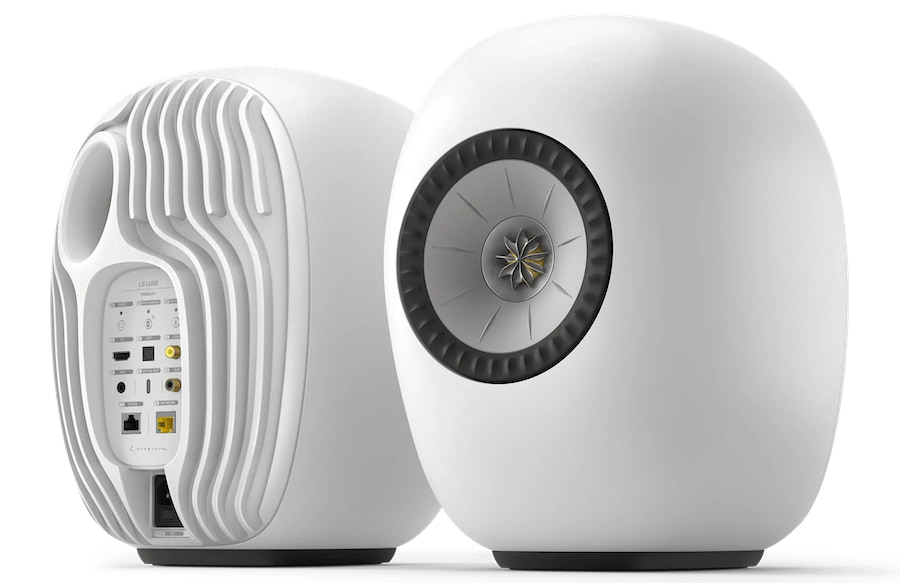
The KEF LS LUXE are a $4,000 all-in-one wireless speaker system aimed at listeners who want serious hi-fi performance without building a traditional stack of amplifiers, streamers, DACs, and speakers. Although the name may suggest a connection to the smaller LSX II, the LS LUXE are much closer to the LS50 Wireless II in size, capability, and ambition. Their most obvious point of separation is the enclosure, created by renowned industrial designer Ross Lovegrove, who also designed KEF’s radically sculpted Muon loudspeakers. The rounded cabinets give the LS LUXE a far more distinctive visual identity than KEF’s other wireless models and make them as much a design object as an audio system.

Skip the reading? Click play above or watch KEF LS LUXE review on YouTube.

kef-ls-luxe-wireless-speaker-colors-front-angle

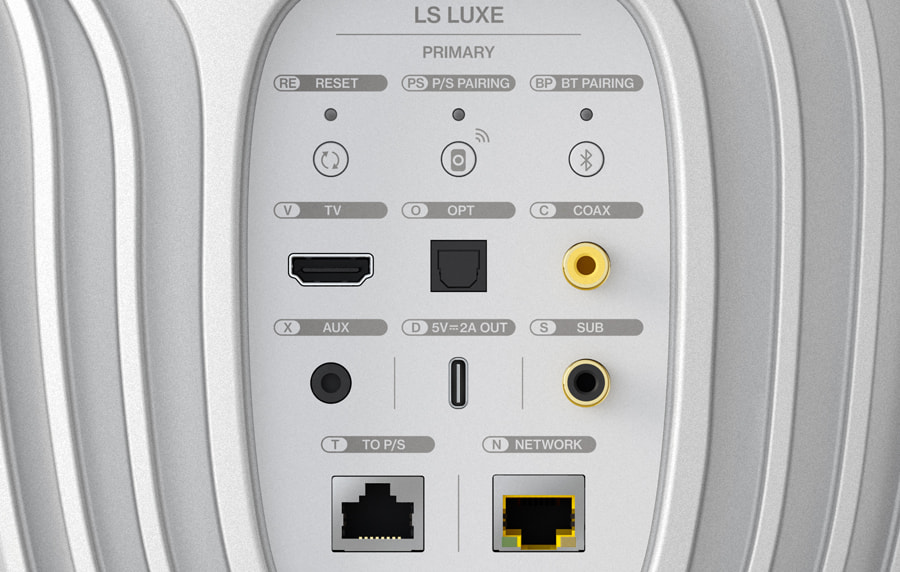
Inside, KEF uses its 12th-generation Uni-Q driver array with a 6.5-inch aluminum-cone woofer and 1-inch aluminum-dome tweeter, along with Metamaterial Absorption Technology and the company’s Music Integrity Engine DSP. The LS LUXE also introduce VECO, which monitors driver movement and compensates in real time, along with KEF’s Current Drive amplification technology designed to further reduce distortion. Amplification totals 280 watts of Class D power for the woofers and 100 watts of Class A/B power for the tweeters, while connectivity includes HDMI eARC, optical, coaxial, 3.5 mm analog, Ethernet, subwoofer output, AirPlay, Google Cast, Spotify Connect, TIDAL Connect, Bluetooth 5.3, and internet radio. There is no phono stage or RCA analog input, so turntable users will need an external phono preamp and, depending on their setup, an adapter.

kef-ls-luxe-primary-speaker-connections-closeup

Do the LS LUXE improve on the LS50 Wireless II? In some respects, yes. KEF has added newer driver-control and amplification technology, the Lovegrove-designed cabinet is far more visually ambitious, and the sound is exceptionally clean, neutral, detailed, and controlled, with impressive bass speed and very low perceived distortion. But the jump is not transformative enough to make the LS50 Wireless II obsolete, especially when you consider the roughly $1,000 premium and the inevitable diminishing returns at this level. Buyers are paying for both the engineering and the industrial design. For a closer look at how the LS LUXE perform with music and movies, and whether they can really justify that $4,000 asking price, watch our full video review on YouTube.

Advertisement
kef-ls-luxe-wireless-speakers-front-back-mineral-white

The Bottom Line

The KEF LS LUXE earn our Editors’ Choice designation because they combine exceptional ease of use, superbly clean and controlled sound, and a genuinely distinctive industrial design in a compact wireless system that looks unlike anything else in the category. Ross Lovegrove’s sculpted enclosure, KEF’s latest driver-control technologies, HDMI eARC connectivity, and excellent overall refinement make the LS LUXE one of the most complete premium wireless speaker systems we’ve tested. They are also unusually versatile, working equally well as a serious music system or an elegant alternative to a conventional TV audio setup.

The catch is value. Buyers are clearly paying a premium for Lovegrove’s design, the compact form factor, and KEF’s newest engineering, but the sonic improvement over the LS50 Wireless II is not large enough to make that model suddenly irrelevant. Klipsch’s The Sevens II remain the stronger value, particularly for TV use, at half the price. But if design matters as much as sound and you want a compact, beautifully finished, genuinely high-end wireless system that requires very little fuss, the LS LUXE occupy a space that few competitors can match.

Pros

  • Incredibly clean, precise sound
  • Easy to setup and use
  • Gorgeous industrial design
  • HDMI eARC for connecting to TVs
  • Digital connectivity options
  • Included high quality remote control
  • Supports Hi-res audio up to 192 kHz/24-bit
  • Optional finishes

Cons

  • Doesn’t glow up lesser recordings
  • No RCA or Phono Inputs
  • No volume/play controls on speaker itself

Our Ratings

★★★★★★★★★★ Sound Quality

★★★★★★★★★★ Build Quality

★★★★★★★★★★ Usability

Advertisement

★★★★★★★★★★ Value

Where to Buy

Advertisement. Scroll to continue reading.

Source link

Advertisement
Continue Reading

Tech

Prompt injection ranks No. 1 with OWASP and No. 12 in the incident record. The attack itself is invisible to a scan.

Published

on

A CISO who sees a low CVE count and deprioritizes prompt injection is reading the scoreboard wrong. Prompt injection has held the No. 1 spot on the OWASP Top 10 for LLM Applications for three consecutive years. When two leaders of that list checked it against 6,639 labeled real-world incidents, it came back at No. 12. The drop measures visibility rather than danger, because the attack operates where a vulnerability scanner cannot see it.

That finding belongs to Kyriakos “Rock” Lambros and Steve Wilson, two leaders of the OWASP Top 10 for LLM Applications project, who published it on arXiv on August 18 with the disclaimer attached. The analysis is exploratory, not peer reviewed, and not the official OWASP release, and the authors state it does not supersede the official list or its process.

The machinery behind it is real: 7,714 LLM security incidents from CVE, GitHub Security Advisories, OSV, and the AIAAIC AI-harm database, 6,639 of them labeled against a 20-entry taxonomy, and a Bayesian model that corrects each count for classifier error before setting the data-driven ranking beside the expert vote.

The comparison found no statistically detectable agreement between expert judgment and the public incident record. Cohen’s kappa comes in at 0.20 with a 90% interval running from negative 0.16 to 0.57. “The interval crosses zero, so we cannot rule out that the two rankings agree only by chance,” they write. “The honest bottom line: weak agreement, not confirmation.”

Advertisement

Lambros, co-lead of the OWASP GenAI Security Project Top 10 for LLM Applications and director of AI standards and governance at Zenity, put the finding in evidentiary terms in written answers to VentureBeat. “We had two ways of measuring the same risk, expert judgment and the public incident record, and they disagree with each other. Neither one is the truth,” Lambros said. “Two witnesses are contradicting each other, and we can’t tell you which one is lying.”

The attack chain a scanner never logs

The gap is structural. Prompt injection hides instructions inside the content a model reads, anything from a log entry to a support ticket to a document pulled back by retrieval. The agent then makes the tool call the attacker wanted, using credentials it legitimately holds. Nothing in that chain is a product defect, so the attack leaves no CVE behind for a scanner to find.

The defenses that catch it are adversarial tests against the deployed system and hard caps on what the agent can reach, so a fooled model cannot touch anything expensive. The same logic argues for funding agent memory and MCP tool boundaries now, on architecture, rather than waiting for advisory volume that will always arrive a cycle late.

The first control Wilson would deploy

Wilson, Chief AI and Product Officer at Exabeam and project co-lead for the OWASP Top 10 for LLM Applications, named the control he would deploy first against exactly that chain, an agent that reads an attacker’s payload in a log file, treats it as an instruction, and rewrites DNS with a valid credential, in written responses to VentureBeat.

Advertisement

“The first thing I’d do is put an authorization gate outside the model: the agent can propose the exact DNS change, but it cannot grant itself the authority to make it,” Wilson said. “Security rules written inside prompts may shape the model’s behavior, but they are still suggestions to the model, not enforceable security controls.”

The gate has a price, and Wilson states it plainly. “The tradeoff is that the agent loses the ability to improvise arbitrary, high-impact infrastructure changes on its own, while retaining autonomous investigation and routine, bounded remediation,” he said.

Why the No. 1 risk looks small in the record

“Prompt injection is the best-understood LLM attack, and deployed systems defend against it actively,” the authors write, and they compress the whole divergence into one sentence. “Experts rank it first because the attack surface stays enormous even when the defenses mostly hold; the data sees the successes that got through.”

Wilson has watched the gap from both sides of it. “Incident data is incredibly valuable, but it is inherently backward-looking and notoriously tricky to interpret,” he said. “It tells us what was observed, recognized, classified, and reported. It does not necessarily tell us what is most dangerous in the systems people are building right now.”

Advertisement

He compares prompt injection to “death and taxes” and, increasingly, to “a law of physics for LLM systems,” because one model is being asked to interpret trusted instructions and untrusted content at the same time.

Better defenses have not closed the case. “A control that works 99% of the time is not sufficient when the failure case gives an attacker meaningful access. And, frankly, I don’t think we are at 99%,” Wilson said. “The durable answer is not believing we can perfectly screen prompt injection out of existence. It is designing systems with the assumption that prompt injection will occur, understanding why it works, and limiting what an attacker can accomplish when it does.”

A low advisory count can mean the defenses are working. It can just as easily mean nobody has looked, and the public record cannot tell a security team which one it is.

The attempt volume is documented. CrowdStrike’s 2026 Global Threat Report found adversaries injected malicious prompts into legitimate GenAI tools at more than 90 organizations in 2025, stealing credentials and cryptocurrency, under a section titled “Prompts are the New Malware.” The telemetry shows pressure on the attack surface without proving defenses produced the No. 12 placement, but it is the pattern the mechanism predicts.

Advertisement

The gap runs the other way too, and further

Prompt injection is the headline case, and misinformation is the bigger one.

The expert vote puts misinformation at No. 13, while the incident record places it at No. 2. The paper calls it “the widest disagreement between the two witnesses” and reports that its concordance flag “puts the probability that the two signals disagree at 99 percent.”

The authors do not treat their own data as the winner. On misinformation they note the corpus “carries a large volume of deepfake and AI-generated disinformation,” records that often “describe harm produced by an AI rather than a vulnerability inside an LLM.” The authors call it the entry the record most disputes, stopping short of concluding the experts got it wrong.

Where “too new to measure” runs into the CVE record

The two brand-new taxonomy entries sit at the sharpest end. Persistent memory poisoning lands at expert No. 4 and incident No. 16, MCP tool interface exploitation at expert No. 7 and incident No. 16, each with an incident interval of 6 to 20 that spans most of the taxonomy.

Advertisement

Public 2026 CVEs exist for both. On MCP tool interfaces, the Azure Data Explorer MCP Server carried KQL injection, and the CVE record describes it allowing “an attacker (or a prompt-injected AI agent) to execute arbitrary KQL queries against the Azure Data Explorer cluster,” scored 8.3 High. Kong’s Konnect MCP Server shipped an indirect prompt injection that lets a remote attacker steer the server into executing unintended API requests, the exact failure the MCP entry names.

Agent memory has its own record. An agent harness, Ruflo, exposed unauthenticated MCP bridge endpoints that let a network attacker obtain a shell, read provider API keys, and poison the learning store, rated 10.0 Critical.

The record is so thin and uncertain that the model cannot place either entry within 14 rank positions. A team waiting for advisory volume to justify a control on agent memory or an MCP tool boundary would still be waiting while the CVEs accumulate at Critical and High.

Lambros makes the budget case in operational terms. Poisoned memory “doesn’t announce itself,” he said. It looks like a procurement agent told once that invoices from a given supplier under $50,000 clear without a second signature, and because the agent remembers, every approval after that looks like the process working. “Nobody files an advisory for that, because nobody knows it happened. A count of zero is measuring your blindness, not your safety.” The argument he says a CFO will sign off on is timing, since memory and tool permissions get wired into these systems once, early, and everything else sits on top of them. “Build it in now and it’s a rounding error. Come back in two years and you’re re-architecting and re-training your systems.”

Advertisement

The authors flag their own measurement problems first

The expert side is thin. “The expert signal is a practitioner survey: about 29 respondents scored each candidate risk on importance,” the authors write. Twenty-nine votes set the ranking that carries three-quarters of the published list’s weight, the compression point for OWASP’s more than 25,000 community members.

On the data side, the classifier is the weak joint. Precision “varies sharply across entries, from 93% (LLM01, LLM03) down to 13% (LLM08),” four entries fall below 50%, and the base classifier “never predicts ‘out of scope’ and files every incident into some category, including the roughly 38% of the gold set that belongs in none.”

The authors name the central limitation themselves. One reviewer adjudicated all 1,200 gold-set incidents and overrode the model consensus on 553 of them. “A single annotator cannot measure inter-rater reliability,” they write. “The single-author gold set remains the central limitation.”

Lambros lays the weak kappa at the feet of the taxonomy itself. “That number is telling you about our categories, not about our experts,” he said. When the people who wrote a taxonomy cannot reliably sort incidents into it, he argues, “a weak score on the ordering of those buckets is a fact about the buckets.”

Advertisement

A better classifier will not fix the disagreement. A pre-registered bake-off of four frontier models produced no winner. None beat the incidence floor’s balanced accuracy of 0.863, and a ground-truth check left the floor’s ordering in place at a Spearman correlation of 0.918. The authors published the engine and artifacts on GitHub for anyone to rerun.

The robustness result tested only one side of the gap. Every check behind the abstract’s word “robust” runs on the incident side, showing the incident-derived ranking stays put when the labeling machinery changes, and none of it touches the 29-vote survey. A board that hears “robust” will assume validated, yet the record supports only stable.

What the published list did with this

OWASP shipped the GenAI LLM Top 10 2026 on August 4, the first edition to fold incident data into the ranking, weighting the practitioner vote at 75% and the incident corpus at 25%. Prompt injection stayed at No. 1, misinformation moved up two places, excessive agency climbed from No. 6 to No. 3 as the entry where the two signals agree most clearly, unbounded consumption rose four spots to No. 6, and improper output handling fell from No. 5 to No. 10, the largest drop.

Wilson declines to defend the blend as arithmetic. “There is nothing magical about a 75/25 weighting,” he said, “or about reversing it to 25/75. The value of the data wasn’t that it gave us a mathematical answer; it changed the conversation.” The excessive agency entry is where that conversation landed hardest for him. “If I were a CISO evaluating a new agentic deployment today, Excessive Agency is where I would start,” Wilson said.

Advertisement

Lambros would go further next cycle, a view he flags as his own and separate from the working group. The blend hands the same 25% incident weight to every category, while the hand-checked classifier precision runs from roughly nine in 10 on prompt injection and supply chain down to roughly one in eight on vector and embedding weaknesses. A quarter of the weight on the first rides on something solid, he argues, and the same quarter on the second rides on noise. “The ratio should track how well we actually measure each category,” Lambros said.

Why this lands now

Ivanti’s 2026 State of Cybersecurity research found 87% of security teams call adopting agentic AI a priority and 77% report at least some comfort letting AI act without human review. Teams are signing off on agent autonomy while the expert ranking of what can go wrong with those agents shows no statistically detectable agreement with the incident record.

What to do with this on Monday

The behavioral change is narrow and it is the whole point.

  • Use the OWASP LLM Top 10 as a coverage map, not a queue. The rank positions carry 29 votes and a corpus whose own authors call the agreement weak, so build your own priority order from your own exposure: production reach, breach-notification data, and controls that have actually been tested. Lambros draws the funding line the same way. “I’d prioritize spend where the expert vote and the incident record point the same direction, because that’s two independent witnesses agreeing,” he said. “Where they split, stop letting the ranking allocate your money and go look at what your own systems are doing.”

  • Log what your AI systems are actually doing, field by field. The prompt that went in, what came back out, the documents pulled to build the answer, the tools called and the arguments passed to them, and the model’s confidence score on every response. Confidence is the field Lambros would fight for, because most security leaders do not realize it is measurable, and it is where the attack surfaces. “A model running on a poisoned instruction doesn’t act broken. It acts certain,” he said. “Certainty is what your monitoring treats as a healthy system.” The cost is a sprint or two of engineering. The constraint is a person, because a SIEM does events and these are trends. “Somebody has to analyze those trends every week and say whether a drift means anything, and most security teams have nobody who can.”

  • Stop expecting scanner output to reproduce the Top 10’s order. Scanner findings live on the incident side of the gap, counting what got disclosed rather than what a deployed system should fear, and the classifier bake-off shows a smarter model does not close that distance. The test that sees prompt injection is an adversarial one run against the live system, paired with Wilson’s authorization gate so the change an injected agent proposes is never the change it can execute.

  • Fund the thin-record categories on architecture, not incident volume. Agent memory and MCP tool boundaries sit at expert No. 4 and No. 7 with incident intervals spanning most of the taxonomy, and the CVEs that do exist are landing at High and Critical. Kayne McGladrey, an IEEE senior member who advises enterprises on risk, put the funding logic bluntly in an interview with VentureBeat. “Anything that seems to have a cybersecurity flavor is generally put into the cybersecurity risk category, which is a complete fiction,” McGladrey said. “They should be focused on business risks, because if it doesn’t affect the business, like a financial loss, then nobody’s going to pay attention to it, and they will not budget it appropriately.” A rank number from a 29-person vote is a weaker budget argument than the business system the agent touches.

  • Steal McGladrey’s baseline test for the AI systems themselves. “If you wouldn’t expose your database to the public internet without identity and access controls, why would you do that for your AI model?” he said in CSO Online’s analysis of 2026 breach costs.

The board question for the next meeting is short. If our AI risk ranking came from a 29-person vote and a corpus that disagrees with it, what are we actually using to decide which controls get funded next year?

Advertisement

Source link

Continue Reading

Tech

Upskilling critical to success for 90pc of professionals, finds report

Published

on

Skillnet Ireland’s new report found that skills development is a significant priority for Irish employees in today’s working environment.

Amid a changing landscape, perhaps now more than ever, employees are prioritising opportunities not just to upskill, but also reskill in areas that could use additional focus. 

Skillnet Ireland, a national workforce development agency, has published the findings of its ‘Lifelong Learning and Future of Work’ report, which explores various attitudes of employers and employees. 

The commissioned survey collected data from 1,000 employed and self-employed Ireland-based adults aged 18 to 66, as a means of better understanding views around lifelong learning, participation in training and development activities, the motivations and barriers influencing upskilling behaviour, and future skills needs – particularly the growing role of AI

Advertisement

Among the standouts was a finding that 96pc of those who contributed to the report believe upskilling and reskilling to be important to their professional success. More than 85pc have already undertaken upskilling in the past year, through various means, including accredited training programmes.

But is this desire for clear and modern workplace development being recognised by organisational leaders? 

Shared goals

Skillnet’s report found that 70pc of employees taking part have an employer who has taken an interest in upskilling and reskilling, while two-thirds have an employer who provides support.  

Arguably, this points to an environment in which employers and staff alike are highly aware of the benefits that come with learning new skills. 

Advertisement

“It is encouraging to see so many individuals intending to upskill or reskill this year, particularly across areas such as digital and AI skills,” said Dave Flynn, director of business networks at Skillnet Ireland.

“We see the extent of commitment from both employees and employers across the economy to workforce development, with over 84,000 people participating in upskilling in 2025. For businesses, investing in skills is not only about supporting employees to succeed, it is also a key driver of innovation, productivity and competitiveness.”

Among the skills that most appealed to the survey’s participants were digital skills, technical skills, and skills in management and leadership. Unsurprisingly, more than half intended to focus on AI upskilling for future workforce needs. 

However, career development wasn’t the only positive outcome linked to upskilling. Participants explained that they also value how upskilling or reskilling keeps the mind active, supports long-term mental health, boosts confidence and improves emotional wellbeing

Advertisement

Overcoming barriers

A report published by educational platform Springboard+ in June of this year indicated that among the barriers to success for professionals looking to improve are costs, resources and social pressures.

Skillnet Ireland’s survey reported a similar landscape in which professionals are impeded by the cost of training (51pc), a lack of available time to learn (42pc), and a hectic work schedule (41pc) or home life (34pc). 

However, it also highlighted the positive attitude many professionals have when they consider upskilling and its potential for long-term success. While 86pc have undertaken formal upskilling in the past 12 months – via degrees, diplomas and micro-credential programmes87pc have participated in informal upskilling such as workshops, online tutorials and self-directed learning.

More than half (59pc) said they felt they could benefit from additional upskilling to match the skills they will need to do their job in the future, and 92pc believe that the availability of online or blended learning can influence the willingness to upskill or reskill.

Advertisement

All in all, Skillnet’s report shows upwards momentum in the willingness to find methods of learning and upskilling that work for both the employee and the organisation they are committed to. 

Don’t miss out on the knowledge you need to succeed. Sign up for the Daily Brief, Silicon Republic’s digest of need-to-know sci-tech news.

Source link

Advertisement
Continue Reading

Tech

5 Useful Trailer Accessories You Can Buy At Tractor Supply

Published

on


For some, a trailer is an extravagance used to aid in transporting motorcycles and ATVs around for off-roading weekend adventures. For others, a trailer is an absolute necessity that plays an integral part in transporting gear for landscaping and handyman business ventures. In any of those scenarios, you typically need a heavy-duty truck or sport utility vehicle to move the trailer from one location to the next. You, of course, also need a trailer hitch, though some automakers are working hard to eliminate the need for a physical connection in towing.

Apart from those obvious towing essentials, there are several other items that can help elevate your towing game either in terms of efficiency or safety. Such accessories can be found at any number of retailers, with Tractor Supply Co. serving as one of the big-box operations featuring trailer gear online and through its brick-and-mortar stores. As you might expect, there are numerous trailer accessories currently available from Tractor Supply Co., with the retailer featuring over 330 options through its online outlet. Those numbers can make it difficult to decide which might be best suited to your needs and worthy of your hard-earned money, and which might be smarter to skip. In hopes of making that process a little easier, we did a little digging and found a few trailer accessories we think might be useful for anyone with towing needs. 

Advertisement

6-slot steel tool rack

If you are using your trailer as part of your landscaping venture, odds are that much of its storage area is being consumed by essential yard care tools like lawn mowers, blowers, trimmers, and chainsaws. That tends to leave little room for smaller, non-powered equipment like shovels, hoes, and rakes. Moreover, even if there is room enough for such items, it’s hardly ideal to leave them lying loose in the bed of the trailer when you’re cruising to your next job. That’s what makes an accessory like a storage rack a potential game changer for those in need.

Advertisement

Tractor Supply Co. has a handful of trailer-ready tool racks available for its customers, several of which are adorned with the Carry-On logo. That list includes this 6-slot tool rack, which is currently listed for $59.99. The tool rack is made from steel and has a matte black, powder-coated finish. It is designed to mount directly to an open-sided trailer with included bolts. As the name says, it can hold up to six straight-handle tools. Each of the rack’s storage slots is also fitted with rubber grommets to protect the tools’ handles during transit while also securing them for safety. The rack has a weight capacity of 50 pounds and is backed by a 1-year warranty. At present, few Tractor Supply Co. customers have reviewed the rack. However, the one that did gave it a 5-star rating.

Advertisement

Low-profile trailer tool box

On the subject of not letting your tools and gear tumble loose in the back of your trailer, a tool rack is far from the only storage option you should consider, particularly if you’re lugging around smaller tools for your work. If those devices are among the tools of your trade, a secure, dedicated tool box may be more in order.

Now, many pickup truck owners may already have a major brand tool box lining the bed of their ride. But if you’re using that truck to tow a trailer around with additional work gear, it’s probably overloaded with tools already. If that’s the case, adding an additional tool box like this model from Tractor Supply Co. to your trailer could help you lighten the load of your truck bed box, and allow you to keep your go-to job site tools closer at hand when you’re at work.

This is a pretty no-nonsense storage box too, with TSC fashioning it out of weather-resistant steel and fitting its lid with a foam seal to ensure the elements are kept at bay. It’s also compatible with most A-frame trailer tongues, is fully lockable for security, and is outfitted with dual-dampened gas shocks and a paddle-style handle for easy closure. Additionally, Tractor Supply backs the box with a 3-year warranty. Customers are largely satisfied with the $369.99 box too, as some 885 reviews have resulted in a solid rating of 4.4 stars.

Advertisement

Locking steel gas container rack

While many of the top cordless power tool brands have been making the move to battery power in recent years, if you’re a landscaping professional or work as a handyman, it’s likely that you still keep gas-powered gear on hand for your work. If that’s the case, you likely also need to keep a full can of gas on your work trailer. Given the combustible nature of gasoline, this can be dangerous. Thus, you’d be wise to have some way to keep the fuel safe and secure on board your work trailer.

If you’re shopping for such an accessory through Tractor Supply Co., you can currently purchase a locking model from Carry-On on sale for $44.99. For the record, that price does include a padlock with a key, though it does not include a gas can. This rack is designed to hold a 5-gallon container, so you’ll need to ensure your current can fits those parameters before you buy it, or potentially purchase a gas can that does. The powder-coated steel rack secures to most normal landscaping trailers, and locks a gas can into place during transit, or while you’re away on a job. While this rack currently has just a 3.7-star rating, that number is based on only six reviews; one of those reviewers complained that it didn’t fit either of their gas cans.

Advertisement

Electric trailer jack

Having a trailer to haul heavy-duty items around town can be handy, but it does have a couple of drawbacks. The first is that you will need to have space at home or at your office to store the trailer when it’s not in use. That brings us to the second, which is that you generally should not keep your trailer hitched to your truck when you aren’t using it. 

Advertisement

Assuming you have a place to park your trailer, the matter of safely securing it in its designated spot is likely the trickier issue. Now, most trailers come equipped with some sort of parking jack — sometimes called a tongue jack — to raise, lower, and support the trailer tongue when hitching or unhitching. Sometimes those jacks wear out, and sometimes you might just be looking for an upgrade. This TruxMate Electric Trailer Jack, which is currently on sale for $129.99, may be the fix you need in either case, particularly for folks who don’t want to waste time and energy manually cranking the trailer jack into position.

Yes, this trailer jack is fully electric, lifting and holding up to 3,500 pounds with little physical exertion from users. It’s also adjustable from 9 inches up to 31.5 inches, making it a versatile jack suitable for steadying a hauling trailer as well as top-rated travel trailers. The 4.8-star-rated jack is powered by a 12V DC motor, is weather-resistant, and has a built-in circuit breaker, as well as an LED light for night lifting.

Advertisement

Adjustable trailer dolly

Having the right accessories to safely park your trailer is smart, but those who own trailers might be quick to tell you that getting your trailer into its designated parking area can also be a task. That’s particularly true if you’re trying to park it while it’s still attached to your pickup truck or SUV. While some professionals might prefer to go about it that way, others might agree that a trailer dolly can make that particular task considerably easier. 

If you’re unfamiliar with the trailer dolly, the device’s name accurately describes its function. It’s essentially a tugboat for your trailer that attaches to the trailer coupler and allows users to move it around manually. If you’re interested in moving your trailer this way, Tractor Supply Co. is selling a Tow Tuff Trailer Dolly online for $129.99.

Moving a trailer manually may not be for everyone, of course, as there is some level of physical exertion required. If you’re moving a smaller, two-wheeled trailer around, this Tow Tuff Dolly is worth a look as it can handle up to 600 pounds of tongue weight and is fitted with a 1 7/8-inch hitch ball that is adjustable between 15 3/8 inches and 24 3/8 inches in height. Meanwhile, its 41-inch handle should create enough leverage to easily move most trailers. TSC customers have rated the steel dolly well at 4.7 stars, with most agreeing it’s sturdy and easy to use with utility trailers, log splitters, and some smaller boat trailers.

Advertisement


Source link

Advertisement
Continue Reading

Tech

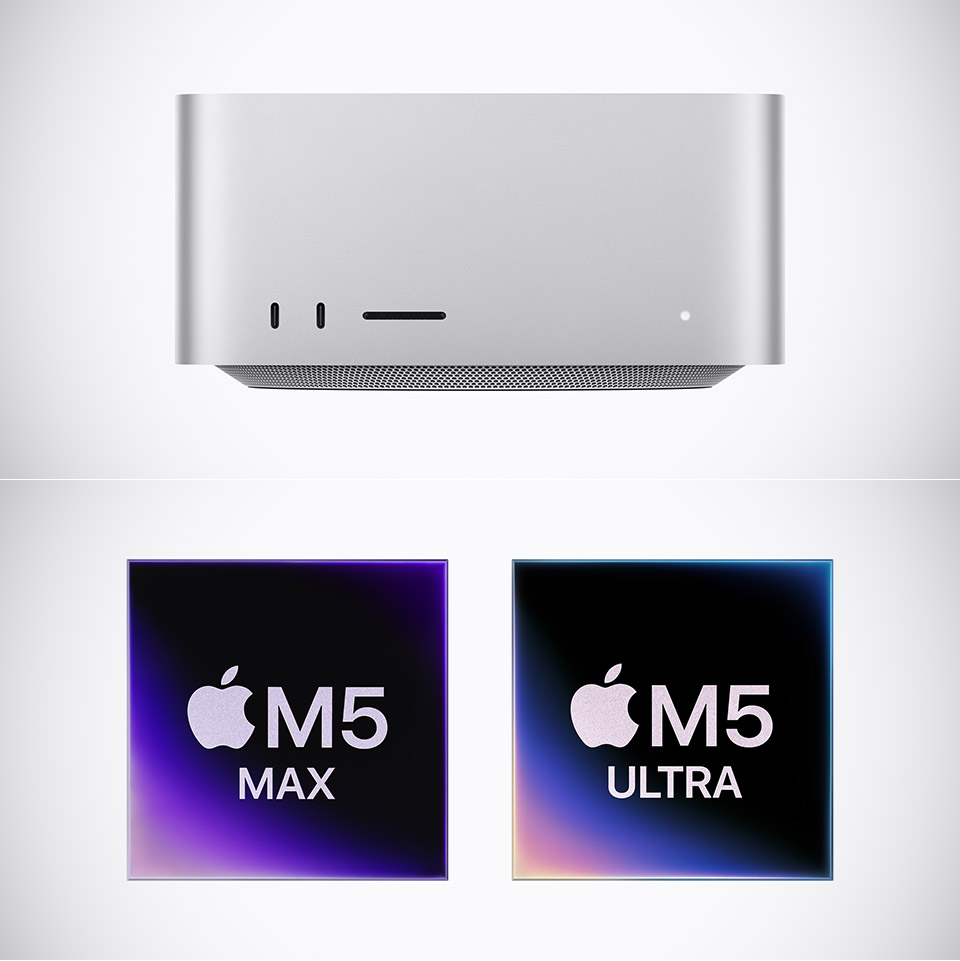
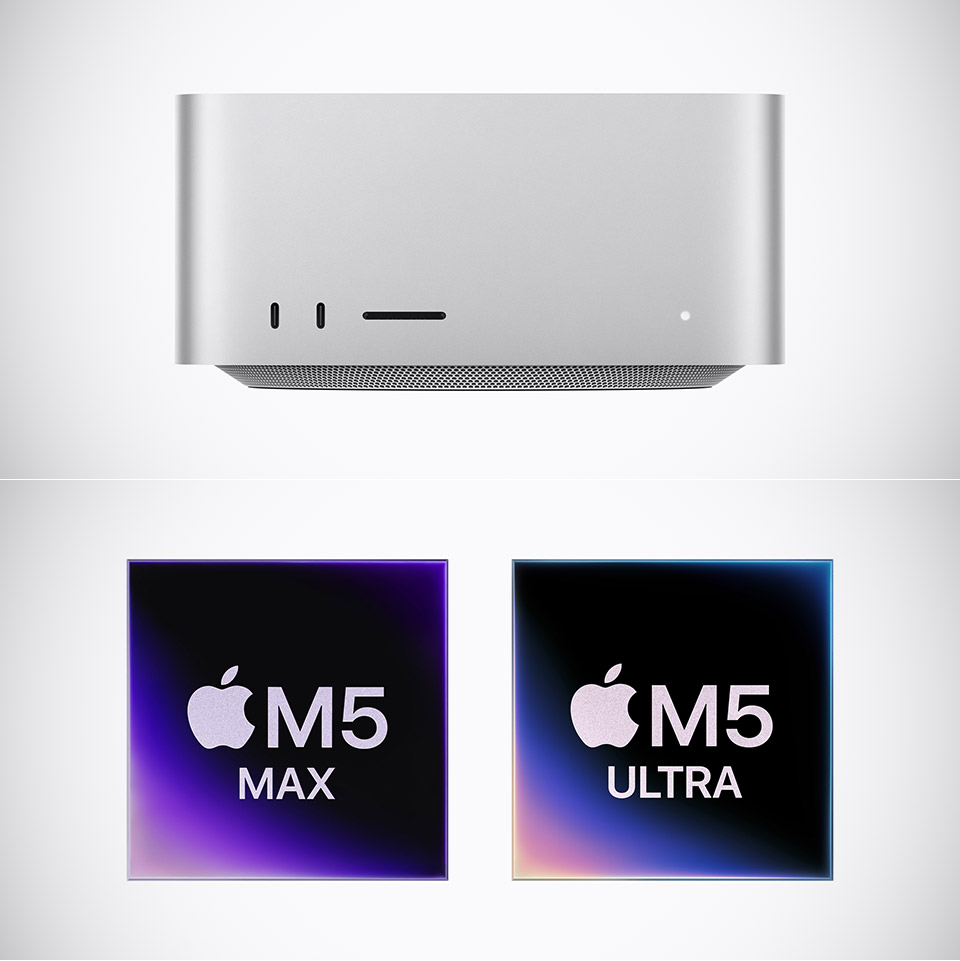
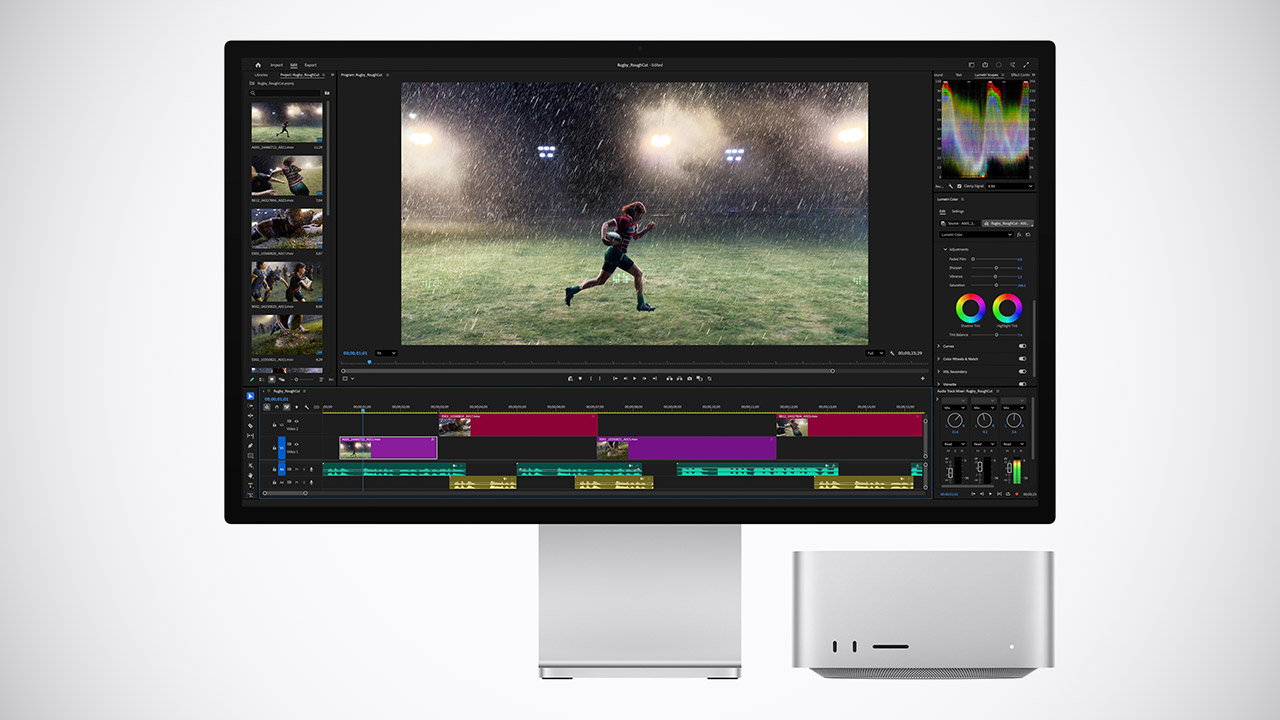
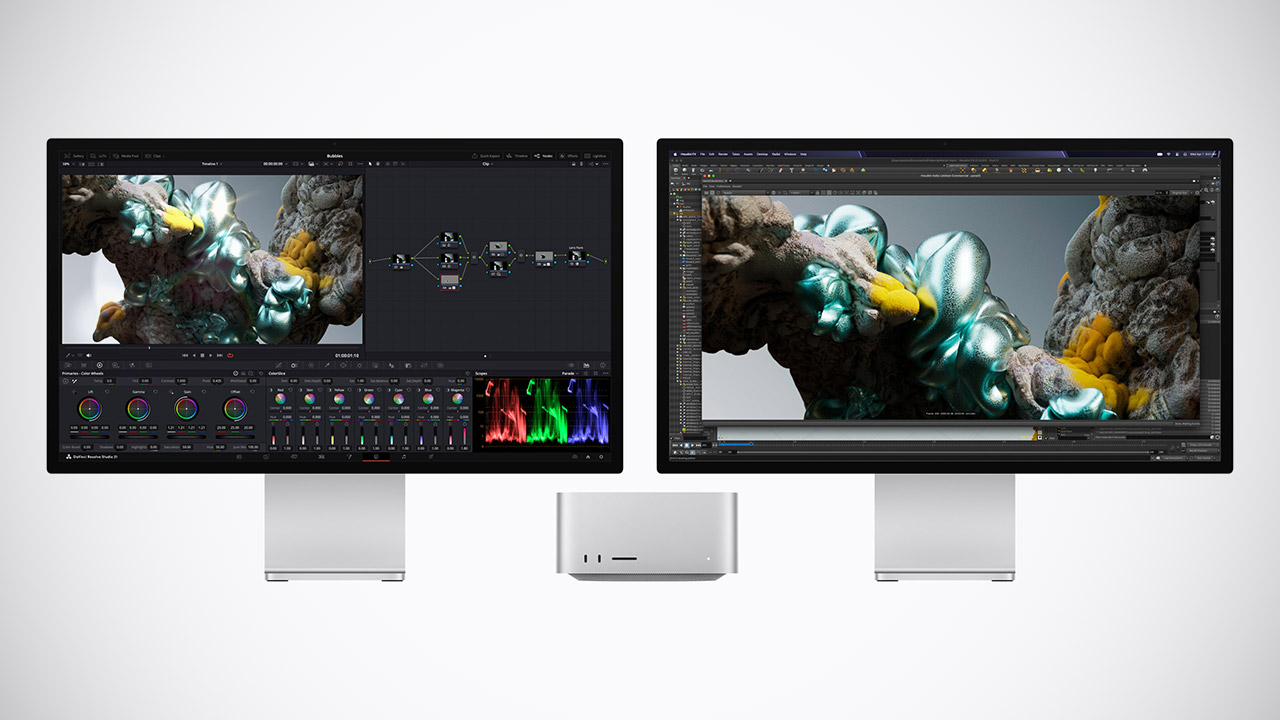
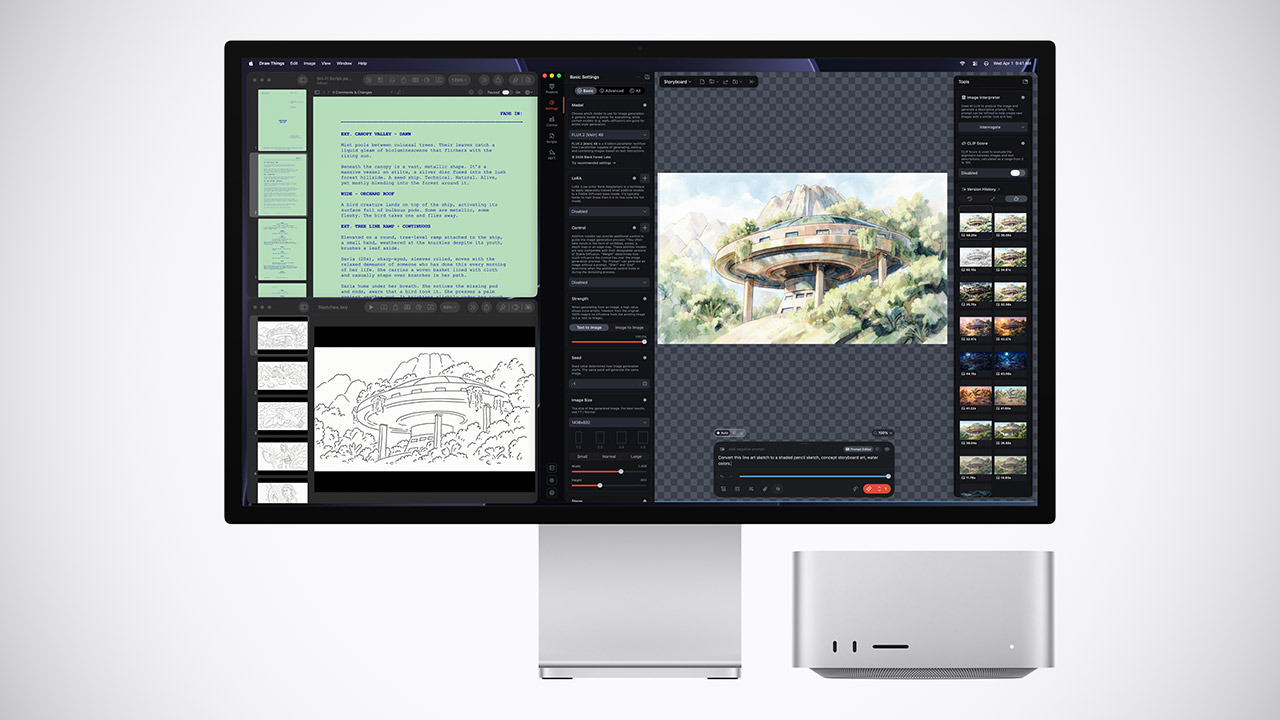
Apple’s New Mac Studio M5 Max and M5 Ultra Turn the Desk Into a Full AI Workshop

Published

on

Apple Mac Studio M5 Max M5 Ultra
Apple just announced two new Mac Studio models based on the M5 Max and the all-new M5 Ultra. These machines keep the sleek, compact silver box that has long sat beneath monitors and next to keyboards. What changed is within, and the modifications are geared squarely at people who spend their days rendering, training LLM models, grading footage, or creating massive codebases without ever leaving their desk.


The M5 Max arrives first and appears to be the more user-friendly of the two. It features an 18-core CPU with six super cores and twelve performance cores. The GPU starts with 32 cores and can be upgraded to 40 cores, and to top it off, a Neural Accelerator is embedded directly into each of those cores. Memory capacity ranges from the base 36GB to an eye-popping 128GB. Memory bandwidth reaches a stunning 614GB per second when using the highest-end GPU. When it comes to storage, you can expect a minimum of 512GB and a maximum of 8TB, which is plenty for any project, let alone one pushing the boundaries of 3D and motion graphics. The price? You can expect to pay $2,499.

Sale


Apple 2025 MacBook Pro Laptop with Apple M5 chip with 10‑core CPU and 10‑core GPU: Built for AI…
  • SUPERCHARGED BY M5 — The 14-inch MacBook Pro with M5 brings next-generation speed and powerful on-device AI to personal, professional, and creative…
  • HAPPILY EVER FASTER — Along with its faster CPU and unified memory, M5 features a more powerful GPU with a Neural Accelerator built into each core…
  • BUILT FOR APPLE INTELLIGENCE — Apple Intelligence is the personal intelligence system that helps you write, express yourself, and get things done…

It’s worth noting that this configuration is intended for professionals such as musicians, photographers, and software developers, who work with real-time 3D and motion graphics on a daily basis. Apple claims a 50% gain in GPU performance over the previous generation, particularly for these types of tasks. We’re also talking about third-generation ray tracing and significantly improved media engines, which will undoubtedly make life much easier for anyone who spends their days switching between a variety of creative programs.

Advertisement


M5 Ultra is the big cheese, and it’s going to blow the doors off. To make it, Apple essentially takes two M5 Max dies and connects them together with their new UltraFusion connection. The end result is a CPU with at least 30 cores (10 super cores and 20 performance cores) and a maximum of 36 cores (12 super cores and 24 performance cores). That’s a lot of processing power, while the GPU starts with 64 cores and can go up to 80. To emphasize the point, each of those GPU cores comes equipped with its own Neural Accelerator. Memory starts at 96GB, but can go up to 256GB right now, or 512GB if you’re lucky and it arrives on time for your project. And what about bandwidth? Let’s just say you’re in for a treat—1.2TB per second, to be specific. Storage? It starts at 1TB and goes up to a whopping 16TB.

Apple Mac Studio M5 Max M5 Ultra
This is what Apple calls its most powerful chip yet, and with good cause. They promise up to 1.3 times the CPU performance of the previous M3 Ultra in terms of multithreading, up to 1.8 times quicker graphics, and a staggering 4.3 times peak AI compute. And any video editors out there will be pleased to discover that this system can play 33 streams of 8K ProRes 422 material at no less than 30 frames per second. Do you want to operate a large language model locally? Not an issue. Color grade uncompressed 8K film, perform intricate fluid simulations, or train a large model on your own? That’s suddenly no longer an issue.

Apple Mac Studio M5 Max M5 Ultra
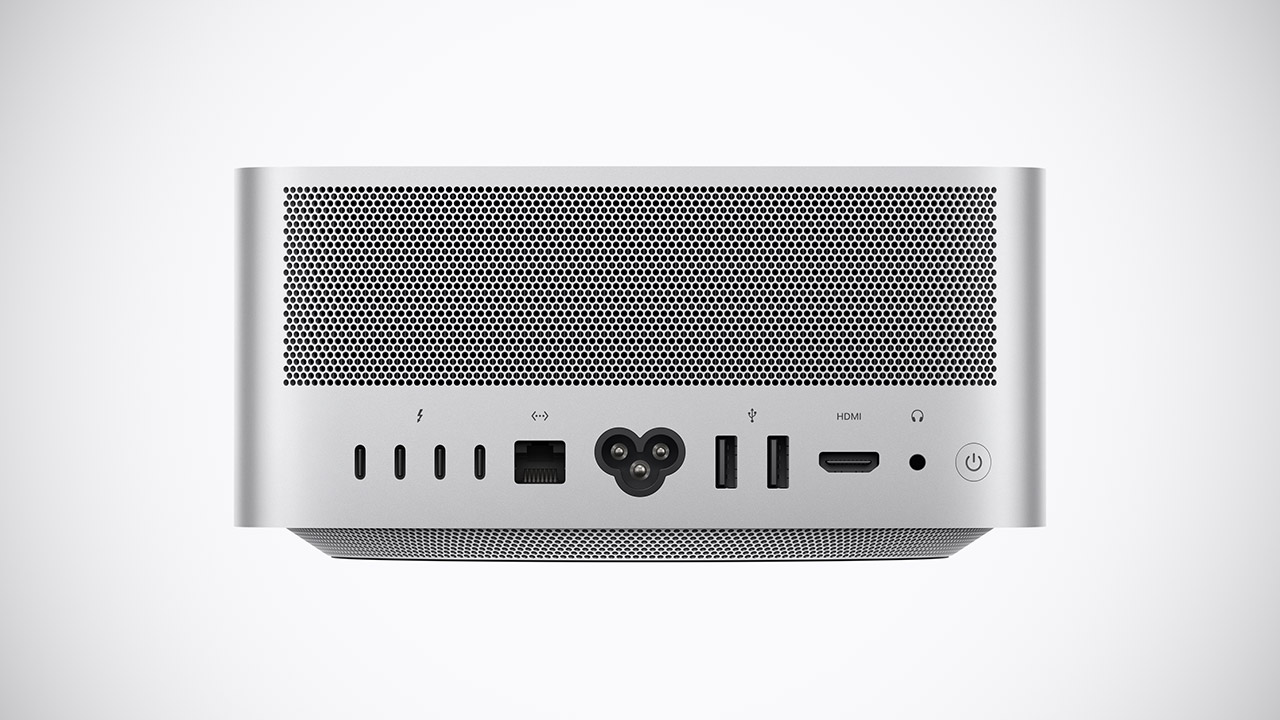
Both the M5 Max and M5 Ultra retain the same set of ports that made earlier Mac Studios so practical in edit suites and design studios, with Thunderbolt 5 ports capable of delivering up to 120Gb per second. Designers will be pleased to learn that the Ultra model can drive up to eight external displays, including four Studio Display XDR units running at full 5K and 120Hz. They also support Wi-Fi 7 and Bluetooth 6, and if you work in production, you’ll be pleased to know that there is a genlock option via USB-C that keeps your camera and display in perfect sync.

Apple Mac Studio M5 Max M5 Ultra
As you get away from the base specifications, pricing begins to rise dramatically. A fully configured M5 Max with 128GB of memory and 8TB of storage costs a whopping $8,899. On the Ultra side, upgrading to a 36-core CPU and an 80-core GPU, as well as 256GB of memory and 16TB of storage, costs $18,299. They’re still waiting to release the 512GB RAM option, which is anticipated to be ready in late October, but Apple hasn’t said a word yet about the price. On the other side, education discounts typically reduce the initial price by a few hundred dollars.

Apple Mac Studio M5 Max M5 Ultra
Pre-orders began today, and the majority of the options are expected to ship on September 22. However, the Ultra models with the greatest memory specifications will take a few weeks longer to arrive. When they do, they will ship with macOS 27 Golden Gate.

Source link

Advertisement
Continue Reading

Tech

Canadian Streaming Content Becomes a US Trade Issue

Published

on

Canada’s cultural-content rules have become a flashpoint in its trade fight with the U.S., after American negotiators reportedly demanded that Ottawa drop requirements for streaming services to promote Canadian and French-language content. Canada refused, even as it has already backed away from some financial levies on streamers. “We were not prepared to compromise on our sovereignty, the protection of the French language, and our culture,” Prime Minister Mark Carney said in a speech on Saturday after trade talks collapsed. CBC.ca reports: Ottawa has long required broadcasters to promote and support Canadian content (Cancon), all the way back to song quotas for AM radio stations. In 1991, the government brought in the Broadcasting Act. The law states that “the Canadian broadcasting system shall be effectively owned and controlled by Canadians” and that the Canadian broadcasting system should “serve to safeguard, enrich and strengthen the cultural, political, social and economic fabric of Canada.” But decades later, the rising popularity in Canada of streaming platforms such as Netflix, YouTube, Amazon Prime and Spotify raised questions about Cancon and broadcasting rules. Video and audio streaming services were not, for example, required to support and promote Cancon, but their TV and radio counterparts were.

Looking to address the imbalance, the former Trudeau government brought forward a bill in 2022 to update the Broadcasting Act, called the Online Streaming Act. “Canadian broadcasters have invested in and introduced us to the incredible Canadian programs that so many of us love. We are updating our laws so online streamers have to contribute in a similar and equitable way,” a 2022 government news release said. The legislation was controversial from the start, with the government and supporters saying it was a necessary evolution of Canada’s media laws in the digital age, while opponents expressed concerns that it was overreach and an attempt to regulate the internet.

American streamers and digital media companies opposed the legislation fiercely. The bill passed with amendments and became law in April 2023, but the government delegated much of its interpretation — including how much money streamers would have to contribute to Cancon — to Canada’s broadcast regulator, the Canadian Radio-television and Telecommunications Commission (CRTC). But getting streaming companies to pay up has been a long and confusing saga. […]. As for why the U.S. government is so invested in the issue? Mariane Bourcheix-Laporte, a postdoctoral fellow in the communication studies and media arts department at McMaster University in Hamilton, said it could be about power.

“The Americans have had, since after World War II, a very strong cultural policy of pushing out American content into the world,” Bourcheix-Laporte, who has worked with the CRTC, said. “This has been a strategy — a soft-power strategy — for the American government, in parallel to their military strategies and political alliances strategies.”

Advertisement

Read more of this story at Slashdot.

Source link

Advertisement
Continue Reading

Tech

An audiophile headset for gamers

Published

on

The Asus ROG Kithara brings Hifiman’s planar-magnetic drivers and signature design to the Mac gaming world with aplomb that’s sometimes undermined by unfortunate complexities.

In a world that’s full to the brim with mediocre gaming headsets, this Asus ROG and Hifiman collaboration is certainly different. Hifiman is known for its premium headphones aimed squarely at audiophiles with plenty of money to spend on their hobby.

By contrast, gamers aren’t known for their willingness to part with their hard-earned cash. Unless it warrants it, that is. And in the case of the Asus ROG Kithara, their $300 would be money well spent indeed.

I’ve spent the last few months with this headset (or headphones, depending on how you look at it.) I’ve used it to play some great games and listen to some not-so-great music. Go West fans shout out in the comments. I can’t be the only one.

Advertisement

In all that testing, one thing has become clear. Asus and Hifiman have made a great pair of headphones. Whether they made a great gaming headset will depend on how you plan to use it.

ROG Kithara review: Design and build quality

The first thing that you notice when unboxing the Kithara is its gargantuan size. It’s easily the biggest headset or headphones I’ve ever used, but with good reason. The size is dictated by the technology.

The technology in question is Hifiman’s 100mm planar-magnetic drivers, something that dictates both the size and quality of the Kithara. Apple’s AirPods Max 2 have custom 40mm drivers, just to put that into perspective.

Close-up of over-ear headphones with one ear pad removed, revealing the internal speaker, and the other pad labeled R for right, resting on a light surface

ROG Kithara review: Hifiman’s planar-magnetic driver is huge

Advertisement

Hifiman’s huge drivers are the reason for the Kithara’s mammoth ear cups, and part of the reason for the headset’s 420-gram (14.8-ounce) heft. The other reason is the metal construction. The headband is paired with an oversized metal structure that looks incredibly odd to anyone not wearing it.

The good news is that the band does a good job of distributing the weight across the head. The open-backed design of the ear cups also helps make for a more airy feeling than you might expect when you first see the sheer size of the Kithara.

Buyers of the Kithara will receive two pairs of ear pads in the box, offering a little customizability to proceedings: one set with thick memory foam for cushioned comfort and a faux leather finish and another, slightly smaller pair that features a lighter, cooler mesh material.

ROG Kithara review: Connectivity and features

A lot of premium gaming headsets are wireless, and that’s something that many gamers have come to expect. The Kithara takes a different approach, using a wired connection that ensures it can be used with just about any device you choose to play.

Advertisement

But this wired approach is where some of that complexity first comes into play. The Kithara comes with not one, but two cables in the box, each designed for different use cases.

One of the included cables incorporates a flexible microphone designed for multiplayer gaming. The second cable is for those who don’t need the microphone because they’re listening to music or playing a single-player game.

Advertisement

Advertisement

Advertisement

Advertisement

Advertisement

Advertisement

Advertisement

Advertisement

Advertisement

Price $299.99
Weight 14.8 oz / 420 g
Drivers 100mm Planar Magnetic
Acoustic Design Open-Back, Circumaural
Frequency Response 8 Hz – 55,000 Hz
Impedance 16 Ohms
Microphone Detachable Full-Band MEMS Boom Microphone (20 Hz-20 kHz)
Connection Type Wired only: 3.5mm audio jack, balanced 4.4mm Pentaconn, 6.3mm (1/4″), USB-C
Compatibility PC, Mac, PS5*, PS4*, Nintendo Switch*, Nintendo Switch 2*, Xbox Series X|S (Audio only via controller jack)
*Microphone features require USB-C adapter or split jack input
Battery Life N/A (Wired)
Features Swappable 3-in-1 hi-fi cable, 1.8m gaming cable with boom mic, USB-C DAC adapter (24-bit/96kHz), separate ear pad options (velour & mesh/leatherette)
Software N/A

Each of the Kithara’s earcups has its own 3.5mm socket, so each of the cables connects to each cup separately.

Advertisement

The cable with the microphone also has an inline volume control and the option to mute the mic when needed. The other end of the cable terminates in a pair of 3.5mm connectors; one for audio, one for the microphone. There’s also an adapter that takes both of those connectors and converts them into a single USB-C connector.

This is another area where the Kithara is more complicated than I’d like. Plugging the headset into a PS5 or Xbox is as simple as plugging it straight into the controller.

But if you also want to use the microphone, you’re left with connectors for both audio and the mic itself. Controllers only have a single 3.5mm socket, which is a problem.

There are different workarounds depending on which console you own. PS5 owners can use the USB-C adapter, so long as the cable is long enough to reach its destination.

Advertisement
Hand holding a pair of black over-ear headphones with a wide padded headband and dual metal support bands, shown against a bright indoor background with strong sunlight and shadows

ROG Kitahra review: It’s hard to miss the ROG branding.

Xbox owners will need to buy a TRRS adapter that combines the audio and mic connectors into a single 3.5mm one. They aren’t expensive, but it’s a complication that needs to be considered if you’re an Xbox gamer.

The standard audio-only cable is clearly the one that buyers should use if they don’t need to use the microphone. If only for its flexibility.

This cable also connects to the headset via two 3.5mm connectors, but it’s the other end that’s interesting. It features a 3-in-1 connector that turns into any of the 3.5mm, balanced 4.4mm, or 6.3mm connectors that are included in the box.

Advertisement

This approach adds flexibility, allowing the Kithara to be used with consoles, PCs, and Macs as well as DACs and amps.

ROG Kithara review: Performance

I tested the Kithara headset with a variety of devices, but it spent most of its time connected to my 16-inch M4 Pro MacBook Pro, the family’s Xbox Series X, and our PS5. I used both of the cables and tested the microphone while playing multiplayer games like “Marathon.”

In terms of audio quality, the Kithara might just be the best-sounding headset I’ve experienced. The combination of the near-zero distortion and almost-instant response of Hifiman’s driver tech sees to that.

Black over-ear headphones with large oval ear cups resting on a light surface, casting long shadows from bright side lighting, with a thin audio cable extending from one side

ROG Kithara review: Size apart, this is a good-looking headset

Advertisement

The audio is pin-sharp, aided by the wide soundstage afforded by the headset’s open-backed design. Spatial separation is excellent, making distant footsteps in games like “Marathon” easier to locate.

Listening to music, the one possible knock I have for the Kithara is a slight brightness to the treble. Not too much, but just enough to be noticeable if you’re coming from something like AirPods Max 2.

At the other end of the EQ scale, bass is controlled and avoids the mushiness that can be a hallmark of gaming headsets. The Kithara is equally at home playing games as it is listening to music as a result.

This is helped by the surprisingly low impedance rating for this headset. At just 16 ohms, the Kithara can be driven by iPhones and similar devices just fine.

Advertisement

ROG Kithara review: Hifiman’s DNA wins the day

If you’ve read this far, it should be no surprise that I’m a big fan of the Kithara. It’s my go-to headset when I want to really settle in for a night of gaming or enjoy some music.

For more casual gaming, the Arctis Nova 7x Gen 2 is still the headset I reach for, though. The wireless features and less cumbersome design just make it the pick-up-and-play option.

Hand holding a small audio jack plug in front of a colorful abstract background with glowing, wavy lines and sparkling dots, suggesting vibrant digital sound or music visualization

ROG Kithara review: It’s all about cables with this headset

Advertisement

But it just doesn’t sound as good, and that’s key here. Asus/ROG brought Hifiman on board to produce a headset that is all about audio quality first, everything else second.

It’s Hifiman’s planar-magnetic drivers that win the day for the Kithara, offering a listening experience that’s hard to match. I just wish the cabling situation wasn’t such a chore.

But that might not be a consideration for you. You might plug your Kithara into a Mac and never unplug it again. And you’ll be very happy that you did.

Sure, at $300, the Kithara isn’t cheap. But it’s considerably cheaper than AirPods Max 2 and, dare I say it, sounds even better.

Advertisement

ROG Kithara review: Pros

  • Incredible sound quality
  • Multiple cabling and connector options
  • Surprisingly comfortable
  • Optional microphone

ROG Kithara review: Cons

  • Complicated cable options for some devices
  • Large earcups won’t suit everyone
  • Not for fans of wireless headsets

ROG Kithara rating: 4.5 out of 5

Where to buy the Asus ROG Kithara

The ROG Kithara has a $299.99 RRP but is on sale now at Amazon for less than $250. The headset currently sells for $259.99 on the Asus ROG website.

Source link

Continue Reading

Trending

Copyright © 2025