Artemis II and its four-person crew have entered the Moon’s “sphere of influence,” meaning the spacecraft is more affected by lunar gravity than the Earth’s pull. The transition occurred at a distance of 39,000 miles from the Moon, four days, six hours and two minutes into the mission. The next and most important phase will happen tomorrow when the craft loops around the Moon’s far side, taking humans deeper into space than they’ve ever been before.
At their apogee, Astronauts Reid Wiseman, Christina Koch, Victor Glover and Canada’s Jeremy Hansen will be 252,757 miles from Earth. That will break the previous record held by the Apollo 13 crew by just over 4,000 miles. They’re the first humans to cross the lunar threshold since 1972’s Apollo 17 moon landing mission.
The crew spent this weekend carrying out preparations for their lunar flyby. That included manual piloting demonstrations, reviewing their science objectives for the six-hour observation period and evaluating their space suits, which are there for life support in the event of an emergency and for their return home. But, they’ve had plenty of time to take in the views, too — and those views sure are spectacular. In the latest series of images shared by the space agency, the astronauts are seen gazing at Earth through the windows of the Orion spacecraft.
Orion will reach the moon’s vicinity shortly after midnight on Monday, April 6. Later that day, the crew is expected to reach a point farther than any humans have traveled from Earth, surpassing the record of 248,655 miles from Earth set by the Apollo 13 astronauts in 1970.
Advertisement
Mission specialist Christina Koch takes in the view. (NASA)
The lunar observation period will start at 2:45PM ET, and a few hours later, they’ll be behind the moon and briefly drop out of communication. The spacecraft’s closest approach to the moon is expected to occur at 7:02PM, when it will be 4,066 miles from the surface. “From that distance, the crew will see the entire disk of the Moon at once, including regions near the north and south poles,” according to NASA. The crew will later get a chance to see a solar eclipse “as Orion, the Moon, and the Sun align in such a way that the astronauts will see our star disappear behind the Moon for about an hour.” NASA will have coverage of the flyby starting at 1PM ET.
Update April 7 at 1:40 AM ET: The post has been updated with news that Artemis II has entered the Moon’s sphere of influence.
Earlier last month, I noticed my son’s baby monitor, the Nanit Pro, started showing a sleep score every morning. This number tells you how well your child slept the night before on a scale from zero to 100. Sleep scores track how long it takes to fall asleep, sleep cycles, heart rate throughout the night and any disruptions that may have happened. This is also one of our expert-recommended baby monitors, so it seemed appropriate that it would provide this information. As many parents know, infant and toddler sleep habits can be unpredictable.
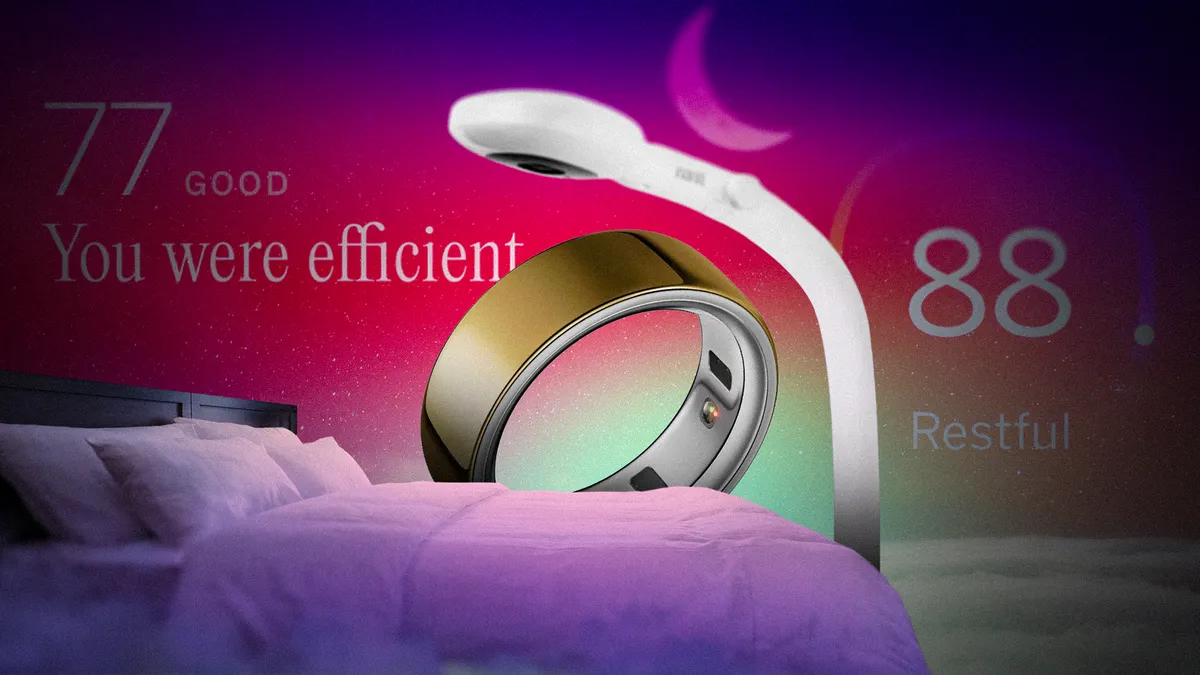
I previously tested the Oura Ring, one of CNET’s favorite smart rings, which tracks your health and sleep data. It also provides a sleep score based on data collected by its sensors on your finger (movement, temperature, heart rate and more). I started using the Oura Ring to hold myself more accountable for going to sleep on time.
Seeing that my son has his own sleep score made me think, “I bet he has a better sleep score than I do.” I decided to conduct an experiment to see if I could prove my point by comparing our sleep scores.
Advertisement
To preface this, my 2.5-year-old has been going through a rough patch of sleep, which I’m blaming on a sleep regression (a temporary phase when babies and toddlers struggle with sleeping). Despite the disrupted sleep, he still seems better rested than I am on most days.
I started consistently wearing my Oura Ring to put my theory to the test. For the sake of this experiment, I tracked our data over a couple of weeks to prove (or disprove) my point.
How the Nanit baby monitor tracks sleep
As previously mentioned, I use the Nanit Pro Baby Monitor to keep an eye on my son while he sleeps. According to Nanit, it first introduced the sleep score in December 2025, and this is the first AI-driven, science-backed sleep score designed to grow with your child and automatically adjust as they age. Nanit collects the sleep score using the same advanced computer vision technology sensors it has used for years to analyze sleep.
To come up with a sleep score, Nanit looks at four aspects of sleep: sleep duration (how long your child slept), sleep timing (your child’s bedtime and wake-up time), sleep continuity (how smoothly your child sleeps) and parent visits (how often a guardian tends to the child).
Advertisement
How our sleep scores compared
After a week of reviewing his data, my son’s sleep scores were higher than mine overall, as I predicted. He was hitting scores over 80, with the lowest being a 74. His highest was a 95, which I vividly remember was one of the times he slept through the night without getting up once. I also slept peacefully because I wasn’t being awoken by cries at 3 a.m.
For context, below is the week’s worth of data I collected from the Nanit Pro and the Oura Ring.
Friday, Feb. 20
The first day shows that my son had a better sleep score than me.
Advertisement
CNET/Giselle Castro-Sloboda
Our sleep scores were close, but I didn’t feel well-rested, even though Oura said I got a good amount of sleep. It’s not common for my son to sleep under 10 hours, so that’s how you know he didn’t have the most restful night. Plus, he woke up before 6 a.m. on this day.
Saturday, Feb. 21
Somehow, I scored a higher sleep score than my toddler on this day, but by a small margin.
CNET/Giselle Castro-Sloboda
I found it ironic that I scored slightly higher than my son, even though he slept longer than I did and we both had a poor night’s sleep. He also got up earlier than normal. A normal wake time for him is between 6:30 a.m. and 7 a.m.
Advertisement
Sunday, Feb. 22
My son had a higher sleep score, and mine was efficient on this day.
CNET/ Giselle Castro-Sloboda
As you can see, he had a higher sleep score than I did and slept over 11 hours. He also woke up at 7 a.m., which I consider sleeping in for both of us. My sleep score was considered efficient, even though I remember feeling tired this day.
Monday, Feb. 23
Advertisement
My son had a higher sleep score than me on this day and even slept about 10 hours.
CNET/Giselle Castro-Sloboda
Monday night was another night when my son had a higher sleep score than me. He slept about 10 hours, but this was one of those days when he woke up slightly earlier than his usual wake time.
Tuesday, Feb. 24
This was one of my worst sleep scores during the experiment. However, my son fared pretty well.
Advertisement
CNET/Giselle Castro-Sloboda
It’s evident I had a terrible night of sleep on Tuesday. My son had a significantly higher sleep score than me, which doesn’t surprise me. I slept in his bed and couldn’t get comfortable, which affected my ability to get quality sleep.
Wednesday, Feb. 25
This was one of the couple of nights where we both had a restful night of sleep.
CNET/Giselle Castro-Sloboda
This was the one day out of the week when we both slept well, and I felt the most refreshed. You can see by our sleep scores that his is nearly perfect and still higher than mine. I could tell by his mood that day that he was well rested, and he had fewer tantrums.
Advertisement
Thursday, Feb. 26
The Nanit didn’t collect a sleep score for my son this night. I only have the Oura sleep score, which showed I had an OK night of sleep.
CNET/Giselle Castro-Sloboda
I’m not sure why the Nanit didn’t collect enough data for a sleep score this night. I’m assuming it must’ve disconnected from the Wi-Fi at some point. This was one of my issues with the monitor when I first reviewed it. Since it only functions on Wi-Fi, the monitor can’t be used without it.
The Oura Ring noticed I had another so-so night of sleep and pointed out how sleep trends can fluctuate. I’ve included one extra day to this experiment to even things out.
Advertisement
Friday, Feb. 27
My son had a decent night of sleep, but Oura pointed out that I’ve been having a bad period of sleep.
CNET/ Giselle Castro-Sloboda
My son had better sleep than I did again on Friday, sleeping for about 10 hours. He slept well overall through the night, except for a couple of visits, but you can tell it affected my sleep. Even Oura notes that my sleep hasn’t been the best and says that this can happen some weeks.
Saturday, Feb. 28
Advertisement
This day had my worst sleep score during the experiment, and I felt it.
CNET/Giselle Castro-Sloboda
I clearly was depleted on Saturday morning. This was my lowest sleep score yet. My son had a really bad night of sleep, continuously getting up because of nightmares. Coincidentally, this was the night before I signed up for a bootcamp class in the morning. It’s a miracle I made it to the class, let alone completed it.
Sunday, March 1
My sleep wasn’t the worst this night because my son had a more restful slumber.
Advertisement
CNET/Giselle Castro-Sloboda
This night wasn’t so bad for either of us, but my son’s sleep score was still higher than mine. He slept the majority of the night, and I think that can be attributed to getting energy out by running around with other kids during a family party the evening prior.
Monday, March 2
This was a better day of sleep for me, but not as good for my son.
Giselle Castro-Sloboda
Sunday was a successful night, and I even got an extra hour of sleep. My rating was higher than my son’s, surprisingly, and I did feel more rested.
Advertisement
Toddler sleep explained
Brittany Sheehan, a certified pediatric sleep therapist, tells CNET that sleep needs for toddlers vary by age. “Total sleep needs do diverge as kids get older, but for a 2-year-old, for example, we ideally want at least 11 hours overnight in bed, if not 12, along with a nap that is at least two hours, up to three hours,” said Sheehan. If it’s a true sleep regression, Sheehan notes that it can last anywhere from a day or two to up to six weeks in the most extreme cases.
Under normal circumstances, my son is a good sleeper (with the occasional wake-up), so when he started having frequent night wakings, I suspected it was a sleep regression. Dr. Alisa Niksch, senior director of medical affairs at Owlet, a baby monitor company, points out that disordered sleep during early childhood doesn’t occur for the same developmental reasons as those earlier in infancy.
“What parents are usually seeing is a disruption that stems from developmental and environmental factors,” Niksch said. She elaborates that for toddlers, the most common driver is developmental, driven by a growing imagination and increased cognitive function.
“Night wakings where a child cries but resettles quickly is a sign of this growth, as the developing brain is actively processing new experiences and emotions during sleep, which can surface as nightmares,” she said. Nightmares are common during this age, and although they’re normal, they also shouldn’t be ignored.
Advertisement
Natalie Barnett, who holds a doctoral degree and is vice president of clinical research at Nanit, said, “If [nightmares are] occurring once in a while and your child is calmed by a quick hug and then [goes] back to sleep, you probably don’t need to do anything about it necessarily.” However, if the nightmares are occurring repeatedly or are interfering with daytime function, she recommends speaking with your child’s pediatrician.
How to improve your toddler’s sleep
Sleep is important for toddlers and can affect everything from their mood to eating behaviors. Niksch points out that overtired toddlers often become hyperactive and emotionally dysregulated. Additionally, poor sleep affects their immune function, growth hormone release and early memory and learning. This also applies to naps, which they outgrow over time but shouldn’t be eliminated right away.
Generally, children under three should still be napping, but as they reach ages three to four, total sleep needs decrease slightly to 10 to 13 hours, and naps become shorter and less frequent before disappearing altogether. If you’re at this stage, Barnett recommends cutting the nap back first before removing it altogether.
“If your toddler is resisting bedtime, it’s often a sign that they’re not tired enough, so you may want to think about cutting back or cutting out the nap,” Barnett said. “In those first couple of weeks after dropping a nap, it can be hard for your toddler to stay awake in the late afternoon.” She advises against placing them in the stroller or car, where they’re more likely to fall asleep, in the late afternoon, since even a short nap can mess with bedtime.
Advertisement
Sheehan says that parents often drop a toddler’s nap too early in an attempt to fix sleep problems, but this can have a negative, compounding effect. “Often nap struggles are behavioral, regression-related or simply the timing is off,” she said.
Another mistake Sheehan sees parents make with 2-to-3-year-olds is putting their child down for a nap too early. This impacts their sleep because they don’t have enough sleep pressure built up to take a good nap. If you’re seeing constant bedtime and nap-time resistance or early-morning wake-ups, this could mean your toddler’s sleep timing needs adjustment.
Even with sleep disruptions, you want to make sure that their bedroom is set up for sleep success. “To support better sleep, the fundamentals remain the same: a consistent sleep and wake schedule, a predictable bedtime routine and a dark and quiet sleep environment,” Niksch said.
What parents can do to feel less sleep-deprived
Parents often take the brunt of these sleep disruptions and also struggle to function at full capacity daily. Sheehan advises that parents figure out a process or arrangement with another caregiver that allows them to rest during these phases. “If you can’t make these changes, give yourself some grace and realize it’s OK to choose a nap over a run, or to tag team with a partner who is on duty for night wake-ups,” Sheehan said.
Advertisement
Niksch agrees and recommends that parents apply the same sleep principles for their toddlers to themselves: “Consistency matters most, whether that is committing to a regular sleep and wake schedule or building a simple bedtime routine that signals to the body that rest is coming.” She points out that some parents try to sleep when their toddler does, but for some, it can be challenging if they’re not tired enough.
“If sleep doesn’t come within 15 minutes of lying down, it’s better to get up and do something that calms the mind, like reading, until tiredness sets back in,” Niksch advised.
What I took away from this experiment
Eventually, I’m sure my son’s and my sleep scores will even out again, but for now, it’s important to support him as he transitions to the next stages of toddlerhood. The sleep scores feature of the Nanit baby monitor is helpful for better understanding my son’s sleep habits and is something I wish I had when he was an infant. It also gives me some insight into his mood on some days compared to others, since sleep affects so many aspects of a child’s life.
Even restarting my tracking helped — my sleep score showed me my blind spots, ways to improve my sleep and when to take it easy. As someone who likes staying busy, it’s easy for me to have a hard time resting. The Oura Ring tracking my sleep and stress levels reminds me to take a beat.
Advertisement
While I’ve only been a parent for two years, I’ve learned that children go through many phases. This sleep experiment was a necessary reminder that you can’t bypass the tough times; you just have to get through them as best as you can.
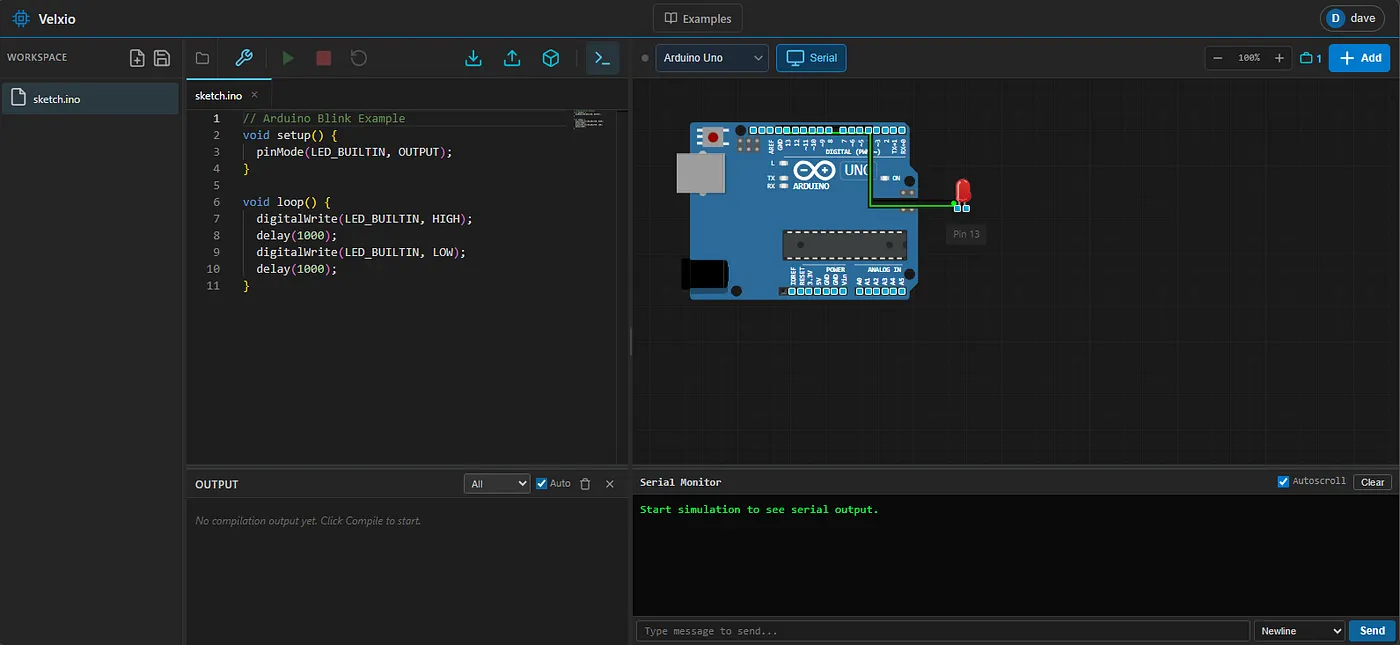
It’s always nice to simulate a project before soldering a board together. Tools like QUCS run locally and work quite well for analog circuits, but can fall short with programmable logic. Tools like Wokwi handle the programmable side quite well but may have license issues or require the cloud. The Velxio project by [David Montero Crespo] is quite an excellent example of an (online) circuit simulator with programmable logic and local execution!
It’s built largely around Wowki’s AVR8JS library for Arduino simulation. All CPU simulation occurs on the local computer, while sketch compilation happens on the backend using official Arduino tools. But this was certainly not the most impressive aspect of the project. Likewise, Velxio features RP2040 execution using the rp2040js library. It also features the execution of some ESP32 derivative boards built around the RISC-V architecture using the RiscVCore.ts library.
For more complex CPU architectures like the vanilla ESP32, Velexio implements a QEMU simulation on the backend. This methodology even enables the execution of Raspberry Pi Python code. Multiple boards can also be used in the same simulation, allowing one to test interactions between Raspberry Pis and other boards! It can also expand to handle multi-file code executions and it keeps everything in a backend database. Of course, everything is wrapped together in a neat modern UI, with a circuit diagram, parts selector, and full-blown IDE. You can try it at velxio.dev. Or, you could execute it on your home lab; it’s just one docker compose away!
NHS workers boycott Palantir software, saying it links them to endorsing the company
Government reportedly considered a break clause amid the backlash
However, UK’s FCA just awarded Palantir a trial contract
A growing number of NHS staff in the UK are reportedly refusing to use Palantir’s Federated Data Platform (FDP), according to claims from Financial Times, which reports informal boycotts from both clinical and non-clinical staff.
The biggest pushbacks come from ethical concerns over Palantir’s ties to US defense and intelligence agencies, as well as immigration enforcement and other controversial geopolitical activity.
There are also ongoing concerns over privacy and data governance when it comes to sensitive NHS patient data.
Article continues below
Advertisement
Palantir’s position in the NHS criticized from within
As well as the above, there’s also an ongoing push across Europe and the UK to reduce reliance on US tech firms – the US-headquartered company is clearly an indirect target in this geopolitically-influenced trend.
The report notes groups like the British Medical Association (BMA) are encouraging resistance to Palantir’s software, with campaigners arguing that using the platform essentially endorses the company.
Advertisement
Politicians have already responded to the backlash, agreeing in part with what campaigners stand for.
MPs say the criticism is about value, transparency and trust – not necessarily ideology – and as such, the UK government could be considering a break clause in the contract amid the backlash.
Sign up to the TechRadar Pro newsletter to get all the top news, opinion, features and guidance your business needs to succeed!
Together, the NHS and Palantir’s FDP claim to have opened up tens of thousands of new operations, reduced wait times and improved scheduling, by combining multiple data sources into one central database.
Advertisement
However, while politicians seem to be reacting to NHS workers’ arguments, Palantir’s footprint is far from disappearing in the UK, with the Financial Conduct Authority (FCA) awarding the US tech firm a three-month contract ahead of what could potentially be a much bigger contract.
Years of steady usage and exposure to the elements have taken a toll on Japanese railway stations, making replacement a headache. Finding competent contractors is difficult, and construction wages are high. Serendix collaborated with ABB to help JR West restore a historic wooden shelter from 1948 at a station in Wakayama Prefecture. This site, a true relic, was only frequented by around 270 visitors every day in a tiny coastal village near Arida that few people had ever heard of.
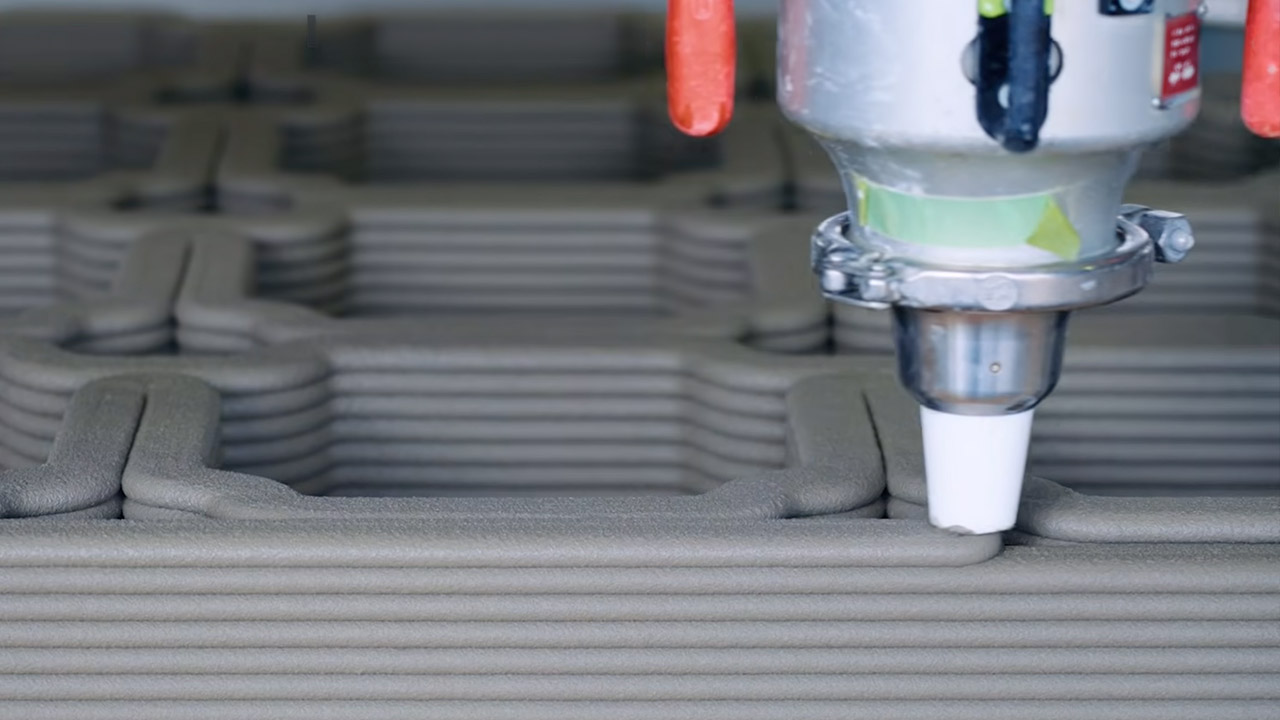
The factory handled the heavy lifting, and the ABB IRB 6700 robot arm stole the show. It was producing concrete components out of mortar and did an excellent job. Their Vertico nozzle proved to be a game changer, since it is four times more accurate than any other nozzle they’ve used, and they were able to reduce mortar waste by half, which had to be a positive thing. They also increased the arm’s range of motion to seven axes, which is rather astounding. It can also handle building fairly complicated surfaces.
High-Speed Precision: Experience unparalleled speed and precision with the Bambu Lab A1 3D Printer. With an impressive acceleration of 10,000 mm/s…
Multi-Color Printing with AMS lite: Unlock your creativity with vibrant and multi-colored 3D prints. The Bambu Lab A1 3D printers make multi-color…
Full-Auto Calibration: Say goodbye to manual calibration hassles. The A1 3D printer takes care of all the calibration processes automatically…
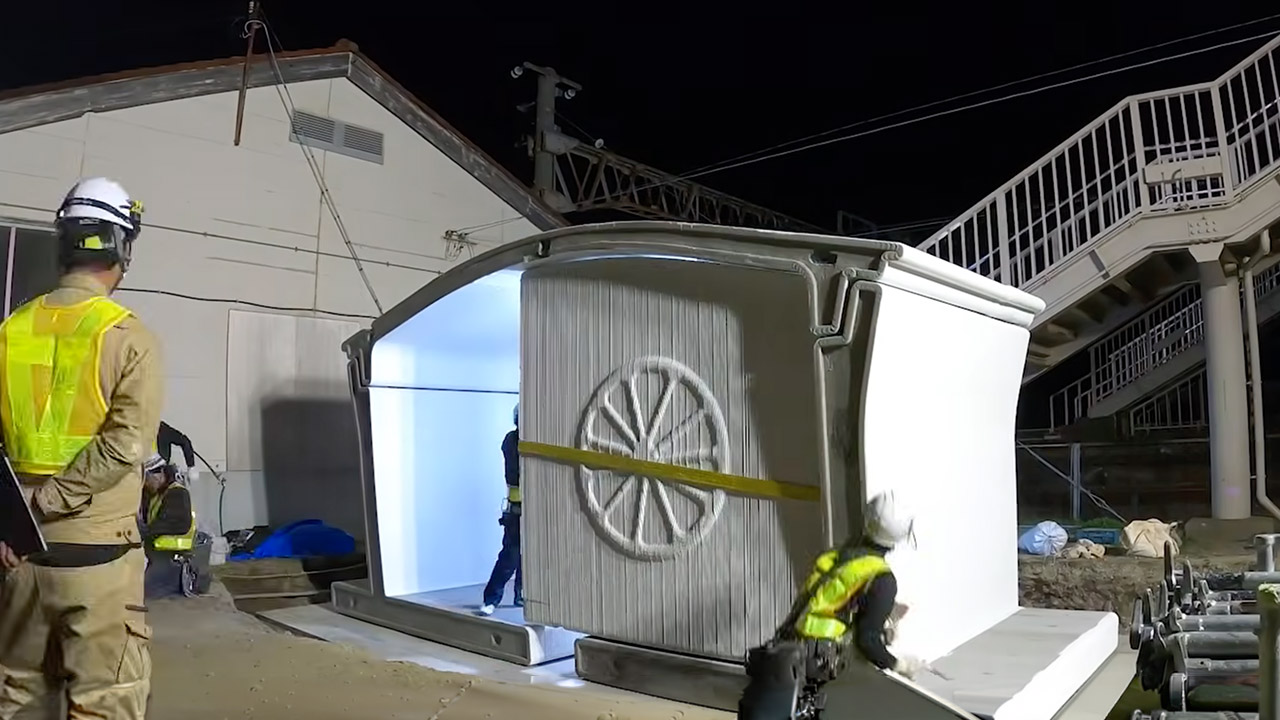
It took approximately a week to complete the printing process, but the important news is that all of the major components were completed and brought to the site, ready to be assembled. The designers chose an arched ceiling and even incorporated a few flourishes, and all of this was completed between the last train and the first the next morning. The crew then used the robotic equipment to assemble the pieces and create a completely new station in about six hours.
What truly sticks out is how much time and money they saved, and by saved, I mean that this printing method cut both time and cost in half. Furthermore, they used far less material. JR West stated that if this had been done the traditional way, the facility would have had to be shut down for months and would have cost double what they did, with the added benefit of reducing concrete and steel waste.
JR West executives stated that they had to complete this portion on the factory floor or the entire rail network would have come to a halt, and the Serendix employee was overjoyed with how the ABB arm performed, since his employer believes they can automate more of the procedure for the next job.
Light Detection and Ranging (Lidar): This system, also used by self-driving cars, fires out rapid laser pulses to map the terrain in 3D. It enables mowers to cut grass under thick tree canopies or near tall buildings where GPS signals usually fail.
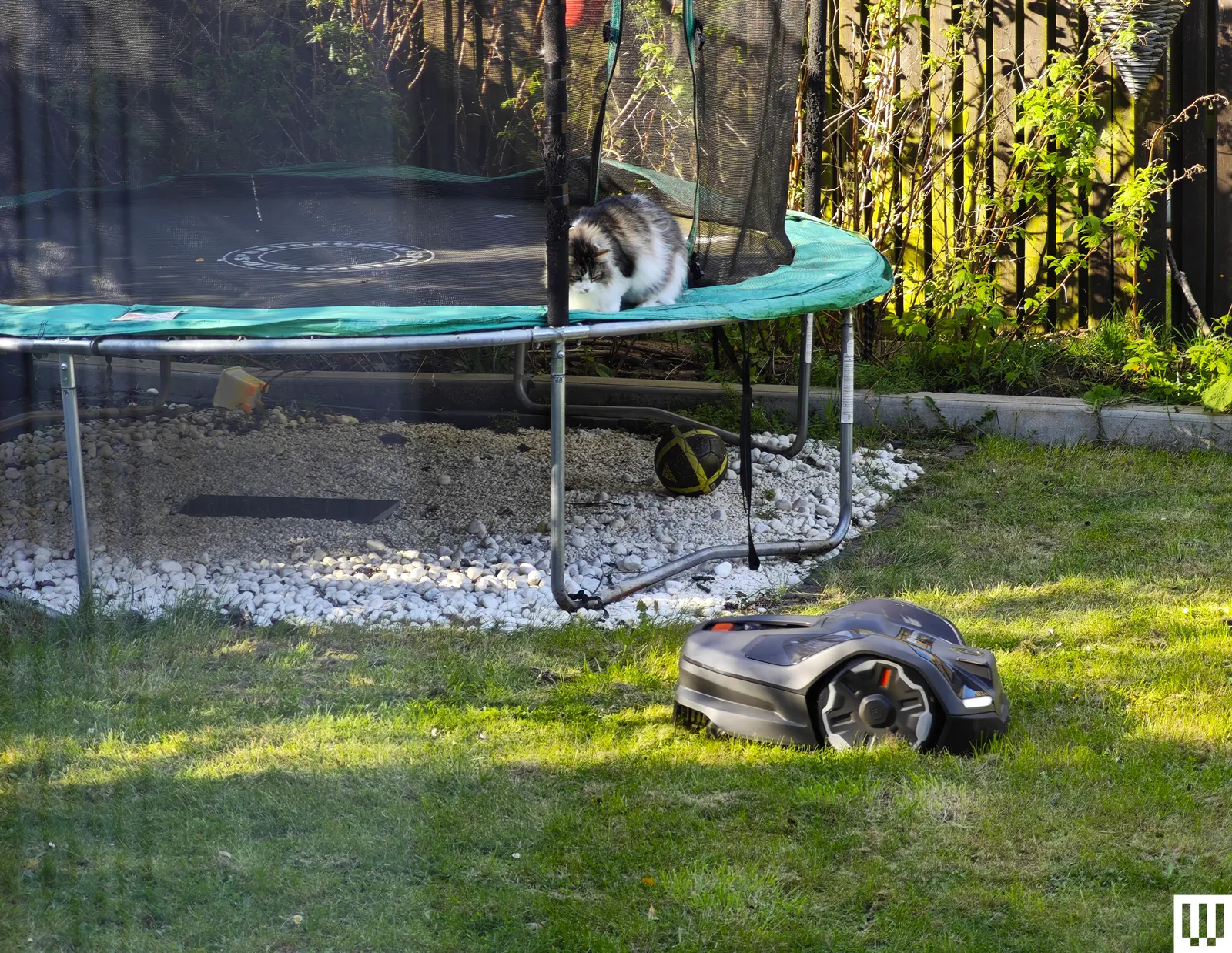
AI Vision: Some mowers now employ cameras to recognize lawn areas, borders, and obstacles. Robot mowers with AI vision can potentially avoid stray footballs, cats, other critters, and maybe even pet mess. But they can also be too sensitive, stopping for fallen branches, leaves, or overhanging plants.
Some of the top mowers, like the Mammotion I’m currently testing, employ a combination of the last three technologies to map and cut areas accurately, navigate reliably to and from the charging base, and avoid unexpected obstacles. None of them is foolproof. My top pick chewed up a deflated paddling pool, but if you set the sensitivity too high, they leave areas uncut.
In addition to finding their way, many of the latest robot mowers are built to handle rough terrain. Not too rough, but fine for a bumpy garden or a yard with steep inclines. Some models even come with interchangeable tires, so you can throw on grippier wheels when you need them. But it’s important to check what terrain and inclines your mower can handle upfront. Four-wheel-drive or all-wheel-drive mowers are best at handling steep or uneven ground.
Advertisement
The Cutting Edge
Traditionally, robot mowers have been terrible at cutting all the way to the edge of your lawn. Most of the early robot mowers I tested left a thick border of uncut grass, up to 1-foot wide. I don’t think this issue is entirely solved, but some newer models have offset blades that sit closer to the edge of the machine, or they have an overhanging section that extends past the wheels, so it can cut right to the edge when the robot mower turns. There are even robot mowers with built-in trimmers and other garden tools, though I’ve yet to test one.
While edge cutting is getting better, I still find that most robot mowers need some adjustment to reliably cut the entire lawn. I often have to edit the map or tweak sensitivity to ensure they cut all the way to the edge, yet there are still areas that they seem to miss. Plants, shrubs, and trees that overhang the lawn cause issues, as robot mowers, understandably, err on the cautious side when it comes to potential obstacles. There’s still room for improvement here.
Smart Finish
Husqvarna app via Simon Hill
While the first robot mower I tested churned my lawn into a muddy mess, most robot mowers now have some form of rain detection, so you can set them not to cut if the grass is wet. The latest models are also far better at handling wet grass and turning without skidding or churning up a big chunk of your lawn.
Some robot mowers offer customization in terms of the lawn finish you want. You may find an option in the app for Wimbledon Stripes (dark and light stripes), achieved by mowing rows in opposite directions. Some mowers can even do spirals, checkerboards, and other patterns.
When the inevitable Kessler Syndrome cascade sweeps Starlink and its competitors from Low Earth Orbit in what will doubtless be a spectacular meteor shower of debris, the people behind Sceye and its competitors are going to be laughing to the bank. That’s because they’re putting their connectivity rather lower than orbit — in the stratosphere, with high-altitude dirigibles.
The advantages are pretty obvious: for one, the dirigible isn’t disposable in the way the very-low-orbit satellites Starlink and its planned imitators use. For another, the time-of-flight for a signal to get to a dirigible 20 km up is less than a tenth of the time it takes to get 480 km up — and that affects latency. Thirdly, the High Altitude Platform System (HAPS) concept won’t require any special transmitters. Regular cellular modems using ordinary 4G and 5G bands and speeds are usable, which eliminates a big barrier to rollout.
If this all sounds a bit familiar, and even dated, perhaps that’s because it is — Google tried to beam internet down from the stratosphere with its Loon project, before shutting it down in 2021. One of Loon’s major shortcomings was reliance on the shifting winds of the upper atmosphere, something the new generation of dirigible stations won’t have to worry about.
Of course, until the positive feedback loop of satellite collisions creating debris that begets yet more collisions that we call a Kessler Syndrome — which we’ve written about in arcade form, oddly enough–one could also use these HAPS stations as a bridge between space-based and ground-based networks.
NASA has started to share images that the crew of Artemis II have taken of their trip to the Moon, including some taken on the iPhone 17 Pro Max.
An Artemis II crew member’s shot of Earth though a window – Image Credit: NASA
Months before the launch of Artemis II, NASA confirmed that the crew would be allowed iPhones to document the journey around the Moon. In galleries released by NASA, those first images are now back on Earth. The shots in the “Journey to the Moon” web gallery are a mix of images taken by imaging equipment brought along by the crew. While the newest standalone camera on the flight is a 2016 Nikon DSLR accompanied by some decade-old GoPro cameras, the crew were provided with a set of the iPhone 17 Pro Max for similar imaging duties. Continue Reading on AppleInsider | Discuss on our Forums
Oi, it’s time to start counting down to the end of The Boys. One of the most popular Prime Video shows of all-time is set to draw to a close with its fifth and final season. And, if you’re anything like me, you’ve been keenly awaiting its arrival since last season ended.
There won’t just be one episode to enjoy on launch day, either. Indeed,The Boys season 5‘s first two chapters will drop simultaneously when the R-rated TV series returns. When will that be? I’m glad you asked — read on for those diabolically all-important details.
What is the launch time for The Boys season 5’s two-episode premiere?
The Boys – Final Season Trailer | Prime Video – YouTube
Right now, The Boys 5 is set to make its grand entrance on Wednesday, April 8.
Advertisement
Article continues below
As long as Amazon doesn’t do what it did with Fallout season 2’s first and last installments, and release The Boys season 5’s first pair of episodes early in the Americas, they’ll come out on the aforementioned date worldwide.
Of course, Amazon could make a last-minute decision to air them on the evening of April 7 in North and South America. If that happens, I’ll update the dates and times listed below. For the time being, here’s when they should drop on one of the world’s best streaming services:
Advertisement
US — Wednesday, April 8 at 12am PT / 3am ET
Canada — Wednesday, April 8 at 12am PT / 3am ET
UK — Wednesday, April 8 at 8am
India — Wednesday, April 8 at 12:30pm IST
Singapore — Wednesday, April 8 at 3pm SGT
Australia — Wednesday, April 8 at 5pm AEDT
New Zealand — Wednesday, April 8 at 7pm NZDT
The Boys season 5 full release schedule
Will Billy finally exact his revenge on Homelander? (Image credit: Prime Video)
Following its two-episode debut, each new episode of The Boys season 5 will come out every Wednesday. That’ll remain the case until the satirical superhero show’s last-ever chapter airs on Wednesday, May 20.
Want to know the exact dates that they’ll launch on? Of course you do — here you go:
Advertisement
Sign up for breaking news, reviews, opinion, top tech deals, and more.
Welcome to our latest roundup of what’s going on in the indie game space. As ever, we’ve got a whole bunch of new games for you to dive into this weekend, along with announcements and updates on several others that are coming down the pike.
I love how spoiled we are for game showcases these days, and I’m really looking forward to the latest installment of the indie-focused Triple-i Initiative at noon ET on April 9 as the first two editions were really strong. The trailer for this one features the likes of Cairn, Warhammer Survivors (the Warhammer-themed Vampire Survivors spinoff), the excellent CloverPit, Final Sentence and Far Far West. The organizers are promising to share release dates and gameplay reveals. Expect to see eight game announcements here too.
Summer Game Fest is fast approaching. That means the mid-year edition of Day of the Devs, one of the biggest indie game showcases around, isn’t too far away. Developers still have a chance to be featured in the show. Submissions for Day of the Devs: Summer Game Fest Digital Showcase are open, but you’ll need to hurry if you’re ready to shoot your shot at being included. The deadline for submissions is this Monday, April 6.
Meanwhile, I’d normally write about notable ports in the new releases section of this roundup, but there was no trailer for this, so I’ll mention it here. Before its success with Peak last year, Landfall also scored a hit with Content Warning on PC (making it free for the first 24 hours didn’t hurt!). Now, this friendslop game is out on PS5, Xbox One, Xbox Series X/S, Xbox on PC, Nintendo Switch and Switch 2 for $10. Landfall added cross-play to the Steam version as well.
Advertisement
New releases
A sequel to an all-time indie classic dropped this week, and it took the squishy protagonist of the series to another dimension. Like its predecessors, Super Meat Boy 3D is a tough precision platformer. You’ll need to guide the titular meat cube past saws, shredders, burning forests, laser-guided rockets, enemies and other obstacles. There are boss fights too. A mistake spells a quick trip back to the beginning of the level. Meat Boy does have an air dash this time around, though.
I played through the first world and Sluggerfly and Team Meat haven’t changed the base formula too much. The additional dimension and fixed perspective make platforming a little trickier. When there’s a gap while I’m running across a wall, for instance, I might forget to stop pressing up while I’m crossing the hole, causing Meat Boy to disappear into the void. I found it easier to control him with the D-pad than a thumbstick, for what it’s worth.
You can try it for yourself right now as Super Meat Boy 3D, from publisher Headup, is available on Steam, Epic Games Store, GOG, PlayStation 5, Xbox Series X/S and Nintendo Switch 2 for $25. There’s a 10 percent launch discount on PC, and it’s on Xbox Game Pass Ultimate, Xbox Game Pass for Console and PC Game Pass.
Advertisement
I really enjoyed the Raccoin demo, so I’m bummed that I haven’t had much of a chance to jump into the full game yet. I have some other things on my plate at the minute (more on some of those next week!). When I do have time to properly sit down with Raccoin, though, I may just lose the rest of the month to it.
Raccoin is a roguelike deckbuilder in the vein of games like Balatro and CloverPit. Instead of racking up giant scores in spins on poker or one-armed bandits, the action here takes place in a coin pusher. The aim, as ever, is to find wild synergies between special coins and items to break the rules and earn enough points to keep moving forward. I’m excited to experiment with a much larger box of tools in the full game.
Raccoin, from Doraccoon and Balatro publisher Playstack, is out now on Steam. It’ll usually cost $12, but there’s an 18 percent discount until April 7.
I’ve only played around an hour of Tombwater, but I’m really digging this game from Moth Atlas and Midwest Games. It’s a 2D, eldritch horror Western Soulslike. It feels like Bloodborne meets The Legend of Zelda: A Link To The Past (there’s even a hookshot), by way of Red Dead Redemption.
Advertisement
After a brief prologue, you’ll pick a character class and jump right into the action as you search for a former train-robbing partner who has somehow become a sheriff. Enemies are quite varied, and you’ll use a mix of melee attacks, firearms and magic to battle them.
Resource management is vital. You restore ammo by dishing out melee damage. The magic meter has an interesting twist too. Using spells too often can send your character spiraling into madness, which can cause hallucinations.
There are lots of hallmarks of the Soulslike genre here. When (not if) you die, you’ll leave behind a totem that has all your cash and unused leveling experience. You can destroy this to regain your lost loot, or wait until you’ve dispatched nearby enemies to do so, as the totem can heal you (helpful in a tough boss battle). You can level up and restore health flasks at campfires.
There’s a wonderfully gloomy tone to Tombwater. The lovely pixel art and atmospheric music are spot on so far.
Advertisement
However, I got lost quite a few times — the map didn’t help much — and I don’t love the way aiming works with a controller or on Steam Deck. You aim by holding the left trigger and fire with the right. But you can only point your weapon in the four cardinal directions, and you need to let go of the left trigger before you can change your aim. That’s not a problem with a mouse, as you can aim freely.
I hope Moth Atlas improves controller aiming, since Tombwater is very promising so far. I’m looking forward to playing more when I can.
Tombwater is out now on Steam. It’ll typically run you $25, but if you pick it up before April 14, it can be yours for $20.
Corgis in mechs. That’s the first thing you need to know about Animalkind, a co-op village-building game. You and your friends can play as corgis (or tuxedo cats or raccoons) in mechs. You’ll first need to find the parts to assemble your ancient mech before you can actually pilot the machine, though. Exploring the open world, gathering resources, crafting and recruiting NPCs are all elements of this charming-looking game.
Advertisement
Animalkind is available on Steam for $20, with 10 percent off until April 6. Developer Uncommon Games expects it to remain in early access until 2027. Once again, corgis in mechs.
Hozy is another lovely-looking game — perhaps the title is a portmanteau of “home” and “cozy.” The idea behind this home renovation title is that you’ll be restoring a neighborhood of abandoned abodes. There are nine locations for you to clean up and decorate.
There are so many nice touches in the trailer, from the robot mop cleaning floors to pulling a new table out a box filled with packing peanuts (on that note, Unpacking hit Apple Arcade this week). The animations for things like laying down floorboards, changing the height of a chair and unfurling a roll of wallpaper are all delightful. The lighting looks great too.
Hozy, from Come On Studio and publisher TinyBuild, is out now on Steam for PC and Mac. It will normally run you $15, but you can save 10 percent if you snap it up by April 6.
Advertisement
“You stay in the warmth of your friends,” reads a narrative subtitle as three characters stand on a rooftop, looking out at a cityscape and a multicolored sky. By itself, that shot from the launch trailer was enough to sell me on Fishbowl, a coming-of-age adventure from the two-person team at imissmyfriends.studio and co-publisher Wholesome Games Presents.
I then looked back at a previous trailer, which included the prompt “hydrate?” with the options of “yes, hydrate and live” and “no, dehydrate and die.” Shortly afterward, Fishbowl became the latest addition to my Steam library. Funny how that happens.
You’ll play as Alo, taking care of her and her home and trying to give her a fulfilling life even as she remains isolated. You’ll meet Alo’s loved ones and co-workers on video calls, edit video in her work-from-home job and rearrange items in boxes to discover her childhood memories. Learning about Alo’s past (with the help of a magical talking fish from her youth) can help you shape Alo’s future through you narrative choices. There’s a surrealist aspect to this game too.
Fishbowl is out now on Steam for PC and Mac, as well as PS5. It costs $10, though there’s a 10 percent discount on Steam until April 16. There’s a demo available on both platforms.
Advertisement
Upcoming
Here’s a deep dive into gameplay from Nightholme, a survival extraction game from Studio Ellipsis, which is led by Assassin’s Creed Revelations and Assassin’s Creed Unity creative director Alexandre Amancio. It’s coming to Steam and consoles, with a closed beta lined up for this summer.
Each match will have 12 monster hunters. You can run solo or group up with other players. At the start of each match, you load into a camp on the edge of a town full of horrors. Here, you’ll drink a potion that turns your character into a monster — three archetypes will be available at the outset.
There are a number of things you can opt to do in each match, from carrying out quests tied to factions, scavenging, defeating enemies and taking out other players to snag their loot. Each match also has a boss that’s protecting a high-value item.
The horror aspect makes me more interested in this than many other survival extraction games out there. I’m definitely looking forward to checking this one out.
Advertisement
We’ve seen a bunch of interesting climbing games over the last few years. You can add another one to the list. Ascenders: Beyond the Peak is a turn-based roguelite in which you’ll go exploring with a team of climbers. It seems that you’ll encounter Lovecraftian horrors on these mountain, along with dangers like avalanches, blizzards and rockfalls.
You’ll have nine character classes to choose from and you can level up your climbers and their gear and skills between runs. While the levels are short, you’ll need to be mindful as there’s a permadeath element to this game. You might even end up having to sacrifice a member of the party in order to save the rest. Brutal.
Ascenders: Beyond the Peak, from Ludogram Games and publisher Twin Sails Interactive, is coming to PC and consoles. It’ll debut in early access on Steam later this year for $20.
Puzzling Places has been a hit on PlayStation and Meta virtual reality platforms, as it has racked up 400,000 players. The 3D jigsaw game will soon be playable without a VR headset for the first time, as it’s going to hit Steam on April 9 — it will run on Steam Deck and SteamVR as well. A Steam demo is available now.
Advertisement
There are a wide range of puzzles for you to solve, ranging from 25-piece quick hits to gargantuan 1,000-piece endeavors. Each features animations, including of figures going about their lives. It seems very relaxing!
It’s only 86 seconds long, but I felt a lump in my throat as I watched this trailer for The Day I Became a Bird. The visuals, music and story beats got me caught up in my feelings. It’s a narrative adventure about a first love. You play as a young lad named Frank who tries to grab the attention of a classmate, bird-lover Sylvia. Designing and wearing a bird costume just might help him do that.
Developer Hyper Luminal Games is based in my hometown, which is yet another reason for me to get on board. I’m not familiar with the children’s book — by Ingrid Chabbert and illustrator Guridi — that the game is based on. I kind of want to buy it for my partner’s kid… and maybe myself.
The Day I Became a Bird is coming to Steam, PS5 and Nintendo Switch on April 16. The base game costs $20. On Steam and PS5, that version includes a short animated film from Passion Games, which found out about the book and teamed up with Hyper Luminal and publisher Numbskull to make the game. A $25 Feathered Adventurer edition includes the film, a digital artbook and the soundtrack.
The Samsung Galaxy Watch 8 Classic is down to $369.99 at Amazon in a limited-time deal, a $130 saving off its $499.99 list price. That’s 26% off a smartwatch that brings back the physical rotating bezel, adds meaningful health tracking features, and packages it all in a 46mm cushion design that sits comfortably on the wrist. For Android users in the market for a serious daily watch, this is the deal to move on.
What you’re getting
The rotating bezel is the defining feature of the Classic line, and it’s worth being direct about why it matters. Navigating menus and notifications with a physical dial is faster and more precise than swiping on a touchscreen, and it’s the kind of interaction that makes the watch feel considered rather than generic. The Quick Button adds a second layer of hardware control, letting you assign shortcuts to the functions you use most.
The health and fitness tracking is where the Watch 8 Classic earns its keep day to day. Sleep Coaching goes beyond basic sleep tracking by analyzing patterns over time and offering actionable guidance, while Running Coach provides real-time form and pacing feedback during runs. The Energy Score feature aggregates sleep, activity, and recovery data into a single daily readiness metric, which gives you a more honest picture of how prepared your body is for training than step counts alone ever could.
The 46mm size hits the right balance for most wrists, large enough to be readable at a glance without feeling oversized under a cuff. The cushion case design softens the profile while keeping the rotating bezel prominent, and build quality is exactly what you’d expect from Samsung’s Classic tier.
Advertisement
Why it’s worth it
The rotating bezel, coaching features, and Energy Score tracking add up to a smartwatch that covers a lot of ground in a single device. With $130 off a limited-time price, the Galaxy Watch 8 Classic lands in a bracket where the competition charges more for less, and the deal won’t stick around indefinitely.
The bottom line
The Samsung Galaxy Watch 8 Classic at $369.99 is a well-rounded smartwatch that delivers on both fitness tracking and daily usability. The rotating bezel, sleep and running coaching, and 46mm cushion design make this a straightforward recommendation for any Android user ready to upgrade, and the $130 saving makes the timing right.























































You must be logged in to post a comment Login