


The Antichrist is back in American political discourse. After President Donald Trump posted an AI photo of himself depicted as Jesus on Truth Social, many of his Christian followers were up in arms. Trump later claimed that he was supposed to be a doctor in the photo, but the damage was already done. Prominent far-right advocates like Marjorie Taylor Greene, Tucker Carlson, and Nick Fuentes began wondering if Trump was the Antichrist.
Tech
As Suspected, The ‘Trump Phone’ Is Just A Cheap Overseas Knockoff With Some Garish Yellow Paint


from the more-lazy-slop-from-slop-incorporated dept
The Trump Organization still hasn’t shipped their promised Trump “made in America” phone to most of the customers who laid down a $100 deposit a year ago. But they did recently start to ship early review copies to a handful of outlets and preferred cultists. What outlets generally found wasn’t surprising: it’s a pretty substandard smartphone pre-loaded with Trump propaganda apps like Truth Social.
But reporters working with iFixit have also confirmed something that was speculated for a while. Namely that the phone is just a lazy rebrand of the two-year old Taiwanese-made HTC U24 Pro with a garish coat of yellow paint (here’s a non-paywalled iFixit exploration):
“The Trump Mobile T1 phone, originally marketed as “Made in the USA,” is nearly identical to the two-year-old HTC U24 Pro, a phone made by the Taiwanese company HTC using Chinese parts, according to a technical analysis the repair-guide and parts company iFixit conducted in partnership with NBC News.”
As is pretty typical for Trump business ventures, this entire affair is the laziest slop imaginable.
Trump Mobile launched last year with a lot of fanfare. But as we noted when it was unveiled last year, even calling it a mobile company was being generous: the company is really just a lazy rebrand of an existing MAGA-friendly MVNO provider, Patriot Mobile, which itself just resells T-Mobile service (Patriot just got caught up in an interesting influencer marketing dust up, if you missed it).
A cornerstone of the venture was a “made in America” “gold” “Trump phone” named the T1 that was supposed to launch last August. Though shortly after launch the Trump Organization eliminated all the “made in America” claims, shifting to promises that it was “made with American values in mind.”
If by “American values” we mean lazy, poorly secured slop preloaded with spyware and propaganda and slathered with half-assed branding logos and ugly paint then dramatically marked up to exploit suckers, then sure, okay.
The knockoff phone with Chinese internals of course arrives as the Trump FCC pretends to be cracking down on Chinese gear in hardware, routers, and other electronics. It’s also worth noting that the HTC U24 Pro was priced $469.99 retail when it launched two years ago. The Trump Mobile T1 is selling for $500, and they’ve hinted that the price could be going up.
It’s also worth pointing out that before the Trump Organization could even get phones into peoples’ hands, they suffered a significant data breach. A breach that not only revealed customer names, email addresses, mailing addresses, cell numbers, and order identifiers, but also that they’d likely only sold around 30,000 phones, a far cry from the 600,000 they had claimed.
The curious part is that it really shouldn’t have taken even the Trump Organization this long to get a sloppy rebrand into consumers’ hands. It’s not like they even had to manufacture new phones at meaningful volume. Maybe their plans were upended by ignorant tariffs and unnecessary wars? Anyway, it’s just hard to really overstate how very much on brand this all has been.
Filed Under: knockoff, mobile, telecom, trump mobile, wireless
Continue Reading

This is not the first time the Antichrist has popped up in American politics. Armageddon and the Second Coming have affected US political thought since at least the 1880s. Matthew Sutton is a history professor at the University of Washington and the author of the book Chosen Land: How Christianity Made America and Americans Remade Christianity. Sutton says that Armageddon has been the guiding principle for American evangelicals for hundreds of years.
Sutton spoke with Today, Explained co-host Noel King about the history of the Antichrist in America and how that theology has shaped the country.
Below is an excerpt of their conversation, edited for length and clarity. There’s much more in the full podcast, so listen to Today, Explained wherever you get your podcasts, including Apple Podcasts, Pandora, and Spotify.
Where would you start the story of the Antichrist in American politics?
I think the way we think of the Antichrist today really begins in the 1880s and the 1890s, and it has to do with the rise of the modern nation state, with global militarization, and the kind of creation of the modern world order.
Americans had been pretty optimistic, forward-thinking. They believed that they were building the kingdom of God on Earth, that they were kind of creating this utopia. Then they hit the Civil War. They were dealing with this problem, which was the growing divide over the issue of slavery. And once Christians start killing other Christians, it became really, really difficult to justify an optimistic, hopeful politics.
So these apocalyptic ideas began to seep into everyday church life. And then they hit the Industrial Revolution, and they saw all these immigrants come over — many of whom were Catholics and Jews. And so for Protestants who were used to calling the shots, a small group of them began to rethink their theology and began to think, You know what? Maybe we’re not building the kingdom of God. Maybe we’re in fact preparing for Armageddon. We’re preparing for the Antichrist. And then they began to scour the news and to study events and to align them with the Bible to try to make sense of what they saw happening all around them.
As the small group of Protestants begins to reconceptualize what they thought of as the end times, at the core of their story was this concept of the Antichrist, this global leader who was going to take power, who was going to oppress Christians, who was going to transform the world. So what they did is they began holding conferences and writing books and debating these kinds of issues and arguing about who might be the Antichrist, where might he appear, and how we [may] know how close we are to the end times. They ended up launching a movement.
Then, by about World War I, they gave the movement a name, and that was fundamentalism. And then they rebrand themselves in World War II, as evangelicals. And so the fundamentalists and evangelicals are the folks who really are mobilizing around this idea that the Antichrist is out there somewhere, and we better be ready for him
When Americans were thinking about the Antichrist, what were the signs that they were looking for?
There were a handful of signs. Some of them are really hard to demonstrate, so they talked about falling away from true Christianity. But, of course, you could make that argument in every generation. The classic is immorality — that the kids today just aren’t following the rules like their parents.
But the much more interesting one was the return of Jews to Palestine and the reconstruction of Israel as a nation-state. The fundamentalists began predicting this in the 1880s, 1890s. So, as the Zionist movement takes off, and then Israel is formed in the late 1940s, it becomes absolutely clear to them that everything they’ve been predicting is correct.
The other thing that they’re expecting is the rise in wars and rumors of wars. That was something that Jesus had told his disciples to expect in the last days. And so World War I becomes a moment basically to crow about how they got it right. And then certainly World War II is another one. Then the creation of the League of Nations and then the United Nations — these kinds of global international organizations that would create the mechanism by which the Antichrist could take power, could seize power — [reinforced the idea].
All of these things become huge blinking red lights telling fundamentalists and evangelicals that they’ve got it right, that their reading of the Bible is lining up with world events.
Who were people saying, “Oh, this person might be the Antichrist,” or “this might be the evidence that we’re approaching Revelation”?
There were two ways they conceptualized it. One was to identify the actual Antichrist, but the problem with doing that was that the Antichrist was going to be a deceiver. That’s what the Bible says. And so they knew it was going to be hard to figure out exactly who it was, but they would still speculate. And often from generation to generation, there are specific figures.
In the 1930s, Mussolini absolutely seemed to fit. He’s trying to resurrect the Roman Empire. That seemed to be one of the key characteristics of the Antichrist. We jump forward to the 1990s, and perhaps it’s Saddam Hussein because he’s trying to rebuild Babel, the ancient biblical city. But there’s also then this idea: What about American leaders? What role are they playing?
Many of them believe that the Antichrist probably would not be an American, because biblical authors had no concept of the United States. Of course, they thought that American leaders might be complicit, that they might help facilitate the rise of the Antichrist. And often it was liberals, it was internationalists [who were suspected]. So Franklin Roosevelt, Barack Obama — those kinds of folks got a lot of traction among fundamentalists and evangelicals as potential allies of the Antichrist. [The thought was that this was done] usually unwittingly, not intentionally working with the Antichrist, but helping set the stage for Americans to lose their sovereignty to this diabolical, global, new world leader.
It does make me wonder, though, whether this interest in the Antichrist has actually shaped American politics. Did we hit a point in the country’s history where that happened? It was like, oh, FDR is the Antichrist, and thus we must X, Y, and Z?
Working hand in hand with the rise of the religious right was the ascendancy of Ronald Reagan.
And Ronald Reagan was actually a natural partner for many of these folks because he seemed to be obsessed with ideas of the Antichrist and with the end times. While it certainly was not shaping his policy, it was an obsession for him. And it was something that his critics often pointed to to criticize him and to say that he was working too closely with these evangelical freaks and was too obsessed with these kinds of issues.
In my scholarship, I argue that, in fact, it’s extraordinarily important for politics, that certainly in the 1930s, when we have the rise of the modern New Deal liberal state, it’s no coincidence that we [also] have the rise of the fundamentalist anti-liberal, and that is grounded in this kind of apocalyptic theology.
But we see it again more recently with the rise of the religious right. And the reason it’s so important is because it becomes a tool for mobilizing people for action. If you believe the rise of the Antichrist is imminent, what comes right after the Antichrist is the return of Jesus, the Second Coming. And so you’ve got to be ready for that, and you’ve got to be ready for the judgment that’s going to come. You want Jesus to find you being an active and good and faithful servant, somebody who’s using your gifts to do everything you can to prepare the rest of the world for the end times.
That means that folks who are true believers in this apocalyptic Antichrist theology, rather than just wait with indifference because it’s going to happen, instead, they have to get their asses out there and get to work. because they know that Jesus is coming at any moment and he’s going to expect them to be doing everything they can to prepare the way for his Second Coming. And that means fighting the Antichrist.
So what’s happening right now in evangelical communities? How would you situate this in the long history of what Americans have been thinking about the Antichrist?
The Antichrist, for me, is the gift that keeps on giving. He really works for every generation. And so it’s always about Christian folks reading their Bibles and aligning them with world events and trying to make the two compatible.
And so with each generation, it’s going to be a different idea about what the Antichrist is. It’s going to be a different idea about where history is going, where the trajectory of the nation falls on that. But I don’t know that it’s necessarily different. It’s just the latest version of many, many, many versions of this same story, that there’s political mobilization, there’s expectations about change, and then there’s second-guessing. Because things don’t always work out exactly as you expect them to.
And so what does that mean for our politics?
Unfortunately, it’s pretty dangerous, because what it does is it fuels and increases polarization, because rather than having policy debates where you can just agree to disagree or talk about what is going to be the best policy for the greatest number of people. Instead, once you add this kind of spiritualized language, whether or not supporting the United Nations becomes a question of whether or not you’re supporting the Antichrist, then that completely changes the stakes. So it makes it much more difficult to have conversation, to have dialogue, to find a middle ground, and to work with your adversaries. It’s much more fulfilling to fight absolute evil than to just have a discussion about tax policy.
This won’t make the already-controversial AI training endeavor any more popular.
Meta has paused use of an AI training program that tracks its own employees’ keystrokes and mouse movements. The company has suspended the Model Capability Initiative, not because of workers’ understandable displeasure around being (almost) perpetually monitored or for potentially breaking privacy laws, but because it caused an internal data leak. Business Insider reported that sensitive data collected through MCI, including employees’ private conversations, performance data and transcriptions, was made inadvertently available to the entire Meta staff.
“We have carefully designed this program with privacy safeguards, and while we have no indication at this time that any data was improperly accessed by Meta employees, we’re pausing it while we investigate,” a spokesperson told BI.
Despite this official line and previous statements that employees’ collected data would be “tightly controlled,” it appears Meta wasn’t quite as on top of security as it claimed. This marks the latest in a series of AI-related cybersecurity incidents for the company. Meta reps issued a similar response in March after an agentic AI took unprompted action that also dominoed into a security breach. And earlier this month, the company had to react after hackers exploited its AI customer service chatbot to hijack Instagram accounts.


ON-PREM
The air turns brown when bit barns come to town … deep in the heart of Texas
Never mind the fact that datacenter environmental concerns have come under growing scrutiny across the United States. Microsoft has just inked a deal with fossil fuel giant Chevron to supply one of the largest single-capacity additions to its datacenter fleet with 2.67 gigawatts of natural gas power for a full two decades.
Chevron said today that it signed a two-decade power purchase agreement with Microsoft through its subsidiary Energy Forge One to supply 2.67 GW of power for a new datacenter project in West Texas dubbed Project Kilby. The natural gas turbines to be constructed on the datacenter’s site will sit behind-the-meter (Microsoft gets access to the power without it flowing through the grid first) and will be “among the largest co-located natural gas power and data center developments in the U.S.,” according to Chevron.
Microsoft’s own press release on the matter, which doesn’t mention Chevron or Energy Forge One by name but does admit the new facility “will operate with a co-located natural gas power facility,” identified Pecos as the West Texas location where the bit barn will be built. The self-proclaimed birthplace of the rodeo is also a West Texas hub for agriculture and ranching, among other Texas-sized industries.
Microsoft confirmed to The Register that, despite it not mentioning Chevron in the announcement, the power purchase agreement does concern the Pecos facility.
The facility will be “one of the largest single-capacity additions” to Microsoft’s datacenter fleet “in our history,” according to Redmond’s release, and the company is trying hard to lean into its desire to be a good neighbor to the people of Pecos as it spends the next few years building the massive facility.
Shouldn’t good neighbors care about air and water quality?
“We know that being a good neighbor isn’t something you say,” Microsoft wrote in an open letter to the people of Pecos alongside its announcement of the new datacenter. “It’s something you prove over time.”
That letter and the announcement take pains to point out all the good things Microsoft has done for the communities where it plunked down massive datacenters, and it wants the locals to know that the Pecos facility will be no different. Why, the very fact it’s building multiple gigawatts of natural gas power for itself proves just that!
Building its own energy infrastructure, says Microsoft, will prevent locals from having to pay more for power. Additionally, the company anticipates eventually connecting its turbines to the grid and serving as a broader energy source, too.
According to Chevron, the turbines being deployed for the Pecos datacenter include noise and light impact mitigations as well as “selective catalytic reduction” systems that reduce nitrogen oxide emissions. Not eliminate, mind you – just reduce.
To get an idea of the scale of what Microsoft is planning to deploy with Chevron in Pecos, let’s consider the gas turbine generators that xAI’s Colossus AI datacenter installed in Memphis, Tennessee. That facility saw the installation of just 150 megawatts of gas turbines – roughly one eighteenth the size of Microsoft’s planned Pecos gas plant.
Even at that small a scale, the xAI datacenter has still become the subject of a lawsuit [PDF] alleging that the facility is belching way too much smog into local communities for the air to be healthy and calling for it to be shut down. Emissions mitigations or not, one can’t imagine the prairie sky around the Pecos datacenter will be as clear and high as it once was after the facility is completed.
It’s worth pointing out that some of the turbines being deployed to Pecos will be manufactured by the deceptively named Solar Turbines, which actually builds gas power systems. According to reports and photographs out of the xAI Memphis facility, Solar Turbines also supplied gas turbines for Colossus.
Then there’s the water concerns: Microsoft and Chevron both called attention to their plans to minimize water usage in Pecos, which lies in a part of Texas prone to drought and with limited access to fresh, potable water.
“We are also designing our operations to minimize reliance on freshwater sources by utilizing nonpotable water where possible,” Microsoft noted. The company will rely on closed-loop cooling systems that will “significantly reduce water requirements.”
As for the gas plant planned for the site, Chevron said that its facility will use “non-potable, brackish groundwater sources for power plant operations” instead of freshwater, but that doesn’t tell the whole story.
Brackish groundwater, located in massive, salty, underground aquifers, is a major source of water for dry, dusty West Texas, and has been for some time. Desalination of brackish groundwater has been suggested [PDF] as a source of drinking water for the town and the surrounding region, raising questions about whether datacenters and gas power plants sucking it up to cool their jets are sustainable.
Microsoft didn’t want to answer any of the questions we put to it aside from confirming Chevron’s press release related to the Pecos datacenter; Chevron didn’t respond. ®

Looking for a different day?
A new NYT Connections puzzle appears at midnight each day for your time zone – which means that some people are always playing ‘today’s game’ while others are playing ‘yesterday’s’. If you’re looking for Monday’s puzzle instead then click here: NYT Connections hints and answers for Monday, June 22 (game #1107).
Good morning! Let’s play Connections, the NYT’s clever word game that challenges you to group answers in various categories. It can be tough, so read on if you need Connections hints.
What should you do once you’ve finished? Why, play some more word games of course. I’ve also got daily Strands hints and answers and Quordle hints and answers articles if you need help for those too, while Marc’s Wordle today page covers the original viral word game.
SPOILER WARNING: Information about NYT Connections today is below, so don’t read on if you don’t want to know the answers.
Latest Videos From

NYT Connections today (game #1108) – today’s words

Today’s NYT Connections words are…
- MONEY
- YANKEES
- HOTEL
- FOXTROT
- MODERN
- FIREPLACE
- POPULAR
- DEED
- EMPEROR
- FEATURED
- TOKEN
- TAP
- RECENT
- SWING
- EARTH
- TRENDING
NYT Connections today (game #1108) – hint #1 – group hints
What are some clues for today’s NYT Connections groups?
- YELLOW: Moving to music
- GREEN:Parts of a popular board game
- BLUE: Organizing website material
- PURPLE: A manly thing that almost rhymes with “ankles”
Need more clues?
We’re firmly in spoiler territory now, but read on if you want to know what the four theme answers are for today’s NYT Connections puzzles…
NYT Connections today (game #1108) – hint #2 – group answers
What are the answers for today’s NYT Connections groups?
- YELLOW: DANCE STYLES
- GREEN: IN A MONOPOLY BOX
- BLUE: CONTENT SORTING OPTIONS ONLINE
- PURPLE: THINGS WITH MANTLES/ MANTELS
Right, the answers are below, so DO NOT SCROLL ANY FURTHER IF YOU DON’T WANT TO SEE THEM.
NYT Connections today (game #1108) – the answers

The answers to today’s Connections, game #1108, are…
- YELLOW: DANCE STYLES FOXTROT, MODERN, SWING, TAP
- GREEN: IN A MONOPOLY BOX DEED, HOTEL, MONEY, TOKEN
- BLUE: CONTENT SORTING OPTIONS ONLINE FEATURED, POPULAR, RECENT, TRENDING
- PURPLE: THINGS WITH MANTLES/ MANTELS EARTH, EMPEROR, FIREPLACE, YANKEES
- My rating: Hard
- My score: Perfect
The phonetic alphabet featuring HOTEL, FOXTROT and crucially Yankee — not YANKEES — was today’s trap/joke and were it not for the easy to spot DANCE STYLES I may well have fallen for it.
Yankee Hotel Foxtrot is also the name of a great album by Wilco, but I digress…
I got the blue group next, thinking that all four words described seemed like labels you’d put on a report rather than CONTENT SORTING OPTIONS ONLINE, which considering I do quite a lot of Content Sorting I really should have seen.
The final group I found was IN A MONOPOLY BOX, although I can’t say I have ever thought of the street name cards as being a DEED.
Yesterday’s NYT Connections answers (Monday, June 22, game #1107)
- YELLOW: DOMINANT ALPHA, HEAD, LEAD, PRIMARY
- GREEN: MULTIPLICATION INDICATORS BY, TIMES, X, •
- BLUE: PRONUNCIATION DESCRIPTORS SHORT, SILENT, SOFT, STRESSED
- PURPLE: STARTING WITH EXPLOSIVE ONOMATOPOEIA BANGKOK, BOOMER, POPSICLE, POWDER
What is NYT Connections?
NYT Connections is one of several increasingly popular word games made by the New York Times. It challenges you to find groups of four items that share something in common, and each group has a different difficulty level: green is easy, yellow a little harder, blue often quite tough and purple usually very difficult.
On the plus side, you don’t technically need to solve the final one, as you’ll be able to answer that one by a process of elimination. What’s more, you can make up to four mistakes, which gives you a little bit of breathing room.
It’s a little more involved than something like Wordle, however, and there are plenty of opportunities for the game to trip you up with tricks. For instance, watch out for homophones and other word games that could disguise the answers.
It’s playable for free via the NYT Games site on desktop or mobile.

Amazon’s annual Prime Day shopping event offers the biggest discounts of the summer, which runs from June 23rd to 26th. However, you will need a Prime membership to access the real savings.
Prime Day pricing on consumer electronics and A/V gear is usually the lowest you’ll see all year, so don’t count on finding a better deal until possibly Black Friday, if then. So when you see a legit bargain, grab it. Hot items tend to sell out fast, and once they do, you could be stuck waiting weeks thanks to backorders and shipping delays.
Have a look at these amazing list of curated deals and gift ideas on some of the most highly rated audio and video gear on Amazon right now.
Not Prime yet? Sign-up for Amazon Prime here.

AWOL Valerion Max
A two times eCoustics Best in Show CES winner, the AWOL Valerion Max, previously known as Valerion VisionMaster Max, is not the kind of Prime Day purchase you hide in the closet until the holidays, especially now that it’s timed perfectly for soccer season viewing and serious home theater upgrades. Valerion’s flagship 4K RGB triple-laser projector delivers up to a 300-inch image with 3,500 ISO lumens, Dolby Vision, HDR10+, IMAX Enhanced support, Google TV, and flexible installation via optical zoom and lens shift, making it a true cinematic centerpiece for movies, sports, and gaming alike.
For Prime Day, it’s now 32% off, marking the biggest discount ever, and turning an already premium projector into one of the most compelling big-screen deals of the season.
$4,499 $3,399 at Amazon | Valerion Official Store
Audioengine Speaker Bundle
The Audioengine Made for you Collection in matching red is the lowest price ever this Prime Day at 30% off! Don’t miss out on clear, full-range sound, added bass extension down to 33Hz, and directional audio angling with the A2+ Next Gen Home Music System, S6 Powered Subwoofer, and DS1M Desktop Stands!
$617 $431 at Amazon


Sylvox Outdoor TV
Built for partial sun areas, the Sylvox Frameless delivers 3x the brightness of indoor TVs, all in a sleek frameless design. It features IP56 waterproofing, an IP66-rated remote, Dolby sound, built-in Google TV, and operation from -22°F to 122°F. Available in 43″, 55″, 65″, and 75″ for outdoor enthusiasts.
$2,199 $1,599 at Amazon
Denon Smart Speaker
Denon’s mid-sized Home 250 wireless smart speaker offers spacious sound with strong bass along with multi-room music streaming powered by HEOS. It’s also got Alexa built-in, AirPlay 2, and Wi-Fi, making it a smart addition to just about any setup. Available in black or white.
$549 $359 at Amazon


Bowers & Wilkins Px8
Previously awarded eCoustics Editors’ Choice, enjoy one of the best luxury wireless noise-cancelling headphones on the market from the iconic British brand, Bowers & Wilkins. Available in tan (as shown), black, dark green or burgundy.
$749 $479 at Amazon


AirPods Pro 3
AirPods Pro 3rd Generation are Apple’s most advanced wireless earbuds with the most advanced noise cancellation. Now they’re even less expensive on Amazon than from Apple’s website. Enjoy convenient pairing with iPhone and up to 8 hours of listening on a single charge.
$249 $179 at Amazon
Note: Some offers may only be available to Amazon Prime Members from June 23-26, 2026. Find more Prime Day deals at Amazon.
Need more gift giving ideas?
Disclosure: The products listed above are approved by our Editors, but may be requested by our sponsors. When links to buy are provided, we’ll direct you to the lowest price at time of publication. In doing so, eCoustics may earn a small commission from the associated retailer if purchased.
Tech
New smartphone sales are collapsing as soaring prices push millions of buyers toward refurbished devices in 2026
- Analyst report claims primary smartphone market is expected to decline 14.8% in 2026
- Entry level smartphone prices have already risen more than 50% this year
- Refurbished smartphone sales grew 4% year-on-year during the first quarter of 2026
The global smartphone market is heading toward a difficult 2026 as rising component costs force manufacturers to increase device prices, new research has claimed.
New findings from FDM CCS Insight note the primary smartphone market is expected to decline by 14.8% in 2026 as memory shortages continue affecting production.
The decline follows a 4.4% year-on-year contraction in the primary smartphone market during 1Q26, despite manufacturers and retailers building inventory earlier.
Latest Videos From
Memory shortages push buyers toward refurbished smartphones
As consumers search for cheaper alternatives to new devices, the demand for refurbished smartphones is expected to increase but so is the price.
FDM CCS Insight reports that some entry-level smartphones have already experienced price increases exceeding 50% compared with the previous year.
“Many consumers will hold onto their phone for longer, and these effects will be much more pronounced for consumers buying phones under $500,” said Ben Hatton, Research Analyst at FDM CCS Insight.
“Some consumers will need a new phone…and so we do expect more demand for refurbished smartphones as many are priced out of the new device market.”
The memory shortage driving these price increases is largely attributed to surging demand from AI data centers and AI-accelerated computing infrastructure.
These facilities compete for the same DRAM and NAND flash production capacity that smartphone manufacturers depend on, leaving less supply available for consumer devices.
Memory components now represent more than 30% of the bill of materials for some smartphones, increasing pressure on manufacturers.
The impact is expected to continue to affect low- and mid-range devices as companies adjust pricing strategies throughout the year.
The secondary smartphone market has already started benefiting from changing consumer behaviour, with organized sales increasing by 4% year-on-year during 1Q26.
FDM CCS Insight forecasts this market segment will expand by 15.4% globally during 2026 as demand shifts away from new devices.
However, stronger demand could also create higher refurbished smartphone prices as available supply struggles to match consumer interest.
Supply challenges could determine refurbished market growth
The refurbished market faces a major challenge because expanding supply depends heavily on trade-ins, buybacks, and upgrade programmes.
FDM CCS Insight expects premium smartphones, particularly devices priced above $750, to continue driving much of the available trade-in supply.
These devices are less affected by current pricing pressures, allowing manufacturers and retailers to maintain stronger upgrade incentives.
“The secondary market has an opportunity to serve some of the demand that will be unfulfilled by the primary market. The major challenge in the near term is to grow supply during a fallow period of flagship launches,” Hatton said.
“Countries with mature trade-in programmes will be in a much stronger position to capitalize on this opportunity and maintain higher growth rates in the secondary market over the rest of the year.”
The shift suggests that consumers may increasingly evaluate refurbished smartphones as alternatives when new device prices continue rising.
“Demand continues to heavily outweigh supply in the global secondary market. Trade-in discounts, early upgrade offers and more-lucrative trade-in promotions will be key to unlocking the market’s full growth potential in 2026 and 2027,” he added.
Whether this trend produces sustained growth will depend on supply availability, pricing stability, and how manufacturers respond to changing market conditions.

Follow TechRadar on Google News and add us as a preferred source to get our expert news, reviews, and opinion in your feeds.

Known as ‘Weixin’ in China, WeChat has rolled out the AI agent on a phased basis.
Tencent is testing a new AI assistant on its ‘super app’ WeChat, as the company attempts to catch up with its Chinese and global contemporaries.
WeChat – known as ‘Weixin’ in China – is China’s most popular messaging platform with roughly 1.4bn users, and also has functions for social media, ride-hailing and payments. WeChat has rolled out the agent on a phased basis.
Users can interact with the AI agent, called ‘Xiaowei’, via text or voice, and complete tasks by tapping into mini apps. The agent assists with a wide range of tasks, including changing settings, sending messages, ordering food, hailing rides and generating images.
Xiaowei uses WeChat’s own large language model WeLM, while also tapping into DeepSeek to process some queries.
Tencent is closely associated with DeepSeek, reportedly leading a recent $7.4bn round into the AI start-up. The company was also reported to have proposed taking a 20pc stake in the start-up.
Meanwhile, The Information reported last week that Tencent was preparing to purchase Manus back from Meta after China blocked the $2bn acquisition. HSG and ZhenFund are also reportedly looking to buy back Manus using fresh capital.
Despite holding stakes in leading AI companies in the country, Tencent trails behind its peers ByteDance and Alibaba over adoption and advances in AI technology.
Alibaba has integrated travel, maps and e-commerce services into its Qwen AI app, while ByteDance has added agentic functions into its app called Doubao.
The Financial Times reported on Tencent’s plans to launch the embedded AI agent earlier this month, with added pressure from its well-performing contemporaries.
The publication reported that the company made the AI agent roll-out its highest strategic priority, while internal estimates suggest that a full roll-out of Xiaowei will be very costly for the company. Tencent itself already has an embedded chatbot with search functions in WeChat called Yuanbao.
Don’t miss out on the knowledge you need to succeed. Sign up for the Daily Brief, Silicon Republic’s digest of need-to-know sci-tech news.
Disclaimer: Unless otherwise stated, any opinions expressed below belong solely to the author.
Singapore’s investment companies are riding the AI wave, hoping to capitalise on the boom in the industry. Just slightly over three weeks ago, both Temasek and GIC raised their investment in one of the most promising foundational AI companies, Anthropic, the developers of Claude AI.
It was the second round for Temasek and the third for GIC, after earlier rounds in Feb 2026 and Sept last year.
While we don’t know how much money each of them put in exactly, although GIC co-led two of the latest rounds and Business Times suggested that we’re talking about “billions,” what we do know is what the valuation of Anthropic was at each stage (all the figures are post-money):
- Series F (Sept 2025): US$183 billion
- Series G (Feb 2026): US$380 billion
- Series H (May 2026): US$965 billion

This is important because, next to SpaceX and OpenAI, Anthropic is the most anticipated trillion-dollar tech IPO of the year. Polymarket bets have the odds of it reaching as high as US$1.8 trillion at around 50% or more when it goes public sometime in the fall.
This means that institutional investors are looking at a nearly two-fold return just over the Series H, and as much as 10x since Sept 2025. Not bad for just one year.
This could very well be one of the best investments ever made by Singapore’s funds, which raises a question—why Anthropic and not OpenAI? Why Claude and not ChatGPT?
Less is more
After all, it was ChatGPT that launched the AI revolution in Nov 2022. Since then, all other companies have been seen more as followers than leaders of the race. Google famously suffered a string of embarrassments with its early Bard service, while OpenAI kept gaining steam, leaving competition in the dust.
Today, Google has caught up, after years of improvements and huge reach owed to its search engine monopoly. Both ChatGPT and Gemini are now serving close to 1 billion users each month. Meanwhile, Claude is estimated to be used by anywhere between 20 and 50 million people. Tens of times fewer.
And yet, in terms of revenue, it reportedly pulls in about twice what OpenAI does (close to US$50 billion vs US$25 billion in annualised run rate as of Apr/ May 2026).
The big shake-up came last year, when Anthropic had its own breakthrough moment—the launch of Claude Code.

The smart coding agent allowed it to capture the most lucrative part of the market: the enterprise customer. Corporations around the world quickly adopted CC to vastly improve and increase their in-house coding capabilities, as it was the first agentic AI tool that operated with high accuracy.
OpenAI may have millions of people paying 20 bucks to use ChatGPT, but Anthropic has thousands of companies paying thousands, if not millions, of dollars for intelligent enterprise automation.
The contrast couldn’t be starker: about 85% of Anthropic’s revenue comes from business customers, while 85% of OpenAI’s revenue comes from individual users.
This is why the former is already valued higher—US$965 billion vs US$852 billion—and is also expected to appreciate more following the IPO.
GIC’s and Temasek’s interest in and commitment to Anthropic is, therefore, hardly a surprise.
In fact, it’s quite likely that it had its source in first-hand experience, given how many different businesses both organisations have invested in. They see the tools that the corporations are using and how satisfied they are with them. And if it’s also reflected in the target company’s financials, then that seals the deal.
Anthropic’s competitors are trying to catch up, but so far, neither OpenAI nor Google have managed to create a worthy competitor. Claude Code is successful because it understands its audience: engineers living in the terminal, where Claude can do wonders, performing as a capable junior developer who needs occasional guidance and supervision, but otherwise can do the job himself.
What’s more, once an organisation adopts a technical solution, it’s very difficult to leave it. With a whole universe of plugins, untangling Claude in order to move to a different provider would only be justifiable if another company significantly outperformed it. So far, that doesn’t seem to be a risk.
Unlike fickle consumers, who can drop a subscription overnight, companies move slowly and avoid change unless it’s absolutely necessary.
While its competitors pursued mass market scale, Anthropic focused on the niche with the biggest needs and deepest pockets. This has turned out to be a masterstroke, which Singapore is about to profit from as well.
- Read other articles we’ve written on Singapore’s current affairs here.
Featured Image Credit: rafapress/ depositphotos
Tech
Alibaba’s AI video model rises to No. 2 in global rankings, as OpenAI’s Sora and ByteDance’s Seedance fall away


Alibaba Cloud on Sunday released HappyHorse 1.1, a major upgrade to its AI video generation model that the company says delivers production-ready video synthesis across core content creation scenarios. The model is now live on Alibaba Cloud Model Studio with full API access for enterprise customers and developers, accompanied by a 40% sitewide launch discount for the first two weeks.
The release arrives at a moment of remarkable upheaval in the AI video generation market — and Alibaba appears keenly aware of the timing. OpenAI discontinued Sora after it proved financially unsustainable. ByteDance indefinitely shelved the international rollout of Seedance 2.0 following a barrage of copyright complaints from Hollywood studios. For enterprise procurement teams that had been evaluating or integrating those tools into marketing, advertising, and content production workflows, the competitive landscape has contracted sharply in a matter of months.
That contraction creates both an opportunity and a test for Alibaba. HappyHorse 1.1 is not a research demo or a consumer toy — it is an API-first product built for integration into enterprise software stacks, priced for volume, and backed by a $52.7 billion global infrastructure buildout. Whether it can convert technical capability into enterprise adoption, particularly in Western markets navigating intensifying U.S.-China tech tensions, will determine whether Alibaba can establish itself as a serious player in the generative video market that analysts expect to reach tens of billions of dollars by the end of the decade.
How HappyHorse climbed from anonymous benchmark entry to top-ranked video model
HappyHorse first appeared in early April as an anonymous submission on the Artificial Analysis Video Arena, an independent benchmarking platform where real users compare model outputs in blind, side-by-side evaluations. The model immediately claimed the top position in both text-to-video and image-to-video rankings. Alibaba was subsequently confirmed as the creator, revealing it was built by the company’s ATH (Alibaba Token Hub) AI Innovation Unit — a team previously part of the Future Life Lab under the Taobao and Tmall Group before a strategic organizational restructuring.
According to Arena.ai, HappyHorse 1.0 now holds the No. 2 position across all three Video Arena leaderboards. The platform noted the model scores 1,444 in both text-to-video and image-to-video categories, leading Google’s Veo-3.1 (with audio) by 69 points in text-to-video and xAI’s Grok-Imagine-Video by 23 points in image-to-video. In Elo-based ranking systems like Arena’s, models gain or lose points based on whether users prefer their outputs in head-to-head comparisons, meaning persistent double-digit leads reflect a consistent quality gap as perceived by human evaluators — not a statistical fluke.
The model’s architecture helps explain why. According to community-compiled technical documentation, HappyHorse is built around a 15-billion-parameter unified self-attention Transformer that processes text, image, video, and audio tokens within a single token sequence. Unlike many competitors that stitch together separate models for video and audio, HappyHorse operates as a unified system that handles all modalities in a single generation pass, eliminating the need for third-party dubbing or post-processing audio tools. For enterprise buyers evaluating total cost of ownership, that architectural simplicity translates directly into fewer integration points, fewer vendor dependencies, and faster time to production.
What the 1.1 upgrade fixes — and why it matters for commercial video production
The 1.1 upgrade targets a set of pain points that enterprise video production teams know intimately. Alibaba Cloud described the release as “systematically optimized across core content generation scenarios,” and the specific improvements reveal a model that has been tuned for commercial deployment rather than viral social media demos.
The most consequential upgrade is multi-image reference capability, which Alibaba calls R2V (Reference-to-Video). The feature allows users to upload multiple character reference images and maintain consistent identity across generated video — directly addressing one of the hardest problems in AI video production, where subjects tend to drift in appearance between frames or shots. For brands producing advertising campaigns, product videos, or serialized marketing content, identity consistency is not a nice-to-have; it is a requirement that has historically forced teams back to traditional production methods.
Motion quality receives a significant overhaul, with what Alibaba describes as “strengthened motion modeling” that addresses prior limitations in speed and fluidity. The company also made targeted improvements to visual texture, specifically calling out the elimination of “facial oiliness,” “over-sharpening,” and “unnatural textures” — artifacts that have plagued commercial AI video since the technology emerged and that immediately signal to viewers that content is machine-generated.
Two additional upgrades round out the release. HappyHorse 1.1 improves audio-visual synchronization, including what Alibaba claims is “zero-drift lip sync” for dialogue scenes and context-aware speech pacing — building on the 1.0 version’s already notable ability to generate up to 15 seconds of 1080p video with synchronized audio output. The model also improves instruction-following for long and complex prompts, a critical differentiator for enterprise users who need to specify precise camera movements, lighting conditions, and narrative beats in a single generation pass rather than iterating through dozens of attempts.
Sora’s collapse and Seedance’s freeze leave enterprise buyers with fewer choices than ever
The competitive context surrounding this launch is unusually favorable for Alibaba, and it is worth understanding why.
OpenAI’s Sora web and app experiences were discontinued on April 26, with the Sora API set to follow on September 24. The shutdown came after the product proved financially untenable: Sora cost roughly $1 million per day to operate but generated only about $2.1 million in total revenue, while active users dropped from a peak near 1 million to under 500,000. For enterprise teams that had integrated Sora into production pipelines, the abrupt withdrawal underscored the risks of depending on AI products that lack a sustainable business model — a cautionary tale that procurement officers are unlikely to forget quickly.
ByteDance’s Seedance 2.0, which many considered Sora’s most formidable successor, ran into a different kind of wall. Netflix, Warner Bros., Disney, Paramount, and Sony sent legal threats to ByteDance over allegations of systematic copyright infringement after users generated viral clips featuring Hollywood intellectual property. ByteDance indefinitely postponed the international launch, and the global rollout remains suspended.
That leaves Google’s Veo 3.1 as the primary Western competitor in the enterprise video generation space. But Alibaba’s Arena rankings suggest HappyHorse is outperforming Veo on user-perceived quality, and the 40% launch discount on Alibaba Cloud Model Studio could make HappyHorse significantly cheaper at scale. At the 1.0 level, pricing through third-party API platforms ran roughly $1.82 per 10-second clip at 720p and $3.12 at 1080p. With the promotional pricing, HappyHorse 1.1 could bring production-quality AI video generation within reach of mid-market companies and agencies that previously considered the technology too expensive for anything beyond experimentation.
Alibaba’s $52.7 billion infrastructure bet gives HappyHorse a distribution advantage rivals can’t match
HappyHorse 1.1 does not exist in isolation. It sits atop a global infrastructure offensive that distinguishes Alibaba from pure-play AI model companies that build impressive technology but lack the physical and commercial machinery to serve regulated enterprise customers at scale.
Just five days before the HappyHorse 1.1 launch, Alibaba Cloud opened its first data centers in France, establishing its third European hub after Germany and the United Kingdom. The Paris region features two availability zones, bringing the company’s global footprint to 105 availability zones across 32 regions. “The expansion of our cloud infrastructure into France reinforces our ongoing commitment to empowering European businesses with sovereign, secure, and intelligent solutions,” said Dr. Feifei Li, Alibaba Cloud’s CTO and president of international business, in the company’s announcement. In Japan, the company opened its fifth data center in Tokyo on June 19.
As reported by Data Center Dynamics, CEO Eddie Wu has committed to investing $52.7 billion in building a “unified global cloud network,” with the company later considering increasing this to $69 billion. This year alone, Alibaba has launched new regions in Mexico, Thailand, Malaysia’s Johor, and France. The France deployment is also part of Alibaba Cloud’s plan to roll out enterprise-grade agentic AI services across Europe in the second half of the year, including AgentRun (a development platform for AI agents), STAROps (an intelligent operations platform), and ACS Agent Sandbox (which provides hardware-level security isolation for agent workloads).
The infrastructure buildout serves a dual purpose for a product like HappyHorse. Running a 15-billion-parameter video generation model with integrated audio is extraordinarily compute-intensive, and having local infrastructure reduces latency for enterprise API calls while keeping customer data within regulatory boundaries. For European buyers operating under the European Commission’s new tech sovereignty framework — published June 3 with the explicit goal of protecting the bloc’s “digital independence” — the ability to run AI video generation workloads on locally hosted infrastructure is not a luxury. It is increasingly a compliance requirement.
The Pentagon listing and geopolitical risk loom over Alibaba’s Western ambitions
Alibaba’s global push is unfolding under significant geopolitical headwinds that enterprise buyers cannot afford to ignore. The Pentagon added Alibaba, along with BYD and Baidu, to its list of Chinese military companies on June 8, preventing them from securing U.S. defense contracts. Alibaba rejected the designation, saying it is “not a Chinese military company nor part of any military-civil fusion strategy.”
The listing does not automatically trigger sanctions, and it does not directly restrict commercial transactions between private U.S. companies and Alibaba. But it adds a layer of reputational and regulatory complexity to procurement decisions, particularly for companies with U.S. government exposure, defense supply chain connections, or transatlantic operations. Enterprise technology purchases are rarely evaluated on technical merit alone — vendor risk assessments, board-level compliance reviews, and geopolitical scenario planning all factor into buying decisions for cloud infrastructure and AI tooling.
For European customers specifically, the calculus is layered in a different way. The continent’s growing emphasis on digital sovereignty cuts in two directions simultaneously: it creates demand for alternatives to the dominant U.S. hyperscalers (Amazon Web Services, Microsoft Azure, and Google Cloud control roughly 70 percent of European cloud infrastructure revenue, according to Synergy Research Group), but it also raises questions about whether a Chinese provider represents a meaningful improvement in strategic autonomy. Alibaba’s strategy of building sovereignty-compliant infrastructure in-market is a direct attempt to answer that question — but the Pentagon listing ensures it will be asked repeatedly.
What enterprise teams should watch as the AI video market consolidates
The practical implications of HappyHorse 1.1 for enterprise teams are substantial. HappyHorse supports four modes of generation — text-to-video, image-to-video, subject-to-video, and the newly added video editing — covering the full spectrum of commercial video needs from ideation through production to post-production, all with integrated audio at no additional cost. That breadth of capability, delivered through a single API endpoint, simplifies what has historically been a fragmented and expensive production pipeline.
The question going forward is whether Alibaba can convert benchmark dominance and competitive timing into durable enterprise relationships. The company plans to release HappyHorse through Alibaba Cloud Model Studio with full enterprise SLAs, security certifications, and regional compliance — the table stakes that separate research breakthroughs from production-grade services. Watch for customer disclosures, usage metrics, and whether third-party platforms like fal.ai and Atlas Cloud (which already host HappyHorse 1.0) update to the 1.1 version quickly, which would signal genuine developer demand beyond Alibaba’s own ecosystem.
The AI video generation market entered 2026 with three credible enterprise contenders. One is dead. One is frozen. And the one still standing is a Chinese company backed by $52.7 billion in infrastructure spending, ranked No. 2 across every major independent benchmark, and offering a 40% discount to anyone willing to place the bet. In enterprise technology, the best product does not always win — but it rarely loses when the competition has already left the field.


Auralink is seeking funds to accelerate product development and engage with visually impaired communities.
Founders behind the University College Dublin (UCD) student start-up Auralink have won the annual NovaUCD accelerator programme competition for emerging student entrepreneurs.
Auralink is developing an AI-powered assistive technology (AT) platform that allows visually impaired people to use smart glasses for better independence and safety. The platform is being developed by undergraduate student in economics and history Scott Nagle, and graduate entry medicine student Suyun Zheng.
Auralink combines smartphone software with smart glasses to provide users with real-time environmental sensing, object recognition and navigation support through audio feedback. UCD said that Auralink is being developed for 24/7 use across daily activities at home, as well as navigating public transport and unfamiliar environments.
The two students won the ‘One to Watch’ award from NovaUCD following the four-week-long accelerator programme for budding student entrepreneurs from the university.
The team, who were judged by a panel including Atlantic Bridge investment manager Dominik Leisi, New Frontiers programme manager Susanne L’Estrange and senior advisor for start-ups at Enterprise Ireland Michael O’Dea, also won €3,000 alongside the award.
“While existing solutions provide valuable support for people with visual impairments, they offer limited information about the surrounding environment,” said Zheng.
“Public transport, for example, remains challenging, especially when identifying platforms and reading timetables.
“We are focused on addressing this gap with software that runs on smartphones and smart glasses to make assistive technology more accessible, in line with the UN SDGs (sustainable development goals) of good health and well-being, and reducing inequalities.”
Physical and digital accessibility is far from being universally available across Ireland. Despite advancements in technology, including various AI tools and products such as smart glasses, some estimates say hundreds of thousands in Ireland could be living without the AT support that they need. AT users-turned-digital-coaches are attempting to bridge some of these gaps.
Auralink is seeking funding to help accelerate product development, user testing, pilot deployments and engagement with visually impaired communities in Ireland and internationally, Nagle said.
“We are also seeking mentors, industry connections and introductions to accessibility organisations, healthcare providers, transport operators and potential commercial partners,” he said.
The annual accelerator programme – now in its 12th year – supports the university’s undergraduate and postgraduate students in developing and growing business ideas into start-ups. The programme offers workshops, mentoring and pitching sessions.
This year’s cohort was made up of 13 early-stage student ventures and 17 participants. Over the last 12 years, some 105 early-stage ventures and 240 students have completed the programme.
Simon Factor, senior manager for new ventures at NovaUCD, said: “A key focus of this annual UCD accelerator programme is to provide the participating undergraduate and postgraduate students with the skills, the confidence and the opportunity to further refine their ideas, and hopefully in time launch start-ups at home and further afield.
“The pitches delivered at NovaUCD by the enthusiastic students, on a range of business ideas – from AI-powered assistive technology to ed-tech, to medtech, to sustainability, to robotics – were all excellent, and I would like to congratulate all the participants for successfully completing this year’s programme.
“I would especially like to congratulate Auralink on being named the overall winner, and I wish Scott and Suyun every success as they progress their new venture in the months ahead.”
Don’t miss out on the knowledge you need to succeed. Sign up for the Daily Brief, Silicon Republic’s digest of need-to-know sci-tech news.

NewsBeat2 minutes ago
Declan Rice pays Harry Kane the ultimate compliment after blistering start to World Cup

Business3 minutes ago
Crystal Lundberg and the Power of Building a Better Future

Crypto World4 minutes ago
Secret Network's Axelar Bridge Drained $4.67M via Infinite-Mint Flaw


-

 Fashion3 days ago
Weekend Open Thread: Miami – Corporette.com
-
 Tech6 days ago
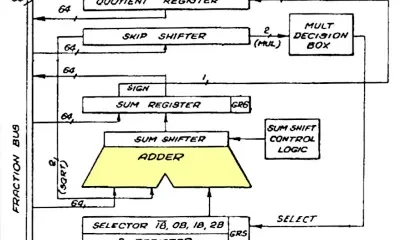
The Adder At The Heart Of Intel’s 8087 FPU
-

 Entertainment2 days ago
Renter of Home in Anne Heche Crash Denies Settlement With Son
-

 Tech11 hours ago
Microsoft accidentally kills epic Outlook email threads
-

 Business2 days ago
Soccer-U.S. defends Iran World Cup travel restrictions, says discussions ongoing
-
 Business3 days ago
Wall Street Week Ahead: Investors see Micron earnings as pulse check of AI rally momentum
-

 Politics4 days ago
BBC Reporter Discusses Cross Party Criticism Of Trumps Iran Deal
-

 Tech4 days ago
AWS enters the context layer race with a graph that learns from agents, not manual curation
-

 Crypto World3 days ago
HIVE shares jump as $220M AI deal speeds Bitcoin mining pivot
-
 Crypto World3 days ago
Can Charles Hoskinson Really Rescue Cardano?
-

 Crypto World3 days ago
Jake Chervinsky accuses CME of protecting derivatives monopoly
-

 Tech4 hours ago
Nearly 7,000 fake Amazon domains registered ahead of Prime Day 2026, researchers warn
-

 Sports4 days ago
FIFA World Cup 2026: Canada beat 9-men Qatar 6-0 to register first ever win | FIFA World Cup 2026
-

 Business2 days ago
MHP SE 2026 Q1 – Results – Earnings Call Presentation (OTCMKTS:MHPSY) 2026-06-20
-

 Politics3 days ago
Andy Burnham and the meaning of Makerfield
-
 Tech1 day ago
Signal’s Meredith Whittaker says AI chatbots ‘are not your friends’ and calls Copilot agents a backdoor
-

 Business4 days ago
Brexit cost 6% of UK economy, Bank of England company data suggests
-

 Crypto World5 days ago
Anthropic’s Dario Amodei Urged AI Unity at G7, Even as US Banned His Models
-

 Crypto World7 days ago
Robinhood opens AI-powered trading to all users, sending HOOD stock past $100
-

 Tech5 days ago
Weeks Of In-The-Field Testing And A Verdict
You must be logged in to post a comment Login