Connect with us

Tech

Asus ROG Swift RGB Stripe OLED Review: Clarity King

Published

on

I also feel it comes across in how colors present. Technically, the monitor’s results are modest for an OLED monitor: It has a color gamut that spanned 94 percent of DCI-P3 and 89 percent of AdobeRGB. That’s a tad more narrow than top QD-OLED monitors, which can hit up to 98 percent and 95 percent, respectively. However, the ultra-clear, high-contrast look of the panel amplifies the sense of impact. I’m not saying it’s better than the best competitors, but the PG27UCWM’s overall image quality is in the upper tier. That’s at least partially due to the fact that RGB Stripe OLED also improves “color volume,” which is a display’s ability to maintain color that gamut had max brightness.

Unfortunately, the vivid and contrast-rich image is paired with mirror-like reflections. I could likely use the monitor to shave. It’s not a problem in a dark room, but it’s noticeable when even modest ambient light is present.

This is an important, and divisive, point. Many OLED purists adore an ultra-gloss finish because it highlights the rich contrast and color the technology can provide. Others, myself included, prefer matte displays that reduce or eliminate discernible reflections.

Advertisement

There’s no right answer to this question, but you’ll need to decide your preference before you make a purchase.

Great for Sharpness, Great HDR

Beneath the PG27UCWM’s glossy coat you’ll find a tandem RGB Stripe OLED panel with a native resolution of 3840 x 2160. It’s crisp. Earlier OLED monitors have used an unusual sub-pixel arrangement that could hurt image clarity, but the PG27UCWM has a more conventional RGB sub-pixel layout that eliminates the issue. You’ll sometimes see this marketed as “5th-Gen QD-OLED,” and it initially launched in 34-inch monitors like the Alienware AW3426DW. But finally, the PG27UCWM is bringing it to the more standard 27-inch size.

Text clarity, in particular, has always been one of the chief issues about those shopping for OLED monitors, and I no longer have complaints in that regard. The resolution helps, too, providing a pixel density of about 165 pixels per inch across the 26.5-inch panel. The panel’s sharpness was excellent with the monitor connected to both my Windows 11 desktop and my MacBook Air M4.

HDR is where the PG27UCWM’s tandem OLED panel really begins to earn its keep. My testing found it can hit up to 800 nits of brightness. While that’s not a record-setting result, it’s in line with other premium OLED monitors, which typically offer 800 to 900 nits in my testing (the best barely clear 1,000 nits). The monitor also supports Dolby Vision HDR, which is rare.

Advertisement

The PG27UCWM’s brightness, contrast, and resolution combine to deliver real impact in HDR games. It’s so bright that it can at times feel overwhelming. Fortunately, Asus includes HDR brightness adjustment options that let you tone down the brightness if you’d prefer.

Asus’ PG27UCWM isn’t uniquely bright in HDR though. The Alienware AW3426DW, Acer Predator X27 X1, and MSI MPG 32URXW are among the monitors I’ve tested that deliver similar HDR brightness (and some of which are significantly cheaper). Still, the PG27UCWM performs much better than least expensive OLED monitors like the entry-level Alienware AW2726DM, which can only deliver roughly 400 nits in HDR.

Motion Clarity Checks the Boxes

Image may contain Adult Person Electronics and Screen

Photograph: Matthew S. Smith

The PG27UCWM can reach a refresh rate of up to 240 Hz at 4K resolution. That’s standard for a high-end 4K OLED in 2026. It also provides a dual-mode feature that can reduce the resolution to 1080p in exchange for a refresh rate of up to 480 Hz. That’s less common, though many OLED monitors now offer a similar feature.

Source link

Advertisement
Continue Reading
Click to comment

You must be logged in to post a comment Login

Leave a Reply

Tech

Balaji Ingole Develops AI Tools for E-Commerce Sites

Published

on

Balaji Ingole rarely saw televisions while growing up in Udgir, India. No one in the small Maharashtra village had computers or phones. Only one household owned a television, and neighbors often gathered there to watch shows together.

Ingole never even saw a computer growing up. It wasn’t until he reached middle school that he encountered a computer lab, an experience he says changed his life. Almost immediately, he says, the machine felt like a window into a different scale of possibility for him.

Balaji Ingole

Employer

Advertisement

Amla Commerce in Milwaukee

Title

Project manager

Member grade

Advertisement

Senior member

Alma maters

COEP Technological University and Welingkar Institute of Management, both in India

“I was very studious and not very social, always reading or solving problems in a math textbook,” he says. “At the computer lab, I began learning the C programming language—which was like discovering a whole new world. I was fascinated that you could create something with just a few lines of code.”

Advertisement

His early interest grew into a self-directed education. Outside of Ingole’s formal classwork, he taught himself to build database-backed applications, wire up hardware, write software, and trace error logs.

Today the IEEE senior member similarly splits his time. During the week, he’s a project manager in Milwaukee at B2B e-commerce company Amla, leading AI-driven digital transformation initiatives to help the company’s clients boost their sales. On weekends, he leads a similarly demanding life as an independent researcher. His current projects include developing AI-enabled health care diagnostic tools and assistive technologies to support people with physical disabilities.

“I believe in ‘learn by doing,’” he says. “I really like to test my knowledge and prototype ideas to find out if they truly work.”

A college project becomes an inspiration

Ingole’s tendency to go beyond his coursework continued after he graduated high school in 2004. As a mechanical engineering undergraduate at The College of Engineering, Pune (now COEP Technological University), in India, he participated in several extracurricular activities. One was interviewing entrepreneurs and writing about them for The COEP College Magazine. The experience helped him gain confidence, he says, giving him the push he needed to pursue interviews for the publication with two Indian entrepreneurs he admired: N.R. Narayana Murthy, cofounder of IT giant Infosys; and his wife, philanthropist Sudha Murty. The Murtys cofounded the Infosys Foundation, a nonprofit that runs educational, health care, women’s empowerment, and sustainability programs in underserved areas of India.

Advertisement

“Every week I would fax them: ‘Please give me an interview time,’” Ingole says. Eventually, Sudha Murty’s office offered him a phone interview, but he requested to meet her in person at Infosys’s Bengaluru offices. She agreed, but the offices were 940 kilometers from Pune, and he didn’t have the money to travel or stay overnight in a hotel.

Ingole and a classmate borrowed money from friends and traveled through the night on multiple buses and trains to get to Bengaluru. They freshened up in a public bathroom before heading to the Infosys campus to meet Murty.

Impressed by their persistence, she surprised them by also arranging a brief chat with Narayana Murthy.

“Narayana Murthy handwrote a personal message to the engineering students of [my college]—which we proudly published in our college magazine,” Ingole says. “In his note, Murthy shared that we are at an extraordinary moment in India’s history and that the future looks even brighter. His words encouraged us to work hard and make the most of this time.

Advertisement

“I still have that note,” Ingole says. “They are billionaires, and I was just a regular student. The fact that they took the time to do this really motivated me.”

During the final semester of his engineering studies, Ingole joined the Tata Research Design and Development Center in Pune for a six-month internship. After earning his bachelor’s degree in mechanical engineering in 2008, he became a graduate engineering trainee at Honeywell Automation in Pune.

He left the company in 2009, and during the next 13 years, he held different software engineering and project management positions at IT companies across India.

He earned a master’s degree in business administration from the Welingkar Institute of Management, Mumbai, in 2017.

Advertisement

In 2022 he accepted a project-manager role at Mars IT Solutions in Madison, Wisc. The following year, he left to join Gainwell Technologies, also in Madison, as a senior project manager. At Gainwell, he managed projects for the core IT systems multiple U.S. state health departments use to administer Medicaid benefits, manage provider enrollment, and verify member eligibility. The experience managing projects that directly enabled patients’ access to health care gave Ingole a special appreciation for and interest in this area, he says.

“Health care data is not like other data,” he says. “The stakes are high, compliance requirements are different, and the margin for error is effectively zero.”

Ingole says he enjoyed the rigor of data governance combined with the potential to positively impact lives, and that also applies to his current work at Amla.

Agentic AI in e-commerce

Ingole joined Amla in July 2025. He helps manufacturers and B2B customers modernize their e-commerce operations. He also builds AI tools for them and for his internal team.

Advertisement

For Amla’s customers, he’s developing AI-enabled chatbots that help manufacturers set up and manage large product catalogs in e‑commerce platforms. Such product setup traditionally has been a manual, tedious, error-prone process: Companies upload thousands of products, adjust item names, enter prices, update images, and more.

“Product setup has been one of the most painful processes in e-commerce, and it can take [our] customers two to three months to complete,” Ingole says. “We’re creating an AI agent that will guide them, step-by-step, to get everything set up in two weeks.”

Ingole relies on AI agents for some of his own tasks at Amla. Project managers historically have spent 10 to 12 hours each week assembling and sending status reports to stakeholders. Ingole built an AI agent to handle much of the work.

“It runs every Monday morning and reads through my emails to extract highlights, risks, timelines, and upcoming releases, then sends me a written status report,” Ingole says. The process might sound simple, but the agent’s workflow involves at least a dozen steps including defining parameters, managing temporary files, and integrating with existing tools.

Advertisement

With the information-gathering work handled, it frees up Ingole and his colleagues to spend more time on deeper-thinking work, he says.

Publishing as idea refinery

For nearly a decade, Ingole has spent some of his free time conducting independent research projects in data analytics and AI-enabled applications in health care. He has written more than 40 peer-reviewed papers, which are in the IEEE Xplore Digital Library. He has been granted six patents in the United Kingdom and India. In the U.K., he is a registered coinventor of an AI-powered, cloud-connected wearable device for health monitoring and an AI-based breast cancer detection tool.

Ingole’s patent for the breast cancer detector, he says, reflects his belief that when engineers apply data and AI correctly, they can help doctors diagnose patients more quickly and accurately.

That, he says, is both a power and a responsibility.

Advertisement

He is part of a team helping patients who are paralyzed and nonverbal control items in their environment. His goal, he says, is to develop a brain-computer interface to let patients turn on a fan, switch off a television, and complete similar tasks.

Publishing research requires both academic rigor and peer scrutiny, and Ingole says the function has been critical to improving as both a project manager and a researcher-inventor.

“Lots of research ideas never make it to paper,” he notes. “But when you write for journals or conferences, you’re bombarded with questions from Ph.D.s and experienced researchers. This forces me to refine my methodology, and to combine use cases and technical architecture in a way that stands up to expert review.”

Finding a professional hub

Ingole joined IEEE in 2022, and he says the affiliation has become central to both his research and his professional identity.

Advertisement

“I use the Member Directory often and contact engineers through my IEEE email address, which gives me credibility because they know it’s a genuine research connection,” he says.

The organization has given him a platform to contribute to the research space beyond his own papers, he says. He has served as a conference session chair, keynote speaker, technical program committee member, and peer research reviewer for various conferences and events. His IEEE membership, he says, has opened doors to other communities, helping support his entry into the British Computer Society, which has stringent acceptance criteria.

Those opportunities have helped him build a global network of collaborators with whom to discuss upcoming research, seek advice, and share data, he says.

“IEEE is important for me to continue as an independent researcher,” he says. “It lets me contribute to the community, and I get a lot in return.”

Advertisement

From Your Site Articles

Related Articles Around the Web

Source link

Advertisement
Continue Reading

Tech

23 Years After SimCity 4's Release, 'Eternal Commuter' Bug Finally Fixed

Published

on

“It began life just a year after SimCity 4’s 2003 launch,” writes the blog PCGamesN. “Now, over 20 years later, it’s still going strong with the arrival of Network Addon Mod update 50.”

The SimCity 4 Network Addon Mod, or simply ‘NAM’ among the community, has long been a de facto recommendation to anyone looking to pick up the classic city builder. It’s a comprehensive overhaul to the game’s transportation and infrastructure networks that combines key fixes with a vast set of additional build pieces such as overpasses, intersections, on-ramps, roundabouts, and so on…. [Y]ou’ll be able to place down elements adjacent to one another that might previously have needed a one-tile gap between them. Streets can be dragged diagonally, slope tolerances have been improved, and you can build tunnels with the street network.

The new version also includes a fix for the ‘Eternal Commuter Loop’ bug, which might sound fairly innocuous if you’re not deep in the weeds. In actuality, it’s a 23-year-long frustration that has plagued modders ever since launch. Essentially, it’s a problem with the regional pathfinding across city boundaries in certain layouts, causing your Sims to bounce from location to location in search of work without actually taking up a job in any of them. Your zone demand is ruined, traffic builds to unsustainable levels, and the economy falls to pieces before your very eyes. Until now, the only real solution was to simply avoid building layouts that gave your commuters the chance to loop between locations. Now, by blocking specific neighbor-to-neighbor routes while allowing the rest to run as normal, the problem has been resolved…
Equally impressively, the mandatory implementation of the DLL has reduced the size of the NAM codebase “by almost 90% and by more than ten million lines, making it easier to maintain and reducing the chance of bugs.”

Thanks to long-time Slashdot reader Striek for sharing the news.

Advertisement

Read more of this story at Slashdot.

Source link

Advertisement
Continue Reading

Tech

I found a solution to the features Apple Notes has been missing for years

Published

on

Apple Notes is one of my go-to note-taking apps. It’s free, it comes preinstalled on every Apple device I own, and it already packs a solid set of features like shared notes, notes locking, the ability to attach different file types, and notes linking, among many others. For most people, that’s plenty to get by.

That said, there are a handful of features I keep hoping Apple will add to Notes someday. So, I keep checking the new features with every single iOS and macOS update, and I keep coming up empty. Until Apple decides to catch up, I found a free extension called ProNotes that adds most of these missing pieces right into the app. Let me walk you through what it brings to the table.

A formatting bar that comes to you

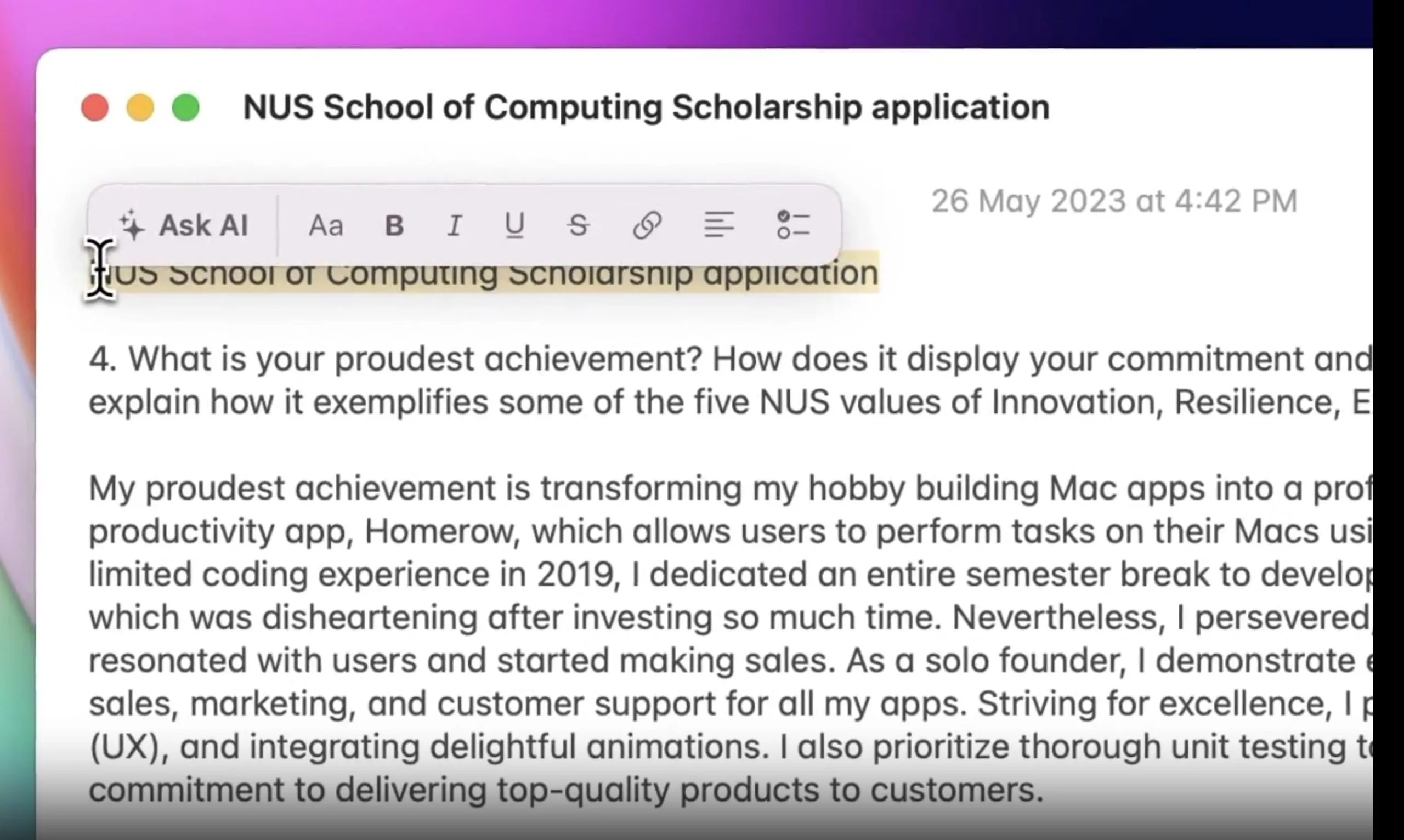
Normally, if you want to format text in Notes, you have to select it and then reach all the way up to the toolbar. ProNotes fixes this by showing a small formatting bar right above your selected text. I can change font size, add bold, insert a link, or turn a line into a checklist without moving your cursor far from where you’re already working. It sounds like a small thing, but once you get used to it, going back to the old way feels like a chore.

Format text using markdown shortcuts

While I love the formatting bar, my favorite way to format a note is with Markdown. If you’ve used apps like Obsidian, you probably already know your way around Markdown shortcuts. ProNotes brings the same shortcuts to Apple Notes. Type # and hit space to create a title, ## for a heading, and ### for a subheading.

You can also type – followed by a space to create a checklist, three backticks for a monostyled block, and > for a block quote. I’ve gotten so used to typing these shortcuts everywhere else that having them finally work in Notes feels right.

Advertisement

Slash commands for when you forget the shortcuts

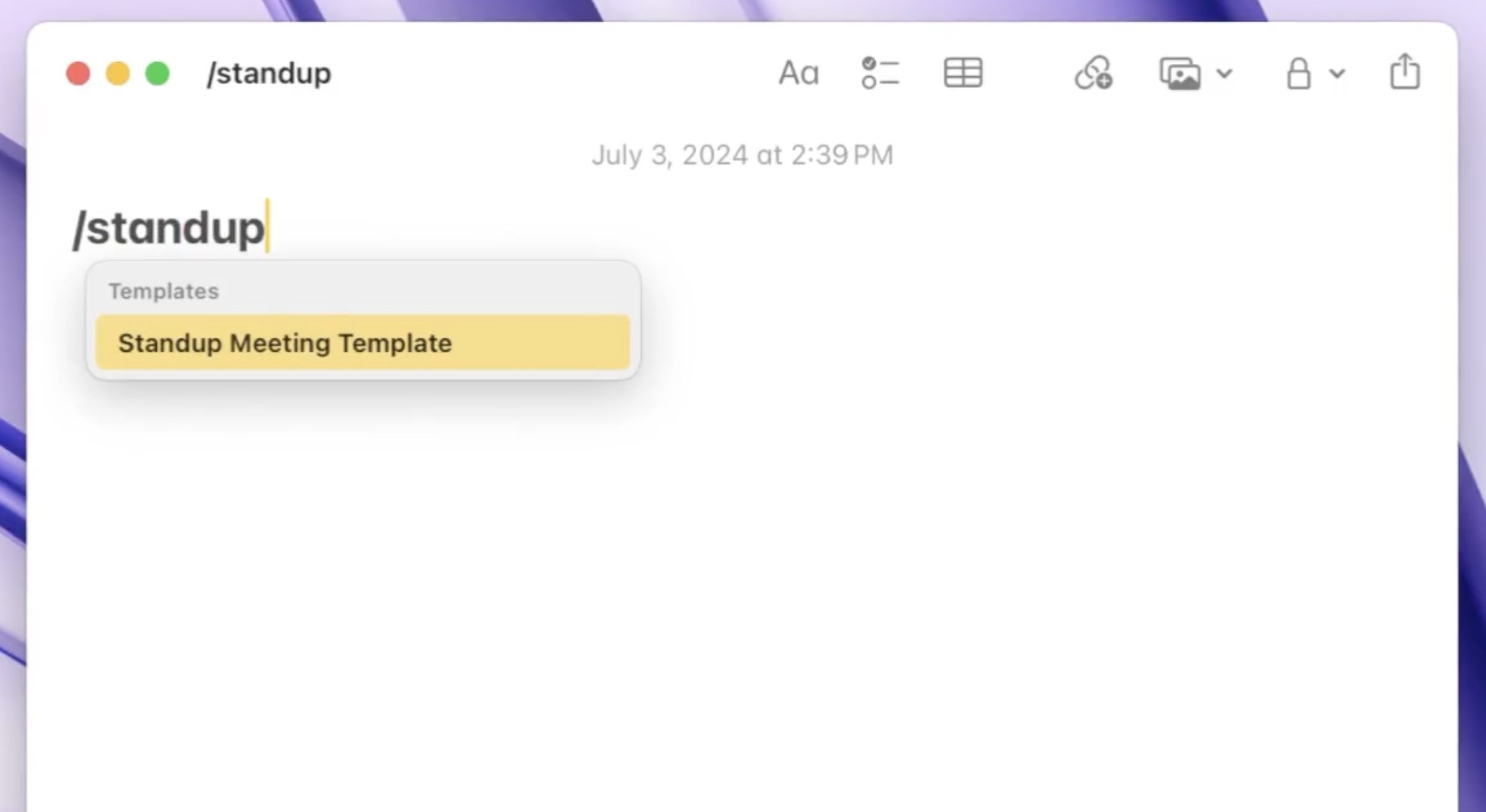
Not everyone wants to remember a dozen keyboard shortcuts, and that’s where slash commands come in handy. Type a forward slash followed by a command like /title, /heading, /checklist, /table, or /quote, and ProNotes inserts the right formatting for you. There’s even a shortcut for adding a table, which Apple Notes still doesn’t support on its own.

Backlinks finally make it to Apple Notes

macOS Sonoma added the ability to link a note to another, which was a welcome update. With the latest macOS Golden Gate update, Apple added the ability to link to subheadings, allowing me to easily create a table of contents. 

However, what both these updates didn’t add was a way to see which notes are linking back to the one you’re viewing. ProNotes fills that gap with a Backlinks feature, so you can open any note and instantly see every other note that references it. 

If you use Notes to build out a personal wiki or keep track of connected ideas, this feature alone might be worth installing the extension.

Save time with templates

Templates are another feature I wish Apple had built in from day one. With ProNotes, you create a folder named Templates, drop your template notes inside it, and then use a slash command to pull one up whenever you need it. Just type the word template or the title of your template, and it shows up ready to insert. 

ProNotes is smart enough to strip out the template’s title when it drops the content into your note, so you’re not left cleaning up after it. You can also use variables like @today or @date inside your templates, and they’ll automatically update to the current date in your locale’s format.

If you take a lot of meeting notes or any other type of notes with the same structure, this feature alone will save you a ton of time. 

Advertisement

Find any note in seconds

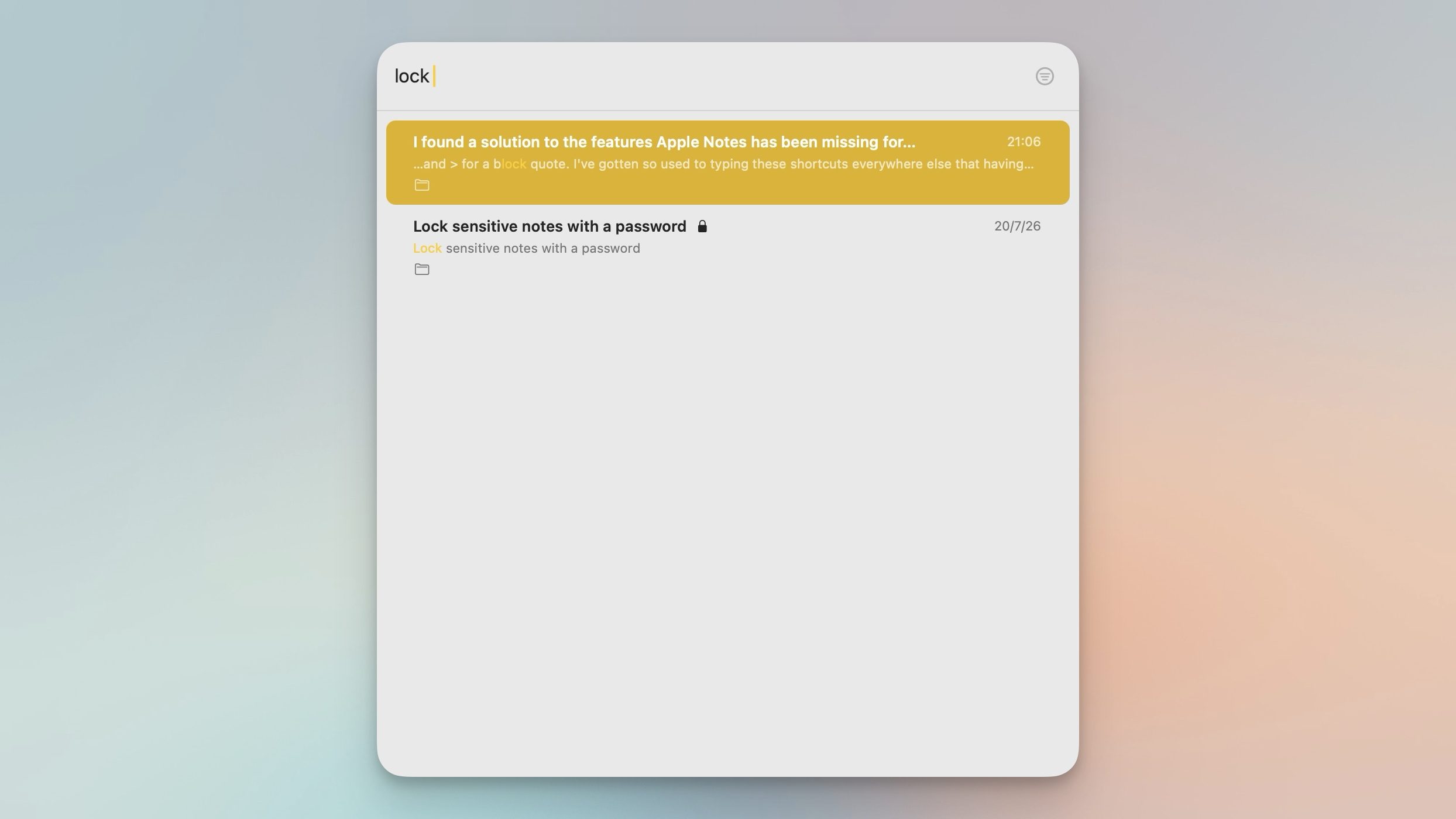
Apples Notes has a good search function, but what I miss most when using it is the search bar that I get with other note-taking apps like Obsidian. In Obsidian, I can hit a keyboard shortcut to open a floating search bar, which lets me quickly search and open notes. ProNotes adds this functionality to Notes, making it so much easier to search for notes.

I can hit Command and P inside Notes, and ProNotes opens a keyboard-friendly search window that lets me find any note in seconds. I can even set up separate shortcuts, one that works only inside Notes and another that works system-wide, so I can jump straight to a note from anywhere on my Mac.

ProNotes AI, if you want to pay for it

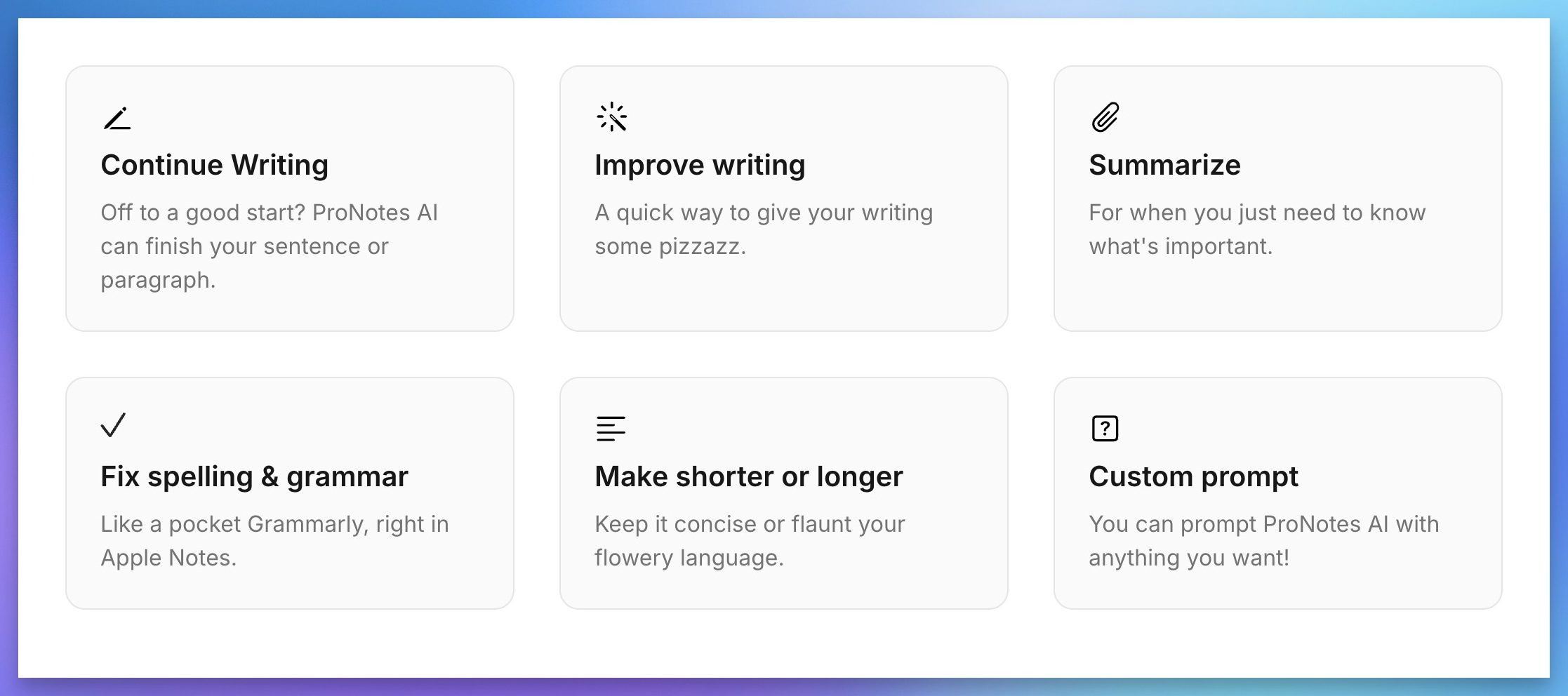
ProNotes also offers a paid AI tier if you want to take things further. It can continue writing a sentence or paragraph for you, improve your writing, summarize long notes, fix spelling and grammar, and make your text shorter or longer depending on your needs. 

There’s also a custom prompt option if you want to ask the AI to do something specific. These are optional extras though, and everything I mentioned above works without paying a cent. I don’t pay for this feature as AI is not a big part of my note-taking system, but if you find this feature useful or just want to support the developer of this awesome extension, you can get the paid plan. 

Final thoughts

Apple Notes is already a great app, and ProNotes makes it feel like the app I always wanted it to be. From the formatting bar to backlinks to templates, every feature feels like something Apple should have added years ago. If you use Apple Notes daily like I do, give ProNotes a try.

Advertisement

Source link

Continue Reading

Tech

CBP Officers And Contractors Abused Government Databases To Stalk Their Exes

Published

on

from the because-of-course-they-did dept

This news will come as no surprise to anyone. Those who have been following police misconduct revelations for years have seen this happen time and time and time and time again. Those who are in the business of engaging in police misconduct have known for years that it’s easy to do and it seldom gets punished.

While Flock Safety is currently hoovering up most of the negative headlines about tech-enabled stalking by law enforcement officers, it’s a relative newcomer. Cops (and federal officers) have been exploiting database access for years to do everything from harass complainants to stalk their exes to dig up info on people they’d like to coerce into a sexual relationship.

The documents obtained by Wired come from the DHS OPR (Office of Professional Responsibility). The last time we saw a DHS-adjacent OPR take any action, it was to open investigations into people opposed to ICE, rather than limit itself to the confines of its office: investigating complaints about ICE officer misconduct. So, it’s nice to know the DHS OPR isn’t completely compromised. On the other hand… well…

Internal records obtained by WIRED reveal how, for years, United States Customs and Border Protection employees and contractors were accused of abusing sensitive government databases for reasons that had nothing to do with their jobs. The records contain hundreds of allegations of misuse of law enforcement databases, including federal agents querying data to look up romantic interests, monitor family members, expose various personal information and, in some cases, provide intelligence to suspected smugglers or drug-trafficking organizations.

Acquired through Freedom of Information Act requests to CBP’s Office of Professional Responsibility and the Department of Homeland Security’s Office of Inspector General, the records reveal the breadth of alleged database abuse by CBP employees spanning more than a decade. 

Advertisement

It is as it is everywhere. If you give someone access to tons of personal data and tracking information and then simply trust that they’ll do the right thing, you’ll always be disappointed. If you wouldn’t trust AI with this access, why would you trust humans? Their goals are far more simplistic, banal, and perverse.

And yet, this is what we’ve been doing for decades: allowing officers to access tons of personal info and providing them tech that can convert digital voyeurism into physical acts of stalking. The databases may be a necessary part of government functionality. But once you add license plate readers, facial recognition tech, and expensive algorithms to the mix, a bit of click-wrap is never going to be enough to deter officers (and government contractors) from using this wealth of information to um… enhance their personal lives.

In one case, a CBP officer allegedly used government databases to contact a flight attendant. In another, an officer was accused of pulling information from trusted-traveler applications to ask people out. Other CBP employees were accused of providing border-crossing data to someone involved in a “heated divorce.” And yet another DHS employee allegedly used controversial ad-tech-derived location data to track several coworkers’ cell phones—which appears to be the first known internal abuse case involving DHS use of ad-tech-derived mobile location data.

That’s the tip of the iceberg. What’s seen here is just what’s been caught and documented. But everyone who wants to do this sort of thing learns stuff from those who have been caught. And it’s not just officers doing the expected ex-stalking. According to the documents, DHS employees and contractors have been caught supplying inside info to drug traffickers and other criminals.

And it’s not going to get better any time soon. Most officers are allowed to resign rather than face discipline or criminal charges. And the private sector’s revolving door just means contractors abusing their access will move on to other jobs in the same field, because surveillance tech companies are similarly uninterested in punishing employees for abusing access to surveillance tech and government databases.

Advertisement

Will this revelation result in meaningful change? Obviously, it won’t. Previous revelations have done little in terms of accountability or oversight. And this administration in particular is deeply opposed to accountability and oversight. Trump himself is openly supportive of law enforcement misconduct. That means the most likely response will be re-tasking the CBP Office of Professional Responsibility to align more with ICE’s bastardized version. The focus will no longer be internal. Instead, the OPR’s power and personnel will be redirected to target Trump critics and amplify the administration’s narratives. The only thing CBP officers and contractors will learn from this is: “Don’t get caught.”

Filed Under: cbp, dhs, law enforcement misconduct, mass deportation, opr, stalking

Source link

Advertisement
Continue Reading

Tech

Amiga-Inspired AROS Goes Bare Metal On Raspberry Pi

Published

on

There’s no actual data, but if we had to guess the least-favourite Disney movie of former Amiga owners would have to be Frozen, because none of them will ever be able to “Let it Go”. The Amiga-derived AROS Research Operating System has just been ported to boot bare-metal on the Raspberry Pi, in both 32-bit and 64-bit versions. Yes, there’s a 64-bit Amiga-compatible OS that runs on ARM. It truly is a time of wonders.

AROS has already been ported to a number of platforms. Besides x86, there’s a PPC port that provided a lot of code to the MorphOS, which you can read about here, and a back-port that brings AROS back to original Amiga 68k hardware. There is even a build for RISC V.

AROS developers are making sure that Amiga legacy isn’t stuck on any given hardware, so they never have to let it go. So while not totally out of left field, this development is “pretty nifty” both in that it gives another ultralight operating system for the Pi, with boot times to rival RiscOS, and another platform for ex-Amiga users to play with that isn’t 40 years old. Previously if you wanted to run AROS on a Pi it was virtualized in Linux, making it similar to all other Amiga emulators.

While some software has been recompiled for ARM, the available software isn’t as full-featured as x86, but that’s almost certain to change as time goes on. It’s early days yet and this build is very much a work in progress. Likewise we expect support for other Pi boards to expand, as while right now the target is the Pi3, the forum threads include discussion of the Pi4 and even Zero2W.

Advertisement

You can check the port out in action in a video by [Dan Wood] embedded below, sent to us by tipster [Stephen Walters]. Thanks [Stephen]!

We have featured AROS once before, thought it’s been a while.

Advertisement

Source link

Continue Reading

Tech

Criterion Brings 12 Angry Men to 4K UHD and the Jury Room Has Never Looked This Uncomfortable

Published

on

Twelve men. One jury room. Ninety-six minutes. No explosions, spaceships, serial killers, car chases or Dolby Atmos objects flying over your sofa.

And nearly 70 years later, 12 Angry Men remains more suspenseful than most movies equipped with all of those things.

Sidney Lumet’s 1957 feature debut arrives on Criterion Collection 4K UHD on September 8, 2026, with a new 4K digital restoration presented in Dolby Vision HDR and its original monaural soundtrack in uncompressed audio. Criterion is pricing the two-disc 4K UHD plus Blu-ray edition at $49.95 MSRP, with the company currently offering it for $39.96 directly.

We briefly included the release in our recent look at ManhunterDracula and 12 Angry Men, but this one deserves a closer look. Not because it is going to demonstrate the capabilities of your height channels, but because it illustrates something physical-media collectors sometimes forget: 4K UHD is also a preservation format, and image quality is about considerably more than explosions and peak brightness.

Advertisement

12 Angry Men 4K UHD Release Details

Criterion’s new edition presents the 1957 film in its 1.66:1 aspect ratio, in black and white, from a new 4K digital restoration with Dolby Vision. The film retains an uncompressed monaural soundtrack, rather than receiving a newly fabricated surround remix that would make very little sense for a movie built almost entirely around twelve men talking in one room.

Sometimes leaving the audio alone is the upgrade.

The package contains the film on a 4K UHD disc plus a Blu-ray carrying the movie and supplemental features. Criterion has also retained one of the most historically valuable extras from its earlier edition: the 1954 live television version of 12 Angry Men, directed by Franklin J. Schaffner for CBS’s Studio One. Reginald Rose’s television drama came three years before Lumet’s feature adaptation and allows viewers to see how the material evolved from live television into one of the defining American films of the 1950s.

12 Angry Men Criterion Collection 4K Ultra HD

Criterion 4K UHD Features

  • New 4K digital restoration
  • Dolby Vision HDR
  • Uncompressed monaural soundtrack
  • 1954 Studio One television version directed by Franklin J. Schaffner
  • Production history tracing the story from television to feature film
  • Archival interviews with Sidney Lumet
  • Interview with screenwriter Walter Bernstein about Lumet
  • Interview concerning writer Reginald Rose
  • Tragedy in a Temporary Town, the 1956 teleplay directed by Lumet and written by Rose
  • Interview about cinematographer Boris Kaufman
  • Original trailer
  • English SDH subtitles
  • Essay by writer and law professor Thane Rosenbaum

The 4K UHD plus Blu-ray edition arrives September 8 for $49.95 MSRP. Criterion also lists a $39.95 Blu-ray and $29.95 DVD edition.

How Did Twelve Men in One Room Become This Influential?

12 Angry Men began as a Reginald Rose teleplay broadcast on Studio One in 1954. Henry Fonda later became interested in bringing it to the screen, producing the feature with Rose and starring as Juror 8, the lone member of the jury initially unwilling to convict an 18-year-old defendant of murdering his father without discussing the evidence further.

Advertisement

The film does not tell us that Fonda’s character knows the defendant is innocent. He doesn’t. His position is considerably more important: if a person’s life is at stake, perhaps eleven men wanting to get home is not quite enough evidence to execute him.

From there, Rose’s screenplay dismantles the apparent certainty of the case piece by piece while exposing prejudice, anger, ego, class assumptions and personal baggage among the jurors. The room becomes a pressure cooker in which the legal principle of reasonable doubt has to compete with the fact that human beings are the ones applying it.

Advertisement. Scroll to continue reading.

The film received three Academy Award nominations, for Best Motion Picture, Sidney Lumet’s direction and Rose’s adapted screenplay. It lost all three to The Bridge on the River Kwai, which is the cinematic equivalent of having a very good season during the year somebody else goes undefeated.

Advertisement

Its reputation only grew. The Library of Congress selected 12 Angry Men for the National Film Registry in 2007, recognizing its cultural, historical and aesthetic importance. The Library’s own essay notes how extensively the film has been used to teach civic responsibility, social justice and the importance of resisting group pressure.

That’s a rather substantial afterlife for a movie Hollywood initially expected people to watch while twelve sweaty men argued around a table.

Sidney Lumet Made the Jury Room Shrink

The real reason 12 Angry Men works as cinema rather than photographed theater is what Lumet and cinematographer Boris Kaufman do with that room.

Lumet developed what he called a “lens plot.” As the deliberations progress, the filmmakers gradually move toward longer focal lengths, reducing the apparent space between the characters and making the jury room feel increasingly compressed. The camera also begins above eye level, moves to eye level and eventually drops below it, causing the ceiling to enter the compositions and increasing the sense of confinement. Only when the jurors finally leave does Lumet switch to an unusually wide lens and higher camera position, visually allowing the audience to breathe again.

Advertisement

That is why a 4K restoration makes considerable sense.

Boris Kaufman’s black-and-white photography depends on facial texture, sweat, cigarette smoke, fabric, window light, shadow detail and the increasingly uncomfortable proximity of one human face to another. Dolby Vision does not need neon colors or 4,000-nit highlights to be useful; carefully controlled grayscale, bright whites, deep blacks and subtle shadow transitions matter just as much.

If Criterion gets those elements right, the jury room should not merely look cleaner. It should feel smaller.

Why the Film Still Works

Courtroom movies frequently focus on the lawyers. 12 Angry Men focuses on what happens after the attorneys stop talking and ordinary citizens are asked to decide whether another human being lives or dies.

Advertisement

That shifted the drama from legal performance to moral responsibility.

The film also established many of the themes Lumet would pursue for decades: institutions under pressure, individuals confronting authority, justice compromised by human weakness and ordinary people forced into decisions that reveal who they really are. You can draw a remarkably straight line from 12 Angry Men through SerpicoDog Day AfternoonNetwork and The Verdict.

Our recent Criterion review of Lumet’s Network made the same point from another direction. Lumet was exceptionally good at putting people inside systems that claimed to function rationally and then showing what happened when greed, fear, prejudice or ambition entered the room.

Advertisement. Scroll to continue reading.
Advertisement

Apparently the problem was never the conference table.

The Bottom Line

12 Angry Men is not the first movie anybody will use to demonstrate a new subwoofer, but that makes Criterion’s 4K release more interesting rather than less.

A proper restoration can reveal what Lumet and Kaufman were doing with faces, lenses, light, contrast and physical space without turning a 1957 black-and-white film into something it was never supposed to be. Keeping the original mono soundtrack intact is equally important; twelve exceptional actors and Reginald Rose’s dialogue do not require overhead speakers to hold your attention.

Nearly seven decades later, the film still asks an uncomfortable question: how certain should we be before we destroy somebody else’s life?

Advertisement

Turns out you don’t need a car chase for that to create some tension.

Where to pre-order: $49.95 at Amazon (available September 8, 2026)

Source link

Advertisement
Continue Reading

Tech

Go inside Endurance Energy, the Seattle startup tapping underwater volcanoes for geothermal power

Published

on

Andrew Redd, CEO and founder of Endurance Energy, with company puppy Maple as the startup preps to launch its next prototype system for geothermal energy production. (GeekWire Photo / Lisa Stiffler)

Next month, Endurance Energy will send Adélie — a 100-kilowatt geothermal generator named for a penguin — to an undersea volcano off the Oregon coast, tapping hydrothermal fluids that can reach 750 degrees Fahrenheit.

It’s the Seattle startup’s fifth deployment onto the ocean floor, part of founder and CEO Andrew Redd‘s bet that the technology can one day electrify entire cities.

“Addressing the clean power problem is a way to make significant, scalable impact,” Redd said. “It’s a fundamental of human life — people need power.”

Endurance is part of a broader race to harness geothermal energy — heat from water or steam under the Earth’s crust, converted into electricity. But while companies such as Fervo and Sage Geosystems focus on terrestrial sites, Endurance is the first commercial venture pursuing undersea sources.

Redd left an engineering role at SpaceX to launch his company in January 2025. Endurance’s headquarters sit on the north shore of Seattle’s Lake Union, in a building that once housed seafood processing, just down from Ivar’s Salmon House.

Advertisement

“There was a big crab on the wall. There were pinup pictures from the fishermen that would sleep out back,” recalled Nate Rodland, Endurance’s chief operating officer.

This summer, the team expanded across the street into a 25,000-square-foot concrete facility — it’s cavernous, like a parking garage with ultrahigh ceilings — where giant white tents now house separate R&D and manufacturing operations.

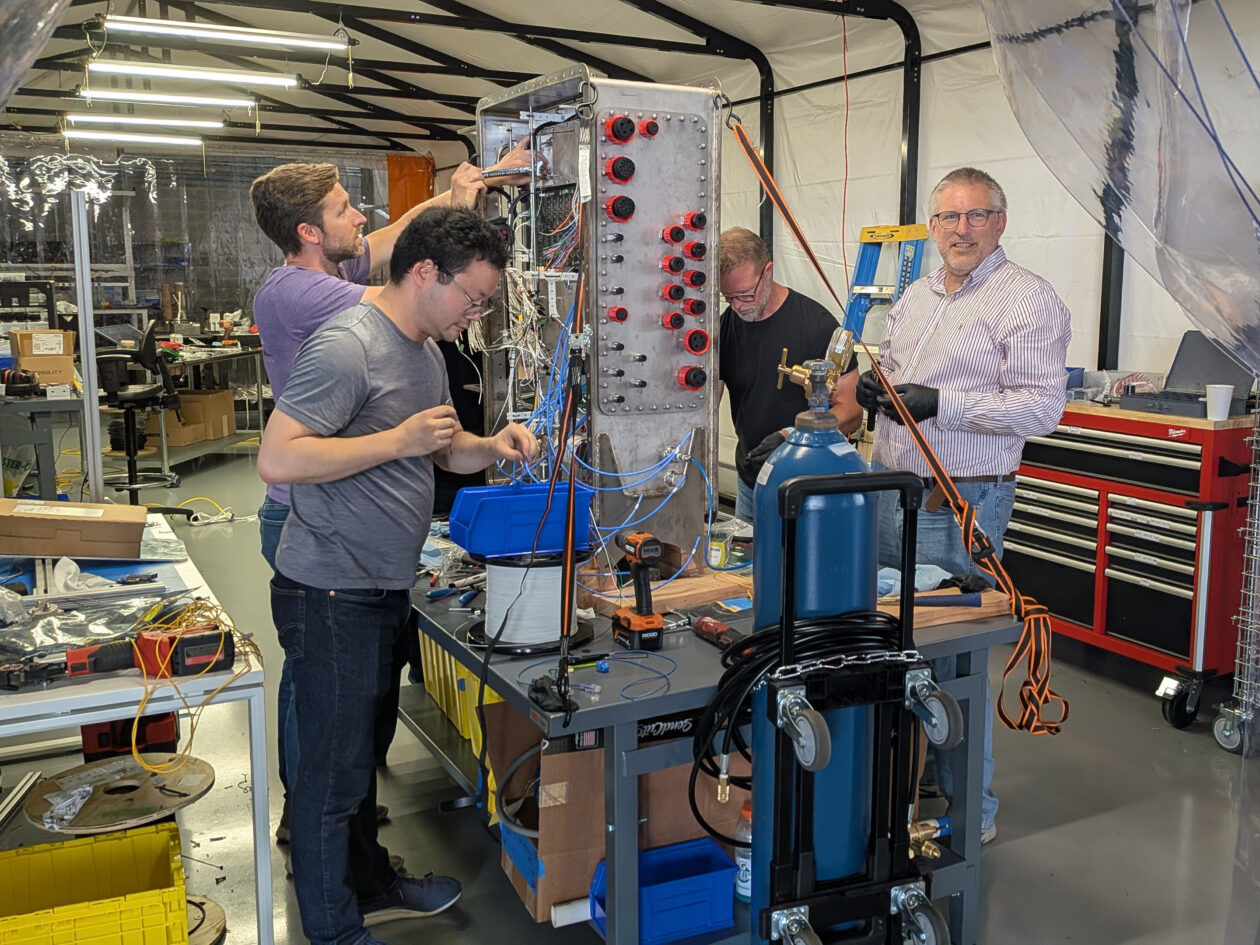
Members of the Endurance team work on the electronics that will control the geothermal system. (GeekWire Photo / Lisa Stiffler)

The space is bustling with employees assembling components ahead of the Sept. 7 pilot demonstration.

“Everyone is incredibly multidisciplinary. The challenge is incredibly multidisciplinary. That’s what makes it so fun and exciting,” said Redd, watching his team at work. He pointed to the company’s thermal fluids analyst, for example, who at that moment was assembling electronics enclosures.

The team’s roughly three-dozen members include 12 SpaceX alumni, plus veterans of fusion startup Helion Energy and space venture Blue Origin.

Advertisement

Here’s how the Endurance system works:

  • Drill a borehole: The team will drill a narrow hole a safe distance from active vent fields that will go about 200 feet into the seafloor to tap hydrothermal fluid.
  • Harness the heat: Hydrothermal fluid flows into a generator, heating a closed-loop refrigerant through titanium tubes until it boils and spins a turbine.
  • Reset: Naturally cold seawater cools the refrigerant back into a liquid state to repeat the cycle. The warmed water is released to the seafloor.
  • Move energy: The deployment next month will send performance data back to shore via Ocean Observatories Initiative’s Regional Cabled Array, operated by the University of Washington. Permanent installations will move electricity through undersea cables.
  • Control the process: Underwater, remotely controlled electronics are housed in oil-filled, pressure-balanced chambers to handle deep-ocean conditions.

“We kind of joke that everything we do is just heating, cooling and pumping,” said Aditi Bhatt, chief of staff, as she pointed out earlier prototype devices housed in Endurance’s original building.

Each unit is named for a sea creature, moving up the food chain as the generators grow — krill, silverfish, and eventually an orca pod. Adélie’s generating capacity would be enough to power a small neighborhood of homes.

The company touts the environmental sustainability of its system, which has a small physical footprint, creates limited noise, releases no toxic chemicals and emits no carbon.

Endurance occupies a 25,000-square-foot space in the basement of this building near Seattle’s Lake Union. (GeekWire Photo / Lisa Stiffler)

Endurance has done four prototype deployments, reaching a depth of about 2 miles and temperatures up to 726 degrees Fahrenheit. The company has previously visited the Pacific Northwest’s Juan de Fuca Ridge, the Mariana Trough, the East Pacific Rise off Mexico, and the Kingdom of Tonga in the South Pacific Ocean.

While the startup has made rapid progress, the strategy faces real challenges: high pressure and corrosive conditions, mineral scaling inside devices, and the risk of costly repairs to seafloor machinery. And though many population centers sit near shorelines, the systems will still need expensive subsea cables to carry power over potentially long distances.

Advertisement

But the potential to tap a limitless source of around-the-clock, carbon-free electricity is attractive, and the company has raised $63 million from investors.

The next device, at megawatt scale, will power Endurance’s first commercial pilot, with the Kingdom of Tonga. Work on that begins as soon as Adélie is deployed, with the goal of shipping next year.

The pace aligns with Redd’s experience at SpaceX.

“I remember many times working on the next rocket before the previous one had actually launched, just because of how much you learned from the process of building something,” he said, adding that the team is inspired by their mission.

Advertisement

“The sooner we can get clean, low-cost power on the grid, the more people we’re able to help,” Redd said. “So we’re really driving with intensity.”

Keep scrolling for additional photos.

Endurance’s Adélie geothermal device under construction in Seattle. (GeekWire Photo / Lisa Stiffler)
Aditi Bhatt, Endurance chief of staff, pointing out features on a simulation system for testing geothermal energy technology. (GeekWire Photo / Lisa Stiffler)
Endurance’s new cavernous space for R&D and assembling prototype devices. (GeekWire Photo / Lisa Stiffler)
Endurance Energy CEO and founder Andrew Redd with company pup Maple at their R&D facility in Seattle. (GeekWire Photo / Lisa Stiffler)

Source link

Continue Reading

Tech

The 5 Most Energy Efficient Refrigerators You Can Buy In 2026

Published

on


When you go shopping for a new refrigerator, you’re probably thinking mainly about storage capacity, appearance, maybe some smart features… but what about energy efficiency? In 2026, it’s a factor just as worthy of consideration as the others. After all, the fact that modern refrigerators run around the clock makes them one of the largest contributors to your household’s electricity consumption. Choosing a model that outperforms federal efficiency requirements might just mean considerable savings on your annual energy bills.

That said, greenwashing is a real problem. You don’t want to buy an appliance just because it sounds energy efficient, only to find out it barely outperforms federal requirements. How can you tell the difference between a marketing ploy and a truly energy-efficient fridge? By looking to Energy Star, that’s how. The government-backed program has a handy list of certified refrigerators with exceptional efficiency. To get you started, we’ve highlighted five models below that all consume substantially less electricity than what’s required under US Department of Energy standards.

Advertisement

Fisher & Paykel RB2470BRV2

Looking at Energy Star’s findings on energy-efficient refrigerators, the Fisher & Paykel RB2470BRV2 gives you one of the largest savings on annual energy consumption compared to the US federal standard. According to Energy Star data, the integrated bottom-freezer refrigerator only consumes an estimated 200 kilowatt-hours of electricity annually. Meanwhile, the federal maximum for a refrigerator of its size and configuration is 447 kWh per year. That means it uses about 55% less energy than the standard.

The fridge’s design explains how it can offer such an impressive amount of savings. It uses highly efficient vacuum insulation that reduces heat transfer into the cabinet. That way, the cooling system can maintain proper temperatures without eating up a ton of energy to balance it out again. Rather than simply making the compressor work harder, the fridge cuts down on the amount of heat that can enter the interior in the first place. You also get other features such as a variable temperature zone drawer and built-in Wi-Fi connectivity.

Advertisement

Blomberg BRFB1045WH

The Blomberg BRFB1045WH doesn’t beat the federal standard by quite as much as the Fisher & Paykel model, but that doesn’t make it any less impressive in its own right. Based on Energy Star estimates, its annual electricity consumption is only 286 kWh, which is well below the federal standard of 439 kWh for refrigerators of this size and configuration. That comes out to be 35% less energy use than the federal maximum. It might not be 55% below the standard like Fisher & Paykel, but it’s still one of the most energy-efficient models we’ve listed here.

Advertisement

The BRFB1045WH achieves that efficiency with special technologies like Duo Cycle Frost-Free Cooling. This maintains separate air circulation for the refrigerator and freezer while also controlling temperature and humidity independently. The refrigerator also incorporates a variable-speed compressor that allows the cooling system to adjust its output according to demand rather than operating at full capacity at all times. (Compare that to the repeated high-energy startup cycles that come with traditional single-speed designs.)

Advertisement

Beko BFBF2414WHIM

The Beko BFBF2414WHIM refrigerator is another great option for energy efficiency. According to Energy Star data, its annual electricity consumption is 360 kWh, well below the federal standard of 523 kWh for this refrigerator category. That comes out to approximately 31% less energy use than the federal benchmark. Sure, it might not be one of the most recognizable refrigerator brand names around, but what does that matter when the potential savings are so high?

Like the Fisher & Paykel model above, this Beko fridge uses some special tech to satisfy those energy-efficient claims. It comes with what Beko calls “NeoFrost Dual Cooling” technology: two independent cooling systems, one for the refrigerator and one for the freezer. That way, the fridge can maintain proper humidity levels in one compartment without any of that air migrating between sections. Another nice feature is its counter-depth cabinet, which gives you that built-in look without requiring custom installation. It doesn’t really have anything to do with energy efficiency, but it’s still nice to have if you’re looking to save some space in your kitchen.

Advertisement

Liebherr C5740IM

German manufacturer Liebherr has built an impressively efficient fridge with the C5740IM model. According to Energy Star data, the refrigerator uses an estimated 370 kWh annually compared to the federal standard of 539 kWh for its size. That’s roughly 31% lower energy consumption than what’s required. (Just 10 kWh more than the Beko, in other words, despite having an additional 16 kWh to work with per the federal standard.)

Looking at its features, it seems Liebherr paid special attention to the freezer. It uses something Liebherr calls “NoFrost technology.” The company says this feature prevents ice from accumulating inside the freezer. Frost can create an insulating layer inside freezers, and that forces refrigeration systems to work harder to maintain proper temperatures. The less ice that builds up, the more energy efficient your fridge can be. The C5740IM also uses independent refrigeration circuits, not unlike the Beko model above. It has Wi-Fi capability, as well, if smart fridges are useful to you.

Advertisement

Miele KFN 4799 DDE NA

We have a tie on our hands here: Based on Energy Star data, Miele’s KFN 4799 DDE NA consumes an estimated 370 kilowatt-hours annually. The comparable US federal standard for this refrigerator category is 539 kWh per year. That works out to 31% below the federal energy limit, the exact same specs as the Liebherr model above.

That’s not the only similarity between the two, either. The Miele also uses NoFrost technology to keep the freezer running more efficiently. It has smart home connectivity as well. Given that they’re both German companies, you might assume they’re simply the same fridge under two different names. We see that a lot here in the States, for example, with Whirlpool, Maytag, and KitchenAid all sharing core units. As it turns out, Liebherr and Miele do indeed share production facilities for their fridges. That said, this Miele model is not simply a clone of the Liebherr model. The two have different capacities, different dimensions, and different looks, among other distinguishing factors.

Advertisement

Methodology

To come up with the most energy-efficient refrigerators available in 2026, we reviewed Energy Star refrigerator listings and sorted them according to how far each model’s estimated annual electricity consumption fell below the applicable US Department of Energy federal energy standards for its size and configuration. Rather than comparing refrigerators by raw annual kilowatt-hour consumption alone, this methodology let us account for differences in refrigerator capacity and design by evaluating the actual percentage that each model outperformed the federal benchmark for its category.

Advertisement

After sorting, we then made a point to choose five unique manufacturers to highlight more brands and avoid any one name getting more of the spotlight. Smaller, more compact refrigerators as well as beverage coolers, wine refrigerators, and specialty refrigeration products were excluded from our selection process, as that would have skewed results toward models that wouldn’t quite work for everyday household use.


Advertisement

Source link

Continue Reading

Tech

Supply Chain Issues Delaying US Grid Batteries' Installation

Published

on

Falling prices have made grid-scale storage batteries more attractive, reports Bloomberg. But after decades of stagnant investment, America’s grids “are racing to make the upgrades needed to plug them in,” with supplies straining for the necessary equipment.

Demand for batteries has skyrocketed as electricity use across the U.S. swells, driven by data centers’ booming energy needs and increasing electrification. It’s also getting harder to get them connected to power grids… As those upgrades get delayed, storage projects are piling up in interconnection queues from coast to coast. For example, Consolidated Edison Inc., a major utility in New York state, says over the last two years the volume of battery storage projects waiting to be connected has grown by 300%… “The whole process of interconnecting these new power plants got really log-jammed and bottlenecked,” said Joseph Rand, an energy policy researcher at the Lawrence Berkeley National Laboratory…

Nationwide, some 750 gigawatts of energy storage projects — roughly equivalent to the generating capacity of more than 700 nuclear reactors — are in line to get grid connections, according to the lab’s research. Not all of these projects will get built. Many developers already abandoned the queue because of delays. Still, the waiting time is increasing; the median was five years in 2025, up from a year and a half in 2015. The flood of battery projects is expected to continue. Wood Mackenzie, an energy consultancy, projects the U.S. energy storage market will quadruple in the next six years…

[Shortages in key equipment] have driven up construction costs and time lines for grid upgrades, leaving utilities struggling to build fast enough. A drought of skilled workers is further slowing them down… In California, PG&E Corp., the state’s largest utility, told regulators in January that a key driver of delays was long lead times for specialized equipment. Procuring certain breakers could take nearly four years, according to the utility, which reported a 300% increase in its interconnection workload compared to prior years. In Northern California, for example, holdups to circuit breaker upgrades to a substation in Solano County led to projected delays for two battery projects worth a combined 450 megawatts. Transmission line work in the Bay Area has put another 800 megawatts of energy storage at risk of delay, according to PG&E.

Advertisement

Last year New York’s Con Ed started requiring developers to help pay for upgrades if their projects will push power demand and strain infrastructure. But that also drew criticism:

According to a survey conducted by the trade group New York Battery and Energy Storage Technology Consortium (NY-BEST), the new methodology raised costs by an average of $21 million per project, a 14-fold increase. At least 25 projects have been canceled as a result, according to the group. Battery advocates have appealed to state regulators to get Con Ed to abandon the new policy.

Thanks to Slashdot reader Bruce66423 for sharing the news.

Read more of this story at Slashdot.

Advertisement

Source link

Continue Reading

Tech

The Dead Internet Theory May Be Coming True, Pew Research Findings Show

Published

on

Are you reading more text written by an AI bot? A Pew Research study published this week says it’s very likely.

That’s not breaking news if you’re aware of the Dead Internet Theory that dates back to 2021. CNET writer Trisha Jandoc dove into that theory last year, which basically says people believe the internet died 10 years ago in 2016 and that much of what we see online now is AI-generated.

There is some truth to that. Pew researchers scanned nearly half a million English webpages from the past five years using Common Crawl, a web archive. That dates back to before ChatGPT was made publicly available in November 2022. Researchers ran those pages through Open Pangram, an AI detection tool, to see if it was written or edited by AI. Then the researchers looked at a sample of 10,000 pages from last month to spot signs of AI-written content. They looked for phrases, words and language that are more common among AI bots than humans. 

Researchers made it clear that AI detection models don’t always get it right. Sometimes they flag text written by humans as AI authorship and AI-written text as being written by a human. 

Advertisement

Nonetheless, the study found that 10% of the samples “show significant signs of AI authorship.” 

“One in 10 webpages as of July 2026 may seem modest. But the internet includes a mix of new and old material. A lot of pages in these random samples couldn’t have been written by AI,” the study findings said. “If we filter old webpages out of our samples and look at only the pages published after the release of ChatGPT, the trend is even more pronounced.” 

Researchers say this trend began in 2022 when ChatGPT was released and increased as other AI bots launched, like Claude and Google’s Gemini

Where is AI-written content spotted the most? 

The Pew Research study shows that AI-derived text is most common on .com domains, with about 1 out of every 10 pages. Other domains have less AI-written work — 4.6% for .org and around 1% for .edu and .gov webpages. 

Advertisement

Looking to spot AI-written text? Researchers say certain types of punctuation, words and phrases are more common in AI-generated text compared to humans. For example, em dashes and Oxford commas in lists. This is mainly because they’re trained on datasets of human text, so they mimic that style and, as a result, use them more than humans do. The researchers found that em dashes appear twice as frequently, negative parallelisms are more common and Oxford commas are used 63% more than in human-written text. AI is also more likely to use certain words, like “delve” and “interplay.”

“They also learn to recognize more subtle statistical patterns in word choice and sentence structure, which help them determine whether a particular piece of writing was likely AI-authored,” researchers said. 

A few other common AI-written flags include key terms from your prompt being used repeatedly, repetitive explanations and a bot-like tone instead of a natural one. More importantly, AI bots even make it clear that their responses could be inaccurate, so it’s best to double-check elsewhere online. But in this case, Pew’s findings show that we may not be able to trust the sources that we’re verifying it against if that content is AI-generated, too.

Source link

Continue Reading

Trending

Copyright © 2025