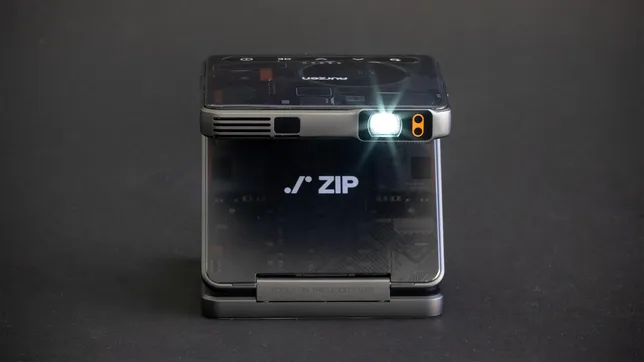
I’m trying to think of what the twisty Aurzen Zip Cyber most looks like. Perhaps a new ultra-foldable phone. Or a little robot snake. Maybe the Zat gun from Stargate. What it doesn’t look like is a projector. Well, except for the light which blasts from the front of it. With its cyberpunk-inspired decorations, the Aurzen looks quite futuristic.
With its 720p resolution and a claimed 100-lumen brightness, its performance matches its diminutive size. Then again, it’s one of the only projectors I’ve seen that can literally fit in your pocket. With a 5,000-mAh battery, it can give you a TV-sized screen just about anywhere. Anywhere that’s fairly dark.
The main issue with the Zip is its lack of an HDMI input. Some devices can connect to the Zip wirelessly, but are limited to non-copyrighted content (so no Netflix, etc). For that, you’ll also need to get either the CastPlay Pro or CastPlay HDMI wireless dongles. For a pocket-sized PJ, though, the Aurzen Zip Cyber is still pretty neat.
Advertisement
Specs and such
Resolution: 720p
Lumens spec: 100 (claimed)
Zoom: No
Lens shift: No (though you can tilt the sections)
Battery: 5,000 mAh, 1.5h claimed playtime
Light source type and life: Not listed, likely LED
Cyberpunk is one of my favorite genres of sci-fi, and having recently re-read Gibson’s Sprawl trilogy for the 4th or 5th time, played about 250 hours of Cyberpunk 2077, plus enjoying countless other media, I am certainly, let’s say “predisposed,” to like the aesthetic. The Zip Cyber’s looks are preem, choom, though it’s basically cosmetic with a really good sticker and a different colored power button compared to Aurzen’s regular Zip. The suggested retail price is $30 more for the Cyber, or 7.5%. Personally, I’d pay the extra for the look, but as mentioned, I’m into it.
Geoffrey Morrison/CNET
Stickers aside, it’s the form of the Zip that is unique. This is a squat little box that expands via two hinges that can rotate roughly 90 degrees each. Fully upright, the projector forms a right-angled “Z” or “S” shape depending on your perspective. Adjusting the two non-base segments is how you angle the projector, and automatic keystone correction tries to maintain a rectangular image. This feature can be disabled in the menu.
There are control buttons up top, which can be duplicated in the Aurzen app (which annoyingly requires you to create an account). Next to the power button on one side are volume controls, and on the other is a toggle for the high brightness mode. The latter kicks the fans into overdrive, making them quite noticeable, but results in an about 40% increase in brightness. This sounds like a lot, but subjectively it’s just a bit brighter.
Geoffrey Morrison/CNET
As you’d probably expect, given the size and price, that brightness isn’t going to set any records. I measured approximately 88 lumens, which, given the differences in measurement techniques, is pretty close to their claims. Also, I wasn’t able to do my usual measurement suite because of the Zip’s main drawback, which is…
Connections
HDMI inputs: 0
USB port: 1 USB-C
Audio output: 2 speakers, 1-watt total
Internet: None
Streaming interface: None
Remote: N/A
There’s no HDMI input, just a single USB-C connection, which is also how you charge the battery. You can cast wirelessly to the Zip, or at least some devices can. Certain devices just can’t. For those devices, Aurzen also sells the CastPlay Pro, a USB-C dongle that connects to a source like your phone or tablet and streams its screen to the Zip. This is also the only way to send DRM-enabled (copy-protected) content like Netflix, Disney+, HBO and so on. Most USB-C iPhones and iPads should work; some Switch tablets work, as do many laptops. If you know your device supports video output from the USB-C connection, it should work. My Pixel 9 Pro, for example, wouldn’t cast to the Zip directly, but worked just fine with the dongle. My TCL tablet wouldn’t work with the dongle, but did cast directly, though not with DRM content.
Advertisement
Geoffrey Morrison/CNET
Aurzen also has a CastPlay Wireless HDMI Dongle, which connects to an HDMI source to broadcast to the Zip, but this wasn’t available during my review, and as of this writing is sold out in most regions.
So the Zip is a bit odd to review because, depending on your devices and what accessories you add, you’ll have a radically different experience. I made a chart:
Aurzen Zip Compatibility
System
Compatability
Result
Zip
Most devices that can cast/mirror their display, but not Google Cast-enabled devices
No DRM-enabled content (Netflix, Disney Plus, etc)
Zip + CastPlay Pro USB-C
Most USB-C devices with video out (DisplayPort Alt Mode)
Any content
Zip + CastPlay Wireless HDMI
Any device with HDMI
Any content
Basically, most modern iOS and non-Google devices should work with the Zip by itself, though you can’t watch DRM-enabled, copyrighted content (like what you get from the major streaming services). YouTube, Instagram, TikTok and similar will work fine, however. To connect other phones and devices, as long as it can output video via USB-C, the CastPlay Pro dongle will let you watch Netflix and other DRM-enabled streaming services (basically anything that’s not user-created). If you want to connect to a gaming console like a PlayStation or a streaming device like Roku, you’ll want the CastPlay HDMI. I think a lot of this confusion would have been solved with the addition of a Micro HDMI input somewhere, but I’m sure that would have added cost.
Advertisement
Picture quality
Due to the compatibility challenges mentioned above, I wasn’t able to do my full measurements with the Zip. I’m confident these results are close, though, especially since they’re pretty similar to those of other inexpensive portable DLP projectors I’ve measured, like Anker’s Nebula Capsule Air.
Geoffrey Morrison/CNET
While light output, in the high-brightness mode, was around 88 lumens, it was around 63 in the much quieter, lower-brightness mode. This is within a few lumens of the Capsule and Capsule Air, close enough that you’d be unlikely to notice any difference in light output. These are all small, dim projectors, among the dimmest I’ve tested. That’s fine, as it’s an understandable consequence of the size and price. As long as you keep the projected image to around TV-sized, it’s bright enough to enjoy in a dark room.
Contrast is also fairly low, but within the same range as the competition. I measured an average contrast of approximately 401:1, which is about the same as the Capsules as well as some larger, more expensive portables like the Mars 3 Air (405:1). This is only slightly less than standouts like the TCL PlayCube (492:1) and even full-size projectors like the Epson Flex Plus (468:1). So while the image doesn’t pop as much as higher-end, and much larger/more expensive projectors, it’s still contrasty enough that it doesn’t look overly washed out. Again, size and price are the main attributes of the Zip, so it’s great to see that it also looks decent, graded on a curve with other small portables.
Advertisement
The TCL PlayCube, Aurzen Zip Cyber, and Anker Nebula Capsule Air.
Geoffrey Morrison/CNET
Color is a bit of a mixed bag, however. The overall color temperature is a little on the cool/blue side, but not enough that it’s distracting. Some colors, like blue and cyan, look fine. Greens are quite accurate too, which is a surprise. Most projector companies sacrifice a realistic green for more light output. Anything involving red is a bit off, however, with red itself being quite undersaturated, magentas are somewhat blue, and yellows are rather green. The most noticeable result is that many skin tones look a little pasty, and anything that should have a solid red looks more pastel.
Perhaps the most useful feature in the Zip speaks to how Aurzen expects people to use it. If you lay the Zip on its side, it will rotate the image 90 degrees. This means if you’re primarily watching 9×16 content like TikTok, it will fill the DLP chip, and you can take advantage of the entire 720p resolution. This makes watching vertical content much more satisfying compared with a heavily letterboxed image that only takes up the center portion of the projected image. Flipping it sideways does make it harder to position correctly, since there’s no rotation in the hinges in that direction, but oh well. Easy enough to just prop the front up with whatever’s handy.
The unit’s two tiny speakers don’t play particularly loudly, nor do they have any bass, no surprise there, but as long as you’re sitting close, they get the job done.
Advertisement
Blade running
Geoffrey Morrison/CNET
For the most part, I really like the Aurzen Zip Cyber. It’s a clever design that looks futuristic even without the cyberpunk clothing. It’s one of the smallest projectors I’ve ever tested, and it performs similarly to its slightly larger portable competitors. The colors it produces aren’t great, but they’re better than many small, inexpensive projectors I’ve tested, like the various AAXA models.
My hesitation is with the connectivity. I think I have a worse perspective on this than most people since I have a Pixel phone and a tablet without DisplayPort Alt Mode, so neither works entirely with the Zip. Depending on your gear, you’ll have different luck. The lack of an HDMI input also means that to watch content from the main non-YouTube streaming providers, you have to get one of the dongles, adding $100 to the total price.
That said, if you’re expecting to watch an endless scroll of TikTok or YouTube videos, and you have a device that will cast without the dongle, the Zip is a cool-looking gadget that can fit in a pocket and give you a TV-size image in rooms, vans or anywhere it’s fairly dark.
Russian telecom operators ask to delay the introduction of VPN traffic fees
Companies cite technical hurdles
VPN traffic fees are part of a wider plan to reduce VPN usage in the country
Russian telecom operators have called on the Ministry of Digital Development to postpone the introduction of new fees on VPN traffic.
According to the Moscow-based business daily Vedomost, providers claim technical limitations mean their systems will not be ready for the scheduled May 1 rollout.
In late March, Digital Development Minister Maksut Shadaev instructed operators to levy extra charges on users exceeding 15GB of international data per month.
The move is part of a broader strategy to reduce VPN usage as more residents adopt the technology to bypass blocks on platforms like Telegram.
VPNs function by rerouting traffic through encrypted international servers. This masks a user’s IP address and allows them to bypass domestic censorship to access blocked websites
Maxim Katz, a prominent Russian opposition figure who tracks VPN connectivity in the region, says these efforts signal how Roskomnadzor — Russia’s censorship agency — lacks the technical abilities to prevent residents from using VPNs to bypass government-imposed restrictions.
“They cannot do it technically, and now they want the businesses to help them. But the businesses don’t want to help them,” Katz told TechRadar. He also suggested that companies will likely obey the orders, but that, in practice, “actually nothing would change.”
According to a GM Authority report, the GMC Jimmy could be returning to production soon, most likely as a 2029 model. If that comes to pass, it appears that the Ford Bronco, as well as the Jeep Wrangler and Toyota 4Runner, may soon have a new rival.
GMC originally offered the Jimmy as a full-size SUV that was essentially an upscale version of its GM stablemate, the Chevrolet K5 Blazer. The first-gen Jimmy, made from 1970 through 1972, shared some of the K5 Blazer’s cool and unique features, including a removable roof that allowed owners to turn it into a convertible pickup truck. The second-generation Jimmy, which ran from 1973 through 1991, abandoned this feature, adding an integrated roof panel as well as fully-framed doors. GMC replaced the Jimmy with the Yukon for model year 1992.
According to April 2026 reports, the 2029 GMC Jimmy is likely to be based on the body-on-frame GMC Canyon. It is believed that GMC has yet to decide on the 2029 Jimmy’s aesthetic direction, with the brand open to both modern and retro styling. The engine selection is likely to include the Canyon’s 2.7-liter, 310-hp turbocharged four-cylinder engine, but a small-block V8 might also make an appearance. Motor Trend also believes that the Jimmy will receive a more advanced suspension to handle the increased rigors of off-roading. The outlet suggests that a coil-sprung, five-link setup at the rear would be ideal, providing better control than the Canyon’s leaf-spring arrangement.
Advertisement
The 2029 GMC Jimmy will enter a crowded market
GMC’s lineup, as of the mid-2020s, needs a midsize two-row SUV, so a new Jimmy would plug a hole in the brand’s lineup. Car and Driver estimates that the 2029 GMC Jimmy Elevation will have a base price of $50,000. Upper trims will include the AT4 at $55,000, the Denali at $60,000, and the Denali Ultimate at $65,000 — or thereabouts. These prices reflect the market for these body-on-frame midsize SUVs, which has seen steady growth from 2024 to 2025. Overall sales of the Wrangler, Bronco, and 4Runner increased by nearly 17% during this period, from 352,491 units in total to 412,134.
Advertisement
In addition to the existing body-on-frame competitors that lie in wait for the 2029 GMC Jimmy upon its debut, there are other SUVs that the Jimmy may have to take on, chief of which is the Hyundai Boulder. While it’s a concept, Car and Driver believes that Hyundai’s futuristic take on the SUV may make it to the U.S. by 2028 – a year before the revived Jimmy is expected to enter production. Another entrant into this rapidly-crowding market will be Nissan’s Xterra, which is set to jump into the pool in late 2028 with a starting price under $40,000. Between the Jimmy, Xterra, and Boulder, it looks like the late 2020s will offer plenty of options for those in search of a rugged, off-road-capable SUV.
Nuclear startup X-energy raised $1 billion in its initial public offering yesterday, selling 44.3 million shares for $23 each, a hefty premium above the $16 to $19 per share it was seeking. Initially, the company had hoped to raise around $800 million.
The stock is expected to begin trading on Friday on the Nasdaq Exchange under the ticker XE.
X-energy is building small modular reactors capable of generating electricity or delivering heat to industrial processes. The company has a deal with Dow to provide heat and power to a chemical plant in Texas and another with Amazon to sell as much as 5 gigawatts of nuclear power by 2039. Amazon’s Climate Pledge Fund led X-energy’s Series C-1 round.
Nuclear startups like X-energy have been buoyed by surging demand for electricity from data centers and other parts of the economy that have been electrifying.
Advertisement
The company says its reactors will generate 80 megawatts of electricity. Each Xe-100 reactor is cooled by helium gas, which flows over billiard ball-sized “pebbles” that are packed with BB-sized TRISO fuel pellets. TRISO fuel, which contains a kernel of uranium wrapped in carbon and silicon, was developed years ago to be safer than existing fuel designs, though it hasn’t been widely used. X-energy says its fuel can withstand higher temperatures, helping to keep the fuel contained and reduce the potential of a meltdown.
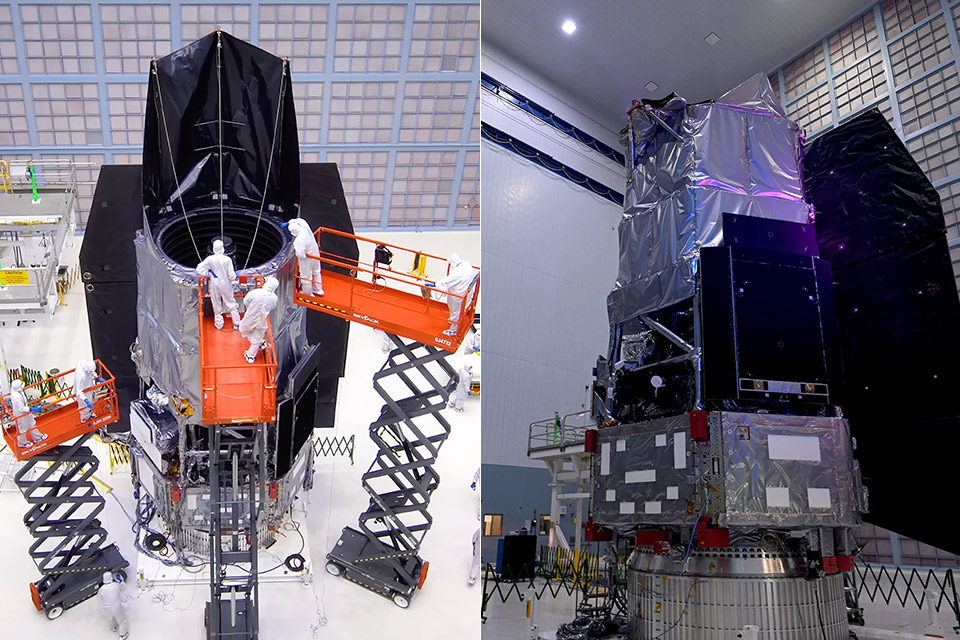
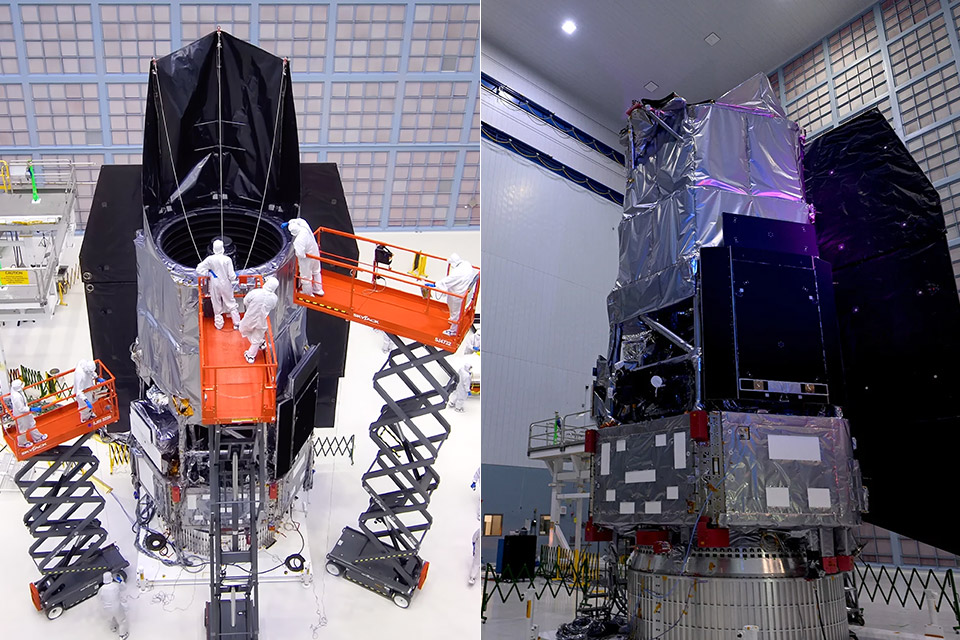
Years of painstaking effort at NASA’s Goddard Space Flight Center have finally paid off, with the Nancy Grace Roman Space Telescope now fully completed. Last November, the engineers were able to connect the two main portions, and now that the observatory has been polished and tested, it is sitting pretty in the site’s largest clean room. Next up is shipping out to Florida’s Kennedy Space Center in June, where a SpaceX Falcon Heavy rocket will launch into space as early as September, an incredible 8 months ahead of schedule and under budget.
Nancy Grace Roman earned the nickname ‘Mother of Hubble’ for effectively directing the agency’s astronomy program during the 1960s and 1970s. The new telescope is a suitable tribute to her name, with the same 2.4-meter mirror as Hubble, but everything else has been dramatically increased up. The observatory’s Wide Field Instrument is a 300-megapixel camera made up of 18 custom-built detectors that work together. Each of these detectors is essentially made up of pixels that are tuned in to pick up both visible light and near-infrared wavelengths, allowing scientists to choose the level of detail they require by using a filter wheel to dial in the exact colors they want.
Superior Optics: 400mm(f/5.7) focal length and 70mm aperture, fully coated optics glass lens with high transmission coatings creates stunning images…
Magnification: Come with two replaceable eyepieces and one 3x Barlow lens.3x Barlow lens trebles the magnifying power of each eyepiece. 5×24 finder…
Wireless Remote: This refractor telescope includes one smart phone adapter and one Wireless camera remote to explore the nature of the world easily…
The new camera on the Roman Telescope has a field of vision that is approximately 100 times larger than what Hubble could capture in a single picture. Because of the greater space available, a single exposure on the Roman Telescope may cover an area two hundred times larger than Hubble could. Where Hubble took decades to map a small piece of the sky, Roman will be able to cover vast areas in a matter of days. The reason it’s feasible is due to design decisions taken by NASA years ago, when they elected to employ a handful of surplus mirrors from the National Reconnaissance Office that had come their way, giving them the room they needed for a larger instrument package without having to start again.
Advertisement
The data flow will also be significant, with each day’s operations returning approximately 1.4 terabytes of data. And during the duration of its five-year primary mission, that will amount to thousands of gigabytes, all of which will be available for astronomers to explore and analyze. They’ll be able to see over a billion galaxies, get a close-up look at the Milky Way, and begin searching for tens of thousands of exoplanets. Some of those planets will be rogue objects that were flung out of their parent stars a long time ago, while others will appear as a result of gravitational microlensing, which occurs when the light from a distant star suddenly brightens because a planet passes in front of it. But the secret is that the Roman Telescope’s infrared vision can see through dust clouds that would typically obscure all of these objects from Earth’s perspective.
Dark energy and dark matter are at the very top of the scientific agenda. We still don’t know what these two unseen components are, despite the fact that they account for an astounding 95% of the cosmos. Roman will determine how much the expansion of space has altered over billions of years by analyzing the distribution of galaxies and harnessing weak echoes of sound waves that bounced about in the early universe. It will also be able to observe how dark matter gathers together and shapes the entire galaxy through its web of visible matter. At the same time, another equipment, a coronograph, will allow planets orbiting close stars to be observed in a previously unheard-of way, similar to how stars are blocked out by a shield. That object also functions as a trial ground for future expeditions that aim to take pictures of planets similar to Earth.
When the Falcon Heavy launches from Launch Pad 39A in September, the Roman Telescope will follow in the footsteps of numerous previous science missions. What’s interesting is that this cargo is bringing a much larger perspective than we’ve previously seen. In a single year, it will collect more data on the sky than Hubble did in almost thirty years in space. Astronomers from around the world have already submitted suggestions for the first batch of observations. The telescope will spend its time scanning, measuring, and recording what it discovers before beaming it back home, allowing researchers to begin piecing together previously unknown areas of the universe. [Source]
The organisation has also called a halt to its plans to fill 6,000 open roles.
Meta has told staff that it will be laying off 10pc of its workforce – roughly 8,000 employees – as it reportedly seeks to mitigate the costs of heavy AI spending.
Bloomberg reported that in a memo issued to employees on Thursday (23 April), Meta explained that the layoffs are to come into effect towards the end of May.
Bloomberg published the details of the memo, which was written by Meta’s chief people officer Janelle Gale, who said: “We’re doing this as part of our continued effort to run the company more efficiently and to allow us to offset the other investments we’re making.
Advertisement
“I know this is unwelcome news and confirming this puts everyone in an uneasy state, but we feel this is the best path forward, given the circumstances.”
Talk of layoffs at Meta was previously reported in March by Reuters. At the time, a company spokesperson told SiliconRepublic.com: “This is a speculative report about theoretical approaches.”
According to the memo, US-based employees who are losing their jobs will receive a severance package which will include 16 weeks of base pay and two weeks for every year of employment. Packages outside the US will be similar but will vary by country, as will local timelines and processes.
“For notifications, we will follow the same process we have before, on 20 May anyone who is impacted will receive an email to their work and personal accounts, please make sure your personal email is updated in Workday,” said Gale.
Advertisement
“I know this leaves everyone with nearly a month of ambiguity which is incredibly unsettling. We will try to answer your questions here in the comments but as we’re still working through the details we aren’t able to share much more until later in May.”
The organisation is also halting plans to recruit workers for 6,000 open roles.
When reached for comment, a Meta spokesperson directed SiliconRepublic.com to the company’s response to RTÉ, which confirmed the accuracy of Bloomberg’s article but did not provide any further details.
This latest round of layoffs follows recent cuts made by the Facebook parent including global layoffs of several hundred last month – which led to the loss of 15 jobs at its Irish location – and 600 roles cut at Meta’s Superintelligence Labs last October.
Advertisement
In recent times, Meta has prioritised investing heavily in artificial intelligence. Earlier this month, the organisation agreed to pay CoreWeave roughly $21bn to access the company’s AI cloud capacity until December 2032. The new agreement came after Meta signed a $14.2bn deal with the company in September, taking the total that CoreWeave has in Meta contracts to $35bn.
Meta isn’t the only high-profile tech company announcing significant layoffs. This week, Microsoft revealed plans to offer its US employees voluntary buyouts. Roughly 7pc of the company’s US employees will be eligible to apply and the plan will be available to workers at a senior director level and below whose years of employment and age add up to 70 or more.
Updated, 12.52pm, 24 April 2026: This article was amended to add Meta’s response to SiliconRepublic.com.
Don’t miss out on the knowledge you need to succeed. Sign up for the Daily Brief, Silicon Republic’s digest of need-to-know sci-tech news.
Apex, a new survival thriller from director Baltasar Kormákur, debuts on Netflix Friday. The film stars Charlize Theron as Sasha, a grief-stricken woman who, after a rather predictable accident on a mountain, travels to Australia to find closure. Once there, she finds herself involved in a grueling cat-and-mouse game as she’s hunted by a ruthless local named Ben (played by Taron Egerton).
There’s a lot the movie could’ve explored during its roughly 90-minute running time, particularly around loss and letting go. Alas, it’s all surface, no depth. It’s a bummer — but at least that surface looks cool.
Let’s back up a minute and discuss the movie’s opening moments. We’re quickly introduced to Sasha, who wakes up in a tent tied to the side of a mountain. This is normal life for her and her husband, Tommy (played by Eric Bana), and it’s understood that the couple does a lot of rock climbing. But Sasha comes to a rock side she just can’t climb over, and, in frustration, they stay on the side of the mountain a bit too long.
Advertisement
All the while, a snowstorm closes in.
Perhaps I watch too many disaster movies, but the story panned out in a predictable manner from there. Due to a rockslide and bad weather conditions, Tommy gets knocked unconscious (or killed immediately) and Sasha must either let go of his rope or die with him.
This opening sequence took place over mere minutes, which, in my opinion, was nowhere near enough time to establish the emotional connection between the two characters that would then inspire her to take a trip alone to the wild backlands of Australia. But we all process grief differently, I guess.
Needless to say, once there, Sasha finds herself in a situation that she wasn’t prepared for. Red flags abound in the form of the cluttered wall of missing persons posters in the local police station and a group of questionable men she soon meets while on her journey to go camping in the unfamiliar terrain.
Advertisement
And this is where Egerton’s seemingly harmless Ben enters the picture. Soon, Apex transforms into something of a horror film, and Ben (along with his trusty crossbow) hunts the American deeper into the woods, because that’s what he does to pass the time.
This is all you really need to know about the story. I’m leaving out some heavy spoilers so you can discover the direction the film takes from there.
Taron Egerton and Charlize Theron star in Apex.
Advertisement
Kane Skennar/Netflix
It brings me no joy to write a negative review. First off, I am fully aware of how challenging it is to make a movie. Not to mention, Apex was shot entirely on location; Theron and Egerton really ran through the Australian woods and battled in all sorts of terrain, from the side of a mountain to white water rapids.
Theron did many of her own stunts and trained to believably portray a rock climber, and she definitely delivered on that front. That focus on realism in the field results in a slew of jaw-dropping visuals that beg to be seen on the big screen. But alas, Apex is a streaming release.
Still, this is all commendable, considering how many Netflix titles are produced entirely on sound stages in front of a blue screen, with digital effects added later to build out the story world. But I can’t help feeling that the focus on tactile detail here came at the expense of the emotional depth a story like this needs.
Apex leans heavily on the acting talents of its leads, and Theron and Egerton deliver the goods, no question. Without their strengths opposite each other, I don’t think Apex would be worth the time at all. This may be Theron’s movie, but Egerton steals the show. More on him in a second.
Advertisement
Charlize Theron stars in Apex.
Kane Skennar/Netflix
When you take a look at Theron’s IMDb page, it’s clear her acting career has been populated with varied roles. She can hold her own in an indie comedy, an arthouse drama, a Marvel blockbuster and even Arrested Development. She brings a haunted stillness to Sasha, which informs the character’s power without spoon-feeding the audience.
All she needs to do is stand and stare at Egerton and her silence speaks volumes. Without much dialogue, she easily steps into the root-worthy entry point for the viewer to connect with.
Advertisement
Egerton, meanwhile, goes all-in on Ben’s atrociousness. He’s a backwoods Hannibal Lecter, complete with his own unique jerky recipe. It should be mentioned that Egerton is British, doing a semi-believable Australian accent, which is not an easy feat. There’s a grab bag of other terrifying quirks that make Ben frightening, on the same level, at times, as Norman Bates. You can tell Egerton is having a blast playing this character. I had a blast watching him.
Performances can only take things so far, though. Outside of the chemistry between Theron and Egerton, the striking visuals and strong camera work, Apex is pretty hollow. That’s a sad thing to type, considering the notion that this is a story about loss, grief and survival.
I’m not going to say Apex isn’t worth your time. If you want some empty-calorie terror to get you through the weekend, you can find it here. Just don’t expect much more than that.
The event is designed to connect students and professionals with key employers, alongside providing industry insights and upskilling opportunities.
This coming Saturday (25 April), the National Institute for Bioprocessing Research and Training (NIBRT) will hold the 12th annual Careers in Biopharma event.
Taking place in the O’Reilly Hall at University College Dublin (UCD), the event is an opportunity for students, graduates and jobseekers to expand their knowledge of the biopharma sector. Attendees can meet with key industry employers, sit in on lectures, engage with upskilling opportunities and expand their networks.
Registration for the event is free and those interested in attending can register in advance. The following is a list of some of the STEM organisations and institutions that will be in attendance.
Advertisement
AbbVie
US pharmaceutical company Abbvie was founded in 2013 and is headquartered in Chicago. The organisation has more than 80 global locations, including in Cork, Dublin, Sligo and Mayo. AbbVie focuses primarily on discovering, developing and delivering therapies and treatments for serious illnesses, in areas such as immunology, oncology and neuroscience.
Alexion
Established in 1992 and headquartered in Boston, Massachusetts, Alexion has been operating in Ireland since 2013, when it opened its first Irish location in Blanchardstown. Between the Dublin and Athlone locations, Alexion employs more than 1300 people in Ireland. Acquired by AstraZeneca in 2020, Alexion focuses on creating therapies and solutions for complex and rare diseases.
Amgen
Biopharmaceutical company Amgen was first established in 1980 and has its primary location in Thousand Oaks California. There are two locations in Dublin and the organisation’s mission involves discovering, developing, manufacturing and delivering innovative medicines to fight some of the world’s most serious conditions, such as heart disease, obesity-related conditions, rare illnesses, inflammatory conditions and cancer. In January of this year, Amgen announced the acquisition of cancer drug discovery platform Dark Blue Therapeutics in a deal valued at up to $840m.
Bristol Myers Squibb
Bristol Myers Squibb (BMS) has been active in Ireland for 52 years, beginning operations in 1964 with an Active Pharmaceutical Ingredient Plant in Swords, Dublin. Currently, in Ireland, BMS runs a biologics drug-substance manufacturing facility in Cruiserath and external manufacturing divisions in Blanchardstown and Shannon. Roughly 1,000 people in Ireland are currently employed by BMS.
Advertisement
Eli Lilly
US pharma giant Eli Lilly manufacturers treatments in areas such as Alzheimer’s, cancer and diabetes. The company has been operating in Ireland since 1978 and employs more than 3,700 people across three sites, in Limerick and Cork. In 2024, the multinational announced plans to invest $1bn into the expansion of its manufacturing site in Limerick, bringing total investment in the build to $2bn. Development on the site continues.
Grifols
Established in Spain in 1909 global healthcare company Grifols has a premises in Dublin, where it offers a range of biopharma products and services. The Dublin location serves as the management center for Grifols Biopharma overseeing the treasury, risk management, supply and demand planning, regulatory, R&D and commercial functions. It is also a hub for labelling, packing, final conditioning, and distribution of finished plasma products. The organisation employs more than 25,000 across the globe, with a presence in more than 30 countries and regions.
ISPE
Established in 1980 and headquartered in Maryland, the International Society for Pharmaceutical Engineering (ISPE) is a large non-profit that focuses on scientific, technical and regulatory advancements in the pharmaceutical lifecycle. The organisation has more than 23,000 employees who are involved in building solutions in the development and manufacturing of safe and effective pharmaceutical and biologic medicines and medical delivery devices. Members are dispersed across more than 90 countries around the world.
Johnson and Johnson Innovative Medicine
Healthcare company Johnson and Johnson Innovative Medicine will also be in attendance at NIBRT’s event. The company employs roughly 140,000 people globally and aims to tackle complex diseases via prevention, treatments and cures. The organisation is particularly focused on the areas of oncology, immunology, cardiopulmonary and neuroscience. Johnson & Johnson’s connection with Ireland began in 1935, with more than 6,000 Irish people employed across its 10 locations in Cork, Dublin, Limerick, Galway and Mayo.
Advertisement
MSD
US multinational pharmaceutical company MSD has a strong presence in Ireland, with facilities in Dublin, Carlow, Cork, Louth, Meath and Tipperary. MSD carries out research and creates medicines and vaccines for some of the world’s most challenging diseases, including cancer, HIV, Ebola, emerging animal diseases and recently Covid-19.
OmniSpirant Therapeutics
Galway’s OmniSpirant Therapeutics was founded in 2016 by Gerry McCauley. It is an early stage therapeutics company working on the development of a novel technology that uses inhaled stem cell exosomes to treat cancer and respiratory diseases.
Pfizer
Global pharmaceutical company Pfizer is a well-established name worldwide. Currently the organisation employs around 3,700 people across six sites in Ireland. The first Irish location was established in 1969 and since then, Pfizer has invested $8bn. In March Pfizer announced the launch of its 2026 Apprenticeship Programme which is open to both school leavers and those looking for a new career or educational achievement. The programme is available across Pfizer’s sites in Grange Castle, Dublin; Newbridge, Kildare; and Ringaskiddy, Cork.
ProPharma
Established in 2001, North Carolina headquartered ProPharma helps pharmaceutical, biotechnology, and medical device companies bring new therapies to the market. Their work covers the early development stages, all the way through to the clinical, regulatory approval and commercialisation phases. The organisation has a strong global presence across Europe, the US and the AsiaPacific reason.
Advertisement
Sanofi
Paris-based pharmaceutical manufacturing company Sanofi produces drugs across a wide range of therapeutic disciplines, treating illnesses such as MS and diabetes. The R&D driven, AI-powered biopharma has a presence in more than 60 countries and currently has two Irish sites in Waterford and Dublin.
Veolia
Headquartered in France, Veolia employs more than 700 employees across Ireland. The organisation works with customers to manage scarce resources through their expertise in operations, engineering and technology. The aim is to reduce the environmental impact of public, business and industrial activities. This is achieved via a focus on three key areas, decarbonisation, reducing pollution and maximising resource efficiency.
WuXi Biologics
Headquartered in China, WuXi Biologics is an open-access biologics technology platform that offers end-to-end services in order to accelerate the development and manufacturing of biologics. WuXi employs more than 13,000 employees across China, the US, Ireland, Germany, and Singapore. A global team that includes experts and scientists in biologics R&D and manufacturing, technology innovation, and operations. Located on a 26-hectare site, WuXi has a location midway between Dublin and Belfast, in Dundalk, Louth. The site is one of the largest in the world utilising single-use bioreactor technology.
Don’t miss out on the knowledge you need to succeed. Sign up for the Daily Brief, Silicon Republic’s digest of need-to-know sci-tech news.
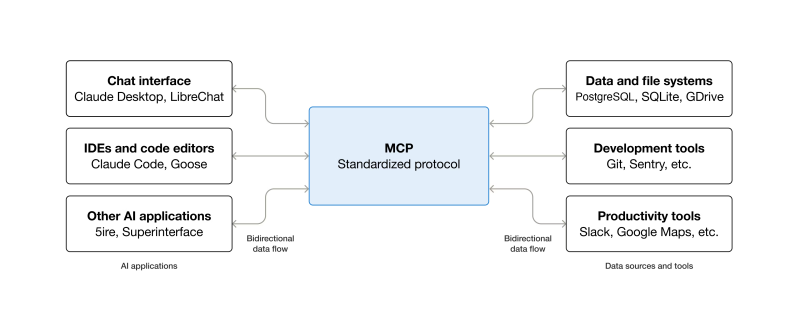
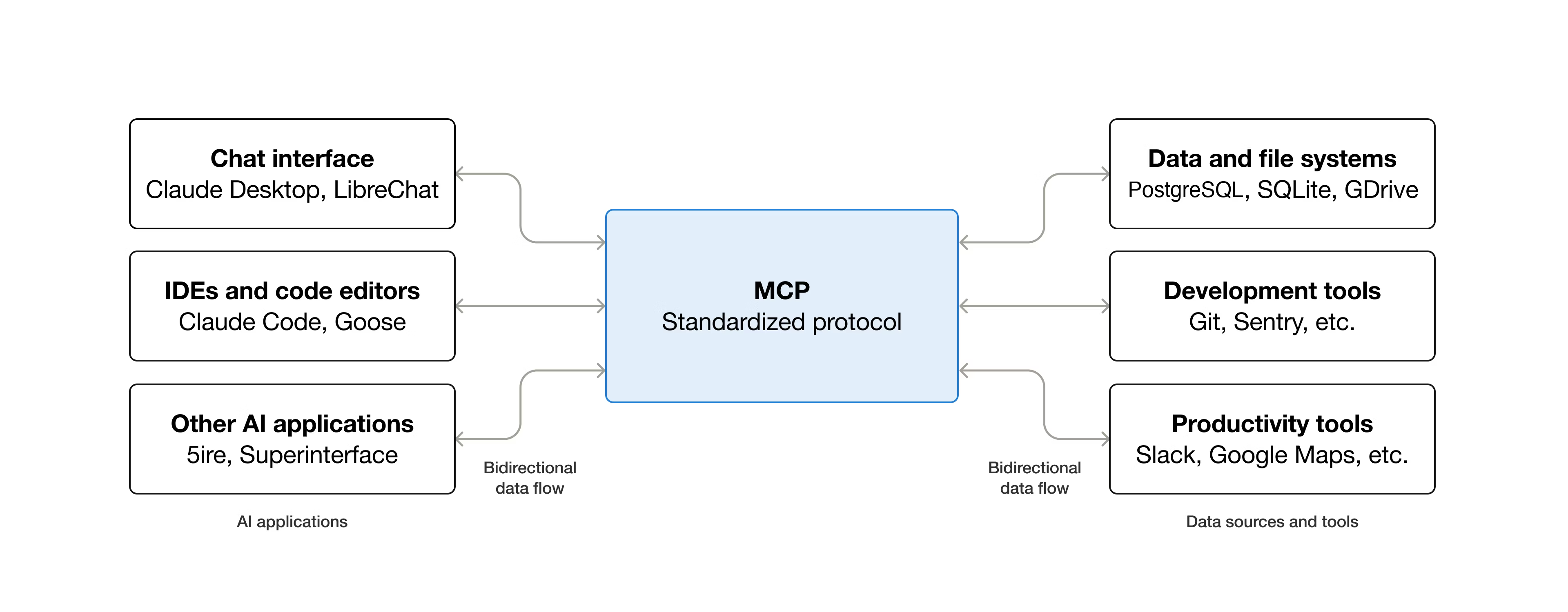
As part of the effort to push Large Language Model (LLM) ‘AI’ into more and more places, Anthropic’s Model Context Protocol (MCP) has been adopted as the standard to connect LLMs with various external tools and systems in a client-server model. A light oversight with the architecture of this protocol is that remote command execution (RCE) of arbitrary commands is effectively an essential part of its design, as covered in a recent article by [OX Security].
The details of this flaw are found in a detailed breakdown article, which applies to all implementations regardless of the programming language. Essentially the StdioServerParameters that are passed to the remote server to create a new local instance on said server can contain any command and arguments, which are executed in a server-side shell.
Essentially the issue is a lack of input sanitization, which is only the most common source of exploited CVEs. Across multiple real-world exploitation attempts on the software of LettaAI, LangFlow, Flowise and Windsurf it was possible to perform RCEs or perform local RCE in the case of the Windsurf IDE. Although Flowise had implemented some input sanitization by limiting allowed commands and the stripping of special characters, this was bypassed by using standard flags of the npx command.
Advertisement
After contacting Anthropic to inform them of these issues with MCP, the researchers were told that there was no design flaw and essentially had a ‘no-fix, works as designed’ hurled at them. According to Anthropic it’s the responsibility of the developer to perform input sanitization, which is interesting since they provide a range of implementations.
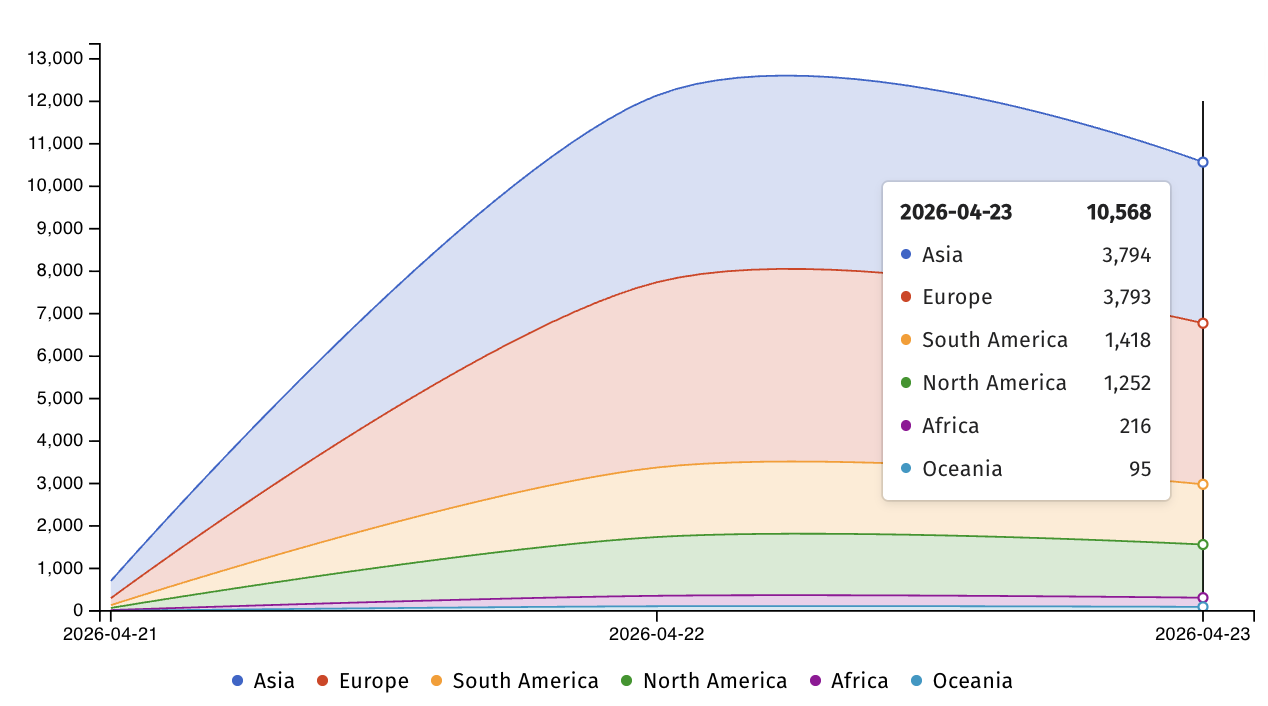
Over 10,000 Zimbra Collaboration Suite (ZCS) instances exposed online are vulnerable to ongoing attacks exploiting a cross-site scripting (XSS) security flaw, according to nonprofit security organization Shadowserver.
Zimbra is a popular email and collaboration software suite used by hundreds of millions of people worldwide, including hundreds of government agencies and thousands of businesses.
The vulnerability (tracked as CVE-2025-48700) affects ZCS 8.8.15, 9.0, 10.0, and 10.1 and can allow unauthenticated attackers to access sensitive information after executing arbitrary JavaScript within the user’s session.
Synacor released security patches to address the flaw in June 2025, when it warned that CVE-2025-48700 exploits require no user interaction and can be triggered when a user views a maliciously crafted email message in the Zimbra Classic UI.
The U.S. cybersecurity agency also ordered Federal Civilian Executive Branch (FCEB) agencies to secure their Zimbra servers within three days, by April 23.
On Friday, Internet security watchdog Shadowserver also warned that over 10,500 Zimbra servers exposed online remain unpatched, most of them in Asia (3,794) and Europe (3,793).
This phishing campaign (codenamed Operation GhostMail by security researchers at Seqrite Labs) also targeted the Ukrainian State Hydrology Agency (a critical infrastructure entity under the Ministry of Infrastructure that provides navigational, maritime, and hydrographic support) and delivered an obfuscated JavaScript payload when recipients opened the malicious emails in vulnerable Zimbra webmail sessions.
“The phishing email has no malicious attachments, no suspicious links, no macros. The entire attack chain lives inside the HTML body of a single email, there are no malicious attachments,” Seqrite Labs said at the time.
Advertisement
Zimbra flaws are frequently exploited in attacks and have been used to breach thousands of vulnerable email servers in recent years.
For instance, Russian Winter Vivern cyberespies used another reflected XSS exploit to breach Zimbra webmail portals in February 2023 and steal emails sent and received by NATO-aligned organizations and individuals, including military personnel, government officials, and diplomats.
More recently, in October 2024, U.S. and U.K. cyber agencies warned that APT29 (a.k.a. Cozy Bear, Midnight Blizzard) hackers linked to Russia’s Foreign Intelligence Service (SVR) were targeting vulnerable Zimbra servers “at a mass scale,” exploiting a security issue that had been previously abused to steal email account credentials.
AI chained four zero-days into one exploit that bypassed both renderer and OS sandboxes. A wave of new exploits is coming.
At the Autonomous Validation Summit (May 12 & 14), see how autonomous, context-rich validation finds what’s exploitable, proves controls hold, and closes the remediation loop.
Samsung’s memory business is central to the current upswing in the chip market. Alongside SK Hynix and Micron, the company is one of the three major producers of DRAM and high-bandwidth memory (HBM). These chips are now critical for AI training and inference systems, where memory bandwidth has become as… Read Entire Article Source link





























































You must be logged in to post a comment Login