Expect more bottled-up frustration, resentment and insecurity this week as Netflix‘s anthology dramedy, Beef, returns for a second season with a fresh cast and setting.
After picking up a trio of Emmy awards for its debut season, which starred Steven Yeun and Ali Wong, director and screenwriter Lee Sung Jin starts from a clean slate with an entirely different talent lineup. Great Gatsby star Carey Mulligan and Frankenstein’s Oscar Isaac lead the story as Joshua and Lindsay Martín, a couple whose marriage is more than rocky. Cailee Spaeny and Charles Melton play a newly engaged couple, Ashley and Austin, who both work under the Martíns.
Produced by A24 and featuring a soundtrack by Billie Eilish’s brother Finneas, Beef is set for more dark humor as season 2 delivers another high-stakes feud. Read on to find out more on how to stream Beef’s second season this month.
Advertisement
What’s the plot for Beef Season 2?
As with Season 1, this sophomore run of Beef centers around a big argument. But this time it’s between between Joshua and Lindsay, who are running an exclusive Southern California country club together.
What starts off as a seemingly contained dispute quickly spirals, however, dragging in their friends and employees, including two staff members — the Gen Z couple played by Melton and Spaeny who witness their bosses’ shocking confrontation.
The fallout from the argument triggers a chain of events, leading to both couples fighting for the approval of the club’s powerful billionaire owner played by Youn Yuh-jung.
Advertisement
How to watch Beef Season 2
Beef’s entire eight-episode second season will arrive on April 16 on Netflix. The streaming service recently raised prices on its subscription plans, which now range from $9 to $27 a month.
James Martin/CNET
Netflix offers three plans in the US, ranging from $9 a month for its ad-free version to $20 or $27 a month if you want to stream without ads.
Advertisement
In the UK, the current pricing is £6 for Standard with Ads, £13 for Standard (Ad-Free) and £19 for Premium (Ad-Free). For Australian viewers, Standard with Ads comes in at AU$10, Standard (Ad-Free) is priced at AU$21, while Premium (Ad-Free) will set you back AU$30.
Duolingo beat every Q1 estimate, then told investors it would slow monetization to chase 100 million daily active users by 2028. The stock dropped 14 per cent as the market priced the risk that AI will commoditise language learning before the bet pays off.
Duolingo beat every Wall Street estimate for the first quarter of 2026. Revenue rose 27 per cent year on year to 292 million dollars. Earnings per share came in at 89 cents against expectations of 76 cents. Daily active users grew 21 per cent to 56.5 million. Paid subscribers grew 21 per cent to 12.5 million. Adjusted EBITDA margin reached 29 per cent. Then CEO Luis von Ahn told investors that the company was going to slow down on purpose. Duolingo would prioritise user engagement and long-term growth over near-term monetization. Bookings growth would decelerate to six per cent in the second quarter. Full-year guidance called for 10 to 12 per cent bookings growth, 15 to 18 per cent revenue growth, and a 25 per cent EBITDA margin, all below the trajectory the stock price had priced in. The shares fell 14 per cent. The stock is now down more than 40 per cent in 2026 and roughly 80 per cent from its all-time high. Von Ahn is not concerned. He is making a bet that in the age of AI, the only thing that will keep Duolingo alive is the thing that made it successful in the first place: the daily habit.
Advertisement
The strategy
Von Ahn’s letter to shareholders laid out the logic with unusual directness. Duolingo’s goal is to reach 100 million daily active users by 2028, nearly doubling its current base. To get there, the company is investing in product improvements that increase engagement, even when those improvements reduce short-term revenue. The most significant change is expanding access to features that were previously locked behind the paid subscription. Longer free trials, free access to the Explain My Answer feature that uses GPT-4, and a redesigned progression system are all designed to keep users coming back daily. The calculation is that users who build a daily habit are more likely to convert to paid subscribers eventually, and that the lifetime value of a habitual user exceeds the subscription revenue lost by giving away features in the short term.
The product roadmap supports the thesis. Duolingo’s AI-powered language tutors were among the first consumer chatbot implementations that actually worked, and the company has continued to invest in AI features that make the learning experience more conversational and less mechanical. Video Call, a feature that lets users practise speaking with an AI character called Lily who responds in real time, is being expanded beyond the Max subscription tier. Speaking Adventures, a new feature that places users in simulated real-world scenarios, is designed to address the gap between app-based language learning and actual conversation. Spoken Tokens, a currency earned by completing speaking exercises, adds a gamification layer to the part of language learning that users find most intimidating. Every feature is built to increase time spent in the app, which increases habit strength, which increases the probability that a free user eventually pays.
The threat
The 💜 of EU tech
The latest rumblings from the EU tech scene, a story from our wise ol’ founder Boris, and some questionable AI art. It’s free, every week, in your inbox. Sign up now!
Advertisement
The urgency behind the strategy is not financial. It is competitive. ChatGPT can already conduct a fluent conversation in more than 50 languages, correct grammar in real time, and adapt its vocabulary to the learner’s level. Google’s Gemini models can do the same, integrated into the world’s most widely used search engine and mobile operating system. Google has experimented with dedicated language learning features built on its translation and AI infrastructure, and the combination of a free product, a massive distribution channel, and increasingly capable language models makes Google the most dangerous potential competitor Duolingo has ever faced. Meta’s Llama models, available open-source, allow any developer to build a language tutoring application with conversational AI at near-zero marginal cost. The technical moat that Duolingo built over a decade, a structured curriculum delivered through an addictive app, is being commodified by AI models that can generate equivalent instruction on demand.
Von Ahn has acknowledged this openly. In the earnings call, he described language learning as one of the first consumer categories where AI would fundamentally change the competitive landscape. Google’s AI agent strategy positions conversational AI as a platform-level capability available across every Google product, from Search to Android to Workspace. If language practice becomes a feature of the operating system rather than a standalone app, Duolingo’s value proposition narrows to the things AI cannot easily replicate: the streak counter, the leaderboard, the push notification that arrives at 7 p.m. reminding you that your 847-day streak is about to break. The gamification is not a gimmick. It is the product. And von Ahn is betting that it is more defensible than the curriculum.
The numbers
The disconnect between Duolingo’s operating performance and its stock price reflects a market that is not sure whether the engagement bet will pay off. Revenue growth of 27 per cent is strong by any measure. Subscription revenue of 251 million dollars, up 31 per cent, demonstrates that the paid model works. The 29 per cent EBITDA margin shows operational leverage improving as the user base scales. But the forward guidance, six per cent bookings growth in Q2 and 10 to 12 per cent for the full year, represents a deliberate deceleration that investors are not accustomed to from a company that has been one of the market’s highest-growth consumer technology stocks.
The institutional revenue story adds a complication. Duolingo’s English Test, which allows users to take a certified language proficiency exam through the app, has become a meaningful revenue stream and a competitive alternative to TOEFL and IELTS. But the test business operates on different economics from the consumer subscription: it depends on institutional acceptance, which grows slowly, and on immigration and education policy, which changes unpredictably. The consumer subscription business, which accounts for the vast majority of revenue, is the segment that von Ahn is reshaping. The question investors are pricing is whether the engagement-first strategy produces 100 million daily active users by 2028, or whether it produces a larger free user base that is harder to monetise in an environment where AI has made the core product less differentiated.
Advertisement
The moat
The pattern of legacy software products adding AI features to defend their market position is now visible across the technology industry. Slack rebuilt its Slackbot around AI to compete with Microsoft’s Copilot integration. Adobe added generative AI to every creative tool. Notion, Canva, and dozens of other productivity applications have embedded AI assistants that perform tasks their products were originally designed for humans to do manually. In each case, the company’s defence is not the AI itself, which competitors can replicate, but the user base, the workflow integration, and the switching costs that keep customers on the platform. Duolingo’s version of that defence is the habit loop: the streaks, the experience points, the league tables, and the social pressure that make opening the app feel like a daily obligation rather than a choice.
OpenAI has released open-source safety tools specifically designed for applications used by teenagers, acknowledging that AI consumer products face unique regulatory and safety requirements when their user base skews young. Duolingo’s user base includes a significant proportion of students and young learners, and the company’s ability to deploy AI features responsibly while maintaining engagement is both a competitive advantage and a regulatory exposure. The AI features that make Duolingo’s product more compelling, conversational AI tutors, real-time speech recognition, adaptive difficulty, are the same features that attract regulatory scrutiny when deployed at scale to younger users.
The bet
What von Ahn is doing is unusual in public markets: telling investors that the company will be less profitable in the short term so that it can be larger in the long term, and asking them to trust that the engagement metrics, not the financial metrics, are the ones that matter. The bet is that daily active users are the leading indicator and that revenue is the lagging one. If Duolingo reaches 100 million DAUs, the monetization will follow because 100 million people who open an app every day represent an audience that advertisers, content partners, and premium subscribers will pay to reach. If it does not, the company will have sacrificed years of revenue growth for a user base that AI competitors can serve for free.
The stock market’s 14 per cent verdict on Sunday night was not a rejection of the strategy. It was an acknowledgement that the strategy carries real risk. Duolingo is trading at roughly 11 times forward revenue, down from more than 30 times a year ago, a compression that reflects the market’s uncertainty about whether engagement-first growth can produce the financial returns that monetization-first growth delivered. Von Ahn has staked his company on the proposition that in a world where AI can teach anyone anything, the only competitive advantage is making people want to come back tomorrow. The owl is the moat. The 14 per cent drop is the price of proving it.
— Yunyan Wang has left Amazon to become chief technology officer at Chewy, the leading online pet retailer. Wang spent more than 12 years at the Seattle-based tech giant, most recently as vice president of Commerce & Supply Chain Services.
“(Wang’s) track record driving innovation at world-class companies makes her the perfect addition as we double down on making Chewy ‘the’ trusted and convenient destination for pet parents and partners, everywhere,” said Chewy CEO Sumit Singh on LinkedIn.
At Amazon, Wang helped expand customer access to Prime Fulfillment, Multi-Channel Fulfillment, Amazon Supply Chain Services and other products — work that fed into the company’s broader push to commercialize its internal logistics capabilities. Amazon took a major step in that direction Monday, launching a business that makes its entire logistics network available to outside companies.
Wang also served two years as technical advisor to Jeff Wilke, Amazon’s first CEO of Worldwide Consumer. She began her tech career in 2001 as a software engineer at Microsoft and later was a director at Expedia.
Josh Schauer. (LinkedIn Photo)
— Enterprise software company Smartsheet has named Josh Schaueras chief financial officer. The Bellevue, Wash.-based company, which helps businesses organize and track work, last week announced four C-suite changes — two hires and two promotions — and appointed Rajeev Singh as CEO in October.
Schauer will be responsible for building Smartsheet’s revenue model and supporting strategic investments, the company said. He previously served as CFO at insightsoftware and has held leadership roles at Longview Solutions and Verisae. He will work remotely from Minneapolis.
Advertisement
Alvaro Celis. (LinkedIn Photo)
— NetApp has named Alvaro Celis, a longtime Microsoft executive, as chief partner and ecosystem officer, a position in which he will lead the company’s World Partner Organization and build customer relationships.
Celis spent more than three decades at Microsoft before departing in 2024, where he held a series of vice president roles in global sales spanning devices, independent software vendors, education and other areas.
In the new role, Celis said he will focus “on strengthening the ecosystem that will help organizations succeed in this new era by connecting the right technologies, expertise, and outcomes.”
Shannon Braddock. (LinkedIn Photo)
— Greater Seattle Partners (GSP) appointed Shannon Braddock as president and CEO of the regional public-private economic development organization. She succeeds Rebecca Lovell, who has served in an interim capacity since December.
Braddock most recently served as King County executive following Dow Constantine’s resignation to become CEO of Sound Transit. She spent eight years with the county in roles including deputy executive and chief of staff, and has held board positions for organizations focused on transit and homelessness.
At GSP, Braddock will lead efforts “across economic development, international relations, global marketing and research to drive jobs, investment and talent to the Greater Seattle region,” the organization said.
Advertisement
Jake Bernstein. (LinkedIn Photo)
— K&L Gates has named Jake Bernstein to the newly created role of global AI and innovation partner, in which he will lead the Seattle-based firm’s artificial intelligence strategy, governance and innovation operations.
“It’s not every day that one’s professional life transforms from a stately drive around town into a rocket-assisted speed run straight into the Great Unknown,” Bernstein said of the appointment.
Bernstein has been with K&L Gates for more than five years, focusing on data privacy and cybersecurity law. He also teaches as an adjunct professor at Seattle University School of Law. Bernstein previously spent nearly eight years as an assistant attorney general in Washington state’s Consumer Protection Division.
— Robb Monkman is now chief marketing officer at Centegix, an Atlanta-based safety technology company. Monkman is the founder and former CEO of Seattle’s React Mobile, a startup that sells safety software and “panic button” devices primarily to hotels looking to protect their workforce. He joins Centegix from Teal Communications, which provides technology to connect devices to data networks worldwide.
— Following a national search, Seattle’s Fred Hutch Cancer Center named Dr. Christopher Lias director of its Public Health Sciences Division and promoted him to senior VP. Li, who has been with Fred Hutch for more than 15 years, will take the role on July 1. He succeeds Dr. Garnet Anderson, who has led the division for more than 13 years.
Advertisement
— Amazon‘s Marie Carlton has been promoted to director, taking on a new role leading AWS Applied AI Solutions partner go-to-market strategy. Carlton has been with Amazon Web Services for a decade. Her previous role focused on working with AWS partners, and she has led multiple women-in-tech initiatives.
— F5 has named Anand Eswaran to its board of directors. The Seattle-based security company said Eswaran will also serve on the board’s Audit and Talent and Compensation committees. Eswaran is CEO of Veeam, a Kirkland, Wash.-based data protection and ransomware recovery company.
— Yoodli, the AI speech coaching platform, has appointed Georgia Gieras director of customer success. Gier joins the Seattle startup from Kirkland, Wash.-based Enlyft. Past employers include Moogsoft, which was acquired by Dell Technologies, and Seattle’s BrandVerity.
— Aaron Altabet launched Shoal Events & Design, a Seattle-based professional events company that organizes conferences, summits, retreats and other meetups. Altabet has held internship roles at organizations including Pack Ventures and Pioneer Square Labs.
Advertisement
— Sara Duttais now founder of Ocilisni, a life sciences consultancy based in Kirkland. The firm offers AI strategy, business development and program management. Clients include the Allen Institute and Synthesize Bio.
Adobe Lightroom is a cloud-based photo editing and organizing tool designed for photographers of all levels. With an intuitive interface and advanced features, it allows you to create stunning images, manage your photo library, and work seamlessly across desktop, mobile, and web. Lightroom Classic provides robust tools for handling large volumes of images, offering precise control over photo organization and editing. It includes powerful modules like Develop and Map, making it ideal for desktop users who need in-depth editing capabilities. Enhance your photos effortlessly with easy-to-use editing tools. Adjust exposure, contrast, and color balance, crop and straighten images, and apply presets and filters with one click to achieve professional-quality results. With 1TB of cloud storage and automatic synchronization, Lightroom ensures your entire photo library is backed up and accessible from any device. Edit on the go and never lose your work—your photos are always at your fingertips. This one year subscription is on sale for $119.88.
Note: The Techdirt Deals Store is powered and curated by StackSocial. A portion of all sales from Techdirt Deals helps support Techdirt. The products featured do not reflect endorsements by our editorial team.
As it turns out, there’s far more to the humble air compressor than filling up soccer balls and getting soft car tires road-ready again. They’re also compatible with pneumatic tools, which use compressed air power rather than gas or electricity to get the job done. Stores like Harbor Freight have no shortage of these tools, and while some can get pretty expensive, plenty are easy on the wallet. That’s to say some worthwhile options stay below the $100 threshold.
If you’re interested in trying out some pneumatic tools from Harbor Freight, there are a few things to know. First and foremost, you should ensure your specific compressor can handle your tools. Certain air tools require specific air compressor sizes to function, otherwise you risk damaging your compressor, the tool, or both. Also, if you don’t have one already, you’ll want to invest in a good air compressor hose, since tools and tool kits don’t tend to come with them. Fortunately, Harbor Freight has plenty for sale at different sizes, shapes, and price points.
With your hose and air compressor, you’re ready to unlock their hidden potential. Here are some Harbor Freight pneumatic tools that are both wallet-friendly and dependable, according to those who’ve bought them.
Advertisement
Central Pneumatic air ratchet wrench
Harbor Freight is no stranger to ratchets. It has ratchets of all shapes and sizes, individual sockets, and ratchet-socket kits for sale, as well as the ever-intriguing Harbor Freight 24K gold-plated ratchet. It also has pneumatic ratchets, such as the Central Pneumatic air ratchet wrench, in its inventory. It comes in two drive sizes, 1/4-inch and 1/2-inch, which come in at $21.99 and $25.99, respectively. The 1/4 in. model is advertised at providing a maximum torque of 15 foot-pounds, while the 1/2 in. version provides 45 ft-lbs. Both are marketed with a maximum speed of 150 RPM and 4-vane reversible motors.
Advertisement
While the prices and promised performance are nice at first glance, how do these air ratchets actually hold up on the job? According to Harbor Freight customers, they do quite well. As of publication, 1,637 users have left reviews, amounting to a total rating of 4.4 out of five. The tool is often applauded for its durability, light weight, and small size, making it easy for tight spaces. Most also attest that it has a reasonable amount of power for light-duty jobs. Many were more than happy with how it cut down work time, too, especially compared to the average hand ratchet.
Advertisement
Banks crown air stapler
Much like how it has a deep selection of ratchets, Harbor Freight sells numerous staplers at different price points. The bulk of its selection is of the pneumatic variety, though these models do tend to be expensive and soar well past $100. With that said, there are some more budget-conscious units in there worth trying that seem to deliver. For example, the Banks 18-gauge crown air stapler, which Harbor Freight lists for $39.99, seems a viable, cheaper choice. Capable of taking in a 100-staple magazine, this stapler works with 1/4-inch crown staples that range from 5/8 in. to 1 1/2 in. in length. It’s also advertised as a slim, lightweight model ideal for both repetitive work and jobs where space is limited.
This stapler has a 4.7 out of five-star rating on the Harbor Freight website, with 799 of its 1,079 total ratings awarding it five stars. Reviews say it is an easy tool to use that’s effective on the job. Many reviewers have reported that staple jamming isn’t an issue, and neither is the power at which it sends staples through material, so they were able to plow through and get their work done quickly. Additionally, this stapler, being a light unit at 3 pounds, is appreciated by numerous reviewers, as is the construction quality and the price point.
Advertisement
Central Pneumatic air polisher kit
To keep surfaces smooth and shiny, sometimes more than some quality rags and brushes are needed. A powered polisher can achieve these attributes, buffing out imperfections with ease and quickly. There are pneumatic polishers out there, such as the model at the heart of the Central Pneumatic air polisher kit.
At $34.99, this cast aluminum polisher features a pistol grip handle and a rear exhaust to push air and debris away from your work surface. It spins at up to 2,400 RPM. Two foam buffing pads and a single wool polishing pad are included for different polishing and buffing scenarios, though it works with 3-inch discs of the hook-and-loop attachment style.
Up to this point, the reviews for this polisher are largely positive. At 4.4 out of five stars overall, 201 of the 308 reviews gave it five stars. Even though it’s often mentioned that this isn’t a terribly large polisher, that doesn’t mean it should be overlooked. Customers frequently highlighted its power, despite its small frame and 1.53-pound weight, and its penchant for reaching tight spaces that larger buffers miss. It has served Harbor Freight customers well in cleaning up metal and plastic surfaces, and some claimed that the performance, build quality, and number of different jobs it can aid in far exceed the price point.
Advertisement
Baxter professional belt air sander
More often than not, a traditional belt or palm sander will serve you just fine. However, in some cases, you’ll have to contend with tight spaces and corners where these larger sanders simply can’t reach. You could use sandpaper and try to get these areas by hand, or use your air compressor to bring in a more specialized tool. While pricey at $99.99, the Baxter professional belt air sander could help here, utilizing a 1/2-inch-wide sandpaper belt to squeeze into these tight areas. It moves at up to 16,000 RPM, you can adjust the speed with its variable speed trigger, and the rear exhaust sends the sanded material away from the area you’re working on.
Advertisement
There are currently 421 reviews behind this sander, which have brought it to a 4.8 out of five overall star rating. Arguably the biggest plus Harbor Freight customers have highlighted is its versatility, as the narrowness of this tool means it can help out in a host of settings most didn’t even consider initially. It’s regarded as sufficiently fast and light, great at smoothing out wood and metal alike, and user-friendly enough when it comes to use and swapping out worn belts for fresh ones. Some also noted that it’s a tool that will endure regular use over the course of years, so while expensive, odds are it’ll prove to be a long-term investment.
Advertisement
Central Pneumatic air impact hammer
When working with anything harder than wood, you need serious power in your tools. To chip away at metal and stone, typically, an impact hammer is the tool. There are numerous pneumatic tools to choose from, and the more powerful ones are full-on jackhammers or rotary hammers. With that said, the Central Pneumatic air impact hammer kit hooks up to an air compressor and uses its power to punch through metal and stone, remove seized bolts, and more, all at an operating pressure of 90 PSI. Harbor Freight has this tool listed at $24.99, and it includes a flat chisel, though it can use other standard 0.401-inch shank bits.
As far as customer reviews, this is another case of a low-price tool appearing to deliver beyond its price point. 769 reviews have put it at 4.5 out of five stars. It’s said to plow through materials like concrete and tile without issue, remove stuck and rusted bolts with relative ease, and serve its purpose in both home and automotive contexts. Even as a lightweight and rather inexpensive tool, customers note it doesn’t feel cheap or underpowered. While some admit it’s not a tool they use often, when they do need to use it, it doesn’t let them down.
Flock Safety’s reputation is in tatters, thanks in large part to its own actions. First sold as a high-tech add-on for homeowners’ associations and gated communities, it soon spread to law enforcement agencies and the cities that employ them. Promising plenty of access to an existing network of privately-owned cameras, Flock insinuated — if not actually stated as much — that cities buying its systems would have access to recordings and ALPR records gathered elsewhere in the nation.
That has largely proven to be true. Law enforcement officers with access to Flock’s camera network have used it to do things like track the movements of a Texas woman who was seeking an abortion and allowing federal officers to hunt down migrants to detain and deport.
Flock has been so bad on the PR front that national surveillance powerhouse Ring pulled the plug on its fledgling partnership with Flock following backlash to its heartwarming-except-for-all-the-dystopia Super Bowl ad.
Even before the Big Game debacle, Flock had been shedding customers. The private sector still seems as interested as ever, but cities were either turning down Flock’s overtures or terminating their contracts with the surveillance camera company.
Residents of an Atlanta suburb have been rocked by the revelation that sales employees at Flock have been accessing sensitive cameras in the town to demonstrate the company’s surveillance technology to police departments around the country. The cameras accessed have included surveillance tech in a children’s gymnastics room, a playground, a school, a Jewish community center, and a pool.
While I can understand parents might appreciate cameras being used to protect their kids, they likely never expected that footage of their kids (sometimes clad in revealing clothing) would be used as a sales tool by Flock Safety.
The city’s own audit logs prove otherwise. From the data in this file, just since the start of 2025, 1,271 external agencies have been granted permission to view live streams. 358 external agencies have been granted access to record these streams.
Advertisement
We don’t know who else has been accessing this footage, but the data makes it clear certain Flock sales reps and officials are extremely interested in footage of people in pools, gymnastic classes, and fitness centers.
One Flock employee, Randy Gluck, who lives in Raleigh and is a business development manager for their 911 products, was granted live-view access to our cameras. He looked at 54 cameras, with very strange patterns such as clicking through 5 traffic cameras on July 21st last year before settling on the Dunwoody Library camera. The Flock data does not tell us when he stopped watching that footage, but he didn’t look at anything else for two hours.
Two days later, Randy clicked through 3 private cameras at the JCC before he settled on JCC camera ‘Main Pool Right’. It was over 3 hours later before his next view on traffic cameras.
[…]
This brings me to Bob Carter – Vice President of Strategic Relations and Business Development for Flock. Bob spends a lot of time looking through both our live footage and recorded footage. Just since the beginning of last year, he has done this 185 times.
Advertisement
Bob also has some interesting searches. On September 30th, 2025 – Bob looked at just one camera. This camera is in the gymnastics room of the JCC [Jewish Community Center].
A lengthy apology for all of this was given to the Jewish Community Center by none other than Flock CEO Garrett Langley. And while it’s nice to see an apology being offered, the apology doesn’t include any promises not to do this same sort of thing elsewhere, much less address the very real concerns that a number of Flock Safety employees have unfettered access to live cameras and recorded footage.
“You may have seen that questions have been raised about Flock employees’ access to security cameras near MJCCA property. While there is a lot of misinformation propagated by some of the voices making these allegations, I want to be direct and apologize for our poor judgement.”
[…]
“Because of our relationship with Dunwoody PD as a development partner–meaning we had explicit permission from Dunwoody to use their Flock system for both testing (for product improvement) and demonstration–Flock employees did occasionally access Dunwoody’s devices for those purposes,” Langley added. “I recognize that the choice to use MJCCA, rather than parts of the city, was a poor one on our part. I am cognizant of the additional, well-founded sensitivity of the Jewish community to security concerns at this time. Therefore, I would like to extend a formal apology to you and the entire MJCCA community for this poor decision. Candidly, it is because of the very real security concerns the MJCCA community is feeling that I am so proud of our partnership, and those with Jewish organizations across the country.”
Advertisement
While Flock management is apparently angry that some of its employees are now being called “child predators” following the publication of these access logs, it’s apparently uninterested in curbing access or installing guidelines that might deter questionable viewing habits in the future.
As for the city itself, it doesn’t seem to care that many residents are opposed to further Flock camera use based on what’s been uncovered here. The state’s attorney general took time from his busy running-for-governor schedule to praise Flock and the mayor of Dunwoody for their continued partnership.
When something like this can’t deter cities from continuing to do business with Flock, it makes the allegedly heartfelt apology issued by the company’s CEO look a lot less heartfelt. This isn’t someone offering contrition and promise to do better to a potential customer. This is someone saying the sort of stuff that sounds like contrition but is ultimately meaningless because neither Flock nor the city government actually care what the general public thinks of them.
Website traffic from AI will surpass traffic from traditional search by 2028. Do you know that almost 70% of businesses report higher return on investment (ROI) with the use of AI in SEO? And this data shows the surging demand and usage of SEO intelligence.
But how is it different from just seo or why is there so much buzz around a separate term? Keep reading to know all about modern-day search engine optimization.
What is SEO Intelligence?
SEO intelligence is all about the process of refining your website to achieve higher rankings on the search engines by collecting, analyzing, and leveraging data related to search engine performance. It gives you a picture of how your website is doing in organic search, how it stands against the competitors, and what the strategy is to do better in search rankings.
How is it different from Normal SEO?
This is the most common confusion. Let me clarify for you.
SEO is about the basics of optimizing your website for it to rank better, and it is more about using the right keywords, improving technical seo and tailoring web content accordingly.
Advertisement
Whereas SEO intelligence goes a layer deeper, it is the advancement of the basics that goes with a strategic approach. Here, it is not just about practicing seo but practicing it with the right tools, using data and analysis before deciding what seo actions will be the best for expected outcomes. It is about being precise and making data-backed decisions, and it is a proactive approach.
SEO is about execution, whereas SEO intelligence is about what & why to execute.
Why do you need Search Engine Optimization Intelligence?
These are the 8 top-most benefits of SEO intelligence:
1. Competitive Edge
When you are using the right seo tools and each of your decisions is backed by clear figures, facts, and industry insights, it helps you stay ahead of the competition. Moreover, intelligence starts with gathering data, which includes what your competitors are doing, taking note of beneficial strategies from them, and what you should avoid while learning from others’ mistakes.
Advertisement
2. Data Driven Decision-making
Use of intelligence in seo processes helps you make informed decisions as you look at analysis and reports rather than playing on assumptions. You can make and maintain highly effective and high-performing plans for traffic generation.
3. Optimized Content
Gives you an understanding of what type of content will work best for your target audience and platform. Better-aligned content leads to higher engagement rates.
4. Enhance User Experience
It is not only about your website performance on search engines, but also how the website treats users or visitors. Intelligent data gives a view of how your site is utilized by visitors and what can be improved in usability and navigation.
5. Higher Conversion
It is a seo process at core, and the purpose of seo is to rank your website higher, which indeed will increase footfalls and consequently conversion rates. Now adding intelligence to basic seo makes these increments much higher.
Advertisement
6. Long-term Results
Applying intelligence while working on seo magnifies the power and scope of expansions. The combination of seo intelligence, search intelligence, product, and market intelligence fosters a holistic and all-rounded strategy.
When you are constantly monitoring your website and using analytics, you can make real-time decisions and improvements, avoiding the piled-up work. This helps to stay effective for a longer period of time as seo keeps working in the background, offering you organic results.
7. Cost Effectiveness
This seo practice allows businesses to focus on high-intent keywords, avoiding budget wastage on irrelevant traffic. Also, it avoids guesswork and works on data, resulting in a higher ROI, allowing savings on paid advertising. It reduces Customer Acquisition Cost (CAC).
8. Increased Online Visibility
Focusing beyond keywords and page loading speeds seo intelligence supports in spotting new opportunities by working on user intent, identifying low difficulty keywords, and optimizing SERP features and artificial intelligence. As you deal with data and more in-depth information throughout the process, it automatically improves the technical health of the website and assists in building topical authority.
Advertisement
What are the Key Elements of SEO Intelligence?
Source: Roaring Studios
While working with this format of seo you need to adhere to the following metrics for it to really work as desired:
Keyword intelligence to focus beyond just search volume and understanding why and what is being searched for behind those searched words or phrases.
Competitor analysis is one of the most important elements for staying ahead in keyword rankings, backlinking plans, and grabbing new opportunities.
Content intelligence to understand what your audience is looking for and what works and what does not. Paying attention to this ensures user needs and web authority.
SERP tracking is essential for staying updated on new features and AI overviews.
Backlink Intelligence makes you aware of the relevance of referring domains supporting strong site authority.
Predictive analysis is another key aspect that really defines a strong implementation of intelligence, as it helps forecast trends and what is going to happen next with a proactive approach in strategies.
Best SEO Intelligence Tools 2026
Before you choose a seo intelligence tool, look at the factors such as automation, data accuracy, prediction capabilities, and scalability to understand whether the tool really meets the needs of intelligence or not.
1. Clearscope
It is one of the best choices for editorial teams wanting to improve content quality. It offers advanced content grading and checks, ensuring the content is SEO-optimized and human-friendly.
Clearscope bags a strong client base of YouTube, IBM, Adobe, Deloitte, and more.
Helps you measure visibility across Google and AI chatbots.
It not only helps in finding keywords but also gives a holistic view of the next high-impact topic for you to spark and own the online conversation before your rivals do.
Offers content analysis for the entire site and individual pages for prebuilt content views or custom ones.
Some limitations are that it has limited automation, no AI writing at scale, a steeper learning curve, and is expensive for small teams.
2. Frase
Best used for SERP based content briefs and FAQs, and it is a much more economical option to Surfer and Clearscope. It talks about being an all-in-one solution for an intelligent seo process.
Companies like Thomson Reuters, Under Armour, Coursera, Hennessey, and more are the clients held by Frase.
That said, Frase claims to avoid patchwork, the old tradition if seo that requires separate tools for research, writing, optimization, and more. It does it all together by utilizing its 80+ skills.
Offers AI search tracking, content optimization, and integration across tools and platforms.
Some fallbacks are shallow optimization compared to Sufer or Clearscope, and constrained scalability for large teams.
3. Market Muse
It is best suited for big publishers, enterprise sites, and content-heavy SaaS brands. Topical authority and content strategy are strong points of Market Muse by Siteimprove.
Their clients include Orbit Media Studios, ON24, Sumo Logic, and more.
Helps by providing personalized difficulty solutions. Offering a tailored roadmap for creation and updates in minutes.
You can best use it to expand the authority of your website that you already have.
Competitor analysis helps identify gaps and overlooked opportunities. You can also leverage link recommendations, quality analysis, and brief optimization.
It lacks somewhere because it is a killer for small blogs, has a steep learning curve with required training, and is also expensive.
In a Nutshell
If you really want to succeed in your search engine optimization, you need to adapt SEO intelligence. Because it will not only tell you to ‘do it’ but will make you understand why, what, and how to do it in a much more effective and efficient way. The process has some important elements, including prediction, content optimization, backlinking, and more, as I have mentioned.
Advertisement
We also discussed some of the best tools for a robust seo intelligence strategy. So you have got it all, what is seo intelligence, its importance, how to practice, what are the best ways and tools you can use. Get going and boost your website ranking and business.
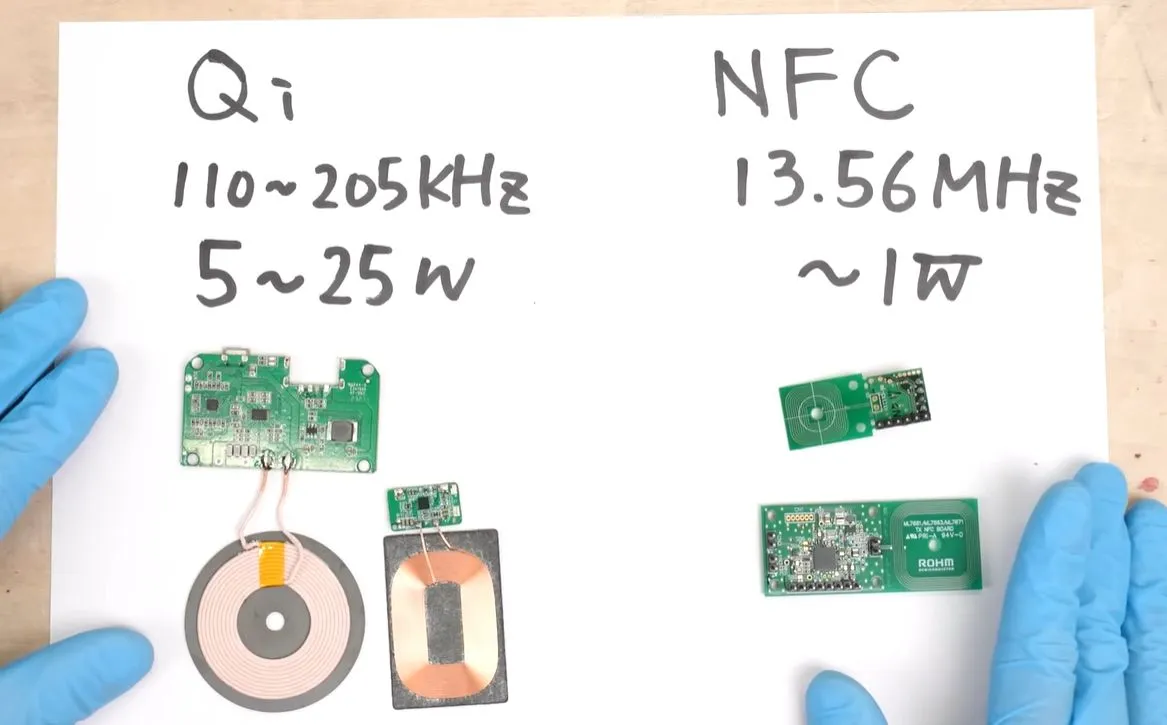
It shouldn’t be any surprise that NFC and similar RFID implementations are capable of providing power to a receiver, since this is after all how RFID tags can work without a battery. The question is more whether you can do more with NFC than just briefly power some low-power circuitry to spit out some data. This is the topic of a recent [Denki Otaku] video.
Although both Qi and NFC use electromagnetic induction, they differ in the frequency and correspondingly the maximum power that they can deliver to a receiver. For NFC this is around a Watt, with the used NFC module supporting up to 250 mW, which already sets the rough scope of what one can expect from an NFC-powered device. That said, an NFC transmitter and receiver can be significantly smaller than those for Qi due to the much higher frequency.
An additional benefit of NFC is that it offers more freedom to the user in its protocol in terms of user data, which is useful for applications where you don’t just want to power a device. In the video an MCU and IMU are powered along with an OLED display, which demonstrates wireless charging as well as data transfer of the IMU data to a second MCU.
Advertisement
The benefits of NFC over Qi would thus be the smaller antenna size, and depending on the used NFC implementation also charging and data transfer at the same time.
The first India’s Favorite Smartphone awards, powered by Flipkart, just wrapped up. And what a stellar night it was. Instead of the usual jury picks, this one was decided by people. Users voted for their favorite smartphones, and the results are actually pretty interesting. If you missed it, here’s everything you need to know.
Cameras Segment Winners
There was a time when smartphone cameras were just okay. Good enough to take photos in the day, but once the light subsided, so did the quality. Well, that’s not the case anymore. Different smartphone makers excel at various things. Portrait photography, for instance, is clearly a battleground. Phones like the vivo V60 (Best Smartphone for Portraits Under ₹40,000) and the Google Pixel 10 (Best Smartphone for Portraits Above ₹40,000), which won in their respective segments, show how much brands are focusing on skin tones, edge detection, and that DSLR-like look.
Selfies have also made a comeback as a serious category. With devices like the Motorola Edge 60 Pro (Best Smartphone for Selfies between ₹20K – ₹30K) and OPPO Reno14 5G (Best Smartphone for Selfies between ₹30K – ₹40K), it’s clear that front cameras are no longer an afterthought, especially in a creator-first world. Still, the most important thing when it comes to smartphone photography is nighttime shots, and here the vivo X200T took the night photography crown in the above 40K budget. Unsurprisingly, it was Apple that bagged the best video award with the iPhone 17 Pro Max. On the other hand, the best videos award in the 30K-40K segment was won by the vivo T4 Ultra.
Rounding up the camera section, the best smartphone for photography between the 20K-30K was the Motorola Edge 70 Fusion. The same award, but between 30K-40K, was awarded to the vivo V60e. Last but not least, the overall best flagship phone for camera was OPPO Find X9 Pro.
Battery & Performance Winners
For all the talk about AI and cameras, most people still care about two things: battery life and performance. That’s exactly why budget battery champs like the realme P4 Lite 5G (Best Battery Life Smartphone under ₹10K) and realme P4x 5G (Best Battery Life Smartphone between ₹10K-₹20k) matter. These aren’t flashy devices, but they solve a real problem: getting through the day without constantly looking for a charger.
Gaming, on the other hand, has become its own category entirely. Phones like the OPPO K13 Turbo 5G (Gaming Smartphone of the Year Between ₹20K-₹30K) and POCO X8 Pro Max (Gaming Smartphone of the Year Between ₹30K-₹40K) highlight how performance today isn’t just about benchmarks, it’s about sustained performance, thermals, and real gameplay stability.
Advertisement
Beyond gaming, the other thing that makes or breaks the phone is the software experience. While most phones today have good software, the winner in this category was absolutely clear: Nothing. The Nothing Phone (4a) and CMF by Nothing Phone 2 Pro swept the stage, winning the best software experience both under the ₹20K and ₹30K categories.
But if you just want the best overall performance and a mix of software and gaming, then the iQOO Neo 10R 5G is the way to go in the ₹20K-₹30K category. Build quality is also getting more attention. Devices like the vivo T5x and Motorola Edge 60 Fusion stand out for their in-hand feel and durability. That’s something buyers are starting to notice more than before.
Value & Design Awards
Despite all the innovation happening at the top end, the core of the Indian smartphone market hasn’t really changed. Categories like Best Value 5G and Best All-Rounder exist for a reason. Phones like the Moto G57 Power 5G (Best Value 5G Smartphone Between ₹10K-₹20K) and realme P4 Power 5G (Best All-Rounder Smartphone ₹20K-₹30K) aren’t trying to be the best at one thing.
Smartphone design has remained the same for the better part of a decade. But Nothing has been changing that trend slowly but surely, with unique designs and lighting. As expected, the Nothing Phone (4a) Pro won the Chromatic Disruption Award. On the other hand, the Motorola Edge 70 Fusion took home the Color Material Finish (CMF) award. At the same time, the iPhone 17 Pro winning for trendsetting design is a reminder that consistency and familiarity still carry a lot of weight.
The Samsung Galaxy S26 series (Capture the night right award) being recognized as the “Smartest Smartphone” says a lot about where things are going. It’s less about raw power now and more about how intelligently a device can adapt and assist. Similarly, phones like the vivo X300 Pro (Future of Smartphone Photography) show how AI is playing a bigger role in photography, not just enhancing images, but defining how they’re captured in the first place.
Advertisement
Full List of Winners
Category
Winner
Best Smartphone for Portraits (₹30,000 – ₹40,000)
vivo V60
Best Smartphone for Portraits (₹40,000 & above)
Google Pixel 10
Best Smartphone for Selfies (₹20,000 – ₹30,000)
Motorola Edge 60 Pro
Best Smartphone for Selfies (₹30,000 – ₹40,000)
OPPO Reno14 5G
Best Smartphone for Night Photography (₹40,000 & above)
vivo X200T
Best Smartphone for Videos (₹30,000 – ₹40,000)
vivo T4 Ultra
Best Smartphone for Videos (₹40,000 & above)
Apple iPhone 17 Pro Max (Silver)
Best Smartphone for Photography (₹20,000 – ₹30,000)
Motorola Edge 70 Fusion
Best Smartphone for Photography (₹30,000 – ₹40,000)
vivo V60e
Best Smartphone for Photography (₹40,000 & above)
OPPO Find X9 Pro
Best Battery Life Smartphone (Under ₹10,000)
realme P4 Lite 5G
Best Battery Life Smartphone (₹10,000 – ₹20,000)
realme P4x 5G
Gaming Smartphone of the Year (₹20,000 – ₹30,000)
OPPO K13 Turbo 5G
Gaming Smartphone of the Year (₹30,000 – ₹40,000)
POCO X8 Pro Max
Best Software Experience (₹10,000 – ₹20,000)
CMF by Nothing Phone 2 Pro
Best Software Experience (₹20,000 – ₹30,000)
Nothing Phone (4a)
Best Build Quality Smartphone (₹10,000 – ₹20,000)
vivo T5x
Best Build Quality Smartphone (₹20,000 – ₹30,000)
Motorola Edge 60 Fusion
Best Performance Phone (₹20,000 – ₹30,000)
iQOO Neo 10R 5G
Lifestyle Creator of the Year
Sejal Kumar
Pop Culture Creator of the Year
Baccha mat bolna
Visual Storyteller of the Year
Ankur Agarwal
Entertainment creator of the year
Danny Pandit
Best Value 5G Smartphone (Under 10,000)
vivo T4 Lite 5G
Best Value 5G Smartphone (₹10,000 – ₹20,000)
Moto g57 Power 5G
Best Emerging 5G (₹10,000 – ₹20,000)
Samsung F70e
Best All-Rounder Smartphone (₹10,000 – ₹20,000)
vivo T5x 5G
Best All-Rounder Smartphone (₹20,000 – ₹30,000)
realme P4 Power 5G
Tech Creator of the Year
Rajeev Makhni
India’s Most Trusted Tech Creator
Tech Burner
Review Master of the Year
Beebom
Fastest Growing Tech Creator
RJ Abhinav and Techs Venom
Smartest Smartphone (₹40,000 & above)
Samsung Galaxy S26 Series
Best Designed Smartphone (₹30,000 – ₹40,000)
Nothing Phone (4a) Pro
Best Color Material Finish (CMF) I I Chit chat will happen here
Ai+ Smartphone
Capture the night right award
Samsung Galaxy S25 Series
The Chromatic Disruption Award
Nothing Phone (4a) Series (Pink)
Best Colour Material Finish (CMF) I I Chit chat will happen here
It’s the age-old question: repair or replace? It’s something you see drivers wrestle with all the time, but what about homeowners? When your home’s heating and cooling system runs into trouble, it’s worth asking yourself whether paying for another repair or investing in a full replacement is the more affordable option. That’s where the $5,000 rule comes into play. If your HVAC’s not passing the seasonal routine maintenance check, you can use this basic calculation to weigh the short-term cost of repair against long-term value of replacement.
It’s this simple: multiply the age of your HVAC system by the estimated repair cost. If the total exceeds $5,000, the consensus among technicians is that replacement would actually be the more cost-effective option. For example, a 12-year-old unit in need of a $500 repair would give you a total of $6,000. In that case, replacement may be the smarter financial move. (Alternatively, if the unit was installed nine years ago or less, the math suggests it’d make more sense to just repair.) It’s not an exact science, of course, but it’s just meant to help you make your mind up.
Advertisement
Why the rule might not be as reliable anymore
Kunakorn Rassadornyindee/Getty Images
The $5,000 rule is based on the idea that most HVAC systems only operate effectively for about 10 to 15 years — 20 if you’re lucky. That’s true of all major air conditioner brands. After that, you can reasonably expect performance to decline and efficiency to drop, not to mention needing more frequent repairs. With the $5,000 rule, homeowners have a reasonable threshold to help them know when repairs might not make sense financially anymore.
That said, the $5,000 rule might not be as reliable as it once was. HVAC replacement costs have gone up by a lot, and newer systems could end up with bills in the range of $10,000 or more. And while HVAC units are getting more efficient, they’re also getting more advanced. That means the cost of repair goes up, too. If you’re not sure which direction to go, you can always ask a trusted HVAC technician to make it make sense for you. Have them break down the cost of replacement vs. repair and weigh your options from there.
The programme will deliver enhanced national datasets, policy briefings, peer-reviewed academic outputs and a flagship WDC report designed to inform decision makers and the wider public.
The Western Development Commission (WDC) and Atlantic Technological University (ATU) will partner to examine how remote and hybrid work is reshaping Ireland’s economy, communities and quality of life.
The two-year project, which is called Connected Futures: The Economics of Remote and Hybrid Work in Ireland and its Impacts on Wellbeing, Mobility, and the Local Economy, is funded under the TU Rise programme.
Dr Aisling Moroney from WDC’s policy analysis team will spearhead WDC involvement in the research. The ATU side of the operation will be led by Dr Amaya Vega, Dr Sinead Keogh and Dr Michelle Queally, from the Department of Enterprise and Technology in the Faculty of Business, and post-doctoral researcher Dr Salim Khan.
Advertisement
With institutions based across the west and northwest, ATU is well positioned to explore how evolving working patterns are impacting people and enterprises across the country. The new partnership aims to “build on that foundation and move the conversation forward again”, according to the pair.
The research will provide the Government and stakeholders with information on local spending, sustainable mobility, wellbeing, digital infrastructure, commuting behaviour and the long-term future of regional communities.
The programme also plans to deliver enhanced national datasets, policy briefings, peer-reviewed academic outputs and a flagship WDC report designed to inform decision makers and the wider public.
Commenting on the partnership, Dr Orla Flynn, the president of ATU, said, “Remote and hybrid work have fundamentally reshaped how we live, work and connect, particularly in regional and rural Ireland.
Advertisement
“By combining ATU’s research expertise and regional reach with the WDC’s leadership in this area, the Connected Futures initiative will generate evidence-based insights to support national decision-making, strengthen communities and ensure that the benefits of new ways of working are shared across all regions of the country.”
Allan Mulrooney, the CEO of the WDC, added, “Ireland changed how it works almost overnight. The challenge now is understanding what that means for communities, for businesses and for regional growth.
“This partnership with ATU is about building that evidence, grounded in real data and lived experience, and ensuring remote and hybrid work deliver meaningful benefits across the country, not just in a small number of locations. That evidence will help Government, agencies and employers take the right next steps and ensure Ireland remains ahead of the curve.”
Don’t miss out on the knowledge you need to succeed. Sign up for the Daily Brief, Silicon Republic’s digest of need-to-know sci-tech news.





























![Is This Bitcoin Pump A TRAP?? [ACT FAST]](https://wordupnews.com/wp-content/uploads/2026/05/1778014201_maxresdefault-80x80.jpg)

































You must be logged in to post a comment Login