Tech
Best Headphone Systems at CanJam SoCal 2026: From $2,900 to Nearly $57,000

CanJam SoCal arrived a little earlier on the calendar this year, which may have beaten the usual avalanche of September product launches to the punch. The show at the Irvine Marriott felt larger than ever, both in attendance and the number of booths and listening rooms, but there were fewer headline launches from major brands such as Focal, Audeze, HiFiMAN, Dan Clark Audio and others than we have seen in previous years.
That doesn’t mean there wasn’t a lot of new gear. There certainly was. Much of the activity, however, came from smaller boutique manufacturers and the rapidly expanding IEM sector, where seemingly everyone has a new driver configuration, tuning philosophy or flagship that costs more than your first car.

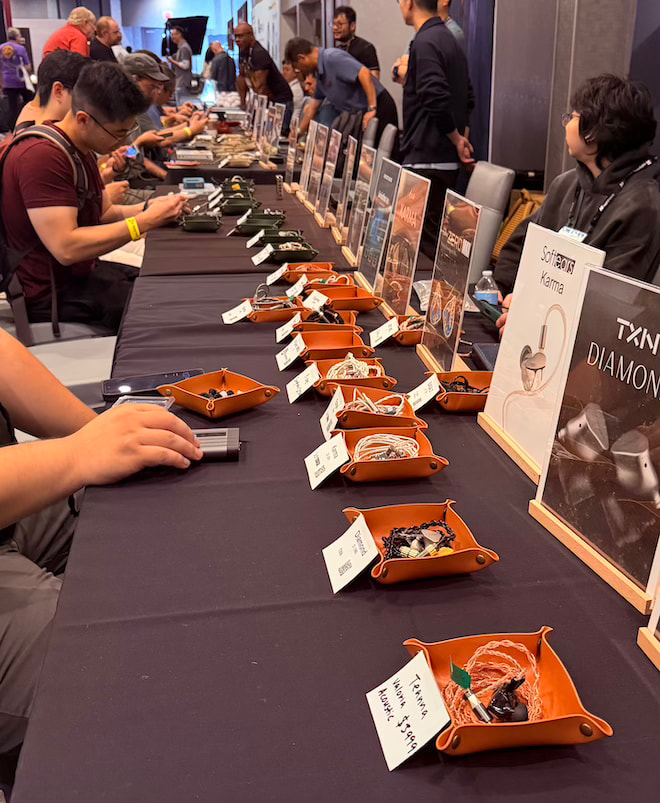
Our resident IEM expert, Aaron Sigal, tackled that increasingly competitive category in our separate CanJam SoCal 2026 IEM Roundup, leaving me to wander in the opposite direction. I quickly fell down the rabbit hole at the extreme high-end of Head-Fi, where the concept of a price ceiling has apparently been abandoned.
At the other end of the market, FiiO, Fosi Audio, iFi, SMSL, Topping, SIVGA and others continue to offer tremendous performance for the money. Personal audio is increasingly being pulled toward two extremes: remarkably affordable equipment that would have been considered high-end not that long ago, and flagship headphones, IEMs, DACs and amplifiers that can push a complete desktop system well beyond $50,000. Spend enough time in the wrong room at CanJam and $10,000 starts sounding almost reasonable. It isn’t.
Rather than chasing everything new, I used CanJam SoCal 2026 as an opportunity to hear products and complete systems we have not spent much time with before. These are show impressions rather than full reviews, and some of the listening environments were less than ideal, but the following systems were the ones I kept thinking about after leaving Irvine.
RAAL 1995 MAGNA EVO I + Allnic HPA-300B + D-15000 Signature DAC

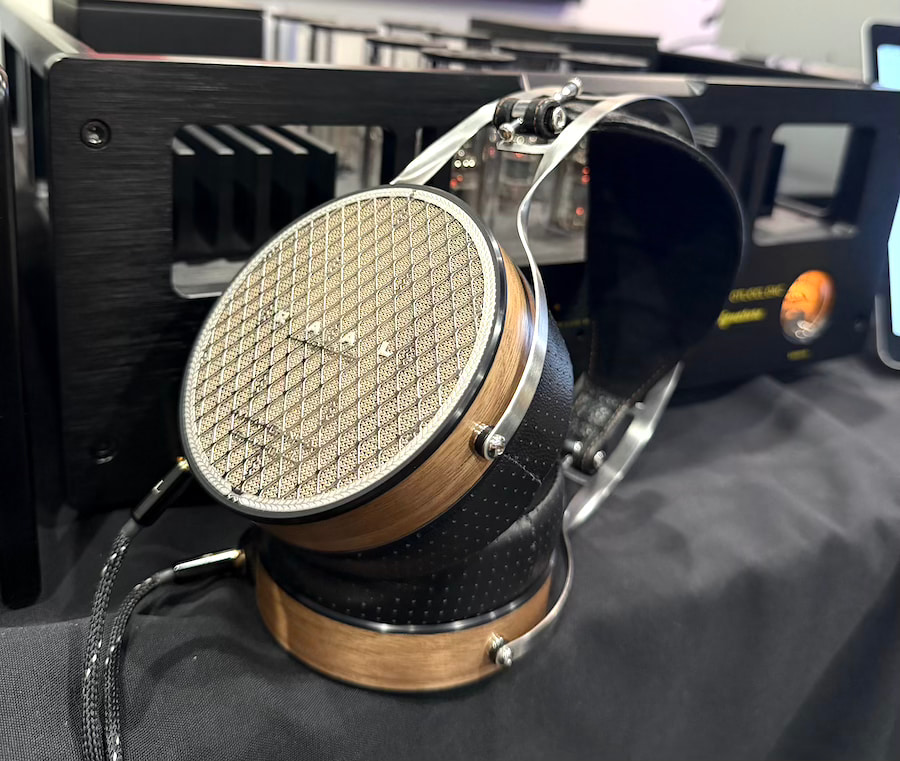
System Price: ~$46,600
When cost is almost beside the point, there was something very special about listening to the RAAL 1995 MAGNA EVO I ribbon headphones, quoted around $7,000 in the show configuration, with Allnic Audio’s HPA-300B ($13,200) tube amplifier and D-15000 Signature OTL/OCL DAC ($26,400).
The MAGNA EVO I is not another planar magnetic headphone wearing a different hat. Its R²e1 transducer uses complementary tuned dual True-Ribbon drivers made from corrugated pure aluminum, with a combined 16.8 cm² surface area and a native impedance of just 0.038 ohms. That unusual electrical load requires either one of RAAL’s matching interfaces or amplification specifically designed for direct-drive operation.
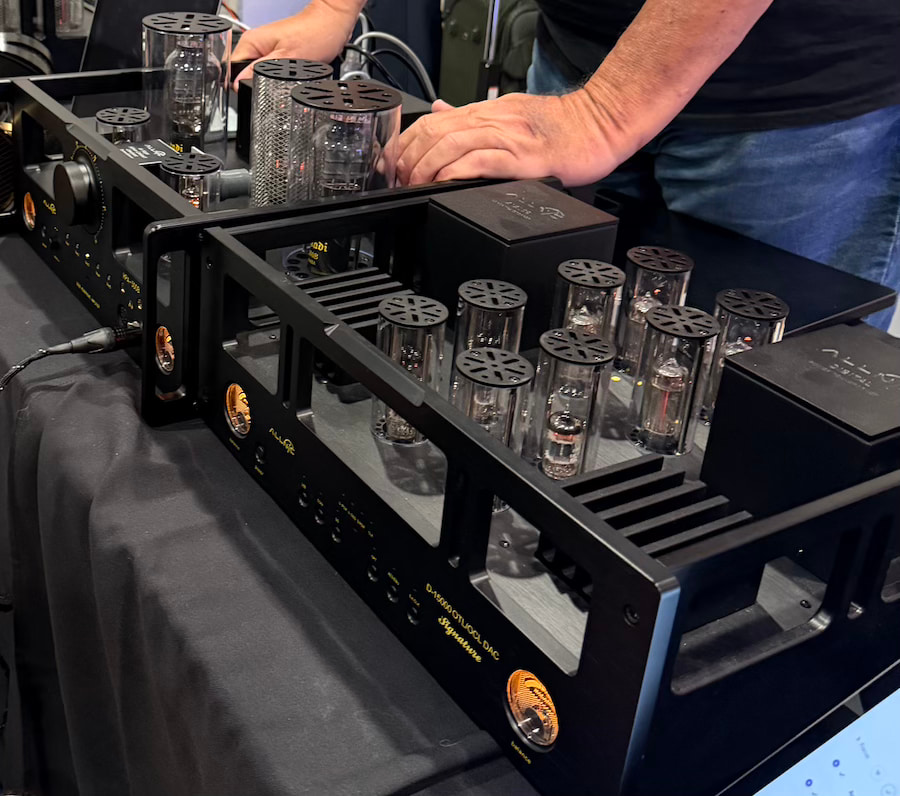

That is where the Allnic HPA-300B becomes particularly interesting. The pure Class A amplifier uses a pair of 300B output tubes and can produce up to 8 watts, while a factory RAAL Direct Drive option can be specified at no additional charge. The D-15000 is equally unconventional, combining dual-mono ESS ES9039PRO DACs with Allnic’s full-tube OTL/OCL analog output stage.
The speed, detail and realism of this system were hard to overstate, but what surprised me was how little it sounded like the stereotypical analytical ribbon setup I expected. There was body, energy and real physical impact behind the presentation, without sacrificing the transient speed that makes ribbon headphones so compelling.
Was that the 300B tubes, the direct-drive implementation, the DAC or simply unusually good system synergy? Probably some combination of all four. I tried the MAGNA EVO I with a less expensive Allnic amplifier and an Immersiv DAC afterward, and while still excellent, the same drive and impact were not quite there.
I also found the MAGNA EVO I more comfortable than RAAL’s flagship IMMANIS, which matters when the goal is to listen for hours rather than survive a 15-minute demonstration. At nearly $47,000 for the system, nobody is going to call this sensible. Mesmerizing is another matter.
Chord Quartet + DAVE + Meze Audio ARTA

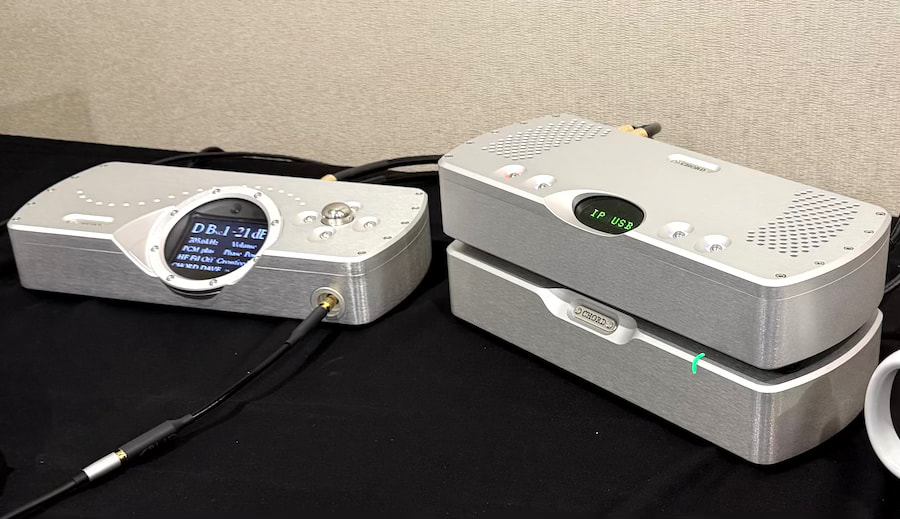
System Price: $56,895
Rob Watts spent years developing the Chord Electronics Quartet ($35,995), and there is considerably more going on inside it than the word “upscaler” might suggest.
Quartet uses Chord’s new four-million-tap Blackbird WTA filter running across five Xilinx FPGAs with 3,700 DSP cores. Chord says that represents roughly five times the FPGA processing power of its DAVE DAC, not that Quartet somehow makes DAVE five times better. Digital signals can be processed at sample rates up to 768 kHz, while an integrated Pulse Array ADC also allows analog sources to be converted and processed through the same architecture.
The CanJam system combined Quartet with DAVE ($14,900) and the new Meze Audio ARTA ($6,000). ARTA uses Rinaro’s MZ5 HΩ high-impedance planar magnetic driver, rated at 225 ohms and 98 dB SPL/mW. Unlike most modern planar headphones, it is designed around a high-voltage, lower-current operating model and benefits from serious desktop amplification.

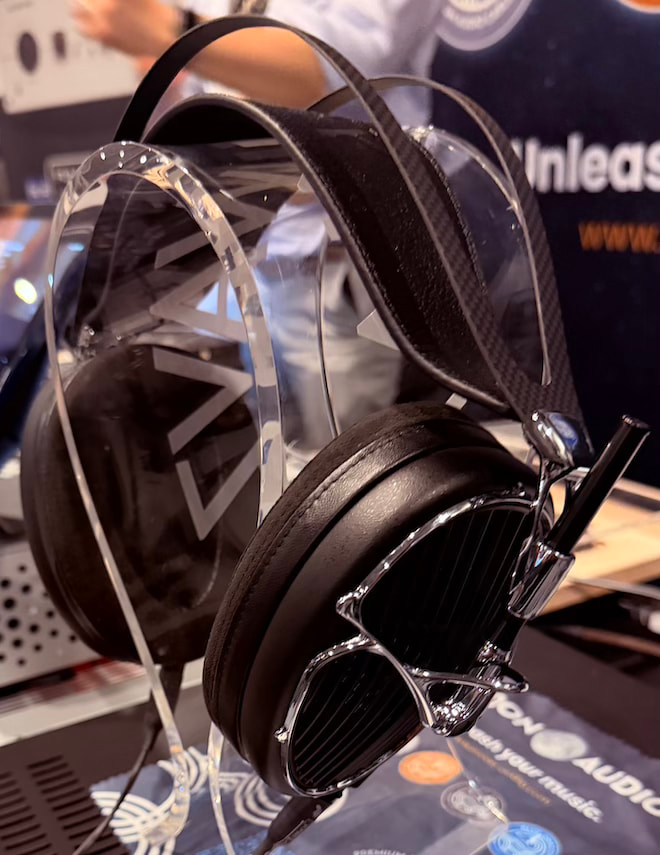
I was able to compare Quartet in pass-thru mode with its upscaling engaged, but the roughly three-second delay in the demonstration made rapid A/B comparisons difficult. The differences were subtle enough that I would not pretend a noisy show environment allowed me to define exactly what Quartet was doing to familiar recordings.
The more convincing demonstration involved a recording Chord had recently captured at Glenwood Studios using its developing A/D technology. Quartet itself incorporates Chord’s Pulse Array ADC, and the company is also exploring professional applications for the technology, although nothing beyond that should be considered a finalized product announcement.
What I heard was one of the most lifelike recordings I can remember hearing at an audio show. I have been fortunate enough to hear live feeds during recording sessions, and the immediacy of this demonstration reminded me of that experience more than conventional playback. There was an almost unsettling sense that the performers existed on the other side of the headphones rather than inside a recording.
Meze’s ARTA certainly deserves some of the credit here. Whatever one ultimately thinks about spending almost $36,000 on an upscaler, this was one of those demonstrations where I stopped thinking about the equipment for a few minutes.
Wow. Just wow.
SJY Argos + Apos x ES Lab HYDRA + Denafrips Ares II

System Price: ~$5,000
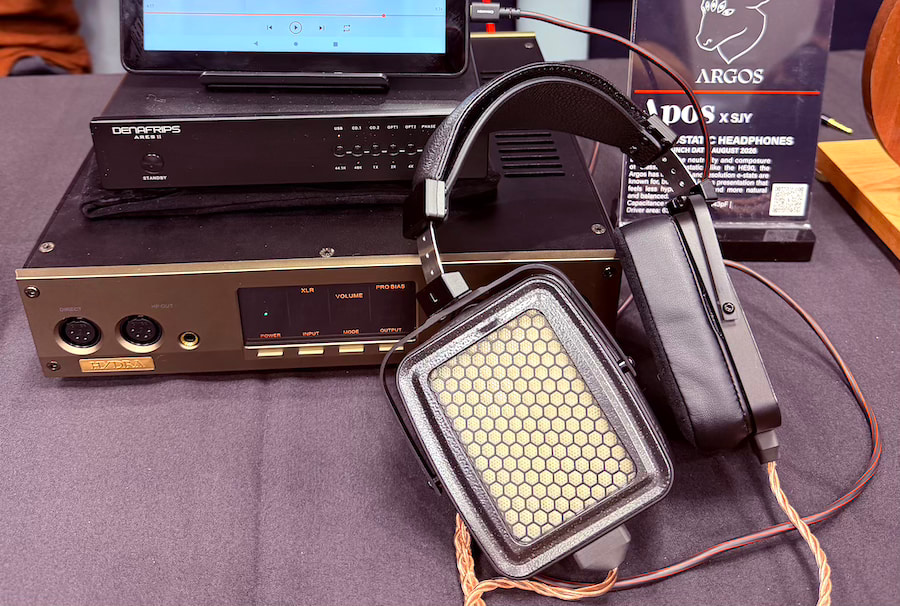
Coming back down to a system that does not require liquidating a retirement account, Apos had one of the genuine surprises of the show with the SJY Argos electrostatic headphones ($1,800) and Apos x ES Lab HYDRA integrated amplifier ($2,200).
The source was a Denafrips Ares II, an older discrete R-2R DAC that offers both non-oversampling and oversampling modes. It originally sold for under $1,000, but its latest generation version, Ares 15th, retails for $1,199.
The Argos uses a 6,375 mm² electrostatic transducer operating at the standard 580V Pro Bias voltage and terminates in a conventional 5-pin electrostatic connector. At 431 grams without its cable, it is also considerably easier to wear than some of the more ambitious flagships crowding the category.
The HYDRA may be the more unusual component. Its dedicated electrostatic section supplies the required 580V DC bias through Japanese-made step-up transformers, but there is also a conventional Class AB amplifier producing 20 watts per channel into 8 ohms. That allows one chassis to drive Pro Bias electrostatics, dynamic and planar magnetic headphones, and suitable passive loudspeakers.
Perhaps it was system synergy again, but the entire setup was full of surprises. The Argos sounded exceptionally revealing and airy while retaining a slightly warm tonal balance, which is not something I automatically associate with electrostatics. Bass extension and weight were also far better than I expected.
Dave Brubeck’s “Take Five” became one of my regular comparison tracks during the weekend, and the drums and hi-hats through the Argos were exceptionally fast and convincing. The bass was not merely present; it was tight, textured and had enough weight to keep the recording from becoming another impressive but overly lean electrostatic demonstration.
The Argos and HYDRA cost $4,000 together before the DAC, which is certainly not inexpensive. Compared with some of the electrostatic systems occupying the summit of Head-Fi, however, this felt like one of the stronger system values at CanJam.
Grado Signature S550 + Chord Hugo 2

System Price: $3,590
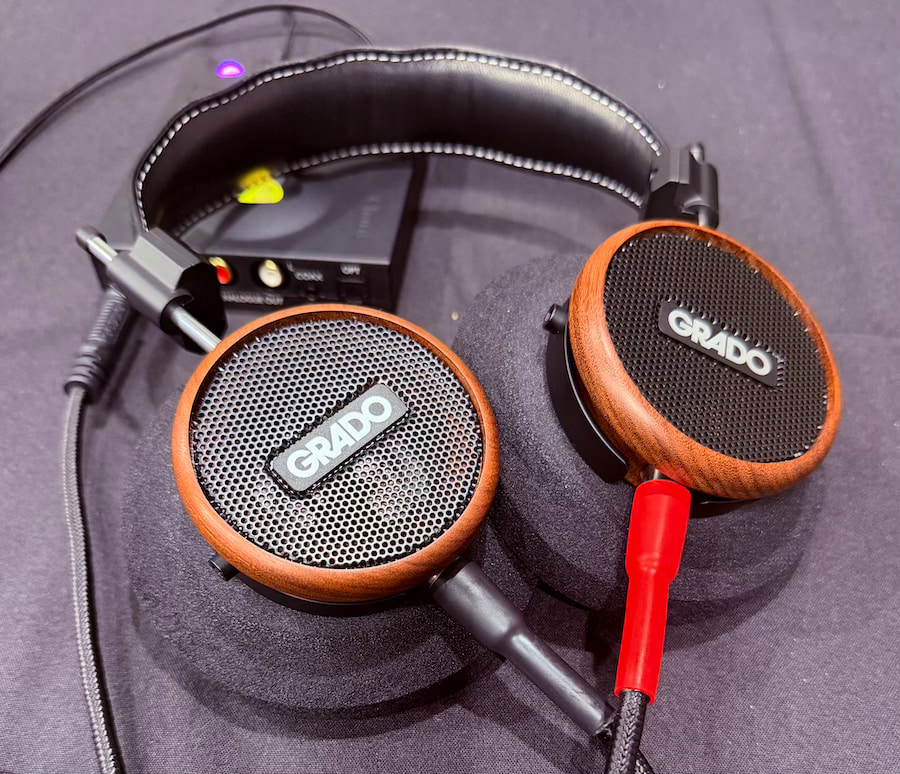
At $995, the Grado Signature S550 is currently the least expensive model in the company’s Signature Series, and pairing it with Chord’s Hugo 2 ($2,595) produced one of the more enjoyable and relatively sane systems I heard all weekend.
The S550 uses Grado’s 50mm S2 dynamic driver in an open-air design, with a nominal impedance of 38 ohms, 112 dB sensitivity and detachable Signature Silver cable. At 335 grams, it is also refreshingly light compared with many high-end planar and electrostatic designs.
The stock B cushions place the drivers very close to the ears, and the fit can feel snug until the headband is adjusted properly. That close positioning contributes to the immediate Grado presentation, but listeners who prefer a roomier fit can experiment with the larger G cushions. As with most Grados, changing pads also changes the presentation, so comfort is not the only variable.
Hugo 2 remains a remarkably capable partner despite having been around for years. Its FPGA DAC uses a 49,152-tap WTA filter and a Class A output stage, with enough flexibility to function as a portable DAC, headphone amplifier or desktop source.
The combination was rich, immediate and easy to enjoy. After spending time with systems costing ten or fifteen times as much, the S550 and Hugo 2 were a useful reminder that one does not have to approach the price of a compact car to assemble a seriously entertaining headphone rig.
Relatively speaking, of course. We are still talking about $3,590 worth of headphone equipment.
HiFiMAN HE6 Remastered + GOLDENWAVE SERENADE Wireless

System Price: $2,898
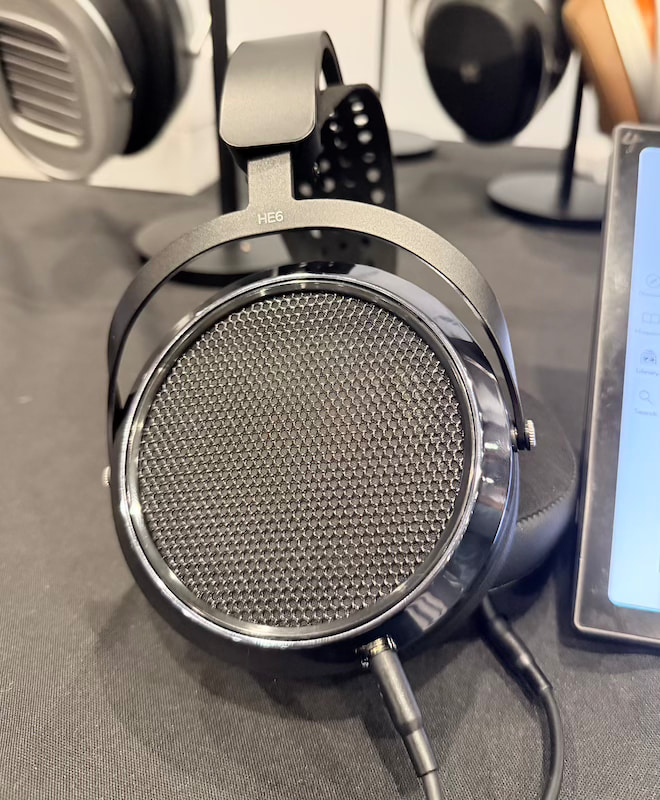
Year after year, HiFiMAN finds some way to pull me back into its booth, and the HE6 Remastered ($1,899) with the GOLDENWAVE SERENADE Wireless DAC/headphone amplifier ($999) was one of the easier systems to recommend from the show.
The HE6 Remastered is an open-back planar magnetic design rated at 50 ohms with a sensitivity of only 83.5 dB, so “easy to listen to” should not be confused with “easy to drive.” It remains a demanding headphone from an amplification perspective and weighs 522 grams, although I found the fit more comfortable than that number might suggest.
SERENADE makes a lot of sense as its partner. The wireless version combines HiFiMAN’s HYMALAYA Pro R-2R DAC architecture with a balanced Class A headphone amplifier capable of delivering up to 4 watts into 32 ohms. It also adds network connectivity to a component that can serve as both DAC and headphone amplifier.
Sonically, this was one of the easiest systems at CanJam to settle into. The HE6 Remastered sounded balanced and detailed without pushing detail so far forward that I wanted to remove it after three tracks. There was enough resolution to keep things interesting, but it did not strike me as fatiguing.
At just under $2,900 for the complete DAC, amplifier and headphone combination, this is the one from the list that feels closest to something a relatively normal audiophile might actually purchase.
Put it on your audition list.
oBravo H2040BT-A and H2040BT-R: The Wireless Surprise

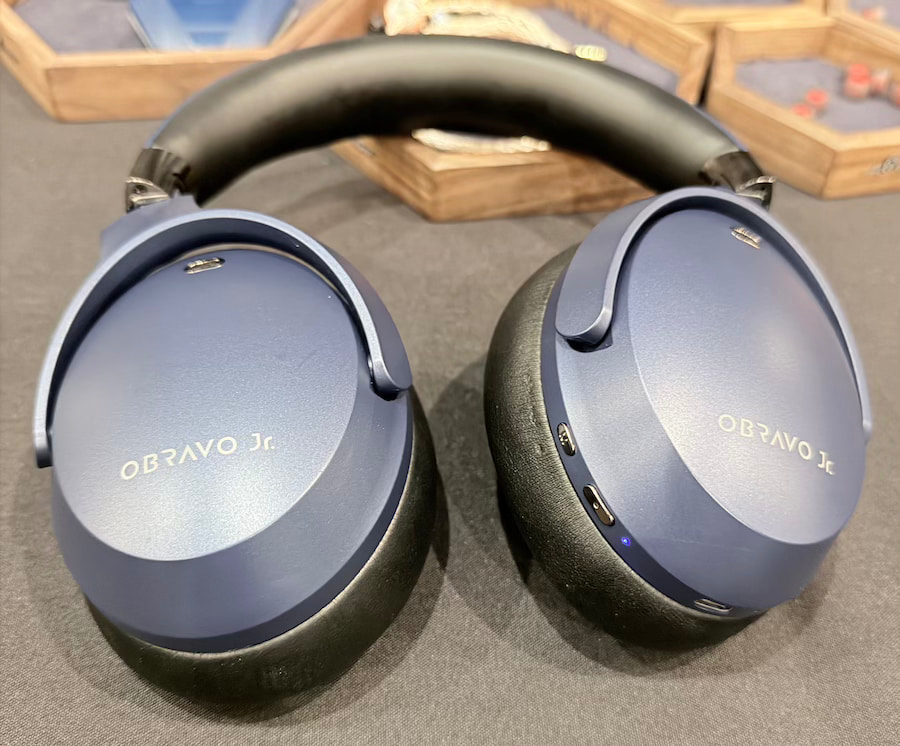
There were plenty of capable wireless headphones at CanJam this year, but oBravo managed to hide one of the more interesting demonstrations in a pair of headphones that could easily be mistaken for something far more conventional.
The H2040BT-A combines a dynamic driver with an Air Motion Transformer, while the visually similar H2040BT-R substitutes a planar tweeter. Hybrid driver systems are hardly unusual in IEMs anymore, but using these technologies inside wireless over-ear headphones is still decidedly uncommon.
The plastic housings did not exactly scream “boutique audiophile engineering,” but listening quickly changed the conversation. The H2040BT-A’s AMT delivered considerably more top-end resolution and speed than I expected from a Bluetooth headphone, while the dynamic driver kept the bass substantial without letting it overwhelm everything above it.
The less expensive planar hybrid was also surprisingly capable and probably the more obvious value of the two.
There is one problem: U.S. pricing and availability remain unclear. We were quoted $699 for the H2040BT-A and $299 for the H2040BT-R at CanJam, but I have not been able to locate either model through a U.S. retailer. Audio Concierge currently lists them in the U.K. at £699 and £299, respectively.
Until oBravo clarifies its U.S. rollout, consider these two headphones worth watching rather than something we can tell American readers to go out and buy today.

The Bottom Line
CanJam SoCal 2026 did not deliver the same volume of major headphone launches we have seen in some previous years, but that ended up making the show more interesting for a different reason. Instead of racing from one new flagship announcement to another, I spent more time listening to complete systems and combinations that I might otherwise have missed.
The RAAL 1995 MAGNA EVO I and Allnic stack delivered the most intoxicating ribbon demonstration I heard all weekend, while the Chord, DAVE and Meze ARTA system showed just how far digital processing and headphone playback can be pushed when budget becomes almost irrelevant. Neither system makes any financial sense to most people, but that has never stopped the extreme high end before.
The SJY Argos and HYDRA were probably the biggest surprise. Electrostatic systems often require expensive, specialized hardware and still leave some listeners wishing for greater bass weight. This combination delivered the speed and openness I expected while sounding fuller and warmer than anticipated, and the HYDRA’s ability to drive electrostatics, conventional headphones and loudspeakers makes it genuinely useful.
Grado and HiFiMAN provided the reality check. Neither system is cheap, but both demonstrated how much performance is now available around $3,000 for a complete desktop setup. In a category where $6,000 headphones and $35,000 digital processors barely raise an eyebrow, that almost qualifies as fiscal responsibility.
And that may have been the larger story of CanJam SoCal 2026. Personal audio continues to stretch in both directions. Affordable equipment keeps getting better, while the summit of the category keeps moving higher and becoming more expensive.
The gap between those worlds is widening.
Fortunately, great sound still exists on both sides of it.
You must be logged in to post a comment Login