Coming just three weeks after HIGH END Vienna and on the same weekend as the North West Audio Show in the U.K., T.H.E. Show SoCal 2026 had a lot of competition for industry attention. The Costa Mesa event was clearly smaller than last year, but the rooms stayed busy and there was no shortage of genuinely impressive sound.
Affordable hi-fi was not really the theme. Active systems, ambitious analog front ends, low-powered tube amplification, and six-figure reference rigs dominated the better rooms. These are the systems that stood out most, not because they cost the most, but because they made music convincing enough to keep people planted in the chair.
Legacy Valor ($100K/pair)
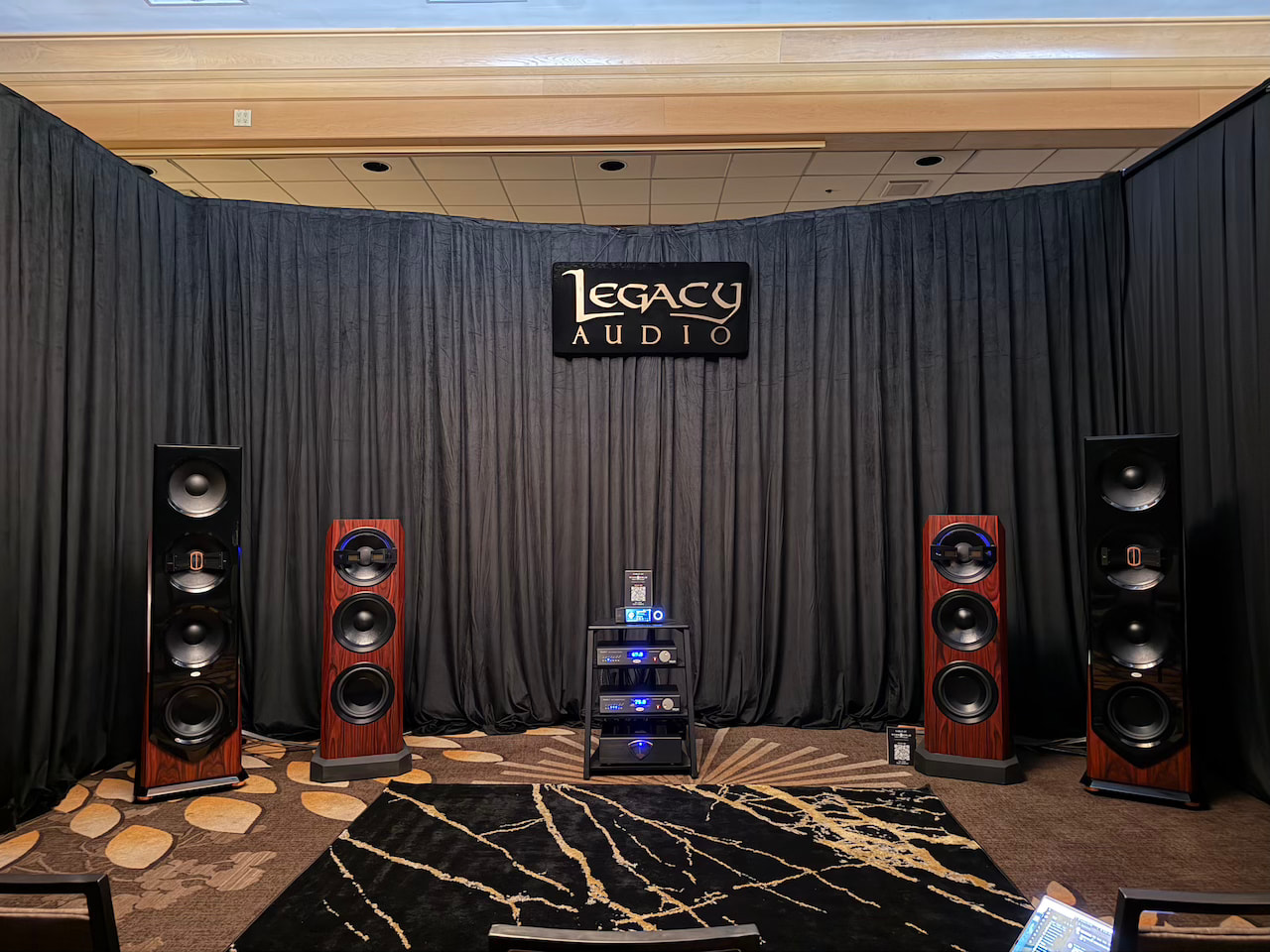
Legacy Audio Valor (the big ones) and Talos loudspeakers at T.H.E. Show 2026
Legacy Audio is another multiple Best in Show winner, with the Aeris XD earning the honor at T.H.E. Show SoCal 2025 and the Talos doing the same at AXPONA 2026. At this year’s event, however, Legacy brought its flagship: the Valor system, a nearly six-foot, 288-pound loudspeaker that represents the company’s biggest and most ambitious statement.
Priced at $100,000 per pair, the Valor combines 2,750 watts of onboard amplification per speaker with the Wavelet 2 DSP processor, room correction, and Legacy’s Stereo Unfold processing. It is not quite a “just add streamer” solution, as each speaker still requires an external amplifier channel for the high-frequency section, but it remains considerably less complicated than assembling a conventional reference system around separate passive loudspeakers, multiple power amplifiers, and outboard room correction.
Legacy rates the four-way Valor from 12 Hz to 30 kHz, ±2 dB, and its combination of large bass drivers, passive radiators, and serious internal power gives it the kind of output capability that makes polite background listening feel almost insulting. The dual 4-inch AMT tweeters are arranged in a post-convergent array designed to keep the top end consistent beyond the center seat, helping the Valor deliver a stable and expansive presentation across a wider listening area. It is also available in a deep roster of wood veneers and premium finishes, which matters when your speakers are roughly the size and visual commitment of small monoliths.
Advertisement
ATC EL50 ($100K/pair)
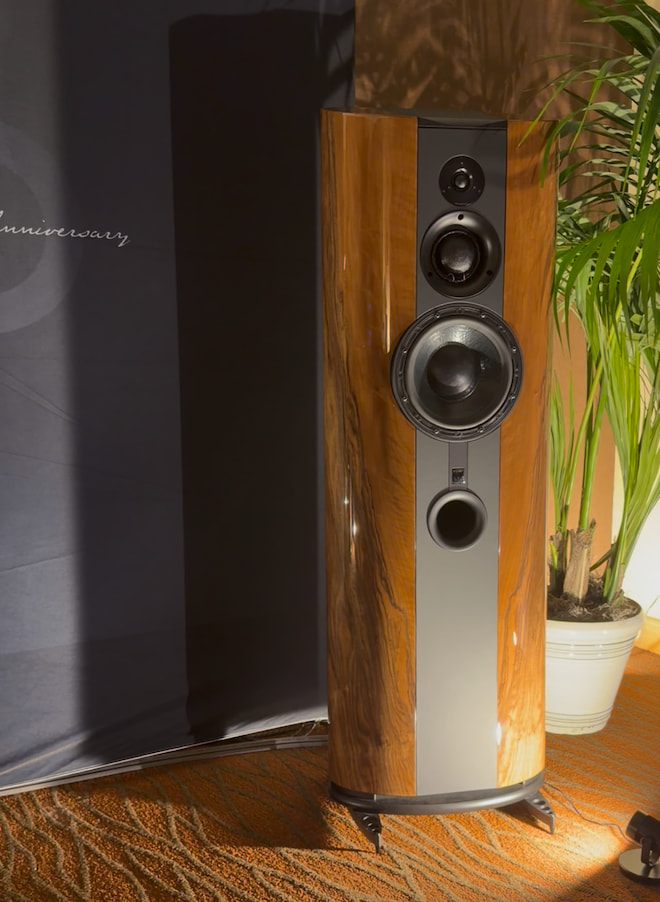
Staying with the active theme, ATC earns another Best in Show award for its EL50 Anniversary Edition active loudspeaker system, which was an easy unanimous selection at AXPONA just two months ago. Standing almost 56 inches tall and weighing 139 pounds each, these are not modest floorstanders, but they again proved remarkably comfortable in a smaller hotel room.
Lone Mountain Audio kept the core AXPONA system intact: ATC’s SCA2 preamplifier, the Innuos ZENith NG server, Playback Designs MPD-8 DAC, and WireWorld cabling. This time, the distributor also rotated in the Sonorus ATR10 Mk II reel-to-reel deck, which made a strong case for itself as an analog source in a room already blessed with excellent digital playback.
The EL50’s fully active three-way architecture remains the attraction. Each speaker contains dedicated 200-watt bass, 100-watt midrange, and 50-watt high-frequency Class A/B MOSFET amplification, with ATC’s active crossover and in-house drivers doing the heavy lifting. That integration helped the EL50 deliver the same qualities that stood out in Chicago: authoritative but controlled bass, natural scale, exceptionally clean midrange performance.
This was my first experience with Odyssey Audio, and it was not one I am likely to forget. The packed room, littered with flickering faux candles, should have been the first clue that Klaus Bunge was not interested in another polite hotel-room demonstration.
The setup was not remotely conventional. The loudspeakers were positioned very close to the side walls and roughly a third of the way into the room from the rear wall, with each driven by Odyssey’s new Meilenstein monoblocks. On paper, it looked like the sort of placement audiophiles are taught to avoid. In practice, it worked spectacularly well. The speakers disappeared, leaving an image that extended well beyond the front wall with exceptional depth, focus, and clarity.
Advertisement
Advertisement. Scroll to continue reading.
More importantly, this was not a demo built around the usual collection of pristine audiophile recordings. The Doors’ “Riders on the Storm” was genuinely immersive, placing the listener inside the recording’s rain-soaked atmosphere rather than merely showing off a wide soundstage. Tracks from Justin Bieber and Stone Temple Pilots followed and proved that the system could do more than flatter one particular type of music. Stella Acoustics’ room treatment clearly played a role as well, helping create a presentation that felt unusually open, three-dimensional, and convincing in a crowded hotel suite.
REL / Acora / VAC
REL Acoustics Carbon Speaker Black Edition (triple stack) subwoofers, Acora Acoustics MRC-3 Loudspeakers, VAC Amps at T.H.E. Show 2026
Acora Acoustics loudspeakers have consistently impressed in rooms built around VAC amplification, but this system showed how much more the company’s MRC-3 floorstanders can deliver when supported by a properly ambitious REL six-pack.
The MRC-3s were partnered with six REL Carbon Special Black Label subwoofers, arranged as triple stacks behind each speaker. At $4,999 apiece, that is essentially $30,000 worth of low-frequency reinforcement, which sounds absurd until you hear what the array does. The subs never called attention to themselves or turned the room into a bass demo. Instead, they added scale, weight, and low-end authority while preserving the speed, clarity, and dimensionality of the Acoras.
REL’s triple-stack approach also helps maintain the height and scale of the soundstage rather than simply adding more rumble below it. That was particularly apparent with the Acora MRC-3s, whose marble cabinets and ceramic drivers already deliver considerable control and resolution on their own. The result was a system that sounded full-range without relying on oversized tower speakers loaded with enough bass drivers to qualify for a municipal permit.
Advertisement
The rest of the chain was equally serious: Berkeley’s Alpha DAC Series 3P with Alpha Reference USB, Synergistic Research’s Voodoo Server, Soulution’s 541 CD player, and the Sonorus ATR10 MK2 tape machine fed VAC’s Master Preamplifier and 202iQ stereo/mono amplifiers. The system was supported by an Artesania Audio Exoteryc rack, Synergistic Research’s Galileo LUX, SRX XL, and Foundation XL cabling, along with ASC Tube Traps and Synergistic room-treatment products.
This room made a strong case for spending intelligently on bass management rather than assuming the only path to full-range performance is an enormous pair of loudspeakers with a small forest of woofers on the front baffle. The REL array gave the Acoras more authority, more scale, and more convincing low-frequency realism, while letting the speakers do what they do best.
Prodigio WR2 with AGD and Bacch 3D
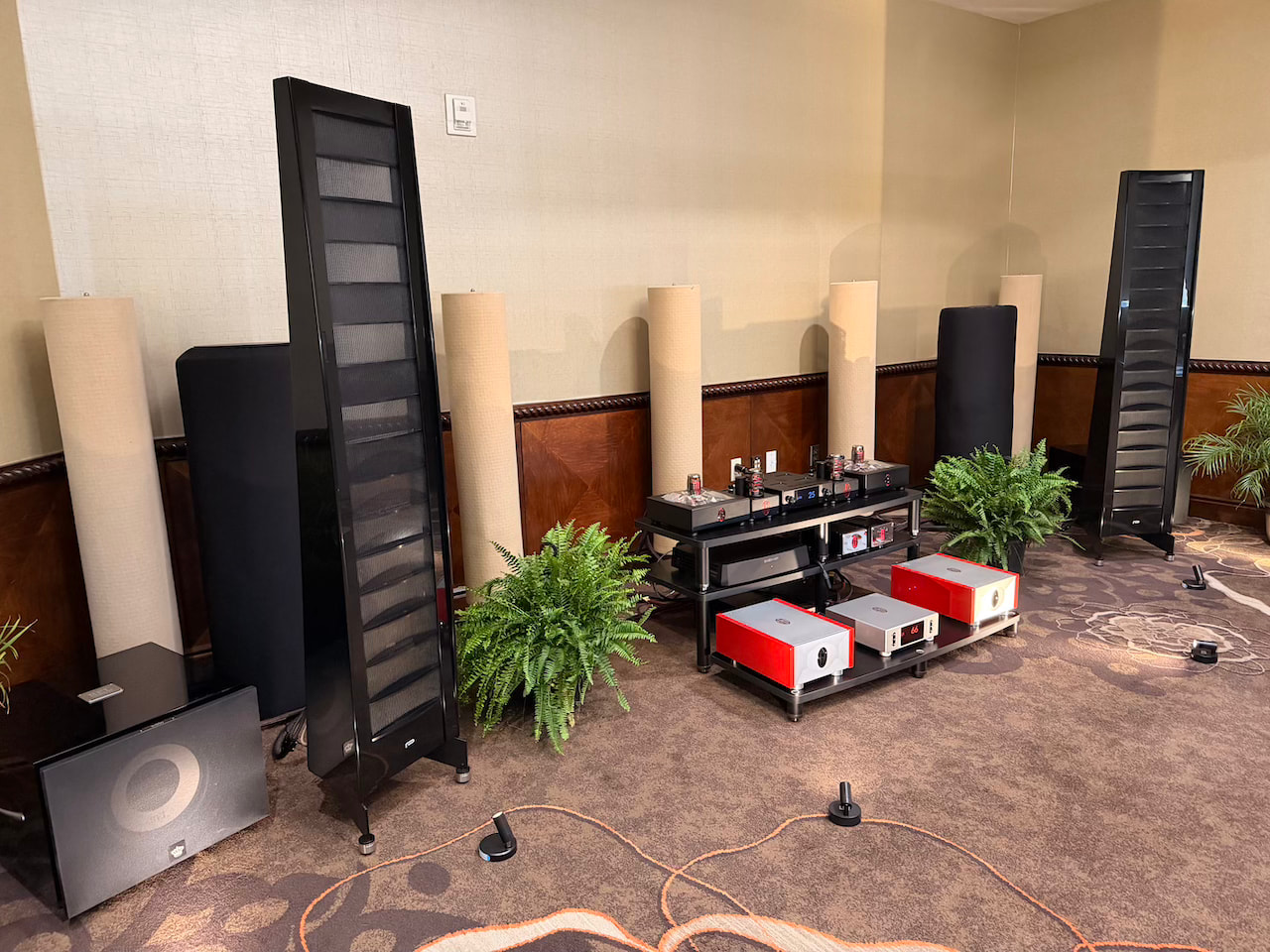
Prodigio Audio, formerly Popori Acoustics, is another repeat Best in Show winner. The Hungarian-made WR2 electrostatic loudspeakers were again paired with AGD electronics and Theoretica Applied Physics’ BACCH-SP adio processor, a combination capable of extracting spatial information from conventional stereo recordings that most two-channel systems simply leave on the table.
The tall WR2 panels are impressive even without processing. They are fast, revealing, and exceptionally transparent, with the kind of midrange clarity and transient speed that electrostatics can deliver when properly set up. Engage BACCH 3D, however, and the presentation becomes something else entirely. Instruments and effects extended well beyond the speakers, with spatial cues that could reach around the listener rather than remaining trapped between the two panels.
There is a caveat, because there always is. BACCH is a highly personalized, single-listener experience that works best from the precisely calibrated center seat. Move too far off-axis and the effect diminishes. Park yourself in the sweet spot, though, and the result can be startlingly immersive without requiring a room full of surround speakers.
Advertisement
This year’s larger room also benefited from a pair of REL S/850 subwoofers. The WR2s already offer more low-frequency presence than many listeners expect from a panel speaker, but the RELs added weight and extension without turning into the main event. They blended seamlessly, giving the system more foundation and scale while preserving the WR2’s speed, openness, and almost unnerving ability to disappear.
With the BACCH processor, REL subs, WR2 electrostatics, and AGD amplification, the system starts north of $85,000 before cables, accessories, and setup.
Zesto Tube Amps / DAC with YG Acoustics
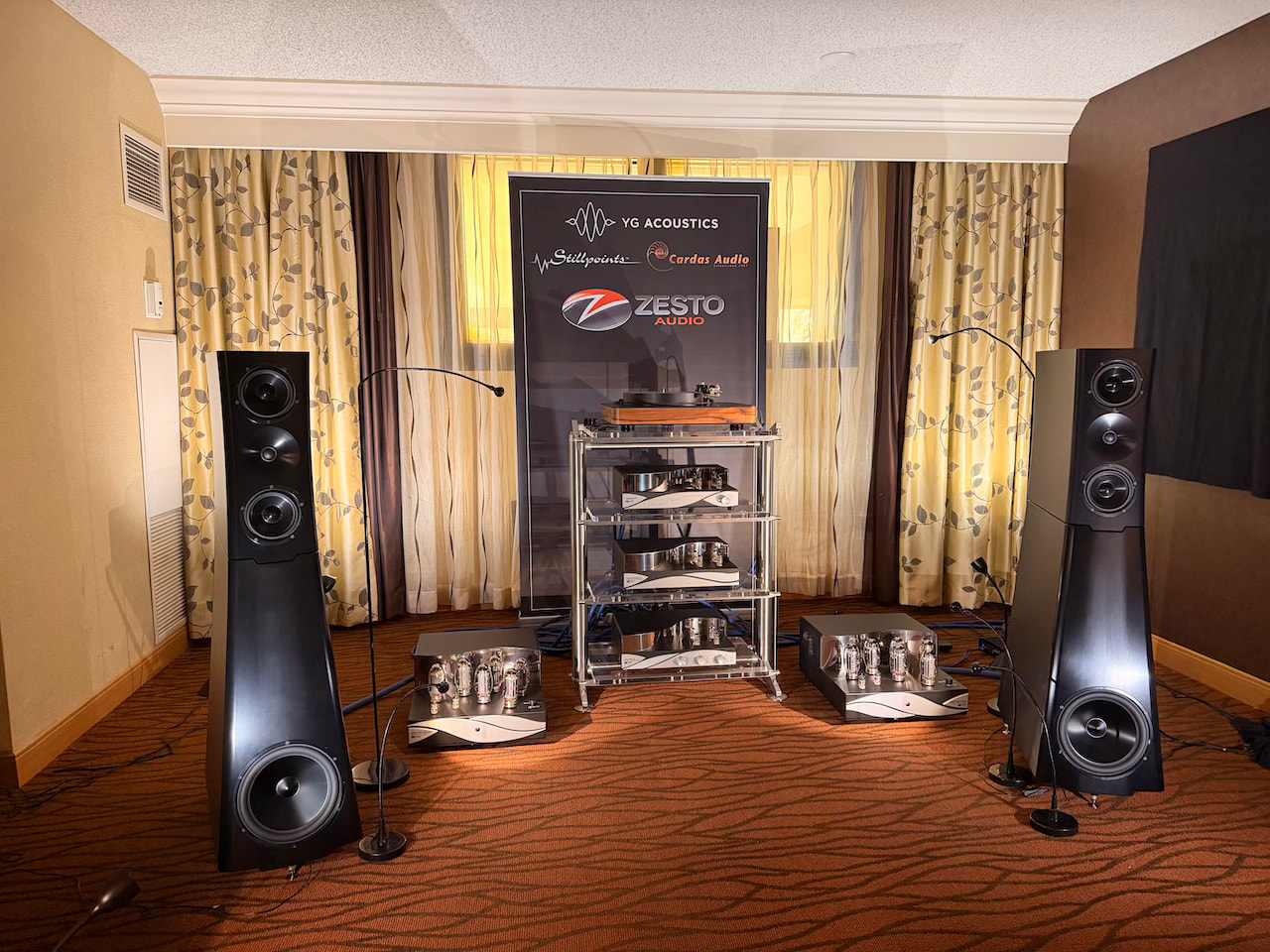
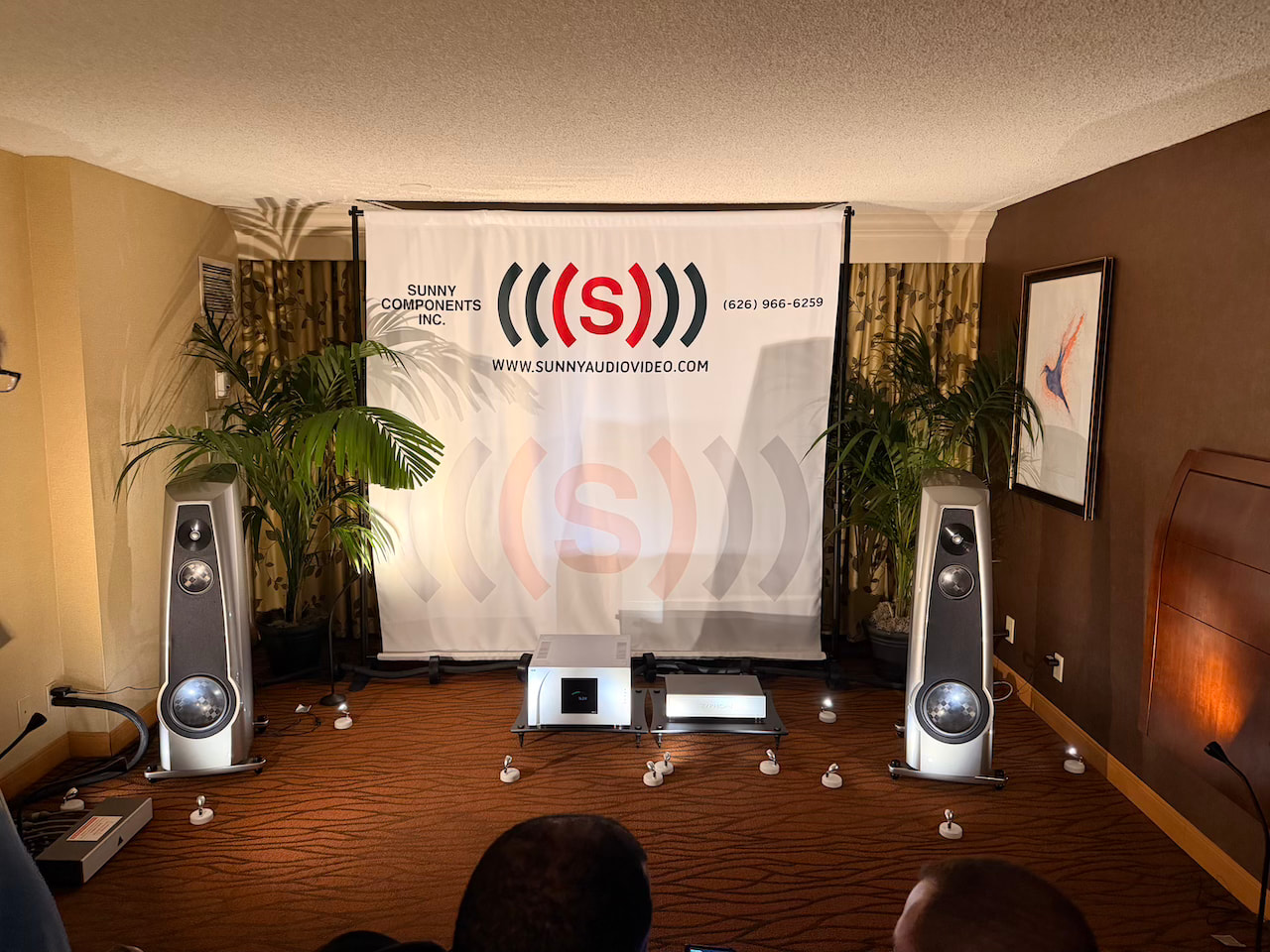
Zesto Audio returned with a full tube-based system built around its new Athena DAC, Leto Ultra II preamplifier, and Eros 500 Select Class A monoblocks. At $15,000, $11,900, and $35,000 per pair respectively, the electronics were partnered with YG Acoustics’ Sonja 3.2 loudspeakers, a $106,800-per-pair reference design that requires serious amplification and rewards it accordingly.
Advertisement. Scroll to continue reading.
This was not a system chasing syrupy tube warmth or trying to sand down the edges of every recording. The Zesto and YG combination was all about resolution, control, and tonal precision, with Cardas cabling tying the system together. The Sonja 3.2’s aluminum cabinet, proprietary drivers, and exceptionally low-distortion crossover design gave the Eros 500s plenty to work with, resulting in a presentation that was detailed, dynamic, and remarkably composed.
Advertisement
The Athena DAC also provided a useful real-world demonstration of DSD playback. Switching among 1x, 2x, and 4x DSD files revealed audible differences, although the gains were not equal at every step. From outside the center seat, the move from 1x to 2x DSD seemed to offer the most noticeable improvement in refinement and separation, while the jump to 4x was far more subtle. That does not make 4x DSD pointless, but it does reinforce the reality that implementation matters far more than simply chasing the largest number on the display.
Zesto and YG Acoustics proved to be a highly potent pairing: tube electronics with enough speed, grip, and transparency to let the Sonja 3.2s show why they belong in the reference category.
Rockport / CH Precision
Rockport Technologies and CH Precision delivered one of the most expensive and meticulously assembled systems at T.H.E. Show SoCal 2026, built around the custom Lexus Silver Rockport Lynx loudspeakers and a full complement of Swiss electronics. With the speakers, Aurender N50 music server and NH10 network switch, plus CH Precision’s D10 SACD/CD transport, C10 Reference DAC, T10 Time Reference clock, L10 preamplifier, and M1.1 power amplification, this was a system hovering around the $500,000 mark before anyone started counting racks, power products, and cables.
The Rockport Lynx is a three-way floorstander with a 10-inch carbon-fiber sandwich woofer, 6-inch midrange driver, and waveguide-loaded beryllium tweeter housed in the company’s extraordinarily inert DAMSTIF3 aluminum enclosure. It is a speaker engineered to reveal everything upstream, which made it an ideal match for CH Precision’s ultra-low-noise, no-nonsense approach to solid-state electronics.
This was not a system designed to flatter weak recordings or wallpaper over the rough edges. It was all about control, silence, image specificity, and the kind of precision that makes small shifts in level, decay, and placement feel more obvious.
Advertisement
Tonian Labs Oriaco D6
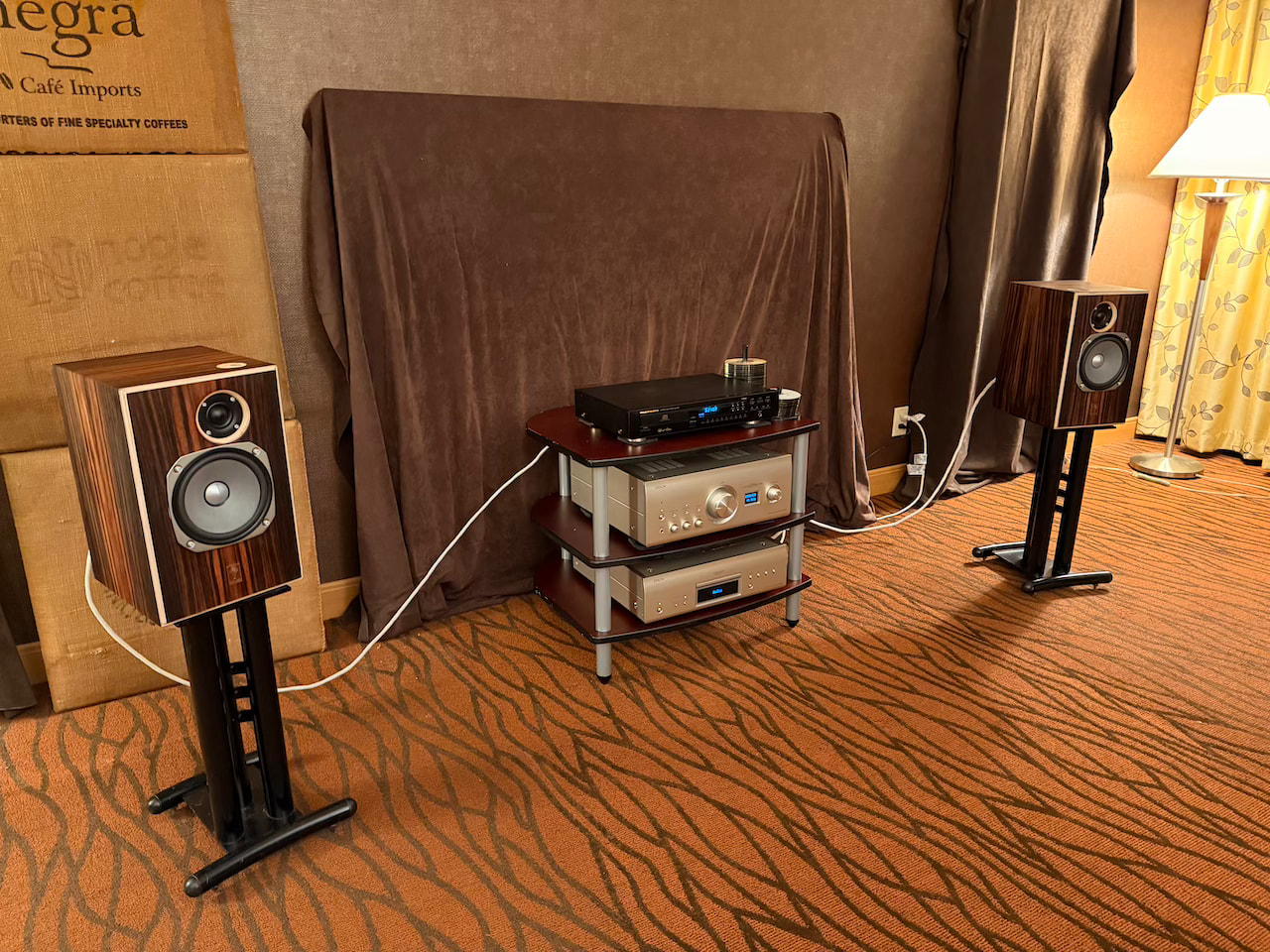
Scaling way back from the six-figure excess, Tony Minasian’s Oriaco room delivered one of the most affordable systems in this year’s Best in Show lineup. The previous winner returned with the Oriaco D6 stand-mount loudspeakers, now $6,300 per pair, driven by Denon’s PMA-3000NE integrated amplifier at $3,799. Add a CD player, stands, and cables, and the system still lands in five-figure territory, but compared with the financial carnage elsewhere at the show, this was refreshingly sane.
Minasian used a vintage Marantz CD player as the source, although the Denon’s capable onboard DAC means almost any suitable CD transport with a digital output could do the job. The PMA-3000NE delivers 80 watts per channel into 8 ohms, includes optical, coaxial, and USB-B digital inputs, and has enough current delivery to make the compact Oriacos sound far larger and more authoritative than their size suggests.
What separates Tony’s speakers is not flash or exaggerated hi-fi fireworks. They reproduce transients, decay, and vocal placement with an uncommon sense of natural ease. Percussion has real air around it, piano notes fade with convincing shape and weight, and vocals lock firmly into the center of the soundstage. The D6 uses a carefully voiced 6-inch full-range driver, front-mounted soft-dome tweeter, and a top-mounted ambient tweeter, all selected and tuned with far more care than the relatively understated cabinet suggests.
The most impressive demonstrations came from Minasian’s own recordings with working musicians, which makes sense because he knows exactly what those sessions should sound like. But the system was equally convincing with orchestral material, Snoop Dogg, and everything in between. It was another reminder that intelligent engineering, careful voicing, and good recordings can still embarrass systems costing many times more.
Atlantis Labs AT38 / AT23 Pro / Neoson
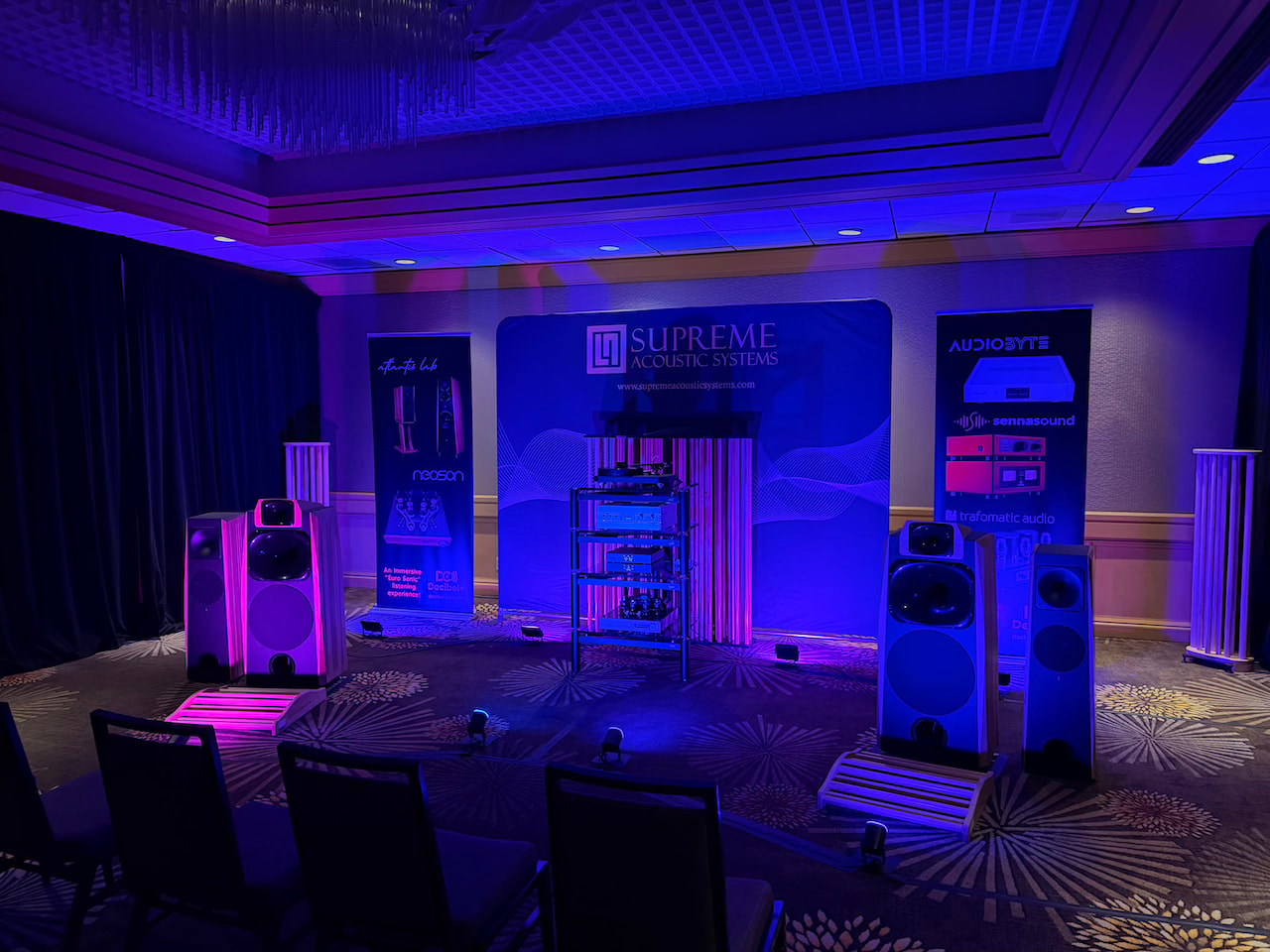
Atlantis Lab and Neoson earn a second Best in Show nod following their impressive T.H.E. Show Vegas debut earlier this year. The basic formula remained intact: high-sensitivity French loudspeakers, low-powered Class A tube amplification, and a digital front end designed to get out of the way. This time, however, the room also featured a BennyAudio turntable making its world premiere at the show.
The Atlantis Lab AT 23 PRO is the accessible entry point here at $6,466 per pair, although “accessible” becomes relative once it is partnered with the $11,828 Neoson Evolution tube amplifier and Audiobyte’s SuperHub streamer and SuperVOX DAC. That puts the digital system around $27,000 before cables, racks, and accessories. Add a serious analog front end and phono stage, and the total moves past $40,000 quickly. Welcome to high-end audio, where the inexpensive option can still require a modest conversation with your financial adviser.
Advertisement
Advertisement. Scroll to continue reading.
The good news is that the system continues to justify the attention. The AT 23 PRO throws a genuinely wide soundstage, locks vocals firmly into place, and delivers bass with speed and control rather than overhang. The Neoson Evolution’s 20 watts per channel of Class A tube power proved more than sufficient, which is exactly the point of pairing it with loudspeakers this sensitive.
The flagship AT 38 PRO, at $23,939 per pair, brought additional bass weight, greater scale, and a richer, more expansive presentation. Its horn-loaded compression drivers and 38 cm woofer give it a more effortless sense of dynamic freedom, but it did not lose the smaller model’s quickness or ability to make voices feel present in the room.
We will have more to say about the Atlantis Lab AT 23 PRO and Neoson Evolution, both of which are currently under review.
Advertisement
Wolf von Langa / Cinnamon
My first experience with the Wolf von Langa WVL 11620 ORGANIC loudspeakers was an instant delight. In a show full of systems flexing enormous power ratings, this room took a far more elegant approach.
The $39,995 German-made ORGANIC field-coil loudspeakers were paired with Cinnamon’s $17,995 Malabar VLF bass system, an SW1X PRE III Classic linestage ($28,041), and SW1X MPA V Special monoblocks ($37,836). The analog front end was equally formidable: a PrimaryControl Kinea II turntable ($27,995) with FCL tonearm ($38,995) and Fuuga MC cartridge ($10,995), feeding Cinnamon’s Galle phono stage ($32,995) and Galle step-up transformer ($8,250).
With nearly $250,000 invested in the core system before cables and accessories, this was not a modest setup. But the sound was not about brute force or audiophile fireworks. It was about finesse: natural vocal presence, excellent low-level detail, tonal color, and a sense of musical flow that made it easy to forget about the hardware.
The ORGANIC speakers delivered the speed, clarity, and realism that make a properly assembled low-power tube system so rewarding. Highly engaging at sensible listening levels, this room proved that a system does not need to turn the volume into an international incident to make a lasting impression.
PranaFidelity / E.A.R. / Furutech
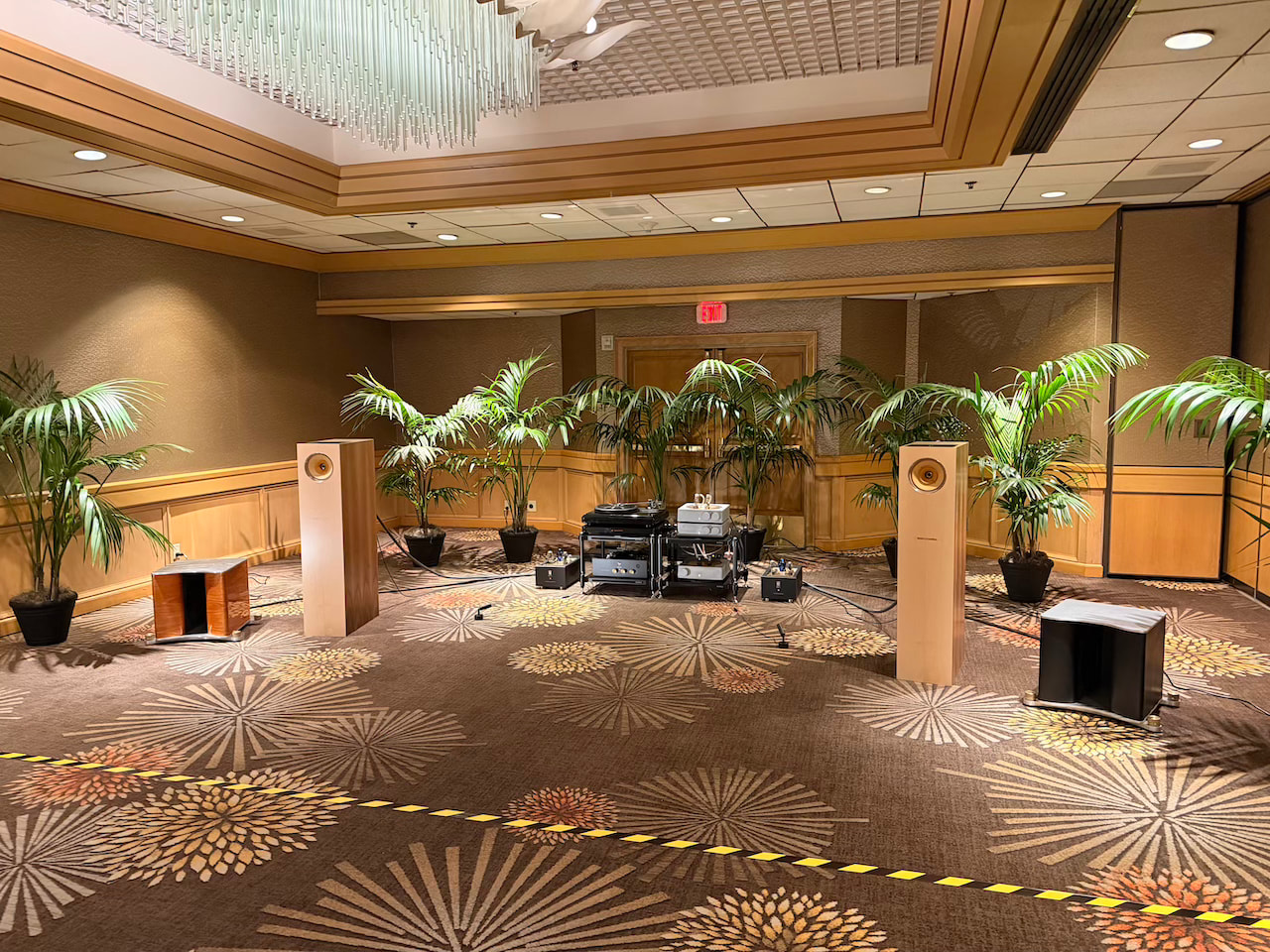
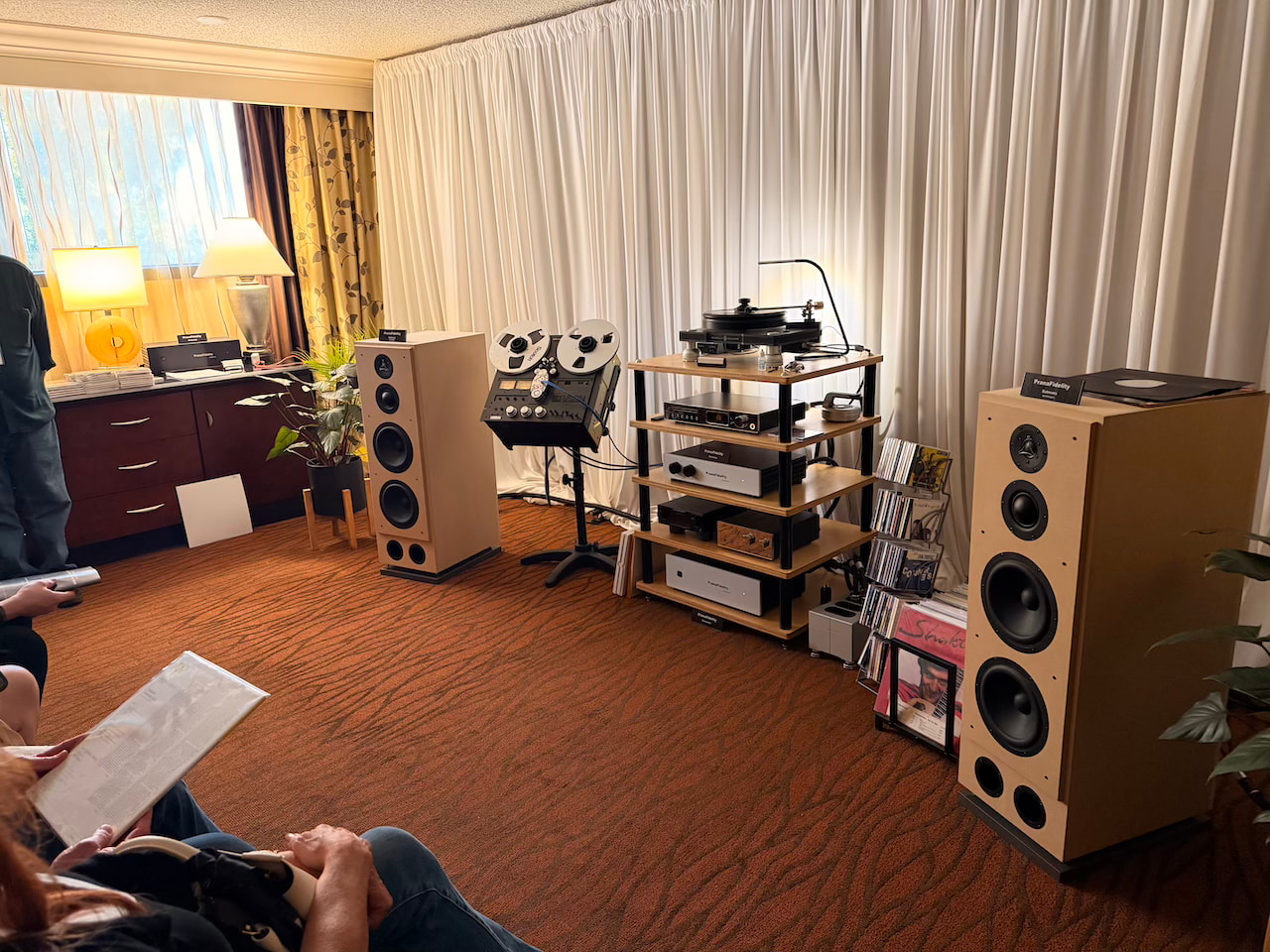
Steven Norber of PranaFidelity arrived at T.H.E. Show SoCal with something genuinely new: the Satmata, a three-way prototype floorstander completed just in time for the event. It is not a finished product yet, but based on what I heard, Norber would be wise not to overthink the final formula.
The analog front end was as serious as the speakers. A Merrill-Williams R.E.A.L. 101.3 turntable fitted with a Breuer Dynamics tonearm and OTTA Theorbo moving-coil cartridge fed an E.A.R. 88PB phono stage, while PranaFidelity’s purna/ma amplifier handled power duties. Furutech power distribution and cabling completed a system that looked deceptively straightforward by high-end show standards, at least until the music started.
Advertisement
The room was packed every time I stopped by. Late on the first day, I finally landed the coveted center seat and understood why. The Satmata created a presentation with real depth, nuance, spaciousness, and remarkably lifelike vocal presence. Rather than simply placing performers across a large soundstage, it pulled the listener closer to the recording without sacrificing scale or composure.
Nima Ben David’s Résonance showed off the system’s ability to reproduce the dynamic bowing, harmonic texture, and natural decay of solo viola da gamba. A mono selection from Porgy and Bess provided the encore, proving that even a straightforward recording can sound deeply immersive when the system gets tone, timing, and scale right. This was one of the most captivating analog rooms at the show.
Amazon’s staggering $850 discount on a loaded 16-inch MacBook Pro with Apple’s M5 Max chip is available now, but with Prime Day ending tonight, you’ll want to act fast.
Prime Day ends tonight, and there’s a high likelihood this 16-inch MacBook Pro will go up in price. That’s because Amazon is currently knocking $850 off Apple’s revised MSRP for the high-end M5 Max model with an 18-core CPU and 40-core GPU, and we’re already seeing stockouts for other MacBook Pro SKUs.
Equipped with 48GB of memory and 2TB of storage, this model in your choice of Space Black or Silver is on sale for $4,149.99.
Advertisement
This is a great deal for a large number of users, but if you need additional storage or RAM, there are discounts of up to $2,300 off every configuration in our 16-inch MacBook Pro Price Guide.
Last call for these Prime Day MacBook Pro deals
14″ MacBook Pro M5 (10C CPU, 10C GPU, 16GB, 1TB, Standard Display): $1,549.99 ($450 off)
14″ MacBook Pro M5 Pro (15C CPU, 16C GPU, 24GB, 1TB, Standard Display): $2,049.99 ($450 off)
14″ MacBook Pro M5 Pro (15C CPU, 16C GPU, 24GB, 2TB, Standard Display): $2,399 ($600 off)
14″ MacBook Pro M5 Max (18C CPU, 32C GPU, 36GB, 2TB, Standard Display): $3,199.99 ($900 off)
16″ MacBook Pro M5 Pro (18C CPU, 20C GPU, 24GB, 1TB, Standard Display, Space Black): $2,549.99 ($450 off)
16″ MacBook Pro M5 Max (18C CPU, 32C GPU, 36GB, 2TB, Standard Display): $3,649 ($750 off)
16″ MacBook Pro M5 Max (18C CPU, 40C GPU, 48GB, 2TB, Standard Display, Space Black): $4,149 ($850 off)
The Arena app will not use real money to process bets, sources told The New York Times.
Social media giant Meta is building a prediction markets app similar to Polymarket and Kalshi, The New York Times has reported.
The new app – internally referred to as ‘Arena’ – is the latest in Mark Zuckerbeg’s attempts to capitalise on changing internet trends and tap into emerging social behaviour online.
Sources told the publication that Meta would not allow users to bet real money on the app, likely opting for a points-based system instead, although the use of money wagering has not been completely ruled out.
Advertisement
Zuckerberg has reportedly assigned a small team at Meta to build Arena, which would function independently from the tech giant’s social media platforms Instagram, WhatsApp, Facebook and Messenger.
Meta, with more than 3.5bn daily users across its platforms, hopes to grow Arena by directing its audience towards the new app.
Prediction markets allow participants to wager bets on real-world events in areas such as politics, entertainment and sports. Platforms such as Kalshi and Polymarket have committed majorly to pushing their platforms to US users in recent years, including receiving endorsements from president Donald Trump.
These prediction markets, however, have resulted in a sharp rise in online gambling in the US, many experts have highlighted. The issue is exacerbated with heavy advertising across sports matches, public transport and billboards, making it harder for gambling addicts to quit.
Advertisement
Kalshi and Polymarket put together accounted for about $24bn in global trading volume in just April this year, according to Pew Research Center. Comparatively, the total money gambled through legal sportsbooks in the US came to around $14bn per month on average in 2025.
“Set aside the debate on whether prediction market apps are investing or gambling – they’re habit-forming. And Meta is already facing high-profile litigation tied to concerns about addictive product design,” commented Forrester’s VP research director Mike Proulx.
“The irony here is hard to miss and not a great look for a company already under scrutiny.”
While Meta doesn’t share official numbers on underage users across its platforms, the EU indicated that roughly 10-12pc of children under 13 in the bloc are actively accessing Instagram or Facebook.
Advertisement
The European Commission recently found that the social media giant did not do enough to mitigate risks children face when using its platforms.
Meta has made previous attempts to expand what it offers to its users. In 2019, company employees tried to create various social media apps, across podcasts, music and travel – but none gained sufficient traction.
In 2020, the company experimented with prediction markets with an app called ‘Forecast’. This was quietly closed down in 2022.
“Meta is following its familiar copycat playbook,” Proulx added.
Advertisement
“Prediction markets are exploding into the mainstream, especially among younger men, and Meta wants a piece of that engagement. But this is yet another market that exists before its rules do. And like Meta, this category comes with baggage.”
Over in Europe, countries including Germany, Belgium, Spain, France, Italy and the Netherlands recently announced that they would target unlicensed prediction market platforms. Last month, Spain temporarily blocked Polymarket and Kalshi.
Don’t miss out on the knowledge you need to succeed. Sign up for the Daily Brief, Silicon Republic’s digest of need-to-know sci-tech news.
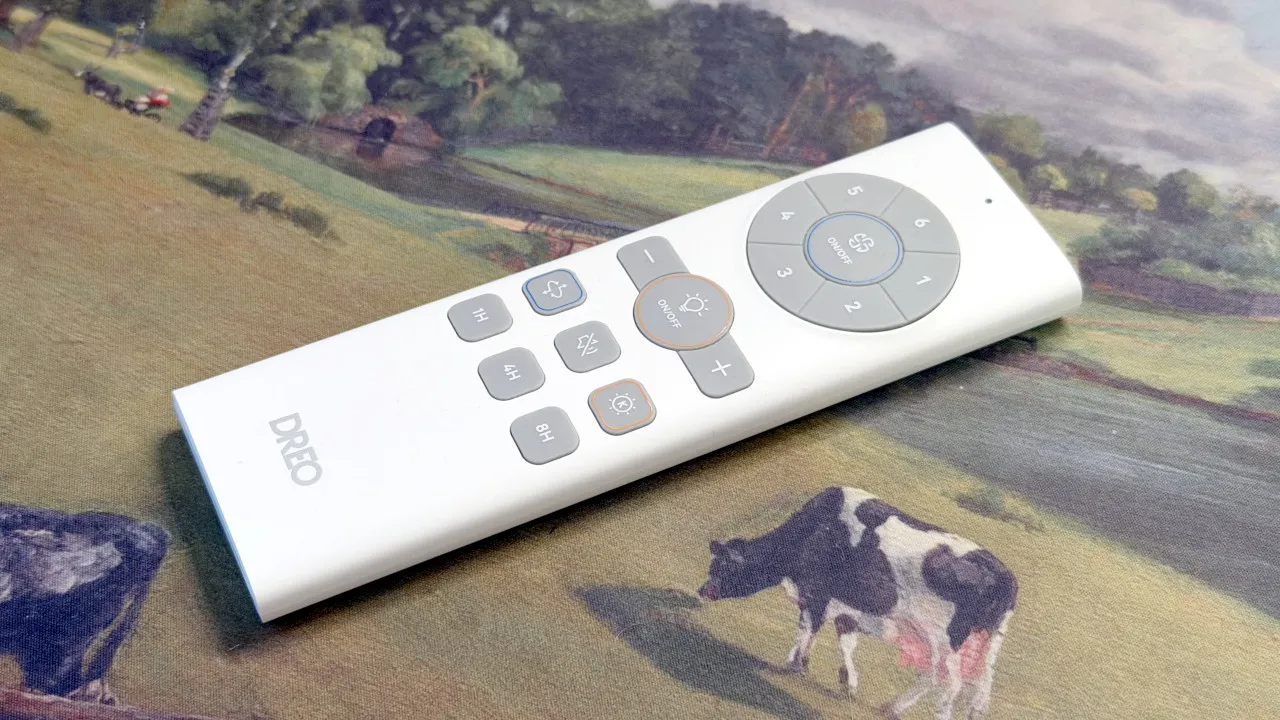
[Sam Wilkinson] recently installed a Dreo CLF513S ceiling fan in his place — it’s cheap, well-sized, and blows air around as you’d expect it to. The only problem is that it only works with an ugly cloud-only smart home setup out of the box. Never mind, though, because [Sam] figured out how to hack up a custom solution.
Hacking efforts began with the included remote control. [Sam] identified that the remote had to be RF, since it didn’t need line of sight to work properly. The FCC ID on the back of the device further indicated this was the case. Armed with that knowledge, it was simply a case of figuring out the commands sent by the remote, building something to replay them, and then hooking that into [Sam]’s existing Home Assistant setup.
The remote ran on 433.92 MHz, a not-uncommon bit of spectrum for these sort of appliances. An RTL-SDR was thusly enlisted to capture the output, with a spectrogram indicating the remote used simple on-off keying to send commands. Once commands were captured, [Sam] grabbed an ESP32-C6 microcontroller, hooked it up to a RFM69HCW radio transceiver, and programmed it to replay the fan on/off command. From there, a little dabbling with MQTT got the ESP32 controlling the fan as desired from within the Home Assistant ecosystem.
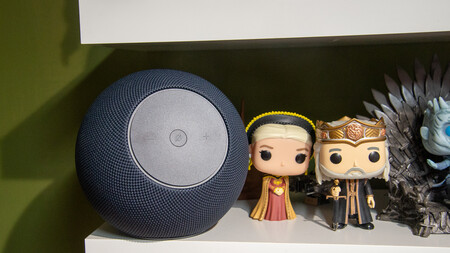
The Echo Studio houses immersive audio, Alexa support and clever sensors for smart home controls, all for an affordable price.
Pick up the Echo Studio for just £166.24 this Prime Day and save over £53 off its usual price. That’s the lowest we’ve seen the smart speaker reach on Amazon since its launch last year.
The Echo Studio is down to its lowest ever price
The Echo Studio houses immersive audio, Alexa support and clever sensors for smart home controls, all for an affordable price.
The Echo Studio is a well-rounded smart speaker that’s designed for use with Alexa+. Once you opt into the service, Alexa+ promises to be a more conversational assistant than the standard Alexa, allowing you to chat naturally between different topics and requests. In fact, we hailed the service as being “light years ahead of the competition” as it’s better at general responses, building smart home routines and able to find information from emails.
Advertisement
The light ring will illuminate once Alexa has heard that all-important wake word, giving you an indication that it’s ready and waiting to answer your question.
Otherwise, the Echo Studio itself is equipped with three 1.5-inch drivers and a 3.75-inch high excursion woofer. What that means is real-world use is that the device is a very competent-sounding speaker for its price. While bass levels aren’t quite as room-shaking as other speakers, overall low frequencies are handled well while sound is well-balanced.
Advertisement
Its design doesn’t stray too far from its predecessors, though now it includes easier-to-operate buttons than the previous Studio iteration, and rids itself of the action button too. That means you’ll have to either actually say “Alexa” to get its attention.
Advertisement
Overall we awarded the Echo Studio with a four-star rating, as Home Technology Editor Dave Ludlow concluded the smart speaker is a “powerful, all-rounder for the voice assistant [Alexa], music and entertainment”.
Whether you’re keen to try Alexa+, want an easy way to control your smart home appliances or need to upgrade an old smart speaker, the Echo Studio is a brilliant option. Not only is Alexa easily one of the best voice assistants around, but its sleek design and brilliant speaker set-up makes it a solid investment.
Netflix is changing how user identities work on its platform, and for many subscribers, the move is showing up in the form of unexpected login prompts and extra steps at sign-in. The company has begun requiring almost every profile on an account to be tied to a unique email address,… Read Entire Article Source link
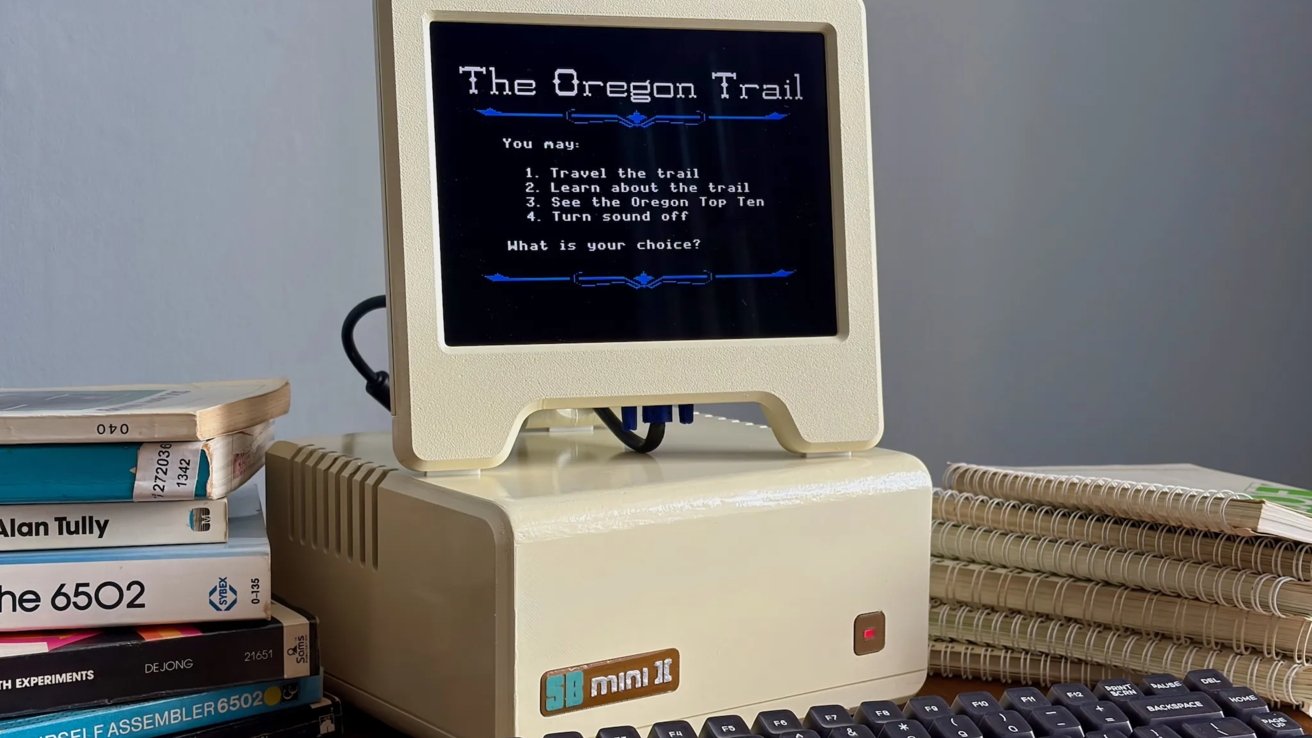
A project has cloned the Apple II Plus, but instead of using emulation, it goes the harder route by rebuilding Apple’s classic computer in hardware.
If someone wants to get the experience of using Apple’s vintage products, they often turn to a software emulator. However, as one project proves, it’s possible to get the same effect by focusing on the hardware side.
Posted on Sunday by Simon Boak, the SB Mini II is referred to as a “Homebrew Apple II Clone.” It is a rebuild of the Apple II Plus from a hardware standpoint, but using modern components.
Boak saw that most of the basic logic chips are still available to consumers, including the 6502 CPU. That, combined with circuit diagrams in the original manual and a library of books on the topic, helped Boak come up with a gameplan and a shopping list of parts.
Advertisement
A modern(ized) marvel
The clone does use modernized alternatives compared to the original design, mostly due to advancements in technology.
A key one is the replacement of the dynamic RAM (DRAM) used in the original Apple II. While the original kept to DRAM to save on cost, Static RAM or SRAM is also cheap enough for the project.
As a result, one and a half 32K SRAM chips are used to get the required 48k the Apple II Plus needs. The change also means there was no need to use circuitry to refresh the DRAM, which allowed the memory to function.
Boak remarks that a lot of the original circuit generated a composite video signal. Instead, using an Apple II VGA card, he was able to get a sharper video output, as well as removing the video generation logic from the circuitry.
Advertisement
In effect, it is a “headless” clone if it is used without the VGA card.
This also helped simplify the clock and timing signals as well. In this project, Boak uses a 4.096 MHz crystal oscillator, divided down to 1.024MHz, which is close to the 1.023MHZ of the original machine.
A Raspberry Pi Pico, which in itself is more powerful than the Apple II Plus, is used as a way to connect a USB keyboard to the Apple II. The Pico does generate the same parallel data signals as the original keyboard, as well as eliminating the need to use voltage level shifters.
Smart case
The project was finished off by being placed in a specially created case, which was 3D printed in parts before being glued and painted together. Those part files have since been released via GitHub.
Advertisement
It’s based on the design of the Apple ProFile hard drive. However, there are extra vents and a rear panel added so that connections could be accessed.
Just as the original was designed for easy access to the internals, the enclosure’s lid clips shut, so it can be opened without tools.
To go with the clone, Boak has also designed a matching Studio II LCD monitor.
This is far from Boak’s first attempt at making clones of Apple products. In June 2024, he created an Apple 1 clone with a printer, which used an SD card for storage.
Advertisement
The Apple II Plus recreation is certainly impressive, since it’s a hardware recreation instead of just using an emulator. But sometimes, even those efforts can be just as astounding.
In 2024, a Hackintosh project aimed to recreate the original Macintosh Plus, using modern components internally. However, the effort used 3D printing to produce a highly-accurate full-scale recreation of Apple’s hardware.
The European Space Agency’s (ESA) Euclid space telescope has captured the largest and most detailed visible-light image ever obtained of the Milky Way’s galactic bulge, the central region of our galaxy.
The image is a mosaic containing more than 60 million stars, as well as nebulae and star clusters. It will allow scientists to confirm the possible presence of exoplanets using a microlensing technique and measure their masses with greater precision.
The Power of Euclid
Although Euclid was designed to observe billions of distant galaxies, its visible-light camera is sensitive enough to resolve individual stars at the center of the Milky Way—a region that is both extremely bright and densely populated—without being overwhelmed by the intense light.
On March 23, 2025, Euclid turned its gaze toward the galactic bulge, capturing this enormous image in just 26 hours of observations. The result was remarkable: a mosaic composed of nine separate “pointings” (exposures) by its visible-light camera, each covering an area of sky larger than the full moon.
Advertisement
While the quality of Euclid’s visible-light images is comparable to that of the Hubble Space Telescope, there is one major difference: Each pointing that Euclid captures in just a few hours covers an area 270 times larger than Hubble’s field of view. It is also much faster. To put this into perspective, the Keck Observatory would require roughly 2,000 hours to observe the same mosaic.
The Image of the Milky Way
The new Euclid image captures more than 60 million stars, along with nebulae and star clusters, in one of the Milky Way’s most crowded regions—a location ideally suited for searching for exoplanets through gravitational microlensing.
“To catch microlensing, you need to observe parts of the sky that are crowded with stars, such as close to the centre of our galaxy,” said Jean-Philippe Beaulieu, who led the observing campaign, in a press release. “During the last 20 years, almost 300 exoplanets have been discovered using this technique, all with ground-based telescopes and all towards the center of our galaxy. This image from Euclid includes 51 known planetary systems—and it will assist in studying many more that will be found.”
Measuring Planetary Masses
Although detecting a microlensing event requires several weeks of observations—meaning Euclid could not identify any new events during its relatively short observational campaign—what makes this image so valuable is that it provides the data needed to measure the masses of already known planets, as well as planets that have yet to be discovered.
Advertisement
“In 24 hours, Euclid has already captured the stars involved in all the future microlensing events that the Roman space telescope will detect, but before the stars and planets involved have aligned,” said Natalia Rektsini, who led the publication of the data, in a press release. (The Nancy Grace Roman space telescope is slated to launch later this year.) “This means that anyone who detects a microlensing event in the same region, for example with Roman, will be able from now on to use Euclid data as a time reference in the past and see how the stars looked before they overlapped.”
In effect, Euclid’s observations will serve as a reference archive for future missions, enabling more detailed studies of exoplanets and more precise measurements of their masses.
“In just 24 hours, Euclid has delivered unique data on the Milky Way’s center, with a large and sharp view of this region,” said Valeria Pettorino, ESA’s Euclid project scientist, in a press release. “This data can also be used for other scientific applications, from brown dwarfs and binary stars to stellar motions and dust across our galaxy.”
This story originally appeared onWIRED Italiaand has been translated from Italian.
Sony has confirmed that it will remove 551 movies and TV series from the PlayStation Store in the UK on September 1, 2026. The content will also be simultaneously deleted from customers’ libraries who have already purchased it. Sony did not mention anything about refunds, suggesting affected users will not be compensated financially. Read Entire Article Source link
Get caught up on the latest technology and startup news from the past week. Here are the most popular stories on GeekWire for the week of June 21, 2026.
Microsoft names chief digital safety officer; Remitly’s chief product and technology officer departs; and an AWS leader joins Synthesia to oversee its new Seattle office. … Read More
“Zen,” a $200 million, 289-foot yacht reportedly owned by Chinese billionaire Wu Guangming, motored smoothly through the Ballard Locks and out to Puget Sound, drawing onlookers along the railings of the popular Seattle destination. … Read More
Virginia-based AI startup Trase is expanding its presence in the Seattle region, with plans to grow from about 20 employees in the area today to as many as 100 in the coming months. … Read More
Valve Software abruptly opened reservations for its latest Steam Machine on Monday, but due to the ongoing PC component shortage, did so at a significantly higher price than expected. … Read More
As tech giants hunt for massive amounts of clean electricity, PNNL, Nvidia and Fervo Energy are partnering to develop a new public tool that aims to eliminate the guesswork of drilling into the Earth’s molten depths. … Read More
Mind Children Robotics, a Seattle-area startup co-founded by AGI researcher Ben Goertzel, is building Codey — a child-sized social robot priced under $10,000 and aimed at classrooms, hospitals and senior care. … Read More
Salem, Ore.-based Agility Robotics, whose two-legged Digit robots have been tested inside Amazon warehouses, is set to become the first publicly traded U.S. … Read More
Microsoft cuts data center water intensity by 90% and hits a major replenishment milestone as tech giants face growing public backlash over resource consumption. … Read More
Two of Amazon’s top Prime Day MacBook Air deals have been extended, resulting in discounts of up to $450 off.
After many M5 MacBook Air deals sold out during Prime Day, two of the top choices at Amazon have been extended into the weekend. Save $450 on the 13-inch MacBook Air M5 with 16GB of RAM and 1TB of storage.
On sale for $1,149.99, only select colors are available at press time due to the increased demand after Apple raised prices on Thursday.
Need additional screen real estate? The standard 15-inch MacBook Air with Apple’s M5 chip, 16GB of memory, and a 512GB SSD is also marked down to $1,149.99, reflecting a $350 price cut off Apple’s new MSRP.
Prime Day MacBook Air deals have been extended
You can compare prices across retailers in our MacBook Air Price Guide for offers on CTO models as well.




















































You must be logged in to post a comment Login