Merino wool is a super fiber. The best merino wool clothing somehow manages to be comfortable in 95-degree heat, and merino base layers keep you warm well below freezing. Unlike synthetic fibers derived from petroleum, merino wool is natural and renewable.
Merino wool’s versatility means there’s a bewildering array of blends and options to choose from. Here are our favorite merino wool products that we’ve tested by wearing and washing (usually in cold water, and hung to dry, although we do machine dry them just to see what happens) over the course of months and even years in some cases. Once you’re done here, don’t forget to check out the rest of our apparel guides, like the Best Merino Wool T-Shirts, Best Base Layers, Best Puffer Jackets, Best Hoodies, and Best Hiking Boots.
Updated April 2026: We’ve changed out top pick boxers to Wool & Prince, added more hoodies, and the Ibex women’s Goat short sleeve. We also updated prices and links throughout.
Table of Contents
Advertisement
Why Is Merino Wool So Great?
Merino wool is great because you’re stealing a sheep’s ability to keep itself warm or cool based on the temperatures it’s in, a process often referred to as thermoregulation. If you’ve only ever worn the sort of itchy wool sweaters your proverbial grandmother supposedly made, you might wonder what all the fuss is. The answer is that Merino sheep have thinner, softer wool, which has evolved to keep them comfortable across a wide range of temperatures and is comfortable to wear next to your skin. Wool is sustainable, too.
One sheep can produce 4 to 5 pounds of wool per year. That’s because the sheep that make merino wool drink only the purest alpine waters and study the art of comfort under the tutelage of those stuck-up Pashmina goats, who, let’s face it, might know a thing or two about wonderfully pillowy softness. Just kidding. Merino sheep do have that softer wool though, and merino wool is a remarkable fabric that’s become the cornerstone of my wardrobe.
Merino wool comes in different weights, which you will frequently see listed as “200 gsm” or something similar. (The “gsm” refers to grams per square meter, sometimes listed as g/m.) What’s important is the scale and where your garment falls on it. At the low end, you have T-shirts and underwear, which are typically 150 gsm, though we have seen some as low as 120 gsm. Generally, anything below 200 gsm will be a good base layer or T-shirt. From 200 to 300 gsm are your mid-layers, and anything above 300 is a heavier garment.
Advertisement
If you’re more familiar with synthetic ratings like those often used on fleece, know that, in my experience, about 120–160 gsm wool corresponds to 100-weight fleece, 160–200 gsm wool roughly matches 200-weight fleece and 200+ wool is like 300-weight fleece. In every instance, the wool is warmer because it’s better at trapping heat, especially in the wind. (That said, there are reasons to go with fleece at times, like how incredibly lightweight it can be.)
Nuyarn is a merino wool/synthetic hybrid weave, wherein merino wool is wrapped around a nylon core for warmth, lightness, and extra durability. The idea is to get the temperature regulation benefits of merino, but to add some of the longevity of nylon. In my experience, Nuyarn mostly works. It’s our top pick for base layers, though I find it less necessary in more casual garments, where I prefer 100 percent wool.
How to Care for Merino Wool
Most merino products will have care instructions. Most likely it will be to wash cold and lay flat to dry. The latter is important, as hanging wool to dry will stretch it out (because of the water weight). While most merino labels say the garment can be machine washed, my experience has been that hand-washing merino will extend its life. This is particularly true of very lightweight (150 gsm) merino base layers and T-shirts. The exception is Minus33’s Microweight Raglan short sleeve T-shirt, which is machine-washable and dryer-friendly. Having done both to mine for over a year, I can vouch that it does indeed hold up.
Advertisement
I’ve never had a problem storing merino in my closet between wears, but for long-term storage, I recommend you take precautions against moths, which are notorious for eating holes in wool. I have lost merino garments to moths.
If you don’t want to smell like mothballs, there are better solutions. I make sure to wash and thoroughly dry whatever I am storing, then I seal it in a compression bag, like this. Another option is to put your merino garment in a cotton bag or otherwise wrap it in cotton and then put it in a plastic bin. It’s very important to make sure that the garment is completely dry before using any of these storage methods, otherwise your wool will smell musty and moldy. Other options include storing your garment in a cedar chest, which is a good natural deterrent for moths, or use moth traps or lavender sachets, which will repel the moths.
100 Percent Merino vs. Blends
Should you buy 100 percent merino or should you go for a blend? The answer is … it depends. On the garment in question, the use case, and your preferences. Probably the best way to find out is to try several and see what you like. One advantage to blends is that they’re stretchy, which makes them better for active pursuits like hiking, rock climbing, and the like. I like 100 percent merino for heavier mid-layers like hoodies or jackets, but I prefer blends for lighter layers. My experience has been that the closer I get to my skin, the more blend I want, with Nuyarn being my top pick for base layers.
Advertisement
There are also some alpaca blends out there that are also wonderfully soft (I love everything I’ve tried from Paka and Arms of Andes). If you’re one of the rare people who do find merino itchy, you might be allergic to lanolin, which is the skin oil produced by sheep. Alpacas don’t make lanolin, and the fibers are thinner and finer than merino. That makes alpaca warmer and softer, but it’s also more expensive.
Merino vs. Synthetic Fibers
Which is better? The answer again is … it depends (sorry). But usually merino. By synthetics, I generally mean polyester, nylon, polypropylene, rayon, or blends of these and other fabrics—everything but cotton, wool, and linen.
Synthetics generally win for wicking away sweat, which means they tend to feel drier. They also tend to dry faster, so when it comes to things like socks and underwear, even most “merino” options are often more than 50 percent synthetic. Synthetics are just better at handling moisture. How much this matters depends on a host of personal factors. For example, I feel weird and almost clammy in anything synthetic, so I don’t really care how much moisture it wicks away.
Advertisement
The downside to that moisture wicking is that synthetics retain odor. There are some chemical treatments that can help, but I’ve never tried anything synthetic that was as odor-resistant as merino wool.
Another difference is breathability. Synthetics are passable in this department, but it’s where merino really excels. If you’re hot and are hiking up an exposed slope toward an open pass and then dropping down into the cool of a forest, merino is your friend, because the breathability means less sweat to cool you when you get out of the sun. Again, how much this matters depends on your body.
The final factor worth thinking about is durability. In some cases, synthetics will last longer than pure merino, particularly in scenarios where abrasion is a major source of wear. To my mind, this is just another reason to choose a merino blend rather than going all the way to synthetics, but it’s something to think about if you do a lot of off-trail hiking or rock climbing—any activity where your clothes are going to take a beating.
Base Layers
Advertisement
To really see how remarkable merino wool is, start at the bottom, with the clothes next to your skin. Merino really shines as a base layer. It’s warmer for the weight, wicks moisture well, and unlike synthetic fabrics, merino stays stink-free for days of wear. Be sure to read our layering guide for more on how to put it all together and stay comfortable in any weather. We also have a separate guide to the best base layers if you want know all your options, but here are our top merino picks from that guide.
Best Lightweight Base Layer
Ibex
Woolies Pro Tech Crew
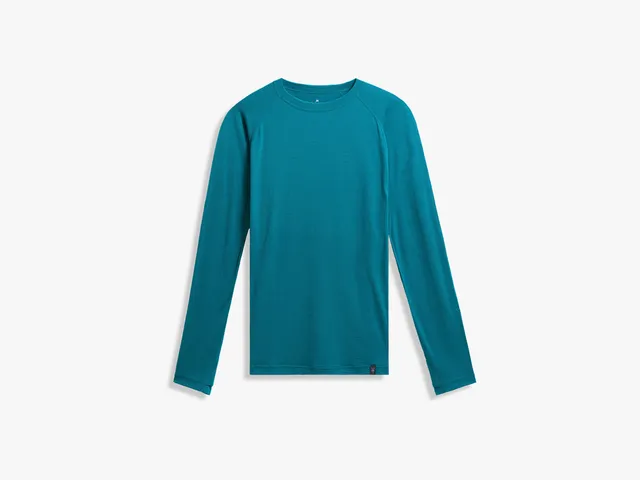
The Ibex Woolies Pro Tech base layer crew is the best lightweight merino base layer we’ve tested. If you want a hard-wearing shirt, this it it. Woolies are Nuyarn (see above), which is 85 percent merino wool and 15 percent nylon—the merino wool is wrapped around a nylon core, which increases the warmth while being lighter (5 oz for the men’s large) and more durable. This is my top pick for all things technical. It’s what I bring hiking, backpacking, and it’s reviews editor Adrienne So’s pick for running, climbing and other high-aerobic activities when it’s cold. I also love the Woolies Pro Tech Bottoms ($115), which are what I bring backpacking in all but the warmest of weather. There’s also a quarter zip version of the shirt if you prefer.
Advertisement
Aside from comfort and warmth, a bit part of the reason we recommend Woolies is that they last. Ibex is what passes for a heritage company in this space; the company was founded in 1997 and has been cranking out merino garment for a long time. Adrienne’s parents bought her two sets of Ibex base layers in 2001 that she still wears today, in the year of our Lord 2025. Properly cared for, Woolies will keep you comfortable warm for years to come.
Best Heavyweight Base Layer
SmartWool
Merino Classic Long-Sleeve
When I want something a bit warmer than the lightweight Woolies above, I reach for Smartwool’s Classic long sleeve base layer. These may be the most popular merino shirts around, and for good reason: They’re very comfortable, tending to the looser side, feature heavy duty seams that don’t rub, and sit off the shoulder for more comfort when wearing a pack. At 87 percent merino wool (blended with nylon), these are also very durable while remaining lightweight (10.3 oz for a men’s large). This Smartwool shirt, along with the matching pants ($125), are great for chilly winter days.
Advertisement
Courtesy of Unbound Merino
Unbound Merino
Long-Sleeve Merino Crew
The picks above all have what my wife calls “that sporty look,” which the industry refers to as “technical.” This 100 percent merino shirt from Unbound is the opposite: it just looks like a long sleeve shirt. It’s incredibly soft and while it does pill a bit if you run it through the dryer (don’t), it’s proved itself plenty durable—I’ve been wearing it constantly for over a year now and it still looks like it did when I got it. It’s the long-sleeve, base layer twin to our favorite T-shirt (see below). It’s on the thin side for a base layer, which makes it perfect for those cool weather mornings in the shoulder seasons. It’s versatile too; it can be used as a base layer, but it also works as a T-shirt when it’s not too chilly. Fit runs true to size, and if the one you want is sold out, be patient; Unbound frequently updates its stock.
There are so many! Here’s a few more to consider, but really, go read the base layer guide.
Advertisement
Ridge Merino
Aspect High Rise Base Layer Bottoms
These are another great option fro women looking for something that can be worn around town as well as on the trail. My daughter has even worn them under shorts for no-gi juijitsu and they’ve held up great, which is a testament to their durability.
Minus33
Advertisement
Heavyweight Yukon Thermal Long Sleeve
If you’re going to be in extreme cold, New Hampshire-based Minus33 is the company to shop. Where I live winter temps regularly dip below 0F and the Yukon comes into its own. The 400 gsm weave of 100 percent merino is more like a sweatshirt than a base layer, but if you live in the north, you need it.
Turtle Fur
Merino Pipe Dream Neck Gaiter
Don’t forget your neck. I live in this Turtle Fur gaiter during the winter and I also use the lighter, superfine version for hiking at elevation in the summer to keep the sun off my neck without resorting to sunscreen. It’s wonderfully soft, not overly tight, and never smells.
Advertisement
Merino Mid Layers
Fleece has its place, but I rarely wear it these days. I prefer merino for my mid layers. It’s better at helping your body regulate its temperature. The one place fleece still wins for me is backpacking. It’s almost always lighter for comparable warmth, at least in mid layers.
Like the Northern Lights or the McRib, the thickest Ibex wool hoodie appears irregularly and with some fanfare. The Mammoth Hoodie is indeed a big, furry beast of a garment—it’s basically the weight of the classic American Giant hoodie but made of 85 percent wool cut with 15 percent nylon for added warmth and stretch. Ibex says it’s the warmest hoodie they’ve ever made, and in my week of testing, I’ve used it in place of a jacket in mid-30s temps. It has an athletic cut with zippered pockets and thumb holes. I do wear a stocking hat with it in the cold because the scuba hood is meant to fit under a helmet which means it’s too small to provide enough warmth for my large shaved head on its own. —Martin Cizmar
Elon Musk recently outlined ambitious plans for a chip-building collaboration between his companies Tesla and SpaceX.
Bloomberg reports that Musk shared his plans on Saturday night at an event in downtown Austin, Texas, with a photo suggesting that what Musk is calling the “Terafab” facility will be built near Tesla’s Austin headquarters and “gigafactory.”
Musk said he’s pursuing this project because semiconductor manufacturers aren’t making chips quickly enough for his companies’ artificial intelligence and robotics needs: “We either build the Terafab or we don’t have the chips, and we need the chips, so we build the Terafab.”
The goal is to manufacture chips that can support 100 to 200 gigawatts of computing power per year on Earth, along with a terawatt in space, Musk said. He did not offer a timeline for these plans.
Advertisement
As Bloomberg noted, Musk does not have a background in semiconductor manufacturing, but he does have a history of overpromising on goals and timelines.
Overly autonomous cooking tools and kitchen appliances have largely whiffed in the US market. While culinary robots like the Thermomix have made inroads in Europe and elsewhere, adoption in the US has been slow. Super smart ovens, including the June, Suvie and Brava, have likewise struggled to connect with consumers here.
Nosh Robotics, a smart home robotics company based in Bengaluru, India, is giving it a go with the launch of Nosh One It’s a $1,499 AI-powered cooking robot seven years in the making and the company says “it can handle the entire cooking process autonomously: ingredient selection, sautéing, plating and self-cleaning.”
Advertisement
The June Oven was the most promising smart oven we tested. It quietly stopped production in 2023.
The Nosh does a few things that a slow cooker or Instant Pot doesn’t, namely, add the right amount of ingredients, cooking oils and spices from small chambers. But you still have to load the right ingredients for a given recipe into cartridges every time you cook.
Advertisement
The Nosh One has launched on Kickstarter for a cool $1,499.
Nosh One
The cooking functionality is also limited. While the Nosh can portion, chop (roughly — no mincing or dicing), cook and stir food in its built-in pot using highly programmed recipes so you can walk away while the recipe completes, it can’t bake, roast, boil, sear or steam, making it limited in what it can effectively make.
I saw it in a non-demo preview at CES earlier this year and spoke with reps about the Nosh One. CEO Mira Patel calls it “the first consumer robot that truly cooks for you,” though I was less certain of its potential and remain skeptical. Up close, and even with a deep explanation from the on-site reps, the pricey machine doesn’t seem worth the cost or the space it takes up on your counter, at least for most home cooks.
Advertisement
The Nosh One is similar to a Thermomix. The Thermomix offers more cooking modes and functions, but it can’t automatically deliver precise ingredient amounts to the chamber like the Nosh.
Verwerk
If your dinner menu consists mostly of stews, soups, stir-fries and curries, the Nosh should be able to shoulder a good deal of cooking. Most other foods will have to be cooked the old-fashioned way.
It’s also big and bulky. Weighing 57 pounds with a 21-by-17-inch frame, it’ll command a good deal of counter space, much more than an Instant Pot or a slow cooker, both of which execute the same basic cooking tasks, albeit with far fewer automated functions.
How it works
Advertisement
The Nosh One precisely portions ingredients according to programmed recipes, then heats and stirs them to completion.
Nosh Robotics
At the core of the device is NoshOS, a proprietary culinary AI trained on thousands of cooking techniques and cuisines from around the world. Multiple sensors monitor texture, moisture, aroma compounds and browning levels in real time, dynamically adjusting heat, timing and seasoning as a dish cooks. Built-in machine vision identifies produce, proteins and pantry items, allowing the system to suggest meals based on ingredients already on hand.
Ingredient cartridges, which are reusable and dishwasher-safe, store fresh items and dispense them with “millimeter-level precision.” After each meal, a closed-loop wash cycle automatically cleans the cooking chamber, utensils and internal surfaces.
Pricing and availability
The Nosh One is available to preorder on Kickstarter until March 25, starting at $1,499, with shipments expected in early summer 2026. Early backers receive a complimentary set of ingredient cartridges and access to the Nosh Founders Recipe Library, featuring dishes from award-winning chefs. According to the company, additional attachments, specialty cooking modules and premium recipe packs are planned for later in 2026.
Advertisement
As always, before contributing to any campaign, read the crowdfunding site’s policies — in this case, Kickstarter — to find out your rights (and refund policies, or the lack thereof) before and after a campaign ends.
These are not temporary catchphrases. These are universal and forever.
And leave it to a cop to ensure we never forget either of these concepts. A foot pursuit that ended in the shooting of Connecticut resident Dyshan Best would otherwise just be a footnote in cop history if some cops hadn’t decided to be the bastards they wanted to see in the world and make it extremely clear they felt a Black life didn’t matter.
Dyshan Best, 39, was shot in the back last year as he fled from officers in Bridgeport, Connecticut. A report released Tuesday by the state’s inspector general found that the shooting was justified because Best had a gun in his hand and the officer pursuing him had reasons to fear for his own safety.
All the stuff we expect to see in these reports is here, beginning with the assumption that a gun is a threat even if it’s not pointed at officers to the de rigueur “fear for my safety” justification for shooting a fleeing person.
What’s somewhat expected — but still somehow surprising — is what happened after the apparently justified shooting:
The first ambulance called to take Best to the hospital arrived at the scene at 6:02 p.m., about 14 minutes after the shooting. However, at the urging of other officers, that ambulance was used to take away a white police officer, Erin Perrotta, who had been involved in the foot chase, the report said.
Paramedics reported that Perrotta declined treatment in the ambulance.
“I am fine, I just needed to get out of here,” she said, according to the report. Another officer described Perrotta at the time as “visibly hysterical (crying and breathing rapidly) and had blood all over her uniform,” the report said.
Advertisement
That’s right. The ambulance sent to pick up the person police officers had just shot was instead handed over to Officer Erin Perrotta, who — as the Inspector General’s report notes — was enduring the relative hardship of a “mild anxiety attack.”
The second ambulance didn’t show up for another ten minutes. The person with actual bullet holes in him didn’t hit the ER until 14 minutes after Officer “Anxiety Attack” Perrotta arrived at the hospital. The officer who was never in any danger of dying got nearly a 15-minute head start on her medical treatment.
The person they’d shot didn’t make it.
Best died at 7:41 p.m. as he was undergoing treatment for the gunshot wound, which damaged his liver and right kidney.
Meanwhile, Officer Perrotta’s employer only seems interested in outlasting this news cycle:
Advertisement
A spokesperson for Bridgeport police, Shawnna White, declined to comment Wednesday when asked about Perrotta taking the first ambulance. She said in an email that the police department’s Internal Affairs Division would conduct its own investigation.
Sometimes the lack of direct response says more than a direct response would. Perrotta is apparently currently on administrative leave “due to an unrelated matter.” That either means Perrotta does bad stuff often enough she’s already given the department another reason to sideline her or that the department has found other stuff to add to this headline-generating “#mefirst” effort by the officer to grease the wheels for the inevitable firing.
Whatever happens now won’t budge the needle for US law enforcement agencies. But for the rest of us not standing on the inside of the Thin Blue Line, this incident says the quiet part loud: Black lives don’t matter… not when it’s a cop claiming they can’t breathe.
An information stealer called VoidStealer uses a new approach to bypass Chrome’s Application-Bound Encryption (ABE) and extract the master key for decrypting sensitive data stored in the browser.
The novel method is stealthier and relies on hardware breakpoints to extract the v20_master_key, used for both encryption and decryption, directly from the browser’s memory, without requiring privilege escalation or code injection.
A report from Gen Digital, the parent company behind the Norton, Avast, AVG, and Avira brands, notes that this is the first case of an infostealer observed in the wild to use such a mechanism.
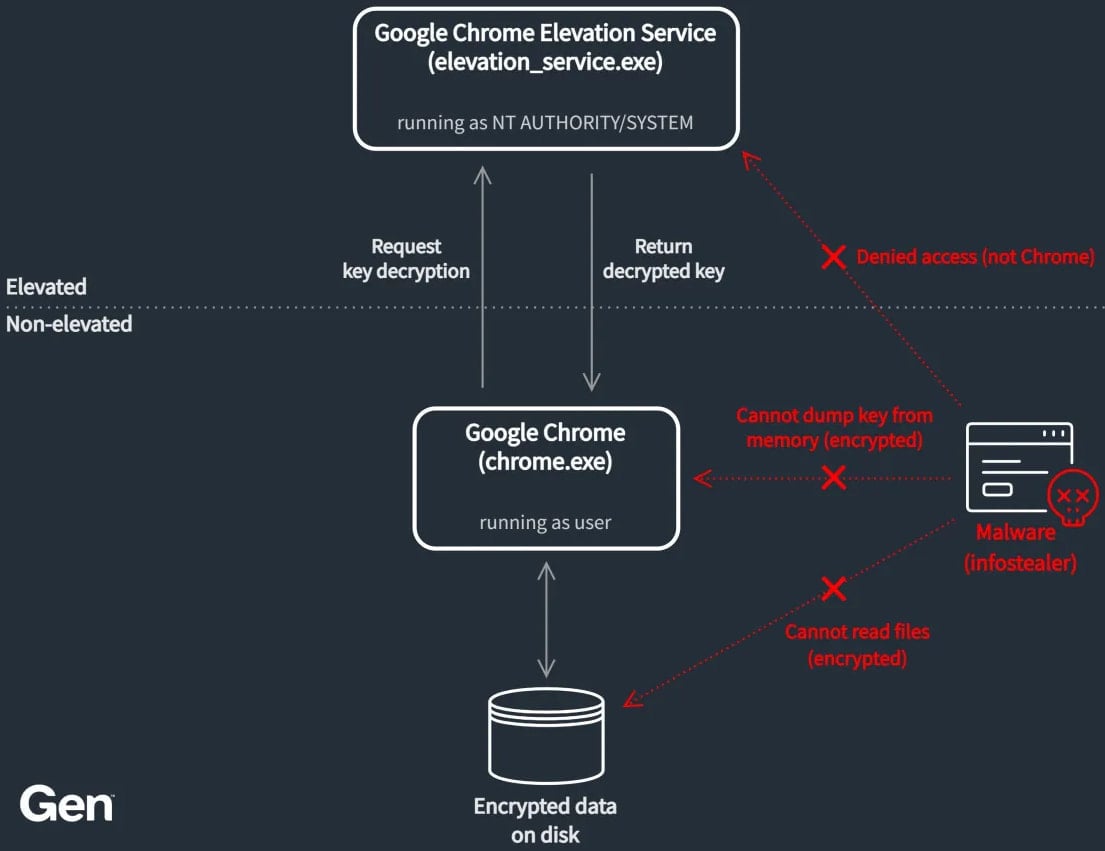
Google introduced ABE in Chrome 127, released in June 2024, as a new protection mechanism for cookies and other sensitive browser data. It ensures that the master key remains encrypted on disk and cannot be recovered through normal user-level access.
Advertisement
Decrypting the key requires the Google Chrome Elevation Service, which runs as SYSTEM, to validate the requesting process.
Overview of how ABE blocks out malware Source: Gen Digital
“VoidStealer is the first infostealer observed in the wild adopting a novel debugger-based Application-Bound Encryption (ABE) bypass technique that leverages hardware breakpoints to extract the v20_master_key directly from browser memory,” says Vojtěch Krejsa, threat researcher at Gen Digital.
VoidStealer is a malware-as-a-service (MaaS) platform advertised on dark web forums since at least mid-December 2025. The malware introduced the new ABE bypass mechanism in version 2.0.
Cybercriminals advertising ABE bypass in VoidStealer version 2.0 Source: Gen Digital
Stealing the master key
VoidStealer’s trick to extract the master key is to target a short moment when Chrome’s v20_master_key is briefly present in memory in plaintext state during decryption operations.
Specifically, VoidStealer starts a suspended and hidden browser process, attaches it as a debugger, and waits for the target browser DLL (chrome.dll or msedge.dll) to load.
Advertisement
When loaded, it scans the DLL for a specific string and the LEA instruction that references it, using that instruction’s address as the hardware breakpoint target.
VoidStealer’s target string Source: Gen Digital
Next, it sets that breakpoint across existing and newly created browser threads, waits for it to trigger during startup while the browser is decrypting protected data, then reads the register holding a pointer to the plaintext v20_master_key and extracts it with ‘ReadProcessMemory.’
Gen Digital explains that the ideal time for the malware to do this is during browser startup, when the application loads ABE-protected cookies early, forcing the decryption of the master key.
The researchers explained that VoidStealer likely did not invent this technique but rather adopted it from the open-source project ‘ElevationKatz,’ part of the ChromeKatz cookie-dumping toolset that demonstrates weaknesses in Chrome.
Although there are some differences in the code, the implementation appears to be based on ElevationKatz, which has been available for more than a year.
Advertisement
BleepingComputer has contacted Google with a request for a comment on this bypass method being used by threat actors, but a reply was not available by publishing time.
Malware is getting smarter. The Red Report 2026 reveals how new threats use math to detect sandboxes and hide in plain sight.
Download our analysis of 1.1 million malicious samples to uncover the top 10 techniques and see if your security stack is blinded.
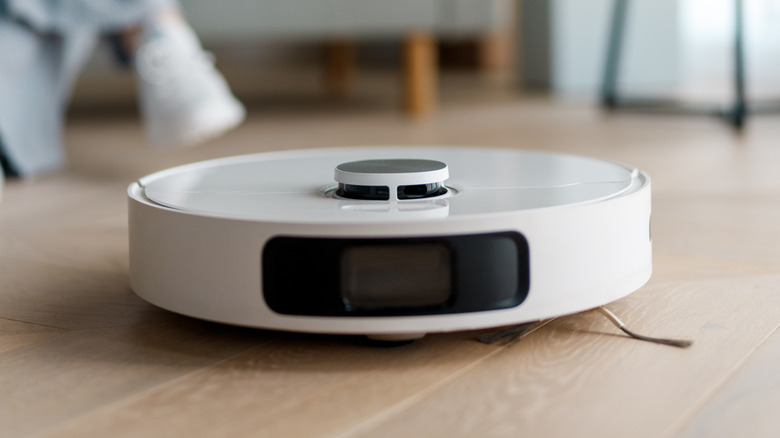
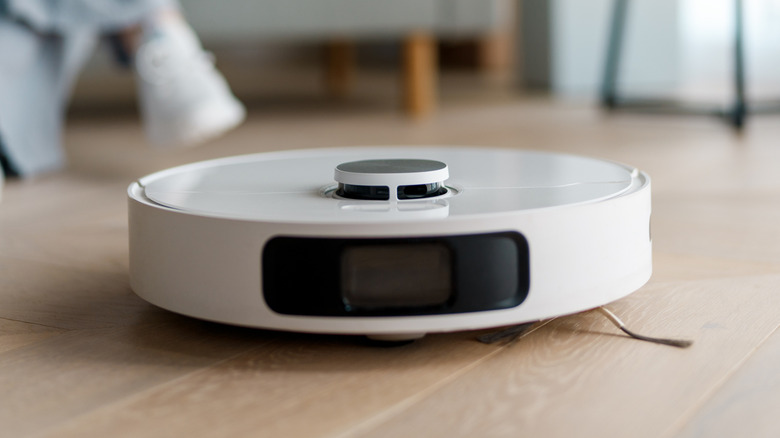
The chilling story of a robot uprising has been told in countless books, movies, and other media through the years. But of all the machines that readers imagine could be the ones to rise up, robot vacuum cleaners, which are designed to clean your home and not rule it, might be at the bottom of the list. Don’t take a baseball bat to yours however, as the real threat isn’t the machine itself but vulnerabilities in the systems that control it.
These flaws affected DJI Romo robot vacuums and were discovered by Sammy Azdoufal, an independent engineer using AI, in February of 2026. Azdoufal was trying to build a custom remote app using a PS5 controller and accidentally stumbled upon a way to get floor plans, live feeds, and full remote capability. This gave him access to and control of 6,700 vacuum cleaners around the world. But this wasn’t technically a system breach, as the way in existed through improper server-side access controls and data handling.
Fortunately, instead of leading the robot army to world domination, Azdoufal instead contacted DJI. According to comments from a company spokesperson to The Verge, DJI had already been working on a fix before the issue was made public. That fix came in the form of system updates that were released to address the problem. However, there appeared to be security concerns that still remained at the time. This includes the ability to access video feeds without a security PIN, in addition to other issues.
Advertisement
DJI faces ongoing U.S. security concerns
Eshma/Getty Images
The discovery of flaws in the DJI Romo robot vacuum cleaner system has apparently led to the company paying Sammy Azdoufal a $30,000 reward. According to The Verge, via Tom’s Hardware, Azdoufal received word about the reward through his email. However, DJI wasn’t clear about which specific discovery qualified for the payment. Additionally, DJI confirmed that a reward was indeed paid to a researcher but didn’t elaborate on Azdoufal or his findings.
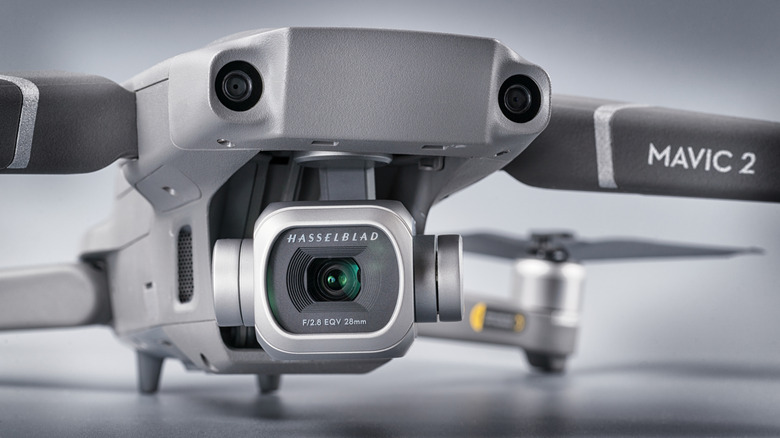
DJI is actually a Chinese company specializing in drone manufacturing and didn’t begin selling vacuums until the fall of 2025. But before its robot floor cleaners made headlines, DJI faced pushback from the U.S. government dating back to 2017. At the time, the U.S. Army ordered service members to stop using the company’s drones due to cybersecurity concerns. But the Army went a step further, ordering all related applications and storage media to be removed as well. This was due to potential vulnerabilities discovered during the Army’s internal research.
Advertisement
In the following years, DJI was added to a Pentagon watch list as U.S. officials continued to raise national security concerns about the company. The fear was that DJI’s drones posed a risk to sensitive government information and facilities. Those concerns eventually led to restrictions from the Federal Communications Commission (FCC), which banned the import of new DJI models and drone components. In response, DJI filed a lawsuit in February of 2026, arguing that the FCC’s action placed unfair limits on its U.S. operations.
According to people familiar with the project who spoke to Reuters, Transformer is being built inside Amazon’s devices and services division as a “personalization device” that could tie together the company’s consumer services and its revamped Alexa assistant. Read Entire Article Source link
A new NYT Strands puzzle appears at midnight each day for your time zone – which means that some people are always playing ‘today’s game’ while others are playing ‘yesterday’s’. If you’re looking for Sunday’s puzzle instead then click here: NYT Strands hints and answers for Sunday, March 22 (game #749).
Strands is the NYT’s latest word game after the likes of Wordle, Spelling Bee and Connections – and it’s great fun. It can be difficult, though, so read on for my Strands hints.
Want more word-based fun? Then check out my NYT Connections today and Quordle today pages for hints and answers for those games, and Marc’s Wordle today page for the original viral word game.
Advertisement
SPOILER WARNING: Information about NYT Strands today is below, so don’t read on if you don’t want to know the answers.
Article continues below
NYT Strands today (game #750) – hint #1 – today’s theme
What is the theme of today’s NYT Strands?
• Today’s NYT Strands theme is… In pieces
NYT Strands today (game #750) – hint #2 – clue words
Play any of these words to unlock the in-game hints system.
Advertisement
WRECK
DICE
CRUSH
WHAT
DISHES
SUCK
NYT Strands today (game #750) – hint #3 – spangram letters
How many letters are in today’s spangram?
• Spangram has 9 letters
NYT Strands today (game #750) – hint #4 – spangram position
What are two sides of the board that today’s spangram touches?
First side: top, 4th column
Last side: bottom, 3rd column
Advertisement
Right, the answers are below, so DO NOT SCROLL ANY FURTHER IF YOU DON’T WANT TO SEE THEM.
Advertisement
NYT Strands today (game #750) – the answers
(Image credit: New York Times)
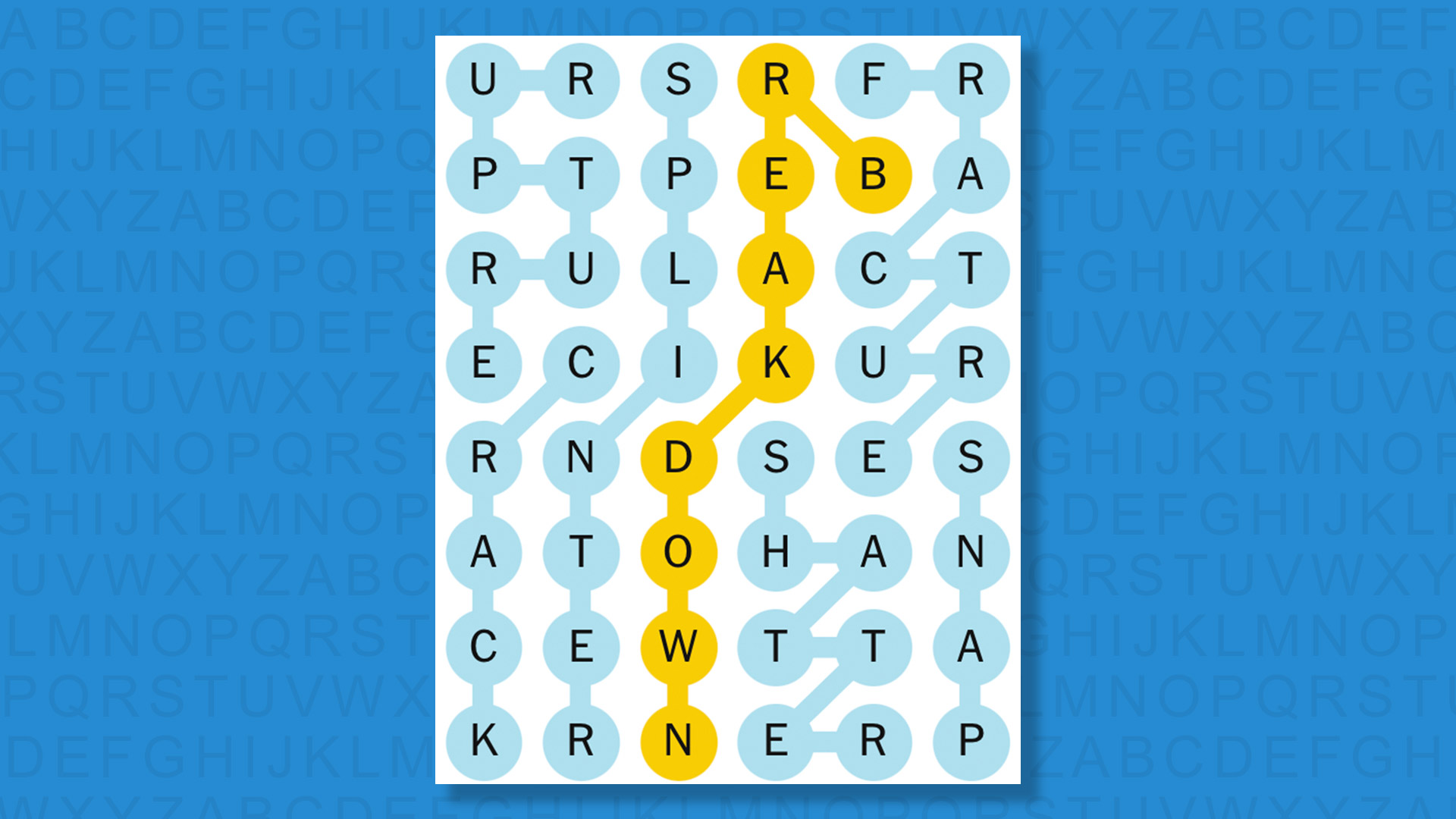
The answers to today’s Strands, game #750, are…
SNAP
CRACK
SPLINTER
RUPTURE
FRACTURE
SPANGRAM: BREAKDOWN
My rating: Easy
My score: Perfect
A straightforward game to begin the week, with SNAP firing off a rapid search for me.
Sign up for breaking news, reviews, opinion, top tech deals, and more.
As I was connecting SPLINTER I felt sure it would be the spangram, as it’s unusual for words to span from top to bottom, but instead it was BREAKDOWN.
The other unusual thing about today’s search was how many non-game words qualified for the theme — I found three, but I’m sure there are more in there.
Advertisement
Yesterday’s NYT Strands answers (Sunday, March 22, game #749)
ZIPPER
THERMOS
ESCALATOR
ASPIRIN
DUMPSTER
SPANGRAM: GENERICTERM
What is NYT Strands?
Strands is the NYT’s not-so-new-any-more word game, following Wordle and Connections. It’s now a fully fledged member of the NYT’s games stable that has been running for a year and which can be played on the NYT Games site on desktop or mobile.
I’ve got a full guide to how to play NYT Strands, complete with tips for solving it, so check that out if you’re struggling to beat it each day.
It doesn’t sound like Crimson Desert, the recently released prequel to Black Desert Online, will support Intel Arc GPUs anytime soon, if at all. On the game’s FAQ page, its developer Pearl Abyss advised players expecting Arc support to apply for a refund. “If you purchased the game expecting Intel Arc support, please refer to the refund policy of the platform where the game was purchased for available options,” the company wrote. Apparently, though, it’s not from lack of guidance from Intel. The chipmaker told Wccftech that it reached out to Pearl Abyss “many times” over the past several years.
The Intel spokesperson said that the company has tried to help the developer “test, validate, and optimize support for Intel graphics” for years. Intel also tried to provide the developer “early hardware, drivers, and engineering resources” across several generations of GPUs, “including Alchemist, Battlemage, Meteor Lake, and Lunar Lake.” The chipmaker said it’s “hugely disappointed that players using Intel graphics hardware” can’t play the game, but that it remains “ready to assist Pearl Abyss” however it can. It also advised players to reach out directly to the developer for “details on the choice not to enable Intel support at launch.”
Pearl Abyss, of course, doesn’t have the obligation to tweak the game so that it runs on PCs with Intel Arc GPUs. The good news is that since the title came out just a few days ago, it will still be easy to get a refund. Steam, where Crimson Desert is now one of the top-selling games, issues refunds within two weeks of purchase.
The most unique thing about human beings is this: We are creatures who long to matter.
That’s according to Rebecca Newberger Goldstein, the philosopher and author of a new book called The Mattering Instinct. If you’ve ever wondered why we humans are so singularly obsessed with discovering the meaning of life, this book — and her ideas — are for you.
Goldstein presents an evolutionary explanation that starts off with a law of physics: the law of entropy, which basically says that things naturally tend toward disorder and destruction over time. All biological creatures need to devote a huge amount of energy and attention to resisting entropy — to surviving. But humans also have a special ability to self-reflect, and we can’t help but notice that we ultimately devote the vast majority of our attention to ourselves. To our own thriving, not the thriving of others. And so we feel the need to somehow justify that.
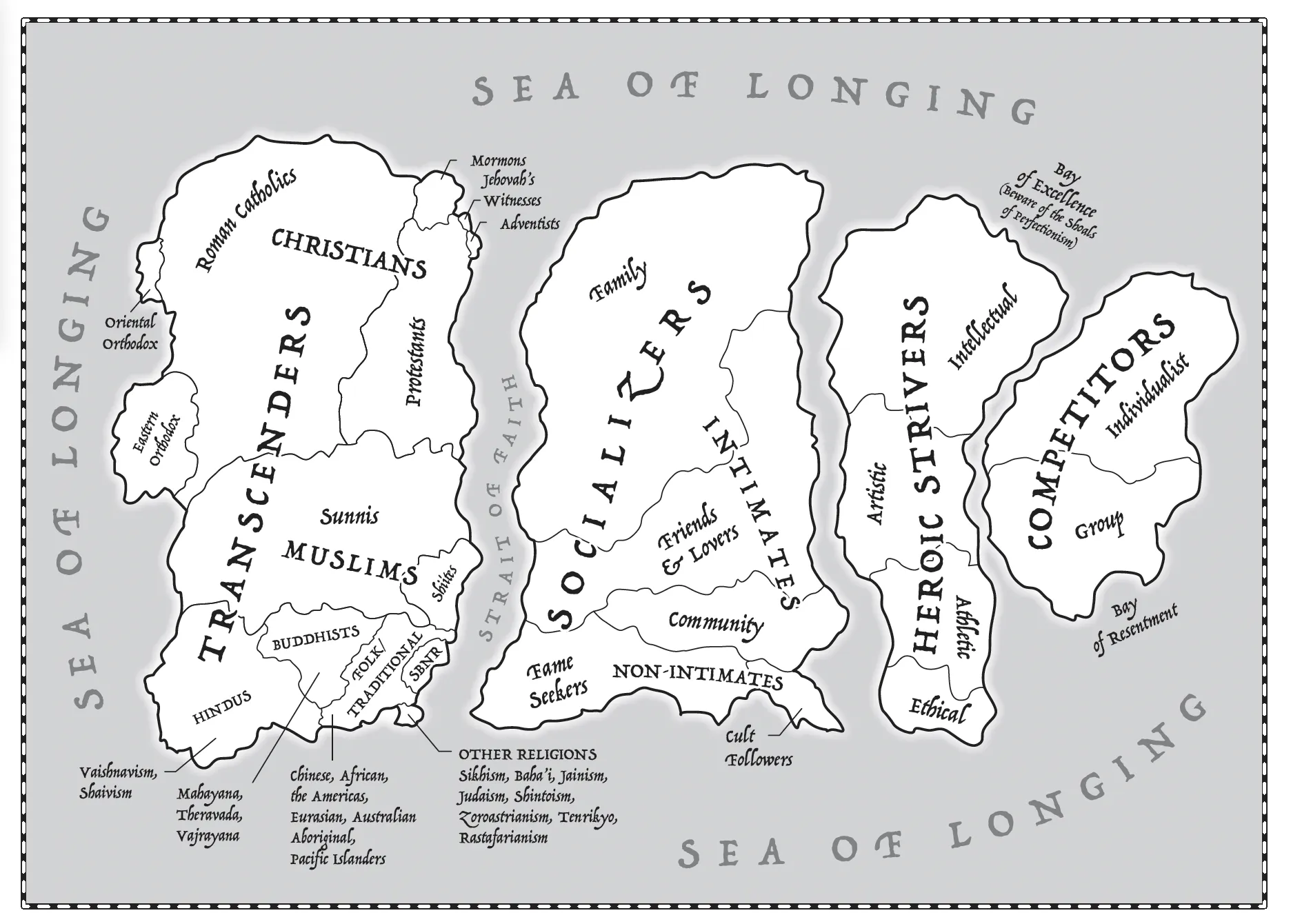
This, Goldstein says, is why we developed the “mattering instinct” — the drive that pushes us to find a “mattering project” that makes our lives feel purposeful and worthy. Goldstein sketches out four main ways people try to do that.
Advertisement
Some are transcenders, who seek to matter to a transcendent presence like God. Others are socializers, who find purpose in helping and mattering to other people. Then there are heroic strivers, who push themselves to achieve excellence in the domain that matters to them, whether it’s intellectual, artistic, athletic, or moral. And finally, there are competitors, who focus on mattering more than others.
In the newest installment of my Your Mileage May Vary advice column, I suggested that Goldstein’s “mattering map” (see below) can be a useful tool for anyone who’s worried that AI may soon replace them in an arena where they find meaning, like their career. Locating ourselves on the map can help us each think afresh about which of the four categories makes us feel a sense of purpose, so we can consider additional types of work that could form a satisfying mattering project for us in the future.
I was curious about how Goldstein is thinking about automation-induced joblessness, what she’d do if her own work gets automated, and whether she thinks we’re in danger of losing our human dignity. So I asked her for a follow-up chat. Here’s a smattering of our nattering about mattering.
Courtesy of Rebecca Newberger Goldstein
You argue that our drive to matter is one of the cornerstones of human life. What convinced you of that? How have you felt that drive show up in your own life?
Advertisement
I really feel justified in my righteous anger when people treat me as if I don’t matter!
I have a very favorite story about that. I mean, just being a woman, there are a lot of stories. But I was once at a party in Princeton with a bunch of physicists, and one very, very prominent physicist wanted to talk to another prominent physicist, and I was in the middle. So he just picked me up — I’m very slight — he picked me up and moved me like I was a potted palm!
And I had this real sense of…but I’m a person! I matter! That feels justified. And if I can justify that about myself, I have to universalize it to everybody. There’s no way it’s going to work for me and not work for everybody else.
Wow, that’s pretty appalling!
Advertisement
So from that, you offer this evolutionary account of how everybody ended up with a mattering instinct. I always find it hard to evaluate evolutionary stories because there’s an element of speculation in them. Your account about how we evolved the mattering instinct seems plausible, but I could also imagine another account being true. For example, maybe the drive for mattering is a way of making sure that others will think we matter, because we want society to think well of us and take care of us. What convinces you that your account is more likely than others?
To me, it explains more of the variety of ways that people try to go about this. If the more social story were true, we would all be socializers. But I mean, the fact that there is a very strong religious aspect — I spent a good part of my life as a transcender — means that to me, phenomenologically, it doesn’t ring true. And it doesn’t ring true to the diversity [of how different people find mattering].
But it might be that I’ve just spent too much time with mathematicians who don’t give a damn about social acceptance!
“What I’m thinking in my most optimistic moments is that the deepest questions, they’re still going to belong to us.”
Advertisement
Yes, we can see that from their fashion! But seriously, I have to say that I really love the mattering map in your book. I feel like I’m mostly one of the artistic-intellectual strivers, but I’m also a bit of a socializer in that I derive meaning from helping others with my work. Do you think most people live on only one island?
No, I don’t think so. I know that I don’t.
And I think all of us have a strong need for connectedness — it’s the other part of flourishing. We need people in our lives, and we often want to make a difference in people’s lives.
Maybe we have our main residence, and then we have our vacation home. You can definitely make a bridge [between the islands].
Advertisement
Why is the island of transcenders exclusively populated with different religions and spiritual traditions? I can imagine other sorts of people — like artists or psychedelic users — who feel there’s a transcendent dimension to the universe, and who derive their sense of mattering by tapping into that.
I think in some sense, all heroic strivers have some notion of the transcendent. They often talk in terms of these ideals. I mean, every artist I know talks about beauty. For knowledge workers, it’s knowledge.
But I really wanted to single out the ones who actually feel that there is some sort of personal presence in the universe that has intentions — that there’s an intentionality that permeates the universe. It’s just so very different.
I had a very religious childhood — I was brought up Orthodox [Jewish] — and it was like, God knows if I cheated and took a bite of a Hostess cupcake! And there was this sense of mattering, that I was created for a purpose. I really felt like I had a role to play in the narrative of eternity. God has his plan, and I’m part of it. And I know that when I went from believing that to not believing that, the universe changed in such a big way for me. It just felt a little meaningless, to tell you the truth. That [form of mattering through transcendence] seemed worthy of its own continent on the map.
Advertisement
You suggest that humans are the only animal that has a mattering instinct — we are “creatures of matter who long to matter.” You also call us “dust with dignity.” How does the mattering instinct connect with the idea of human dignity?
We are wired to take ourselves very seriously — the bulk of our attention is going to somehow be self-referential — and then we ask ourselves for justification. We feel we have to come up with some project, some story, and we devote so much energy to this justificatory project. I find that there’s a certain dignity in that. There’s something estimable, there’s something noble about a species that needs to prove to itself that it really matters.
That leads me to a very timely question: What happens to human dignity if AI replaces us in an important area, like our jobs, which is how many of us carry out our mattering projects? Are we in danger of losing our dignity, or is that some inalienable quality that we’ll just end up expressing in other ways?
The latter. I really think that when one is not able to minister to this, to appease this [mattering instinct], you end up with death within life, which is what extreme chronic depression is. So we will come up with something.
Advertisement
Here’s me at my most optimistic: I think about philosophy, because I’ve been speaking to a lot of philosophers who were worried about it. There’s a lot of shit work that’s done in philosophy, and yes, let AIs do it. Let them explain the 53 ways of interpreting Kant’s deontological argument. They’ll be able to do it and come up with all the utilitarian counterarguments and all of that.
But there’s still so many problems that I think come out of being human and knowing what it’s like to be motivated by the mattering instinct and how hard it is to live an ethical life, given how much attention we are wired to pay to ourselves. AI can’t do that for us. So what I’m thinking in my most optimistic moments is that the deepest questions, they’re still going to belong to us.
I think plenty of people could listen to this conversation and say, “I don’t get my meaning from my job. What is this obsession with your career? Maybe it’s great if AI takes your job because you’ll finally learn how to find mattering in ministering to others or something!” Should we perhaps start thinking more expansively about where we find our sense of mattering?
Yeah, I think it’s not a bad idea to be thinking about that. But I also think you can’t force mattering strategies on people. It comes from something very deep — temperament, interest, passions, all of this. I’ve always resented it very much when people say, well, this here is the meaning of life.
Advertisement
So I really want to be a pluralist about this. I do think that there always are going to be heroic strivers. There are people who have to meet or at least approach certain standards of excellence, including ethical and athletic and artistic.
With the artistic — just as when you have a forgery of a great painting and it’s indistinguishable from the original, it’s just not as valuable because it doesn’t come out of a human experience that came out of somebody’s individuality and what they’re struggling with — maybe that extra thing is always important in our aesthetic pleasure. If an AI writes something and it’s comparable to Shakespeare, I don’t believe that our aesthetic pleasure is going to be the same. It’s about knowing: Oh, this is a window into somebody else’s subjectivity!
Have a question you want me to answer in the next Your Mileage May Vary column?
In my recent advice column, I suggested that even if AI takes your job, you can hang onto a sense of mattering by looking at the mattering map, identifying the broader island of mattering that tends to make you feel satisfied, and seeing what other jobs might be an expression of that. If you yourself weren’t able to work as a philosopher and novelist anymore, what would you do instead to make ends meet while still fulfilling your drive for mattering?
Advertisement
There are two careers that I’ve often thought, Gee, I should have given them more thought. One is to work with children. I just love kids and I think they’re really fascinating. I have a daughter who’s a clinical psychologist, and she deals with a lot of kids, and I think it’s really interesting work. And it is that socializer [drive], which is very strong in me as well.
The other thing is to go to Africa and just live with animals, observing [them]. I love elephants, I love chimpanzees. And I could see doing that too — a more scientific career.
This is reminding me that ever since I was a kid, thinking of humanity makes me think of an injured animal — I always pictured a three-legged dog. It’s struggling, it’s limping along. And I feel like our search for meaning is that limp. It’s a burden on us, in a way, right?
Yeah, it’s hard to be a living thing. It’s that much harder to be a human and to want to get it right. You can think of that as our limp. But you can also think of it as our crown.
Advertisement
For me it’s precisely because humanity is saddled with this sort of struggle that I’m rooting for it extra, that I feel a special affinity for it.
That’s almost a protectiveness. And that’s a beautiful emotion. I mean, that is something to cultivate: Wherever there is humanity, there is a struggle, and that matters.
Samsung’s decision to quietly pull the plug on its most futuristic foldable might sound like a step backwards, but I don’t think it is.
The Galaxy Z TriFold has always been less a mainstream gadget and more a very expensive proof of concept – a flashy way for Samsung to show off what its foldable tech can do. That’s why the news that Samsung is reportedly winding down production, just months after launch, shouldn’t be seen purely as a loss.
Yes, it’s frustrating for fans who’ve no doubt been refreshing product pages only to watch restocks vanish within minutes, but with skyrocketing component prices, supply chain chaos and a mobile division under pressure to justify every penny it spends, the TriFold was always going to be first on the chopping block.
In reality, shelving the TriFold now could be exactly what Samsung needs: a chance to refocus on devices that more people can actually buy, that developers will actually support, and that move foldables forward in ways that matter – like the rumoured ‘Wide Fold’ and the next-gen Z Fold.
Advertisement
Losing the snazzy TriFold might sting right now, but it could make Samsung’s foldable future all the stronger for it.
Advertisement
Samsung is reportedly winding down production of the Galaxy Z TriFold
A new report from South Korean publication Donga claimed this week that Samsung is preparing to wind down sales of the Galaxy Z TriFold, just months after its initial launch – a surprising move considering how quickly it sells out whenever stock does drop.
Per the report, Samsung is expected to release a final batch of TriFolds in its home region of South Korea this week, after which, sales could come to an end. Now it’s worth noting that the report is explicitly about sales in South Korea, with no word on whether the same pattern will play out in regions like the US – but it seems increasingly likely.
Advertisement
Image Credit (Trusted Reviews)
After all, Samsung has always been transparent about the TriFold and how it wasn’t a mass-market product, rather a showcase of what the company’s foldable tech is truly capable of.
That explains not only the incredibly high $2,899 price tag in the States, but also comments from those who have used it on build quality not quite matching that of the comparatively cheaper, mass-produced Samsung Galaxy Z Fold 7.
While that news will be disappointing for those still waiting to get their hands on the tri-folding 10-inch smartphone, the decision to stop sales isn’t all that surprising if you’ve been keeping an eye on Samsung more broadly recently.
Advertisement
Not a surprise given soaring costs
A separate report that also surfaced this week, this time from the South Korean outlet FNNews, claims that despite a record number of Galaxy S26 range pre-orders, the Device eXperience (DX) division is essentially in crisis mode. That includes not only Samsung’s smartphones, but also wearables, smart TVs and home appliances.
Advertisement
Of course, just like every other tech issue surfacing in 2026, it all seems to be down to the rapidly rising costs of components. The all-important RAM needed to power most tech has surged in the past nine months or so, with some estimates putting the rise as high as 850%, as AI data centres hoover up as much RAM as possible.
Image Credit (Trusted Reviews)
There’s also the ongoing conflict in the Middle East, which has reportedly increased logistics costs.
A Samsung spokesperson who spoke to FNNews explained that “with raw material costs under extreme pressure from rising semiconductor prices, and logistics costs increasing on top of that, we ultimately had no choice but to put the MX division under emergency management.”
With the DX division under such tight constraints, it makes sense for Samsung to stop production of the TriFold – it’s expensive and, no doubt, more difficult to manufacture than the flip- and book-style foldables the company has cranked out over the past few years – and double down on smartphones that it knows will sell well.
Advertisement
Advertisement
Samsung can now focus on more consumer-ready foldable tech – like the ‘Wide Fold’
It might sound like it’s all doom and gloom over at Samsung, but honestly, it’s probably for the best. Tighter purse strings should force Samsung to double down on its core products – both foldable and non-foldable – rather than putting increasingly limited resources into niche, hyper-expensive products like the TriFold that aren’t ready for prime time just yet.
Image Credit (Trusted Reviews)
That’s more important than usual right now, with Samsung rumoured to be working on not one but two book-style foldables for mass consumer release later this year.
The most recent reports claim that, in addition to a successor to the Galaxy Z Fold 7 that’s expected to offer a similarly slimline design and a boxy inner aspect ratio, the company is working on a second foldable, unofficially dubbed the ‘Z Wide Fold’.
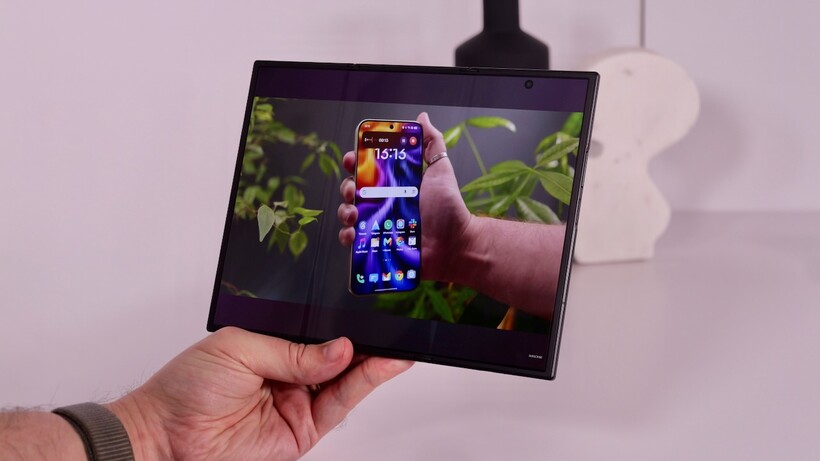
The key difference, as the unofficial moniker suggests, is the shape of the foldable. While Samsung’s regular Z Fold offers a thin and narrow aspect ratio, even with big improvements on this front with the Fold 7, and an almost perfectly 1:1 inner display, the ‘Wide’ Fold is said to be more passport-shaped.
Advertisement
Advertisement
Image Credit (Trusted Reviews)
That’s not a new idea – it was used by the original Oppo Find N, as well as Google’s first-gen Pixel Fold – but it has fallen out of trend in recent times.
Samsung looks to revive it, and the foldable experience will be all the better for it; I’ve long been a fan of the passport-shaped foldable, not only because of the shorter, wider outer panel, but also because the inner screen more closely resembles a regular 4:3 tablet-sized screen.
That should hopefully put an end to apps that, even after all this time, still can’t quite handle the boxy aspect ratio of foldables. With an aspect ratio closer to a tablet or even a smartphone in horizontal orientation, it becomes almost trivial to support, with no major rejigging of the UI required.
If there were a choice between Samsung putting effort into its extremely expensive, not-quite-polished TriFold or the Wide Fold, especially under the new budget constraints, I know which I’d go for.


-Offwhite-Background-SOURCE-Ibex.jpg)

-SOURCE-Unbound.jpg)

-Offwhite-Background-SOURCE-Ibex.jpg)





.webp)















































You must be logged in to post a comment Login