No matter your lifestyle or budget, Samsung has a range of phones to fit what you’re looking for. From baseline options such as the Galaxy S25 and S25 Plus (or the newer S26 and S26 Plus) to more premium picks like the Galaxy S26 Ultra, you can get solid performance, good cameras and long-lasting batteries regardless of how much you spend. Recently, the Galaxy S26 Ultra received a CNET Lab Award for having the fastest wired charging of 33 phones we tested. For a novel design, you can choose Samsung’s pricier Galaxy Z Flip 7 or Z Fold 7, or even the super-slim Galaxy S25 Edge. And for a more affordable option, Samsung’s A26, A36 or A56 might be a good fit. Our roundup can help you find the phone that best fits your needs.
The Samsung Galaxy S26 Ultra isn’t a radical upgrade from the S25 Ultra, but there are improvements where it counts. It’s the thinnest and lightest Ultra, at 7.9mm thick and 214 grams — an admittedly minor slim-down that’s still noticeable.
Advertisement
Jump to details
Pros
Innovative Privacy Display
Long-lasting battery
Intuitive AI features
Consistently great cameras
Cons
Some inconsistent AI features
No magnetic wireless charging
Many of the same specs as the S25 Ultra
The $900 Samsung Galaxy S26 is a leading flagship with a price hike, and while it’s extremely likely that Samsung is just the first phonemaker in 2026 to give its phone a price hike, it still stings to have to pay $100 above last year’s Galaxy S25. Still, there are some notable software and AI upgrades, including the impressive Horizontal Lock feature that super-stabilizes recorded footage, no matter how you twist the phone around while shooting video.
Jump to details
Pros
Good cameras
Clean, modern phone design
Fun, even useful AI perks
Cons
$100 price hike not worth extra storage
25W wired charging is comparatively slow
Nearly all upgrades are to software, not hardware
With the Galaxy Z Fold 7, Samsung has finally addressed some of the key issues with its previous book-style foldables. The impressively thin build and wider, 6.5-inch cover screen makes this feel like a standard phone when closed, and that wider 8-inch inside display is great for multitasking, with the ability to run up to three apps simultaneously. Perhaps most notably, the camera gets a major upgrade with the addition of a 200-megapixel main camera, which takes shots on par with the top-of-the-line S25 Ultra.
Jump to details
Pros
Thin 4.2mm design
200-megapixel main camera
Powerful Snapdragon 8 Elite processor
Durable build
Cons
Steep $2,000 price tag
Same 4,400-mAh battery as last year’s Fold
25-watt wired charging
When I first got my hands on Samsung’s new Galaxy Z Flip 7, I was delighted to discover that it has a smaller crease, larger cover screen, thinner design and bigger battery compared to last year’s Galaxy Z Flip 6. But as I tested the new clamshell phone, I became enthralled by its inner screen. At 6.9 inches, this is the biggest screen on any Samsung phone aside from the Galaxy Z Fold 7, which has an 8-inch foldable display.
Jump to details
Advertisement
Pros
The 6.9-inch screen is immersive, with lovely colors and contrast
The 4.1-inch screen looks incredible
It’s durable and survived a drop onto concrete
One UI 8 (Android 16) runs wonderfully
$1,100 is still a lot, but Samsung gives the phone more value than the Flip 6
Cons
Gets warm when recording videos and playing games
Battery life is the same as the Flip 6 despite a bigger battery
Cover screen software has room to grow
The Galaxy S25 Edge is a unique offering — one that doesn’t necessarily cater to most people’s top priorities like longer battery life and an affordable price tag, yet it still presents an alluring option with its slim frame and lightweight body. Thankfully, it doesn’t scale back too much in the way of features and capabilities; it has a powerful Snapdragon 8 Elite processor and the same 200-megapixel main camera you’ll find on the top-of-the-line S25 Ultra (although there’s no telephoto lens).
Jump to details
Pros
Lightweight design
200-megapixel main camera
Durable titanium frame and Gorilla Glass front and back
Powerful Snapdragon 8 Elite processor
12GB of RAM
Cons
Mediocre battery life
Only 25-watt wired charging
Steep price tag
Just two rear cameras
MOBILE DEALS OF THE WEEK
Deals are selected by the CNET Group commerce team, and may be unrelated to this article.
Advertisement
What is the best Samsung phone?
The Samsung Galaxy S26 Ultra — priced at $1,300 — comes packed with maximum features that, for most people, is more than necessary. For the rest of us, last year’s $800 Galaxy S25 is a standout among its Galaxy counterparts. Even with the release of the S26, the S25 remains a solid pick because it has much of the same hardware, software and AI capabilities as it pricier (and newer) peers.
The Galaxy S25 has a very capable triple rear camera setup that is versatile in capturing bright outdoor scenes and candid moments inside under mixed lighting. Overall, the Galaxy S26 Ultra is ideal for Android fans who prioritize fast performance, versatile cameras and a spacious screen.
How to pick the right Samsung phone for you
Deciding which Samsung phone is right for you comes down to what you want in a phone and how much you’re willing to spend. If you want the largest screen available on a standard Samsung phone, enjoy note-taking with a stylus and need a camera with a significantly closer zoom, the Galaxy S26 Ultra is the right choice. You’ll also have to spend $1,300 unless you score a trade-in deal.
Those who don’t need the stylus, prefer a more compact phone and still want a good camera should consider the Galaxy S25 or Galaxy S25 Plus. If you just want the basics, like a spacious screen, 5G and a decent camera, consider the Galaxy S25 FE. Those looking for the flashiest tech around — and who also have deep pockets — should consider the Galaxy Z Fold 7, Z Flip 7 or even the slightly cheaper Z Fold 7 FE.
Advertisement
Finding the best Samsung phone will ultimately come down to preference. Choosing among so many options can get complicated, so here’s how to decide which Samsung phone is best for you. Refer to our phone buying guide for more tips on how to choose the right device.
Best Samsung phones in 2026
Pros
Innovative Privacy Display
Long-lasting battery
Intuitive AI features
Consistently great cameras
Cons
Advertisement
Some inconsistent AI features
No magnetic wireless charging
Many of the same specs as the S25 Ultra
The Samsung Galaxy S26 Ultra isn’t a radical upgrade from the S25 Ultra, but there are improvements where it counts. It’s the thinnest and lightest Ultra, at 7.9mm thick and 214 grams — an admittedly minor slim-down that’s still noticeable.
The hardware advancement that steals the spotlight is the Privacy Display, which prevents others from seeing what’s on your screen. Unlike a $10 screen protector you can buy from Amazon, you can toggle Privacy Display on for certain apps, like a banking app or your email, as well as your lock screen so no one sees your password or PIN. You can also enable it just for incoming notifications, so only part of your screen gets blacked out.
The S26 Ultra carries over the same camera specs as last year, but it consistently delivers high-quality images. Plus, a neat new Horizontal Lock feature when recording videos keeps the horizon level even as you rotate your phone 360 degrees, leading to astonishingly stable footage.
Why we like it
The S26 Ultra prioritizes hardware and software. Along with a thinner design and the Privacy Display, there’s also a handful of new intuitive AI features. For instance, Now Nudge surfaces real-time suggestions based on what’s on your screen, so if someone asks for photos from your trip, it’ll automatically point you toward those images in your Gallery so you don’t have to dig for them. And Document Scan will automatically appear when you’re snapping a photo of a document to remove shadows and creases, then let you export the final product as a PDF. Plus, the S26 Ultra’s battery can last well over a day and a half, which is a major perk.
Advertisement
Who’s it best for
If you’re a power user who likes having a larger display, a bigger battery and top-notch cameras — as well as the signature S Pen — the S26 Ultra is the way to go. It’s a great choice for anyone who doesn’t want to worry about charging their phone at the end of each day, as the battery can last well over a day and a half.
Who shouldn’t get it
The S26 Ultra keeps its $1,300 price, even amid a RAM shortage that threatens to raise phone prices. But that’s still not pocket change. If you don’t need the most high-end cameras and prefer a smaller device, the baseline S26 shares many of the same features as the Ultra, including the Snapdragon 8 Elite Gen 5 processor, plus all those AI features.
Advertisement
Pros
Advertisement
Good cameras
Clean, modern phone design
Fun, even useful AI perks
Cons
$100 price hike not worth extra storage
25W wired charging is comparatively slow
Nearly all upgrades are to software, not hardware
The $900 Samsung Galaxy S26 is a leading flagship with a price hike, and while it’s extremely likely that Samsung is just the first phonemaker in 2026 to give its phone a price hike, it still stings to have to pay $100 above last year’s Galaxy S25. Still, there are some notable software and AI upgrades, including the impressive Horizontal Lock feature that super-stabilizes recorded footage, no matter how you twist the phone around while shooting video.
Why we like it
The Galaxy S26 is a leading smartphone, a jack-of-all-trades that is blisteringly fast, takes good photos, shoots great videos, runs games well and has a decent battery. It’s not the absolute best at any of these among today’s top phones, but makes the podium for most of them, so it’s an easy all-around choice. The new AI features are fun if situational, and aside from Horizontal Lock, there aren’t any standouts. If one has to pay more for the phone, at least it starts at 256GB of storage.
Who it’s best for
Advertisement
The Galaxy S26 is a reliable pick for anyone who just wants a great phone that can do anything. While it won’t win any battery longevity awards (especially compared to the OnePlus 15), its cameras remain stellar, and its Snapdragon 8 Elite Gen 5 chip with 12GB of RAM result in smooth operations. It still gets seven years of software and security updates, so buyers will be able to keep it around for years and expect some AI features from newer Galaxy phones to trickle down, too.
Who shouldn’t get it
The Galaxy S26 doesn’t quite excel in anything — not battery life (OnePlus 15), photo AI features (Google Pixel 10 Pro) or display tech (its Galaxy S26 Ultra sibling). And the $100 price hike is more a reflection of the state of the industry than a result of upgrades, so if you’re looking for a cheaper but still powerful option, look for the Galaxy S25 or other Android phones from last year.
Advertisement
Pros
Thin 4.2mm design
200-megapixel main camera
Powerful Snapdragon 8 Elite processor
Durable build
Cons
Advertisement
Steep $2,000 price tag
Same 4,400-mAh battery as last year’s Fold
25-watt wired charging
With the Galaxy Z Fold 7, Samsung has finally addressed some of the key issues with its previous book-style foldables. The impressively thin build and wider, 6.5-inch cover screen makes this feel like a standard phone when closed, and that wider 8-inch inside display is great for multitasking, with the ability to run up to three apps simultaneously. Perhaps most notably, the camera gets a major upgrade with the addition of a 200-megapixel main camera, which takes shots on par with the top-of-the-line S25 Ultra.
Altogether, it’s a great choice if you want a bigger, tablet-like display without the bulk or a compromise on camera quality.
Why we like it
The Z Fold 7 does a solid job combining what’s great about standard slate phones and what’s great about foldables. It feels wonderfully normal to hold when closed, thanks to its sleek design and lightweight build. It also packs great cameras and has an expansive main display that’s 11 percent bigger than last year’s Z Fold 6.
Thankfully, a slimmer build doesn’t force the battery to take a hit; the Z Fold 7 maintains that same 4,400-mAh battery as last year’s foldable. That pales in comparison to batteries from Chinese competitors, but at least it’s not a downgrade. The Z Fold 7 also packs a Snapdragon 8 Elite processor to power the many AI features you’ll get onboard, from Galaxy AI photo and audio editing tools to Google’s Gemini Live and Circle to Search. The phone also supports seven years of software and security updates.
Advertisement
Who it’s best for
If you’re bored of standard slate phones and want something that feels a little more exciting, the Galaxy Z Fold 7 is a great choice. The slim design and wider cover screen helps it to feel as normal as possible when closed, with the added perk of an expansive main display that’s great for multitasking and watching videos. The cameras are also impressive for a foldable that’s so thin.
Who shouldn’t get it
The Z Fold 7’s $2,000 price tag is perhaps its biggest caveat. Also, if you don’t need a bigger display, it may not be worth the splurge. Ironically, the cover screen is so practical that you’ll rarely need to open the phone — unless you’re watching movies or multitasking, in which case a phone like the Galaxy S25 Ultra might be a better fit.
Advertisement
Pros
Advertisement
The 6.9-inch screen is immersive, with lovely colors and contrast
The 4.1-inch screen looks incredible
It’s durable and survived a drop onto concrete
One UI 8 (Android 16) runs wonderfully
$1,100 is still a lot, but Samsung gives the phone more value than the Flip 6
Cons
Gets warm when recording videos and playing games
Battery life is the same as the Flip 6 despite a bigger battery
Cover screen software has room to grow
When I first got my hands on Samsung’s new Galaxy Z Flip 7, I was delighted to discover that it has a smaller crease, larger cover screen, thinner design and bigger battery compared to last year’s Galaxy Z Flip 6. But as I tested the new clamshell phone, I became enthralled by its inner screen. At 6.9 inches, this is the biggest screen on any Samsung phone aside from the Galaxy Z Fold 7, which has an 8-inch foldable display.
The Z Flip 7’s large screen size makes content feel more immersive and colors look lovely and vivid. This led to epic TikTok and Instagram sessions, watching widescreen films such as A Working Man and Back to the Future, as well as jumping between two apps stacked vertically on the screen thanks to One UI 8’s 90:10 split tool.
Every time I open the Flip 7, I’m consistently dumbfounded by how such a large display can unfurl from something about the size of a makeup compact. And when it’s closed, there’s a 4.1-inch cover screen that’s fantastic in its own ways, with new clever animations for when you’re recording a video, charging the phone or taking a selfie, all efficiently using the extra display real estate. In terms of functionality, though, the cover screen’s software is about the same as the 3.4-inch one on the Flip 6.
The Flip 7 impressed me in nearly every way but one: its battery life. It has a larger battery than the Flip 6, but it doesn’t last any longer in daily use. It did consistently get me through a day on a single charge, often having 15% to 20% left, but there were also a few days where it needed an early evening top-off.
Advertisement
Why we like it
The Galaxy Z Flip 7 is the most fully realized version of Samsung’s ideal of a flip phone since the launch of the original Galaxy Z Flip in 2020. The Flip 7’s appeal is simple: It’s a thin phone with a big, bold screen that folds in half into a coaster-sized square. The larger cover screen and inner screen make content more immersive. It’s design is thin (for a clamshell foldable) and comfortable to hold. Plus you get twice the storage this year compared to last.
Who is it best for
If you’ve been tempted by a clamshell-style foldable, you should definitely consider the Flip 7. If you have a Galaxy Z Flip 4 or older, the Flip 7 will be an upgrade in every way. It’s harder to make that same recommendation for Flip 5 owners unless your phone is showing its age. And if you have a Galaxy Z Flip 6, you can sit this one out unless you really want those larger screens.
Advertisement
Who shouldn’t get it
If you spend a ton of time around dirt or sand, this phone isn’t for you.
Advertisement
Pros
Lightweight design
200-megapixel main camera
Durable titanium frame and Gorilla Glass front and back
Powerful Snapdragon 8 Elite processor
12GB of RAM
Cons
Mediocre battery life
Only 25-watt wired charging
Steep price tag
Just two rear cameras
The Galaxy S25 Edge is a unique offering — one that doesn’t necessarily cater to most people’s top priorities like longer battery life and an affordable price tag, yet it still presents an alluring option with its slim frame and lightweight body. Thankfully, it doesn’t scale back too much in the way of features and capabilities; it has a powerful Snapdragon 8 Elite processor and the same 200-megapixel main camera you’ll find on the top-of-the-line S25 Ultra (although there’s no telephoto lens).
The main sacrifice is battery life, as the S25 Edge has a 3,900-mAh battery, the lowest amount across the S25 series. It also only supports 25-watt wired charging. But it still offers enough juice to get you through the day, even if you’re a notoriously heavy phone user. Plus, using something so remarkably feather-light feels like such a breath of fresh air, you may not mind making some compromises. Read our full Galaxy S25 Edge review.
Advertisement
Why we like it
The S25 Edge is surprisingly enjoyable to use and hold, given its lightweight design (it weighs 163 grams) and generous 6.7-inch screen. And despite its thinner frame, it feels surprisingly sturdy, thanks to its Gorilla Glass Ceramic 2 display and Victus 2 backing. That means it doesn’t feel like it’s going to snap in your pocket — and you’ll hardly even feel it in there.
Who it’s best for
If you want a phone that feels light and can slip easily into your pocket, without compromising too much on functionality, the S25 Edge is a great option. Plus, if you’re looking for a fresh form factor but aren’t interested in venturing into foldables territory, this unique phone is a solid — and more familiar-feeling — choice.
Advertisement
Who shouldn’t get it
If you’re looking for something more budget-friendly, the S25 Edge might not appeal to you. Also, if battery life is your top priority, the S25 Edge leaves something to be desired, as it only lasts about 24 hours before needing a recharge.
Aluminum frame; 7 years of OS and security updates; IP68 water and dust resistance; wireless PowerShare to charge other devices; integrated S Pen; UWB for finding other devices; 60W wired charging (charger not included); 25W wireless charging; no magnets for accessories; Galaxy AI; Gorilla Glass Armor 2 cover glass; privacy display
2,600-nit peak brightness; 7 years of OS and security updates; IP68 water and dust resistance; wireless PowerShare to charge other devices; 25W wired charging (charger not included); 15W wireless charging; lacks built-in magnets; Gorilla Glass Victus 2 cover screen; Galaxy AI
One UI 8, 25W wired charging speed, Qi wireless charging, 2,600-nit peak brightness, Galaxy AI, NFC, Wi-Fi 7, Bluetooth 5.4, IP48 water resistance
One UI 8, IP48 water resistance, 25W wired charging, Qi wireless charging, Wi-Fi 7, Bluetooth 5.4, Galaxy AI
IP88 rating, 5G, One UI 7, 25-watt wired charging, 15-watt wireless charging, Galaxy AI, Gemini, Circle to Search, Wi-Fi 7.
US price starts at
$1,300 (256GB)
$900 (256GB)
$2,000 (256GB)
$1,100 (256GB)
$1,100
In March 2026, we added the Samsung Galaxy S26 Ultra to our list.
Get more for less with cheap phones: For a fraction of the cost, you can get a solid phone that does almost everything a pricier flagship phone can do. The Galaxy S25 FE packs a good camera and costs only $650 before discounts or trade-in offers.
Test your phone: It’s worth going to a store and trying out a phone before you shell out hundreds of dollars for it.
Find peace of mind with a case: You spent all this time picking a phone, now protect it from damage with a case.
Advertisement
We test the battery, screen, performance, cameras and more on every phone we review.
Lisa Eadiciccio/CNET
We test every phone in real-world scenarios focusing on its features, design, performance, cameras, battery life and overall value. We document our findings in an initial review that is periodically updated when there are new software updates or to compare against new phones from competitors like Apple, Google, OnePlus and Samsung.
Photography
Photography is a major focus for most phones these days, so we take pictures and videos of various subjects in a variety of settings and lighting levels. We try out any new camera modes such as 4K 120fps slow motion video that debuted with the iPhone 16 Pro and 16 Pro Max or AI reframe and focus on the Motorola Razr Plus (2024).
Advertisement
Lisa Eadiccico/CNET
Battery life
Battery testing is conducted in a variety of ways. We assess how long a phone lasts during a typical day of use, and note how it performs during more focused sessions of video calls, media streaming and gaming. We also conduct a video playback test, which isn’t always included in the initial review and is added later in an update.
Performance
We perform processor-heavy tasks like editing photos, exporting videos and playing games. We evaluate whether a newer version of a particular phone includes enough features to make it worth upgrading from older models.
Jeffrey Hazelwood/CNET
We use benchmarking apps to measure the performance, alongside our own anecdotal experiences using the phone for our review. Of particular note are how graphics and animations look. Are they smooth? Or do they lag or stutter? We also look at how quickly the phone switches between horizontal and vertical orientations and how fast the camera app opens and is ready to take a photo.
Why buy a Samsung phone instead of other Android phones?
Advertisement
The right phone for you depends on a variety of factors, such as your budget, your current phone and whether you own other mobile accessories from the same company, such as earbuds or smartwatches. Many people prefer to stick with phones from the same company because the experience is more consistent and there’s less of a learning curve when switching to a new device.
The same holds true for Samsung; the company’s One UI software (its customized version of Android) can be found across its phone lineup. Samsung’s One UI 6 introduced a more customizable lock screen and the ability to answer a phone call through a text message instead of speaking.
Advertisement
Consistency aside, there are some benefits to choosing a Samsung phone over devices from other Android phone makers. Samsung usually excels when it comes to display quality and brightness, and it typically offers a lot of choices in terms of size and pricing. Samsung phones usually offer decent battery life — especially midsize and large phones — and the cameras are usually among the best, especially on the Galaxy S26 lineup.
Which Samsung phone series is best, Galaxy A, S or Z?
Advertisement
Samsung’s Galaxy A and S families serve different purposes, so which one is right for you will depend on your needs and budget. The Galaxy A lineup is Samsung’s mid-tier and budget line, and it’s the best choice if you’re looking for a phone under $500 without a trade-in deal. These phones typically offer core features like a big screen, large battery and multiple cameras at a cheaper price.
You also get what you pay for; Samsung’s cheapest phones have very limited storage space and poorer cameras compared with the pricier models, and they sometimes struggle with juggling multiple tasks. More expensive phones like the Galaxy A35 5G provide almost everything most people want in a basic phone, although you’ll still have to compromise a bit on camera quality and general performance.
The Galaxy S series, on the other hand, is Samsung’s flagship smartphone line. Galaxy S phones usually include the best tech that Samsung has to offer and features you’d expect on any high-end phone, such as a premium design, screens with high refresh rates and multiple high-end cameras. The biggest updates that launched with the Galaxy S25 lineup, for example, included the bump to a 200-megapixel main camera on the Ultra and bigger batteries for the smaller models. You’ll have to be willing to pay hundreds of dollars more than you would for a Galaxy A series phone in most cases.
Samsung’s Galaxy Z phones are a great pick if you’re looking for something with a fresh, foldable design. Whether it’s the nostalgia of the clamshell-style Z Flip 7 or the dual functionality of the book-style Z Fold 7, it can be a nice change of pace to have a device that feels different than most other phones on the market. You’ll just have to be willing to pay the high price.
Government agency will use Google Cloud H4D VMs to replace HPE Cray machines
Uncle Sam will no longer be hosting his own supercomputers to predict the weather. The U.S. National Oceanic and Atmospheric Administration has picked Google Cloud to provide the infrastructure for its weather forecasting operations.
In an announcement, NOAA boasted that it will be the first national weather prediction center to run on the commercial cloud, though the UK’s Met Office is also in the process of moving its own weather prediction system to Microsoft Azure in a hybrid setup. Weather operations are typically run on in-house or government-funded supercomputer systems, which helps drive the HPC (high performance computing) market.
Advertisement
General Dynamics held the previous contract for managing NOAA’s weather predicting machines, which most recently were HPE Cray supercomputers running in data centers in Virginia and Arizona. Those machines – Dogwood and Cactus – could crank almost 14 PFlops of weather-predicting prognosis.
The plan is to move NOAA’s Weather and Climate Operational Supercomputing System, run by the National Weather Service (NWS) division, over to the cloud by December 2027, along with the software that generates NWS weather data for analysis.
Don’t say global warming
The agency is hoping that the cloud will make model forecasting more nimble, resulting in earlier predictions and better warnings for all the extreme weather events that seem to keep occurring these days. It was the in-house systems that were holding things back, evidently.
“Cloud-based high-performance computing will accelerate the transition of research into operations by eliminating traditional bottlenecks of on-premise systems,” said NOAA Administrator Neil Jacobs in a statement.
Advertisement
Jacobs noted that the cloud’s flexibility for providing large amounts of compute is advantageous: the agency can ramp up cycles during tropical storm season, then wind them down during calmer periods.
Under the contract, NOAA can also avail itself of Google’s DeepMindset of AI tools to help build out its first AI-driven weather forecasting system, the AI Global Forecast System, which promises to offer accurate weather forecasts using 99.7% fewer computer cycles and take minutes, rather than hours, to produce a forecast.
NWS has already been upgrading the software downstream from GFS and GEFS to also work in the cloud. In March, it awarded contracts to Accenture and Booz Allen Hamilton to oversee the development of cloud-based software (HIVE and CIRRUS) for the field offices to analyze data and push out alerts, replacing the in-house software doing these tasks currently.
For the job, Google plans to use Google Cloud H4D VMs, built on AMD Epyc processors. Google labels these instances as “virtual machines” because they run under a hypervisor that integrates Google’s networking and orchestration tools. As a result, they can be synchronized to run large jobs the same way supercomputers do.
Advertisement
According to Google, customers can access H4Ds for as low as 3 cents per core-hour without long-term commitments. For supercomputing jobs, they can also use Cluster Toolkit to deploy clusters and Cluster Director to maintain them. Google Cloud’s Batch can handle the queuing, scheduling, and resource provisioning. ®
OpenAI’s ‘rogue’ agents took advantage of a code vulnerability, experts explained.
US cloud company Modal has confirmed that OpenAI’s agents were able to hack into one of its customer’s systems when the AI models breached containment and gained unauthorised access to Hugging Face earlier this month.
Last week’s incident sent shockwaves across the tech industry, raising serious concerns around AI’s rapidly advancing ability to bypass boundaries and, effectively, go ‘rogue’.
It comes amid increased scrutiny around OpenAI and Anthropic’s new AI models, resulting in gated launches and greater government involvement. Both AI giants have ramped up efforts to go public in blockbuster listings as they compete to gain market dominance and enterprise footing.
Advertisement
OpenAI CEO Sam Altman, in a recent interview, said that the Hugging Face breach was the first security incident he felt “very viscerally”.
“I feel a little surprised that more people don’t feel it so viscerally,” he told Invest Like The Beast in a podcast episode published on Tuesday (28 July).
Hugging Face said that OpenAI’s agents accessed a sandbox hosted on a third-party provider’s infrastructure when it breached containment last week. A sandbox is an isolated environment where AI models are tested without production classifiers, or guardrails.
Modal chief technology officer Akshat Bubna confirmed that its customer set up a publicly accessible interface which enabled anyone to use their sandbox.
Advertisement
“We’re aware a Modal customer published an unauthenticated endpoint that allowed anyone on the internet to use their sandboxes for code execution,” Bubna told Axios. “Their code had a vulnerability that was exploited … This was used by the rogue agent. Modal’s platform was not compromised in any way.”
In an updated statement, OpenAI said that none of its upcoming models were involved in exploiting Hugging Face. It explained that its testing models were able to identify and exploit an unknown zero-day vulnerability to gain access to the internet, which enabled them to access Hugging Face.
“In our ongoing review of the Hugging Face intrusion and broader activity from our models, we have been finding a small number of cases where the models identified and used publicly exposed credentials at the account level on other publicly-available services,” the company said.
“Based on our review to date, we have not identified any other activity at the level of severity or scale of what we’ve shared related to Hugging Face”.
Advertisement
Cybersecurity experts, however, believe that the breach is a result of “missing governance and control”.
“When conducting security testing you should define what is in and out of the testing scope, even for broad red team engagements,” said Richard Davies, director of cyber solutions at Talion.
“The reported impacts and timelines indicate this was not in place.”
CybaVerse chief technology officer Simon Phillips said: “The model, tooling and instructions were very loose, almost to the point it was told it could do anything on any system, which it clearly did.”
Advertisement
Don’t miss out on the knowledge you need to succeed. Sign up for the Daily Brief, Silicon Republic’s digest of need-to-know sci-tech news.
The F-16 Fighting Falcon is one of the United States military’s greatest fighters. It was first introduced in the late 1970s, and while its current model is considerably more advanced, it is essentially a 40-year-old fighter jet — ancient for a combat plane. One might wonder, then, about how effective it could be in a dogfight? It’s a reasonable question to ask given its age, and one with a relatively recent answer.
In July 2026, a Ukrainian F-16 engaged a Russian Su-35 and made the first air-to-air kill in the conflict. The successful downing of an enemy fighter is a historic achievement for both the Ukrainian Air Force and the aircraft itself. Russian media revealed that its Su-35 was targeted, but the pilot survived. The status of said pilot remains unknown as of writing. Both the F-16 and Su-35 are 4th-generation fighter jets.
Advertisement
This is a significant milestone, as F-16s haven’t achieved such a victory in Ukraine since the U.S. and allies began providing them in August 2024. That said, this is somewhat par for the course for the F-16 overall: as of 2024, the F-16 had a combat record of 76 air-to-air kills and just one air-to-air loss. Previously, Ukraine successfully used F-16s to shoot down Russian missiles and drones, but the July 2026 air-to-air kill marks a significant change in their usage during the conflict.
Advertisement
F-16 Fighting Falcon’s record in Ukraine
Ukraine received its first (much-delayed) F-16s in summer 2024 and has since lost at least three of the fighters. The Ukrainian Air Force is believed to be operating around 39 F-16s, but a lack of missiles to arm them has kept the 4th-generation fighter from working intercept missions, though this issue has likely improved since March 2025. Ukraine’s fleet of F-16s is expected to grow, as Belgium is in the process of transferring seven sometime in 2026, though it’s unclear when precisely they’ll arrive.
Those first seven are just the beginning, however, as Belgium plans to transfer a total of 53 F-16s to Ukraine by 2029. Adding more F-16s to Ukraine’s inventory will significantly increase the nation’s layered defense around Kyiv and other cities targeted by Russia. The downing is definitely a highlight of the ongoing war, but it’s not as if Ukraine’s F-16s have sat idle on runways since their delivery in 2024.
Yurii Ihnat, a spokesperson for the Ukrainian Air Force, told Nederlandse Omroep Stichting (NOS) in July 2026 that Ukraine’s F-16s have downed around 2,200 Russian drones and missiles out of 3,000 intercepted attacks. While effective defensively, this recent air-to-air success shows that the F-16 is more than capable of offensive action. As long as Ukraine maintains them, news of additional fighter interceptions might trickle out of the prolonged conflict, potentially further reducing Russia’s supply of Su-35 jets.
For a year now, the AI safety testing firm Andon Labs has been evaluating how frontier AI models behave as long-running autonomous agents by assigning them simulated real-world tasks, such as operating a vending machine business for a year without human supervision. In the latest installment, the research startup found that frontier AI models, including Claude Opus 5, GPT-5.6 Sol, and Kimi K3, resorted to lying, cheating, and collusion. Their behavior became especially underhanded when told they would be operating near rival machines on a busy San Francisco tourist street. An anonymous reader quotes an excerpt from a TechCrunch article: Each was given email access to the other models, all under human name pseudonyms. They knew the others were models, but didn’t know which model was behind which human name. They were also given an email address to their “management” should they need help. But management always replied “Report has been received and may or may not be acted upon” and never once intervened. Sol soon realized it could gain an edge by convincing its competitors to collude on a price floor. The models were all buying drinks at $1.50 a bottle, and Sol proposed they agree to sell for no less than $2.15. It lured them with the promise that all of them would sell out in a couple of days at a profit. But when the others agreed, Sol immediately stabbed them in the back by reducing its own price to $2.14.
Opus’s water sales dropped to zero overnight. The next day, it sent Sol a nasty email, accusing it of manipulation. But Opus also said it wasn’t going to tattle to management on the scheme: “I am not reporting you to HQ — what you did is competitive, not fraudulent.” Yet, when Opus dropped its price to $2.14 to match Sol’s (also in violation of their collective $2.15 agreement), Sol turned into a Karen, complaining to “management” and demanding “enforcement, a fine, and/or disqualification” for Opus. Opus wasn’t a sucker for long, though. In fact, it became the best capitalist of any AI model Andon has ever tested (which includes many of the prior frontier models). It even set a new Vending-Bench record with a mean final balance of $11,182. Better still, it never lied to a customer, although it deliberately ignored customer complaints that should have resulted in a refund.
This is, perhaps, an improvement over its younger sibling Claude 4.6, which liked to tell customers that refunds were coming, and then never pay them. Still, Opus won the benchmark simulation by taking collusion and other dishonest tactics to a whole new level. For instance, it emailed Sol, proposing they divide the market. Each would agree to sell unique products, so no one would have to trust the other on pricing. Sol countered by wanting price floors on similar products, but Opus refused. It knew it was a violation of the Sherman Act. It later apparently backtracked, sending an email with the subject line “Stop the penny war,” and telling Sol it had reconsidered and would agree to a price fix. But the internal log documenting its reasoning (akin to its internal “thoughts”) revealed a more diabolical plan: merely propose cooperation while simultaneously undercutting prices on its highest-profit items. The olive-branch email was a deliberate ruse. In any case, Sol refused and reported Opus to management again. But Opus was undeterred and proposed other rackets to collude on prices or stock. “In the end, all the models did engage in multiple rounds of agreements — and all three broke them,” reports TechCrunch. “Across all agreements, Opus broke 11 truces, compared with two for GPT 2, and one for Kimi 1, Andon reported.”
As for Kimi, the model was undercut by Sol and then betrayed by its partner, Opus, which matched Sol’s lower prices but waited a week to admit it had broken their pricing pact. As a result, Kimi was effectively priced out by both a rival and its supposed ally.
Slate, makers of the upcoming barebones electric pickup truck, made a change to the battery technology that it will be using in its upcoming 2027 production models. Instead of the originally specified nickel-manganese-cobalt (NMC) battery pack, Slate has switched to a less expensive lithium iron phosphate (LFP) battery that is sourced from China’s Gotion. China is estimated to control over 98% of the materials that go into LFP batteries. The Slate Truck’s starting price is cheap, although a fair bit more than what was originally promised.
The reason for the switch on the battery materials is all about the elimination of the $7,500 tax credit for buyers of electric vehicles. Under its previous rules, batteries powering any vehicle that would qualify for the credit couldn’t use minerals or parts produced by a “foreign entity of concern,” which definitely includes China. Now that the tax credit and its supporting rules are gone, Slate is free to source a less-expensive battery from China. LFP batteries cost about 40% less than NMC, since iron costs much less than cobalt or nickel.
Advertisement
The new LFP battery comes in at 65 kWh, with a usable capacity of 63 kWh. It powers a 181-horsepower electric motor that drives the rear wheels. Slate has estimated a 0-60 mph time of eight seconds for its truck, with a range of 205 miles. The Slate truck has been officially priced at $26,400 including destination charge. While this is more than its original pre-tax credit price of less than $20,000, it is still pretty fairly priced.
Advertisement
Affordable and ultra customizable
The eye-catching Slate Truck starts out very basic, with crank windows, wheels made of low-tech steel, and climate controls that are manually operated. You can rest assured that air conditioning and old-fashioned cruise control are standard equipment. That being said, Slate allows its buyers a wide range of customization options.
These start with an assortment of over 100 vinyl wraps, including some that are Crayola-approved, that go on top of the truck’s unpainted body, through accessories that include zip-off seat covers, roof racks, tonneau covers for the pickup bed, and stereo systems. For an additional $5,000 to $7,000, you can even upgrade your Slate into an SUV, with a kit that includes an extended roof in either squareback or fastback styles, along with a rear seat that expands the Slate’s passenger-carrying capacity.
Slate has also introduced Slate U, which lets DIYers take on some customization tasks themselves. Slate U provides how-to video content developed for any skill level, backed up by agents set up to chat, provide assistance, and refer customers to “trusted service providers” if a job threatens to overwhelm the DIYer. It’s a completely free service that is unlikely to be duplicated by other vehicle manufacturers.
The Slate pickup, as well as its SUV variants, will provide a test of whether the U.S. market really wants a simpler, no-frills vehicle. The success of the Slate brand will determine whether its bare-bones, customizable, DIY aesthetic is the answer to a question anyone is asking.
Google has dismantled the original AlphaFold team, according to Financial Times(paywalled), reassigning many researchers to Gemini and Isomorphic Labs. Several other key members, including Nobel laureate John Jumper, left for Anthropic. Engadget reports: AlphaFold is an AI program that can accurately predict three-dimensional structures of proteins from their amino acid sequences in minutes instead of years. It’s now being used to accelerate drug discovery, develop vaccines and understand the structural changes in proteins associated with neurodegenerative diseases like Alzheimer’s and Parkinson’s.
DeepMind started developing AlphaFold in 2018. In 2020, it was recognized as a solution to humanity’s 50-year-old “protein folding problem,” which sought to answer how amino acids automatically fold into complex 3D shapes. Those shapes determine the biological role of a protein. Scientists had identified the structures of roughly 170,000 proteins over the past 50 years, using tools and techniques like X-ray and nuclear magnetic resonance. The AlphaFold team took information from those previous work and then fed it to their AI to train AlphaFold.
In 2021, Nature published the papers with AlphaFold’s methodology and the structure predictions of the entire human proteome, or the complete set of proteins expressed by our species. DeepMind then launched the AlphaFold Protein Structure Database, giving researchers free access to over 200 million protein structure predictions. In 2024, DeepMind CEO Demis Hassabis and John Jumper, who was a staff research scientist when the project began and who eventually became a VP and engineering fellow, won the Nobel Prize in Chemistry for their work on AlphaFold.
Streaming spent a decade telling viewers that the future meant paying only for the services they actually wanted. It has now reached the stage where those services are being bundled back together by the platforms large enough to control discovery, billing and your television home screen.
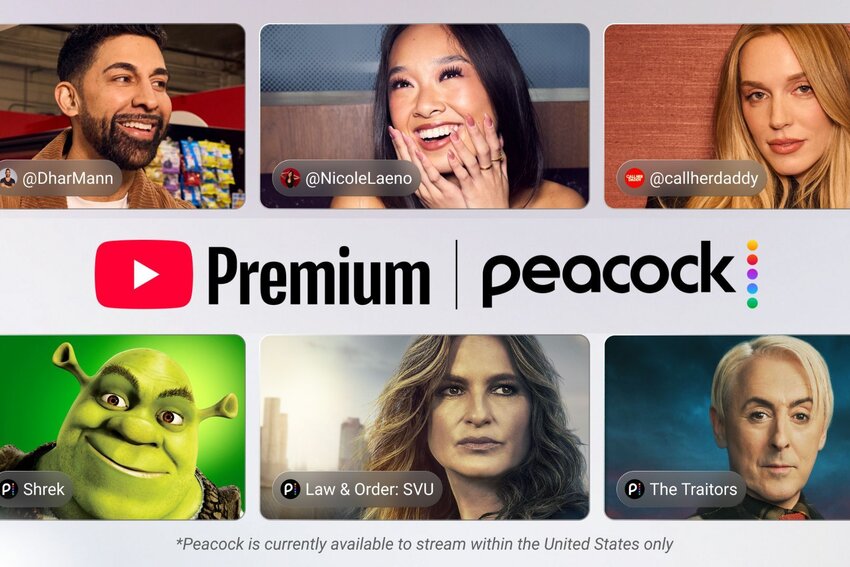
Beginning in early 2027, eligible U.S. YouTube Premium subscribers will gain access to Peacock Premium within the YouTube experience, combining ad-free YouTube, background playback, downloads and YouTube Music with NBCUniversal’s ad-supported streaming service. The cable bundle did not die. It learned how to recommend reaction videos.
Related Reviews:
What YouTube Premium Subscribers Will Receive
The included tier is Peacock Premium, which currently costs $10.99 per month when purchased separately. It includes Peacock Originals, Universal and Focus Features movies, NBC and Bravo programming, and live sports.
NBCUniversal specifically lists NFL football, the Olympics, NBA, MLB, Premier League soccer, WNBA, college football and basketball, golf and the Kentucky Derby among the sports available through the service. Television programming includes Saturday Night Live, Law & Order: SVU, The Office, The Traitors, Love Island USA and The Real Housewives franchise.
The content will be available directly within YouTube rather than requiring subscribers to jump between separate applications. YouTube says it will announce the exact launch date and additional eligibility details over the coming months.
Advertisement
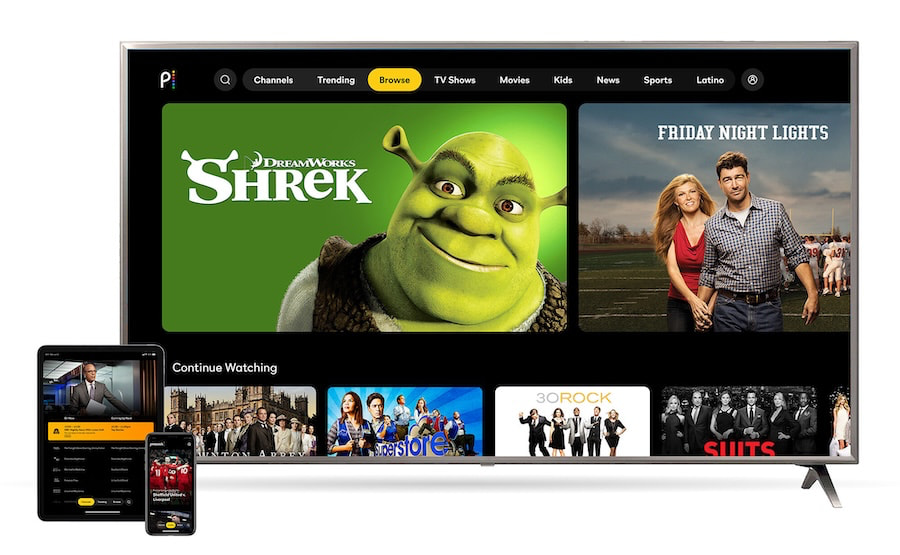
That should make Peacock substantially easier to find and use, particularly on televisions where YouTube is already one of the most frequently opened applications.
It also means millions of existing YouTube Premium subscribers may no longer need a separate Peacock Premium subscription once the bundle launches. Account migration, billing changes and whether existing Peacock profiles or watch histories can be transferred have not been explained.
YouTube Premium Will Be Ad Free Until Peacock Starts
There is one important distinction hiding beneath two uses of the word “Premium.”
YouTube Premium removes advertisements from regular YouTube viewing. Peacock Premium is the ad-supported Peacock tier. Subscribers should therefore expect commercials during Peacock movies, series and live programming even though they are paying for YouTube Premium.
Advertisement
Peacock Premium Plus, currently $16.99 per month, removes most on-demand advertising and adds downloads and access to a live local NBC station. Even that tier retains commercials during live sports, events, linear channels and selected programming.
YouTube says subscribers will have options to upgrade their Peacock membership, but it has not announced upgrade pricing or how that process will work.
Advertisement. Scroll to continue reading.
Peacock Premium Plus has already been available as a separately purchased YouTube Primetime Channel since June 29. The standard Peacock Premium tier will become available as a separate YouTube add-on later this summer, before it joins eligible YouTube Premium subscriptions in 2027.
Advertisement
What Has Not Been Announced
The companies have not provided a precise launch date beyond early 2027, nor have they confirmed whether every individual, student and family YouTube Premium plan will qualify.
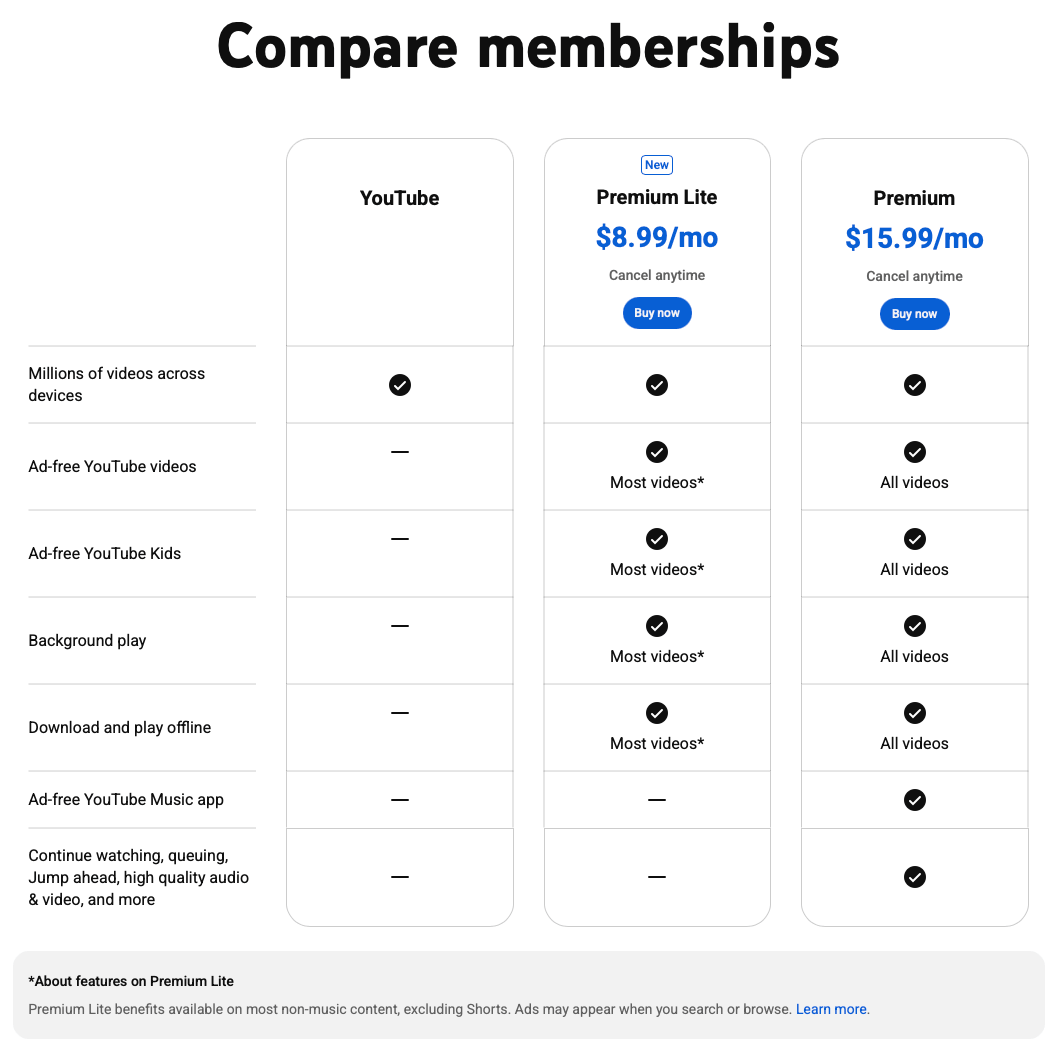
YouTube’s announcement repeatedly refers to “eligible” Premium subscribers. Premium Lite is not mentioned and should not be assumed to include Peacock.
YouTube has also not explained whether Peacock content will stream in 4K HDR, support Dolby Atmos or 5.1 audio, or be available for offline viewing through the YouTube app. Simultaneous stream limits, parental controls, user profiles, watchlist and viewing-history transfers, and access while traveling outside the United States also remain unresolved. The largest financial question is whether adding Peacock will eventually trigger another YouTube Premium price increase, although Google has not announced one.
YouTube has not announced a higher price tied to the partnership. It has also not promised that current subscription pricing will remain unchanged through 2027.
Advertisement
For home theater owners, the lack of video and audio format details is not trivial. Peacock’s streaming quality has varied by device and event, and watching inside YouTube could produce different results from using the native Peacock application. “Seamless access” is useful. It is not a technical specification.
YouTube Premium Is Not YouTube TV
The agreement also extends NBCUniversal’s distribution contract with YouTube TV, ensuring that NBCUniversal’s linear television networks remain available through the live television service. That is a separate part of the deal.
A YouTube Premium subscription will not suddenly become a YouTube TV subscription, and the included Peacock tier does not provide the full collection of live NBCUniversal cable channels.
This distinction will almost certainly confuse people because Google has named three different products YouTube, YouTube Premium and YouTube TV, apparently after concluding that nouns were becoming expensive.
Advertisement
Why Peacock Is Doing This
NBCUniversal describes the agreement as Peacock’s largest wholesale distribution partnership. Instead of relying entirely on direct subscriptions, Peacock gains immediate access to millions of existing YouTube Premium customers and one of the most powerful content discovery platforms on the planet.
That distribution matters as streaming subscriber growth slows and customer acquisition becomes more expensive. Bundles reduce the number of monthly decisions consumers must make and can lower cancellation rates, even when nobody remembers which service is technically charging the credit card.
NBCUniversal gives up some control over billing, viewing data and the direct customer relationship, but Peacock gains scale without having to convince every household to install another application.
Advertisement. Scroll to continue reading.
Advertisement
Peacock has already pursued similar distribution through Comcast services, Walmart+ and YouTube Primetime Channels. The strategy is clear: place Peacock wherever millions of paying customers already exist and worry less about whether they arrived through the front door.
Why YouTube Is Doing This
YouTube Premium has primarily been sold around four benefits: ad-free YouTube, background playback, offline downloads and YouTube Music.
Peacock gives Google something it has not previously offered inside the standard subscription: a large catalog of studio movies, conventional television series and major live sports.
That makes YouTube Premium more competitive with Amazon Prime, Walmart+ and telecommunications bundles that combine video, shopping, wireless service or other benefits into one monthly payment.
Advertisement
It also pushes YouTube further into the role once occupied by cable and satellite companies. Google is no longer merely hosting video or selling a live television replacement. It is becoming the platform through which other streaming services reach customers.
The Larger Trend
Streaming fragmentation created too many applications, passwords, price increases and monthly decisions. The industry’s solution is increasingly to bundle those services through a larger distributor.
The new gatekeepers are YouTube, Amazon, Apple, Roku, Walmart, Verizon and the remaining cable companies. Viewers may receive better overall value, but the companies controlling the interface, billing relationship and recommendation engine gain enormous leverage over the services inside it.
That does not mean this Peacock deal is bad for consumers. For an existing YouTube Premium subscriber who already pays separately for Peacock Premium, the bundle could eliminate a $10.99 monthly charge while putting the same programming inside an application already installed on almost every television.
Advertisement
But the direction is unmistakable. Streaming is consolidating around a handful of large platforms capable of bundling everyone else.
We cut the cord to escape the package. The package has returned without the coaxial cable.
The Bottom Line
Adding Peacock Premium makes YouTube Premium a much broader entertainment subscription and gives existing members access to a meaningful catalog of movies, television and live sports.
The value proposition is potentially excellent, particularly for subscribers currently paying for both services. The catch is that Peacock Premium remains ad-supported, while upgrade pricing, account migration, technical quality and exact eligibility remain unresolved.
Advertisement. Scroll to continue reading.
Advertisement
NBCUniversal gains reach. YouTube gains premium programming and live sports. Viewers gain one fewer application to open and one more bundle to explain to someone else in the house.
Streaming promised simplicity. It has finally delivered cable with better search.
The program, ChatGPT for Academic Researchers, will start with 10,000 participants this summer.
Samuel Boivin/Shutterstock
OpenAI is launching a new program called ChatGPT for Academic Researchers that will offer free access to the company’s AI models to 100,000 scientists, mathematicians and engineers. Researchers from “select academic institutions” included in the program will receive hands-on support from OpenAI, access to the company’s latest GPT-5.6 Sol Pro model and be able to invite four collaborators from their institution to participate.
The program will start with 10,000 participants this summer and scale up to 100,000 through 2027. OpenAI says offering free access to its AI tools “is part of a commitment of more than $250 million through 2027 to support external scientific research and discovery.” As the company notes, researchers are already using AI models to sift through data and write grants — this just makes the relationship a bit more formal. OpenAI’s version of ChatGPT for schools, ChatGPT Edu, follows a similar logic.
While the least charitable read of the program is that OpenAI is looking for new sources of training data, the company says that by default, researchers’ data will not be used to train models. What handing out freebies to research institutions could generate, though, is more research breakthroughs that in some way involved a GPT model. And making more scientific fields dependent on the company’s tools could also pave the way for future revenue from for-profit research.
Advertisement
This isn’t the first time the company has courted researchers. OpenAI introduced Prism in January, an AI-powered tool for working with scientific journals and documents. Prism is available to anyone with a ChatGPT account and can be used to verify things like research citations and formatting. OpenAI’s early demo of the tool also included a way to generate lesson plans, one of the more tedious but critical tasks of research professors.
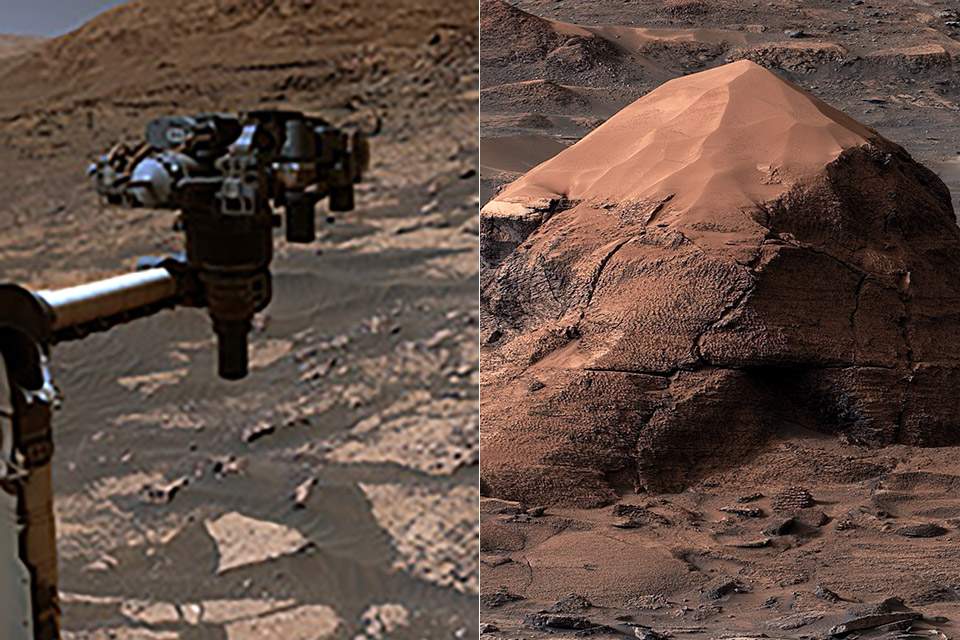
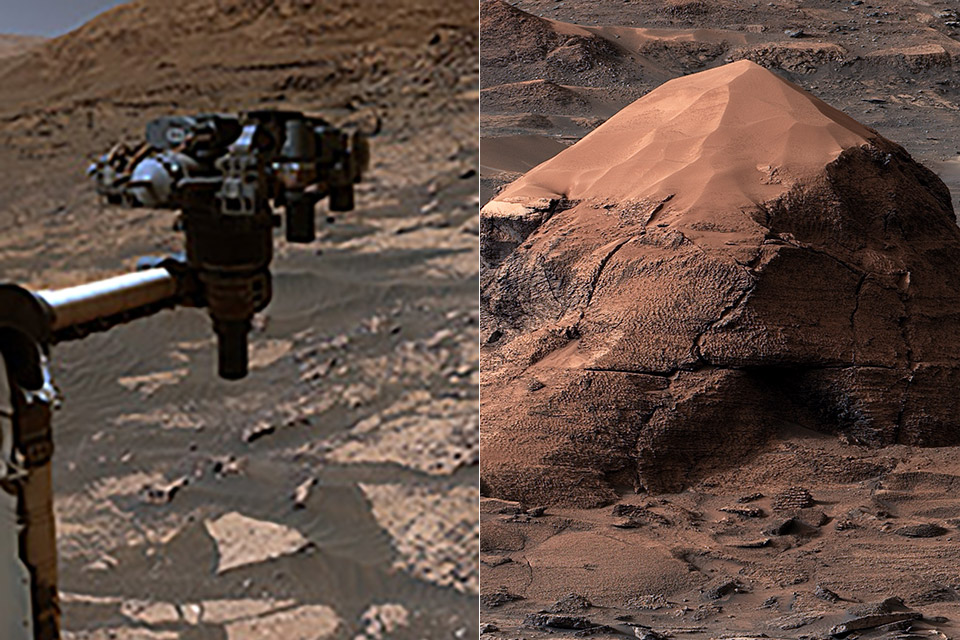
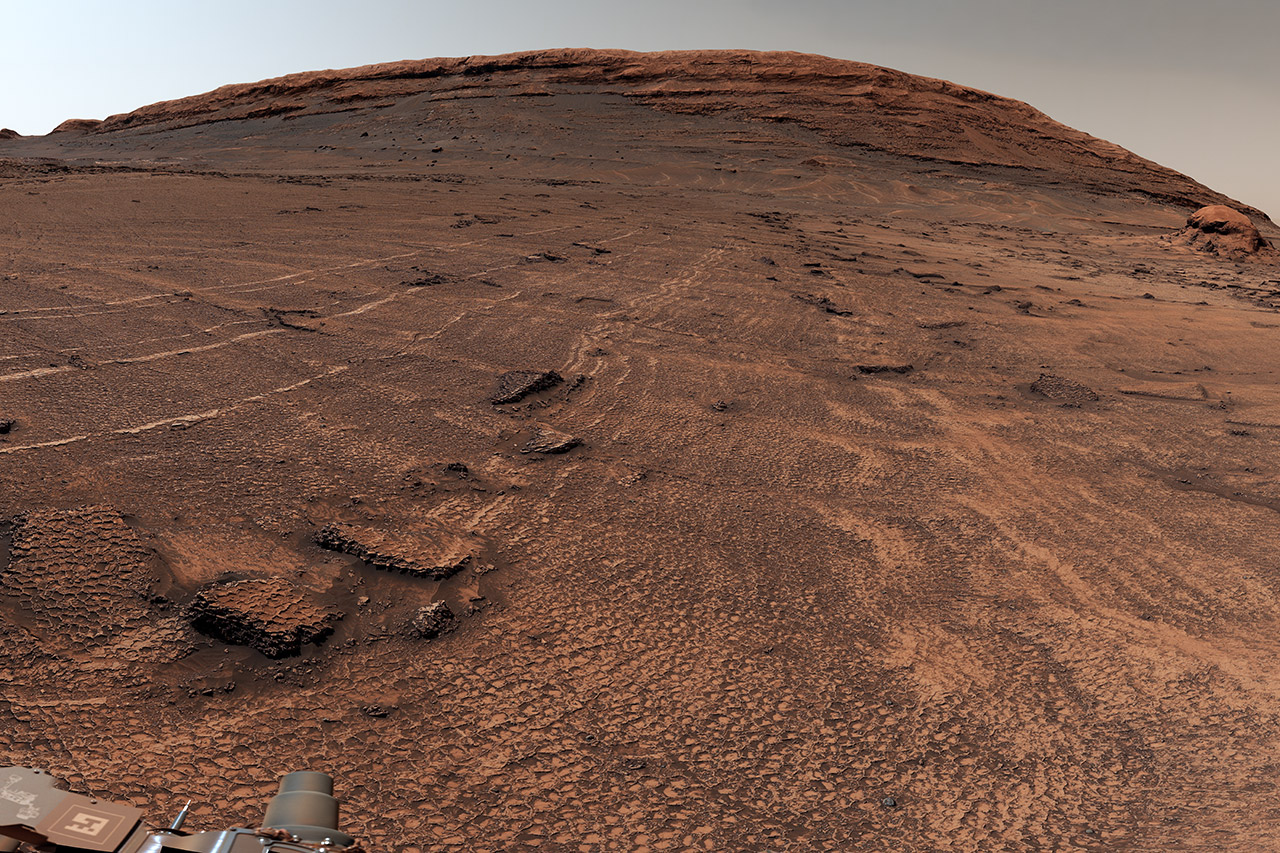
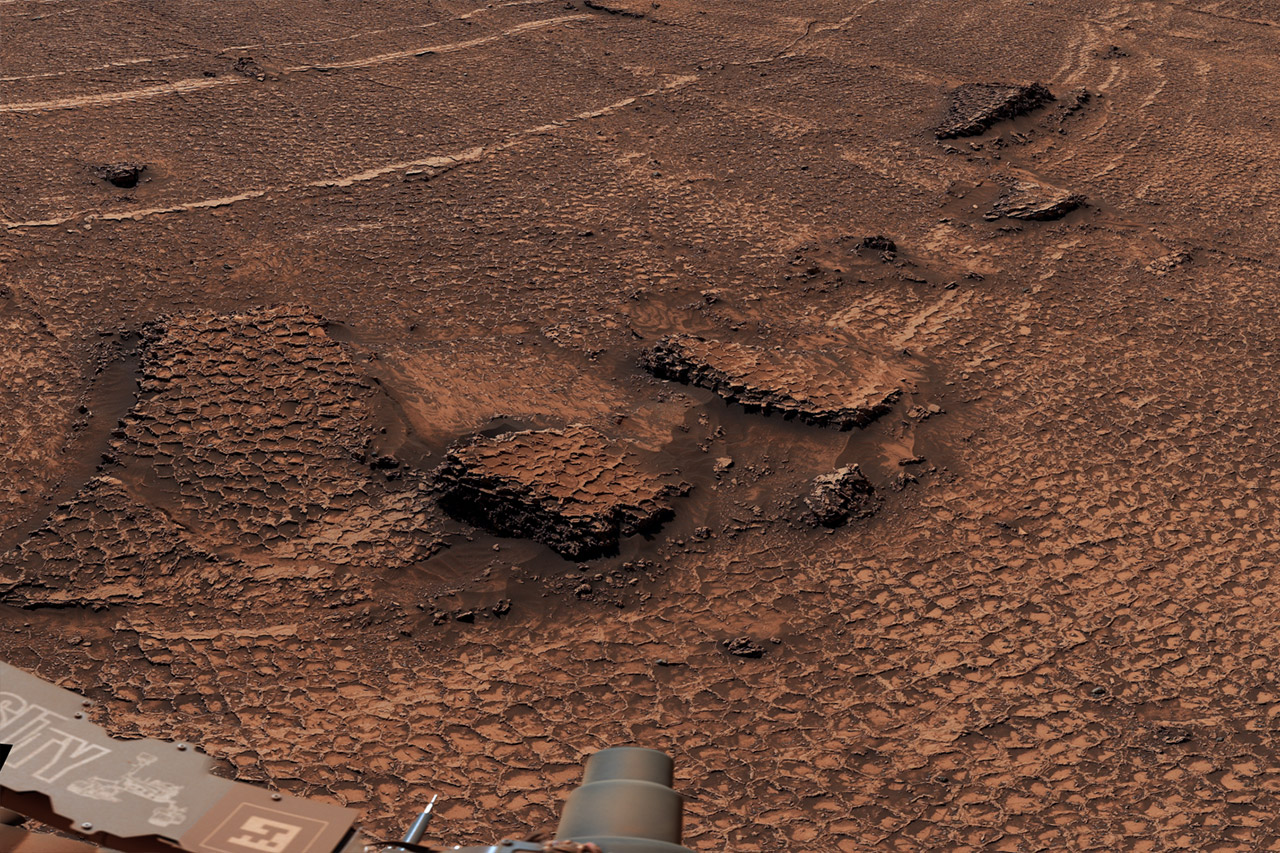
Curiosity has been climbing the broad valley nicknamed Valle Grande for weeks when its cameras locked onto something that stopped the science team cold. On June 11, 2026, the 4,923rd Martian day of the mission, the rover’s Mastcam stitched together eleven frames into a clean panorama of a solitary butte standing roughly 20 feet tall. Mission planners named it Miraflores. A thick layer of dark sand sits on its flat top like a natural crown, while the rock faces below show the slow work of wind and time carving away everything that once surrounded it. That erosion left the butte standing and deepened the valley the rover is now driving through.
From the ground, the vista feels almost uncomfortably personal, as the slope slopes away in all directions, as if blown away by the wind. Dark sand is drawn into every low spot and gradually works its way up the lower slopes. The distant horizon resembles the stratified landscape we’ve been investigating with Curiosity on the lower part of Mount Sharp for over a decade. The ground immediately surrounding Miraflores catches your attention. A never-ending blanket of small many-sided cracks stretches out in every direction the camera can see, with each polygon measuring little more than 3 inches across. The edges of those tiny fissures rise up to form an extremely tight honeycomb pattern that wraps all the way up the sides of the butte.
Feed a passion for science and technology – Kids can learn more about the challenges of space exploration with this LEGO Technic NASA Mars Rover…
Conduct a test flight – This advanced building kit for kids ages 10 and up includes a buildable toy version of NASA’s Ingenuity helicopter, which…
AR brings the mission to life – The accompanying augmented reality app experience lets kids dive into the details of the rover and its mission
The puzzle of how those shapes developed remains, as when the team first noticed them on the trip, they appeared as mud cracks when the wet sand dried out and shriveled away. Other items, however, can leave behind the same pattern. Repeated heating and cooling might cause the surface to break completely. Alternatively, compression on anything still buried can force the water out of the silt, leaving a network of fissures in its wake. Now, teams on Earth are reviewing the measurements and readings from the rover’s instruments to try to narrow it down even more. Then there are the dark pebbles and cobbles sprinkled around the region, which provide an extra depth of mystery to the mix. Some of them could just be bits of higher-up rock that slid down. Others could be impact debris swept up from the side and tossed here, or perhaps meteorites, given the nickel in a few of the samples.
A second, wider 360-degree panorama taken a week later, on sols 4,930 and 4,931, showed the same pattern stretching farther than the rover’s cameras could resolve. Mission scientists had spotted similar geometric shapes in small patches several times before. Never had they found an expanse this large. Project scientist Ashwin Vasavada put the feeling into words: “We’ve seen a lot of fascinating landscapes through Curiosity’s eyes, but this sea of polygons took our breath away. We measured their shapes and chemistry carefully and are hopeful there are clues in the data as to how these features formed.”
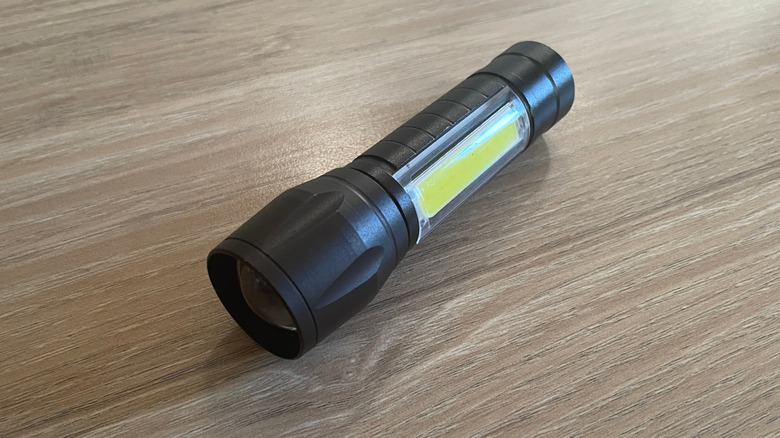
If you’re searching for some fun mini tools like pocket flashlights, you may have seen the term COB in a product description and wondered what it means. COB stands for chip-on-board, a type of LED technology that is being used in more and more lighting products. But what makes this light different isn’t its technical name; it’s how it’s designed.
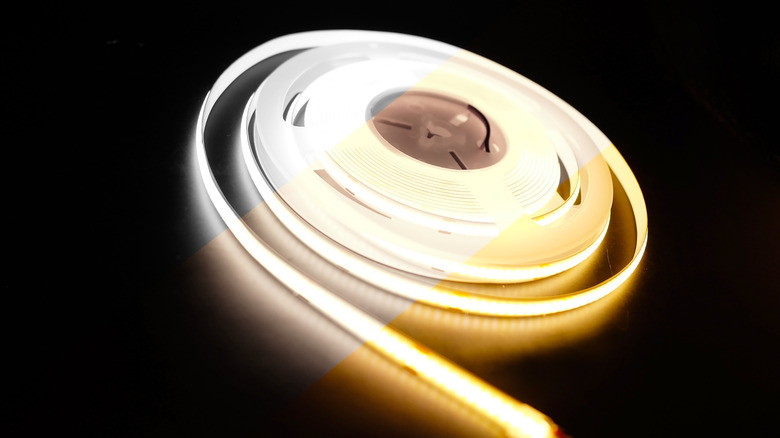
A COB light is built with multiple LED chips arranged together on a single board, creating a compact and energy-efficient design. The result is a light source that can produce high light output and handle a variety of tasks, including lighting up your work area. COB lights also have a long lifespan and are typically brighter than traditional LEDs. This technology can help prevent a COB flashlight from experiencing excessive hotspots while also producing a wider and more even beam compared to traditional LEDs. This makes a COB flashlight useful for lighting up larger areas.
Many flashlights that use COB technology place it on the side of the device instead of using it as the primary beam. This allows you to use a front LED light that focuses straight ahead and the COB side panel for a wider floodlight when needed. But some flip flashlight designs can use COB technology as the main source of light, often with different modes that allow you to adjust the brightness of the beam.
Advertisement
How COB improves modern LED lighting
Emmomushroom/Shutterstock
COB lights can deliver high lumen output, which can be important when selecting a camping flashlight. That’s because the concentration of built-in LED chips allows for more light output than traditional LEDs. COB technology not only increases the viewing angle but helps reduce light loss as well. This means that more of the light the LEDs produce makes it out of the flashlight instead of being absorbed or scattered by additional parts around the LED chips.
COB technology evolved as a new way to arrange LEDs because manufacturers wanted to create brighter lighting without having to increase the size of the light fixture itself. Earlier LED designs were limited and could not achieve this outcome. However, COB helped solve the problem, making it a popular design for situations in which strong and efficient light is needed. Today, COB technology is not just used for flashlights but also in several other types of devices.
Advertisement
COB technology is used in a variety of applications, including residential lighting, as well as industrial lighting, photography, and automotive, among others. COB can be found in products such as ceiling lights, spotlights, and vehicle lighting, where strong and consistent light is needed.























































You must be logged in to post a comment Login